(This is the story behind the photograph, a glimpse into the moment, the process, and the vision that brought it to life.)
What makes a photographer know when a story is ending?
Sometimes the answer comes during editing. Sometimes it appears months or years after a photograph was made. But for Luke Oppenheimer, it happened before he even pressed the shutter.
He saw the ending while looking through his camera.
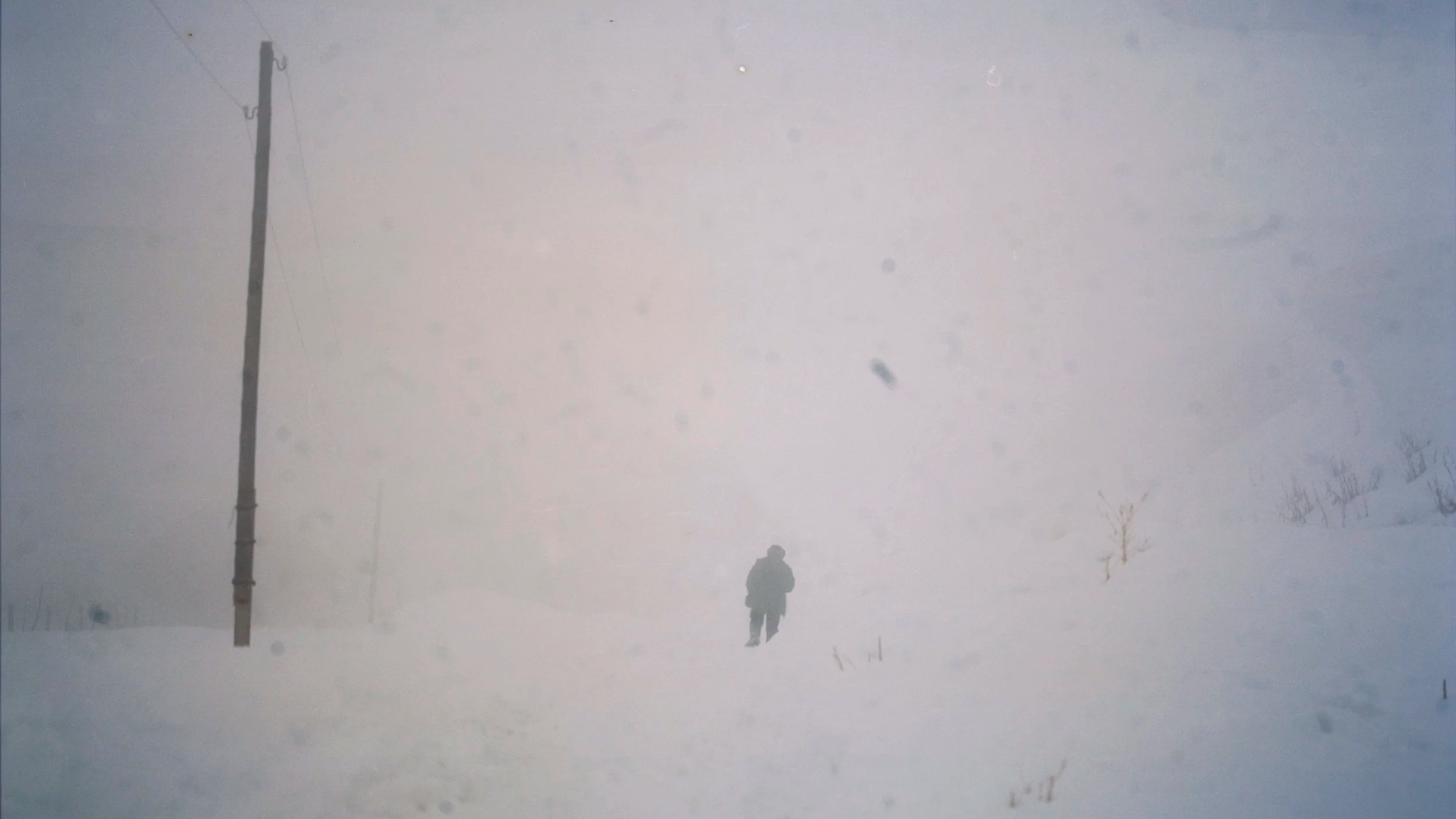
It was early 2024, and Oppenheimer was photographing in Kyrgyzstan for Ottuk, a project he had worked on for several years. Nadir, a shepherd he had grown close to, had just left his house and was walking towards the village through heavy snow. In the fading blue light, Oppenheimer suddenly noticed that this large, strong man looked smaller and older.
He made one frame.
In this interview, Oppenheimer explains what he understood in that moment, why he photographed Nadir only once, and why he already knew that this image would become the final photograph in Ottuk.
In early 2024, Luke Oppenheimer returned to Kyrgyzstan to continue photographing Ottuk, a project he had been working on for several years. He had first travelled to the village during the pandemic, after hearing about shepherds losing livestock to wolves. What began as a short assignment slowly became a long-term project about the people, animals, and changing rural life of the area.
On this trip, Oppenheimer was staying with people he had come to know well. One of them was Nadir, a shepherd in his fifties. Oppenheimer had photographed him over several years, but one evening he noticed something different.
“Nadir had just come out of his house, and I followed him. It was snowing heavily and extremely cold. It was towards the end of the day, and the sun had already set, so there was this blue light. He was walking down the path from his house towards the village. He’s a big guy, a huge guy.”
The snow was falling heavily as Nadir walked away from the house. Daylight had almost disappeared, leaving the landscape in cold blue light. Against the open ground, the man Oppenheimer knew as physically large suddenly appeared small.
“He looked very small, and he looked older. I felt the same way about him that I feel about my dad. My dad is an older gentleman, and you feel this tremendous affection for the person, but also this feeling that you want to take care of them.”
The change reminded Oppenheimer of the moment when he first understood that his own father was growing old.
“It was like seeing this guy who used to be huge, strong, and powerful, and now he’s somewhat diminutive. That was the first time I realised Nadir was getting older.”
Oppenheimer had known Nadir for only a few years, but life in the mountains was physically demanding. Years of working with animals, riding horses, falling, and spending time outside could become more visible as people aged.
“Every injury they’ve had, every fall on a horse, now it hurts. It can happen quickly. That was something I noticed on that trip. He was physically slower. He was getting old.”
The thought carried another meaning for Oppenheimer. Nadir represented a way of life that was also changing. His sons would probably not continue living as shepherds in the same way.
“There’s this obvious parallel between the lifestyle of being a shepherd and Nadir, who is very much an archetype of this lifestyle. He’s a real Kyrgyz mountain man and shepherd. His sons probably aren’t going to be doing this. I see his life as clearly in its second stage, and the lifestyle of being a shepherd in Kyrgyzstan is also entering its last stages.”
Death had also been close to the village that year. Isham Beck had recently died. Nadir’s brother, who was only a little older than him, had died as well. Another woman in the village had also passed away.
“There was a lot of death going around that year. Thinking about the mortality of these people, and of the people we love, was very present in my mind.”
Oppenheimer saw Nadir walking away before he raised his camera. The photograph was already connected to what he had been thinking about during the trip.
“Even before I looked through the camera, I saw him walking off and had this moment of realising all these things. Nadir is getting old. I wondered how much longer he was going to be around. And I really don’t think this way of life is going to be around that much longer.”
He was working with a Mamiya RZ67, a medium-format camera with a viewfinder that he looked down into from above. He raised the camera and watched Nadir moving farther away through the snow.
“As soon as I looked through the viewfinder, I saw this image and thought, damn, I saw the end before it happened.”
There was no sequence of photographs. Oppenheimer pressed the shutter once.
“Just that one.”
Making only one frame was not unusual for him.
“I typically try to make only one frame of something.”
The photograph later became the final image in Ottuk. Oppenheimer says he already understood its place in the book when he made it.
“In my book, that’s the closing photo. I knew when I made it that this was going to be the closing photo for sure.”
For Oppenheimer, the photograph records Nadir walking through the snow, but it also marks a moment when years spent returning to the same place changed what he saw in front of him. The man in the distance was someone he had grown close to, and someone whose age he had suddenly become aware of. At the same time, Oppenheimer was thinking about the future of the shepherding life he had spent years photographing.
He understood both changes before he pressed the shutter.
“I saw the end before it happened.”
Sometimes the best project begins when the first idea fails. You arrive with a plan, but what you find does not fit it. Story Behind The Photograph