Welcome to this edition of [book spotlight]. Today, we look at Under 60 Tons, by Reave Dennison (published by Pale Fire and Information Office). We'd love to read your comments below about these insights and ideas behind the artist's work.
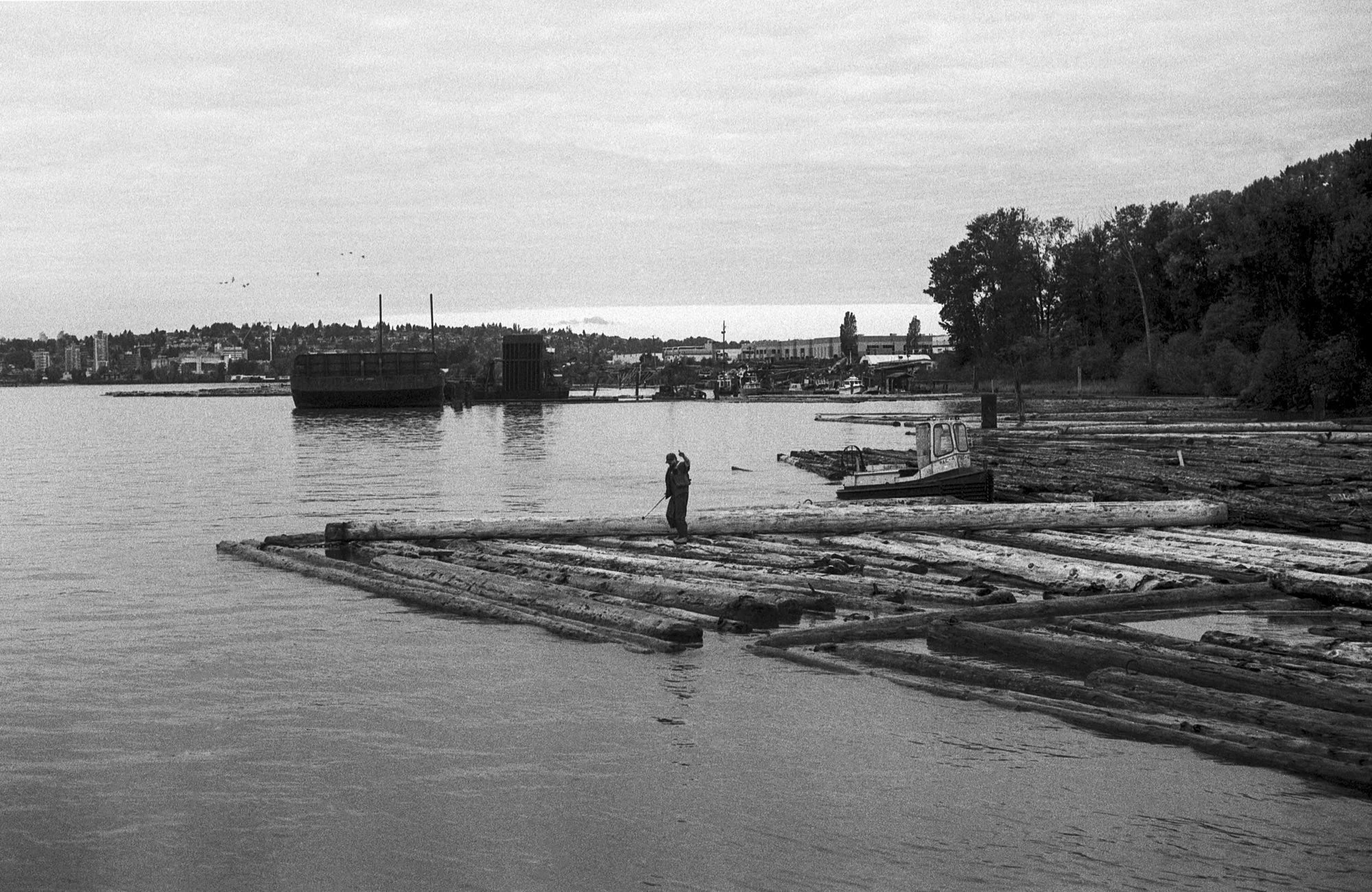
Reave Dennison photographed tugboats while working as a deckhand.
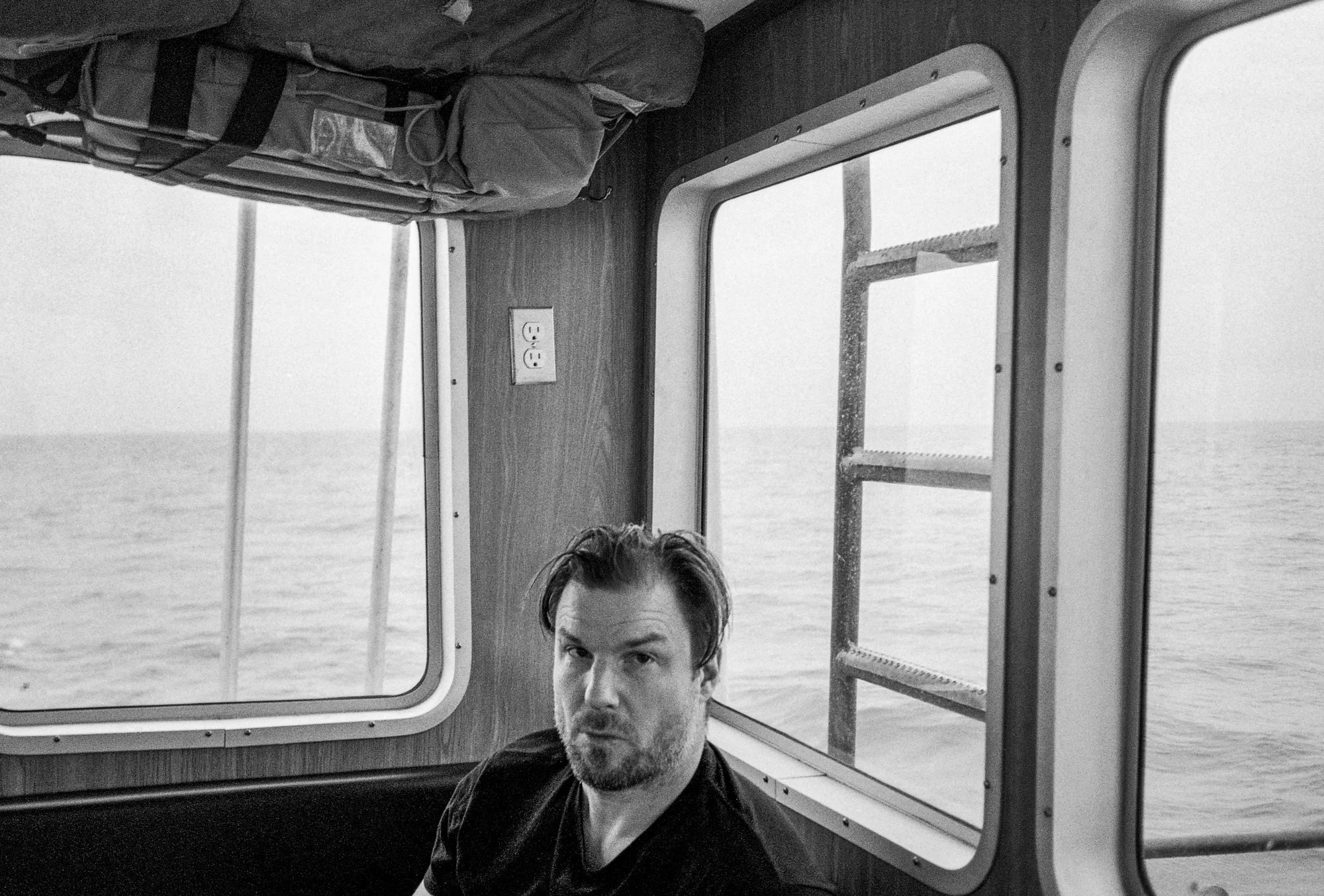
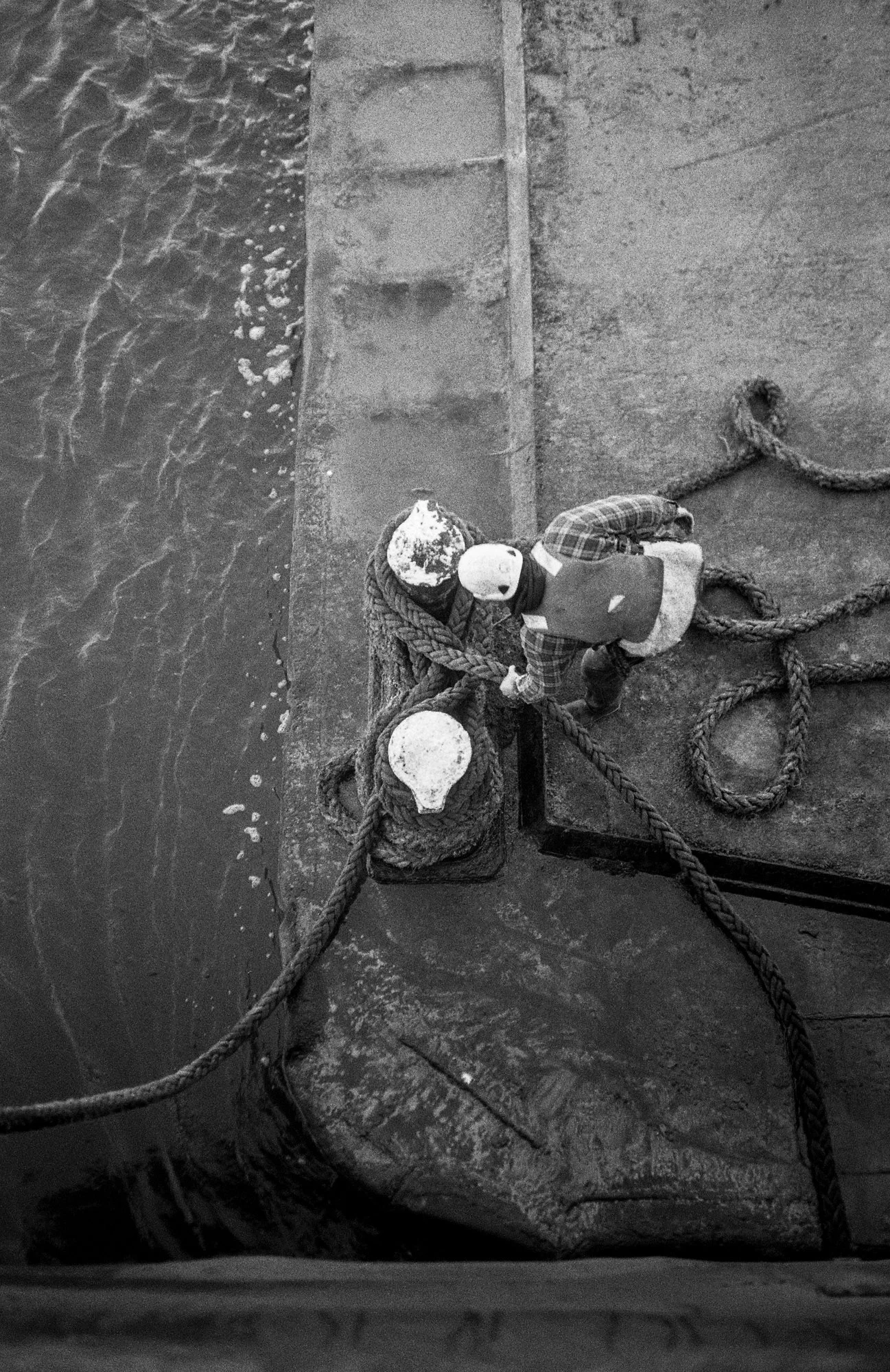
Between 2016 and 2024, he worked as a crew member on small tugboats along the coast of British Columbia. These boats are classified as under 60 gross tons and run with crews of three. He kept a camera with him on the job and photographed the work, the weather and the people he worked with.
The result is his first photobook, Under 60 Tons.
The book is a record of a way of working that may disappear.
Boats of this class can no longer be built and run under the same rules, so the old hulls will not be replaced. In the book, Dennison’s black-and-white photographs sit next to handwritten journal entries in the language of the crew. The 160-page hardcover is co-published by Pale Fire and Information Office.
In this interview, Dennison talks about photographing as a crew member rather than an outsider, shooting at night by the light of the boats, developing his own film, and why the book ends with a calm picture of fog, one of the conditions towboaters fear most.
The Book
Under 60 Tons
Pale Fire and Information Office · 2026 · 160 pages · Edited by Reave Dennison and Amy Kazymerchyk
Under 60 Tons is a photobook by Reave Dennison about work on small tugboats along the Pacific Northwest coast. Dennison made the black-and-white analogue photographs between 2016 and 2024, while he worked as a crew member on boats classified as under 60 gross tons. Handwritten journal entries record the vernacular language of the crew and his own reflections. The hardcover was designed by Dennison with Derek Barnett and printed in an edition of 500 copies.
How it started: You began taking these pictures in 2016, while you were working on small tugboats. At what point did you realize the photos were becoming one long project and not just pictures from work?
The idea for a long-term photographic project emerged at the same time as the idea of working in the towboating industry. I was hired as a deckhand on the Goblin, yarding logs in Howe Sound. On my first day out, I made some photographs of my best friend at work. I knew I had some rich subject matter that would take a long time to put together, and the only way for me to document the industry would be to work on the boats and gather images. It worked out well for me at the time, as I needed both a job and a project. The idea for the book came later.
Title: Why did you choose a technical class of boat, tugboats under 60 gross tons, as the title? What does that number mean to the people who work on these boats?
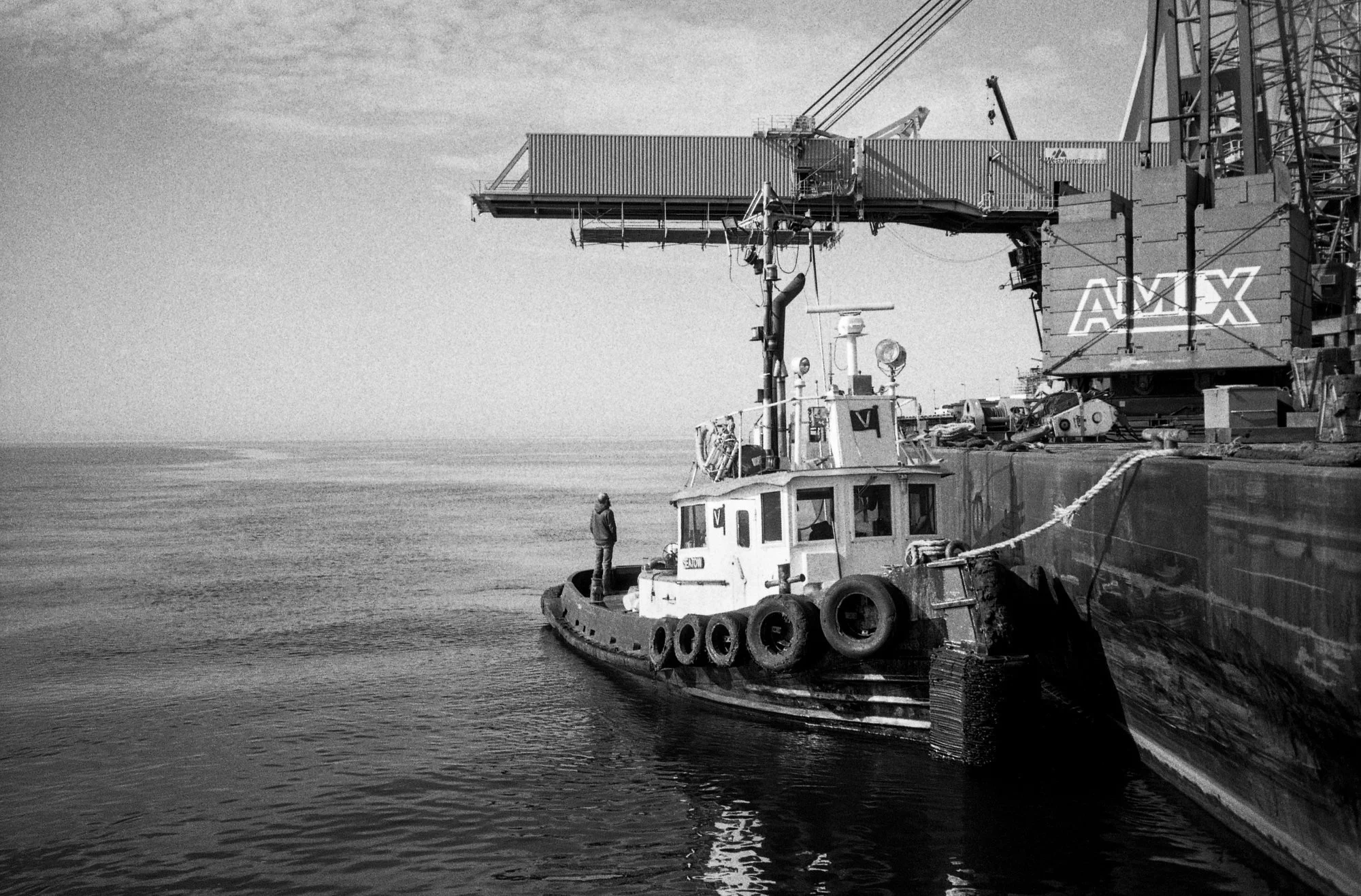
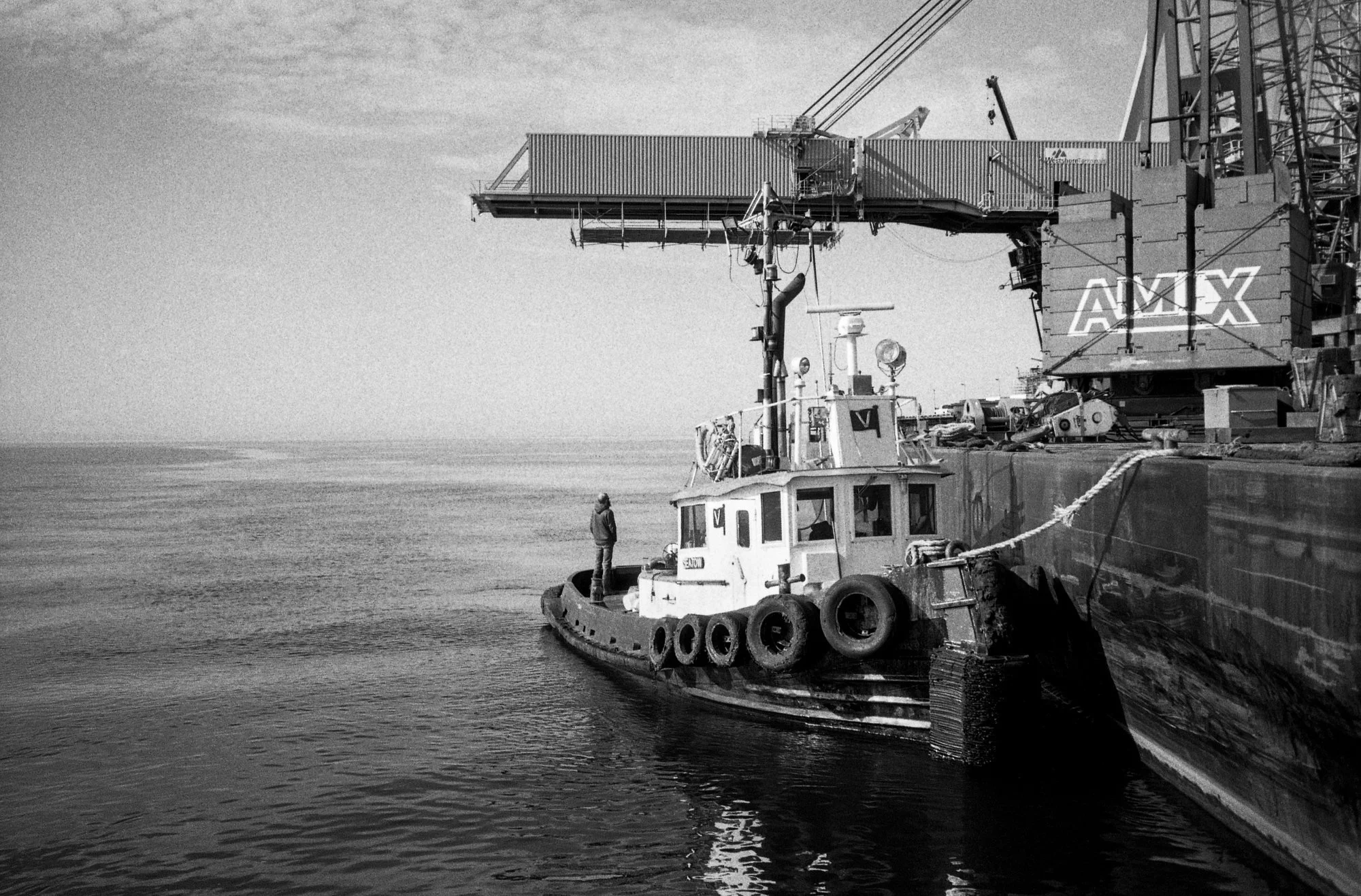
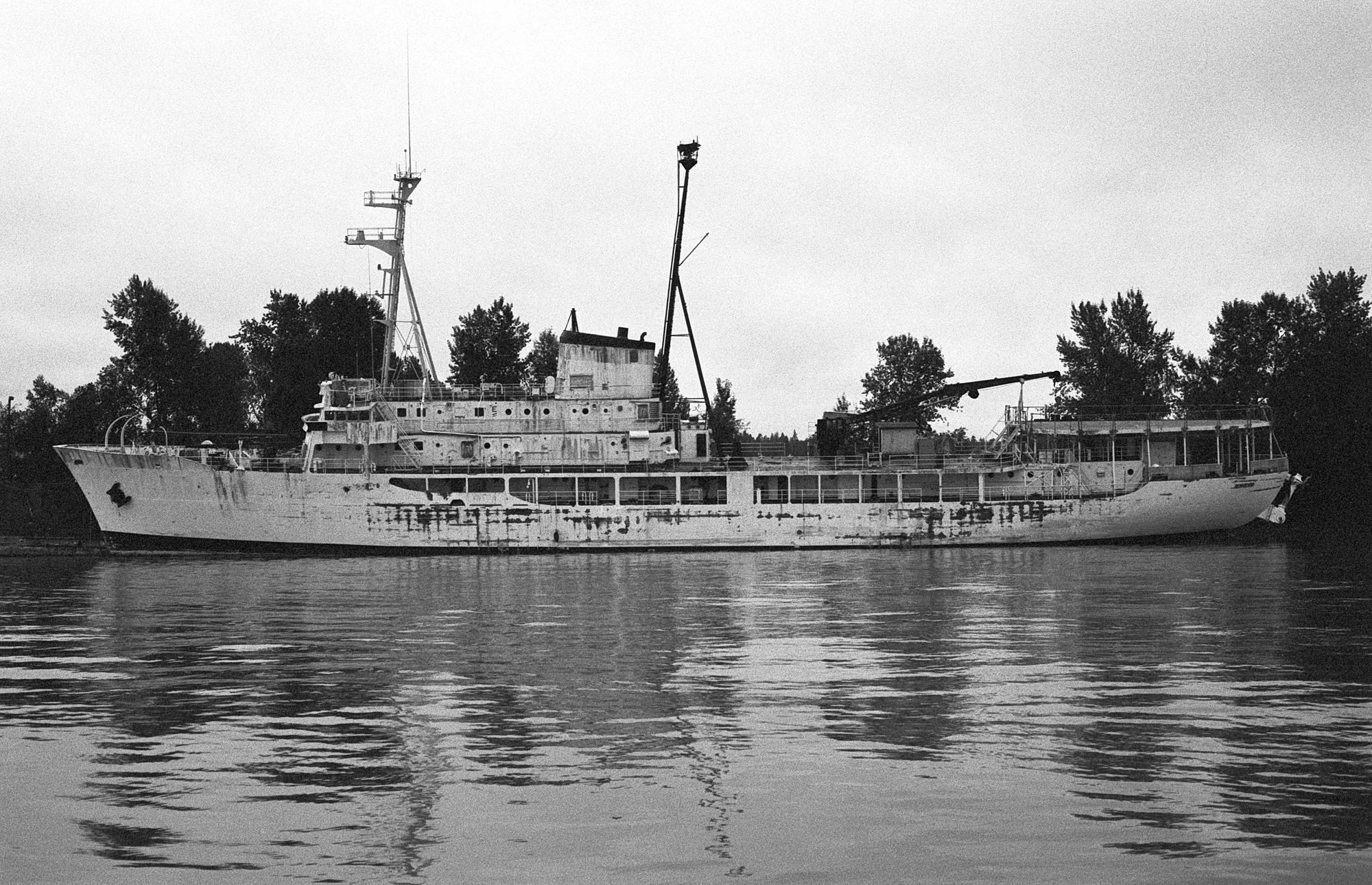
The title comes from the tonnage classification of the boats I worked on. Boats under 60 gross tons operate with smaller, three-man crews. It’s the smallest classification of commercial tugboat and the one most threatened by the tightening of Transport Canada regulations.
These smaller boats played a big part in building this coast. The methods they use are closer to an old-school way of working. They’re very small and agile, can complete a wide variety of jobs, and can get into tighter areas and travel up shallow rivers that larger boats can’t access. Because they don’t fall under as many strict regulations as larger boats, they operate differently.
A company can no longer build these small boats and operate under the same regulations; their hulls have to be grandfathered in. Inevitably, when all those boats become too old to run and Transport Canada removes that classification, or other factors make it impossible for them to continue working, that way of working will become a thing of the past. I wanted there to be a photographic record of that specific classification.
Finding what to photograph: You once said, “There’s a lot that’s lost because I have to put the job first.” How did you decide when to pick up the camera during a shift, what did you do with the moments you could not photograph, and did a quiet surprise, like a nest of eggs inside a coil of cable, change what you looked for?
I generally performed my duties as a deckhand, kept a camera on me, and relied on my impulses to shoot when I felt there was a good opportunity. I found that the best photographs came from working to the point of exhaustion, almost forgetting I had a camera, and then, in those moments, taking it out and shooting. I would be fully immersed in my job and able to photograph honestly.
With experience on the boats, I learned to anticipate the moments I wanted to photograph so I could be ready to shoot while completing my job. If I was occupied with the urgency of tying up a barge, or dealing with bad weather conditions that required both hands to hold on, I was unable to photograph. Those moments of higher intensity were missed.
Some moments I was unable to photograph, I chose to write about, but many of those stories remain unrecorded and are reserved for storytelling at 3 a.m. during the mate’s watch in the wheelhouse.
I don’t think the eggs in the discarded rope changed what I was looking for. I’m always looking for that kind of dynamic.
Getting back to the right moment: You said that with experience you learned to anticipate the moments you wanted to photograph while still doing your job. What signs told you a moment was coming, and how did you keep the camera ready?
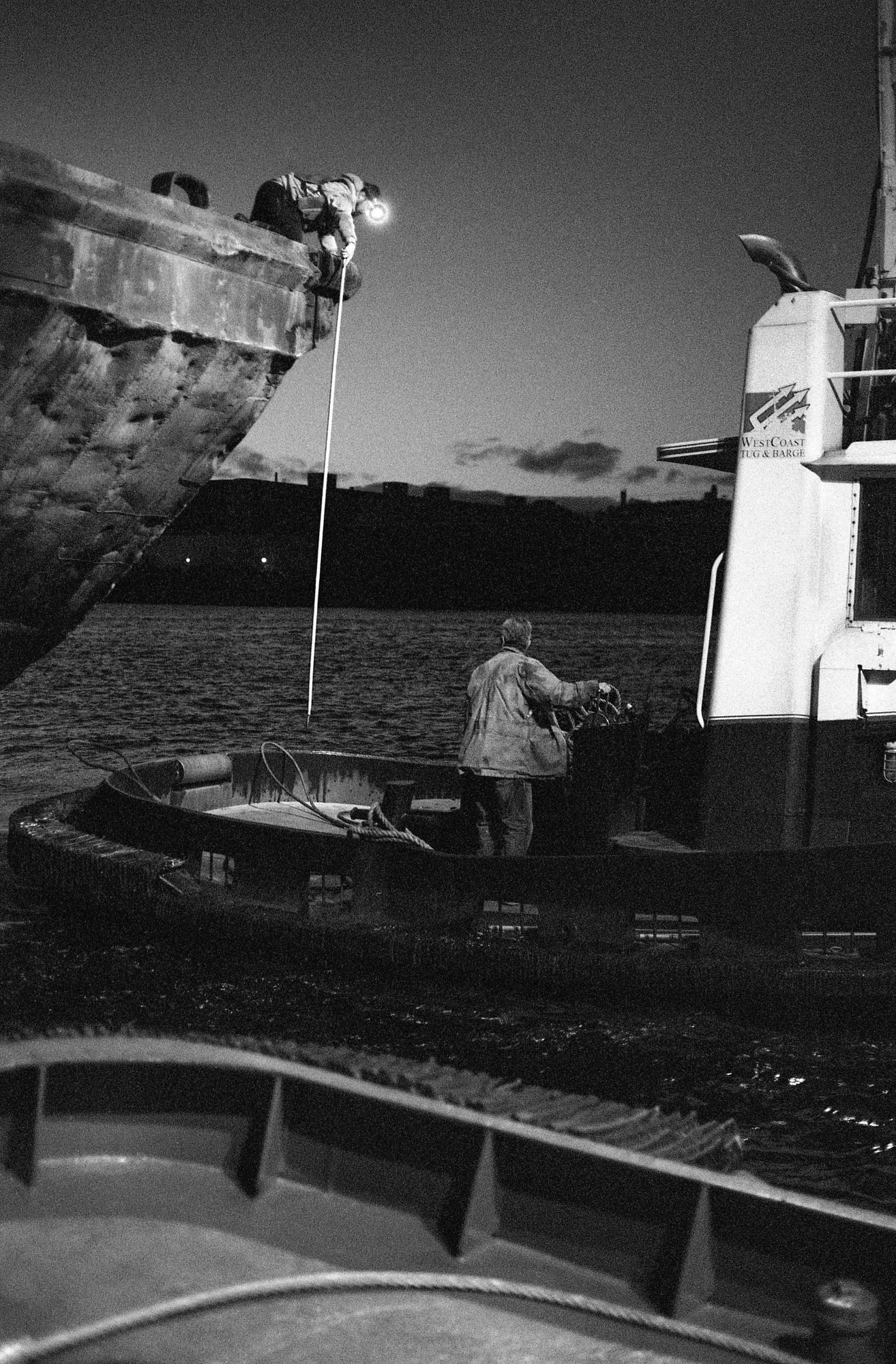
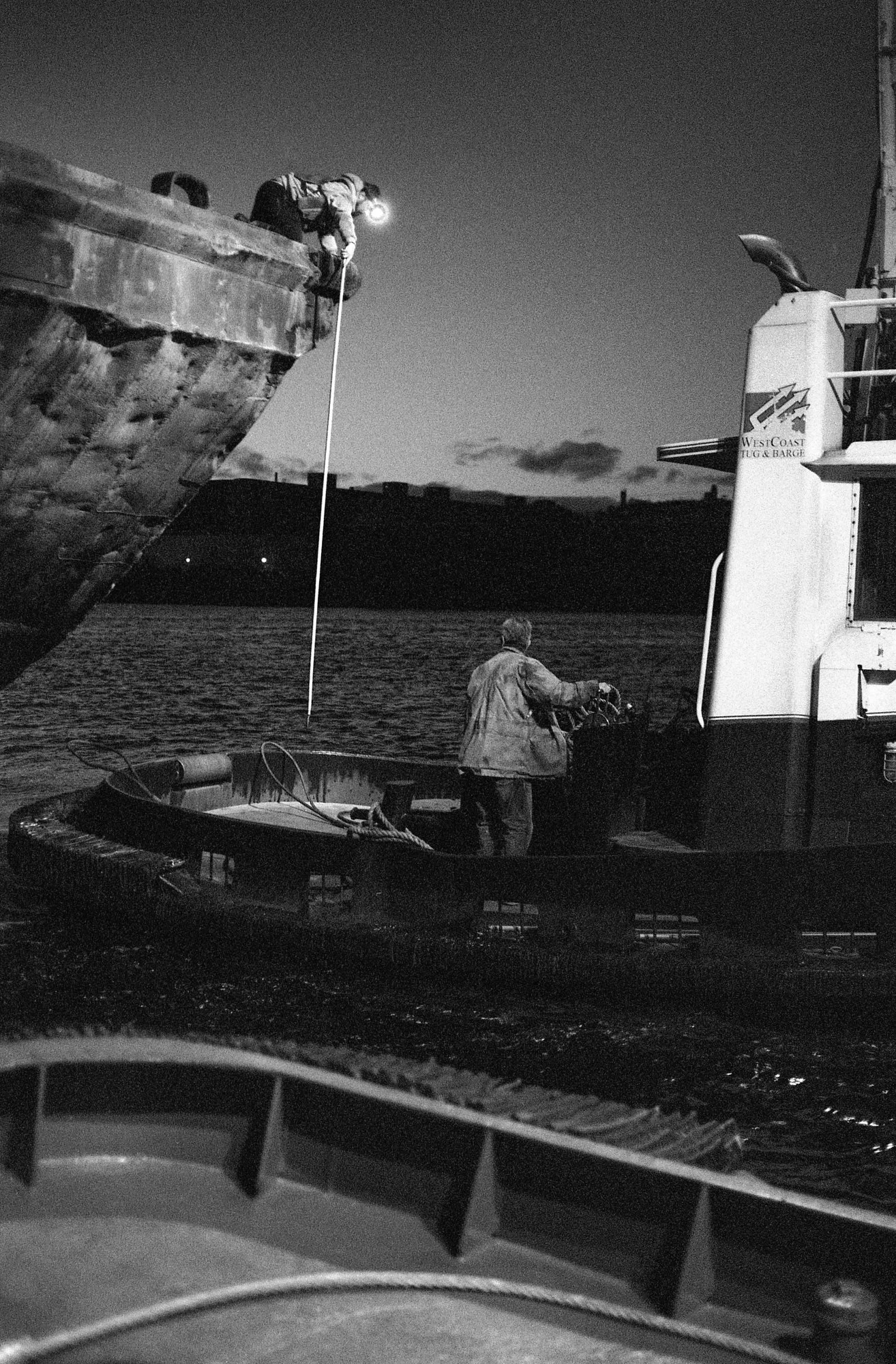
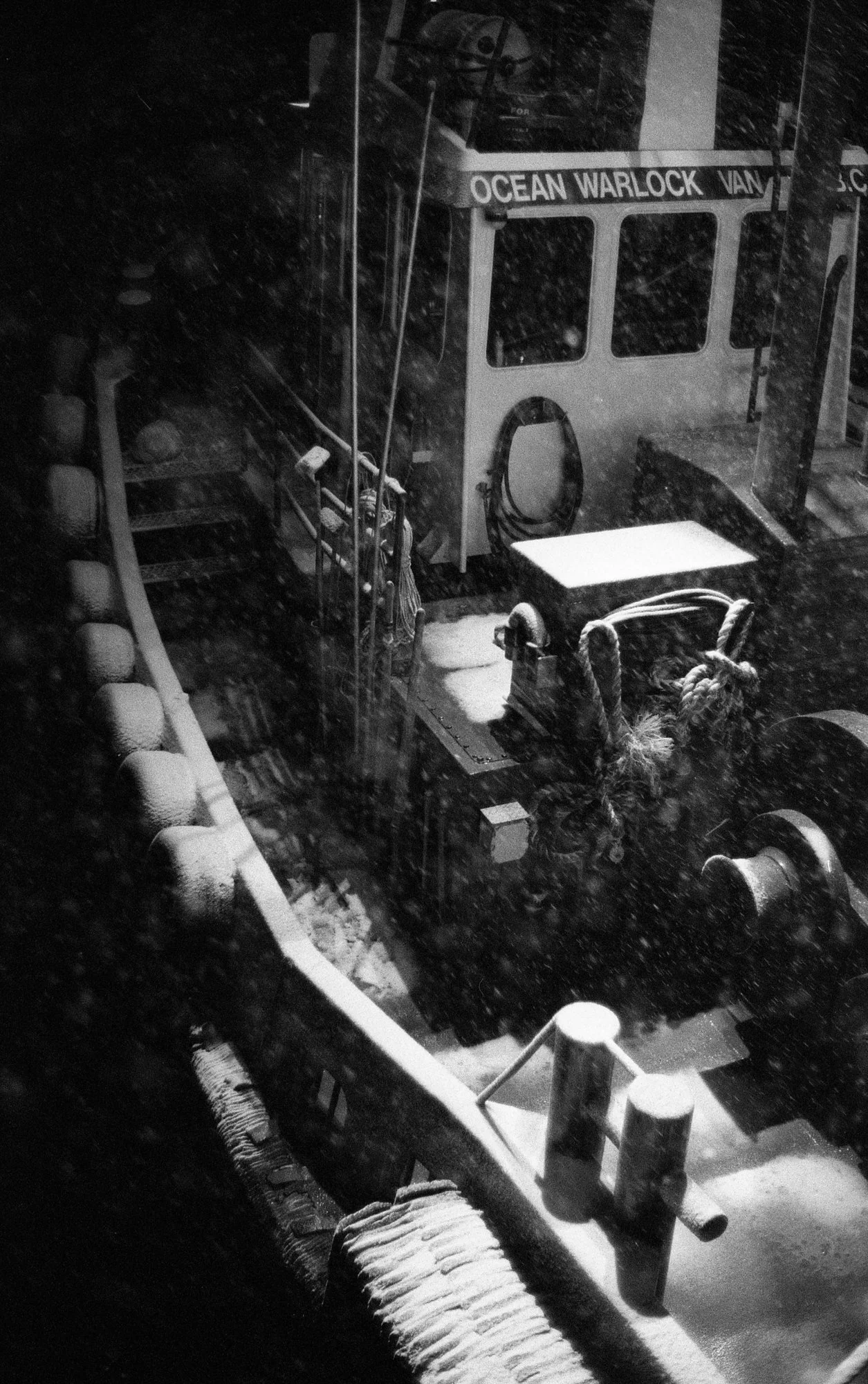
I don’t know if there were any signs in particular, just experience knowing what was to come. For example, take the photograph of the deckhand standing on the barge, reaching for the bridles with a pike pole. From experience I was really interested in photographing a night scene of someone hooking the bridles up to a barge. It was normally my job to do that, so making a photograph of myself performing that particular task would have been impossible.
One week, we were heading up to Seymour Narrows to pass off our barge to another tug. I was anticipating that moment, knowing what was involved, what I wanted to photograph, and where I wanted to stand to get the shot. I knew when I would have time to take pictures between the moments when I was required to pull the bridles back onto the deck. I kept my rangefinder tucked into my life jacket, preset with my exposure settings for night scenes. I would take the camera out, focus, shoot what I needed, put it away, and continue on with my work.
Light at night: Many of your pictures were made at night. Did you decide how to light those scenes, and how did the light change what the pictures could show about the work?
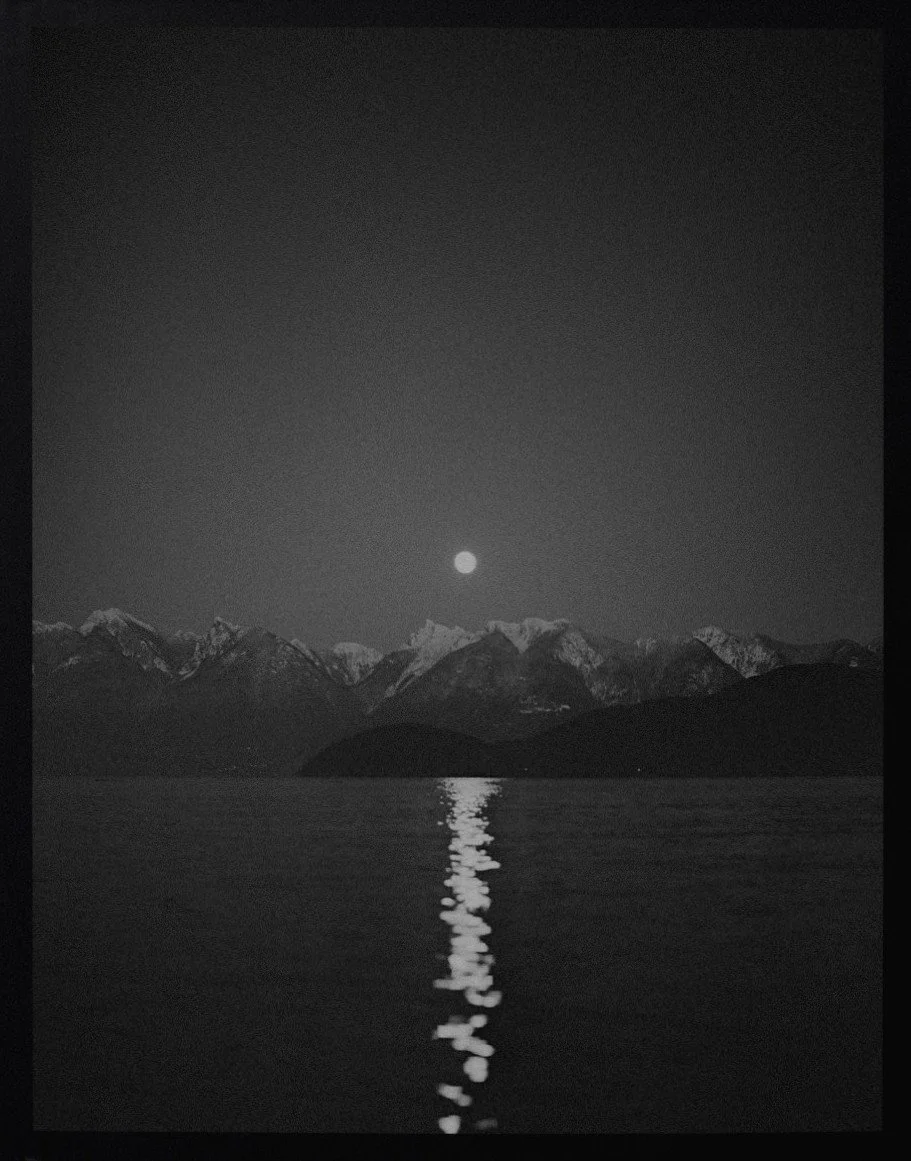
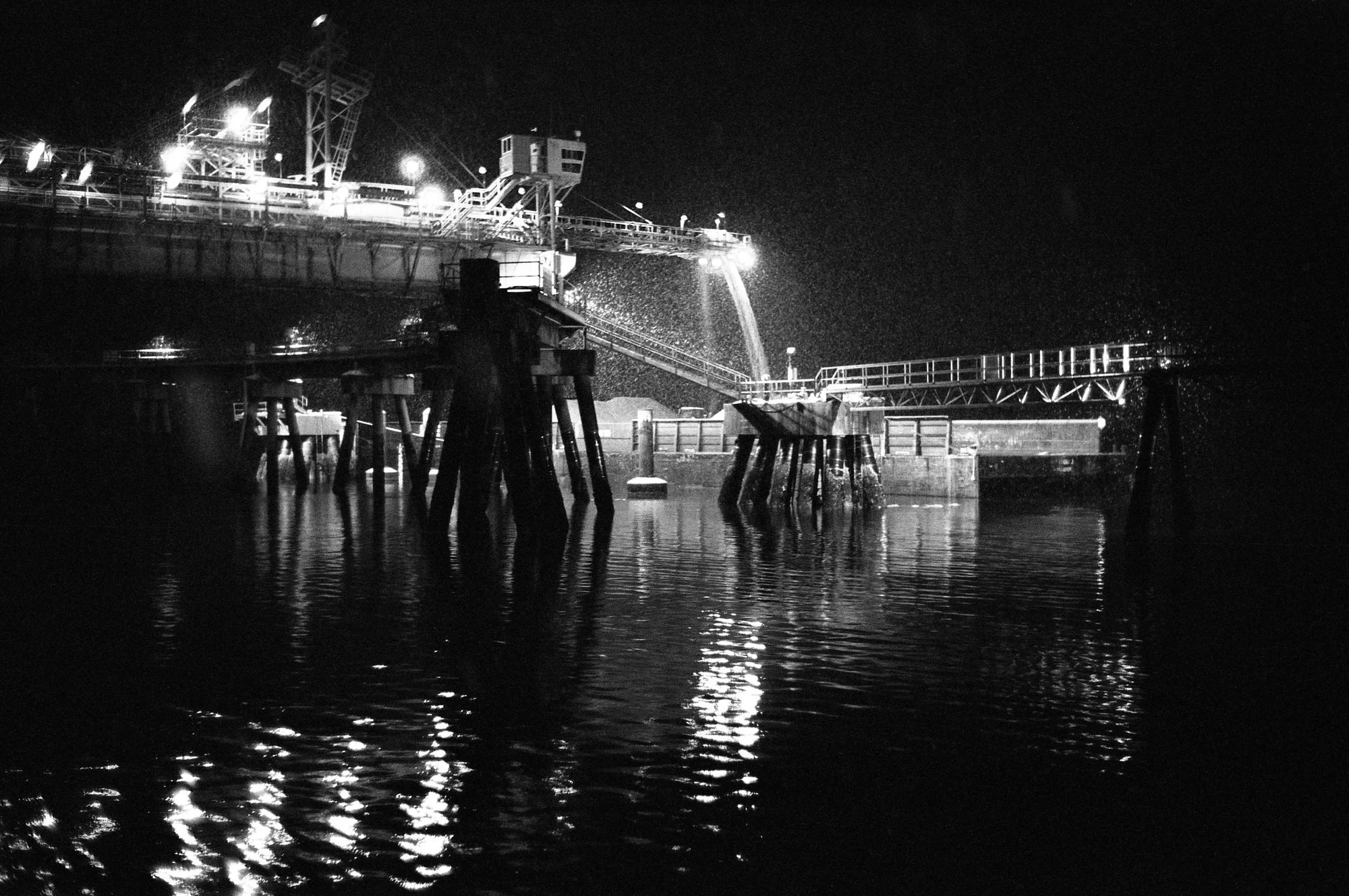
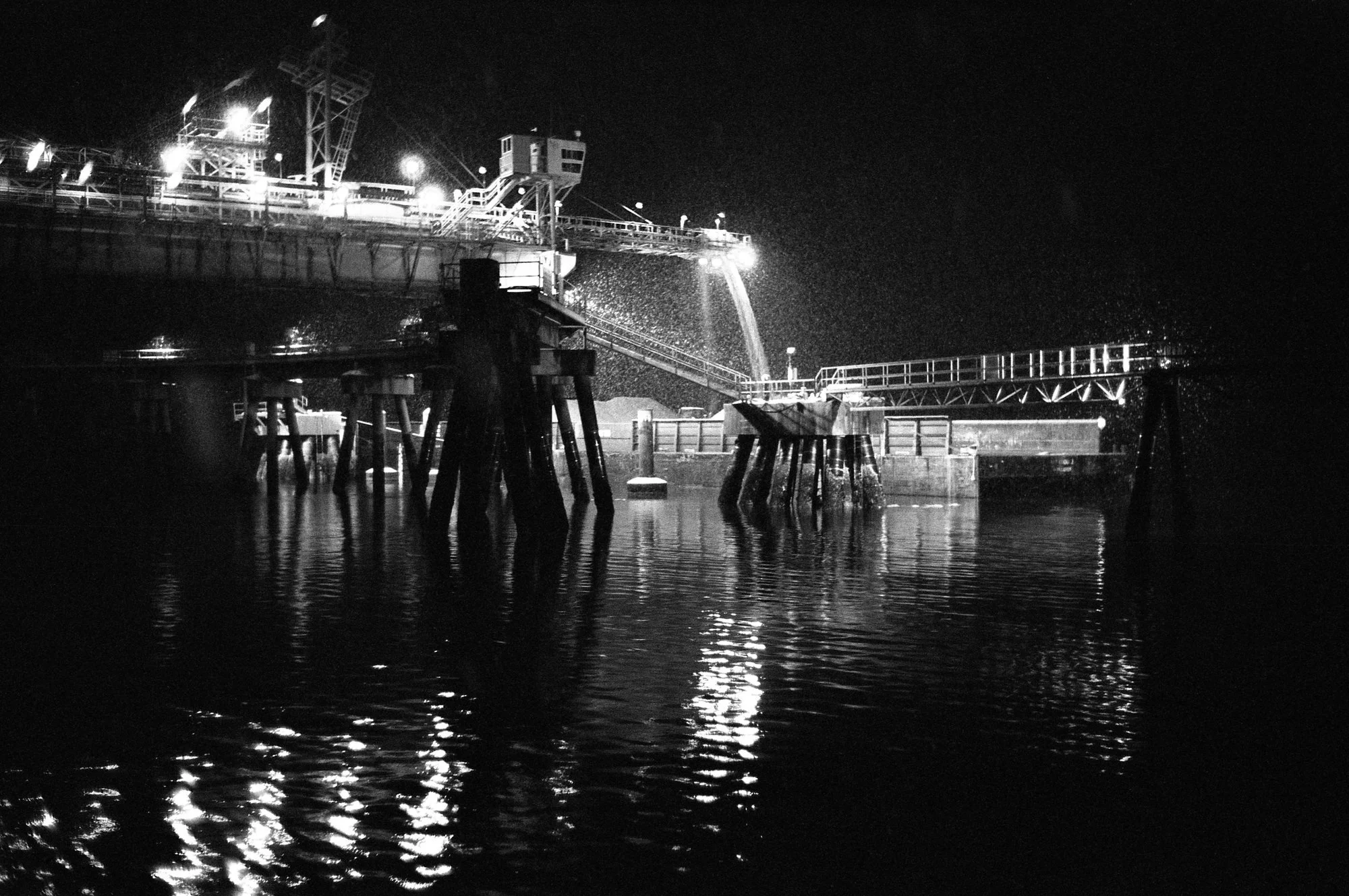
It wasn’t a decision; the scenes were already lit. I wanted to capture the realistic working conditions we experienced. Some photographs are very, very dark because we were working in almost pitch-black conditions, illuminated only by small personal headlamps. All the other lighting came from the floodlights and spotlights on the boats, which allowed us to see what we were working on.
A lot of the work involved in yarding barges happens at night, when the factories are closed, so learning how to photograph at night using the available light from the boats’ floodlights was a big focus for me. I used a small flash on a few occasions to switch things up a bit, but I felt it was too distracting from the job and caused some confusion. For example, an operator might ask, “What was that bright flash on the back deck while Dave was trying to get that help ball off the towline?” I was concerned that it might cause some problems.
I actually never made any long exposures for this project. I shot with a handheld camera and experimented with different film development techniques for the nighttime situations.
Getting back to the darkroom: You said you never made long exposures and that you tried different film development techniques for the night situations. What did you try, and what did you learn from it?
I mostly used a stand development technique and pushed my film to 6400 to 12800 ISO for the night shots. The technique uses a high dilution of Blazinal to water with minimal agitation, requiring only one inversion during an hour or more of development. The lack of agitation causes the developer to exhaust itself on the highlights, helping them retain detail while continuing to work on bringing out detail in the darker shadow areas. I ruined a lot of film learning how to process my own negatives in an attempt to retain as much detail as possible while shooting at night in those early days. Eventually I learned how to process my negatives successfully.
Working with people: You photographed your own crewmates. How did being a working mate, not an outside photographer, change the way people let you photograph them?
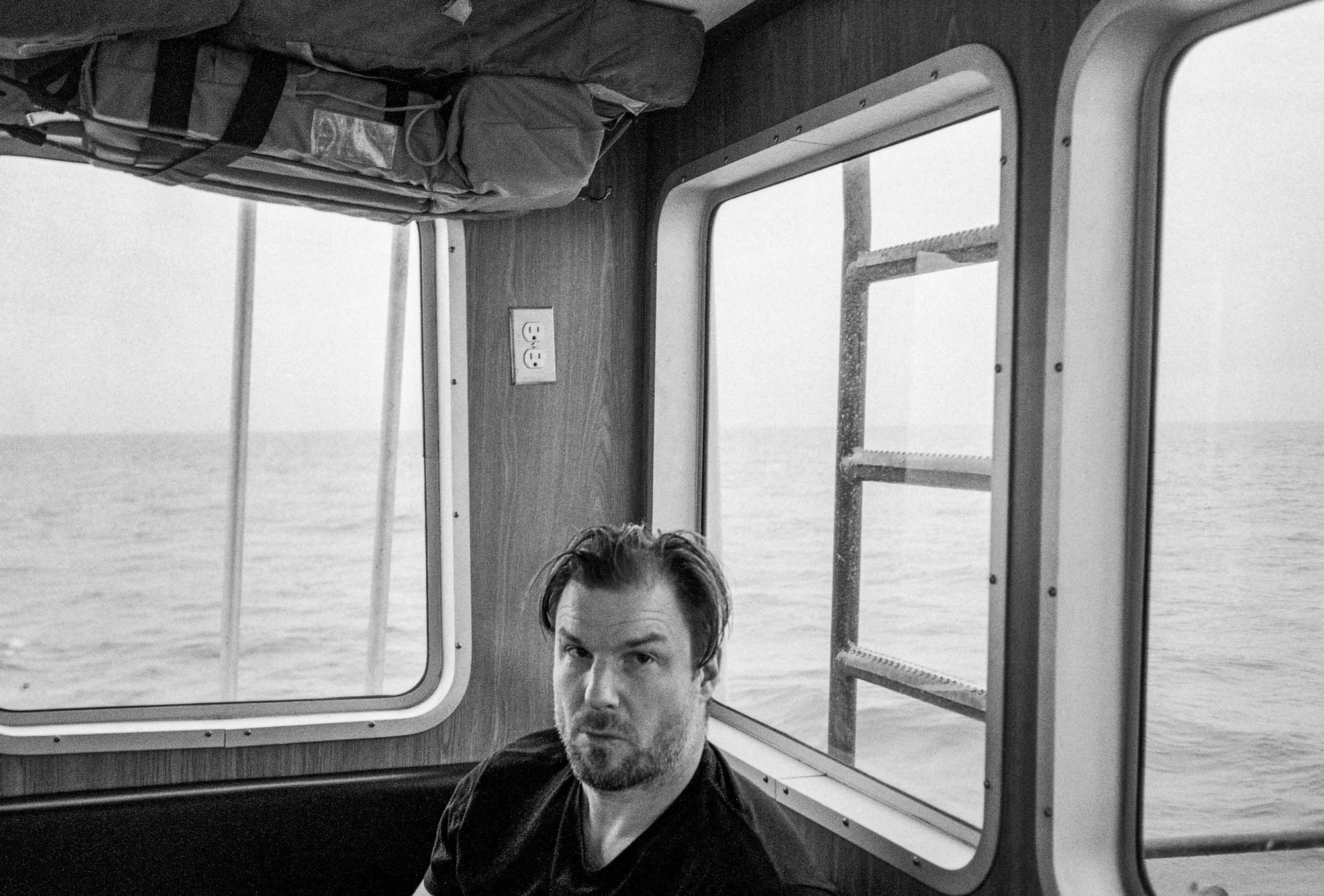
I mainly worked as a deckhand during that period. Working as a deckhand allowed me to blend in as a natural part of the environment. I find that the presence of a camera disrupts the honesty of the moment I’m trying to photograph. Photographing workers who were completely consumed by the tasks we were performing together helped; the photograph was over before anyone realized it was being taken.
I was able to photograph the towboating industry with greater acceptance. Sure, there were some guys or situations I wouldn’t point a camera at, but generally, it was accepted. I was just as much a part of the subject as the people and work I was photographing. This gave me access and made the process feel natural. Situations in which I’ve approached photographing labour from the perspective of a photographer have been far less successful.
I also find that when I point a camera at industry or at people working in industry, it unfortunately makes them very uncomfortable. It can make them feel as though I’m trying to exploit their actions for some kind of sinister motive or anticipating some kind of mishap, which isn’t the case. I didn’t really have to deal with that when shooting from the position of a crew member.
Editing: You also sent us photographs that never made it into the book. When you chose the photographs for the book, what was your rule for what stays and what goes? What made these photographs miss the cut?
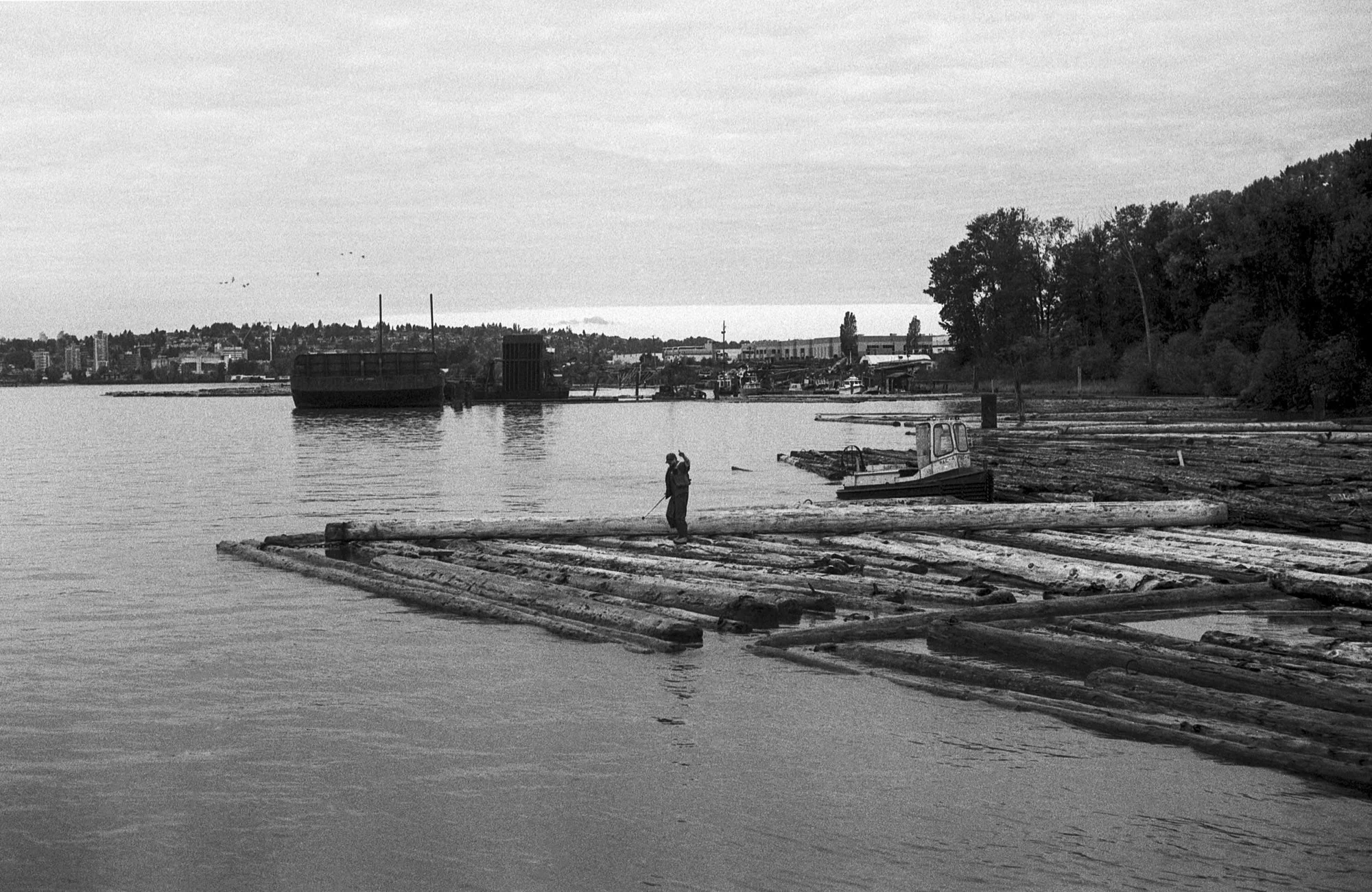
I relied on the same intuition I use when I photograph. If I had an emotional reaction to a photograph or a grouping of photographs, it went in. If I had two photographs I liked that were very similar or said the same thing, I would choose just one.
Another factor that influenced whether a photograph made the cut was the writing. Some photographs were impossible to sequence or pair together without an explanation. After deciding to include the writing, I went through the photographs again, and a bunch more jumped out at me that I felt I could include.
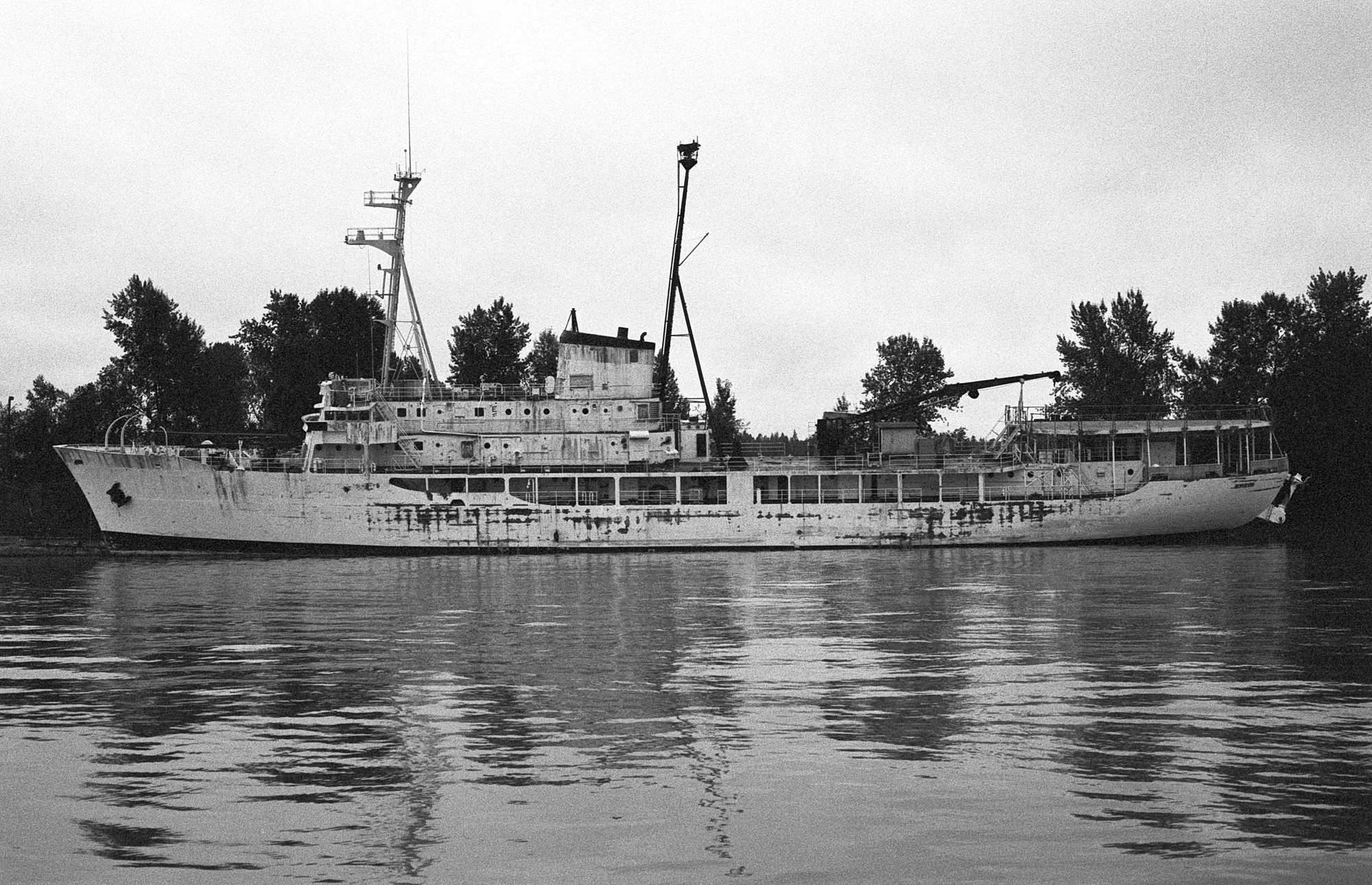
For example, the underwater photographs. It was difficult to make the connection between those images and the industry without explaining that they were made while cleaning the growth off the bottoms of the barges we tow. Without that context, I felt I wouldn’t have been able to include those photographs. A handful of the images I included were like that.
All the photographs I left out had different reasons for not making the cut, but mainly it came down to having made other photographs that said the same thing but said it better, or photographs that simply didn’t communicate what I was trying to say.
Sequencing: The book opens in Anyox, a mining town that was left empty, and ends on the deck of a tug. Why did you choose that start and that end, and how did you decide where to place your handwritten journal pages?
I liked the idea of opening the book in Anyox because I felt it gave the reader a sense of being deep in the Pacific Northwest, on some unknown trip. It was one of my first long jobs away from home, working on the Warlock, and I wanted to emulate how I felt during those first few days: very far from home, at the beginning of a new period in my life.
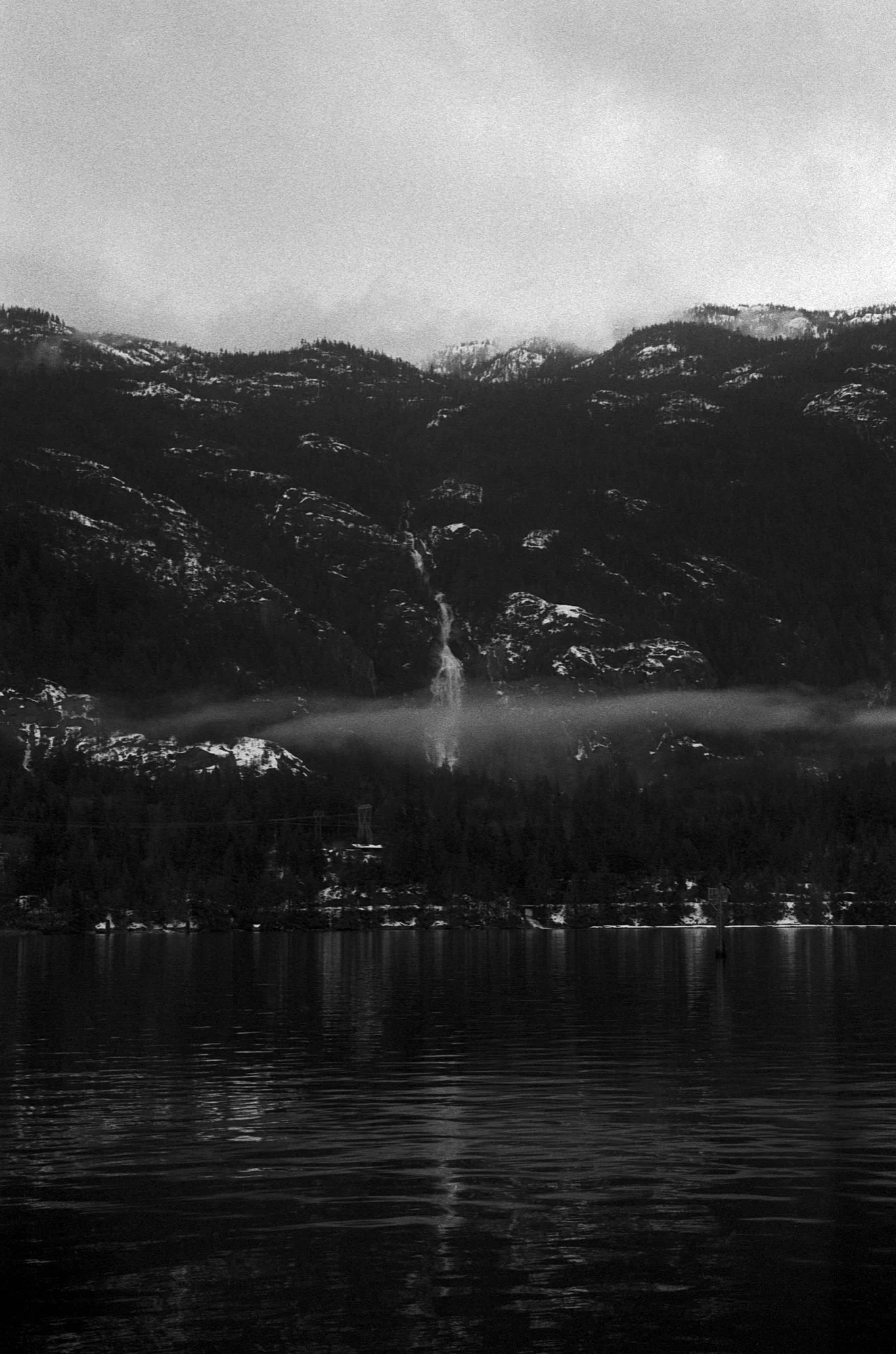
I ended the sequencing of the book with a photograph taken from the deck of the tug, looking out into an area of restricted visibility. I felt guilty about potentially stressing out the average readers by filling the pages with storms, intense situations, and near misses involving accidents and death. People who work in the industry will look at the photographs and feel less of an emotional reaction to them, as these situations are a pretty normal part of everyday life out there.
The fog flips that reaction. It seems like a very calming image for the average reader to end on, but fog is one of the most dangerous weather situations a towboater can encounter. I know operators who have nightmares about fog.
The placement of the handwritten journal entries and stories came about pretty naturally. I attended a workshop with Bryan Schutmaat and Matthew Genitempo from Trespasser. When they asked me to present my book idea, I nervously started rattling off a bunch of stories associated with the photographs. It seemed like that felt right, so they told me not to think too hard about the writing. I placed the stories where they made the most sense alongside the photographs.
Amy Kazymerchyk helped me edit the book, and through her, I met Andrew Witt. Both of them really helped me with the writing, which I’m grateful for. They pointed me in a direction that made it more digestible for a reader, rather than leaving it as a bunch of scrambled thoughts on paper, straight from my own head. It ended up being just enough effort to make sense without thinking about it too hard to ruin the natural flow of it.
Getting back to the order: You said you felt guilty about filling the pages with storms and near misses, so you ended with the fog. How did you place the calm pictures and the intense pictures between Anyox and the fog?
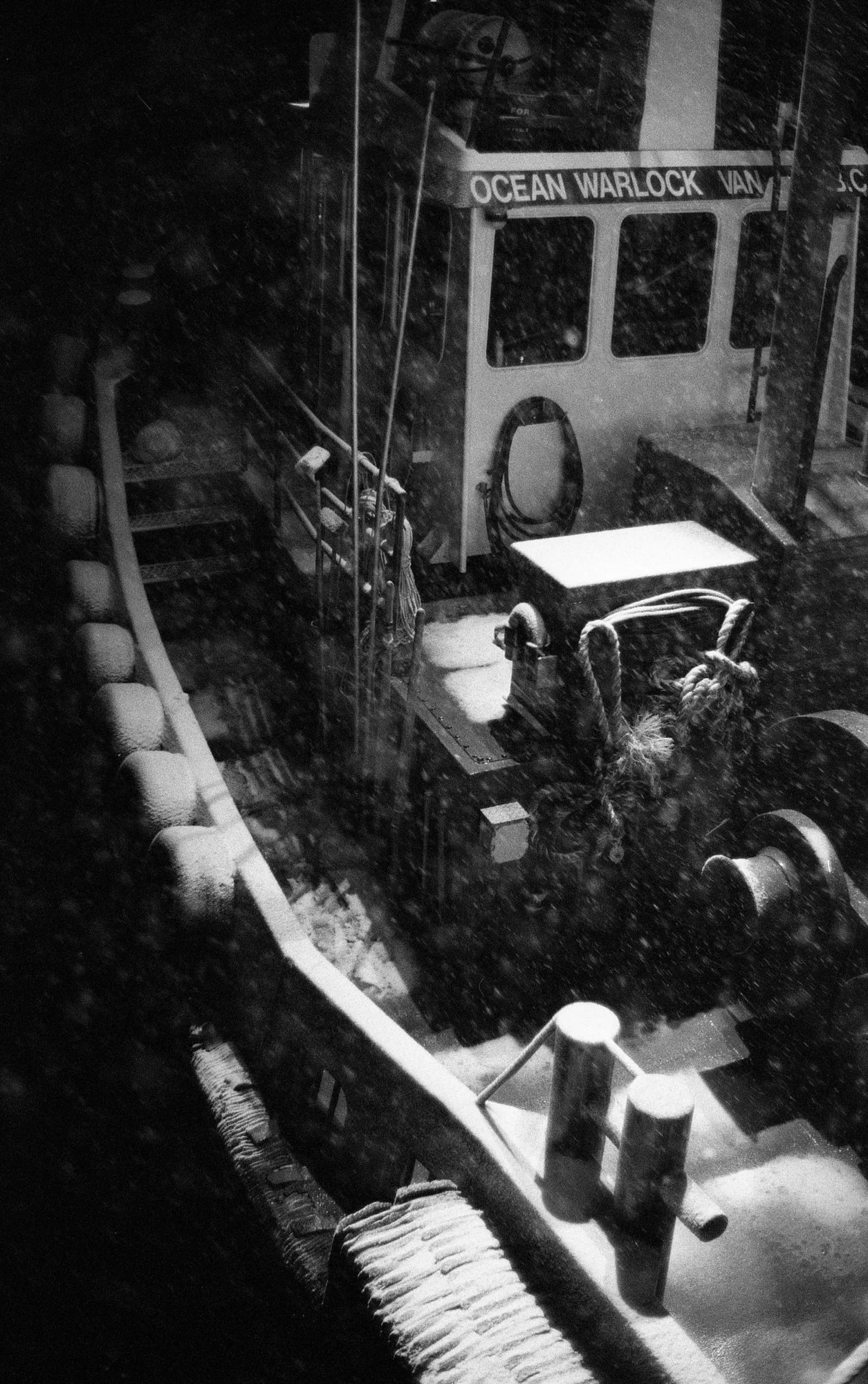
I felt a little guilty about potentially stressing people out. I placed the photographs into groups that related to one another, then worked with what I felt was a gradual increase in intensity within those groups, with a few breaks along the way. I separated some of those groupings with photographs of hatches and doors, leading into the next grouping.
I never placed too many strict rules on the sequencing, though. I went with what felt right, trying to be as honest as I could to the subject matter and the story I experienced.
Lessons: The hands-on skill of towing is slowly being replaced by technology. After eight years of photographing your own workplace, what lesson would you give a photographer who wants to document their own job?
I’m not sure I’m in a position to be handing out advice on photography, but I can say that I learned the best position to be in when photographing labour is as a labourer, not a photographer. I guess that could be taken as advice.
We'd love to read your comments below, sharing your thoughts and insights on the artist's work. Looking forward to welcoming you back for our next [book spotlight]. See you then!
