Mac Stone Spent 20 Years Photographing the American Southeast. His Book Shows Why It May Be America’s Most Overlooked Wilderness
Welcome to this edition of [book spotlight]. Today, we uncover the layers of 'American Amazon,' by Mac Stone (published by teNeues Verlag). We'd love to read your comments below about these insights and ideas behind the artist's work.
The American Southeast is not empty swamp.
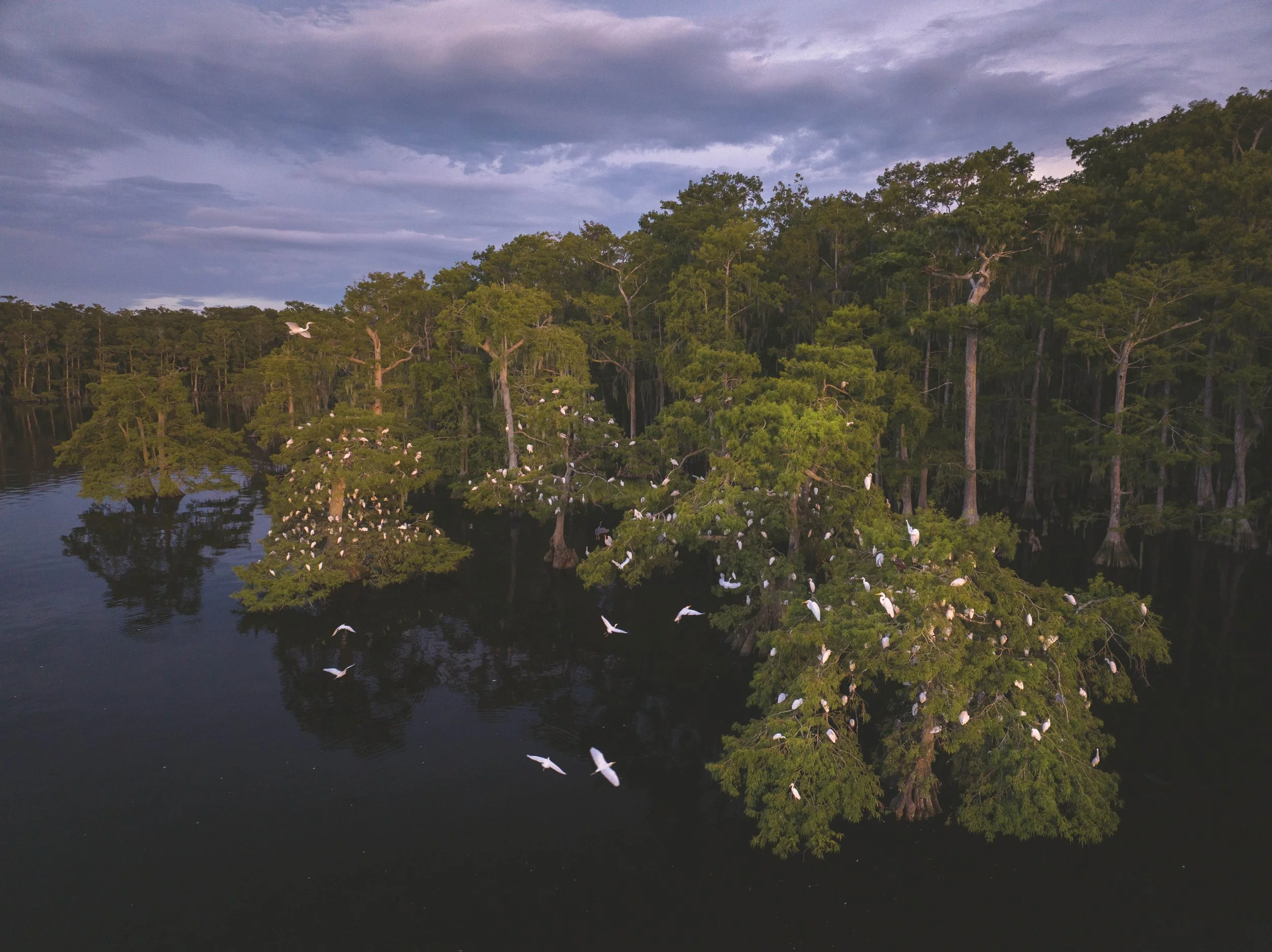
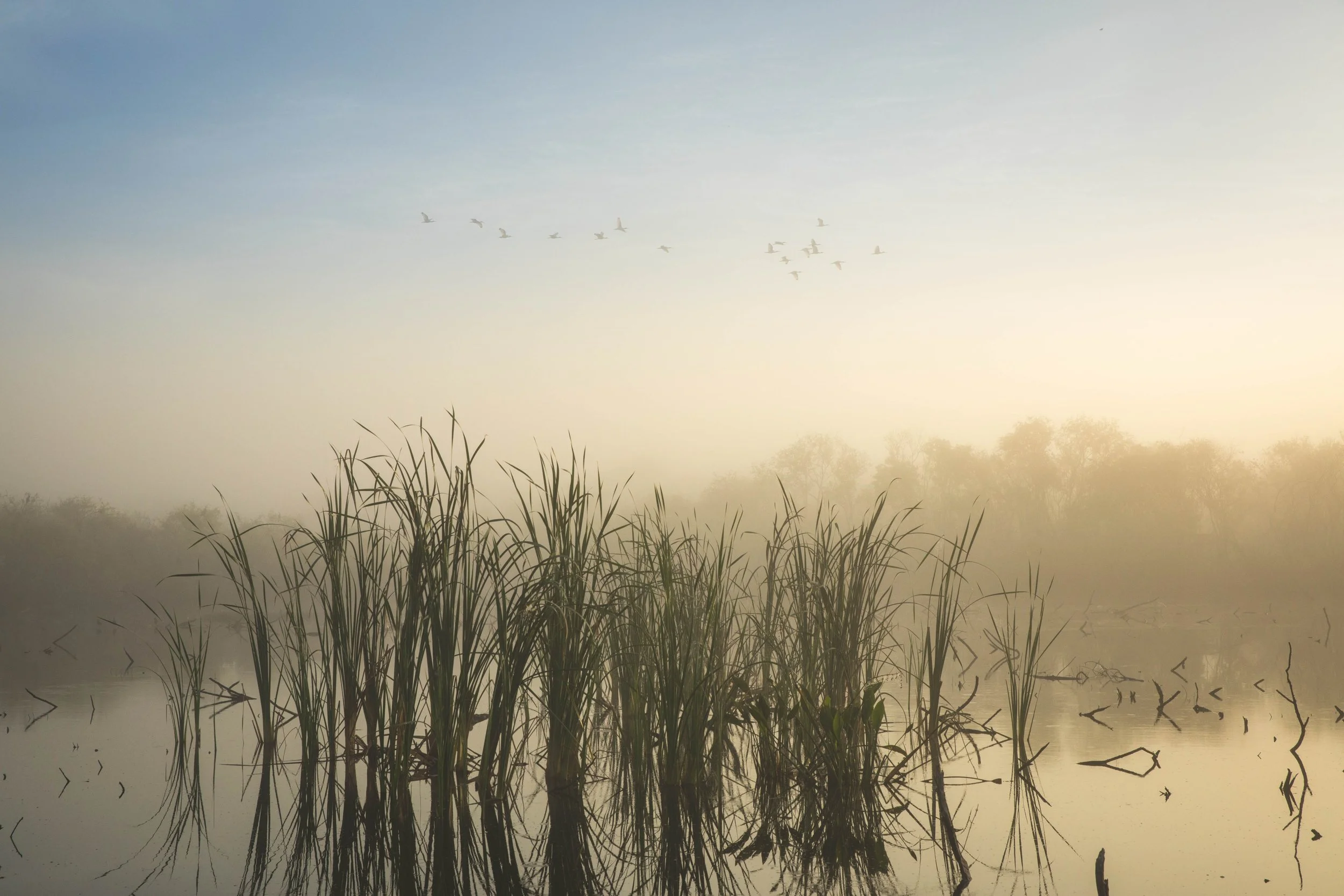
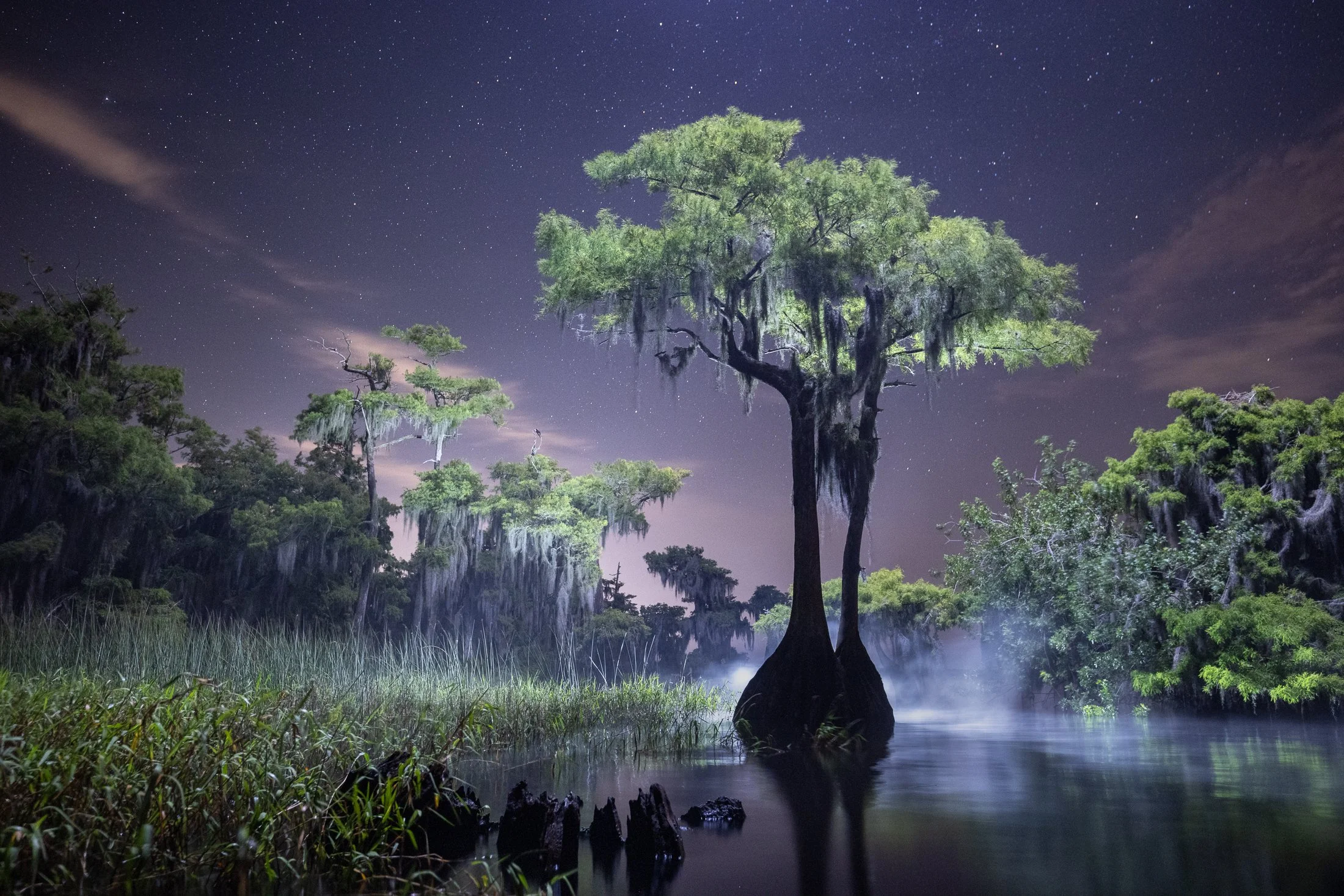
For Mac Stone, it is a place of ancient forests, living waters, orchids, alligators, salamanders, turtles, springs, rivers, and species many people never hear about. He grew up in Florida’s wetlands and later spent more than 20 years photographing the wider southeastern United States, from the Everglades to the southern Blue Ridge. His book American Amazon brings these places together as one connected landscape shaped by water, biodiversity, and loss.
American Amazon is also a story about what photography can protect.
Stone does not photograph wetlands only because they are beautiful, but because they are fragile, important, and still unknown to many people. In the interview, he speaks about ghost orchids, ghost forests, disappearing freshwater species, and the difficulty of photographing loss when the disappearance is not always visible. He also explains why beauty can be more effective than fear when you want people to care about a place. His work shows how long attention can turn one landscape into a serious visual argument.
This conversation gives a clear look at how a long-term project is built. Stone explains how childhood curiosity became field knowledge, how biology shaped his photography, and how editing 20 years of images turned separate places into one larger story. You can take from this article a practical lesson about working close to home: choose a place you truly care about, return to it for years, learn it deeply, and let that knowledge make the work stronger.
The Book
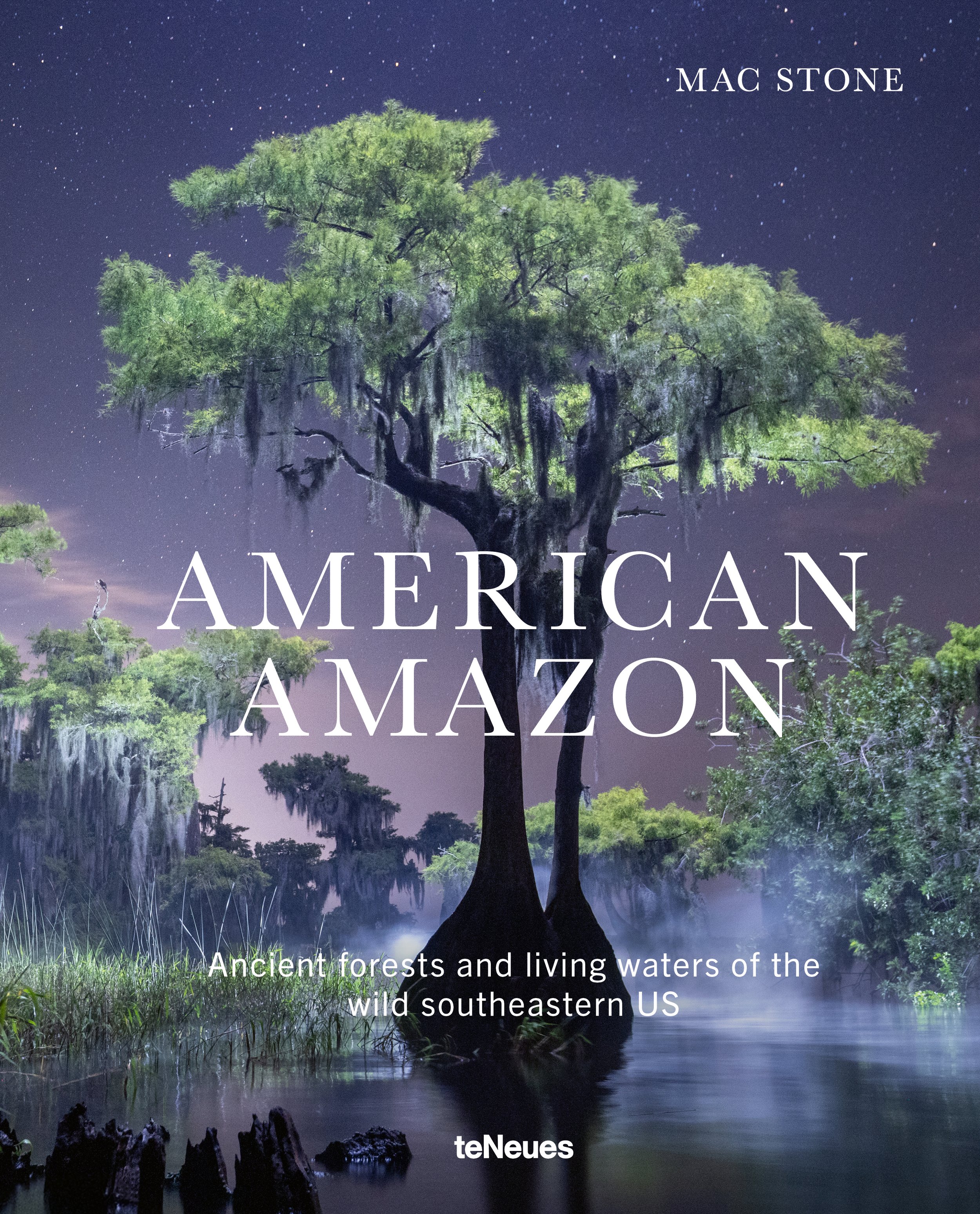
American Amazon by Mac Stone, published by teNeues, is a photographic journey through the ancient forests, wetlands, springs, rivers, and coastal ecosystems of the wild southeastern United States. Built from more than 20 years of fieldwork, the book presents this region not as separate swamps, forests, and deltas, but as one connected landscape shaped by water and biodiversity.
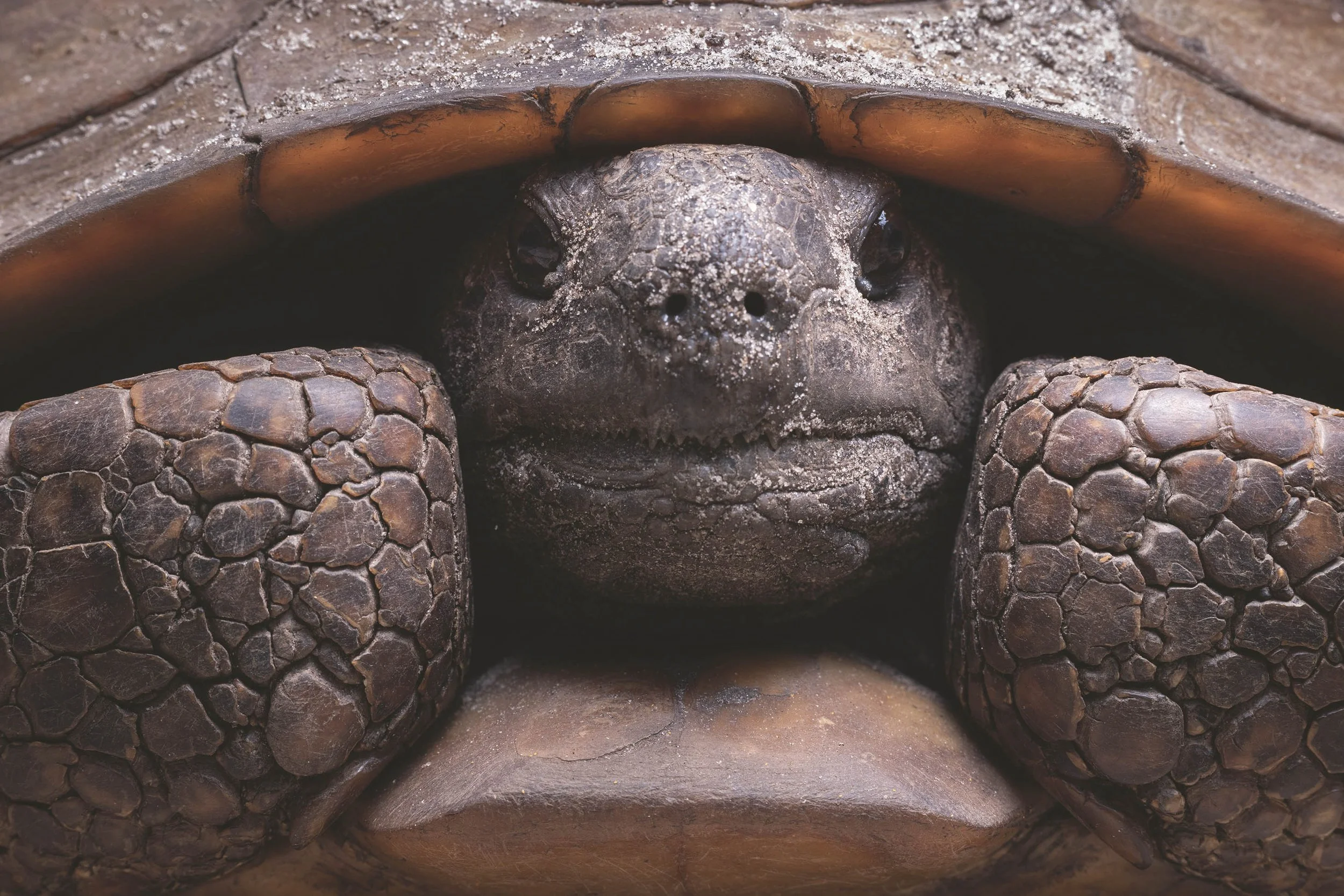
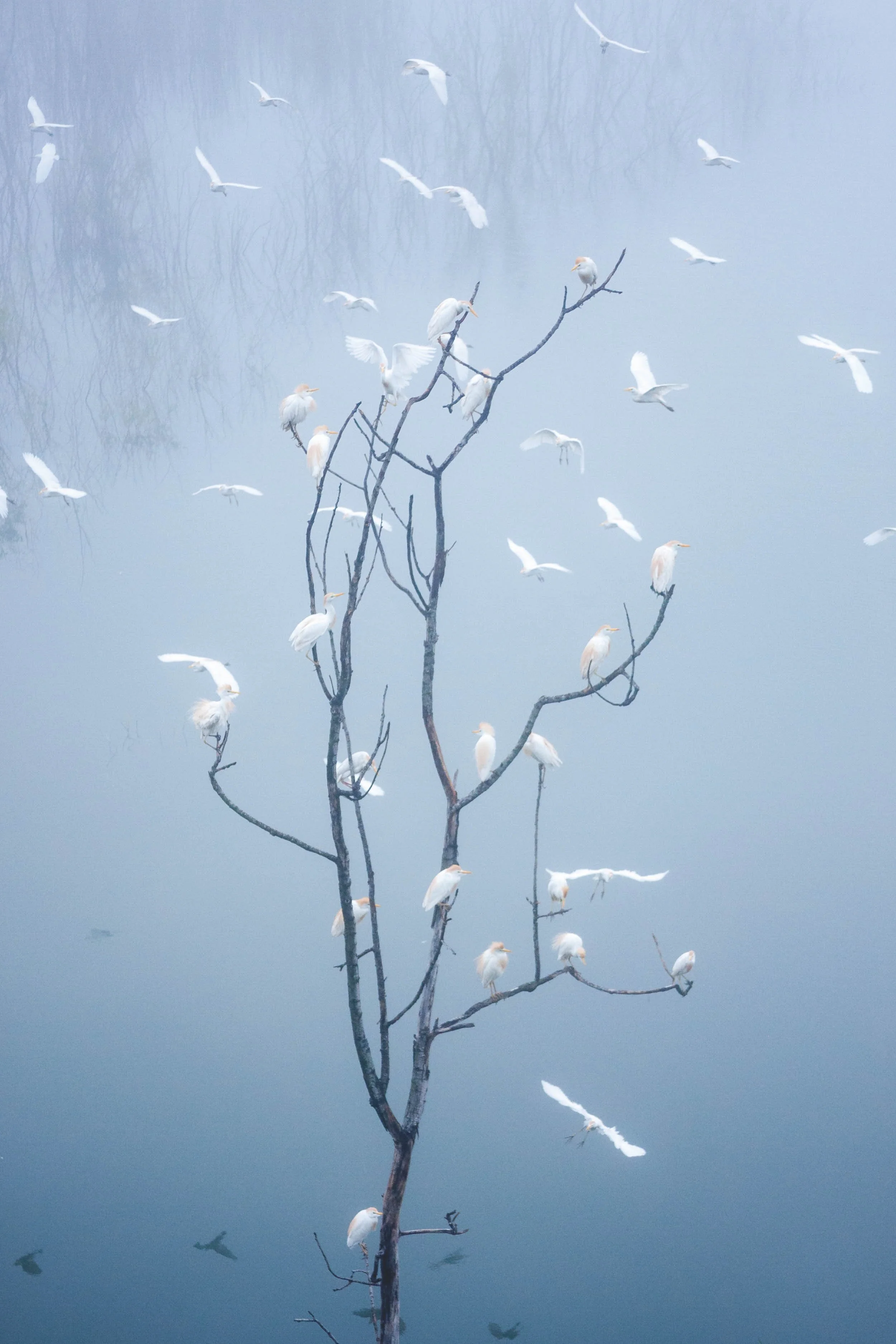
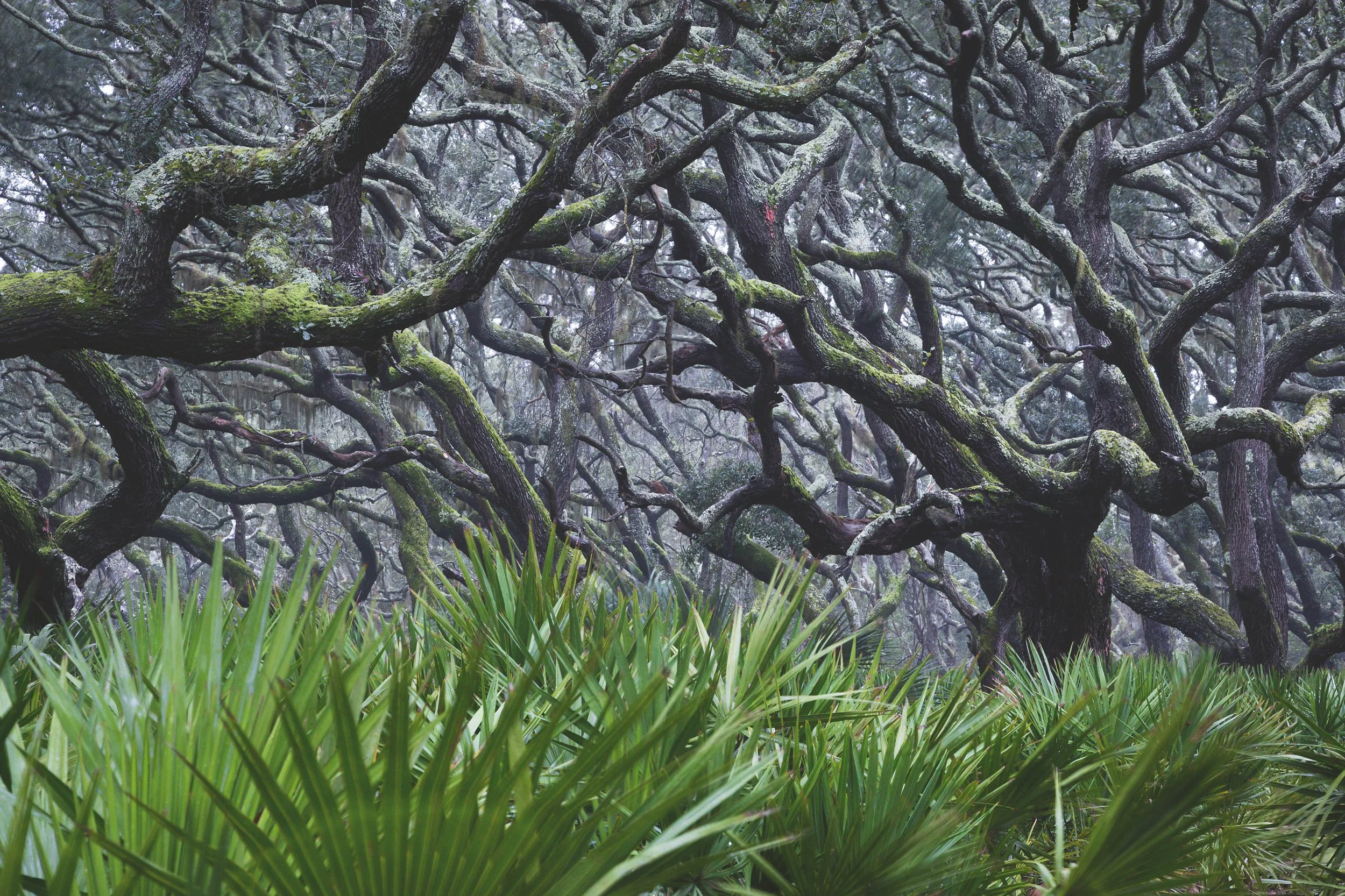
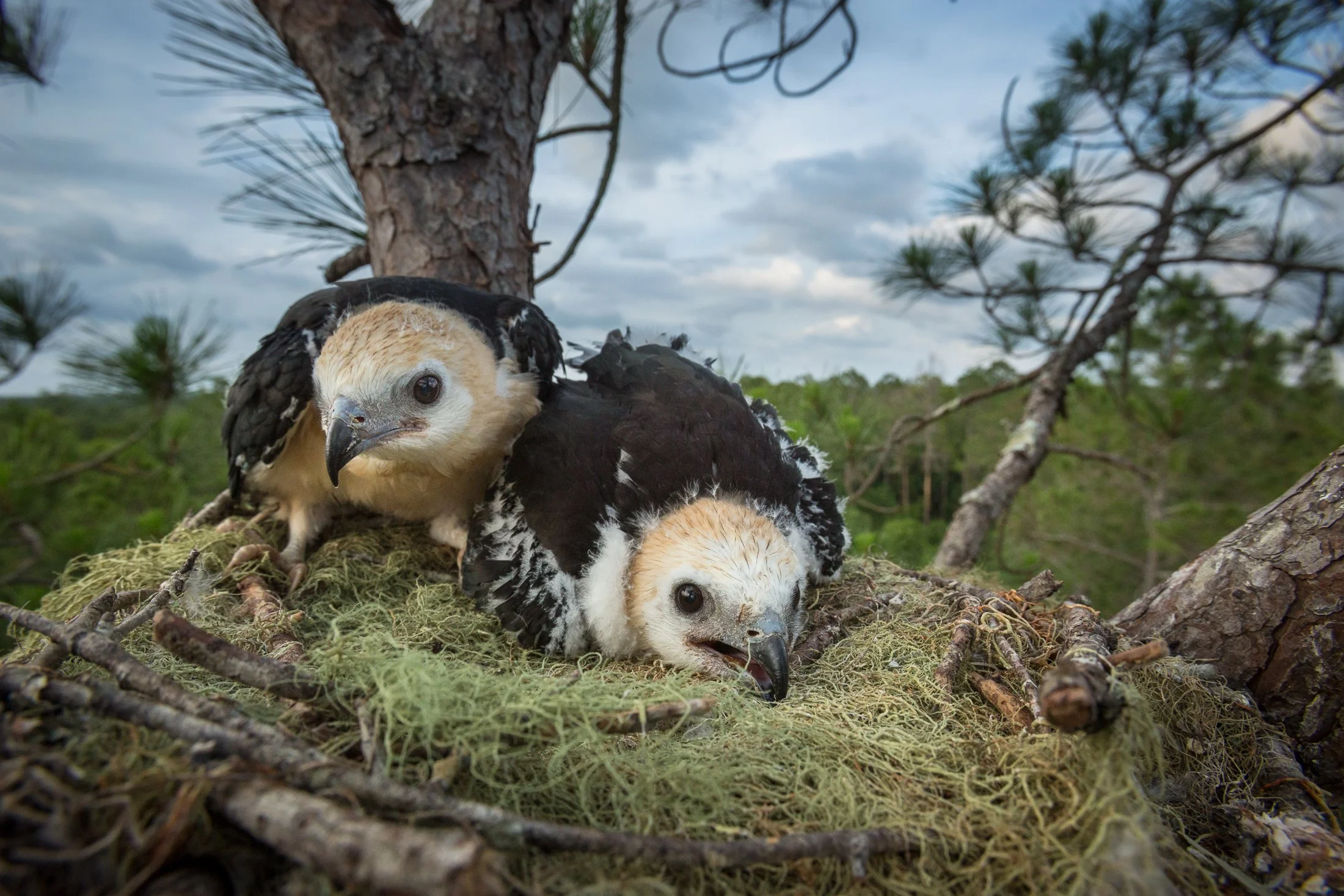
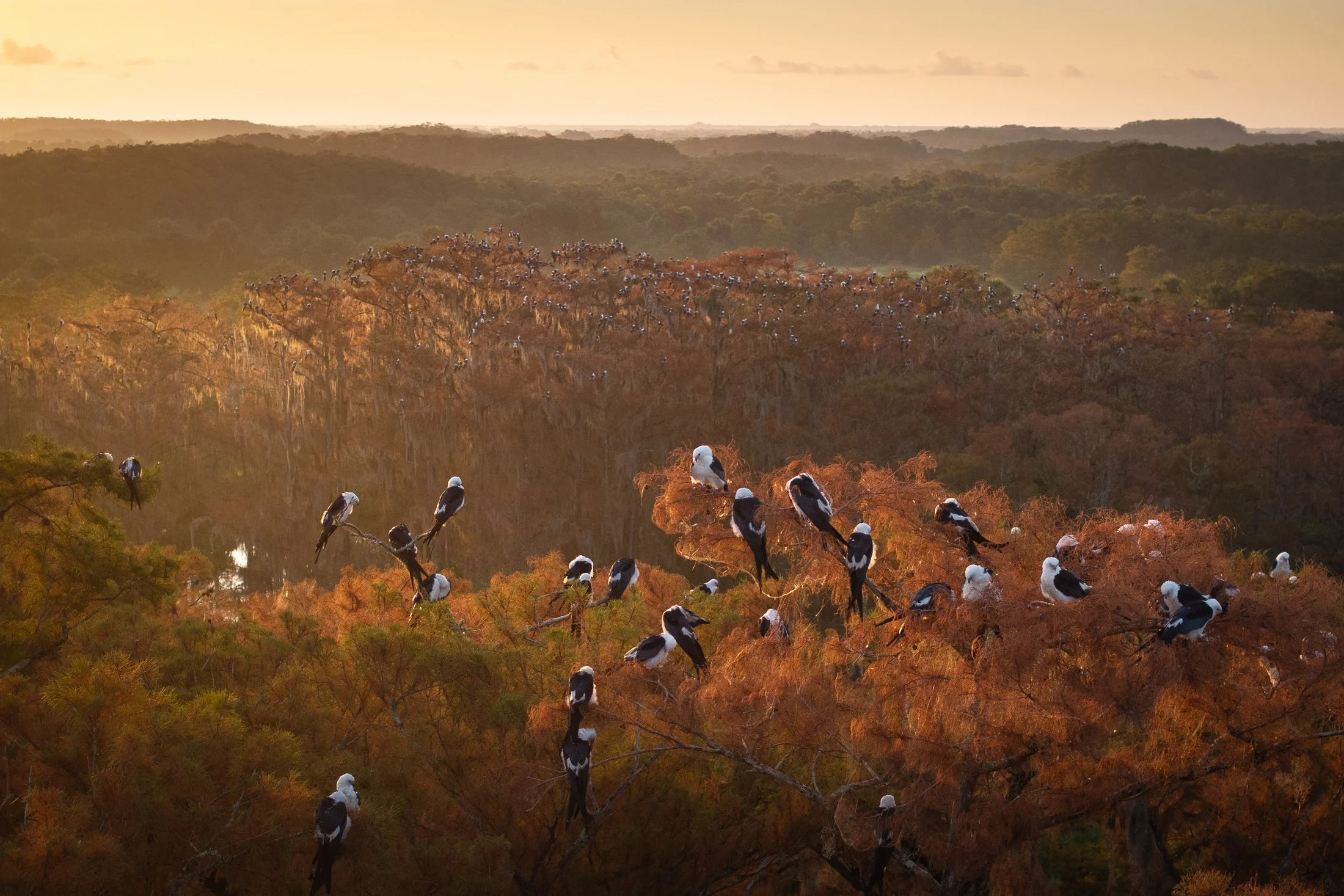
Across 272 pages, Stone documents a world of ghost orchids, alligators, salamanders, turtles, old-growth cypress, underwater springs, and fragile coastal habitats. The book also looks at what is being lost, from ghost forests caused by saltwater intrusion to disappearing freshwater species in one of the most biodiverse regions in the United States.
The book works as both a celebration and a warning. It shows the American Southeast as a place of rare beauty and ecological importance, while asking readers to recognize what is still alive, still close, and still possible to protect. (teNeues Verlag, Amazon)
Martin: Can you take me back to the beginning, before the books, National Geographic and Conservation work? What first made you want to photograph the natural world?
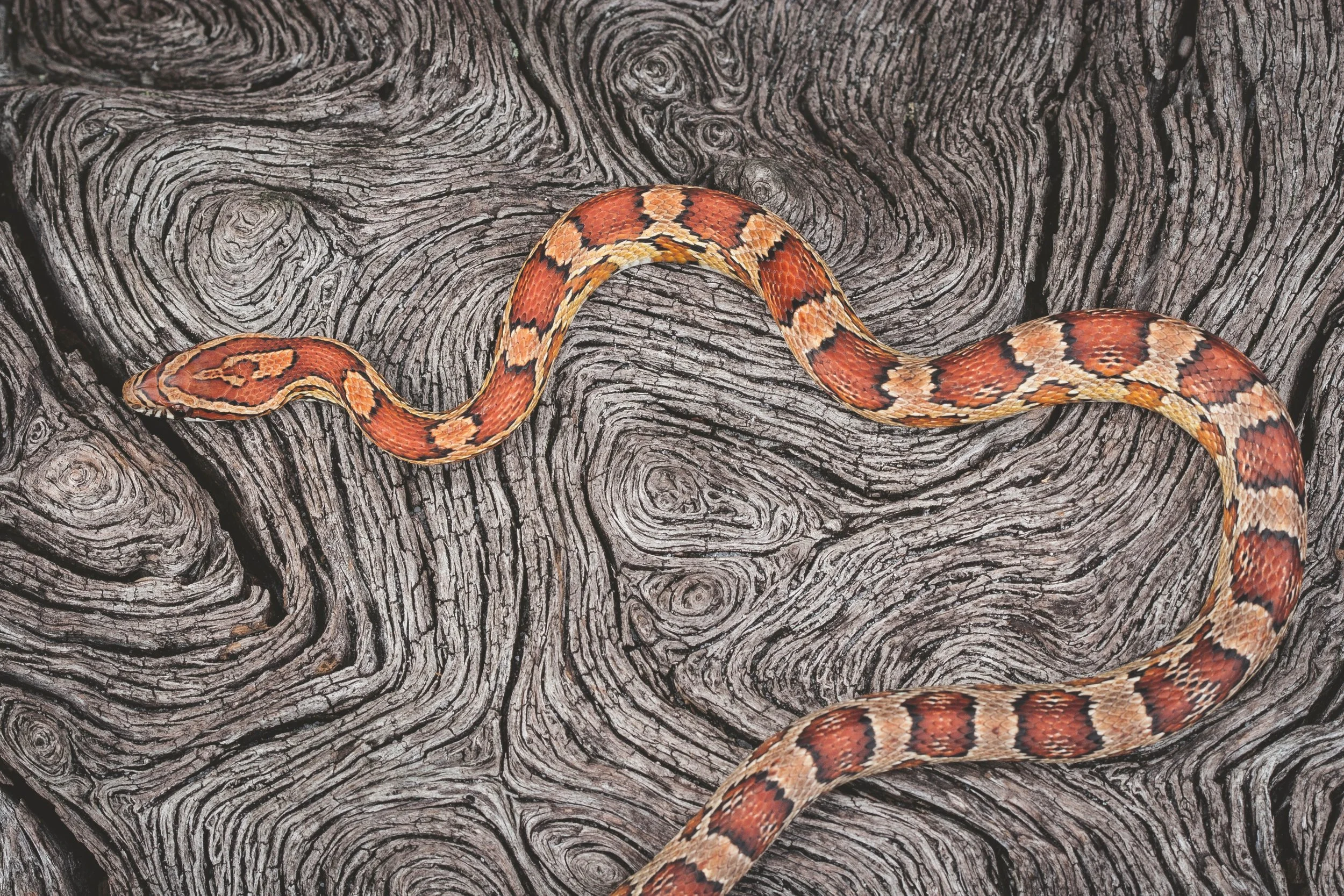
Mac: Long before any of that, I grew up in Gainesville, Florida, in north central Florida. The landscape there is dominated by cypress, swamps, marshes, prairies and springs, and my childhood was shaped by all of it. Every day after school I would come home and go out into the woods. My normal was hunting for fossilized shark teeth, finding snakes, roaming through those areas. That was my playground.
At some point I found my dad's old Minolta camera in his closet. He said I could use it, and I started taking it on little adventures, essentially as proof of life, documenting what I found out there. My early photos were obviously rough, and I burned through a lot of slide film, but what I was seeing was genuinely unusual. It was not hard for me to find snakes, alligators, owls, bobcats. My training ground was my backyard, and it happened to sit very close to some extraordinary wilderness areas.
I got obsessed early. I was reading John Shaw's Field Guide to Nature Photography and learning about exposure, about using the camera as a tool rather than just pointing and shooting, about manipulating light and manipulating situations to produce the image you had in your mind. That is really where it all started.
What was the first place or animal that made you feel this could become something serious?
I am not sure I ever had a single moment of realization, but I knew very clearly when I was serious about it. Near my house there was a small patch of woods I could bike to before I had a driver's license. I found it on an atlas because there was a wetland symbol on the map, which seemed promising. So I went out and explored it, and I found this beautiful creek lined with planar elms running over little shoals, with alligators and owls and all kinds of life. I started treating that place as my school for photography. I would go there every morning before high school, slogging around in the swamp, trying to make better and better photographs.
When you are waking up before dawn at fifteen or sixteen years old to go stand in a swamp, you know it is serious. Teenagers love to sleep. I had no interest in sleeping because I wanted to be out in that place.
What also made it feel important was that the same area eventually went up for a housing development. The county commission invited me to speak and show my photographs in an attempt to convince the developer not to build on all of it. We won a partial victory. They developed a good portion of it but left the rest. That experience planted something in me, this idea that photographs can motivate change if they are effective enough and if they communicate a message clearly. I still feel that if the photos had been stronger, none of it would have been developed. But it was the first time I understood how imagery can drive positive change.
You have a background as a field biologist, but you also clearly think visually. When did photography become more than a way to document what you were seeing?
From the very beginning it was a creative outlet. But it also taught me biology in a way that school never quite did. When you sit and watch animals, you start noticing subtleties in the way they move, in their behavior, in how they interact with the landscape.
When I was young I did not really understand the intricacies of how species relate to one another within a given landscape. Photography became my avenue into that. I remember photographing a swallowtail caterpillar on a branch and touching its back, and suddenly these gooey, foul-smelling horns came out as a defense response. I had never known anything about that, but making photographs of that caterpillar taught me about aposematic behavior and defense mechanisms in a way no textbook had.
I am still learning things, and photography still shapes how I think and feel about the world. There have even been instances where it directly influenced science. Through the photographs we were making of ghost orchids, we helped resolve a long-held scientific mystery about what pollinates them.
How did the photography actually help prove that?
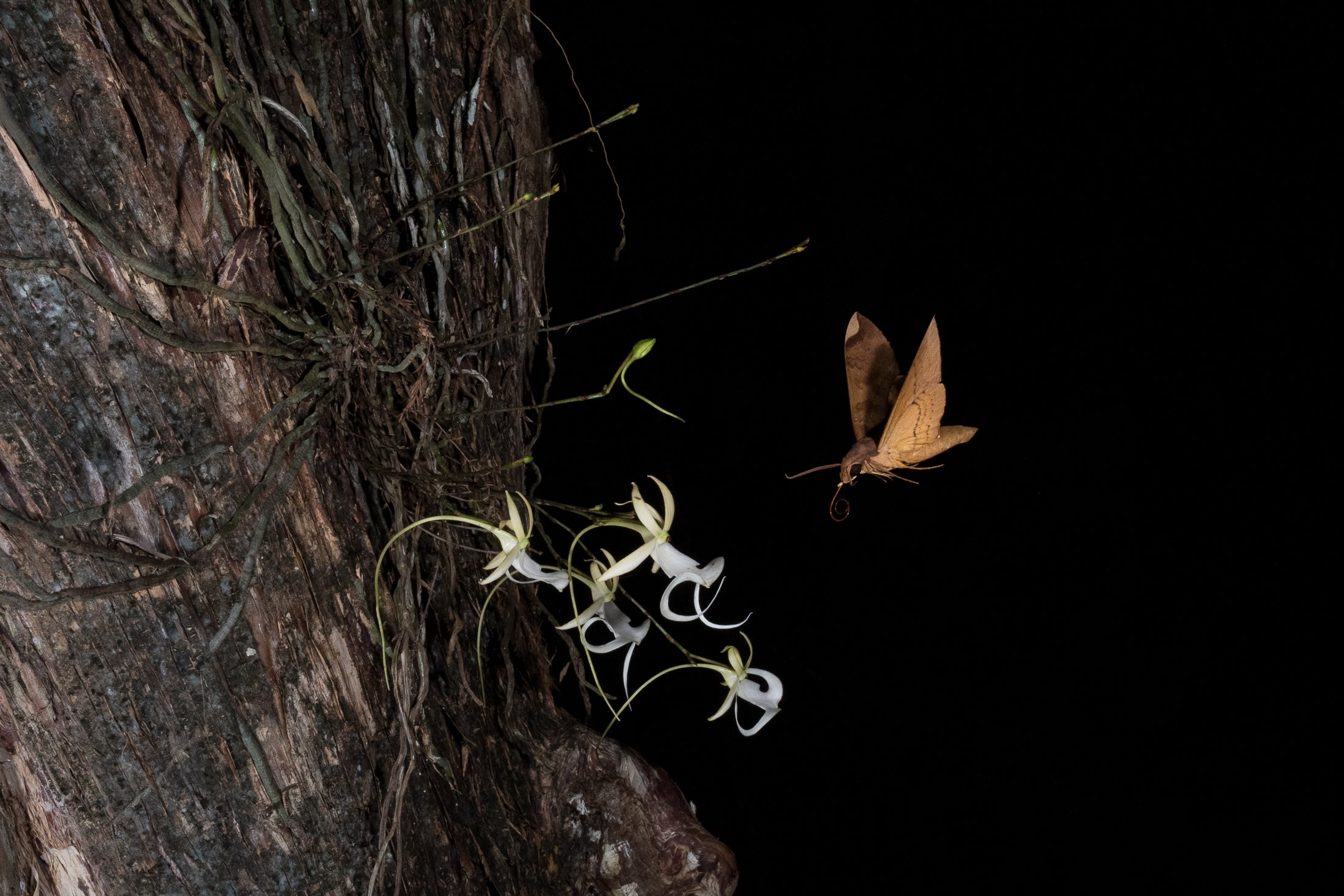
Ghost orchids are an endangered plant in the Everglades, threatened by poaching and habitat loss. Only around 2,000 individuals remain. For a long time, scientists believed the only moth capable of pollinating them was the giant sphinx moth, because the ghost orchid has a very long nectar spur and it was assumed only a long-tongued moth could reach it. That was accepted theory, but it had never been proven.
There was one particular ghost orchid at Corkscrew Swamp Sanctuary growing 50 feet up in an ancient cypress tree. I mounted my camera up there with an infrared trigger and strobes and left it running for three months. We did photograph the giant sphinx moth visiting the flower, which was the image I had set out to get. But we also captured a fig sphinx moth with pollinia on its face, which meant it had just pollinated a ghost orchid, and that completely overturned the assumption that there could only be one pollinator.
On closer inspection, the images of the giant sphinx moth actually revealed something else surprising: its face was not entering the flower deeply enough to make contact with the pollinia. It was drinking the nectar without providing any benefit to the plant at all. So the photographs introduced a new hypothesis: that the giant sphinx moth, long considered the orchid's pollinator and therefore its savior, is in fact a nectar thief.
And the other way around: did biology change the way you noticed things through the camera?
Absolutely. The ghost orchid situation is a rare case where photography influenced the science. Far more often, it goes the other direction. I will read published studies and papers to identify specific behaviors or rare one-off events that researchers have documented, and then try to figure out whether I can actually photograph that. The science informs what I go looking for.
I also work closely with biologists to make sure that what I am photographing is not coming at any detriment to the animal, and that I am interpreting what I see accurately, not anthropomorphizing behavior, and genuinely documenting something that adds to the overall picture of that species.
Wetlands and swamps are often misunderstood, even feared. What did you see in those places that other people seemed to miss?
I think it comes down to upbringing. My normal was swamps and wetlands, so I never experienced them as spooky or threatening. They were just playgrounds, my backyard. I have never had any fear of these places. They have always been places of exploration and adventure.
From a creative and photographic perspective, they also offer something unusual: there is simply not much photographic representation of them. Everybody wants to go to the Rockies, or the Alps, or Kenya. Those landscapes have enormous bodies of work dedicated to them, and I honestly do not know what I could add to those conversations. But because I feel so strongly about these wetlands and swamps, and I am genuinely passionate about them, I am willing to invest far more time and creative energy. I can give these places a spin that people have not seen before. I think that is where great imagery or great artistry comes from in general: a deep passion for a subject or a place.
The book is called American Amazon. Do you remember the moment when that phrase first changed the way you understood the southeastern United States?
It was less a single moment than a slow accumulation. I have been photographing across the American Southeast for as long as I have held a camera, the mountains of the southern Blue Ridge, the swamps, the Everglades, the coastlines and deltas. For a long time these all existed in my mind as separate, distinct habitats. The swamps were their own thing, the Everglades their own thing, the deltas their own.
The first time I heard the term American Amazon was actually in the Everglades, from Mike Owen, a botanist and park ranger at Fakahatchee Strand Reserve State Park. He used it to describe the extraordinary orchid and epiphyte diversity found there. Then, when I moved to the southern Blue Ridge thirteen years ago, a park ranger named Tim Lee was using a similar phrase for Jones Gap State Park and Caesars Head State Park, because of the sheer volume of rainfall, between seventy and eighty inches a year, making it essentially a temperate rainforest.
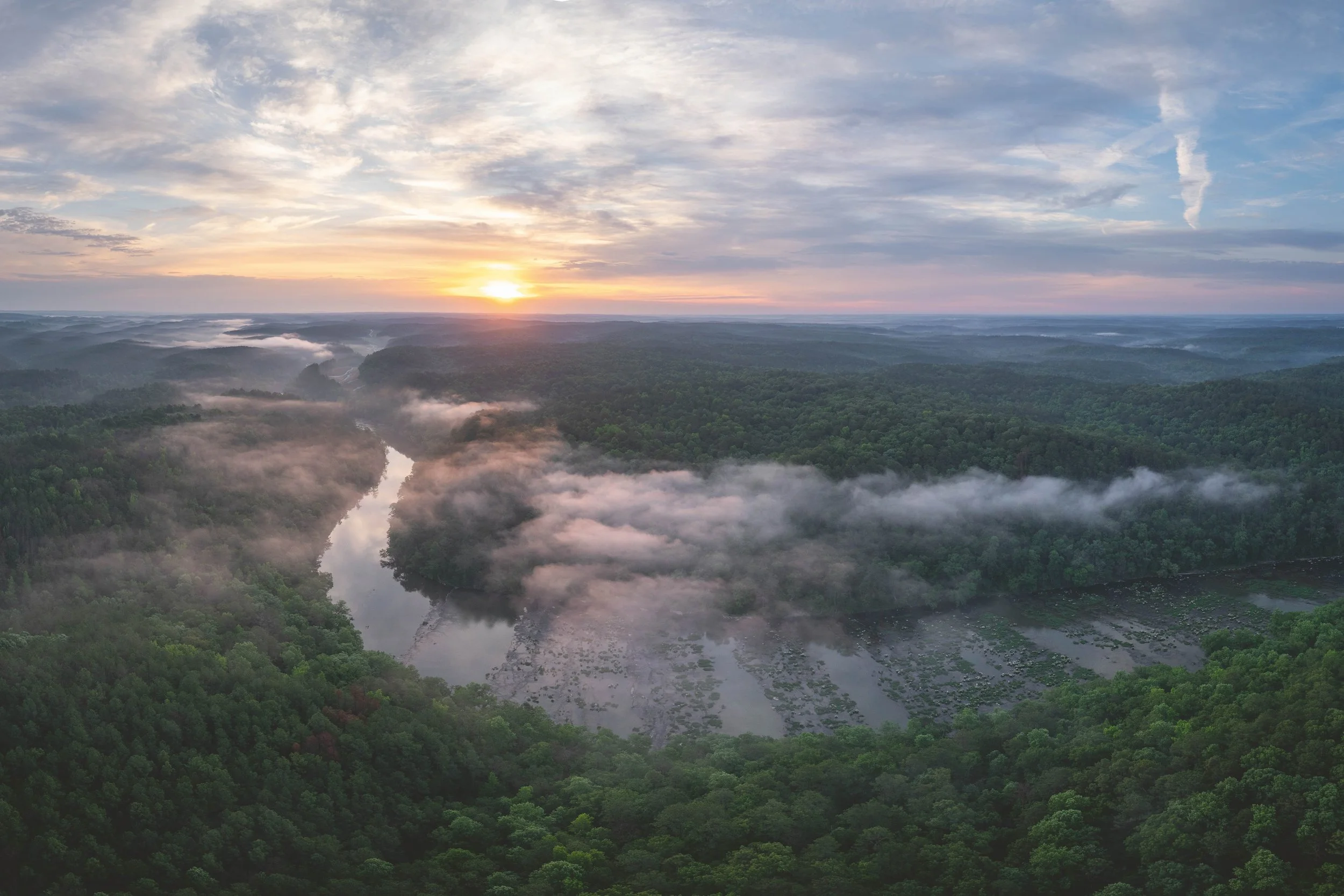
From there we started thinking about how water moves through all of these systems, how the headwaters of the southern Blue Ridge spill out into the Piedmont Plateau and diffuse into the Atlantic and Gulf Coastal Plains. We started thinking about these not as separate state parks or national parks but as a vast, connected network of lands that escaped glaciation. That stable climate over a long period allowed species to evolve in unusually diverse and fascinating ways.
The concept of American Amazon came from that: biodiversity found across the Southeast, connected by water, with state boundaries dissolved, asking people to think of the region as a whole. This is one of the longest-settled areas of the country, and yet most people do not think of it as a biodiversity hotspot. If people want biodiversity, they assume they need to go to Africa or Southeast Asia. But the Southeast is the epicenter of freshwater biodiversity in the United States, and that is the story we want people to associate with these states.
You spent two decades in these ecosystems. At what point did you realize this was not simply a collection of photographs, but a major body of work?
Honestly, just recently. It came into focus when we started working on the film with Grizzly Creek Films. The book is a companion piece to an IMAX film and a PBS Nature series, and working on that project started linking all of these places and habitats I had been photographing for years. I never quite saw how my work in the underwater springs connected to the Everglades work, or how either of those connected to what I had been doing in the headwaters of the southern Blue Ridge, until this project pulled it all together.
Water became the unifying thread: where it reaches, how it moves, how its abundance or absence shapes an ecosystem, how topography directs it. Looking back across twenty years of work through that lens, it became clear that all of it was sitting under one very broad umbrella. As a photographer, you sometimes wonder how disparate bodies of work will ever fit together or what puzzle they are helping to fill in. This project answered that question, and it has been a genuinely wonderful thing to watch it come together.
The images move from vast landscapes to intimate encounters with animals, plants, water and texture. How did you decide what kind of image the project needed at any given moment?
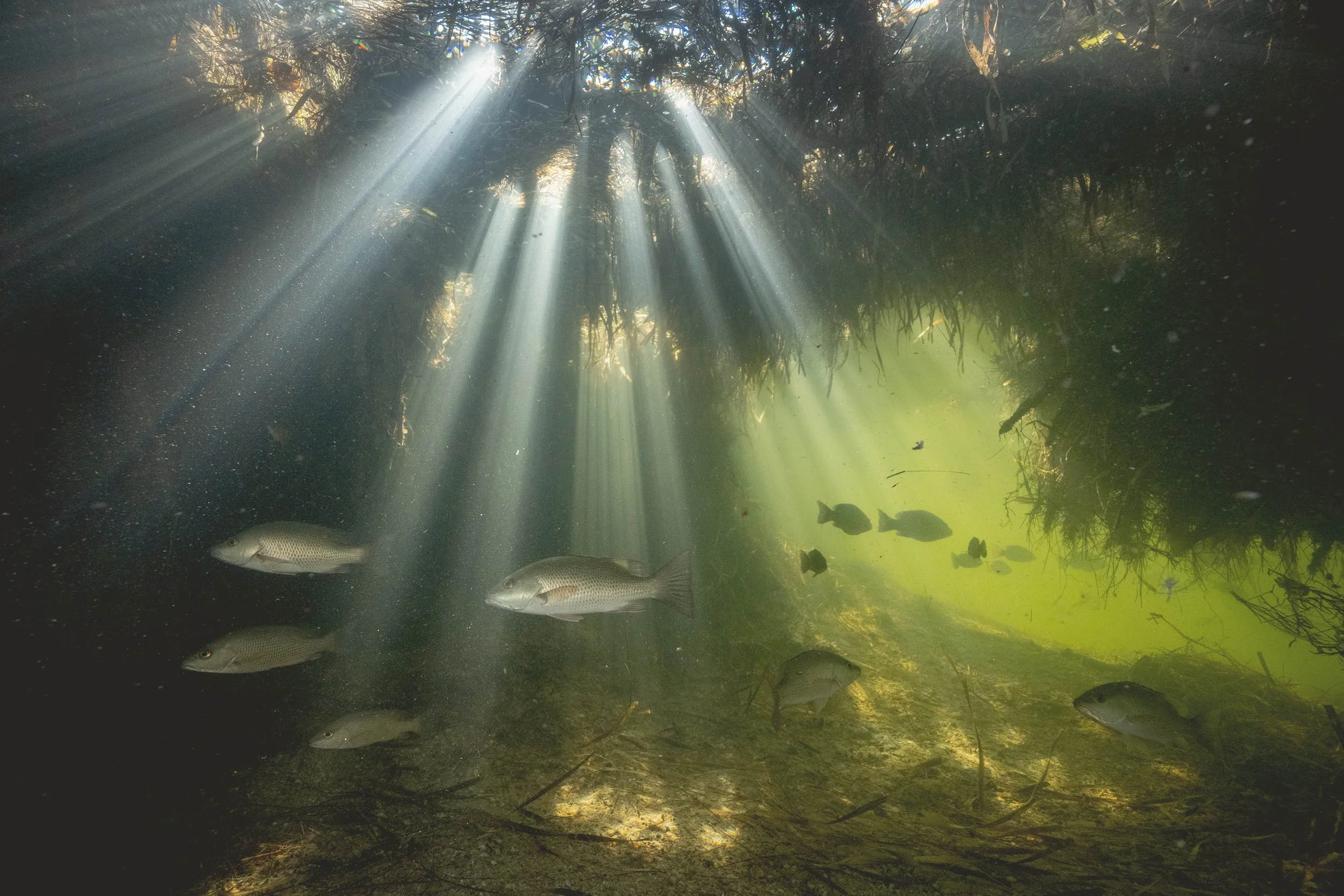
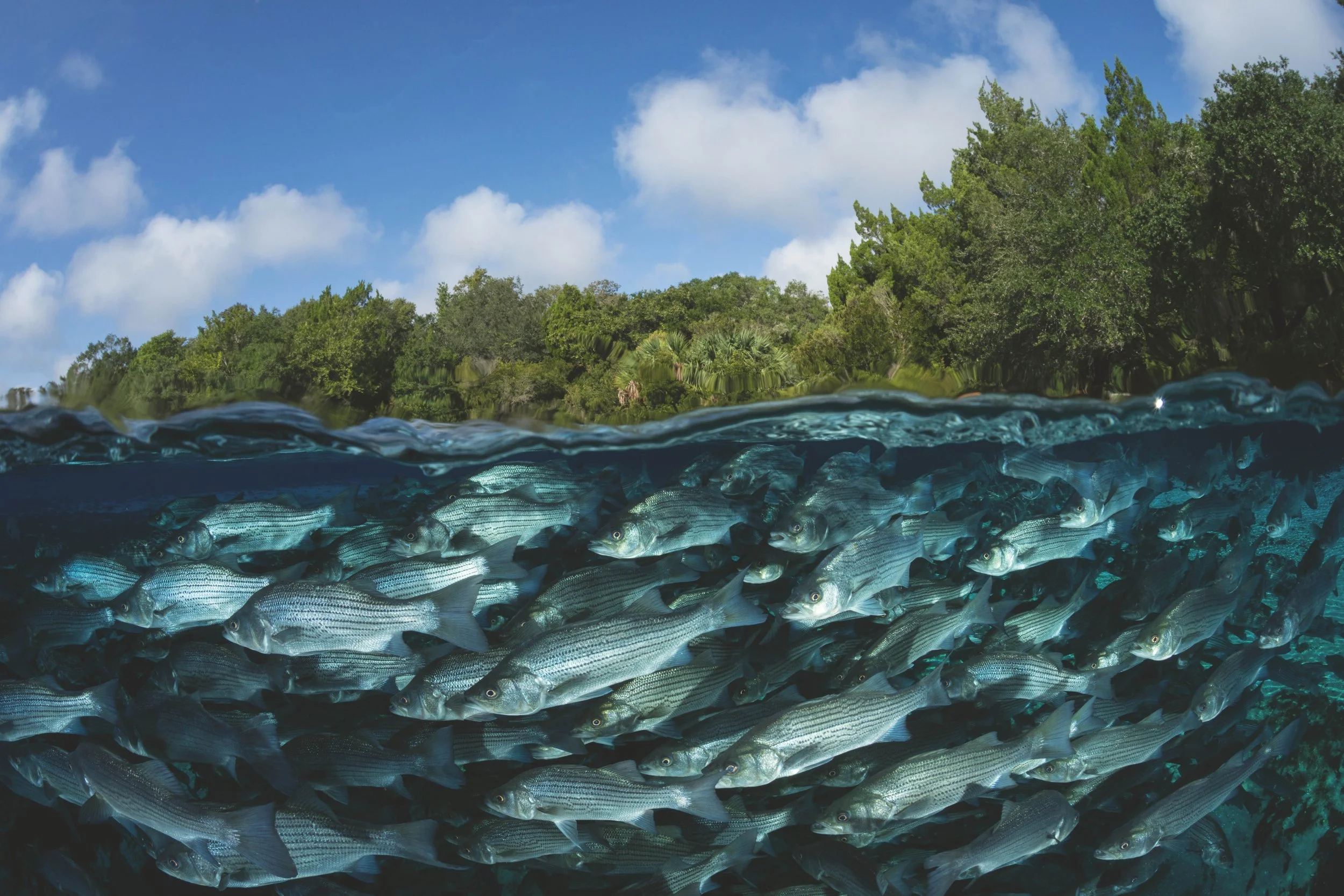
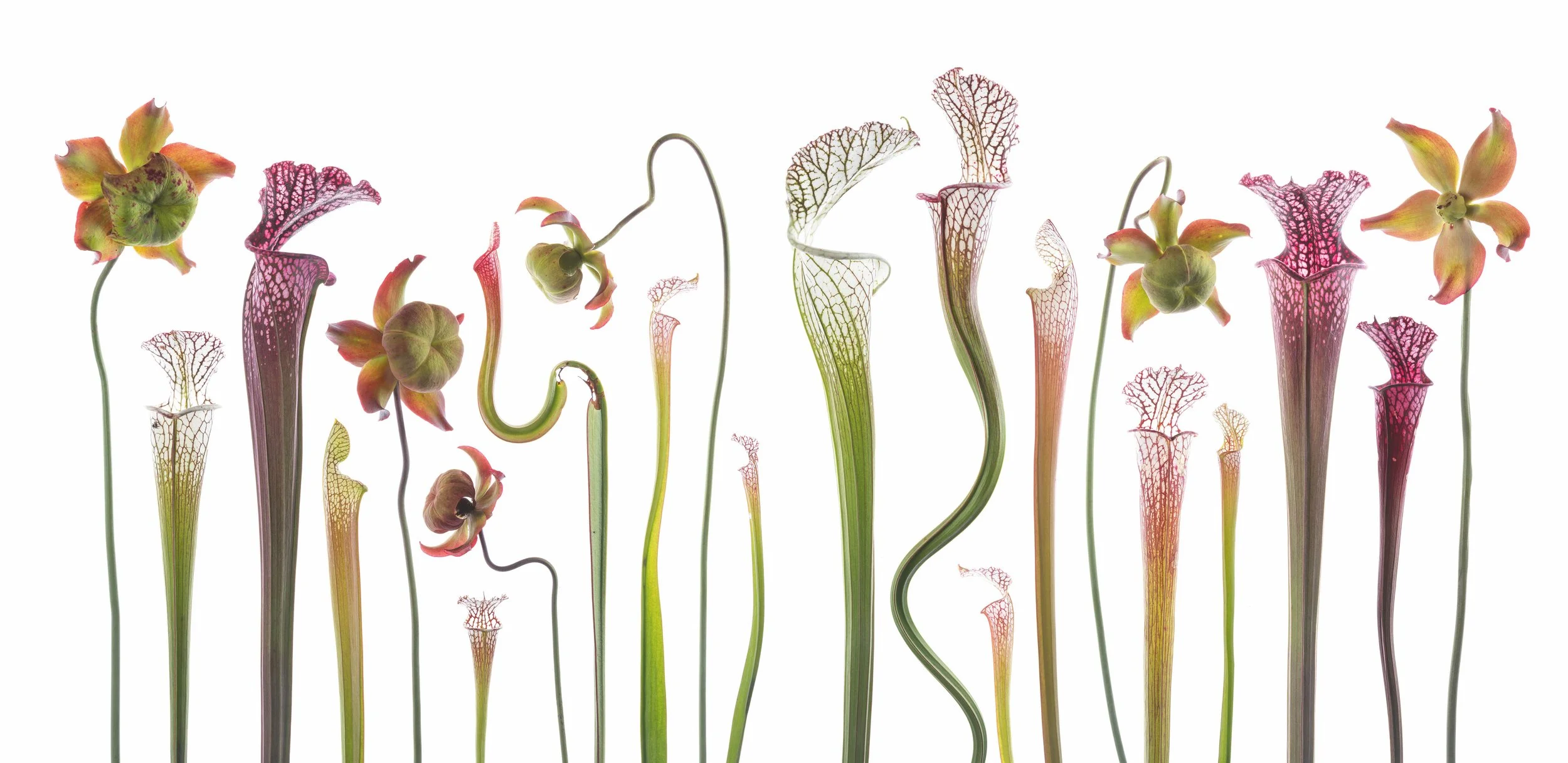
Over those twenty years I employed a wide range of styles. I would not necessarily call myself a wildlife photographer, even though a lot of what I shoot is wildlife. There is also studio work in the book, images on white backgrounds that clean the visual palette as you flip through the pages and allow individual species to have their moment without any surrounding distraction. There is a lot of nighttime imagery, a lot of stars and light painting, and a significant amount of underwater photography to show the aquatic world.
I was very fortunate on this project to work with Kathy Moran and David Griffin, both former deputy directors of photography at National Geographic. They helped distill an enormous amount of material. I would put large numbers of images in front of them and we would work through which ones were more impactful, which told a story more effectively. Narrowing down twenty years of work into a single book is genuinely difficult, but working with people who have looked at millions of photographs and helped shape some of the most impactful visual journalism in the world made that process as good as it could be.
Was there a type of image you realized was missing when you started editing the book?
There are dozens I still want to make. The southeastern region contains so many fascinating species that you could spend five years photographing just the nesting behavior of the small shiners found in Appalachian headwater streams, or their relationships with other fish. I did not photograph any mussels for this project, but Alabama alone has one of the greatest mussel biodiversities anywhere in the world.
The Southeast does have some megafauna: panthers, bears, reintroduced elk, and hopefully red wolves in the future. But most of what appears in this book are birds, salamanders, plants, turtles and aquatic species, because that is genuinely where the heart of the biodiversity lies. Once you start exploring that world, there is an infinite number of things to photograph, with remarkable adaptations at every level. I call the missing images job security.
Some of these photographs are extremely beautiful, but the stories behind them are often urgent or fragile. How do you balance beauty with warning?
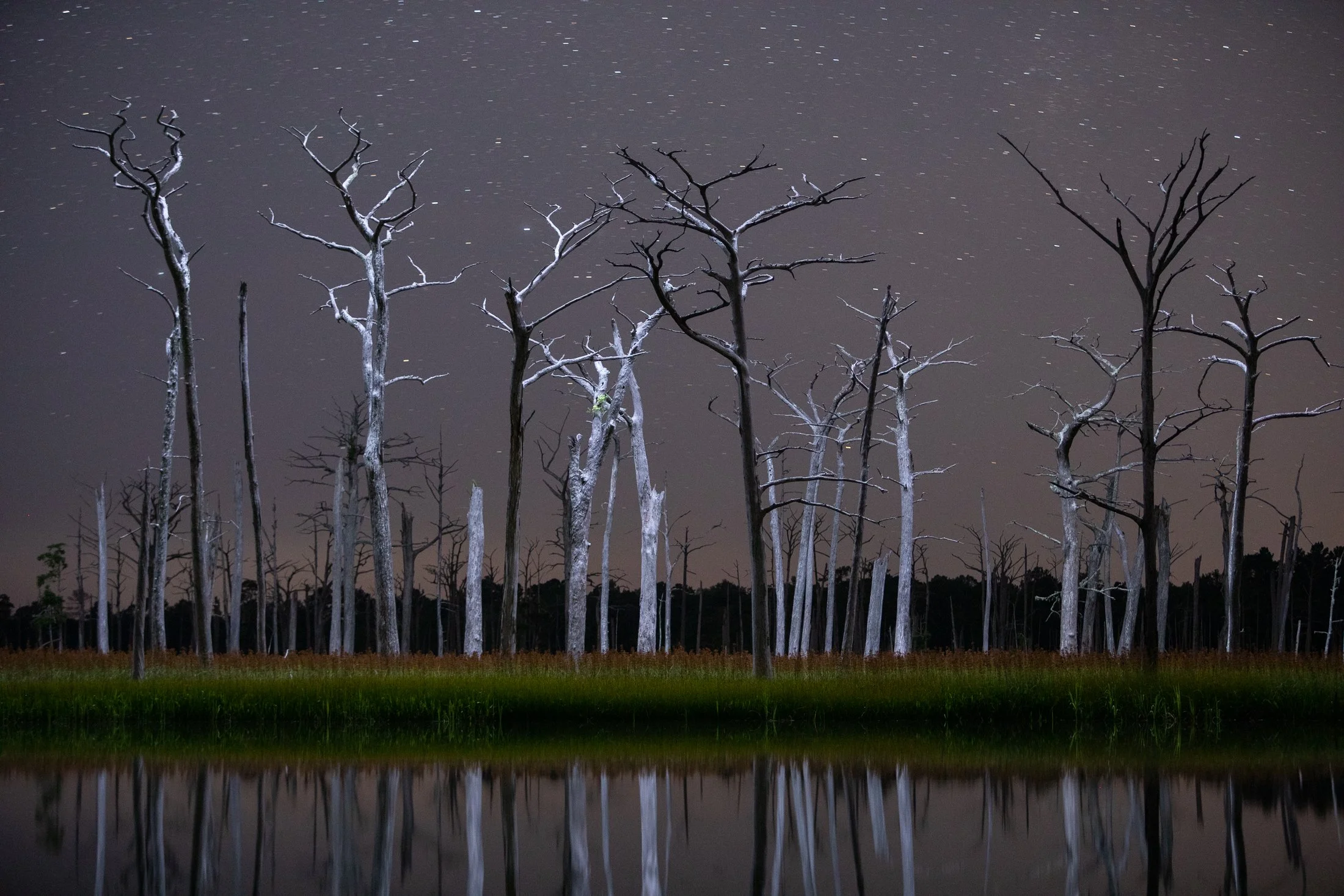
As a storyteller and photojournalist, you cannot make everything beautiful. You also have to show people what is at stake. In this book we document the ghost forests emerging along the coast as sea level rise drives saltwater intrusion into freshwater ecosystems, slowly replacing ancient coastal forests with salt marshes. That is a story I worked on for National Geographic. In one sense the book is celebratory: we still have ancient old-growth cypress swamps to learn from, to have experiences like the ghost orchid story. But at the same time, the changes happening in coastal areas raise urgent questions about the future of these wetlands.
My inclination is always to educate with the carrot rather than the stick. I want to show people what is beautiful, what is worth exploring, what exists right in their backyard. I am an optimistic person by nature. But the most urgent thing for me is simply that people know what is out there. We are increasingly connected to screens and increasingly indoors, and if people never go out and see what surrounds them, they will not care about it and they will not become its future advocates. Showing them something beautiful is the most direct path to making them care.
Thinking about ghost forests, invasive species, extinction and disappearing life: how do you photograph loss when the disappearance itself is not always visible?
It is hard. That is a genuinely difficult thing to solve photographically. One of the stories featured prominently in this book came from Alabama, which is a remarkable state: one of the most biodiverse in the country, and yet it leads the nation in extinctions, particularly of freshwater species like mussels, fish and crayfish. That loss is almost entirely caused by dams and the re-engineering of the state's hydrology for electricity generation and development. How do you photograph that? I am still working it out.
Part of the answer is simply making Alabama visible in the first place. I grew up in Florida, which borders Alabama, and I knew virtually nothing about the state beyond football rivalries. I want its export to the rest of the country to be an understanding of Alabama as one of the great wilderness areas for freshwater biodiversity. I hope these images can start to tell that story.
You were also working as part of a larger cinematic collaboration, including an IMAX feature and a PBS Nature series. How did still photography differ from moving images when telling the same story?
They differ considerably. I am used to working alone and taking as much time as I need on a single frame. Working with a film crew means organizing five different people to reach a remote location and stay for a week, which brings a very different set of logistical challenges.
But the exciting part is that because I am so accustomed to working alone, having a team makes a lot of things much easier. There is someone to hold a light, someone to bounce an idea off, and their perspective sparks new angles you would never have considered on your own. The cinematographers on this series are genuinely world-class, and some of the behaviors they captured on film have never been seen before. I think it is going to reveal this region in an immersive and compelling way, and hopefully create real pride in the people who live here.
When you are photographing an ecosystem this large, how do you know what belongs in the story and what is only a beautiful distraction?
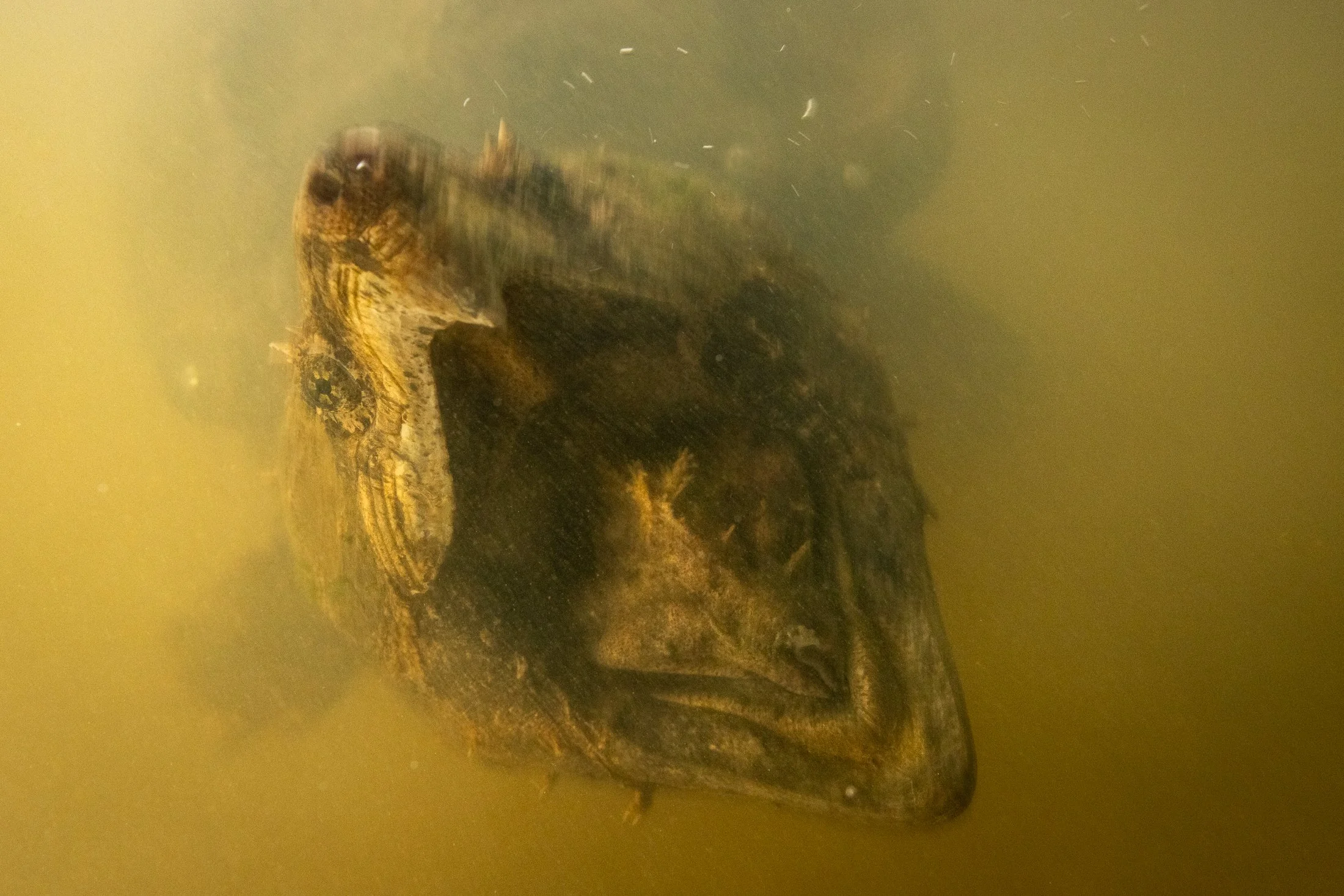
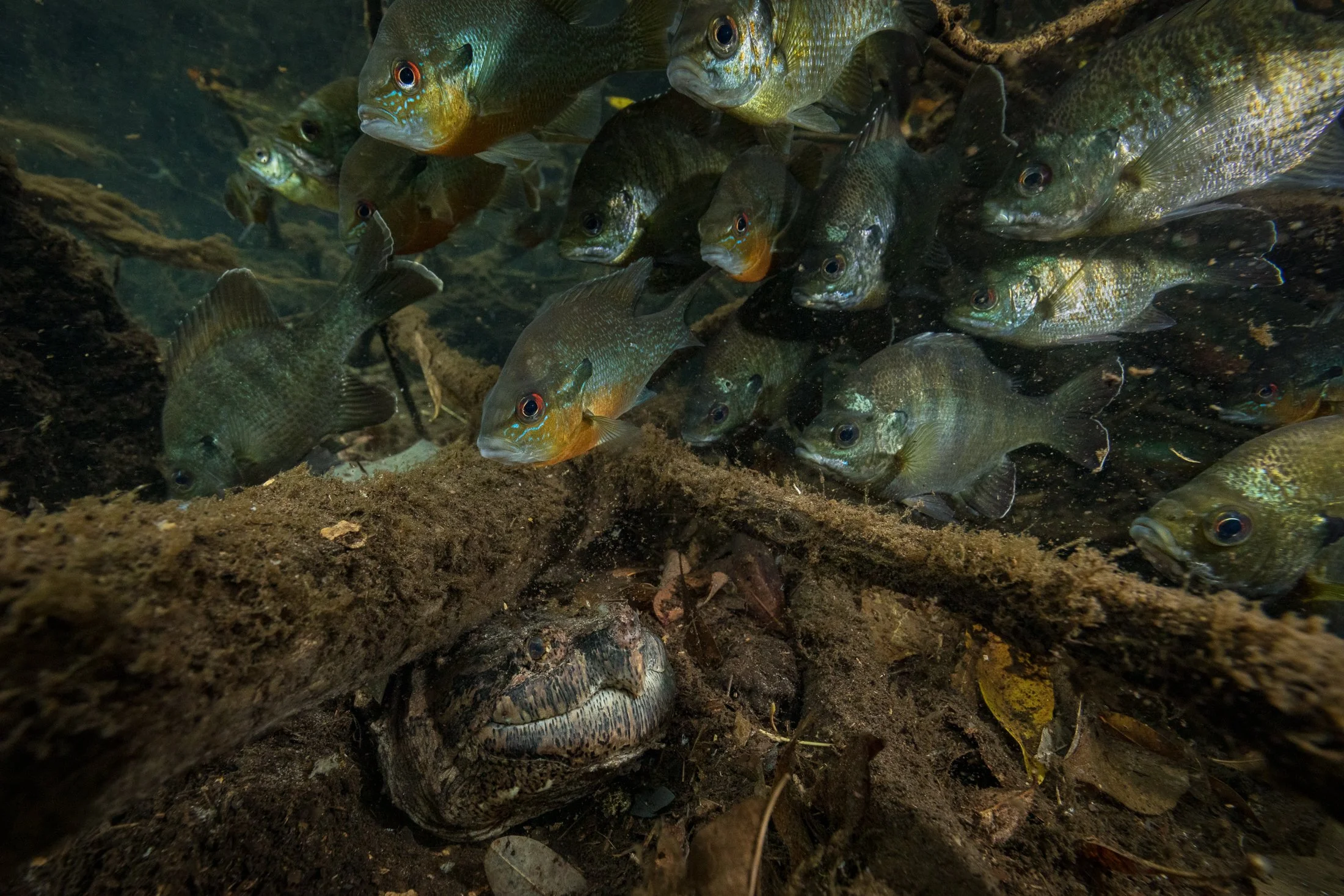
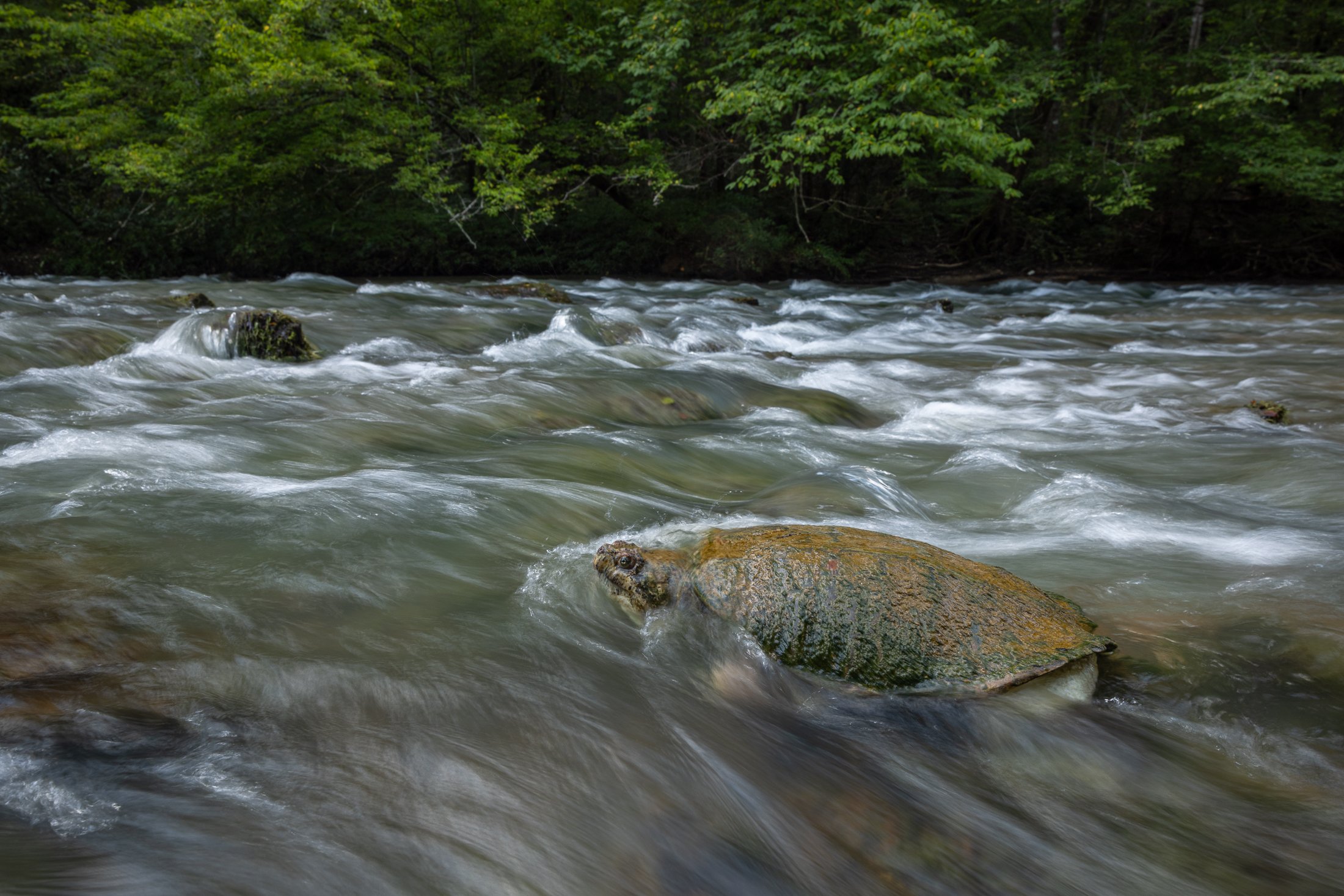
Honestly, you often do not know until you are in the edit. In a book, for example, you might have what you think are extraordinary images of snapping turtles, but you cannot fill the pages with ten of them. So you are editing not just for quality but for representation. The book moves through several chapters: headwaters, ancient forests, living waters, wild deltas. You need a broad spread of imagery to represent those different ecosystems accurately.
Some of the most powerful images that emerged were ones I had not expected to spend much time on. I spent about a week making photographs of the Cahaba lily bloom in the Cahaba River basin, interpreting it from different angles, watching how various animals were drawn to those striking white flowers growing out of the river. From a thousand images of those flowers, one or two made it into the book. The discipline is in having the diversity of representation across the pages, not in holding on to every image you love.
Many photographers want their work to matter, but they do not want it to become obvious or preachy. What have you learned about making photographs that carry an argument without becoming propaganda?
If the image is earnest and the conditions under which it was made are honest, it carries the message on its own. It does not need to function as propaganda. It can simply be poignant, impactful and memorable. I am a conservation photographer, so I always want to attach meaning to the work, to say: here is why this matters, here is what is threatened. But if the image is powerful enough, you do not actually need to say anything. People want to read the caption, they want to learn more, and they absorb the message that way. I think people only feel they are being preached to when the image does not do the heavy lifting itself.
Do you ever look at a photograph and feel the photographer is trying too hard, that it has the opposite effect? What is usually the mistake when photographers push too hard to make people care?
It comes to mind with certain images, yes. The ones that stay with me as examples of the opposite, photographs that communicate everything without needing a word of explanation, are things like Brent Stirton's work on gorillas: the image of a poached gorilla being carried out of the forest on a stretcher, or his work documenting rhino poaching. Or Brian Skerry's photograph of bycatch, the moment fishermen release everything they caught unintentionally just to harvest a few shrimp. Those images contain the entire argument within the frame.
What separates them from work that feels clichéd is difficult to reduce to a formula. It has to do with the power of the moment and the foresight of the photographer to recognize and document it. When you look at work like that of Jasper Doest, who photographs macaques performing on stage for human audiences, the images are so honest and so deeply considered that almost no context is required to feel their weight. You can sense that the photographer has spent serious time with the subject and knows it thoroughly. You can imagine the editorial process, all the thousands of images that were not chosen, and you can see why the one that was chosen is exactly right.
What would you tell a photographer who wants to undertake a long-term environmental project close to home but does not yet know how to make it feel important?
Work in a place you genuinely care about. That is the most important thing I can say, and it is what has worked for me. There will inevitably be a lot of rejection along the way, from editors, from galleries, from grant committees. The only thing that carries you through it is your own feeling about the place or the subject. That feeling has to be the fuel, because you will need to keep going past rejection after rejection until your body of work becomes undeniable, until you have become the person who knows that place better than anyone else.
That depth of knowledge is ultimately what convinces the public that a place is special. Your passion comes through in the work itself. If you can spend more time there than anyone else has ever spent, and do that long enough, it will show in your images. And one more thing worth saying: do not work in isolation. Find editors, find other photographers, build a circle of people whose eye you trust, and show them your work. Without that outside perspective, you risk ending up with forty images of snapping turtles and no idea which one is the right one.
Thank you so much for sharing your time and insights, Mac. This has been a fascinating look into your work.
Thank you, Martin. I really enjoyed this conversation.
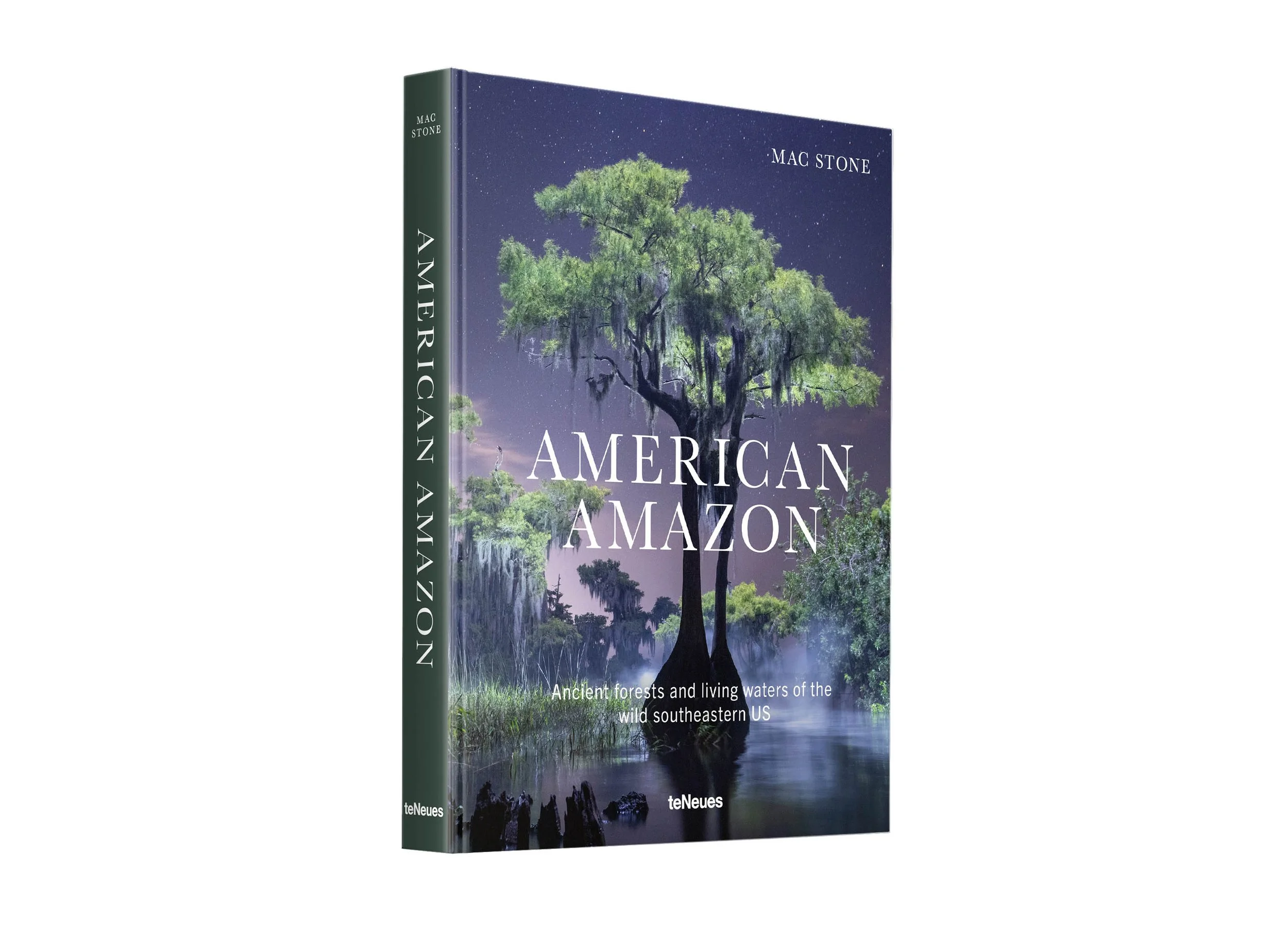
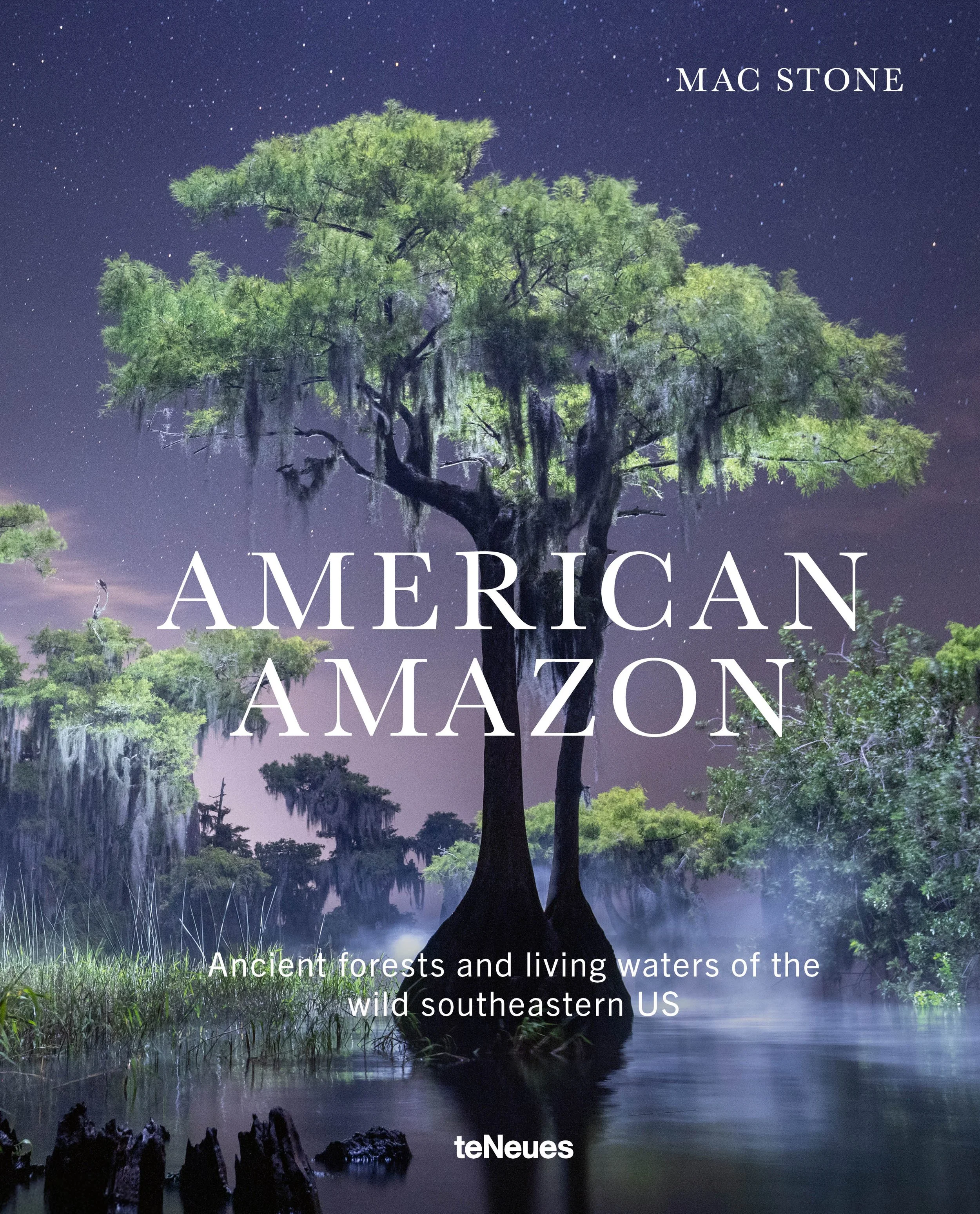
To discover more about this intriguing body of work and how you can acquire your own copy, you can find and purchase the book here. (teNeues Verlag, Amazon)
More photography books?
We'd love to read your comments below, sharing your thoughts and insights on the artist's work. Looking forward to welcoming you back for our next [book spotlight]. See you then!
Ian Bates found his wildfire story after the fire. In 2014, he saw his first wildfire while visiting a friend in Eastern Washington. Photography Book Spotlight