Welcome to this edition of Interviews. Today, we look at the project Dispatches and The VII Foundation, by David Campbell. We'd love to read your comments below about these insights and ideas behind the artist's work.
David Campbell has never worked as a professional photographer. He has spent his career studying what photographs do.
He started out in Australian politics as a speechwriter and press secretary, then taught international politics at universities in Australia, the United States and the United Kingdom. Salgado's pictures of the Sahel and of workers pulled him towards photojournalism. He later worked at World Press Photo, and today he is Director of Education at The VII Foundation and the editor of its online magazine, Dispatches.
His starting point is simple: we never see a photograph alone.
In our live conversation, Campbell explains how captions, editors and the place of publication shape what an image means, why trust begins with transparency, and why the story that one photograph stopped the Vietnam War is a myth.
His advice to photographers is simple: think about what happens to your pictures after they leave your hands.
The Project
Dispatches and The VII Foundation
Dispatches is the online magazine of The VII Foundation, edited by David Campbell. It publishes writing on the role of images in our world, along with visual stories from around the globe, and focuses on non-fiction photography, documentary storytelling and visual journalism. The VII Foundation supports in-depth journalism through education, long-term documentary projects and public conversations. Dispatches is made possible by the foundation's partnership with PhotoWings. See dispatchesviifoundation.substack.com and theviifoundation.org.
How he came to photography
Before we get into documentary photography and visual storytelling, can you tell me how you first became interested in photography and what led you to study how photographs communicate meaning?
My career has had a number of phases. I started out working in politics in Australia, where I grew up. I was a speechwriter and press secretary for a politician, so I dealt with the media and journalists, which was a very interesting education for a number of years. After that, I had an academic career and taught at universities in Australia, the US and the UK. My interest was always international politics, but more specifically how international politics was represented. I was looking at media representations of geopolitical issues and foreign policy.
I had always had a personal interest in photography and photojournalism, and in the power of images to draw someone into a story. About twenty-five years ago, during my academic career, I decided to make photojournalism the object of my study, as it were. I started investigating it, particularly through Salgado's work, and over time that brought me into contact with a lot of photojournalists. For a variety of other reasons, I eventually left full-time academia and went freelance, doing writing, research and consultancy, and working with photojournalists on telling stories and on the meaning of their work. That was from around 2008 to 2010 onwards.
So I have moved from the political sphere to the academic sphere to the practical world of photojournalism, with a foot in all those camps at various times. It's an interesting background. I have never been a professional photographer. I have always been an analyst of photography and photojournalism. But I have spent the last fifteen or sixteen years working extremely closely with a lot of photojournalists and documentary photographers.
Was there a particular photograph, event or experience that changed the way you thought about photography?
The first thing that really attracted me happened in 1991. I was teaching at a university in the United States, and there was an exhibition of Salgado's work from the Sahel region of Africa. It was in The New York Times, and it really grabbed my attention and had a major impact on me. I travelled to see the exhibition, which was some way out of town. Later, Salgado's great project on workers was on show in Philadelphia. Those were the first things that really stood out for me.
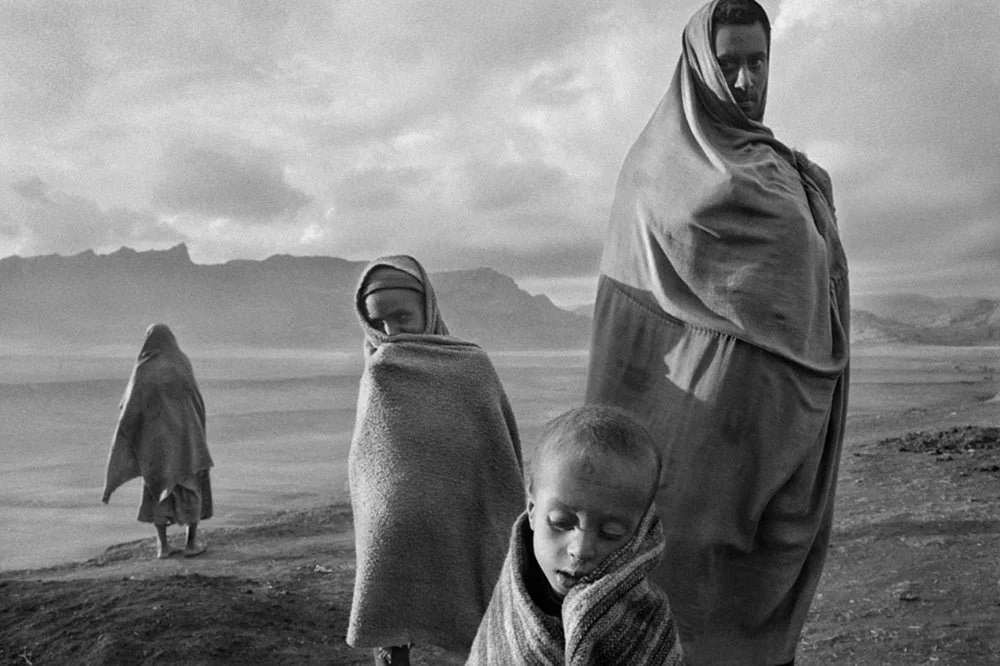
Sebastião Salgado, Refugees at the Korem camp, Ethiopia, 1984. Ethiopia is not part of the Sahel, but Salgado photographed the famine there together with the Sahel countries, and this picture became the cover of his book Sahel: The End of the Road.
What I recognised was that he was showing international politics in two-dimensional, black and white frames. That was exactly what I was interested in. I was trying to write about and study international politics, so it was the way those two things intersected that mattered, even though they were entirely different ways of representing the issue and its context.
My favourite images of his are from Genesis, his later work that focuses on nature. What do you think of it?
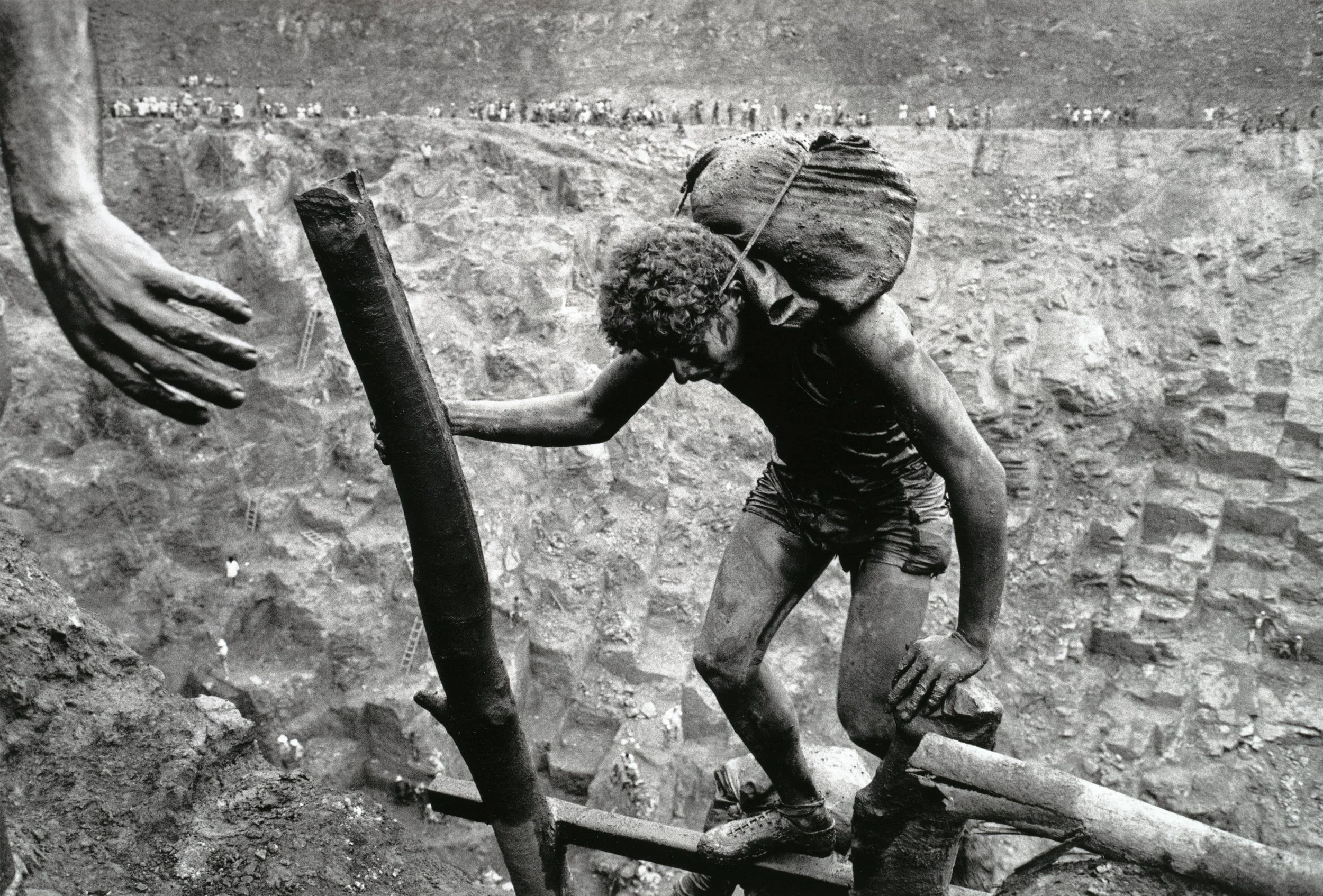
I think Genesis is actually a problematic body of work at times, because of its romanticism. I'm much more interested in the early work from the Sahel, which was published in a book called An Uncertain Grace, and then the workers project. Those were the things that really stood out for me.
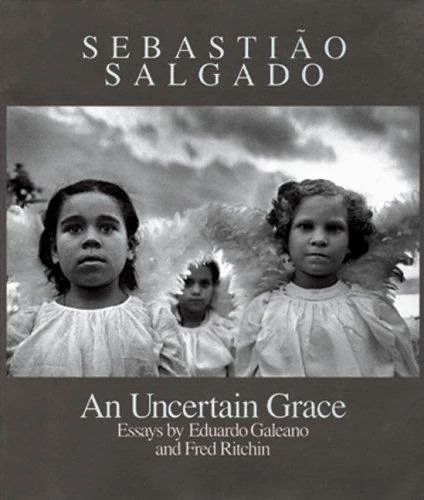
The Book
An Uncertain Grace
Aperture · 1990 · 156 pages · Photographs by Sebastião Salgado · Essays by Eduardo Galeano and Fred Ritchin
Aperture published the book with the San Francisco Museum of Modern Art for Salgado’s 1990 exhibition there. It brings together his early work: a Brazilian gold mine, people in Latin America, the famine in the Sahel in the mid-1980s and the first pictures of his project on workers.
How has your understanding of photography changed through your work with World Press Photo and the VII Foundation?
The more time you spend, as a non-photographer, with photojournalists and documentary photographers, the more you realise how complex it is. From my perspective, the story and the narrative are the most important part of all this. But my greatest admiration is for those who can produce an extremely compelling single image. I'm really in awe of people who find themselves in certain circumstances and situations and manage to produce a powerful single image that captures something multi-layered and brings a lot of things together.
So I wouldn't say it has changed my view of how the work has an impact or what role it plays. It has given me vastly more information about that. But it has definitely underscored my admiration for individual photographers who can produce visuals that an amateur cannot. As I said, I have never been a professional photographer. If I happen to have an iPhone or a camera in my hand, I regard myself as no more than a camera operator. And I think that's the difference. Being a photographer is something altogether different from being a camera operator, and it all comes down to the thinking that happens before, during and after the making of images and visual stories.
So do you prefer visually strong single images over, let's say, a series?
No, I wouldn't say that. Particularly coming from an academic background, my preference is always for context and for the complexity of an issue. When people ask for your opinion on something, you find yourself always saying, "Well, that's very complex," and explaining that you have to think about all the different dimensions. In some ways that isn't the most helpful response to start with, but it's always true.
Because I'm interested in context and complexity, I'm more interested in visual stories and visual narratives. But they are always a combination of frames. Even video is twenty-four or thirty frames a second. Sometimes one of those individual frames stands out, and depending on how the story is made available to you, it might be that single frame that captures your attention and draws you into the story. So I wouldn't privilege singles over stories. I prefer stories, but they contain powerful singles.
We never see a photograph alone
A documentary photograph shows something that happened, but it rarely explains everything around it. What can we actually know from looking at a photograph alone?
My starting point is that we never actually see photographs alone. There is never a moment when we see only an image and nothing else. An image is always delivered to us in a particular context. That could be a printed magazine, the home page of a website, an app on a smartphone, a gallery, an exhibition or a placard at a protest march. You name it. All those images are inherently embedded in their particular contexts, and there is no circumstance in which we see an image devoid of context in time and space.
So I think the context is just as important in constructing the meaning and the power of a still image as the aesthetic structure of what's inside that two-dimensional frame.
Captions can give viewers information they would never discover from the image itself. How much can a caption change what a photograph means?
Again, this is part of why I say you never see an image in isolation. You will always see it situated on a page, whether that's analogue or digital, or on a billboard or wherever. You will always see it close to some form of text: the headline of an article or report, a detailed caption or a brief one, or text overlaid on the image itself. All those things intersect and come together to create meaning.
And one of the most important elements in that process is what you, I or any reader brings to it. We encounter the image and all its associated text across all those dimensions, and it is in that moment of encounter that meaning is created. Meaning isn't buried within the two-dimensional visual, as though there were some secret code and you could peel away the surface and say, "My God, there's the truth." In my view, that's not what an image is or how an image works.
Can you remember a photograph whose meaning changed significantly once you learned more about the circumstances in which it was made?
Sure. To me, one of the best examples is in a book called Without Sanctuary. Think of the photographs taken in the southern United States in the twentieth century that recorded the lynchings of Black people, of African American people. Women, Jews and labour union workers were also lynched. Those photographs were originally produced as symbols of white domination. They celebrated violence against minorities. They were made as postcards that people bought to celebrate the deaths of these individuals.
When they were rediscovered a couple of decades ago, they were read and interpreted as symbols of racial oppression and of division within the United States. So the way we read those images today is entirely different from the intention behind them when they were produced. To me, that's one of the starkest examples. It happens quite a bit with documentary images once they become part of an archive and are rediscovered later. That moment of rediscovery brings an entirely different set of meanings compared to when they were made.

The Book
Without Sanctuary: Lynching Photography in America
Twin Palms · 2000 · James Allen, with essays by Hilton Als, John Lewis and Leon F. Litwack
Photographs and postcards of lynchings in the United States, collected by James Allen. Many were made and sold to celebrate the killings. The book shows them as evidence of racial violence.
AmazonA photograph can show something that really happened and still give viewers the wrong understanding of a larger situation. Where does that problem usually begin?
I think it's inherent and unavoidable. If you capture a moment at a protest and focus on one individual who might be confronting the riot police, you're not capturing the moment when the riot police charged the group of protesters and set up that confrontation in the first place. So where does it begin? If everything is embedded in time and space, as it is, then capturing one-hundredth of a second of it will always be very partial. And it also depends on which side you're standing on.
I remember photographs of various US interventions in Central America. I think it might have been Grenada. You get an image of marines storming the beach. But sometimes photographers turned around and took a picture of a dozen photographers lying on the ground, photographing the marines storming the beach. Then you realise that what you were seeing was actually a photo op, not a candid documentary image. When the camera turns around to reveal other cameras like that, it shows you exactly how a moment is being constructed. I think we should actually see more of that. But whether you're capturing something at one-hundredth or one-five-hundredth of a second, it's only ever going to be partial. It could never be complete.
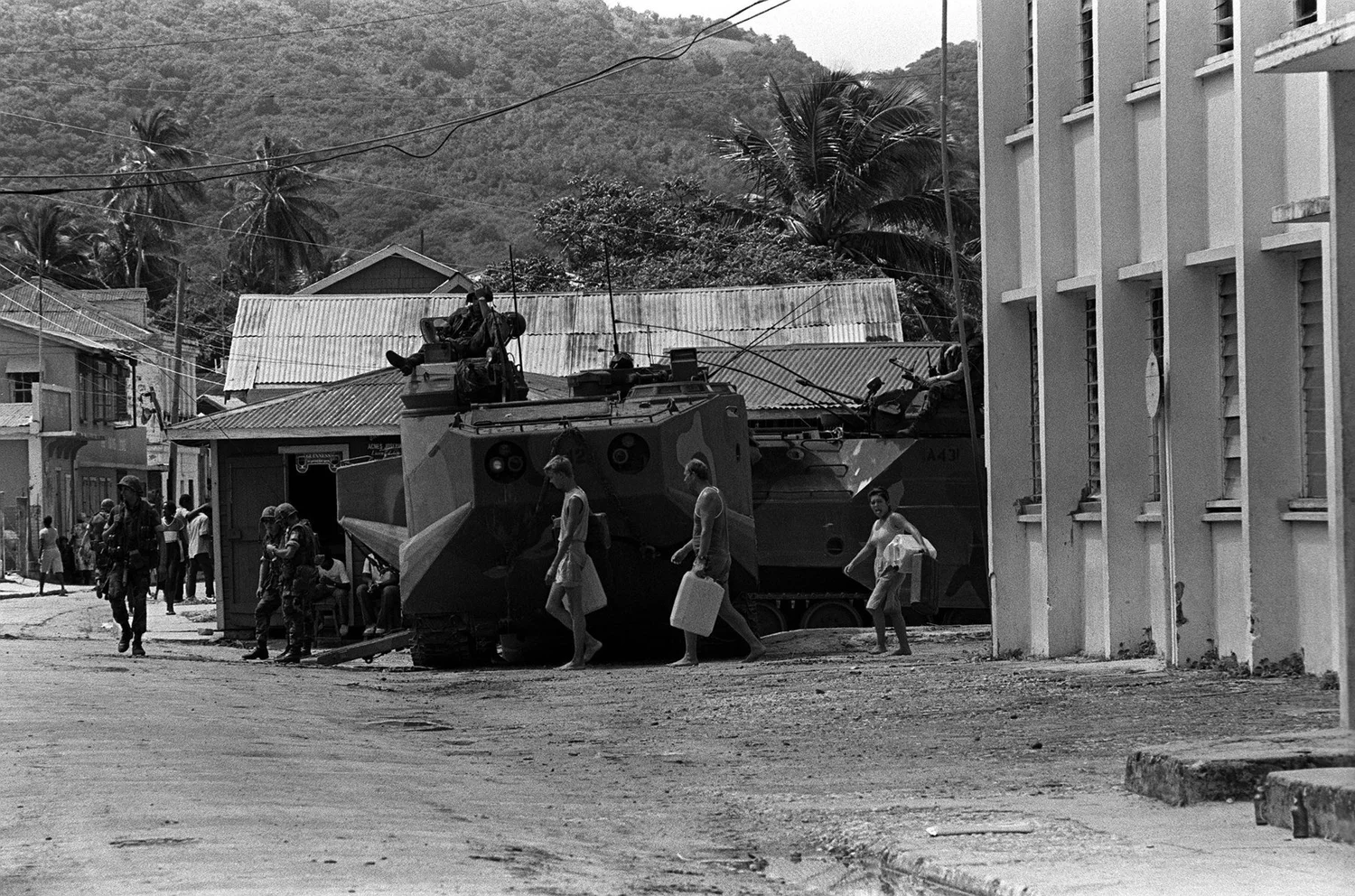
US Marines in tracked landing vehicles in St. George’s, Grenada, during Operation Urgent Fury, 28 October 1983. Photograph by JO1 Peter D. Sundberg, US Navy (public domain).
Mogadishu, Somalia, December 1992. Photographers and TV crews film US Marines as they come ashore. Photo by Patrick Robert/Sygma via Getty Images.
Nothing is the whole story
Is there a point where asking a photograph to tell a complete story becomes unreasonable?
Let's flip that on its head for a second. Would we ever ask a text journalist who has written a 1,500-word piece whether it tells the complete story? The answer would always be no. You could ask a book author whether their book tells the complete story, and the answer would probably be no as well. I don't think any form tells a complete story by itself. These different modes of representation are always linked to other modes of representation, and they combine to tell the story.
And I don't think a story is ever one hundred percent complete. Something will always be left out. If you're creating a narrative, its structure requires editing, which means including some things and excluding others. Whether you're working with images, text or video, when you include some things, you exclude others. By definition, that can't be one hundred percent comprehensive or complete. Some things are more complete than others, but I don't think you ever reach total completeness.
Every documentary project leaves something outside the frame. When does that become a problem for the truthfulness of the story?
We touched on this a little earlier. There is no form of representation or communication that is one hundred percent complete, that doesn't require anything else and that couldn't be challenged. That's simply an inherent part of the structure of information and representation, and I think it's the same for images and for text. An article is never the full story. A book may not be the full story either.
So I think it's less about asking whether something is complete or incomplete, and more about saying: this is as accurate as we can make it, it has as much evidence as we can give it, it's as verifiable as it can be, and we still remain open to the possibility of different evidence challenging parts of it. Everything is incomplete. Some things are more incomplete than others because they aren't supported by evidence, but nothing is ever totally complete.
Editors and the chain of production
So in a way, you are buying into a particular photographer rather than the image itself, because you have to accept that what you see is what he or she chose to show us?
That's a complex process involving who made the images, who edited them, who published them and who circulated them. It's a chain of production within what we call a much bigger visual economy, and there are lots of decisions in that process. The image maker may not make the most important ones, and some decisions may be beyond their control.
That's part of the context I think we should really emphasise. This is a process of representation, but it's also a process of production that delivers these images and stories to us, and many people are involved in it.
When several documentary photographs are placed in a sequence, they can create a story that none of them tells individually. How much of that story comes from the photographs, and how much from the editor arranging them?
I think it's a combination. When I worked at World Press Photo and watched the judging, the stories that got further through the process, towards the possibility of awards, were the ones that were better edited. By and large, that's a collaborative process between the photographer and the editor, and I think editors now get credited for it, as they should.
It's the same as writing an article. If you write an article, you need someone else to read it, edit it and tell you what makes sense and what doesn't. The idea that individual creativity can encompass every aspect of producing a fine piece of work, done in isolation and solo, is greatly overstated. Everyone actually works collaboratively, or certainly should.
As we said earlier, there is a whole chain of production. Someone might assign you the story, or you might have done the research and developed the story yourself. Then you go and make images. You might work with a writer or you might not. You produce some text, you work with editors, and then another editor decides whether it will be published. The art director decides whether it goes on the front page, an inside page or the app. It's a complex process involving a lot of people along the way.
Photographers know the circumstances in which their pictures were made, while editors often encounter them with more distance. When can that outside perspective improve the story, and when can it lead the editor in the wrong direction?
Again, it comes down to whether the process is properly collaborative. In the best circumstances, all the photo editors and photographers I have ever spoken with work very closely together. When they're producing a story, whether it was assigned or they come back wanting to publish it, they're trading information with each other. They come from different perspectives, but it's not as if the editor is imposing a narrative the photographer doesn't support. If the process is properly collaborative, you will get an accurate and verifiable narrative out of it.
The greater danger, if it is a danger, is when someone is editing and pulling pictures off a wire service without necessarily understanding all the details of those images, which can happen because of the pressures of time and money, and then just using them. What's happening there is that the pictures are being used as illustrations. Thinking of an image as an illustration is different from thinking of it as a distinct form of information within a larger story.
The better stories are those produced by documentarians, where the image conveys one part of the information and the text conveys another, because each is best at conveying that type of information. In those situations, the photographs are not illustrations. They are integral to the story itself. But I would say the majority of news photographs we see are probably illustrations.
Emotion or understanding
Can adding a photograph make a story less truthful, even when the new image is accurate?
That's an interesting point. I can't think of specific examples off the top of my head, but there's no question that if the text of a story was heading in one direction, you could easily find a single image that went in another. Say you were discussing famine in a war zone. If you ended up simply showing one emaciated child, that would take the story in a particular direction that might not be supported by the text. That may or may not be a conscious decision. But it's quite easy to see how visuals could prompt a response different from the one intended by the article they accompany.
Your research into the representation of famine raises a difficult problem: photographs that produce a strong emotional response can also reinforce familiar stereotypes. What happens when the image most likely to move an audience is not the image that gives them the best understanding?
That's a huge dilemma in those circumstances. I think the best example was in 2018, when The New York Times decided to put a picture of an emaciated girl from Yemen on the front page. It wanted to call attention to what was happening in the war in Yemen between the Houthis and Saudi Arabia. But it published the picture with an editor's note saying, in effect: we are doing this consciously, because we don't think enough people are paying attention to this issue, and we feel the only way to grab your attention is to use this stereotype.
I thought that was a good move. You're trying to puncture a level of indifference and gain attention. So there are circumstances like that where using the stereotype is justifiable: when you're transparent about it, when you've explained the context and when you follow up with other, more complex stories. That makes this example very different. If you just use a stereotype and never follow up, never talk about using it consciously and never acknowledge that it is a stereotype, then it becomes an issue. At the same time, of course, aid agencies and NGOs know that images like these drive donations much more than other types of images. So that's always a dilemma within those organisations.

So how do you decide what to sacrifice when emotional impact and accurate representation pull in different directions?
I don't think it's necessarily a straightforward sacrifice or an either-or choice. Again, if you think of images as part of the story rather than as illustrations, there's nothing wrong with choosing the image you think has the most emotional impact as the lead image, as long as it's followed by a series of other images or a complex written story.
These stories need attention, and getting attention sometimes requires puncturing through the noise, the indifference and everything else competing for people's attention. That's really the virtue of a visual: within those two dimensions, you can convey a lot of emotional impact. You should use that. But it shouldn't stand alone. It needs to be accompanied by other things, and it usually is. You need to make sure the context that goes with it gives people something beyond the emotional impact. You're drawing people in and saying, "You should spend time with this. You should pay attention to this." I think that's the right strategy.
Trust, transparency and consent
You have spent years examining the integrity of documentary images. Beyond whether a photograph has been manipulated, what makes a visual story trustworthy?
First of all, transparency. Trust comes from transparency. For me, that's the fundamental principle. You need to know who made it, when they made it, why they made it and how they made it, and that needs to be part of the information that goes with a story. Over time, you then come to trust certain individuals, outlets or publications. They can all make mistakes too, and some are more trustworthy than others, but in every case it depends on transparency.
Connecting to what we were just saying, part of that transparency is being prepared to say, "We made a mistake here," or, "We now have more information that changes the story, and here's how it changes." It also means connecting your work to other people's work. I think transparency involves a kind of humility about what you know and what you don't know. As I said earlier, I don't think anything is ever one hundred percent complete, and you certainly shouldn't believe your own story is. There needs to be a humility that says, "Yes, this could be challenged, this could change, but bring the evidence, bring the receipts, and then let's debate it." All of that depends on transparency.
What information about how a photograph was made or selected should viewers reasonably expect to know?
Ideally, you should know the technical aspects, but you should also know who commissioned it and who paid for it. You should know the time and place of production. You should know whether the photographer got into Sudan with the United Nations or with a particular NGO, or whether they allied themselves with a particular faction in the fighting. All of those things might be possible, and all of them might be reasonable, but you should know them.
A good example of a technical approach to this is Fred Ritchin's Four Corners project. The idea, which works on the web, is that each of the four corners of a photograph contains something you can click on to reveal the caption, the technical information, the background of its production and so on. It would have been good if more media organisations had adopted that kind of approach to images. Maybe they still will.
The website of the Four Corners Project. Each corner of a photograph opens more context about it.
Documentary photographers often work with people whose lives and circumstances are very different from their own. Can a photographer approach a subject respectfully and still produce a representation that causes harm?
There are a number of dimensions to that. I suppose the simplest answer is yes. Even if you go into the process collaboratively and respectfully, and think of the people in the photographs not as subjects but as participants in making the story, could it still cause harm in the end? Potentially, yes. We don't always know how images or stories are going to circulate or where they will go. And we definitely don't know how they will be interpreted, because people come to a story and encounter it in their own particular ways. You cannot know in advance what the impact or interpretation of an image or story will be a few months later, when it's circulating out there in cyberspace, let alone a few years later. So could it cause harm? Yes, potentially.
But that risk is reduced if you go into the process collaboratively, regard the people you're photographing as participants and have explicit forms of consent and cooperation in making the story. I remember seeing interviews with photographers who were making portraits of Rohingya refugees from Myanmar. The refugees in the camp had a variety of opinions. Some gave consent to be photographed and some did not, though the majority did. Some of those who gave consent said, "You can show my face, even though I have been subjected to sexual violence and other extensive human rights abuses. In fact, I want you to show my face, because I want people to see this story. I know this is going to go global, and I'm not worried." These were forms of consent and views given very freely, in interviews held days before the portraits were actually taken, so there was no compulsion in that final moment.
That shows, first of all, that people in those circumstances have a variety of opinions and choose whether or not to participate. But they also have quite a sophisticated view of why they're doing it and the impact they hope it will have. There is a definite power relationship between an image maker coming from outside and the people they're working with. But if photographers actually work with them and understand them as participants in the process, not just subjects in front of the camera, then I think they can produce something strong that withstands the possible harms, which remain beyond their control and beyond their understanding at the time the story is made.
What should happen when the people represented disagree with how their story has been edited or published?
That's obviously a matter for the publication as much as for the image maker. It's very hard, isn't it? Once something has been produced and is out there, it can't really be taken back. In certain circumstances, if it's on a website, you could take the story down, but people will already have captured it and circulated it in other forms.
If I were running a media organisation and someone came forward with that perspective, I would make it a story as well, and a transparent one: we produced this story this way, now this person is saying this, here is their perspective, judge for yourself. You make the criticism and the objection a transparent part of the story, as a later addendum to it.
The myth of the photograph that changed the world
You have challenged the familiar idea that a single photograph can change the world. What do you think this belief gets wrong about how photographs actually influence events?
I think it claims a couple of things. First, it fundamentally misunderstands, sociologically, how change comes about. Social change is the product of years of different things happening, intersecting and coming together. The idea that one form of representation could completely alter the direction of society, history or policy is at odds with what I think is a more accurate understanding of how social change emerges over time, through activists, politicians, journalists and others working together. Sometimes they don't even know they're working together, but attitudes are changing. So I think it gets the understanding of social change fundamentally wrong.
I think it also derives from a heroic notion of an individual who has made or discovered something that can alter the world on their own. The great man theory of history is wrong, and this is not too dissimilar to that. It's also incorrect to suggest you could pinpoint one thing that emerged and then had a clear causal relationship that turned the oil tanker around. I just don't think that's how these things work.
Fundamentally, I think it puts far too much pressure on contemporary photographers and photojournalists. If the idea is that you're most successful when you've stopped a war, ended a famine or changed a society, very few people will ever take pictures about which they could claim that. Are they going to regard themselves as failures, despite producing incredible visual journalism? They shouldn't. This mythical notion of one heroic individual and one image altering the course of society creates a standard that no one can really live up to, and it draws attention away from the more valuable contribution of visual journalism in general.
In the case of the photograph known as "Napalm Girl," what tends to disappear from the story when we credit the photograph itself with changing public opinion or history?
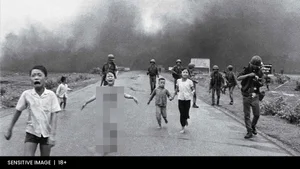
There are a couple of things to say about that. Obviously, I work for the VII Foundation, which produced the documentary The Stringer, now on Netflix. It has been very controversial, but it demonstrates that the provenance of the photograph is different from what has been claimed, and that another Vietnamese photographer, a freelancer, in all likelihood took it. But that's not the question I'm personally interested in. I wrote about the impact of that photograph back in 2010, long before I worked for the VII Foundation. It was the strongest example I gave of an image whose claim to have changed the world is a myth. There is a historical timeline that undercuts that claim.
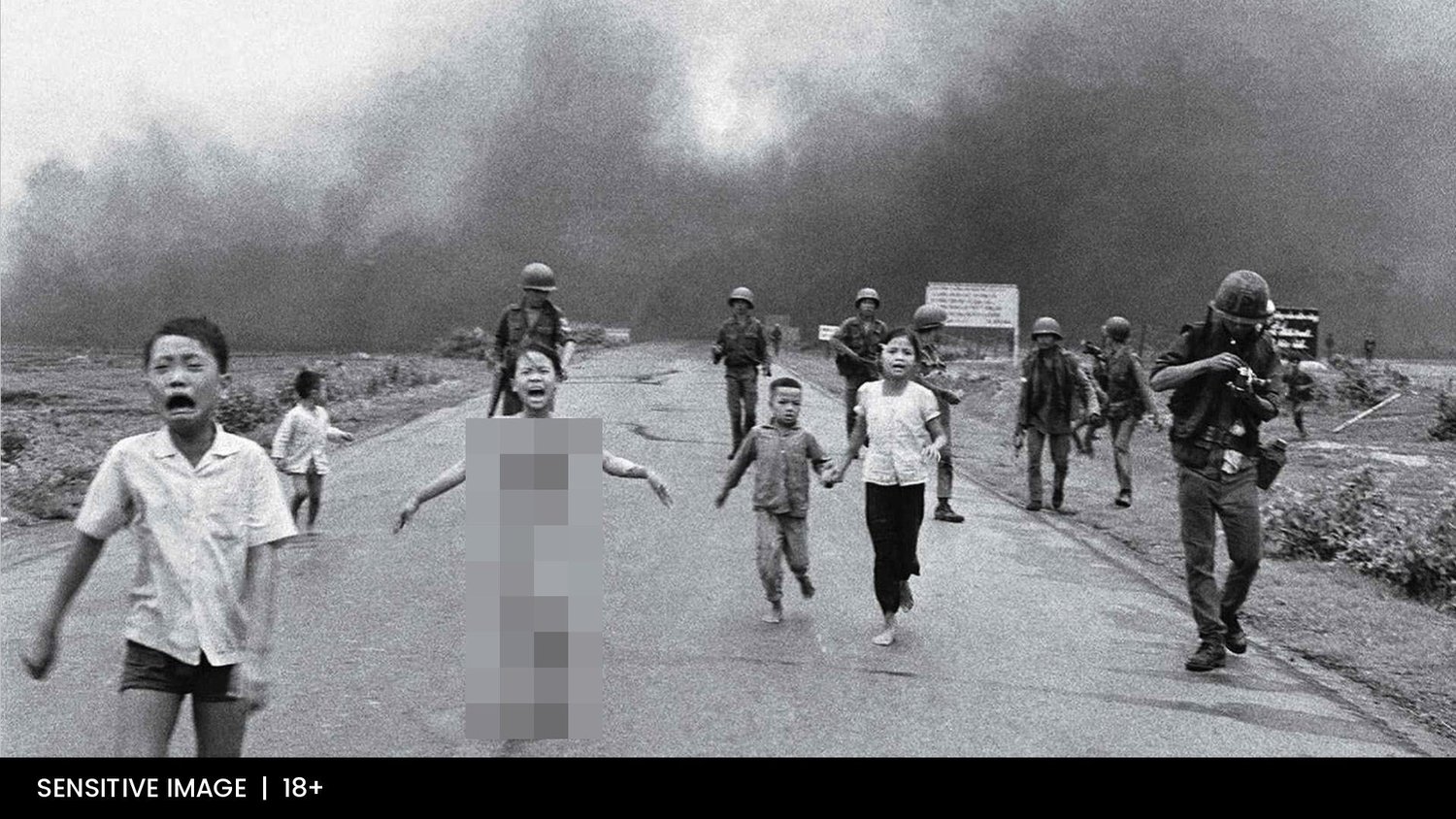
The photograph was taken in June 1972, and a lot of people want to say that it brought protesters onto the streets and ended the Vietnam War, or at least ended American involvement in it. Historically, that's demonstrably not the case, for two reasons. First, and this is what the claim leaves out, there was an active peace movement challenging US policy in Vietnam from 1964 or 1965 onwards, years before the photograph was taken. You only have to think of all the protests and riots of 1968, four years before it. So the claim leaves out the peace movement that was active in the US and around the world long before the photograph existed. Second, it ignores the historical fact that the Nixon administration had already withdrawn at least two-thirds of US combat troops two years before the photograph was taken.
So it's a historically inaccurate claim, and it goes back to my point about social change. By claiming that the image changed the world by stopping the war, which is the common claim, you pay no attention to the years of activism, protest movements, peace movements and opposition voices that were prominent in the US from 1964 or 1965 onwards. We were talking about what's complete and what's incomplete. Well, that claim makes the story massively incomplete.
None of this is to say that it's an unimportant photograph or that it had no impact. It had a massive impact, and I would argue that most of it actually came decades after the Vietnam War. Yes, it got significant attention in the week or so after it was taken, though not as much as is claimed. It was not all over the media, as people say. Sometimes it was buried in the middle pages, and it didn't appear in every American newspaper. It did not lead to protests erupting on the streets the day after publication, partly because, as we've said, there had already been years of protests.
But it definitely codified a particular strand of American opinion at the time: that what the US was involved in was morally unjust. There is an excellent chapter on it in a book called No Caption Needed by Robert Hariman and John Louis Lucaites, who look at a series of so-called iconic photographs, this being one of them. They point out that it came to be regarded as iconic not because it challenged US policy towards Vietnam, but because it challenged America's understanding of itself. That's why its impact carried on for years after it was taken. So it had an enormous impact. It just didn't stop the war, that's all.
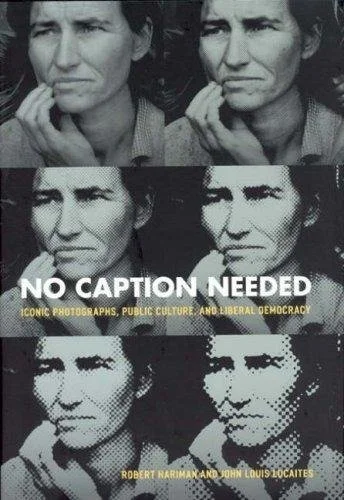
The Book
No Caption Needed: Iconic Photographs, Public Culture, and Liberal Democracy
University of Chicago Press · 2007 · Robert Hariman and John Louis Lucaites
A study of how a few famous news photographs became icons, from Migrant Mother to Napalm Girl, and what they say about the public that keeps looking at them.
AmazonWe talked earlier about the chain of production behind a photograph: the photographer, the editor and the publication. In the case of this particular image, the photograph was cropped. Could an editing change like that actually lead to a more truthful image in the end?
Some cropping of the photograph definitely alters how it's perceived, because it removes the fact that there were other people wandering around on that road.
Including another photographer who was changing his film, as the story goes.
Yes, exactly. There were international photographers there, and other Vietnamese photographers, and they have been cropped out. What's also underplayed in that image, of course, is that it was the South Vietnamese Air Force that dropped the napalm on its own troops. It was not the US dropping napalm on North Vietnamese troops. That's an important part of the context, because it reflects the fact that the US had substantially withdrawn by then.
But if we're talking about editors in relation to that image, there is the moment of publication in 1972, of course. What's equally interesting, I think, is how many books on the hundred most famous photographs in the world, or on the icons of photography, reproduce that image alongside a set of other images we could probably all rattle off. It's that reproduction, the choice of those images by people later on, that turns them into icons. An image isn't born with the status of an icon. Becoming an icon is a process of something being regarded as one, and that always happens after the event. Their appearance in textbooks and summaries of famous photographs is what creates, in some cases, a myth and, in others, a narrative about the impact and power of those images. I think that is at least as interesting as the moment of the photograph's actual production and publication.
Through Dispatches and your work with the VII Foundation, you engage with photographers, writers and editors who approach visual storytelling from different perspectives. Has that work challenged any belief about documentary photography that you previously held strongly?
I'm going to say no, and that sounds like, "God, you knew it all before and you've never had to change your mind." I don't mean that. As a non-photographer, I'm interested in the context, so the work has obviously challenged my views on particular contexts, issues and stories. As for the function and nature of representation itself, it has helped develop my thinking. But it hasn't convinced me to say, "Gosh, this picture did change the world." To be fair, no one has tried, and these stories don't attempt to. I would be totally open to someone coming up with really good evidence and saying, "This picture fundamentally changed policy. Policy was going one way, this picture emerged and, boom, we went the other way."
Some people point to the photograph of the young Syrian refugee boy, Alan Kurdi, in Turkey, which I think was around 2015. They say it changed the way Europe thought about refugees. I really wish that were true. It produced an enormous amount of attention, and it produced some softening of language and discourse immediately afterwards. But has it made Europe accepting of asylum seekers and refugees? Absolutely not. I wish it had.

So I think you really have to draw a distinction between media effects and media impacts. Certain images drive lots of media effects: a great deal of attention and widespread publication. But do they actually produce impact, meaning that without them, policy would not have changed? That's very hard to establish, and I have not seen compelling evidence of it. When images do become powerful, they become part of the process of social change, because they end up codifying and representing certain things, and then they get folded back into that process. So they have an important role. But I don't believe they play the decisive role in causing something that would otherwise not have happened.
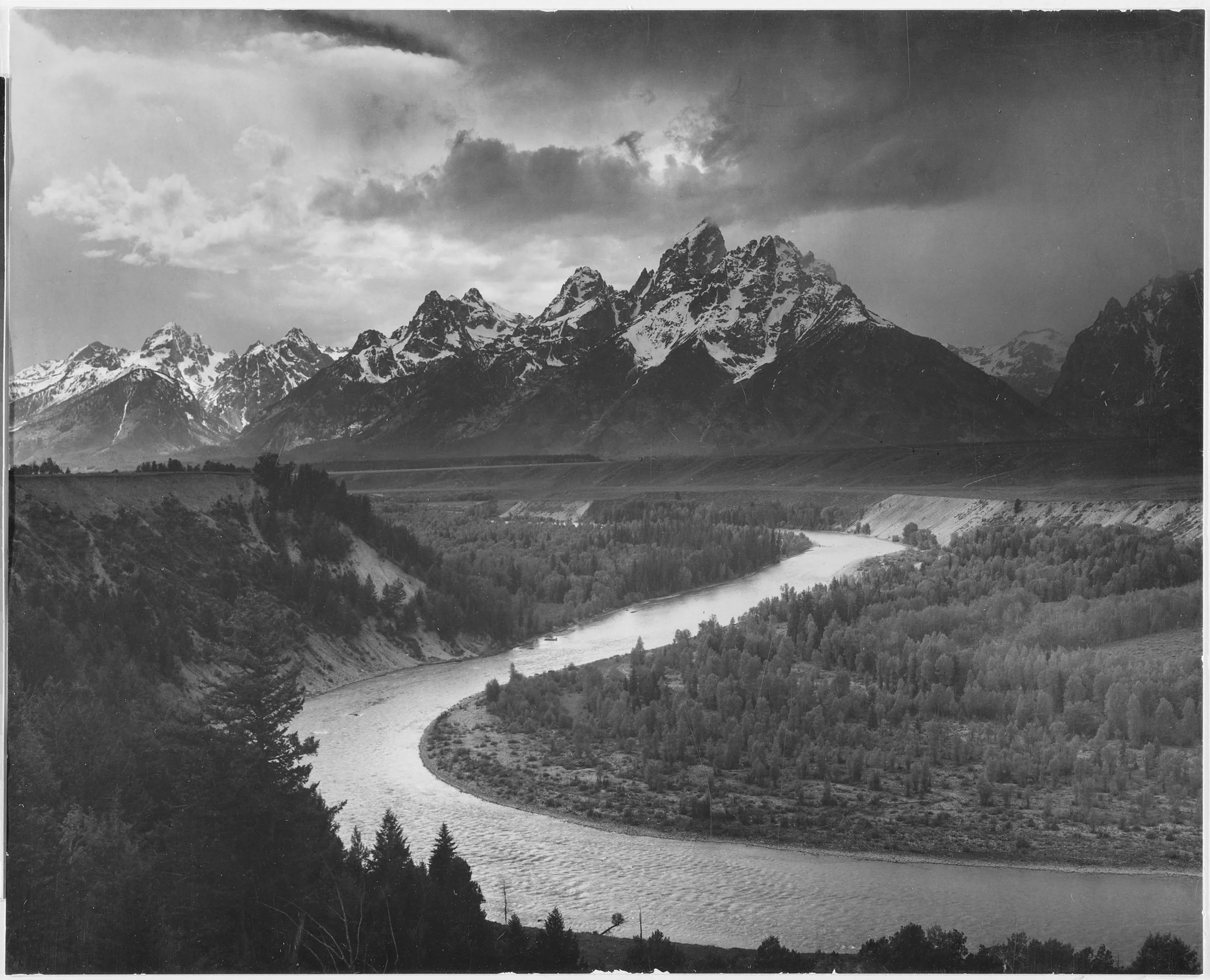
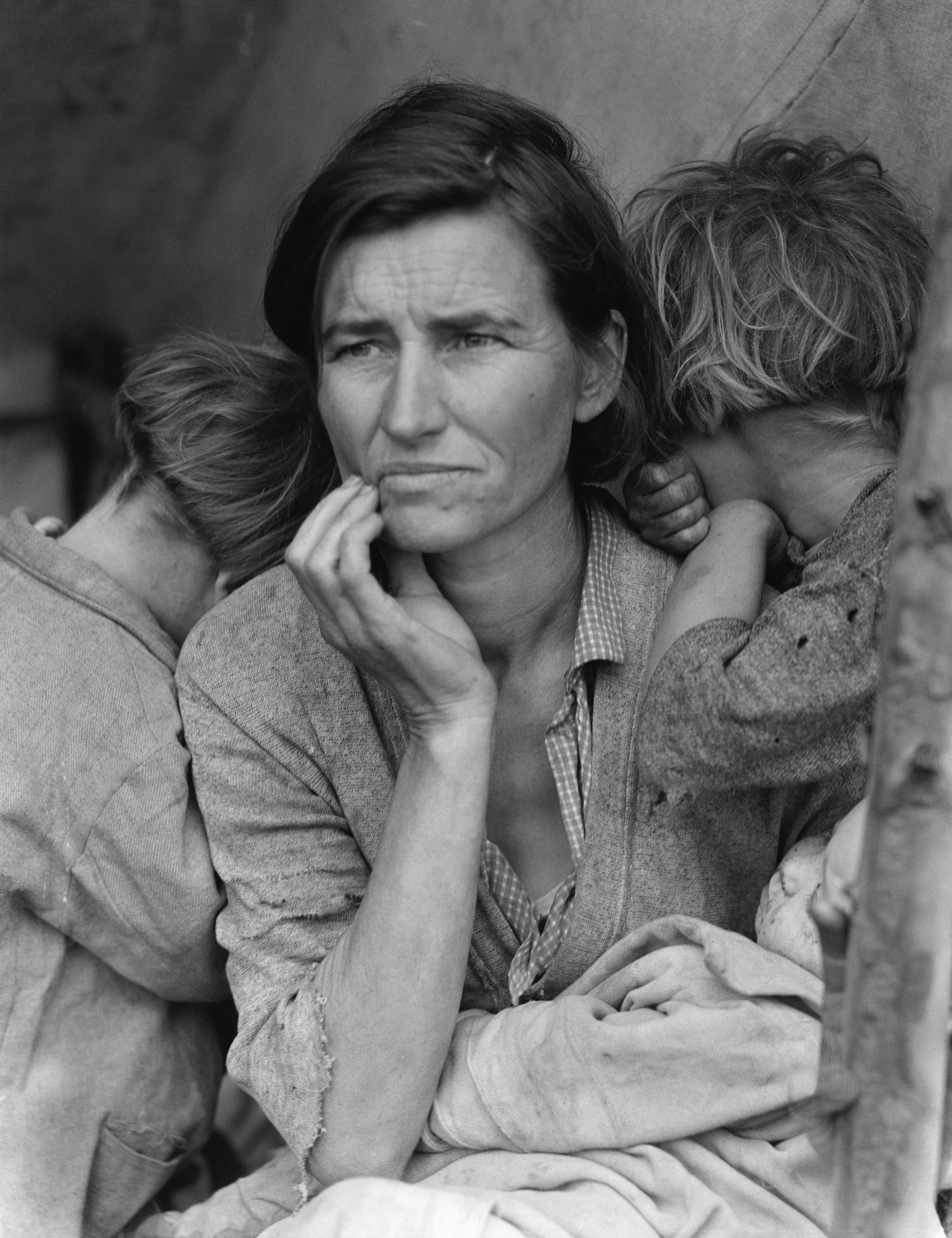
I was trying to think of important pictures that did have quite an impact, so it would be interesting to hear your thoughts. Two that come to mind are Migrant Mother by Dorothea Lange and Ansel Adams's photographs in relation to the creation of national parks.
Yes. But again, I would argue that these things symbolise social currents and social change that are already underway. They can perhaps make it happen faster. They can get people outside the activist core or the particular social movement to pay attention and support it.
But did Ansel Adams create national parks through an image when everyone else was opposed to them? No. Did his pictures give the people fighting for national parks something to point to, focus on and hold up, saying, "Hey, you people in the cities, you may not be out here, but this is what it looks like"? Absolutely. And they were important for that. So I'm not saying they had no impact. I'm saying the impact is not a simple causal relationship driving change that would otherwise not have happened. That's an important distinction. I think there are lots of examples. The Minamata photographs about mercury poisoning in Japan were extremely important, for instance.
There's a Susan Sontag quote for pretty much every moment in photography, sometimes for contradictory moments, so I don't often quote her. But there is one quote of hers I like. She says that for a photograph to have an impact, it has to land in a domain where there are already understandings and attitudes it can connect to. I think that's the best way to think about the role of images in that sense. Actually, I can quote it directly. She says a photograph "cannot make a dent in public opinion unless there is an appropriate context of feeling and attitude."
What I take that to mean is that for an image to have that emotional impact, people have to hold some of those feelings already. They may not be as strong, but to make the connection between individuals and the image, there has to be that "appropriate context of feeling and attitude." That's why I think the image symbolises, crystallises and codifies something. It can therefore drive things faster and more effectively, and perhaps reach different constituencies. But if there's nothing to connect to on an issue, if there had been no movement for national parks and no one gave a damn about nature, an Ansel Adams photograph would not have had an impact by itself.
The Book
On Photography
Farrar, Straus and Giroux · 1977 · Susan Sontag
Six essays on what photographs do to the way we see the world. Campbell’s quote about the “appropriate context of feeling and attitude” comes from this book.
AmazonThat might also be the case with Migrant Mother. Still, I would say its impact was fairly immediate. They say help was sent afterwards. And Lange was working for a government agency that wanted pictures to support this agenda, and then they used the image.
Yes. That's the thing. Those photographs in the 1930s were made for the Farm Security Administration in the US, a government unit that ended up being part of, and helping to create the conditions for, the New Deal. But think about that. It was a government unit to start with, so there was already an appropriate context of feeling and attitude. They were already looking for something like that. They were already thinking, "We need to make some changes like this, and we need some images for it." It's not as if someone stumbled across Migrant Mother when no one had thought about the conditions of poverty in those circumstances. Those feelings and attitudes already existed, but Migrant Mother brought them together in an extremely powerful way.
So, just to underscore this, because I think people can misunderstand it: I'm not saying photographs never have an impact. I'm saying we shouldn't claim that a photograph by itself produces change that would otherwise not have happened. Change is the outcome of a much more complex, collaborative social process than an image simply popping up and directing things that would not otherwise have occurred.
What photographers should understand
My last question. Photographers spend a great deal of time learning how to make stronger images, but often much less time thinking about what happens once those images leave their hands. What do you wish more photographers understood about how their work acquires meaning after it is made?
I suppose simply to ask that question and to think about that dimension. Good documentary photographers and photojournalists learn a lot more than the technical aspects of making images. They learn how to research issues, and they learn about the ethics of consent, the politics of representation and the responsibility they have when portraying certain people, which we touched on. We obviously try to do that in our courses at the VII Foundation, and I know a lot of university programmes incorporate all these dimensions of research, ethics and writing. That way, you understand that the visual is part and parcel of a wider complex of investigation, narrative and storytelling.
Part of that has to be asking: what is the potential impact of this work, and what can go right or wrong? You have to keep in mind that you will never control that process. But coming back to the point about trust and transparency, if you've been transparent and thought it through, then if something does go wrong, at least you'll know you did everything possible to think through the possible outcomes and to mitigate or support them. So asking the question is the first and most important thing. But then being transparent about it, as we said earlier, is the fundamental foundation of trust.
Thank you for your thoughts and your time.
Thank you for inviting me.
David Campbell says the claim that one photograph stopped the Vietnam War is a myth.
He points out that the peace movement was active years before Napalm Girl was taken in 1972, and that most US combat troops had already been withdrawn. The picture mattered because it challenged how America saw itself.
“So it had an enormous impact. It just didn't stop the war, that's all.”David Campbell
A photograph can matter a great deal without changing history on its own. Your work does not need to stop a war to be worth making.
We'd love to read your comments below, sharing your thoughts and insights on the artist's work.