Welcome to this edition of Interviews. Today, we look at the projects Everyday, Lumberland, The Wall, The Fog, Normal Houses and Eyes, by Noah Kalina. We'd love to read your comments below about these insights and ideas behind the artist's work.
Noah Kalina became famous for a private daily habit.
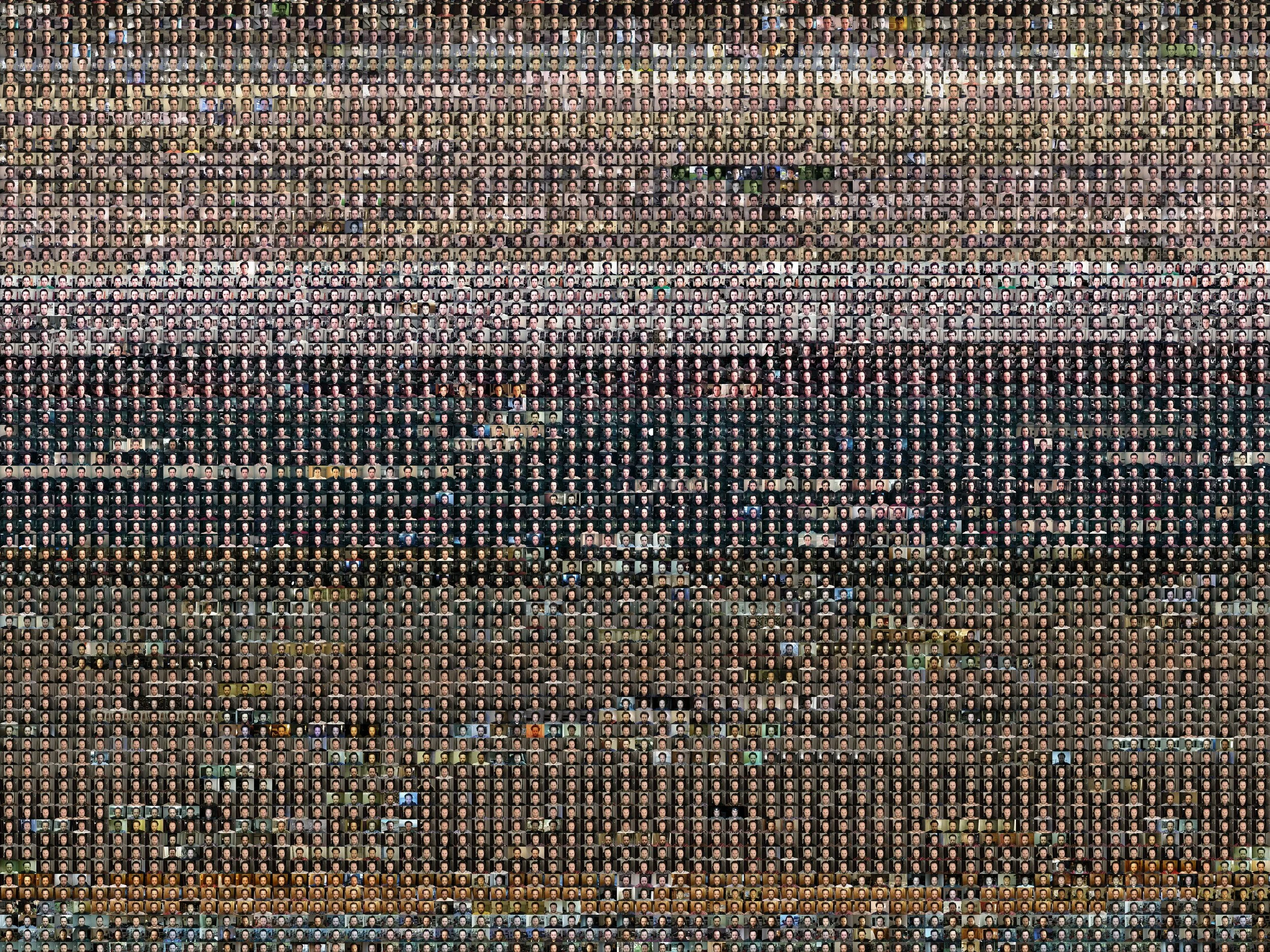
In January 2000, aged nineteen, he began photographing his face each day for a project he called Everyday. For years, he kept it to himself while studying photography and finding work photographing interiors, restaurants, and people. When he shared the self-portraits as a video in 2006, the project reached an enormous audience. It took much longer for people to know him for his other photographs.
His other projects often begin with something close to home.
In Lumberland, where he lives in New York, Kalina returns to familiar landscapes and a stone wall to photograph changes in light, weather, and seasons. His interest in fog led him to photograph local houses, which became the separate series Normal Houses. Some subjects hold his attention for years, while others stop feeling worth returning to. Everyday has a different commitment: he intends to continue it for the rest of his life.
In this interview, he discusses recognising a project through repeated visits, deciding when a series is finished, and finding value in photographs he once disliked. He also speaks about the difficulty of being known for one project while wanting to make many different things.
The Projects
Everyday
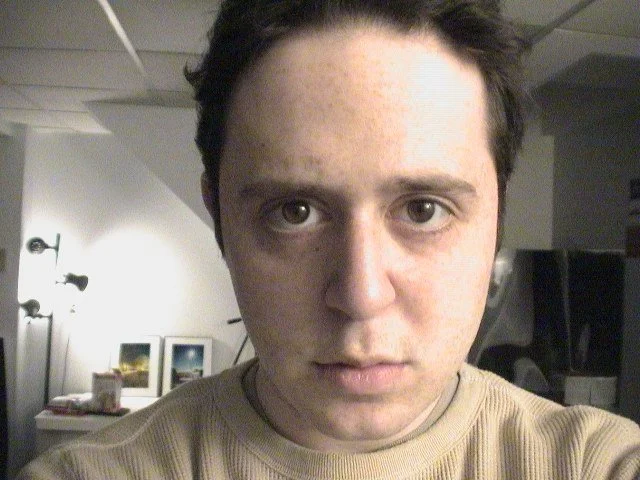
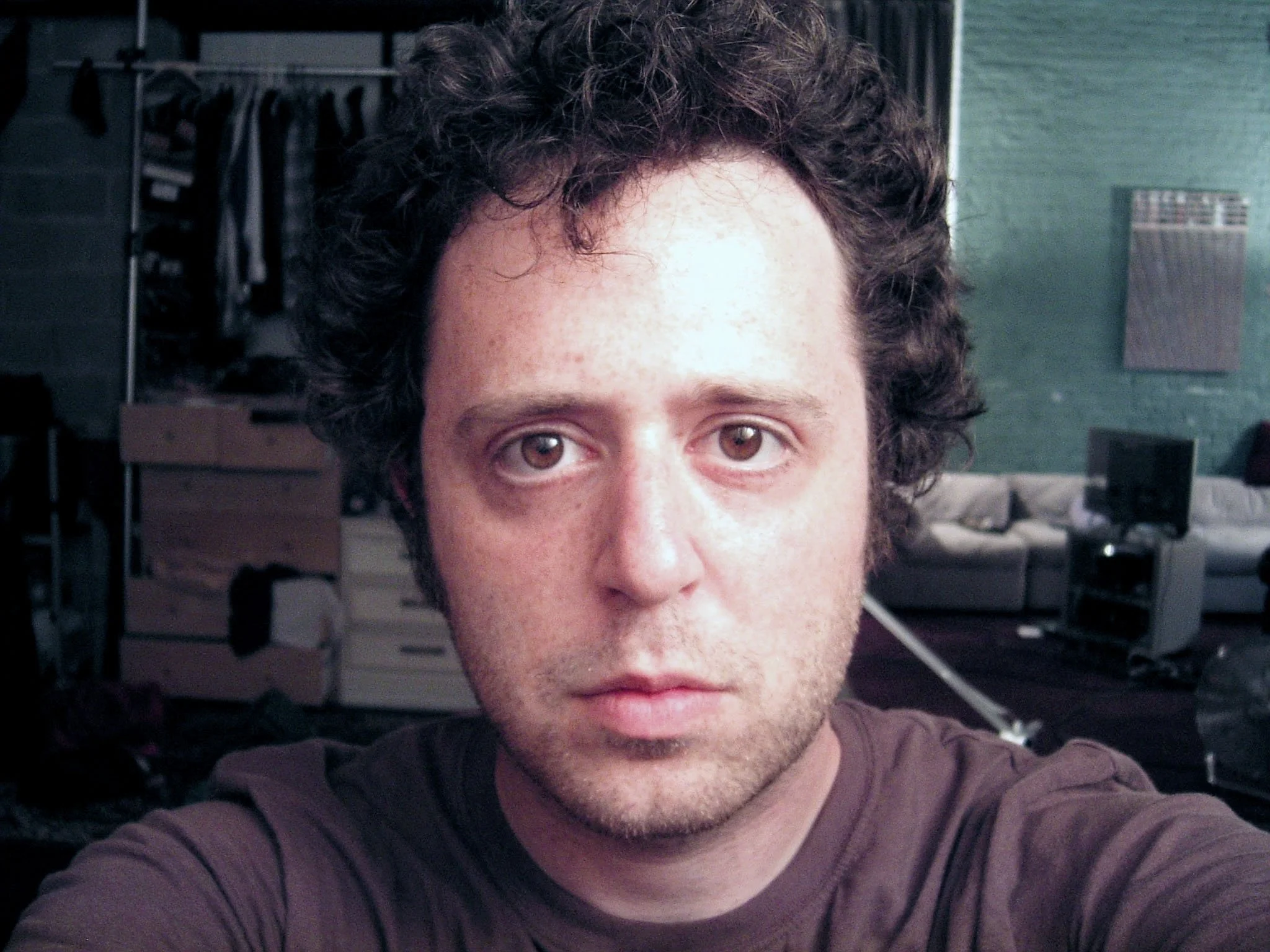
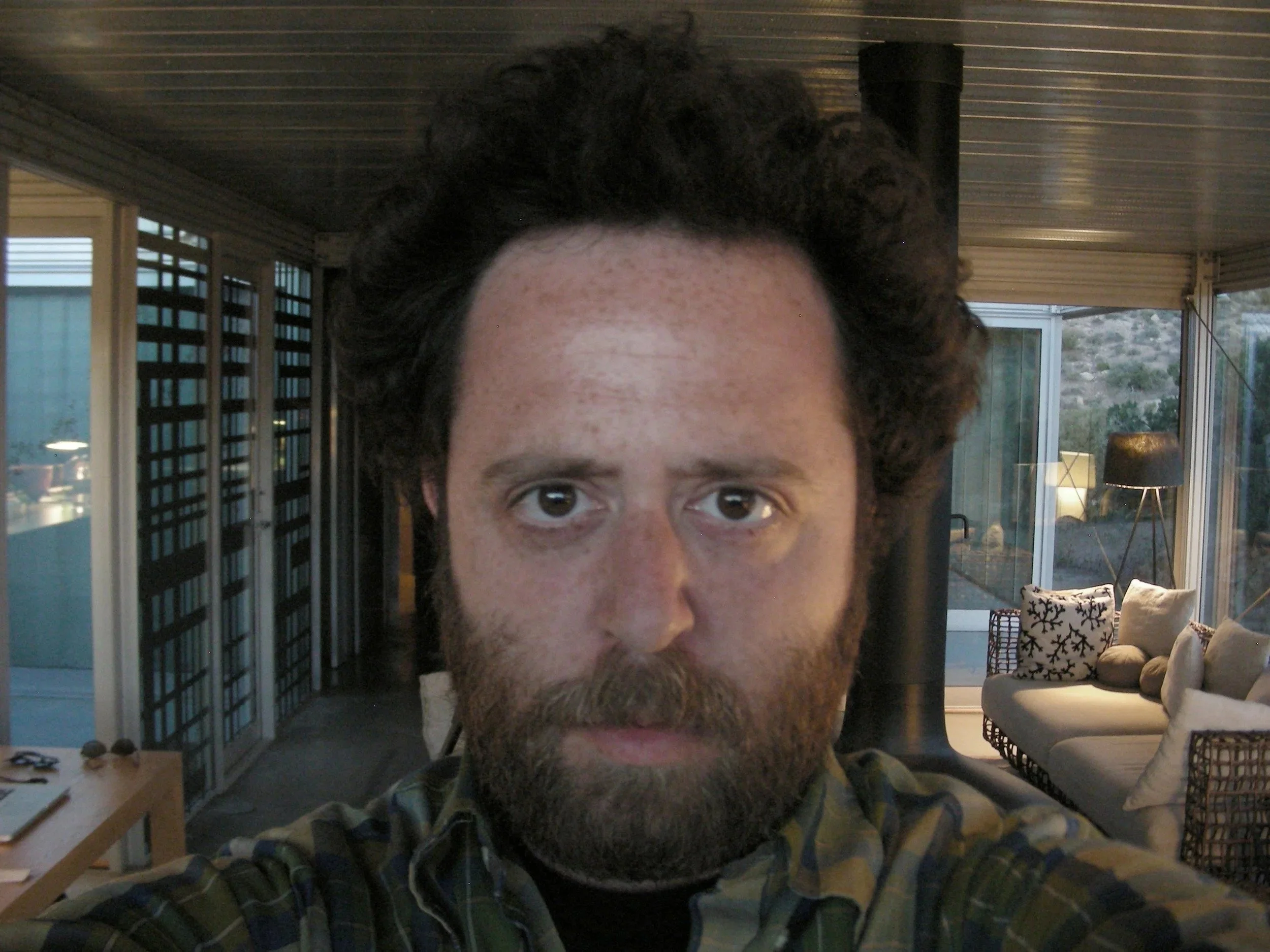
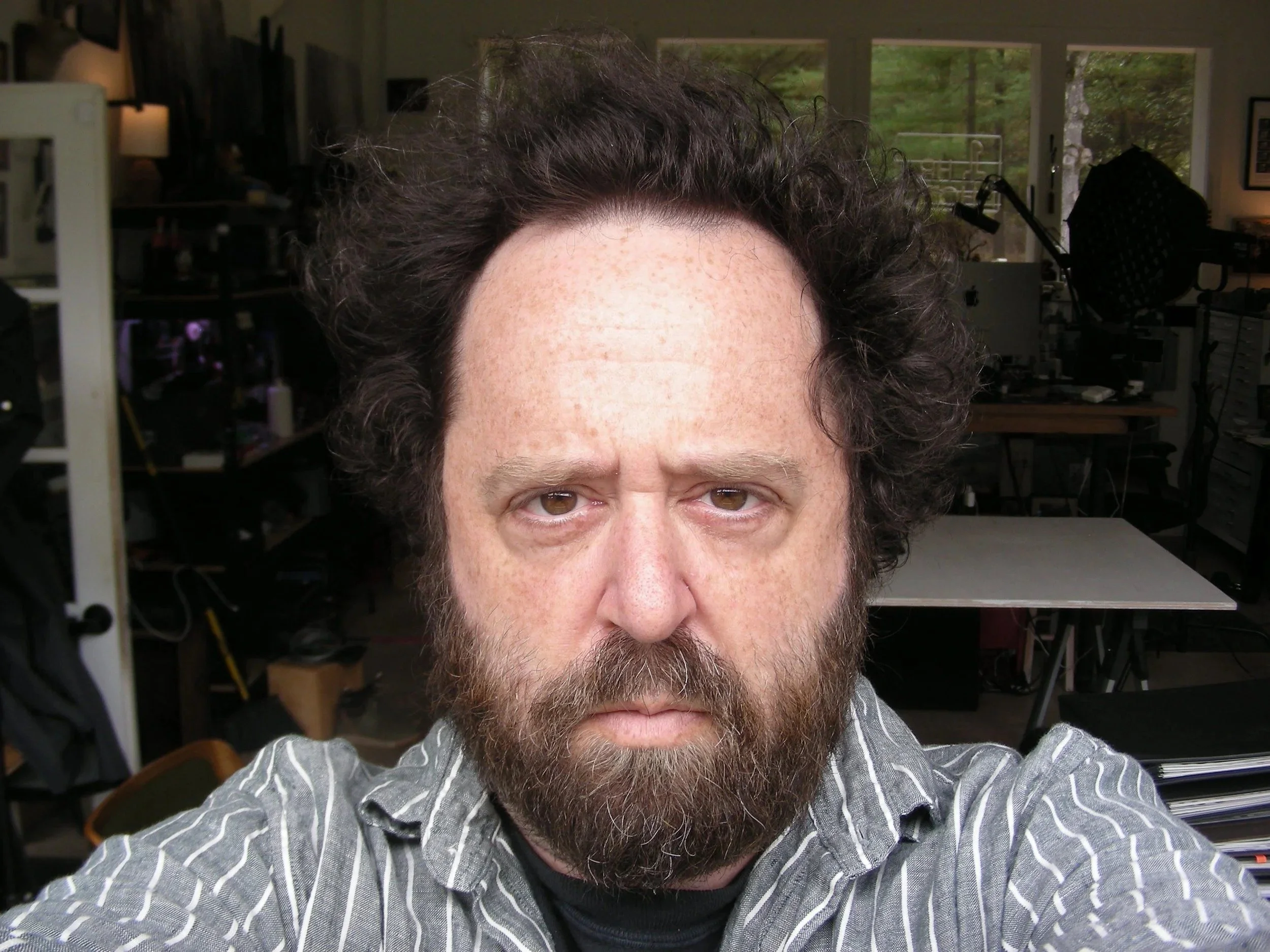
Everyday is Noah Kalina’s ongoing series of daily self-portraits. He made the first photograph in January 2000, aged nineteen, during his second year of college, and kept the project to himself for six years. In 2006 he shared the photographs online as a video, and it reached an enormous audience. More than twenty-five years later, he still photographs his face almost every day and intends to continue for the rest of his life. The series is collected at everyday.photo.
Lumberland
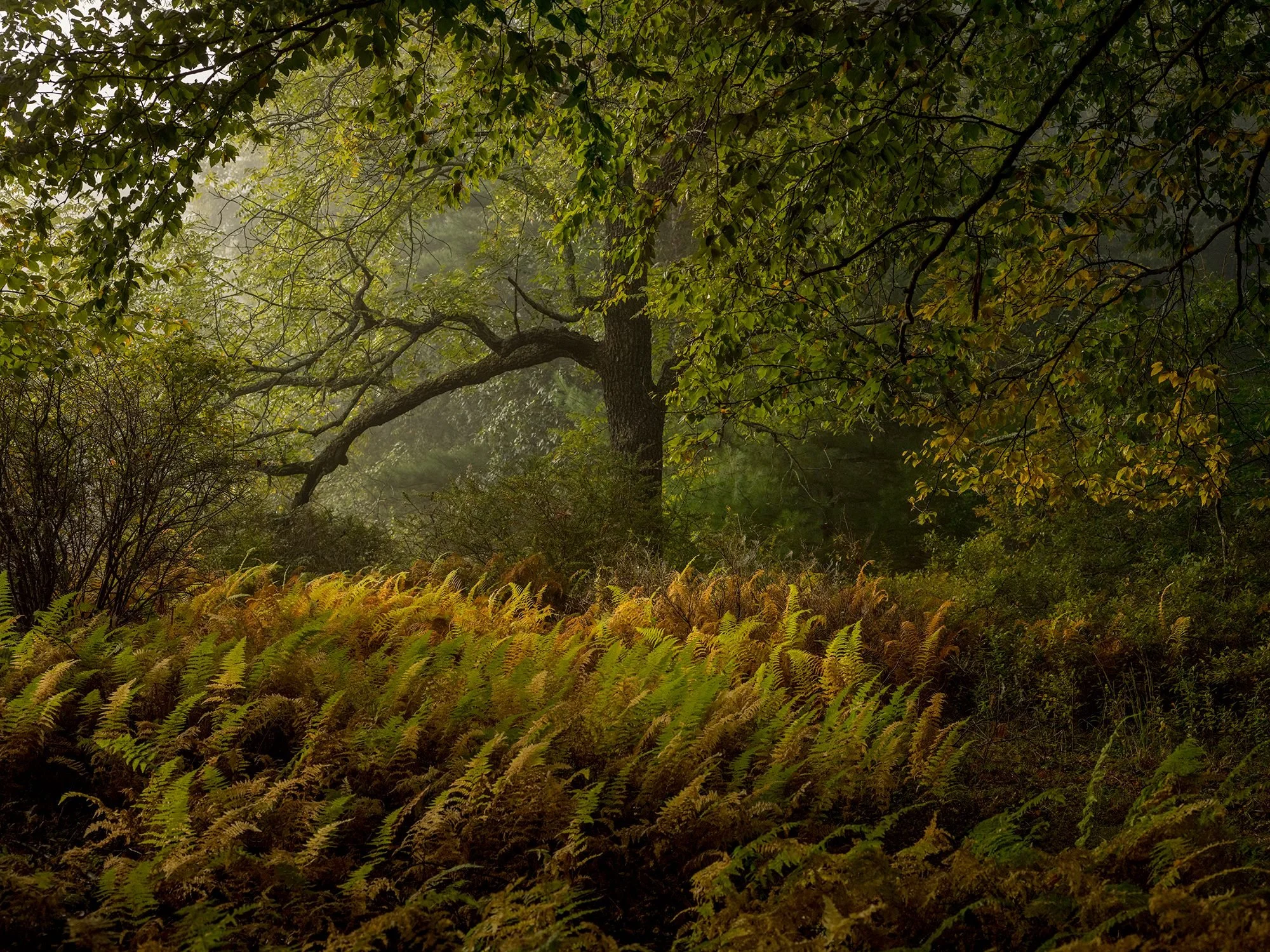
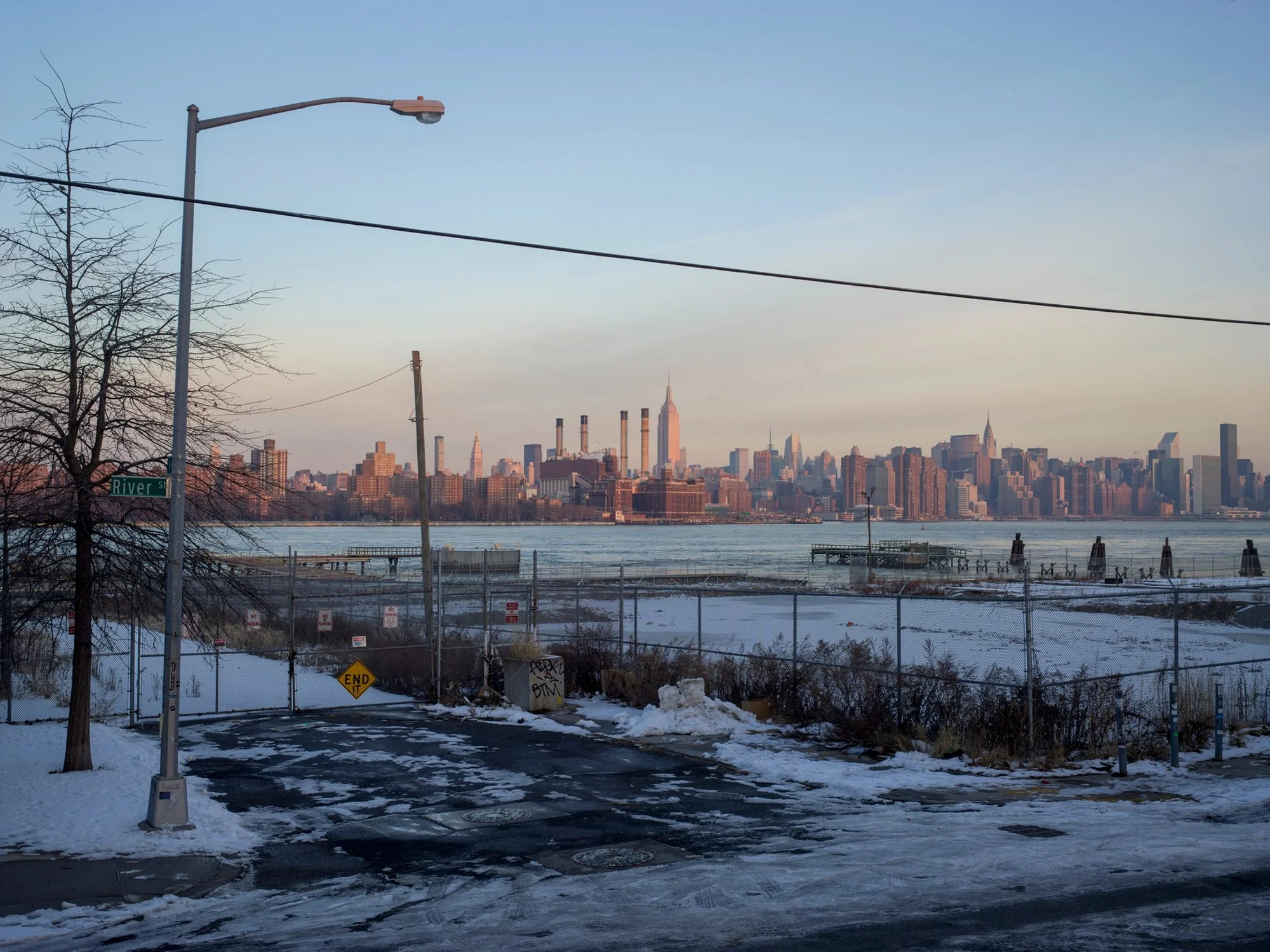
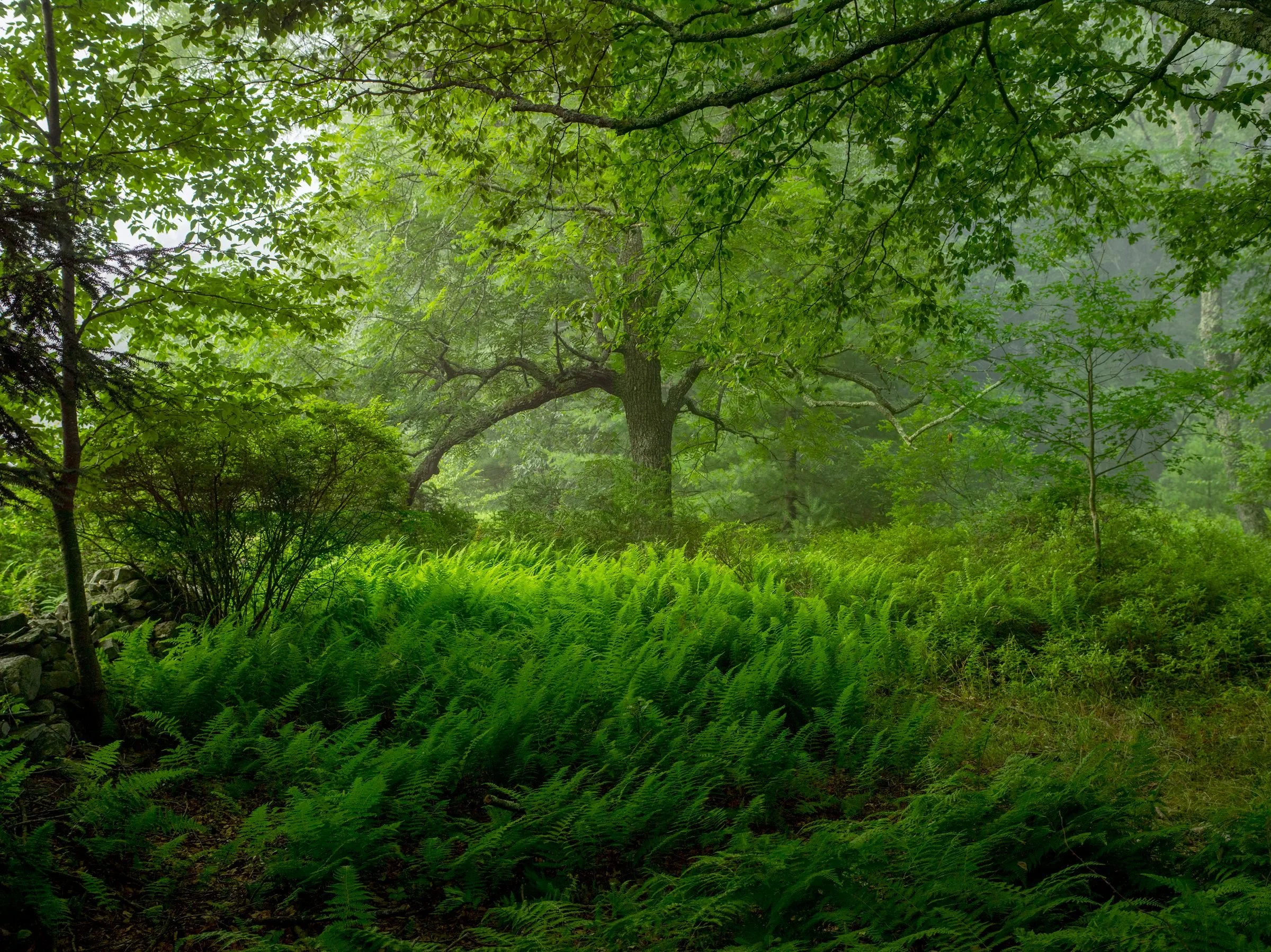
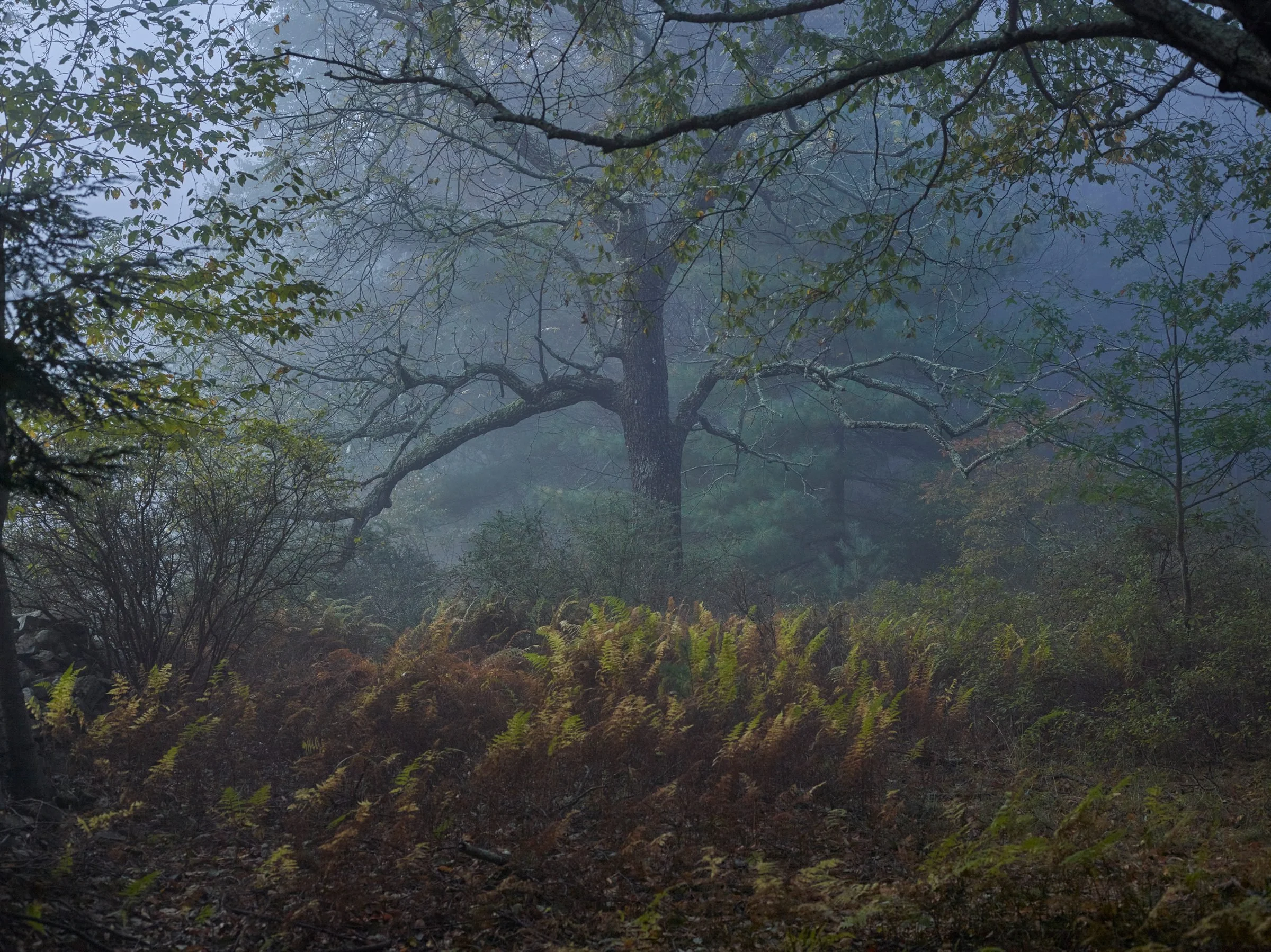
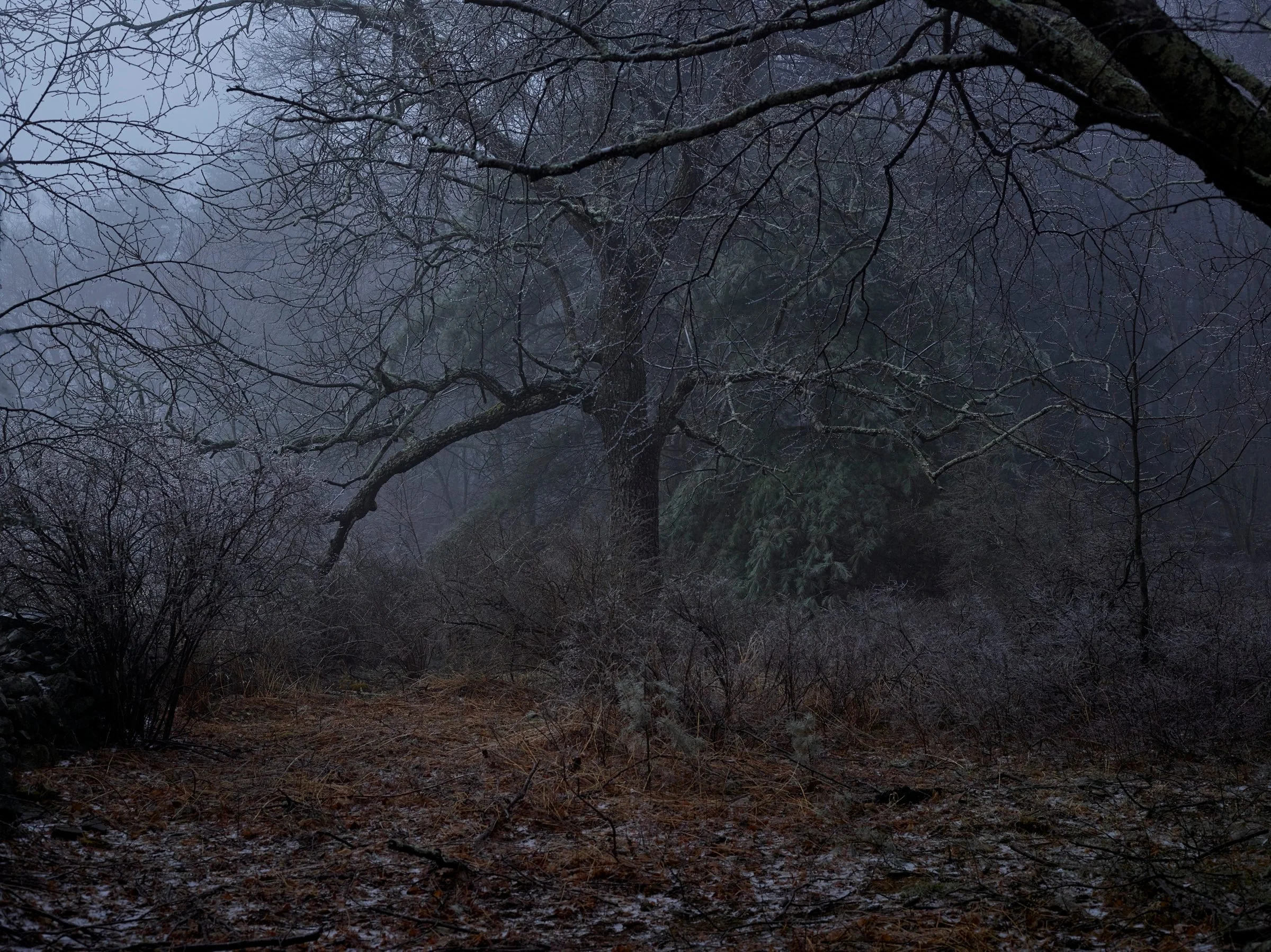
Lumberland is a long-term project made in Lumberland, New York, where Kalina lives. He calls projects like this diachronic: he returns to the same places again and again over many years. The composition stays the same, while the light, the weather and the seasons change.
The Wall
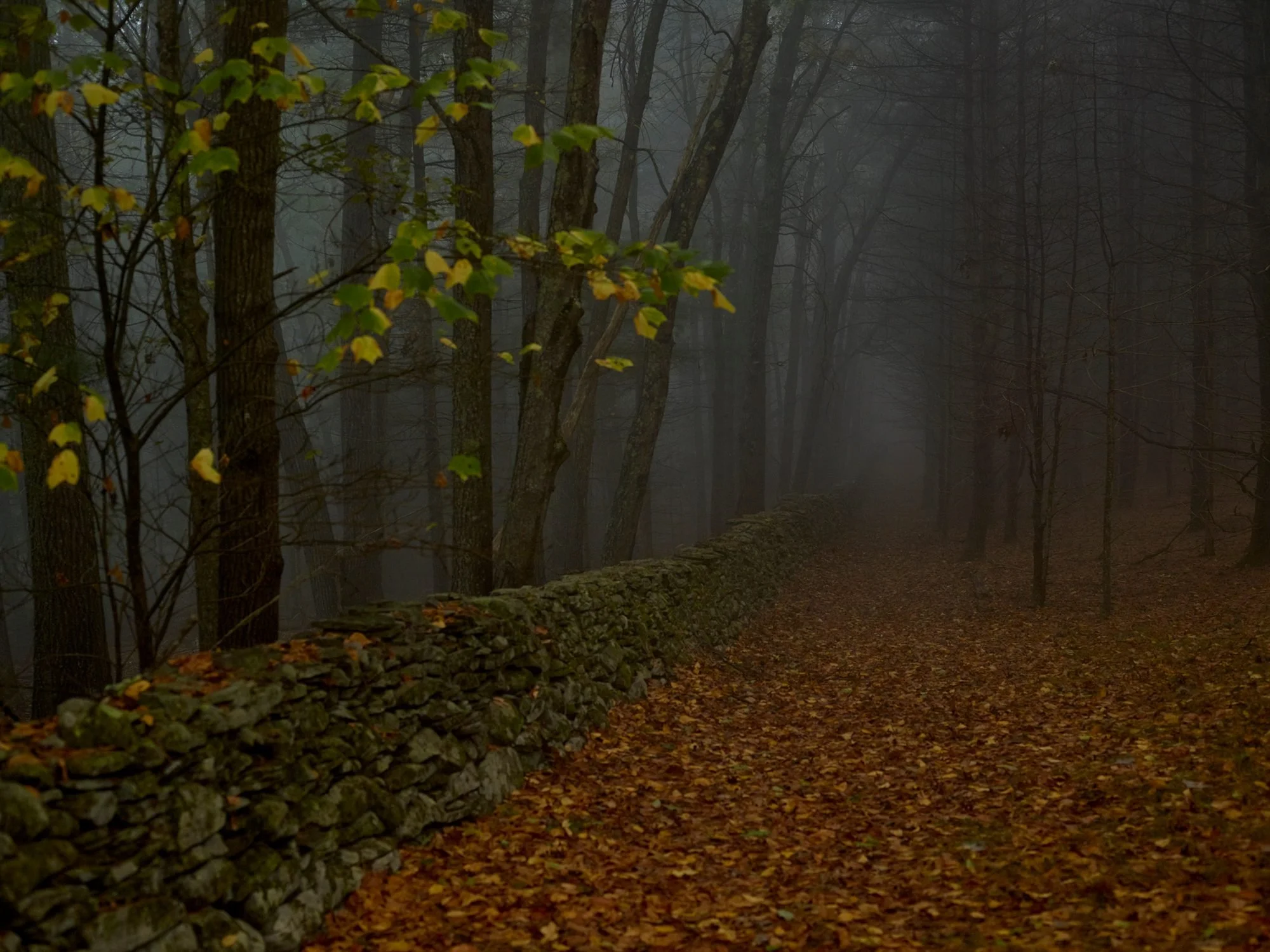
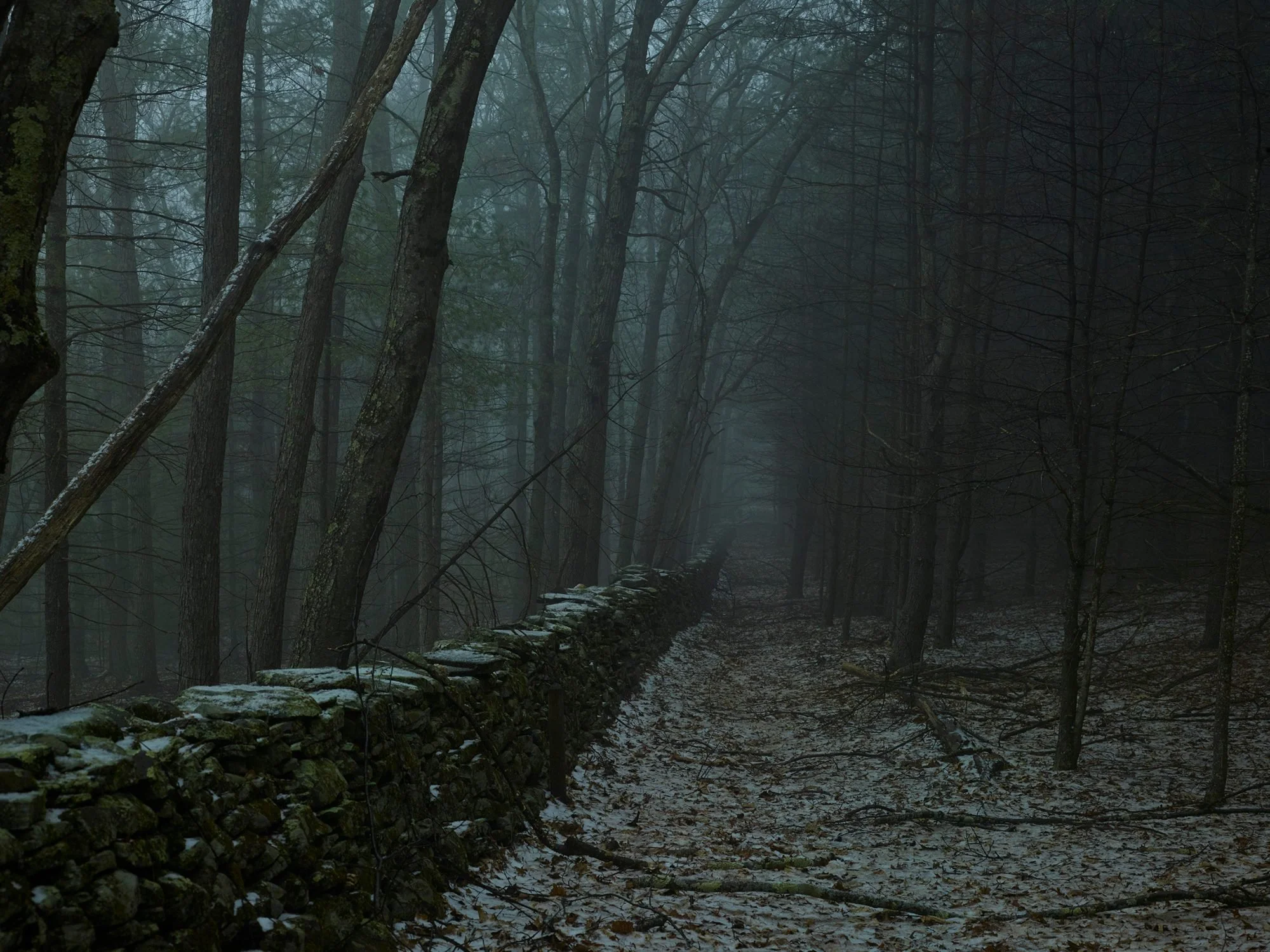
The Wall follows a long stone wall on his property in Lumberland. He photographs it again and again in different seasons and weather. Very little changes from one visit to the next, but for him the photographs are always different.
The Fog
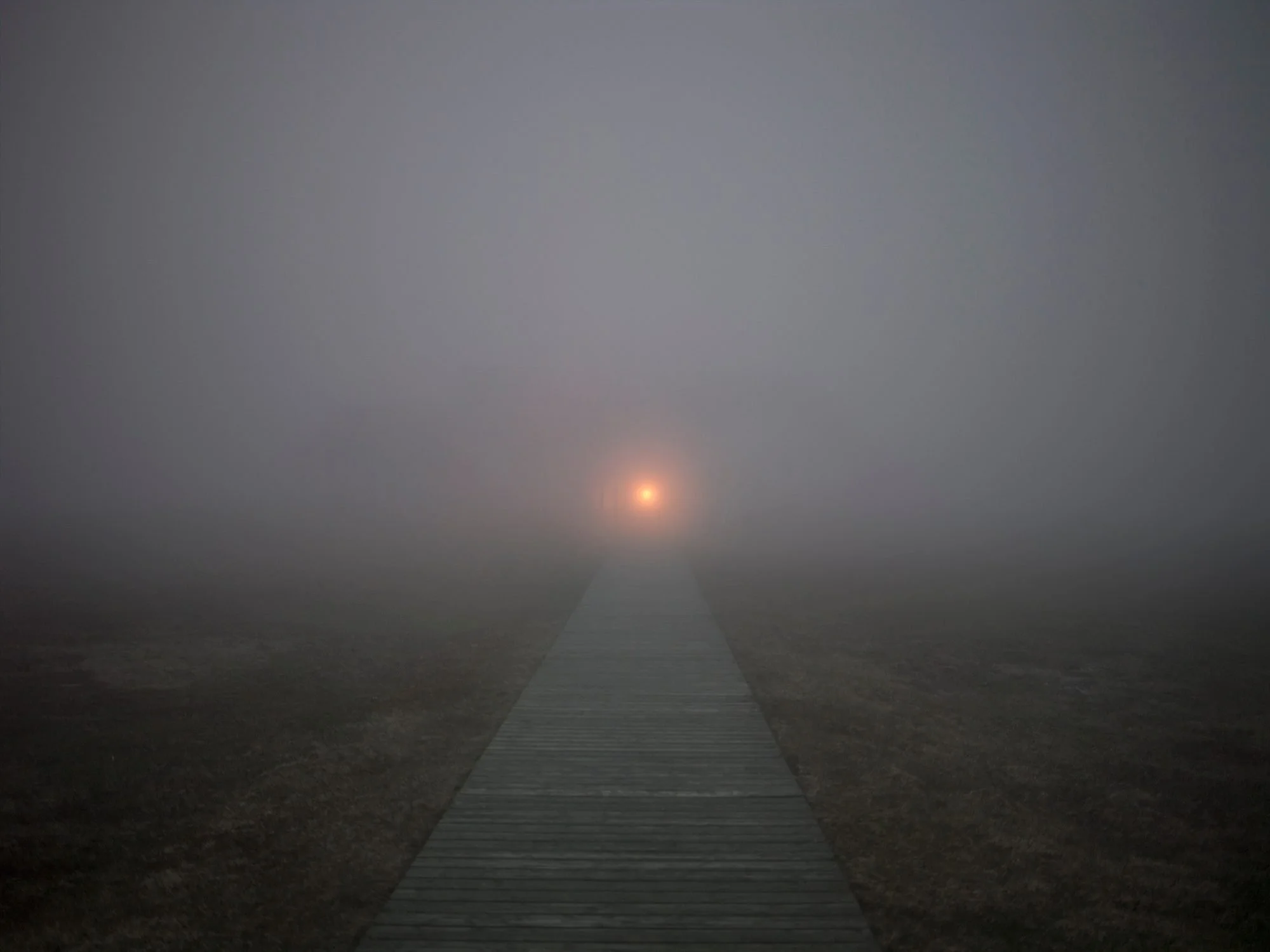
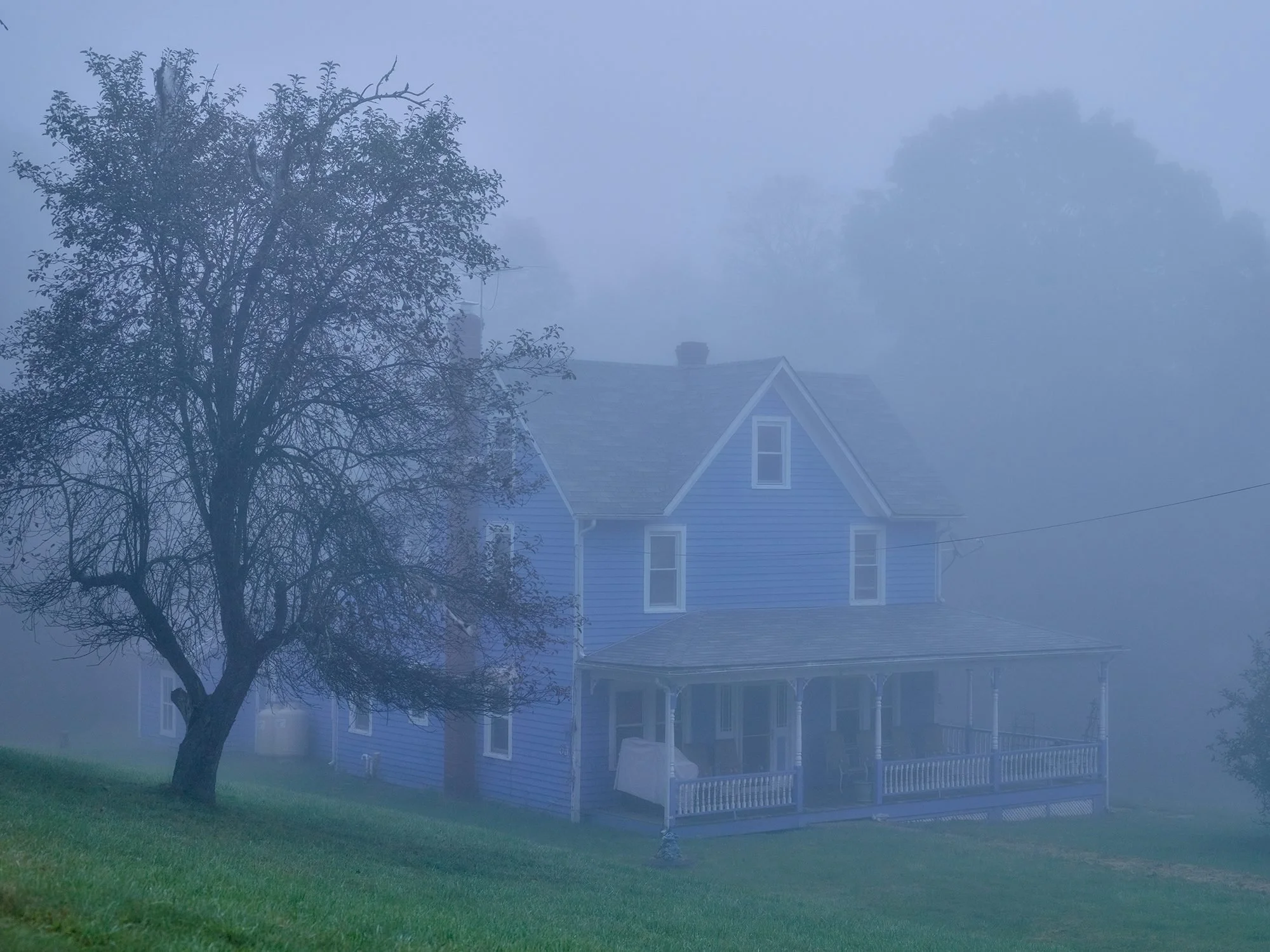
The Fog is an ongoing series of photographs made in fog. He goes out looking for its feeling and mystery. This interest led him to the houses that became Normal Houses.
Normal Houses
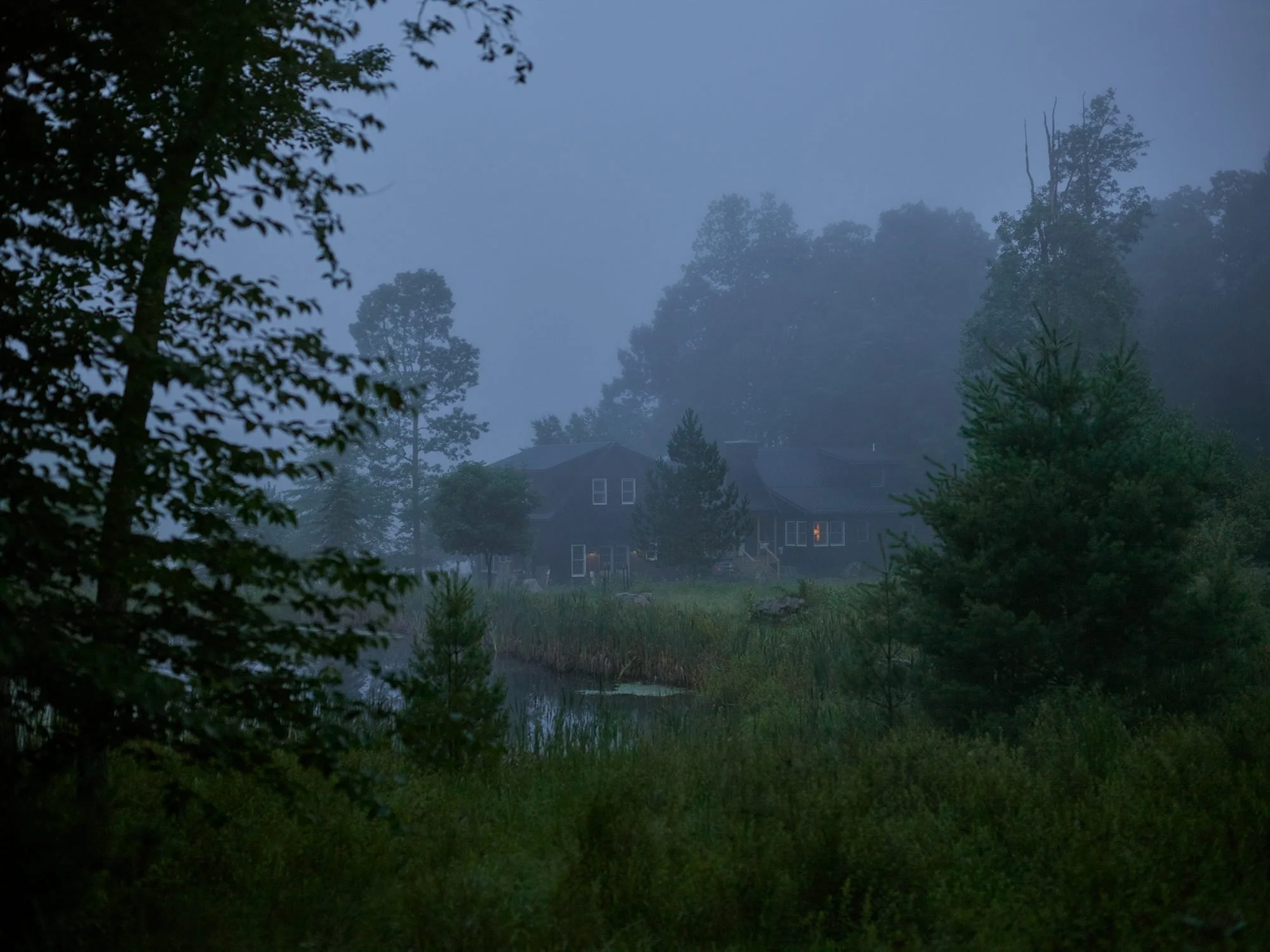
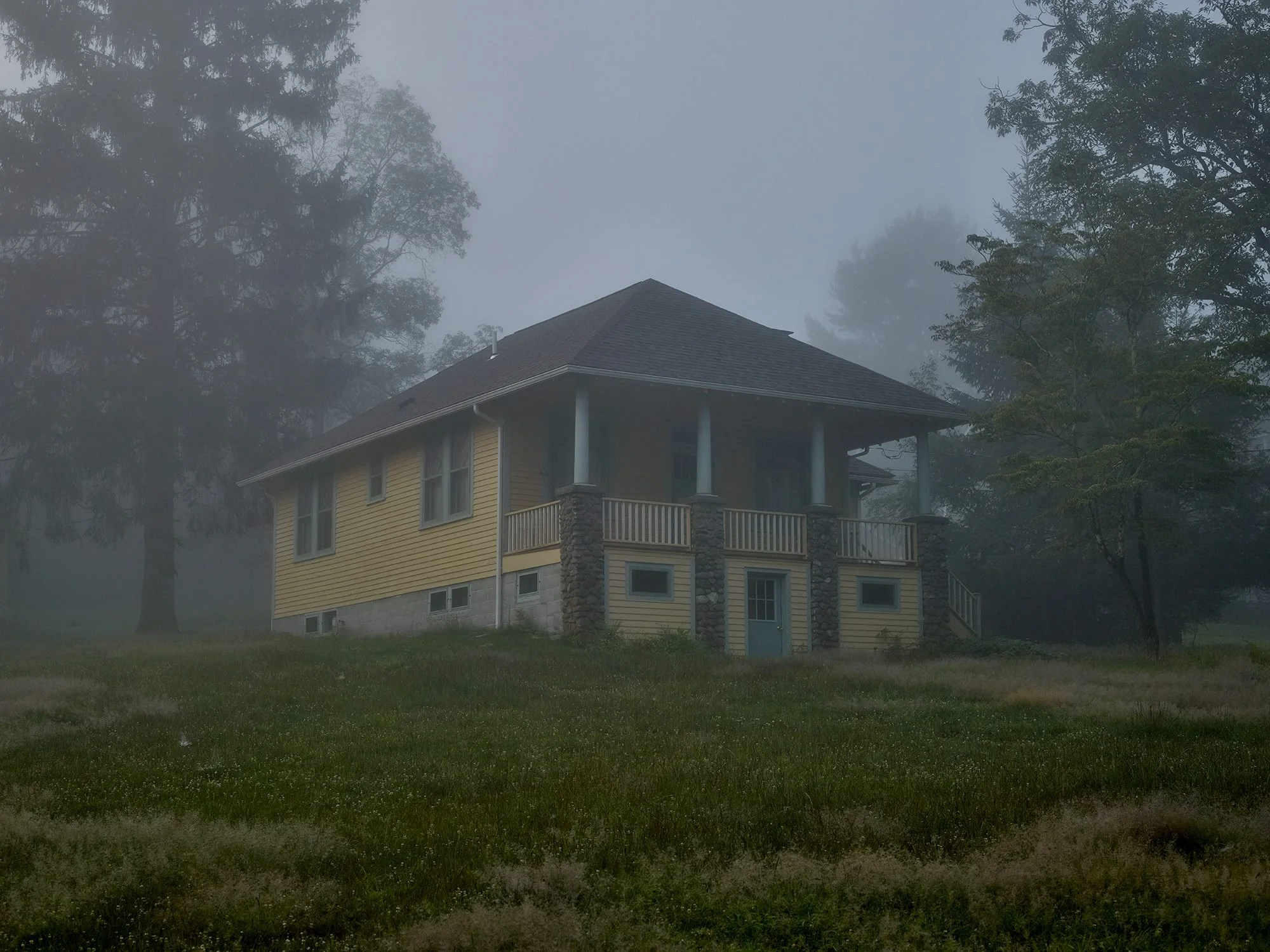
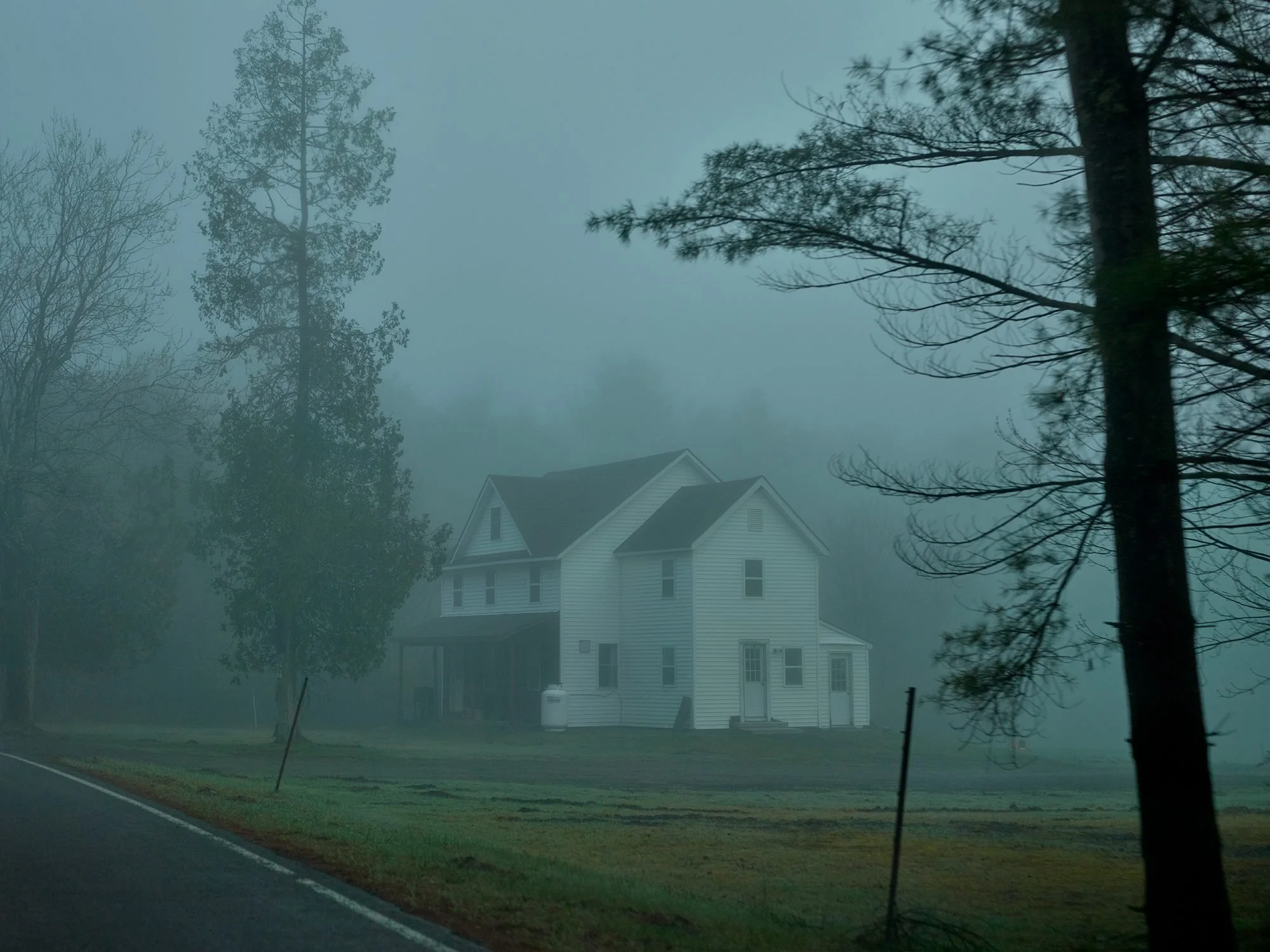
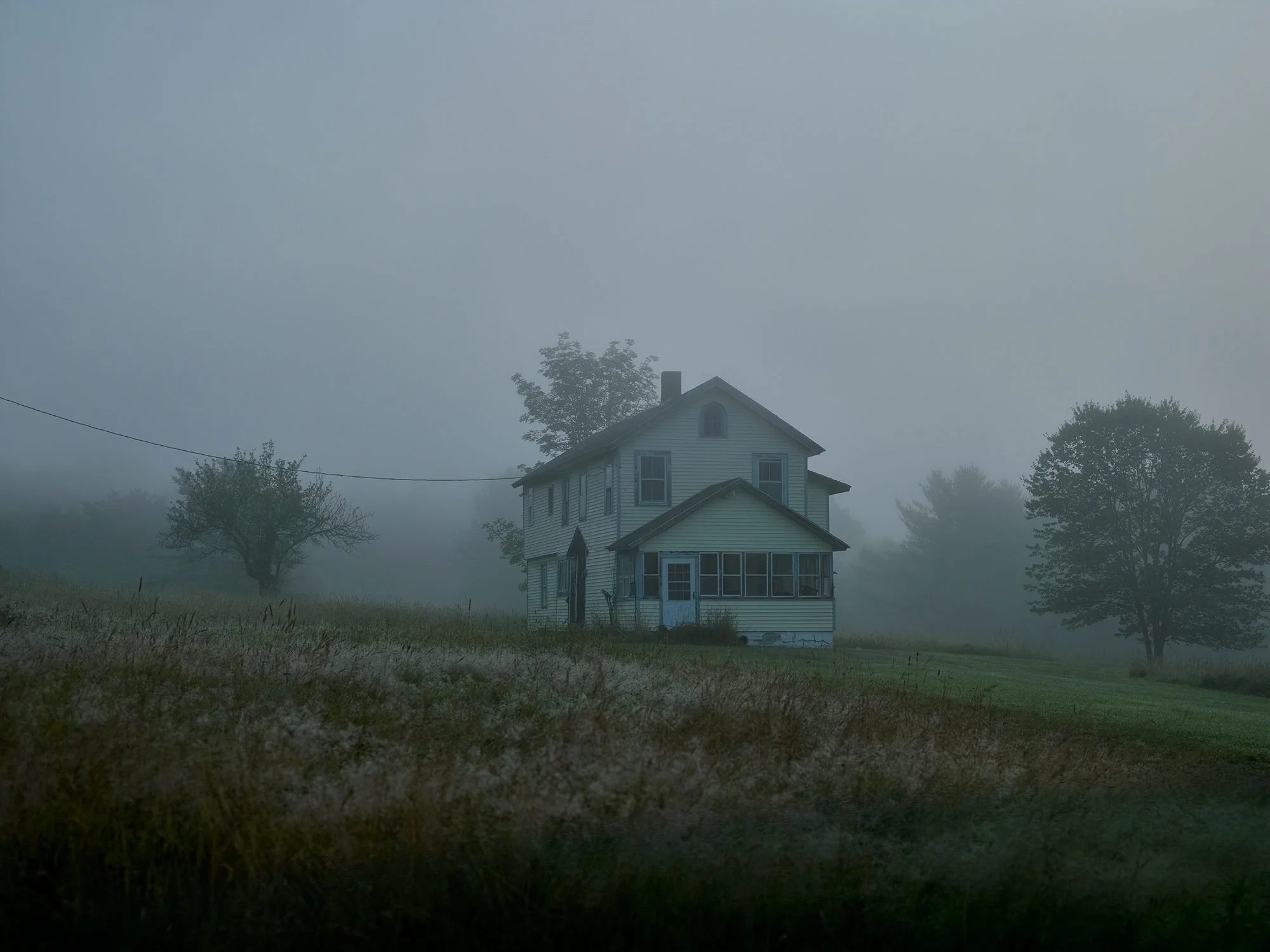
Normal Houses is a catalog of houses in and around Sullivan County, New York, photographed in fog. He made most of it during the early pandemic years, when he drove around looking for the houses. He sees it as a record of the local architecture at one moment in time. The series is finished, and he plans to publish it as a book.
Eyes
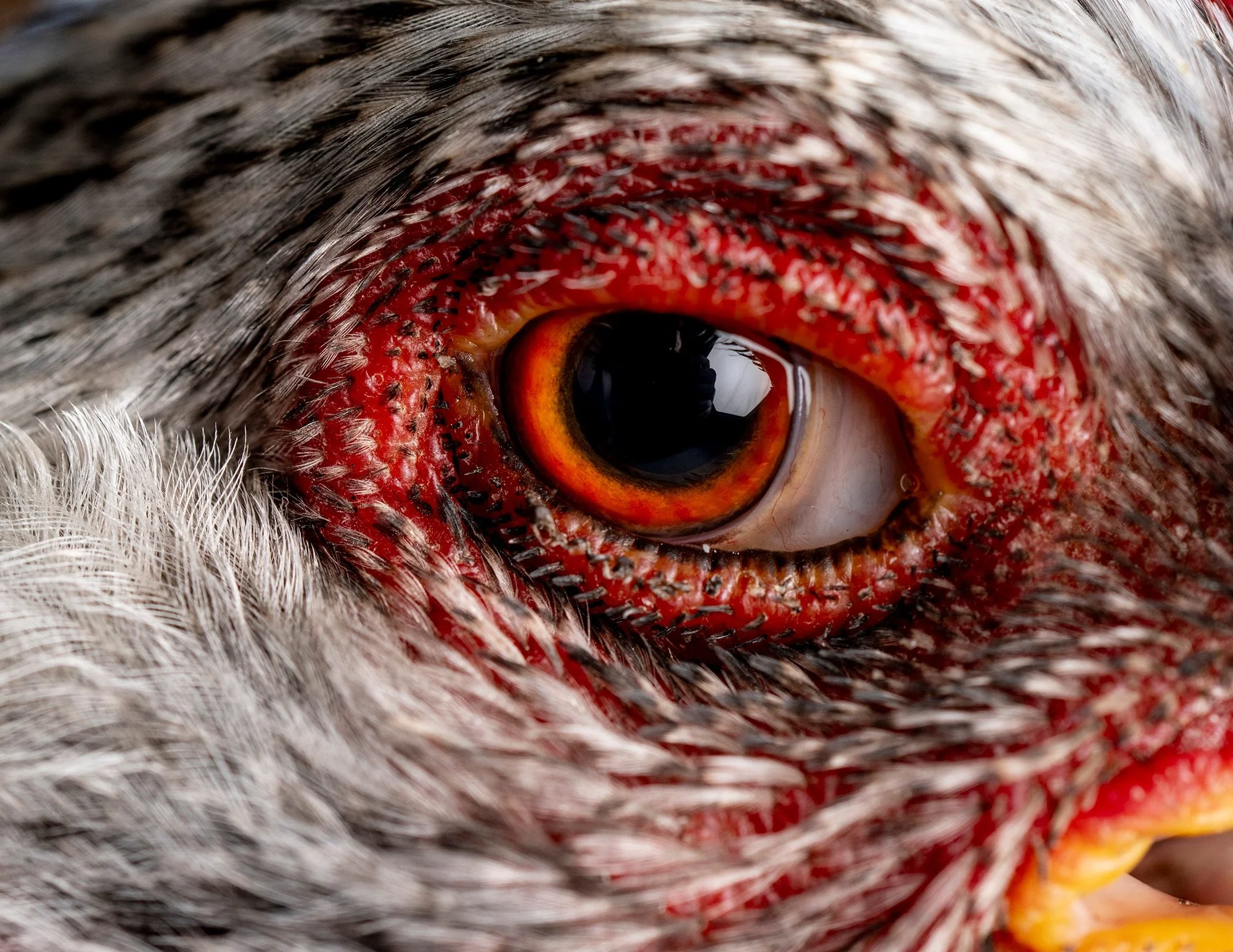
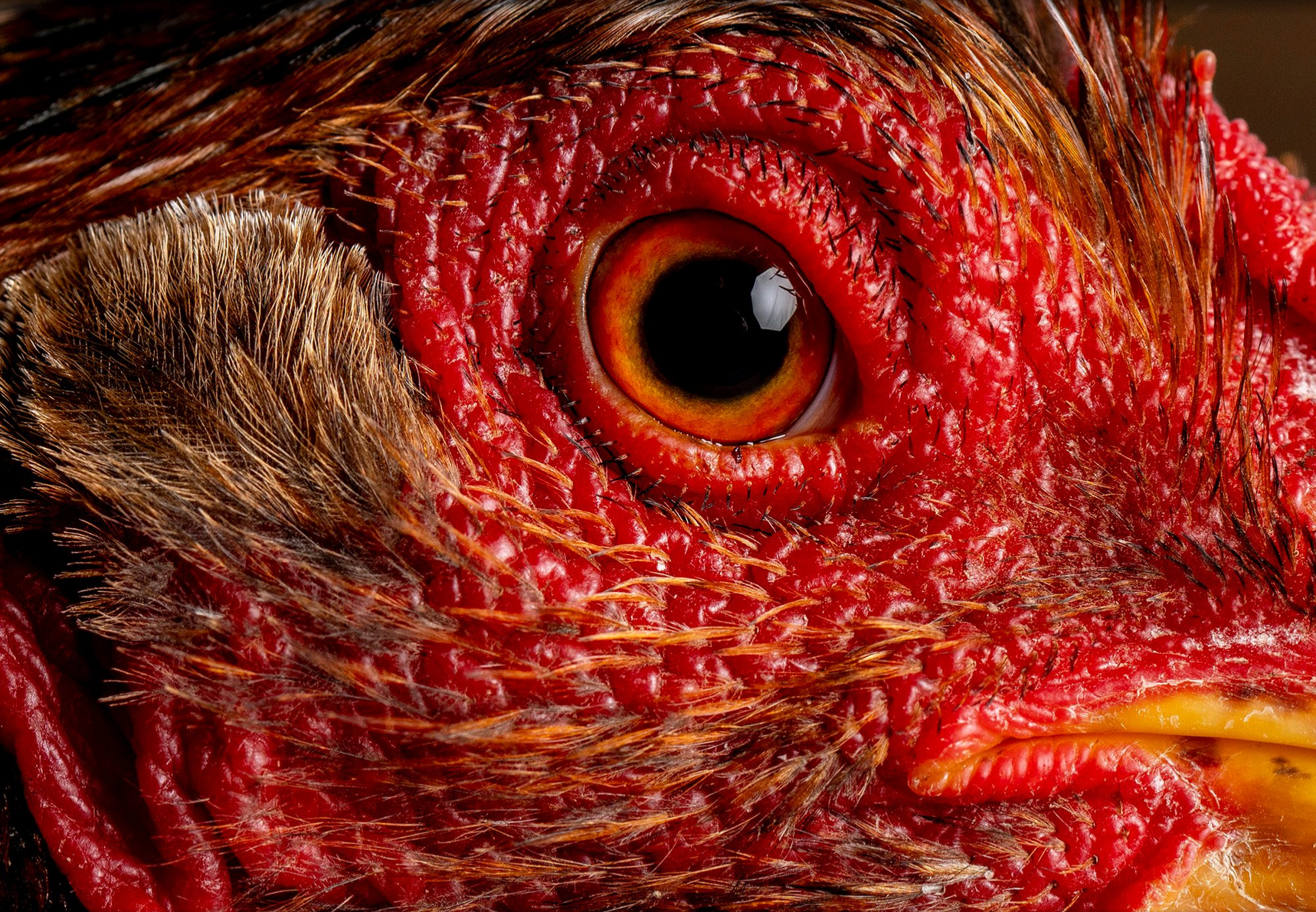
Eyes is a series of detailed close-ups of the eyes of his own chickens. He has photographed his chickens in many ways over the years and has always been fascinated by their eyes.
You can see more of his work at noahkalina.com.
Before we get into the long-term projects, I'd like to start at the beginning. How did you first get into photography, and when did it change from something you were interested in into something you wanted to pursue seriously?
I got into photography when I was around fifteen or sixteen years old, as a sophomore or junior in high school. I hung out with the creative kids. They were people who liked music, liked hanging out, and were more alternative, if you will. Not traditional. The freaks and the weirdos, that kind of thing. Those were the people I spent my time with, and they were all into art and music.
My high school had an art class and a photo class, and all of my friends took as many of those classes as they could. So that's where everyone was hanging out. The photo teacher was really cool, and he allowed people to take multiple classes back to back. You could spend two or three periods hanging out in the photo room, doing photo stuff, especially printing black-and-white photographs in the darkroom. That was a lot of fun for us. It became a hangout. It also became a reason to go out after school and take pictures, which was just another reason to hang out.
That's how I got into it. And I was sort of good at it. I had tried a lot of different art forms up until that point. I tried music, and I couldn't really draw. Photography came naturally to me. I wasn't someone who excelled at traditional things. I don't want to say I wasn't smart, but a path in art seemed to make some kind of sense. It was something I could potentially do. Of course, I was very naive about what photography means as a career. And at that moment in your life, everyone is telling you it's a terrible idea, that you'll never make any money and you'll never have a job.
Then I applied to colleges and went to an art school in New York City, where I majored in photography. So photography became my education. I wasn't even necessarily that good, either technically or in terms of the photos I made. Some were good, and it was clear that I had some compositional awareness. I think I understood the craft intuitively: the mechanics of how photography works and how pictures work. That just came naturally to me.
So I stuck with it. Going to school for photography trains you to do it, and that's what I did. When you're a kid, you don't shoot a lot. You're still hanging out and trying to figure out what you want to do. But in a school where photography was my major, it was my primary focus. Over the years, I learned more, shot more, and tried to get better at the craft. I also tried different genres within the field. I worked in a photo lab. I assisted a few photographers, although I only did that a couple of times. I worked with a wedding photographer. I tried every aspect of photography, just to learn and get experience. Little by little, you become a photographer, and I figured out what I really wanted to do. Although, I don't know, I might still be trying to figure that out.
Was there a particular photograph, person, class, job, or experience that made you think you could actually become a photographer?
Maybe, yes. In college, I tried working two or three times with magazine photographers in New York City. These were the guys who got jobs for music magazines and that whole music and art culture, back when there were a lot of magazines. I remember I was a terrible assistant. I think it was because I would watch them and think, "I can do that." I didn't want to be the one carrying stuff. I felt like I should be the one doing it. I think they got the sense that I just wasn't good as an assistant.
After a few of those jobs, I realized I had to find photo work for myself rather than help and work for other people. And that's what I did. I was inspired by other photographers. Some of them were very talented, but what they did didn't seem incredibly hard. It didn't seem like something I couldn't figure out by myself.
What did your photography look like just before you started Everyday in January 2000? What were you interested in photographing then?
It's funny. In college, I mostly did landscapes with a medium format camera. I loved to photograph at night, so I made long-exposure night photographs where things look super surreal. That was my favorite type of photography. I was inspired by an artist named Jan Staller, who photographed industrial places at night with a Hasselblad. His pictures seemed completely otherworldly. So I was definitely more of a landscape person.
It wasn't until after school that I thought, "I need to start figuring out how to photograph people." That's where any monetary reward would be. Almost all the jobs were going to be related to people. Although I did find interior photography and restaurant industry photography, which was just spaces. I really liked that at the time, because there were no people involved. I only had to photograph the space. So I ended up going back and forth between the two. I thought, why not? I could do both.
I wasn't getting portrait assignments at first. I would eventually start getting them, but I had to build that up, because I didn't have any pictures of people. So I had a job photographing interiors and restaurants, which obviously wasn't full time. It was only a couple of days a week. Alongside that, I did headshots for actors. I used modeling agencies just to get people in front of my camera and make something. It took a long time to get anywhere decent at it. My push for myself was to do a little bit of everything while I could. But ultimately, it was always work that paid me just enough to get to the next month.
Did Everyday feel connected to the work you were already making, or like something completely separate?
It was completely separate. In fact, many people didn't even know I did it. It didn't matter. It was just something I did on the side, my own private art practice. I started it when I was nineteen, in my second year of college. At this point, I have been doing it for more than half my life. It was just a thing I did, but it didn't really relate to anything. It wasn't until 2006 that anyone even knew I was doing it. It was my own secret.
Looking back now, can you see anything in that earlier work that already points toward the way you use repetition and time today?
Definitely, now. But it took many years. It's funny, because people would always say, "You take a photo of yourself every day. Why don't you do something else every day?" They said it jokingly, almost making fun of it. So I never really wanted to do that. I wanted to stay separate from it and find my own way. But little by little, over time, I started finding things I was attracted to and kept going back to again and again.
Most of those projects aren't every day, of course. They are regular. I call them diachronic, which basically means returning to the same spot again and again over a long period of time. But it's hard to see what the project is until you give it at least a year, if not a couple of years. There have been times when I photographed something, didn't return for a couple of years, and then went back and realized there is something here. There is something worth returning to.
Why Keep Coming Back? Everyday, Lumberland, The Wall, and Normal Houses all depend on returning to something again and again. What tells you that a subject is worth returning to rather than making one photograph and moving on?
I think it's the composition. I think one photo in any of those series can stand on its own, hopefully. Usually. Some are obviously going to be better than others, but it's that compositional element. The photo can stand alone as its own piece. That's one thing that keeps me coming back. The other is a place where the atmosphere changes. These places are usually outside, so the light changes, and you can see subtle differences in what I think is an interesting composition.
Do you usually know that from the beginning, or does repetition reveal it later?
No, that's what I was saying. It reveals itself over time. Photographers like to go out and take walks, right? It's a reason to go outside. So these places are usually close enough for me to revisit. Everyday was started because I knew I would always be with myself. It was the one subject I knew would always be around. But with these other things, there needs to be some level of convenience for them to continue as a time-based project. There is some pragmatism to it.
Have you tried returning to something that eventually proved it could not sustain a project?
There was one I was doing that focused on a particular tree in a certain area, and that tree died. It no longer felt like the composition I had, so that project effectively ended. Over time, others feel less compelling to me while I favor different ones, but that can change. I have moved away from some of them, so now I can only visit them every once in a while. But I still consider them ongoing, because I plan to return. And I know that when I return, the change will be even greater.
Everyday began with a very simple act: photographing your face each day. At what point did repetition itself become part of what the work was about?
With that project, I think it was there from the beginning. That was the goal. I had made that goal in my mind. I don't know how I ended up sticking with it, especially in those early years. I was a little looser then. I did miss a few days at first, and it took a while to become more strict about it. But the whole point was to do it for the rest of my life.
If you had known in 2000 what the project would become, do you think you would have made it differently?
I don't know if I would have even done it.
Why?
If it were now, it would be weird. I don't really have a strong desire to look at my face. For some reason, when I was nineteen, I was somewhat less self-conscious about that. I mean, I definitely was self-conscious. I was aware of my appearance and didn't necessarily like it. But in some ways, the project was private. No one knew about it. The internet was around, but there wasn't social media like there is now. So I was able to do it, keep it for myself, and be okay with it. It was just me. No one was judging me.
Now, with the way the internet is, how people consume things, and certainly how the selfie has become such a normal thing for most people, that concept isn't very compelling to me anymore.
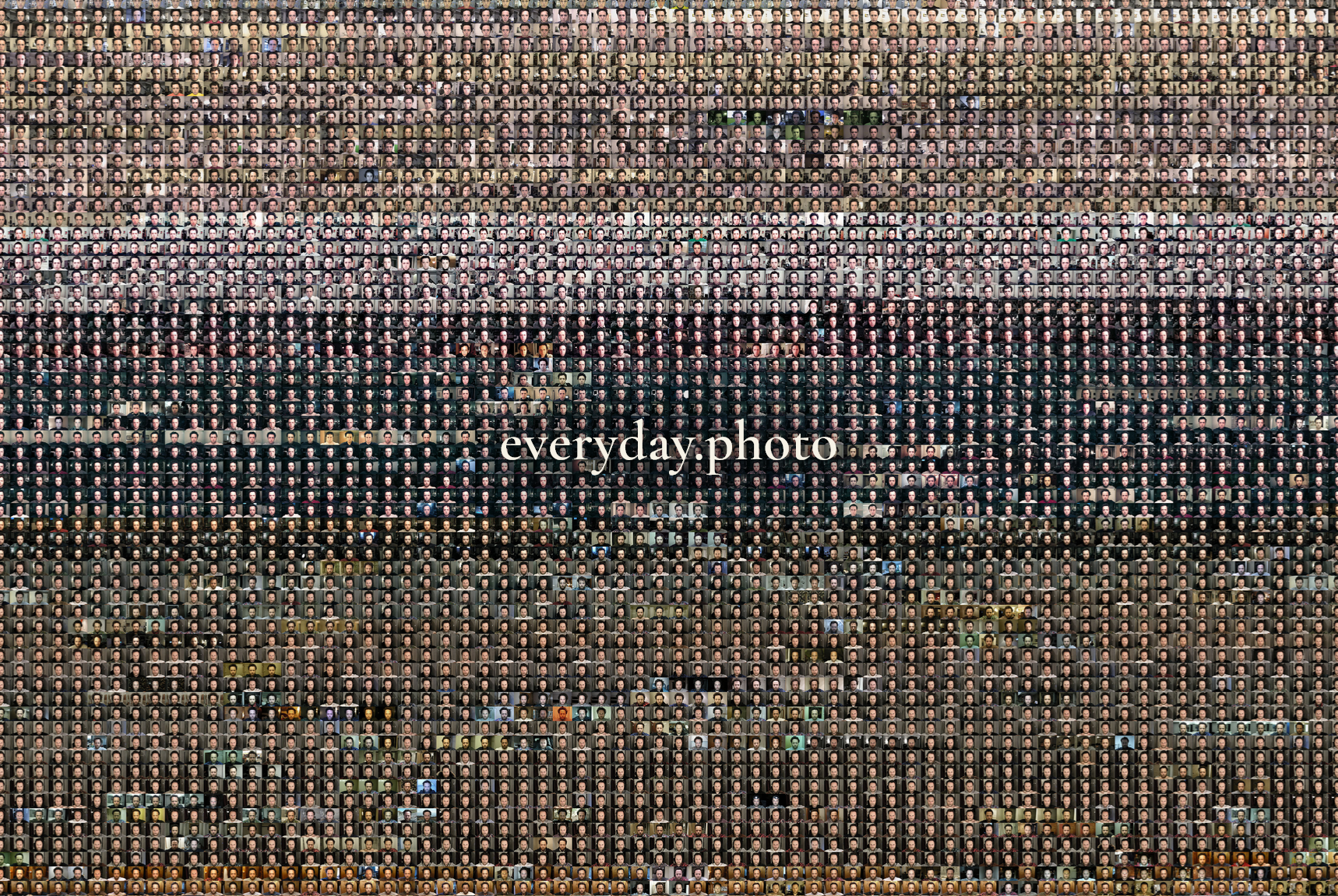
You have written that about 47 days are missing from Everyday. For a project built around doing something every day, why don't those missing photographs break the project? You have written that seeing Tehching Hsieh's work changed how you thought about those missing days. What did his work help you understand about your own?
I think his work helped me understand that it's okay to miss days. Life is life, and nobody is perfect. For a long time, I definitely felt that it wasn't perfect, but I don't know, it never mattered to me that much. Technically, it's not every single day. But on this scale, now twenty-six years or so, it is more or less every day. I can't call it "Everyday" with a little asterisk and say, "Almost." It's actually good enough, I think.
People are usually curious about that. They wonder if it is actually every day. And it's like, well, I missed forty days over twenty years. So no, I guess not. But does that take anything away? I don't think so.
You had already been photographing fog for years when houses in Sullivan County began becoming Normal Houses. When did those photographs stop feeling like part of your larger interest in fog and start feeling like their own project?
It's funny, because Normal Houses is not a diachronic project. It's more of a catalog type of project. In a sense, it's a historical document of architecture in this particular area at this particular time.
There is something I like about projects that stay with the same theme and keep going, again and again. Often it is the same subject, but there are also variations on a specific theme that I like. And I am someone who, just by training, goes out and takes pictures. I'm looking for something. As any photographer knows, you don't necessarily know what you're looking for. You're just hoping you're in the right place at the right time.
I was so attracted to the fog. I would go out looking for that feeling, that mystery. Ultimately, I started focusing more on these homes and feeling that they're actually really interesting in this weather, in this lighting condition, with the mood behind it. So I thought, why don't I try to get as many as I possibly can? They're all so unique in their own special way. Well, some aren't unique. But that's the thing. They're just normal houses.
Once you have photographed hundreds of houses for Normal Houses, what does another house have to give you before it is worth adding?
I feel like this one naturally found its way out. I did enough. I covered enough. It just feels done. And the time I used to spend on it, I'm now using on different projects. It was effectively a phase of my life and my art practice, when I would get in the car and go try to find these houses. That was mostly during the early pandemic years. It was a very isolating time, and everything felt so empty and quiet. So it was a way to get out, look around, and see what was going on.
But as time changed, there was enough. I had a show. I should have published the book already. It should have come out two years ago, but it will come out eventually, probably next year. Then I can button it up in a book. It's a finished series, and I can be done with it as a project.
Have you made a new photograph and realized you essentially already had it?
Yes. But that can be interesting too, because it's slightly different. It might be the same picture, but it's not.
How do you tell the difference between useful repetition and simply making the project larger?
Only in the subtle story it tells. There was a part of the edit I was working on where I had photographed one house, and then, a year or two later, toward the end of the project, I photographed it again. It looked totally different. I feel like that is an interesting way to show the duration of time. So time is an element of the project. But with that one specifically, it was more about trying to collect as many houses as I could. So I was trying to avoid duplicates.
With projects such as Lumberland and The Wall, you can return to the same place and find that very little has changed. Can a photograph where almost nothing is different still move the project forward?
Yes, although I try not to make them too close together. It's like Everyday. The change is subtle, but the photos are always different. And as I said, one photo can stand on its own. I still believe that. Even if there are two that are very similar, I don't think that matters. In fact, I do edit, so I don't show or post every photo I take for the series. But I don't think it matters one way or another.
Some of your projects have remained open for years or decades. Do you need to know how a project might end while you are making it?
No, I don't. But they can all end. The only one I don't really want to end is Everyday, because that one is supposed to end with my death. I'm okay with the others stopping. I'm not being forced to do them. I make them because I enjoy it. If I get to a point where I just don't need to do it anymore, that's okay. I can end it. And in some ways, some might be done now, and we just don't know it yet. I just haven't gone back.
You recently went back through roughly twenty years of photographs, including your archive of New York bars and restaurants. Did you find that time had changed which photographs you considered valuable?
Maybe. It depends on what you mean by valuable, and in what context.
I mean what you consider a good photo. You thought one thing when you took it, and twenty years later, maybe you changed your opinion.
This is really interesting, because I think a lot of the stuff I didn't like at the time, I actually appreciate more now. I think it has gotten better with time. Then, of course, there is stuff that is just objectively not good. I still make bad photos to this day. In photography, we do not have a one hundred percent hit rate. I literally think one percent of the photos we take are good or valuable.
Obviously, it depends on the context in which we apply that value. Are they valuable just because they are compositionally good photos for a portfolio? And what is that portfolio's objective? Is it to get work based on that photo? Or is it to turn the photograph into an art print that someone might want to collect, or into part of a project where the picture itself has value, not just emotional value? All of these things are considerations. That said, I think I've gotten better, so I make more valuable pictures as I go on. But with time, I believe our older photos become more valuable regardless.
Why do you think that is?
Because those moments no longer exist. Whatever that time period was, it is now recorded as an artifact. It feels further and further away, and it is so fleeting. Having that thing from that moment is rare. It becomes more rare, and therefore more valuable.
Was it ever the other way around? Did you find a photo you once liked and realize, with time, that you don't like it anymore, or not as much?
I'm looking at some pictures I have around here, and some of them are older. I don't know. I don't want to say that I necessarily enjoy everything I make, but I'm more forgiving of how I used to be. I think we can all be very hard on ourselves and our own work. We never think it's good enough, and we never think we're good or getting better. But I can look at my work and think that some of it is objectively good, in whatever context we want to think about it. I even find some of my older work really special and interesting, even more so now. That could be mostly because I can't believe I even did a lot of the things I did.
Everyday reached an enormous audience, and you have written about losing subscribers when you began putting different work on YouTube. Did the success of one project ever make it harder to show people everything else you were doing?
Yes. That project was really hard for me. I have very mixed emotions about what that work did to me and to the perception of who I am. Imagine that the very first thing you post somewhere is essentially the biggest thing you'll ever make. It's really only downhill from there. For a long time, I was "that guy."
It took many, many years for people to know me for my other work. Then I started meeting people who didn't even know I did that project, or who had seen it but didn't know it was me. I finally felt free when that happened. It was no longer this monster of a project that, obviously, changed my life for a number of years.
Can the success of a project become a creative limitation?
Maybe. I think it depends on the person. I never wanted to be pigeonholed, where that's the only thing anyone would know me for. I obviously did other things. That shouldn't have been the thing I was known for at that time. I should have waited another fifteen years before I made it public. My life might have been very different.
But I don't know. Sometimes people do something that works, and then they just continue to do it because it works. And that's good for them. I happen to be someone who is interested in a lot of different things, so I want to try different things. And when you try a lot of things, many of them are not going to be successful. So we just have to keep going and move on.
I really like your Eyes series. How did it come to be?
The chicken eyes? Well, I have chickens, and I have photographed them in many different ways over the years. I've always been fascinated by their eyes, and by these dinosaur-like animals that are so incredibly important to humanity. Chickens. I think looking them in the eyes is really fascinating.
I really like the detail and the lighting. Have you ever considered photographing other animals, or people?
Not in that way. A lot of what I make comes from my direct surroundings. That is something I can easily focus on and work on. If I had to go around to all sorts of farms to photograph horse eyes or something, that would be much harder to do. It's not that I don't think it would be interesting. It's just not something I feel is worth my time at this moment.
You have written about reaching a point where an experience can immediately become a photograph, video, or newsletter idea. After documenting your life for so long, is it still possible to separate experiencing something from thinking about how to record it?
I feel like this is every photographer's struggle, at least at some point, especially if you've been doing it long enough. What is the point of photography? Why are we doing it? Especially now, when we are surrounded by and inundated with images. When I started, photography wasn't what it is now. It was a little more rare and a little more special. It required more time and effort, and film and developing. So it depends on your initial motivations with the craft or the hobby. What do you wish to get out of it?
If it becomes something you truly love and work on every day of your life, it becomes your identity to a certain point. When you look back, you wonder what life would have been like if you hadn't done it. There's no way to know. And at a certain point, you really can't stop. So you just have to deal with it.
Especially now, because I feel like I'm at a twenty-year bookend. The period between 2006 and 2026 has been the core of my work up until this point. It's a huge amount of work that I did over twenty years. Now I'm taking more time to reflect on it and try to make something of it. I think a lot of photographers just go, go, shoot, shoot. They call it Winogrand syndrome. What's more important: going out and shooting, or the end result, the photo you make? Garry Winogrand ended up dying with hundreds of rolls of film he never even developed.
So what are we doing it for? What was he doing it for? Is the act the most important part of the process? I don't know. Right now, I'm trying to find all the ways my work ties together. I'm trying to package it up and figure out what it means, so I can move forward. I'm still taking pictures almost every day, but not in the volume I used to. And I'm finally happy about that. I feel a little more relaxed about it. But it has been hard to give myself that time, especially because I always feel like I might miss something.
Has there been a moment when you deliberately chose not to document something because you wanted to experience it instead?
It depends on what you mean by document. I go to concerts and shows, things like that, where the experience really needs to be in the present. I might take out my phone and take a couple of pictures or a video, just so I have a record for myself. But yes, there are totally those moments. In fact, I'm not a shutterbug like Garry Winogrand, or like a lot of street photographers who always have a camera around their neck. I can be fine without it, especially since I have my phone just in case. If we can make something, we'll use that. But I think it's okay to live and not try to shoot everything just so you can post about it.
Do you think Winogrand's success came from the volume?
I think it comes from dedication. I think people respond to that. They respond to obsession, in a sense, but I think it's more about dedication and commitment. You decide you're going to do something, and you stick with it. I think that's valuable, and a lot of people struggle with that in all aspects of their lives. So when they recognize it in the photographs, I think that's what they're responding to.
After more than twenty-five years of Everyday and years of returning to landscapes, houses, walls, fog, and archives, what have you learned about which subjects become more interesting with time and which ones simply become exhausted?
I think the things that age, the things that really change, are the more interesting subjects. But you don't know that in the beginning. You need to give it time, and ten years really isn't enough. Twenty years isn't really enough either. But we only have so much time. I think this is true for anyone looking at any photograph, especially an ordinary photograph of family or friends. The most interesting part is how different we are now. You are reminded of the time when things were like that. There's a nostalgia to it, and I think that's a universal feeling.
If you began a new long-term project tomorrow, what would you look for before deciding it was worth years of your life?
Convenience. It's got to be easy to do.
Thank you very much for your thoughts and your time.
Thank you, Martin. I appreciate that.
We'd love to read your comments below, sharing your thoughts and insights on the artist's work.
