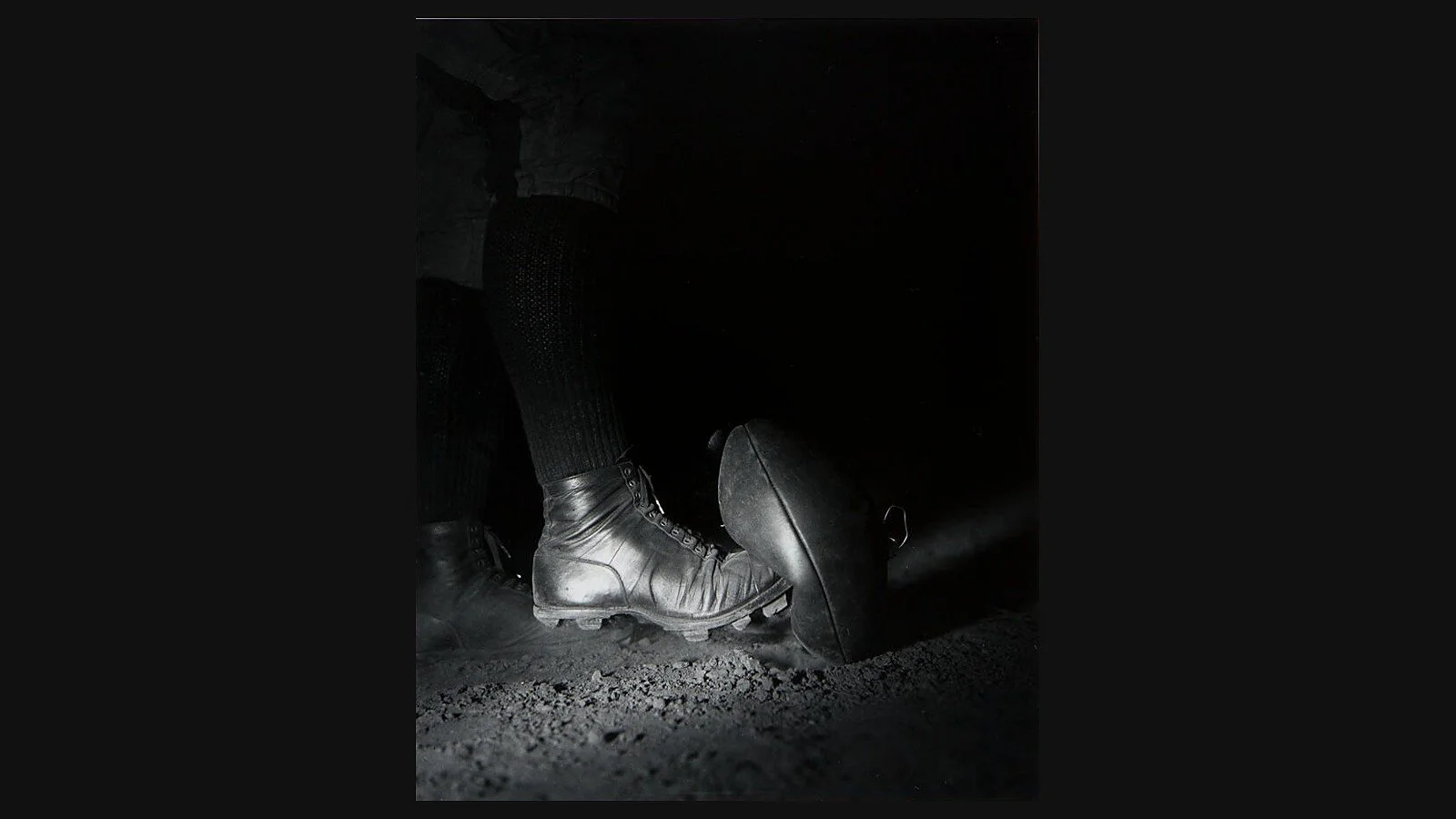
Welcome to this edition of Look Closer. Today, we look at three details in the photograph by Harold Edgerton, Wes Fesler Kicking a Football, made in the mid-1930s. We’d love to read your comments below.
(This is a close look at one photograph.)
The football is pushed out of shape.
A shoe has pushed so far into it that the ball looks soft. Harold Edgerton made this photograph of the football player and coach Wes Fesler in the mid-1930s. It shows a moment that lasts a tiny part of a second, too short for any eye to see. You can only see it here.
There is more in the frame than the kick.
This piece looks at three details in the picture. Each one tells you something about how it was made. Together they explain why a scientist's test photograph ended up in museums.
It is worth a second look.
Wes Fesler Kicking a Football, mid-1930s. Photograph by Harold Edgerton.
Start with the ball. A football is hard and full of air, but here it has lost its shape. The front of the shoe has pressed a deep dent into it. A moment later the ball will spring back and fly away. Edgerton caught it before that happened.
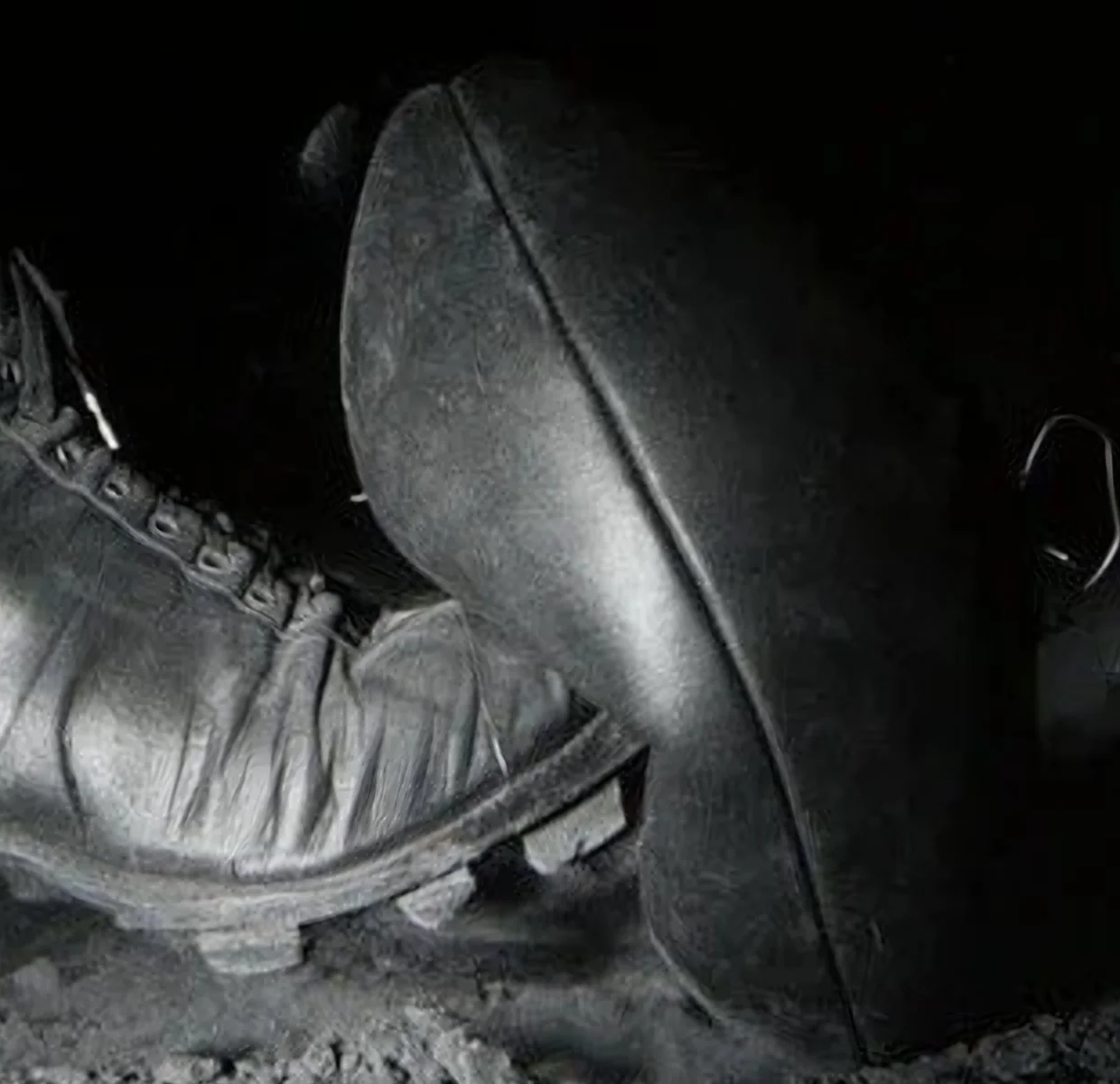
Detail: the shoe presses a deep dent into the ball. Enlarged and sharpened with AI.
Now look just above the ball, a little to the left. There is a small pale curve in the air. John Szarkowski, the photography curator of the Museum of Modern Art, explained it in his book Looking at Photographs: "The little crescent shape just to the left of the upper end of the football is dust." Only an instant earlier, that dust was sitting on the ball. The kick shook it loose.
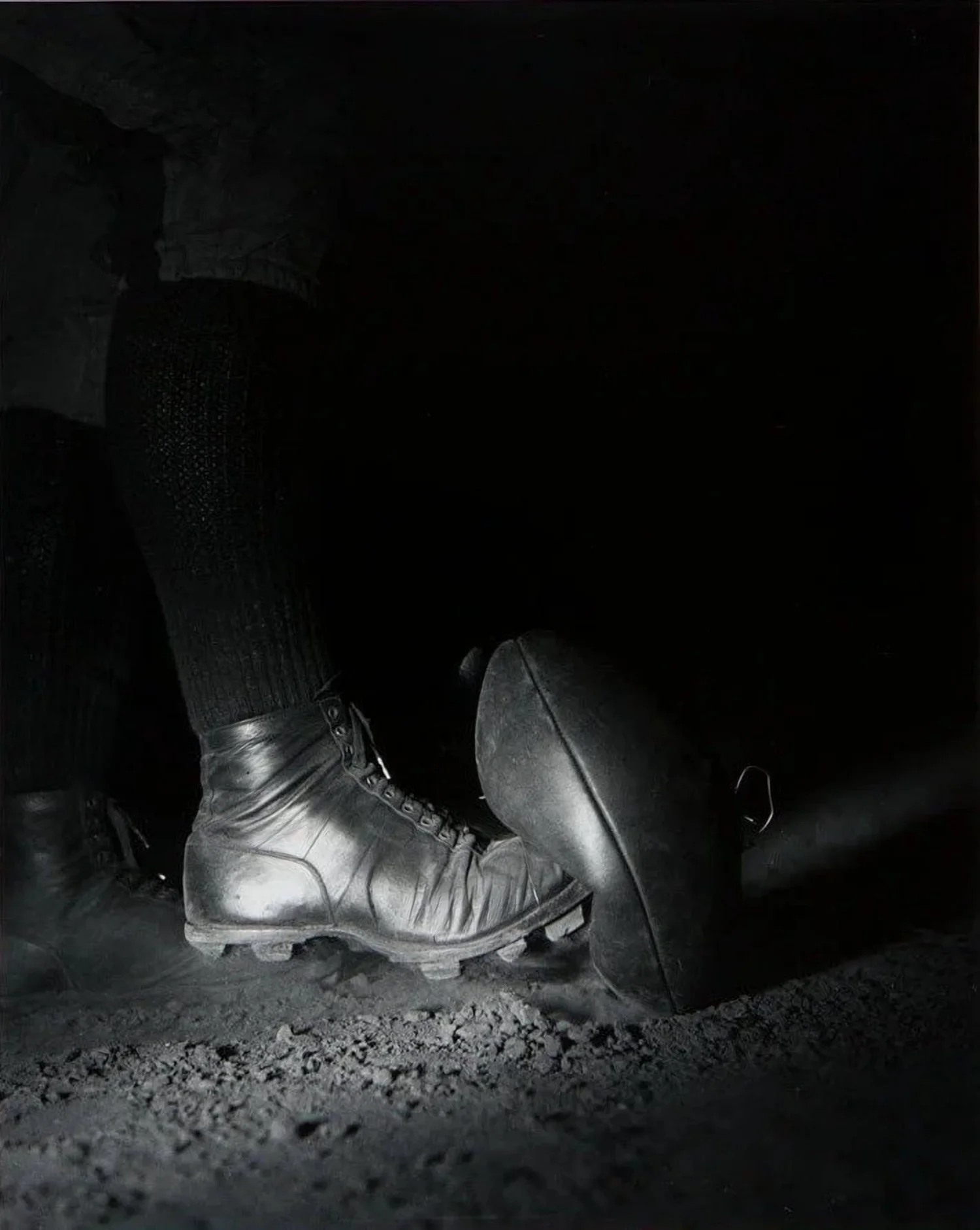
Detail: the crescent of dust, just left of the top of the ball. Enlarged and sharpened with AI.
The third detail is the one you cannot see directly: the light. Edgerton was an engineer at the Massachusetts Institute of Technology. He worked with electronic flash, a lamp that fires a very bright and very short burst of light. Pictures like this were made in a dark room. The camera shutter stayed open, and the only light came from one flash. So the flash, not the shutter, decided how long the exposure was. In that short time the shoe, the ball and the dust moved too little to leave a blur. That is why they are all sharp.
Museum notes on Edgerton’s football pictures say the studio was in total darkness. The kicker could not see the ball at all. He had to kick it from memory, and Edgerton took many pictures of the same kick. The flash had to fire at the exact moment the shoe hit the ball. How it was set off for this picture is not recorded. For other high-speed pictures, Edgerton used a microphone: the sound of the impact fired the flash.
The flash fires at the moment of contact. Before and after it, the room is dark and nothing reaches the film. Slowed down and not to scale.
How did the flash work? The lamp was a glass tube filled with gas. First, a capacitor, a part that stores electricity, was charged up. Then all of that electricity went through the tube at once. The gas lit up very brightly and went dark again, in as little as a millionth of a second. Even a fast camera shutter is open hundreds of times longer. The same lamp could also flash many times a second, so Edgerton could show one movement as a row of sharp images.
How it works: the shutter stays open in the dark. The film sees only what the flash lights, and the flash is over in a few millionths of a second. The animation is slowed down and not to scale.
Edgerton made many pictures like this one. In Milk-Drop Coronet Splash (1936), a falling drop of milk throws up a ring of tiny drops that looks like a crown. He photographed it again in color in 1957. In Cutting the Card Quickly (1964), a bullet cuts a playing card in two. In 1947 he photographed hummingbirds for National Geographic, with their fast wings frozen in the air. Many of his best pictures are collected in the book Stopping Time: The Photographs of Harold Edgerton.
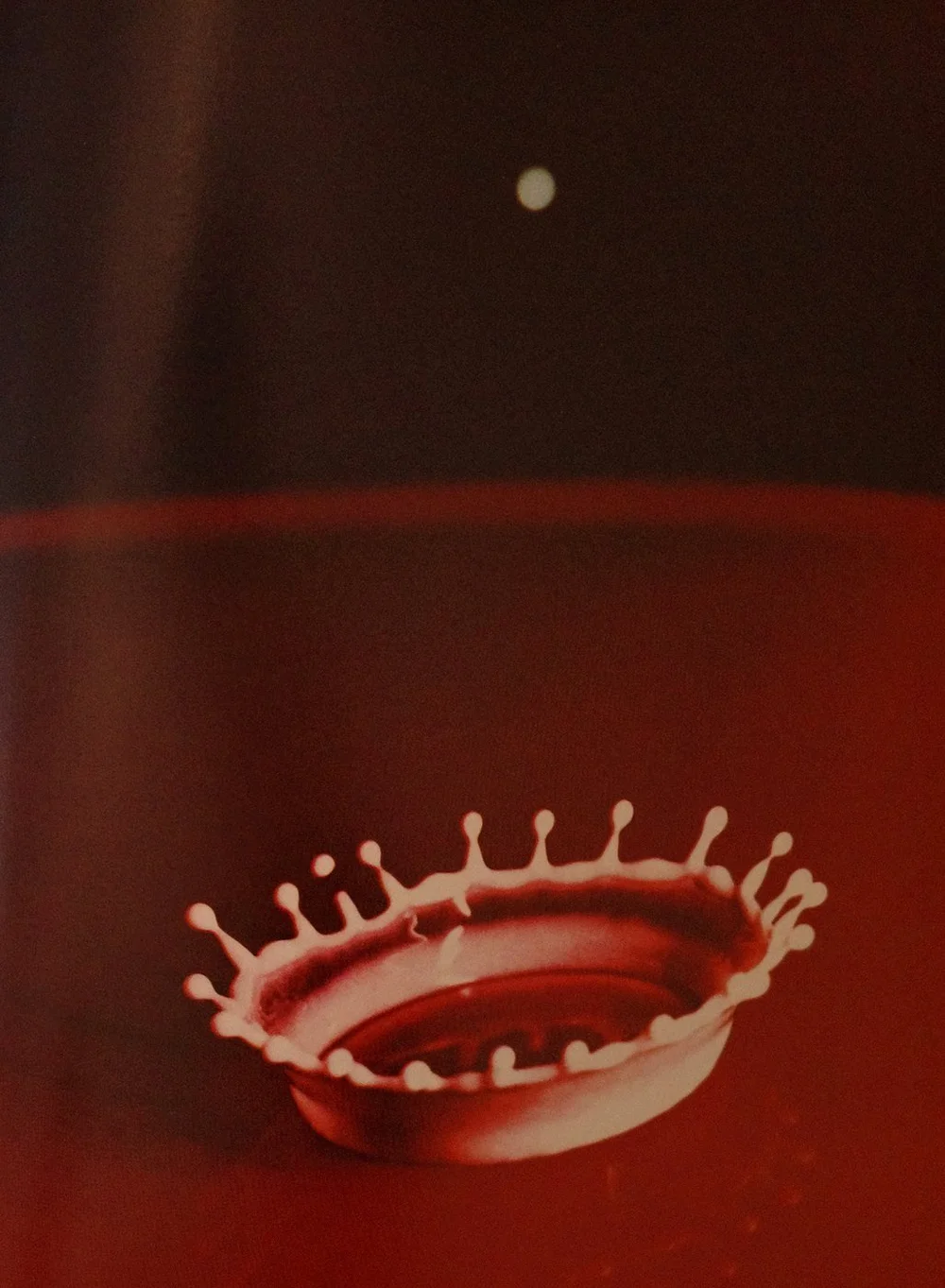
Milk Drop Coronet, 1957, by Harold Edgerton. Photographed from the book 100 Photographs (TIME).
This story was partly inspired by Looking at Photographs, John Szarkowski, The Museum of Modern Art.
The Books
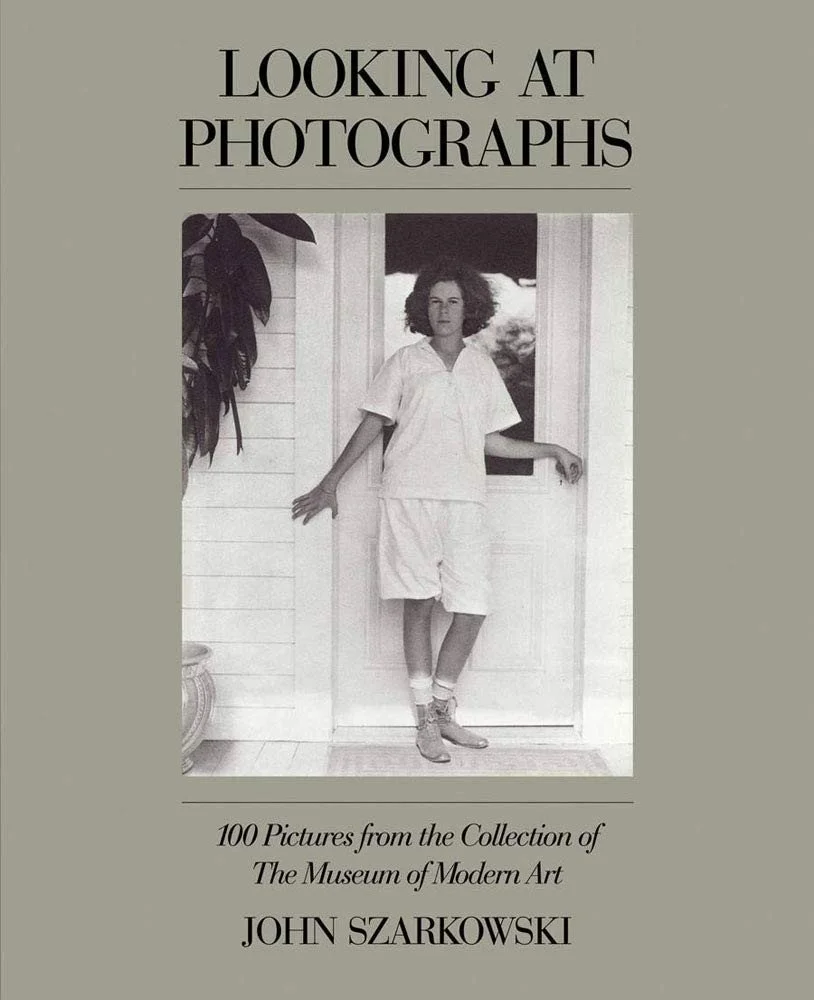
Looking at Photographs
The Museum of Modern Art · 1973 · 216 pages · By John Szarkowski
John Szarkowski chose 100 photographs from the collection of The Museum of Modern Art in New York. Each picture has its own page, with a short text by Szarkowski next to it.
Szarkowski led the museum's photography department from 1962 to 1991. The book first came out in 1973, and MoMA reissued it in 2009 with new duotone printing.
100 Photographs
Time Inc. Books · 2016 · By the editors of TIME · Foreword by Geoff Dyer
The editors of TIME picked 100 photographs that changed the way people see the world. The book tells the story behind each one, from the earliest surviving photograph by Nicéphore Niépce to a selfie taken at the 2014 Oscars.
It is a companion to TIME's digital project 100 Photos. The foreword is by the writer Geoff Dyer.

More stories:


On 8 June 1972, a girl ran toward the cameras. Her name was Phan Thị Kim Phúc, and she was nine years old.