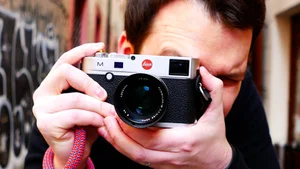
This Magnum Photographer Will Make You Rethink Your Photography Approach
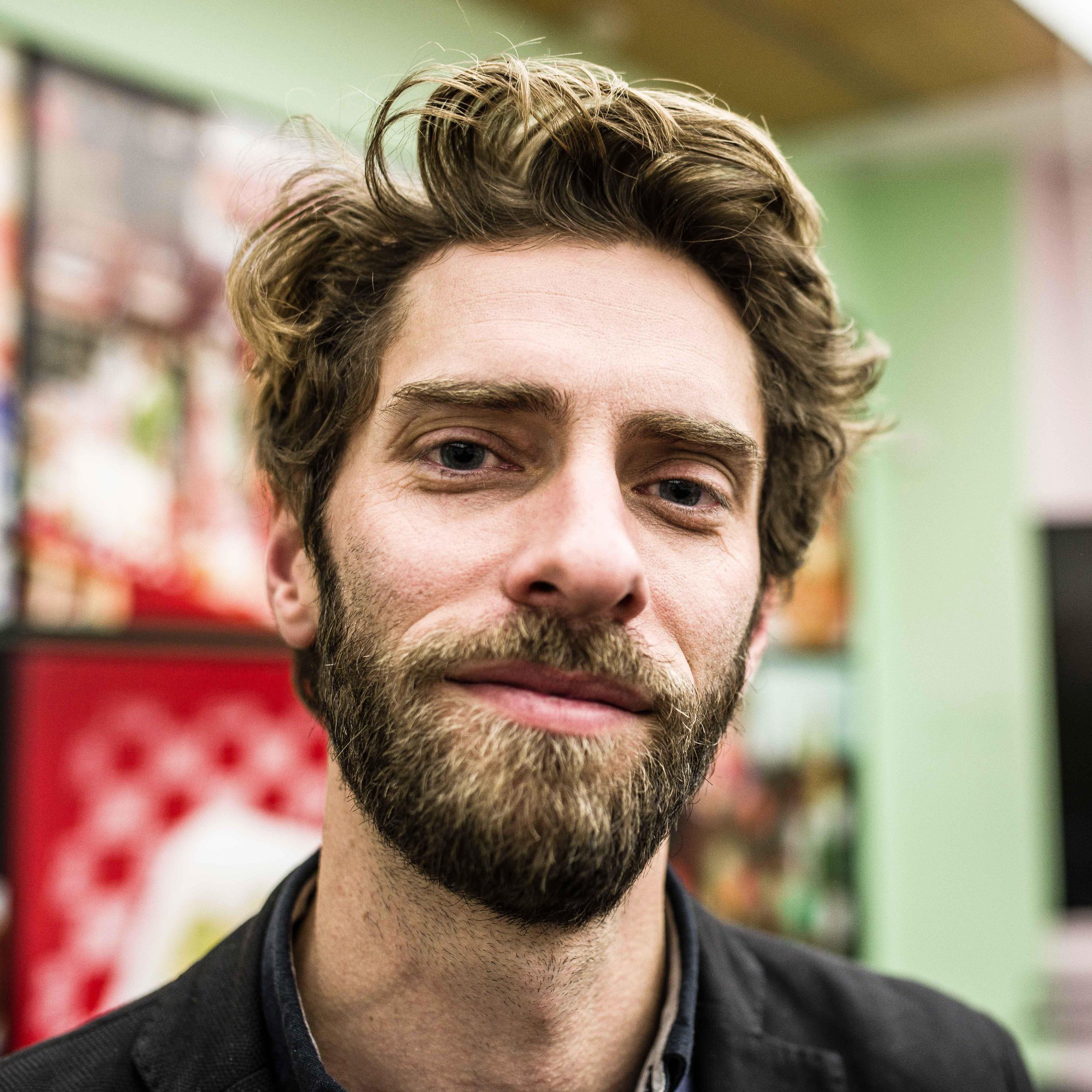
Since 1996 when he became an intern at Magnum’s London office Jonas Bendiksen worked for editorial clients such as National Geographic, Vanity Fair, Red Bull or Land Rover. He also produced some amazing projects including documenting the second coming of Jesus or photographing the center of fake news with it’s fake history in his fake book.
He also won many awards including Best Photography Book, ICP'Infinity Award or World Press Photo award. Jonas is a documentary photographer, photojournalist and member of legendary Magnum Photos.
Website: https://www.jonasbendiksen.com/
Magnum: https://www.magnumphotos.com/photographer/jonas-bendiksen/
Jonas Bendiksen: Curiosity in Practice | Magnum Learn: https://www.magnumphotos.com/learn/course/jonas-bendiksen-curiosity-in-practice/
Listen on Apple Podcasts: apple.co/36TS6kC
Listen on Google Podcasts: bit.ly/2UHwbun
Listen on Spotify: spoti.fi/3rrYMA0
Listen on SoundCloud: https://soundcloud.com/user-228441570
Index:
0:00:00 - Who is Jonas Bendiksen?
0:01:09 - What do you think most people get wrong when it come to documentary photography?
0:02:38 - The story of how Jonas became a photographer
0:06:55 - Now looking back, if you would start with documentary photography today whats the one thing you would stop yourself from doing?
0:09:15 - Millions or maybe billions of photos are being published every day, as a very successful photographer what do you think is that separates photos and photographers that can get traction and attention from ones that can’t.
0:15:02 - How to find the project in this word where everything seems to discovered and everyone with the phone is can be a photojournalist?
0:16:00 - What are you looking for when you look at photography of others
0:18:26 - You said your personal projects drive everything else and you always try to have at least one personal project. How do you keep pushing personal project when there is nothing that would force you to do it (no editor, no one waiting for the pictures)
0:21:09 - Jonas is not one of those 24/7 photographers who eat and sleep with a camera
0:24:02 - Being out in the field is almost like a small detail. From getting the idea to final thing.
0:26:43 - What is your photography process when you are out in the field?
0:29:22 - When do you know the project is finished?
0:30:54 - how do you find what is the best part of the project and how you want to structure it?
0:34:24 - Do you have some sort of system how to get from 10 000 photos to final 50?
0:39:36 - What about family photos? Do you apply the same system?
0:41:57 - Did your first project make you believe you can be a documentary photographer?
0:43:50 - Start of Satelites project
0:44:05 - Satellites. Altai Territory, Russia. 2000. © Jonas Bendiksen | Magnum Photos
0:50:05 - Documenting the second coming of Jesus? Story of The Last Testament
0:52:27 - How did you pick the right messiahs?
0:54:14 - Is design something that is import for you? To find the right presentation?
0:58:39 - What sort of impact do you want to have with your projects and did making of this project have impact on you?
1:01:27 - Do you want to be objective?
1:02:49 - The book of Vales
1:06:02 - Reacting to negative comments
1:09:26 - Did you think about pitching the project to the publisher as unknown photographer
1:11:29 - Photojounalist or documentary photographer career - Is it a good idea?
1:13:33 - The end, thank you for watching!
ON YOUTUBE
What do you think most people get wrong when it comes to documentary photography?
It is hard to generalise, because it probably depends on who you are talking to. People mix up these terms a lot. There is a general confusion about what documentary photography actually is, what photojournalism is, and to what extent either one is a direct conveyor of truth. Those definitions shift slightly depending on who you ask, and documentary photography itself can be a hundred different things. But I think some people are still under the impression that because a photograph shows something, it is therefore true, on a very simple, one-to-one basis. The truth is far more complicated than that. That is one thing that a lot of people get confused about.
You earned an internship at Magnum after a one-year photography college in Bristol, and you have said it gave you more than what you would have gotten studying photography at school. What did you learn during that internship?
So many things. This was 1996 to 1997, so we are talking about the pre-digital era. I remember quite clearly the year Magnum Photos got its first email address, mail@magnumphotos, and nobody used it for anything because nobody knew what it was for. We still had a physical archive back then, staffed by researchers. If the Sunday Times Magazine called up wanting a picture of Gandhi, the researcher would go into physical cardboard boxes, India, personalities, colour coded, and pick out five prints. The picture desk at the magazine would look at them, keep one, and send the rest back. One of my jobs was to put the prints back into the archive, which meant that over the year I spent doing that, I learned the entire archive by heart. All this iconic work from photographers all around the world, I got to know intimately, and that in itself was a huge lesson: all the different ways of telling a story with photographs, all the different ways to explore an issue with photographs. Some were very journalistic in nature, others were interpretive and exploratory and loose in form, some in colour, some in black and white. It was an introduction to the whole breadth of ways of working.
At the same time, I was making coffee, making tea, running to the post office, answering the phone. But mainly, I think I got to be a spy in the office for a year. I could eavesdrop on everyone. I could listen to how the photographers talked about their projects, how the staff at Magnum negotiated with clients, what clients wanted when they called, what they were looking for. So by osmosis, I learned about the industry, about the business, and I also got a huge inspirational boost from seeing all these photographers go out into society and use photography in different ways to explore questions they had about the world. I got a sense that this was possible to do. There was a hands-on nature to it that I do not think you get in most colleges.
Now, looking back with the experience you have today, is there one thing you would stop yourself from doing if you had to start again with documentary photography?
I truly believe the mistakes you make are really valuable. You learn ten times more from your mistakes than from your successes, and that goes for all walks of life, not just photography. I would not be who I am without the mistakes I have made. I have done a lot of stupid things, and some of them somehow turned into good things after a while. So I am not the sort of person who goes around regretting things or rethinking things. They have worked out for me in the end, beyond my wildest expectations, in a way.
Things became serious for me very early. I became a father at twenty-three or twenty-four, so even as I was trying to establish myself and figure out who I was as a photographer, I was juggling that with small children from the start. In some ways that was a stress factor, but it also resolved a lot of things. It made me make very clear decisions early on, and I think that is probably one of the things that saved me: having that framework meant I could not spend all my time doing whatever I wanted, and I had to be quite focused and use my time wisely. Normally I would say it is great to have all the time in the world to experiment and find yourself without other factors weighing in, but for me, having that framework was probably a decisive factor in finding a course. So I am not someone who looks back that much with regret. I am probably the wrong person to draw great wisdom from that.
Millions, maybe billions, of photos are published every day. As a very successful photographer, what do you think separates the photos and photographers that get traction and attention from the ones that do not?
I have always thought a lot about this question, because it bothers me. Even five years ago there were billions and billions of photographs being uploaded to every channel, and this mountain of photographs keeps growing at an absurd rate every single day. The thing is, a lot of these pictures look like what people have traditionally called good photographs. They are well composed, the colour is nice, the light is nice, the action is right. They really look like the thing people call a good photograph. Are they good photographs? I have no idea. What even is the criteria for a good photograph? I do not know. But they look like that thing that has traditionally been called good. So what is our role, adding twenty more good photographs to a pile of billions of fairly competently made ones? When I look at my own Instagram feed, everything is kind of good, even from people who have nothing to do with photography professionally. Making a good-looking photograph has become quite easy.
So what do we do with that? How do you stay relevant, how do you have any meaning as a photographer today? I have always thought of it this way: you see millions and millions of good photographs uploaded every day, but what you do not see is millions of presentations of strong ideas. You do not see millions of examples of good storytelling.
Is that partly because of the nature of social networks and the channels where people publish, since Instagram seems to favour strong single images rather than series or stories?
That is part of the equation, the nature of the social channels, but even beyond that, in the millions of websites, the millions of portfolios, the millions of online magazines, there are plenty of other forms where things are generally boring. They are meaningless, they look nice, but they do not make you question anything, they do not make me feel anything, they do not make me curious. That is because they are generally not presenting interesting ideas, interesting questions, they are not challenging me. So I have always thought: forget about competing in the arena of good photographs. I am not specifically interested in good photographs. I am interested in the idea. I do not want to compete in the arena of photographs, I want to compete in the arena of ideas, of questions, of storytelling. That is when I feel like I have a role to play, because that is something I think I am half decent at, and I have something to share. There is no point for me to just take good pictures and add to the mountain.
So when it comes to content versus design, you much prefer the strong idea behind the photograph rather than having it nicely composed and lit?
Form is a big part of photography, of course. Composition and form are all important, but without any idea behind it, without anything beyond that, it does not cross the threshold of interesting me. I am generally interested when a photographer is sharing something with me, making me consider an idea or a question. It can also just be about emotion, but they clearly want to share something beyond the production of a decent-looking photograph. That is where it becomes interesting to me, when the photography is sharing something with me that I would have missed. That is the magic of photography: the photographer can share with someone else something that everyone else would have passed by, would not have considered, would not have seen. That is when it is interesting.
How do you find a project in a world where everything seems to have already been discovered, and where anyone with a phone can be a photojournalist? You have published many photography books and projects in magazines, so where do you find inspiration for your own work?
Reading. Reading newspapers, reading magazines, reading books. Being out there in the world, experiencing things. Where I do not get a lot of specific inspiration is from looking at a bunch of other photographers. That is not where it comes from for me. It comes from other sources.
You have said you go through periods when you do not look at photography at all, and other periods when you do. When you do look at photography books and projects by others, what are you looking for? Inspiration, ideas, techniques, style?
I am, like many others, quite fragile on a creative level. My creative inspiration, my creative flow, is a fragile thing, and I go through big ups and downs. When I am casting about for ideas, when I am trying to figure out new projects, when I am trying to flesh out a new set of ideas, that is when I do not look at other photography, because then you just get the sense that everything has already been done, and everyone has done it so brilliantly, so where am I going to find anything to say. That is when I stay away from it. If I am feeling strong, if I am in the flow, that is maybe when I will look at other work. I can get inspired by it when I am feeling confident, when I have my own process going. Then it is fun to look at other work, not to see how something was done, but for the joy of taking part in someone else's vision, of coming along on the journey they have put me on, of being the recipient of good storytelling, of letting myself be whisked away and challenged by a set of ideas. That is the joy of it, and I can really enjoy that when I am in a stronger, less fragile position.
You have said your personal projects drive everything else, and that you always try to have at least one going. How do you keep pushing a personal project when there is nothing forcing you to, no editor, no one waiting for the pictures?
It is not that nothing is pushing me just because there is no editor. It is about my own feeling of having some meaning in doing all this. I have generally never waited around for editors to give me a job. A lot of my projects come out of things I am curious about, interested in, and I try to nurture that. That curiosity forms the basis of so much of what I do, and in a way the biggest challenge is nurturing that feeling, because that is the foundation of everything. Take my last project, The Book of Veles. When I was starting out with that work, no editor could ever have told me this was the recipe for what I would be doing for the next two or three years, that it would become a defining piece of work: sit around, make a bunch of computer game characters and bears. No editor could have told me that and had me actually listen and think it was a great idea. If somebody external had said something like that to me, I probably would have walked away, because it would have sounded ridiculous. It happened because this was a set of things that grew as curiosities and fascinations in me until it became overwhelming, and I had to go and do something with it. Nobody could have told me to do that, and if they had, I probably would have rejected it and it would never have become a project. That is also something that comes after years of doing this. I have been a freelance photographer for something like twenty-three years now, and after a while you gain the trust that when you are really feeling something, you should go for it.
What also put me a little more at ease was discovering that you are not one of those photographers who eats, sleeps, and lives with a camera twenty-four seven. Is that something you eventually came to, or did you always work that way?
Good question. I think I slowly came to understand that after a while. I was probably close to burning out at one point, because I felt like I was stuck on a hamster wheel. On the other hand, I have always had a family, from an early age, so I have always had things that forced me to be doing something other than photography. That is maybe the beauty of having children: they will not let you do photography twenty-four seven. Even the time I have outside of family life, I do not spend it all on photography. There are so many other things I would rather spend my time on, other passions, other strange projects, and these are completely critical to keeping that sense of joy and creativity alive. Doing these other things gives me another outlet, and in the end that feeds back into photography, because it means I am not just stuck in a system where I have to churn out work all the time, where the only purpose is keeping the machinery going. I need that sense of childish joy in making things, exploring things, learning things that have nothing to do with a camera. It is completely critical for my kind of personality. I never have a point where I do not know what to do with myself. I never have enough hours in the day to get through half the things I would like to be fiddling with. I always have a lot of strange projects that nobody ever sees, that are not part of what I publish or even part of photography. Without that, I think I would just wear out.
I was actually quite surprised when you said that being out in the field, after all the planning, is almost a small detail, just one part of the process. How does a project usually look for you, from getting the idea to the final product?
The timelines are often very long, at least for personal work. There are months of thinking about something, wondering if it is a good idea, if it could be done a certain way. I think that is a big part of the project, trying to figure out why I am interested in it, whether I should be doing it. Then when you actually go out into the field, you go a week here, a week there, and that time passes very quickly. After that you are left with a lot of time trying to edit the material, trying to figure out its nature, how it goes together, and then figuring out how to get it out into the world: publishers, editors, magazines, exhibitions. All of these are things with long timelines and a lot of back and forth. So the actual clicking of the shutter in the field is, percentage-wise, a very small part of what we do. So much of it is about thinking and conceiving ideas.
Of course, it is different if you have a different setup as a photographer. Some people work for a newspaper and are sent out every single day to take pictures, and personal work fits into the cracks of that infrastructure. For them, being out there photographing is a daily routine, a rhythm. For me it is not quite like that. It goes very much in ebbs and flows, whether I am actually out there photographing or not. Sometimes I find it strange how little of my time I actually spend out there with a camera taking pictures.
When you are in the field, what is your process? I know you are not really a fan of the fly-on-the-wall, invisible style of photography. You would rather get access and show your camera.
I like photography that makes me feel like I am there, that my feet are on the ground in that situation, experiencing it through the eyes of the photographer, getting to know the people in the pictures. I like photography that does that. But I have never worked the way you hear about with some of the old legends, who would say they got into a community, went into a situation, and did not even take the camera out of their bag for the first week. They just met people, talked to them, and only after two weeks slowly started photographing. That is very foreign to me. To me it is not even productive, because then people are wondering what this guy is doing here, hanging around chatting to them day after day. I would much rather show up with the camera visible, so everyone understands clearly that I am there as a photographer. I will start taking pictures almost immediately, even ones I am never going to use, just to get used to photographing that situation and to let people get used to me being there. Things become very natural after a while. People get bored of you being there, a photographer among them, and that gives everyone clarity. That said, not all my work follows the same approach. Some of it is very much observed work, hanging around and letting things unfold. In other projects my level of intervention in the situation is much bigger. It depends.
When do you know a project is finished? How many times do you go back before you feel done?
For me it is entirely a gut-level thing. You feel that you have said everything you have to say, that you would not get much further even if you spent more time on it. Sometimes it is simpler than that: you run out of money, or you run out of time. It depends from project to project. Sometimes you have deadlines, sometimes the work needs to get out there because it is current and relevant right now, and while you could spend five more years on it, the purpose is for it to be out in the world, connecting with people, in front of people's eyes. So it depends on the project, but in general I feel like I know when the balance tips and it is time to put a punctuation mark on it. Maybe that is something you gain from experience, knowing that you have reached the conclusion of your argument.
When you finish your field work, how do you find the best part of the project and figure out how you want to structure it? Is that something you realise while taking the photographs, or does it come during the edit?
It is a mixture. Sometimes you already know a frame is going to be important. You can feel it, even back when we were shooting on film, without needing a screen on the back of the camera to confirm it. I remember that clearly from the film days, and usually it turned out to be true. But there is always a lot of other material where you do not necessarily realise it is gold until you see it on the contact sheet, or in the Lightroom catalogue. That is where the surprises are. Sometimes the things you thought were totally magical when you caught them get outcompeted by the stuff that is more unexpected, because the things you think are the obviously right shots can be a little predictable, a little too obvious. Often it is the things around the edge of a situation, things that pop up unexpectedly, maybe not photographed quite the way you would have preconceived them, that end up holding more power. It is always a mixture, and you gain a sense of it from experience too, feeling in the moment that you got into the right kind of situation and something happened there.
But the editing is the difficult part, and it often takes a long time. One of the strange things about photography is that the exact same raw material can go in vastly different directions, and it is really in the editing that you decide who you are as a photographer, what the project is, where it is headed, what its feeling and nature are. The same raw material can result in two completely unrecognisable projects. So much of it, for me, is in the dialogue between the pictures. It is not about one great picture next to another great picture, it is about how one leads to the next. I very rarely think in terms of single images. I almost always think in terms of bodies of work, of projects, of what a set of pictures adds up to. Almost all of my work is based on that. It is really in the relationship between the pictures that things get interesting.
Do you have some kind of system for getting from, say, ten thousand photos down to a final fifty?
Yes, I have a system for that, because it is a horrible, monstrous task, and it is what everyone struggles with. Whenever I teach photography or talk to young photographers, that is always where the difficulty lies. Everyone thinks taking pictures is the wonderful part, good fun, meeting people, and it is the horrible slog of editing that bothers people. But it is so important, so yes, I have very specific, almost mechanical ways of doing it.
When I have ten thousand pictures, I do a first pass where I pick out everything I think could be used for this project or any other, anytime in the future, anything that is not garbage. When I go through that first pile, for some magical reason it is almost always around twenty-five per cent of the work. I never delete anything, because you never know what you will need in the future, but once I have that twenty-five per cent, we are down to two and a half thousand. From there I go through it round after round, cutting the pile roughly in half each time, so I do not have to make the big decisions until I get down to a lower number. I condense these situations into the best five or six images by constantly narrowing the pile, because the problem is that when you have too many images, the weight of picking out the good ones becomes too difficult, you lose the overview. So I go from two and a half thousand to twelve hundred and fifty, twelve hundred and fifty to six hundred and twenty-five, down to around three hundred and twelve. Once you get to around a hundred and fifty, you can start picking out the genuinely good things, because you can see all the pictures together almost at once. You also still have a smaller pool to go back to if you change your mind about the second-best option. I go through it very mechanically, forcing myself through these piles round by round, and I keep that structure, the A, B, C, D, E edit, in my catalogue, so I can always go back up a level and check if I missed something or got it wrong. I know exactly what stage everything is at.
Do you move a whole scene forward together, or do you just take the one photo you like? If you have four photos from the same scene, do you carry the whole scene into the next round and decide later?
Yes, that is what I mean. If at two and a half thousand there was one scene where I took a hundred pictures, in that round that scene becomes the next fifty, then twenty-five, and so on down. So in the final hundred and fifty, that scene is represented by the four best pictures from it, and from those four shortlisted ones you pick the single best.
You have also said you like to print a picture and look at it in a mirror, to get a fresh perspective. That is interesting.
That is only if I am really stuck, if I have gone blind to the pictures and need that feeling of seeing an image for the first time again. Holding a print up to a mirror is actually really effective, but if you do it too often, it stops working. So I only use it if I am really stuck, if I have four pictures of the same scene and cannot tell anymore what is good and what is bad. It is a last resort.
As a photographer with a big family, do you apply the same system to editing family events or vacations? Sometimes I get back from a trip with four thousand images, and that is not something you can just sit someone down and show.
Now you are touching a sore spot. That is the difficult one. I have always had this tradition of making an end-of-year book of family photos, ideally finished by Christmas, a big blur book, over two hundred and sixty pages, full of family photos.
Is that a book of just the photos you took, or a collaboration across the whole family, whoever happened to take a picture? Is it like a present you give to the family?
It is a present I give to the family. But I am actually behind by some years now, and it has become a wild race at the end of the year to try to get it done, because I am not good at chipping away at it little by little. I usually end up with a huge, monstrous pile of images to go through, and when I do that, I do not go through the careful half-and-half process, I go through it more aggressively, just because there is so much material. I am a little behind on that work, always trying to catch up, hoping to make two in one year to get back up to date, but no, I keep falling behind. The more subjects you have, the more pictures you take, and the less time you have to go through them. That is the problem.
At the end of the Magnum internship you received a grant for a photography project, and you chose to go to Birobidzhan with a plan to stay there for a year. You had to leave after ten months when the FSB became suspicious you were a spy and wanted to deport you, and you published the project anyway. Was that what made you believe you could be a documentary photographer?
I think that was a huge wind in my sails. That was the first big project I had done, and it ended up running ten or twelve pages in the Sunday Times Magazine in London, a big magazine. For someone in their early twenties, it was amazing to feel like this actually worked, that I had something to say, that people wanted to see these photographs, that it could be published. That was a huge wind in my sails at the time, and I think it was really critical in making me feel that if you find good stories, if you find interesting subjects, there is a way to make a living from it, to publish these things, to have them seen, to get the pictures in front of people. So yes, that was huge.
You then went back to Russia and ended up being banned, which was the start of your Satellites project, exploring post-Soviet history. I have one of your most well known images here. Could you tell me what we are looking at, and how you ended up taking this photo?
That is part of an amazing story about people who lived under the rocket trajectories of space launches from Baikonur, the main Russian space launch site, where the rocket travels up and the fuel booster stages fall away. It was about the people who lived in the areas where those stages came crashing down, sometimes several times a month. That image shows two farmers picking up copper wire, picking apart a spent launch vehicle for scrap metal, because these rockets contain very valuable metal, and the local scrap metal business in that area was substantial. It was about these people, and it worked as an example of the way society had been turned upside down after the collapse of the Soviet Union: the space rocket, which had been such a grand part of Soviet identity, propaganda, and mythology, becoming a backyard scrap metal dealing, capitalist business.
In that picture, I was photographing the scene when suddenly there was a squall of rain, the stormy sky was lit by sunlight, and thousands of white butterflies appeared, making probably the most surreal scene you could imagine, space rockets, this shiny metal, dark stormy skies, and butterflies. It was a completely unbelievable scene.
You have said you only shot about half a roll of film approaching that scene, and that the image was part of a group of four or five frames, some of them out of focus. If you recognised the importance of a scene like that today, how would you approach it differently?
I think that scene is very telling about the different eras of photography. Back then, shooting on film, we were always saving film, often shooting the first half of a roll quickly and the second half more slowly, because you did not want to run out in the middle of an important scene, or you were simply saving film because it was expensive. That scene happened quite early in my career, in the year 2000, when I had only been a photographer for a few years, and I think it was the rawness of that period, everything I was experiencing for the first time, that mattered. I did not necessarily understand at the time how unusual the scene was. I recognised it was cool, but the idea that this was a once-in-a-lifetime moment did not fully register, because everything felt like a once-in-a-lifetime moment when you are doing it all for the first time. That entire scene is half a roll of film, maybe three or four frames from that specific, compressed perspective where the butterflies look very big, and only one or two of them are even halfway sharp. It is amazing that it worked, that I caught the right composition, the right moment. But even in the film days, you usually did catch the scenes you needed to. If I got to that scene today, I would probably blast away at a memory card, totally high on how wonderful the scene was, but I doubt the picture would be any better. Back then you were in a mode of conserving film, and you did not know if you had caught it until the film was developed, but people generally caught the scenes anyway, more instinctively. I am very happy I started photography in that era, with that sense that it works even if you do not see the result immediately. Now that everything is instantly revealed, I think we become lazier in some ways. The good news is that you can afford to be more playful, to try things, to experiment, and there is real value in that playfulness, but I also think we become very lazy.
I would like to talk about your book documenting the lives of seven people who all claim to be the biblical Messiah returned to earth, The Last Testament. Your projects almost always start with a question. What was the question you had before you began working on it?
I had so many questions. What is it like to believe something? What is it like to believe in God? I did not grow up with God myself, but I have always been fascinated by religion and faith. What does the world look like if you look at it through that lens? What does the universe look like, what is our place in it, what are the limits of what you can believe, where is the boundary between faith and delusion, who gets to decide? Is there anything specific in the theology of any of these self-proclaimed messiahs that should make it less plausible than what is presented in mainstream religion, in churches, mosques, synagogues, and temples around the world? Is there a profound difference between them, or is it just a question of who holds the power to define what gets brushed away as craziness and what gets a seat at the table? These were the questions I found fascinating, and every time I was out in the field with these people, I had more of them.
How did you approach finding them? Out of what I imagine are thousands of people who claim to be the Messiah or the second coming of Jesus, how did you find the right ones?
There are of course lots of spiritual leaders, gurus, priests, thousands of people claiming to be prophets. But people actually claiming to be the biblical Messiah, the second coming, there were not that many. If you go into any mental institution, you will find people who claim to be Jesus, it is quite a common delusion in that context. But I had a few criteria: it had to be someone with a historical record of the claim, who had lived a large part of their life with that identity, who produced scripture that showed their theology, and where that theology had some kind of reasonable internal logic, or at least hung together somehow. And most of them needed to be actively attracting followers. Once I applied those filters, I did not find many more than the people who ended up in the book. There were a few more on my radar, but I could count on two hands the number of people who fit the description.
The Last Testament is, to me, a master class in packaging, and that seems to be a recurring theme in your books. With the exception of Satellites, each book's design seems tied to the subject of the photographs. Is finding the right presentation something that is important to you, and does it come to you before you start the project?
It depends on the project, to varying degrees. Something like Places We Live was so much about the three-dimensional way of making photographs, built around double gatefolds, since it was about people living in slums around the world, and it functioned by taking you through an entire home, an early kind of three-hundred-and-sixty-degree photography with the whole house in one fold-out. That was conceived very much from the start, because I had to photograph in a very specific way to make that idea work.
Other projects come more gradually. With The Last Testament, it was clear to me early on that it would be a book project, and that I somehow had to reference the Bible, but exactly how, and what details were needed to bring that to life, came after the fact. It depends on the project, but I think the form follows the function. I am not someone who thinks too much in the abstract about the style of photography or how the pictures look. I think once you figure out what you want to talk about, what the essence of a project is, and what you really want to explore, the form of the pictures tends to follow naturally. That is why my projects look a little different from each other, and why the design of the books changes too. I do not design for the sake of design, I do it because it augments the idea I am presenting.
But you must have had some idea when you did it, since you collected all those scriptures and eventually used them in the final design, with the Bible paper.
Yes, of course I had the idea that I wanted to use those elements and that it should feel biblical in form. But exactly how those pieces work together inside the book, the sequence, the choice of paper, the choice of design, how you actually move through it, those things were not decided from the start. It is easy to say you want a book to look like a Bible. It is much harder to work out how to do that without it becoming a pastiche, too ironic, or overdone, while still making it look believable. I think great design is, to some extent, invisible, because it feels natural. So working out how to do that without the focus falling on the design itself is the real question. Those things come after the fact, but I knew from early on which elements needed to be in it. How they worked together was the question I had to answer.
The Bible obviously has a huge impact on billions of people. What kind of impact do you want your projects to have, and did making this particular one have an impact on you?
I do have an audience in mind when I make these projects. Part of my motivation is that I want to share the questions I have with other people, to be part of a conversation. I want there to be an audience, I want the work to go out there and spark debate, spark conversation. That matters to me. I probably did not reach as many people as the Bible has, but it still travelled quite far and wide, and it sparked a lot of interesting conversations. For me, that is the mark of success.
As for how it changed me, I think it made me more open. Before The Last Testament, I was, I think, a more aggressive and hostile atheist. I am still not a believer, but I was much less open to the function that belief serves, and to some of its positive sides. The project let me see the world through the lens of belief, let me experience it with these different communities, and there was a lot of beauty in it, a lot of moving moments. It made me rounder, softer, and made me realise that maybe it is not the most important question whether this particular man is the Messiah or not. People's lives are filled with belief, with meaning, with a framework that gives shape to their lives, and there can be real beauty and real value in that. I became much more open because of it.
How do you stay objective in those situations, and do you even want to?
Objectivity was not part of the agenda for me on this project. I went into The Last Testament wanting to leave journalistic agendas behind. I was not there to ask critical questions, or to try to figure out whether a given man was really the Messiah. What I wanted to do, in each chapter, with each of the seven men, was to take everything they told me and everything they showed me as the whole and complete truth, and try to explore, through photography, what the world looks like from that perspective. If this is the Messiah, what does the world look like, what does it feel like, what does it mean? That is not an objective agenda. In some cases I let myself be used by the men themselves to present a world of their own making. In a way, that process was part of how I wanted to explore this.
Let's talk about your latest book, The Book of Veles. During the 2016 US presidential election, we saw a storm of fake news, and a lot of it came from the town of Veles, in North Macedonia, from websites built by people trying to make money off Google ads. There is another layer to the story too, an ancient book supposedly written on wooden boards documenting the history of the early Slavs entering Europe, with Veles as one of the old gods, which also turned out to be a fake. And then there is the third layer, what you did with all of this: you went to Veles to document the place and the story, and you photographed the town and the people behind the fake news, and made a fake book yourself. Looking back at the pattern in your other work, Places We Live shows rooms and folds, The Last Testament is essentially a version of the Bible, and now the book about fake news is itself a fake book. How is it possible that nobody noticed that pattern, not even your colleagues at Magnum, when you showed it to them?
That is a mystery to me too. I was as surprised as anyone that it went as far as it did. This was a bit of an experiment, and I thought it would be uncovered quite quickly, that was actually part of the plan. It has now been about a year since it was published, in April of last year, and I thought within a few weeks people would be talking on social media, wondering if something was strange about it, because I had also put a lot of hints and clues into the book itself. But it just went on and on, with people mostly just giving me compliments, and no one asked any critical questions. That was not the outcome I expected, and it went much further than I thought, which then led to new developments in the project that I had not planned for either. In the end, I had to reveal myself that it was a forgery.
Some of the negative comments you received claimed you leveraged your history and reputation to make this work. Doesn't that actually make it worse, since it proves we can be blind about the sources we already trust? And did you ever consider pitching the project to a publisher as an unknown photographer, to take it a step further?
People said it worked because I am someone they trust, a credible source, so nobody questioned what I said. That is part of what made it work. In addition, it was packaged in the language of photojournalism, in the visual language of credible photography. So yes, it worked because in documentary photography I am a credible source. But that is how the world works generally. The problem is that we have this fragmentation of the media landscape where everyone has their own credible sources. If you believe the earth is flat, there are plenty of credible sources within that community that back up the point of view with what they consider evidence. Whatever the conspiracy theory, whatever the political stance, there are millions of credible sources out there. Nobody agrees anymore on what counts as evidence, nobody agrees on facts, we have alternative facts instead of facts, and anything you disagree with is fake news. This project is a perfect illustration of that. I think one of the pedagogical points here is that people in the media world I inhabit, and probably you inhabit too, have had a tendency to think that falling for obvious fake news and manipulation is something that happens to people with fringe conspiracy beliefs, or people who supported the storming of the Capitol in the United States, that those people fall for it, but we, the sophisticated media people, are too media literate to fall for it. This shows that as long as something is packaged according to our own biases, we are vulnerable too.
As for pitching it as an unknown photographer, no, because I did not anticipate this going as far as it did. I thought this would be a subtle comment on the issues around synthetic media, and since I had built in all kinds of hints for it to be discovered, the idea was for it to come out within a month or so, and then I could take part in the debate about how it was constructed and what the pitfalls of this kind of manipulation are. I had not imagined it would take half a year, or that I would have to work out myself how to reveal what the project actually was. It was not on my agenda for this to end up at Visa pour l'Image in Perpignan, to move through those filters and become the whole scene it became. None of that was part of the original plan. So no, I never had that idea, because I thought it was quite sufficient just to make the project and let people debate soon enough what was wrong with it, almost like a treasure hunt to uncover all the forgeries in it. I never thought people would not discover it at all. That was the original idea.
We are running out of time, so I have one last question. What advice would you give someone who is thinking about becoming a documentary photographer or photojournalist, especially if someone has told them how difficult it is nowadays to make a living from photography?
It is a terrible idea. It is terrifying, and it always was a terrible idea, not just now. Things are difficult now, but on the other hand, some things are easier. There are so many more outlets to show your work today, and it is far more accepted that you cross various boundaries, that you can be a documentary photographer, an artist, and a journalist at once, producing different kinds of work depending on the situation. Before, it was either you succeeded in convincing magazine editors to publish your work, or you were finished. It was a bad idea then and it is a bad idea now. But some people insist on giving it a shot anyway, and a small percentage of them will succeed, usually the ones who are simply hell-bent on doing it and will not take no for an answer. My advice would be to figure out what you are genuinely interested in and find a way to use photography to explore that. That is when the work becomes powerful, that is when it becomes yours, and that is when you can put your own personal stamp on it, and it gets noticed.
Thank you very much for taking the time, it was a pleasure to talk with you.
Thank you so much, it was a pleasure to be here.