AT A GLANCE
- Known for
- Satellites, The Places We Live, The Last Testament and The Book of Veles, his hoax about fake news
- Works in
- Color
- Camera
- Film in his early years; Canon EOS 5D Mark III for The Last Testament; tested the Leica S system in 2012
- Also
- Magnum nominee 2004, full member 2008; ICP Infinity Award 2003; works for National Geographic and other magazines
- Start with
- Satellites: Photographs from the Fringes of the Former Soviet Union (Aperture, 2006)
- Links
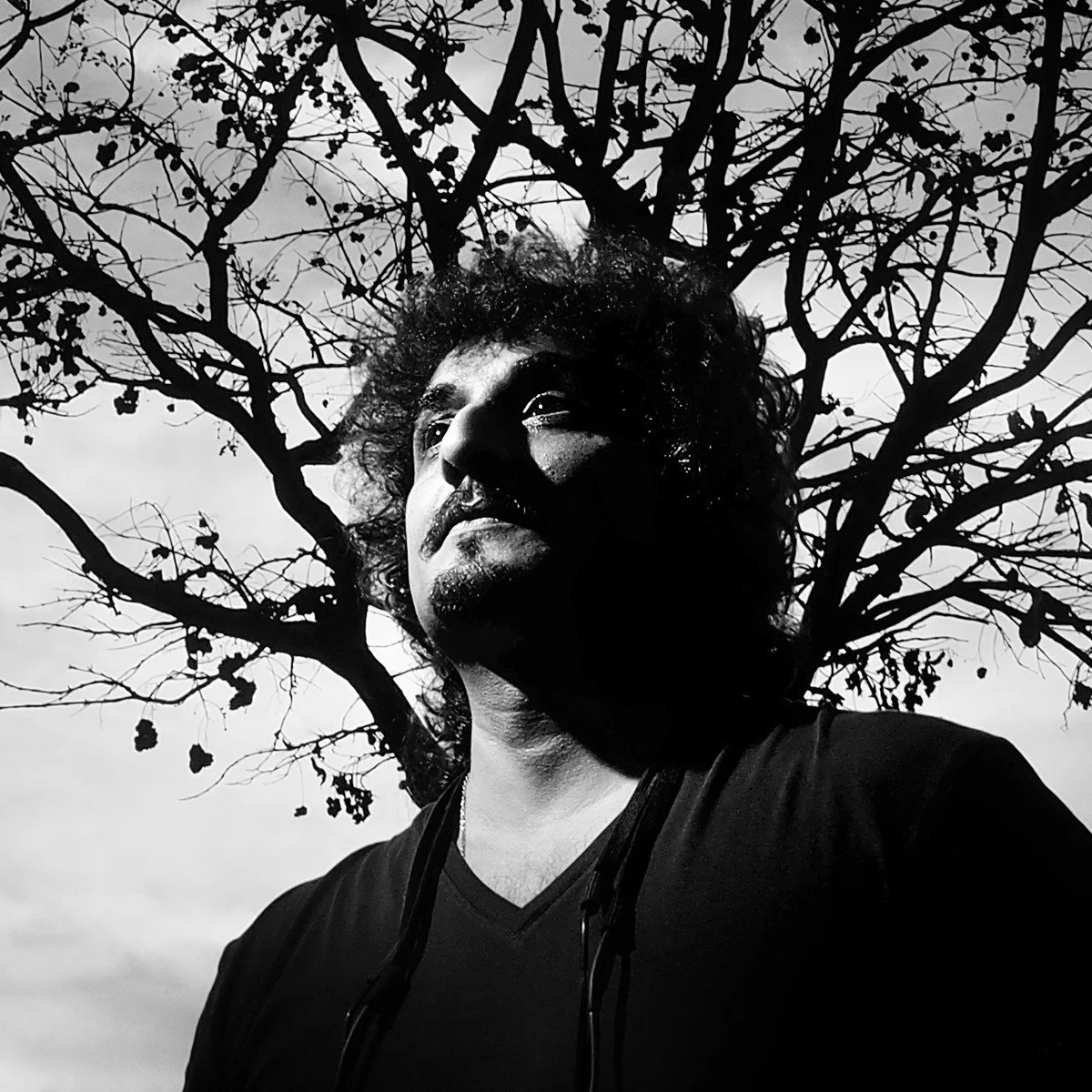
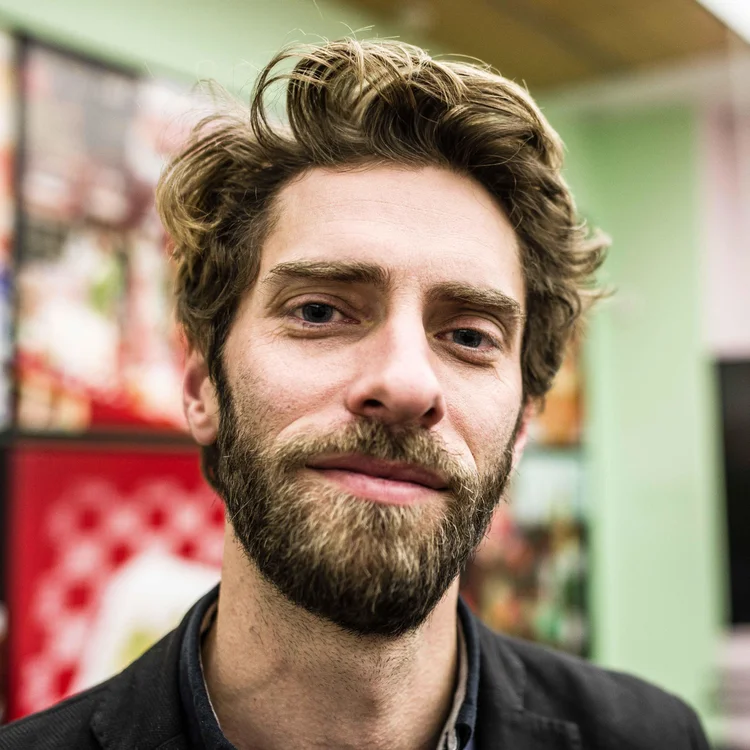
Jonas Bendiksen (born 1977) is a Norwegian documentary photographer and a member of Magnum Photos. His books look at community, faith and technology, from forgotten corners of the former Soviet Union to seven men who say they are the Messiah. He lives with his family outside Oslo.
The story
In 2000, in the Altai Territory of Russia, just north of the border with Kazakhstan, Jonas Bendiksen stood in front of a fallen piece of a Soyuz rocket. It was the second booster stage, dropped after a launch from Baikonur. Two young men were pulling copper wire out of the hull. It had just rained hard. Storm clouds passed behind them, and the sky filled with thousands of white butterflies. “Farmers, space rocket, butterflies, sunlight on stormy skies: all in all this is probably one of the most surreal and magical moments ever to pass before my eyes,” he said later.
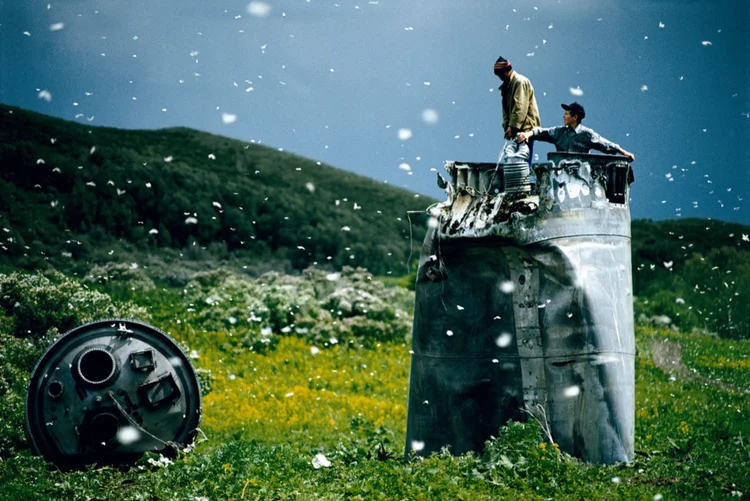
Yet his contact sheet shows only three frames from that angle. “The evidence suggests that I didn’t really understand at the time that this would be a great picture,” he admits. The image later became the cover of his first book.
The road to that field began at a family dinner table in Norway. His mother was a New York Jew whose family had come from the shtetls of Ukraine, Belarus and Russia. When the Iron Curtain started to fall, the family suddenly heard from relatives still living in the Soviet Union. They had believed those relatives died in the Holocaust. Jonas was 12 or 13, and the news made a big impression.
At 19 he became an intern at Magnum's London office, paid 250 pounds and a metro card a month. Photographers like Josef Koudelka came and went, and he even met Henri Cartier-Bresson. Then he spent his whole budget on one trip to Birobidzhan, the Jewish Autonomous Region in Russia's far east. He went alone, to a country whose language he did not speak. It felt, he says, like jumping off a cliff.
Over the next years he kept going back to the edges of the former USSR. Magazines paid for the trips, and he stayed longer to make his own pictures. In the Altai he also photographed dead cows lying on a cliff. Local people claimed that rocket fuel had poisoned the soil.
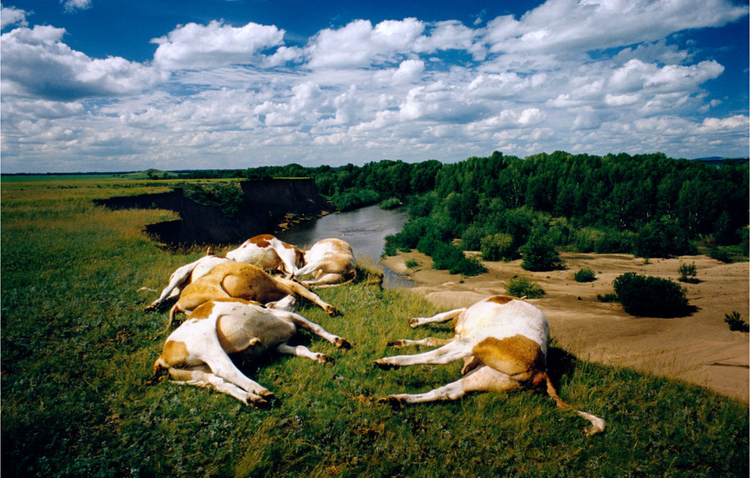
Only later did he see that all these stories were pieces of one puzzle. Six places became the six chapters of Satellites, published in 2006. Much of it, he believes, came down to luck, like those three frames with the butterflies. “The Satellites project found me, more than me finding it, if you like,” he says.
The work


- 1977Born in Tønsberg, Norway
- 1999Photographs Birobidzhan, the Jewish Autonomous Region in Russia's far east, his first big story
- 2003Receives the Infinity Award for young photographers from the International Center of Photography
- 2004Becomes a nominee of Magnum Photos and wins a World Press Photo prize
- 2006Publishes Satellites with Aperture
- 2008Becomes a full member of Magnum and publishes The Places We Live
- 2017Publishes The Last Testament, about seven men who claim to be the Messiah
- 2021Publishes The Book of Veles, then reveals that its people are computer-made
Lessons
Follow your own curiosity. Satellites grew out of his family's history. He chose Birobidzhan because he could find almost no good stories about it.
Write the pitch for yourself. Before a project he writes down the idea and why anyone should care, even with no editor to send it to. When doubts come, it reminds him why he is there.
Let assignments pay for personal work. Most chapters of Satellites were made on magazine trips. He stayed long enough to make his own pictures too.
Try this: write a one-paragraph pitch for a story near you that nobody has told. Say what the idea is and why anyone should care. Photograph it for a month, and reread the pitch whenever you doubt it.
Gear
Bendiksen does not talk much about gear. These are the tools named in interviews.
Medium telephoto lens: the Altai picture was made on film in 2000 with a medium-sized telephoto lens. It turned the butterflies into soft white dots.
Leica S: he tested the medium-format system in 2012 on extreme athletes in Voss, Norway, mostly with the Summarit-S 35mm and 70mm lenses.
Canon EOS 5D Mark III: his camera for The Last Testament, chosen partly for low light and its weather-sealed body, with lenses such as the EF 35mm f/1.4L and EF 50mm f/1.2L.
360-degree camera: for The Book of Veles he recorded the light of each empty scene with a 360-degree camera, then placed 3D people into the pictures on his computer.
Books
Satellites: Photographs from the Fringes of the Former Soviet Union (Aperture, 2006). His first book, with photographs and text by Bendiksen, the result of about seven years of travel. It has 62 color photographs in six chapters: Transdniester, Abkhazia, Nagorno-Karabakh, the Fergana Valley, the spacecraft crash zones of the Altai and Birobidzhan. The pictures have no captions. Instead, a short text before each chapter tells the story of the place, so each chapter reads like a visual poem. The book went with a traveling exhibition that opened at the Jewish Historical Museum in Amsterdam. A good first book for anyone interested in long personal projects.
The Places We Live (Aperture, 2008). A small book about life in four slums: Kibera in Nairobi, Dharavi in Mumbai, Kampung Miskin in Jakarta and the barrios of Caracas, photographed from 2005 to 2007. It holds twenty double-gatefold images, each showing one home and the story of the family who lives there. There is a foreword by Bendiksen and an introduction by the writer Philip Gourevitch. The work was also shown as an exhibition with projections and voice recordings. It shows people living normal lives in places most of us only know from statistics.
The Last Testament (Aperture, 2017). A thick paperback of 468 pages, made like a sequel to the Old and New Testaments. It follows seven men around the world who each say they are Jesus Christ returned, from Vissarion in Siberia to Moses in South Africa and the Jesus of Kitwe. Each chapter mixes photographs, Bendiksen's own account and excerpts from the men's own scriptures. He took their claims at face value and lived close to their communities. A book for readers who like photography mixed with long, personal storytelling.
The Book of Veles (GOST Books, 2021). A 148-page hardback with a silver-foiled faux leather cover. It looks like a classic photo story about Veles, the North Macedonian town known for fake news websites in 2016. In fact the people and bears in its 65 pictures are 3D models, added to empty scenes he photographed there, and the essay was written by the AI system GPT-2. It also reproduces 19 pages from a 1973 English translation of the ancient Book of Veles, itself believed to be a forgery. The hoax passed unnoticed until he revealed it himself. An important book for anyone thinking about trust in photographs.
In his words
“Photography is the way I get to grapple with all the things I’m curious about.”
“People want to believe, and there is something universal about people longing for a Savior to come help us out of the mess we’ve created around us.”