Nirvana began with a question about another life.
After losing a close friend, Daesung Lee returned to his parents’ home and began spending more time with his mother. During one of their conversations, he asked what kind of life she would want if she could be born again. Her answer surprised him: she never wanted to be born again. That answer became the starting point for Nirvana.
The project slowly became a way for Lee to understand his mother beyond the role she had always held in the family.
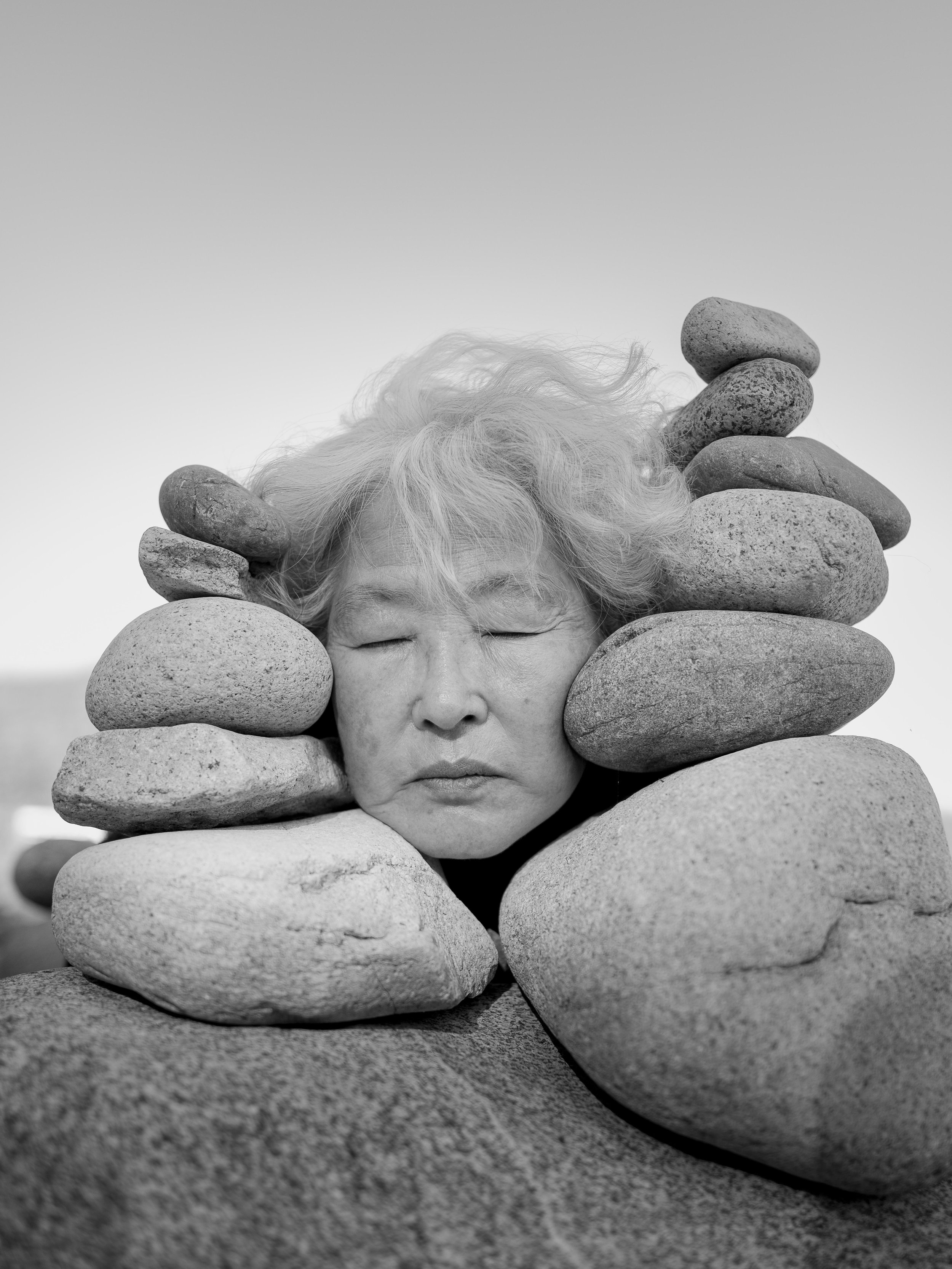
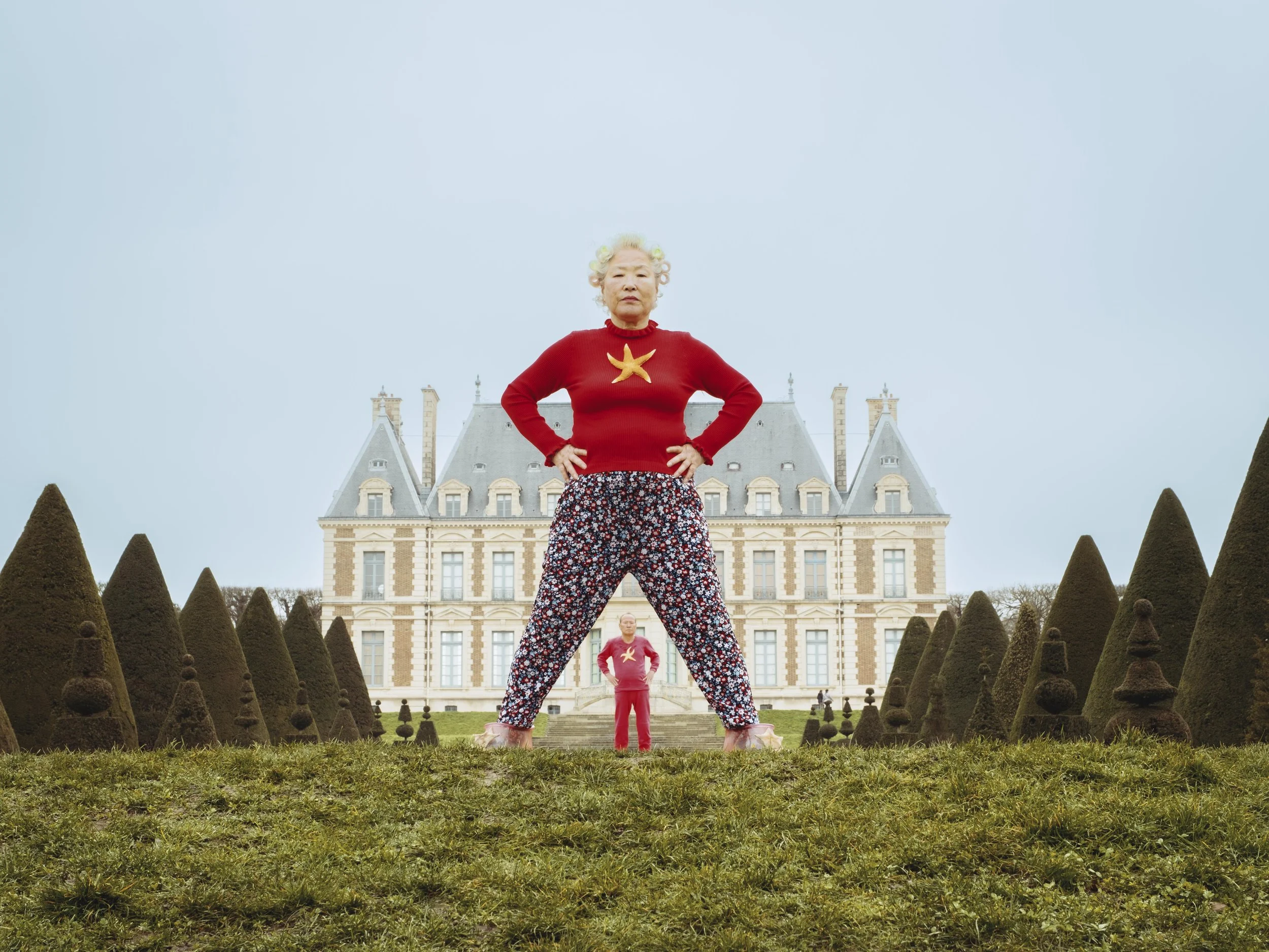
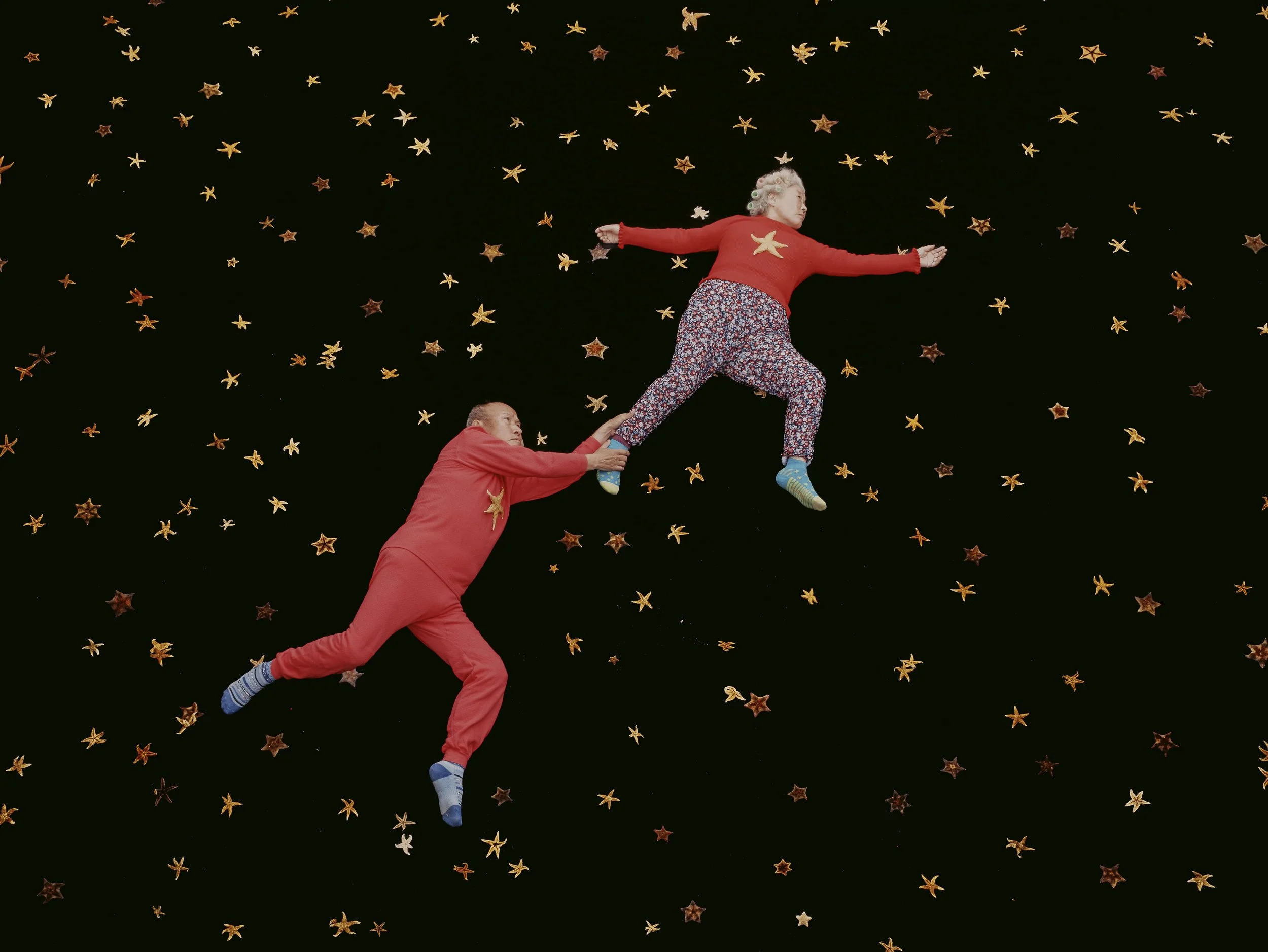
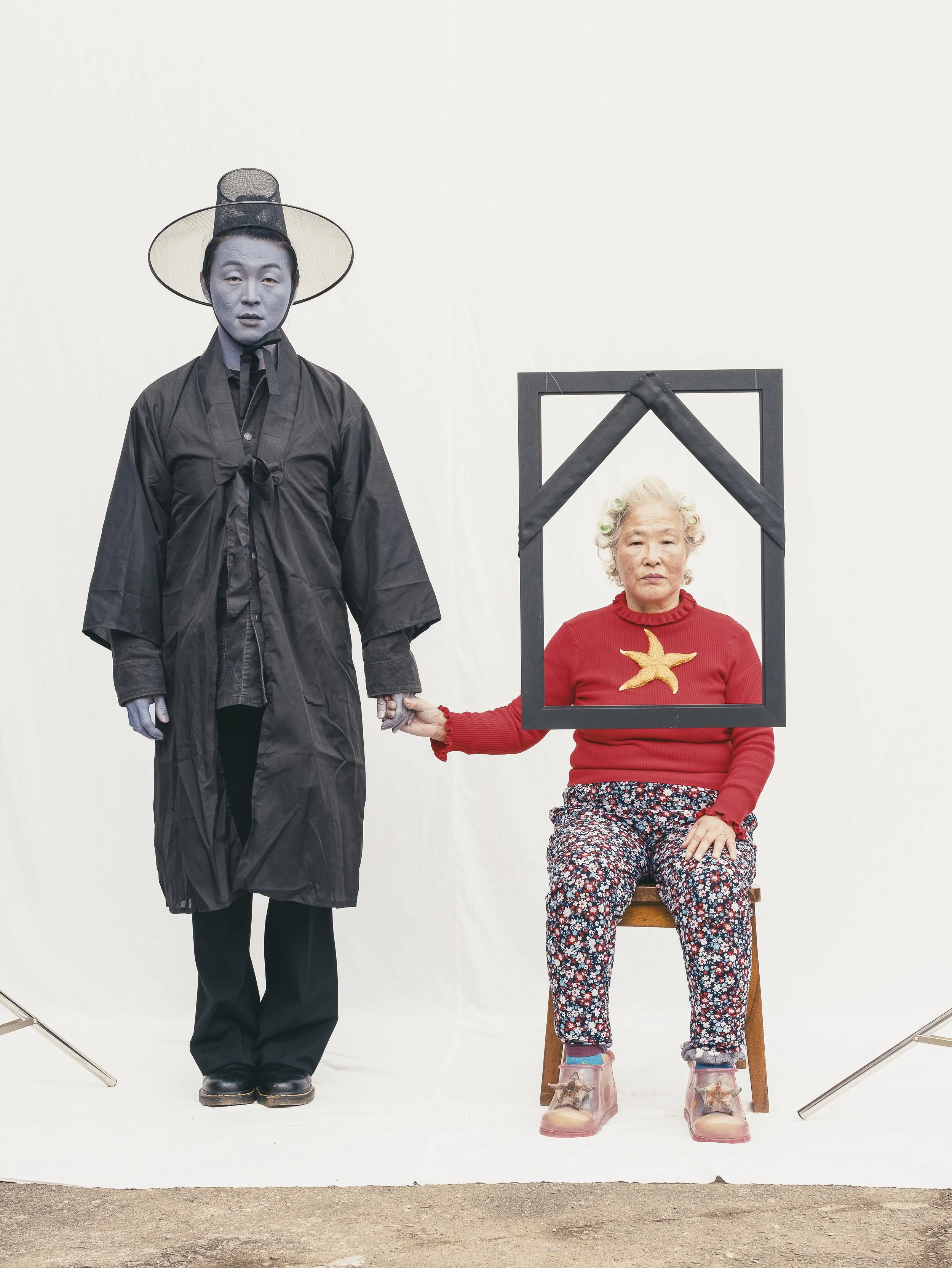
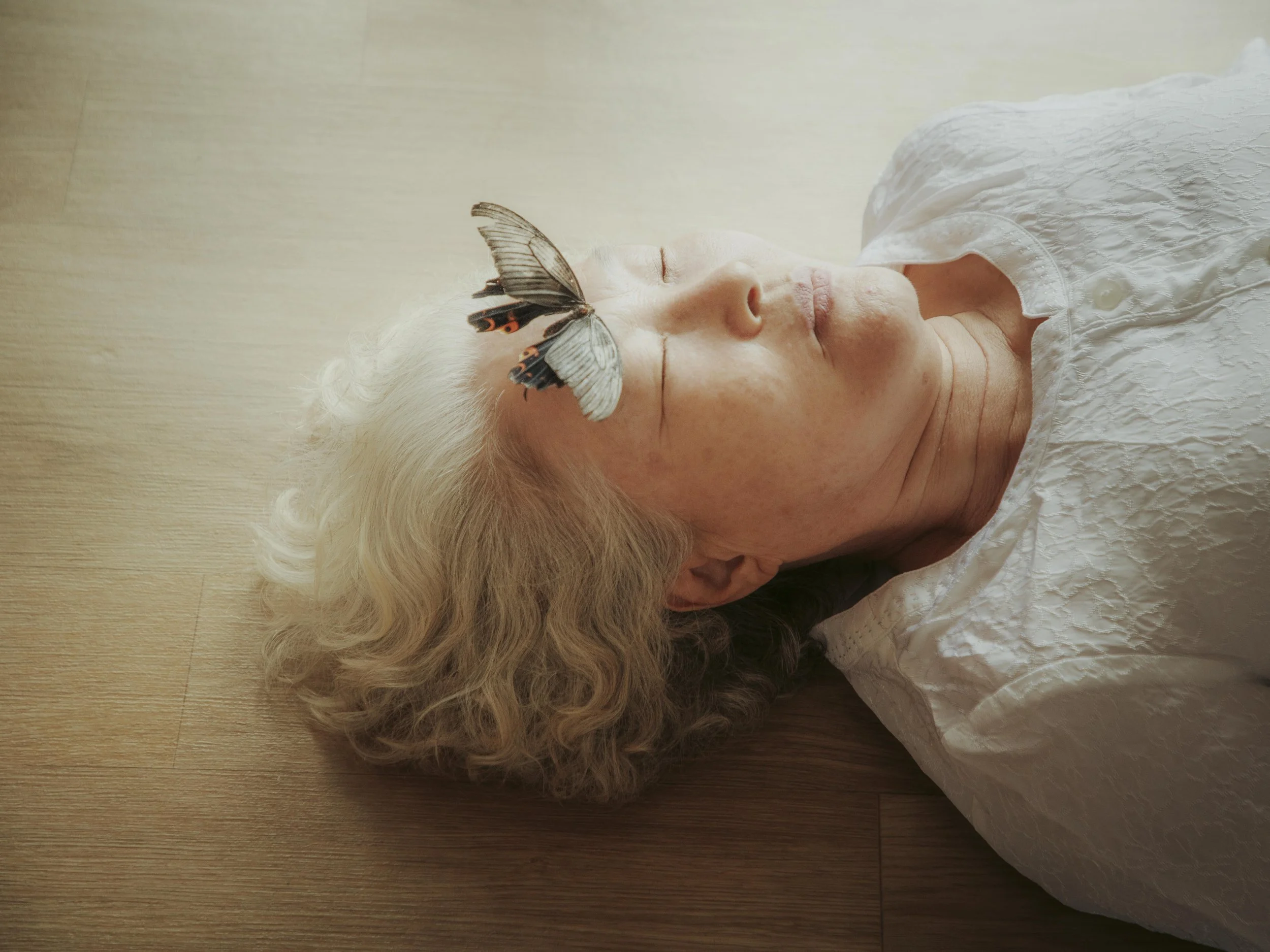
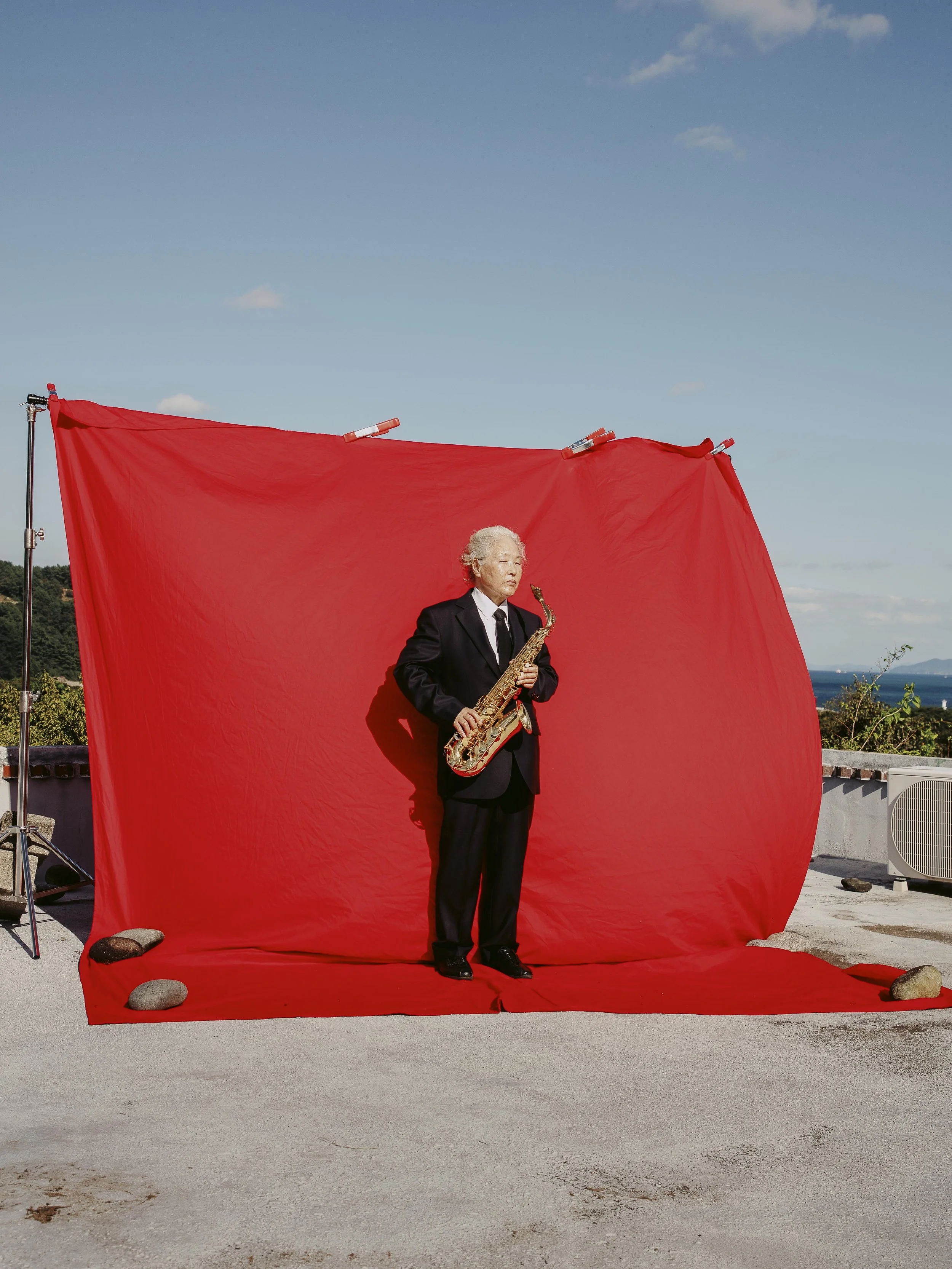
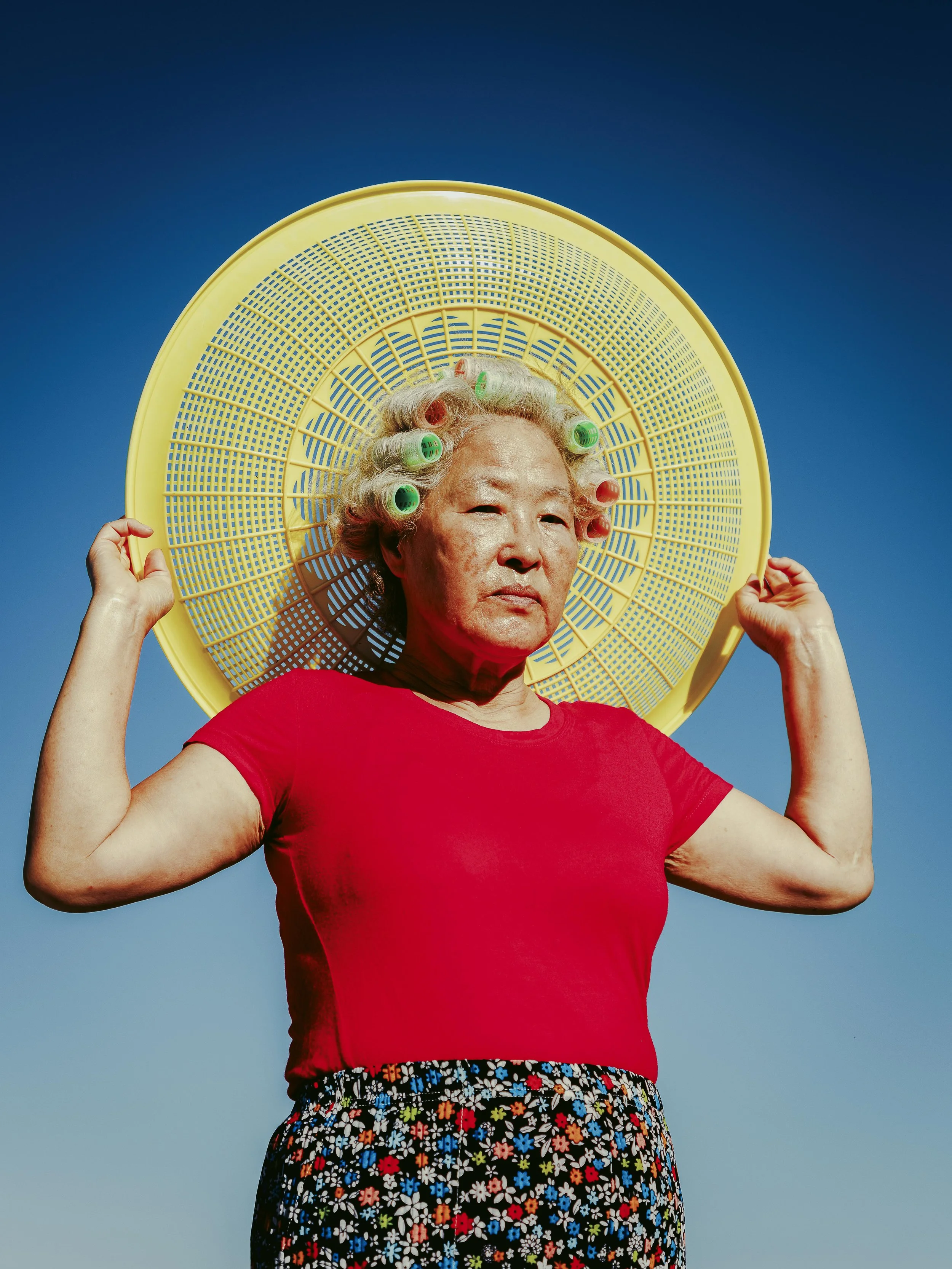
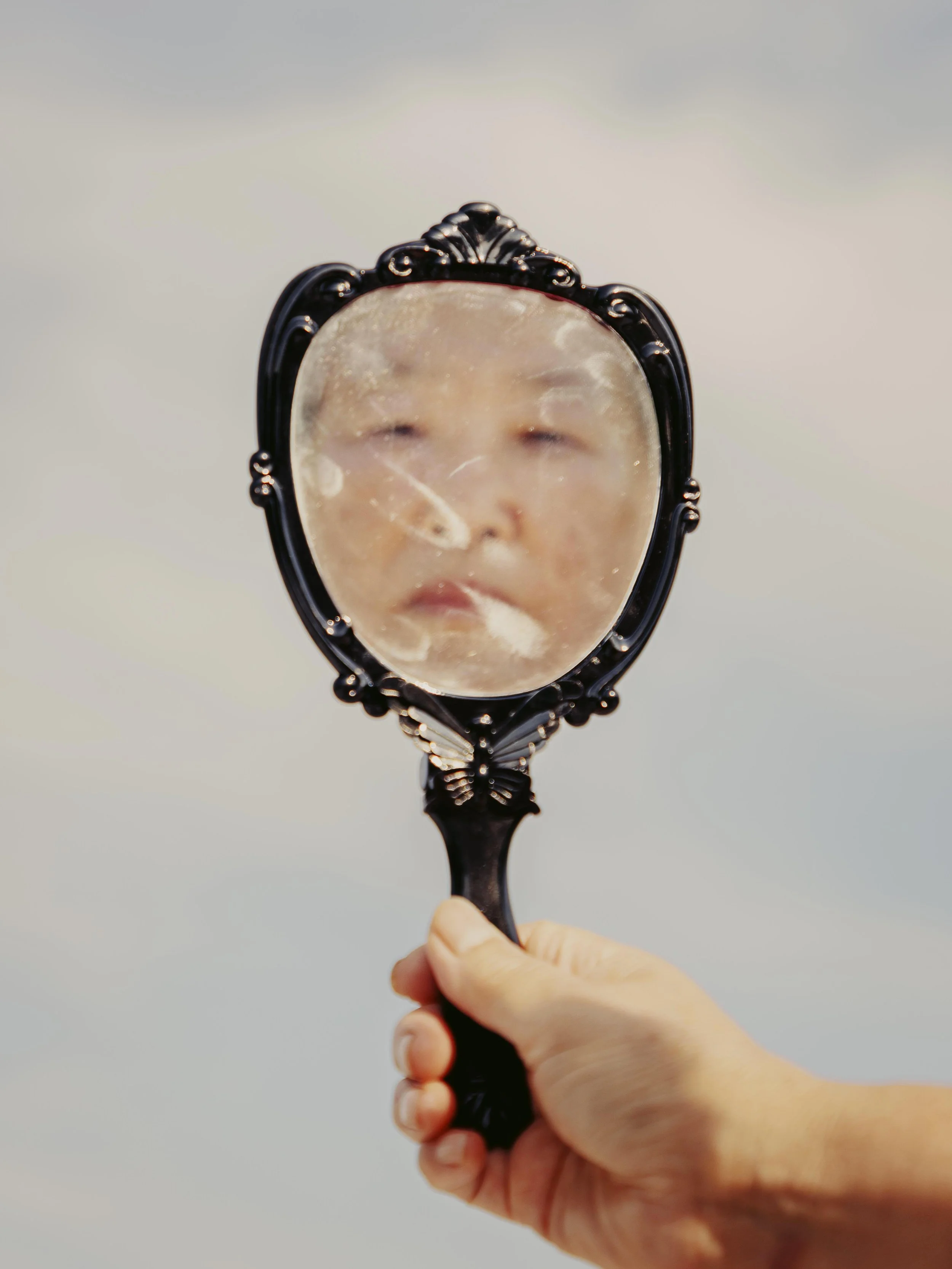
He began turning her memories into photographs, often recreating how those memories felt rather than trying to document them literally. His mother became part of the process, making objects, suggesting ideas, and appearing in scenes that move between humor, sadness, and play. Through the work, Lee also started to see her as an independent person with her own dreams, talents, and possibilities.
Instead of deciding the story in advance, he collects memories, conversations, and photographs until the structure begins to appear. In the following interview, he explains how that process shaped the pictures, the relationship with his mother, and the direction of the project.
The Project
Nirvana is an ongoing photography project by Daesung Lee, made with his mother after he returned to his parents’ home in South Korea in 2024. The project began during conversations about her life, childhood, and the sacrifices she experienced as a woman growing up in a conservative Korean society. When Lee asked what kind of life she would want if she could be born again, she answered that she never wanted to be born again. That response gave the project its title and direction.
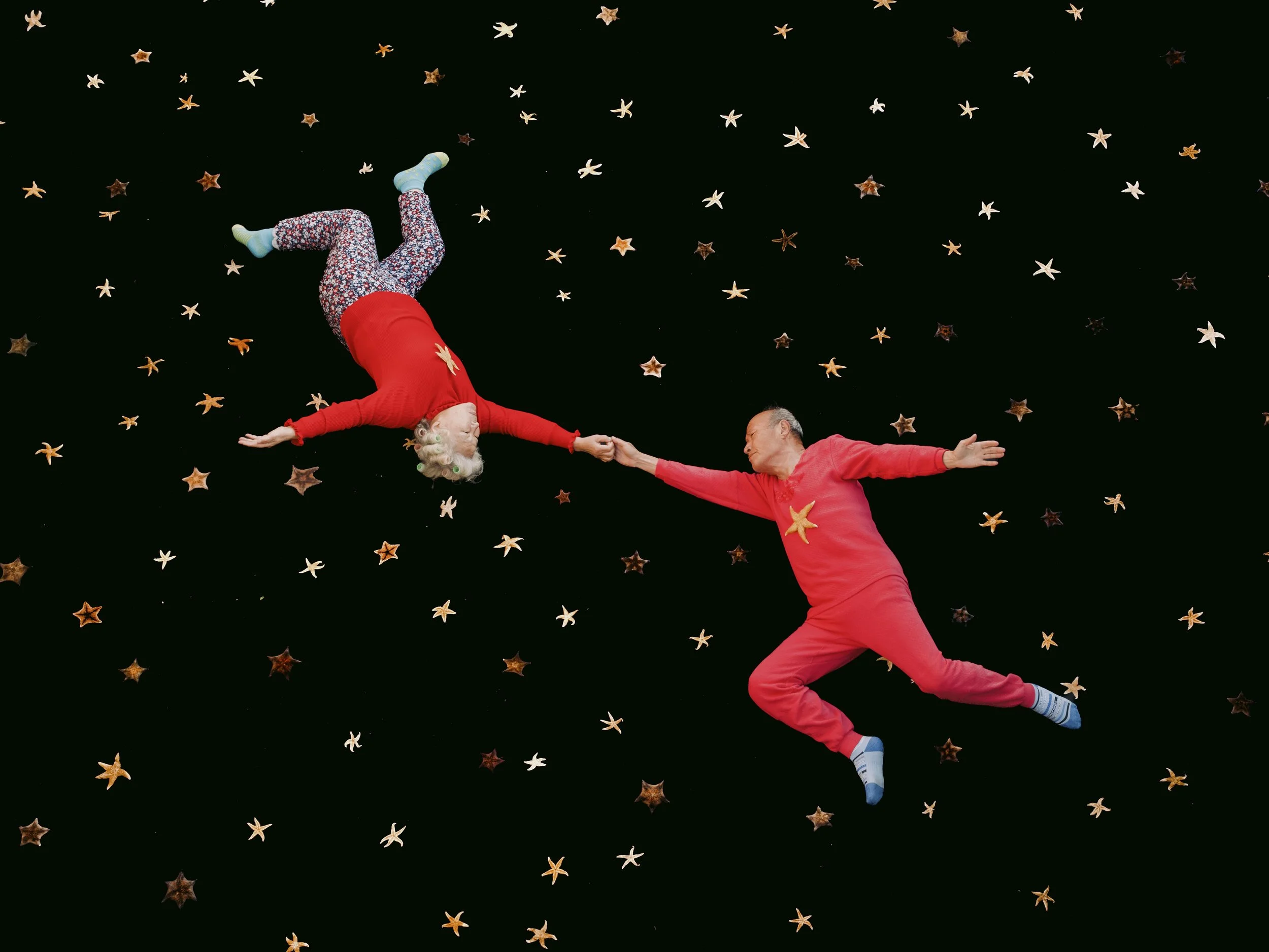
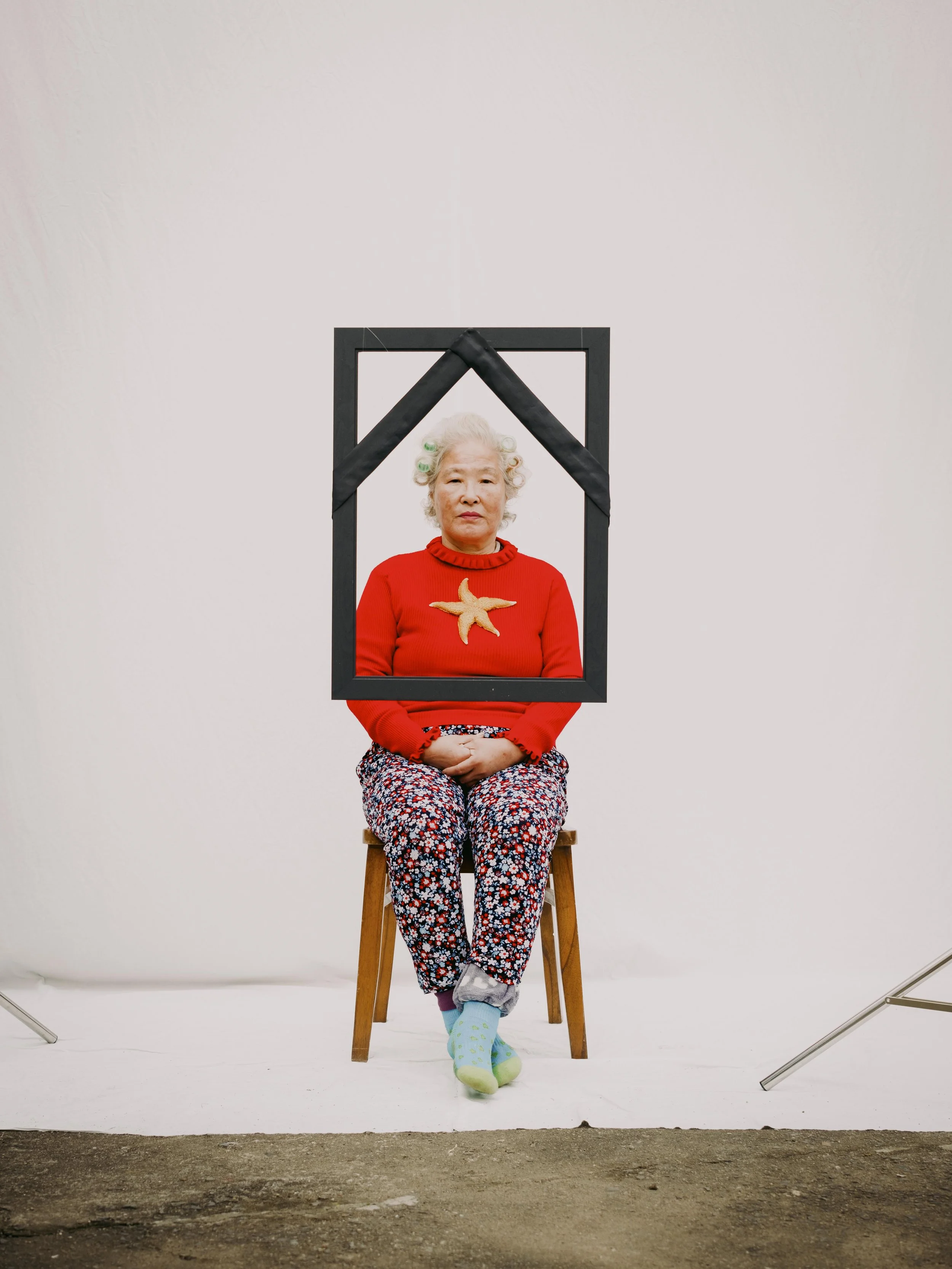
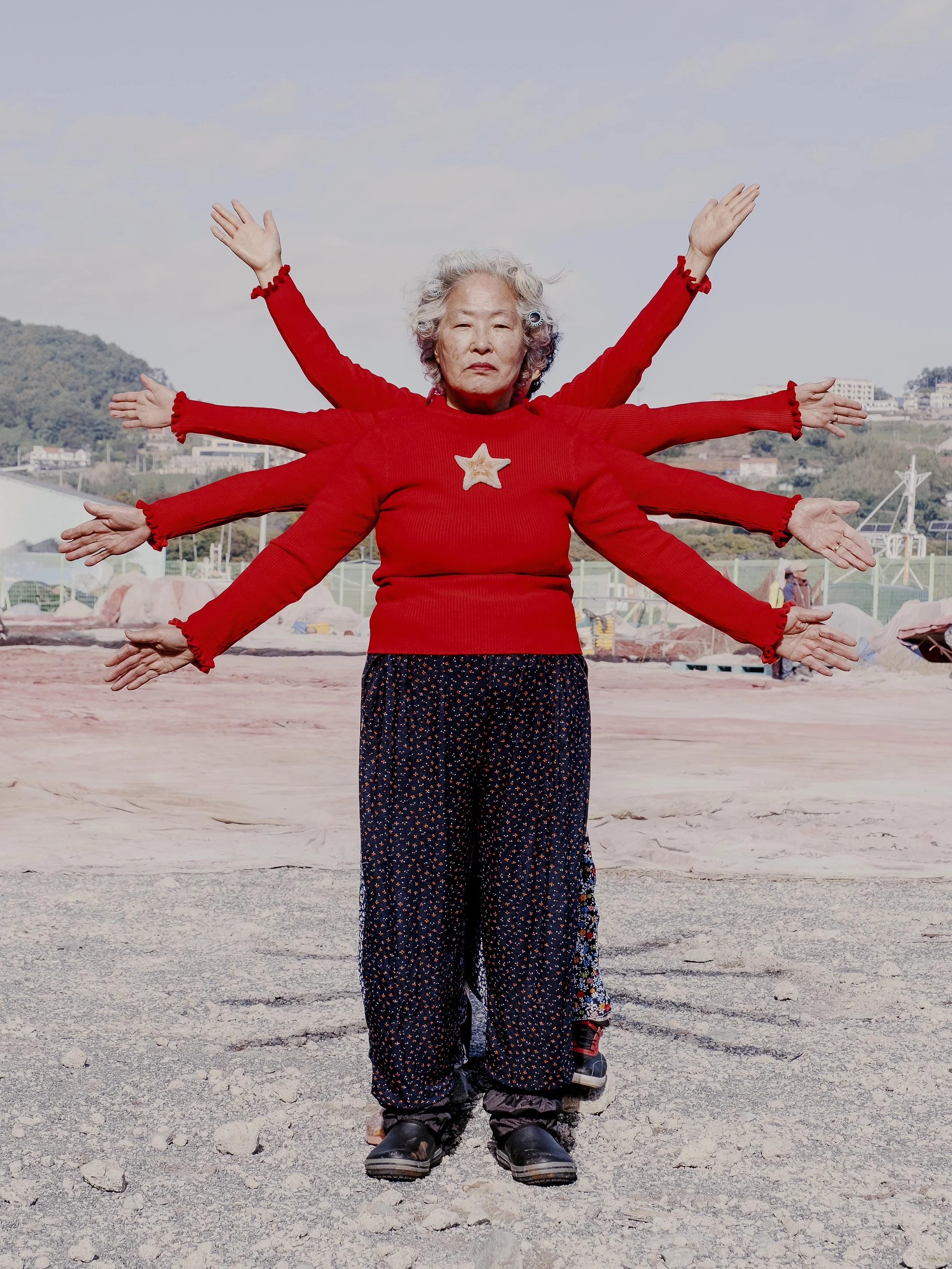
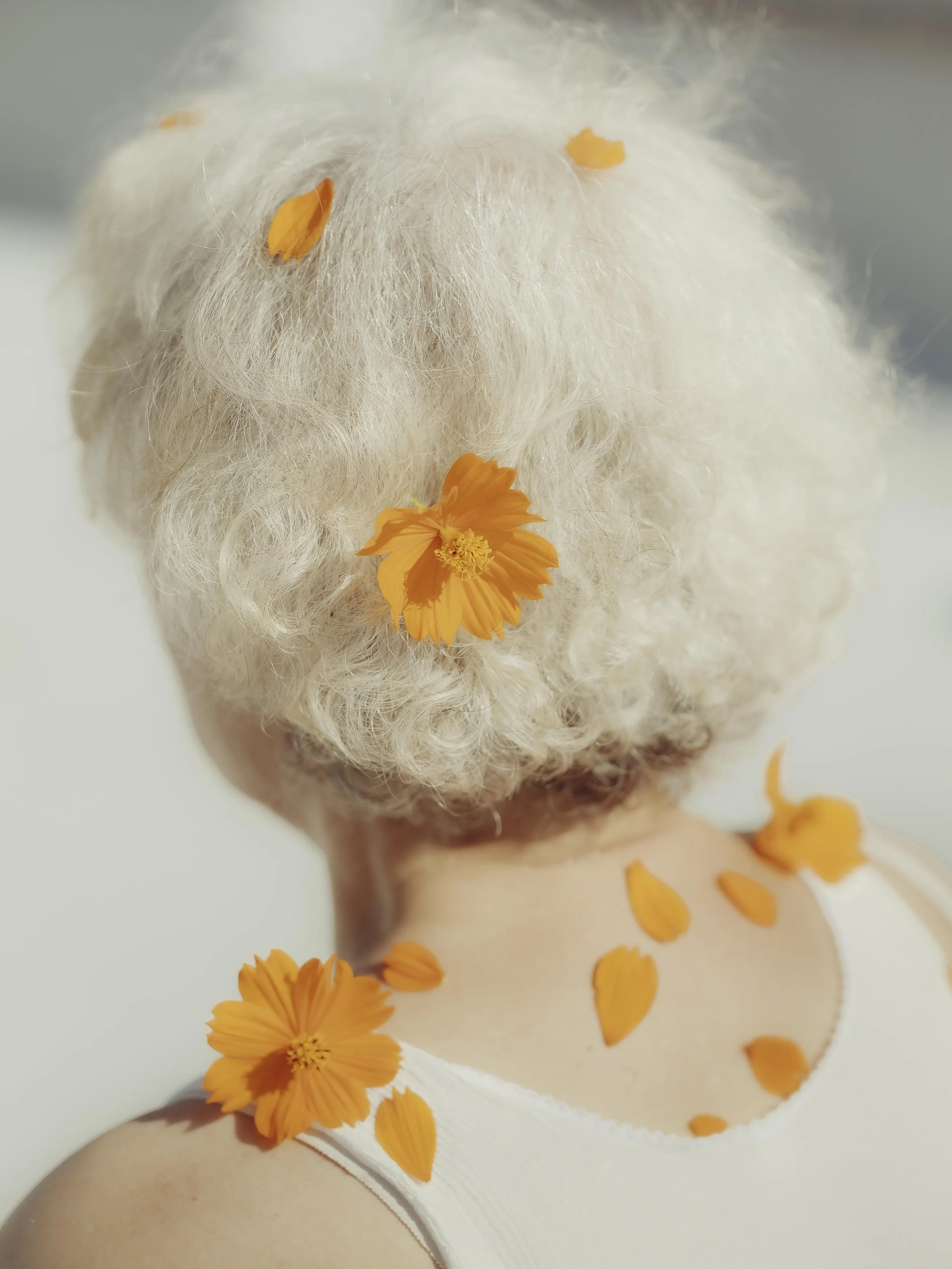
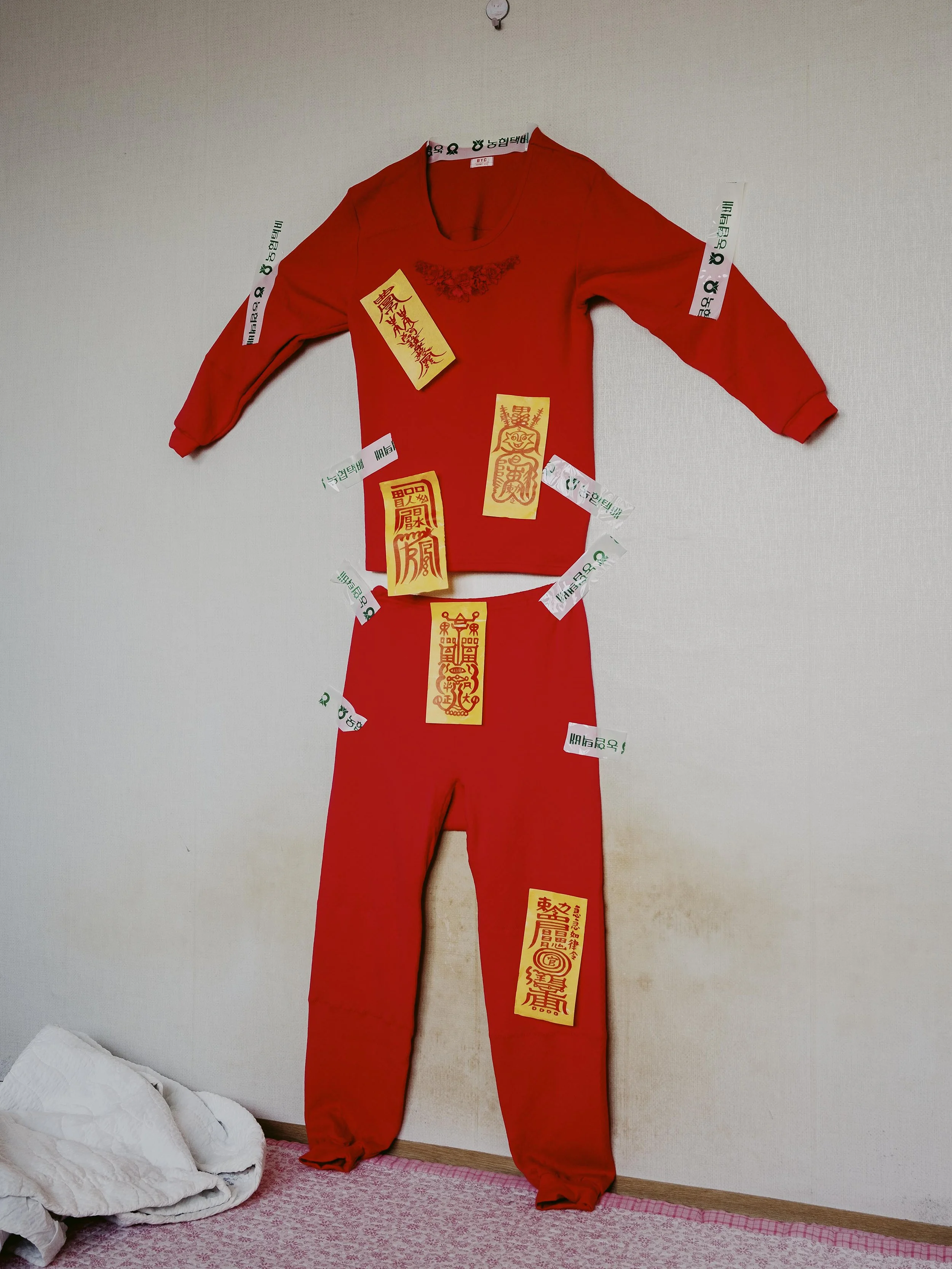
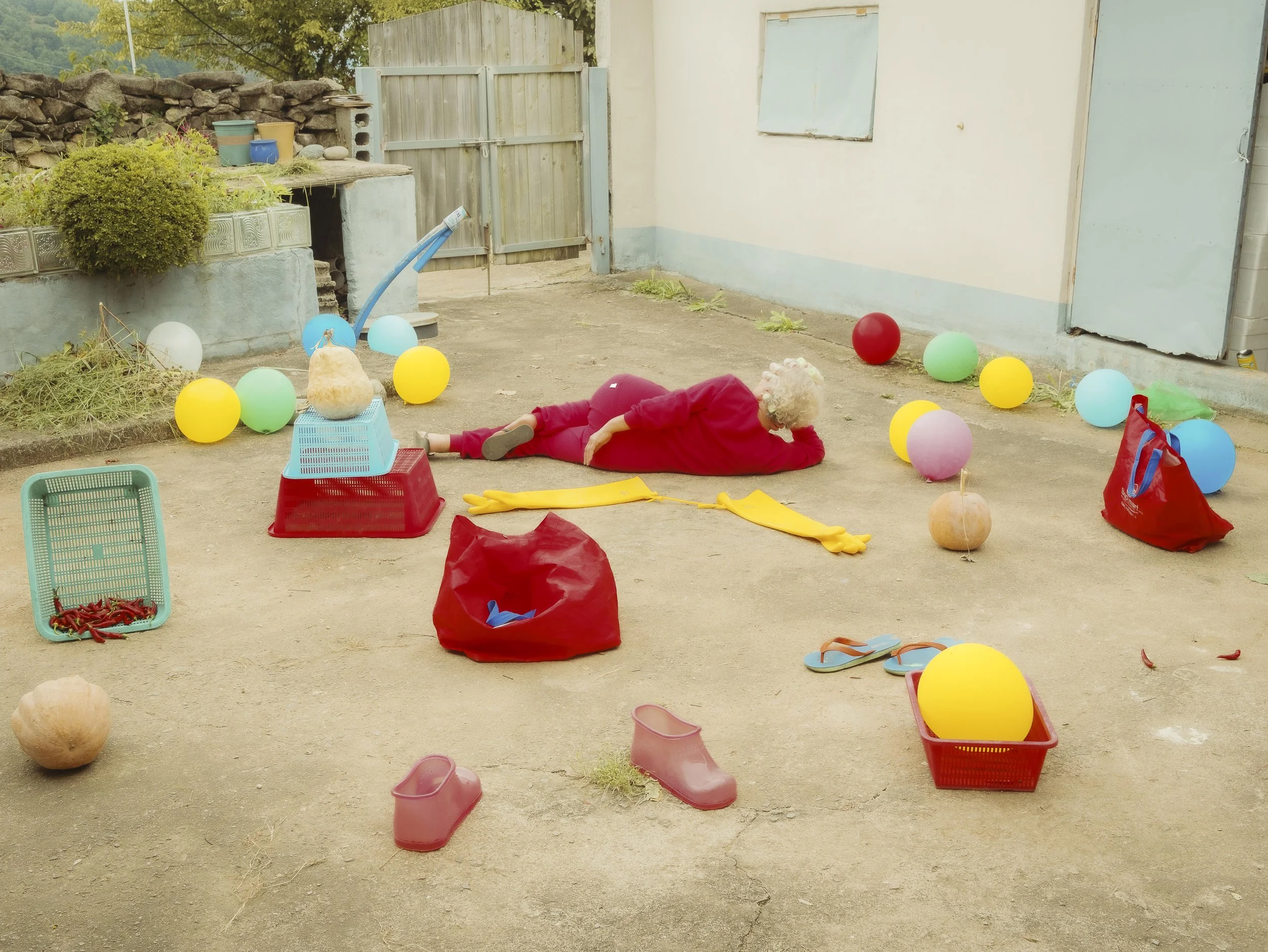
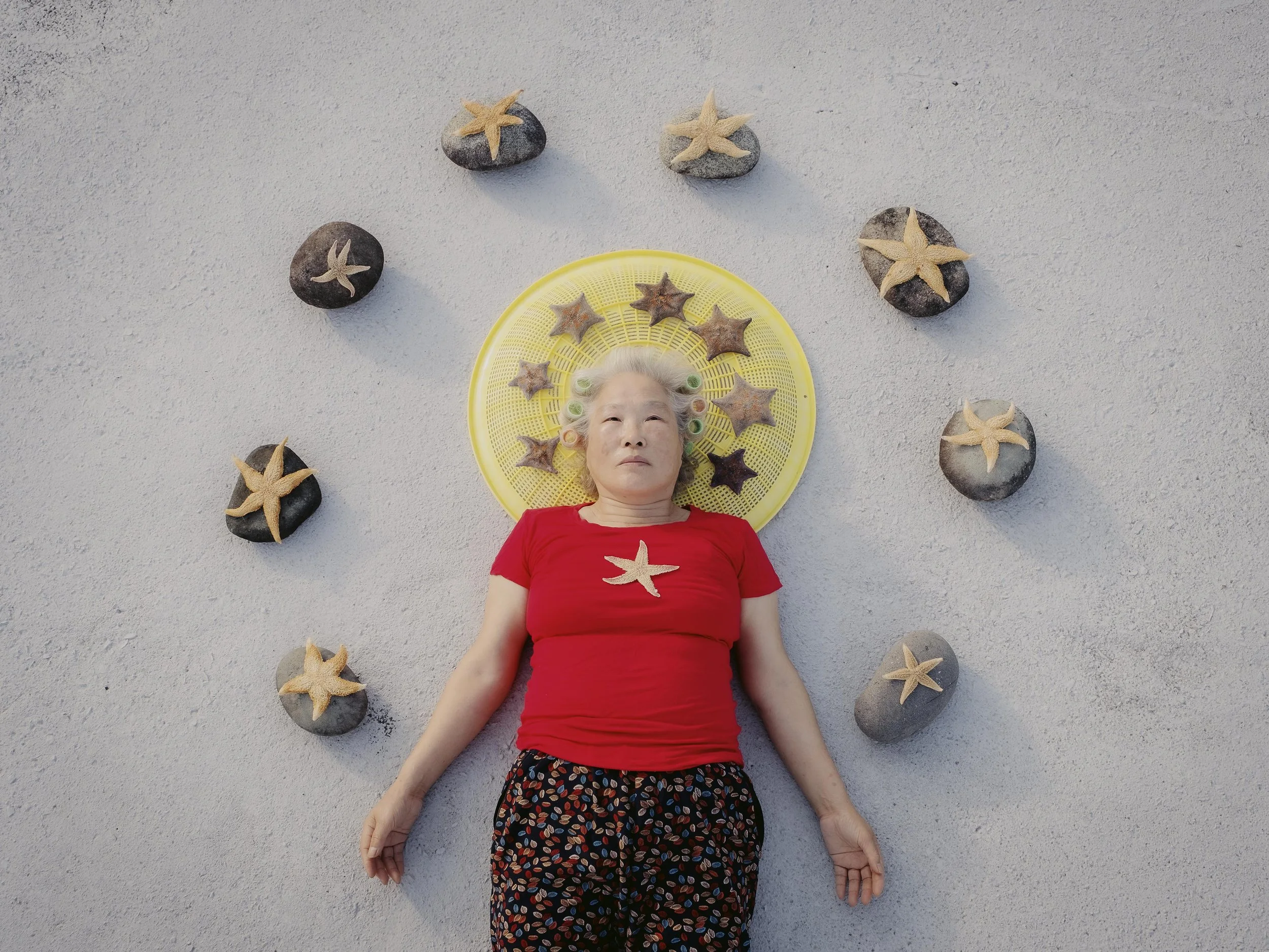
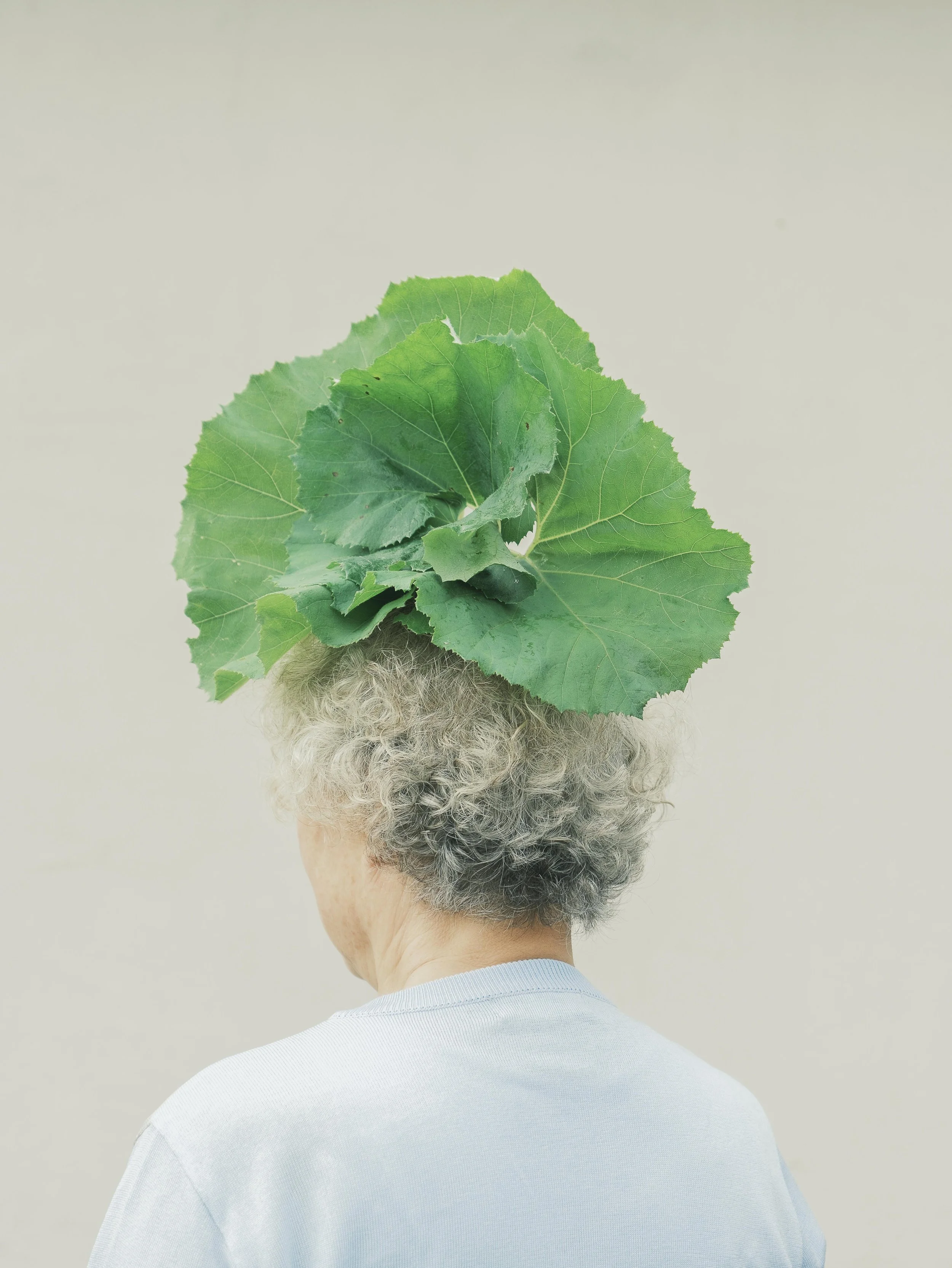
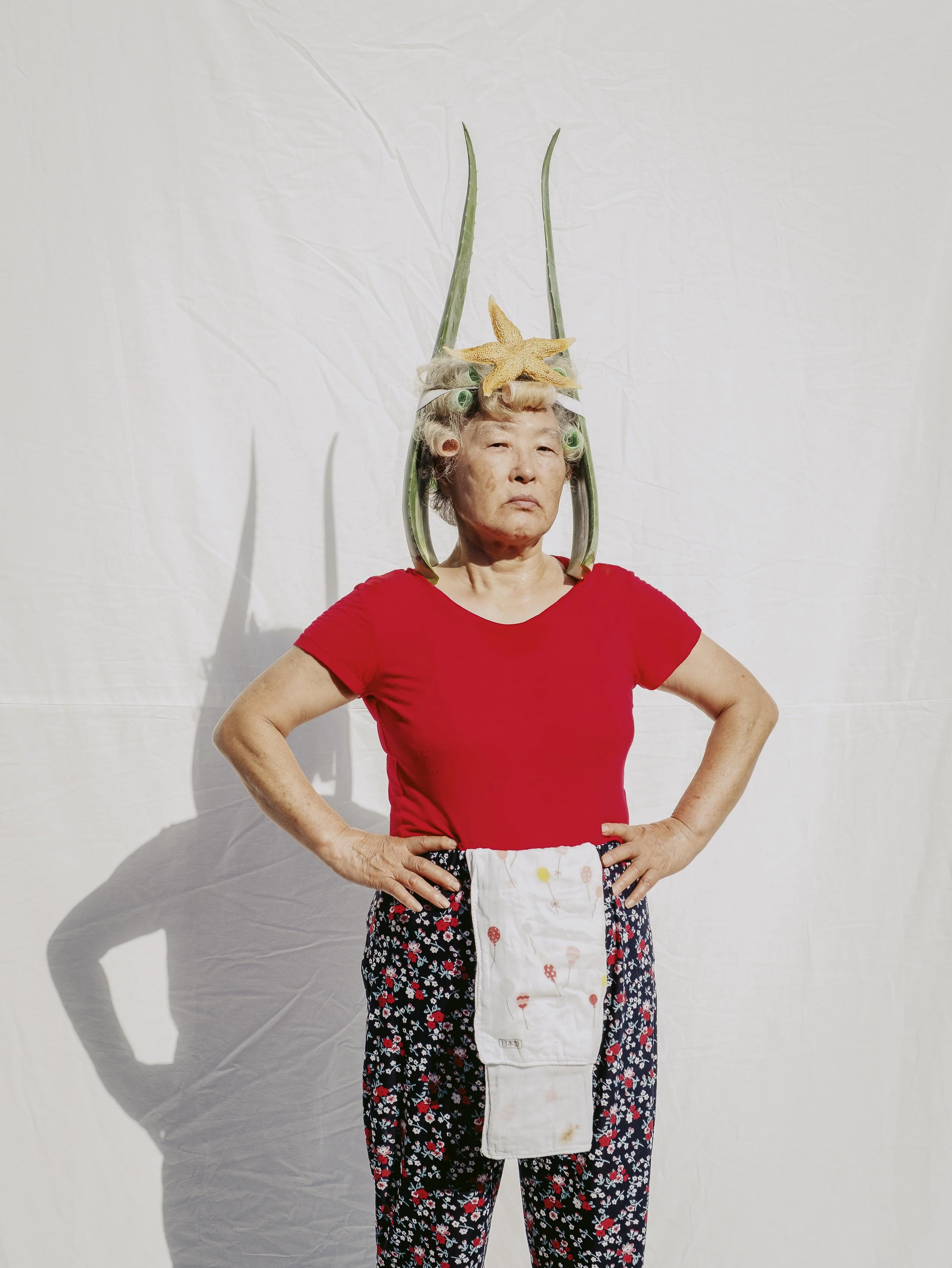
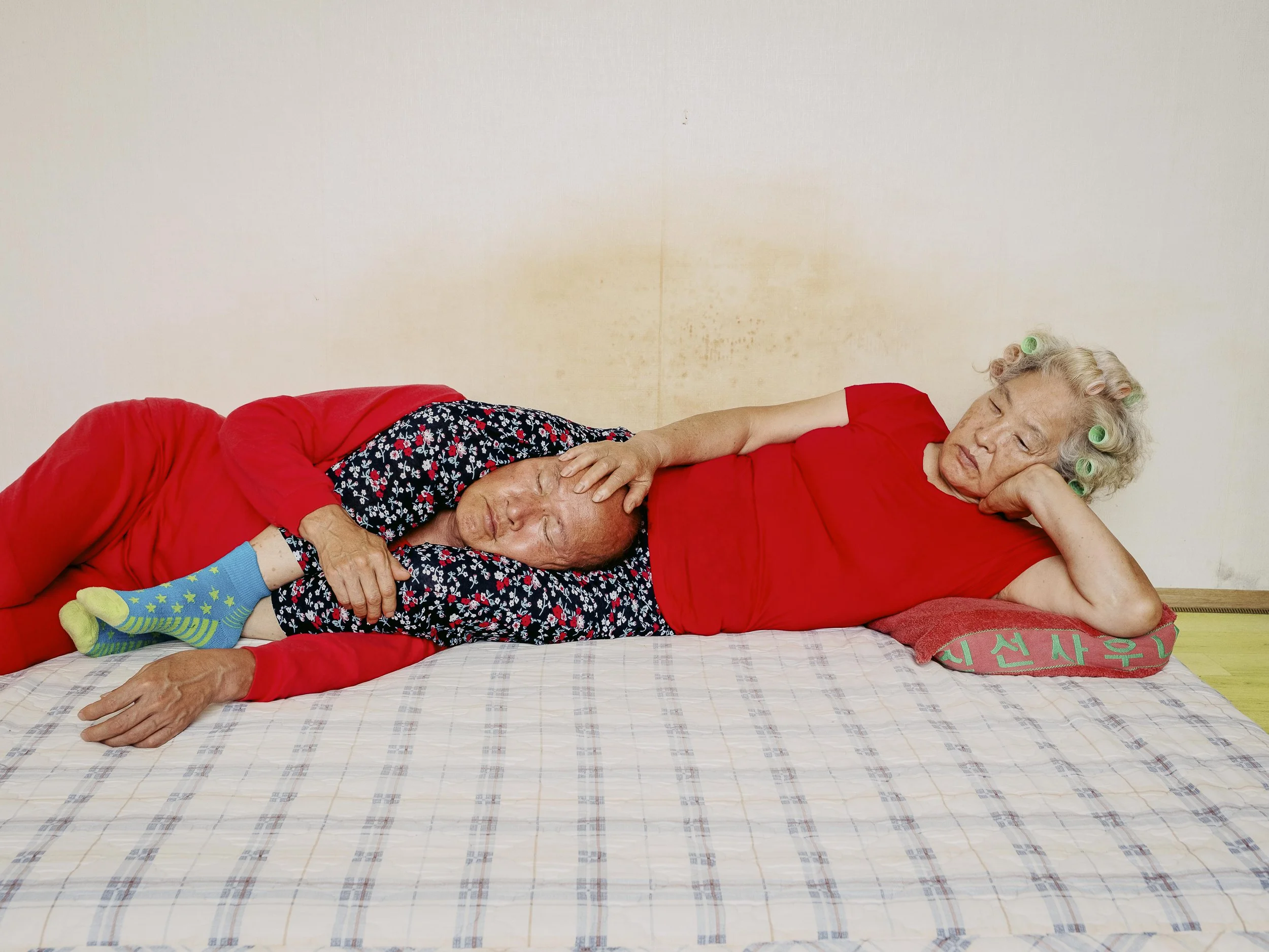
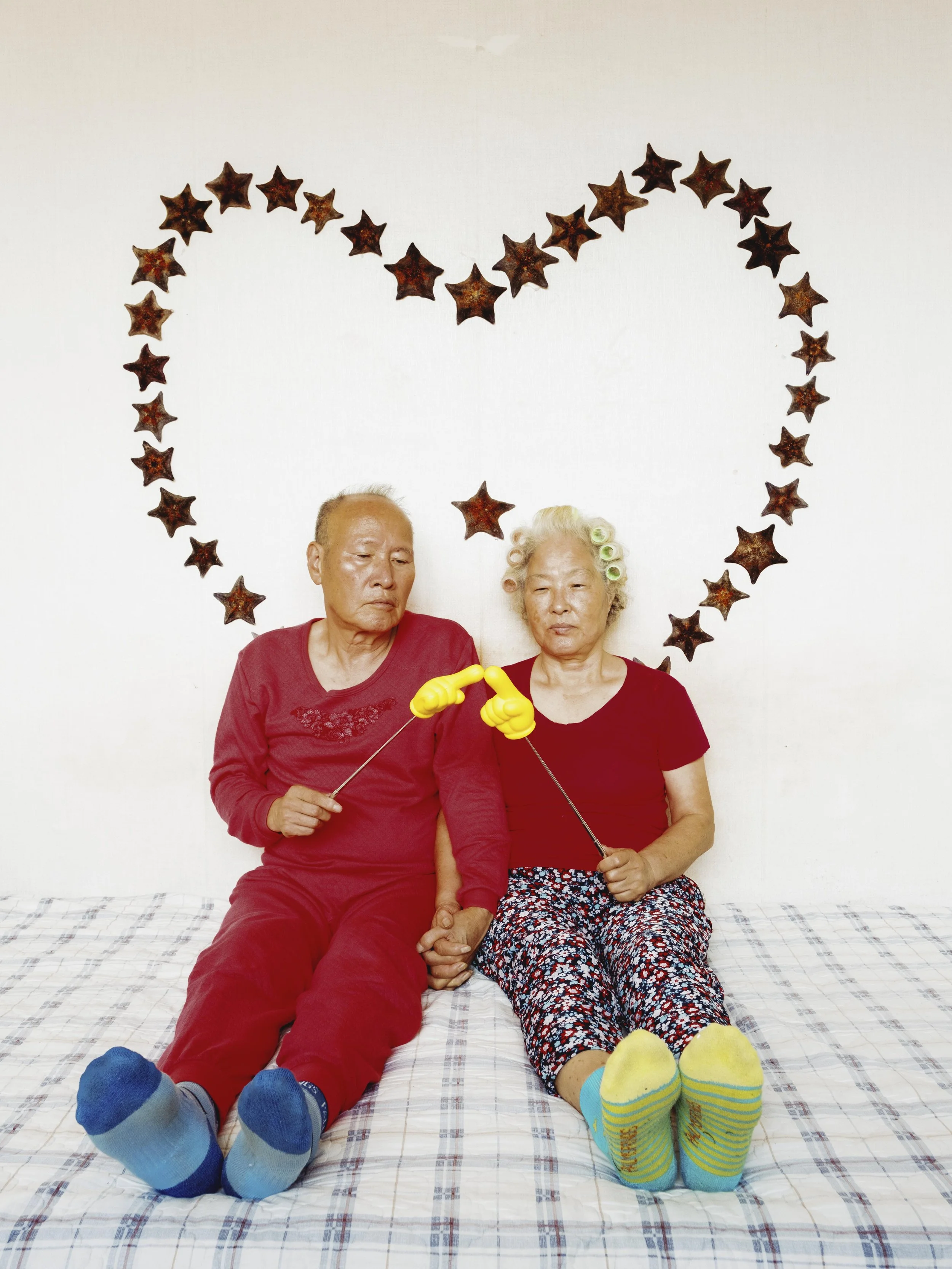
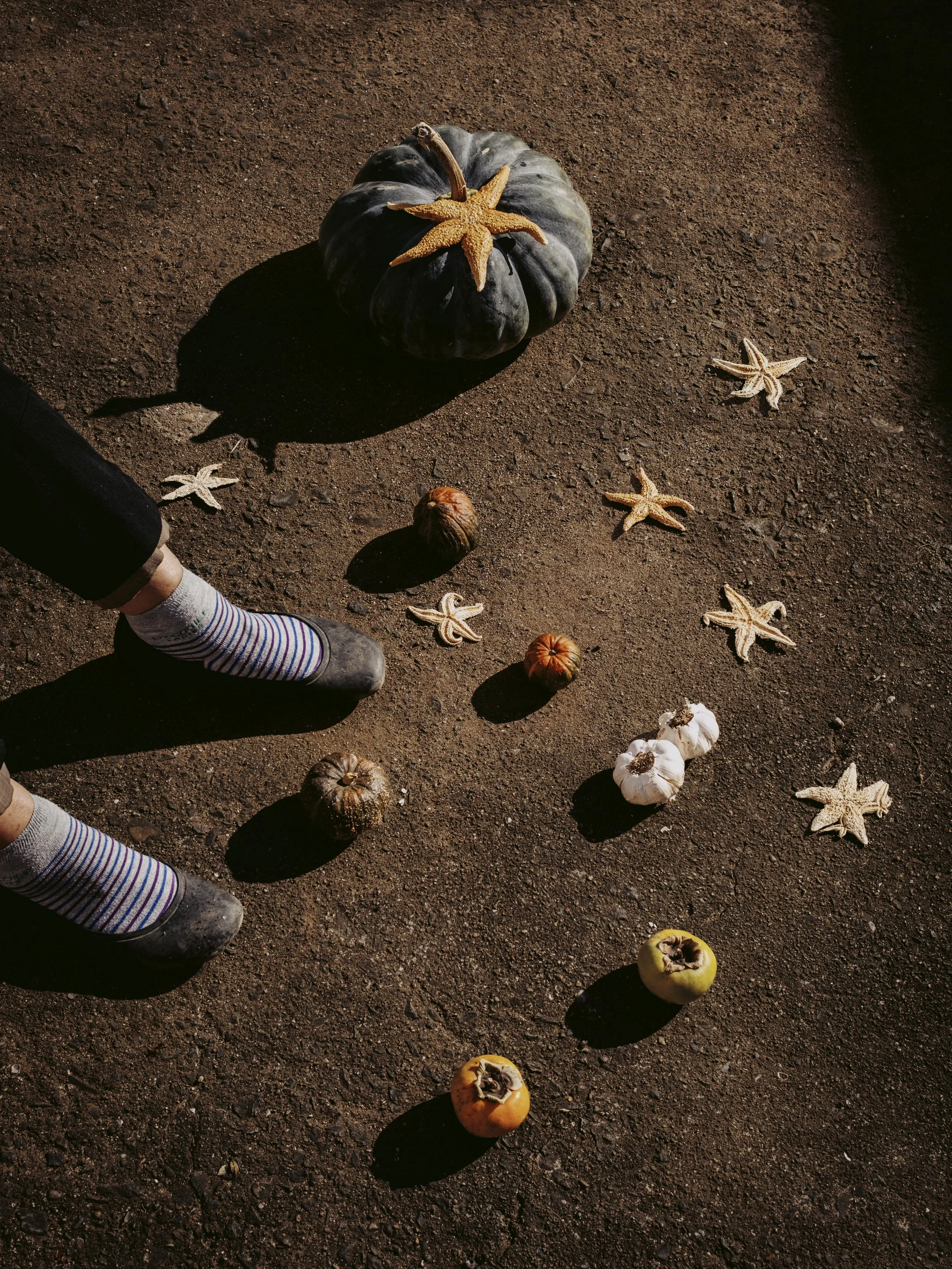
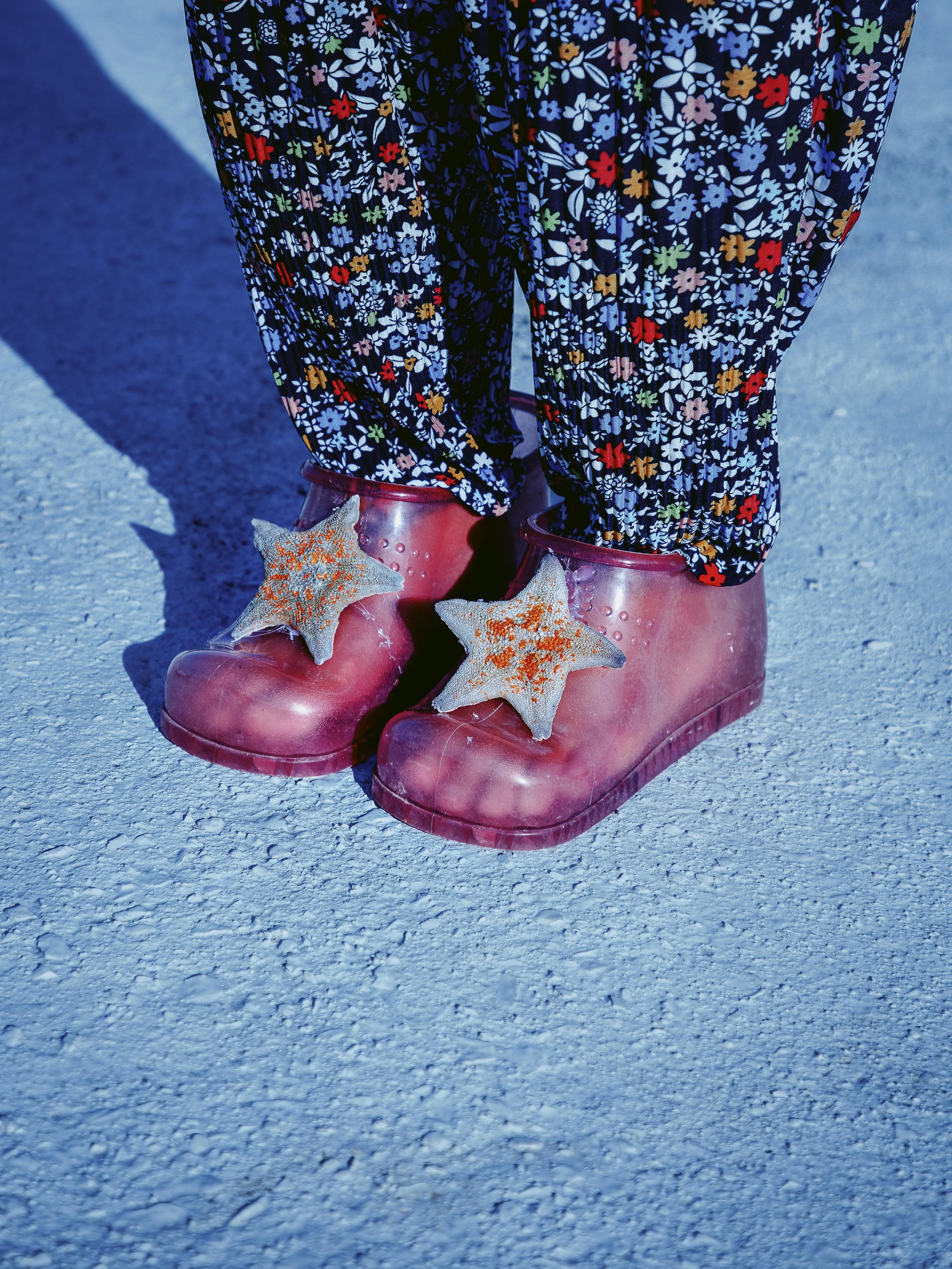
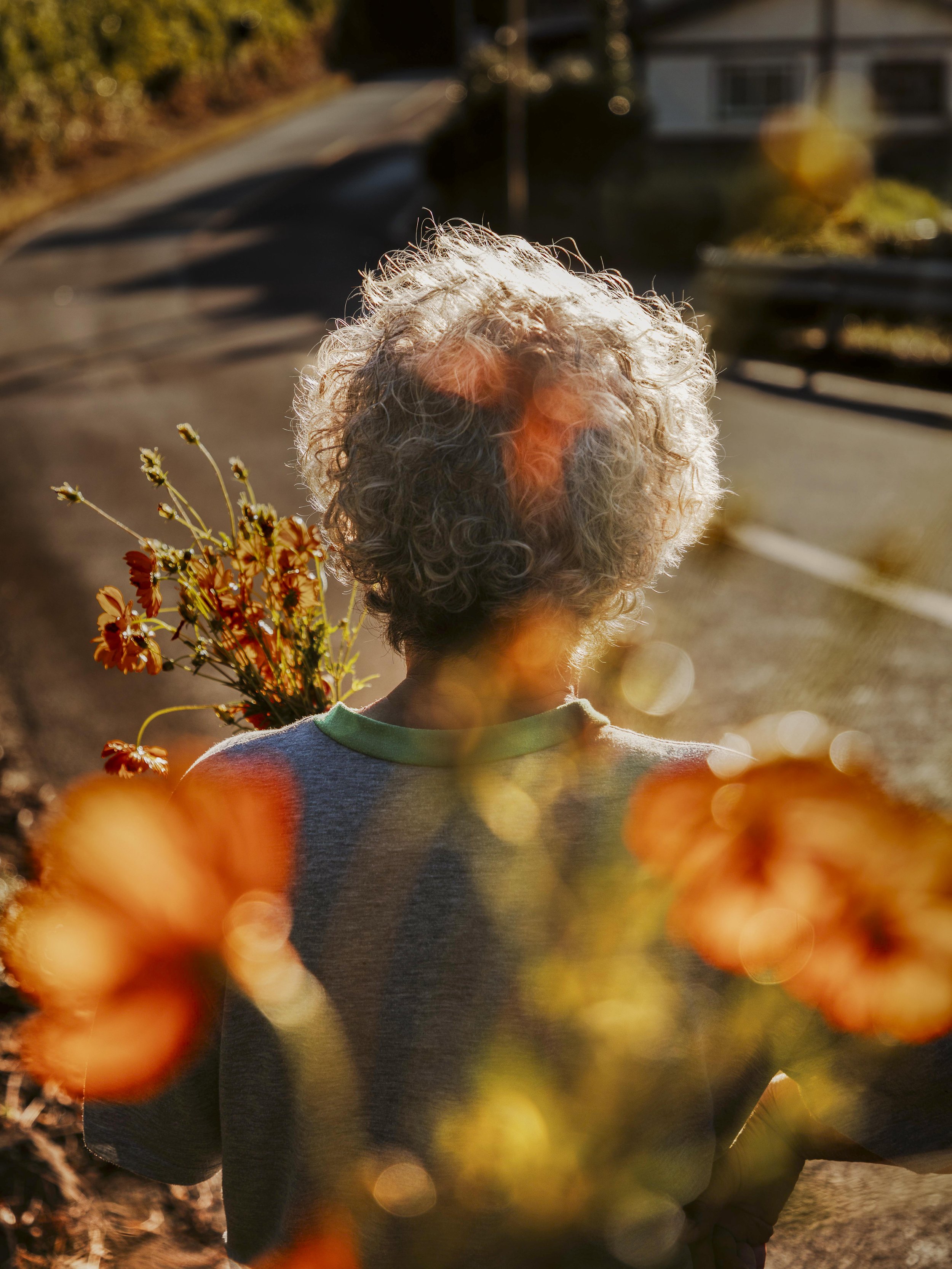
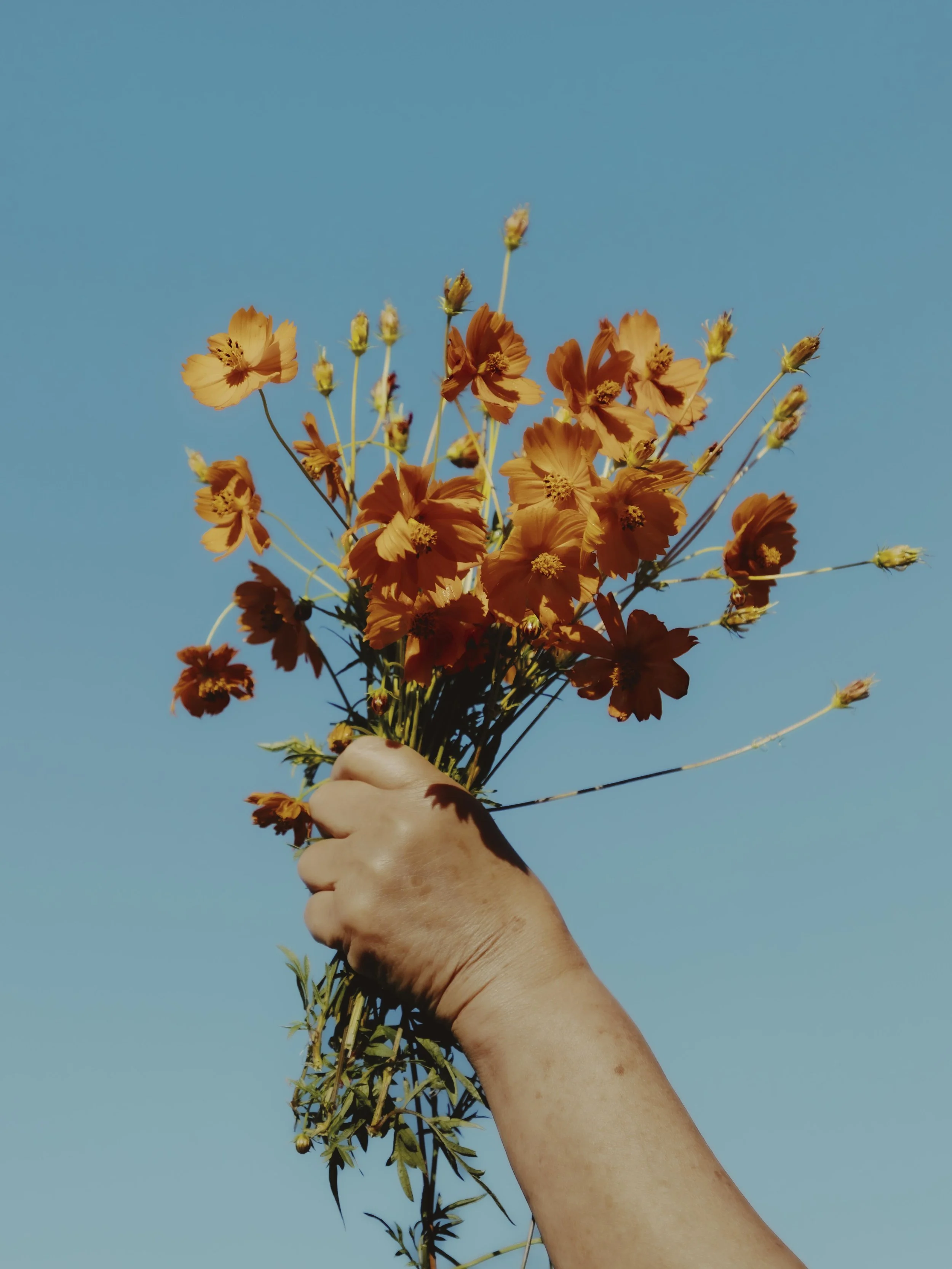
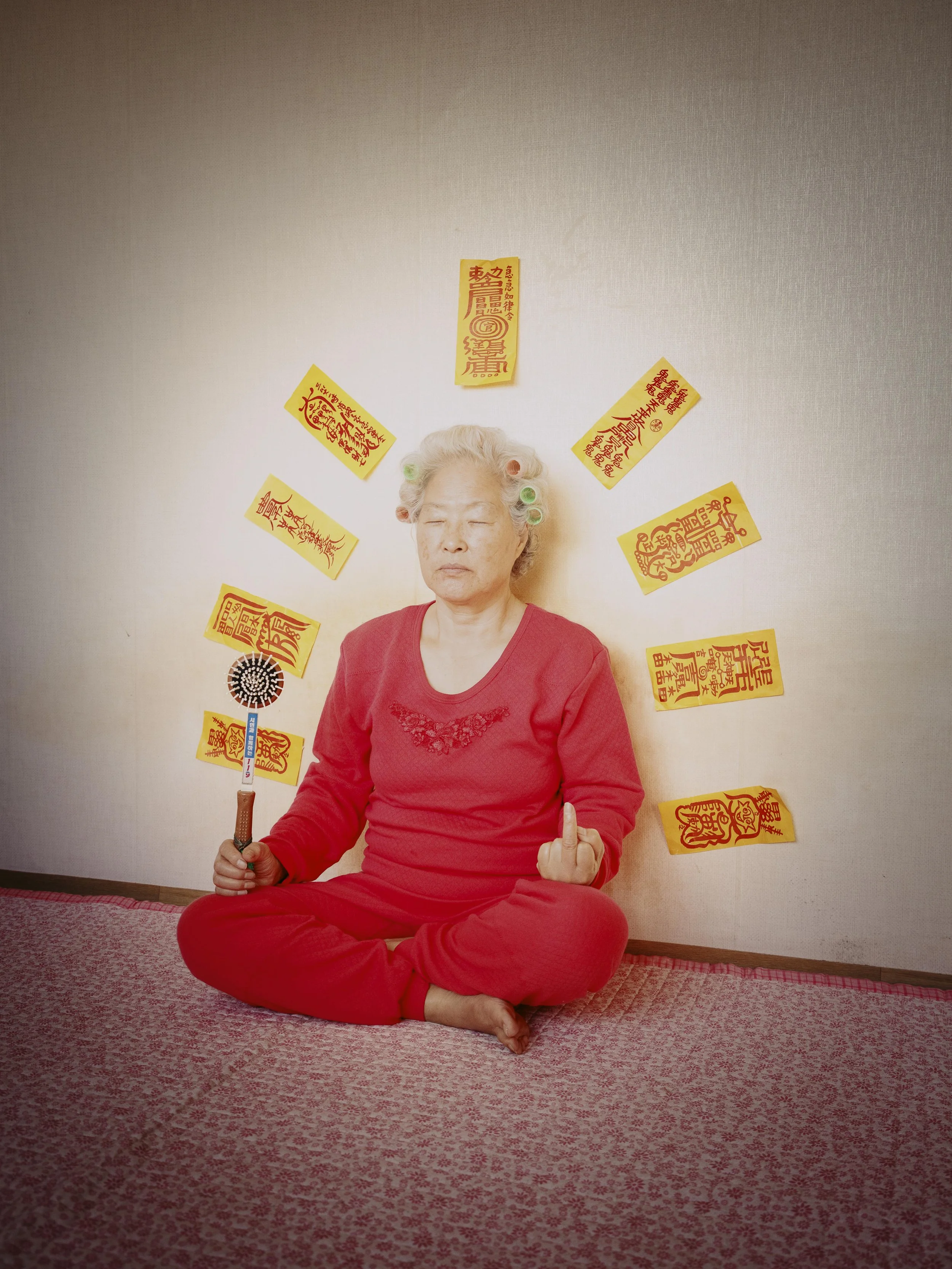
Rather than documenting memories literally, Lee turns individual stories and episodes from his mother’s life into constructed photographs. His mother also takes part in the process, helping to develop ideas, make objects, and create scenes together. The photographs move between humor, grief, play, and memories of hardship, while the project continues to develop as Lee spends more time with her and discovers stories that have not yet become photographs. (daesunglee.com)
Beginning: You moved back into your parents' house after losing a close friend. At what point did you realize those ordinary days with your mother were becoming a body of work rather than simply a way of coping?
The sudden death of my friend was an immense sorrow, but it also taught me many things. Above all, it made me realize that we all die eventually, and that there is no order to it. I began to feel that I should not hesitate and later regret it. If something came to mind, I should act on it without being afraid of the outcome. Living is, in a sense, synonymous with dying, yet most of us forget that.
It made me want to spend more time with my aging parents during the time I have left. Since I was twenty, I had lived abroad and eventually settled in France, so I had spent very little time with them. In the autumn of 2024, I stayed at my parents' home for several months and had many conversations with my mother.
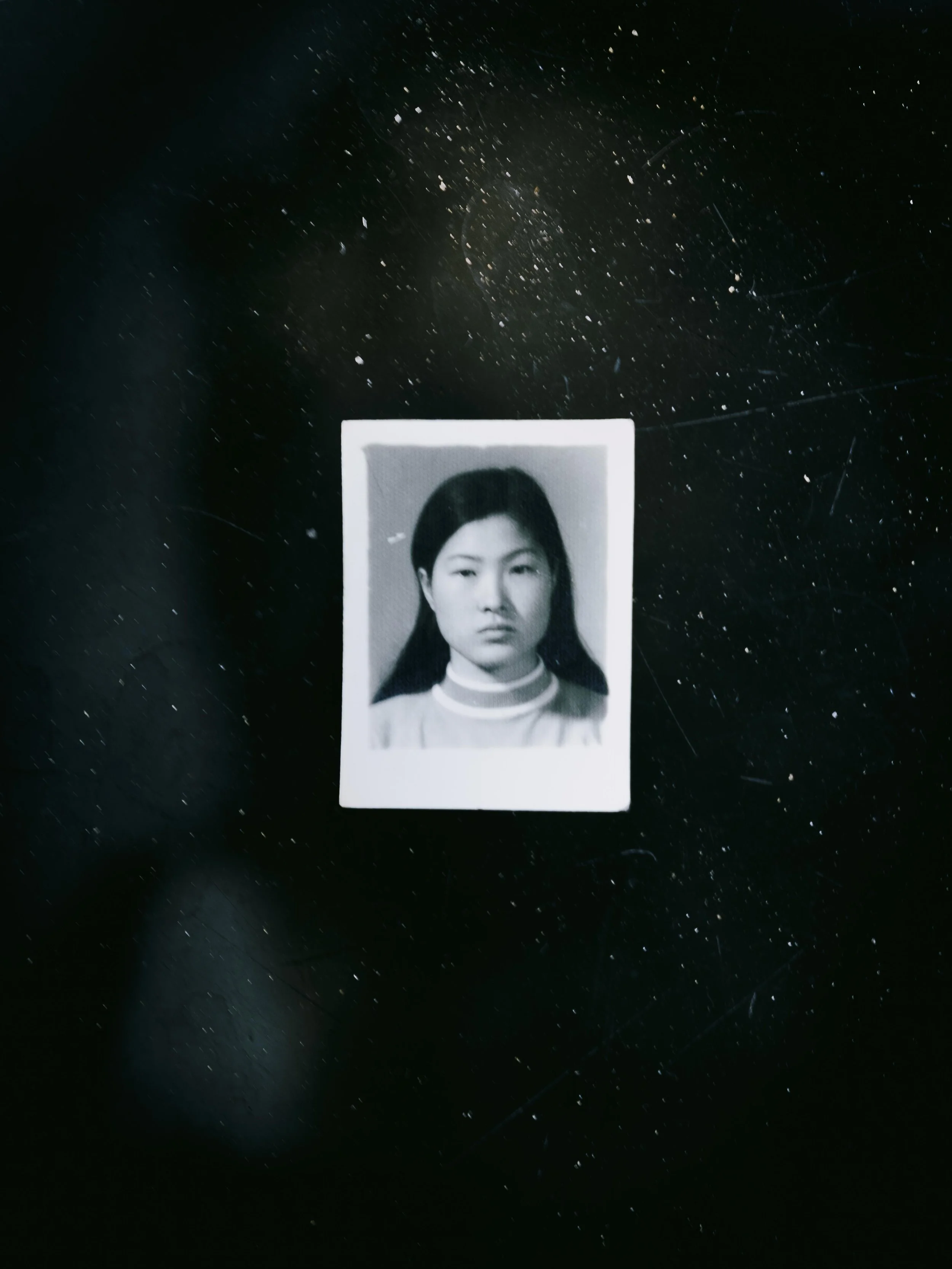
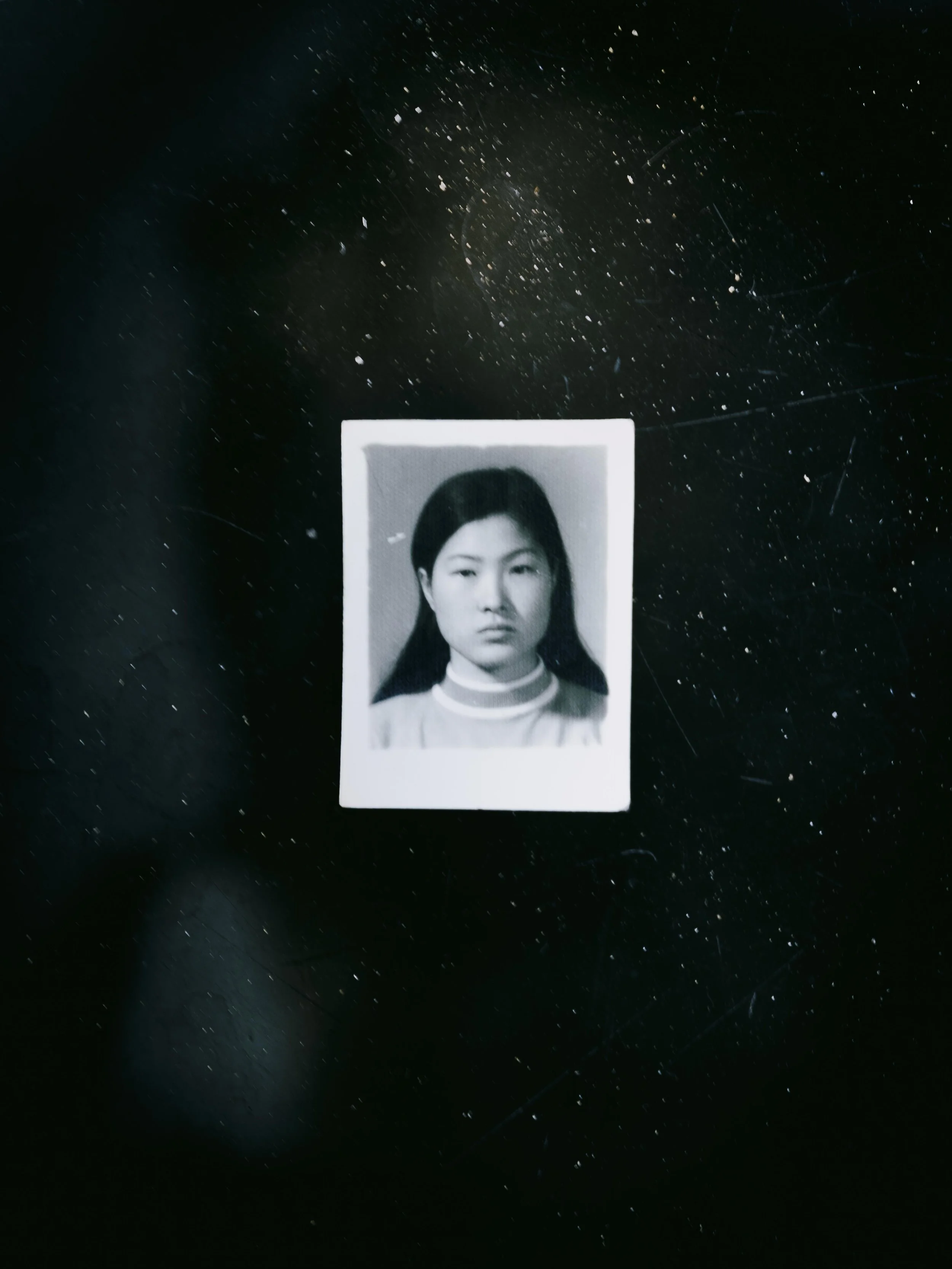
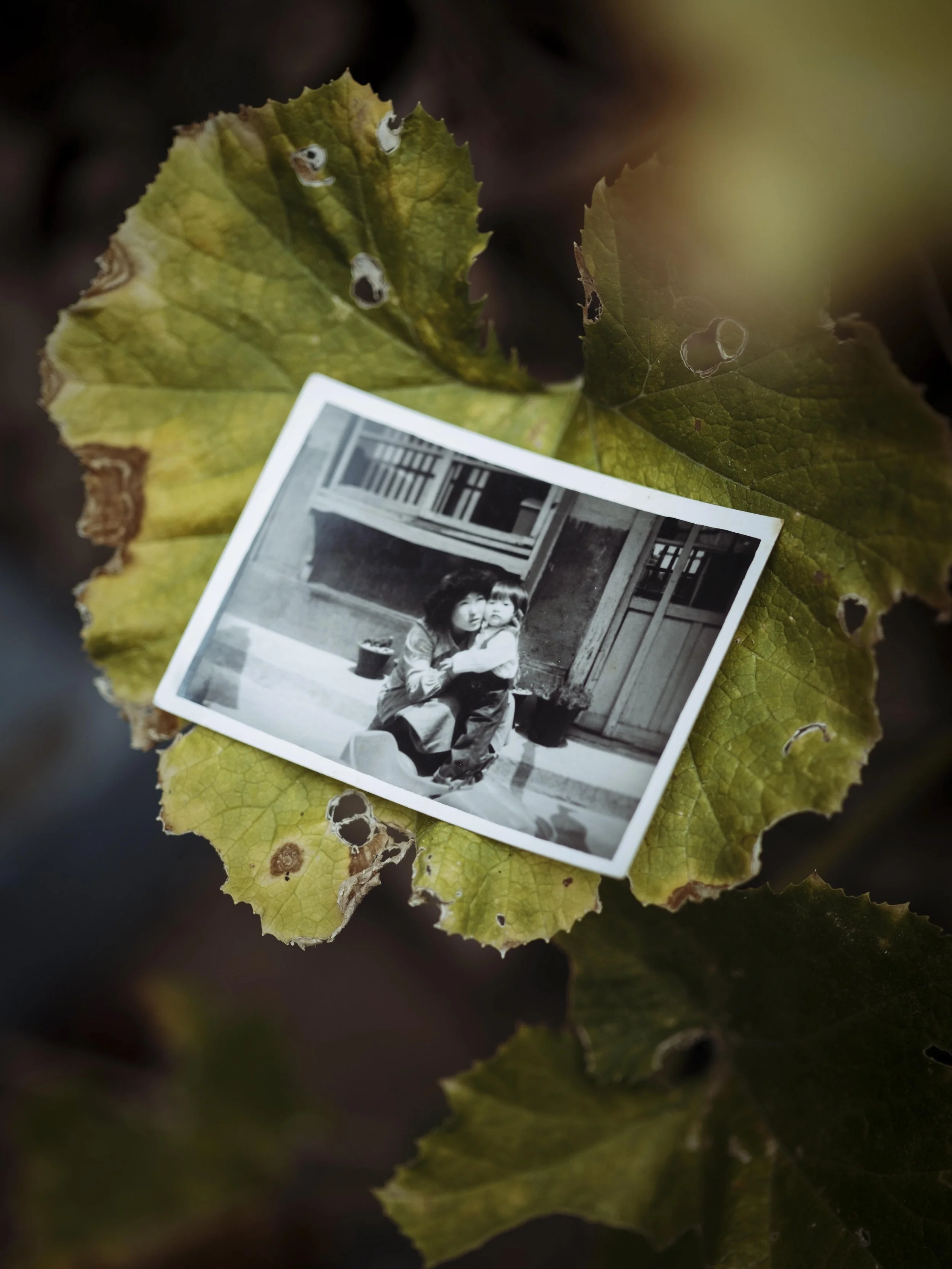
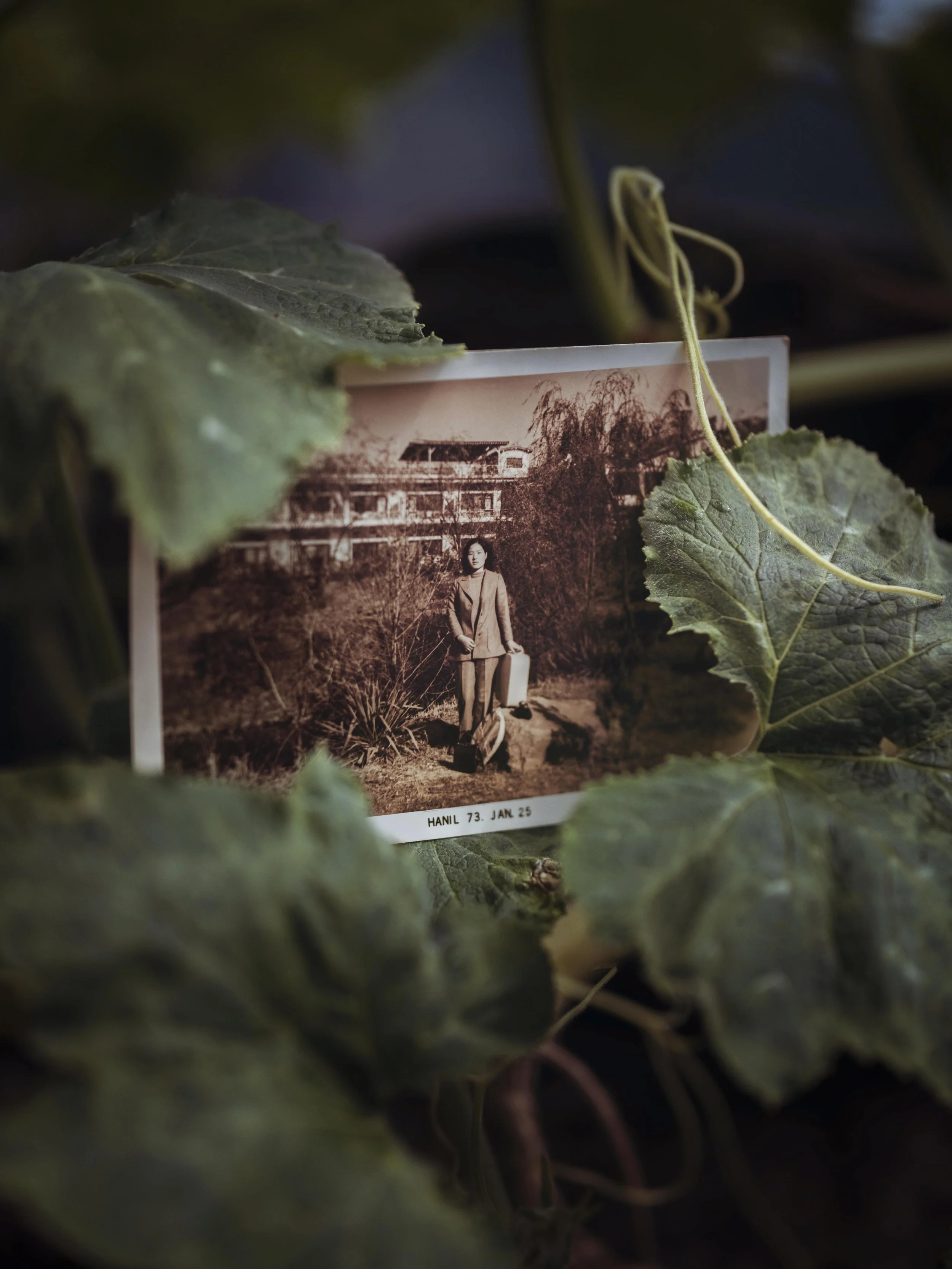
I knew almost nothing about her life before marriage, and she had rarely spoken about it. Everyone has childhood memories, hopes, and dreams for their own life. I suddenly became curious about what kind of life my mother had dreamed of as a child. My parents' generation, born around the time of the Korean War, experienced colonial rule and the extreme poverty that followed the war. For most of them, it was difficult even to think about their own dreams or talents.
As we talked, I naturally asked her what kind of life she would want to live if there were another life after this one, especially from the perspective of someone who may not have much time left. At first, I expected many interesting answers. But her response surprised me: “No, I never want to be born again.” That unexpected answer became the starting point of the project.
The Title: Why did you choose the title Nirvana for a project built around such ordinary moments? What did that word come to mean for you?
East Asian countries have traditionally been shaped by Buddhist culture. Unlike Christian culture, Buddhism is rooted in a cyclical view of the world, so ideas such as karma, fate, reincarnation, and nirvana are not unfamiliar to us.
In Buddhist teaching, life itself is considered suffering. If one does not resolve all one's karma in this life, one is born again as another being to resolve it in the next. It is an endless cycle of existence. Nirvana means becoming free from that karma and escaping the cycle of reincarnation.
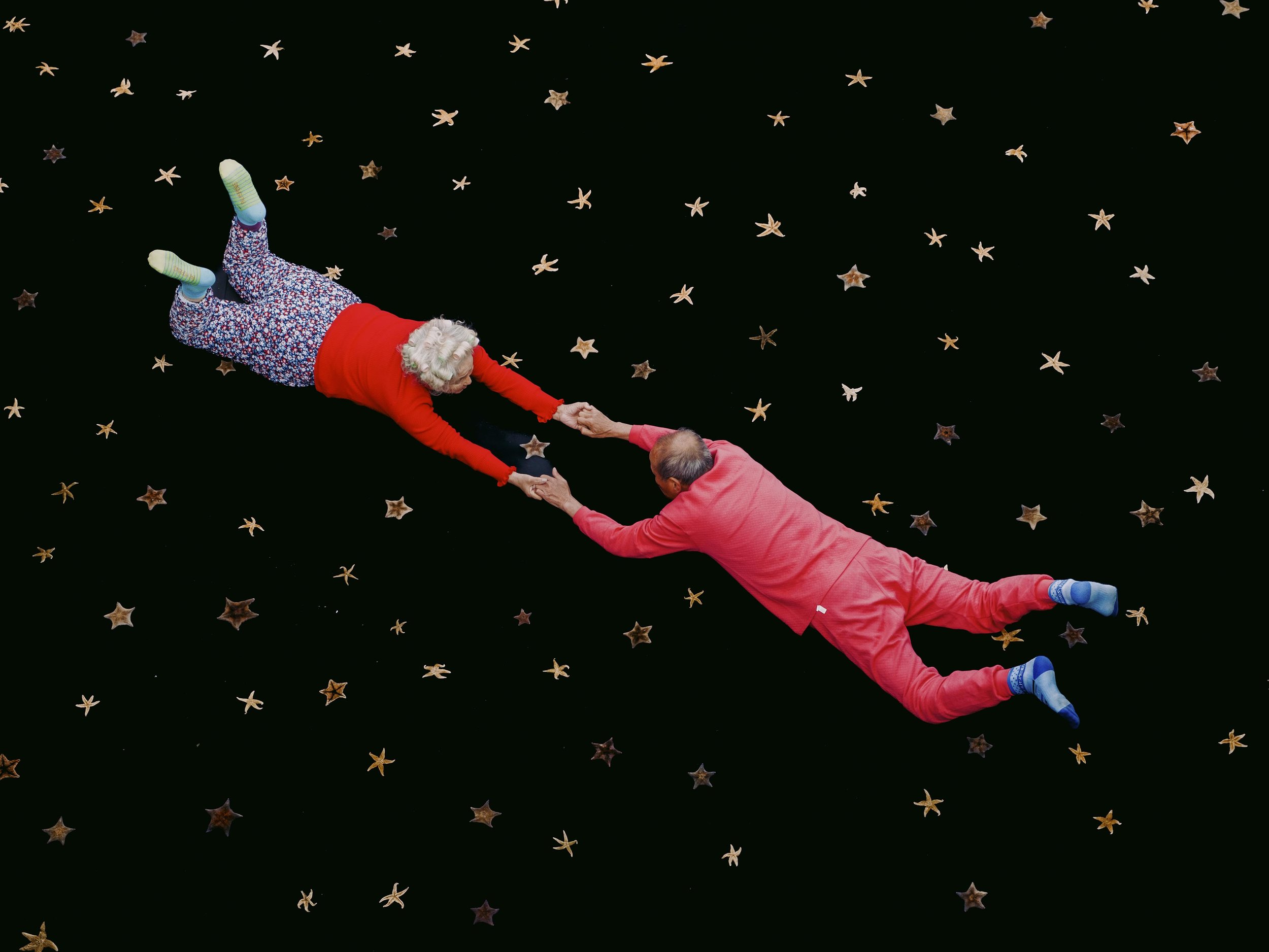
When my mother said that she never wanted to be born again, I wished for her to be freed from this exhausting, endless cycle of life.
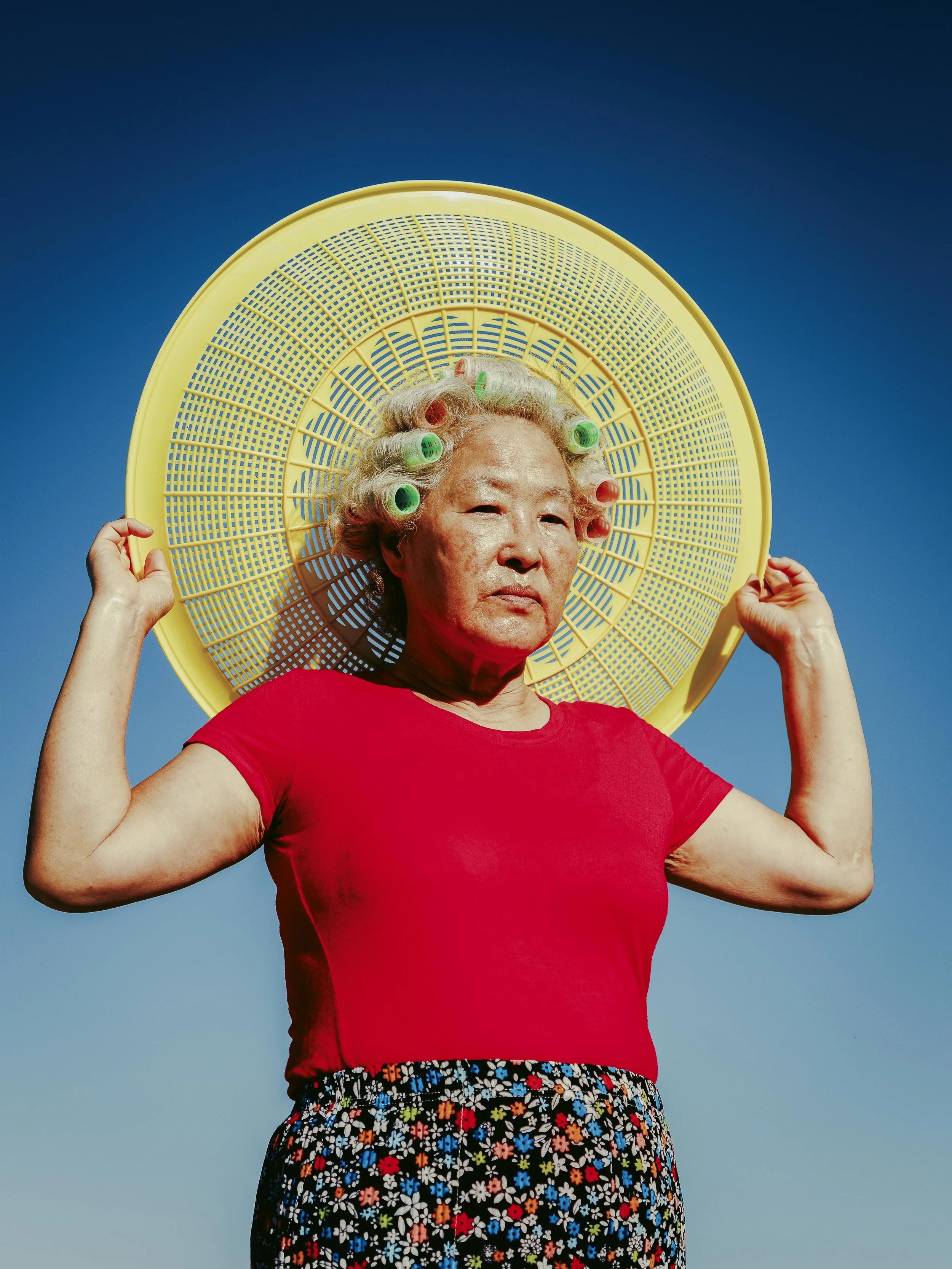
Finding Pictures: Many of the photographs begin with everyday memories or conversations. How did you know which small moments could become photographs, and which were meant to stay as memories?
Through these memories and conversations with my mother, I began thinking about the stories of women who, as socially vulnerable people, were unable to speak for themselves and were expected to sacrifice and endure. I grew up in Korean society when conservative Confucian values were dominant. I felt deep sympathy not only for my mother, but also for the women in our neighborhood and my aunts.
I wanted to tell those stories through my mother's personal life: the memories of quiet sacrifice, endurance, and discrimination she experienced as a woman in everyday life. Each photograph became a way to convey one of those memories, together with a short related episode.
Can you describe one memory you tried to turn into an image but never managed to solve? What kept the photograph from working?
In my memories of our impoverished childhood, my mother did not have a proper pair of socks of her own. Whenever my father's socks developed holes, she would mend them and wear them herself. The socks I remember her wearing were men's dress socks, patched in several places, with the heels completely worn through. The only time my mother wore proper socks was when she had to visit someone else's home, since it is customary to take off one's shoes when entering.
I have made several attempts to turn this memory into an image, but I still have not achieved a result I find satisfying.
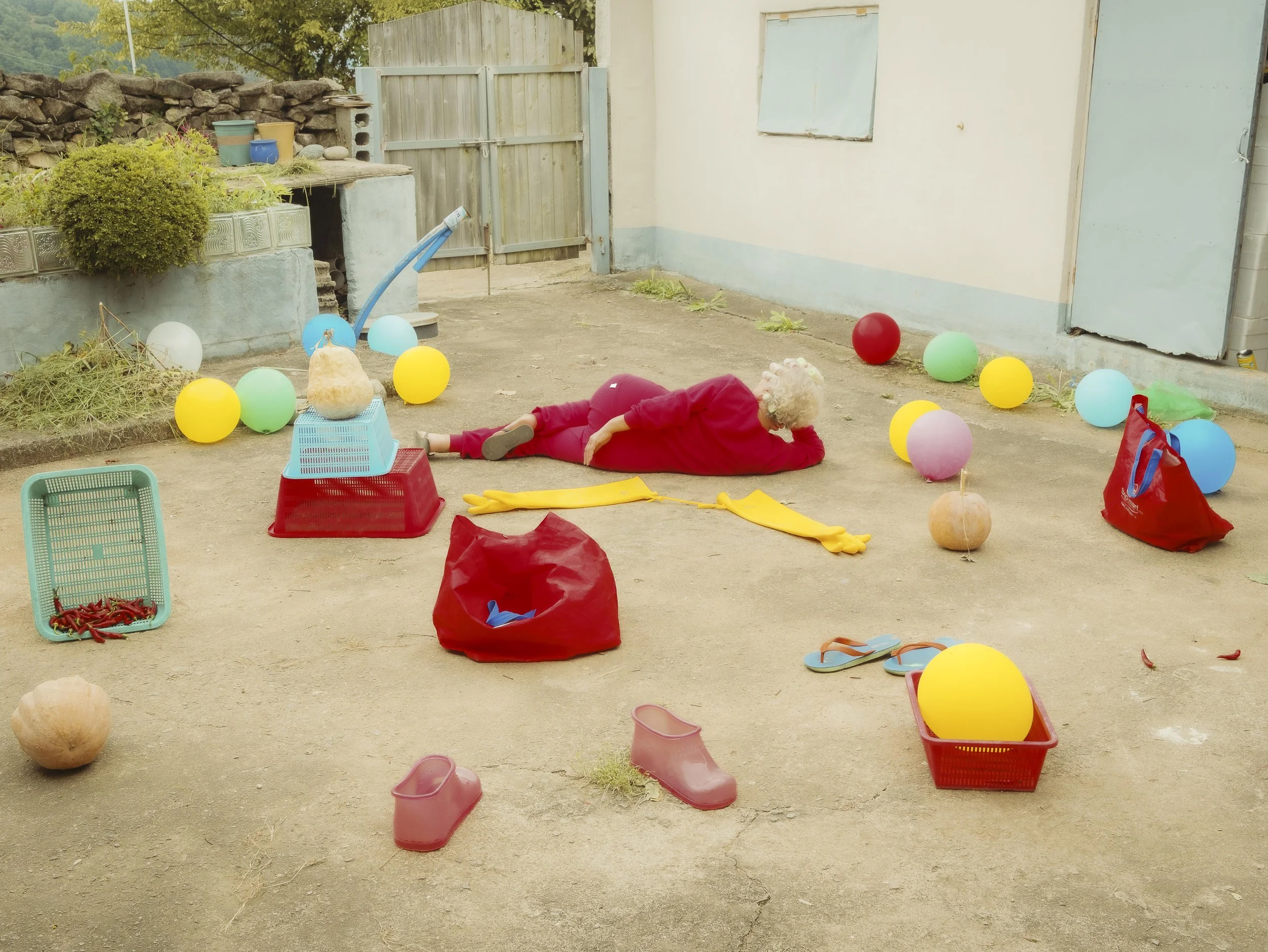
Changing the Tone: Nirvana moves naturally between humor and grief. How did you know when a scene needed lightness instead of sadness?
I never wanted to treat the project in an overly heavy tone from the beginning. Even in difficult moments, people try to forget their pain by finding joy, making jokes, and laughing. Whether it is self-deprecating humor or a silly act, we find ways within it to overcome what we are going through.
I also do not think it is a healthy way to live if we remain trapped in painful memories from the past and allow them to weigh down our present lives. We have to overcome them and move on to the next stage. My mother truly does not have much time left. But in those remaining moments, as she moves toward death, does she need to waste her life being caught in unhappy memories? It may be a difficult and exhausting history, but I think there is something more meaningful and joyful about being able to look back on it with humor.
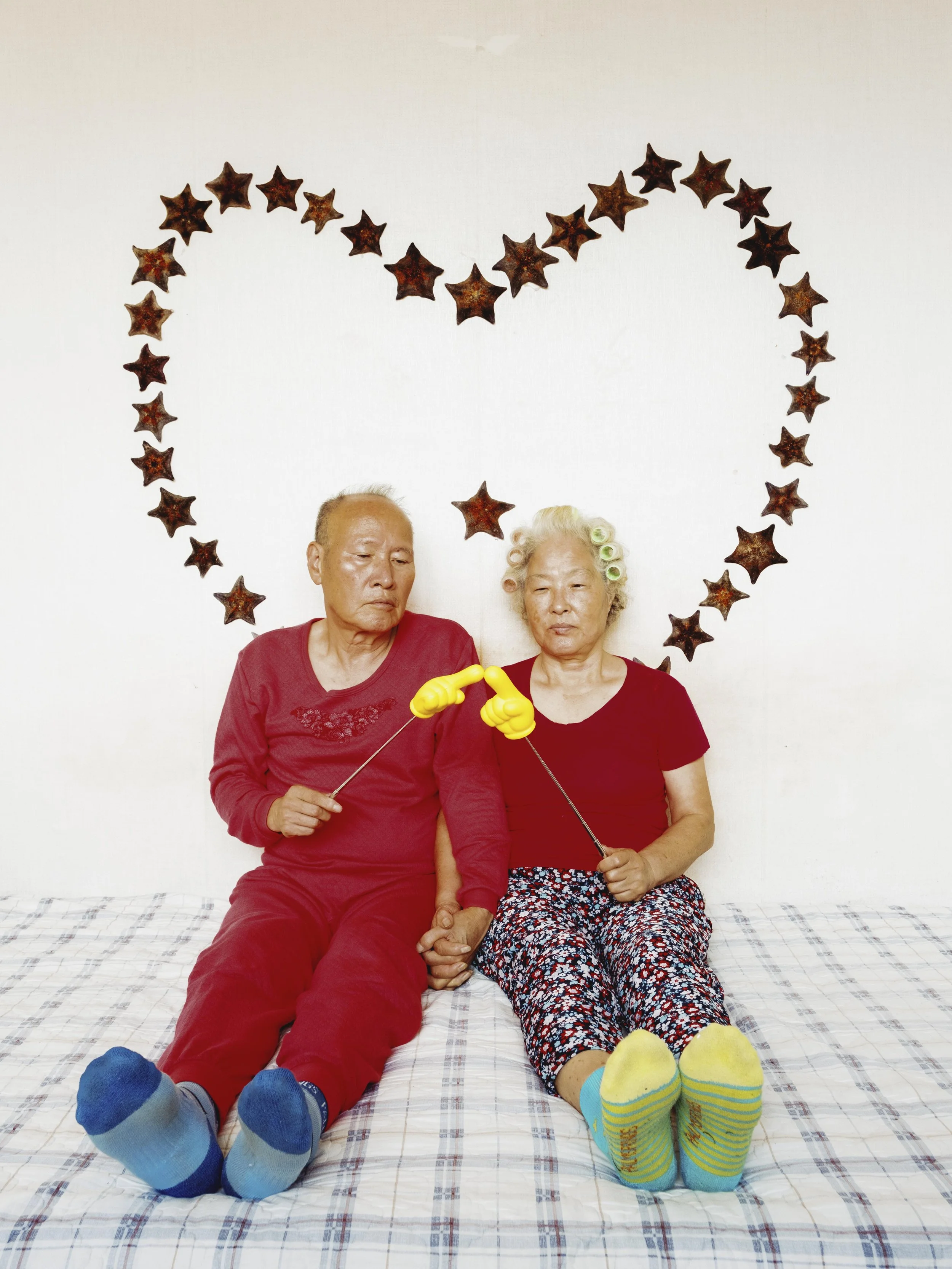
Photographing Memory: Many photographs in Nirvana don't simply document what happened. They recreate how a memory feels. At what point did you realize that expressing emotional truth was more important than recording literal reality?
That is a very interesting question. When I talk about this, I often use an analogy: imagine if you could not listen to music with your ears and had to experience it only by reading sheet music. Think about how dull and uninteresting that would be. Unless someone is especially gifted, most people would not be able to read a score and understand the emotion that music conveys.
Yet, paradoxically, sheet music is the most accurate way to record music. For me, the goal of artistic creation is not accurate documentation, but emotional resonance through storytelling. It has to be performed visually, rather than simply recorded.
Working Together: Your mother isn't simply the subject of these photographs. She becomes a collaborator. How did the two of you develop ideas together, and when did you know one of her ideas belonged in the project?
The process of doing something together and spending time with my mother was itself one of the goals. We talked about absurd, imaginative ideas and made spontaneous things together. It was fine even if they did not have a particular meaning.
I wanted us to create memories that we could look back on and laugh about together, even at the moment when she is nearing the end of her life and we have to say goodbye. So although the subject is heavy, I did not want to handle it too seriously. That approach gave us a great deal of creative freedom. Like children, we played with objects around us and used our imaginations. Through that process, I came to discover my mother's talents. Being able to uncover and give even a small space to those talents through this project made the time especially meaningful.
*behind the scenes photos
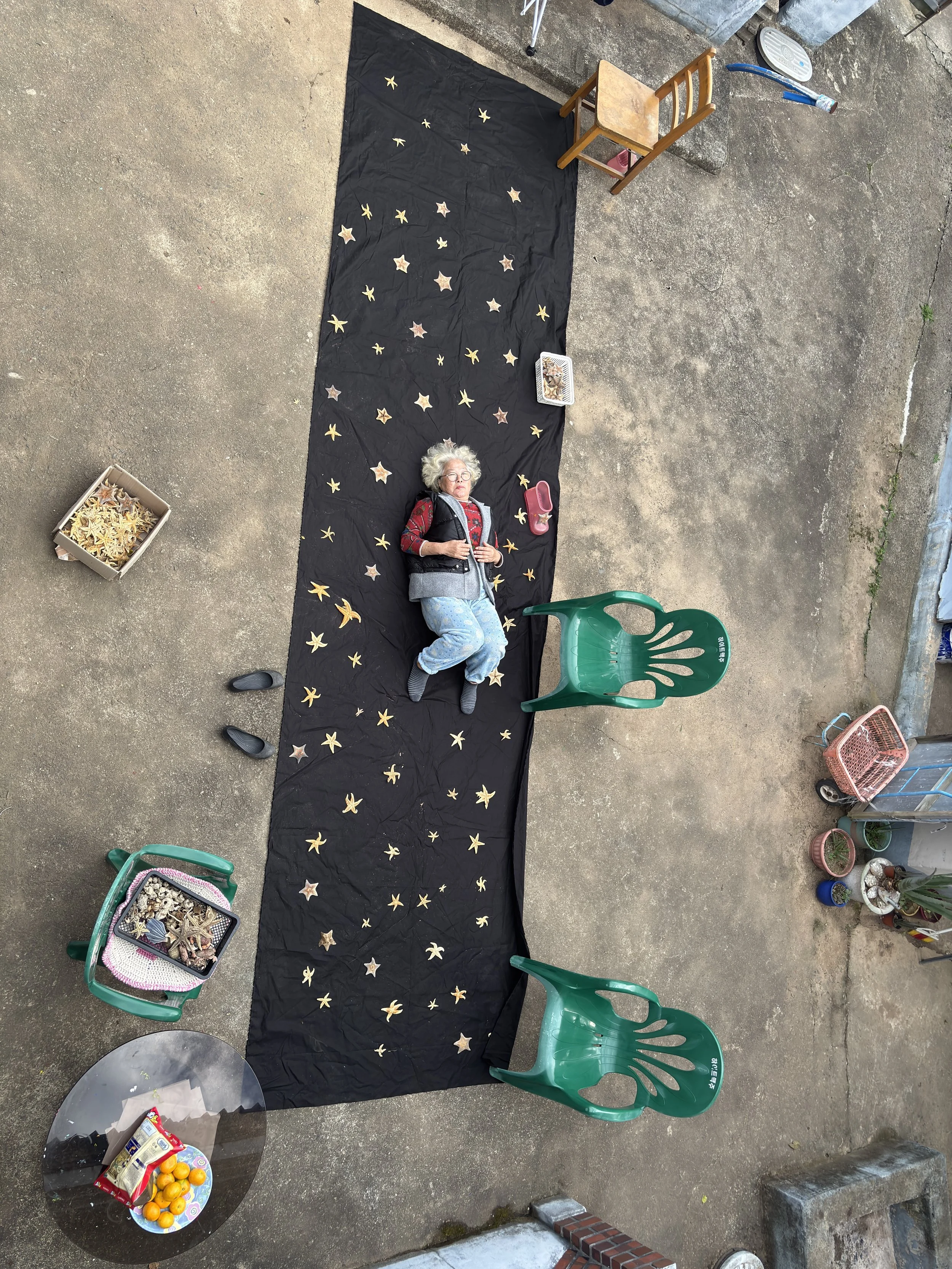
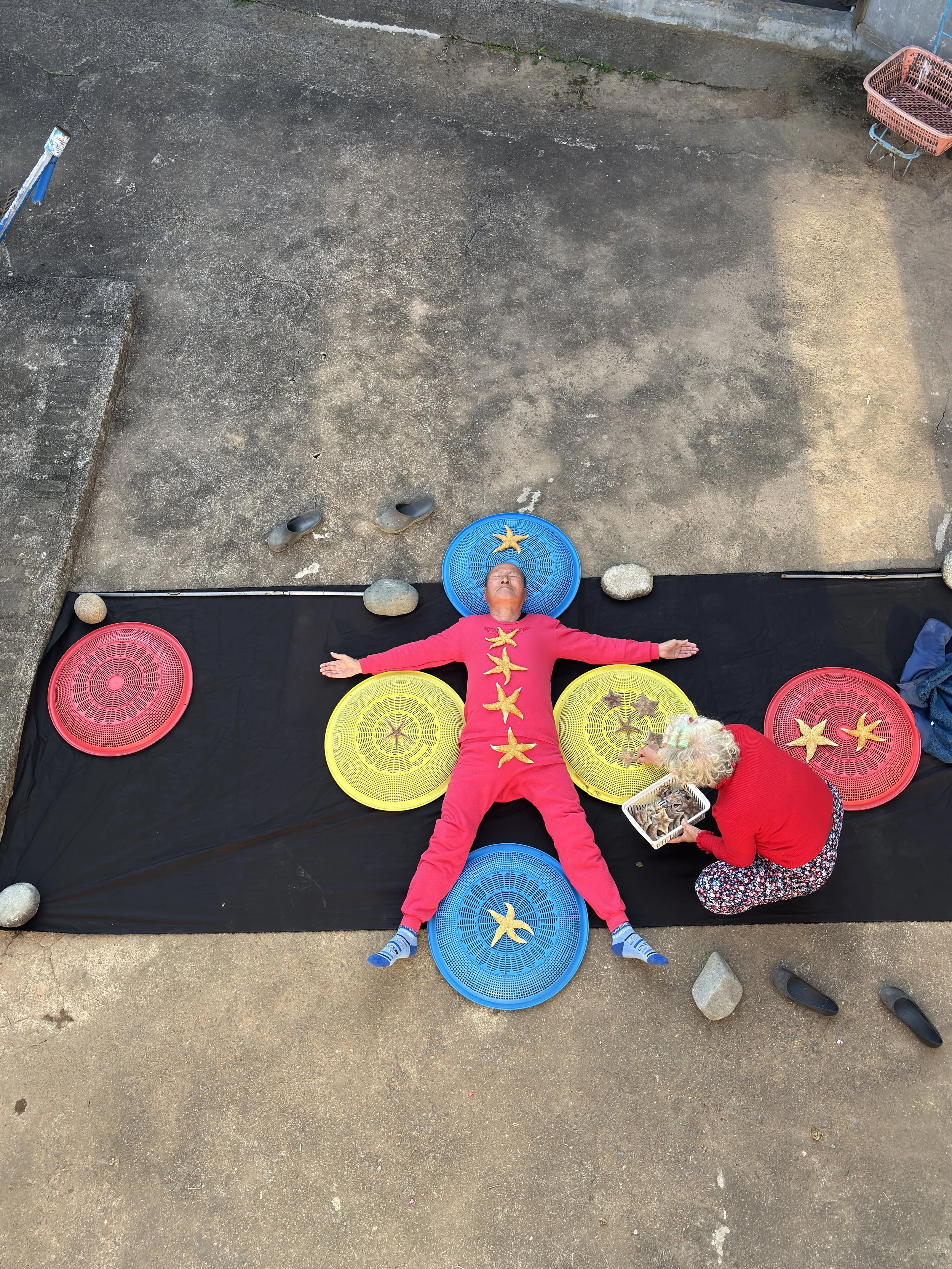
Building a Photograph: Some of the photographs feel almost impossible, even though they're made with very simple materials. Can you tell me about one picture that took many attempts before it became what you imagined?
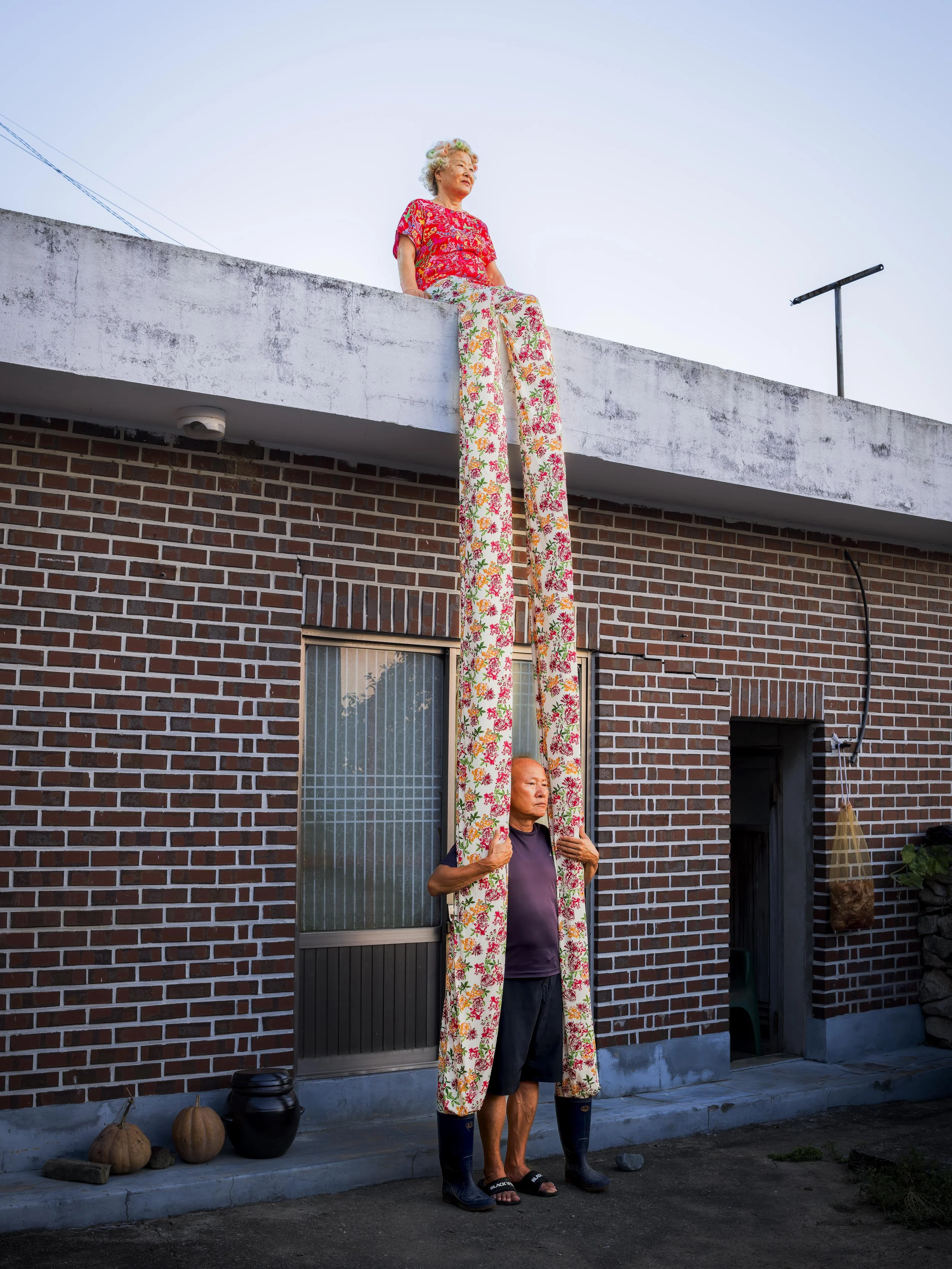
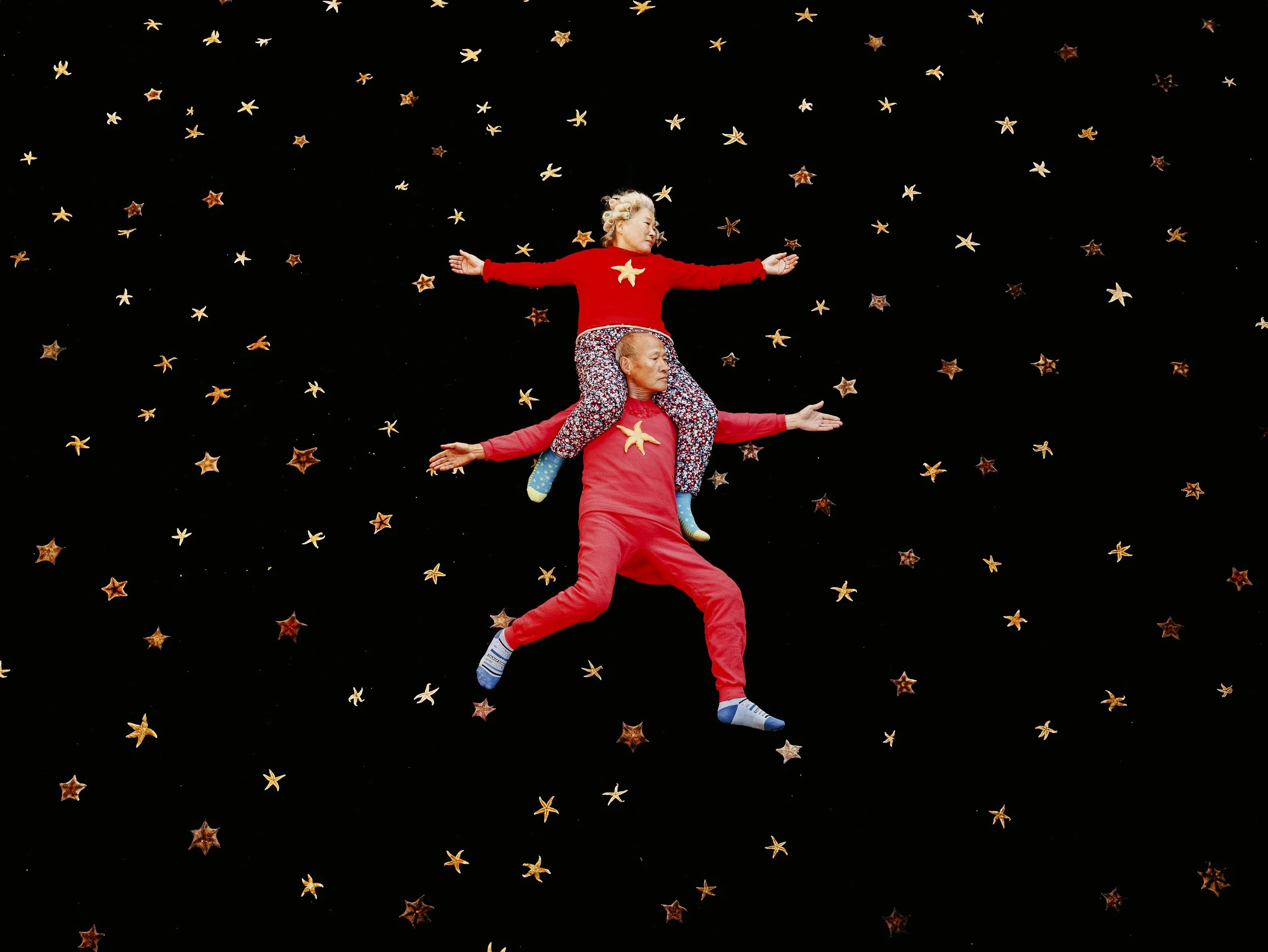
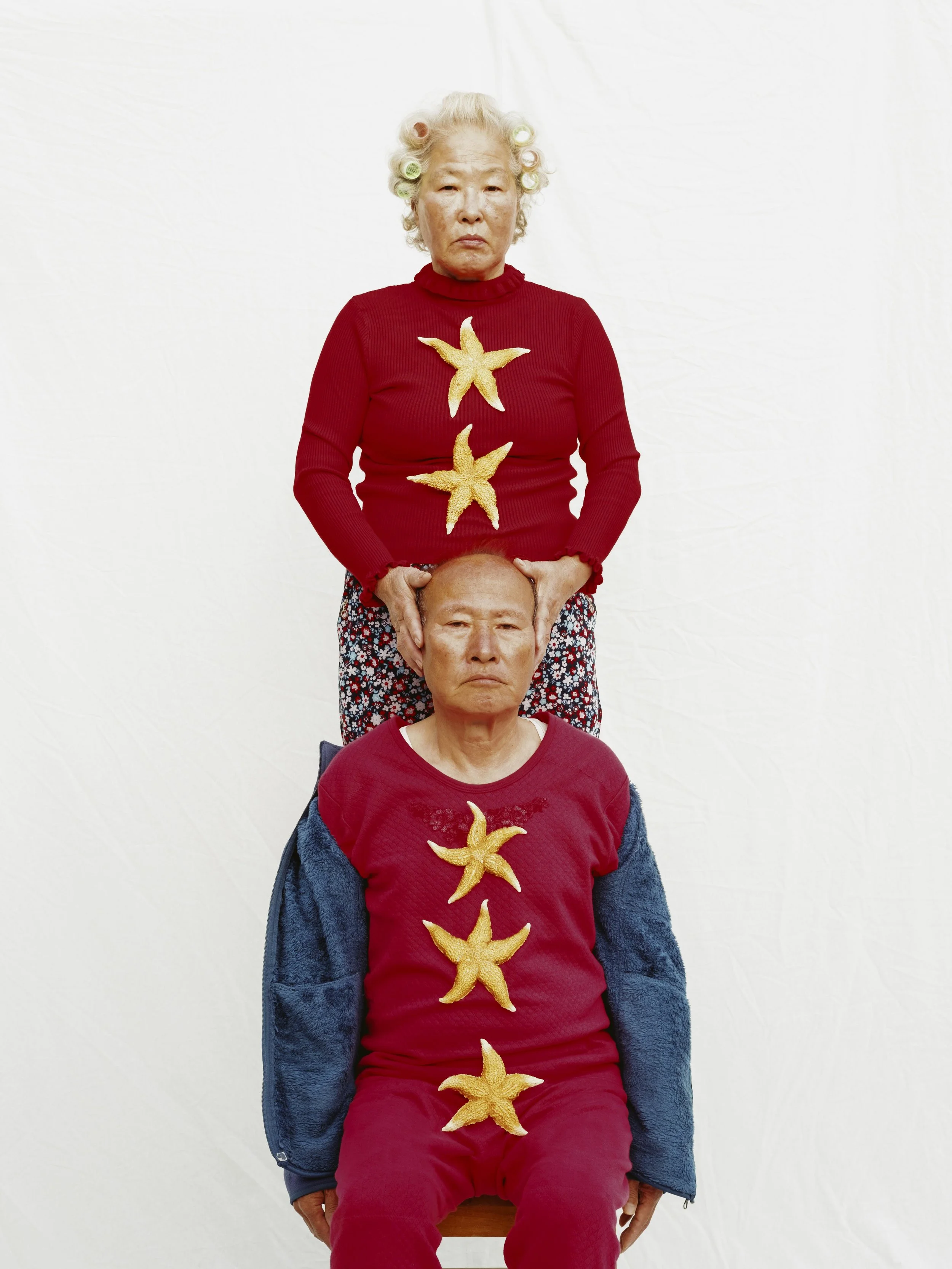
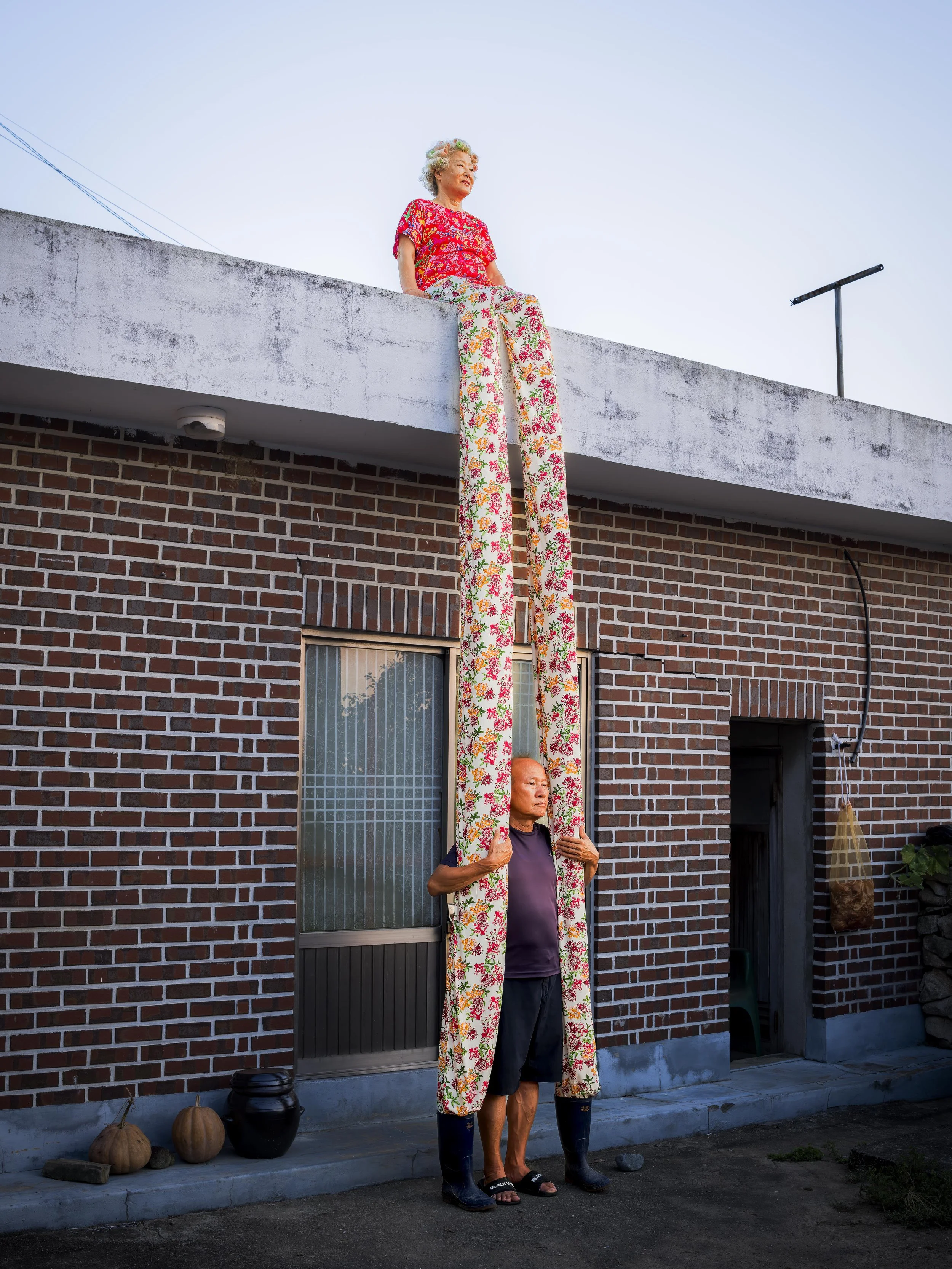
Usually, the photographs went through several attempts. One example is the image of my mother sitting on top of my father while wearing very long trousers. It required a lot of preparation: making trousers with extremely long legs, deciding where my mother would sit, working out my father's pose, and shooting at dawn to get the right light for the scene.
After about three attempts, we were able to make an image I was satisfied with. In the first attempt, the long trouser legs were blowing around too much, so we had to find something to fill them. In the second, the light on the day of the shoot was too harsh, so we moved the shoot to just before sunrise. In the third, there were too many props, which distracted from the scene, so we simplified it.
Editing the Story: Nirvana moves between playful, quiet, and deeply emotional moments. How did you decide on the order of the photographs so the book felt like one continuous experience rather than a collection of memories?
I wanted to construct a narrative that moves from memories of the past, through my mother's story, to the present: the final chapter of life, as death draws near. Through this sequencing, I wanted to reflect once again on what kind of journey life is.
It may be the story of a woman who lived through an unhappy era, but I also wanted readers to feel what it is like, as a human being, to look back on one's life and to accept its final moments. Death is a natural part of life that comes to everyone, yet we often treat it as a taboo subject. I wanted to remind people of this once again. When we confront death directly, the question of how we are living in the present becomes more urgent.
Was there a criticism of the project that you initially disagreed with, but later realized was right?
There was nothing in particular. As I explain later in this conversation, I think of a project as gathering the pieces of an ambiguous puzzle. When I put them together and looked at them carefully, I naturally began to think in terms of a temporal sequence: memories of the past, the present spent with my mother, and a future in which separation and death gradually approach. This natural progression through time may seem straightforward, but I hoped that, as my mother comes to accept death, the emotions held within her memories of the past would mingle naturally and subtly with her emotions in the present.
What Changed: After making this project, what did you come to understand about your mother that you had never seen before?
I began to see my mother as an independent person, not only in relation to me or as a member of our family. I thought again about the life she imagined as a child, her dreams, and the talents and possibilities she may never have had the chance to discover or develop because of social systems and circumstances.
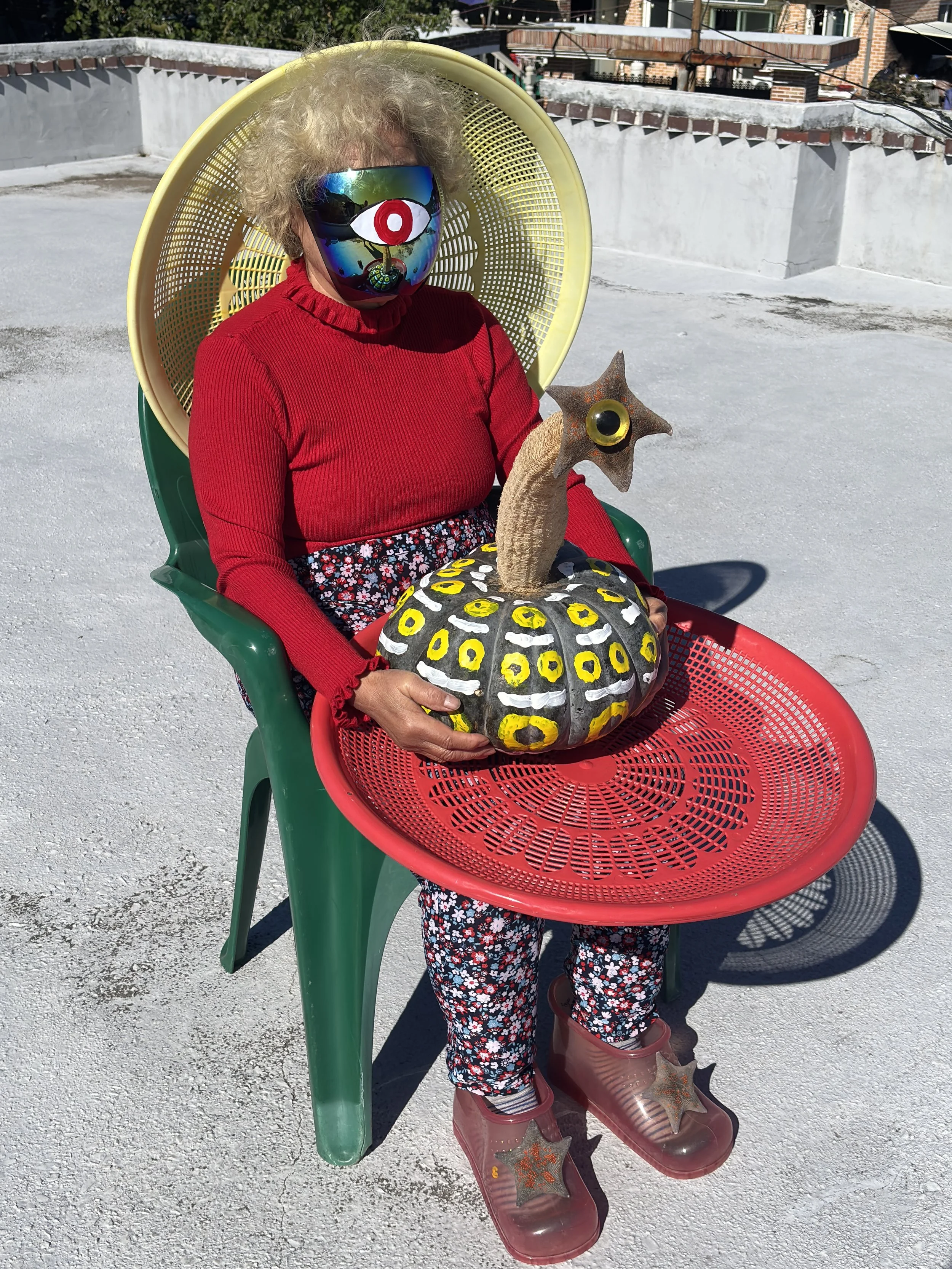
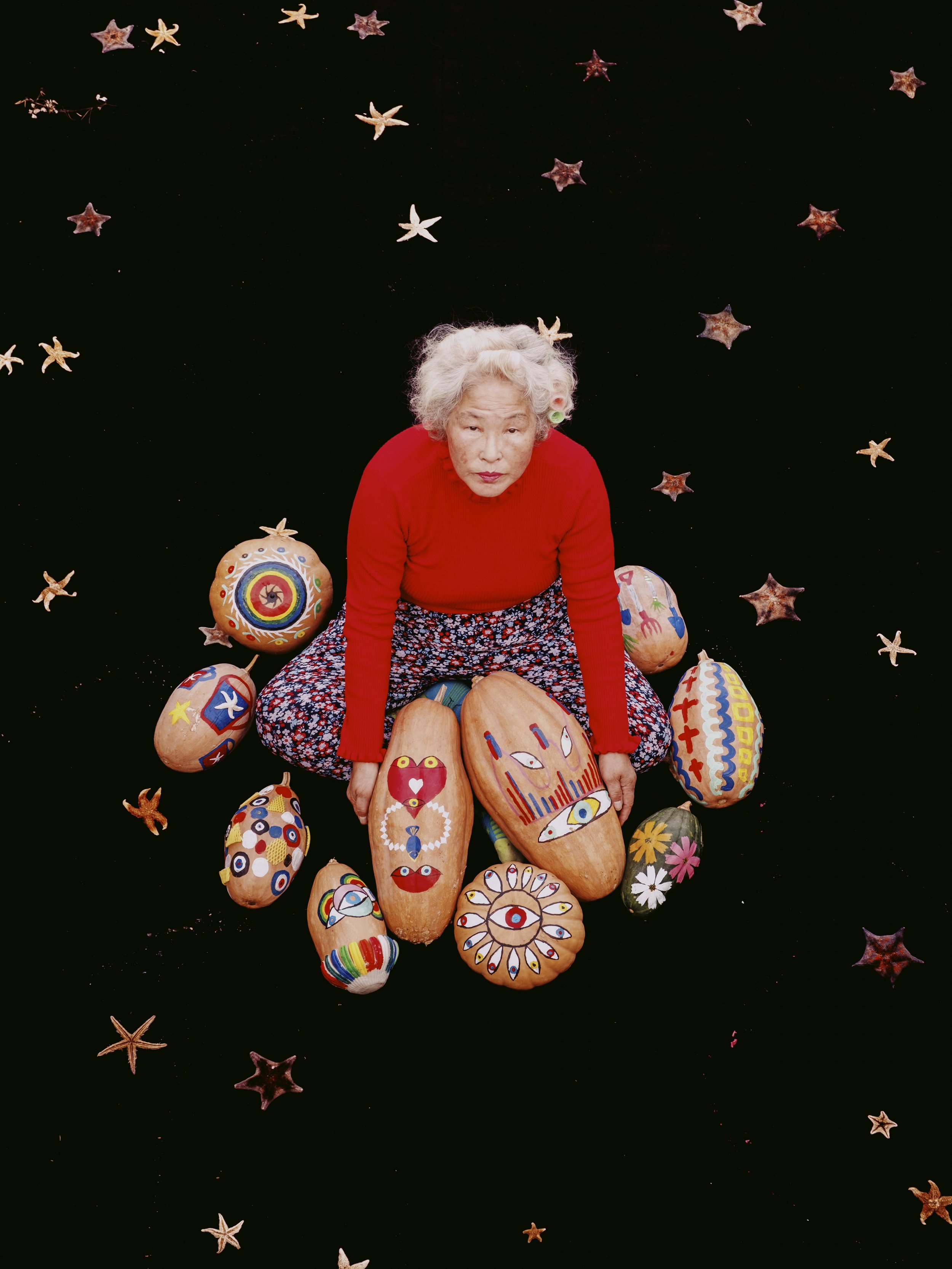
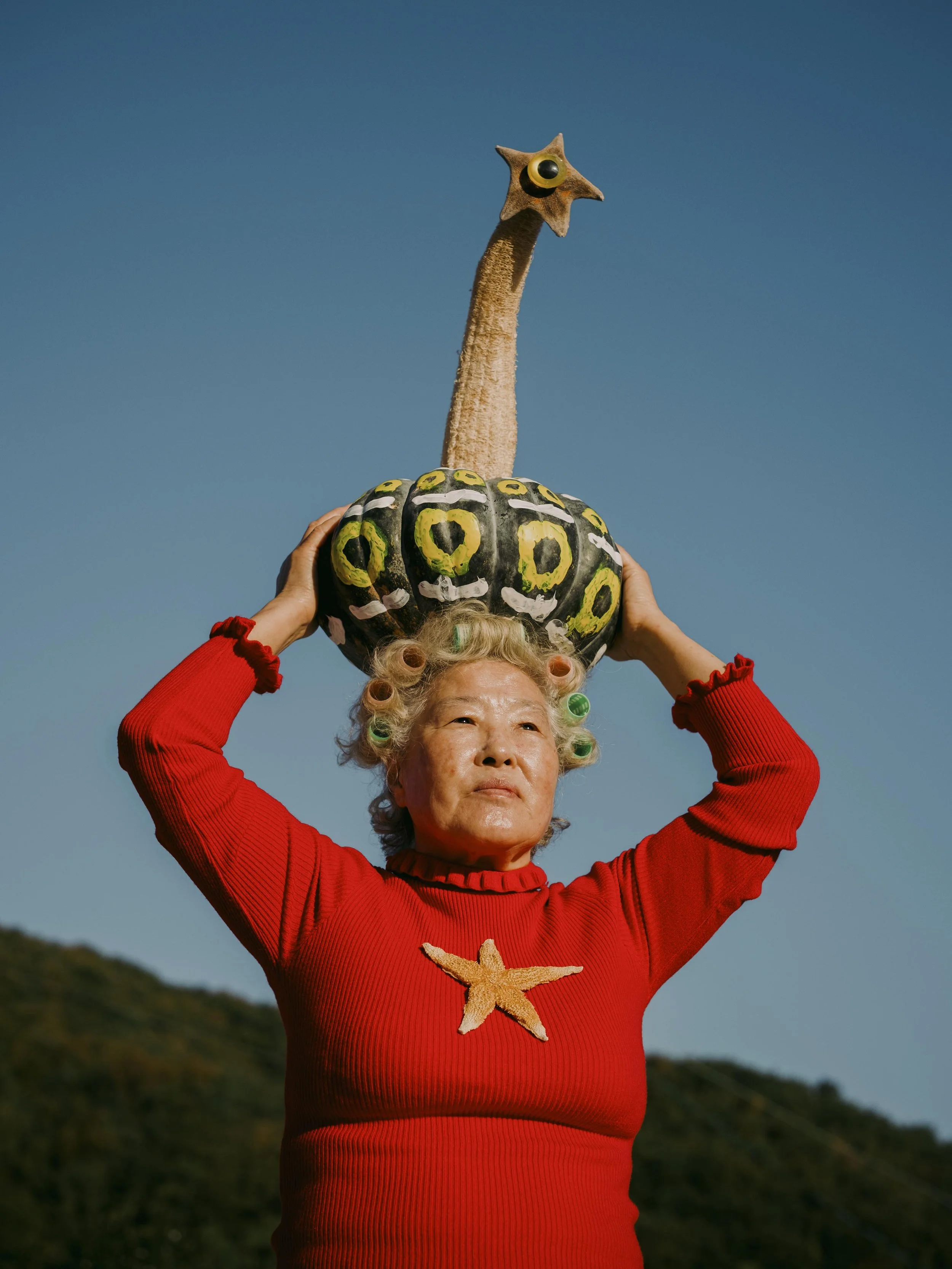
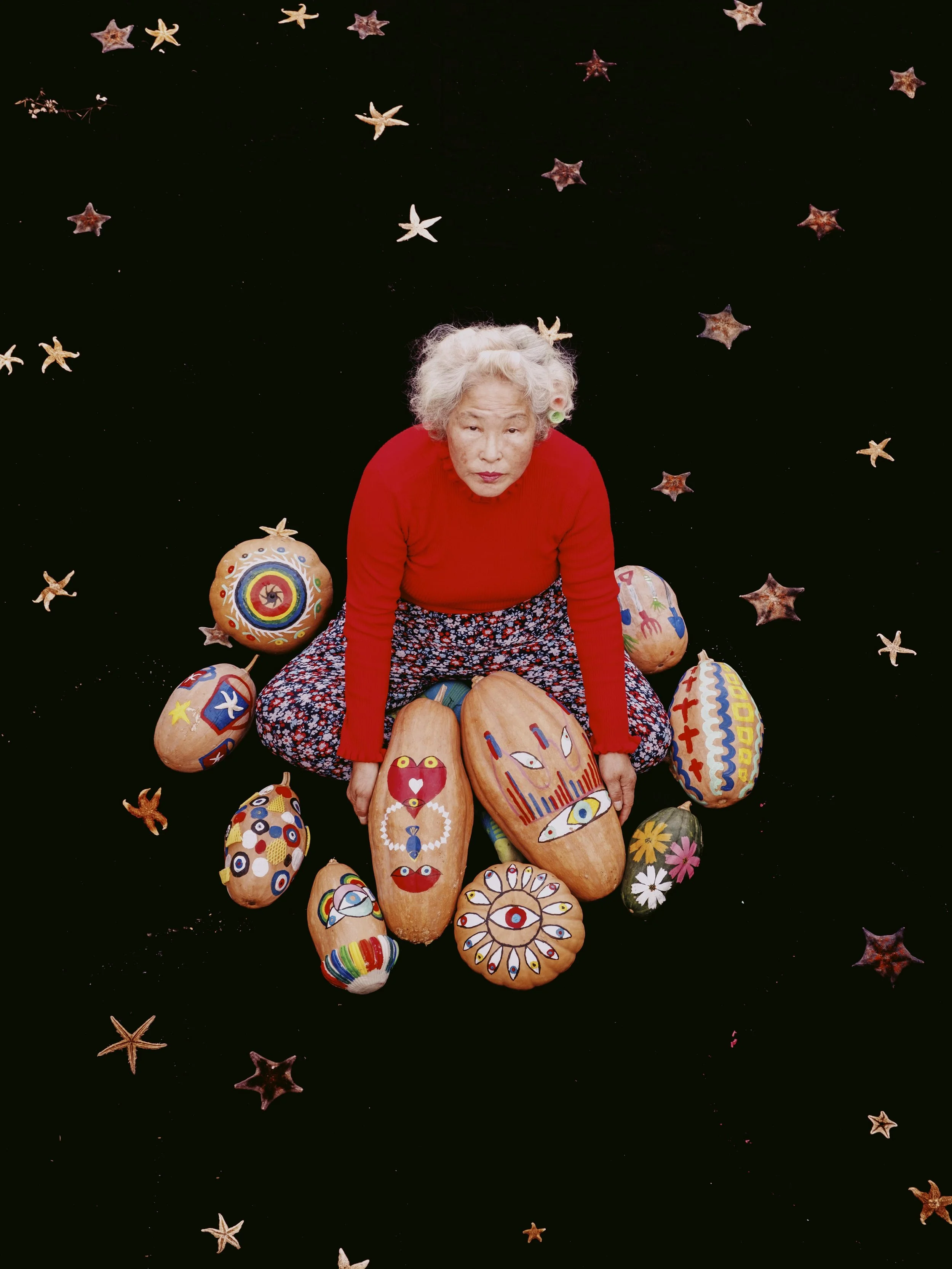
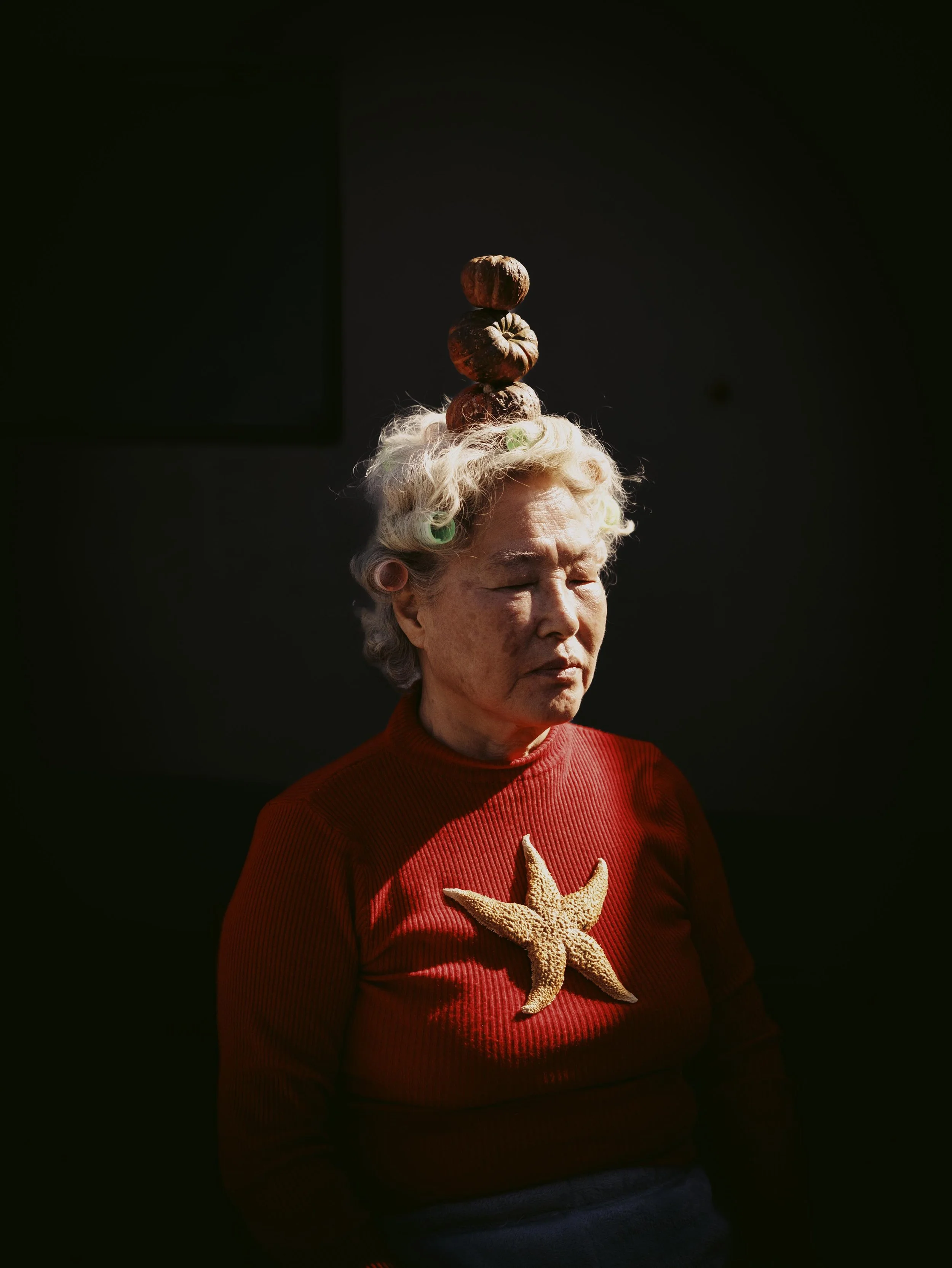
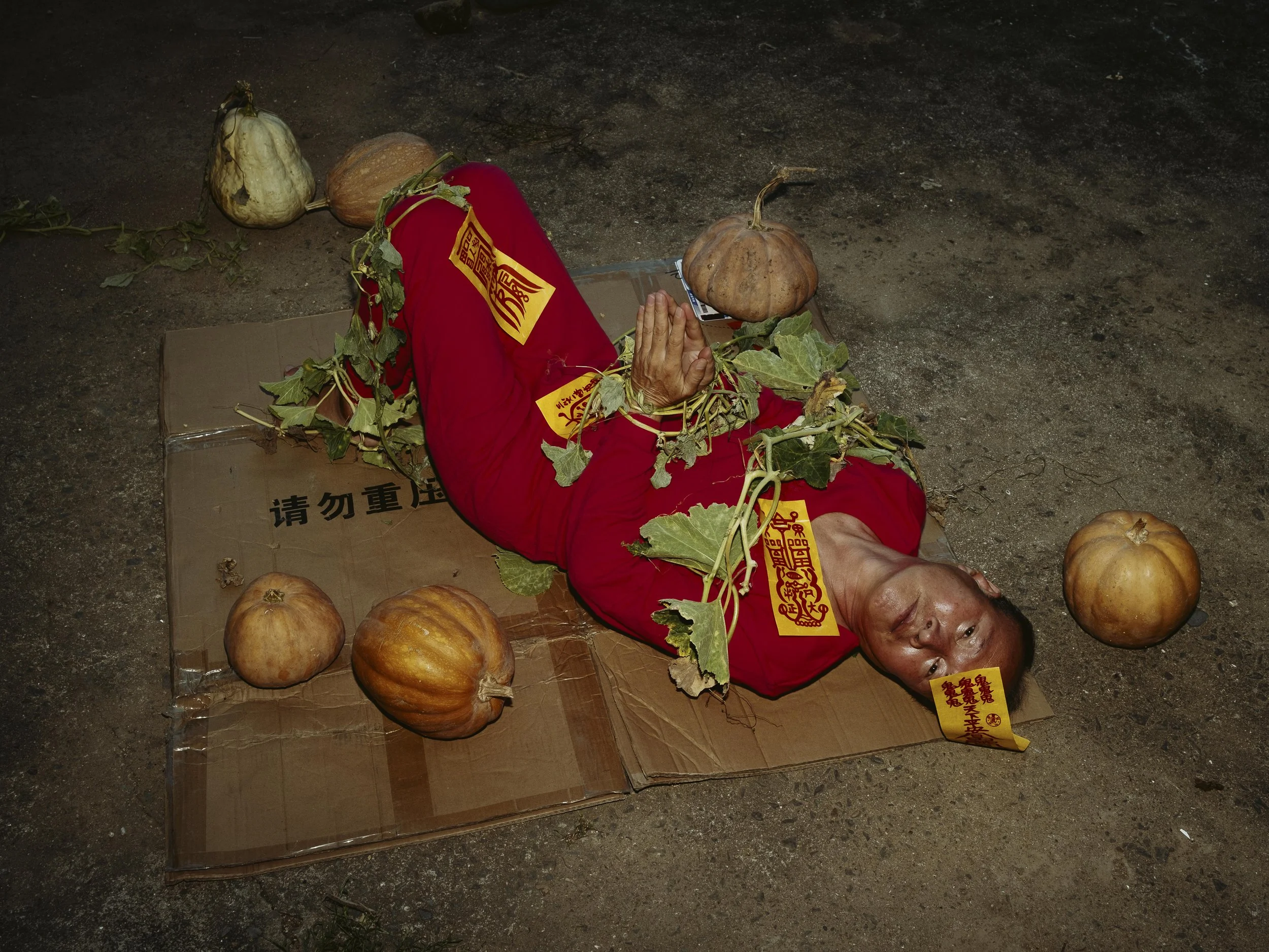
One day, after hearing about the artist Yayoi Kusama, my mother brought a pumpkin in from the field and started drawing on it as a joke. It may have been the first drawing she had ever made in her life. Over several days, she made a number of drawings and then asked me to photograph her with the painted pumpkin. Seeing how proud she was of what she had made was a deeply moving moment for me.
Looking Back: If another photographer wanted to make a deeply personal project with a member of their own family, what is one lesson from Nirvana that you hope they learn before they begin?
I would advise them not to create a scenario for the project in their head in advance. We tend to believe that we know our family very well, so we often begin with preconceived ideas about a family member, already imagining the story we want to make. Then we construct the visual language and narrative around that pre-existing story.
But when you have many conversations, you often realize that the person is different from what you had imagined. You may come to understand them more deeply; you may even become closer, or perhaps more distant.
If you continue gathering the pieces of their story without trying to force a meaning, there comes a point when enough has accumulated that clues to the project's structure begin to emerge. Gradually, it becomes clearer how to approach it. In that sense, I think a project is like putting together a puzzle without knowing the image in advance.
You do not first draw the final puzzle image and then search for or manufacture pieces that fit it. Instead, you collect ambiguous pieces, and eventually the outline of the whole image slowly becomes visible. From then on, it becomes easier to find the remaining pieces. I think this is useful because it allows you to develop a project more flexibly, even when you encounter situations that differ from what you expected.
To use another analogy, think of building a house. If your blueprint is too fixed, you may not be able to find the materials you need, or they may be difficult to obtain. But if you begin by gathering materials, once you have enough, you can start to understand what kind of house those materials can become.
Compared with your earlier projects, what part of your way of working did you deliberately keep when you started Nirvana, and what did you realize you had to leave behind?
Looking back at my working process, I realized that I have unconsciously repeated a particular approach: visualizing a single story or episode in one image. It is simply the way I prefer to work. The tone differs from project to project, of course, but the basic framework has not changed very much.
Over time, through repeated practice, I do feel that I have become more visually skilled. More importantly, when developing a project's narrative, I now try to keep it more open and avoid deciding on its form too early. I also allow myself more time than before. When I leave a project alone for a while and return to it later, I sometimes notice things I could not see before, or new ideas come to mind.
Nirvana is still an ongoing project. What tells you there is still something left to photograph, rather than simply more photographs you could make?
As I mentioned earlier, when I spoke about the memory of my mother's socks, there are still stories that need to be told. Continuing to spend time with my mother is also an important part of the process for me.
More photography books and interviews?
We'd love to read your comments below, sharing your thoughts and insights on the artist's work. Looking forward to welcoming you back for our next [book spotlight]. See you then!
Julio Mitchel finished El Sur without seeing conditions improve. From the 1980s to 2000, he travelled through seven Latin American countries, photographing poverty, inequality, and the abuse of power. Photography Book Spotlight