Welcome to this edition of Photography Stories. Today, we look at the story behind the photograph Sandra Cattaneo Adorno made at Ipanema beach in Rio de Janeiro in 2016. We’d love to read your comments below about these insights and ideas behind the artist’s work.
In April 2016, the sea destroyed part of a new bike path in Rio de Janeiro.
Two people died. The next day, the sea was still rough, and Sandra Cattaneo Adorno went down to Ipanema beach.
Nobody was relaxing in the sun.
Parents were pulling their children out of the water. The light was golden, but the mood on the beach was fear.
In this story, Cattaneo Adorno explains what happened on the beach that day, why she made only about five frames, and why the picture is not as joyful as it looks.
Sandra Cattaneo Adorno grew up in Rio de Janeiro and spent her childhood on Ipanema beach. She left Brazil as a child and came back to Rio in 2016. She started photographing at the age of 60, and Ipanema became one of her great subjects.
Most of her beach pictures are about light and the joy of being by the sea. This one is different.
In January 2016, the city opened a new bike path called Ciclovia Tim Maia. It runs along the coast next to Avenida Niemeyer, on pillars above the sea. Cattaneo Adorno never liked it.
“It’s a bike path on top of the sea, on the coast. They had just built it. And the day before I took that picture, there was a very big sea. Part of the path collapsed, and two cyclists died.”
It happened on 21 April 2016. Big waves hit the path, and a stretch of about 50 metres fell into the water.
“Two people died for nothing, because of the rough sea and the bad construction, both of them together.”
The next day, Cattaneo Adorno went down to the beach. The sea was still very rough. Everyone had the accident in mind.
“People were obviously very scared of getting into the sea, because it was a very rough sea. The children were screaming, and the parents were taking them out. The children wanted to get in. But everyone also had in their minds the tragedy that had happened the day before because of the sea.”
She did not plan the picture. She and her husband were on their way to the cinema.
“I just went down, because we were going to the cinema. I took the picture, and my husband was beside me. It’s five o’clock, five thirty, we need to go to the cinema. I said, let me take more pictures. No, no, we’re going to be late. Until today, I tell him I could have gotten better pictures. I don’t even remember the film we went to see.”
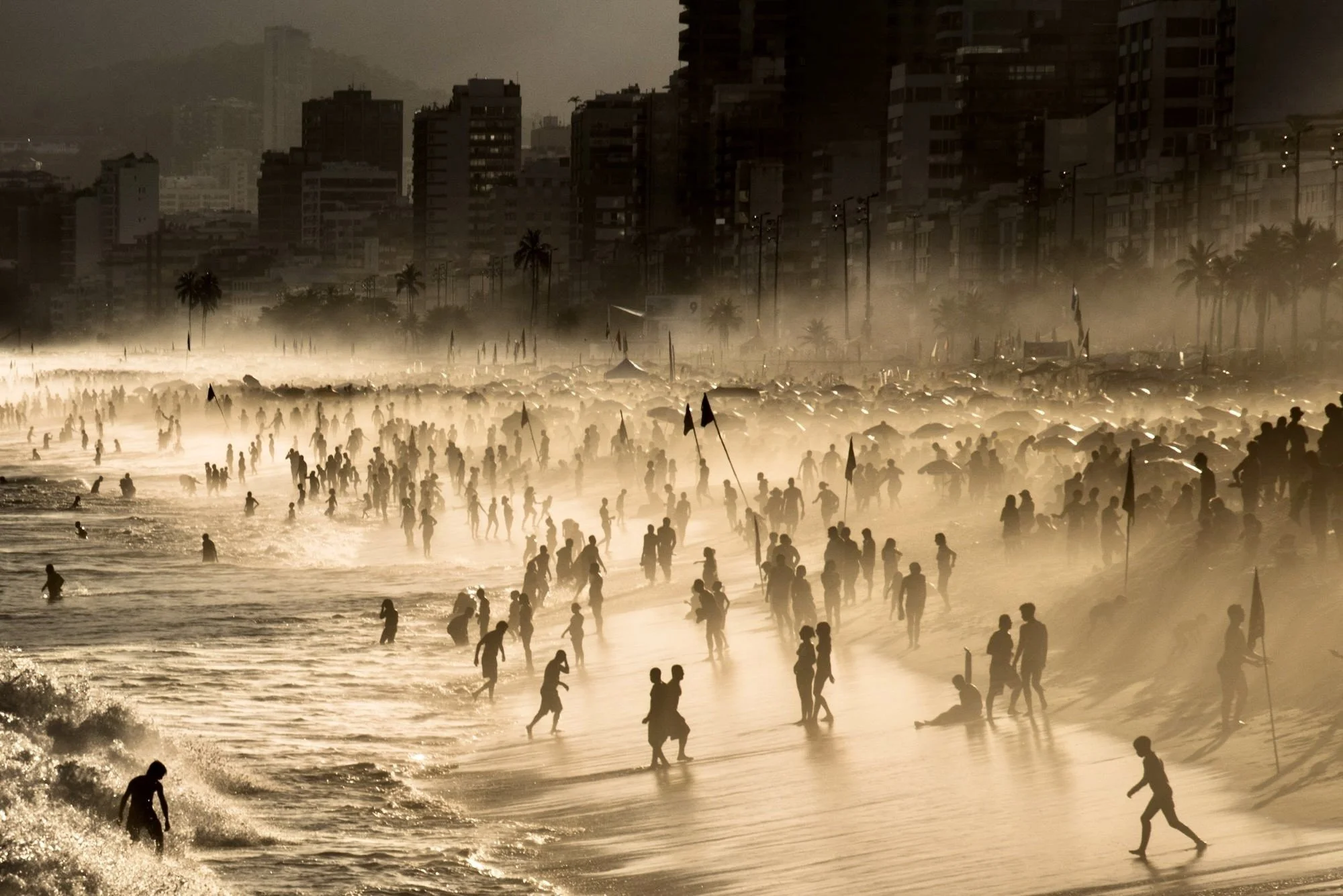
She made only about five frames, and she still wishes she had made more.
Her friend, the photographer Gulnara Samoilova, sees it differently. Usually, she says, the first pictures are the best ones anyway. Cattaneo Adorno thinks there may be something in that.
“Maybe you do better with pressure. Under pressure, you have to hurry, and maybe you concentrate better. I don’t know.”
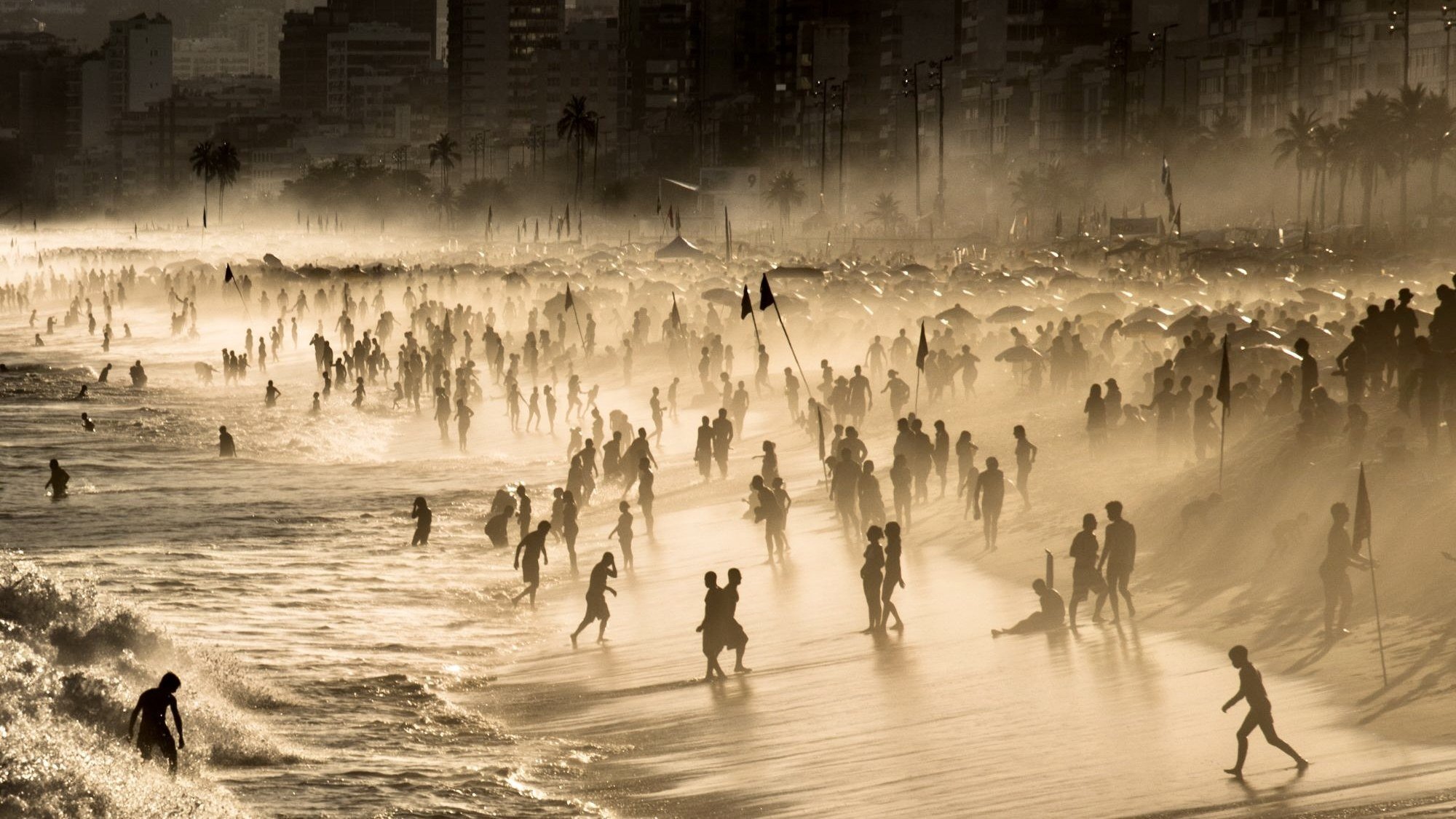
In the photograph, the sea throws up spray and mist. The low sun turns everything gold. Dozens of people stand at the edge of the water or walk along it. They are dark shapes against the light. Small flags stand in the sand.
If you do not know the story, it looks like a beautiful afternoon at the beach. Samoilova said so too when she first saw it. But for Cattaneo Adorno, the picture is about something else.
“You should be at the sea, relaxing and having fun, but it looks like an inferno. It looks like Dante’s Inferno. It’s not the normal, pleasant beach experience. It’s a very sad and nervous experience.”
“There were people screaming, and the parents wanted to take the children away. It was a battle scene that day on the beach.”
She had never seen Ipanema like this before.
“It wasn’t the normal beach that you would see on a weekend in Ipanema. Nobody was lying in the sun, relaxed. No one. Everyone was nervous, sitting down or standing up. It was something I had never seen.”
The golden light makes the picture easy to love. The story under it is fear and loss. A photograph can look beautiful and still carry a story that the picture itself does not tell.
The day after the sea destroyed part of a new bike path in Rio and two people died, Sandra Cattaneo Adorno went down to Ipanema beach. The sea was still rough, and parents were pulling their children out of the water. In her photograph, the light is golden and the beach looks beautiful. A picture can look one way and mean something else.
“There were people screaming, and the parents wanted to take the children away. It was a battle scene that day on the beach.”Sandra Cattaneo Adorno
More stories:

A soldier’s photo sat on a New York taxi dashboard. Christopher Anderson was in the back seat, looking out through the front windscreen.