Welcome to this edition of Photography Stories. Today, we look at the story behind the photograph Maya Santoro made in Baja California, Mexico. We’d love to read your comments below about these insights and ideas behind the artist’s work.
(This is the story behind the photograph.)
Most of the time, the sea is empty.
Every year, huge numbers of mobula rays gather off Baja California to feed and mate. The team watches for rays jumping out of the water, then the photographers get in. Santoro guesses that about 85 percent of the time, they see no rays at all, or only for a few seconds.
On this day, the rays were deep.
Santoro swam down about 15 metres, and the school was still below her. She needed at least 1/1000 of a second to freeze the moving rays. She chose a wide setting because she wanted the whole school, not a detail.
For her, it is a hopeful picture.
In this story, Santoro explains how the team finds the rays, why light and movement make the picture so hard, and why she believes visitors help protect the area.
Maya Santoro made a photograph that many people do not believe at first. It shows so many mobula rays that they seem to fill the sea, layer after layer.
Every year, huge numbers of mobula rays gather in the waters of Baja California, Mexico, to feed and to mate. Santoro calls it one of the largest migrations on the planet.
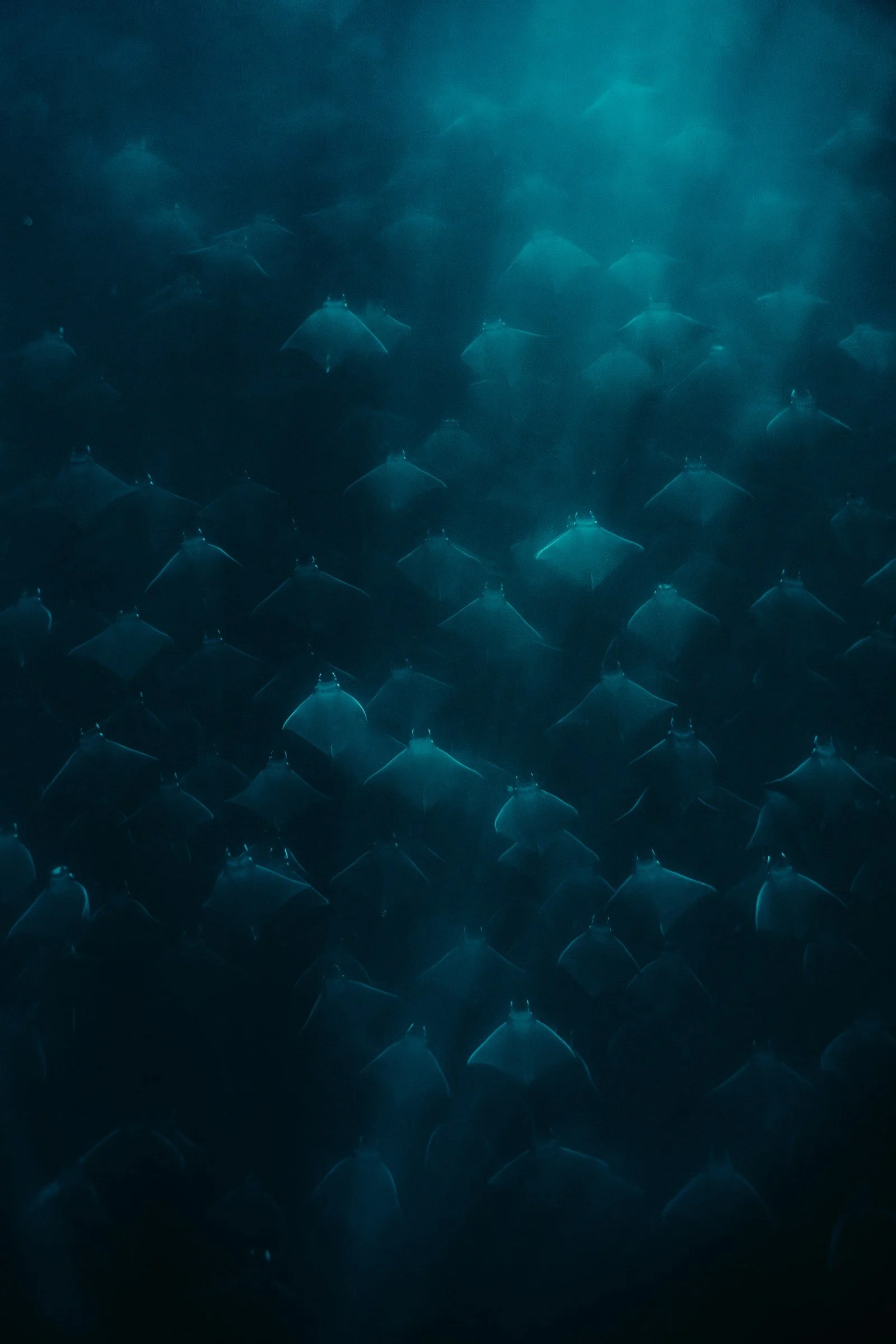
She knew the picture she wanted before she went in. She wanted to photograph the rays from above, swimming underneath her.
Finding them is the hard part. From the boat, the team watches the surface of the sea. When mobulas mate, they jump out of the water and fall back flat, like a pancake, with a loud sound. Scientists think the sound may help them communicate.
When someone sees a ray jump, the boat moves closer, and the photographers get into the water.
“If they are in big schools, like hundreds of mobulas, they won’t care that you are there, because they feel protected. But if there are fifteen or twenty, they are more scared and they just go away super fast.”
Most of the time, there is nothing. Santoro guesses that about 85 percent of the times they jump in, they see no rays at all, or only for a few seconds.
Light is another problem. Very early in the morning, the water is too dark. The ocean moves, she moves, and the rays never stay still. She needs a shutter speed of at least 1/1000 of a second.
“It’s way more difficult than photographing a jaguar. Sometimes the jaguar is just standing there, still.”
She also wants as many rays as possible in focus, so she closes the aperture to around f/8 or f/9. That makes the picture darker, and she has to raise the ISO.
On the day of this photograph, the rays were deep. Santoro swam down about 15 metres, and the school was still below her, at around 20 metres. She chose a wide setting on her 24 to 70 mm lens.
“I don’t want a detail. I want the overall image of them together, to show people how many of them there are.”
For Santoro, it is a hopeful photograph. On a planet where so much wildlife is threatened, it shows how many animals are still thriving. She believes that people who travel to see the rays also help to protect them, even if ecotourism could be better.
“Because people know they exist and they go there, they will protect the area. Otherwise, it would just be full of fishing boats.”
Off Baja California, Maya Santoro knew the picture she wanted before she got into the water. She wanted the rays from above, swimming underneath her. So she chose a wide setting and closed the aperture to keep more of them in focus. When you know what a picture has to show, the settings follow.
“I don't want a detail. I want the overall image of them together, to show people how many of them there are.”Maya Santoro
More stories:


The alley in this photograph no longer exists. Bandits’ Roost, 1888, carries Jacob Riis’s name, but the person who pressed the shutter may have been someone else.