Welcome to this edition of Photography Stories. Today, we look at the story behind the photograph Mark McGuire made in Auckland, New Zealand in 2022. We’d love to read your comments below about these insights and ideas behind the artist’s work.
(This is the story behind the photograph.)
Some photographs are taken. This one was made.
Mark McGuire was walking through a short tunnel under the railway in Parnell, Auckland. A train rushed over him, loud and full of colour, and then it was gone. It gave him an idea for a picture.
So he stepped back and waited.
He pressed his back into the bushes, set his shutter to 1/8000 of a second and watched the tunnel. Trains came and went. About 25 minutes later, schoolboys came running towards the tunnel just as a train passed above them.
He only saw the whole picture later.
In this story, McGuire explains how he prepared for a moment he could not plan, why the photograph needs both the boys and the train, and what a young woman on her phone added to the frame.
In October 2022, Mark McGuire was visiting Auckland, the largest city in New Zealand. More than a third of the country’s people live there, in the North Island. McGuire lives in the South Island.
He found his photograph in a place most people walk through without looking: a concrete underpass below the railway in Parnell.
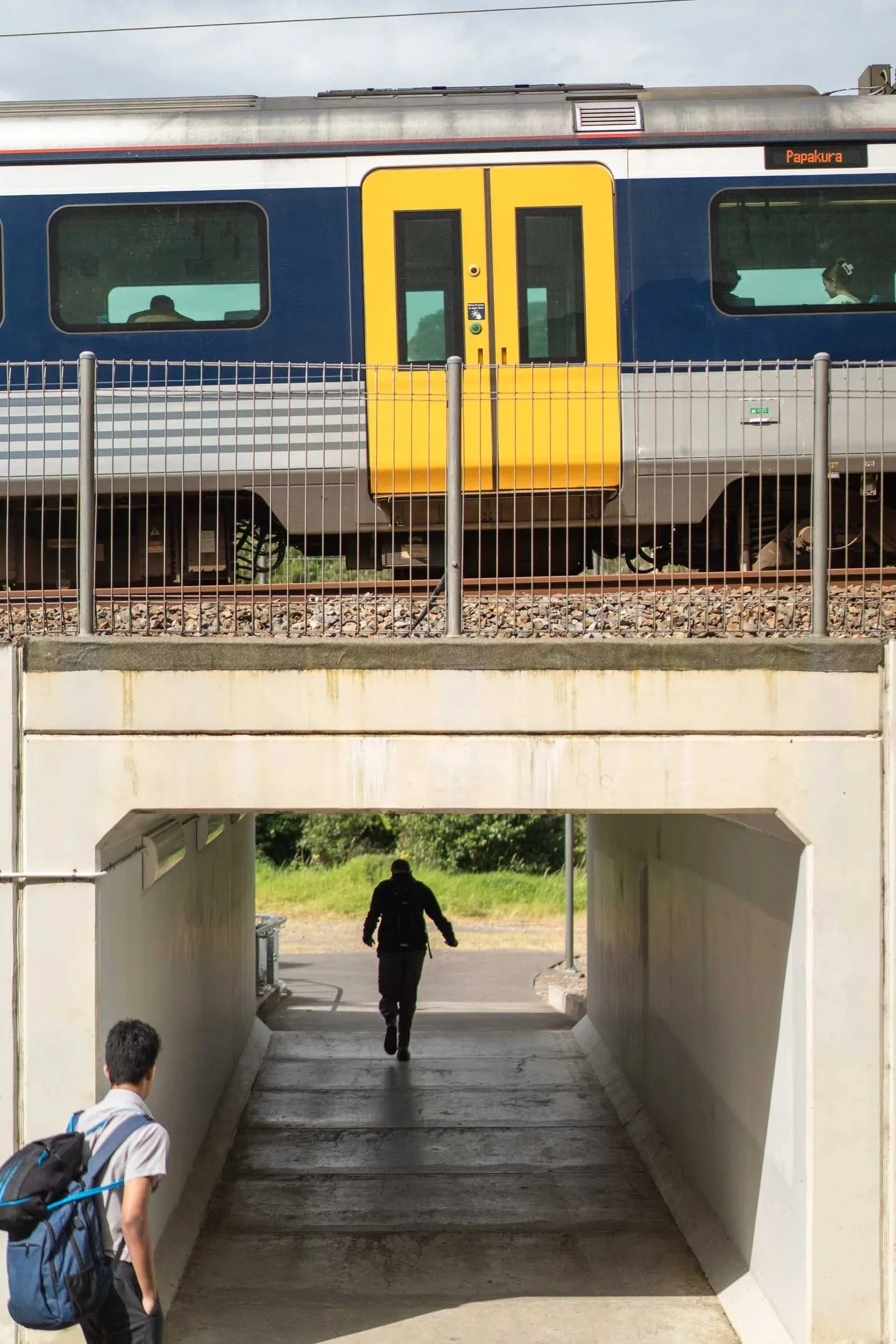
He was walking through the Auckland Domain, the city’s public gardens. His path led through a short tunnel under the train tracks. As he walked through, he heard a train. He turned around and saw it pass above him, fast and very loud.
“The train is quite graphic, lots of colour, various ads, graffiti. And then it was gone.”
Then he noticed someone walking through the tunnel. It was a cloudy day, and the sun came in and out. When it shone, the person in the tunnel became a dark silhouette.
McGuire had an idea. He wanted both things in one frame: a figure in the tunnel and a train above it.
“But I wanted to catch the train frozen. I wanted to see those elements crisp and sharp.”
He had a 55 mm prime lens on his camera. That limited what he could fit in the frame, so he stepped back as far as he could.
“My back, I remember, was pushed hard against the bushes, so I could get both the tunnel and the place where the train would come above it.”
He set the shutter speed to 1/8000 of a second and opened the lens to f/1.8. He kept the ISO low. Then he waited.
Several trains passed, and he photographed some of them. School had just finished, and schoolchildren were taking the train home.
About 25 minutes after his first shot, some schoolboys came running towards the tunnel. One ran inside. Another was just coming around the edge. At the same moment, a train went by above them.
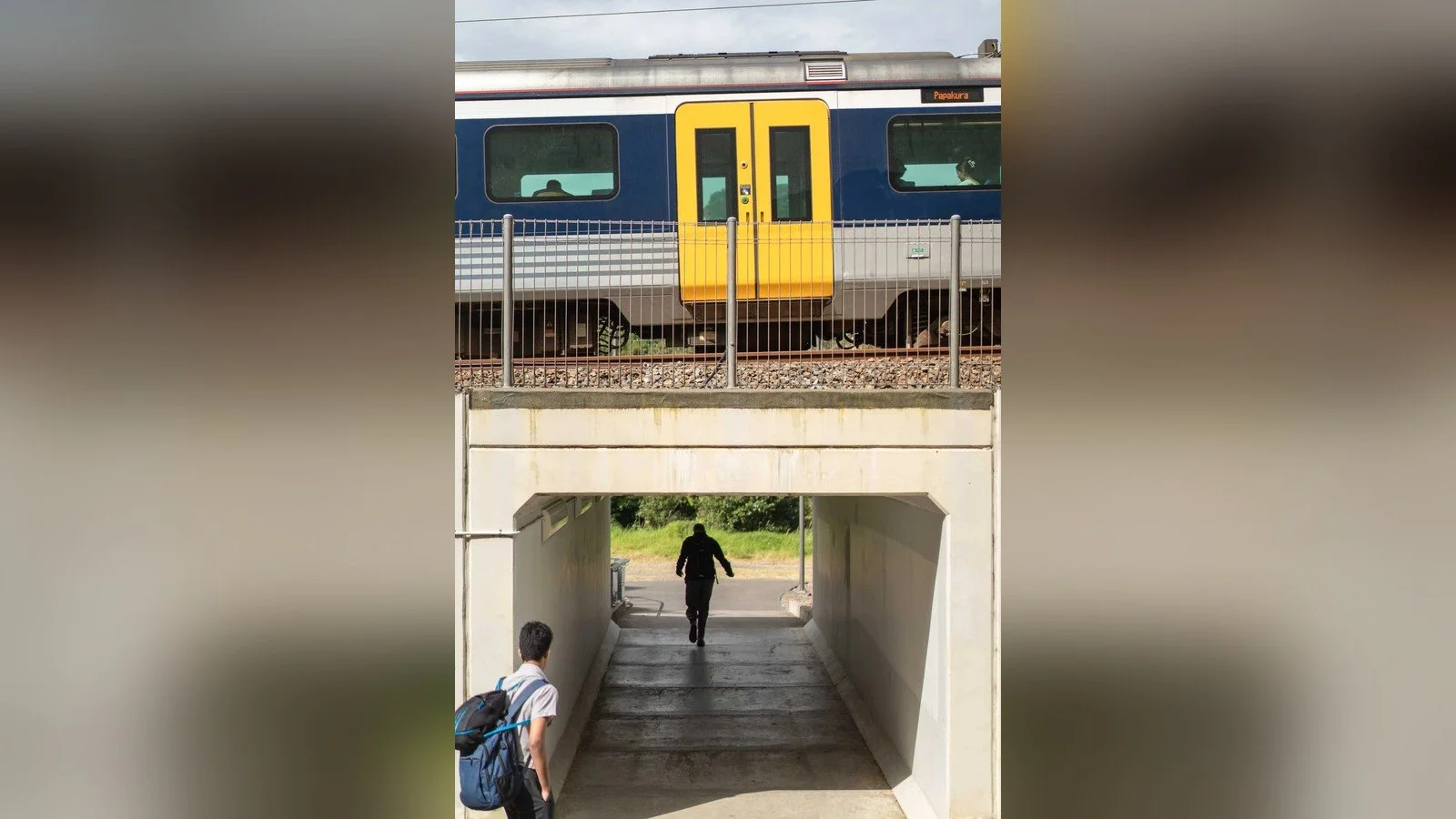
Only afterwards, when he looked at the frames, did McGuire see everything the picture held. The boy at the bottom left brings the eye into the frame. The other boy is a silhouette in the middle of the tunnel. Above them are the yellow doors of the train.
Inside the train sits a young woman. She is looking at her phone, with a clip in her hair. The image is so sharp that, when you enlarge it, you can see her eyelash.
“They didn’t know each other, didn’t see each other, couldn’t have been aware of each other. But you start to think. Where were those boys going? Where have they come from? Where is she going?”
Without the train and the boys, McGuire says, there is nothing of interest there. It is just a train tunnel. Nothing about it suggests that you should take a photograph.
He thinks of the Canadian ice hockey player Wayne Gretzky, who said that he skated to where the puck was going to be, not where it had been.
“I couldn’t have planned for it, but I did prepare for it. The best I could do was to stand where I knew I could frame the image, set the camera to freeze the action, and wait for the things I couldn’t control.”
Years earlier, he says, he would not have taken this photograph. He did not have half an hour to wait.
“That’s an example of a photograph made rather than simply taken.”
More stories:
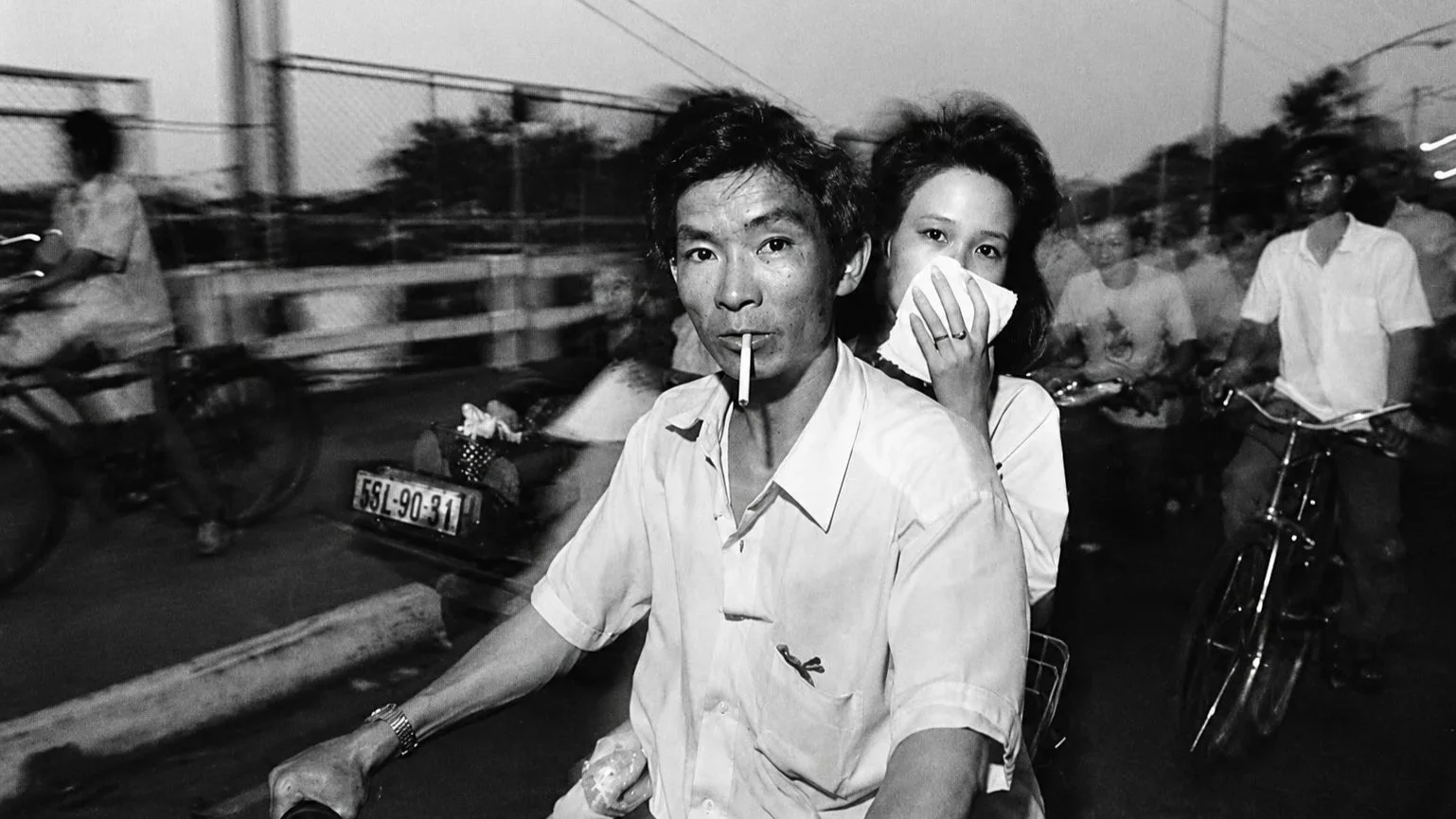

On 8 June 1972, a girl ran toward the cameras. Her name was Phan Thị Kim Phúc, and she was nine years old.