Welcome to this edition of Interviews. Today, we look at the project Street Photography, by Mark McGuire. We'd love to read your comments below about these insights and ideas behind the artist's work.
Mark McGuire finds new photographs without finding new streets.
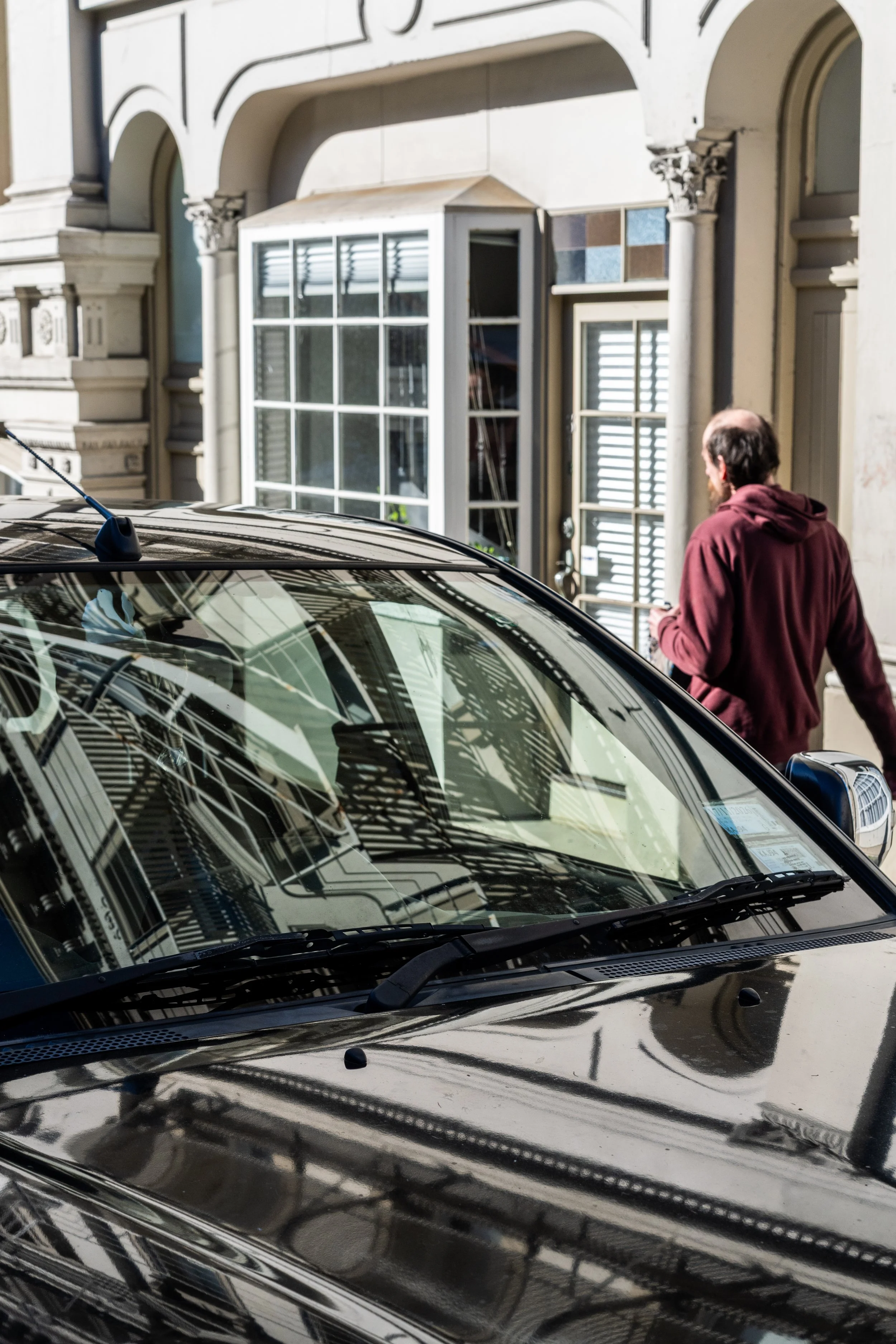
He has lived in Dunedin, New Zealand, for thirty-five years, and his street photography grows out of daily walks through the city. His background in architecture and design often draws his attention to buildings, shadows and colour. A bus passing an intersection or a hotel reflected in a car can become part of a composition. These are places he knows well, but what happens around them keeps changing.
Familiarity also brings the risk of making the same photograph again.
McGuire recognises the compositions he returns to most easily and talks openly about trying to move beyond them. Yet his walks are also a source of pleasure, even when he comes home without a photograph worth keeping. A pink letterbox matching the flowers beside it can be enough to make him stop. For him, photographing such details is a way of appreciating the small decisions other people make in the city they share.
McGuire explains how he finds a position, decides whether to wait, and judges when a scene works better without a person. His examples show how those choices develop on the street, while leaving room for something he could not have planned.
The Project
Street Photography
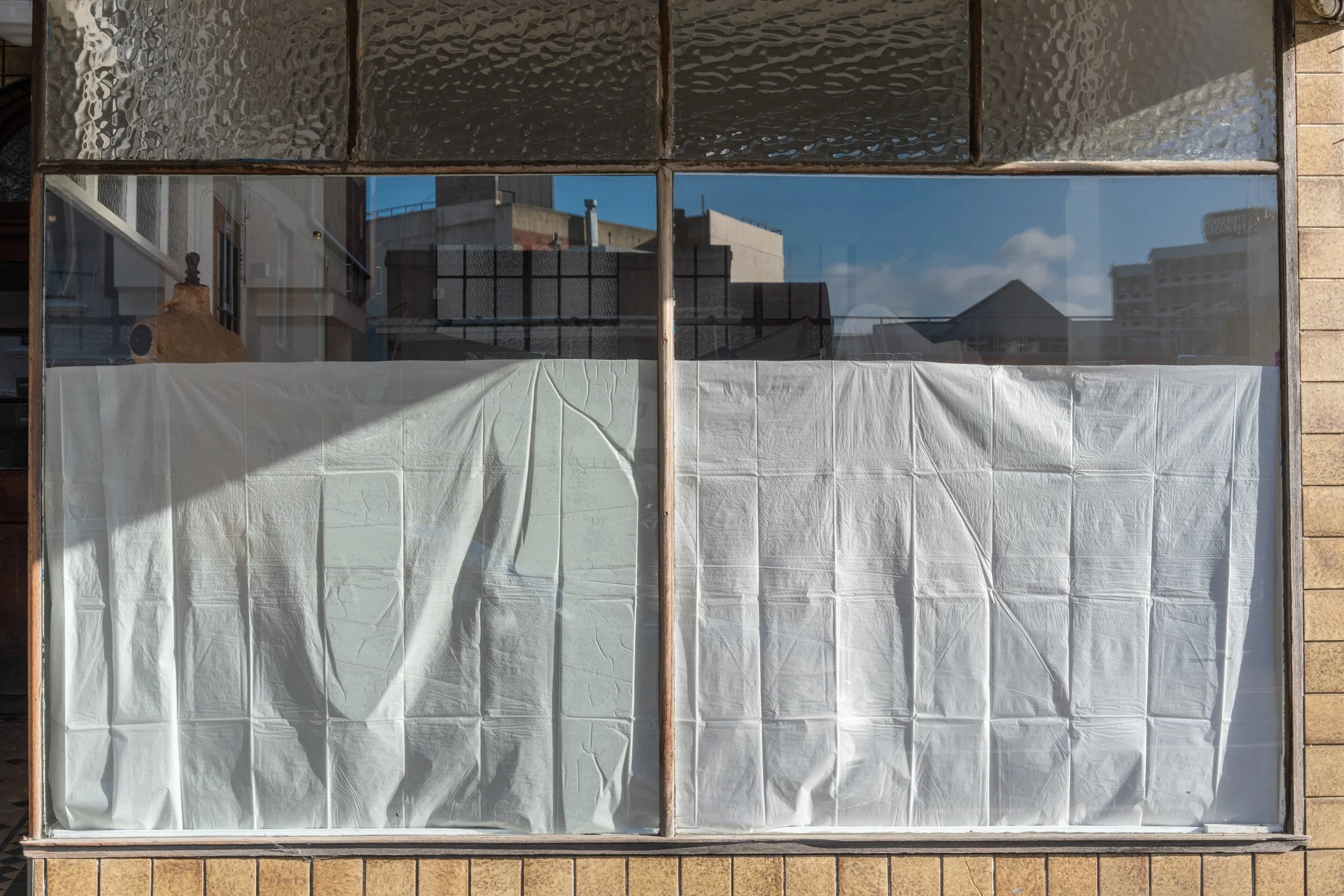
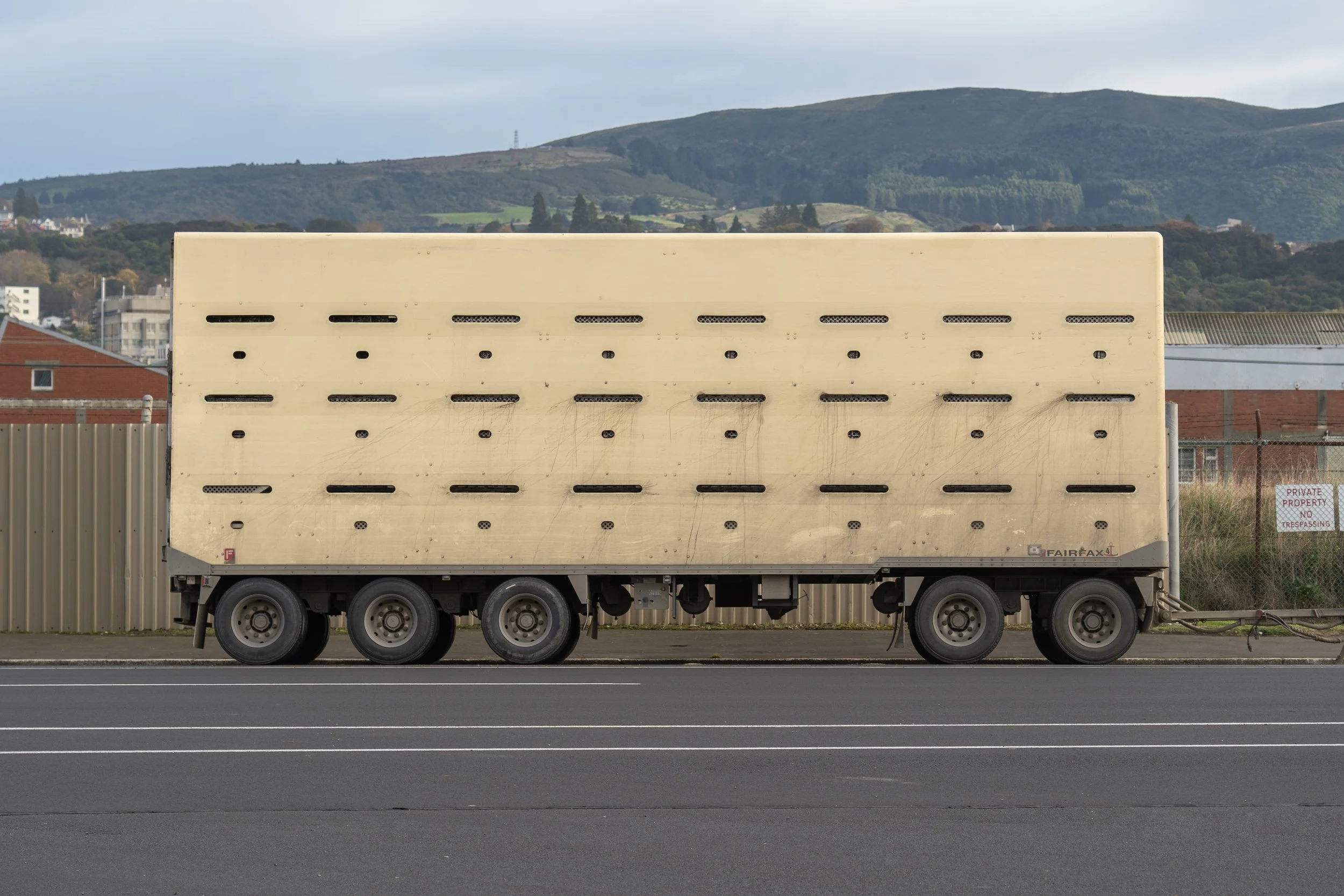
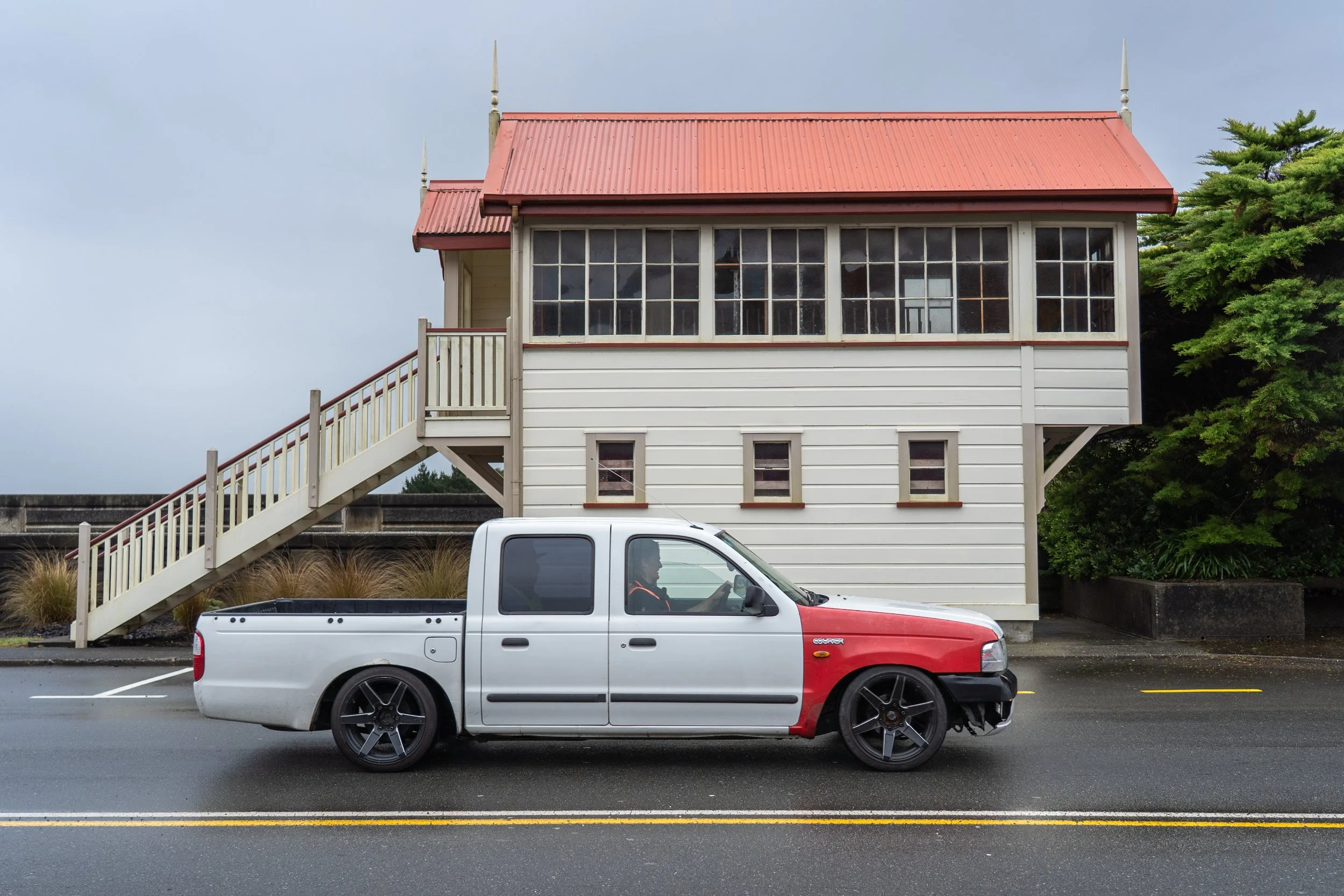
Street Photography is Mark McGuire’s Substack newsletter, with a new post every weekend. In it he shares photographs from his walks through Dunedin, New Zealand, where he has lived since 1993, together with reflections on how he makes them. His photographs work with buildings, shadows, reflections, passing buses and the people who move through the city. He usually photographs with a full-frame Sony A7 III and a 55mm prime lens.
You came to photography after years in architecture, design and academia. What first made you start taking photography seriously, rather than simply taking photos?
I would say that happened relatively recently. Like everyone else, I've always taken photos, and for the last several years mostly with my phone, which comes with limitations. I started taking photography more seriously when I stopped teaching, about ten years ago. That's when I bought a proper camera, if you like: a full-frame digital Sony A7 III.
That's also when I started collecting photobooks and reading more about photography. My previous work was in design more generally. Architecture was what I first studied, along with a bit of fine art, and then general design. A lot of that was digital design and digital media, and later a variety of different approaches to design when I was teaching at the local university here, the University of Otago in Dunedin, New Zealand.
So it's really only in the last ten years that I've taken it more seriously and started taking different kinds of photos. I would say I've started making photos rather than taking them. I think there's a big difference in approach when you stop taking and start making. That's the main difference between the photos I took before and the photos I've made in more recent years.
Do you remember what you were photographing at the beginning?
When I was studying architecture, we learned how to develop black-and-white photographs in the darkroom. Photography is a large part of what architects do. They use it to document sites, to document what they're doing and to document the world around them that they're studying. So a lot of what I took were urban scenes and architecture. We had a term in Rome when I was studying, and I spent a lot of time there photographing buildings. I also started doing a little of what I now recognize as street architecture, where you incorporate candid shots of people as well as architecture.
More recently, I've stopped thinking too much about photographing things or specific buildings or sites. Instead, I've tried to look for compositions. That also makes it easier to make photographs in a smaller city, once you've exhausted the landmark buildings and sites you might photograph as a visitor when you first arrive.
Like anywhere else, you go and take the photos you're expected to take, because you've already seen images of that place. Maybe in other photos, or, if it's a big city, in movies, films and photobooks. Those images cloud your vision to a degree. They make it hard to see a place with fresh eyes. So in a smaller city like Dunedin, where I live, which has about 130,000 people, you start looking for compositions once you've exhausted the things or subjects that jump out and demand to be photographed.
When you're aware of that, how do you work against it?
I think it's a conscious choice, first of all, to look beyond the obvious. You slow down and give yourself more time. You might be in the city for hours rather than minutes. You make a concerted effort to be aware. You send up your antennae and all your senses are active. You're not listening to anything through your earphones. You're hearing the environment around you, looking at the environment around you and trying to be extra aware of everything. In a sense, you lose yourself and become more integrated into the place where you are.
Then you start becoming aware of the colors, the shapes and the compositions that are possible around you. Rather than seeing objects as things with names and given meanings, you see them as shapes, colors and forms. You see the spaces between them. And as you begin to move, you start arranging those objects, as you might arrange furniture in a room until it's the way you want it.
I began to realize that no matter where you were and whatever was around you, there were possible compositions you could make. You just had to look really closely, spend the time, move around and juggle the possibilities. It didn't matter whether you were photographing something important or something that called out to be photographed. It only mattered that the elements could be composed in a way that satisfied you.
When something catches your attention on the street, what tells you there might actually be a photograph there, rather than simply something interesting to look at?
Usually it starts with something catching my attention. I wander through the streets without the intention of photographing anything in particular. I walk the same streets I walk every day. It's about a twenty-minute walk from where I live into the center of town, and I just wander. Something will capture my attention: the light on a building, a strong shadow, sometimes a sound.
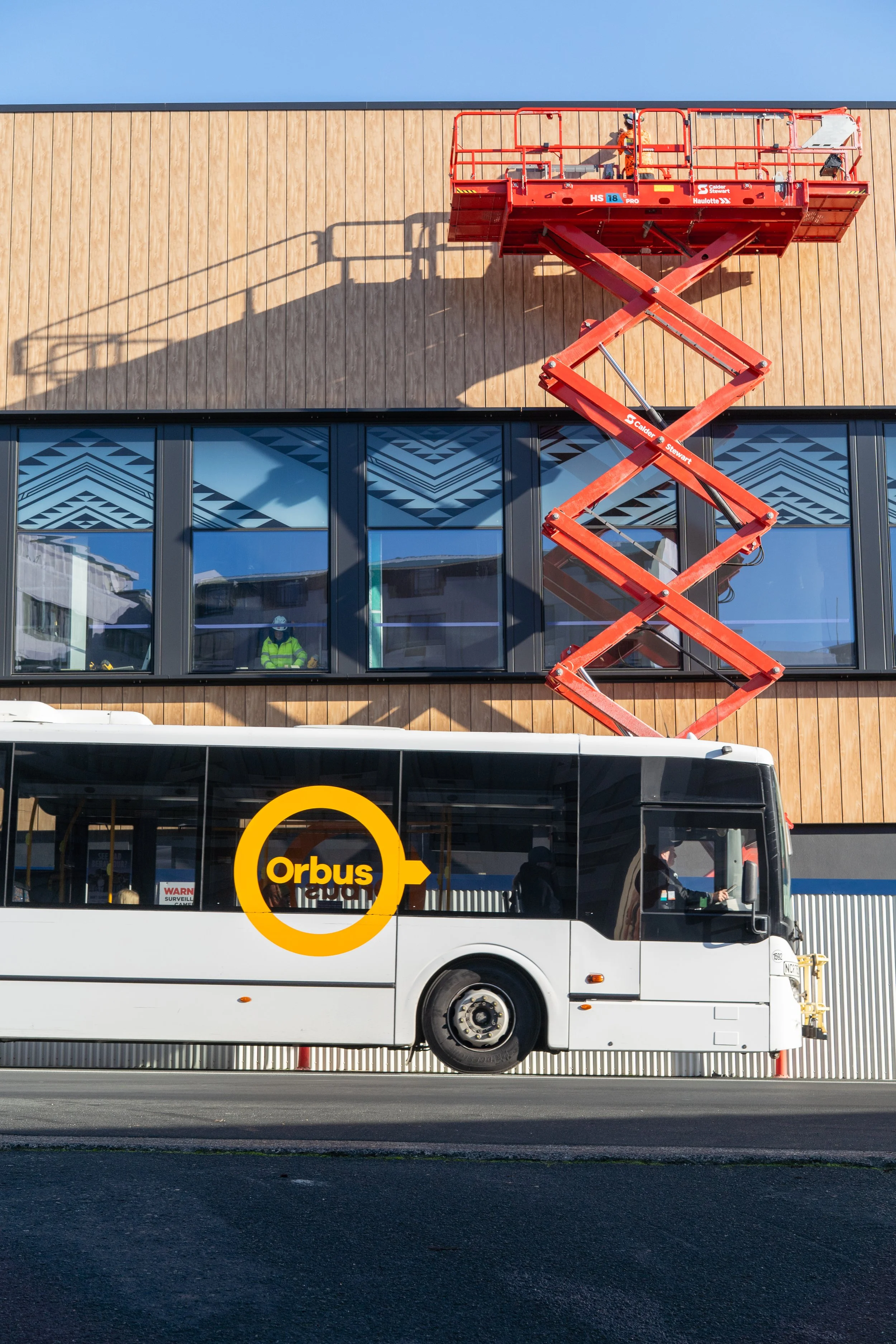
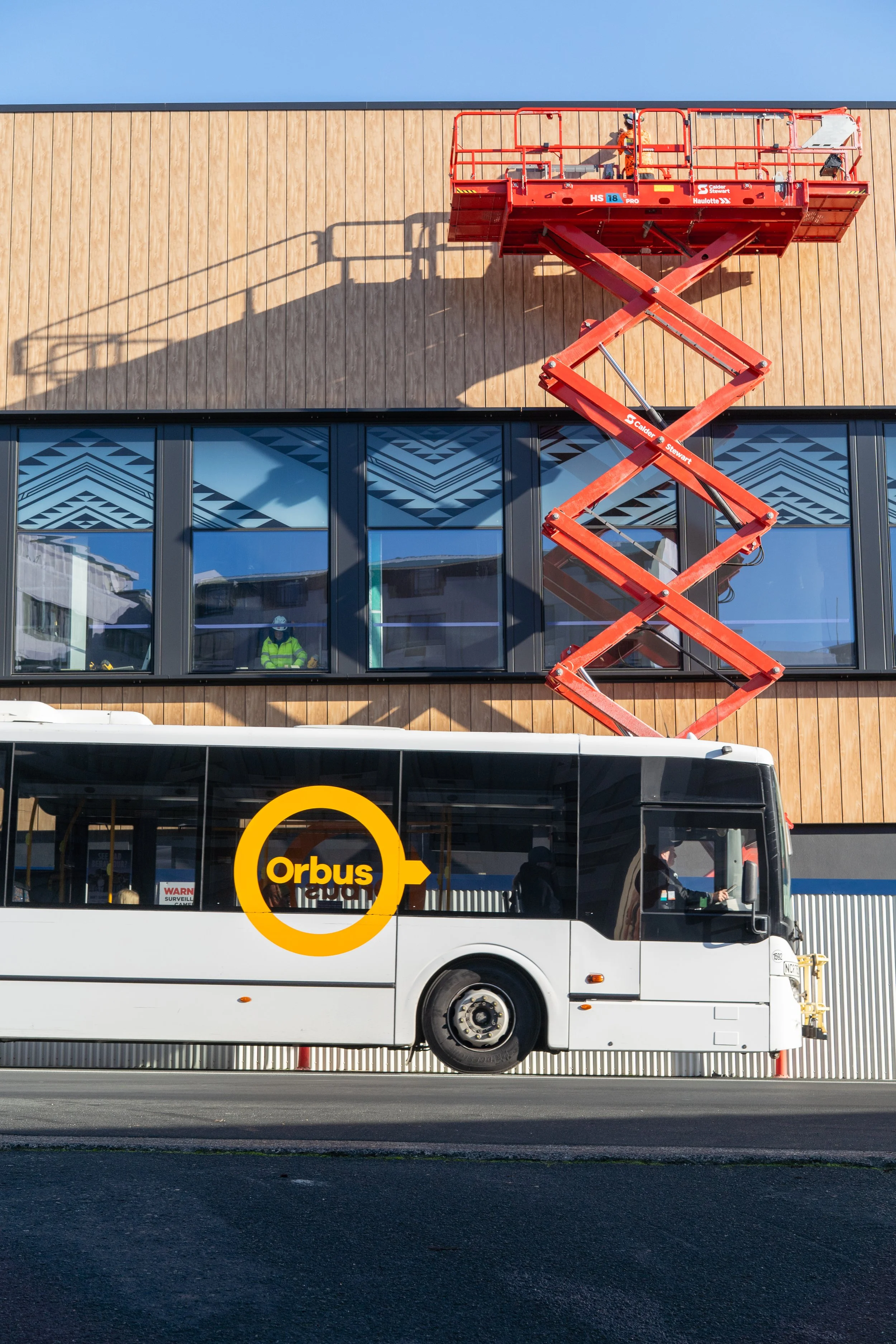
Sometimes I know there's good light on a certain street at a certain time of day, so I'll wander down that street. Sometimes it's a person, a silhouette or someone walking by. Or a bus goes by with its logo. The local bus company is Orbus, and it has a big orange "O" logo that you see all over the city. That's an element I often incorporate into my photographs. It's always in the city, and I know it's reliable. One will be coming by soon.
Once you get to know your city well, you can anticipate compositions that may come together if you wait long enough or stand in the right spot. Often I can't see a photo straight away, but I know there's potential for things to move in a way that will let me create one, if I pay attention, stand in the right place or move around, and give it some time. So it's both a matter of noticing something that suggests the potential for a photograph and consciously trying to arrange the scene once I've caught one element.
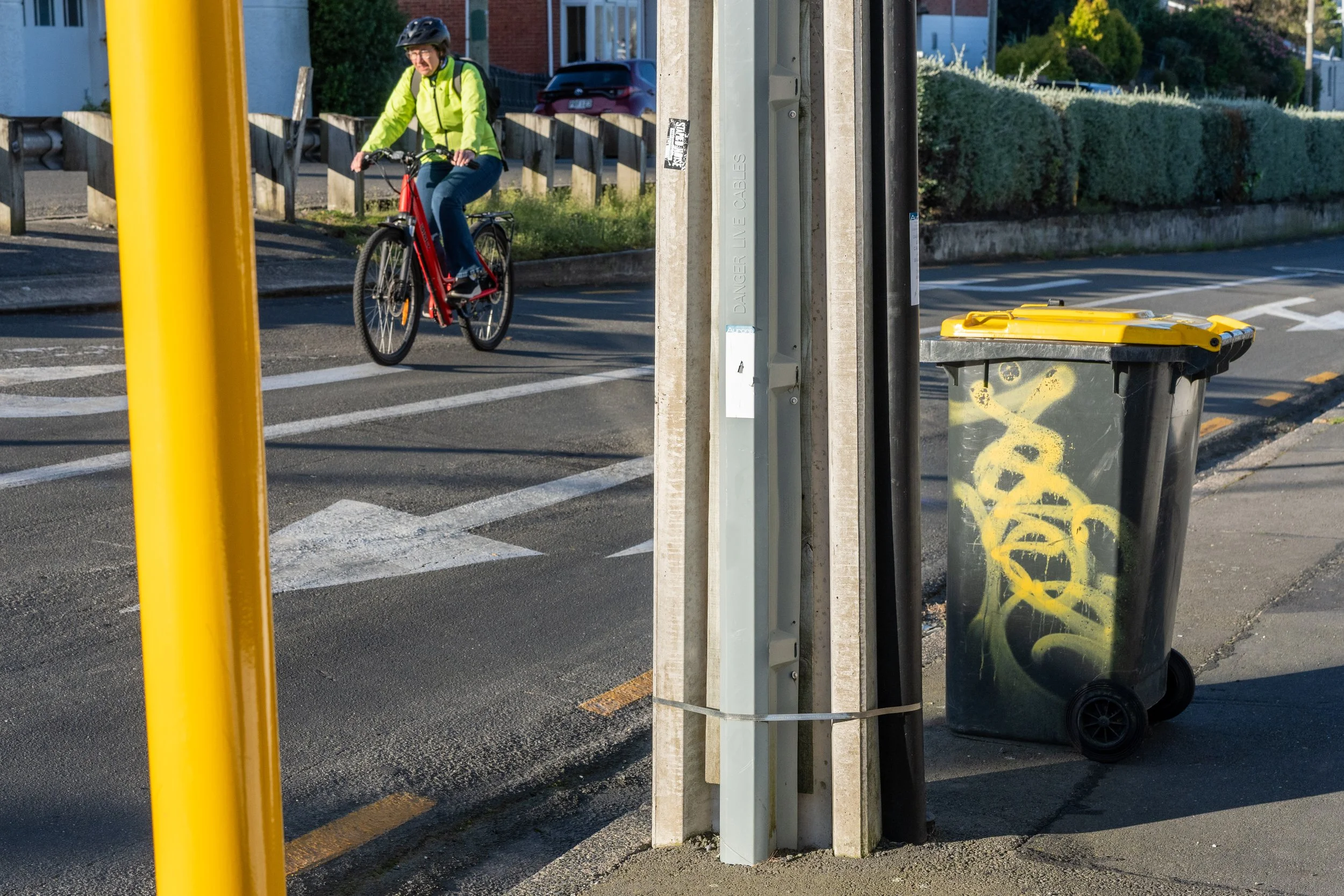
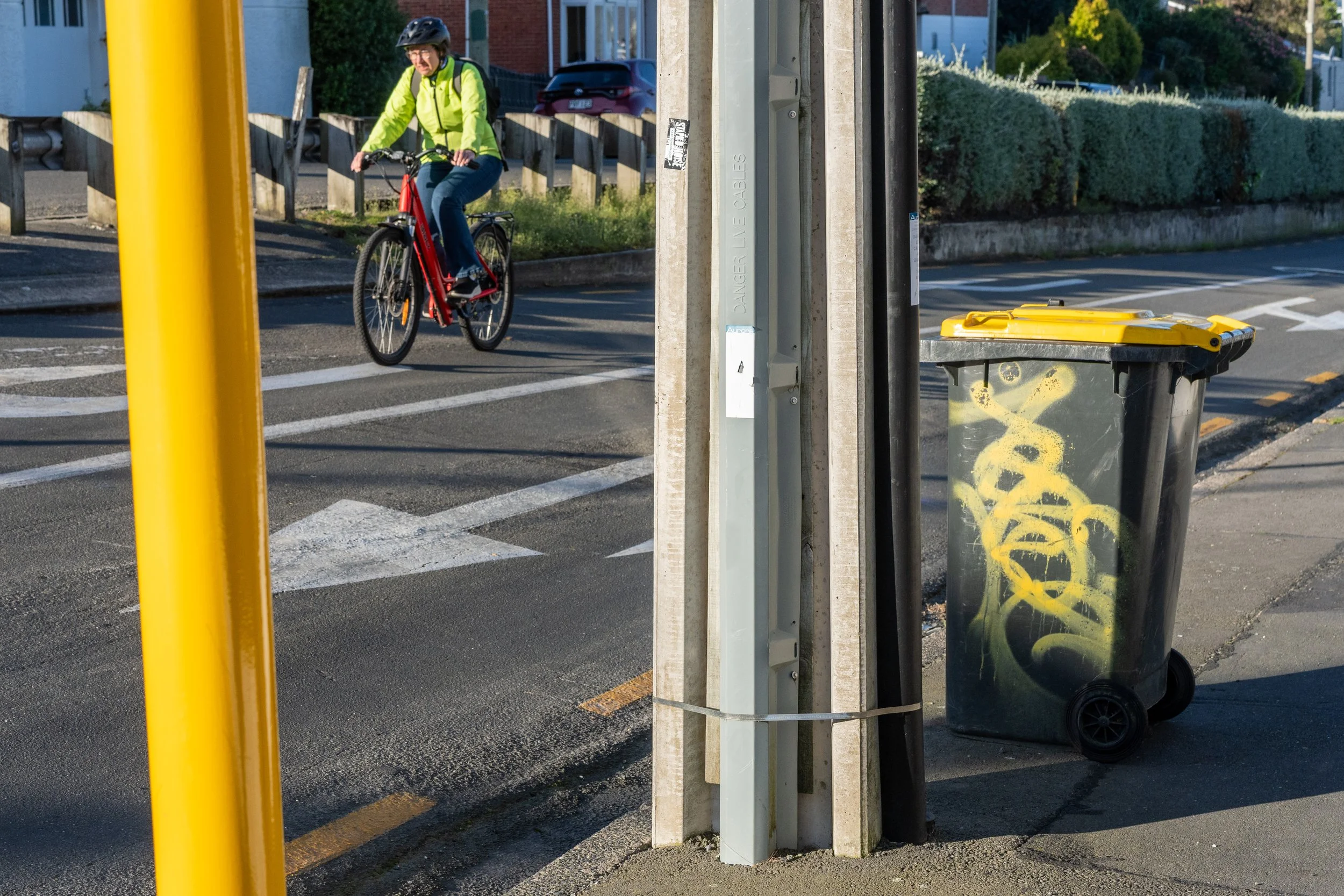
For example, yesterday I was walking home from the center of town and waiting at an intersection. There was a rubbish bin with a bright yellow lid and some yellow graffiti spray-painted on its side. I was standing beside the street light pole, which was also painted bright yellow. So I had two yellow things. I thought, if I stand right here, I can frame those two yellow objects. I just need a third thing to complete the composition. I was hoping a yellow car might come by. In the end, a cyclist came along, and as soon as I saw her, I thought, well, that could work. So I raised my camera and took a few shots. One of them might feature in a Substack post down the road.
So you can't predict, but I think you can prepare. You prepare yourself by slowing down and consciously trying to be aware. You don't listen to your headphones or think about whatever else is happening that day. You clear your mind as much as possible and stay open and aware, extra aware, super aware. Then you might see possibilities that you would otherwise have walked past without noticing.
You mentioned standing in the right place. Once something catches your attention, how do you find where to stand?
Usually there's one element that I think could be part of a composition. For example, I might be walking down Stuart Street, one of the main streets going into town. I see a street light from behind, which is a dark black shape. I can see people coming and going across the intersection, and maybe buildings behind that traffic light that could form another dark block. So I start to see pieces of a composition. I know a bus with a logo might come down this street, and if I've seen one go by, I know roughly how large it will be and where it will be. So I try to find one or two anchor points, elements I know aren't going to change. Then I hope the missing elements, which I can't always predict, come into the scene at the right time. That gives me a chance to frame a photograph.
It also helps that I use a fixed lens, a 55mm prime. So I don't have to worry about what's going to be in the frame. I know what will be in it. Once I stand somewhere and look, even without raising the camera, I know what the frame will hold, because I'm so used to the 55mm. I only use a 35-150mm zoom when I'm photographing events, groups or festivals. Otherwise I always use my 55mm prime. It's the lens I bought when I first got the camera, a good, sharp lens.
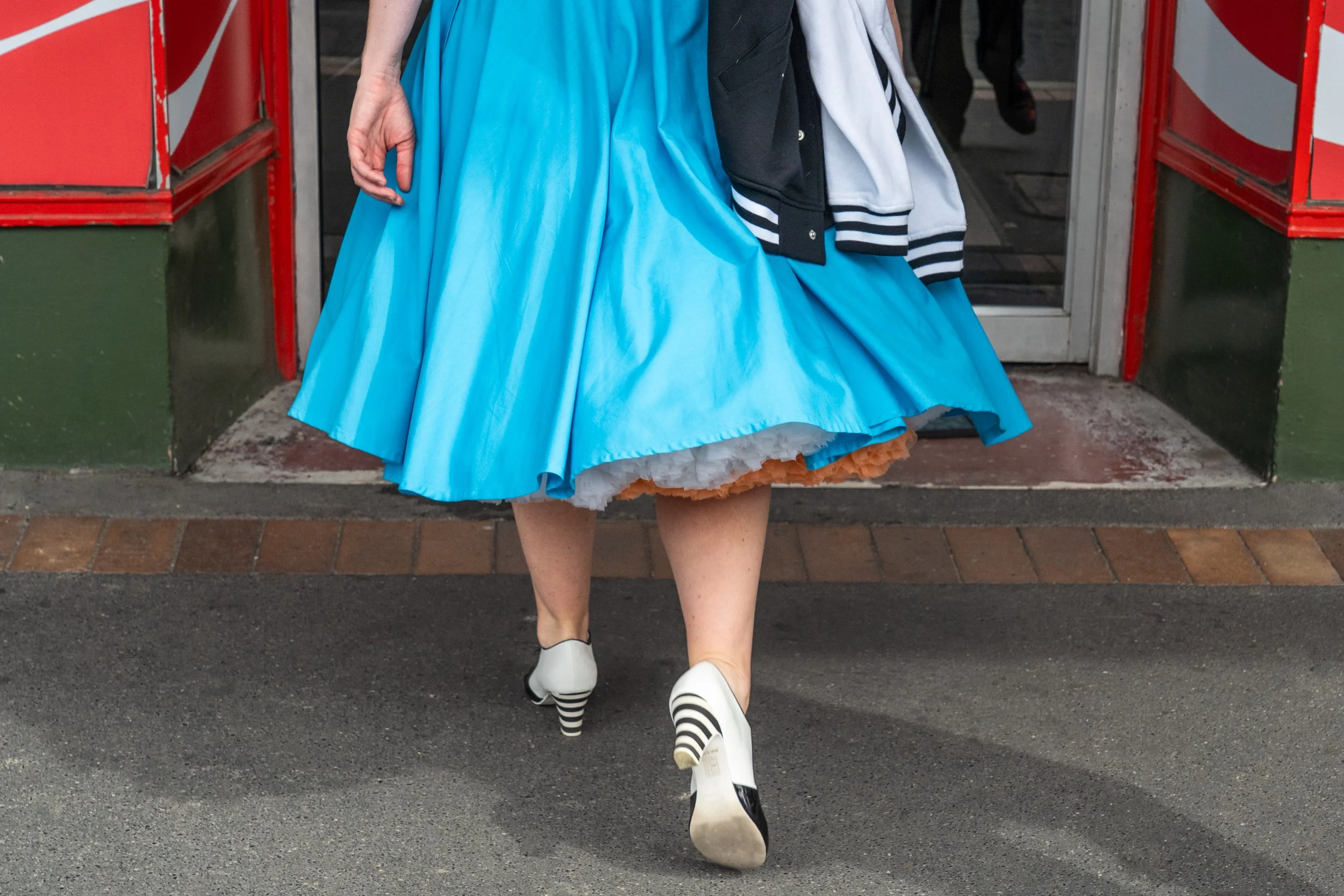
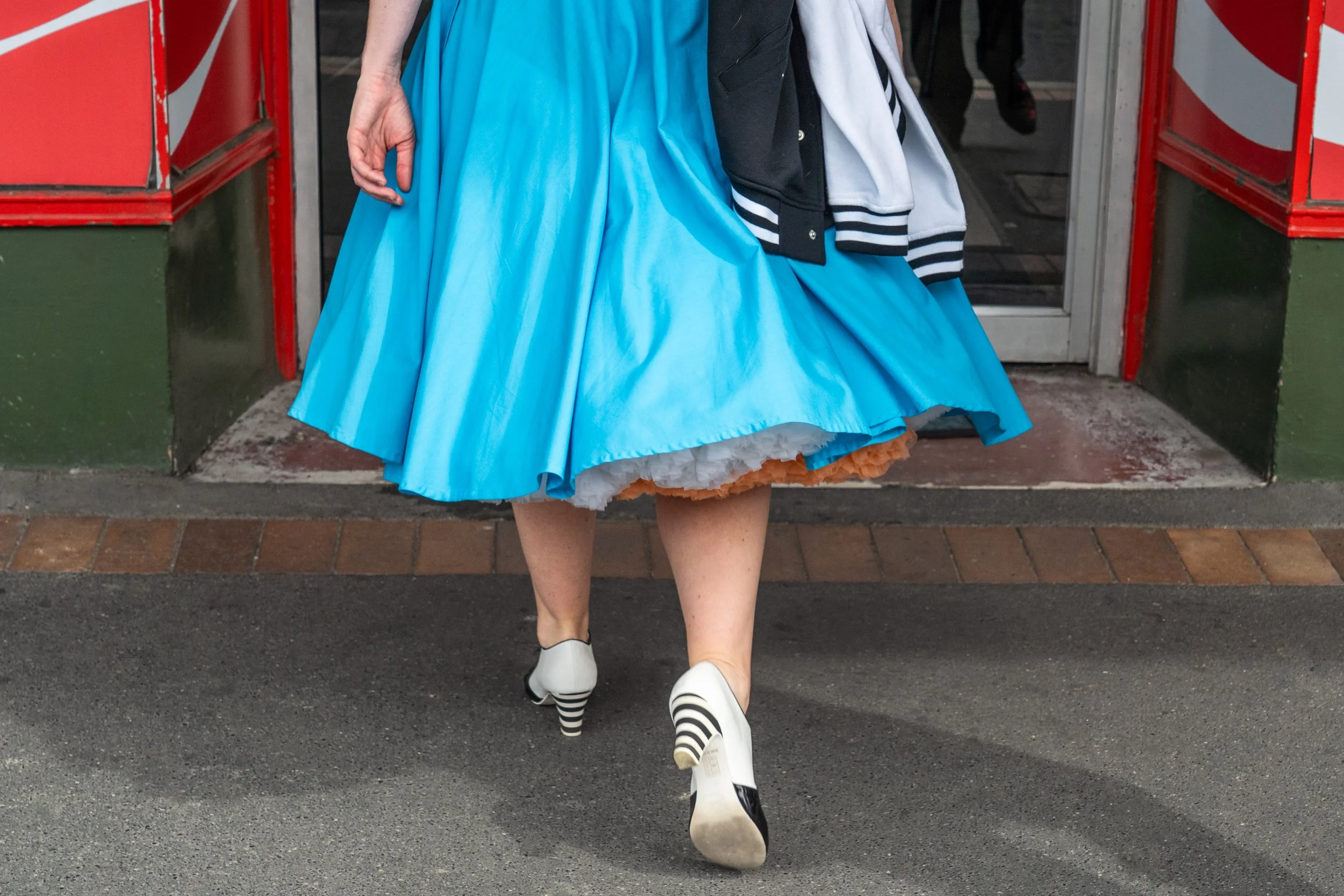
So usually it's one thing that announces itself to me. A person doing something or standing somewhere, an interesting hair color, an interesting dress or a coat that moves in a nice way. Or one or two anchor objects that I know could serve as part of a composition. Then I try to move and wait. Sometimes something happens, and sometimes it doesn't.
How do you know when a photograph needs more time and when there simply isn't a photograph there?
Often it's about how long I'm prepared to wait in one spot. If I think there's potential for an interesting photograph, I might wait twenty minutes, maybe half an hour, without moving, just standing there. At times I draw the attention of people who come out and ask what I'm looking at. They don't see anything. Yesterday someone came down from a building to ask why I was looking into someone's car. He was worried, because I'd been standing there for a while.
I was actually looking at the reflection of a building in bright sunlight, reflected in the car's rear windscreen. But you couldn't see that unless you were standing exactly where I was. From any other vantage point, it looked like I was looking into someone's car, perhaps at what they had and whether it was worth breaking in. So I don't want to stand in one place too long, or I look suspicious and people get worried.
But I have waited easily twenty minutes, or at most half an hour, for a composition. After that I think, well, perhaps I'm wasting my time. It's not my lucky day. This isn't going to happen. I might get two things lined up, but not a third that fits, so I move on. You can't predict it. But after a certain length of time, maybe it's simply time to move on.
When you find an interesting setting, how do you decide whether it needs a person to complete the photograph or whether the empty space is already enough?
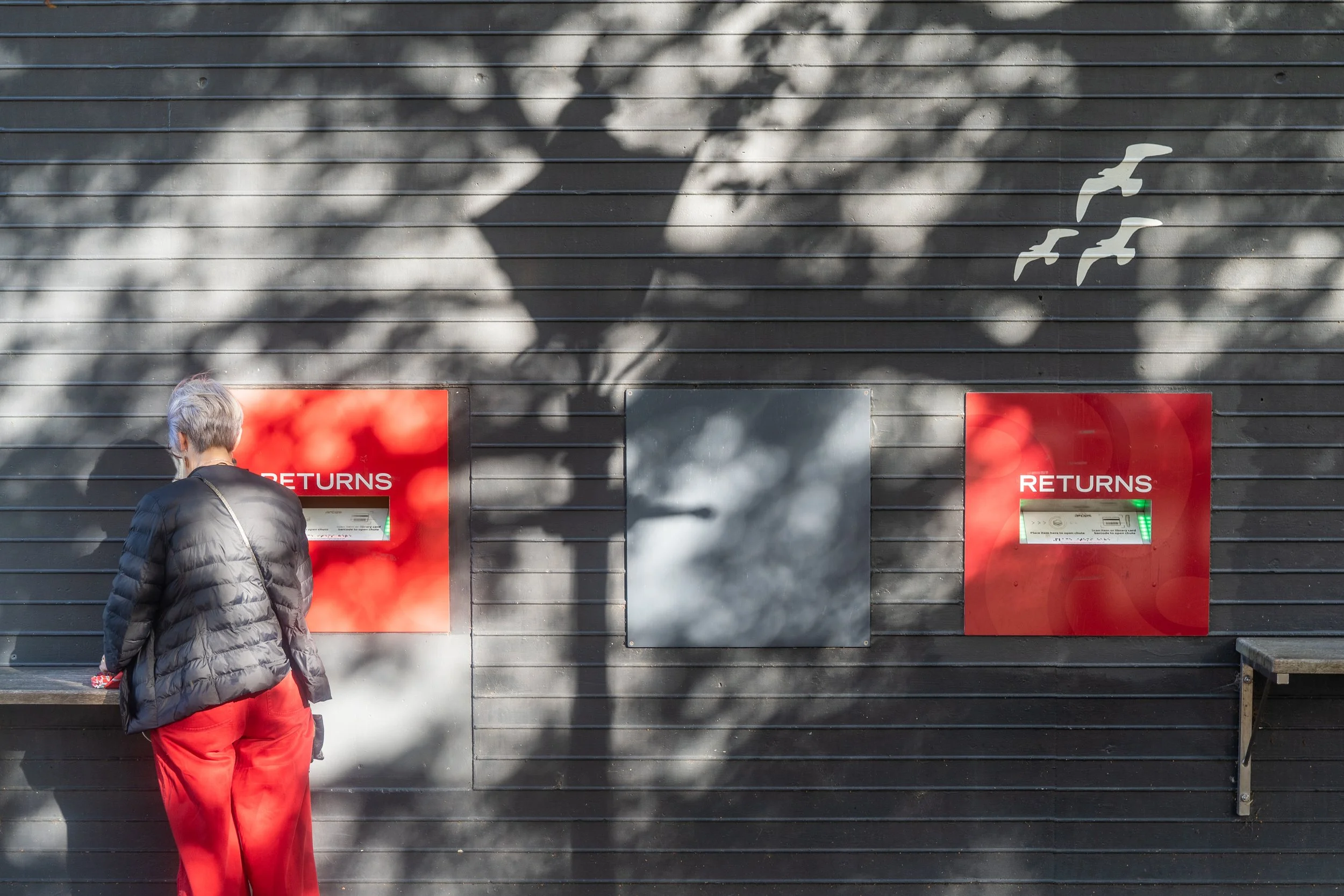
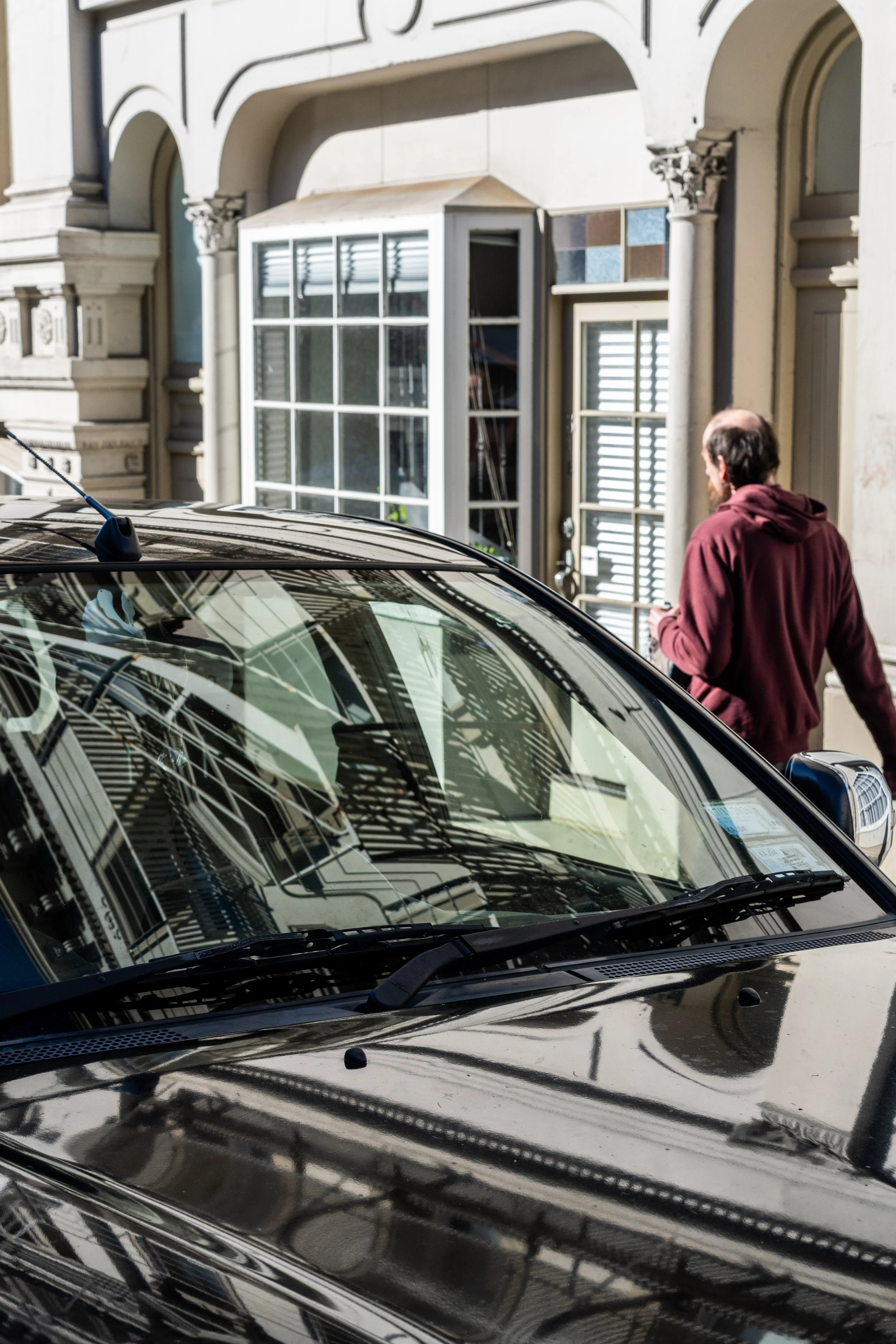
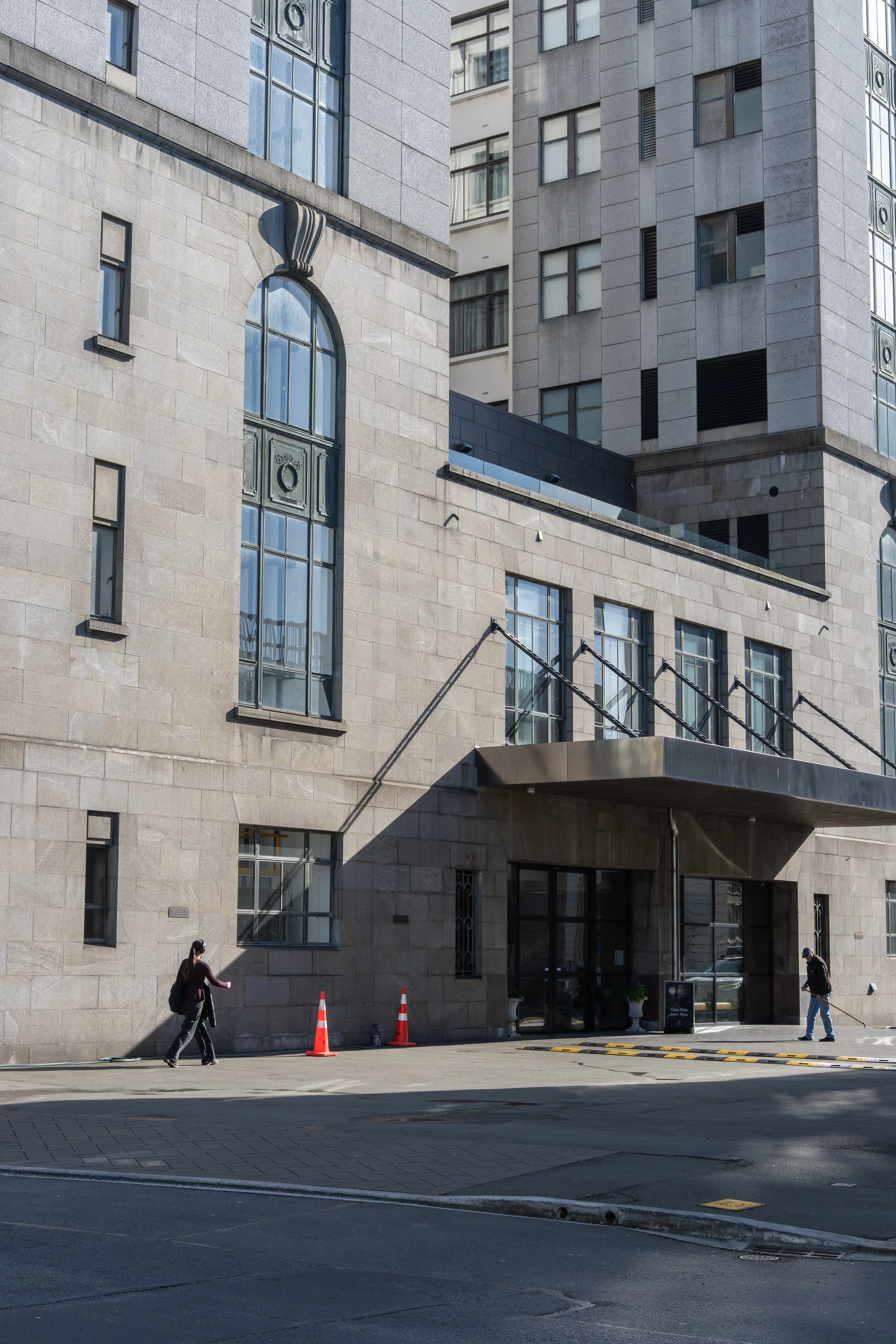
That's a good question, because it's possible to take portraits of buildings just as you take portraits of people. An interesting building in good light with good shadows can be enough. Yesterday, for example, I was again wandering around town, and there was some good light on an old hotel. As I approached, I found it was reflected in the bonnet of a black car.
I stood there wondering whether I needed a person to complete the photograph or not. So I took several shots, with people and without, as people walked by. In the end, I decided it was best to have a person there, because it helped draw the eye through the photograph and added that human element. But sometimes the building or the backdrop on its own is enough. I've written a few Substack posts about backgrounds without people and why I thought they were interesting enough on their own.
But street photography, which is what I practice, normally includes people or evidence of human presence. That might be a sign that someone has been there, recently or some time ago. Or it might be the product of someone's handiwork, which could be a building. Even in a building with no one in front of it, the architect is present. The designer of that building is present. The time when it was constructed, and the culture that led to it, are in some way still there. So you can evoke an earlier time, as well as people who are no longer there.
Often, though, a backdrop seems to invite a person. There's a gap, a space or a pause that needs to be filled. It needs someone to walk by and fill it. So I'll often frame a building or a backdrop knowing it won't be complete until someone walks by and gives it a sense of scale and a sense of life.
And I'll just wait, but I'll know exactly where that person needs to be. There's really only one frame that will capture it. The person has to be in exactly the right spot, or it won't work. If I can capture someone in that spot, it's fine. If not, it doesn't work. But not every scene needs people. Sometimes there's enough personality in the background or in the building itself.
Have you ever waited for someone to enter the frame and later preferred the empty frame to the one with the person?
There are times when that happens. Usually I'll start by photographing the backdrop itself, sometimes just as a reminder to come back when the light's better or when someone might be walking by. Then I'll get a photo with somebody in the frame. Later, looking at the photographs, I find that the backdrop or the building on its own is enough. In fact, the person might detract from it, or the photo might be less interesting with a person than without.
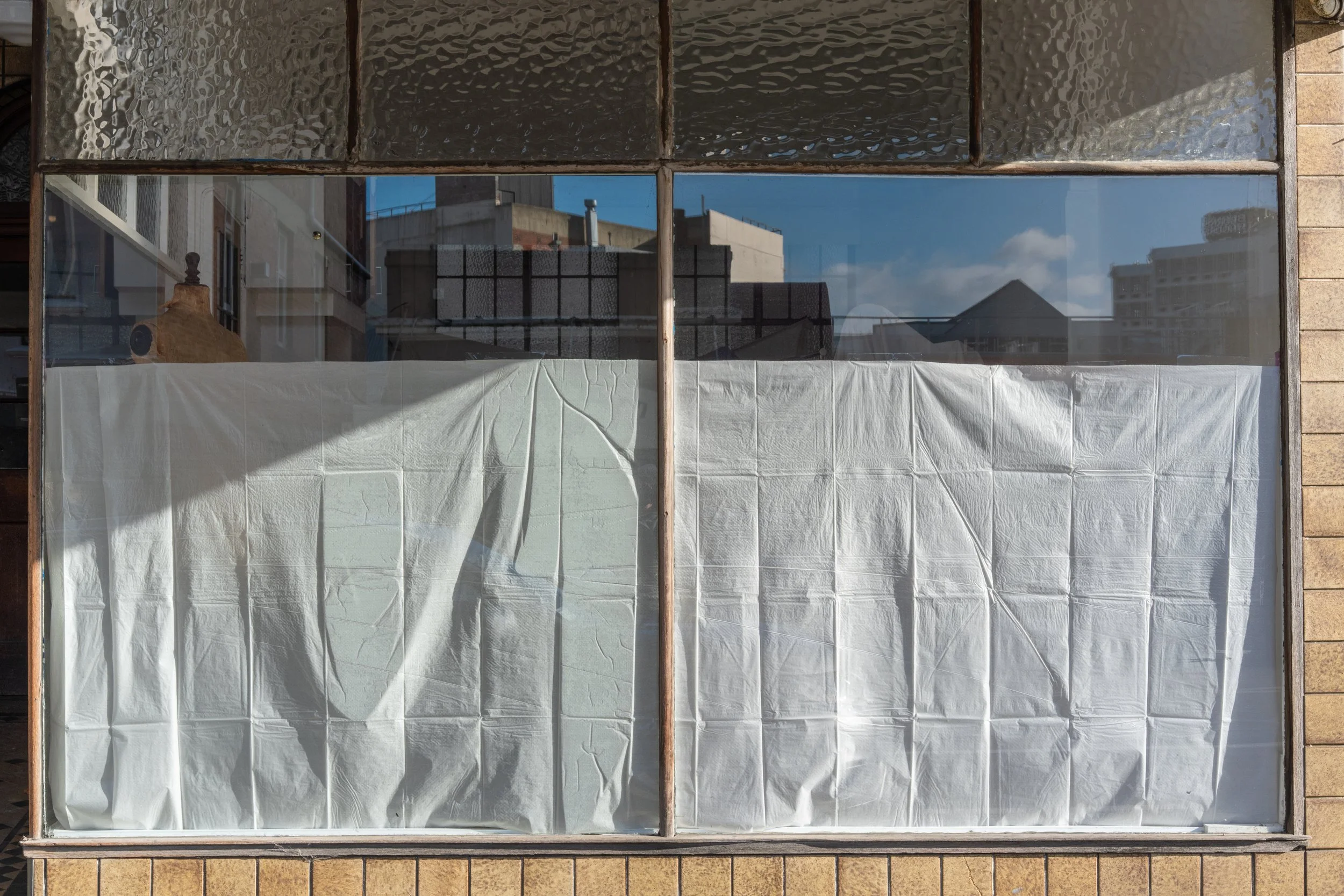
Often we try to pack everything we can into a photo and provide answers to everything, a conclusion. Sometimes it's best to leave things open. A silence or a pregnant pause can be more engaging than someone talking all the time. In the same way, a photograph packed with people might not be as interesting, or have as much to say, as a space with no people in it at all. Just a blankness. I've taken sequences of photos of blank buildings or blank signs that I find interesting because they provide that pause, that gap. Sometimes that gap, that silence, says more than a crowded space or a crowd of people might.
When you're composing, how much are you thinking about what needs to be removed rather than what needs to be included?
I try to limit the number of elements as much as possible. I choose a starting point that isn't too crowded and wait for one or two things to complete it. But I don't think in terms of removing, and I certainly don't go into Photoshop and take elements out. I do very little editing to my photos. I might raise the brightness, deepen the shadows a bit or bring the shadows up. But I wouldn't think of removing something that was there.
I like to document a scene as I found it, and I think that's the practice in street photography. You don't change what you see, and you don't doctor it after the fact. But I try to keep the strong elements, the ones the viewer might notice and take account of, to a small number. Otherwise I find it's just too chaotic.
Having said that, there are photographers who are known for highly complex photographs. Harry Gruyaert, for example, makes compositions where something is going on everywhere. It's hard to know where you're meant to look. People are coming in, going out, looking this way and that way. He often uses quite a deep depth of field, so everything is in focus. He's not telling you where to look. He's not giving you a story or designing a narrative. It's just his take on that scene. He captures the whole thing because he's working without a plan and without a narrative he's trying to construct. So you're forced to make sense of the scene yourself. The interest lies in what you can make of it, rather than in reading the story he's giving you.
So I think an overly complex scene can have value too, because it involves the viewer in sorting out what's going on. What can I, the viewer, remove? What should I pay attention to? What can I make of this? I think the danger of having too few elements, or too clear a story, is that you don't leave those gaps. You don't leave any work for the viewer to do. And the more work the viewer has to do, the more engaged they're going to be, because they have to engage in order to make sense of it.
In a way, you want to put the viewer in the photographer's place. You want the viewer to get joy from making something of what they're seeing, in the same way the photographer enjoyed the act of making the photograph. The photographer had agency. They had to do something. They had to wait. They had to move. The photographs I find interesting to look at also give you something to do. They make you work at it. They make you try to make sense of something that may not be easy to read at first. Maybe they raise more questions than they answer.
I think a good photograph is a question well framed. It gives the viewer work to do, just as the photographer, looking at that scene, might have had questions they couldn't answer. They thought, this is an interesting question. There's something interesting going on here that I can't quite figure out, but it's worth thinking about. Those are the photographs we share with others who might have the same reaction and say, yes, I'm not quite sure what to make of this, but it's interesting. It makes me question things. It makes me work at it.
What keeps you photographing the same relatively small city after years of walking its streets?
I've lived in Dunedin for thirty-five years now, and there's no lack of new things to photograph. If anything, over time I've felt that there's an infinite number of things to photograph within a few blocks of downtown. Saul Leiter, for example, took most of his photographs within a couple of blocks of where he lived. I think if you're looking for compositions, there's an endless number of possibilities within a single block.
If you're looking for things or landmarks, the kind of photographs you might see in a travel magazine or on Instagram, there are a limited number of sites that have been designated as worth photographing. But if you're not just taking what you're offered, and instead you make what you can of the elements that are there, those elements are constantly changing. The sun is different at different times of day. It changes with the seasons. There are different people. The elements of your stage set, if you like, are always moving. Buildings change. You notice buildings under construction, buildings that have been repainted, buildings that are gone. So even in a small town, things are changing all the time. It's not the same city every time you go out.
There's an interesting film called Smoke, from 1995, so about thirty years old now, in which Harvey Keitel plays a man who runs a smoke shop. Every day, at the same time, he takes a photograph of his shop from across the street. He shows this album of photographs to a friend, and the friend says they're all the same. Keitel's character tells him to slow down if he wants to see anything. They're all the same, but every one of them is different. And of course they are. Different times of day, different people walking by, different seasons, rain, sunshine.
I think it's like that in any environment, any city, any small town. It's not the same town every time you walk into it. Every day you walk into a different town. That's not only because the city has changed and the elements in it are constantly moving. It's also because you've changed. The way you see the city changes. The product of photography is a photograph, but the result of photography is a transformed photographer. Making photographs changes us in small ways that add up over time. We become more aware. We see new things. We become more skilled at creating compositions. We get a better sense of how long to wait, where to wait and when it's time to move on.
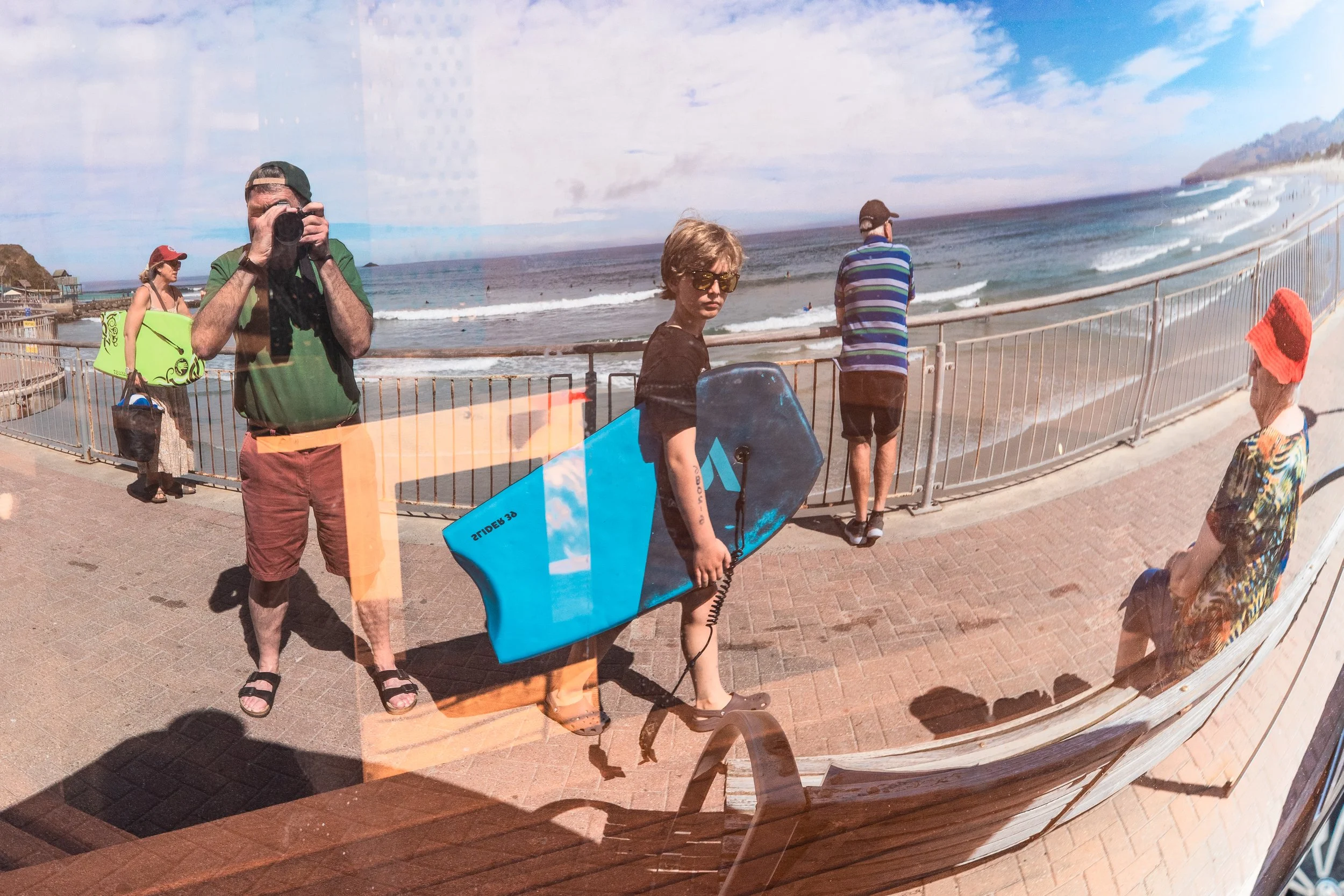
So as we learn to see our city, in a sense we're seeing a different city, because we change as much as the city does, maybe even more. I don't think there's any limitation in staying in one place, or in photographing a small town or a village. There's an infinite number of compositions you can make wherever you happen to be. And in making those compositions, you change the way you see. You develop your photographic eye. You become more sensitive to the environment around you, to the sounds, to the weather. That changes the way you see the city the next time you walk into it, and it changes the way you photograph it.
So I think it's often harder to go to larger cities that are well documented, cities better known for street photography, like Tokyo, London or New York. We know those places so well through films, books and photobooks. The photos we've seen give us a preview of what we're going to see. In a sense, they tell us what we're going to see and encourage us to see the city in a certain way. So when we go to a place that has been well photographed and well documented, a place we know through other media, we go looking for those images. We go looking for those photographs, and they get in the way. They cloud our view. It's hard to see places that have been so well documented by other people.
I even find this around Dunedin. If I go to a small village just to the north or south, somewhere I haven't been before, it's easier again, because I'm seeing everything with fresh eyes. Nothing is familiar. So I'll see things to photograph that I might not see if I were there for three weeks. Perhaps the longer you spend in a place, the harder it is to see. A city or town that is new to me, one I haven't seen photographs of, I can see with fresh eyes. But if I went to a well-known big city like New York, it would be hard not to go to Central Park and take the same kind of photographs that other people have already taken and seen. So I think there are advantages to being in a smaller place that isn't well documented. It's easier to see it with fresh eyes, because our view isn't clouded by images that have already appeared in the media.
How do you know when making similar photographs means you've found your way of seeing, and when it means you're simply repeating yourself?
I think there is a danger of repeating myself. Sometimes I find myself taking the same photo of the same building, or from the same spot, that I know I've taken before. I have to work consciously against that. Sometimes, as a warm-up exercise, I'll take the photo I've taken thousands of times: a well-framed building or backdrop with a person walking by, caught in just the right spot mid-stride so they make a nice shape. That's the easiest photograph for me to take. So it's the one I have to get out of the way fairly quickly, so that I can start to see other things.
I have to consciously try to become more aware of the elements I could use to build a composition, beyond the ones that present themselves immediately and easily. I think it's a skill we gain over time. It's a bit like meditation, I suppose. You have to learn to push out the obvious things, the things you're routinely doing or seeing. You try to become attuned to the environment and let yourself see things you might use to make a composition you haven't made before.
I think it comes with practice, but also with conscious effort. You have to work hard at concentrating. It's a mix of concentrating and letting go, I think. You have to concentrate on your environment and let all your senses be as active as they can be, while at the same time trying to empty yourself, relax and just let things come in. It's a strange thing, having to work hard and concentrate while also letting go and relaxing. But I think that's what's required, at least in street photography, if you want to see or make compositions that aren't the same ones you've made many times before.
Because you came to photography with a background in architecture and design, when you enter a street, do you tend to notice the space first and then what happens inside it, or the event first and then the structure around it?
I think I notice the structure first. I'll notice a building, a facade or the urban environment. Often it's light and shadow that I see first. Either that, or a strong color or a point of color. Then I work with that. I wait for someone to come by, or a car, or a bus. Or I just photograph the environment itself if it seems to be enough.
I think my training in architecture comes from an interest in buildings and the environment in the first place, so I'm perhaps more attuned to that. But I do work against it. The Dunedin Railway Station, just downtown where I live, is said to be the most photographed building in New Zealand. I almost never photograph it. I did when I first arrived, because that's what you do. Everyone does. You see tourists there all the time, by the busload, photographing it.
It's a beautiful building. It's Flemish Renaissance, and I think it opened in 1906. It's gorgeous. It was built when New Zealand was still a fairly young country. Dunedin was the center of the gold rush from the 1860s through to the turn of the century, and it had lots of money. It was the political and financial capital of the country. Some grand buildings from that time still exist. They're beautiful, and they demand attention.
But photographing a building by a great architect, a work of art if you like, is in a sense taking what you've been given. It's the obvious thing. It's what we're expected to do, and what we're practiced at doing, when we visit somewhere as tourists or do travel photography. We photograph the things that are designed to impress us and attract the camera. These days, of course, when you go to a city, there'll be a spot where someone has built a frame for your selfie, a frame that shows you exactly where to stand so the harbor is in the background, or whatever it might be.
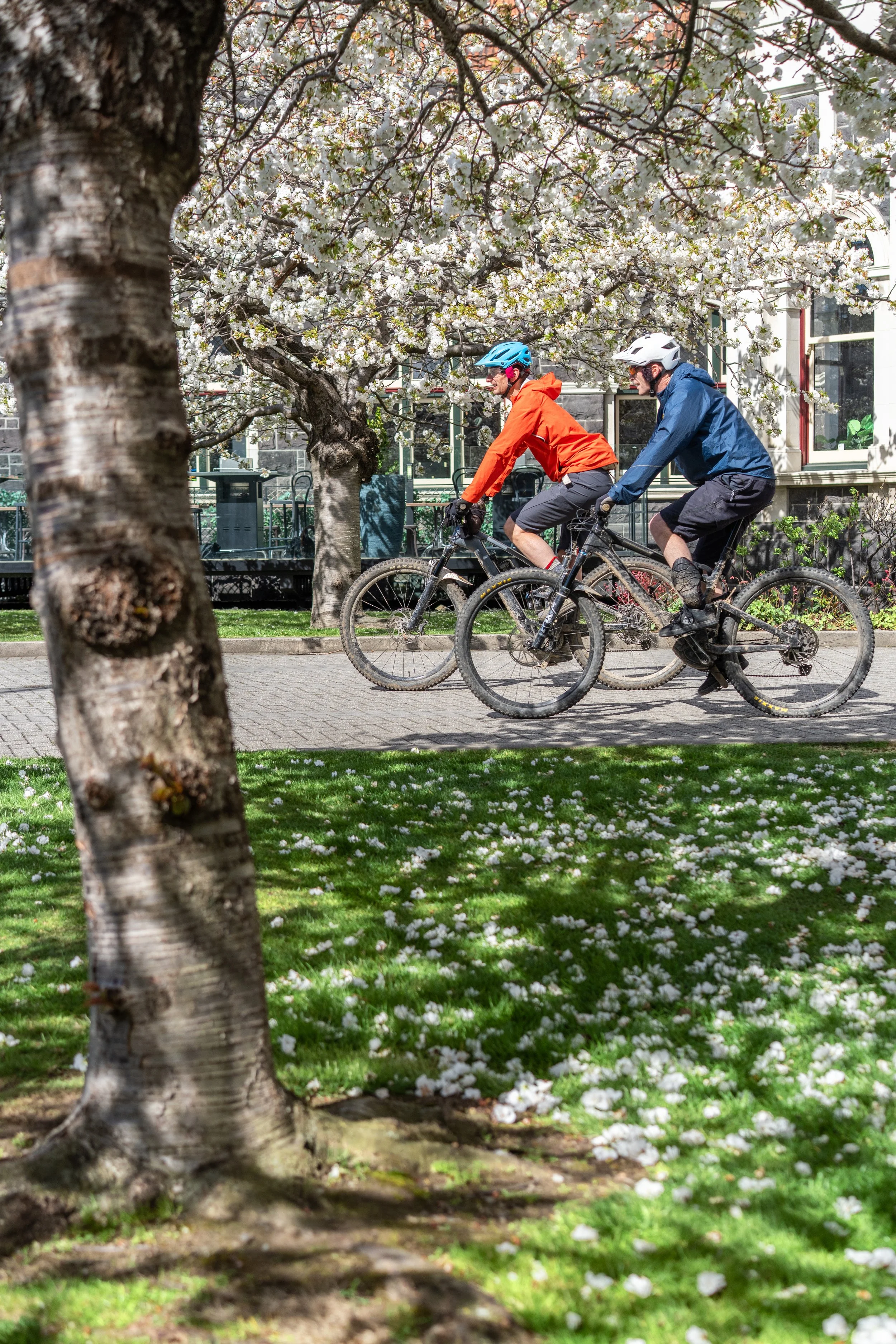
So although the railway station is the most photographed building, and it's said to be the second most photographed building in the Southern Hemisphere after the Sydney Opera House, on its own it's not enough. But I've used fragments of it. Recently I was there photographing the spring blossoms in front of the station, and the people photographing the cherry blossoms. You can use elements of the building, and the fact that it stands there as a solid, permanent structure, and play it against the transient nature of the cherry blossoms, which last two or three weeks at most. The petals may already be falling, and the ground looks as if it's covered in snow. So you can play a building off against more temporary events that happen around it or in front of it. But to take a picture of a building on its own, without playing with the composition, is to take the easy route, I think. It's taking the picture that has to be taken.
Really, we want to be like the architect who made that building. We, as photographers, can also make something rather than simply receive it. We can use parts of the building, or use it as a backdrop for something else, so that we make a composition. There's more fun and more satisfaction in making something than in receiving a gift the architect has given us. We can appreciate good design, but we can also be designers ourselves. We can take an active role in shaping our experiences and the city we walk through, rather than simply receiving it as given by designers and city planners. We can be architects of our own environment. We can be active makers of our world as much as receivers of the good work other people have done.
I think there's a kind of correspondence, a communication, we can have with the city. It's something that gives to us, and something we can give back to. We can construct our city, at least visually in photographs, as much as we can appreciate the constructions that were designed for us to appreciate.
When does a setting stop being the background for a photograph and become the subject itself?
It can be the subject itself, especially when the shadows create shapes that can help form a composition. A building can give you elements to work with. Most of the buildings I find interesting, certainly the historical ones, are designed for shadows. They're designed with ornamentation, pilasters, capitals and so on. They're designed to change over time. The architects know how shadows work on buildings and how those shadows will shift.
So they're inviting you to spend time perceiving and appreciating the building over time, because the light and shadows are going to change. In doing that, they're not just asking you to appreciate the building they've designed. They're asking you to pay attention to light, to color, to weather and to how it all changes. Because as well as being a designed artifact, a building is also a backdrop, a reflector. It's something against which we can see the weather, and see the city moving over the course of a day as people walk by, as rain falls, as trees shed their blossoms.
So again, I think it comes down to working with the elements we've got and discovering what we can do with them, rather than treating a composition as an end result, the end of a story, and just taking a photograph of it. The elements in any city change with the weather and the time of day. So it's a question of working with those changes and seeing what they offer. In a sense, a building can help us see the weather. It can help us see what's around the building as much as the building itself.
Can you have a very good day of photography and come home with nothing worth keeping?
Often, yes. I took up street photography not just because I enjoy going out and making compositions from visual elements. I like walking. I like going for a walk, and I'll go for a walk without my camera too. So if I go for a walk with a camera and find nothing to photograph, or take a hundred photographs and don't want to keep any of them, it still means I've had a good walk.
I also think the act of walking helps to activate our senses. It gets the heart moving and the blood going. It makes it easier to think, because it activates our brain. So the act of walking and the act of seeing are mutually reinforcing, I think. We see things better when we're moving through the environment, actively walking and getting exercise. Hopefully that puts us in better shape to see things worth photographing, and in a frame of mind that allows us to make compositions from what we find.
And we're getting a good walk. So if nothing comes together, if we do the editing and don't want to keep any of the photographs, we've at least had a walk in town. We have been looking. We have been seeing. So I don't think it's a wasted day if you come back with no photographs worth keeping.
Is there a subject, situation or type of photograph that once interested you, but that you now usually walk past?
Again, there are buildings I photographed when I first arrived, because they were impressive as buildings, like the railway station. I don't photograph them now. I'm also more conscious about photographing children. I don't photograph children who are identifiable. I don't photograph people who are begging in the streets or people who are homeless. These are things I've noticed and still notice, but I won't photograph them.
I think we have to treat others the way we want to be treated. When we look at a photograph we've made, we have to ask: would the person in this photograph be happy if they saw it and saw how they were portrayed? So if we're photographing people, I think we have to think about our subjects and how they're presented.
Increasingly, I find I take photographs of things in my environment that I feel grateful for. I think of Joel Meyerowitz, who says that every time he clicks the shutter, he's saying yes to life. Some things jump out at us, and we say inside, yes, this is beautiful, this is amazing, this is great. Capturing that in a photograph, and perhaps sharing it with others, is a way of celebrating what we've seen. It's a way of celebrating life and appreciating what we've seen.
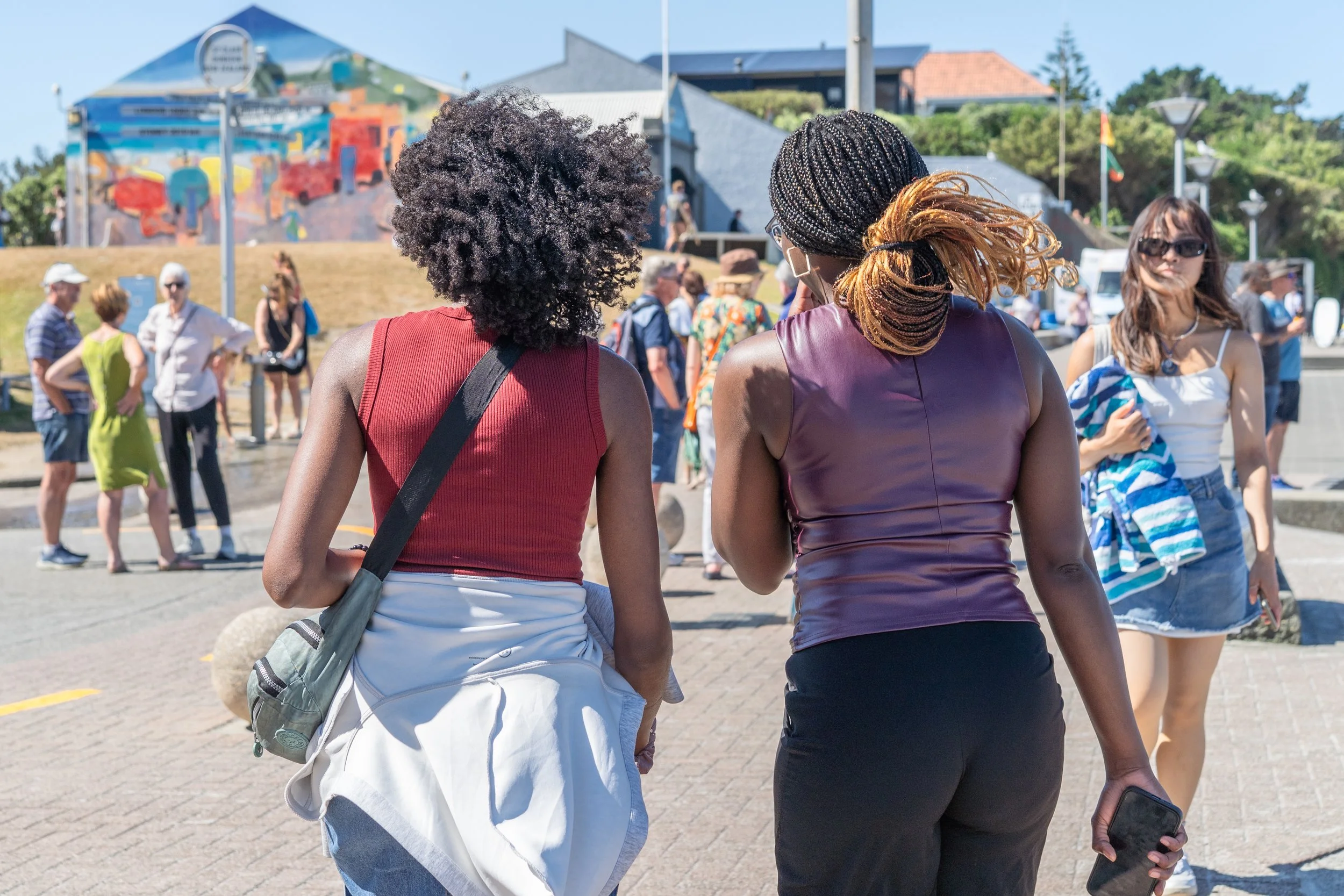
It might be an amazing tattoo on the calf of someone's leg that you notice while you're waiting at a stoplight. Or someone's bright hair, or hair plaited in an amazing way that you know took hours to do. It's impressive. It's amazing. And you want to celebrate that. Making a photograph of it is a way of saying yes. It's a way of acknowledging your gratitude, really.
I think street photography is a way of showing gratitude for the world as it is and for life as you're living it. It makes it easier for us to appreciate those small things, those small delights in our environment that we might otherwise not notice. We highlight those small delights in a way that magnifies them, for us and for others. And it just makes getting through the day a little easier.
Is there something you notice today that you probably would have missed when you first became serious about street photography?
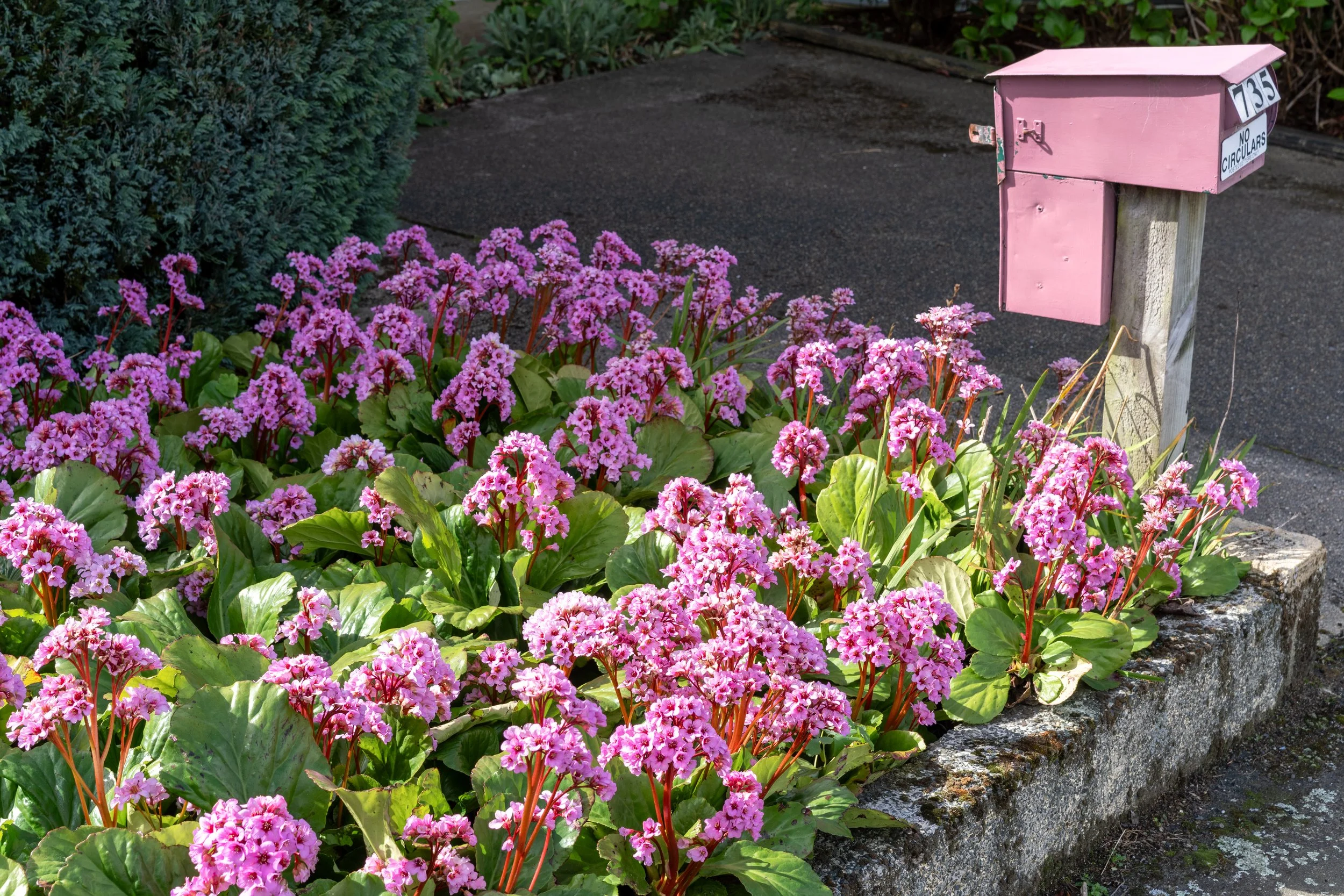
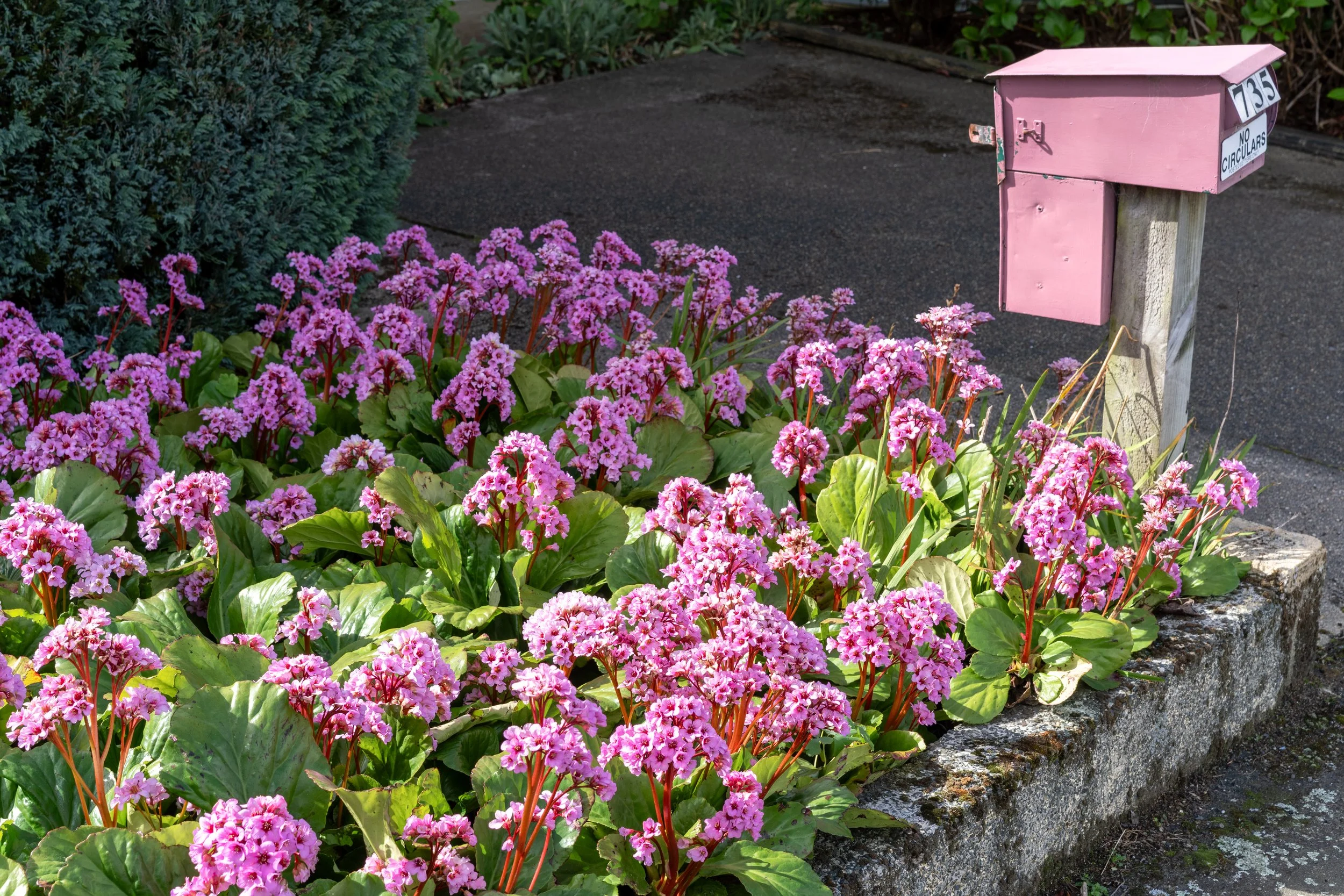
Going for a walk earlier today, for example, I noticed that someone had a whole bed of flowers blooming in their front garden. It's spring here. They were bright pink. And I noticed that their letterbox was exactly the same shade of bright pink. The letterbox matched the flowers perfectly.
It will only match the flowers during that brief time in spring when they're in bloom. But that person noticed the color of the flowers, perhaps even chose them because of that shade of pink, then got some paint in exactly that shade and painted their letterbox. I had my camera with me, and I stopped. I thought about that person painting the letterbox, and about the process of choosing that paint, and I thought, this is wonderful. This person did that. They've highlighted the pink flowers by painting their letterbox pink, and that's a gift to me. They've given this to me, so I'll accept that gift graciously.
So I raised my camera, took a photo and walked on. I'm glad I've got it. I don't know if I'll share it anywhere. We've never met. I haven't spoken to the person who lives there. But we've shared the delight in the pink of those flowers, and their delight in painting the letterbox the same pink.
So there's this act of celebration, a mutual appreciation we can have with others, whether we meet them or not. We celebrate those small moments, those little miracles that make life worth living, really. They help us appreciate the world we live in, and the fact that other people are just as attuned to the environment they live in.
We can celebrate the environment as they do. They make it, we photograph it, and someone else appreciates the photograph. So there's a communication between the person who makes a change to their environment, the photographer who notices and documents that change, and maybe someone else who notices the photograph. It's a conversation that takes place among people who never meet.
We can smile quietly to ourselves, knowing we've had this conversation even though we've never met. There's that shared sense of delight, if you like, that shared sense of appreciation. And we can take an active part in creating and communicating that delight by being photographers who look for these things, document them and perhaps share them through our photographs.
Thank you very much for your thoughts and your time.
We'd love to read your comments below, sharing your thoughts and insights on the artist's work.
