AT A GLANCE
- Known for
- Soft, painterly colour pictures of New York streets in the 1940s and 1950s, often seen through windows, rain and snow
- Worked in
- Colour slides, often Kodachrome, and black and white
- Camera
- Leica rangefinders, mainly a Leica M3 from about 1954
- Also
- Painter all his life; fashion photographer for Esquire, Harper's Bazaar, Elle and British Vogue
- Start with
- Early Color (Steidl, 2006)
- Links
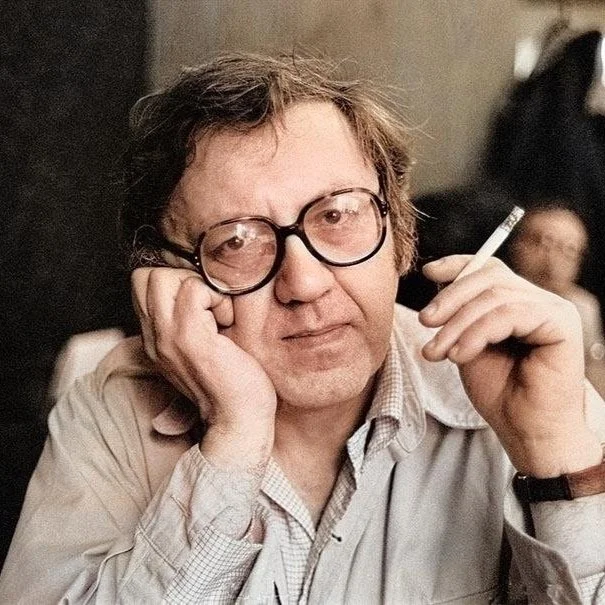
Saul Leiter (1923–2013) was an American photographer and painter. From the late 1940s he photographed the streets of New York in colour, close to his home, at a time when serious photographers worked in black and white. His colour work became widely known only in 2006, when he was 82.
The story
In 1946 Saul Leiter was 23. He had been studying to become a rabbi, like his father Wolf, a well-known Talmud scholar. Then he left that path and moved to New York to paint. “I came to New York to get away from home,” he said. About the religious studies, he said only: “And for some mysterious reason I turned away from it.”
Painting led him to the camera. The abstract painter Richard Pousette-Dart encouraged his interest in photography. So did the photojournalist W. Eugene Smith, who suggested he meet Edward Steichen. In 1953 Steichen showed his black-and-white pictures at the Museum of Modern Art. From the late 1940s Leiter also shot colour slides, mostly on daily walks near home.
Colour did not pay the rent, but fashion did. In 1957 Henry Wolf, art director at Esquire, published his first fashion pictures. From 1959 his colour work ran in Harper's Bazaar. Later came Elle, Nova and British Vogue. “I had the hope that the result would look like a photograph rather than a fashion photograph,” he said.
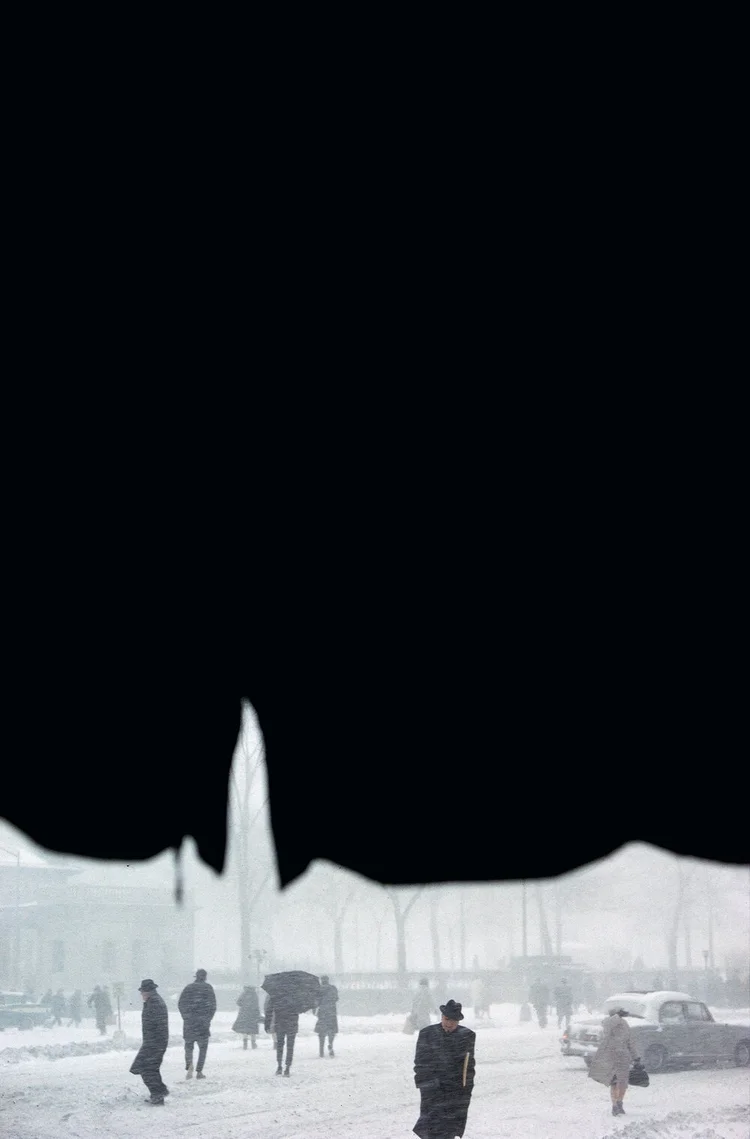
His own street pictures were seen by very few people. He rarely printed his slides. Instead he looked at them on a lightbox or projected them on a wall. In them, snow, rain and shop windows often stand between him and the people. In Canopy, a black awning fills most of the frame, and small figures walk through the snow below.
Commercial work slowly ended in the 1970s. In 1981 his Fifth Avenue studio closed. He went on painting and photographing in the East Village, where he had lived since 1952. Then, in 1993, Howard Greenberg Gallery showed his work. In January 2006 the publisher Steidl released Early Color, edited by Martin Harrison. It was his first monograph. He called it his “little book,” and it brought him wide attention at 82. Museum shows followed in Milwaukee in 2006 and at the Fondation Henri Cartier-Bresson in Paris in 2008.
He died in 2013, days before his 90th birthday, in the same East 10th Street apartment. After his death, the Saul Leiter Foundation began to sort his slide archive. It holds at least 40,000 items. The young man who left home to paint had spent a lifetime looking closely at ordinary streets. “A window covered with raindrops interests me more than a photograph of a famous person,” he said.
The work


- 1923Born on 3 December in Pittsburgh, Pennsylvania
- 1946Leaves his religious studies and moves to New York to paint
- 1948Begins working in colour
- 1953Edward Steichen includes his work in Always the Young Strangers at MoMA
- 1959His colour fashion work begins to appear in Harper's Bazaar
- 1981His commercial studio on Fifth Avenue closes
- 2006Early Color is published by Steidl; first solo US museum show, in Milwaukee
- 2008First solo museum show in Europe, at the Fondation Henri Cartier-Bresson in Paris
- 2013Dies on 26 November at his home in New York, aged 89
Lessons
Shoot through things. Windows, rain, snow and awnings often fill much of his frame. What hides the scene also gives the picture its mood.
Stay close to home. Most of his colour slides came from daily walks near where he lived in New York.
Leave some doubt. He liked pictures where you are not sure what you see. Let a viewer look twice.
Try this: for one week, photograph your street only through something: a wet window, a shop glass, a gap between two signs. Keep the foreground soft.
Gear
Leiter used many cameras over seventy years. His foundation lists them in its chronology.
Detrola camera: a small camera his mother gave him as a teenager. With it he began photographing in black and white.
Leica M3: his main camera from about 1954. In the 1970s he used a Leica M4 for commercial work.
Kodachrome slide film: he shot colour slides from the late 1940s, often on Kodachrome, and rarely printed them.
Around 1948 he also used an Argus C3, an Auto Graflex Junior and an early Rolleiflex. In 2003 Olympus gave him a grant and an Olympus E-1, his first digital camera.
Books
Early Color (Steidl, 2006). His first monograph, with an introduction by Martin Harrison. It has 100 colour photographs on 176 pages, mostly street pictures of New York from the late 1940s and 1950s. For most people this was the first chance to see his colour work at all. The book brought him wide attention when he was 82 and has been reprinted. The best place to start.
All About Saul Leiter (Seigensha, 2017; English edition with RM, 2018). A compact paperback of 312 pages with about 200 works from the 1940s onward. It covers his street photographs, advertising and fashion work, nudes and paintings, with short quotations from Leiter himself. Texts are by Margit Erb, Pauline Vermare and Motoyuki Shibata. A good, affordable overview for readers who want to see every side of his work.
In My Room (Steidl, 2018). A clothbound book of 85 black-and-white photographs on 192 pages, with a foreword by the film director Robert Benton. The pictures are intimate portraits and nudes of women Leiter knew, mostly made in his East Village studio. He planned a book of nudes in the 1970s, but it was not finished in his lifetime. For readers who want to see his quieter, private work.
The Unseen Saul Leiter (Thames & Hudson, 2022). Edited with texts by Margit Erb and Michael Parillo of the Saul Leiter Foundation. The 160-page book shows about 75 colour slides that were never published before, found while the foundation surveyed his archive. The texts explain how he organised his slides and how the archive is now catalogued and restored. A good second book after Early Color.
In his words
“Seeing is a neglected enterprise.”






Five well-known photographs and three names under each. Can you name the photographers? Open a hint if you get stuck.