Saul Leiter came to New York in 1946 to become a painter.
He was 23, the son of a rabbi from Pittsburgh, and he had left his religious studies. Within a few years he was also photographing the streets around him in colour. He kept painting almost every day for the rest of his life.
For decades, only a few people saw those colour pictures.
He made his living with fashion photographs.
From 1957, he worked for Esquire and then Harper’s Bazaar, for about twenty years. Wide recognition came only in 2006, with the book Early Color, when he was 82. He died in 2013, a week before his 90th birthday.
This article follows his life, his New York, and what he said about fame.
A rabbi’s son from Pittsburgh
Saul Leiter was born in Pittsburgh on 3 December 1923. His father, Wolf Leiter, was a rabbi and Talmud scholar. Saul studied to become a rabbi too, but he left before he finished.
His mother gave him his first camera. In 1946 he moved to New York. He wanted to paint.
Painting and photography in New York
In New York he met the painter Richard Pousette-Dart and the photographer W. Eugene Smith. Both encouraged him to take photography seriously. From about 1948 he worked in colour.
In 1952 he moved to East 10th Street in the East Village. He lived there until his death, and most of his pictures were made within a few blocks of home.
In 1953, Edward Steichen included some of his black-and-white photographs in the exhibition Always the Young Strangers at the Museum of Modern Art in New York.
Taxi, New York, 1957. Photograph by Saul Leiter.
Fashion work
In 1957, the art director Henry Wolf gave Leiter fashion work at Esquire. When Wolf moved to Harper’s Bazaar in 1958, Leiter went with him. He photographed fashion for about twenty years. In 1981 he closed his commercial studio on Fifth Avenue.
Snow, rain and windows
Leiter photographed what he saw close to home: people under umbrellas, snow, rain on windows, reflections and the colours of the street. Some of his best-known pictures are Taxi (1957), Canopy (1958) and Snow (1960).
He did not look for fame. He once said: “In order to build a career and to be successful, one has to be determined... I much prefer to drink coffee, listen to music, and to paint when I feel like it.”
Early Color
In 1992, the curator Jane Livingston included him in her book The New York School. From 1993 the Howard Greenberg Gallery in New York showed his work. In 2006 Steidl published Early Color, and his colour photographs reached a large audience for the first time. In 2008 he had his first museum exhibition in Europe, at the Fondation Henri Cartier-Bresson in Paris.
In 2013 the filmmaker Tomas Leach released In No Great Hurry: 13 Lessons in Life with Saul Leiter, a documentary about him.
His partner, the painter and model Soames Bantry, died in 2002. Saul Leiter died at home in the East Village on 26 November 2013, aged 89. A year later Margit Erb set up the Saul Leiter Foundation.
We also made a short video with Saul Leiter’s advice for better photos: watch it here.
The Book
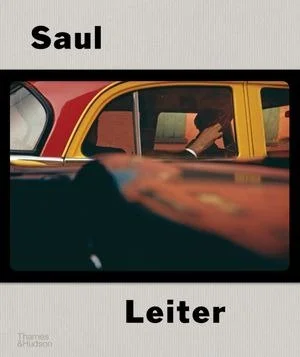
Saul Leiter: The Centennial Retrospective
Thames & Hudson · 2023 · 352 pages · By Margit Erb and Michael Parillo
Published for his hundredth birthday, the book was made by the two people who run the Saul Leiter Foundation. It has 340 illustrations.
Taxi (1957) is on the cover.
More stories:

Hoover is a rescued vulture at Elmwood Park Zoo. Midway through Claire Rosen’s photo session, she left her perch and landed on the photographer’s head.