AT A GLANCE
- Known for
- Hong Kong street scenes of the 1950s and 1960s, built on light, shadow and lines
- Worked in
- Black and white
- Camera
- Rolleiflex twin-lens reflex
- Also
- Actor and film director, more than 20 films
- Start with
- Hong Kong Yesterday (Modernbook Editions, 2006)
- Links
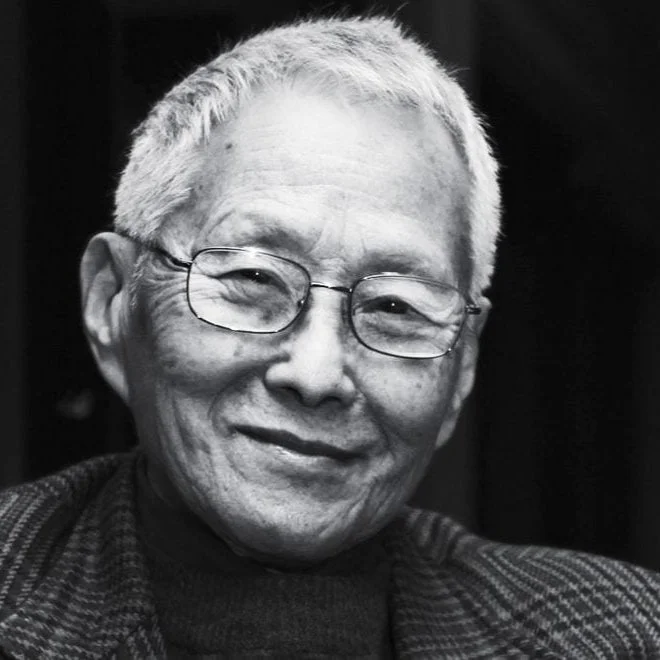
Fan Ho (1931–2016) was a Hong Kong photographer and film director. In the 1950s and 1960s he walked the city with a Rolleiflex and waited for the light. His pictures of markets, alleys and stairs, cut by hard shadows, won him close to 300 awards at photo salons. Then he spent decades making films, and the photographs were rediscovered only late in his life.
The story
Not long after Fan Ho came to Hong Kong from Shanghai in 1949, bad headaches began. At the time he was studying literature at New Asia College. After many medical tests, a specialist said he was probably working too hard. The advice was simple: walk more.
Walking alone did not suit him. “I felt like an idiot just walking around Hong Kong,” he said. “So my father bought me a camera, so I was walking and shooting.”
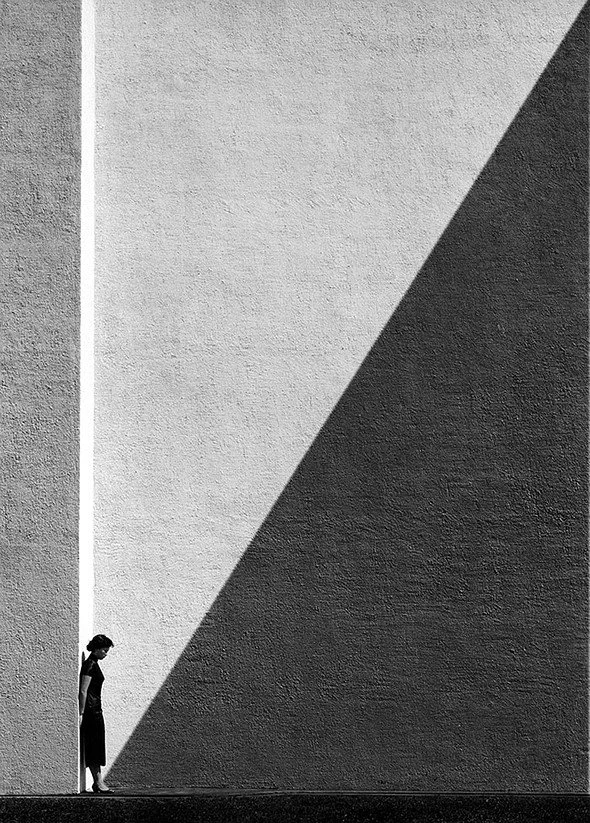
The family lived on MacDonnell Road, in the Mid-Levels. From there the walks went down the hill, into back streets and narrow lanes. The place always came first, often chosen for its light and lines more than for the people. Then came the wait for someone to step in. Sometimes it took hours, and often nothing happened.
Prints sent to photo salons around the world began to win prizes. “The first taste of fame is so sweet,” he said.
But fame did not pay. “I had only fame but no fortune,” he joked. In 1961 the Shaw Brothers studio took him on as an actor, and by 1969 he was directing his own films. More than 20 followed, in Hong Kong and Taiwan, many of them commercial. “I didn’t feel artistically satisfied,” he said.
So the negatives waited. In 1996 he retired from film and joined his family in San Jose, California. Four years later, in Palo Alto, his Hong Kong photographs had their first solo show since the 1960s.
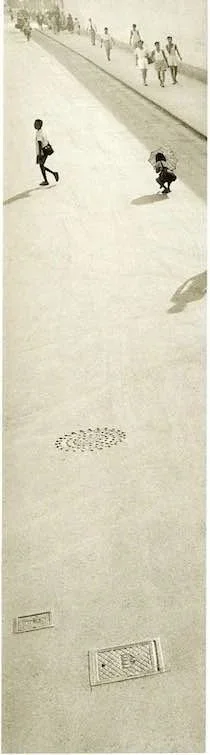
Back with the old negatives, he cropped them again. School is Over was meant to be a picture of tram lines. Then two children at the side caught his eye, and the square frame became a thin strip. “It’s like making a movie,” he said.
The student once told to rest from his books had never stopped writing. “I used the lens to write, instead of the pen.”
The work


- 1931Born in Shanghai
- 1949Moves to Hong Kong with his family
- 1958Named one of the world’s top ten photographers by the Photographic Society of America
- 1961Joins the Shaw Brothers studio as an actor
- 1969Starts directing his own films
- 1996Retires from film and moves to San Jose, California
- 2000First solo show of his Hong Kong photographs since the 1960s, in Palo Alto
- 2006Hong Kong Yesterday, his first photobook in English
- 2016Dies in San Jose
Lessons
Choose the place, then wait. He picked a setting for its light and lines, then waited, sometimes for hours, for a person to walk into it.
Wait for the right light. He called photography “the art of light”. He waited for light that fit the picture, with strong contrast.
Keep your old negatives. Decades later he cropped frames from the 1950s and 1960s again and found new pictures in them.
Try this: find one corner near you with strong light. Go back at the same hour for a week and wait for someone to walk through it.
Gear
His father gave him his first camera, a Kodak Brownie. As a young man he developed his film in the family bathtub.
Twin-lens reflex camera: his main camera was a Rolleiflex 3.5 A. It made square negatives, which he later cropped into new shapes.
Books
Hong Kong Yesterday (Modernbook Editions, 2006). His first photobook in English. A hardcover of 112 pages with 70 duotone plates of Hong Kong in the 1950s and 1960s: workers, markets and streets, light and shadow. It has been reprinted many times and is the usual place to start.
The Living Theatre (Modernbook Editions, 2009). Despite the title, it is not about theatre. The street is the stage. About 150 duotone plates of people in markets, on the water and in the alleys, each with a caption. It continues Hong Kong Yesterday without repeating its pictures. For readers who want more of the people and less of the geometry.
A Hong Kong Memoir (Modernbook Editions, 2014). The last book of the trilogy, with text in English and Chinese. Introduction by Mark Pinsukanjana and Bryan Yedinak, epilogue by Sarah van Ingelgom. It mixes pictures never published before with new images he made late in life by laying old negatives on top of each other. For readers who want to see his experimental side.
Portrait of Hong Kong (WE Press, 2017). His last project, finished after his death by his family and gallerist Sarah Greene, with a foreword by film director John Woo. The 153 photographs, chosen from about 500 negatives he had selected and cropped, travel from west to east across Hong Kong Island and over the harbour to Kowloon. They are more documentary than his famous street work. Extracts from his early essay Thoughts on Street Photography run through the book.
In his words
“I consider photography as the art of light.”
“Never, never dump your old negatives.”



One of the Most Influential Asian Photographers actually started taking photos because …