What Happens To A Memory When You Remove Someone From The Photograph That Holds It?
Radford used AI to make his father disappear.
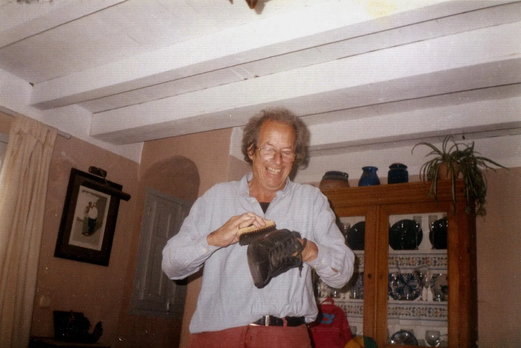
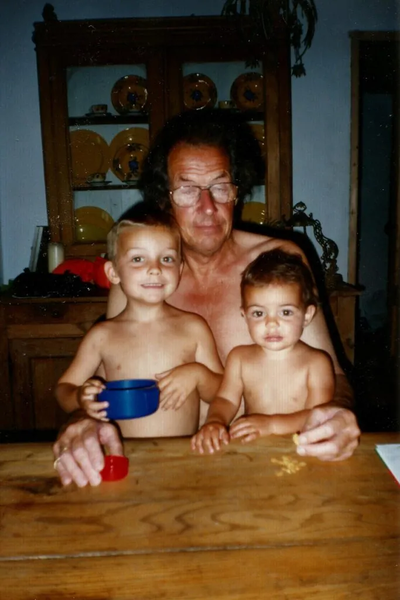
After his father died, William Josephs Radford went through thousands of family photographs and was surprised by how few included him. He found only around 50 to 60 images, mostly from birthdays, holidays, and other special moments. Instead of using AI to bring his father back, he began removing him from the photographs that remained.
The absence became more important than the technology.
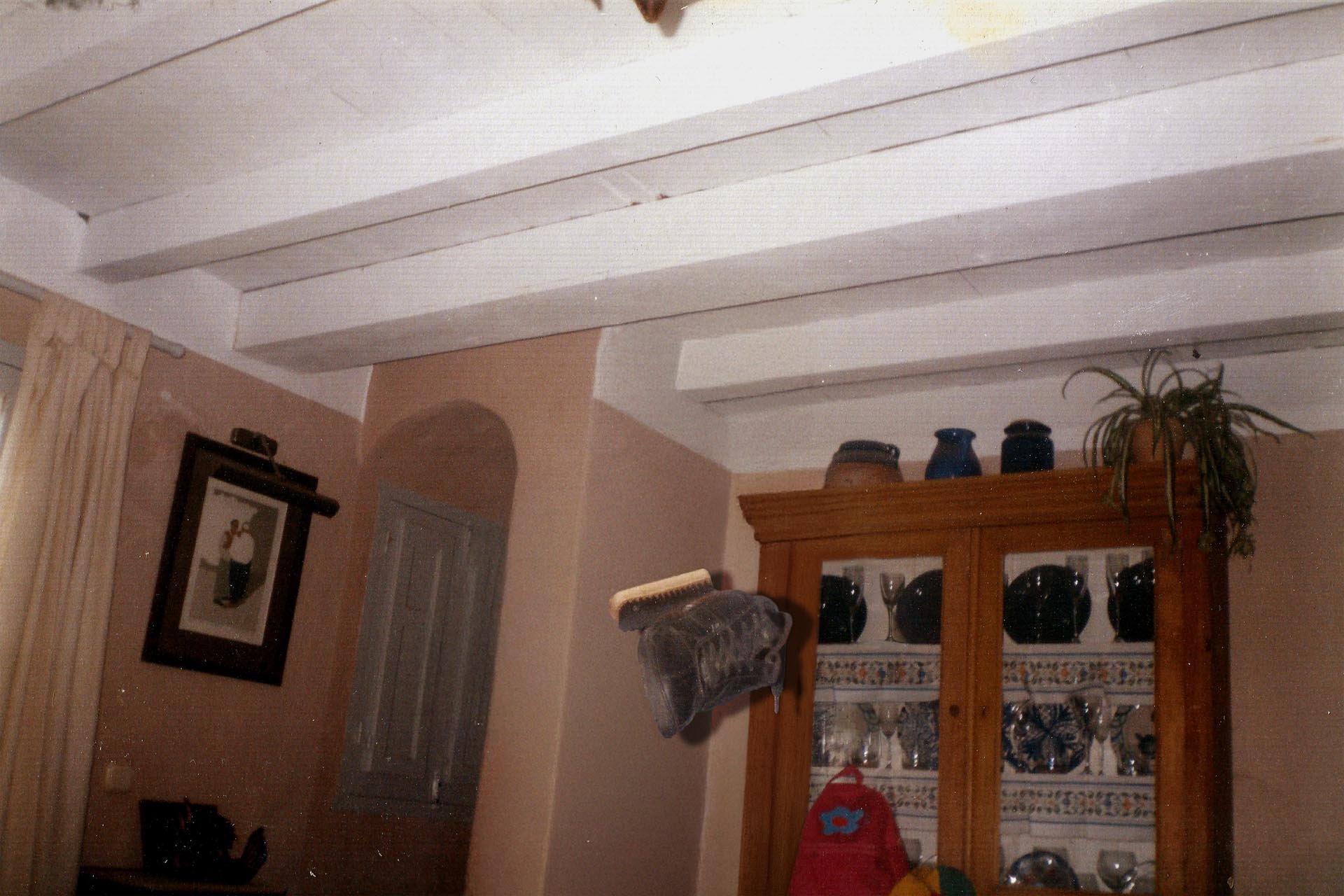
Radford spent six months rebuilding the spaces where his father once stood, sometimes correcting details as small as a spoon, a cushion, or a cabinet in the background. He then turned the photographs into lenticular prints, where his father appears and disappears as the viewer moves. In our interview, he talks about why this felt more powerful than restoration, why he broke his own rules about digital manipulation, and how the project changed the way he now sees his family archive.
Radford's experience shows how looking back through an archive can reveal something that was not obvious when the photographs were made, and how the right technique can grow from that discovery rather than come before it. It is also a useful example of how to test different ways of presenting an idea until the form finally feels connected to what the project is really about.
The Project
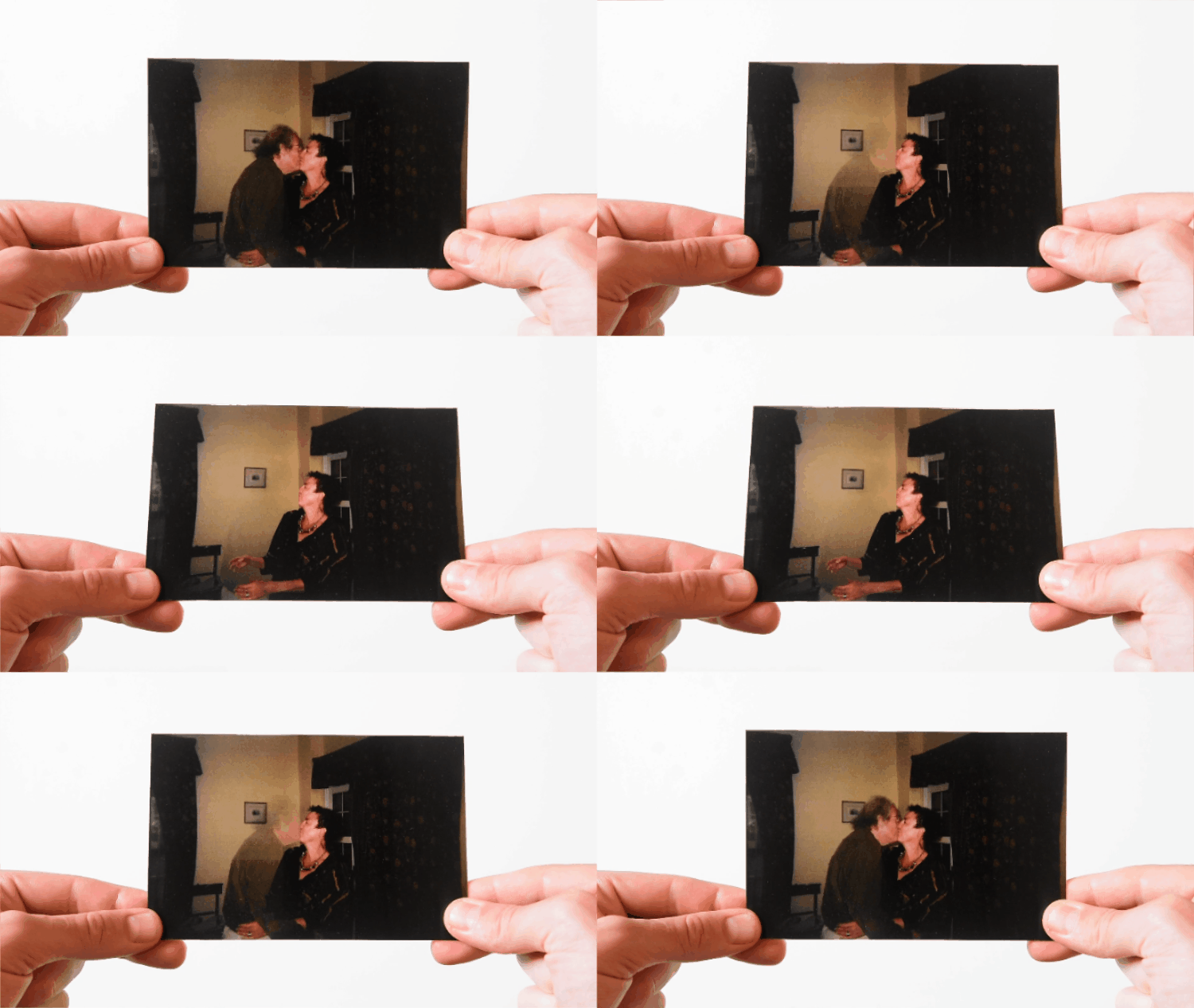
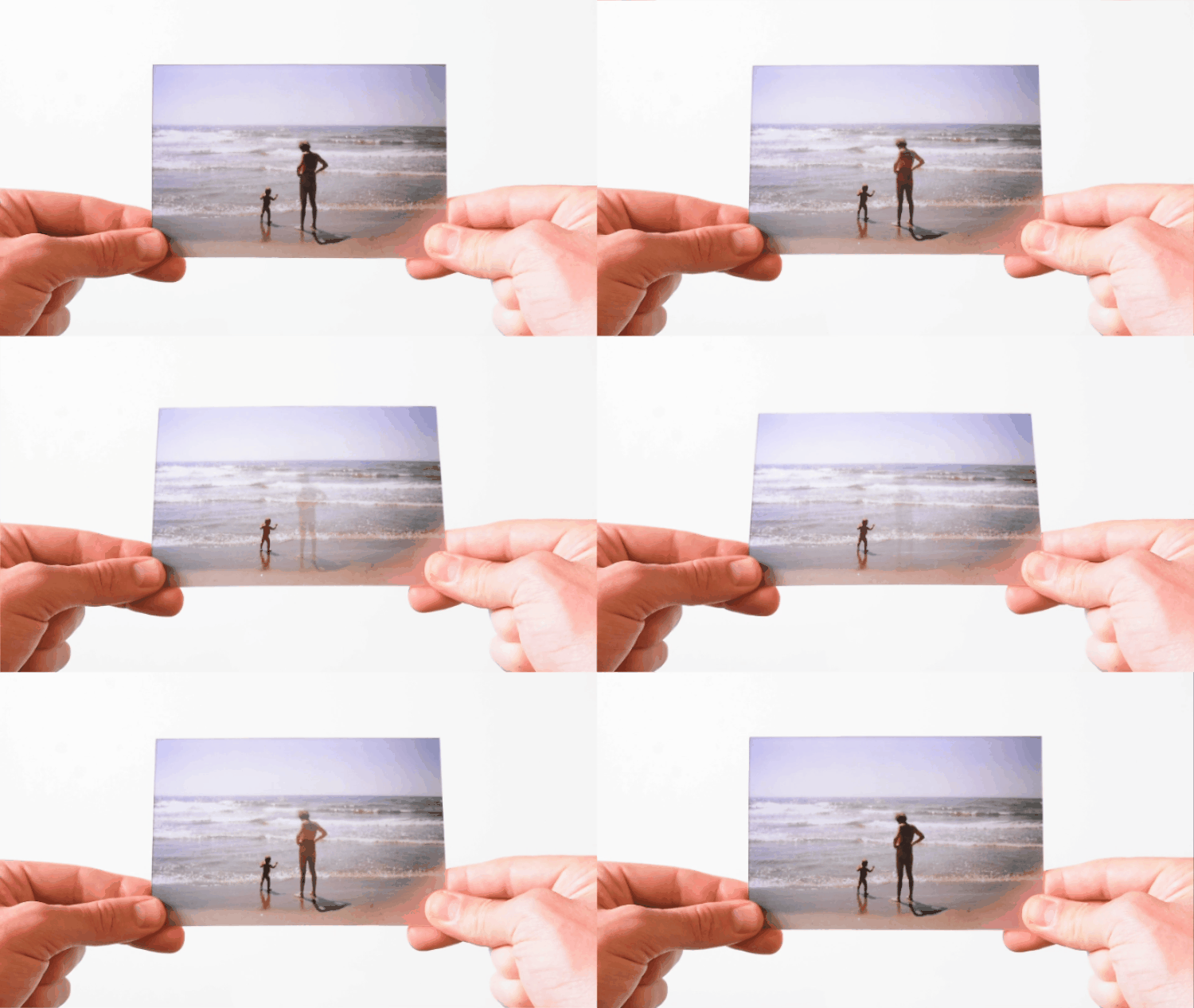
Transparent is the fifth and final project in William Josephs Radford’s series exploring the stages of grief after the death of his father. While looking through thousands of family photographs, Radford was surprised by how few included him, finding only around 50 to 60 images. Over six months, he digitally removed his father from selected photographs and carefully reconstructed the spaces left behind. The final images were produced as lenticular prints, allowing his father to appear and disappear as the viewer moves. The project reflects on absence, memory, and the changing relationship between photographs and the experiences they come to represent.
Project Statement
Have you ever remembered a person, a place, or a moment, only to later realise that what you remember is actually a photograph? A single image can become so deeply connected to our memories that, over time, it becomes difficult to separate the photograph from the experience itself. We begin to question whether we truly remember the moment, or whether we only remember the image that represents it.
After my father died, I looked through our family photo albums. I was surprised by how few photographs included him. This made me question how present he really was during my childhood. Out of thousands of family photos, I found him in only a small number of them, mostly taken on special occasions like birthdays and holidays.
Transparent is the fifth and final project in a series exploring the stages of grief. This final chapter represents acceptance. Over six months, I carefully removed my father from our family photographs. I then transformed these altered images into lenticular prints that change as you move. The shifting images reflect not only that he is no longer with us, but also how memories can change over time.
Essay
Somewhere in the last eighteen months, “remove person from photo” quietly became one of the most-used functions in consumer photo editing. It sits a tap away in the default phone gallery app now, no subscription, no learning curve, point at an ex, a photobomber, a stranger in the background of a holiday snap, and watch them dissolve into believable sky or pavement. The tool was built for convenience. Nobody designing it, presumably, was thinking about grief. William Josephs Radford's Transparent is what happens when someone points that same technology at their dead father and asks it to do something considerably more complicated than tidying up a background.
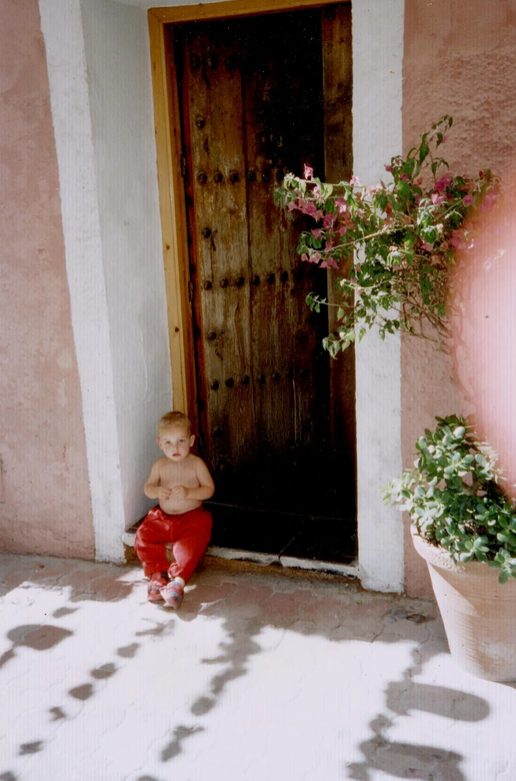
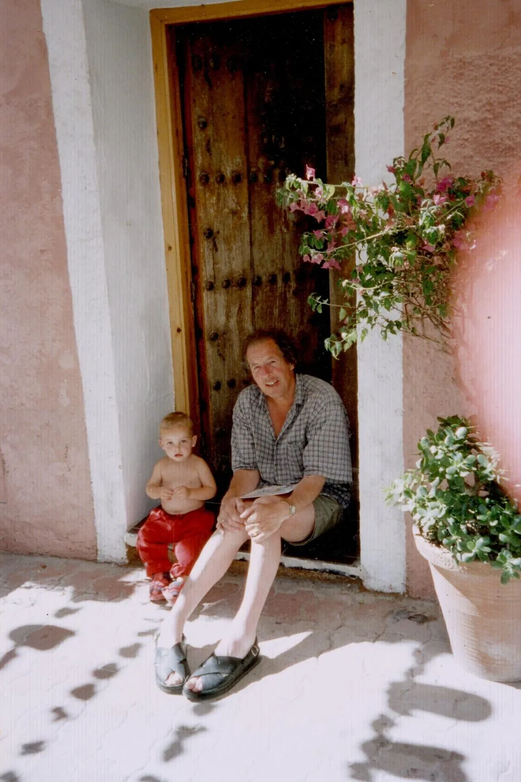
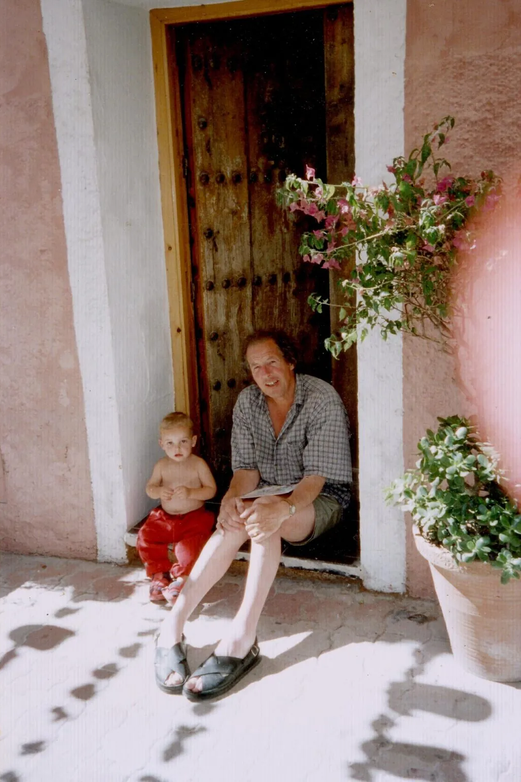
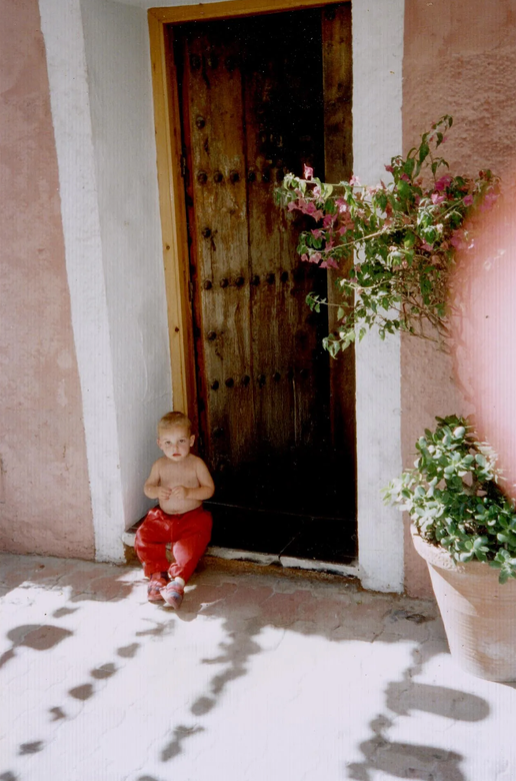
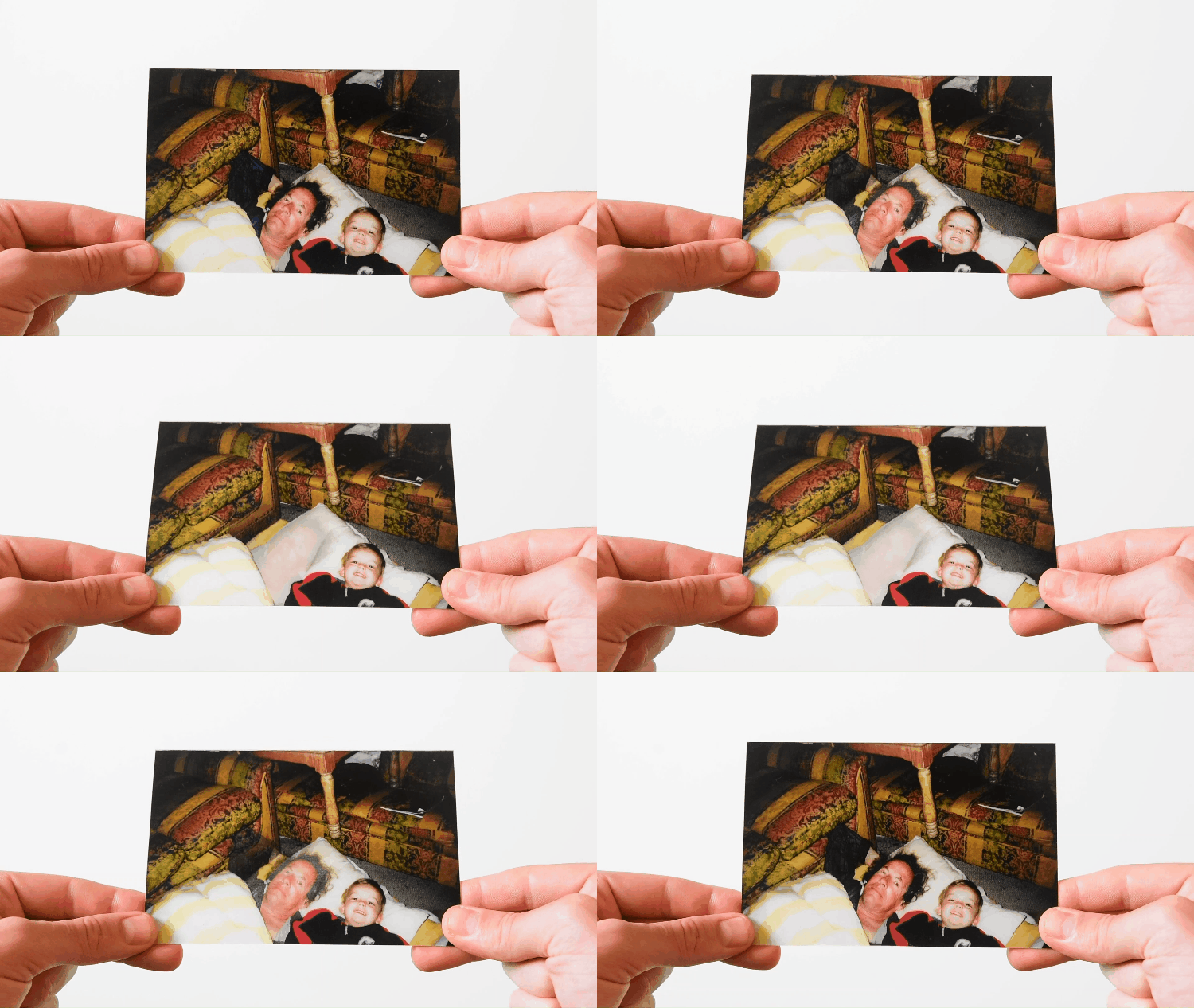
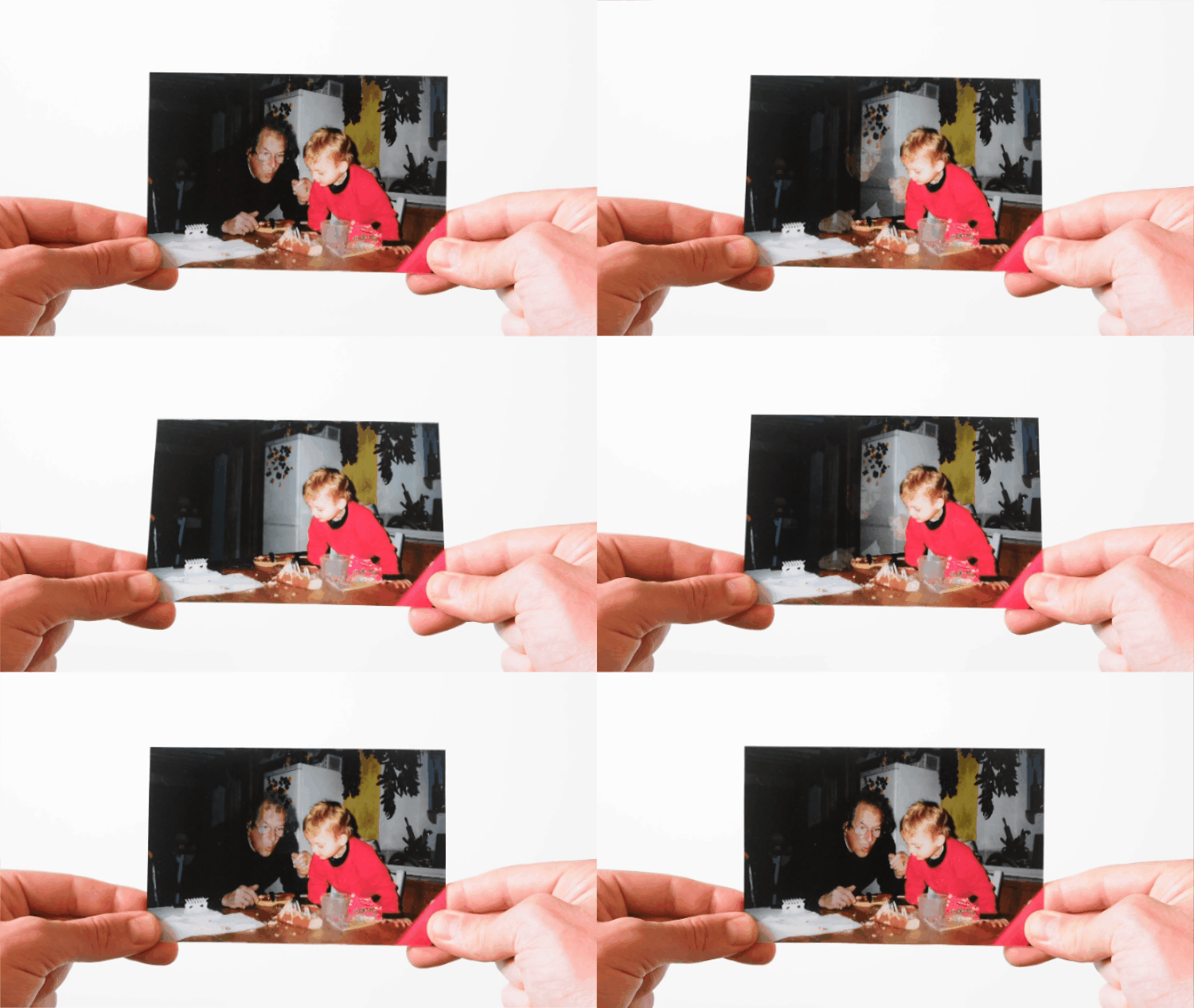
The project, the closing chapter of a five-part body of work made in the two years since Radford's father died, takes a set of ordinary family photographs and removes him from each one, rebuilding the vacated space so convincingly that the alteration is only legible through the lenticular printing process Radford uses to present it: tilt the print and he's there; tilt it back and he isn't. It's a simple mechanical trick borrowed from novelty postcards, repurposed here to put the viewer's own body in charge of a decision no one should really have to make twice, whether someone is present or not.
What makes the work worth paying attention to right now, rather than as a purely personal document, is how squarely it lands inside a live and largely unresolved argument about what AI image tools are actually for. Public anxiety about generative editing tends to cluster around deception, synthetic events that never happened, public figures inserted into scenes for political effect, the slow erosion of the photograph as evidence. Radford's project runs in the opposite direction. Nothing here is being falsified for anyone's benefit but his own, and the falsification is announced rather than hidden: the whole premise depends on the viewer knowing, immediately, that what they're looking at has been altered. It's manipulation stripped of its usual motive.
That inversion matters partly because of who's doing it. Radford has built a decade-long practice on refusing exactly this kind of intervention, working instead through flash gels, long exposure and in-camera light painting — methods that leave the photograph's evidentiary claim more or less intact, whatever creative liberties they take with light and colour. His decision to abandon that principle for Transparent, spending the better part of a year in Photoshop and generative tools to get it right, tracks a broader and increasingly public reckoning among photographers who've spent careers treating the unedited frame as a kind of ethical baseline. The generation currently working out what to do with AI-assisted tools split fairly cleanly, by 2025, into refuseniks and early adopters, with not much room acknowledged in between for photographers who might use the tools exactly once, for exactly one reason, and mean it entirely differently from either camp.
There's a second, quieter cultural current running under the work: the rise of AI grief technology proper, the resurrection chatbots, the “deep nostalgia” animation tools that make still photographs blink and turn toward camera, the apps that promise a few more minutes of conversation with someone who's gone. That industry is generally in the business of addition: giving the bereaved more of the person than the archive actually contains, extending a presence past its natural limit. Radford's project sits at the opposite pole of the same technology, using identical tools to subtract rather than restore. Where the resurrection apps offer the comforting fiction that nothing has really been lost, Transparent insists on the opposite, that the loss is total, structural, retroactive, and that a photograph's usual claim to have simply recorded what was there can be undone as easily as it was made.
It's worth noting, too, that Radford appears to have been alert to the reputational risk of the medium he'd chosen, reportedly pushing for enough fidelity in the finished prints that they wouldn't read, in a gallery, as a shortcut. That instinct says something about where the culture currently sits on this question: AI-assisted work still has to earn the benefit of the doubt in a way that gel-and-shutter photography doesn't, regardless of the sincerity behind it. Whether that scepticism is warranted or just a hangover from a noisier, more careless wave of AI content is a separate argument. But Transparent is a useful test case either way, a body of work that used the technology everyone's currently worried about, for a purpose almost nobody anticipated, and came out the other side looking less like a trick than a form of mourning that happened to need new tools to finish the sentence.
Origin: At what point did you realise that looking through your family photo albums after your father's death was becoming a photographic project, rather than simply a private way of grieving?
In January 2026, after completing the first three projects on his absence, I felt compelled to scan all the images I could find of him in our family albums. It took a couple of days of continuous sifting and scanning. At this point, I had absolutely no idea what the project would eventually become.
The process was both a form of private grieving, as I reminisced over old photographs of him with friends and family, and an opportunity to share stories about our memories of him.
Presence Through Absence: You chose to remove your father from these photographs rather than use AI to bring him back. Why did absence feel more truthful than restoration?
I had not even considered this option until right now. I suppose there are a couple of reasons. Firstly, the previous projects centred around absence and the idea of him not being here anymore. Secondly, bringing him back in using AI would require a whole different approach, most likely involving training models to familiarise the AI with my father's appearance. Something which would have been very difficult considering how little material I had at my disposal.
Choosing the Archive: Out of thousands of family photographs, how did you decide which ones belonged in Transparent?
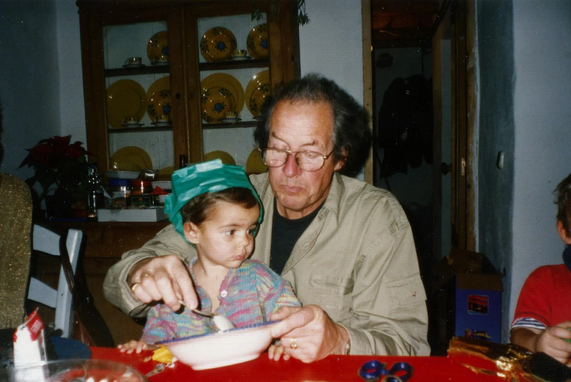
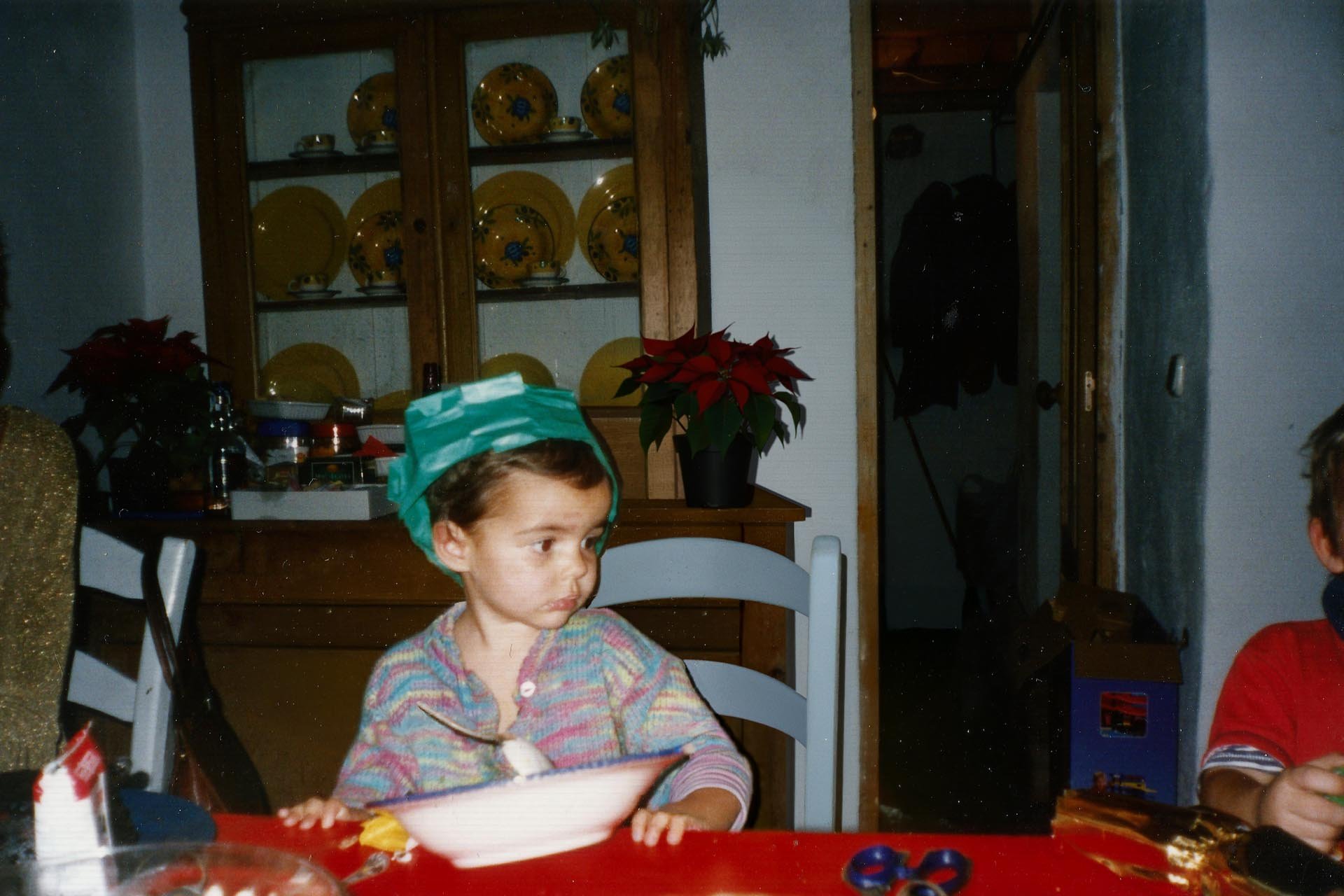
The selection process was one of the easiest parts. If he was in the photo, I scanned it; if he was not, I moved on to the next one. I ended up with roughly 50–60 pictures of him, from which the project became 25, as some were duplicates taken moments apart and some were left out for aesthetic reasons.
A couple of others were left out because they were of him with a previous family. It felt wrong adapting these to my project, as they are no longer images of my childhood to edit.
Remembering Through Photographs: You discovered there were surprisingly few photographs of your father. Did that change how you remembered your childhood, or only how you understood your family's archive?
I always knew my mother played a bigger role in my upbringing, somewhat of an old-fashioned dynamic, he was the breadwinner and she looked after the children. This meant we spent a lot more time with her and mostly saw him during meals, before he retreated to the lounge to watch TV undisturbed.
Still, I was somewhat surprised to see this reflected in the family archive. It is one thing to have an image of something in your head, and another to have it laid out in front of you. There is a form of cognitive dissonance that appears when you are confronted with these moments, as you do not want the acknowledgement of one truth to belittle the other. In my case, I did not want the acknowledgement of his absence to belittle what a wonderful father he was.
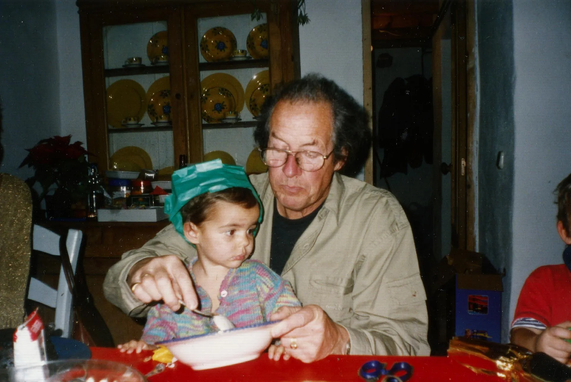
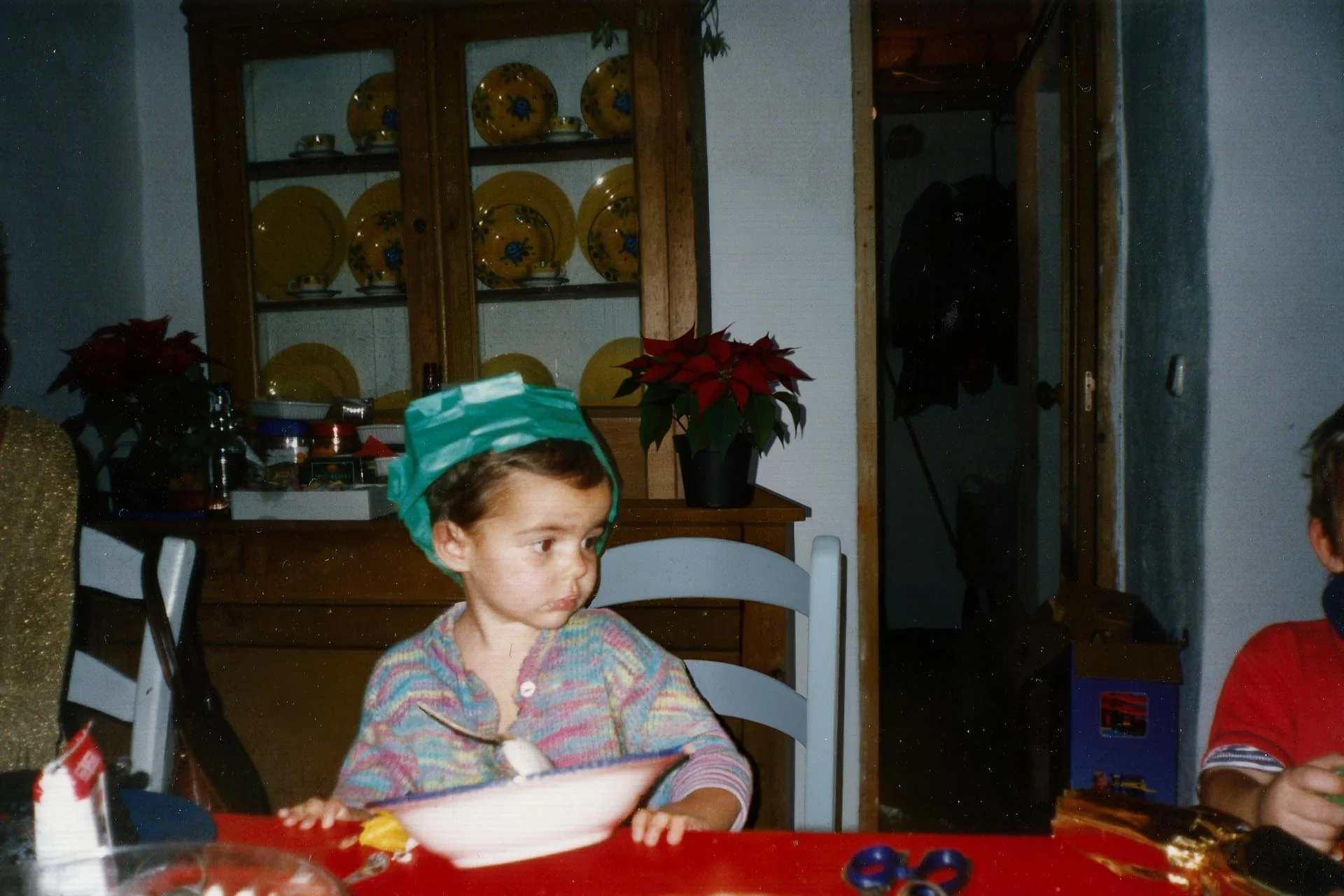
The Viewing Experience: Why did you choose lenticular prints, where the image changes as the viewer moves, instead of simply showing the original and altered photographs side by side?
I had originally intended to physically alter the images with bleach, covering the image with masking tape and cutting his silhouette out so the bleach would only affect the space he once occupied. After attempting it a couple of times, I soon realised this would only work in large format.
Firstly, I could not afford to print the pieces out that large only to experiment with. Secondly, I wanted to stay true to the original 6×4 format that family photos are usually in.
I spent weeks, months, pondering the best way to experience the project, going through multiple iterations and phases, from forming ghost-like auras to trying to make him look transparent, as if he was made of glass, or the shape of him was refracting light the way heat does. I even toyed with the idea of incorporating the Mourning Routine images, filling his silhouette with abstract images of the sky, as if to say, “This is where he is now.”
The eureka moment came when I thought to produce them as lenticular prints. There is something about him fading in and out of the image that is far more evocative than just comparing the two images side by side. They both convey the same idea, but one feels a lot more visceral.
It is the type of image anyone could walk past and understand without having to read an artist statement. In my mind, it transcends age, culture, and religion. You could hand one of these prints to a ten-year-old and they would most likely understand.
Breaking Your Own Rules: You've spent years building your visual language through in-camera techniques. How did you know this was the one project where using Photoshop and AI would make the work more truthful rather than less?
I did consider working in-camera for a while, projecting the image of him missing onto a white wall and physically occupying the space myself as a commentary on taking his place in the family and inheriting the responsibilities that come with it.
The other idea I had was to print the two versions, physically cut him out of the original and place the altered version behind, either displaying them with a block of glass between them or shooting through the empty space to create the final images.
I am also not sure the intention was to make them more truthful by using AI. I think the beauty here is that they are completely untruthful. Just as we face an ever-growing debate about the truth of images due to AI, I could not think of a better medium for exploring the concept.
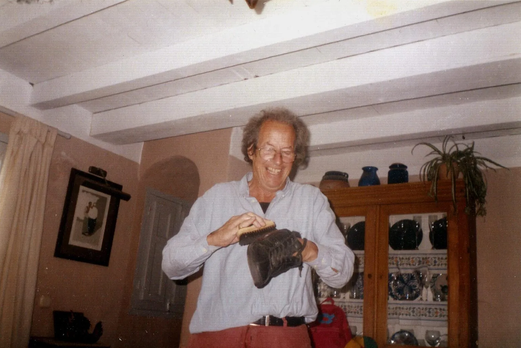
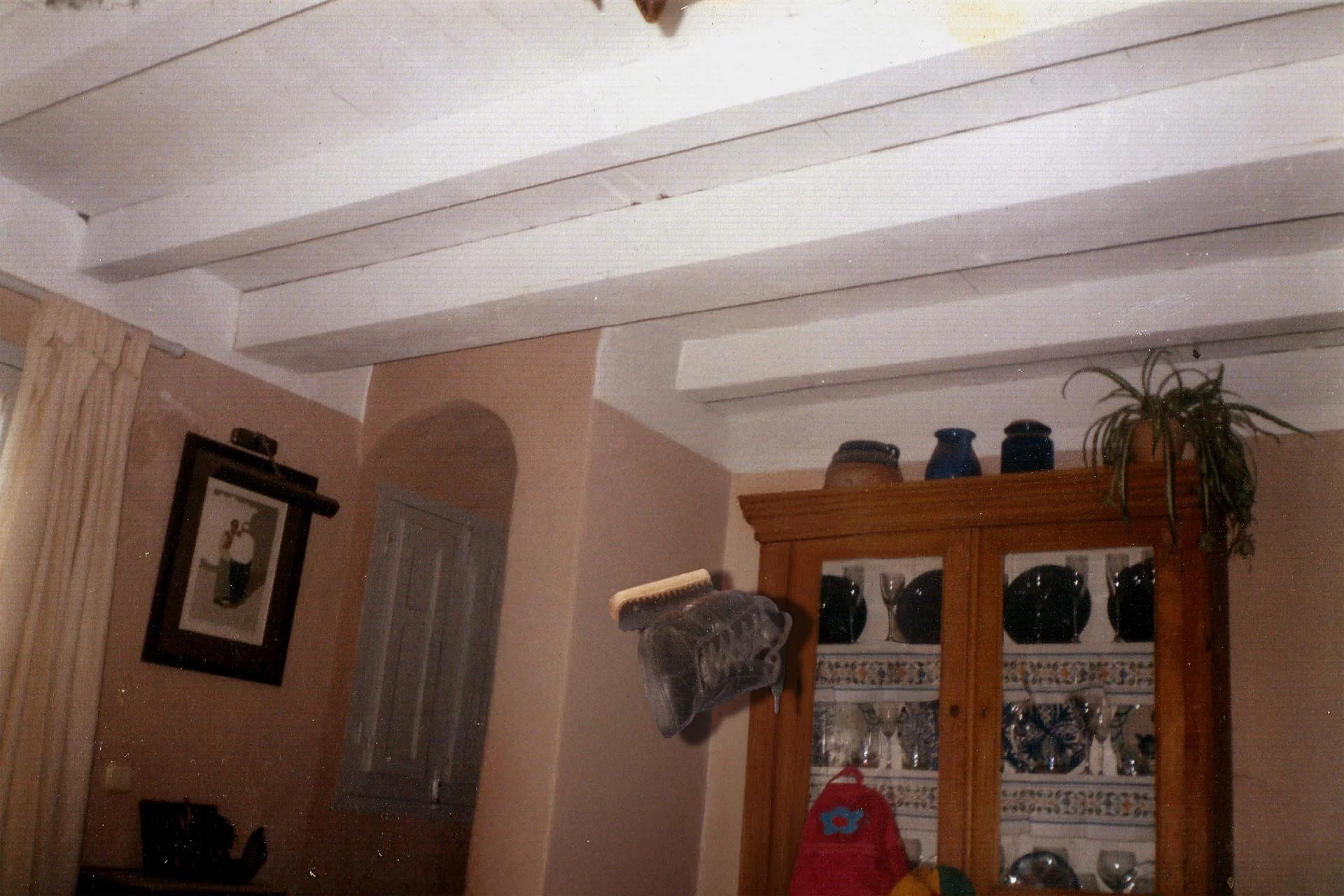
You say the images are “completely untruthful.” Where do you think the emotional truth of Transparent actually comes from? Is it the altered photographs themselves, or the fact that they reflect something you genuinely experienced after your father's death?
The emotional truth comes from my personal experience. It is the way I felt whilst looking through the archives, digested and fabricated into a visualisation of that experience. Through the project, I hope to convert this from an internal dialogue into a universal experience.
When It Still Didn't Feel Right: While rebuilding these photographs, was there a moment when an image looked technically convincing but emotionally wrong? What told you it was not finished yet?
It is the knowledge of this space beyond the photograph. How do you explain that the corner of a dresser was not that sharp? Or that we never had that colour of cushion? Or that the patterns on the plates are wrong?
I spent hours curating every single aspect of the reconstructed space, making sure everything felt right, from the shape of a spoon to the handle of a spade, and everything in between.
The challenging part was undoing large areas that did look right just to fix minor details. I remember listening to an artist interview at the time where they talked about how great artists paint from the back forward and mediocre artists paint from the front to back. I applied this concept to the project, often working on the furthest plane first and then progressively moving forward to the finer details.
You describe spending hours correcting details as small as the shape of a spoon. Was there one photograph that forced you to rebuild far more than you expected? What made that image especially difficult to get right?
The cabinet in the background of these three images was the bane of my life at the time. I think, psychologically, I felt the need to get it perfect in all three images, as it is the only item that the audience can cross-examine across multiple pictures. It almost became as much of a character in those images as a family member, learning its appearance so intimately through those few images.
Keeping the Work Alive: Every image asks the viewer to make the same physical movement to reveal the change. How did you stop that repeated gesture from becoming predictable across the project?
Well, we make this physical gesture whilst walking around a gallery space anyway. It is not so much a repeated gesture, but an involuntary one, in a sense.
Looking Back: After completing all five chapters of this series, what has this final project changed most about the way you think about photography?
It has changed the way I think about photography on multiple levels. Firstly, there is the Black Mirror-esque era that we are currently living in, where photos can be altered so drastically and convincingly thanks to AI.
I am so glad I grew up in a time when photography was much closer to truth than it is now. I am grateful I do not look back at these childhood images and wonder how much of the images are, quote-unquote, “real”.
Although it was interesting to explore another tool, looking back at the four projects I made before Transparent, I enjoy the process of image-making through a lens far more. In fact, I conducted the fourth chapter, Mourning Routine, alongside Transparent, as I almost felt guilty that I was using artificial intelligence and had this need to compensate for it creatively.
I enjoy the challenge of problem-solving far more through the medium of photography than on the screen of a laptop. With the Mourning Routine project, for example, I employed self-imposed limitations, such as only photographing through the windows of my apartment, forcing me to think outside the box and find different techniques for capturing the same thing every day while making it look different.
I have always been very opposed to post-production, so using the technology on family photos almost keeps my purity intact. As if I have not broken my morals because I never edited any of my own work with it; I only used it to change photos that already existed.
After spending months digitally removing your father from these photographs, has it changed the way you now look at the original family albums? Do you ever find yourself mentally seeing both versions of the image at once?
This is probably my favourite question, and the answer is yes. This project has become so entangled with the way I see these images that I automatically visualise him appearing and disappearing from the frame, to the point where I went to visit my aunt for the first time since my father's passing. She kindly brought out all the pictures she had of him, and my mind instantly started reconstructing the scene behind him.
More photography books and interviews?
We'd love to read your comments below, sharing your thoughts and insights on the artist's work. Looking forward to welcoming you back for our next [book spotlight]. See you then!
The past became visible once Richards learned where to look. For The Inner Passage, Virginia McGee Richards spent fifteen years photographing a waterway in the South Carolina Lowcountry. Photography Book Spotlight