Jo Ann Chaus Spent 10 Years Photographing Herself. The Pictures Helped Her Understand What She Had Kept Unspoken
Welcome to this edition of [book spotlight]. Today, we uncover the layers of 'Unspoken,' by Jo Ann Chaus (published by Kehrer Verlag). We'd love to read your comments below about these insights and ideas behind the artist's work.
The camera helped Jo Ann Chaus uncover herself.
What began as self-portraiture slowly became a way to understand feelings she had kept hidden for years. Over more than a decade, Chaus used clothes, objects, gestures, colour and carefully chosen locations to explore the expectations she had inherited from earlier generations of women. She first hoped the work might help her understand her mother, but in the end she discovered more about herself.
The project eventually became Unspoken.
The book brings together 72 photographs from more than ten years of work. In this interview, Chaus talks about how the project changed over time, how she moved from private images toward a wider story about women, and how the final sequence gradually took shape.
She explains how to recognise when a gesture feels too forced, how to notice when an image repeats something already said, and how spending time with a long-term project can reveal connections that were not clear at the beginning.
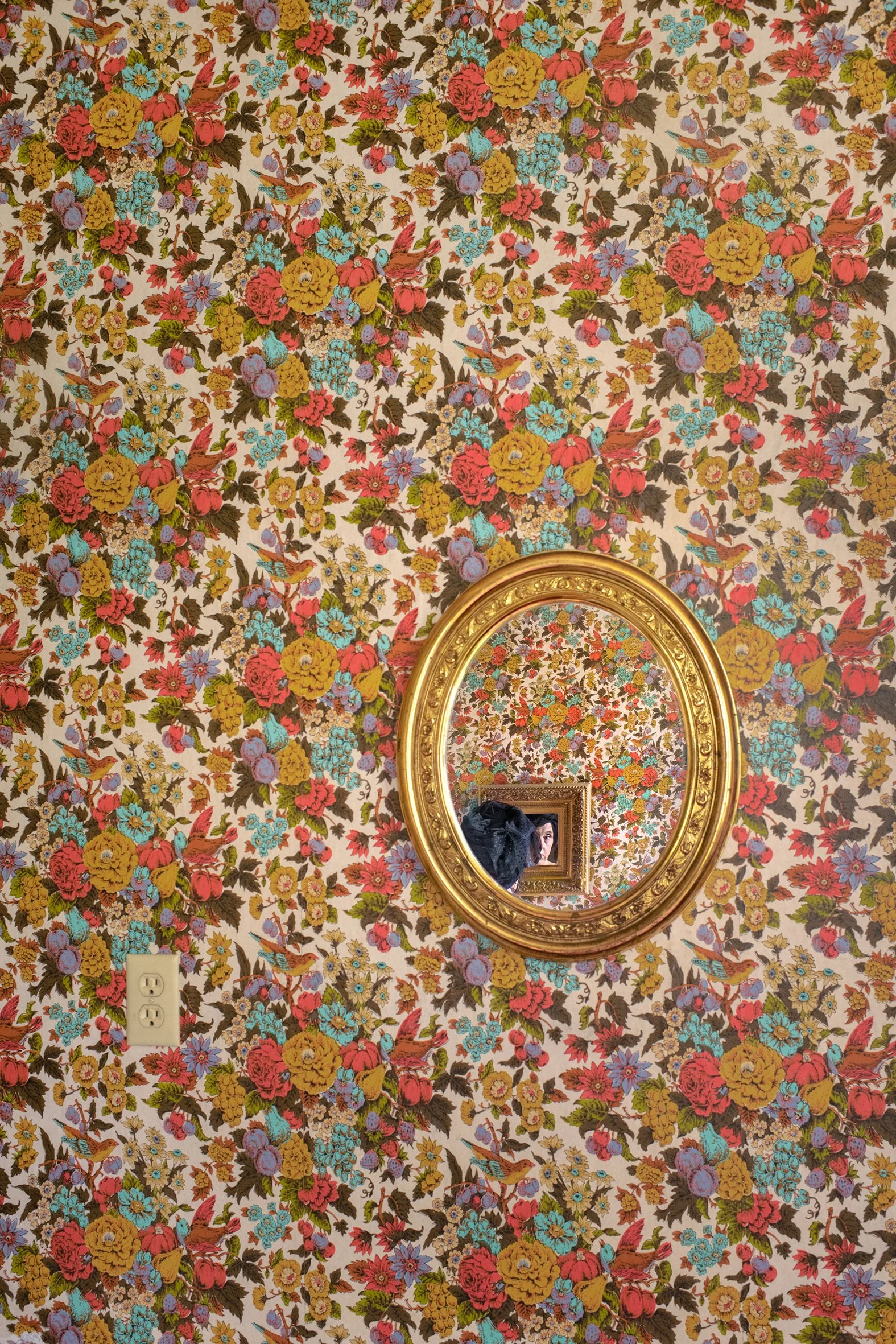
The Book
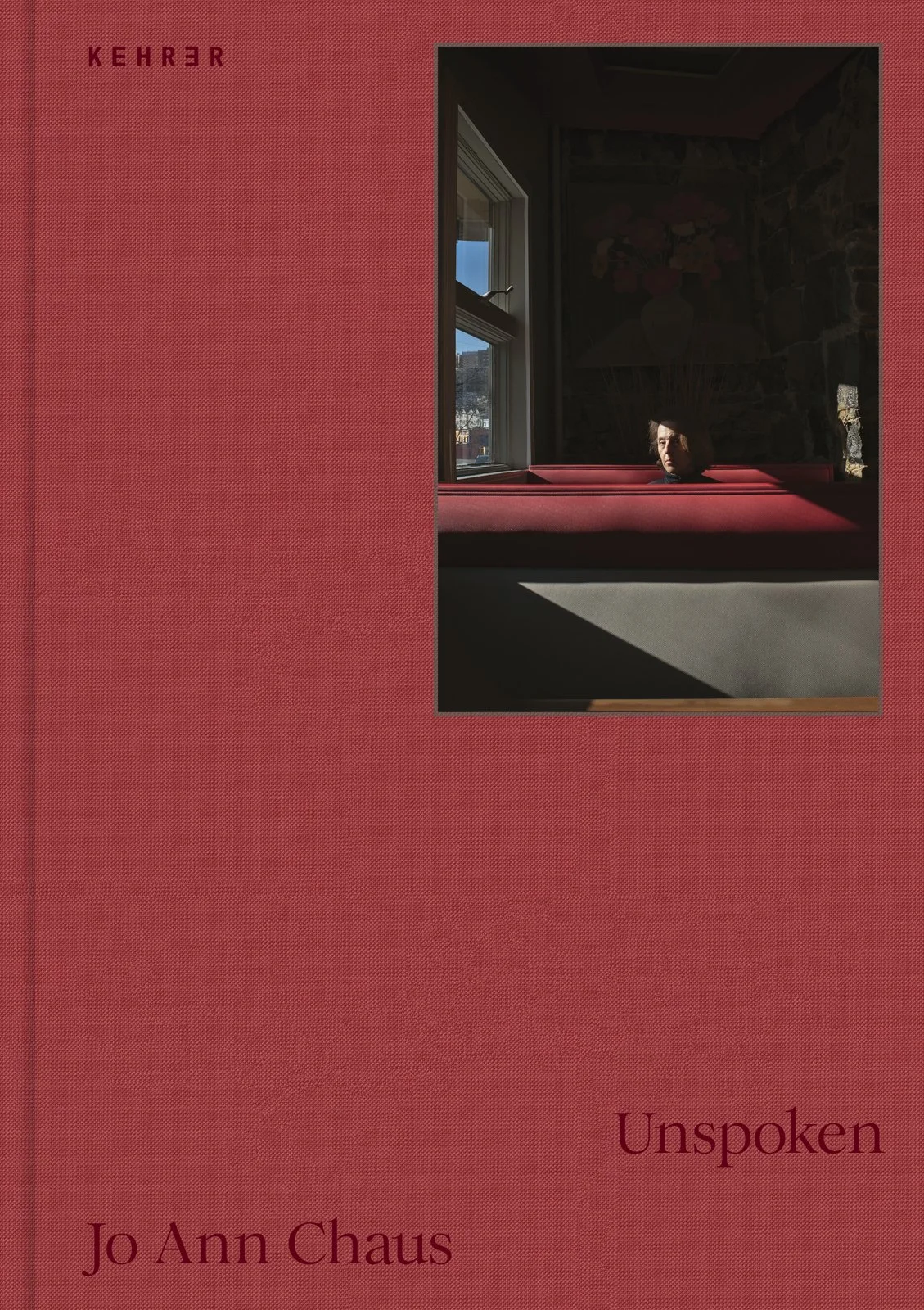
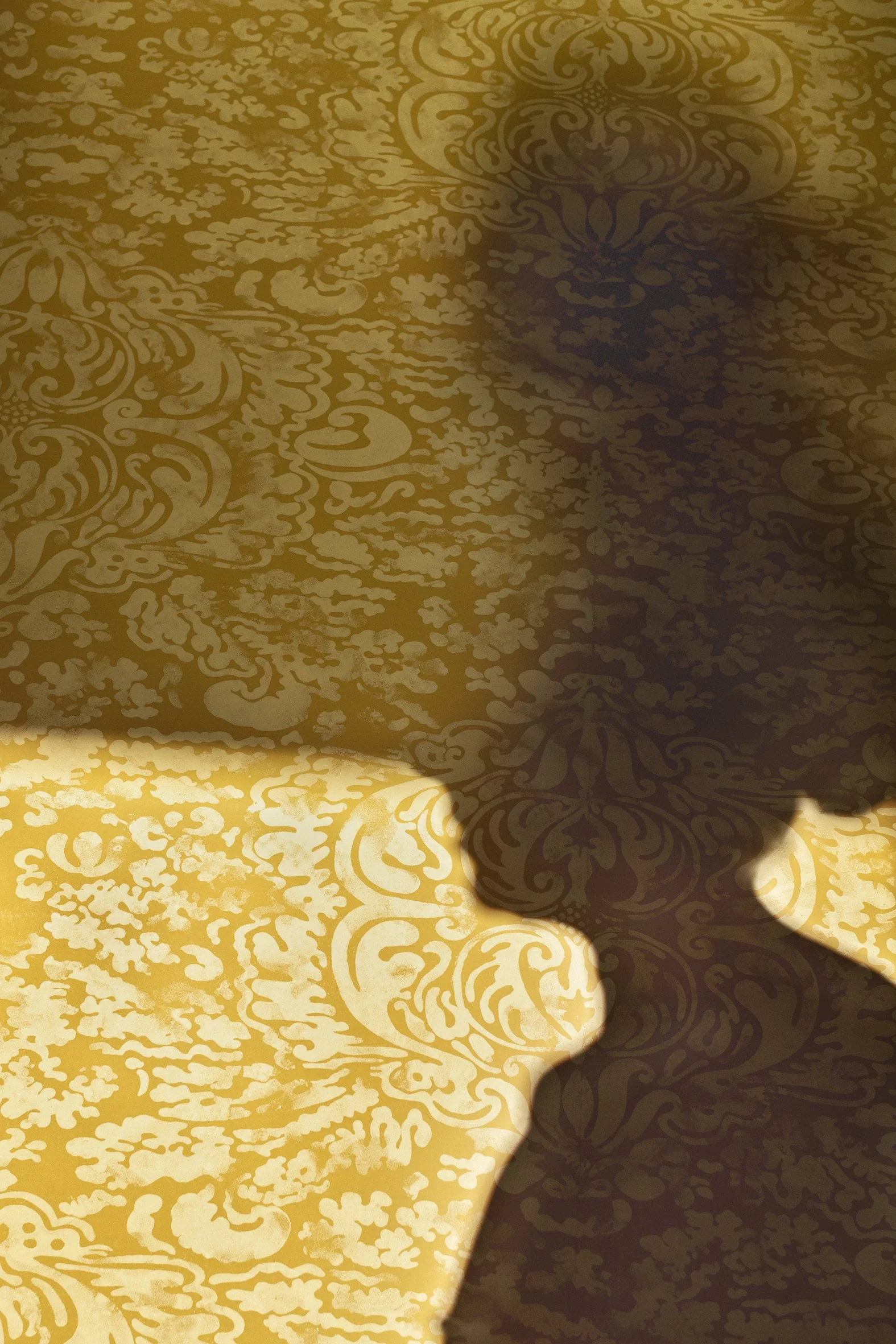
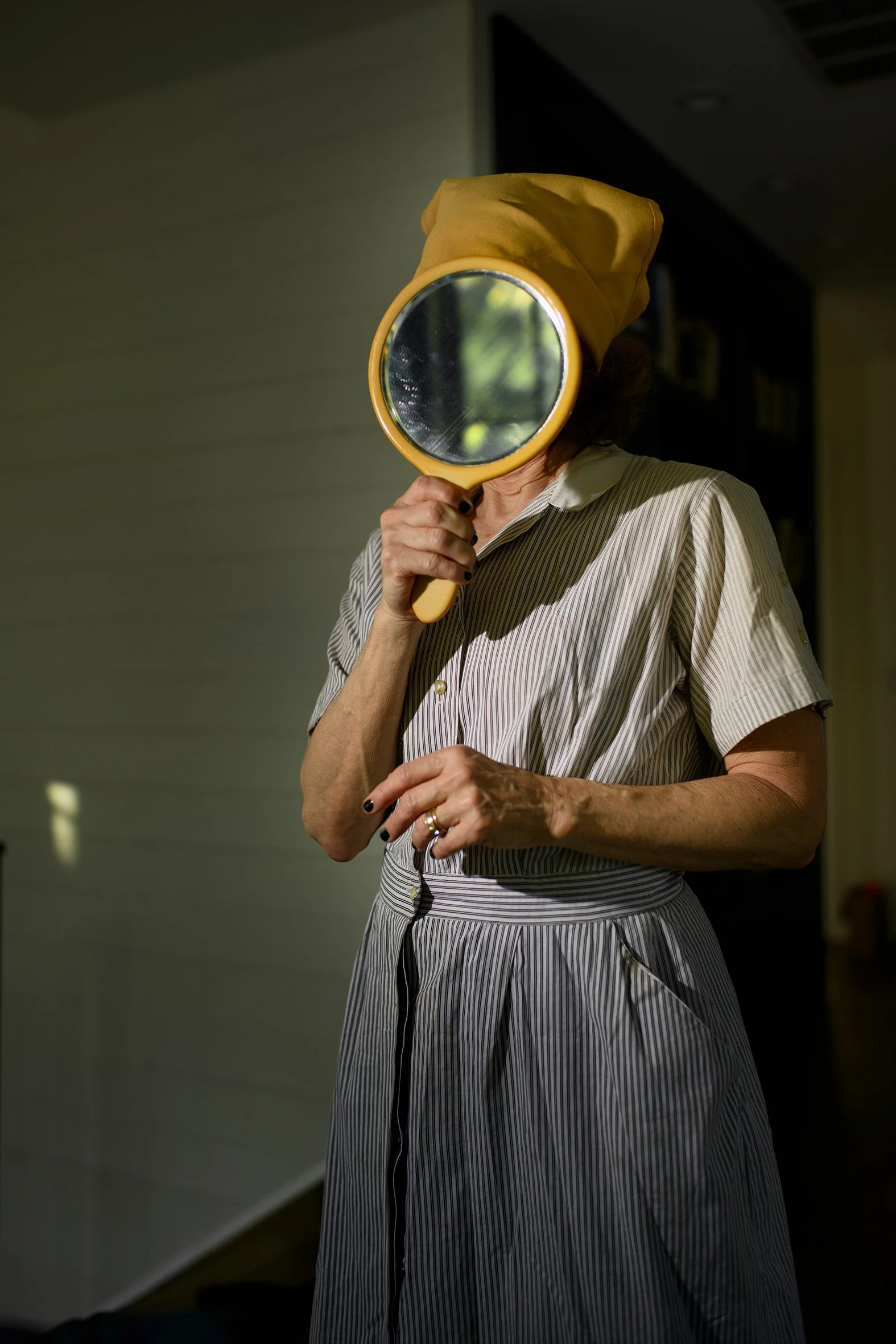
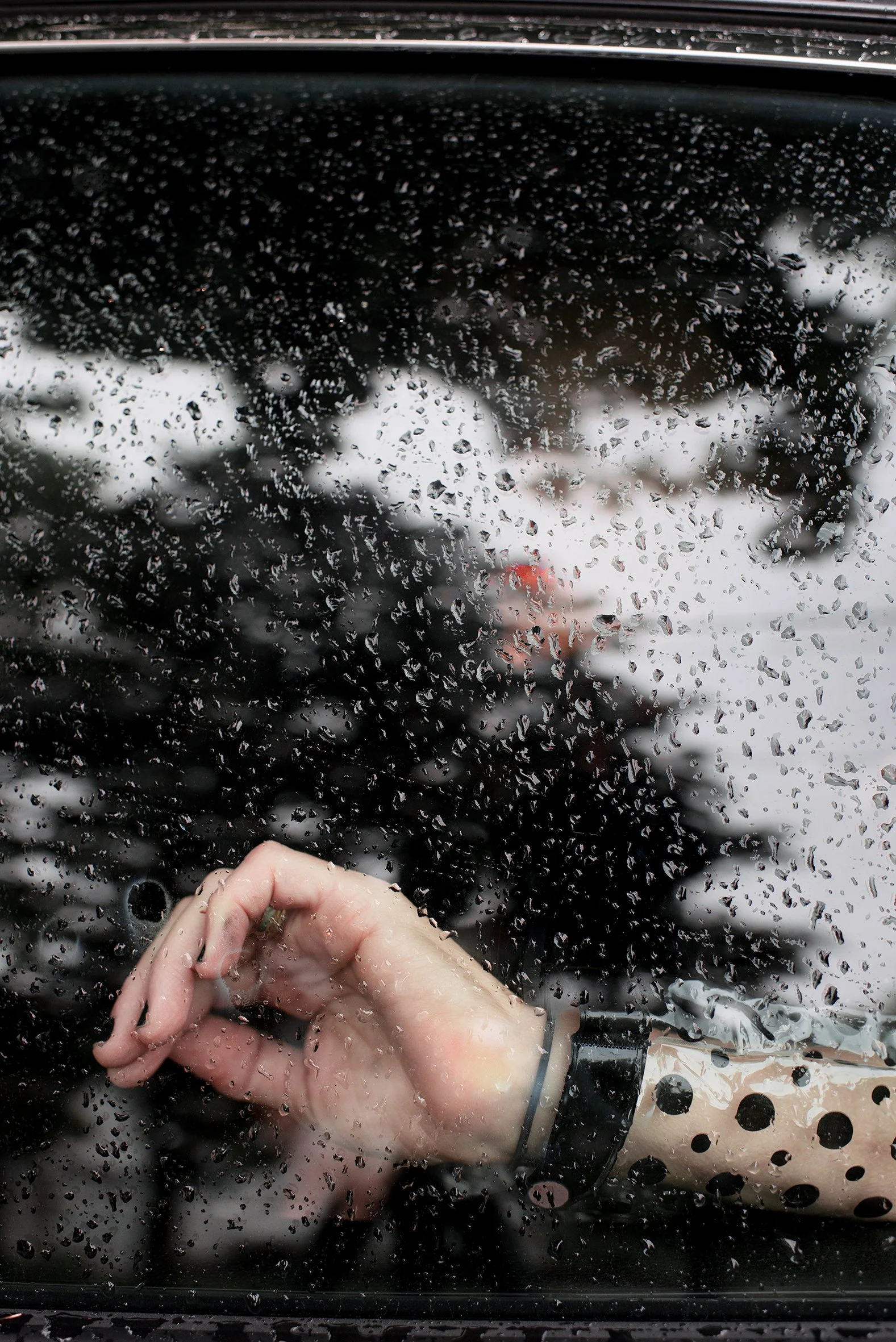
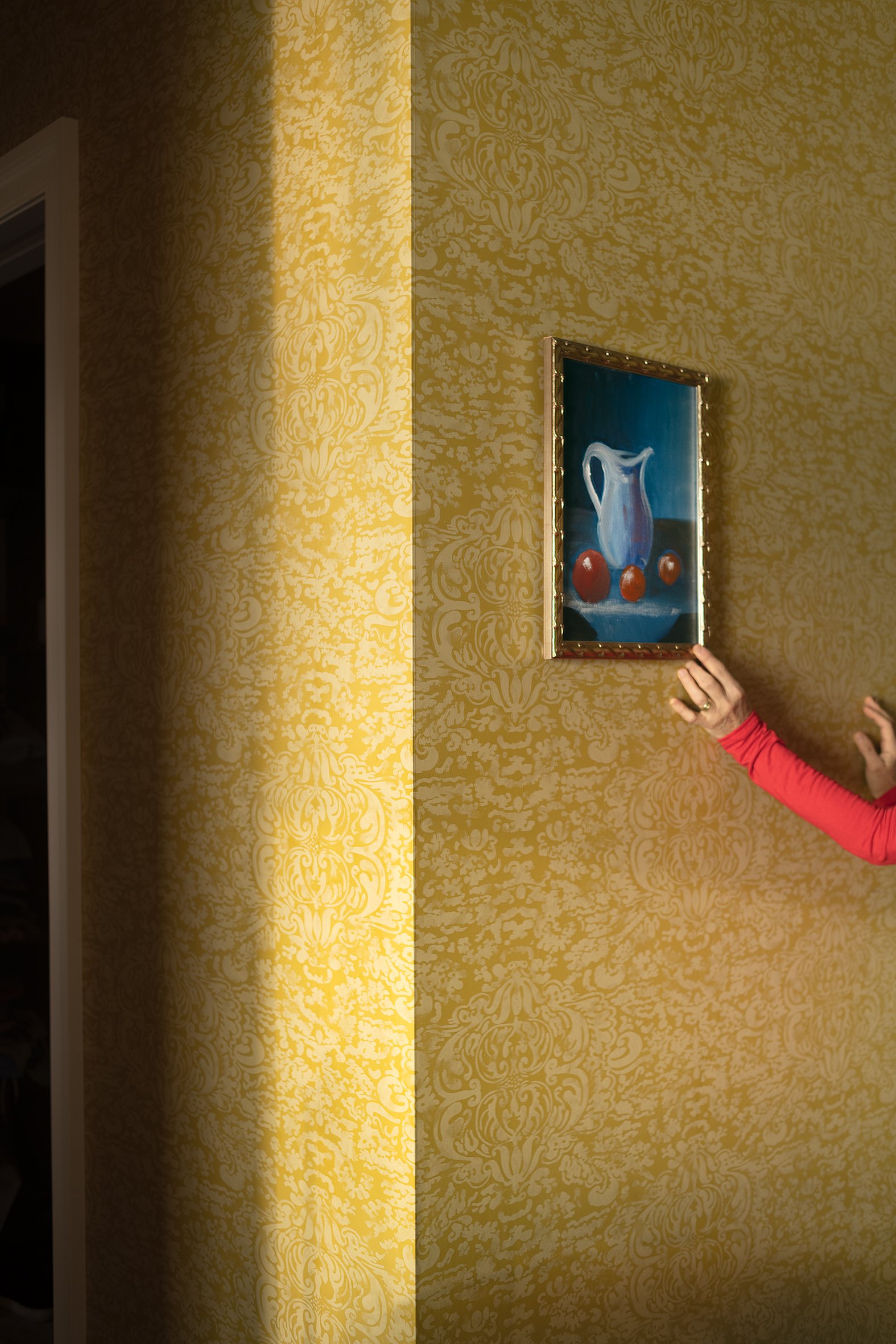
Unspoken is a photobook by Jo Ann Chaus, published by Kehrer Verlag in 2026. Made over more than ten years, the book brings together 72 colour photographs from her long-term project Conversations with Myself. Using self-portraiture, vintage clothing, domestic interiors, objects and carefully chosen locations, Chaus explores identity, memory and the expectations placed on women.
The work began as a private exchange between Chaus and her camera, but gradually developed into a wider reflection on inherited female roles and the tension between who we are expected to be and who we become. Moving from images of confinement and uncertainty toward greater independence and confidence, Unspoken follows Chaus’s own process of becoming less constrained and more able to express herself. The book includes a foreword by New York gallerist Debra Klomp Ching @debraklompching, designed byCaleb Cain Marcus @calebcainmarcus of @luminositylabdesign. (Buy the book here - Kehrer Verlag, Amazon)
Project origin: You spent over a decade making the pictures that became Unspoken, and you mention you learned early to hide your true self to meet others’ expectations. What first made you pick up a camera to explore that feeling?
I spent eighteen years as a women’s clothing merchant, that is, the proprietor of a 2,000 square foot boutique in which I sold women’s sportswear from 1978 to 1996, as the buyer and merchandiser. It was the time period when Calvin Klein and designer jeans were coming into the marketplace. In the 1990s, with two daughters, aged seven and nine, and the business environment changing, we decided to close shop. After a few months I got restless. I explored many interests and photography was the one that rose to the top. My subjects were devoid of people (except for family photos); I made images of places, interior and environmental, leaning towards the light and the surreal. I did not know I had a distinct style even then.
I wanted to overcome my fear of making pictures of people; my first subjects were my daughters and my parents. My first self-portrait was in 2013 as an assignment in a workshop at ICP in New York City; I was intrigued with what I looked like in a photo, performing for the camera.
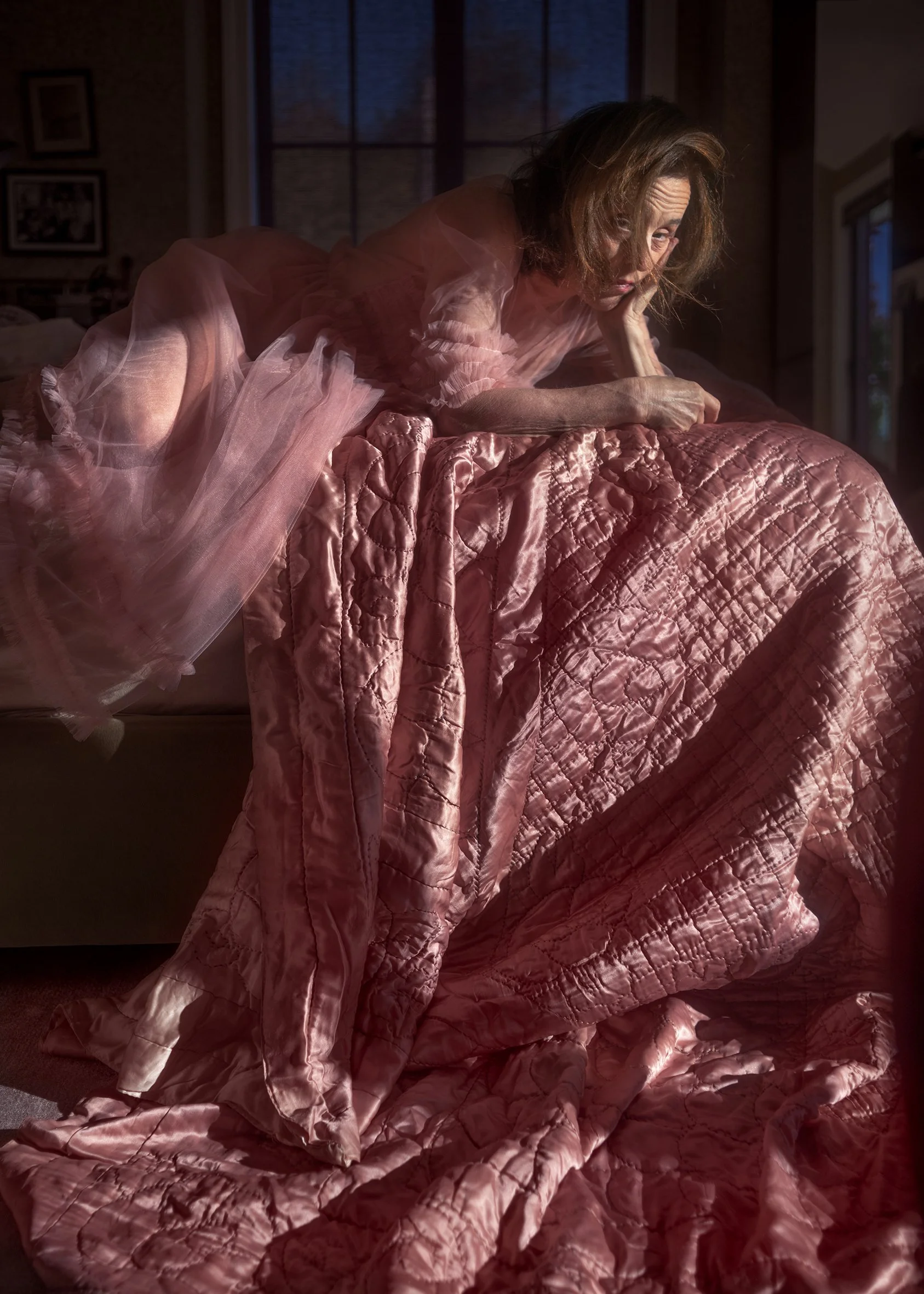
The big self-portraiture thrust came when we were going to downsize from our home, which I was ambivalent about, but I headed into the purging phase to document the things I would have to leave behind. I come from a long line of collectors, so parting with things is difficult. I thought if I draped each thing on my body I might stir the memory of what each thing represented.
We lived a busy, active life, full of beautiful things. My first self-portraits in this series were made in my studio, with a black velvet seamless and a large soft-box; I had these incredible conversations with the camera. The body of work became known as Conversations with Myself.
When it came to finding a name for the book, the work had evolved, and in addition to the conversations I was having with myself, there were many conversations I was not having with others that would have been important. So the name Unspoken references those conversations we are hesitant to have, which perhaps we keep to ourselves and which remain unspoken.
After the studio images, the work evolved to on-location scenarios, following a workshop at Maine Media with Cig Harvey called "The Personal Story". The mere suggestion of that title, and the conversations we had that week, gave me permission to explore this story; that lasted almost ten years. Of course it changed over time.
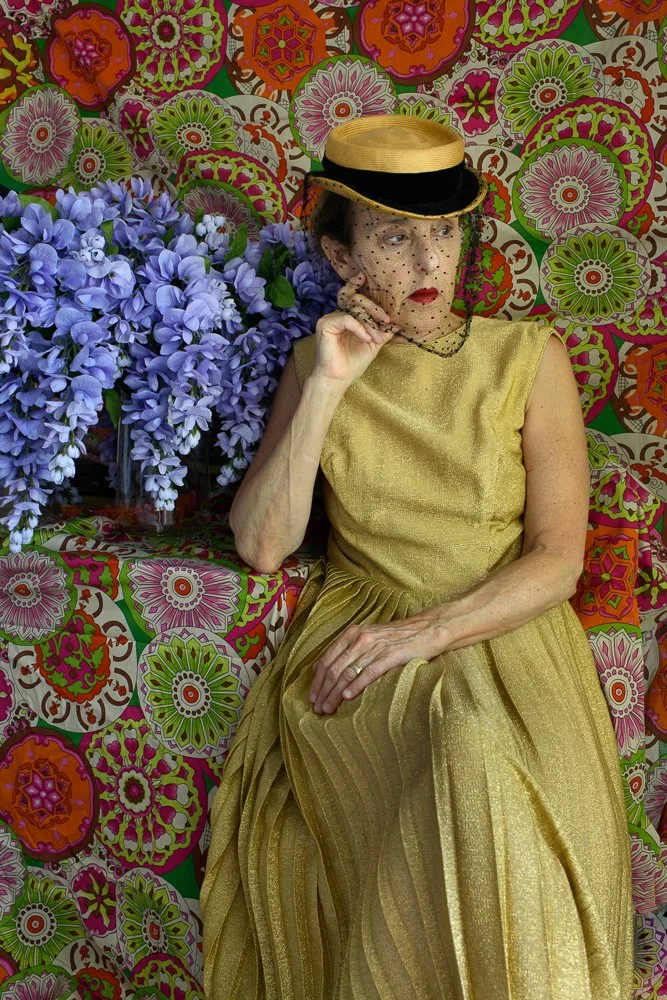
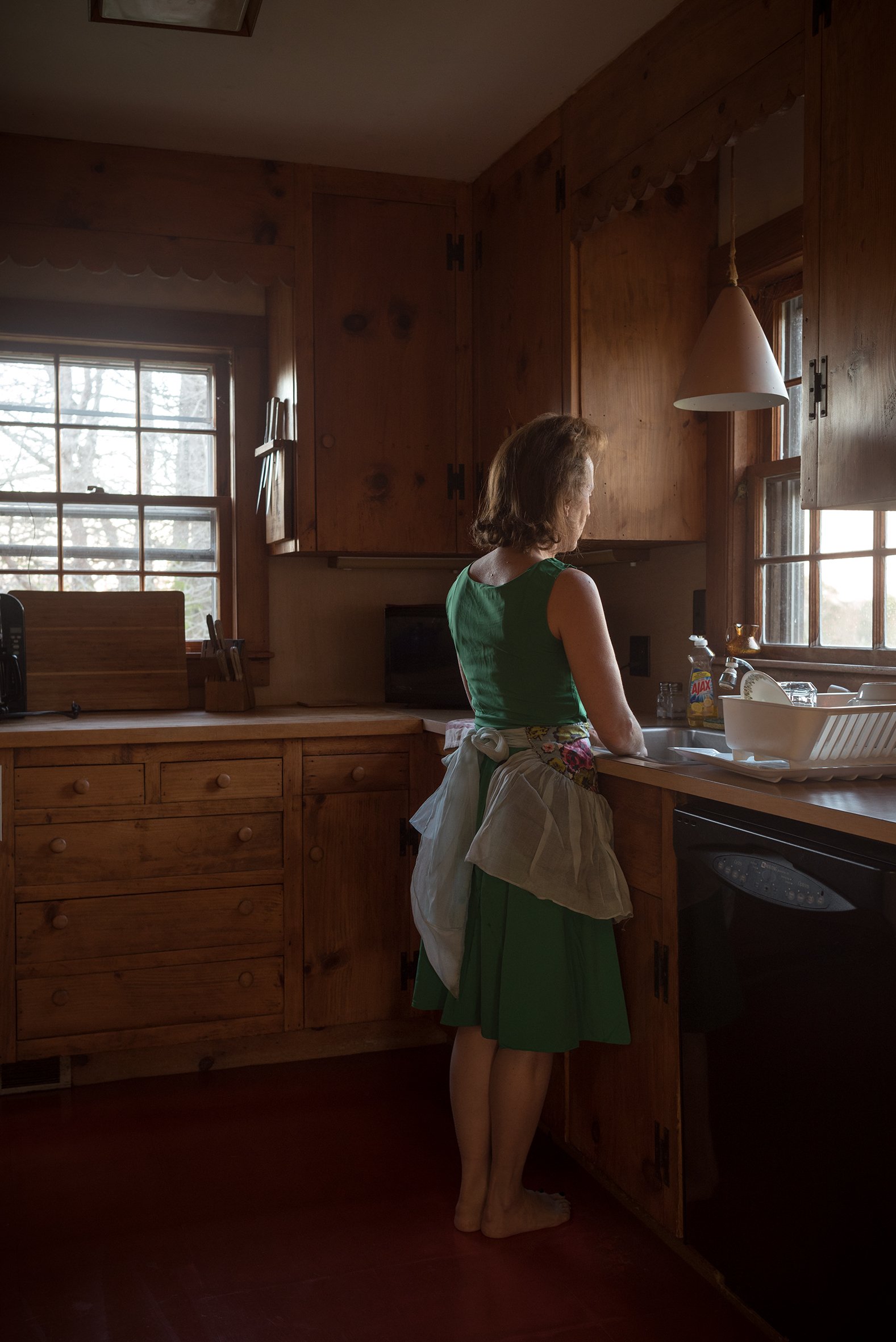
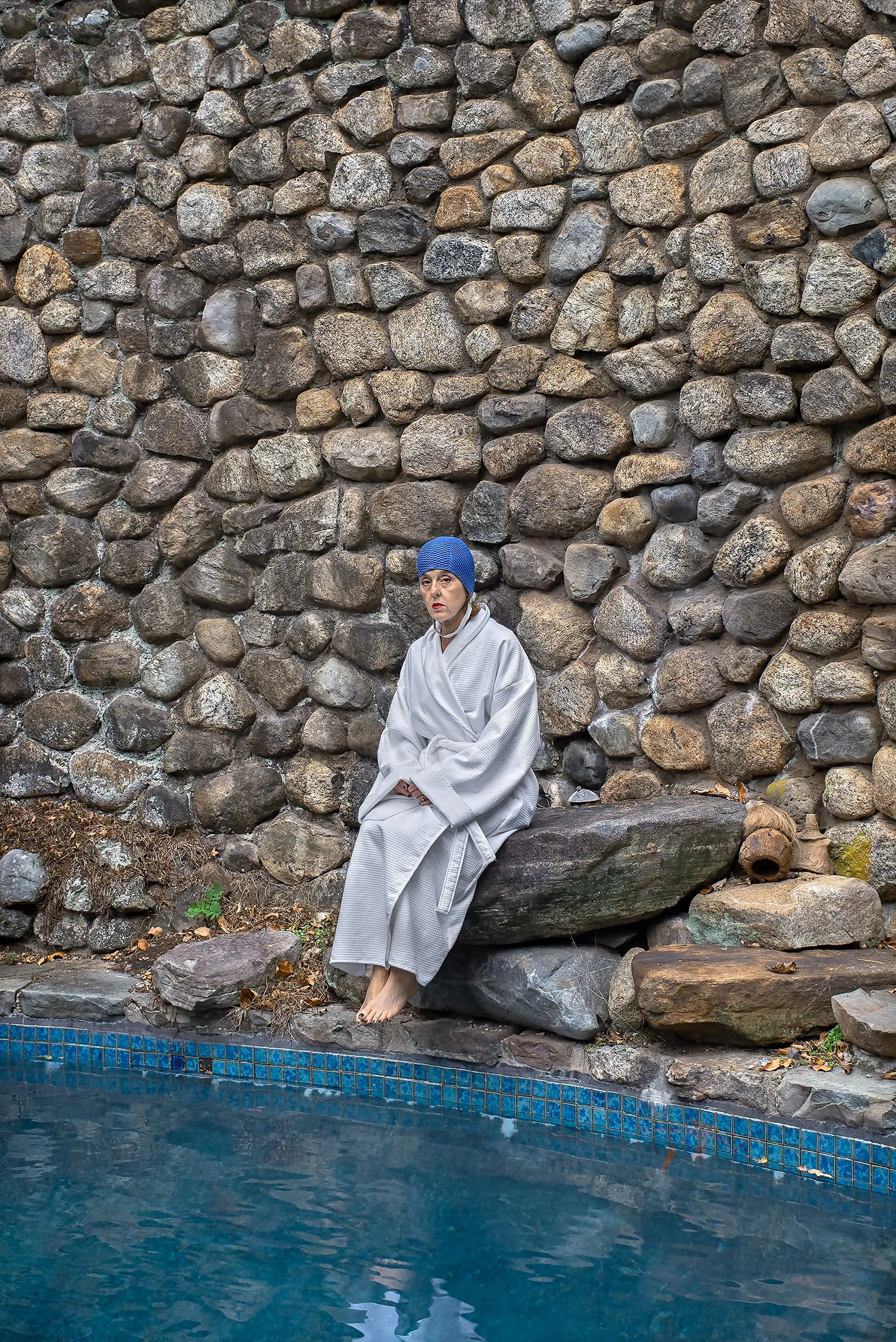
I discovered that I was trying to understand who my mother was. She was private and reserved, performing a version of how she saw herself; in reflection, I perceived her as not particularly happy or satisfied. I thought perhaps all women were like that during the mid-century period as wives and mothers. In the end, I did not believe it to be so. I did some research to learn the history of women’s progress from the 1950s into the 1960s, and the enormous social changes that happened in those decades, and the overall dissatisfaction many women felt regarding inequalities. The early images are performances of what I perceived an archetypal woman of that period might be feeling, infused with an elegance and formality that was typical of that era.
As a side note, my childhood home was awash in colour, and I believe I inherited that sensibility from my mother. Additionally, the early clothing had personal significance, belonging to my mother, mother-in-law and grandmother; I felt that wearing the garments on my skin might infuse me with a deeper sense of them, as well as the state of mind of each woman who had worn them. Instead, I discovered more about myself than about them.
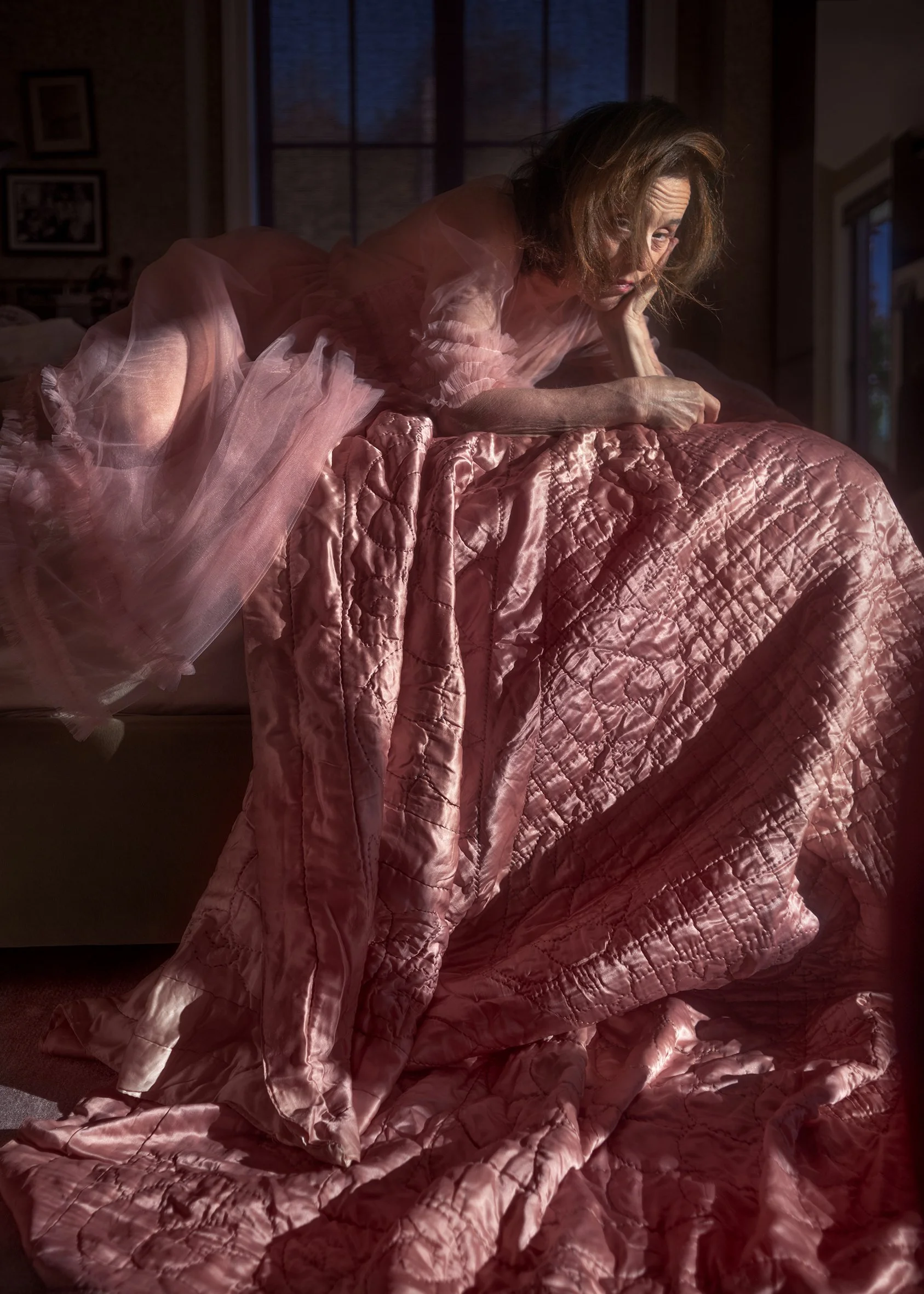
Working alone: In this project you photographed yourself embodying different female stereotypes and archetypes. What does it feel like to be both the photographer and the subject at the same time, and how do you stay in control of the image when you are inside it?
I really enjoy working alone; I have total freedom, free of potential judgement. I am in control, yet I allow for serendipity, and for one idea to morph into another. I am usually inspired by a location or the light, and I summon up props and costumes to complement the scene, listening to what any of them are saying or how they are directing me. I think so much of what we do as photographers is instinct and intuition; I allow my subconscious to lead the way. It would be amusing to see a video of me going back and forth between the camera and finding the right spot in the scene. Once I have my spot, I make a few images with different postures and gestures, load them on the computer, and see if I have captured the mood I was going for. I may then try a different location with the same or similar costumes, or tweak my costume for the scene.
When working alone, how do you know a gesture has become too performative instead of psychologically true?
It is hard to know in the moment, exactly. It is generally obvious when a gesture is too much, but often those images tell me something, or point me in another direction, as if they are mistakes that work, as if they are messages to open up my way of seeing. At this point, making these images is like muscle memory, but it is good to shake it up and be open to new ways of seeing. I generally make many shots in the same setting. Often, looking at the images after the session, even days or weeks later, another image will rise to the surface as the most nuanced, five-star image.
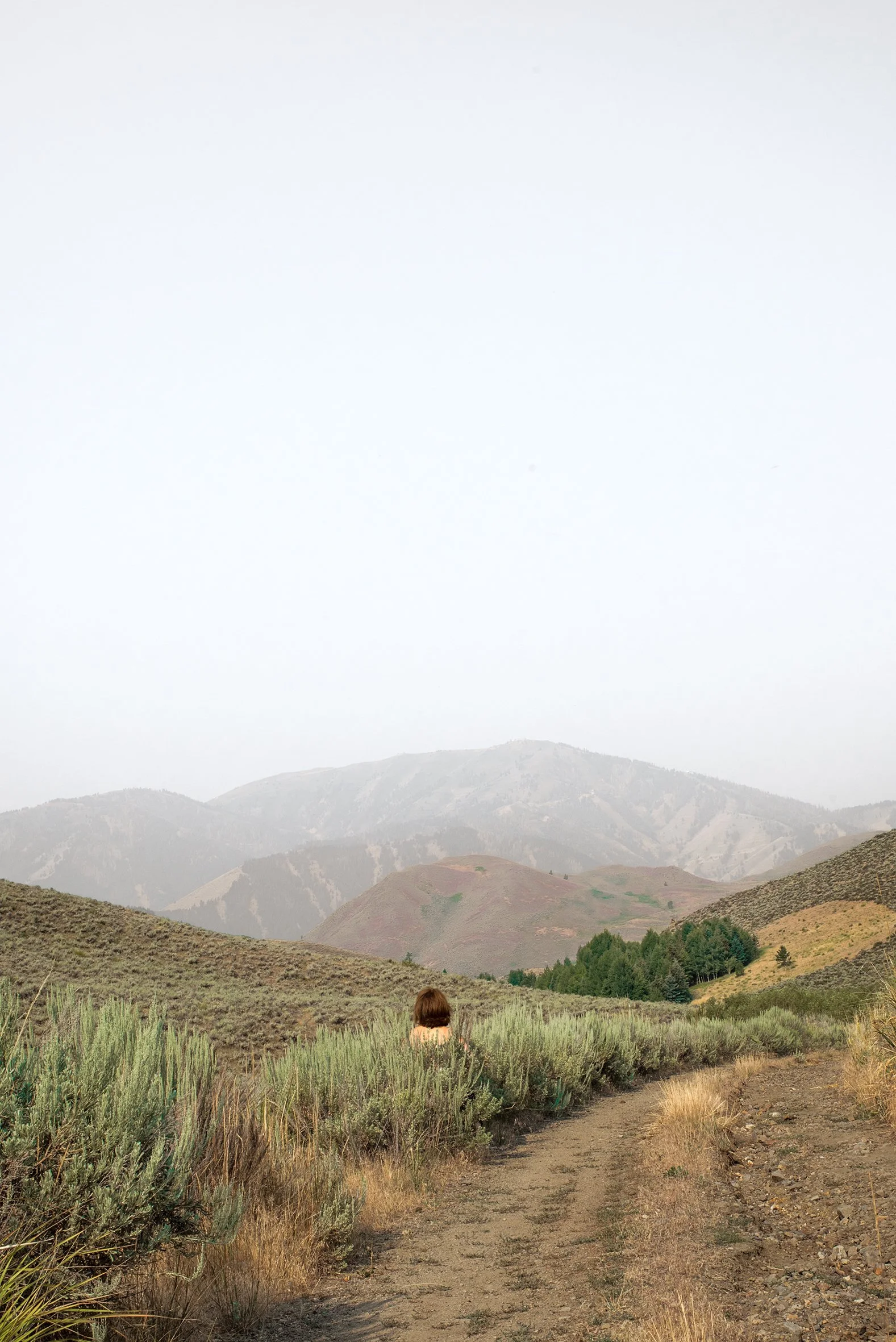
I do have to be aware and careful that I do not repeat gestures. With so many images of myself, I feel I may have tapped out of the ways a human can gesture an emotional state. Perhaps that is a reason I am making fewer self-portraits right now, and making more work by finding images in nature and domestically that are metaphorical self-portraits describing what I see, what attracts me, what I am pointing at. That is very exciting.
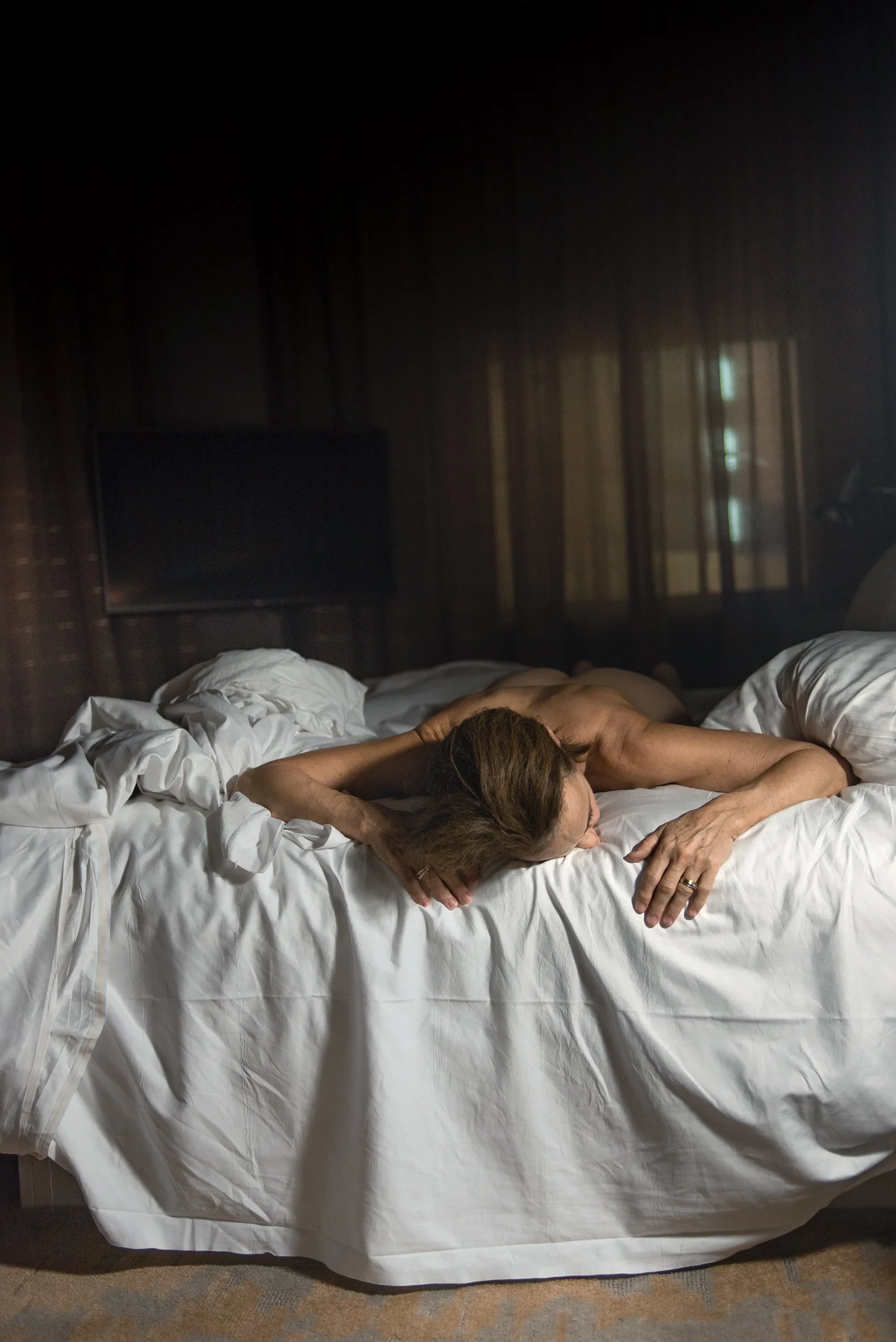
Using objects: The vintage dresses and everyday objects in the book carry personal memories and connect to a wider cultural history. How do you choose which objects to include, and what role do they play in building the meaning of a picture?
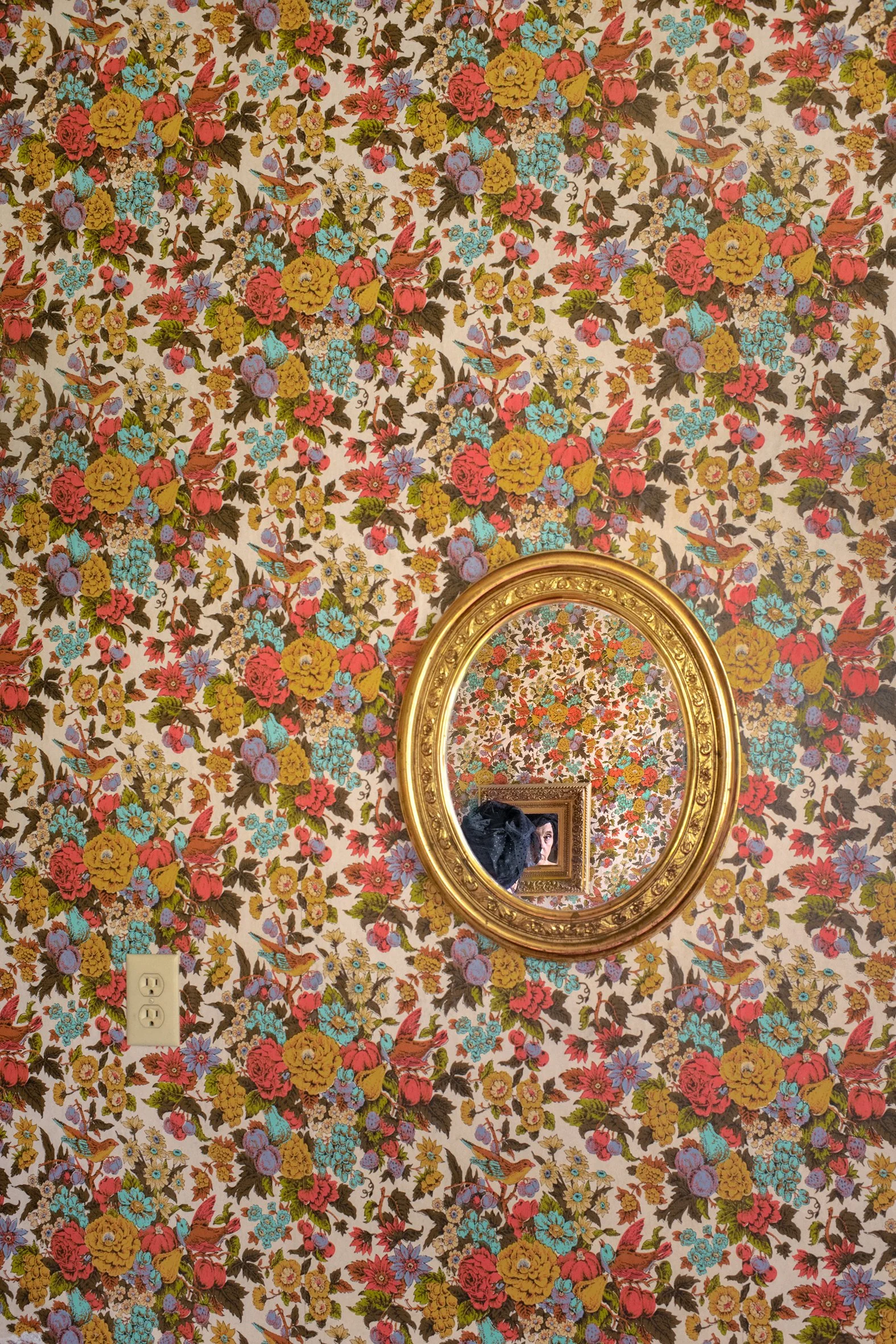
I am a collector, as I mentioned earlier. Many of the objects I use have a familiarity to me, having belonged in my family, or having been collected as something that resonates with my sense of beauty or memory, or connects me to my past, or our universal past, from assorted time periods. I grew up with many antiques and old objects; I love the patina and craftsmanship of old things, and the connection they suggest across generations. There needs to be a synergy in mood between the objects. It is partly about form, colour, and the affinity I have for the quality and design of each object.
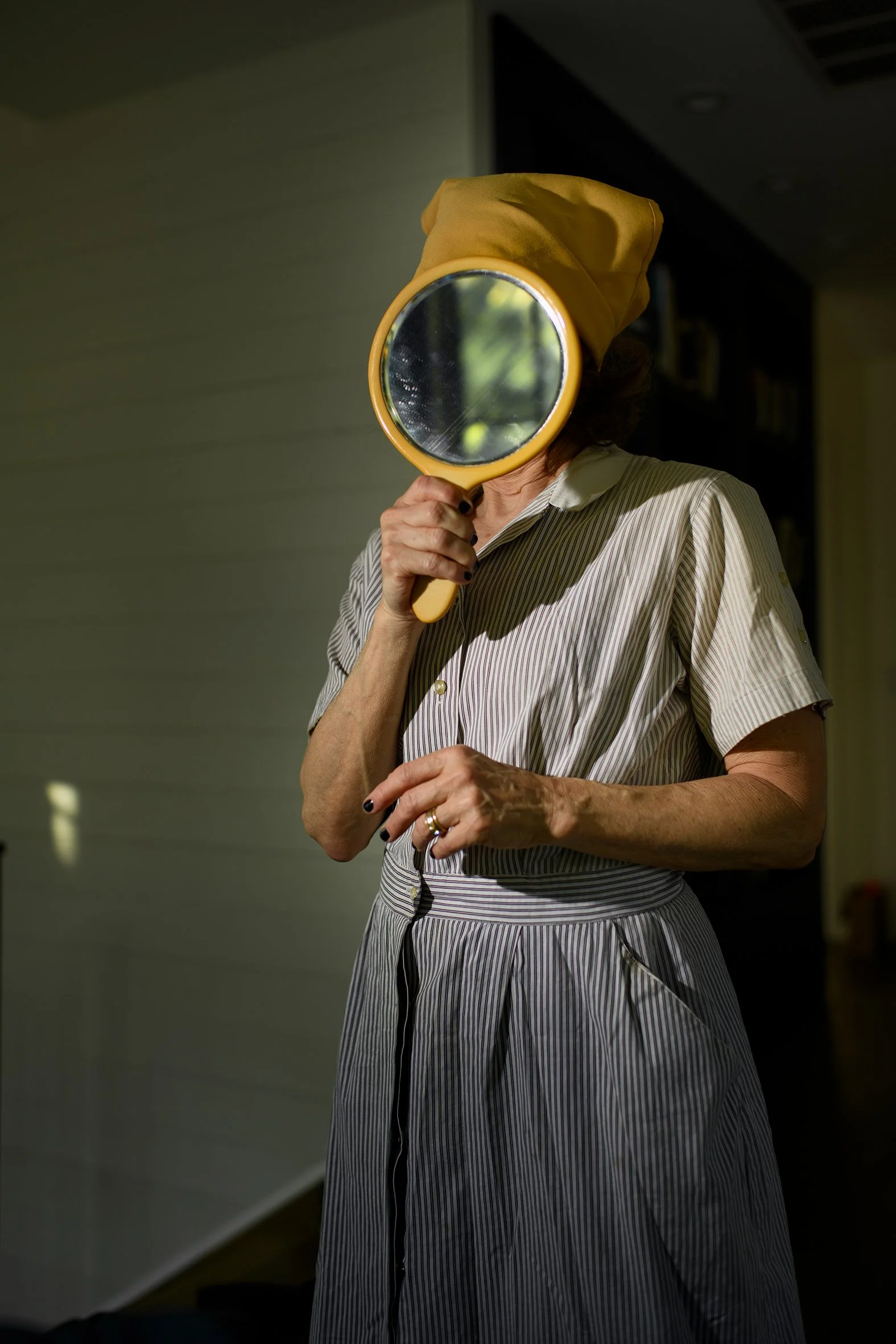
Constructing a character: Each image shows a figure that looks like she belongs to the mid-twentieth century, yet also feels like she is pushing back against something. How do you build that tension between appearing to fit in and showing resistance?
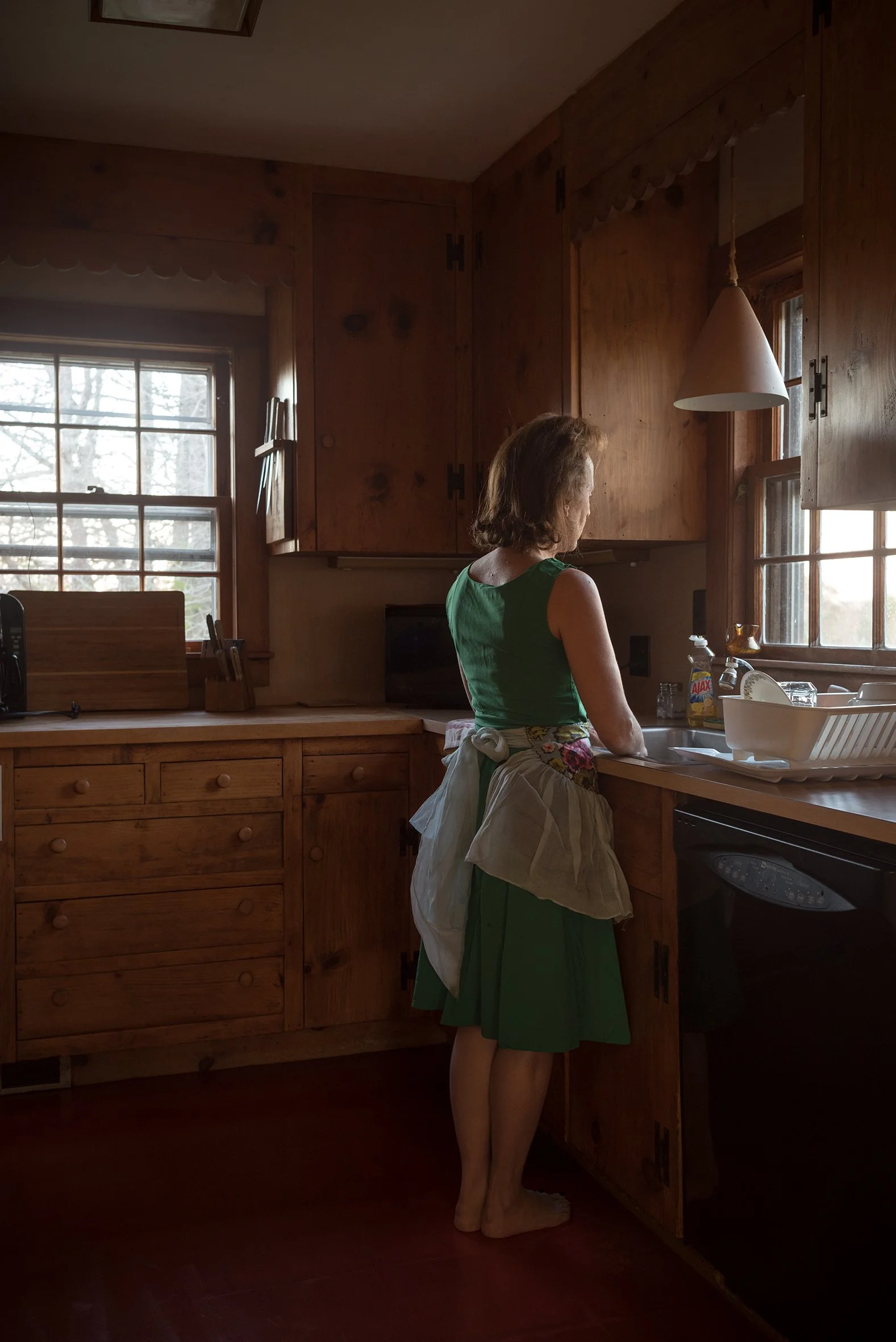
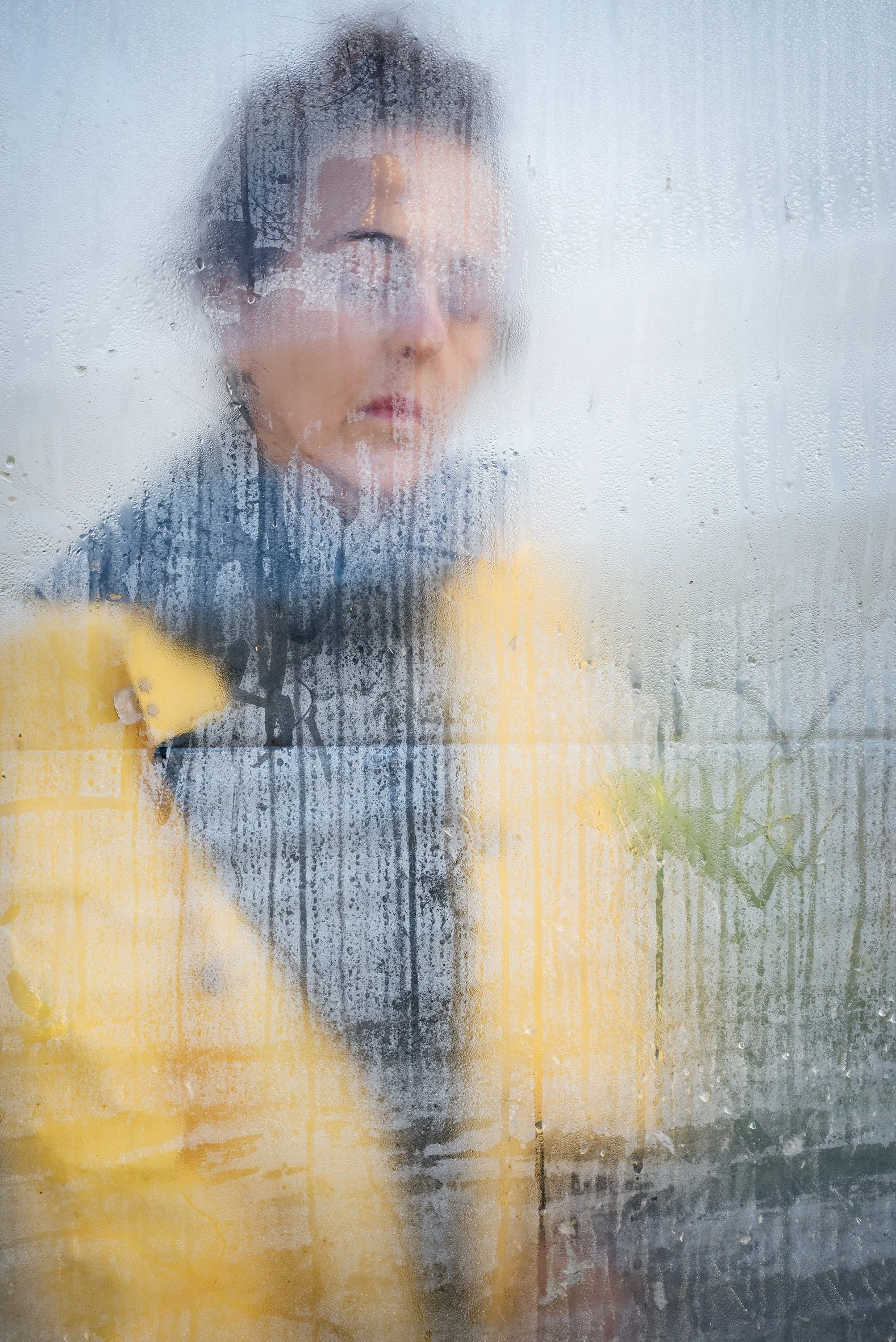
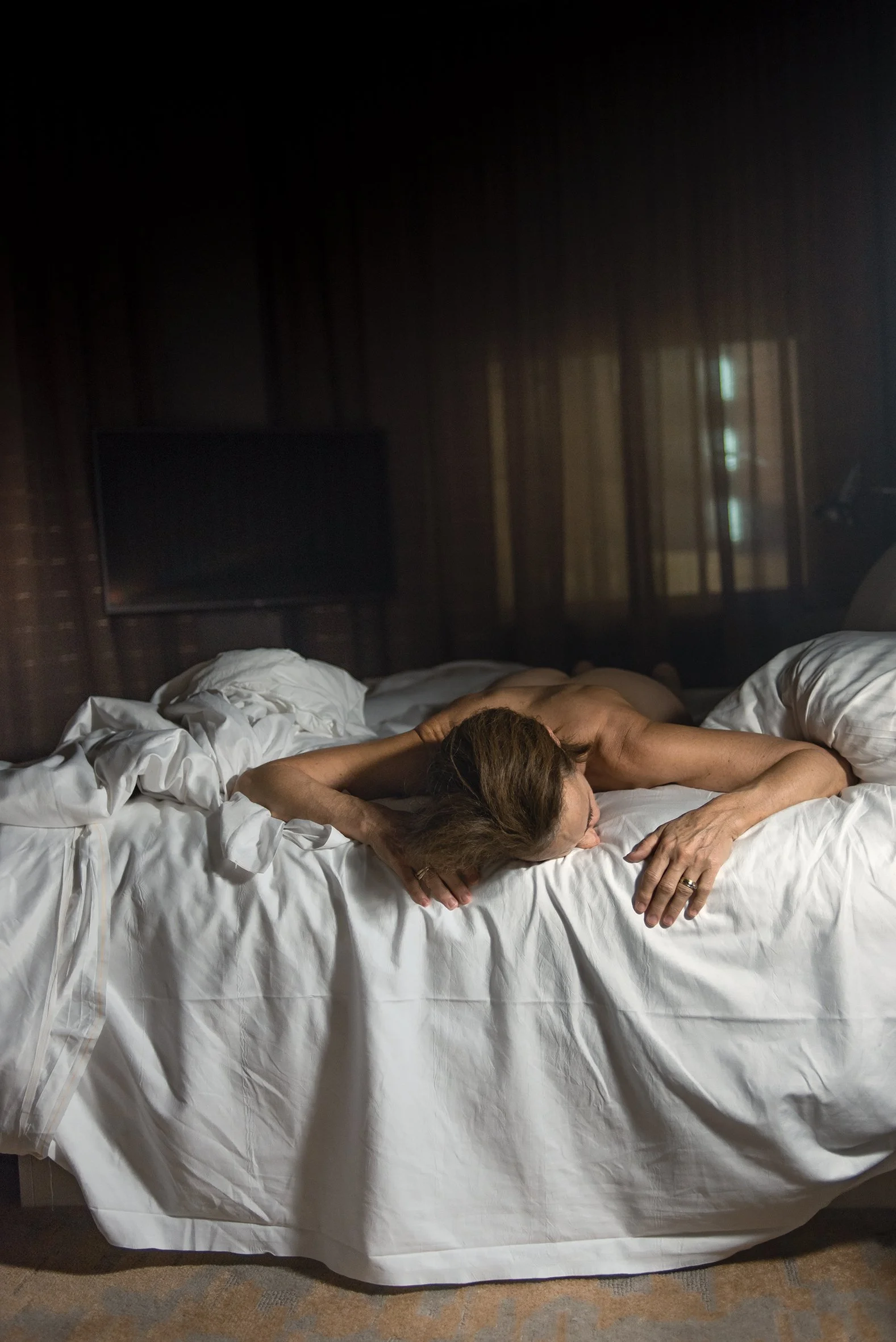
The successful images are those in which I totally embody a character, much like an actor does when in character. I often consider where the character finds herself in relation to different locations, and how she would be feeling or react to being there. There needs to be something intimate or adventurous about the locations that I can hook onto; I adapt and conform the costumes to the locations. I use light and shadow to create a psychological mood, for the images to have a sense of dissonance, tension, ambiguity and mystery, whether they are self-portraits or metaphorical self-portraits such as still life and landscape images.
Colour as a tool: Your earlier career in women’s fashion gave you a strong eye for colour. How do you use colour in Unspoken to carry emotional meaning that words cannot?
I suppose my early career in fashion honed my colour skills, but I think my inherent sensibility for colour is an inheritance, coming from a home imbued with beautiful colour and pattern everywhere.
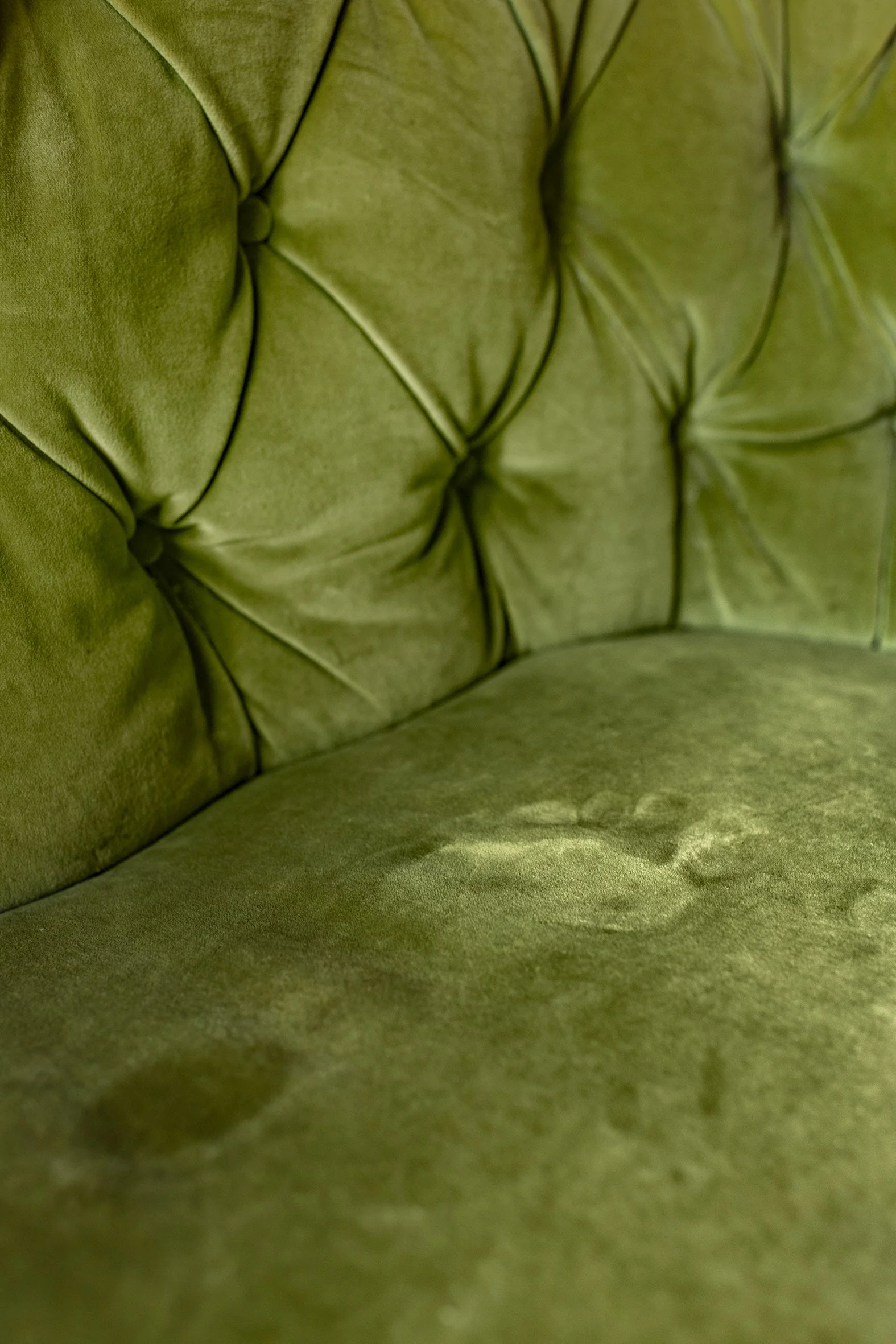
As for the emotional meaning, perhaps the images reflect the resonance of particular colours for me. If I were to assign meaning to the colours I use: red is regal, bold and can signal alert and danger; yellow elicits joy, warmth and energy; greens are about life and the natural world; whites are about purity; and the blues are about the elements, water and sky. The handful of pinks are lady-like outliers. The intensity of my palette may induce a sense of retrospection, introspection and perhaps melancholy.
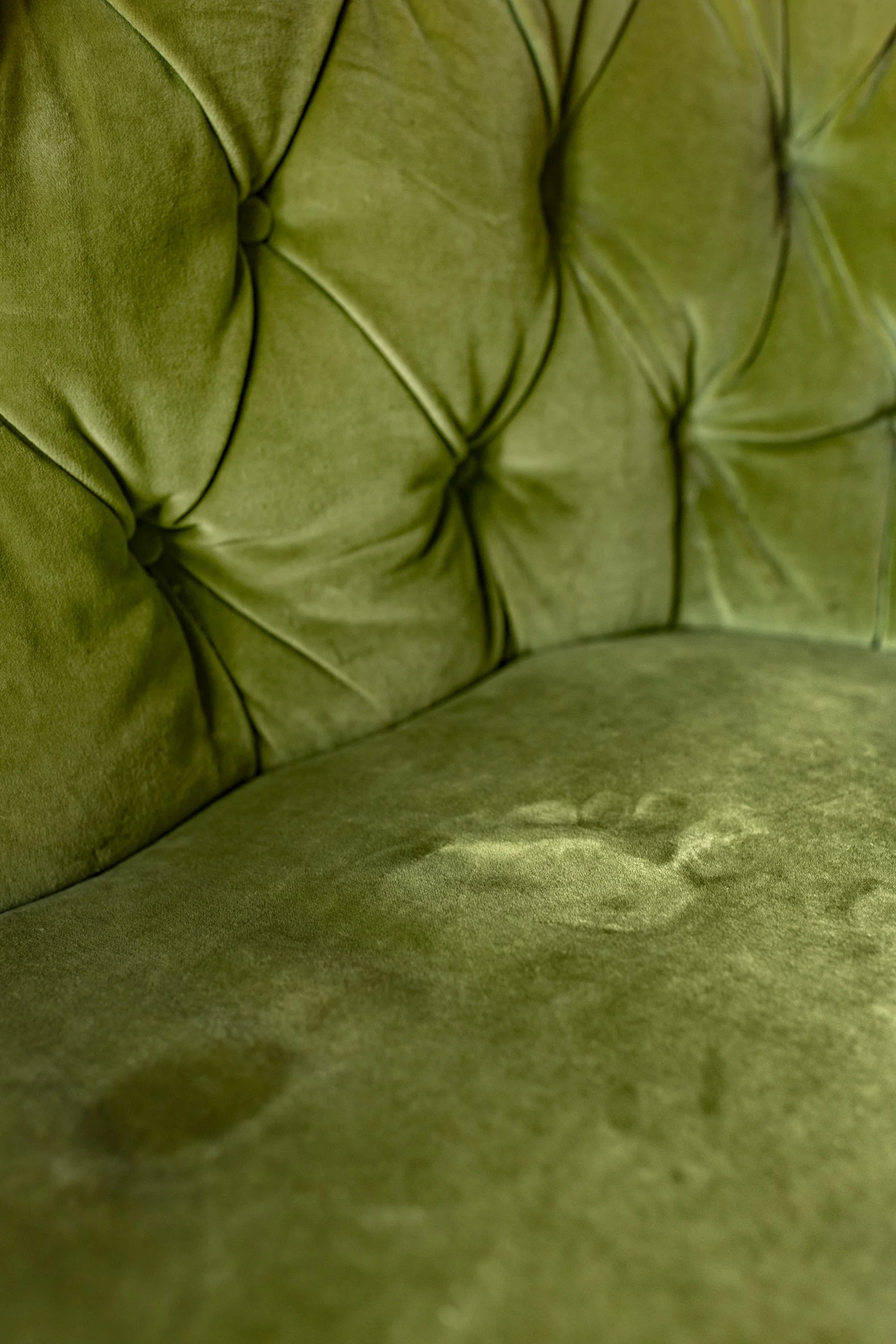
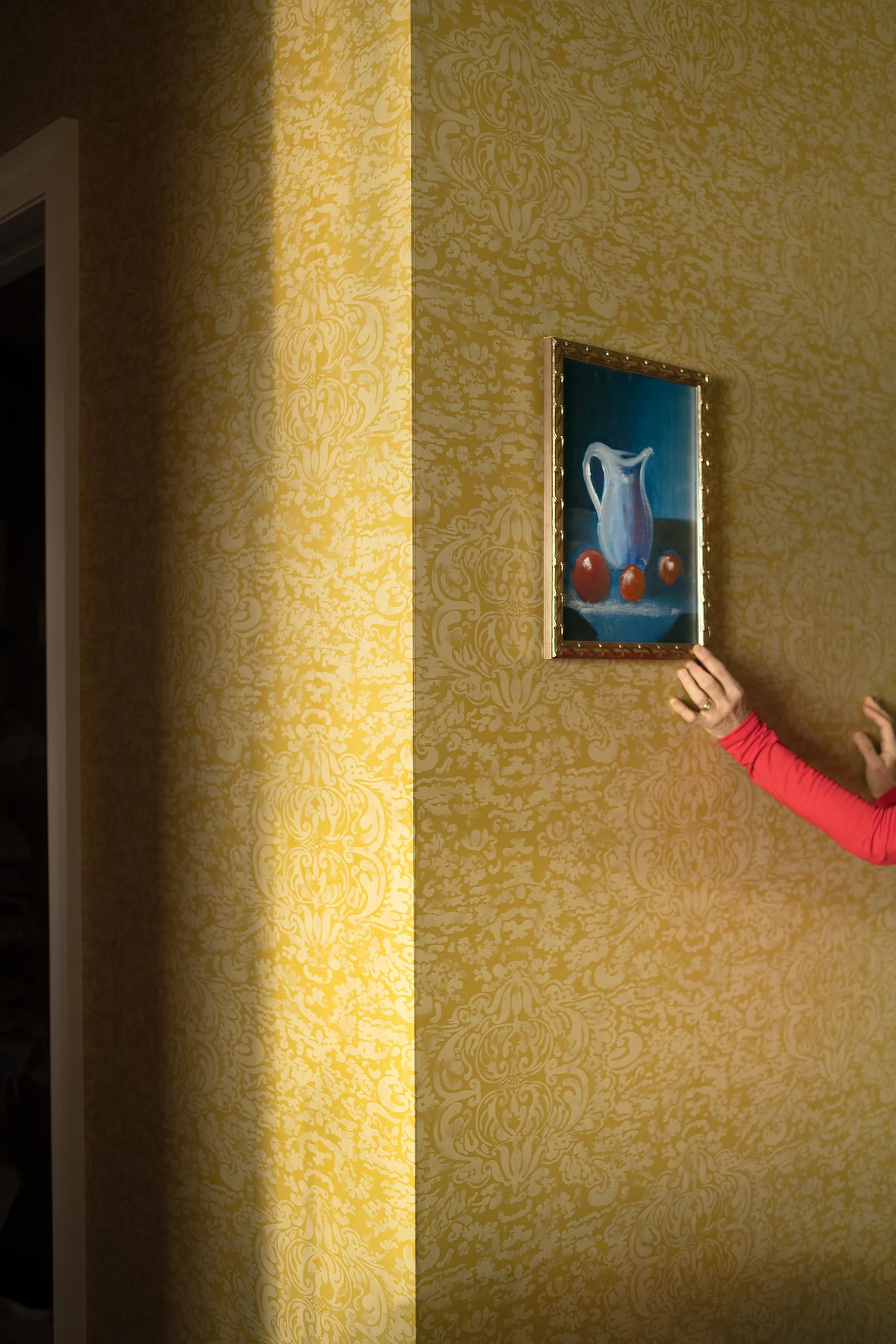
From private to public: The project began as a private exchange between you and your camera. At what point did you decide these images were ready to share, and what changed in how you made them once you knew others would see them?
Good question. I was so entrenched in mining the feelings I had suppressed that I did not realise just how personal they were. Today, having some distance from those emotions and the images, I can share them and talk about them as art. But you are right that initially I felt very vulnerable showing them to strangers. I was so connected to the character, that is, she was a version of myself, as if I were exposing these very deep, private emotions, what I was struggling to understand.
But with the passage of time, and having evolved from that place of uncertainty, I am proud of the work, and of the work I did to overcome the dissonances within me. I wondered how I would make any other work if I were not struggling to understand.
I have found there is always something new to understand, perhaps not as large as the Unspoken body of work, but no less important. I took part in many portfolio reviews over the years. I was always eager to show the work and wanted to make a book five years ago, before the pandemic.
I am glad it lingered, as the arc of the book became more pronounced, going from being stuck to becoming unstuck, from being silent to having a voice, from feeling confined to stepping out into the world and expanding my psychological universe.
I look to create a subtle, quiet drama in each image, each with its own dialogue about the ambivalence of resisting expectations and summoning the courage to display empowerment with a voice, an opinion and a point of view.
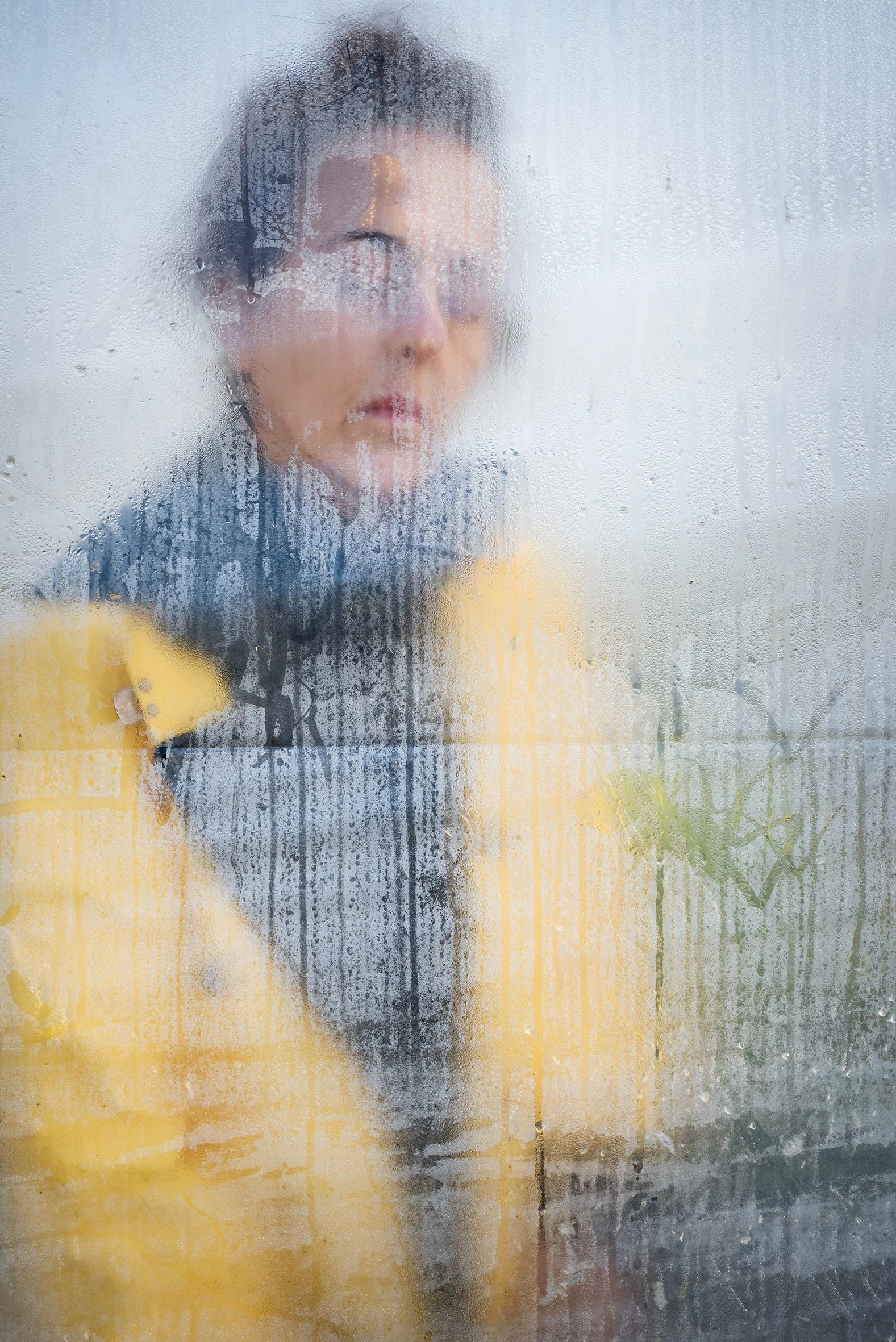
Editing decisions: What kinds of self-portraits did you reject because they explained the emotion too directly, or simply did not support the book’s arc from silence to voice?
All the self-portraits in the book are performances, that is, not me as me, but me as another. I am not sure we rejected images because they explained an emotion too directly. We did reject images that did not seem to fit the mood, that is, they were outliers, even though they were great images. One image I rejected, Ode to Degas, was an impersonation of a Degas painting, Women with Flowers, a woman in a contemplative mood, but very theatrical, of another genre. Another was Pink Roses, made during the pandemic, in which I was peaking out from behind a bush of pink roses. It was a close-up, and the mood did not speak to the arc; it was not period or performative enough.
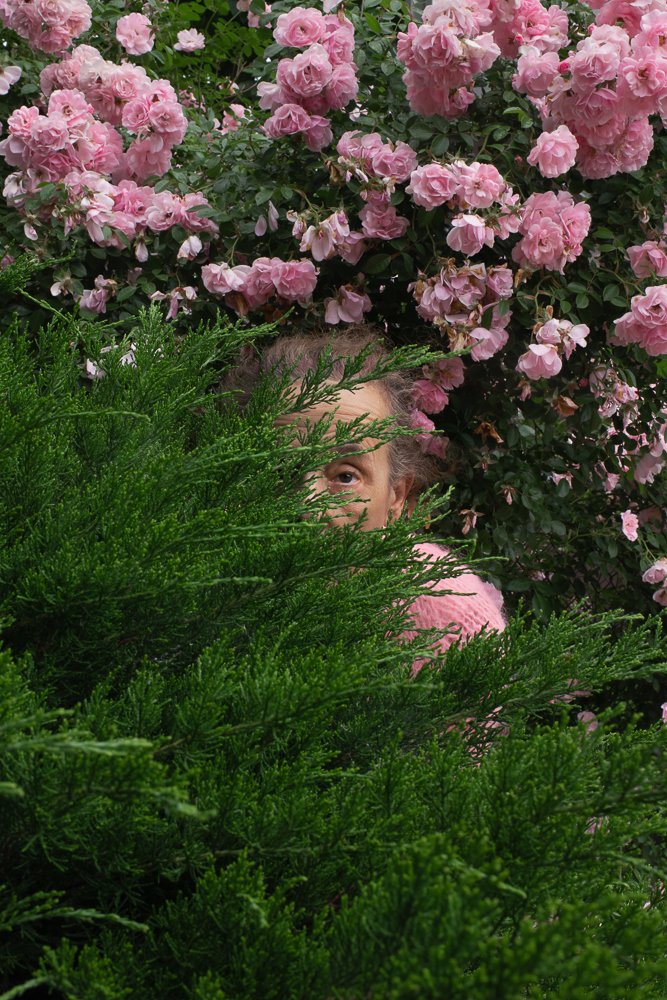
Sticking to the arc was a challenge because I was so connected to each image. The collection could have gone many ways. As I came to define the arc as moving from stuck to unstuck, from a woman constrained to a woman empowered, we did have to lose a few images that are great as stand-alone pictures and will find a home eventually.
As I moved through making the work, I was evolving, changing and becoming more empowered, stepping out of the shadows, more comfortable with expressing my points of view. Through making the work and sharing it with friends and colleagues, I began to see the images as representing a larger segment of the audience who identified with and felt the power in them.
Editing and sequencing: With over ten years of pictures to choose from, how did you decide which 72 images to keep, and how did you find the right order for them inside the book?
Another great question. I worked on an edit for over two years, trying to discern what I wanted this collection, as a book, to say. There were, and still are, so many possible ways to tell the story. It was not possible to include every strong self-portrait in the collection. In the end I believe we selected those that were the most resonant for me. A trusted mentor said no one knows your work better than you; you decide how you want to tell the story. To finalise the edit and sequence I had to really dig down and own what I wanted to say, and decide whether the images supported that. Since it is a ten-year body of work, I wanted it to reflect the emergence, the peace and the understanding I had gained for myself in and through the images and the period of time making them.
Constraints and creativity: Were there any practical limits, such as time, budget or working alone, that forced you to solve a problem in a way that actually made the pictures stronger?
Often the images were made at a workshop or residency, so there was a sense of urgency to work fast and with intention, staying in the flow as best I could to take advantage of the unique location. The constraints were usually the limited time on location, having to make the most of every minute. The trips were usually one week per year, sometimes two.
In addition, the time constraints of balancing my photographic practice with my domestic and family life are a daily challenge. Ultimately, it was good that the project took so long to complete, as both the work and I grew and evolved in such a beautiful way over these years. The time constraints allowed that, and allowed the work to percolate and mature.
What photographers can borrow: Looking back at the whole project, what is the single most useful thing you learned about making deeply personal work that another photographer could apply to their own practice?
I have many long-term relationships with mentors who know me and the evolution of my work. Maintaining those relationships, as well as being in good, long-term critique groups, is very helpful, not only to share the work but to gain confidence speaking about it. Photographers are often isolated, physically and mentally; the groups and mentors become your trusting community and family.
Writing, as in a daily journal or as often as possible, helps to get out and organise what is in your head, that is, what is just below your consciousness: thoughts and ideas that are too quiet to compete with the noise of our world. It is amazing how ideas unfold on paper. Spending time looking at your work, making collections and sequences to realise the connecting threads, that is, what your subconscious is pondering, and writing small statements that summarise that, is also invaluable. Expose yourself to many artistic mediums: looking at paintings, reading text in brilliant photobooks, listening to podcasts, reading articles not oriented to photography, reading fiction and poetry, watching film, even looking at Instagram.
To discover more about this intriguing body of work and how you can acquire your own copy, you can find and purchase the book here. (Kehrer Verlag, Amazon)
More photography books?
We'd love to read your comments below, sharing your thoughts and insights on the artist's work. Looking forward to welcoming you back for our next [book spotlight]. See you then!
Color entered Janelle Lynch’s photographs through painting. In Another Way of Looking at Love, she photographed plants and trees on her property in the Catskills. Photography Book Spotlight