AT A GLANCE
- Known for
- The Earthrise photograph, made from Apollo 8 on 24 December 1968
- Works in
- Colour and black and white pictures made in space as part of his NASA work
- Camera
- A Hasselblad electric camera with a 250 mm Zeiss Sonnar lens, according to NASA and a Zeiss account
- Credit
- The Earthrise frames are credited to Anders by NASA. Other Apollo 8 pictures in the NASA archive are credited to the crew as a whole
- Also
- Lunar module pilot, Air Force fighter pilot and Major General in the reserve, nuclear regulator, ambassador to Norway, chairman of General Dynamics
- Awards
- Hubbard Medal of the National Geographic Society · Michael Collins Trophy for Lifetime Achievement, 2023
- Start with
- Earthrise: How We First Saw Ourselves (Yale University Press, 2008)
- Links
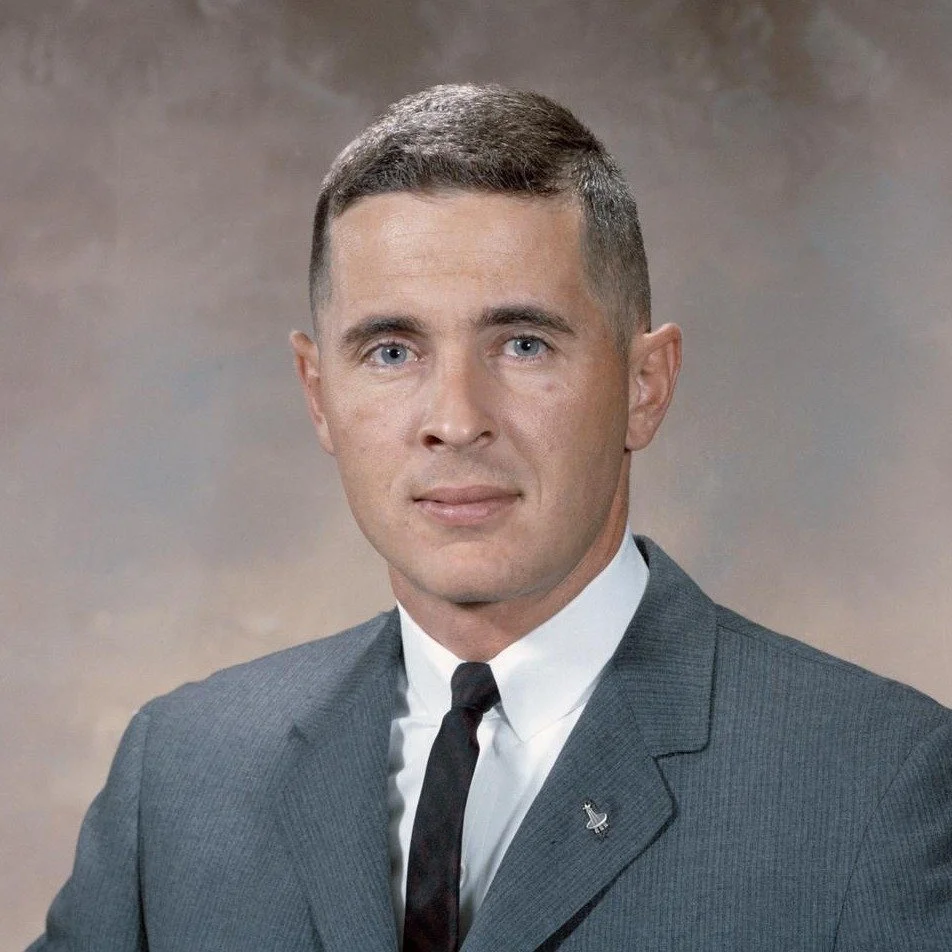
Bill Anders (born 1933, died 2024) was an American astronaut, Air Force pilot and engineer. He was not a professional photographer. As lunar module pilot of Apollo 8, he was told to photograph the Moon. On 24 December 1968 he also photographed the Earth rising over the lunar horizon. That picture, known as Earthrise, is one of the best known photographs ever made. Later in life he served as a nuclear regulator, ambassador to Norway and head of a large company.
The story
The tape recorder was running. Apollo 8 was coming around from the far side of the Moon, and Bill Anders sat in the right-hand seat. He looked at the lunar surface through his side window. In his hands was a Hasselblad camera with a long telephoto lens. This was his job on the flight: to photograph the Moon.
Then he said, “Oh my God, look at that picture over there! There’s the Earth comin’ up. Wow, is that pretty!”
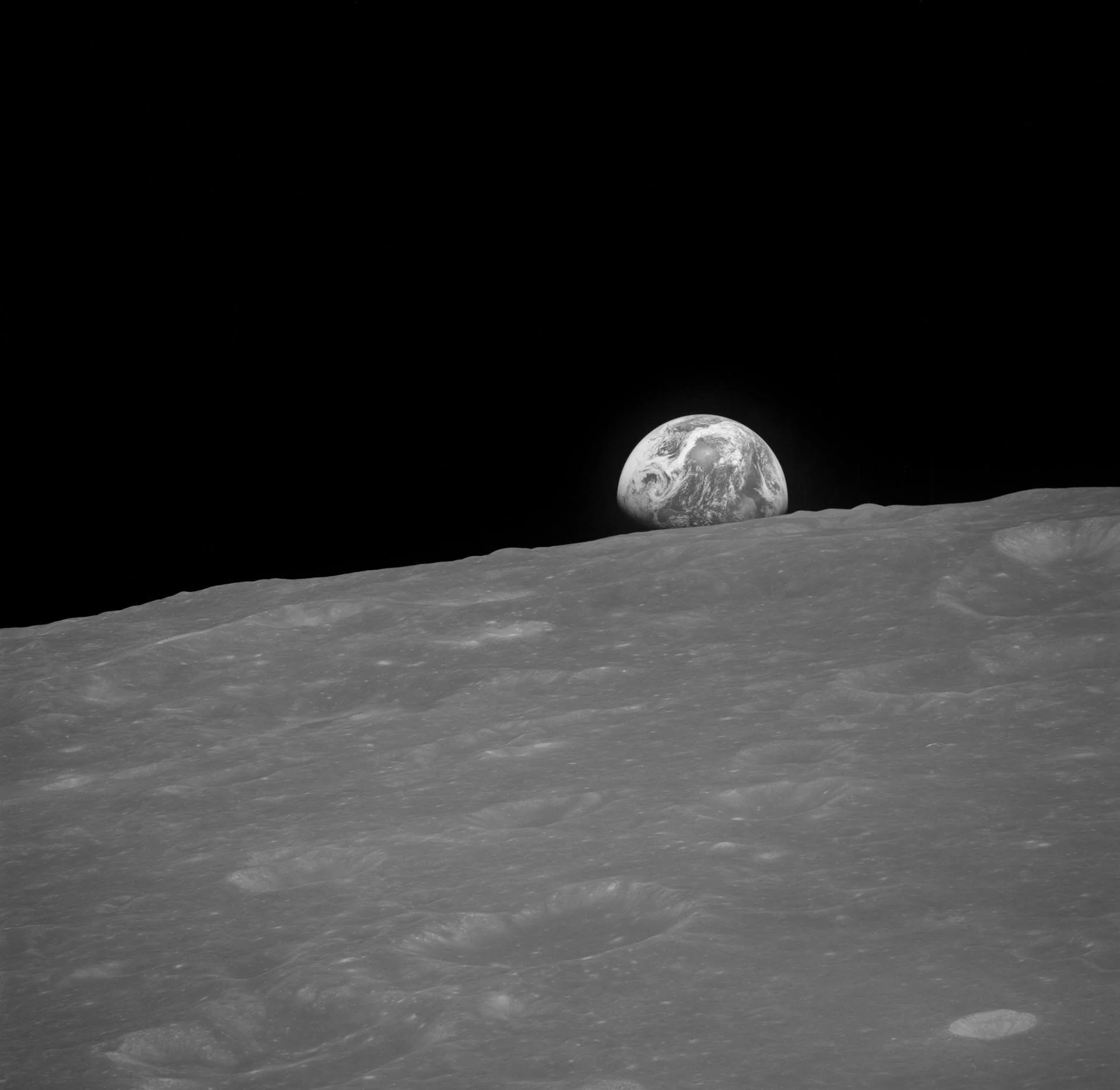
Frank Borman, the commander, answered: “Hey don’t take that, it’s not scheduled.” A shutter clicked. The camera held black and white film. Anders called to Jim Lovell: “You got a color film, Jim? Hand me a roll of color, quick, would you?”
Lovell had to search. Anders said, “Anything. Quick.” Then he said, “Well, I think we missed it.” But Lovell found a roll and also found a clear view from another window. The color film went into the camera.
The Earth had risen over the Moon on the three earlier orbits too. Nobody saw it, because the windows pointed the wrong way. On the fourth orbit, a few minutes after 10:30 in the morning Houston time, Borman was rolling the spacecraft for the next task. NASA's later study shows that this roll turned the Earth into view of Anders's window. So the picture happened because of a turn in the flight plan, not because of a plan to take it.
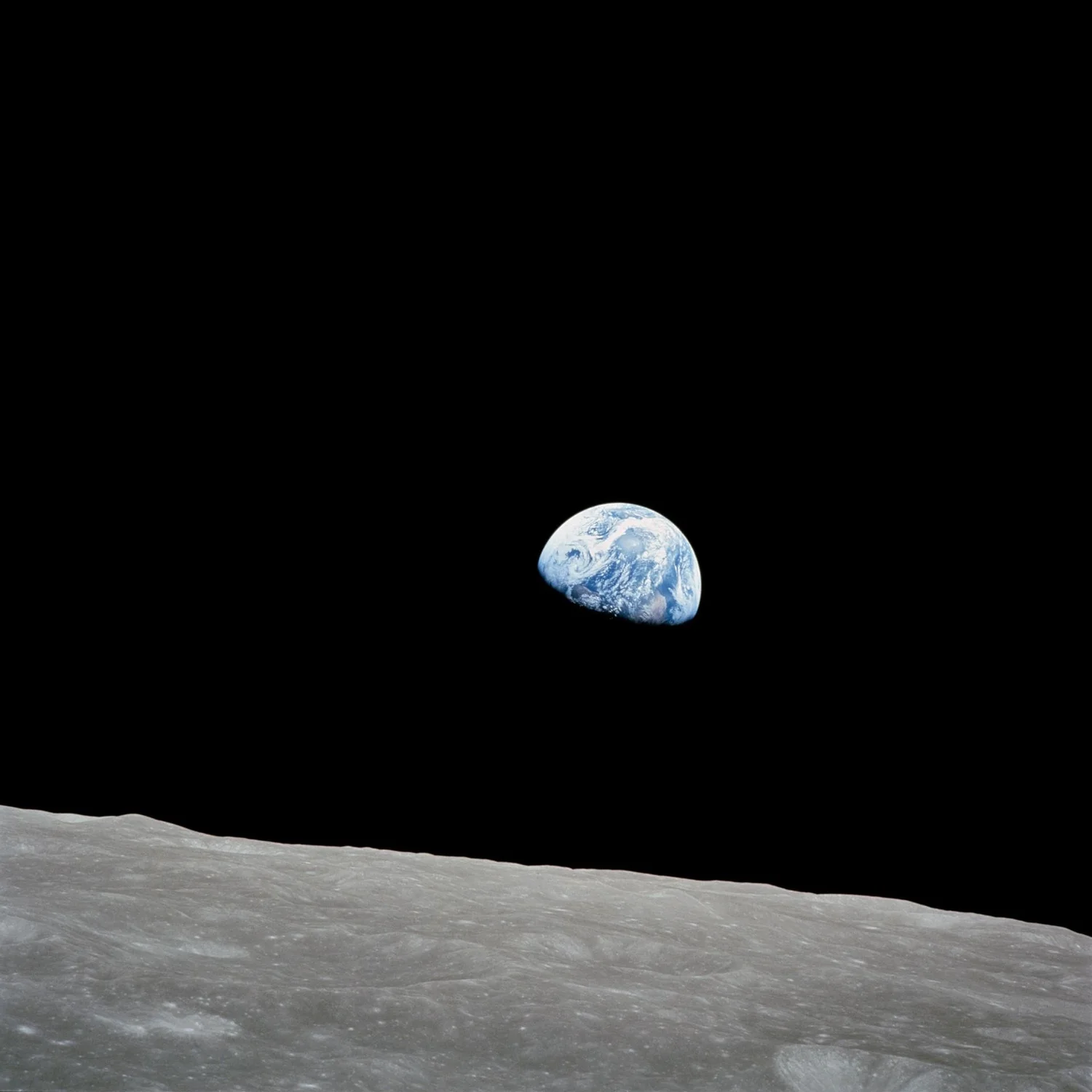
Lovell called, “Take several, take several of ’em!” Anders answered, “Wait a minute, just let me get the right setting here now, just calm down,” he said. Lovell called out the exposure from the tape: “Two-fifty at f/11.” The shutter clicked again. Lovell asked him to vary the exposure. Anders had already taken two color frames.
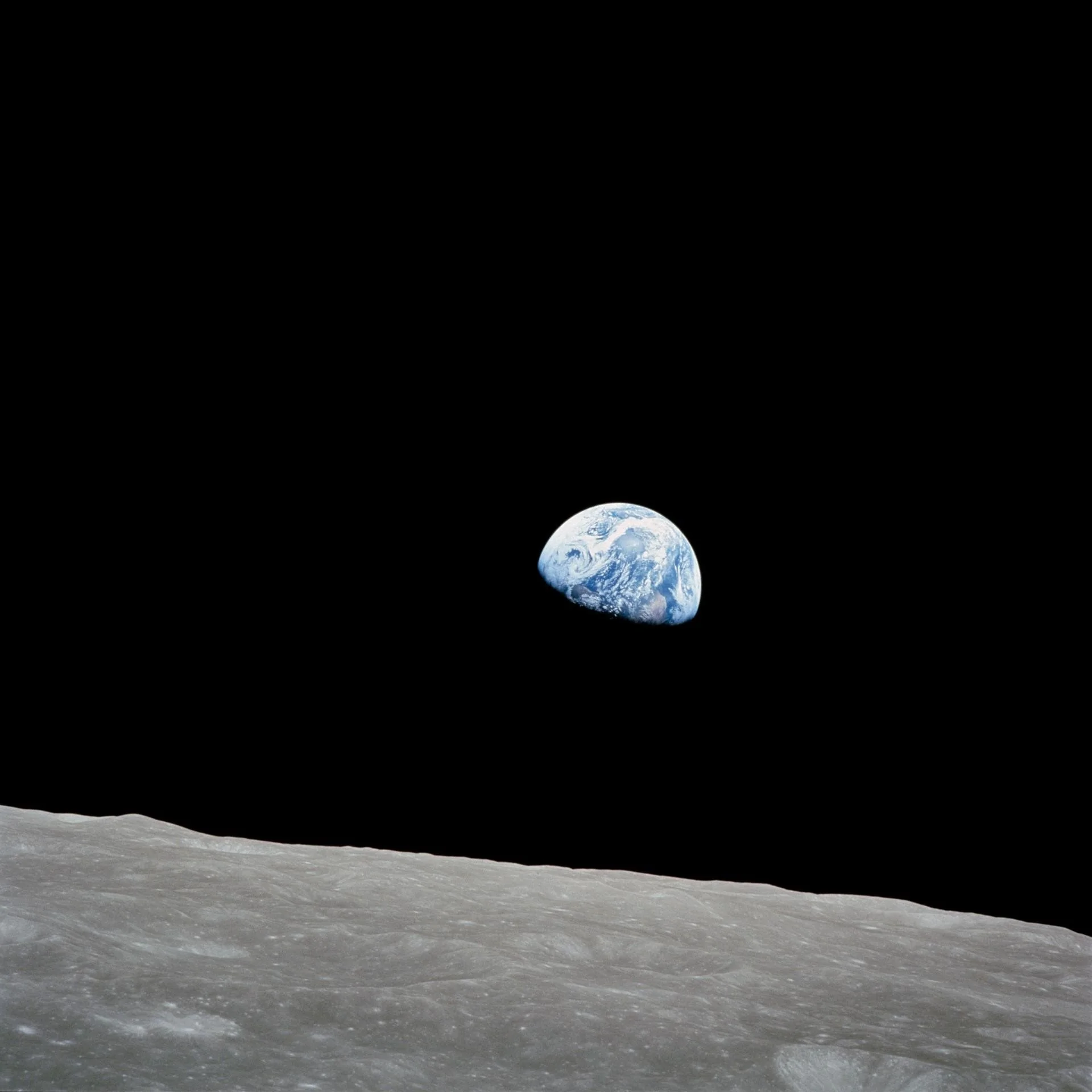
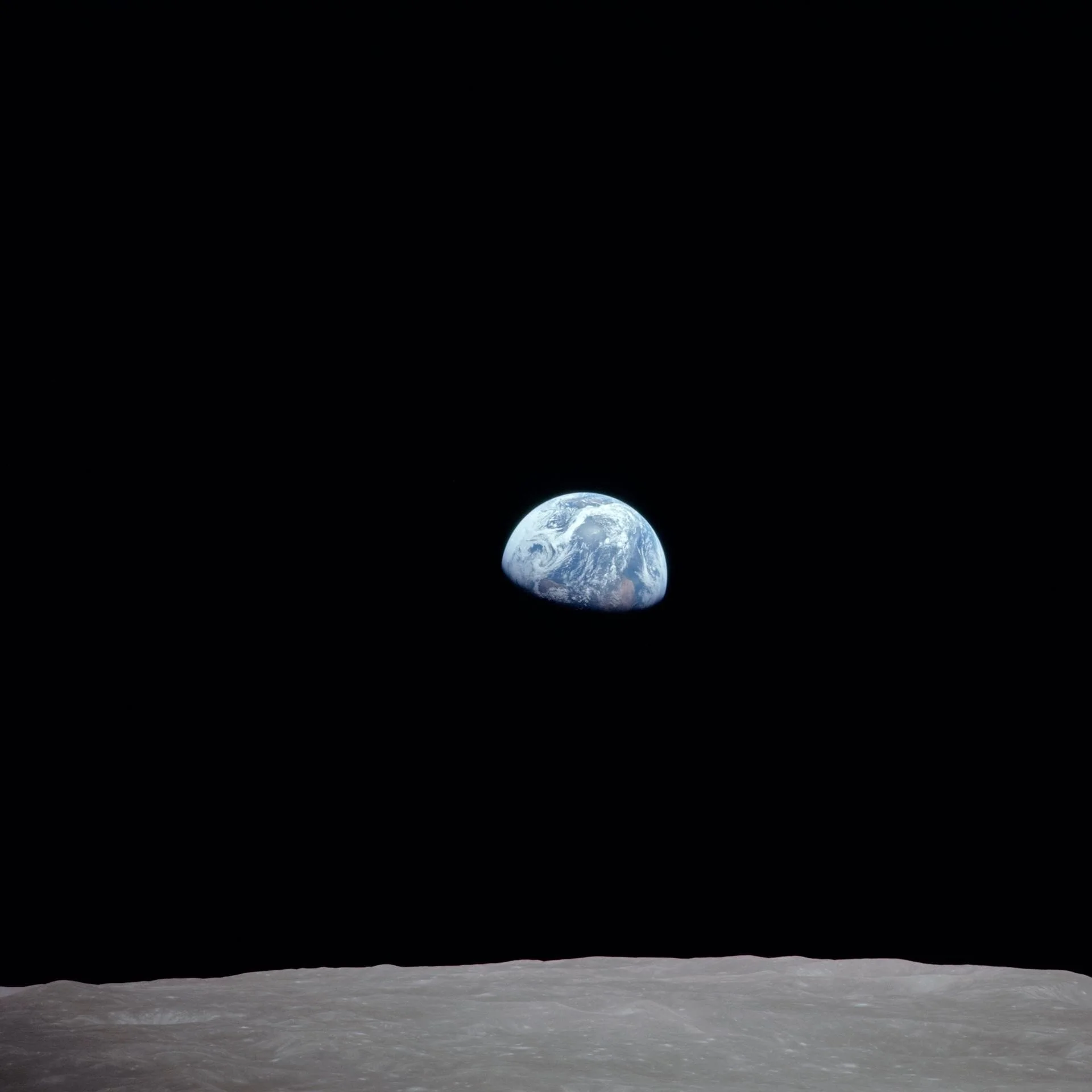
Who took which picture? This was a question for many years. The Heritage Flight Museum, which Anders founded, says the three crew members joked about it, and that Borman was sure he had taken the first Earthrise. NASA's study of the tape and the photographs, made with maps from the Lunar Reconnaissance Orbiter, credits Anders with all three. One black and white frame and two color frames came from his camera. The color frame numbered AS08-14-2383 is the one the world knows.
Anders was not a photographer by trade. His NASA biography lists his duties as radiation effects, dosimetry and environmental controls, and he had been trained as a nuclear engineer. Apollo 8 brought home about 1,100 pictures, color, black and white and filtered, and the crew shared the work of taking them. Earthrise is the one that became a symbol. In 2018 the International Astronomical Union named a crater visible in the picture "Anders' Earthrise".
Anders later said the picture was his most important contribution to the space program, together with making sure the command and service module worked. In a 1997 NASA oral history he described what he saw that morning. “To see this very delicate, colorful orb which to me looked like a Christmas tree ornament coming up over this very stark, ugly lunar landscape really contrasted.”
The work
Anders left no body of photographic work in the usual sense. His pictures from Apollo 8 are part of a mission archive. NASA's image library lists most of them without a photographer's name. The Earthrise frames are the exception, because NASA's own studies of the flight credit them to him. For the other pictures in the gallery below, the honest credit is NASA and the Apollo 8 crew.
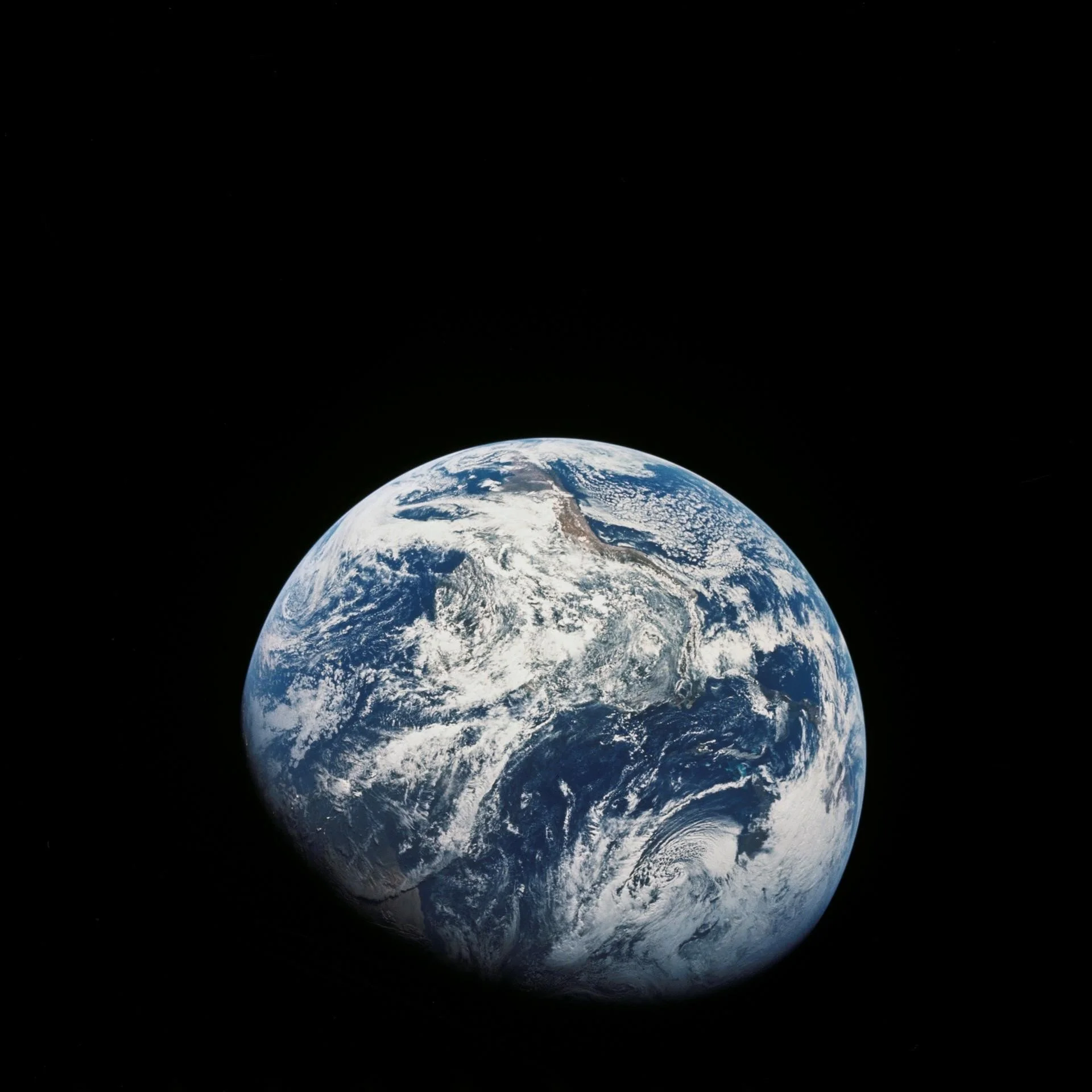
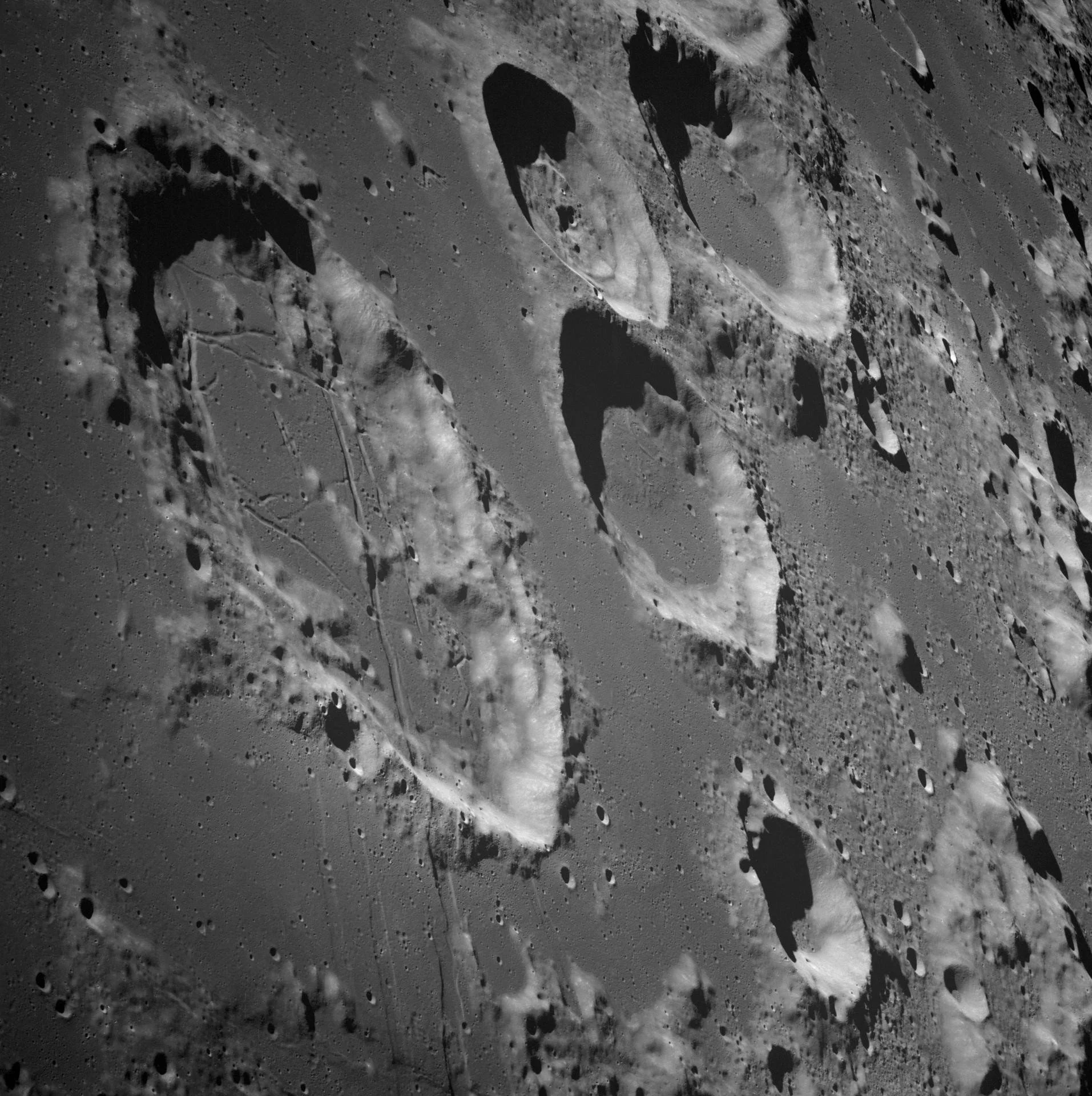
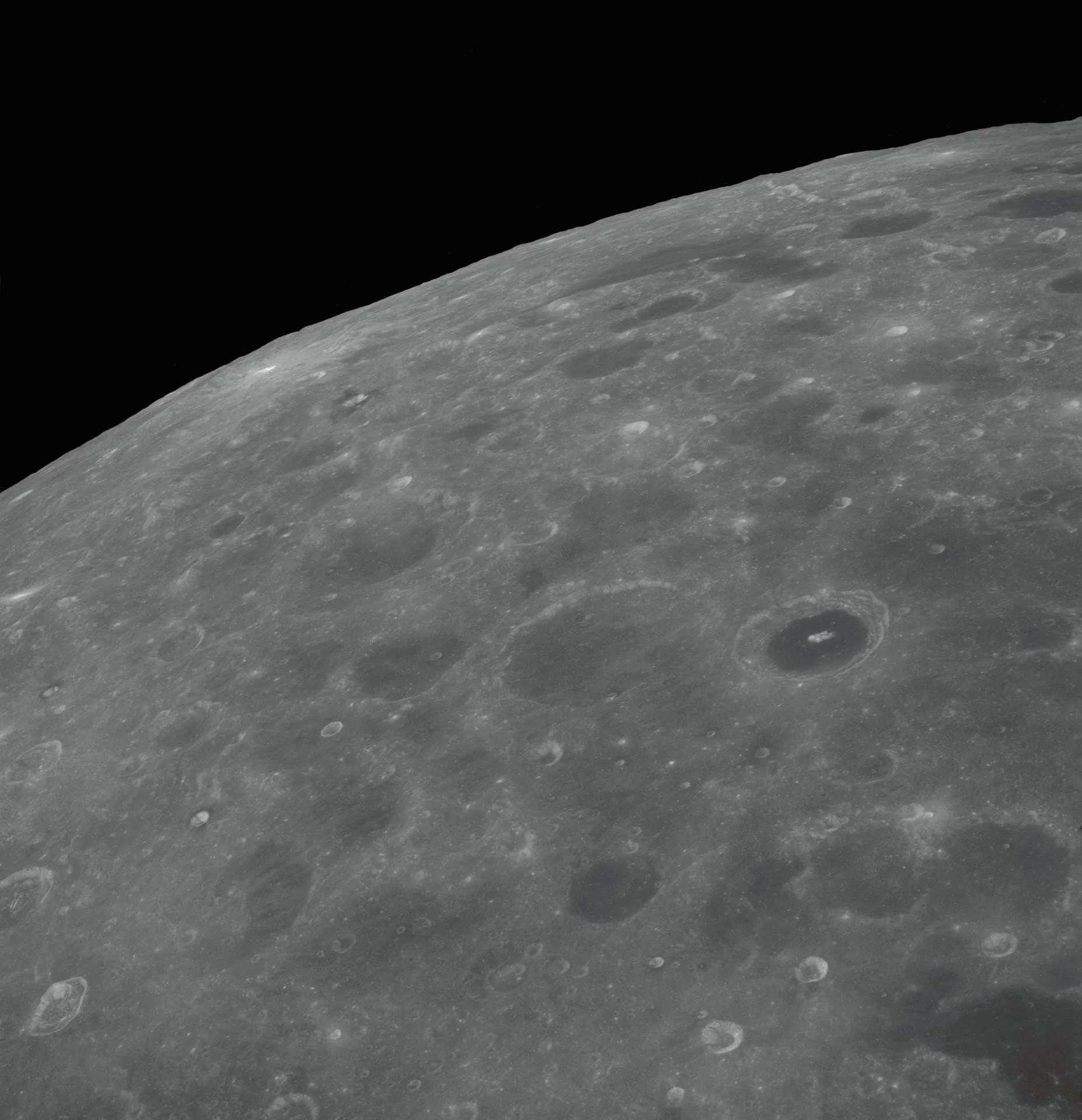
Besides Earthrise, the gallery shows the black and white frame and the second color frame from the same minutes (AS08-13-2329 and AS08-14-2384). It also shows a view of the Western Hemisphere of the Earth, a view of the crater Goclenius and a view of the Moon's southern region. The caption for the Goclenius frame says it was taken with a long-focal-length lens. Together they show what the crew was asked to document: the lunar surface from orbit, and the home planet.
His later career was far from photography. He served on the National Aeronautics and Space Council, became the first chairman of the Nuclear Regulatory Commission in 1975, and was United States ambassador to Norway from 1976 to 1977. He then worked at General Electric and Textron, and was chairman and chief executive of General Dynamics from 1991. With his wife Valerie he founded the Heritage Flight Museum in 1996. NASA administrator Bill Nelson wrote after his death that Anders "offered to humanity among the deepest of gifts an astronaut can give." The nature photographer Galen Rowell called Earthrise the most influential environmental photograph ever taken.
- 1933Born in Hong Kong
- 1955Graduates from the US Naval Academy and is commissioned in the Air Force
- 1963Selected by NASA as an astronaut
- 1968Flies on Apollo 8 as lunar module pilot and photographs the rising Earth on 24 December
- 1975Becomes the first chairman of the Nuclear Regulatory Commission, then ambassador to Norway from 1976
- 1991Becomes chairman and chief executive of General Dynamics
- 1996Founds the Heritage Flight Museum with his wife Valerie
- 2024Dies in a plane crash near Jones Island, Washington
Lessons
Be ready when the plan changes. Borman reminded Anders that the Earth was not scheduled. Anders took the picture anyway. He had a camera in his hands and looked out of the window at the right time.
Know your camera before the moment comes. Anders asked for color film by name and took the time to set the exposure. The tape records him saying he needed to get the right setting. Practice made it possible to work fast and still be careful.
Take more than one frame. Lovell urged him to take several, and Anders made two color frames. Both survive in the NASA archive. Without the second there would be no choice between them.
Try this: next time something unplanned appears in front of you, such as light on a wall or a person crossing a street, take three frames in under a minute. Change one setting between them, for example exposure or framing. Compare the three at home and write down which setting helped most.
Gear
NASA and other sources say little about the exact settings, but they agree on the main points.
Hasselblad 500 EL: NASA says electric Hasselblad EL cameras were used for the first time on Apollo 8. The Heritage Flight Museum names the camera as a modified Hasselblad 500 EL. The motor wound the film after each shot.
Zeiss Sonnar 250 mm lens: NASA's Goddard visualization team says Anders used a Hasselblad with a 250 mm telephoto lens, and a ZEISS blog calls it a 250 mm Sonnar. One museum page gives a different focal length, so this detail is treated with care. The exposure said aloud on the tape is two-fifty at f/11.
Books
Earthrise: How We First Saw Ourselves (Yale University Press, 2008). Written by the British historian Robert Poole, a 236-page book about the first pictures of Earth from space. It covers the politics of Apollo 8, the fight to get Earth photographs into mission plans and the reaction to Earthrise. It is for readers who want the history around the picture.
Apollo 8: The Thrilling Story of the First Mission to the Moon (Henry Holt, 2017). Written by Jeffrey Kluger, senior writer at Time. It follows Borman, Lovell and Anders from the first plans to the flight in 1968, in about 320 pages. It is for readers who want the crew's story from start to end.
A Man on the Moon: The Voyages of the Apollo Astronauts (Penguin, paperback edition). Written by Andrew Chaikin, who also narrates NASA's Earthrise video made with Lunar Reconnaissance Orbiter data. This book covers all the Apollo missions. It is for readers who want Apollo 8 in the larger story of the Moon program.
In his words
“We came all this way to explore the moon, and the most important thing is that we discovered the Earth.”
“To see this very delicate, colorful orb which to me looked like a Christmas tree ornament coming up over this very stark, ugly lunar landscape really contrasted.”
“Oh my God, look at that picture over there! There’s the Earth comin’ up. Wow, is that pretty!”
“Wait a minute, just let me get the right setting here now, just calm down.”