AT A GLANCE
- Known for
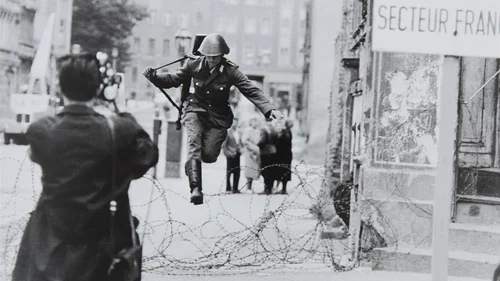
- Leap to Freedom (1961), the picture of East German border guard Conrad Schumann jumping over barbed wire in Berlin
- Works in
- Press photography for the Hamburg picture agency Conti-Press and for Hamburg newspapers
- Camera
- Published sources do not give an equipment list that two sources agree on
- Agency
- Conti-Press (also written Contipress), Hamburg
- Also
- Photographer and police reporter for Hamburger Echo, Hamburger Morgenpost and Hamburger Abendblatt until retirement
- Start with
- Photo Icons. 50 Landmark Photographs and Their Stories (TASCHEN)
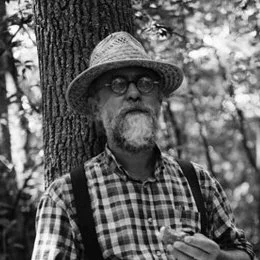
Peter Leibing (born 1941, died 2008) was a German press photographer from Hamburg. On 15 August 1961, two days after the building of the Berlin Wall began, he photographed the East German border guard Conrad Schumann as Schumann jumped over a coil of barbed wire into West Berlin. The picture, known as Leap to Freedom, became one of the best known images of the Cold War. Leibing worked as a news photographer in Hamburg for the rest of his career.
The story
On the afternoon of 15 August 1961, Peter Leibing stood on the corner of Bernauer Strasse and Ruppiner Strasse in Berlin. He had set the focus of his telephoto lens on a coil of barbed wire. Then he waited.
He was a young photographer, about 20, sent by the Hamburg agency Conti-Press. The Wall was two days old. A police spokesman in West Berlin had told him that Bernauer Strasse might become "interesting" the next day. So he took a bus there and walked up the street.
On the western side a group of people had gathered. Across the wire stood a non-commissioned officer, smoking one cigarette after another. Two of his comrades walked up and down the street. The people near Leibing felt that something might happen. They told him to stay. “We thought, of course: so, is he going to jump? But of course nobody could know.”
They waited for hours. Then, around four o'clock, the two comrades walked a little way down the street and lost sight of the smoker. He was Conrad Schumann. He threw away his cigarette, ran to the wire and jumped. In the air, he threw his submachine gun over his shoulder.
Leibing had one chance. He had learned how to time such a moment at a show jumping derby in Hamburg, where he had photographed horses over their fences. He knew that a rider has to be caught directly over the obstacle. Pressing the button when the jumper is already there is too late. “Schumann jumped, and I pressed the shutter at exactly the right moment.”
A small van of the West Berlin police stood ready. A policeman pulled Schumann inside and slammed the door. Leibing ran after the van to the next police station. There Schumann was asked questions, and Leibing was allowed to take one more picture of him.
But nobody was sure yet that the main picture had worked. A man from the newspaper Bild, who had missed the shot because of where he stood, talked Leibing into coming to the Bild office. On 16 August the photograph appeared large in Bild. The magazine Stern wanted it for its cover, but gave up the idea because Bild had already printed it. Leibing says it was only on the plane home that he began to think he might have made an important picture.
Who else recorded the jump? A newsreel cameraman stood directly to Leibing's left and is even visible in the photograph, Leibing says. A Federal Agency for Civic Education article names the cameraman as Dieter Hofmann and says the short film is much weaker than the still. Leibing points out that film frames were sometimes sold as his photograph. In them, he says, Schumann's legs look slightly crossed, because the film camera did not catch the movement cleanly. The article names no other still photographer at the scene.
Fame did not change his working life much. Leibing worked on as a photographer and police reporter for Hamburg papers. He also had to fight for his rights. When Conti-Press went bankrupt, the Hamburg state archive bought its whole stock, including his negative. He took the city to court and settled. In 1986, at the 25th anniversary of the Wall, he met Schumann in Berlin, and the two became friends.
Asked later whether the picture had helped his career, he answered plainly. “Because of the picture I never got a job and it never made things easier for me. But I did not want that anyway.”
The work
Leibing's name is tied to one frame. Leap to Freedom is dated 1961, and the Deutsches Historisches Museum says it is part of UNESCO's Memory of the World programme. A black and white picture of a man in uniform caught over a low roll of wire, it shows a border that was not yet a wall.
The rest of his career is less documented. He left an apprenticeship at Siemens out of love for photography, worked for a picture agency and then trained as a photographer. Until his retirement he worked as a photographer and police reporter for the Hamburger Echo, the Hamburger Morgenpost and the Hamburger Abendblatt. Published sources reviewed here do not name other titled works.
A print of Leap to Freedom made in 1998 and signed by Leibing was sold at auction in Cologne in 2015. Both the auction house and the gallery listing give the year of the picture as 1961.
- 1941Born in Hamburg
- 1961Works for the Hamburg picture agency Conti-Press and is sent to Berlin after the building of the Wall begins on 13 August
- 1961On 15 August photographs Conrad Schumann jumping the barbed wire at Bernauer Strasse
- 1961The photograph appears in Bild on 16 August
- 1986Meets Schumann at the 25th anniversary of the Wall; they become friends
- 1998Writes with his wife a piece for the Hamburger Abendblatt about his friendship with Schumann
- 2001Gives an interview to the weekly Junge Freiheit and says he lives in Oerel near Bremervoerde
- 2008Dies in Oerel on 2 November
Lessons
Prepare the spot, then wait. Leibing did not chase the event. He focused on the barbed wire first and waited for hours at the place where something could happen.
Use what you learned somewhere else. His timing came from photographing horses at a show jumping derby. The skill moved from sport to news.
Do not stop after the main frame. After the jump, Leibing followed to the police station and took one more picture of Schumann. A second moment can tell more of the story.
Try this: go to a place where people jump, such as a playground, a sports field or a stream with stepping stones. Pick one fixed line, like a rope or a stone. Focus on it before anyone arrives. Press the shutter when the jumper is directly over the line, not after. Take twenty tries and keep the best two.
Gear
Sources say little about Leibing's equipment, and what they say does not agree across two sources.
Pre-set focus: What is documented is how he worked. In his own words he set the focus on the barbed wire before Schumann ran, and there was no motor drive to fire several frames. He had one chance and made one negative.
Books
Photo Icons. 50 Landmark Photographs and Their Stories (TASCHEN). Hans-Michael Koetzle looks at 50 photographs that shaped their time. TASCHEN's table of contents lists Peter Leibing, Leap to Freedom, 1961. It is for readers who want the story behind famous pictures.
Moments in Time: 50 Years of Associated Press News Photos (Associated Press, 1984). Hal Buell and Norm Goldstein edited this book of press photographs. An auction catalogue lists it, on page 56, as literature on Leibing's picture. It is for readers who like the history of news photography.
In his words
“There was only one chance, so there is only one negative.”
“Schumann jumped, and I pressed the shutter at exactly the right moment.”
“Because of the picture I never got a job and it never made things easier for me. But I did not want that anyway.”
“We thought, of course: so, is he going to jump? But of course nobody could know.”