AT A GLANCE
- Known for
- The Mennonites, a ten-year project on Old Colony Mennonite families in Ontario and Mexico (1990 to 1999)
- Works in
- Black and white film, long-term documentary projects, books and film
- Also
- Writer, poet and musician · lives on a farm in Lambton County, Ontario
- Agency
- Magnum Photos, member since 1988
- Awards
- Leica Oskar Barnack Award (1996) · World Press Photo of the Year (1994) · first Henri Cartier-Bresson Award (2003) · Guggenheim Fellowship (2020)
- Start with
- The Mennonites (GOST, 2022)
- Links
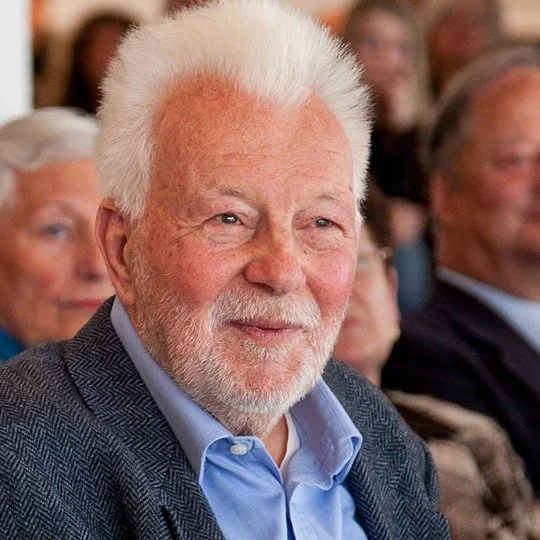
Larry Towell (born 1953) is a Canadian photographer and a member of Magnum Photos. He lives and works in rural Ontario, and he is also a writer and a musician. He is best known for The Mennonites, a project he made between 1990 and 1999 about Old Colony Mennonite families who worked in Ontario and lived in Mexico. He has also photographed in El Salvador, Palestine and Afghanistan.
The story
In 1989, Larry Towell found a new subject without leaving home. Families of Mennonite farm workers had come to work in the vegetable fields and orchards near his farm in Ontario. In his own words, “In 1989, I discovered them in my own back yard, land-hungry and dirt poor.”
The Mennonites are a Protestant religious group. They began in Europe in the sixteenth century and are related to the Amish. Over the years they moved again and again, so that they could keep their way of life. Most of the families Towell met lived in Mexico and came north to work in Canada.
They did not want to be photographed. Photography was forbidden in their community. But the families let Towell make pictures. His explanation is short: “Because I liked them, they liked me.”
A first step was a Mennonite man who worked at Towell's father's car repair shop. The man took him to his family, and other families of the Old Colony followed. Therefore Towell kept coming back, in Ontario and then in Mexico.
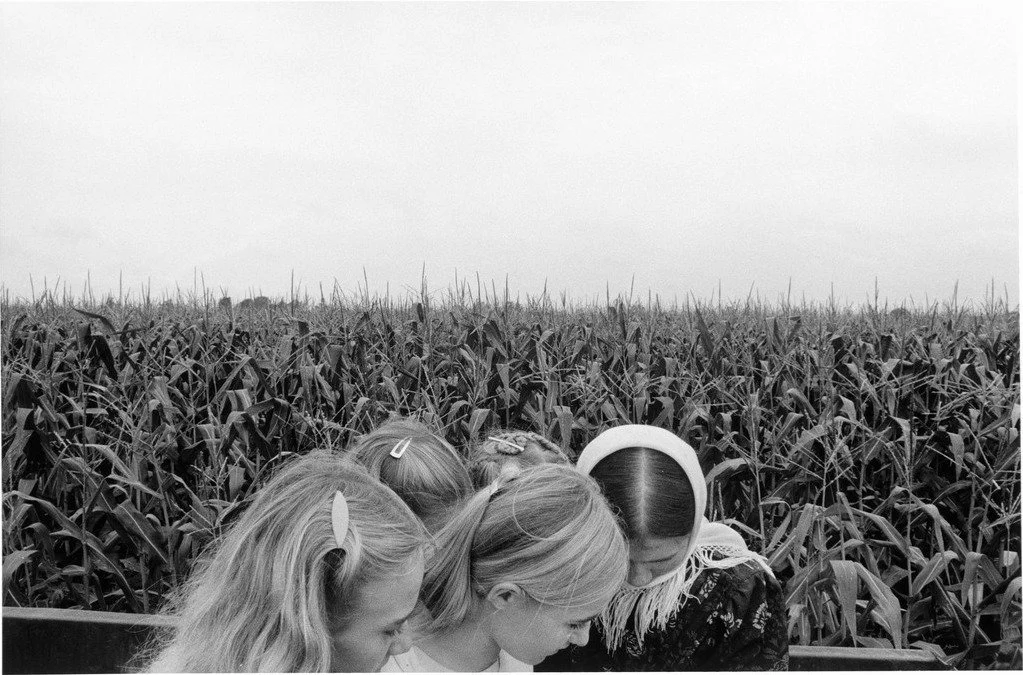
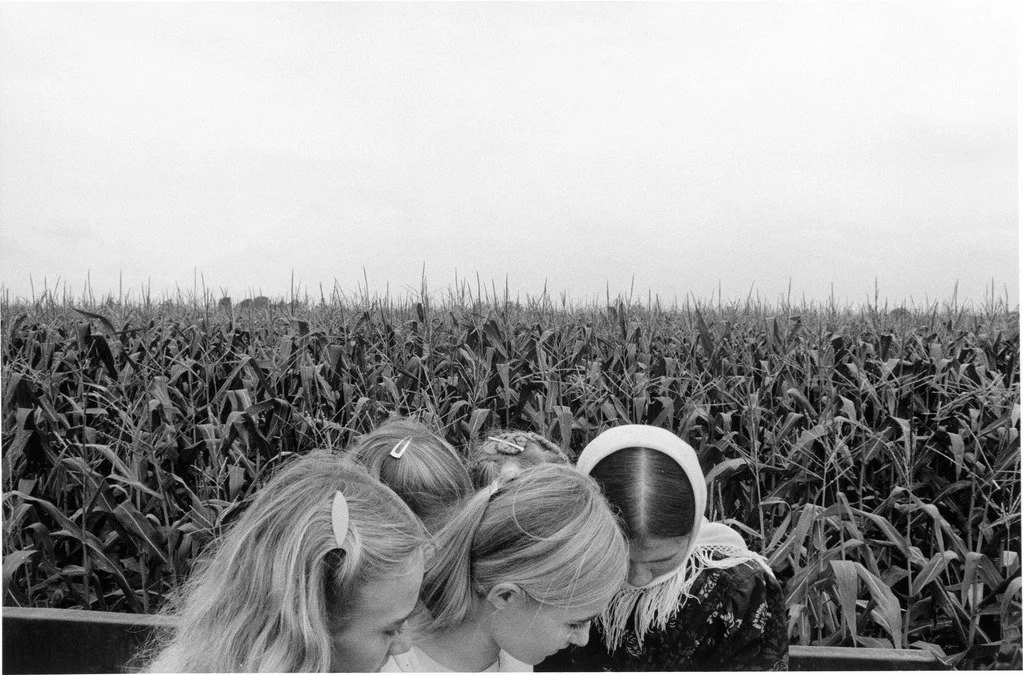
The picture shown here was made in 1990, in Lambton County, Ontario. A few people lean forward together at the bottom of the frame. One of them wears a headscarf. Behind them stands a tall field of corn, and above it is a pale sky. There are no machines and no buildings. Only the people and the crop they came to pick.
The project took about ten years. Towell shot thousands of rolls of film, all in analogue, in Old Colony settlements in Mexico and in Canada. He photographed in 1992, in 1994, in 1996 and in the years between. Magnum's pictures from these years show a girl at a kitchen table, farm fields and dusty roads.
Over those years the families changed. Towell said, “When I found them they were very much 18th century, but by the time I left, they'd modernised.” He saw the change as the core of the story. He also described it as a moment of transition inside the colonies.
The book The Mennonites came out from Phaidon in 2000. It went out of print. In 2022 the London publisher GOST printed a new edition with 40 pictures that had not been published before. The text in the book comes from Towell's own diary notes.
Towell never fully left the project behind. He said: “When the book first came out, I couldn't get the Mennonites out of my system.”
The work
The Mennonites is the work Towell is best known for, but it is one part of a larger body of work. His Magnum biography lists 16 books.
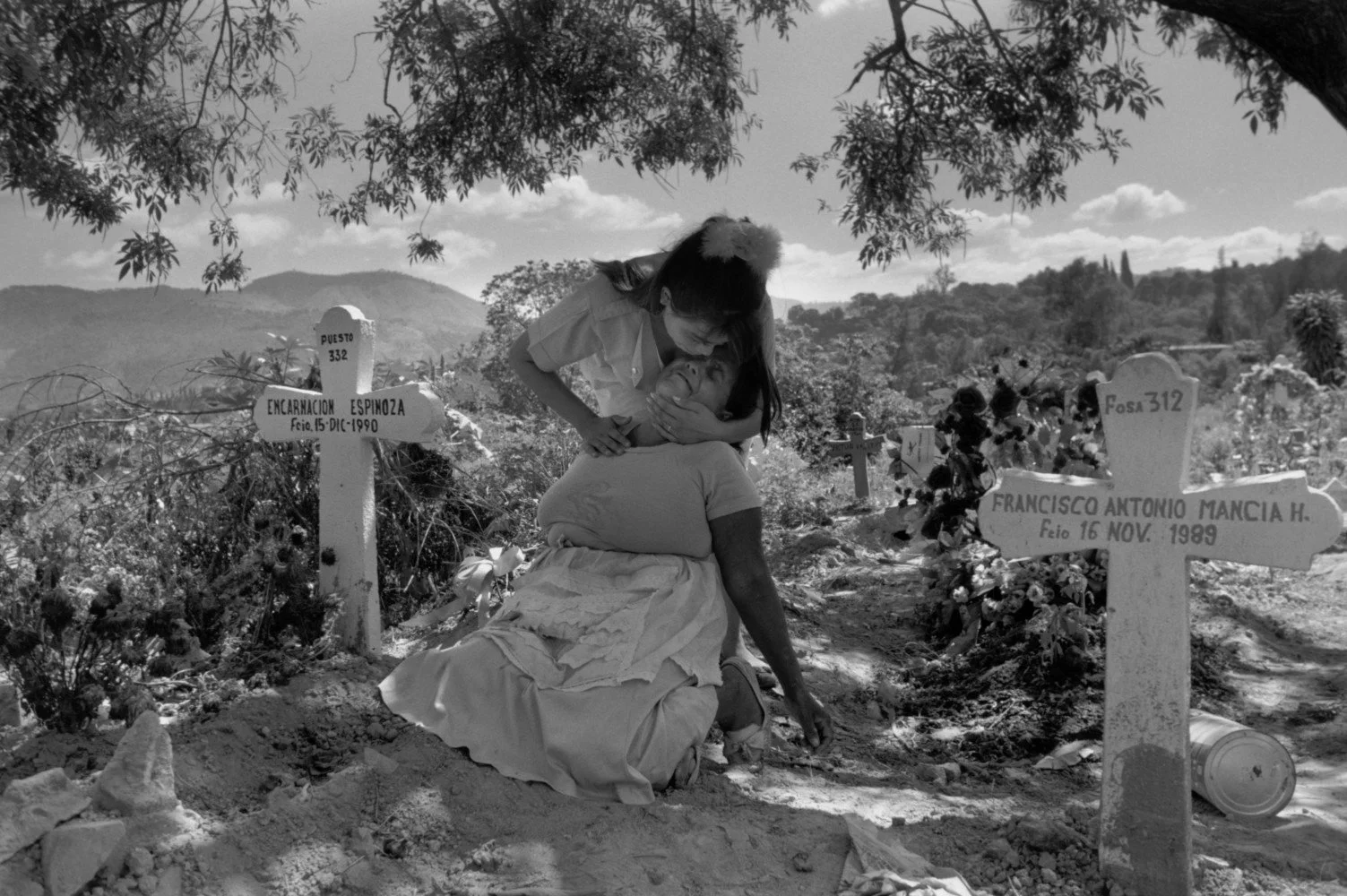
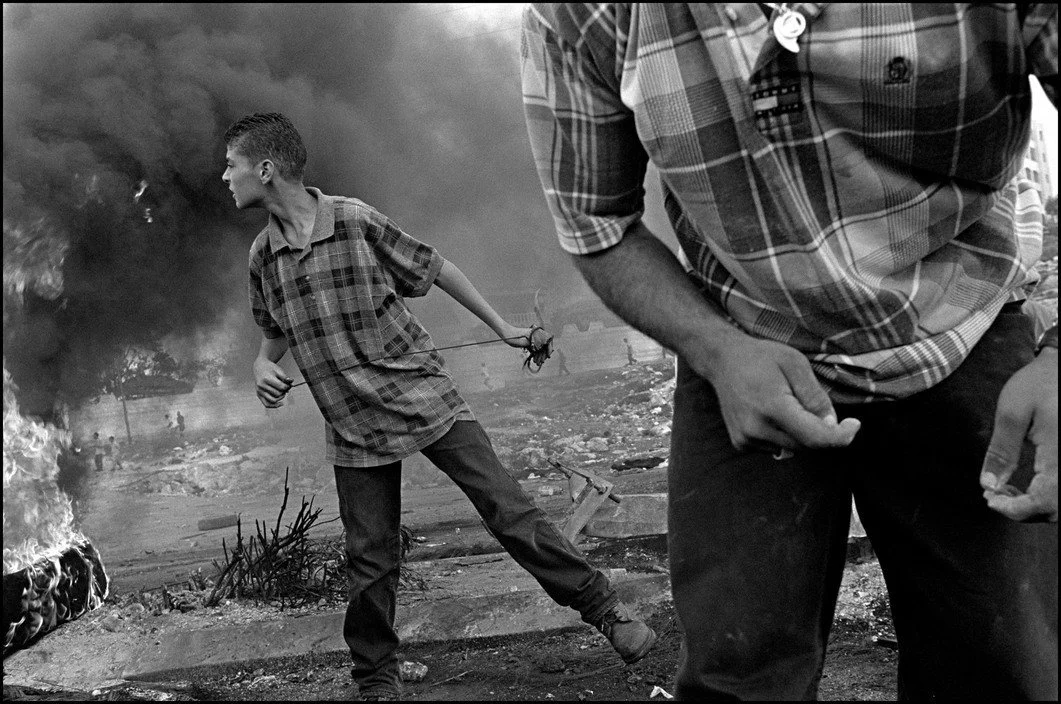
In El Salvador, he documented the civil war and its aftermath. Magnum shows a picture from 1991 in which a daughter comforts her mother while she grieves at the grave of her son. In Palestine, he worked over about ten years on the book No Man's Land. It was supported by the first Henri Cartier-Bresson Award, which he received in 2003. In 2000 he photographed the clashes in Ramallah, among them a boy with a homemade catapult.
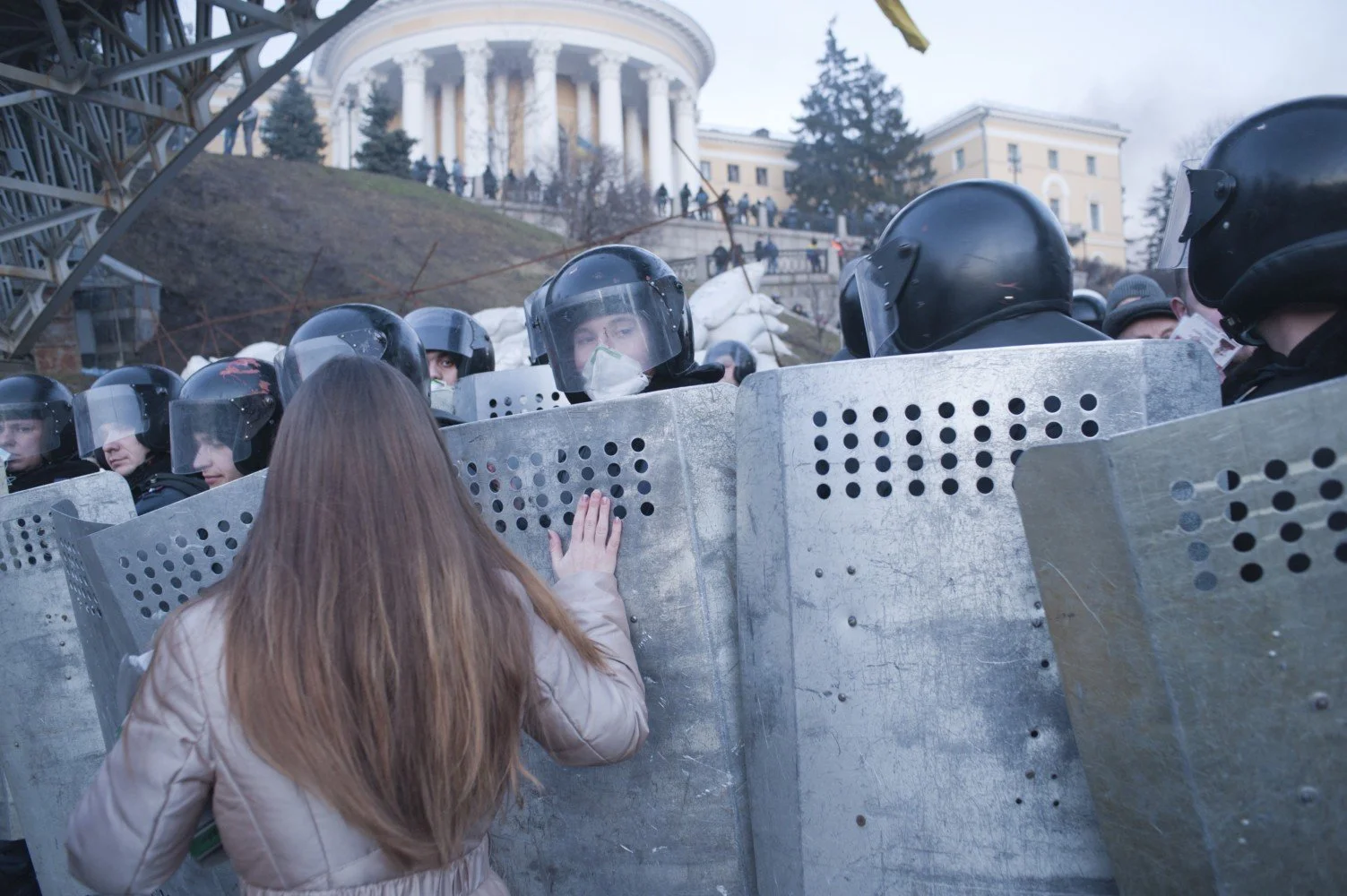
Towell also made five trips to Afghanistan between 2008 and 2011. The result was the book Afghanistan, published by Aperture in 2014. In February 2014 he was in Kyiv, where he photographed a demonstrator who prays with her hand on a policeman's shield.
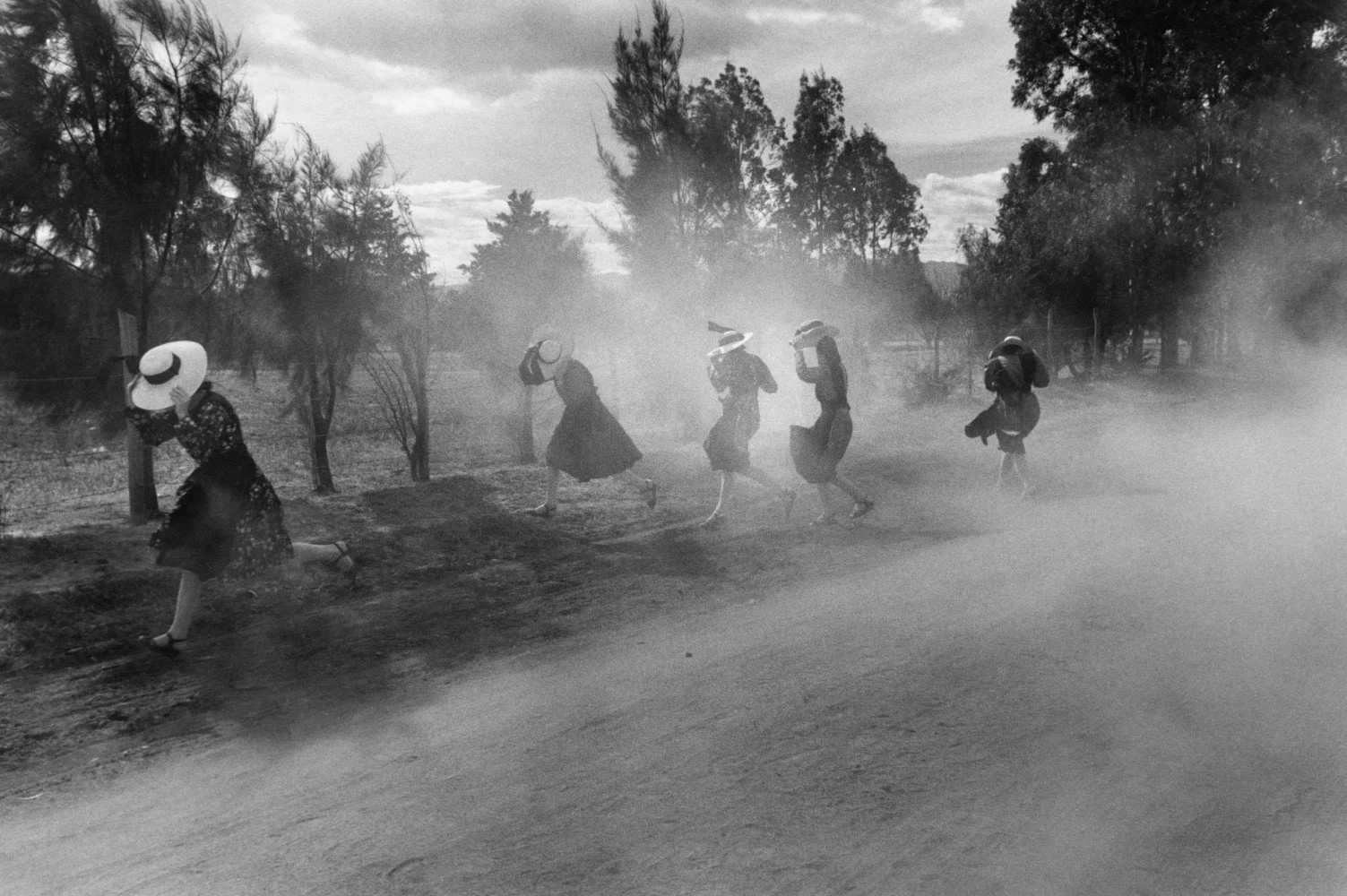
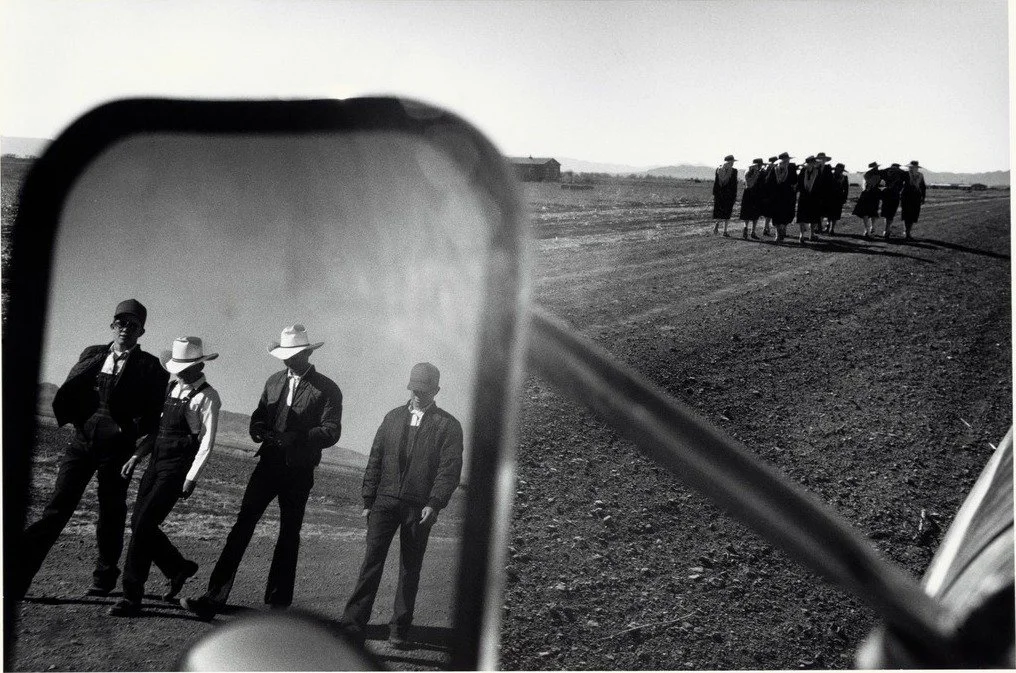
The Mennonite pictures are quieter. Young Mennonite women run through a cloud of dust in Durango, Mexico, in 1994. A group of men is seen in a car mirror near Capulin, in Chihuahua, in 1996.
- 1953Born in Chatham, Ontario
- 1972Begins four years of visual arts studies at York University in Toronto
- 1988Joins Magnum Photos and becomes its first Canadian member
- 1989Meets Mennonite farm workers near his home in Ontario
- 1994Wins World Press Photo of the Year
- 2000Phaidon publishes his book The Mennonites
- 2003Receives the first Henri Cartier-Bresson Award for his work in Palestine
- 2022GOST publishes a new edition of The Mennonites with 40 new pictures
- 2025His film The Man I Left Behind wins the NPPA Documentary of the Year award
Lessons
Look first at what is near you. Towell found his best known subject in his own back yard. The Mennonite families came to the fields close to his farm.
Give a project time. He worked on The Mennonites for about ten years, in Canada and in Mexico. The families got to know him, and he got to see them change.
Photograph change while it happens. Towell said the families he first met were very much 18th century, and later they had modernised. His pictures are a record of that moment.
Try this: choose a group of people near your home that you see often but do not know well. Ask if you may photograph them. Visit them once a month for six months and take only a few pictures each time. At the end, put the pictures in order and write one sentence for each one about what changed.
Gear
Towell's camera models are not named in published sources. What is clear is the material.
Black and white film: The Mennonites was shot entirely on film, and the Canadian Encyclopedia says he works in black and white and has refused to switch to digital. Published sources do not name his cameras and lenses.
Books
The Mennonites (GOST, 2022). This is the second edition of the 2000 book, with 288 pages and 131 duotone images, including 40 pictures not seen before. The text comes from Towell's own diary notes and memory. It is for readers who want the whole project in one book.
No Man's Land (Textuel, 2005). Robert Delpire wrote the foreword to this 128-page book on Palestine. It shows Jerusalem, Gaza and the West Bank between 2000 and 2004, mostly in black and white and with many panoramas. A London edition came out with Chris Boot. It is for readers who want his Palestine work.
Afghanistan (Aperture, 2014). This 192-page book collects pictures Towell made in Afghanistan from 2008 to 2011. It reproduces his own maquette, with handwritten notes and more than 350 images. It was made as a limited edition and is for readers who want to see how he builds a book.
In his words
“In 1989, I discovered them in my own back yard, land-hungry and dirt poor.”
“Because I liked them, they liked me.”
“When I found them they were very much 18th century, but by the time I left, they'd modernised.”
“When the book first came out, I couldn't get the Mennonites out of my system.”
“This is a personal book about my time with the Old Colony Mennonites.”