AT A GLANCE
- Known for
- Portraits of James Dean in 1955, the book Jazz Street (1960) and pictures of California's counterculture
- Works in
- Black and white portraits and photo essays, later colour books on nature and flowers
- Agency
- Magnum Photos, joined 1951, full member from 1954
- Also
- Film and TV writer, director and producer · his company Visual Objectives, 1968
- Awards
- First prize, Life magazine's young photographers contest (story division), 1951
- Start with
- Dennis Stock: American Cool (Reel Art Press, 2013)
- Links
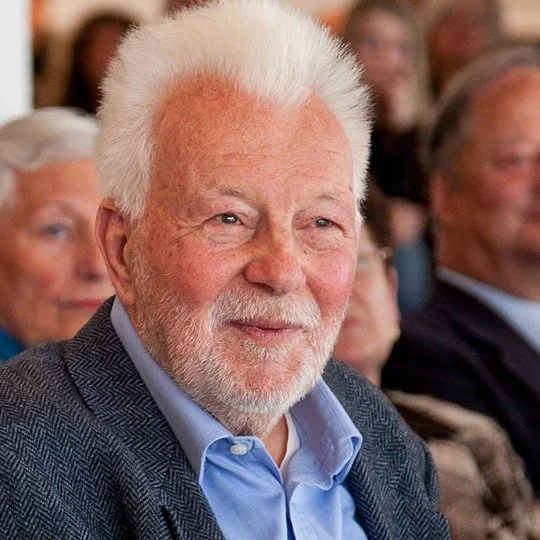
Dennis Stock (born 1928, died 2010) was an American photographer and a member of Magnum Photos. He is best known for his 1955 pictures of the actor James Dean, above all the rainy Times Square portrait. He also made portraits of jazz musicians, pictures of California's counterculture and, later, colour books about nature.
The story
One day in early 1955, in Los Angeles, Dennis Stock had to give James Dean an answer he did not want to hear. Dean had made two demands for the magazine story that Stock was planning. He wanted a guarantee that he would be on the cover. And he wanted a friend of his to write the text. Stock later wrote that he never passed the request on to the editors. He simply told Dean that the answer was no.
For days Dean was hard to deal with, Stock remembered. Then he came around.
The two men had met in Hollywood only weeks before. Dean had just made East of Eden, and Stock, after seeing a preview, was fascinated by the young actor's talent. Stock was a Magnum photographer, and Dean knew it. Stock's idea was a different kind of celebrity story. In his words, “The story, as I explained it, was to reveal the environments that affected and shaped the unique character of James Byron Dean.”
Where would they go? They chose Dean's hometown, Fairmount, Indiana, and New York, where Dean's professional life began. Stock asked Life magazine for an assignment. “It took only a week for Life to approve the assignment,” he wrote.
So the two left for Fairmount in the first week of February 1955. In Fairmount, Dean stayed on the farm of his uncle, Marcus Winslow, where he had spent his youth. Then they went on to New York.
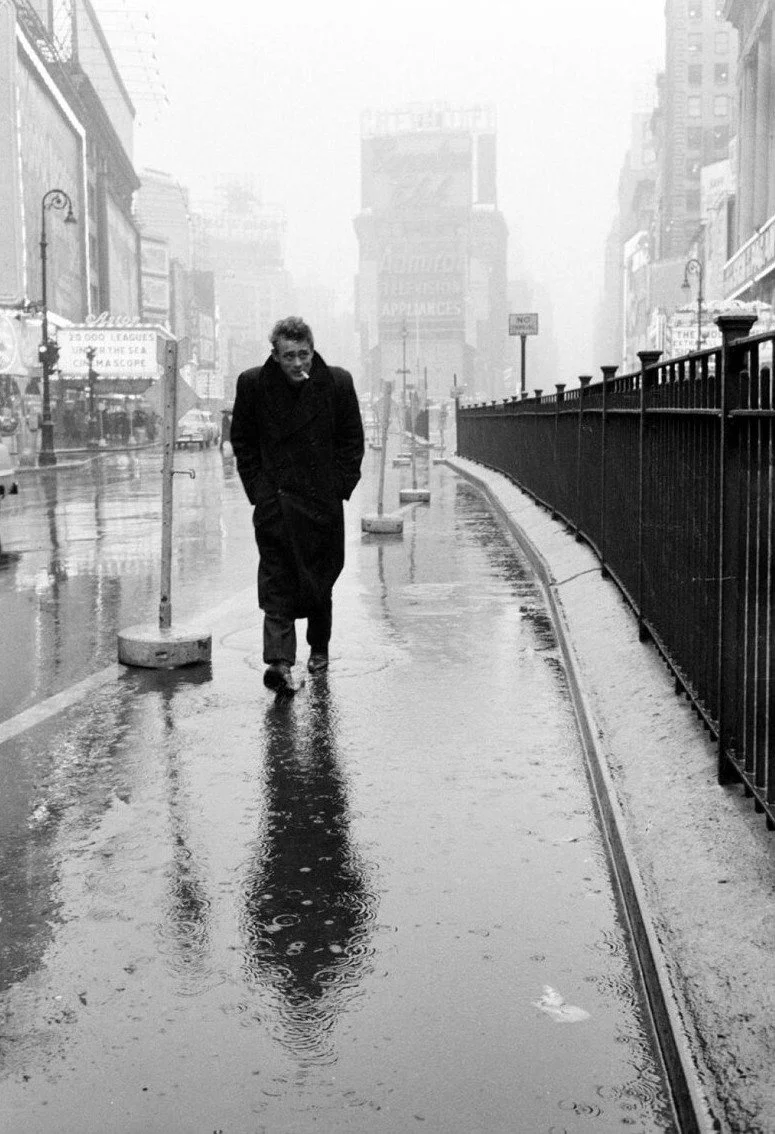
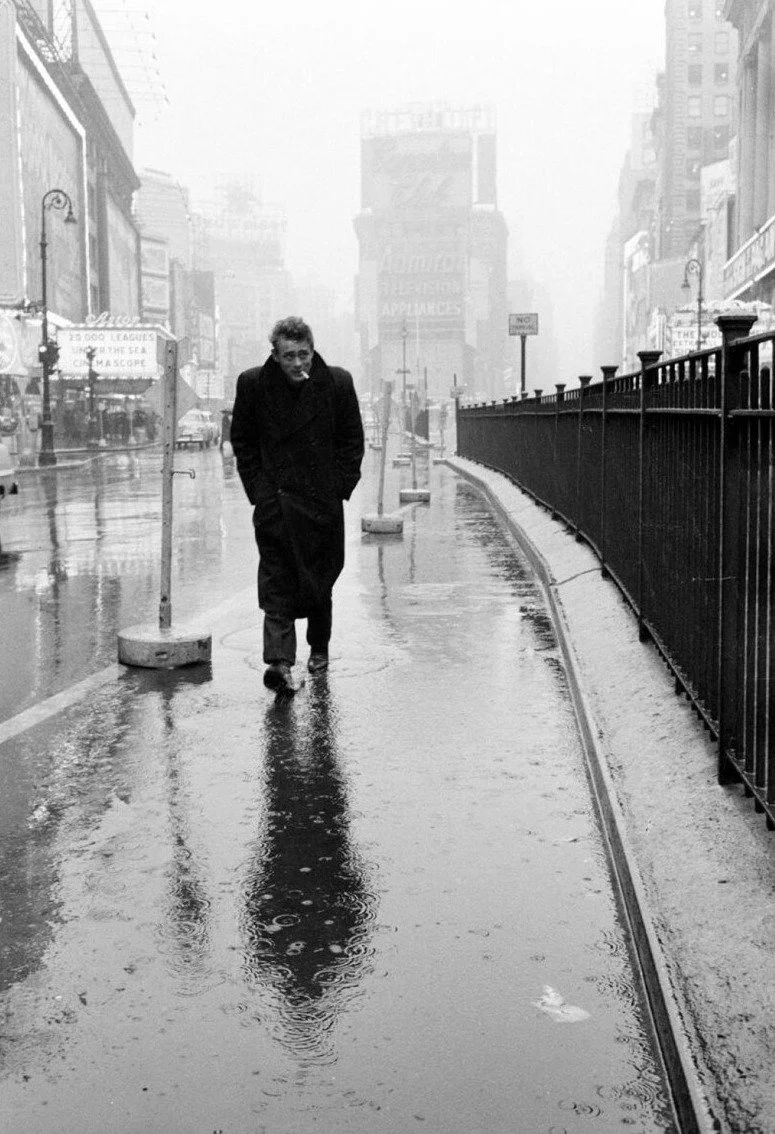
In New York, Dean walked through Times Square in the rain. The picture shows him from a distance. His shoulders are hunched and his head is pulled low inside a long overcoat. A cigarette is in his mouth. The street is almost empty. Magnum's caption says that for a novice actor in the fifties, Times Square was the place to go, and that the Actors Studio, directed by Lee Strasberg, was just a block away.
Life printed Stock's pictures in its issue of 7 March 1955, under the title "Moody New Star: Hoosier James Dean Excites Hollywood." After the trip, Stock also photographed Dean on the set of Rebel Without a Cause, between March and May. Dean died in a car crash in September 1955. He was 24.
Stock's pictures of Dean stayed in the public eye for decades. The New York Times wrote in Stock's obituary that his photographs may have done almost as much to create Dean's public persona as the actor's own performances. The Times Square picture became the best known of them.
Stock wrote about the cold weeks in Fairmount. He remembered walking the town, the farm and the fields with Dean, visiting family and friends: “I came to know, or at least to glimpse the real James Dean.”
The work
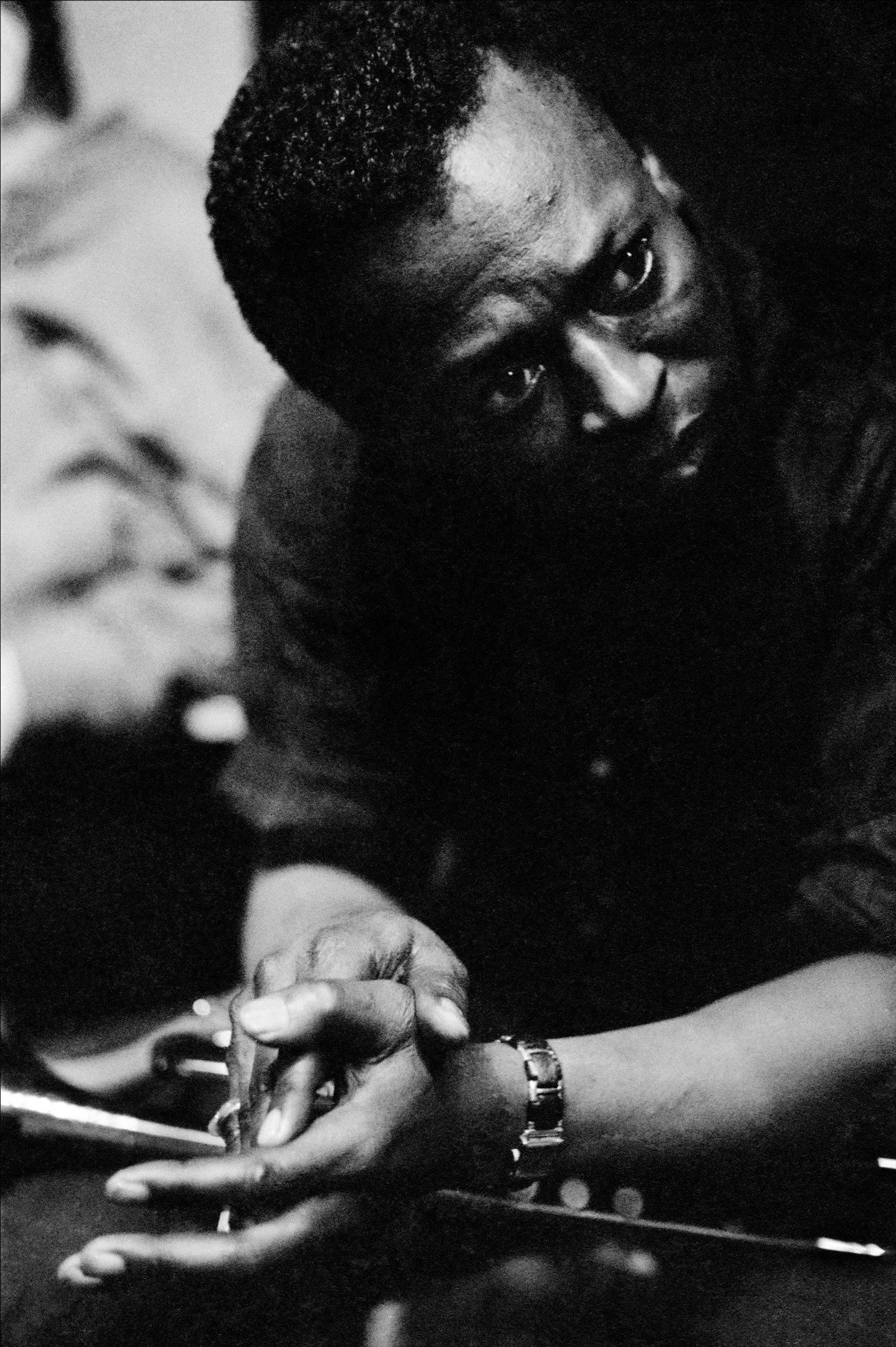
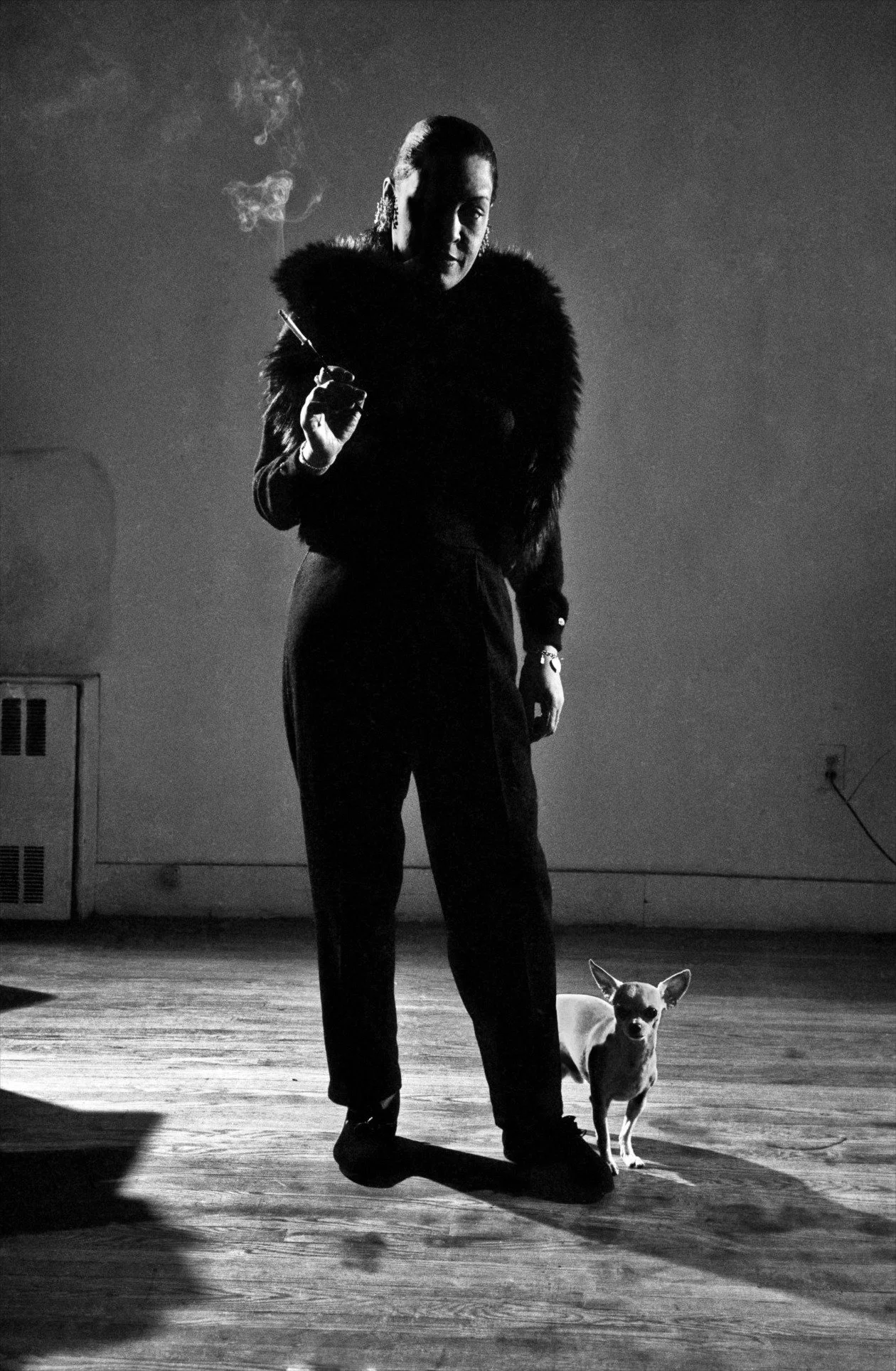
Stock grew up in New York, in Upper Manhattan, close to Harlem. As a child he went with his father to the Apollo Theatre. In 1957 he began a three-year trip through the world of American jazz. He photographed musicians in clubs, at festivals and at home, including Louis Armstrong and Billie Holiday. In his own words, “It often happened quickly; the photographic decision, like the jazz decision, must be instantaneous.” The book Jazz Street, with text by Nat Hentoff, came out in 1960. Miles Davis and Billie Holiday, both photographed in 1958, are in the gallery.
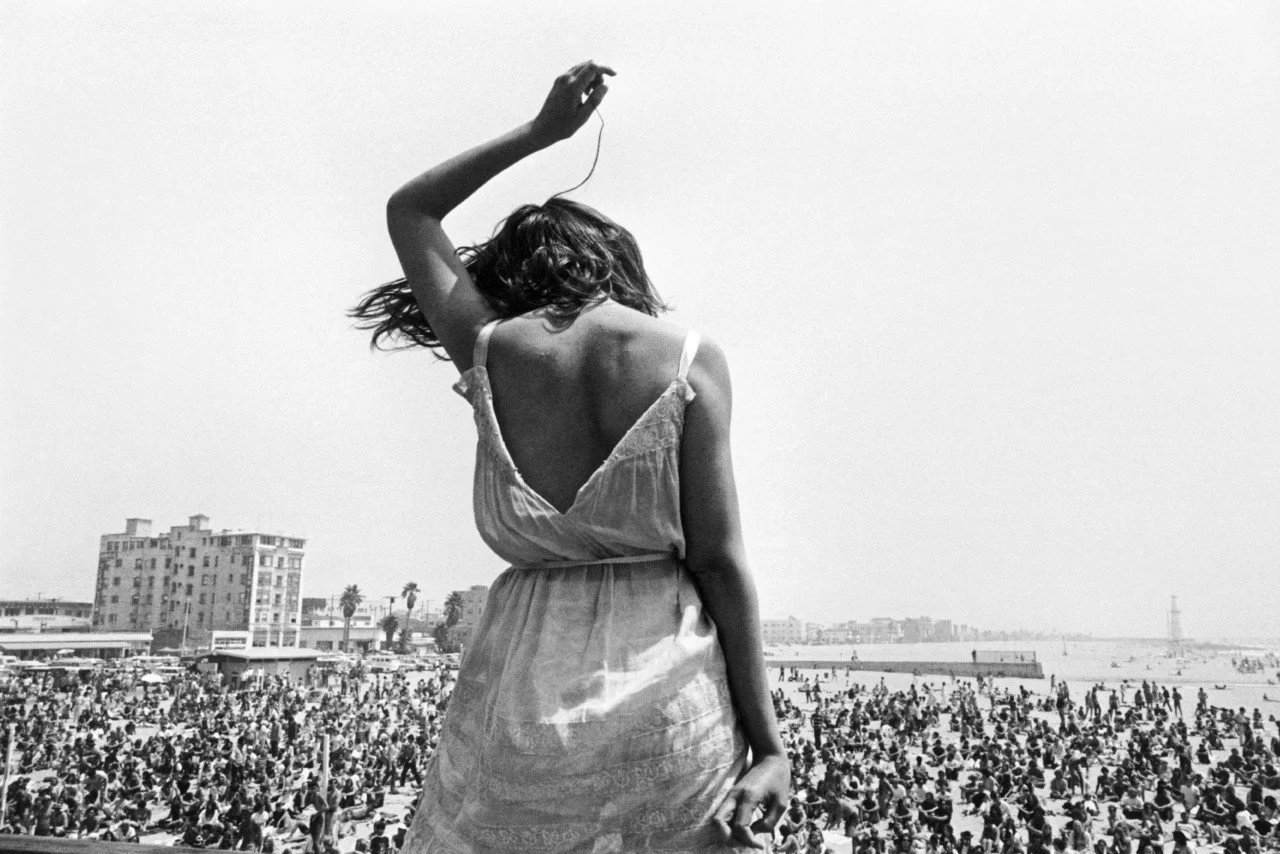
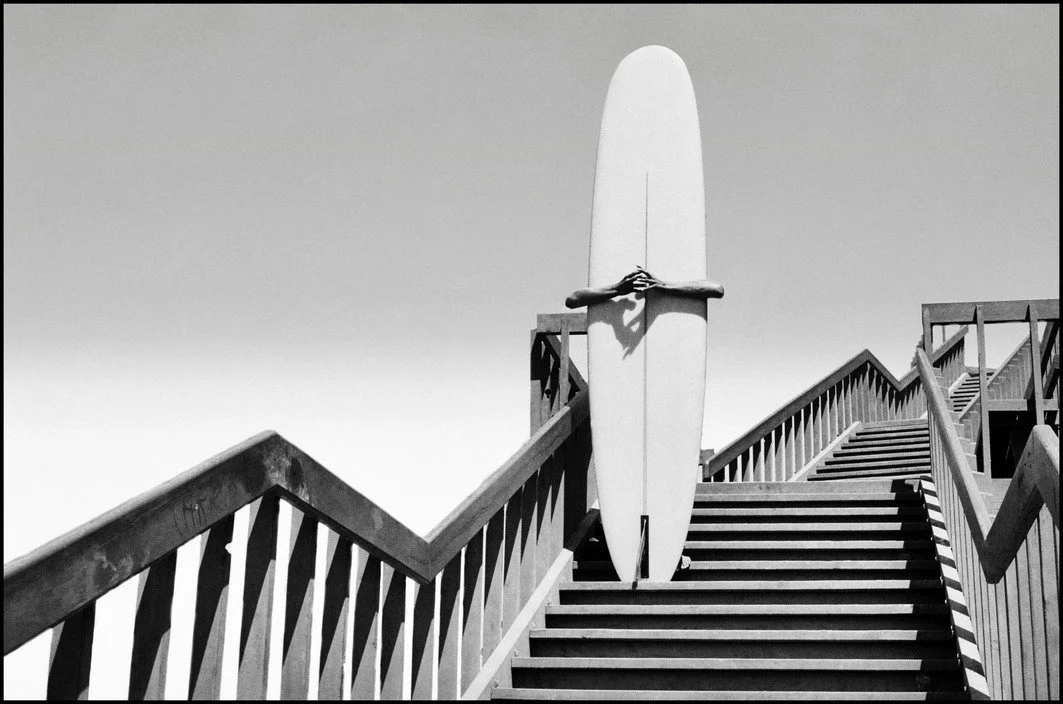
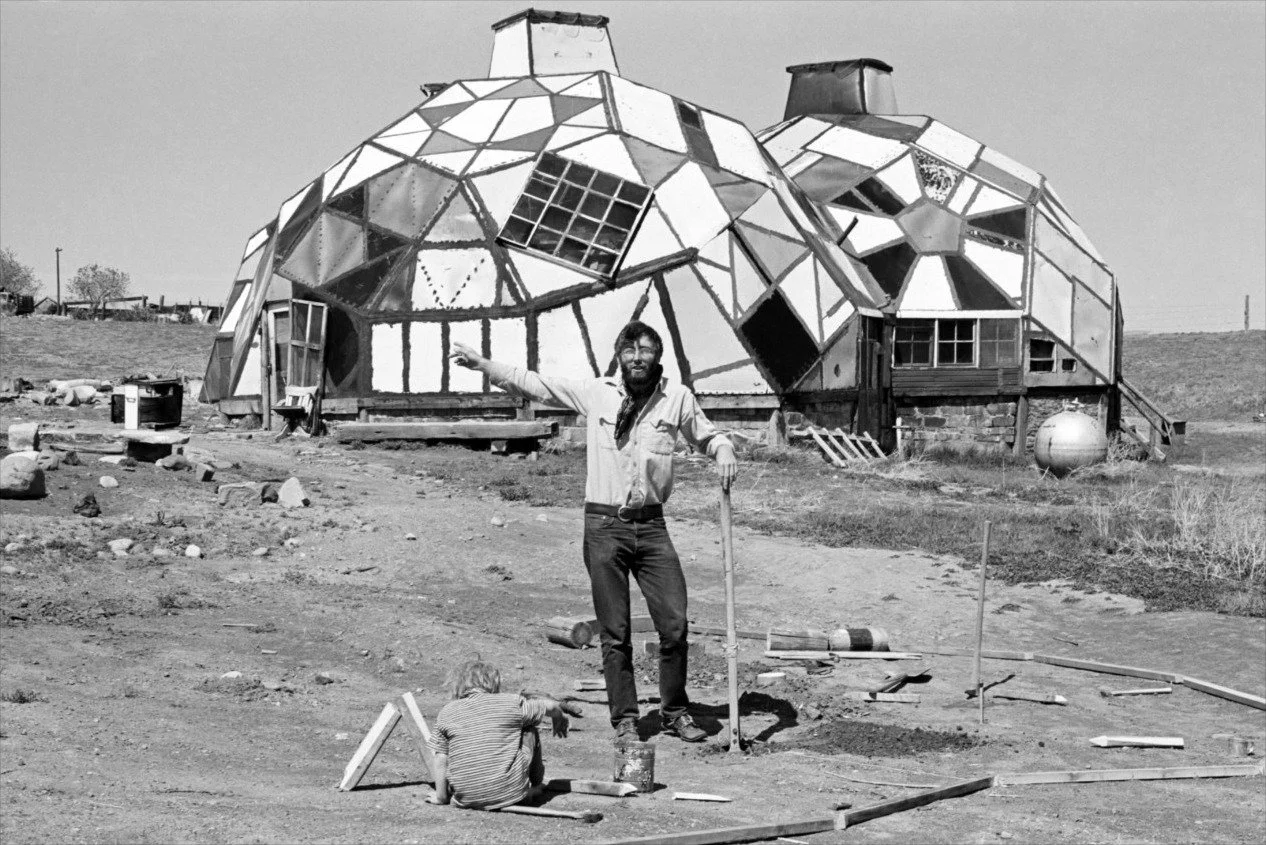
In 1968 Stock drove through California for about five weeks. He photographed the counterculture there: hippies, festivals, beaches and street scenes. Venice Beach Rock Festival and a man with a surfboard on beach steps in Corona Del Mar are in the gallery. The pictures became the book California Trip (1970). In 1969 he travelled across the United States with the writer William Hedgepeth for The Alternative (1970), a book about communal life. Drop City artists commune, Colorado, 1969, comes from that work.
In 1968 Stock took a leave from Magnum to start a film company, Visual Objectives. In the 1970s and 1980s he made colour books that looked at nature, in details and landscapes. In the 1990s he returned to the architecture of big cities. His late work focused on flowers. Magnum says that from the 1950s he made a book or an exhibition almost every year.
- 1928Born in New York City
- 1947Becomes an apprentice to the Life photographer Gjon Mili
- 1951Wins first prize in Life's young photographers contest and joins Magnum
- 1954Becomes a full member of Magnum
- 1955Photographs James Dean in Fairmount, New York and Hollywood; Life publishes "Moody New Star" on 7 March
- 1957Begins three years of portraits of jazz musicians
- 1960Jazz Street is published by Doubleday
- 1968Starts the film company Visual Objectives and travels through California
- 2010Dies in Sarasota, Florida
Lessons
Get to know your subject first. Before the trip, Stock spent a lot of time with Dean. He wrote that the more he knew about Dean's moods, the easier it was to expect his gestures.
Show where a person comes from. Stock did not photograph Dean only in Hollywood. He chose Fairmount and New York, the places that shaped him.
Be ready for a short moment. Jazz musicians had little time for a photographer. Stock wrote: "A moment can be enough." He accepted fleeting moments and kept his work out of their way.
Try this: choose one person you know well and plan a small visual story about the places that shaped them, such as a school, a street or a workplace. First spend an hour with them without a camera. Then photograph them in three of those places and note what you learned in each.
Gear
Stock wrote about his subjects far more than about equipment.
A camera you can carry: Published sources do not record which camera, lens or film Stock used for the James Dean pictures. What they do describe is his approach: he got to know his subjects first and then worked fast, because the moment could be short.
Books
Jazz Street (Doubleday, 1960). Photographs by Stock with text by Nat Hentoff. It collects his black and white pictures of American jazz musicians from three years on the road. John Morris, a long-time Magnum editor, calls it Stock's best work. It is for readers who love jazz and photographs made in the moment.
Dennis Stock: American Cool (Reel Art Press, 2013). Edited by Tony Nourmand, with a foreword by Michael Shulman and an introduction by Michael Pritchard. It has 288 pages and 260 black and white pictures from the 1950s to the 1970s, from James Dean to jazz and Hollywood stars. It is for readers who want a wide look at his best years. It can be hard to find new.
James Dean: Fifty Years Ago (Abrams, 2005). A 128-page book published for the 50th anniversary of Dean's death, with an introduction by Joe Hyams and a short memoir by Stock. It shows about 80 duotone pictures from New York, Fairmount and Hollywood. It is for readers who want the full story behind the Dean pictures.
California Trip (Anthology Editions, 2019). A reissue of the 1970 book, with 112 pages of black and white pictures from Stock's 1968 road trip along California's highways. Magnum also shows Stock's own text on the state from the original book. It is for readers who like counterculture photography.
In his words
“I had a passion for jazz. I had listened and attended many jazz sessions from a child on.”
“It often happened quickly; the photographic decision, like the jazz decision, must be instantaneous.”
“A moment can be enough.”
“For many years California frightened me; the contrasting arenas of life shook me up.”
“I came to know, or at least to glimpse the real James Dean.”