AT A GLANCE
- Known for
- Saigon Execution (1968), which won the 1969 Pulitzer Prize, and Boat of No Smiles (1977), his pictures of Vietnamese refugees at sea
- Works in
- Black and white news photography for the Associated Press, Time and Parade: war, people in need, and portraits of famous people
- Also
- Marine Corps combat photographer in Korea · covered 13 wars · co-founded the Eddie Adams Workshop (1988)
- Awards
- Pulitzer Prize for Spot News Photography (1969) · World Press Photo of the Year (1968) · more than 500 awards in all
- Start with
- Eddie Adams: Bigger than the Frame (University of Texas Press, 2017)
- Links
Content note: this profile contains a graphic photograph of a killing during a war.
Eddie Adams (1933 to 2004) was an American photojournalist. He worked for the Associated Press, Time and Parade, and he covered 13 wars. His 1968 picture of a street execution in Saigon won the 1969 Pulitzer Prize. He was most proud of a later series, Boat of No Smiles, made in 1977 with Vietnamese refugees at sea.
The story
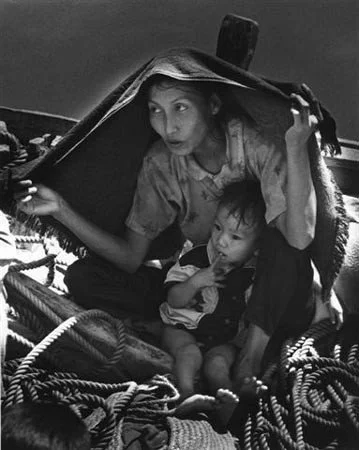
It was four in the morning on Thanksgiving Day in 1977. A fishing boat full of Vietnamese refugees had just reached the coast of Thailand, and the Thai authorities were getting ready to push it back out to sea. Eddie Adams was there for the Associated Press. He asked the people on board if he could go with them. Then he bought them fuel and rice, because they had neither.
There were 49 people on the boat, he later wrote, and a baby was born in the hold that same day. The Thais towed the boat out to sea and left it drifting. There was no room to lie down, so everyone sat up straight, awake or asleep. Adams had photographed many refugee camps, and children there usually gathered in front of the camera with a smile. Not on this boat. “This was the first time in my life that no child smiled.”
He called the pictures Boat of No Smiles. Soon a Thai boat came close and ordered him off at gunpoint. He sent the pictures at once, and they ran. Within a few days, he wrote, the administration asked the AP to show the photos to Congress, and President Carter agreed to let the refugees come to America. World Press Photo writes that the story is credited with prompting the United States to admit 200,000 Vietnamese refugees.
By then Adams was already famous for a very different picture. He grew up in New Kensington, Pennsylvania, and photographed weddings for his high school newspaper. He spent three years as a Marine Corps combat photographer in Korea and joined the AP in 1962. On 1 February 1968, early in the Tet Offensive, he was on a Saigon street when General Nguyen Ngoc Loan, the head of South Vietnam’s National Police, shot a Viet Cong prisoner. Adams photographed the shot.

The picture won the 1969 Pulitzer Prize for Spot News Photography and the World Press Photo of the Year award. But Adams was never proud of it. When Loan died in 1998, Adams wrote a eulogy for him in Time. He wrote that the picture had badly hurt the general’s life and that it did not show the whole situation. “Still photographs are the most powerful weapon in the world. People believe them, but photographs do lie, even without manipulation.”
He worked for Time from 1972 to 1976 and then went back to the AP. In 1980 he joined Parade, and from 1982 until his death he was its special correspondent. In 1988 he and his wife Alyssa started a free workshop for young photojournalists at his barn in Jeffersonville, New York. He died in New York in 2004. Of all his work, the boat people meant the most to him. “Pictures do work, at least sometimes. They carry conviction.”
The work
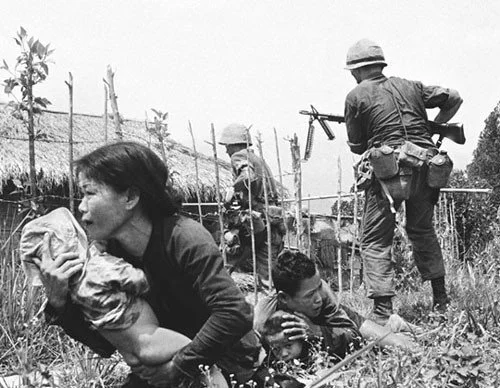
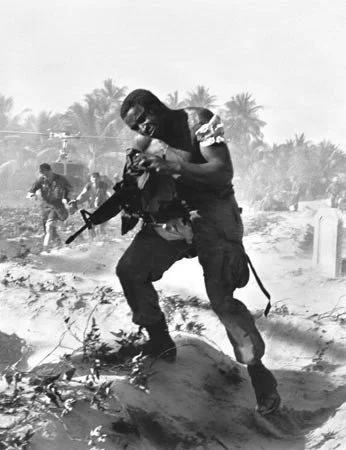
Adams covered 13 wars, and the Marines were close to his heart. NPR notes that many of his best Vietnam pictures show Marine operations. In Marine Crossfire, Vietnam, 1965, a Vietnamese woman crouches low with a child as American soldiers with rifles push forward around her. In Soldier U.S. 1st Cavalry, Vietnam, 1966, a soldier runs toward the camera with his rifle while others follow through the dust.
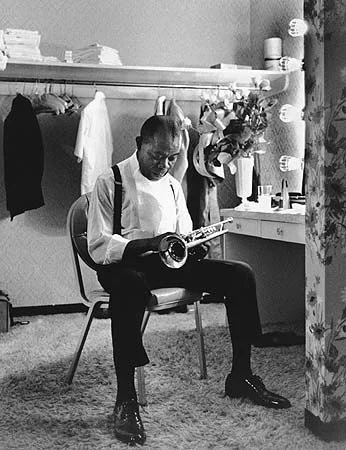
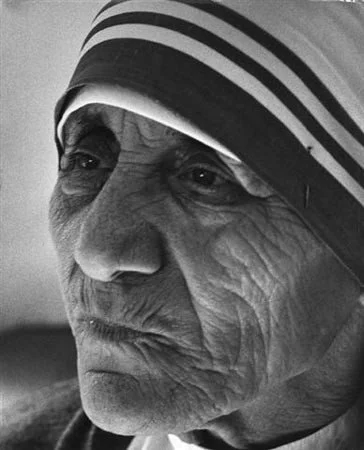
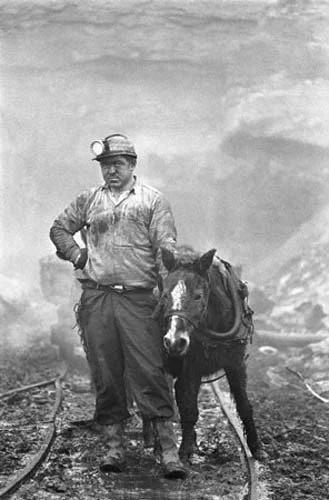
He was also a portrait photographer. His pictures appeared in Time, Vogue, Vanity Fair and Parade, and Visa pour l’Image notes that his photographs were on more than 350 Parade covers. Monroe Gallery, which represents his work, shows his portraits of Louis Armstrong in Las Vegas in 1970 and of Mother Teresa in India in 1978, and his picture of a coal miner in West Virginia from 1969.
In 2000 his portraits filled Speak Truth to Power, a book of interviews by Kerry Kennedy Cuomo with human rights defenders from around the world. After his death, his widow Alyssa Adams gave his archive to the Dolph Briscoe Center for American History at the University of Texas at Austin. It holds slides, negatives, prints, diaries and notes.
- 1933Born in New Kensington, Pennsylvania
- 1962Joins the Associated Press
- 1968Photographs a street execution in Saigon on 1 February
- 1969Wins the Pulitzer Prize for Spot News Photography
- 1972Joins Time magazine, where he works until 1976
- 1977Photographs Boat of No Smiles on Thanksgiving Day
- 1980Joins Parade magazine
- 1988Starts the Eddie Adams Workshop in Jeffersonville, New York, with his wife Alyssa
- 2004Dies in New York
In his words
“Pictures do work, at least sometimes. They carry conviction.”
“This was the first time in my life that no child smiled.”
“Still photographs are the most powerful weapon in the world. People believe them, but photographs do lie, even without manipulation. They are only half-truths.”
“The general killed the Viet Cong; I killed the general with my camera.”
Gear
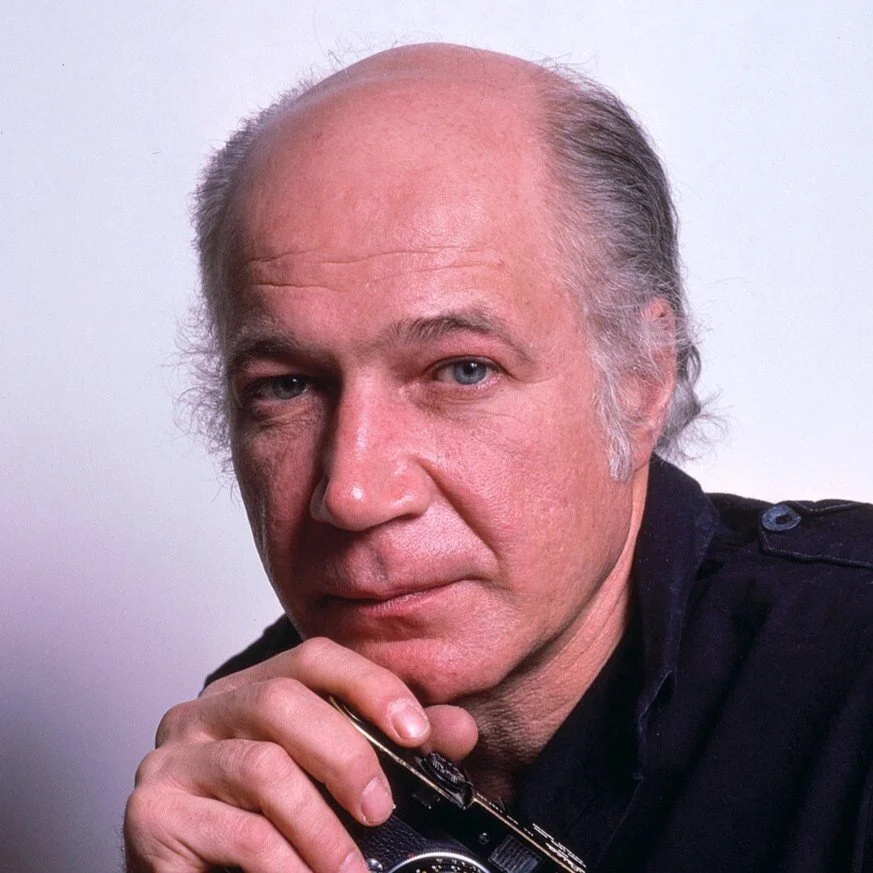
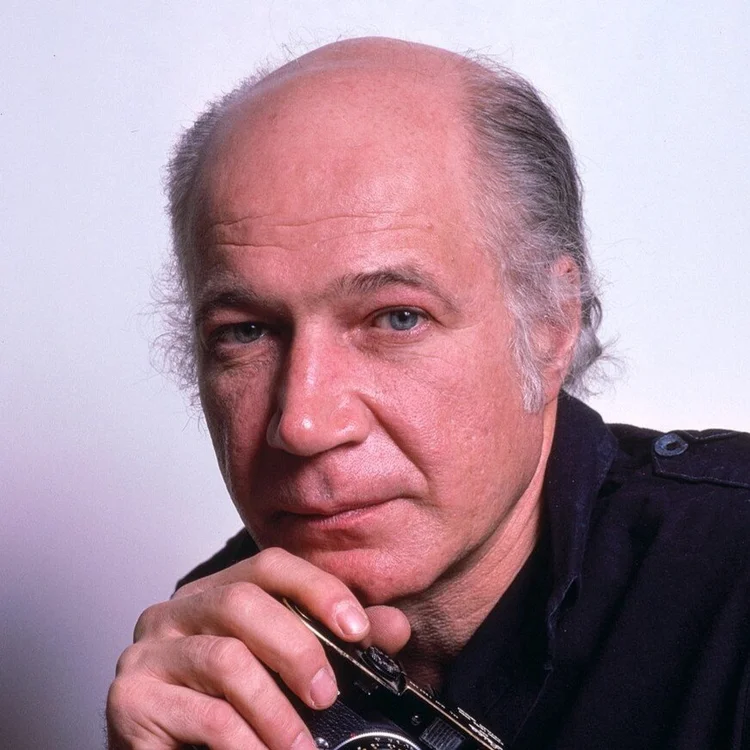
Leica rangefinder camera: In Bernard Gotfryd’s 1985 portrait of him, now in the Library of Congress, Adams holds a Leica rangefinder. Which cameras he used for his best known pictures is not well documented.
Books
Eddie Adams: Bigger than the Frame (University of Texas Press, 2017). A large career survey from the 1950s to the early 2000s, drawn from his archive at the Dolph Briscoe Center for American History. It has a foreword by Don Carleton, an essay by the curator Anne Wilkes Tucker and a personal remembrance by Alyssa Adams. It shows war, refugees, presidents and famous faces side by side. Start here if you want the whole career and not only Vietnam.
Eddie Adams: Vietnam (Umbrage Editions, 2008). His war photographs from Vietnam, written and edited by Alyssa Adams after his death. Besides the pictures it includes articles and pages from his journals. It is the war book he never finished in his lifetime. Good for readers interested in Vietnam War photojournalism.
Speak Truth to Power: Human Rights Defenders Who Are Changing Our World (Crown, 2000). Interviews by Kerry Kennedy Cuomo, edited by Nan Richardson, with portraits by Eddie Adams. It tells the stories of 51 men and women who risked prison, torture or death to defend human rights. It shows Adams as a calm, close portrait photographer. Good for anyone interested in portraits with a purpose.