AT A GLANCE
- Known for
- Into the Jaws of Death, made at Omaha Beach on 6 June 1944
- Works in
- Combat photography for the U.S. Coast Guard on the attack transport USS Samuel Chase, 1943 to 1944
- Also
- Photographed the invasions of Sicily, Salerno, Normandy and Southern France · after the war ran the camera counter of a stationery store in Summit, New Jersey
- Awards
- Navy citation for exceptionally meritorious photography, signed by James Forrestal and Edward Steichen
- Start with
- D-Day: June 6, 1944: The Climactic Battle of World War II (Simon & Schuster, 1994)
- Links
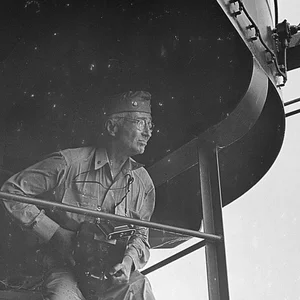
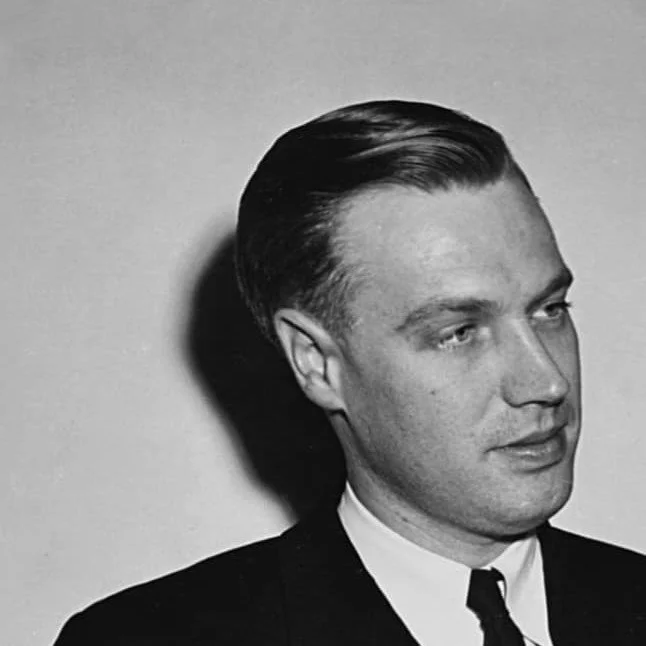
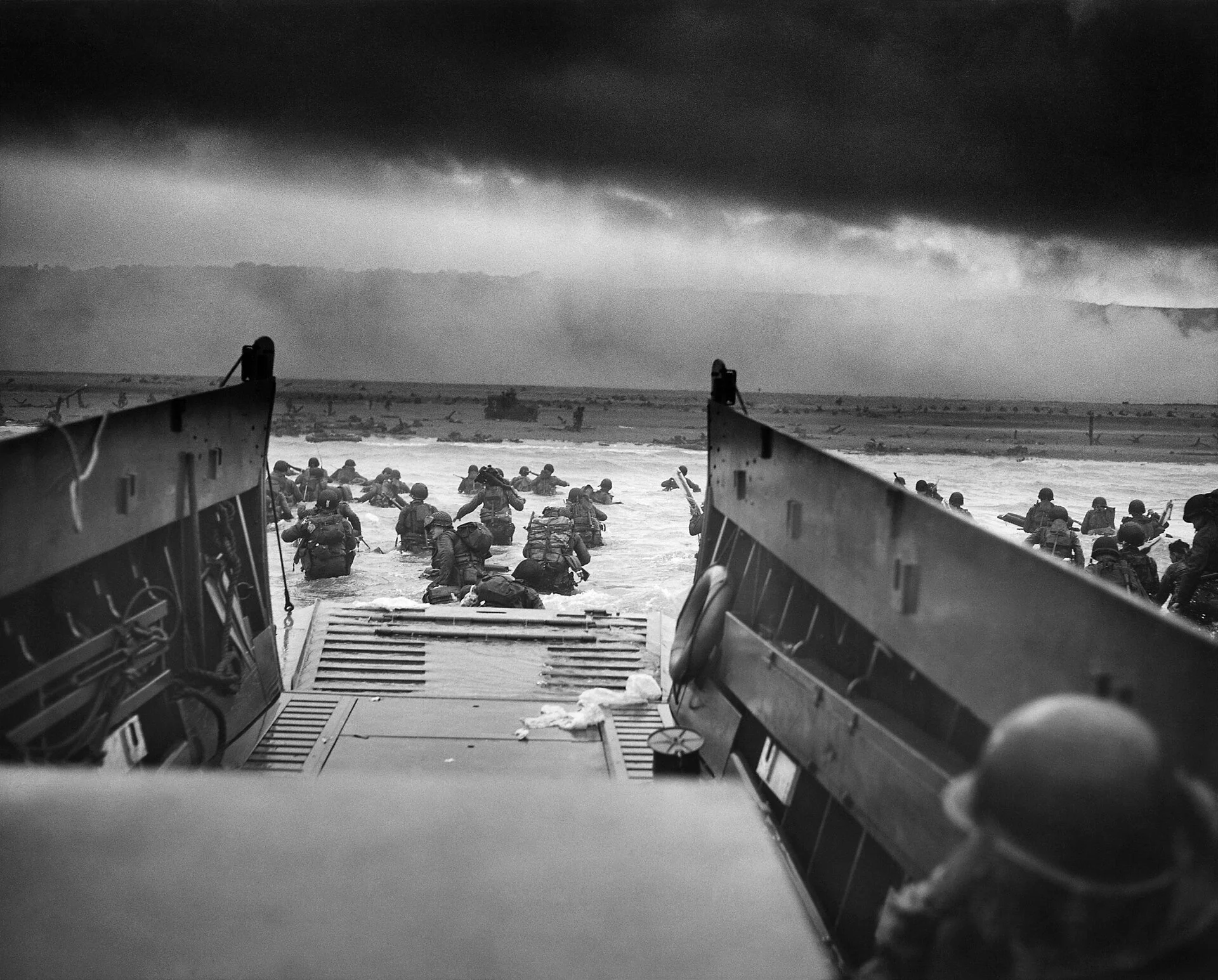
Robert F. Sargent (1918 to 1969) was a combat photographer of the U.S. Coast Guard. On 6 June 1944 he made Into the Jaws of Death, the picture of American soldiers wading from a landing craft toward Omaha Beach. It became one of the best known images of D-Day.
The story
Early on 6 June 1944, Chief Photographer’s Mate Bob Sargent came up from his bunk on the USS Samuel Chase, off the coast of Normandy. Soldiers, sailors and war correspondents filled the deck. One of them was the Life photographer Robert Capa. Sargent’s job was to record the Coast Guard’s part in the invasion. “When H-hour finally came I had a mixed feeling of pride and being downright scared.”
At 5:36 a.m. he was lowered in a small landing craft with soldiers bound for the Easy Red sector of Omaha Beach. The sea was rough. “We were cold and soaked to the skin even before starting,” he later said. He worked with a Graflex Speed Graphic camera and 4x5 film.
Near the beach the ramp went down and the soldiers stepped into the water. Sargent made his picture from inside the boat, looking past them toward the shore. Then he went back to the Chase, carrying his film in a metal milk can, his wet cameras around his neck.
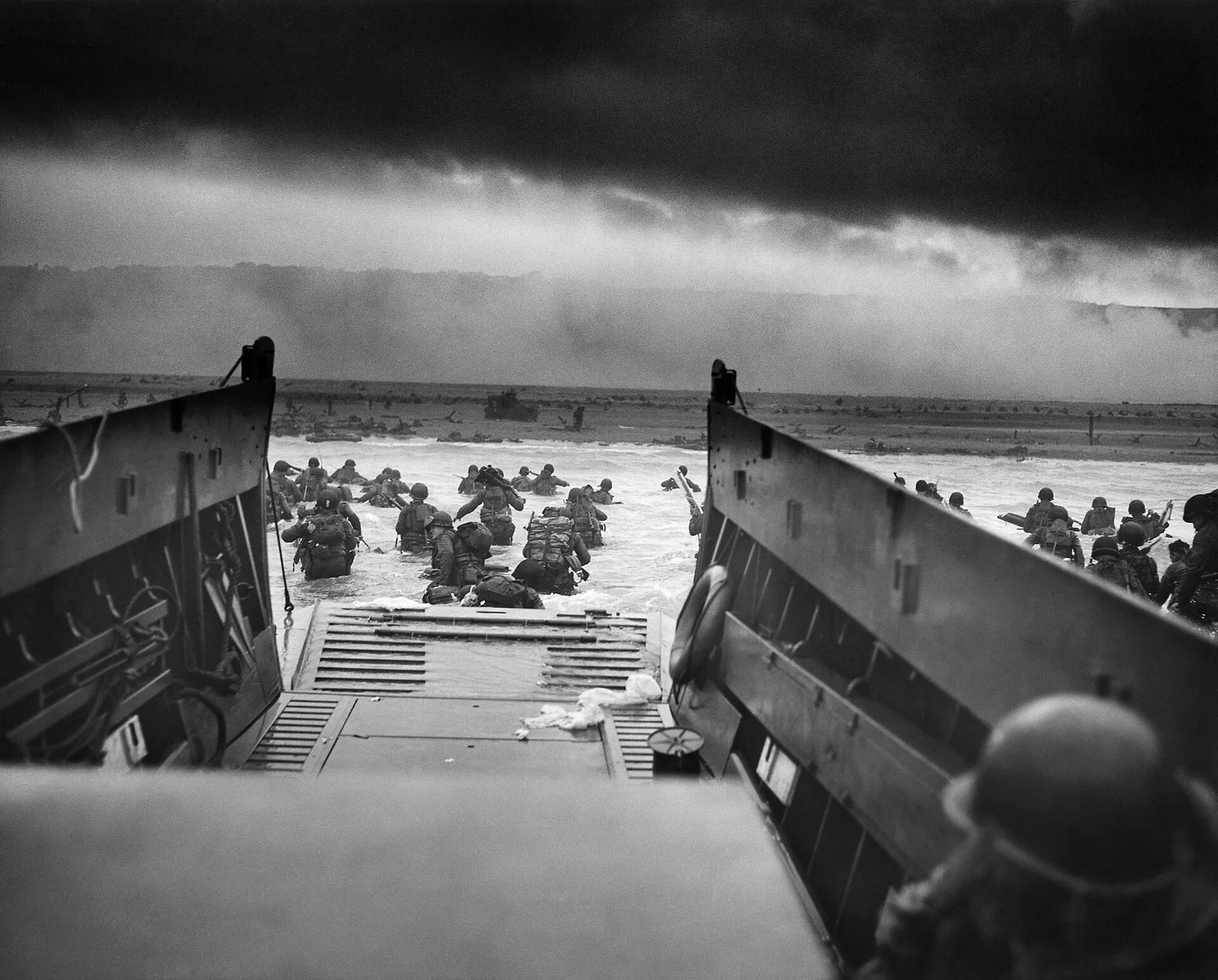
Climbing back on board, he said, “The coast of France this morning was certainly no photographer’s party.” The film was developed quickly and sent to newspapers. It first appeared in an American paper on 8 June, under the caption Invaders Wading Ashore on D-Day. Later it was recaptioned Taxis to Hell, and Back, Into the Jaws of Death.
After the war the picture became the image of D-Day for many people. The Coast Guard places it beside Joe Rosenthal’s flag raising on Iwo Jima and Alfred Eisenstaedt’s V-J Day in Times Square. Because it is in the public domain, it has been used in countless books, films and games. But Sargent’s name was mostly forgotten. His pictures were often credited only to the Coast Guard, or even to Capa.
Sargent went home to New Jersey. He ran the camera counter at Eastman’s, a stationery store in Summit, and was active in local clubs and his church. Like many veterans, he rarely spoke about the war. He died in 1969, at the age of 50.
The work
Sargent was born in St. Charles, Illinois, and grew up in Chatham, New Jersey. As a teenager he took pictures for the local paper. The Coast Guard picked him because of that news work.
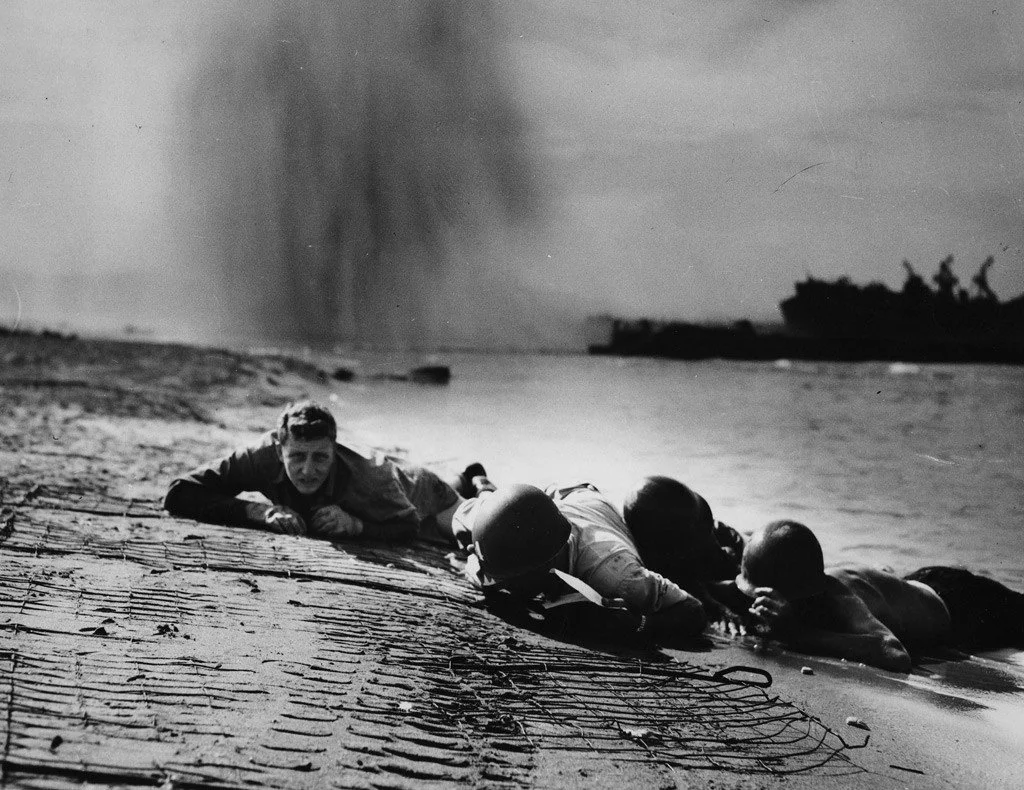
On the Samuel Chase he photographed four landings: Sicily in July 1943, Salerno in September 1943, Normandy in June 1944 and Southern France in August 1944. At Salerno a German plane bombed the beach while he was working. His picture of three men lying flat on the sand under the attack, Three men on the beach at Salerno, 1943, was later named one of the best 100 pictures of the war. A Navy citation for one of his Salerno photographs was signed by James Forrestal and by Captain Edward J. Steichen.
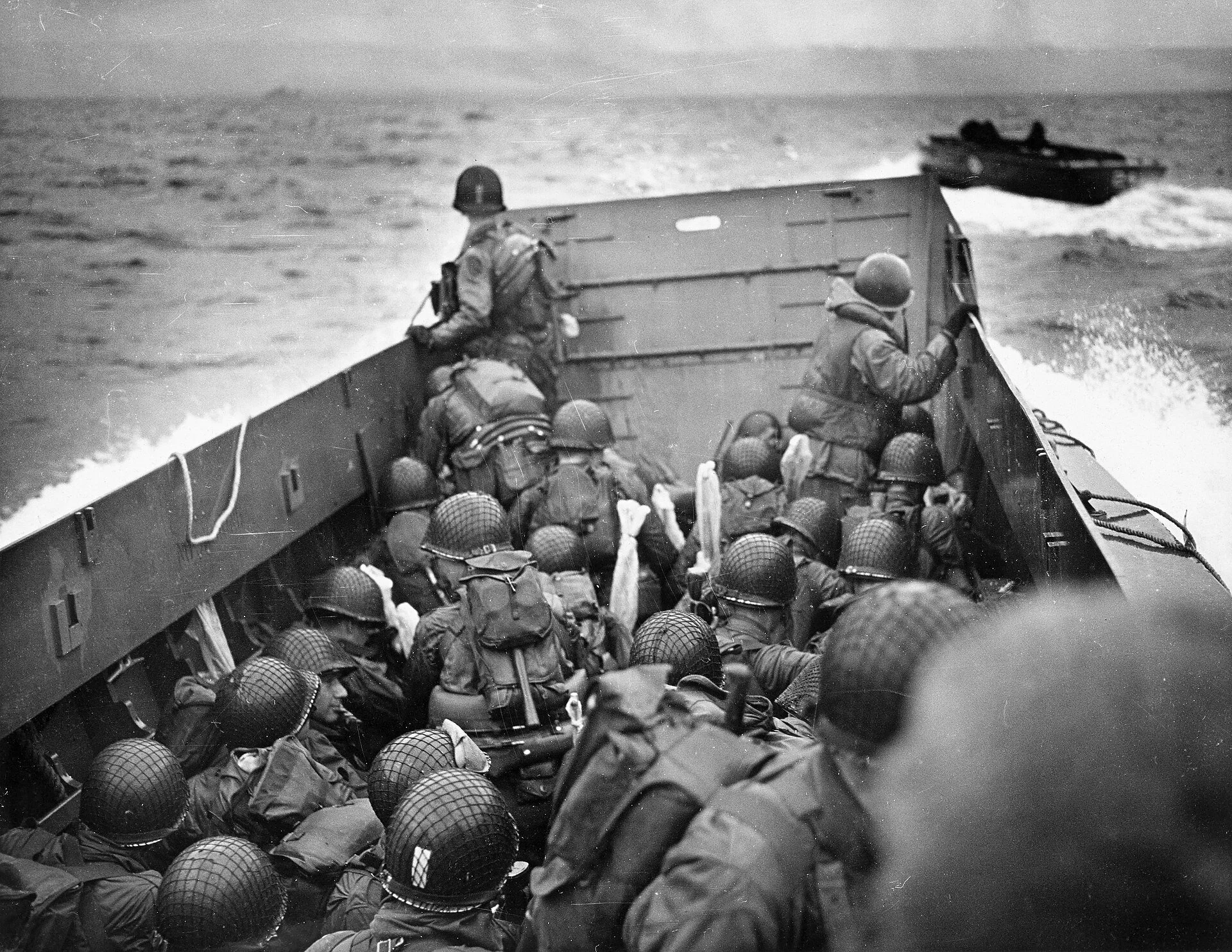
On the way to Normandy he also made French Coast Dead Ahead, 1944, with soldiers crouched close together in a landing craft. In 1945 he sailed the Pacific on the USS Admiral H. T. Mayo, which later brought American troops home.
- 1918Born in St. Charles, Illinois; grows up in Chatham, New Jersey
- 1943Photographs the invasions of Sicily in July and Salerno in September from the USS Samuel Chase
- 1944On 6 June makes Into the Jaws of Death at Omaha Beach
- 1944Photographs the invasion of Southern France in August
- 1944Leaves the Chase in November and works at Coast Guard Headquarters in Washington
- 1945Sails the Pacific on the USS Admiral H. T. Mayo from April to October
- 1969Dies at the age of 50 and is buried in Chatham, New Jersey
In his words
“When H-hour finally came I had a mixed feeling of pride and being downright scared.”
“We were cold and soaked to the skin even before starting.”
“The coast of France this morning was certainly no photographer’s party.”
Gear
Graflex Speed Graphic: The Coast Guard writes that Sargent used a PH-47 Graflex Speed Graphic camera with 4x5 Kodak film during the landings.
Books
D-Day: June 6, 1944: The Climactic Battle of World War II (Simon & Schuster, 1994). The historian Stephen E. Ambrose tells the story of the Normandy landings, largely through the words of the men who were there. It gives the background to the morning Sargent photographed. For general readers.
The U.S. Coast Guard in World War II (Naval Institute Press, 1957). Malcolm F. Willoughby’s history of the Coast Guard in the Second World War, including its landing craft and transports. For readers who want to know what the Coast Guard did in the invasions Sargent covered.