AT A GLANCE
- Known for
- High-speed flash photographs that freeze fast events: a drop of milk, a bullet in an apple, a football kick
- Works in
- Stroboscopic and electronic flash photography, black and white and color prints
- Also
- MIT engineer and professor · Partner in EG&G (1947) · Academy Award for the short film Quicker 'n a Wink (1940) · Worked with Jacques Cousteau from 1952
- Awards
- Academy Award (1940) · Elected to the National Academy of Sciences (1964)
- Start with
- Stopping Time: The Photographs of Harold Edgerton (Harry N. Abrams, 1987)
- Links
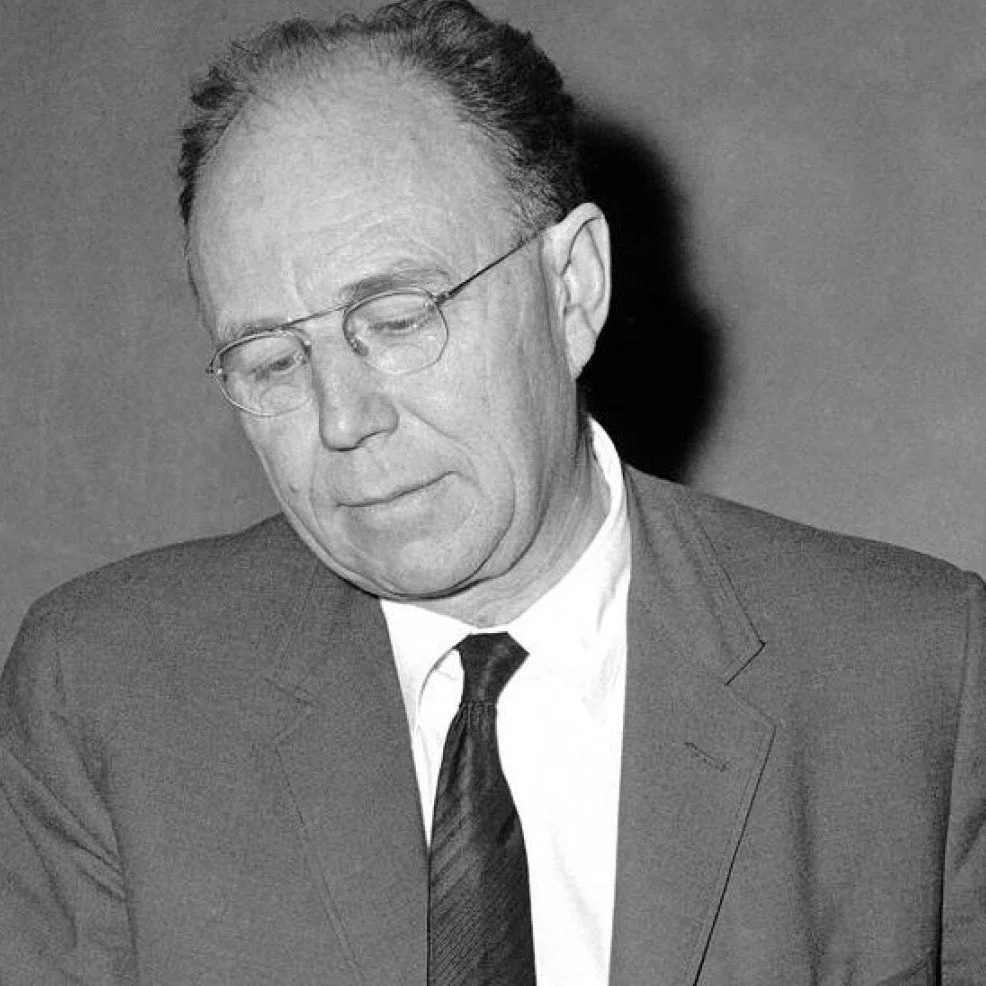
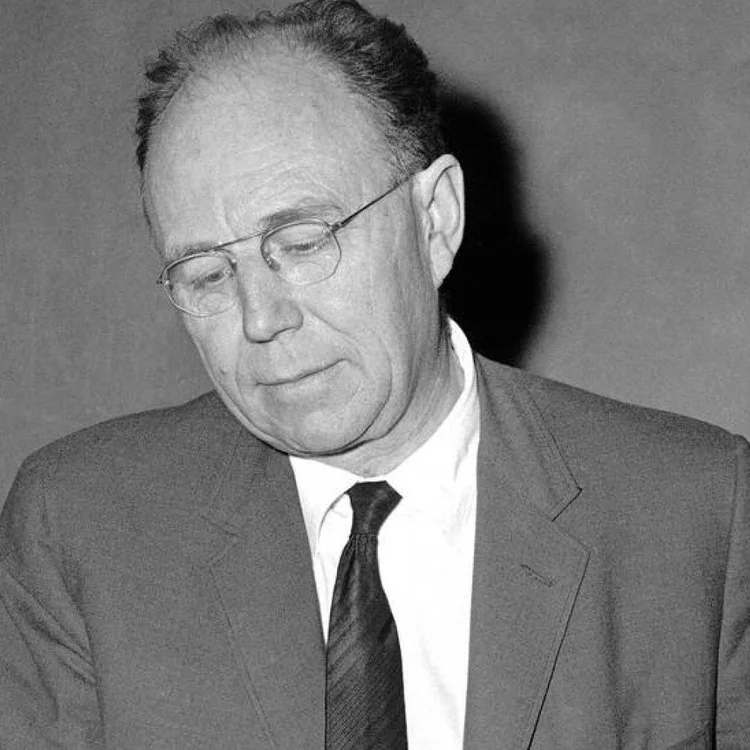
Harold Edgerton (1903 to 1990) was an American engineer and photographer. He taught at MIT and used electronic flash to freeze very fast events, such as a drop of milk or a kick. His pictures are now in many museums.
The story
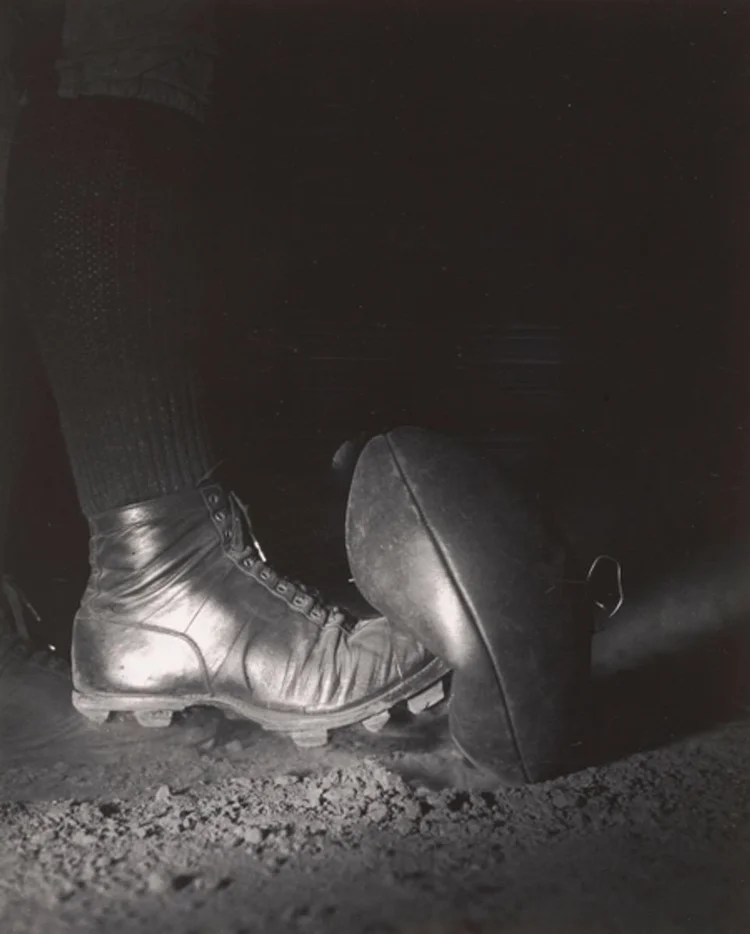
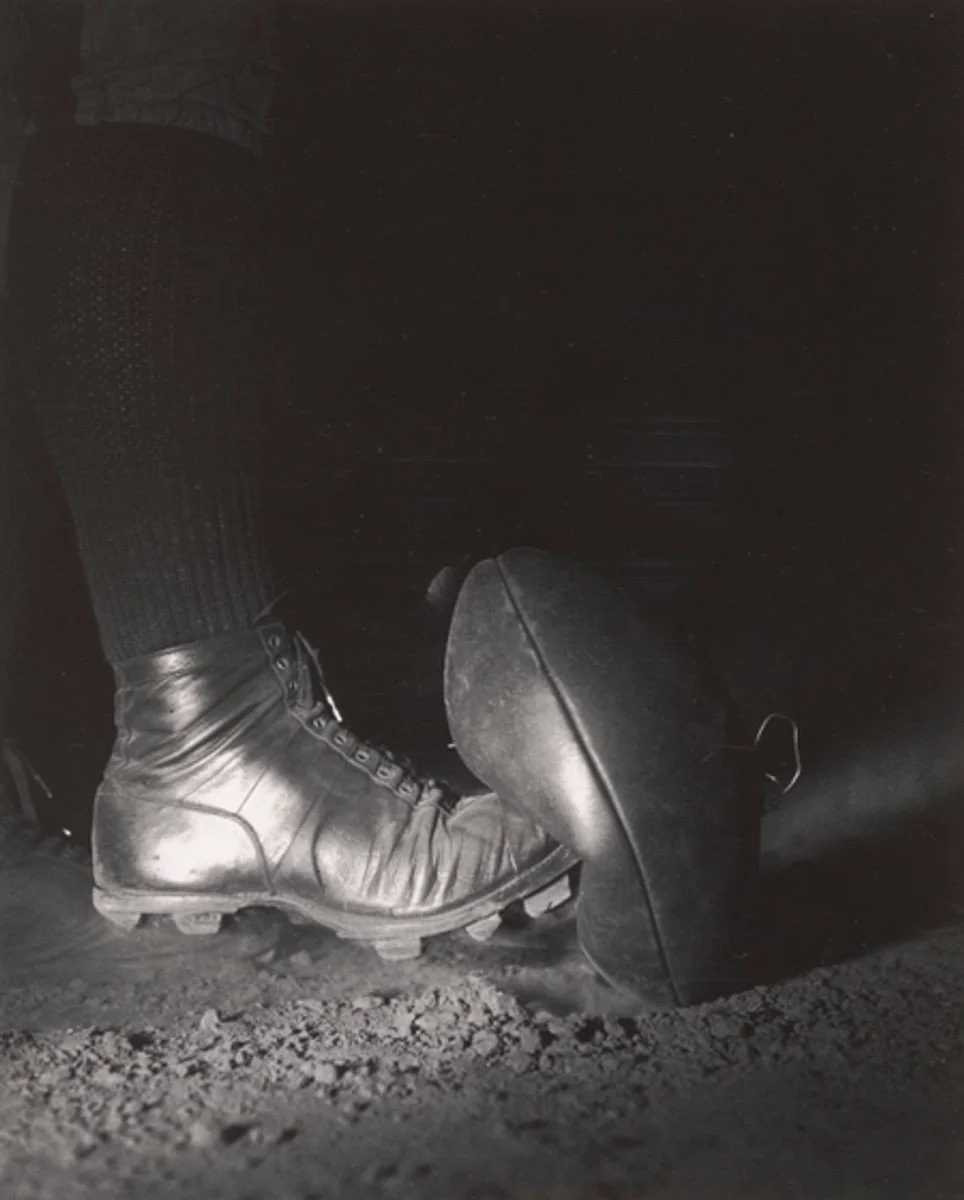
Two wires run to a football and to its tee. When Wes Fesler kicks the ball, the wires touch. The circuit closes, and a strobe light fires. This is how the Raclin Murphy Museum of Art at Notre Dame describes the way Harold Edgerton made a photograph in Cambridge, Massachusetts, in 1934.
Edgerton was an engineer, not a sports photographer. He was born in Fremont, Nebraska, in 1903 and grew up in Aurora. As a student he worked for the local power company, and he later said he was climbing poles and working with 2,300 volts during storms. He studied electrical engineering at the University of Nebraska and then at MIT, where he earned his PhD in 1931.
At MIT he became more interested in the strobe light than in the theories he used it to test. In 1932 he photographed water running from a faucet in his lab, and the stream stood still under the flash. Therefore a lab tool slowly became a way of making pictures.
The football photograph was one of his earliest. The Notre Dame text says it shows how deeply the boot sinks into the ball. It also shows a layer of dust, shaken from the top seam of the ball, hanging in the air.
Museums soon took notice. In 1937 his work was part of Photography 1839 to 1937 at the Museum of Modern Art in New York. The MIT Museum says one of his milk-drop photographs, Coronet, was in that show.
His flash work also had a life outside art. In 1947 he and two former students, Kenneth Germeshausen and Herbert Grier, formed the company later known as EG&G. In 1952 he met Jacques Cousteau, and they became friends. He retired from MIT in 1968, but he kept teaching and working in his lab.
He died on 4 January 1990, in the MIT faculty dining hall. He was 86. He said: “I have three lifetimes worth of things to do. I guess I'll have to leave some of the problems for the next generation.”
The work
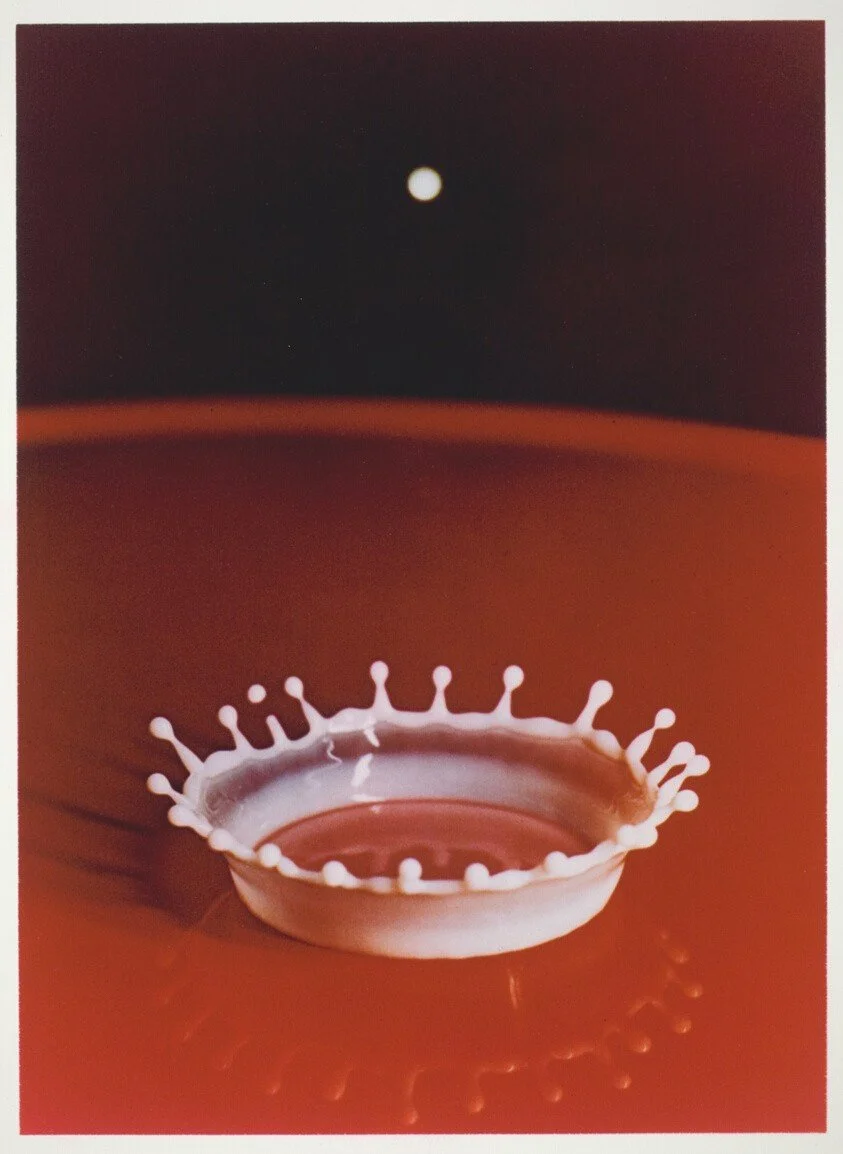
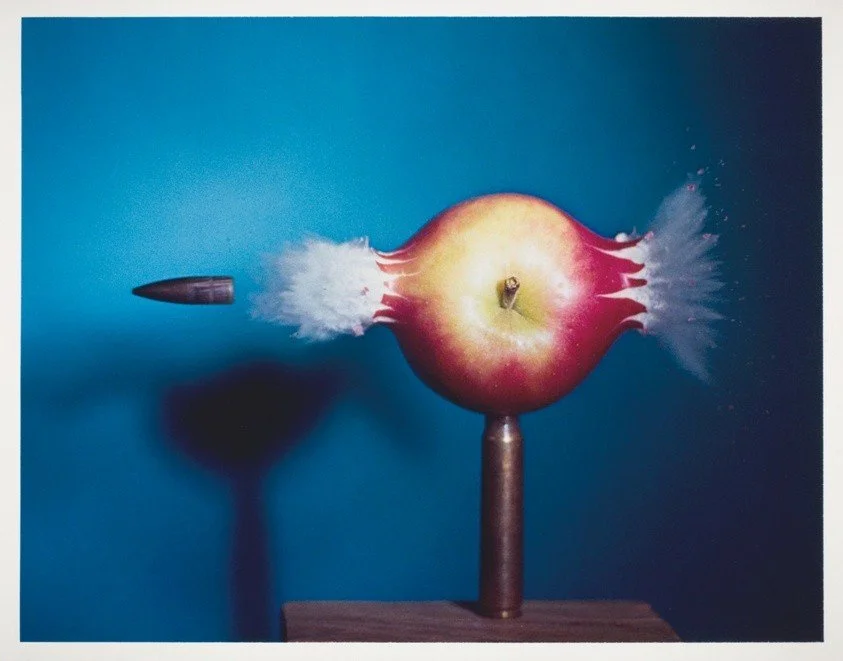
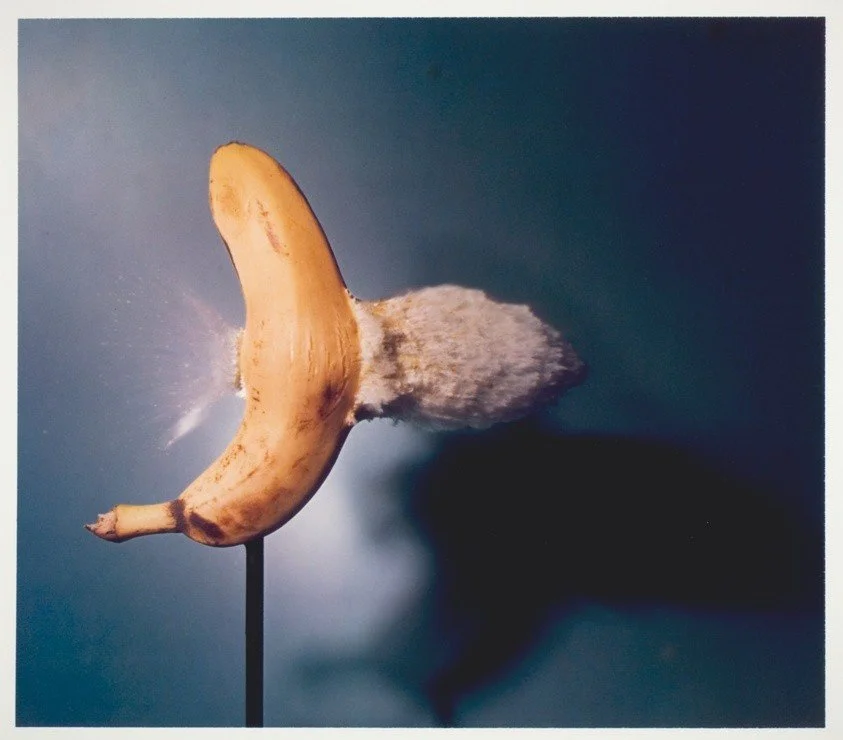
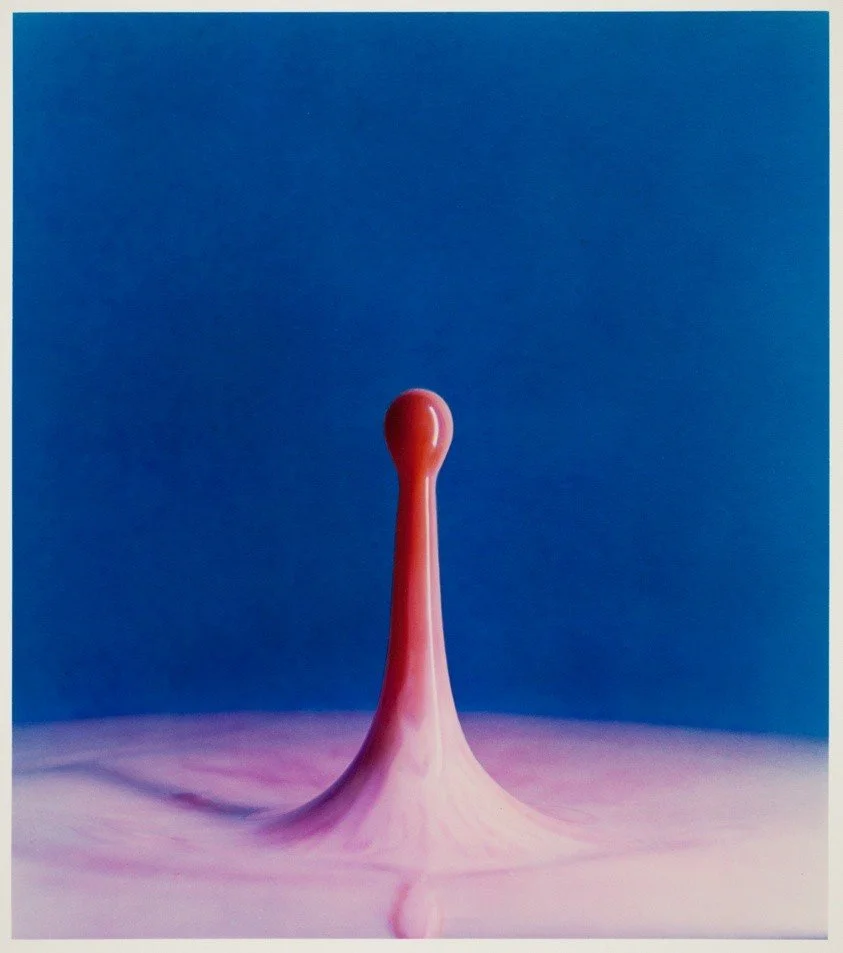
Edgerton's best known pictures show events too fast for the eye. Milk Drop Coronet (1957) shows a drop of milk landing and throwing up a crown of liquid. Cranberry Juice into Milk (1960) shows a thin column of colour rising from a pool. In Bullet through Banana (1964) and Shooting the Apple (1964) a bullet cuts through fruit in one flash.
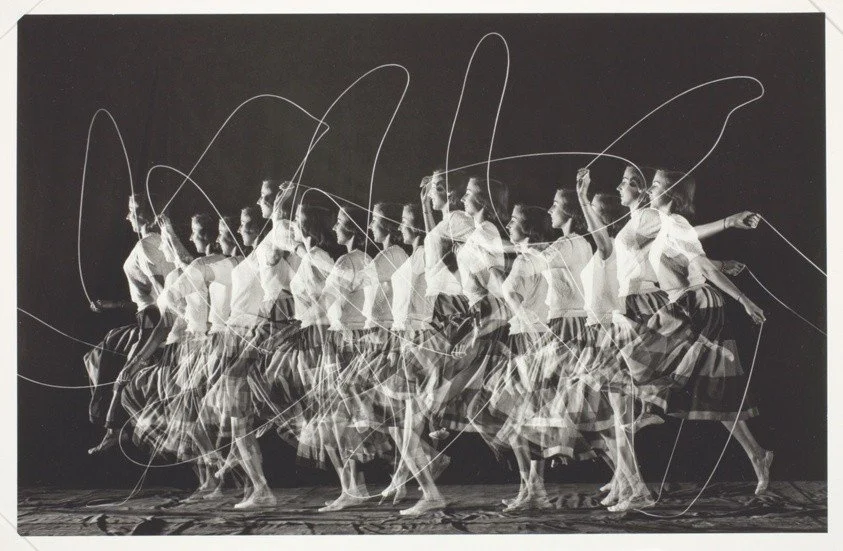
He also used repeated flashes on one frame. Moving Skip Rope (1952) shows many moments of one movement in a single picture. The football kick of 1934, Wes Fesler Kicking a Football, is one of his earliest photographs.
- 1903Born on 6 April in Fremont, Nebraska
- 1925Earns a BS in electrical engineering at the University of Nebraska
- 1931Earns his PhD at MIT; his thesis includes a motion picture made with a mercury-arc stroboscope
- 1934Makes Wes Fesler Kicking a Football in Cambridge, Massachusetts
- 1937Is part of Photography 1839 to 1937 at the Museum of Modern Art
- 1940Wins an Academy Award for the short film Quicker 'n a Wink
- 1947Forms the partnership later known as EG&G with Kenneth Germeshausen and Herbert Grier
- 1952Meets Jacques Cousteau, who becomes a lifelong friend
- 1990Dies on 4 January in Cambridge, Massachusetts, aged 86
Lessons
Let the tool lead you. Edgerton grew more interested in the strobe than in the theory behind it. Following the tool led him to his pictures.
Build the trigger. For the football kick, the kick itself closed the circuit and fired the light. Think about how you can make the moment start your camera.
Share what you know. His advice to students was to work hard and tell everyone everything you know. Showing your methods can help others and your own work.
Try this: Fill a glass bowl with water and drop a small object into it. Shoot a burst of photos at the highest speed your camera allows, in bright light. Pick the frame you like best, and notice how much happened between the frames you did not catch.
Gear
Sources agree that Edgerton's key tool was the stroboscope, a very short electronic flash. Camera and lens models are not stated in two sources I could open.
Electronic flash (stroboscope): A strobe gives a very short burst of light. Edgerton worked on it at MIT from the early 1930s, and it let him make still pictures of fast events.
Books
Stopping Time: The Photographs of Harold Edgerton (Harry N. Abrams, 1987). Estelle Jussim and Gus Kayafas edited the book. It has about 125 photographs, 25 of them in colour. Edgerton also describes his own work, and Jussim writes about his influence. It is a good first book for anyone who is new to his pictures.
Moments of Vision: The Stroboscopic Revolution in Photography (MIT Press, 1979). Harold Edgerton wrote it with James R. Killian Jr., a former MIT president. It runs to 177 pages of text and illustrations, some in colour. It suits readers who want to learn how the strobe changed photography.
Harold Edgerton: Seeing the Unseen (Steidl, 2019). The 208-page book has more than 100 photographs, including milk drops, bullets in fruit and sports pictures. It also has excerpts from his lab notebooks. Essays are by J. Kim Vandiver and Gus Kayafas, with comments by MIT Museum curators Gary Van Zante and Deborah Douglas. It is for readers who also want to see his lab notes.
In his words
“to chop up time into little bits and freeze it so that it suits our needs and wishes.”
“Work hard. Tell everyone everything you know. Close a deal with a handshake. Have fun!”
“I have three lifetimes worth of things to do. I guess I'll have to leave some of the problems for the next generation.”