AT A GLANCE
- Known for
- Changing New York, her 1930s record of a city between old and new; portraits of artists and writers in Paris; saving the work of Eugène Atget; photographs that make physics visible
- Works in
- Black and white, gelatin silver prints
- Camera
- A large 8 x 10 inch view camera for Changing New York; a small hand-held camera for early sketches of the city
- Taught
- New School for Social Research, New York, from 1934 to 1958 · member of the Photo League
- Awards
- International Photography Hall of Fame (2000) · major retrospective at the Museum of Modern Art (1970)
- Start with
- Berenice Abbott: Changing New York (The New Press, 1997)
- Links
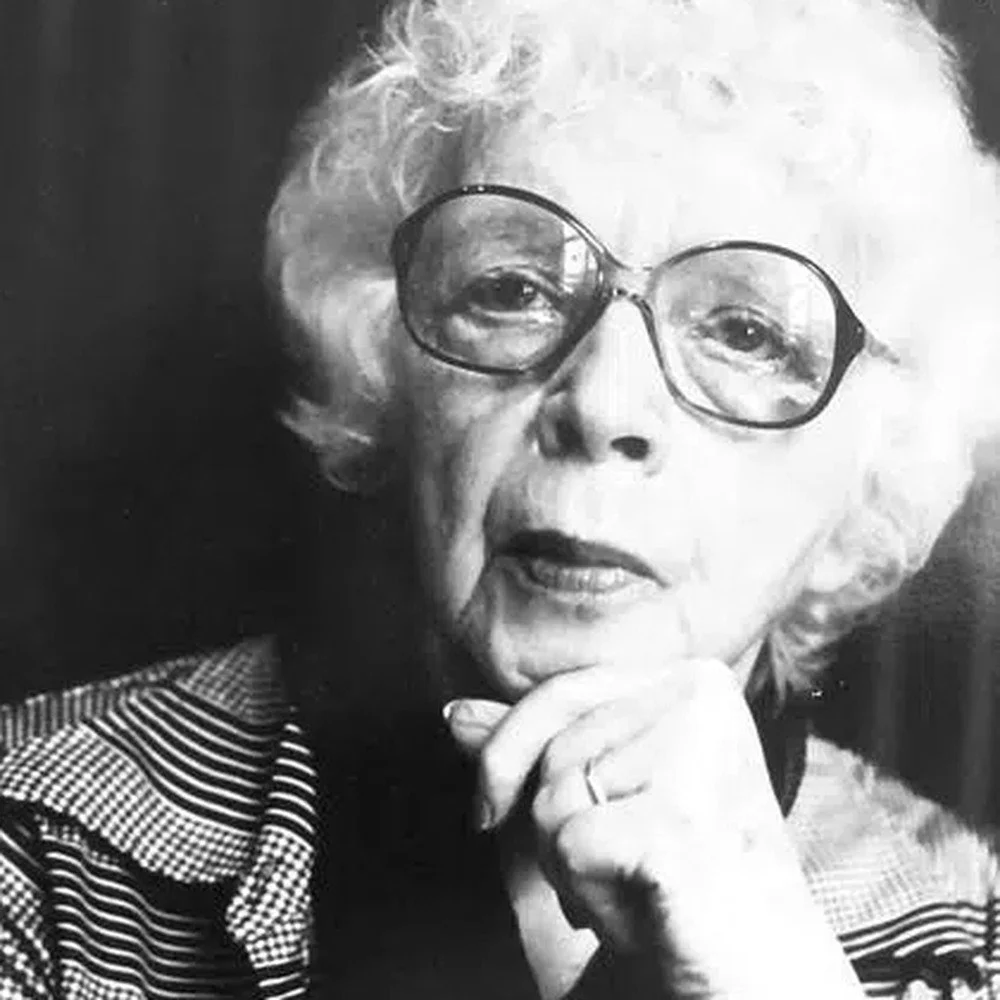
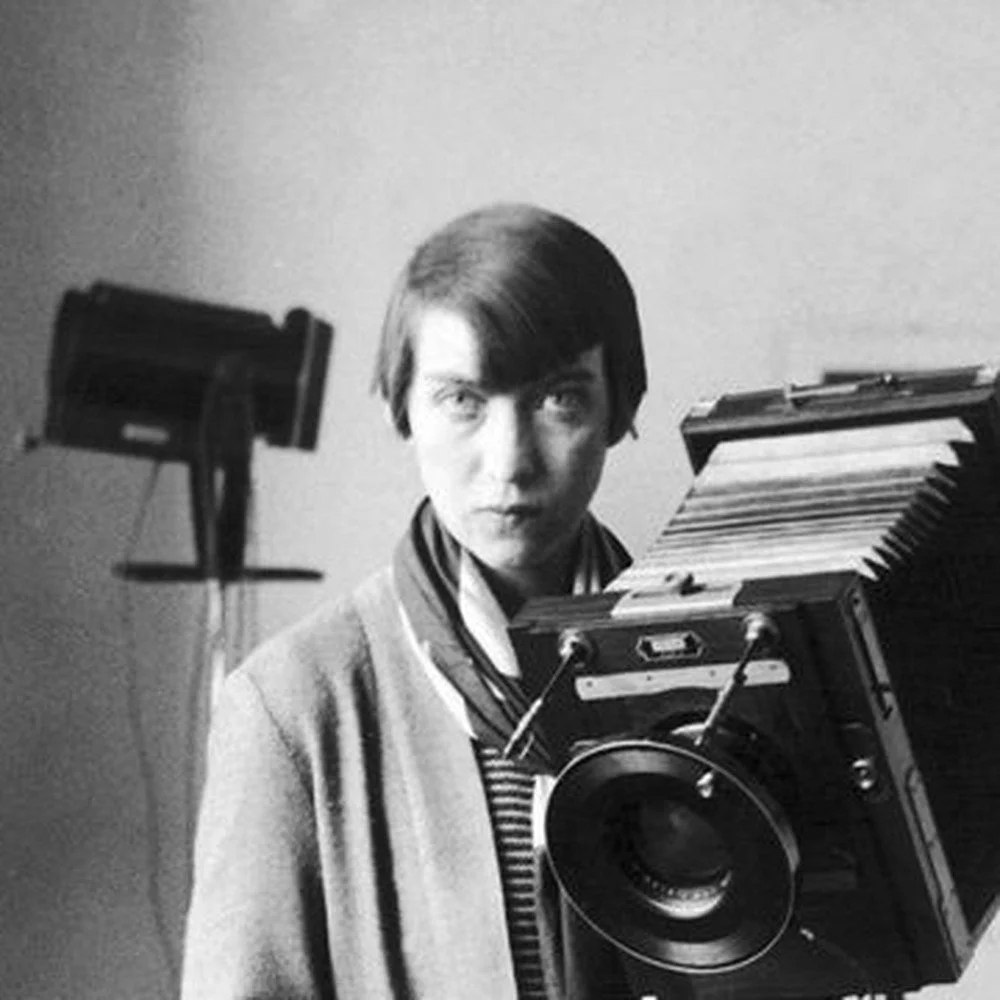
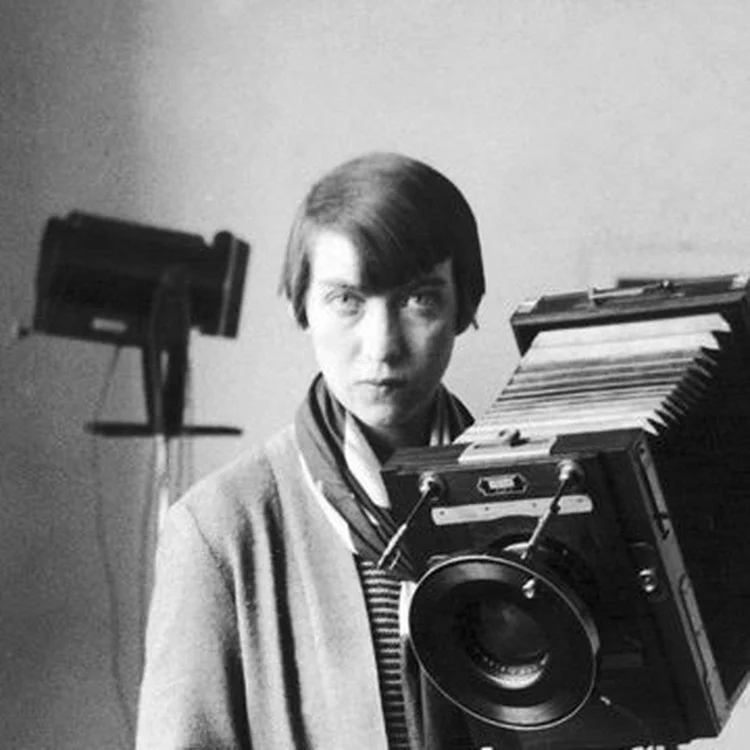
Berenice Abbott was an American photographer, born in Ohio in 1898. She learned photography in Paris in the 1920s as Man Ray’s darkroom assistant and soon became a sought-after portrait photographer. Back in New York, she spent most of the 1930s photographing the city as it changed, from old shops to new skyscrapers. Her series Changing New York is still one of the great records of the city. She also saved the life’s work of the French photographer Eugène Atget, and later made striking photographs of physics for science textbooks.
The story
Paris, 1923. Berenice Abbott had come to the city to be a sculptor, but sculpture did not pay the rent. Then she ran into Man Ray, an American artist she already knew from New York. He had opened a portrait studio and was looking for a darkroom assistant. She jumped in: “What about me?” Man Ray said yes. He wanted someone who knew nothing about photography, someone he could train his own way.
In the darkroom she learned the technical side and became an expert printer. One day Man Ray suggested that she take some pictures herself. On her lunch break she photographed friends. “The first I took came out well, which surprised me,” she remembered. Soon people paid for her portraits. In 1926 she had her own studio in the Rue du Bac and her first solo show. Writers and artists sat for her, among them James Joyce, Jean Cocteau and Peggy Guggenheim.
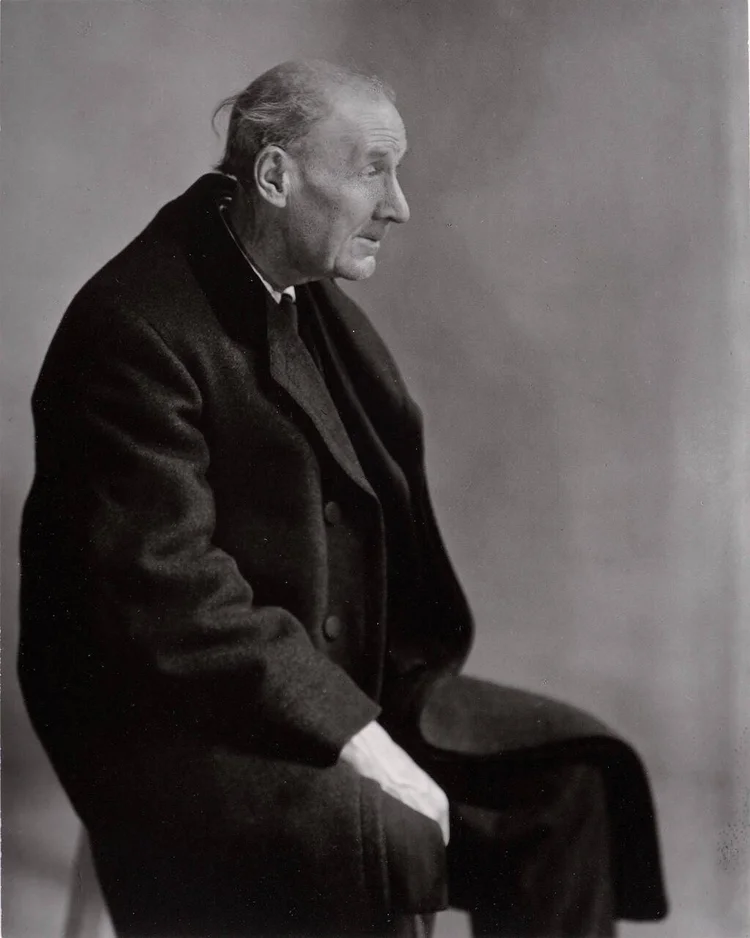
Through Man Ray she also met an old French photographer, Eugène Atget. For three decades he had photographed the streets of Paris. Abbott visited his studio, looked through his albums and sometimes bought a print. Early in 1927 she made his portrait. Some months later she went back to show him the proofs. But when she got there, she learned that Atget had died.
Therefore she set out to save his work. She bought about 1,500 glass negatives and 8,000 prints for 10,000 francs. A friend, Julia Oppenheim Reiner, secretly lent her the money. In 1929 Abbott sailed back to New York and shipped the whole archive with her. The city had grown enormously while she was away. Old New York, she decided, had to be photographed from every side, the way Atget had photographed Paris.
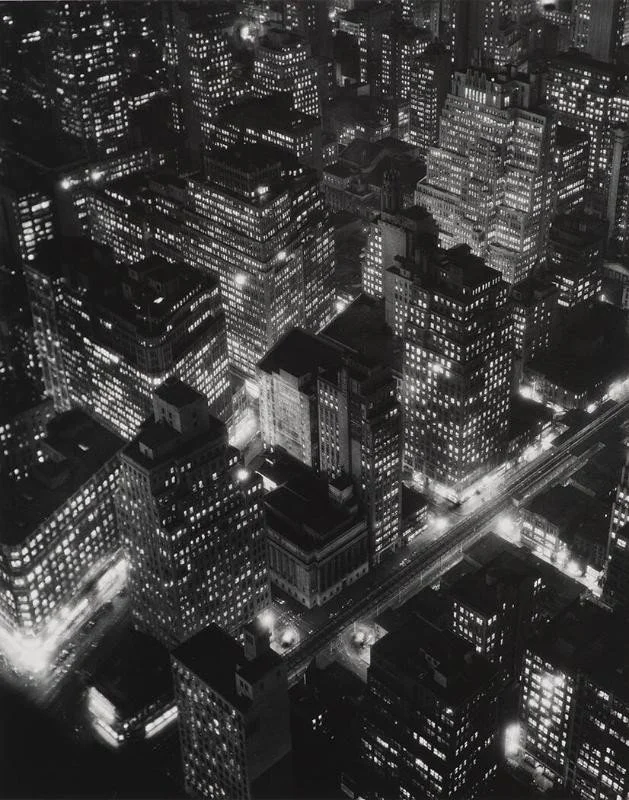
There was one problem: Abbott was afraid of heights. She carried her large view camera up stairwells and across windy roofs anyway. In December 1932 she photographed the city from the top of the new Empire State Building. The result, Nightview, New York, shows a sea of lit windows in the dark. Decades later it sold so well that she could not print it fast enough.
Money was harder to find. The Great Depression had begun, and her plan was big. In 1935 the Federal Art Project, part of President Roosevelt’s New Deal, finally agreed to pay her $145 a month. Abbott now went everywhere, from the Bronx to Staten Island. When an official told her that nice girls did not go to the Bowery, she answered: “Buddy, I’m not a nice girl. I’m a photographer… I go anywhere.”
By 1939 Changing New York held more than 300 photographs, and a book with the same title came out that year. She never forgot how those days felt: “Climbing up buildings. Leaning over roofs. Hanging on rickety fire escapes. Boy, I loved it!”
The work
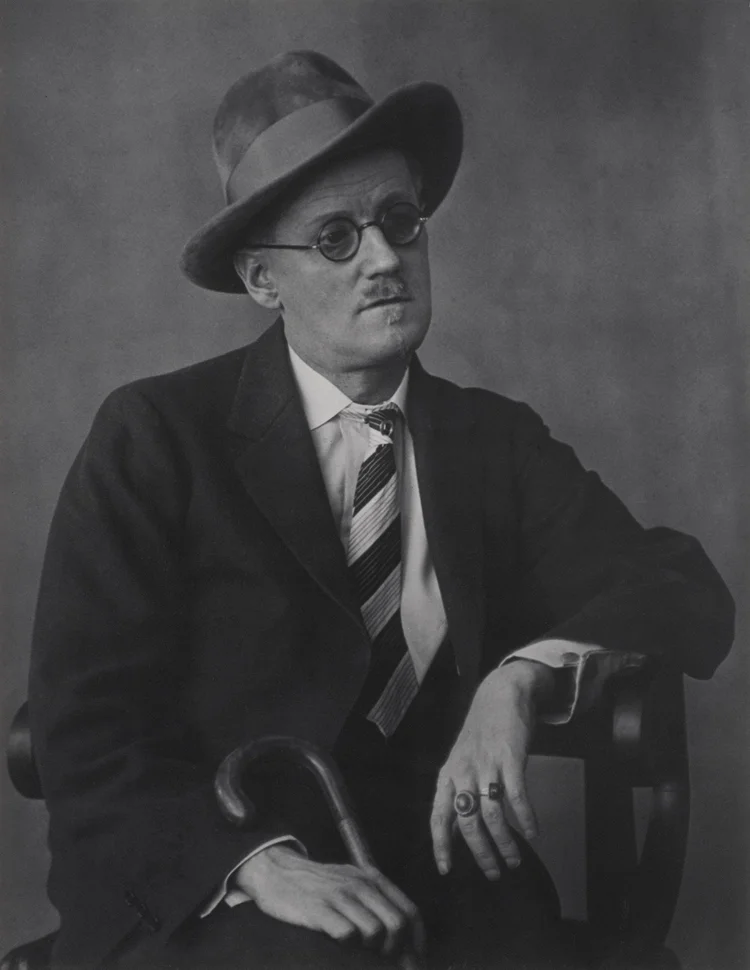
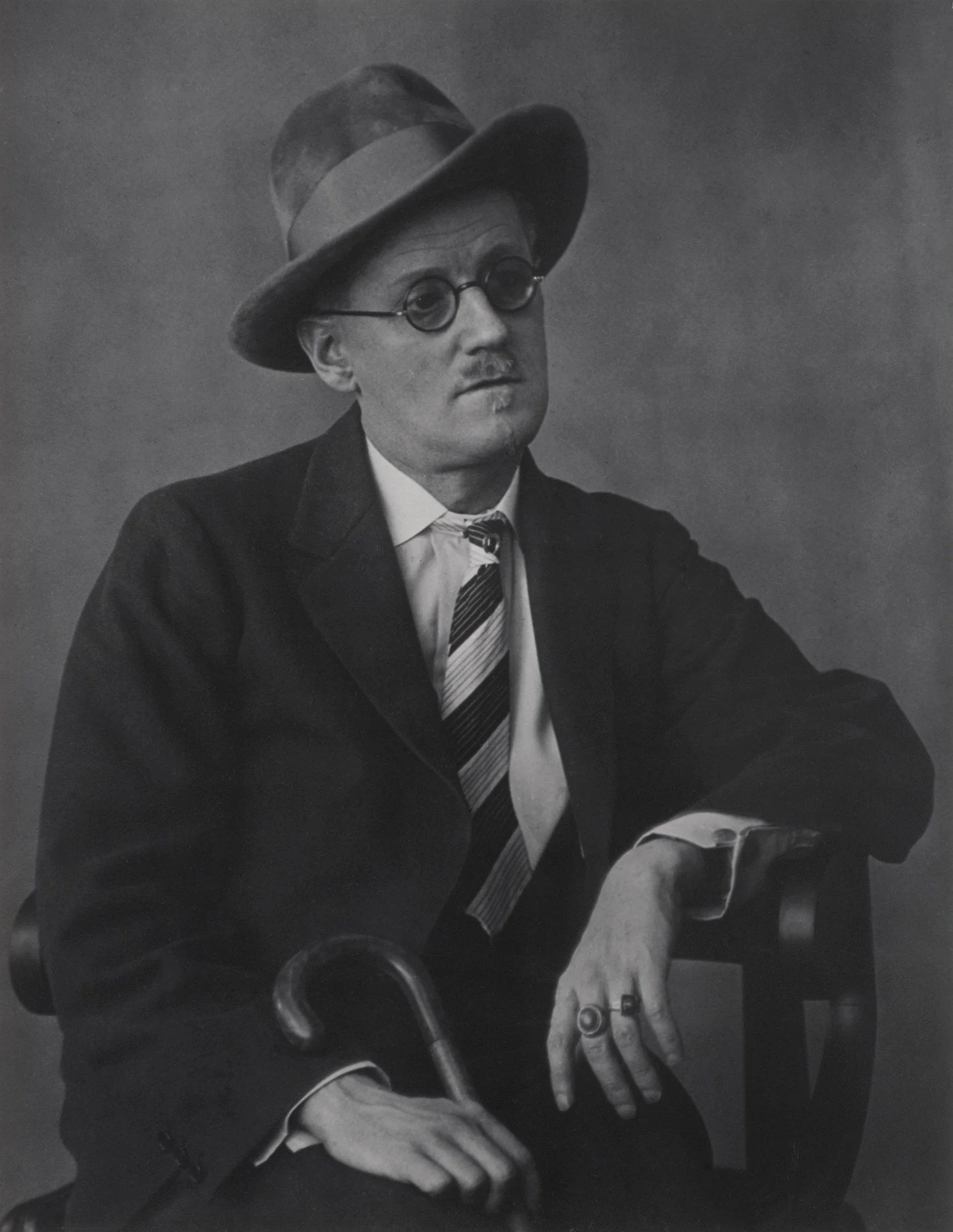
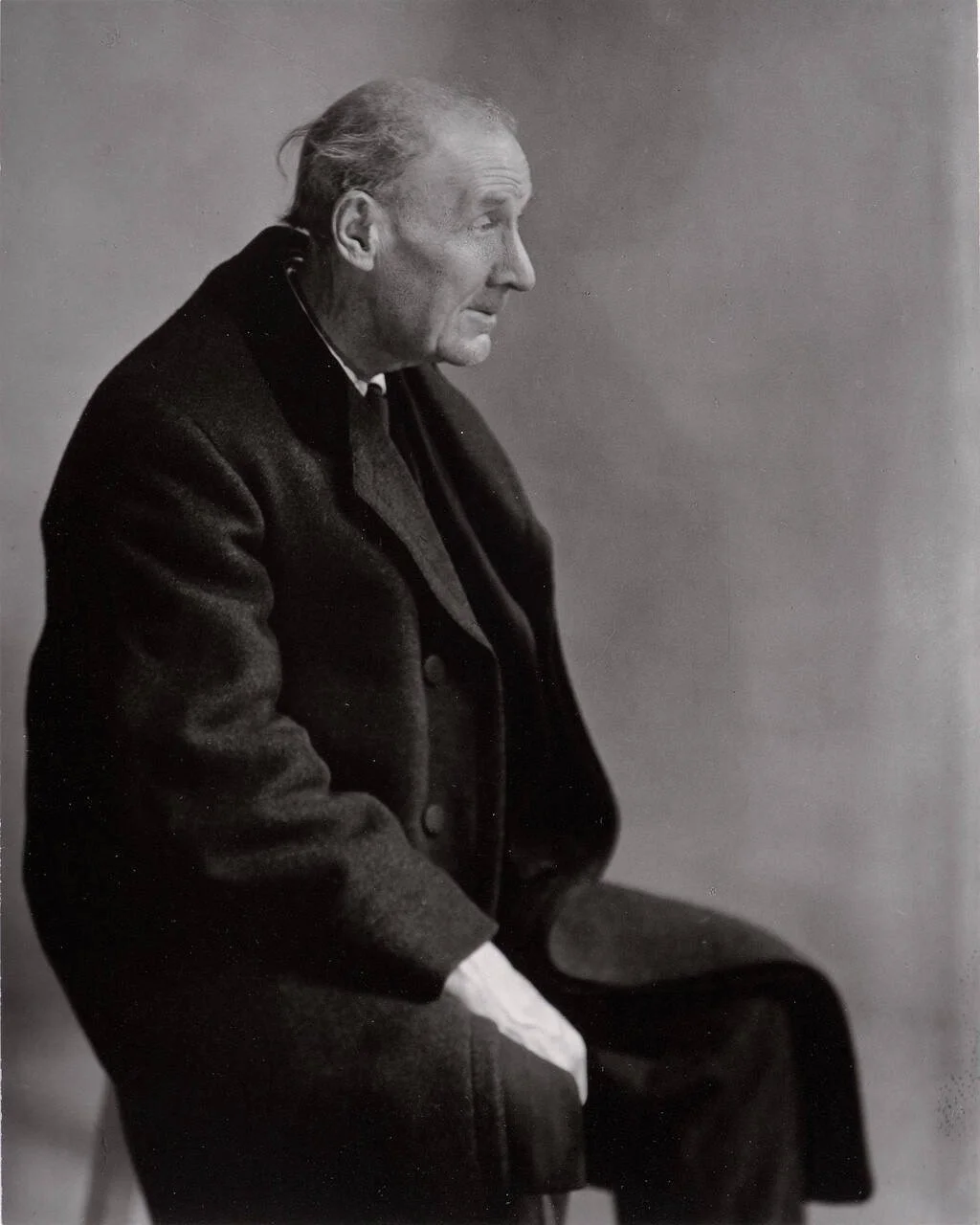
Abbott’s Paris portraits use tight framing and leave out everything that is not needed. In James Joyce, Paris, 1928, the writer sits in a soft hat and round glasses, his hands resting on a cane. Eugene Atget, ca. 1927 shows the old photographer in profile, in a heavy dark coat against a plain wall. These are the only known portraits of Atget.
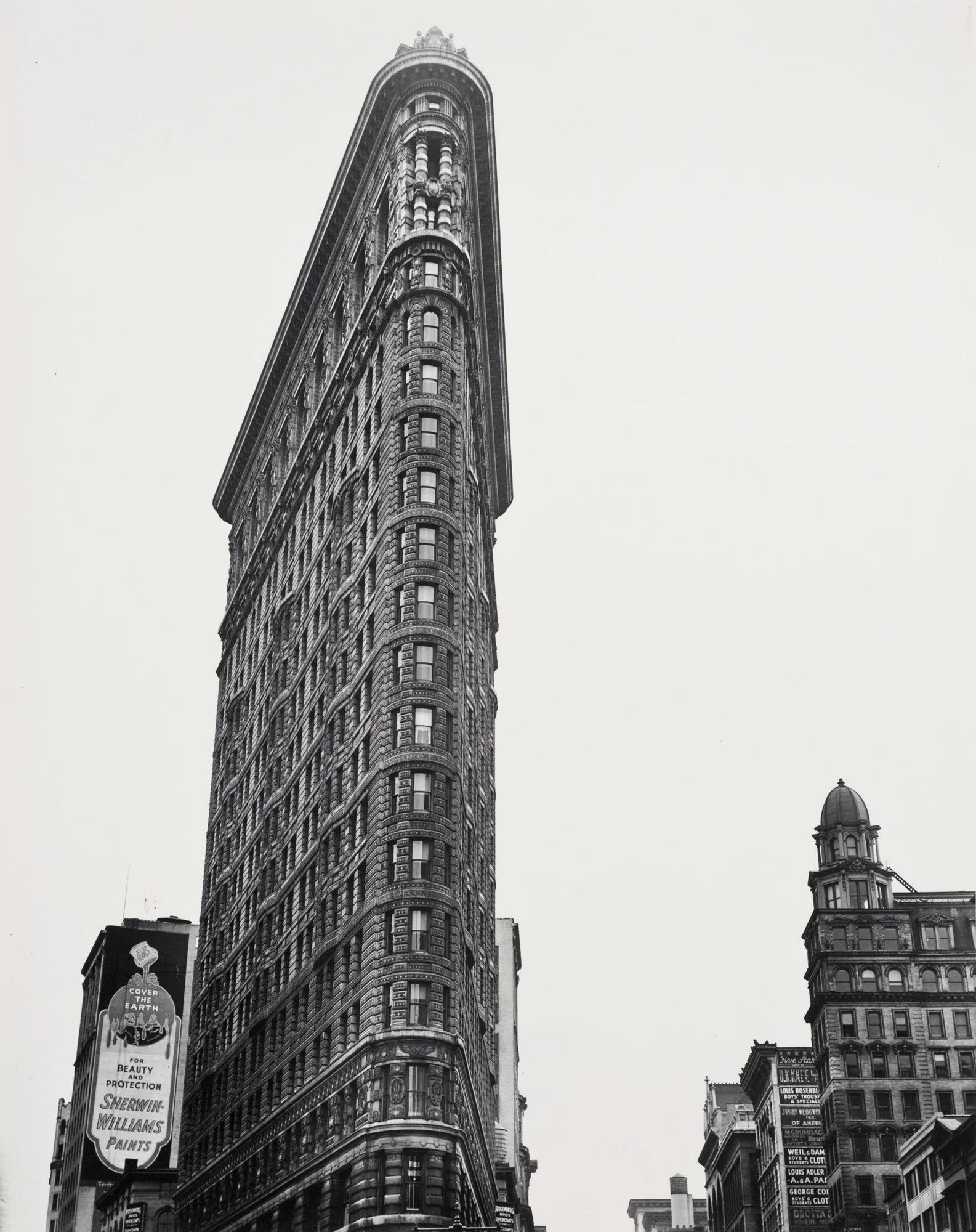
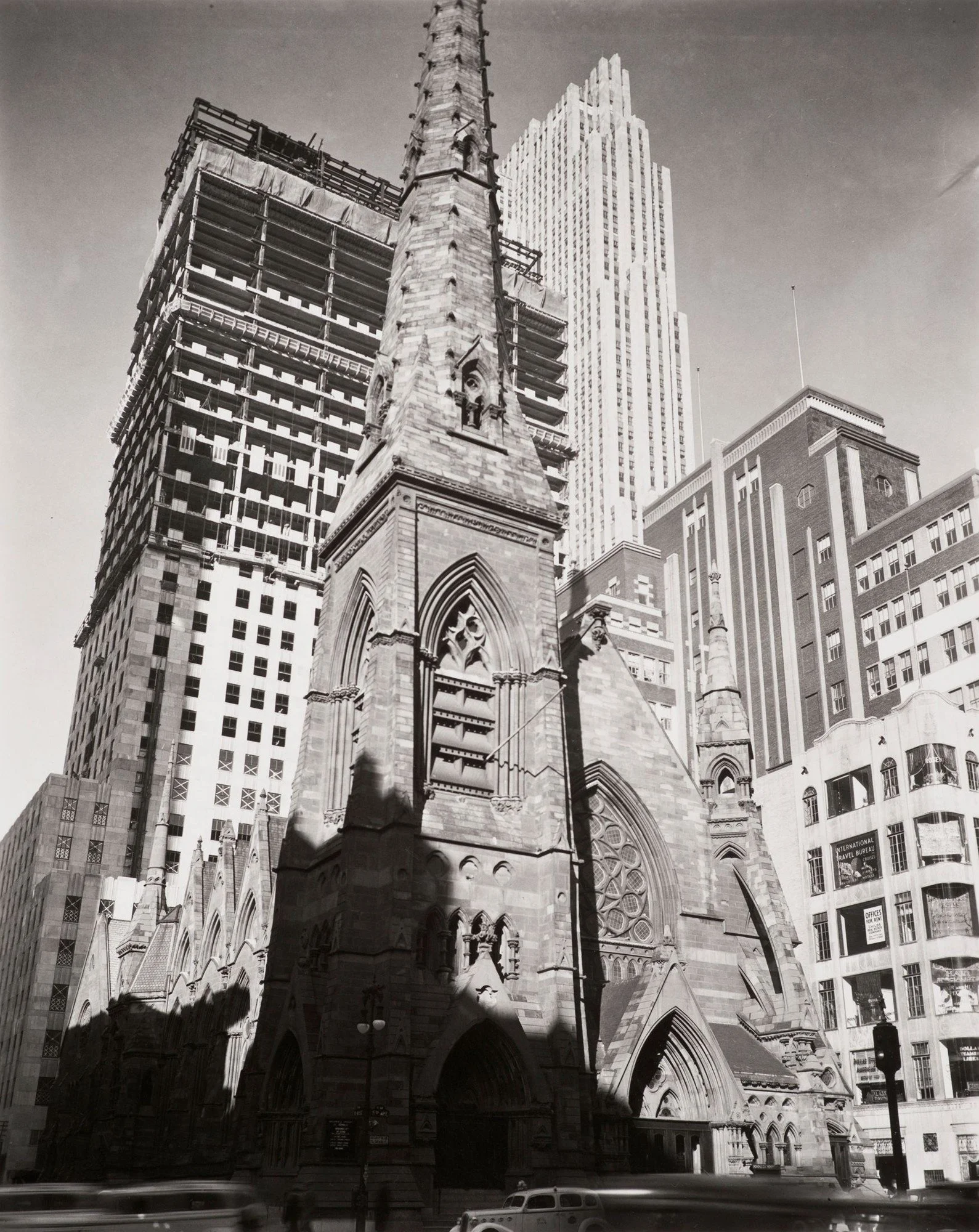
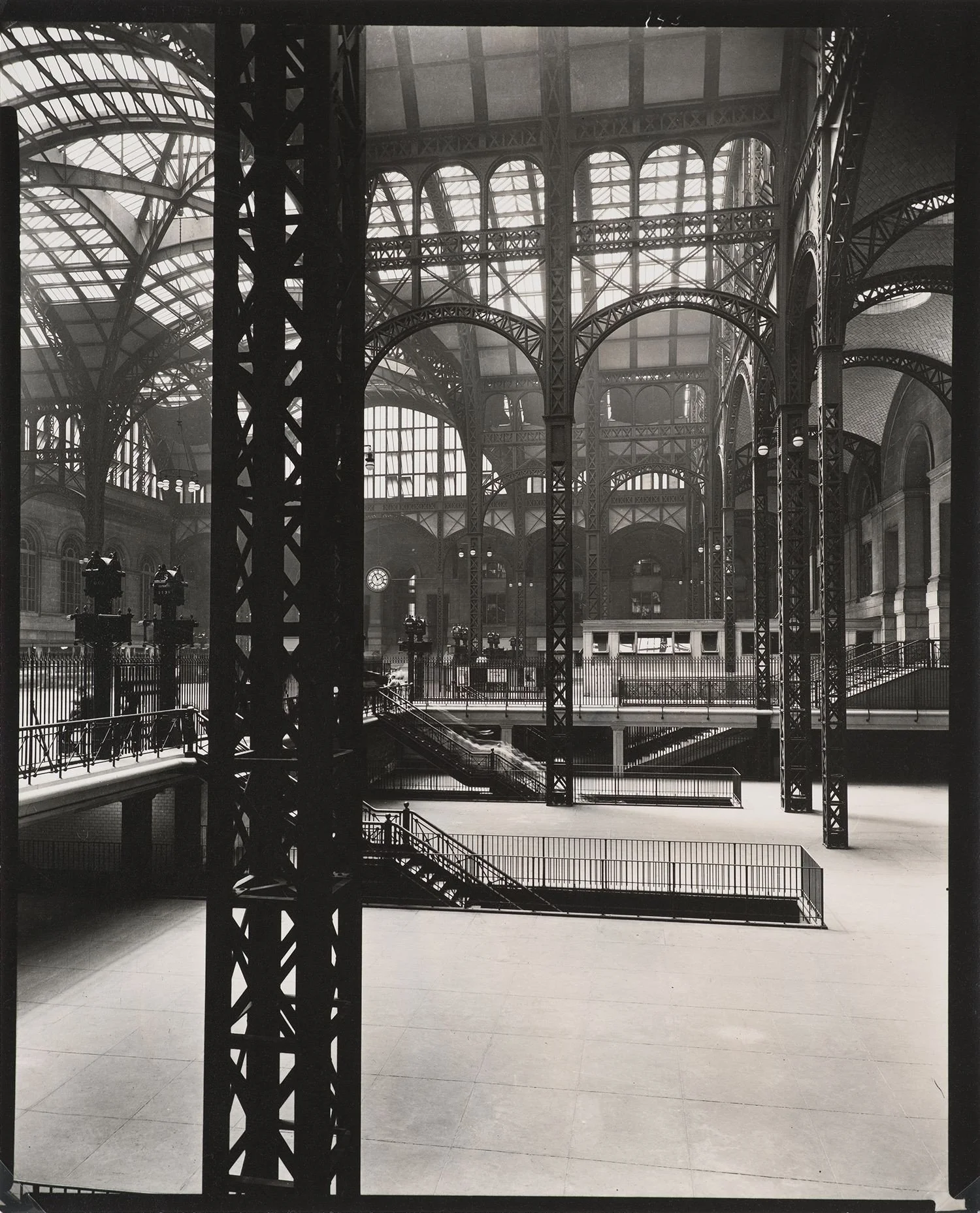
In New York she looked for the meeting of old and new. Rockefeller Center with Collegiate Church in foreground, New York, 1936 puts a Gothic church right in front of the new towers. Flat Iron Building, (Broadway & 5th Avenue), New York, 1938 looks up at the famous narrow building from the street. Pennsylvania Station (interior #3), New York, 1936 is a study of steel columns, arches and light under the station’s glass roof. She explained her plan in a few words: “My photographs are to be documentary, as well as artistic.” They should aim at realism, but not lose their form and style.
Later she turned to science, which she felt most people did not understand. She was photo editor of Science Illustrated in the 1940s. From 1958 she worked for the Physical Science Study Committee at MIT. Her pictures of swinging pendulums, bouncing balls and water waves made the laws of physics easy to see. In 1968 she sold the Atget archive to the Museum of Modern Art, and in 1970 the museum gave her a major retrospective. She spent her last decades in Maine.
- 1898Born in Springfield, Ohio
- 1921Moves to Paris to study sculpture
- 1923Becomes Man Ray’s darkroom assistant
- 1927Photographs Eugène Atget, months before his death, and then buys much of his archive
- 1929Returns to New York and starts to photograph the city
- 1935The Federal Art Project starts to fund Changing New York
- 1939Publishes the book Changing New York
- 1958Begins science photographs for the Physical Science Study Committee at MIT
- 1991Dies in Monson, Maine
Lessons
Learn the craft in the darkroom. Abbott started as Man Ray’s darkroom assistant, not as a photographer. There she learned the technical side and became an expert printer before she took her own pictures.
Photograph change before it is gone. In Changing New York she put old buildings next to new skyscrapers. Many of the buildings she photographed are gone today.
Choose with confidence. For Abbott, selecting was the key. She said: “I knew what I saw. If I liked what I saw, I did it.”
Try this: find one place near you where an old building stands next to a new one. Photograph it straight, with no filters, from three heights: the street, a window and the highest point you can safely reach. Put the three pictures side by side and choose the one that tells the story of change best.
Gear
Abbott wrote a whole book on the view camera, The View Camera Made Simple (1948). The sources name two cameras she used in New York.
8 x 10 inch view camera: from 1935 to 1939 she used a large 8 x 10 inch camera to record skyscrapers, bridges, transport and busy streets for Changing New York.
Small hand-held camera: after her return in 1929 she made quick sketches of New York with a small hand-held camera, as studies for her large-format photographs.
Books
Berenice Abbott: Changing New York (The New Press, 1997). Published with the Museum of the City of New York, which holds more than 2,500 of her works. The text is by Bonnie Yochelson. The book is built around the photographs of Changing New York from the 1930s. A good first book for anyone who loves cities and street architecture.
Berenice Abbott: Portraits of Modernity (Fundación MAPFRE, 2019). An exhibition catalogue with texts by Estrella de Diego, Gary Van Zante and Cara Hoffman. Its 248 pages and 190 duotone plates follow her three big subjects: portraits, New York with an introduction on Atget, and science. It gives the best overview of her whole career in one volume.
Berenice Abbott: Paris Portraits 1925 to 1930 (Steidl / Commerce Graphics). Edited with texts by Ron Kurtz and Hank O’Neal. It holds 115 portraits of 83 sitters, among them James Joyce, Jean Cocteau, Coco Chanel and Max Ernst, scanned from her original glass negatives and printed in full. A book for readers who love portraits and the art scene of 1920s Paris.
The Unknown Berenice Abbott (Steidl, 2013). Five volumes edited with texts by Ron Kurtz and Hank O’Neal, with 1,244 pages of mostly unseen pictures. They include early New York sketches, trips across America in the 1930s, and her 1954 journey down U.S. Route 1 with her first color work. A big set for serious collectors and libraries.
In her words
“Photography can never grow up if it imitates some other medium. It has to walk alone; it has to be itself.”
“I think all photography is documentary or it isn’t really photography.”
“I believe there is no more creative medium than photography to recreate the living world of our time.”
“Buddy, I’m not a nice girl. I’m a photographer… I go anywhere.”
“He changed my whole life; he was the only person I ever worked for and I was extremely grateful to have a job, to have the opportunity to learn.”