AT A GLANCE
- Known for
- Eye-level portraits of insects, reptiles and amphibians, and colorful confocal microscope images of tiny animals
- Works in
- Color
- Camera
- Digital SLR with a macro lens (a Canon 10D from 2003); confocal laser-scanning microscope
- Also
- Research scientist at HHMI's Janelia Research Campus; first place, Nikon Small World 2011; Royal Photographic Society Scientific Imaging Award (2020)
- Start with
- Animals Up Close (Dorling Kindersley, 2009)
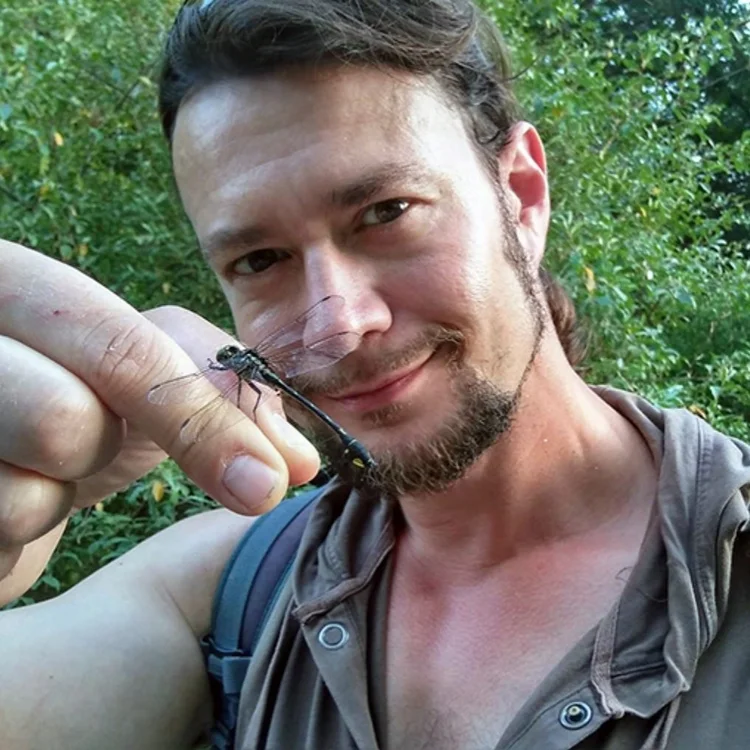
Igor Siwanowicz (born 1976) is a Polish-born scientist and photographer. He is known for close-up portraits of insects, reptiles and amphibians, and for colorful confocal microscope images of tiny animals. He works as a research scientist at HHMI's Janelia Research Campus in Virginia.
The story
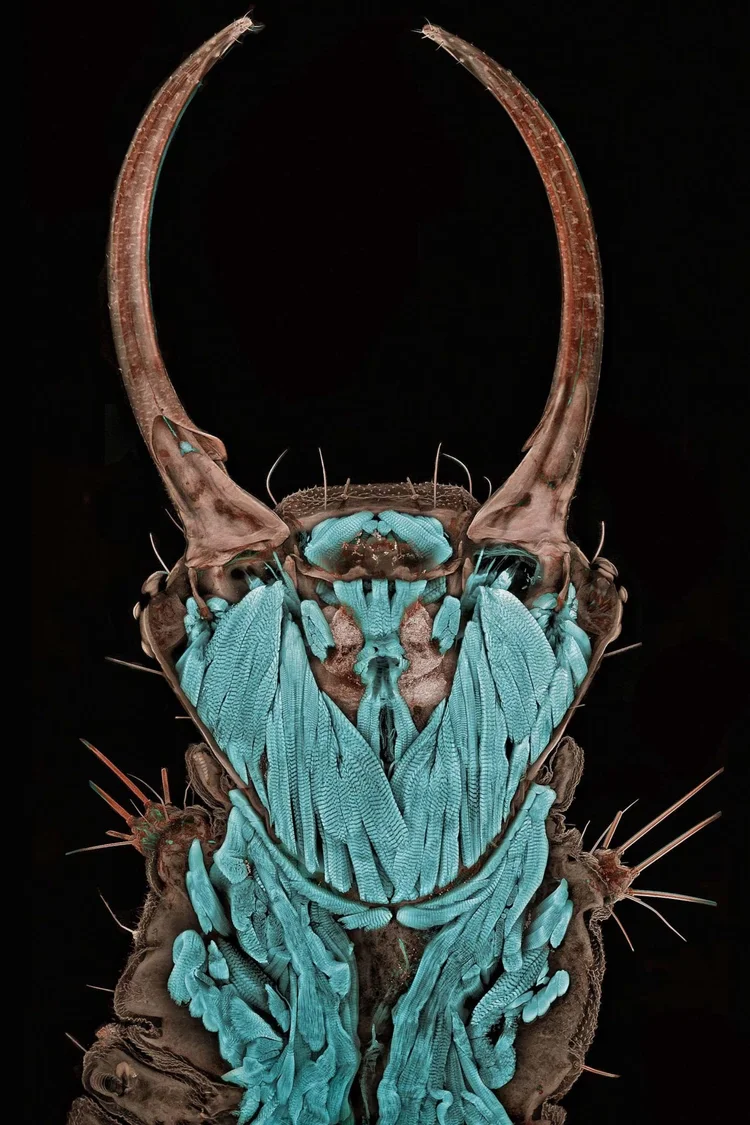
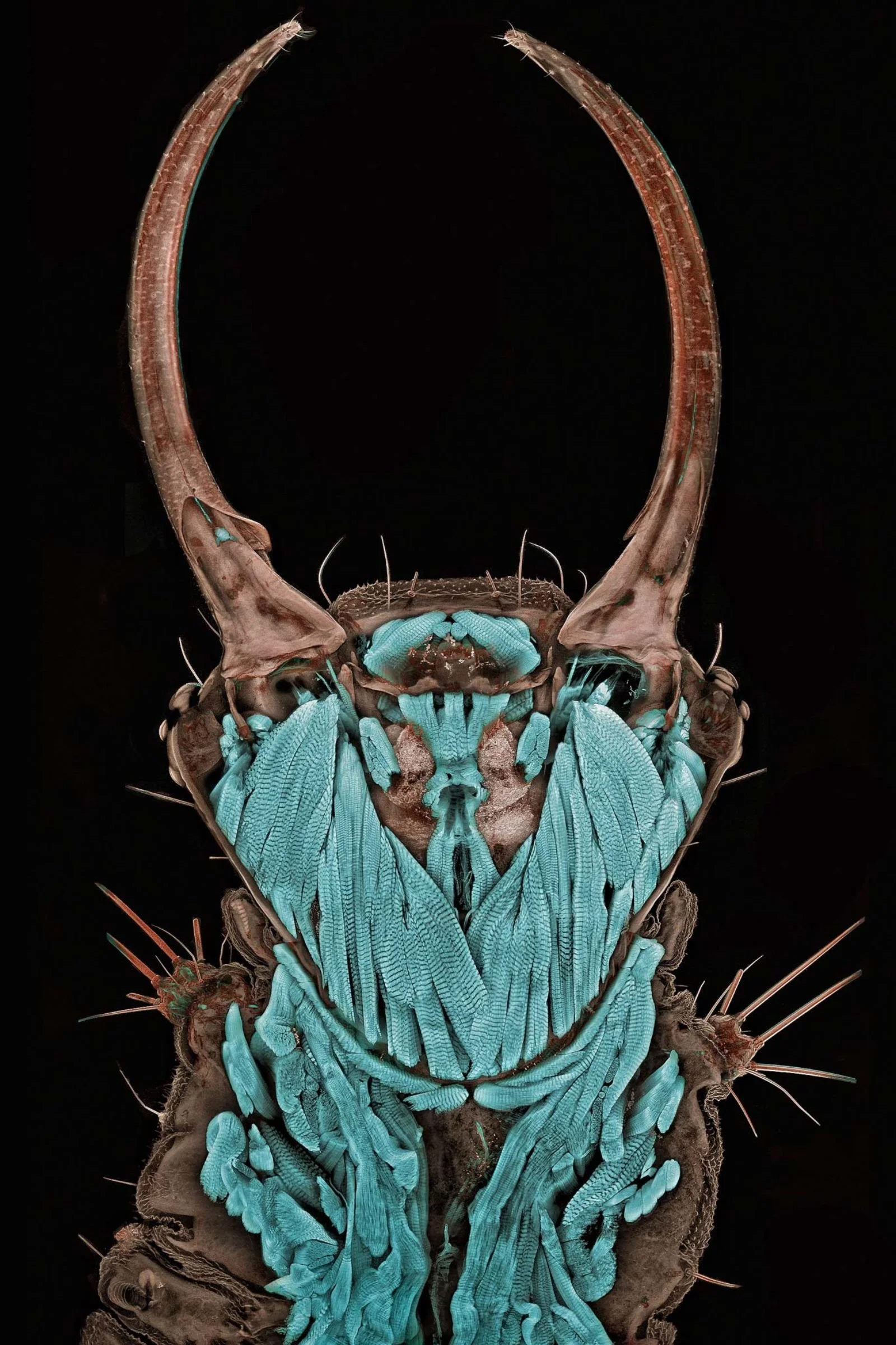
One day a small insect landed on Igor Siwanowicz’s hand and began “fiercely digging its mandibles” into his skin. He did not swat it away. Instead, he took a tiny test tube out of his pocket. He carries one for moments like this. The insect was a common green lacewing, and its head was just 1.3 mm long.
There was only one chance to get the picture. He fixed and dyed the tiny head and imaged it with a confocal microscope. In 2011 that portrait won first place in the Nikon Small World Photomicrography Competition.
Small animals had been part of his life from the start. Born in Kraków in 1976 to two biologists, he grew up with illustrated biology and zoology textbooks. “I’ve been into this stuff from before I can remember,” he says. His first digital SLR came later, in spring 2003: a Canon 10D, a macro lens and “a bunch of accessories.” With it he photographed insects, reptiles and amphibians. Praying mantises became his favorite subject.
His way of working is simple. The camera goes down to the animal’s eye level, as in a portrait studio. “It makes my ‘models’ way more approachable to the viewer,” he explains. At home, a piano bench serves as his stage, and two strobes with diffusers shape the light.
Science pulled him in the same direction. Trained as a biochemist, he earned his PhD at the Max Planck Institute in Germany. But biochemistry felt too narrow, so he moved to neurobiology. There he found the confocal microscope, and his hobby and his job began to meet. Since 2012 he has worked at Janelia, first on how dragonflies catch prey and later on how fruit flies move. His images have placed more than 20 times in the Nikon Small World and Olympus BioScapes competitions. In 2023 five of his micrographs appeared on US postage stamps.
Most people would have killed that lacewing. For Siwanowicz, that reaction is exactly what his pictures question. He wants viewers to feel a conflict between seeing an insect as ugly and admiring the beauty of its form. At the stamp ceremony in Cleveland he put it this way: “I am confident that microscopy can awaken viewers to the beauty of natural forms and the many facets of design that can be found in nature.”
The work


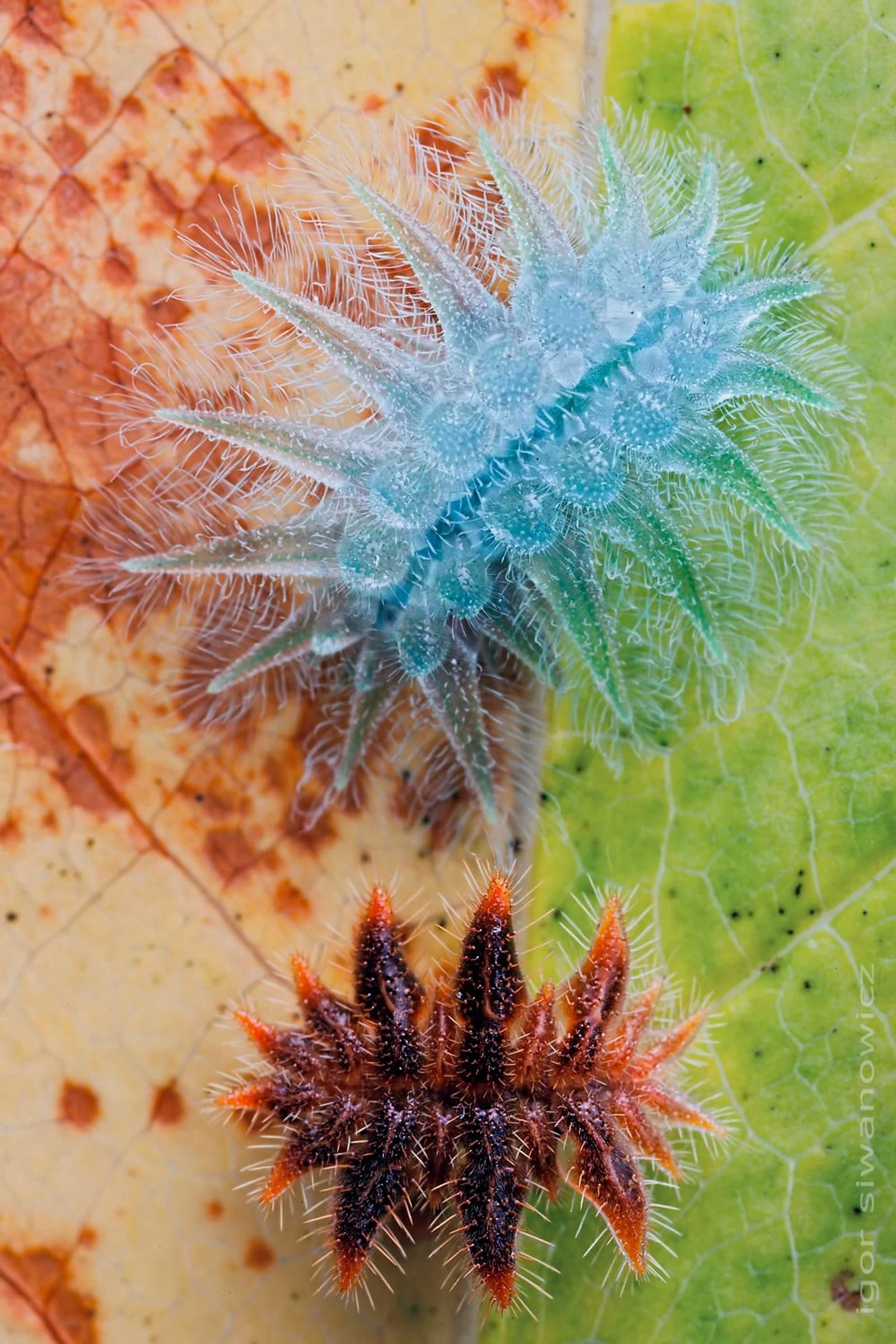
- 1976Born in Kraków, Poland, to two biologists
- 2003Buys his first digital SLR, a Canon 10D, and a macro lens
- 2009Publishes Animals Up Close with Dorling Kindersley
- 2011Wins first place in Nikon Small World with a green lacewing
- 2012Joins HHMI’s Janelia Research Campus to study dragonflies
- 2013Wins first prize in Olympus BioScapes with a bladderwort trap
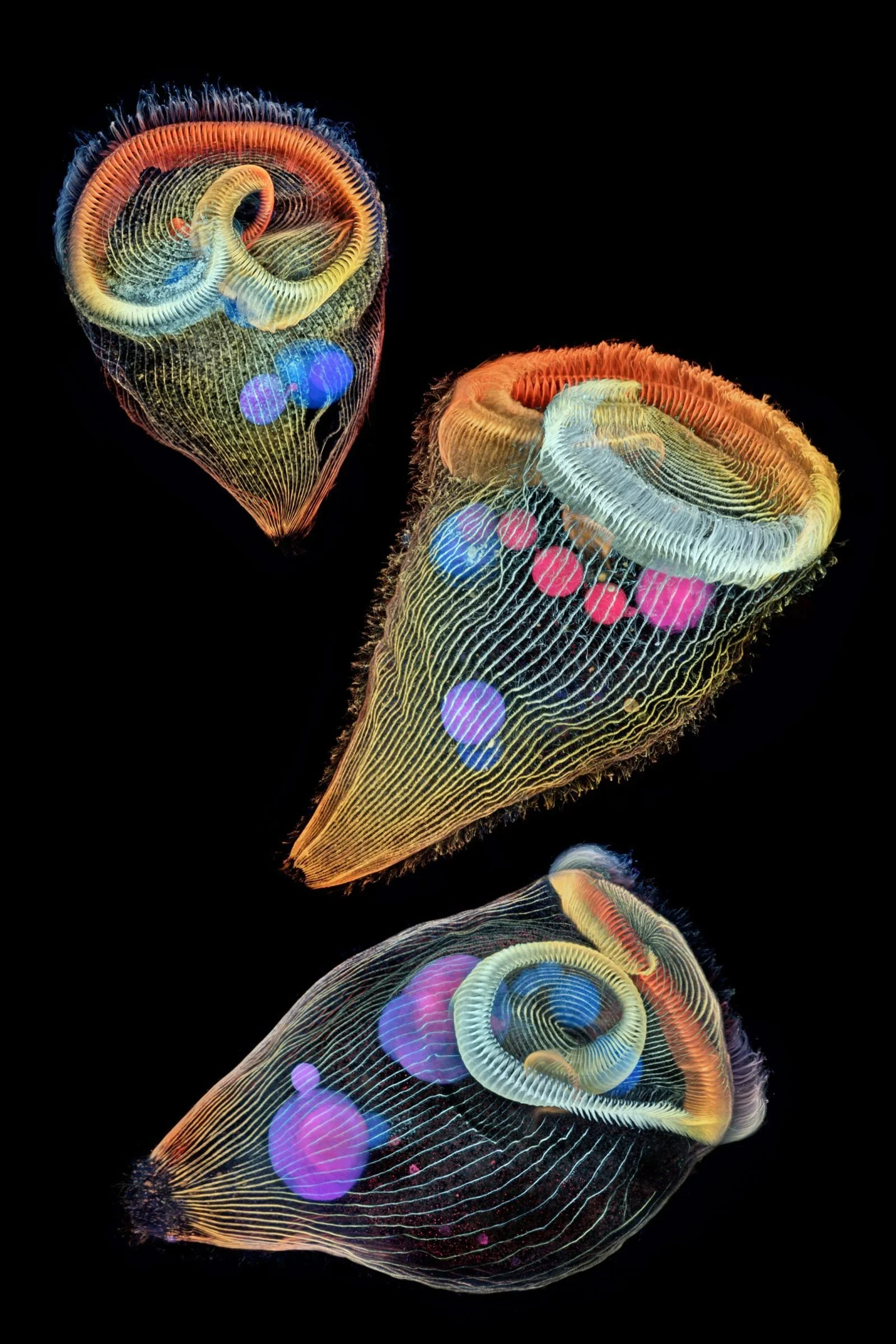
- 2019Takes second place in Nikon Small World with three stentors
- 2020Receives the Royal Photographic Society Scientific Imaging Award
- 2023Five of his micrographs appear on US Life Magnified stamps
Lessons
Get down to their level. He photographs small animals from their own eye level, like a portrait photographer, so viewers can see their personality.
Be patient. Insects do not always do what you want. If they do not show a behavior today, he waits for a better day.
Be ready. He carries a small test tube in his pocket. A biting lacewing became his prize-winning portrait.
Try this: find one small insect and photograph it only from its own eye level. Use two light sources with something soft in front of them, and move them until the light looks natural.
Gear
Siwanowicz has described his setup in a few interviews. It is simple at home and very advanced in the lab.
Digital SLR with macro lens: in spring 2003 he bought his first digital SLR, a Canon 10D, together with a macro lens and accessories.
Two strobes with diffusers: he always uses at least two, fired remotely by the camera’s infrared transmitter, to model the light around the insect.
Piano bench: his stage at home. He says the whole setup could fit in a suitcase.
Confocal laser-scanning microscope: the tool behind his prize-winning micrographs. He stains specimens with fluorescent dyes and combines many focal planes into one image.
Books
Animals Up Close (Dorling Kindersley, 2009; DK Publishing in the US). A 96-page hardcover of close-up animal portraits by Siwanowicz, written for readers of about 10 to 14 but enjoyed by adults too. It moves from flies and beetles to less familiar fish, amphibians, reptiles, birds and mammals, with details such as a giant silkmoth caterpillar, a rhinoceros beetle, a gecko’s toes and the teeth of a pipistrelle bat. Each picture comes with notes on the animal’s anatomy, behavior and habitat. Siwanowicz also explains how he sets up a field studio, what equipment he uses, and how animals react to the camera, from a mantis that seems to pose to a chameleon that turned black. The Books for Keeps review called it a visual feast. It is his only book so far and the best place to see his macro work in print.
In his words
“Insects have those totally alien, Gigeresque forms that I find somehow fascinating.”


