AT A GLANCE
- Known for
- Sequences of photographs, close studies of rocks, wood, frost and water, Sun in Rock, Devil’s Slide (1947), and co-founding Aperture magazine
- Works in
- Mostly black and white, with color from the 1950s, often arranged in sequences
- Also
- Editor of Aperture · assistant curator at the George Eastman House · taught at the California School of Fine Arts, the Rochester Institute of Technology and MIT
- Awards
- Guggenheim Fellowship (1970) · Bronze Star (1945)
- Start with
- Minor White: Manifestations of the Spirit (Getty Publications, 2014)
- Links
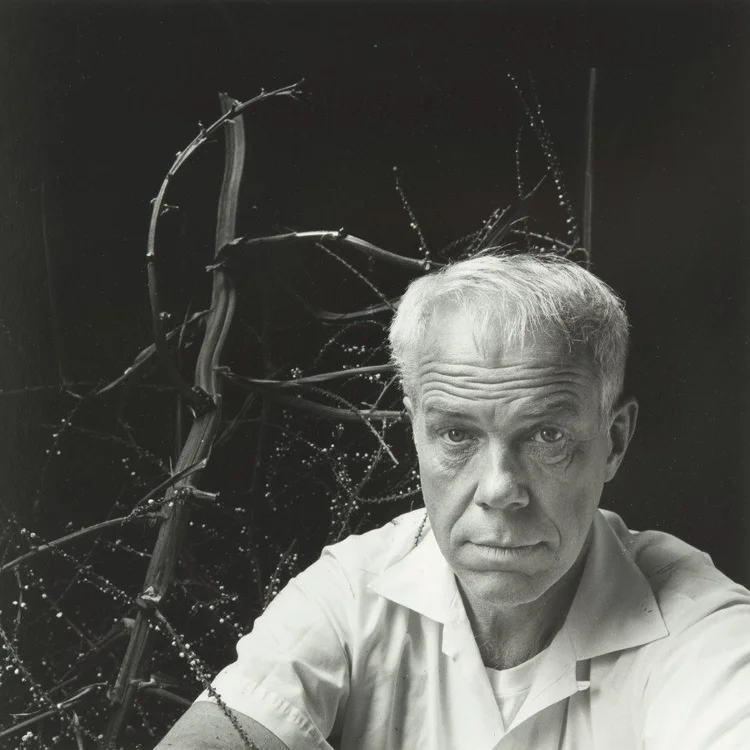
Minor White (1908 to 1976) was an American photographer, teacher and editor. He was born in Minneapolis and worked in Portland, San Francisco, Rochester and the Boston area. He is known for his sequences of black-and-white pictures, for close studies of rocks, wood, frost and water, and for co-founding Aperture magazine. He also taught a generation of photographers.
The story
In 1946, Minor White was 38 years old. The war was over, and he was living in New York. One account says he was too shy to keep his first appointment with the great photographer Alfred Stieglitz. Later he went to see him at his gallery, An American Place.
The story is often told. White asked whether he could be a photographer. Stieglitz answered, “Well, have you ever been in love?” White said yes. “Then you can be a photographer.”
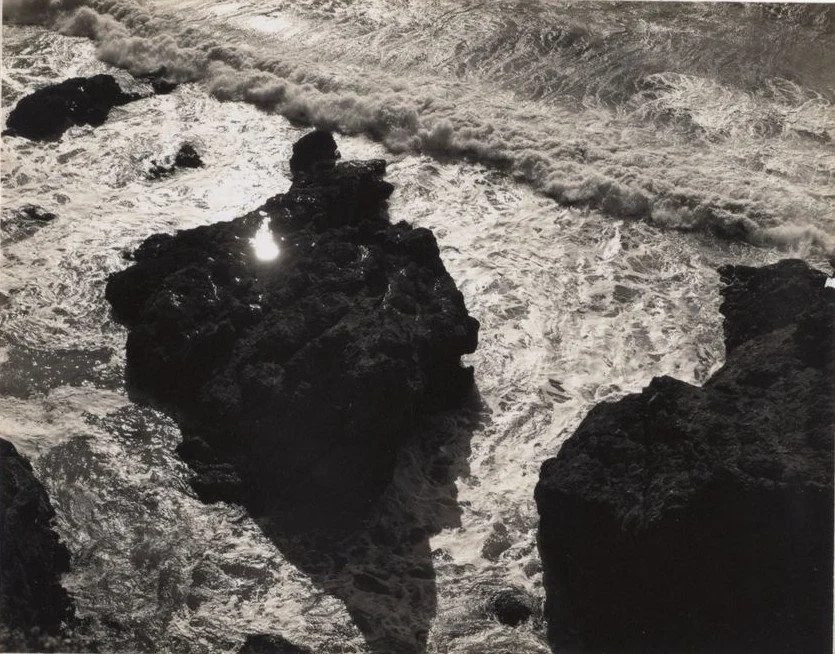
That same year, a second door opened. Ansel Adams offered White a teaching job at the California School of Fine Arts in San Francisco. White moved into a house that Adams owned. A year later he took over Adams’s teaching post and built a three-year photography program. In October 1947 he made Sun in Rock, Devil’s Slide. The Museum of Modern Art dates the picture to 12 October 1947.
Then came Aperture. In 1952 White helped to found the magazine, together with photographers such as Ansel Adams and Dorothea Lange. It was meant as a place where photographers could talk to each other about their art. White edited it for more than twenty years.
In 1953 he moved to Rochester, New York, to work at the George Eastman House. Later he taught at the Rochester Institute of Technology. In 1965 he began to teach at MIT, near Boston. The writer James Baker Hall said that much of White’s best work grew out of Stieglitz’s idea of the Equivalent, “the photographic image as a metaphor.”
The Getty Museum says White wanted to photograph things not only for what they are, but also for what they may suggest. He put the feeling behind this into his own words. “Often while traveling with a camera we arrive just as the sun slips over the horizon of a moment, too late to expose film, only time enough to expose our hearts.”
The work
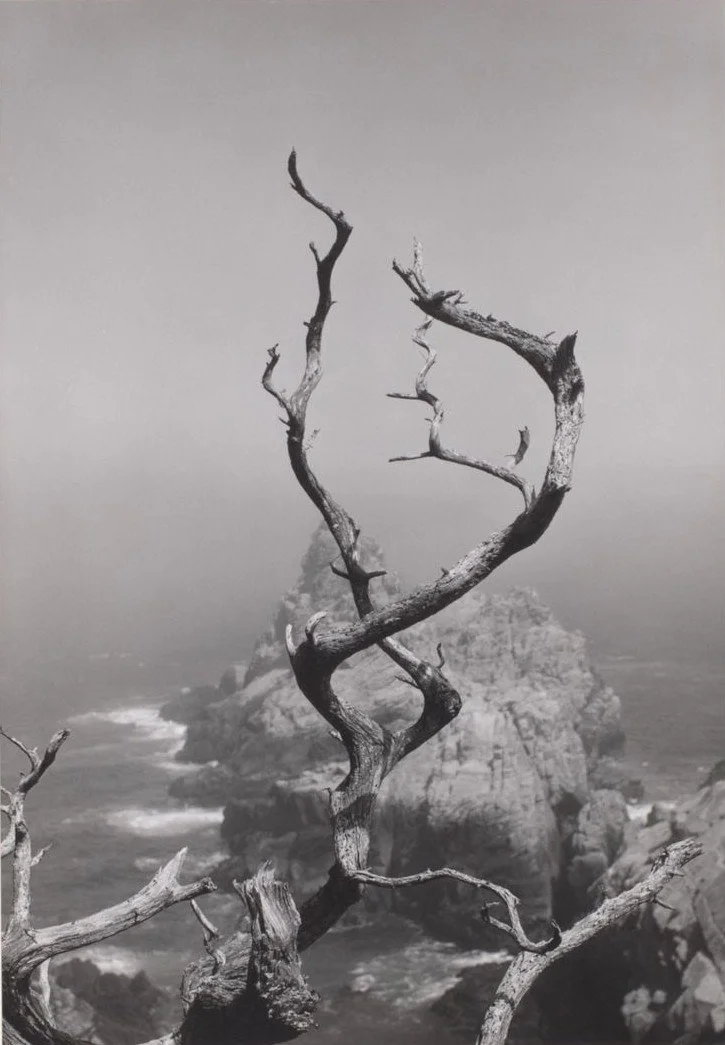
White began in Portland, Oregon, in 1937. In 1938 he started to photograph the waterfront and the Front Avenue neighborhood for the Oregon Art Project, a WPA program. After the war the California coast gave him Sun in Rock, Devil’s Slide, 1947. He first visited Point Lobos in 1946, and Twisted Tree, Point Lobos, California, 1951, comes from this period.
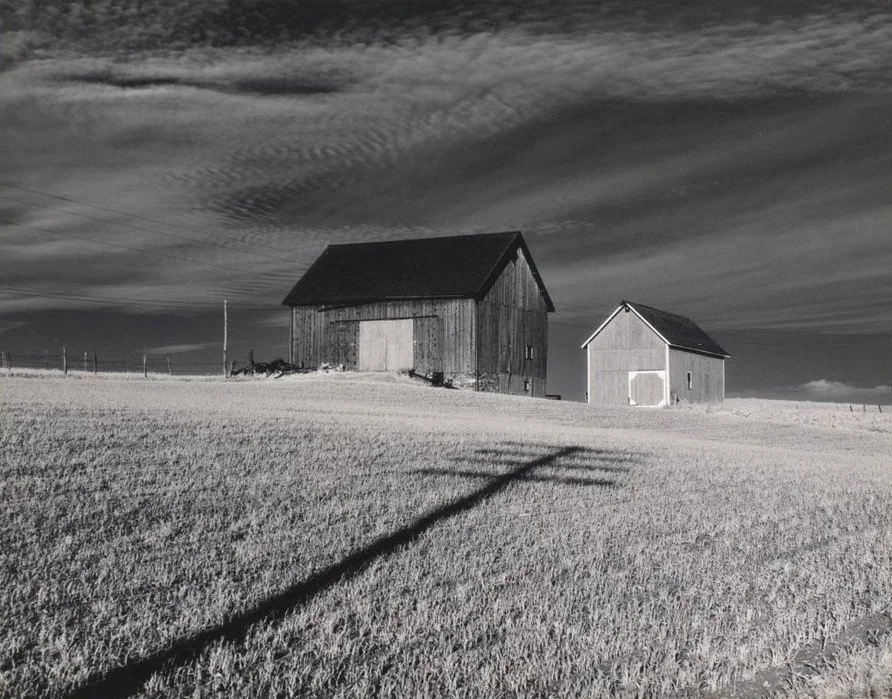
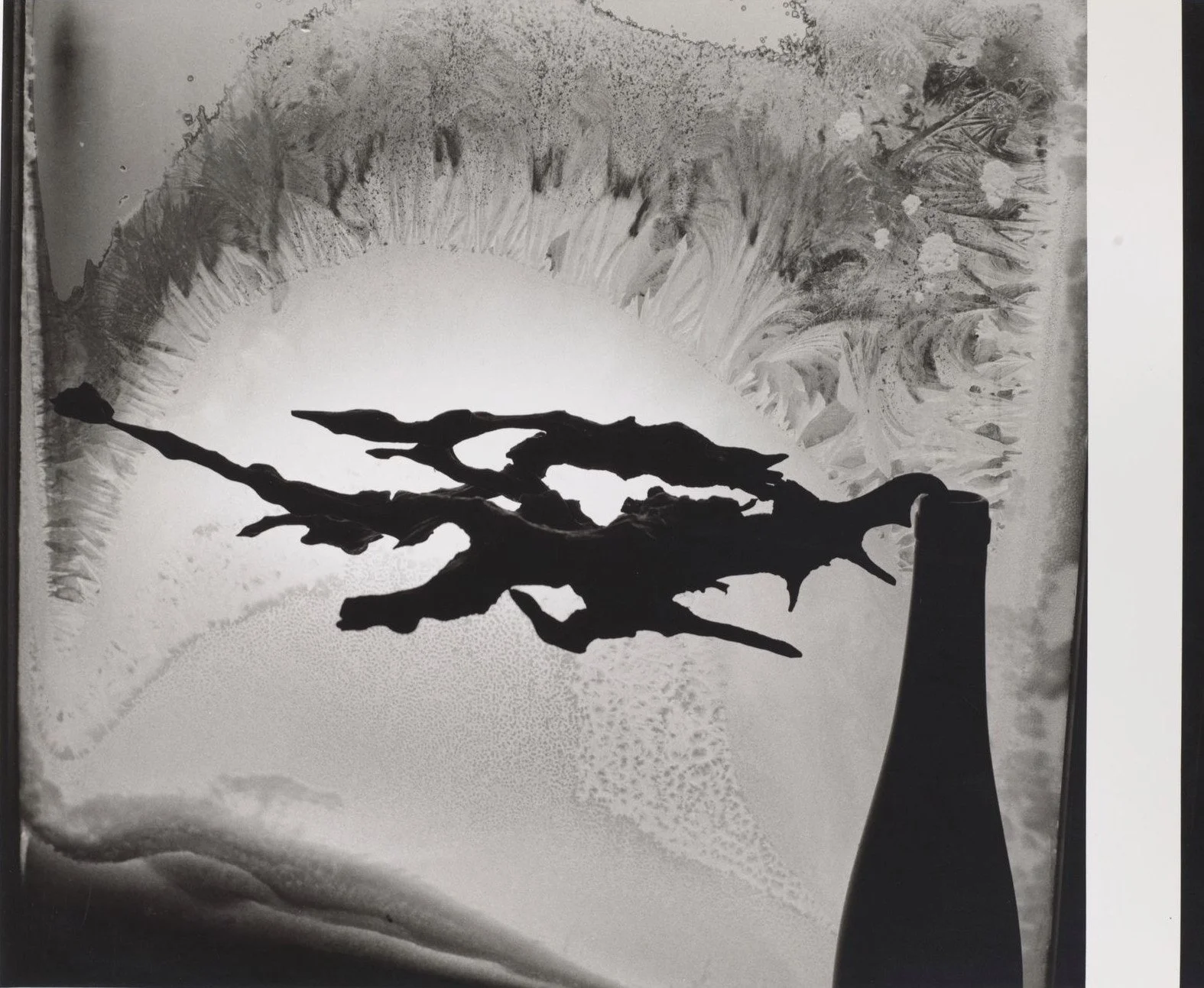
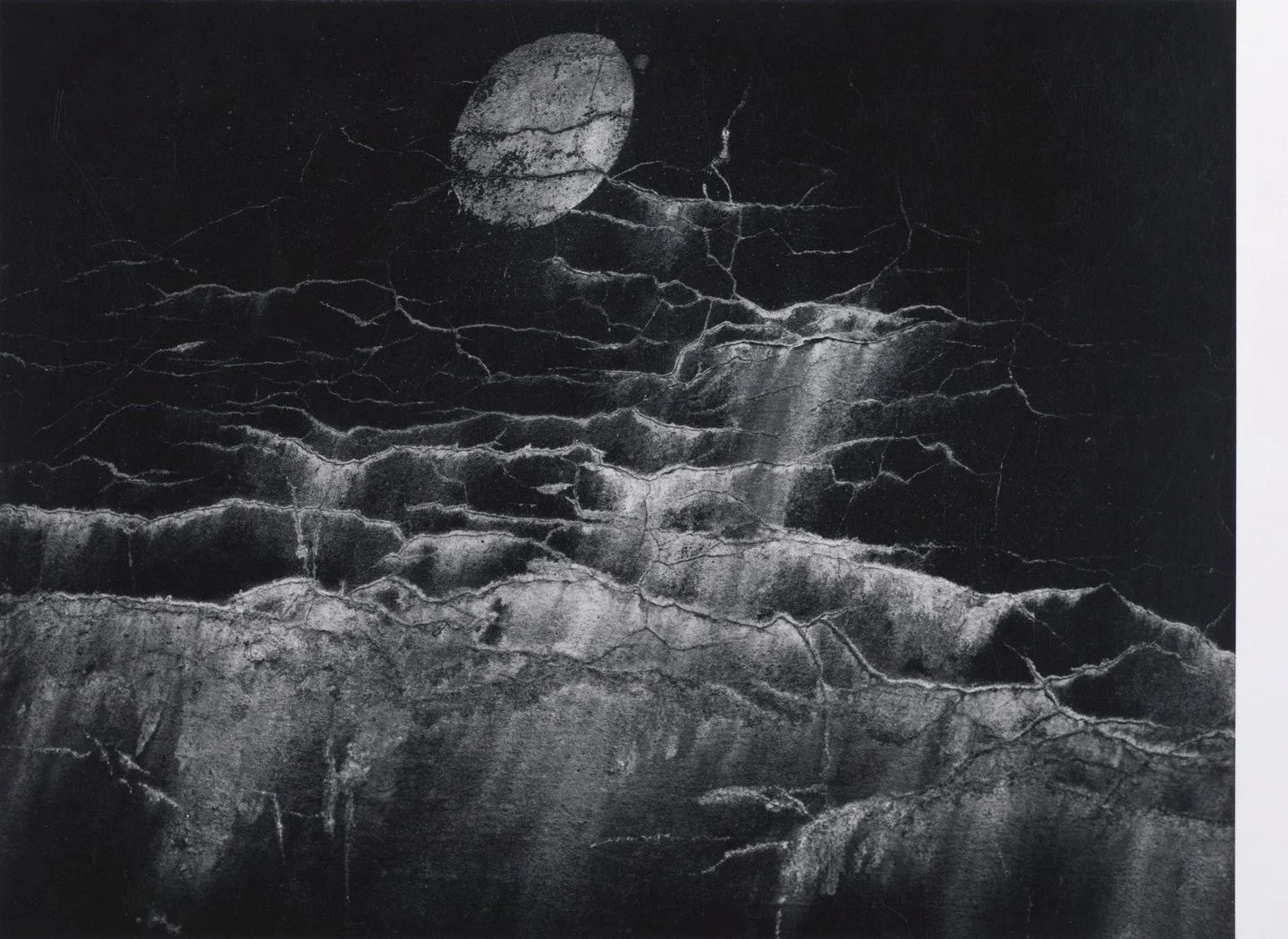
In Rochester he looked closely at the country around him. In 1955 he began to photograph rural upstate New York, the year of Two Barns and Shadow. In 1958 he began winter studies of ice, snow and frost, and Root and Frost is dated 1958. From 1959 to 1967 he also made summer trips to the west. In May 1964, in Pultneyville, New York, he made Moon and Wall Encrustations, Pultneyville, New York, 1964.
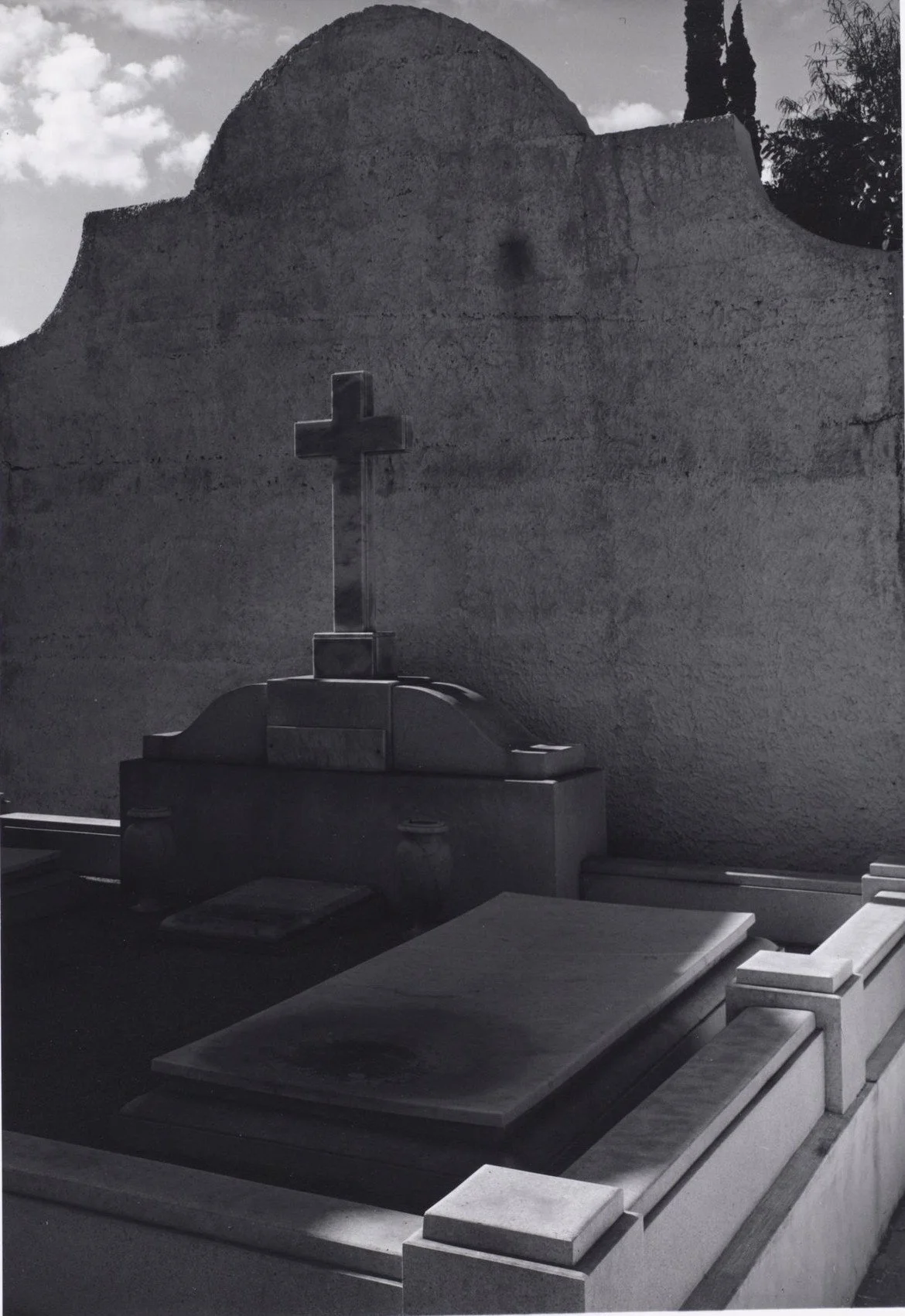
White saw teaching as part of his work. SFMOMA calls him one of the most influential teachers, mentors and writers on photography of his generation. In 1962 he co-founded the Society for Photographic Education. His book Mirrors, Messages, Manifestations came out in 1969. It has 243 of his photographs, with poems, journal notes and other writings. In 1973 he photographed in Puerto Rico and Peru, and Ponce, Puerto Rico (Cemetery), 1973, dates from that year. He died in 1976 and left his archive to Princeton University.
- 1908Born in Minneapolis, Minnesota
- 1937Moves to Portland, Oregon, and begins his photography career
- 1942Is drafted into the U.S. Army and serves in the Pacific until 1945
- 1946Visits Alfred Stieglitz in New York and begins to teach at the California School of Fine Arts
- 1952Helps to found Aperture magazine
- 1953Joins the George Eastman House in Rochester, New York
- 1965Begins to teach at MIT
- 1969Publishes Mirrors, Messages, Manifestations
- 1976Dies in Boston, Massachusetts
Lessons
Slow down before you shoot. White advised being still with yourself until the object of your attention affirms your presence. Only then, he said, should you stay and capture its essence.
Ask what else a thing can be. The Getty says White photographed things not only for what they are, but also for what they may suggest. A rock or a patch of frost can carry a feeling.
Make a portrait a shared act. White wrote that creativity with portraits needs a state of rapport when only a camera stands between two people. He asked for mutual vulnerability and mutual trust.
Try this: choose one plain thing near you, such as a peeling wall, a branch or a patch of frost. Stand still with it for two minutes before you lift the camera. Take one photo that suggests a feeling, not only the object. Write the feeling on the back of a note, and show the photo to a friend without the note. Ask what they feel.
Gear
No single camera or lens of White’s is clearly documented by two sources. These two things are.
Color slide film: From 1955 White made 35mm color transparencies. He began to shoot color in the 1950s, though he worked mainly in black and white.
The Zone System: White wrote about the Zone System, a way to plan exposure and development. He is listed as author of the Zone System Manual (1961) and co-author of The New Zone System Manual (1975).
Books
Minor White: Manifestations of the Spirit (Getty Publications, 2014). Paul Martineau, curator at the J. Paul Getty Museum, wrote this book for the museum’s 2014 show. It has about 200 pages and more than 160 images, some never published before. It also quotes from the journals White kept for over forty years. It is a good first book for new readers.
Mirrors, Messages, Manifestations (Aperture, 1969). This was White’s first monograph. It holds 243 photographs, with poems, journal notes and other writings. Peter Bunnell wrote the biography for it. It is for readers who want to see White’s own mix of pictures and words.
Minor White: Rites & Passages (Aperture, 1978). This Aperture monograph shows his photographs with excerpts from his diaries and letters. James Baker Hall wrote the biographical essay. It is for readers who want the life and the pictures side by side.
Aperture Magazine Anthology: The Minor White Years, 1952-1976 (Aperture, 2012). Peter C. Bunnell selected writing from the first 25 years of the magazine, while White was editor. The book has 455 pages, with facsimile articles, a portfolio of covers and the short statements that opened each issue. It is for readers who want to see how Aperture shaped photography.
In his words
“Often while traveling with a camera we arrive just as the sun slips over the horizon of a moment, too late to expose film, only time enough to expose our hearts.”
“When you approach something to photograph it, first be still with yourself until the object of your attention affirms your presence. Then don’t leave until you have captured its essence.”
“I always photograph found objects; excepting portraits, all of my photographs are of found objects.”
“Creativity with portraits involves the invocation of a state of rapport when only a camera stands between two people.”