AT A GLANCE
- Known for
- The discovery of X-rays in Würzburg in 1895 and the X-ray picture of his wife's hand
- Works in
- X-ray pictures recorded on photographic plates. He was a physicist, not a photographer
- Camera
- None. The rays passed through objects and left shadows on photographic plates
- Also
- Professor of physics in Würzburg and Munich
- Awards
- Nobel Prize in Physics 1901, the first one awarded in physics
- Start with
- Wilhelm Conrad Röntgen and the Early History of the Roentgen Rays (Norman Publishing, 1993)
- Links
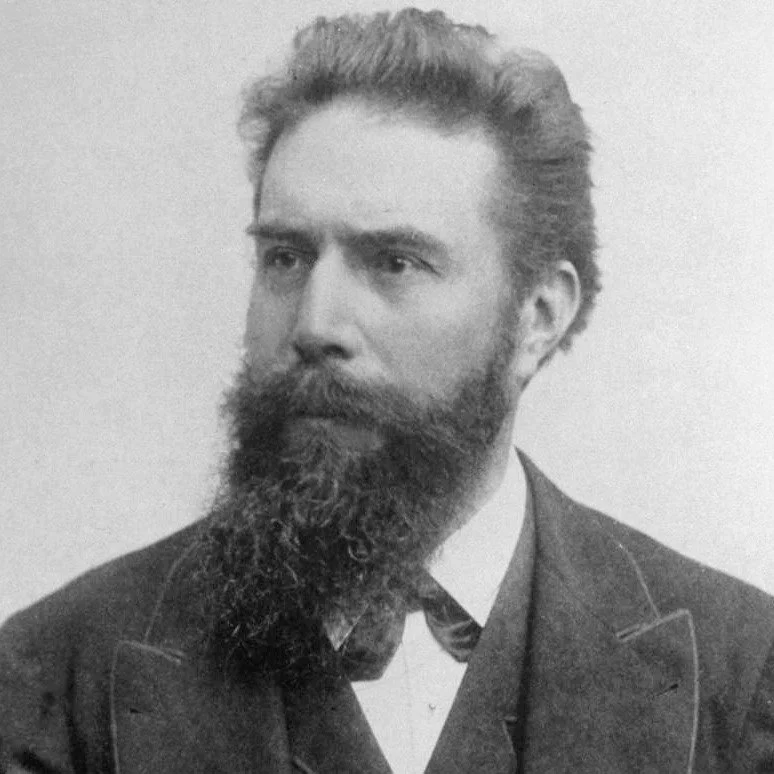
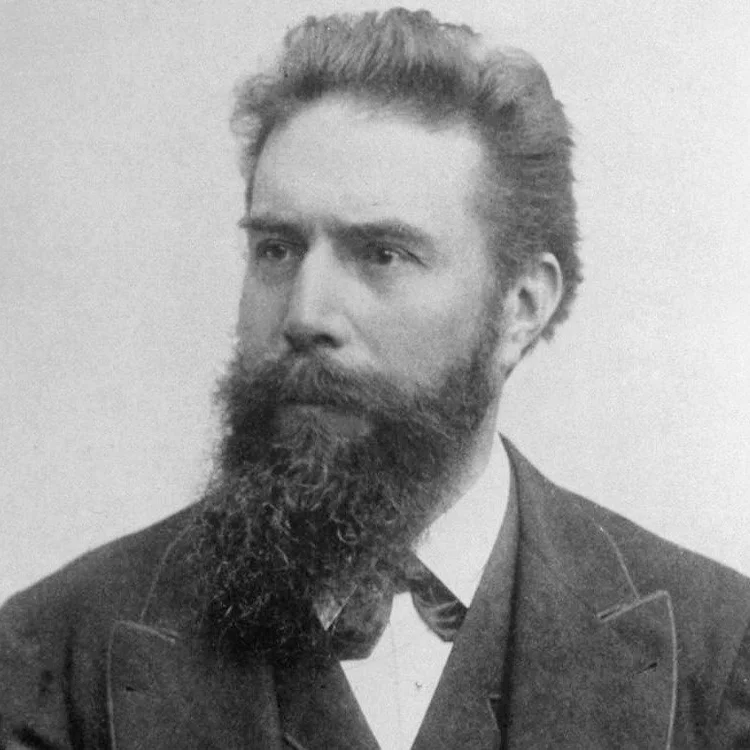
Wilhelm Conrad Röntgen (born 1845, died 1923) was a German physicist, not a photographer. In 1895 he discovered X-rays in Würzburg and recorded their shadows on photographic plates. One of the first pictures shows the bones of his wife's hand and her ring. It is a science picture, but it belongs to the history of photography too, because it showed the inside of a living hand on a photographic plate.
The story
For weeks in late 1895, Anna Bertha Röntgen hardly saw her husband. According to the Siemens Healthineers MedMuseum, Wilhelm Conrad Röntgen came home late, barely spoke as he ate and went straight back to his laboratory in Würzburg. In the end he had his bed moved there. When she asked what was wrong, he told her that if people knew what he was doing, they would say “Röntgen must have gone mad.” She later called it a dreadful time.
It had started on the evening of 8 November 1895. Röntgen was a professor of physics at the University of Würzburg, and he was working with an electric discharge tube in a dark room. He had wrapped the tube in thick black carton so that no light could escape. Yet a paper plate coated with a chemical, barium platinocyanide, began to glow, even though it stood as far as two metres from the tube. Something invisible was crossing the room.
So he tested it. He put objects of different thickness in the path of the rays and recorded the result on photographic plates. Some things let the rays through more easily than others. Because he did not know what the rays were, he gave them the name X-rays.
But he told no one. The Siemens MedMuseum writes that he kept the discovery to himself and was hardly seen for weeks. Then, on 22 December 1895, he asked his wife to place her hand on a photographic plate in the path of the rays.
The developed plate showed the shadows of the bones of her hand and of the ring on her finger. The flesh around them was only a faint shadow. Anna Bertha reportedly looked at the picture and said: “I have seen my death.” The Science Museum in London and the US National Museum of Health and Medicine both give these words, and the word reportedly is the right way to read them.
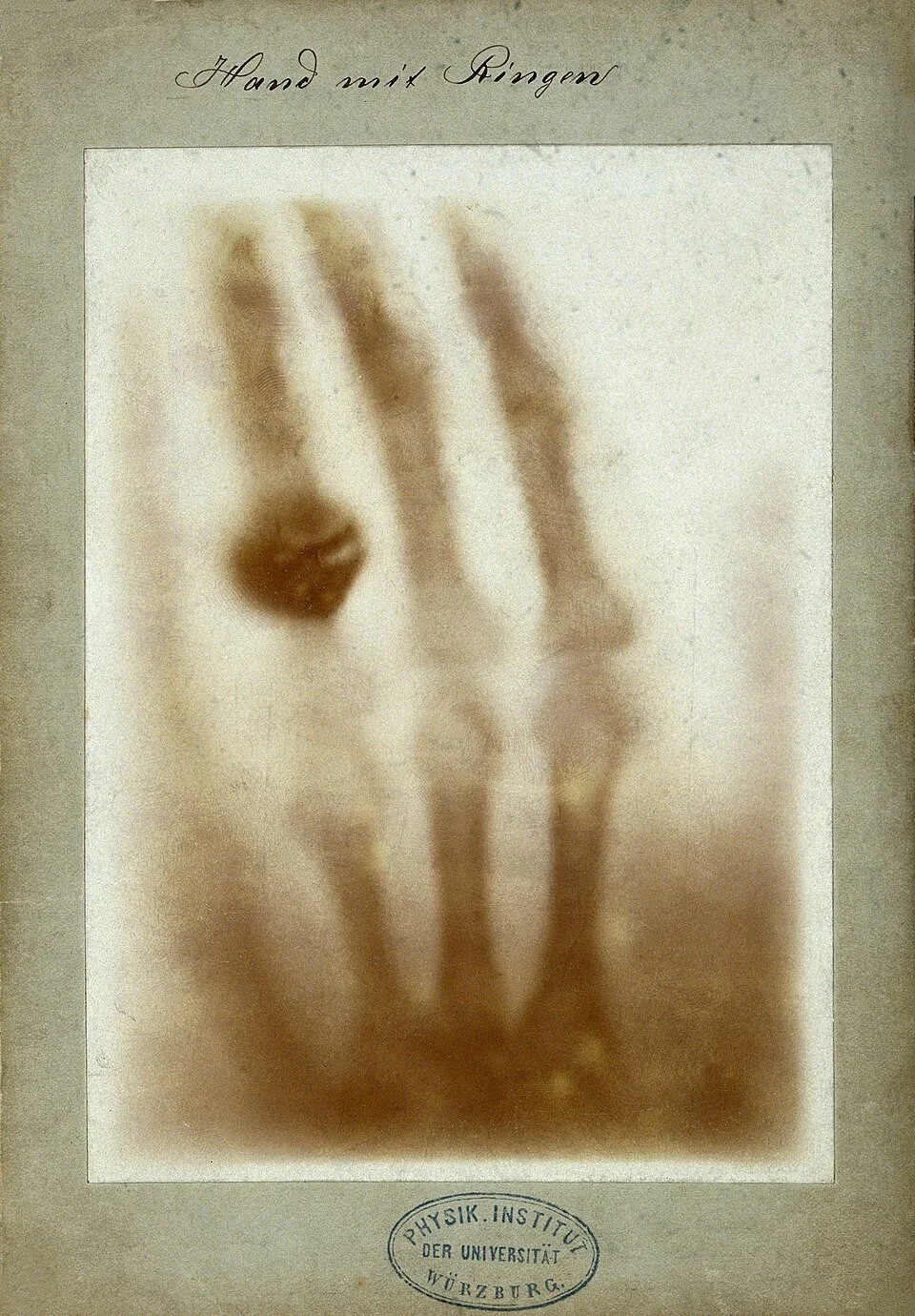
Look at the print. At the top, someone wrote Hand mit Ringen in ink. At the bottom is the stamp of the Physical Institute of the University of Würzburg. The fingers are pale bars, the joints are soft shapes, and the ring is a dark patch. There is no sharp edge anywhere, because nothing here was made with a lens.
Röntgen himself called such images shadow pictures. He took the word from photography. The Victoria and Albert Museum describes radiographs as a kind of photogram, a picture made without a camera that shows the shape of an object placed on a light-sensitive surface. Röntgen's rays went further, because they passed through matter and showed what was inside.
He wrote a paper called Über eine neue Art von Strahlen, On a New Kind of Rays, and read it to the Physical-Medical Society of Würzburg on 28 December 1895. He also posted prints and copies of the article to other scientists. The Wellcome Collection holds a set he sent to the British physicist Arthur Schuster. Newspapers around the world reported the news from early January 1896.
On 23 January 1896 Röntgen showed his work in public at the Society. The chairman, Albert von Kölliker, was so impressed that he proposed calling the rays Röntgen rays. The audience cheered. Röntgen never took a patent. The memorial in Würzburg says he wanted the discovery to benefit all of humanity. In 1901 he received the first Nobel Prize in Physics. He declined to give a Nobel lecture.
In an interview that McClure's Magazine printed in April 1896, a reporter asked what he had thought when he first saw the strange effect on the paper. The National Museum of Health and Medicine presents his answer: “I did not think; I investigated.”
The work
Röntgen was a physicist who worked with instruments, not with a camera. Before 1895 he had studied the heat of gases, crystals and the properties of water. The Nobel Foundation notes that he built much of his own apparatus and preferred to work alone. His X-ray pictures were evidence for his experiments, not art. Still, they were among the first pictures that showed an invisible world, and they are shown in photography books today.
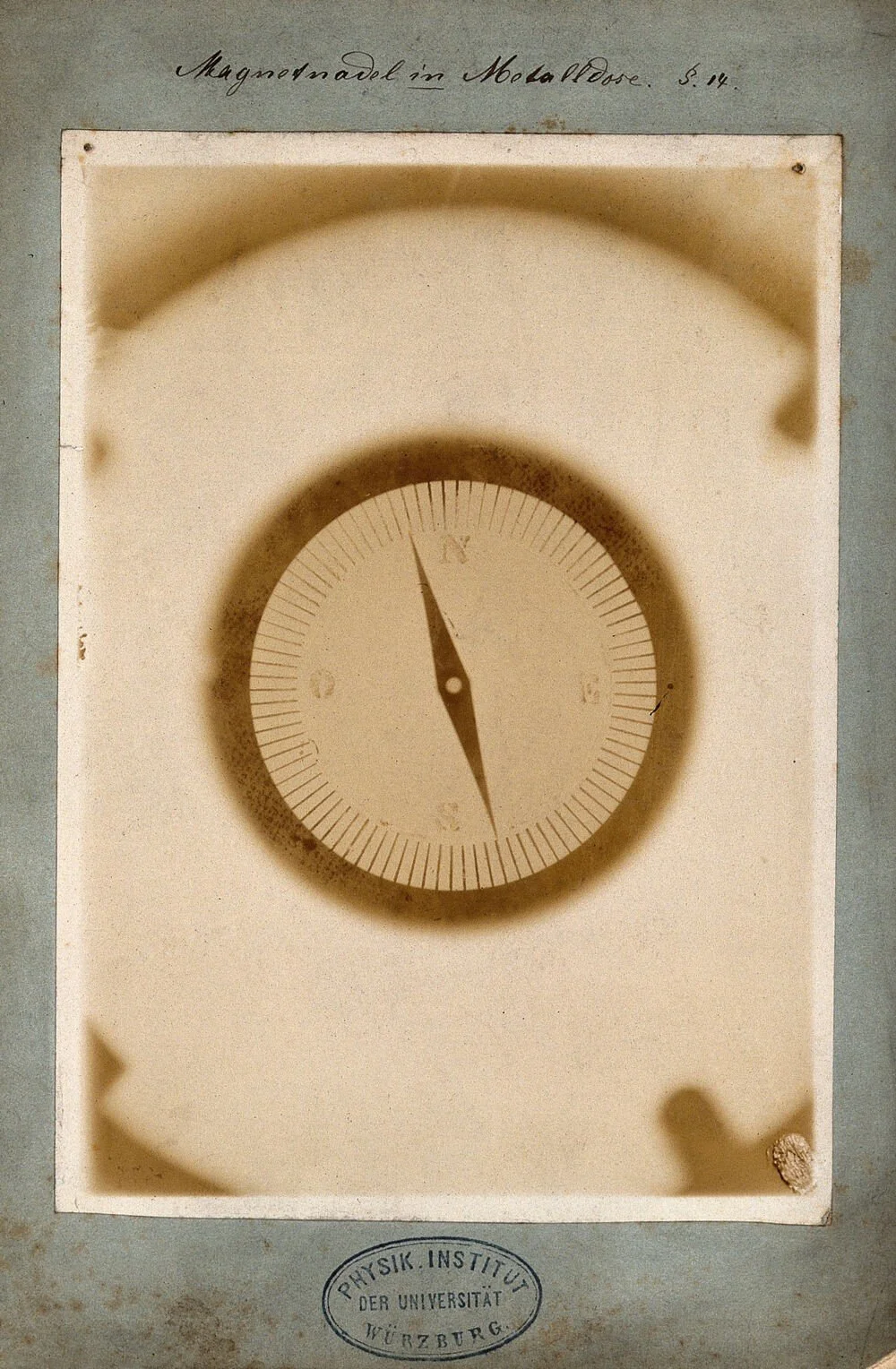
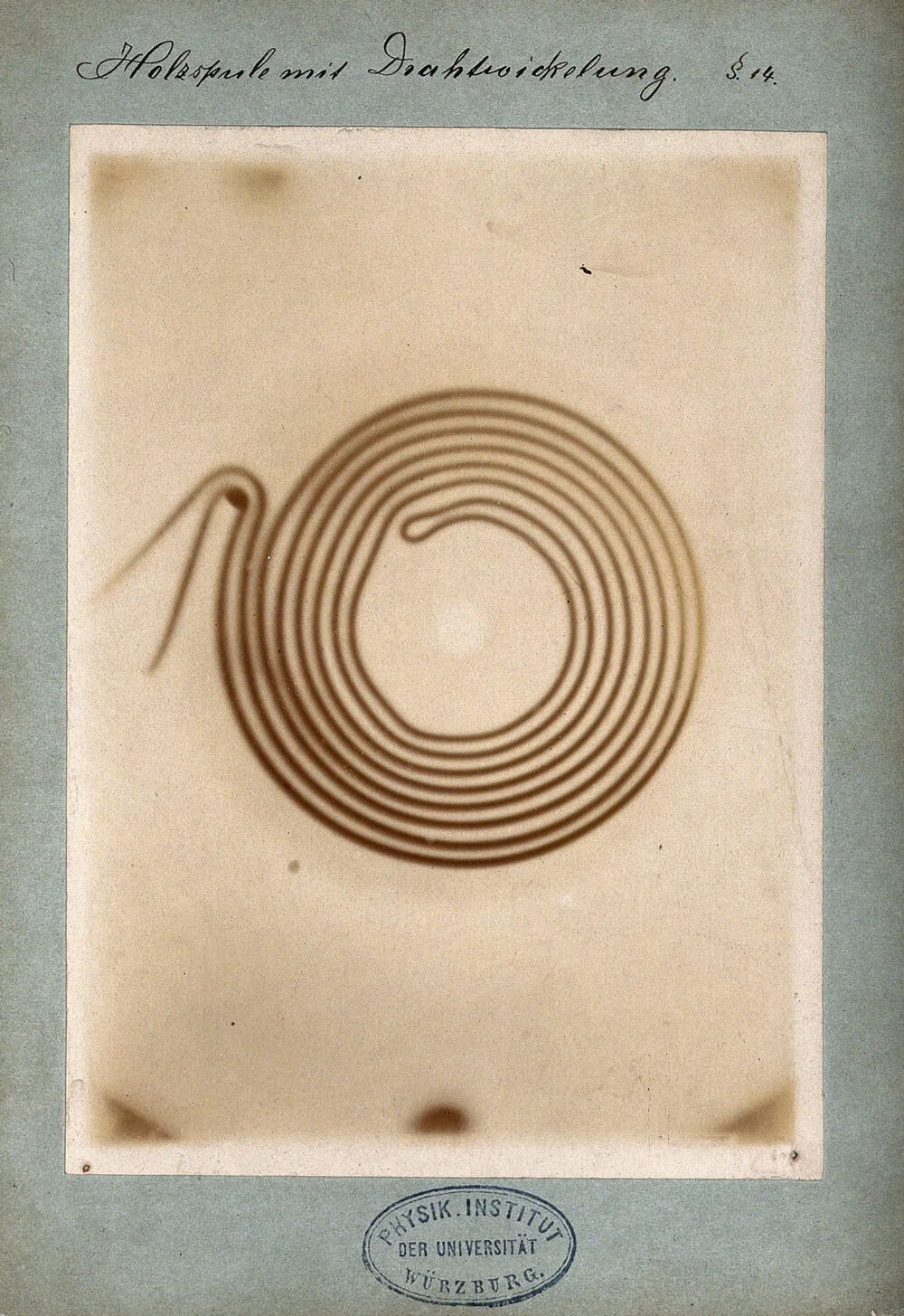
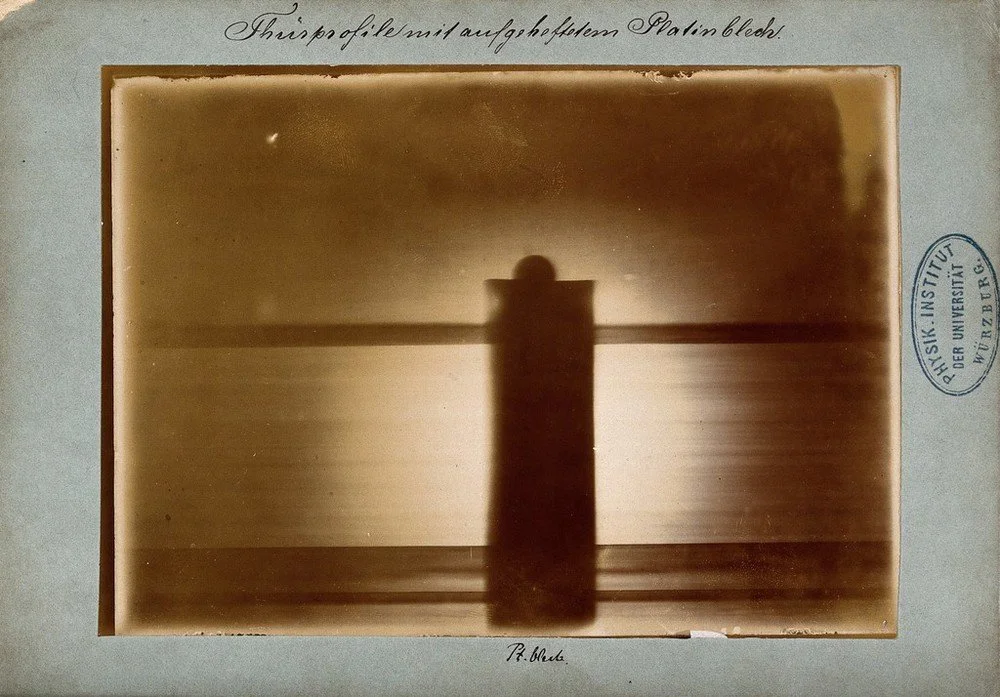
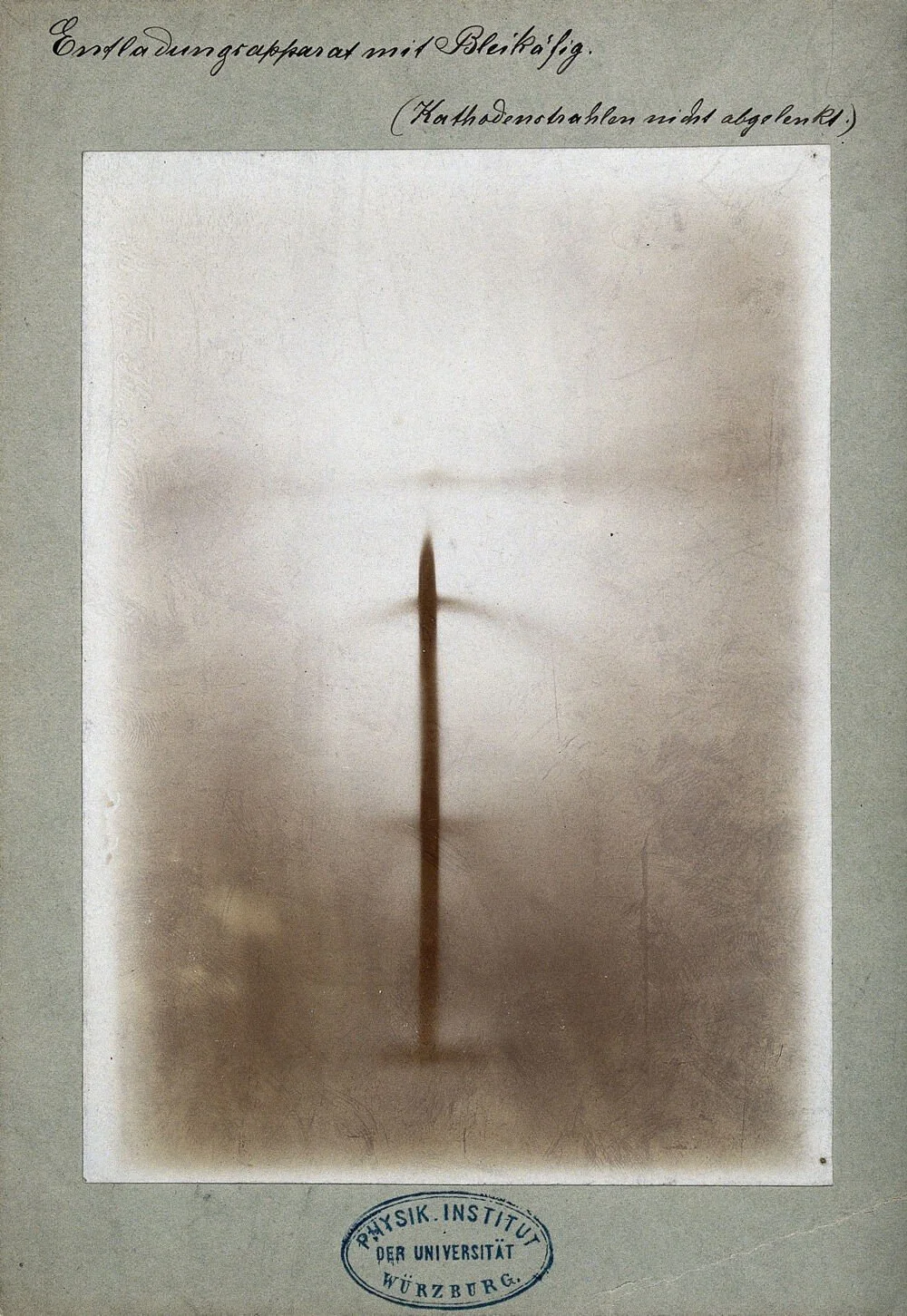
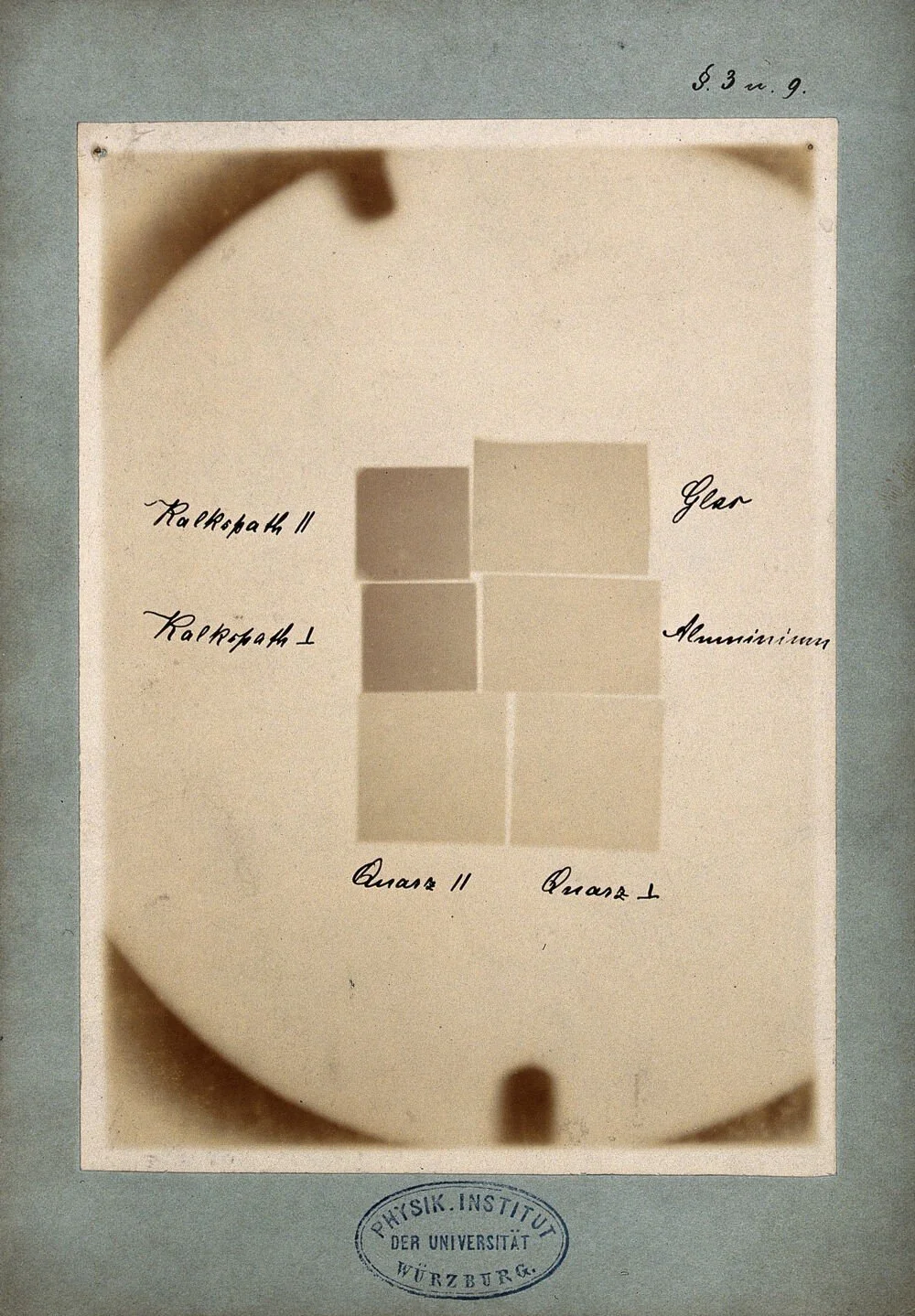
The Wellcome Collection holds prints from the radiographs he sent to Arthur Schuster. A compass with its needle entirely inside a metal case shows the needle through the metal. A wire wound around a wooden spool shows the coil of wire without opening the spool. The door of his own laboratory has a platinum plate attached to the handle. An unloading apparatus with a leaden cage, probably part of his evidence that X-rays are not bent by a magnet, shows a thin dark line in a soft glow. Another print shows blocks of glass, aluminium, calcite and quartz side by side, so that the viewer can compare how much each one stops the rays.
Credit is simple here. These are his own experiments, and the museum calls the prints photoprints from radiographs by Röntgen. One detail is less sure. The Wellcome Collection says the hand with the ring is possibly the hand of his wife, while the Nobel Foundation states that it is hers. The Linda Hall Library and the Commons record give 22 December 1895 as the date.
- 1845Born in Lennep, in the Lower Rhine Province of Germany, on 27 March
- 1888Becomes professor of physics at the University of Würzburg
- 1895Sees a screen glow near a covered discharge tube on 8 November and names the new rays X-rays
- 1895Makes the X-ray picture of his wife's hand on 22 December
- 1896Presents the rays at a public session in Würzburg on 23 January, where they are named Röntgen rays
- 1900Moves to the University of Munich, where he stays for the rest of his life
- 1901Receives the first Nobel Prize in Physics
- 1923Dies in Munich on 10 February
Lessons
Follow the small odd thing. A faint glow on a screen across the room could have been ignored. Röntgen treated it as a question and tested it until he was sure.
Try the same test on many objects. Röntgen put things of different thickness and material in the path of the rays. A compass, a spool, a door and blocks of glass and metal each taught him something different.
Share the proof. He did not keep his pictures to himself. He sent prints with a copy of his article to other scientists, so that they could repeat his work.
Try this: make a photogram with sunlight. Take cyanotype paper or other sun-sensitive paper. Lay on it three things of different thickness, for example a leaf, a key and a glass. Expose it in the sun, rinse it and dry it. Look at which shadows are darkest and which let some light through. Write one line about what the picture tells you about each object.
Gear
Röntgen was not a photographer, and sources describe his equipment as laboratory instruments. They name two things.
Photographic plate: Röntgen recorded the shadows of the rays on photographic plates. The sources opened do not name the make of the plates, and the exposure time is given only by one source, so it is left out here.
Discharge tube (Crookes tube): The rays came from an electric discharge tube. Röntgen covered it with black cardboard in a dark room. A screen coated with barium platinocyanide showed that something was passing through the cardboard.
Books
Wilhelm Conrad Röntgen and the Early History of the Roentgen Rays (Norman Publishing, 1993). Otto Glasser wrote this biography. The 1993 edition reprints the 1933 English translation in full, with about 100 illustrations and 494 pages. The publisher calls it the most comprehensive biography of Röntgen. It is for readers who want the full life and the first years of X-rays.
Röntgen Rays: Memoirs by Röntgen, Stokes, and J. J. Thomson (Harper and Brothers, 1899). George F. Barker translated and edited this small book of 75 pages. It contains Röntgen's paper On a New Kind of Ray, a lecture by Sir G. G. Stokes on the nature of the rays and a paper by J. J. Thomson. It is for readers who want to see how the discovery was first explained, in the words of the time.
Naked to the Bone: Medical Imaging in the Twentieth Century (Rutgers University Press, 1997). Bettyann Holtzmann Kevles wrote this history of medical imaging. It has 378 pages and illustrations. It is not a biography of Röntgen. It is for readers who want to see what grew from his discovery in the century that followed.
In his words
“I did not think; I investigated.”
“There is no history.”
“I only feel happy when I can experiment”
“These 12 years in Würzburg were my happiest.”