Welcome to this edition of Photography Stories. Today, we look at the story behind the photograph by Diane Arbus, Identical Twins, made in Roselle, New Jersey in 1967. We’d love to read your comments below.
(This is the story behind the photograph.)
The parents of the most famous twins in photography did not like the picture.
Diane Arbus photographed seven-year-old Cathleen and Colleen Wade at a Christmas party for twins and triplets in Roselle, New Jersey. She asked them to stand side by side against a pale wall. When she sent the family a print, they did not like it.
Today it is the picture most closely linked with her name.
The title says 1967, but the twins were photographed in December 1966.
Arbus chose the picture for A box of ten photographs, the only portfolio she made. After her death in 1971, it became the cover of the Aperture book that came out with her retrospective at the Museum of Modern Art in New York.
This story follows the party in Roselle, the two girls, and the long life of one photograph.
A Christmas party in Roselle
Diane Arbus was a photographer from New York. In the 1960s she made square black-and-white portraits of people many others overlooked, and of ordinary families.
In December 1966, she went to a Christmas party for twins and triplets in Roselle, a small town in New Jersey. It took place in a Knights of Columbus hall. Nobody knows exactly how she heard about it.
Cathleen and Colleen
At the party, she met two sisters, Cathleen and Colleen Wade. They were seven years old. They wore matching dark corduroy dresses with white collars, white tights and white headbands.
Arbus asked them to stand shoulder to shoulder and photographed them from the front, against a light wall. At first they look the same. Then the differences show. One girl smiles a little. The other looks more serious.
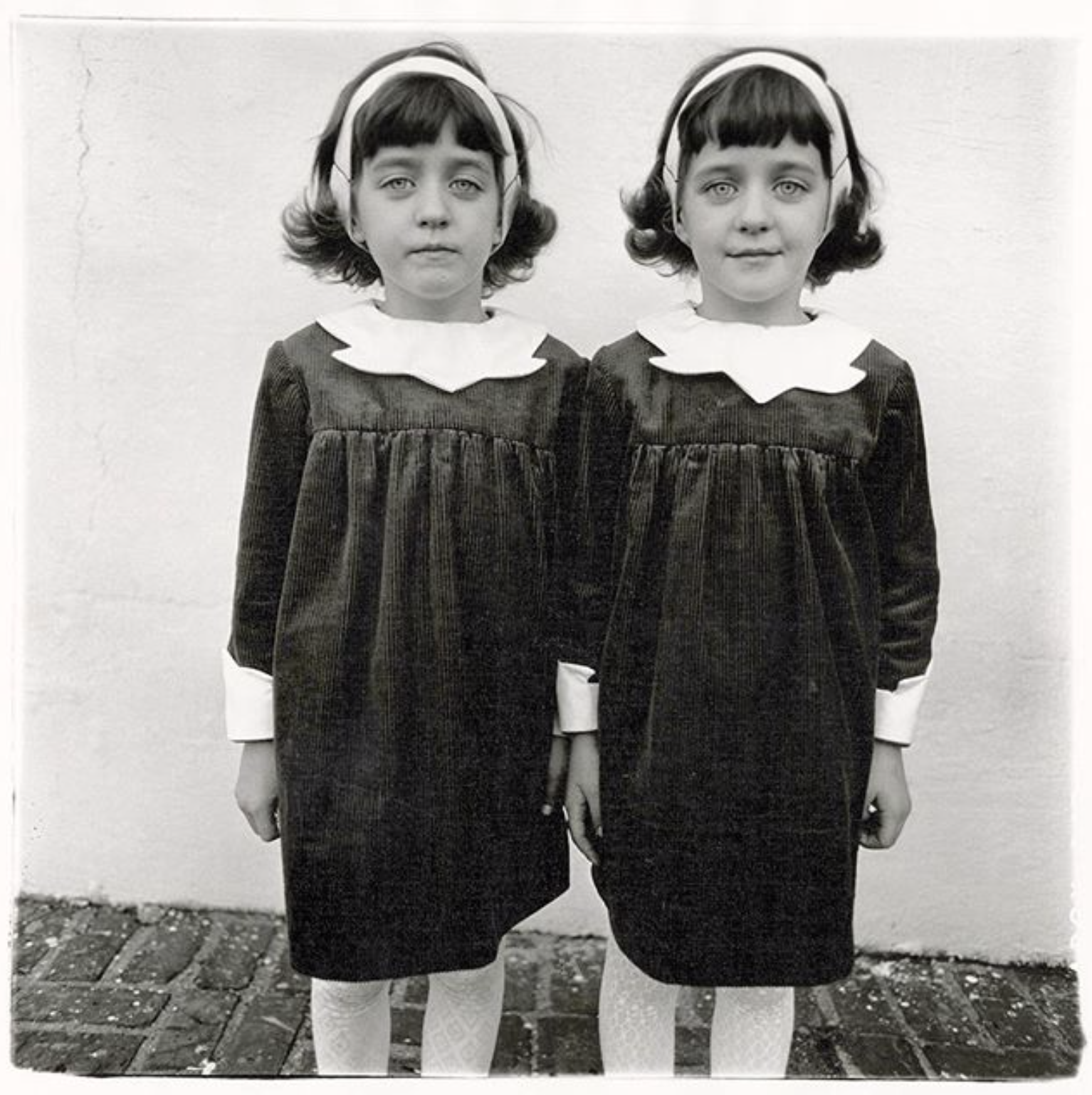
Identical Twins, Roselle, New Jersey, 1967. Photograph by Diane Arbus.
“The worst likeness”
Arbus sent the family a print. The parents did not like it.
“We thought it was the worst likeness of the twins we’d ever seen,” their father, Bob Wade, said later. Years after that, he told a reporter: “We’ve always been baffled that she made them look ghostly.”
A box of ten photographs
In 1969, Arbus began work on A box of ten photographs, the only portfolio she made. She chose ten pictures from 1962 to 1970. Identical Twins was one of them. The artist Marvin Israel designed the clear plastic box that held the prints.
Arbus died in 1971, before the edition was finished. Later sets were printed from her negatives by the photographer Neil Selkirk.
The cover
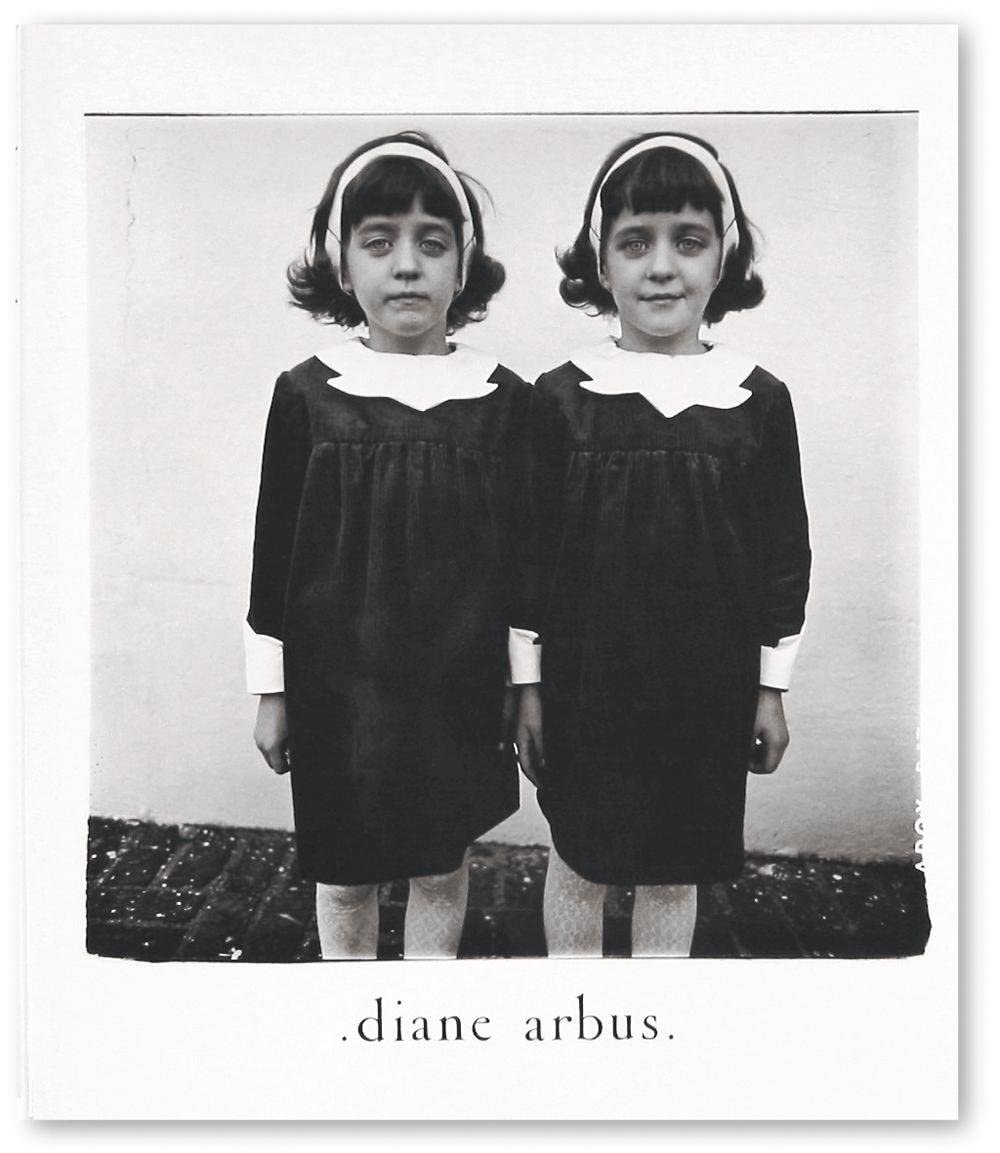
In 1972, the Museum of Modern Art in New York held a retrospective of her work. Aperture published a monograph with it, Diane Arbus, and Identical Twins was on the cover. For many years it was the only large book of her work, and it has stayed in print ever since.
Many writers have compared the picture with the twin girls in Stanley Kubrick’s film The Shining (1980). In 2004, a print sold at Sotheby’s in New York for $478,000.
Arbus once said: “That is what I love: the differentness.”
The Book
Diane Arbus: An Aperture Monograph
Aperture · 2012 · 182 pages · Edited by Doon Arbus and Marvin Israel
First published in 1972, the book holds 80 photographs by Diane Arbus. Identical Twins has been on its cover since the first edition.
This fortieth-anniversary edition has new reproductions made from prints by Neil Selkirk.
More stories:
Hoover is a rescued vulture at Elmwood Park Zoo. Midway through Claire Rosen’s photo session, she left her perch and landed on the photographer’s head.