What Does It Mean To Be Jewish Today? Marnie Salsky On Photographing Identity Beyond Religion, Politics, And Stereotypes
Welcome to this edition of [book spotlight]. Today, we uncover the layers of 'A Peoplehood | Amiut Yehudit,' by Marnie Salsky (published by Daylight Books). We'd love to read your comments below about these insights and ideas behind the artist's work.
What does being Jewish look like today?
It can be expressed through religion, culture, family, history, community, or small daily decisions. But identity is not always visible, and photography can only show part of how people understand themselves. In A Peoplehood | Amiut Yehudit, Marnie Salsky combines contemporary photographs, archival images, interviews, newspaper articles, and social media fragments to explore this complexity.
The project also asks what photography can communicate, and where its limits begin.
Salsky started photographing Jewish life in Toronto in 2018, but she soon realized that many important experiences could not be seen in a photograph. Interviews gave people space to speak about belonging, visibility, antisemitism, and the choices they make about when to express their Jewish identity. After October 7, 2023, some of the earlier images also gained a different meaning, even though the photographs themselves had not changed.
Salsky explains how she used different documentary materials, edited out photographs that became unnecessary, and created meaning through sequencing rather than single images. Her process shows how a project can become stronger when photography is allowed to work together with text, archives, and personal testimony.
The Book
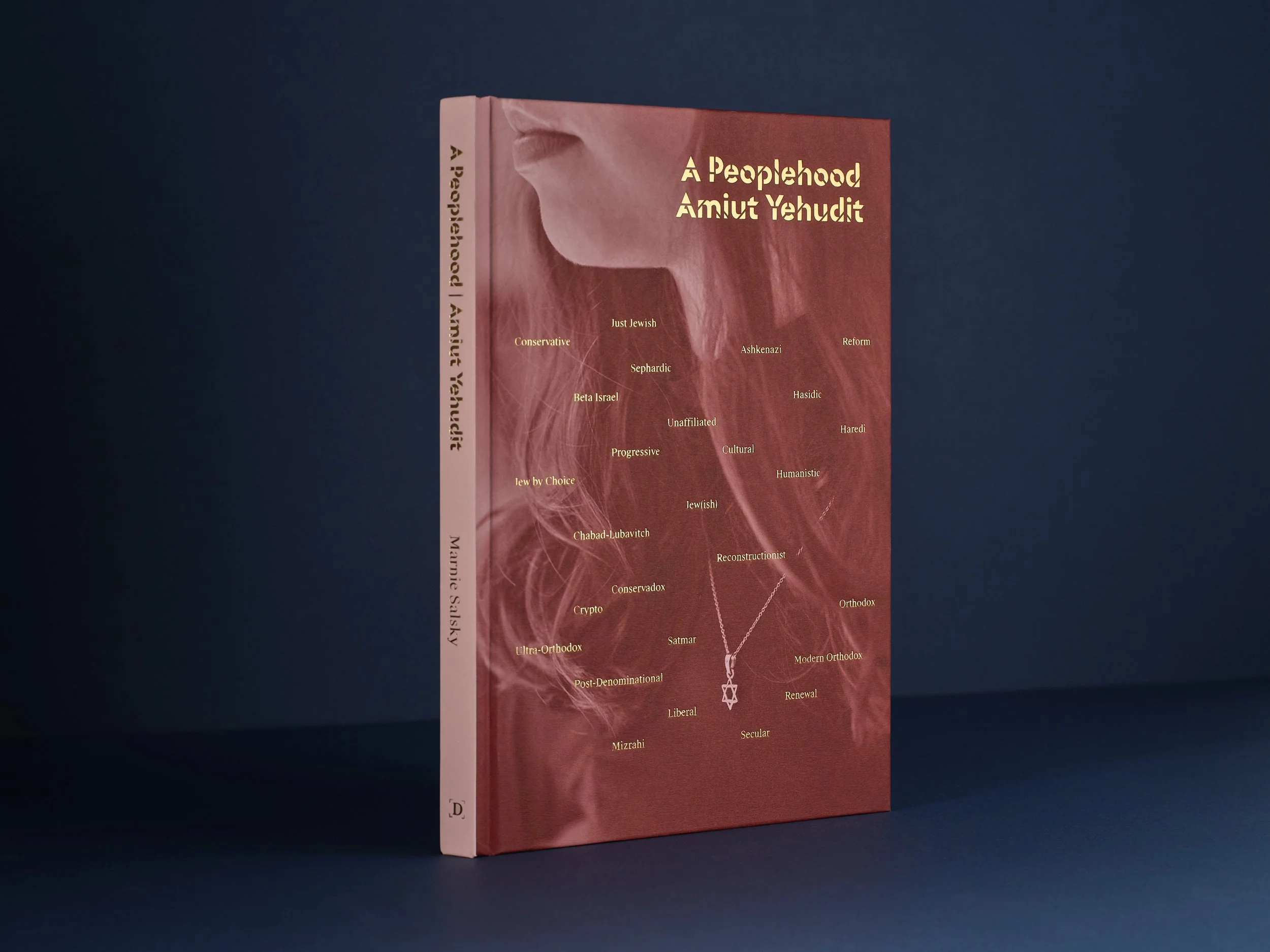
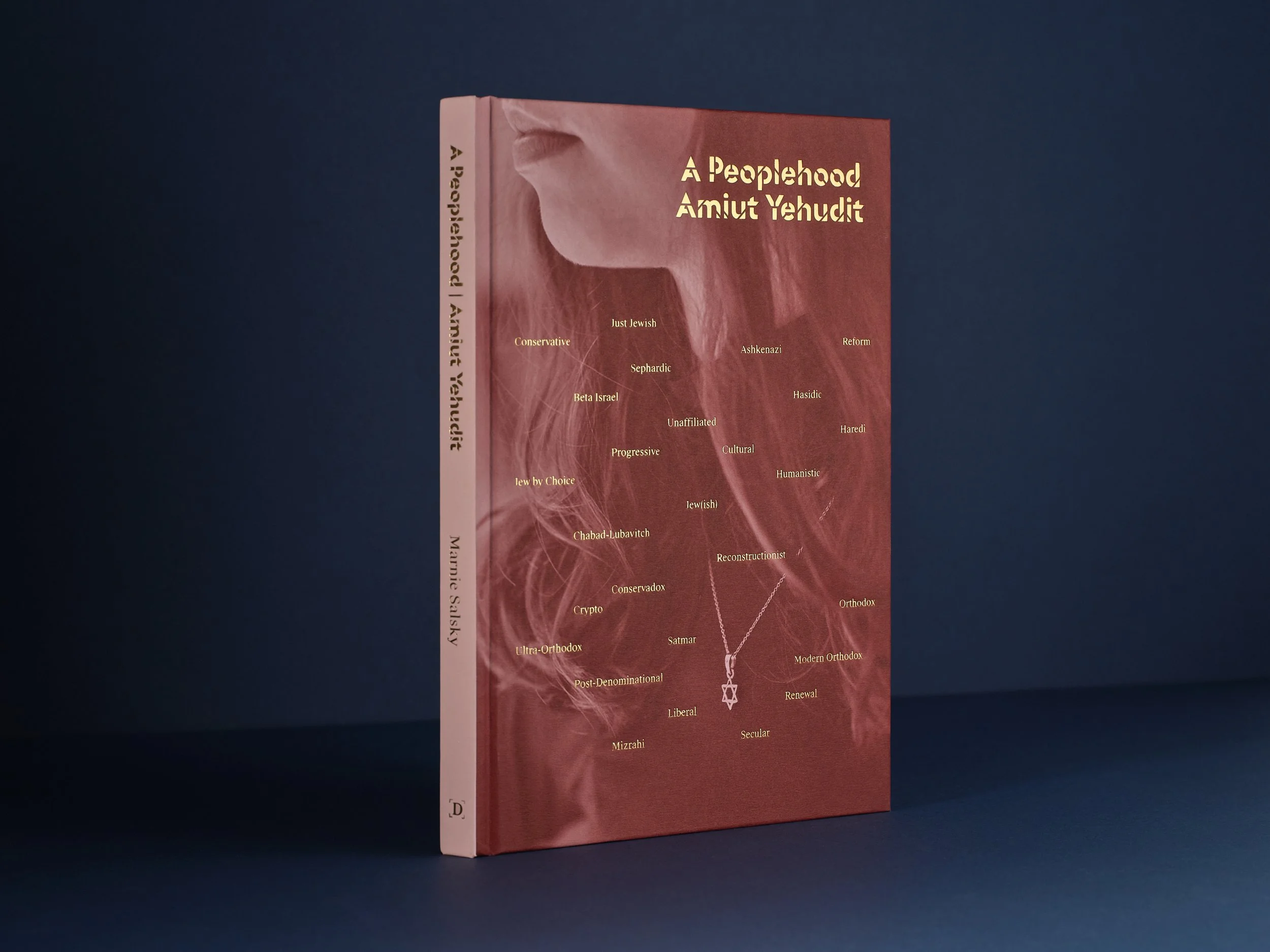
A Peoplehood | Amiut Yehudit by Marnie Salsky, published by Daylight Books, explores what it means to be Jewish today through contemporary photography, archival images, interviews, newspaper articles, and social media fragments. Created primarily between 2018 and 2022, the project looks at identity, belonging, memory, community, resilience, and the ways antisemitism shapes everyday Jewish life.
Rather than presenting one definition of Jewish identity, the book reflects its diversity and contradictions. Salsky combines personal testimony with documentary material to examine both what can be seen in a photograph and what remains invisible, including private experiences, questions of safety, and decisions about when to express Jewish identity.
The book follows a non-linear structure in which meaning develops through sequencing, repetition, and the relationships between images and text. Material added after October 7, 2023, also changes how some earlier photographs are understood, placing the project within a wider historical and contemporary context. (Daylight books, Amazon)
Project genesis: What first made you want to explore Jewish identity through photography, and why did you decide to start this project in 2018?
The roots of this project go back further than 2018.
About fifteen years ago, I was restoring a group of historical photographs from the 1890s to the 1930s of a Jewish community from a small town in Poland. What struck me was not only how vibrant the community was, but also how incredibly diverse it was. There was not a single way of being Jewish then, just as there is not a single way of being Jewish now.
That led me to think more deeply about contemporary Jewish identity. Despite its diversity, we often talk about it in very simplified ways, through politics, stereotypes, religion, or history.
I became interested in moving beyond assumptions and exploring how Jewish identity is actually experienced, expressed, and negotiated in everyday life. By 2018, those ideas had come together in a way that made me realize I wanted to explore them through a long-term documentary project. I was not interested in documenting Judaism or trying to define Jewish identity, but rather I was interested in exploring a broader question: What does it mean to be Jewish today?
I began the project through photography, and I approached the photographs through an observational documentary lens. I wanted to photograph the everyday ways Jewish identity is expressed rather than illustrate preconceived ideas about Jewish life.
But as the project evolved, I realized there were questions the photographs themselves could not answer because identity is not always visible. Photography can show how people express aspects of their identity, but it cannot reveal how they understand it, how they experience it, or how antisemitism influences the ways they navigate the world. That required conversation.
I conducted a series of interviews with members of Toronto's Jewish community. Throughout those conversations, people spoke about making decisions, sometimes consciously and sometimes unconsciously, about when to express aspects of their Jewish identity and when not to. Those conversations gave voice to experiences that simply could not be photographed.
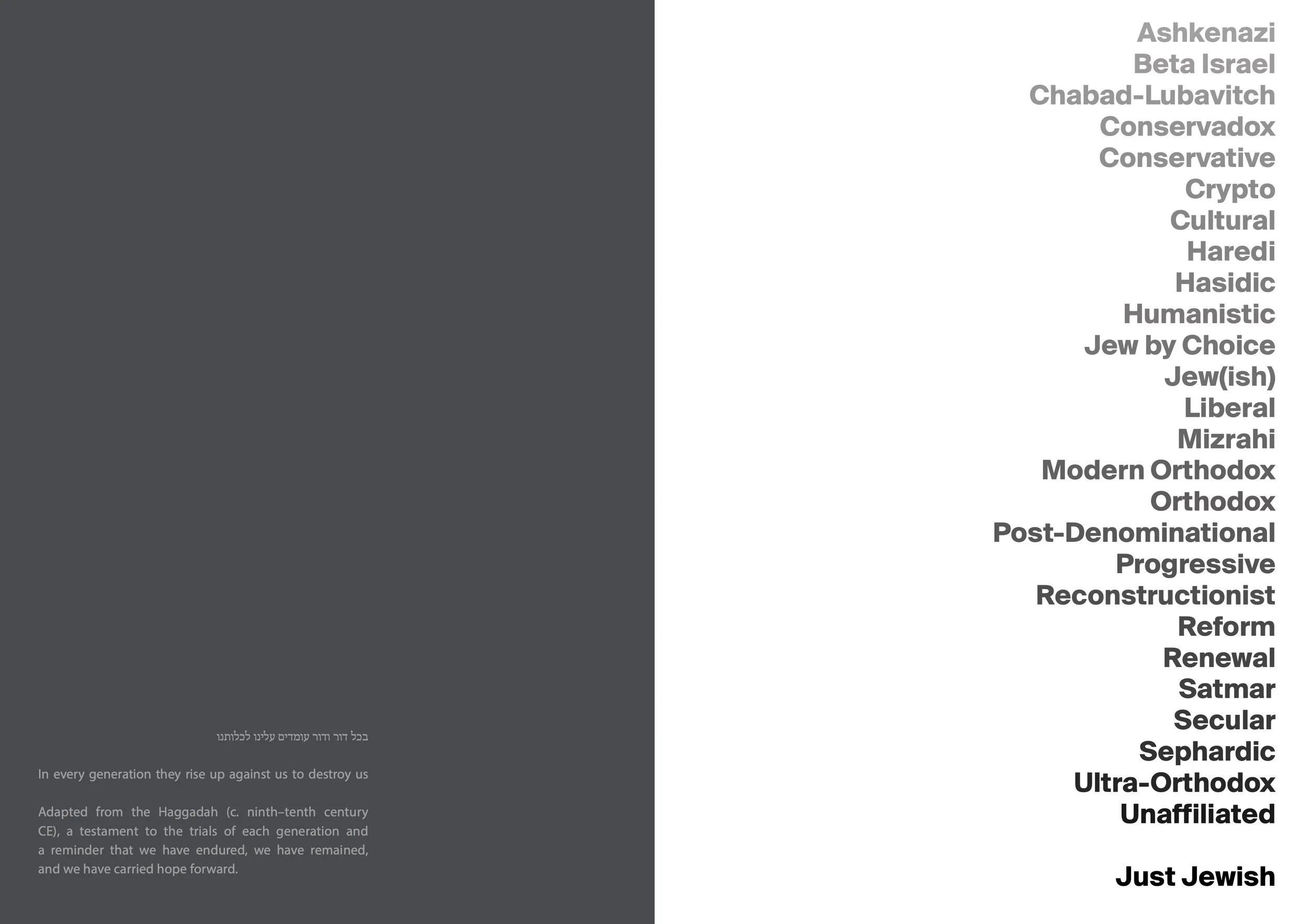
Ultimately, the project does not try to define Jewish identity. It explores its complexity, which is why I chose the title A PEOPLEHOOD | AMIUT YEHUDIT. From the beginning, I wanted the project to acknowledge that there is not only one way of being Jewish. Peoplehood acknowledges both diversity and connection as Jews identify in many different ways. They may be religious, non-observant, secular, culturally Jewish, or ethnically Jewish. Yet despite those different ways of identifying, there remains a shared sense of connection through history, community, responsibility, and belonging.
Mixed materials: The book combines your own photographs with archival images, interview excerpts, and social media fragments. How did you decide which types of material belonged together?
The project evolved organically over time as I realized no single medium could fully capture the concepts I was exploring. The structure of the book gradually came to reflect the nature of contemporary Jewish identity. Personal experience, collective memory, and public discourse all shape the way we understand and experience identity, and I wanted those different layers to exist in dialogue with one another.
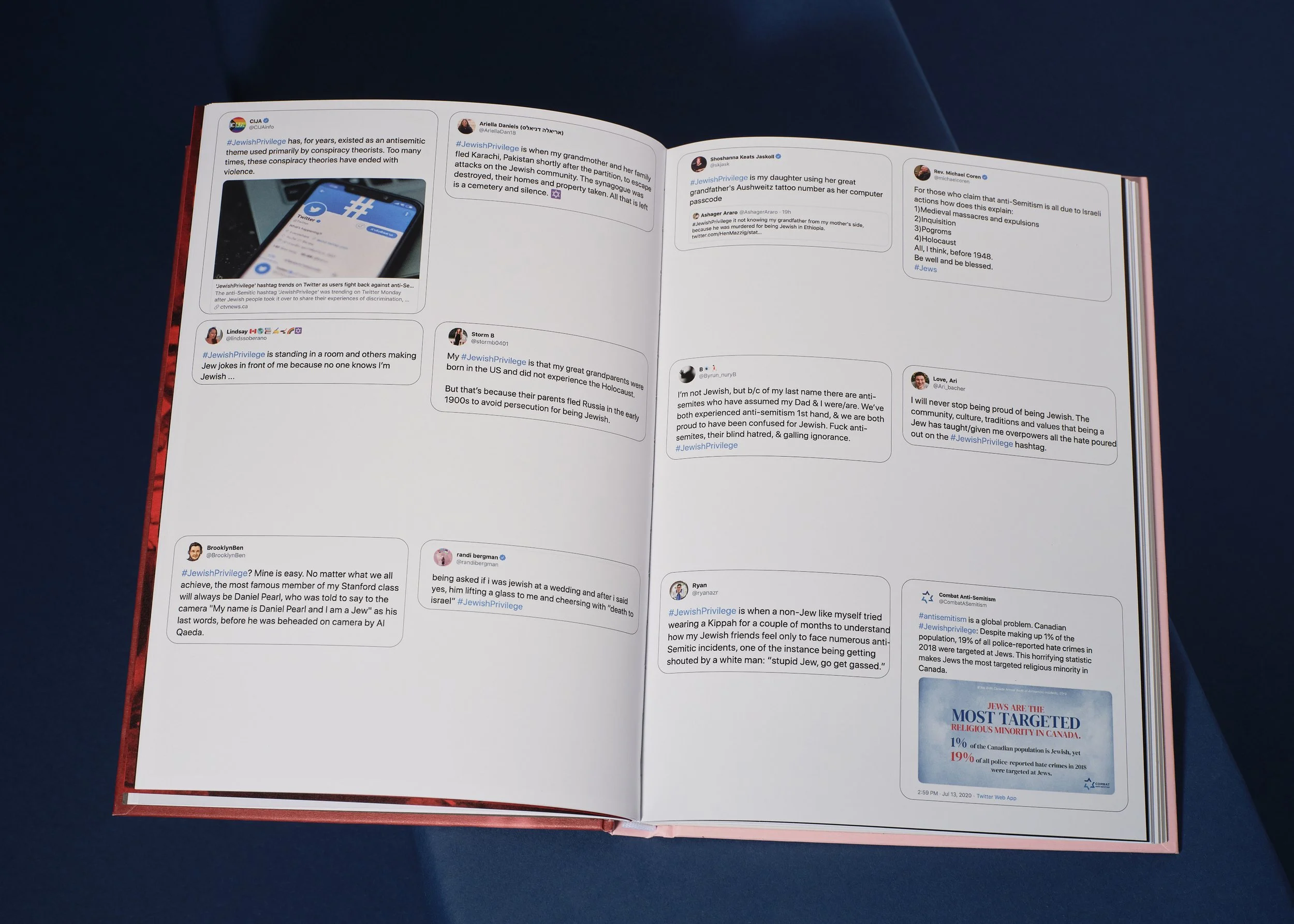
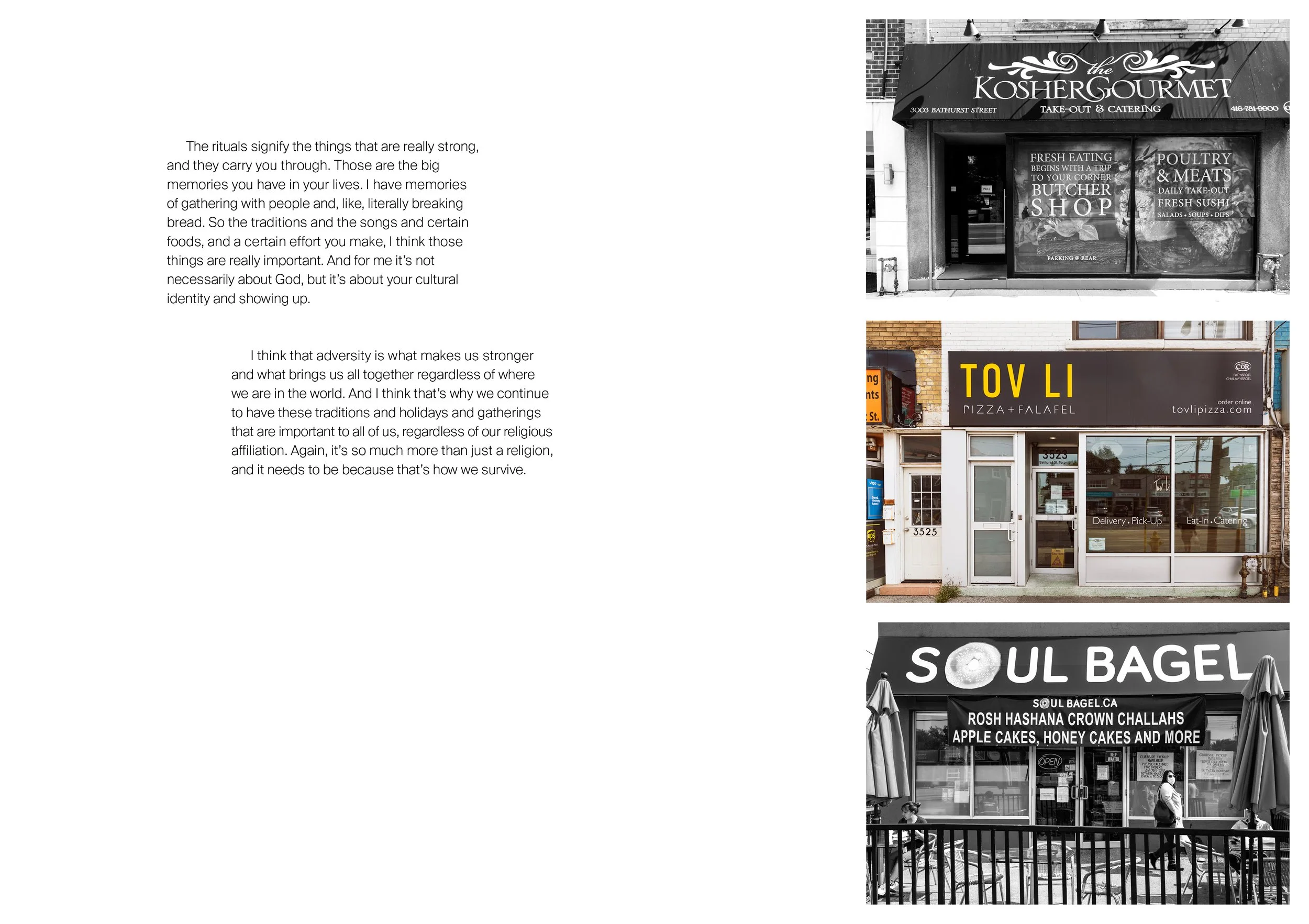
The contemporary observational deadpan photographs ground the work in everyday life. The interview excerpts introduce personal experiences, reflections, and sometimes contradictions. The archival photographs connect contemporary Jewish life to a much longer history and shared collective memory, while newspaper articles and social media fragments add another dimension by revealing how Jewish identity is discussed, represented, and challenged within the public sphere.
The book follows a non-linear narrative organized around recurring themes rather than chronology. The photographs, interview excerpts, archival images, newspaper articles, and social media fragments are sequenced around the themes of identity, belonging, community, memory, resilience, and the ways antisemitism shapes contemporary Jewish life. Whenever I introduced another form of material, the decision was not based on its type, but on whether it deepened the ideas being explored at that point in the book.
It was an intentional decision not to pair the interviews with the people in the photographs, and the people I interviewed knew that they would remain anonymous. Instead of presenting a series of individual stories, I wanted the interview excerpts to become part of an ongoing conversation about contemporary Jewish life. Together, they reflect the many different ways people experience, express, and navigate their Jewish identity.
Rather than asking one element to explain another, I wanted meaning to emerge through the relationships between them. Sometimes an archival photograph changes the way you read a contemporary image. Sometimes an interview excerpt changes the way you understand a photograph. And sometimes recurring ideas across newspaper articles and social media posts encourage the reader to pause and reflect on the broader implications. Taken together, the different materials create a more layered understanding of contemporary Jewish identity than any one medium could achieve on its own.
Can you describe one spread where a photograph alone was not enough, and explain exactly what the added interview or archive changed?
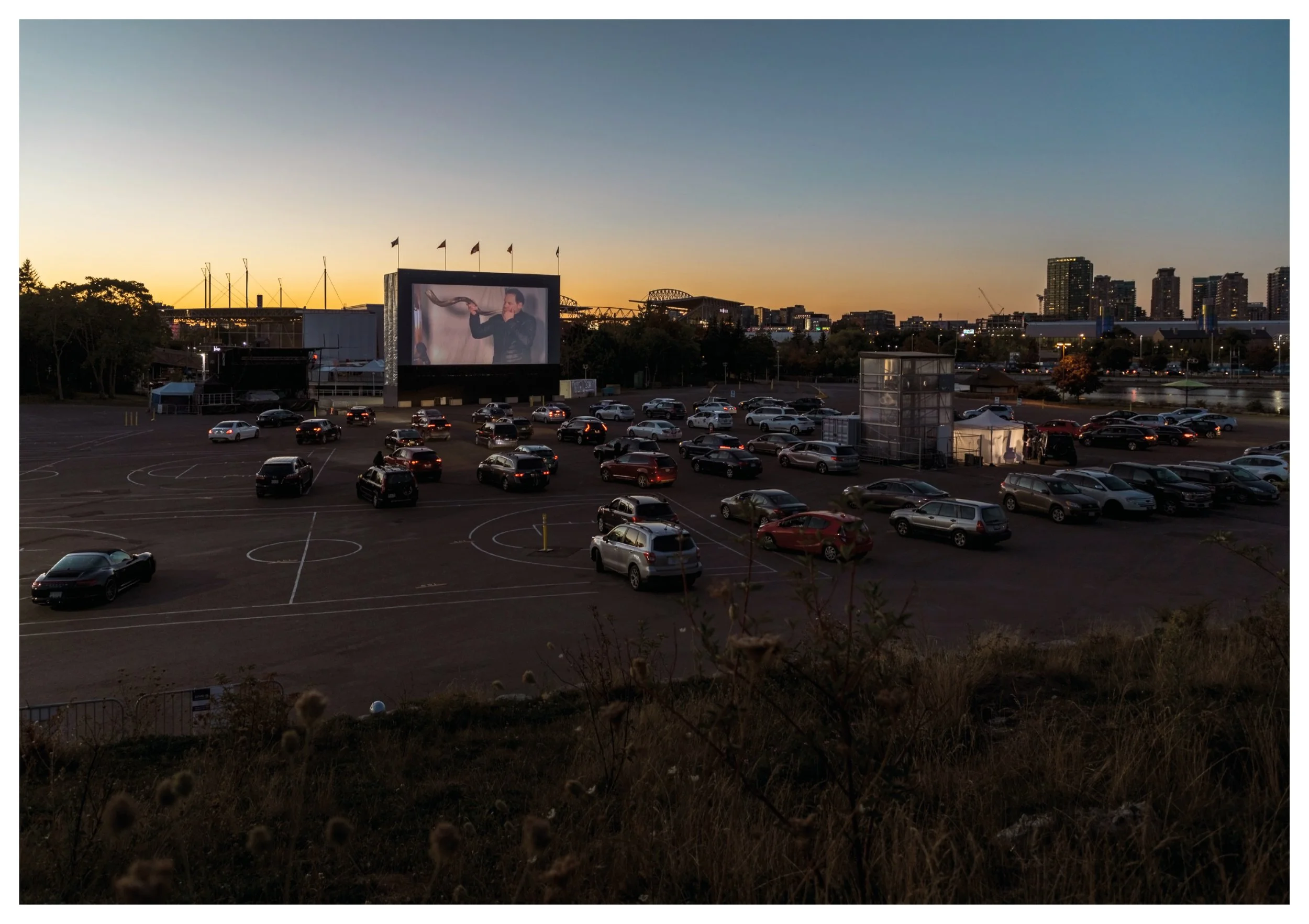
One spread that comes to mind combines three contemporary photographs with interview excerpts. On their own, the photographs could be read simply as documenting different moments within contemporary Jewish life: a group of Orthodox boys walking down the street, members of Toronto's Jewish LGBTQ+ community gathered beneath a Pride flag with a Star of David, and people performing on stage at a Jewish community event. Taken together, these photographs reflect the diversity of contemporary Jewish experience.
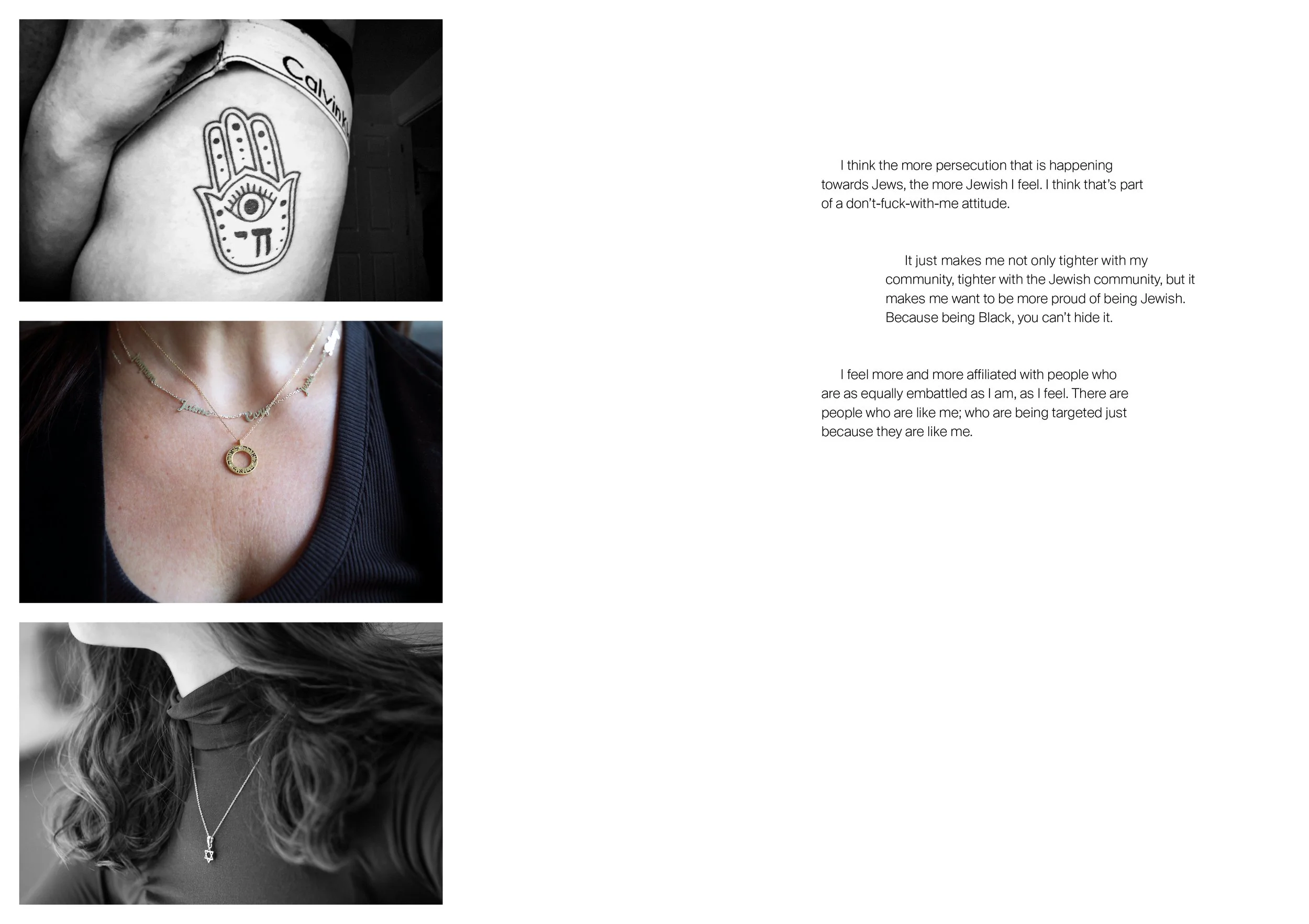
But the interview excerpts shift how those photographs are understood. They introduce questions of acceptance, visibility, race, gender, and belonging that are not immediately visible in any of the images themselves. Rather than asking who is pictured, readers begin thinking about how Jewish identity is experienced. The photographs do not illustrate the interviews, and the interviews do not explain the photographs. Instead, the relationship between them creates a dialogue. Readers begin asking different questions about identity and belonging than they would have without the voices on the facing page.
For me, that is where the meaning emerges, not from either element on its own, but from the relationship between them.
Documentary approach: Your work is described as "conceptual documentary." What does that mean to you in practice, and how does it change the way you shoot?
For me, conceptual documentary is about using documentary material to explore broader questions. Everything in the project is grounded in real people, real places, and real experiences, but I am not trying to create a comprehensive record of a community or simply document what something looks like. Unlike more traditional forms of documentary, where a photograph often stands on its own as evidence or records a particular event, I am interested in what can happen when photographs are brought into conversation with one another and with other forms of documentary material.
That changes the way I photograph. Rather than looking for a single image that explains something, I am looking for photographs that build on one another. I am drawn to recurring visual themes, relationships between images, and quiet observations that might seem ordinary on their own but become more meaningful when they are seen together. Meaning emerges through sequencing, repetition, juxtaposition, and accumulation rather than through any one image alone. Each reader brings their own experiences to the work, and those experiences shape the connections they make and the understanding they take away from it.
Responding to events: You added new material after October 7th, 2023, to a project that already existed. How do you decide what to add to a body of work that you thought was finished?
The source material for the project is largely from 2018 to 2022. Looking back through a post-October 7 lens, it became clear the work had captured a community on a precipice. People were aware that things had changed over the previous twenty years; they spoke about increasing antisemitism, concerns about safety, and questions of visibility and belonging. What they could not have anticipated was what was about to happen. October 7 did not change what the project was exploring, but it profoundly changed the context in which it was understood. The existing work took on a different resonance, and that shaped the decisions I made about the new material I introduced.
With regard to the visual material, rather than separating what came before and after October 7, I wanted the newer images to sit alongside the earlier work, reinforcing the conversations that were already taking place. I was very careful about what I added because I was not interested in adding material simply because it was recent. Every addition had to contribute to the conversation the project was already having.
There is one specific section where chronology becomes explicit. I returned to three of my original interview participants and interviewed each of them again four years later. The book concludes with both their complete 2020 and 2024 interviews, allowing readers to see how their thoughts evolved over time. Rather than telling readers what changed after October 7, I wanted both the changes and the continuities to emerge through their own words.
Can you name one image whose meaning changed completely after October 7, even though the image itself stayed the same?
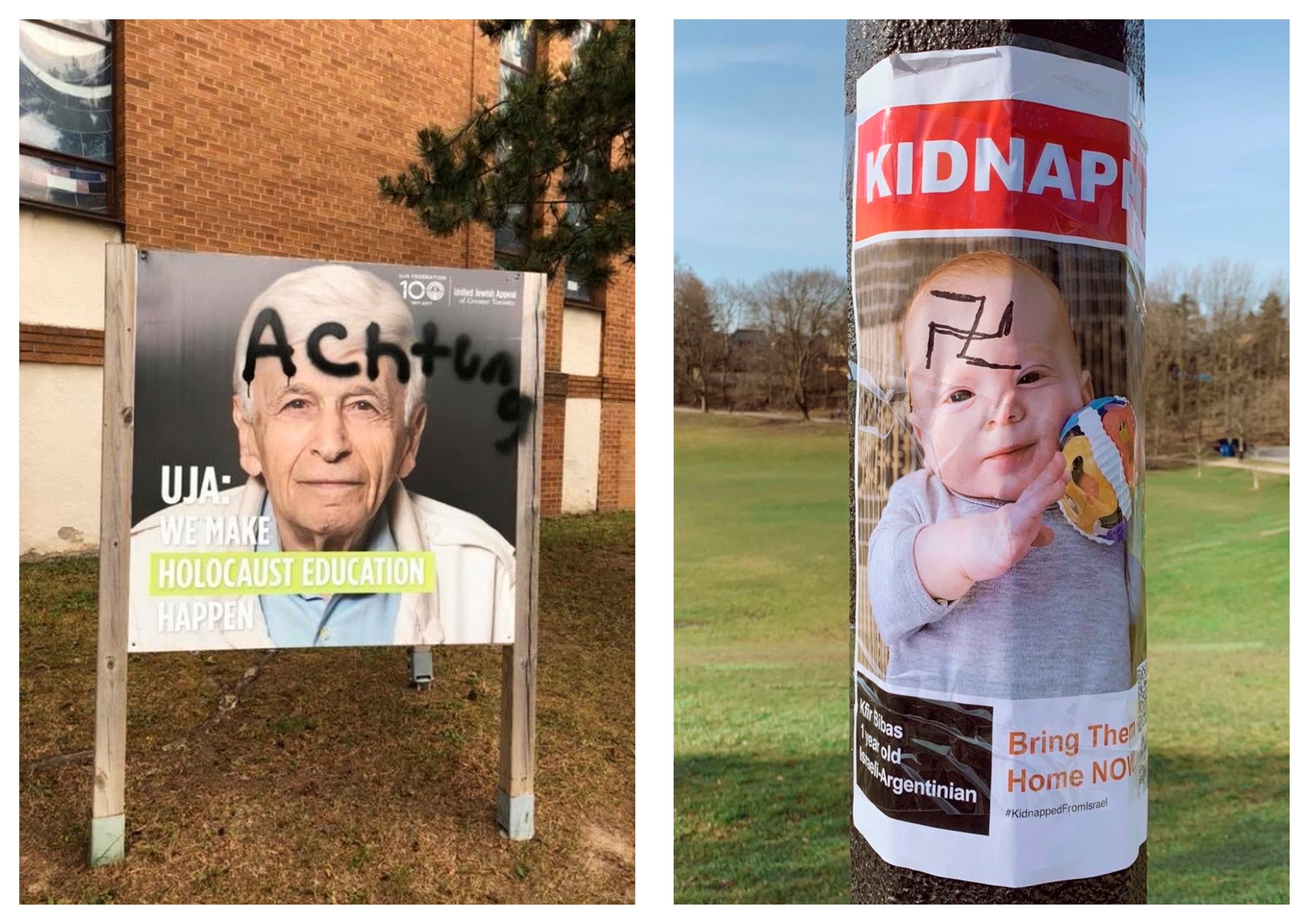
The image whose meaning changed most for me after October 7 was a photograph taken in 2018 of a defaced UJA billboard featuring a Holocaust survivor. October 7 did not change the photograph itself, it changed the context in which I chose to present it. The spread that image appears in brings together two photographs I did not take. What interested me was how placing them together changed the way both images were understood.
The 2018 image shows a UJA billboard featuring a Holocaust survivor who devoted much of his life to Holocaust education. The billboard had been defaced with the word "Achtung." Whether the person responsible knew he was a Holocaust survivor or simply recognized the billboard as representing Jewish life through its location outside a synagogue or the UJA logo, the vandalism and choice of word were directed at a visible expression of Jewish identity. I read the image as a document of a contemporary act of antisemitism.
The image facing it is obviously post-October 7 and shows a kidnapped poster of Kfir Bibas, who was taken hostage that day at nine months old and later murdered. The baby's image is defaced with a swastika drawn across his forehead.
The acts of vandalism are separated by six years. By placing these images together, they become part of the same ongoing conversation. One targets Holocaust remembrance and Jewish communal identity, the other targets a Jewish infant who became one of the most recognizable symbols of October 7. Both reveal how antisemitism continues to find new expressions while drawing on the same hatred.
The emotional impact of the spread comes not only from the acts of vandalism, but from who these two people are. One is an elderly man who dedicated the later years of his life to Holocaust education and remembrance. The other is an infant taken hostage whose life had barely begun. Together they span an entire lifetime. That contrast magnifies the emotional weight of both images without either needing to explain the other.
By placing the 2018 photograph alongside the image of Kfir Bibas, it is no longer understood as documenting a single act of vandalism. Instead, it is understood within a broader historical continuum. For me, this spread reflects one of the central ideas of the book: meaning does not reside in a single image but is created through the relationships that images establish with one another.
Sequencing: With 98 photographs across 140 pages, and so many different types of material, how did you figure out the order and flow of the book?
The sequencing was the most challenging part of making the book. I began by grouping the photographs around recurring themes of identity, belonging, community, memory, resilience, and the ways antisemitism shapes contemporary Jewish life. As the sequencing developed, interview excerpts, archival photographs, newspaper articles, and social media fragments were gradually introduced where they deepened those ideas. From there, it became a continual process of editing and refining the work.
As material was added, removed, or repositioned, the relationships between the different elements changed. My process was not necessarily about choosing the strongest individual photographs; it was about choosing the photographs that contributed most to the larger ideas unfolding across the book.
Working closely with designer Caleb Cain Marcus, we spent months refining the sequencing because even small changes often affected an entire section of the book. The physical construction of the book also shaped that process. With four different paper stocks and eight-page signatures, moving a single photograph or interview excerpt was not always as simple as moving one page. Every change had to work conceptually, visually, and physically.
I also spent a great deal of time thinking about rhythm and pacing throughout the sequencing. There are moments where the book becomes quieter and allows the photographs to breathe, and others where multiple voices or different forms of documentary material come together before returning to quieter moments. That breathing became an important part of how the book moves. Often, the final lines of an interview excerpt create a connection to the photograph on the same spread. Not necessarily in a literal way, and not as a caption, but as a way of bringing the reader closer to the underlying theme being explored.
I wanted that rhythm to slow the reader down, create space for reflection, and encourage them to revisit earlier pages in their minds rather than move quickly from one idea to the next. With every sequencing decision, I kept asking myself how I could keep the questions unfolding rather than answering them. I hoped readers would make their own connections, allowing meaning to emerge through the experience of moving through the book rather than through any single photograph, interview excerpt, or piece of source material.
What kinds of photographs did you reject because they felt too explanatory, too illustrative, or too easily readable?
It is interesting because it was the transition from film to photobook that led me to remove certain images. In the film, as the spoken voice unfolds over real time, the photographs have to carry the viewer visually while they are listening. That temporal space required many more photographs.
In the photobook, the relationship between image, text, and other documentary material works differently. Unlike the film, where images unfold sequentially, multiple pieces of information exist together at the same moment on the page. Readers can move back and forth between them, making connections in ways that simply are not possible in film. And because the reader controls the pace, the written interview excerpts occupy less "time" than spoken audio. That changed what each photograph needed to contribute.
In both the film and the book, the photographs are always in dialogue with interviews and other documentary material. The difference is that in the photobook several of those conversations can happen simultaneously on a single spread. Certain photographs no longer served the book in the way they had served the film, not because they were weaker images, but because the surrounding material was already contributing to the same ideas.
The challenge became deciding how much visual and textual information a spread could hold before the relationships between the different materials became too difficult to absorb. Sometimes removing a photograph gave the remaining materials more room to work together. I was not trying to eliminate repetition because repetition is an important part of how the work builds meaning. Instead, I was asking whether each photograph deepened what was already unfolding across the spread. If it did not, it probably was not needed.
When sequencing, how did you decide when the book needed to become quieter again after a denser documentary section?
Those decisions were not made using a formula. They were largely intuitive, but that intuition came from years of working on the project. As I sequenced the book, I knew the rhythm needed to change when the addition of another densely layered section did not leave enough room for the previous sequence to breathe.
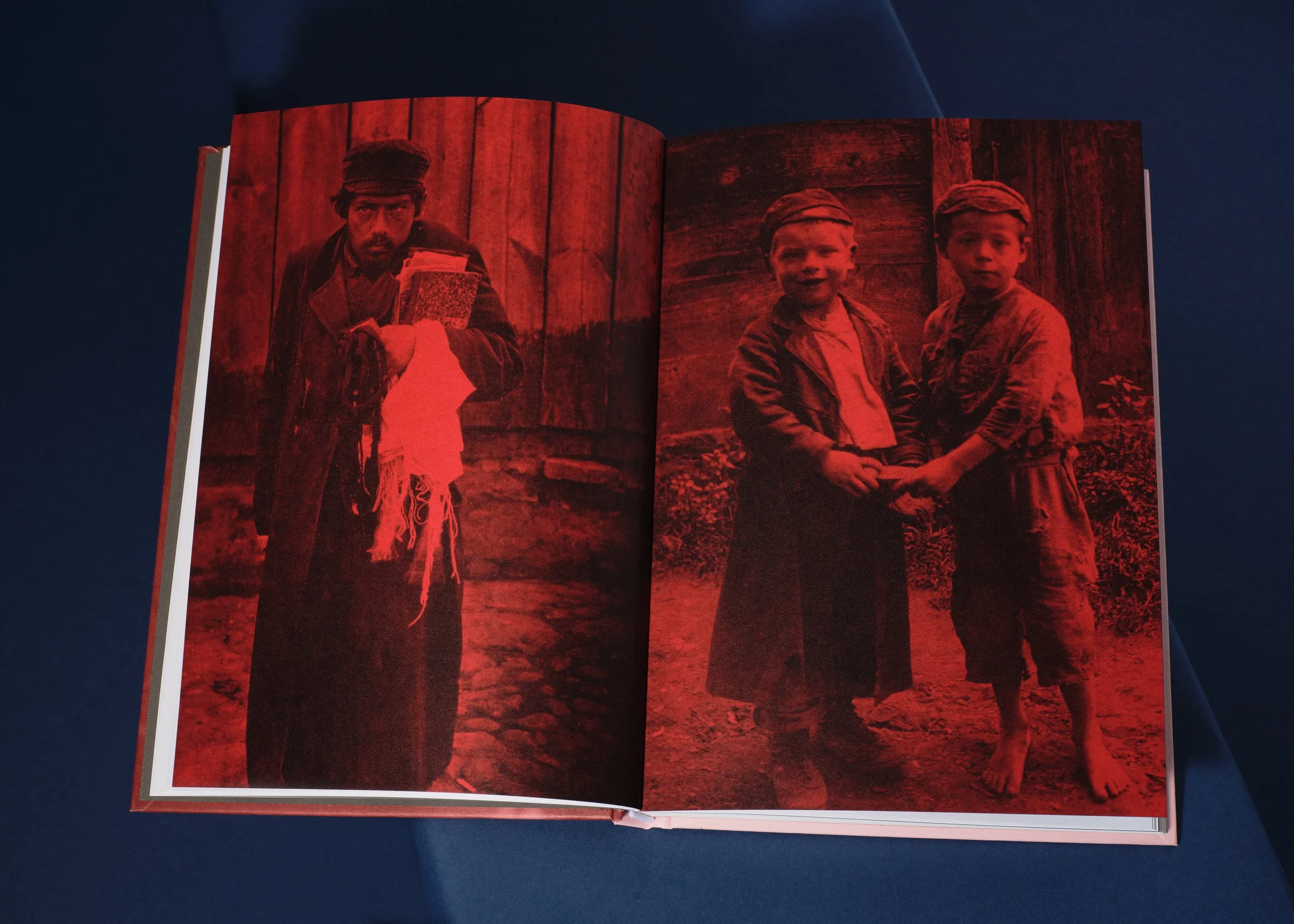
The quieter sections were not about simplifying the work, but about slowing the reader down and giving them the opportunity to engage more fully with the relationships they had already encountered before introducing another set of connections. That did not necessarily mean using quieter photographs. It was usually accomplished by returning to a single photograph, reducing the number of documentary forms on a spread, allowing more white space, or maintaining a consistent visual language over several pages, such as the full-bleed archival sequence printed on red paper.
Invisible subject: Antisemitism is a presence in this project, but it is not always visible in a single image. How do you photograph something that is often felt rather than seen?
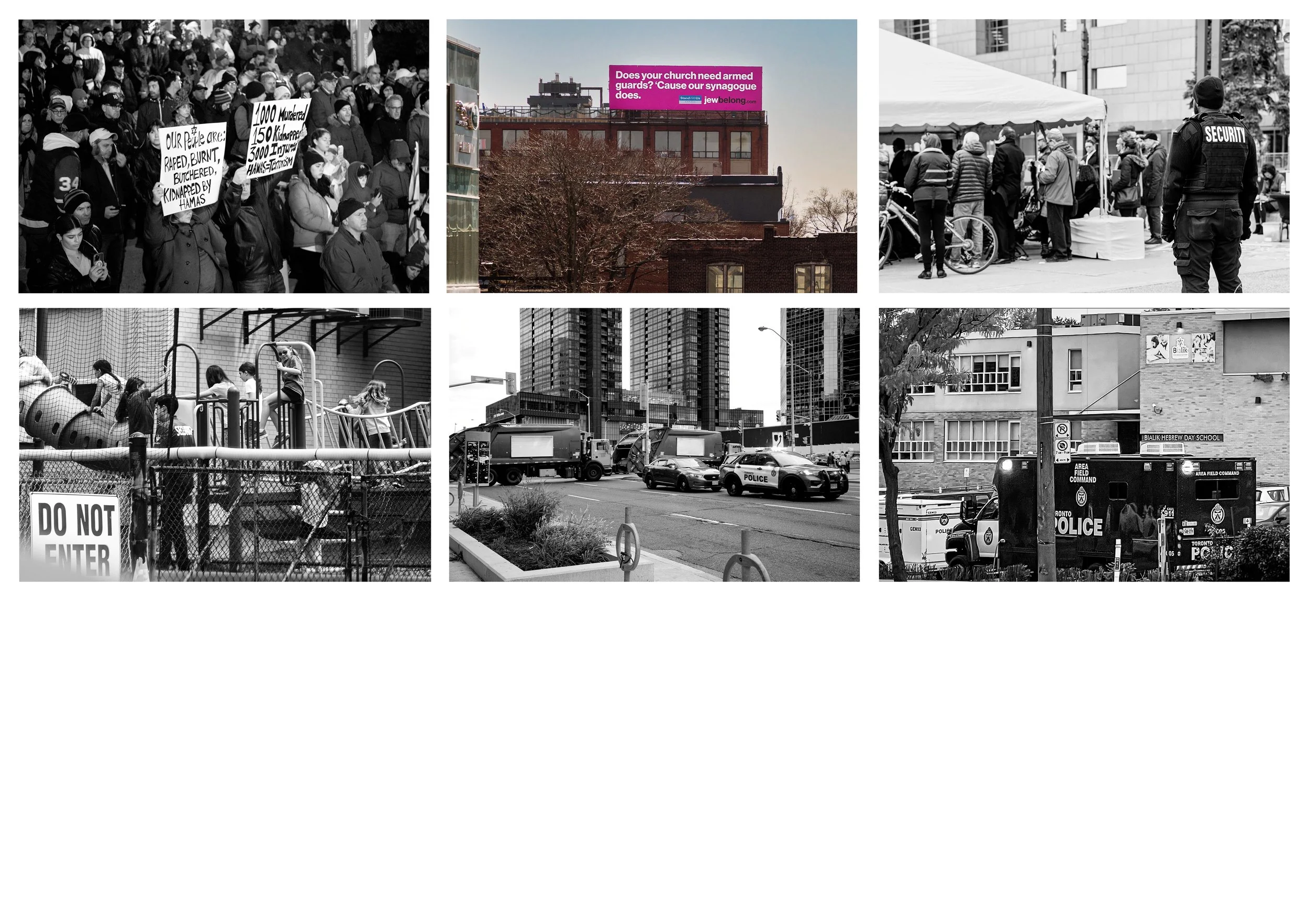
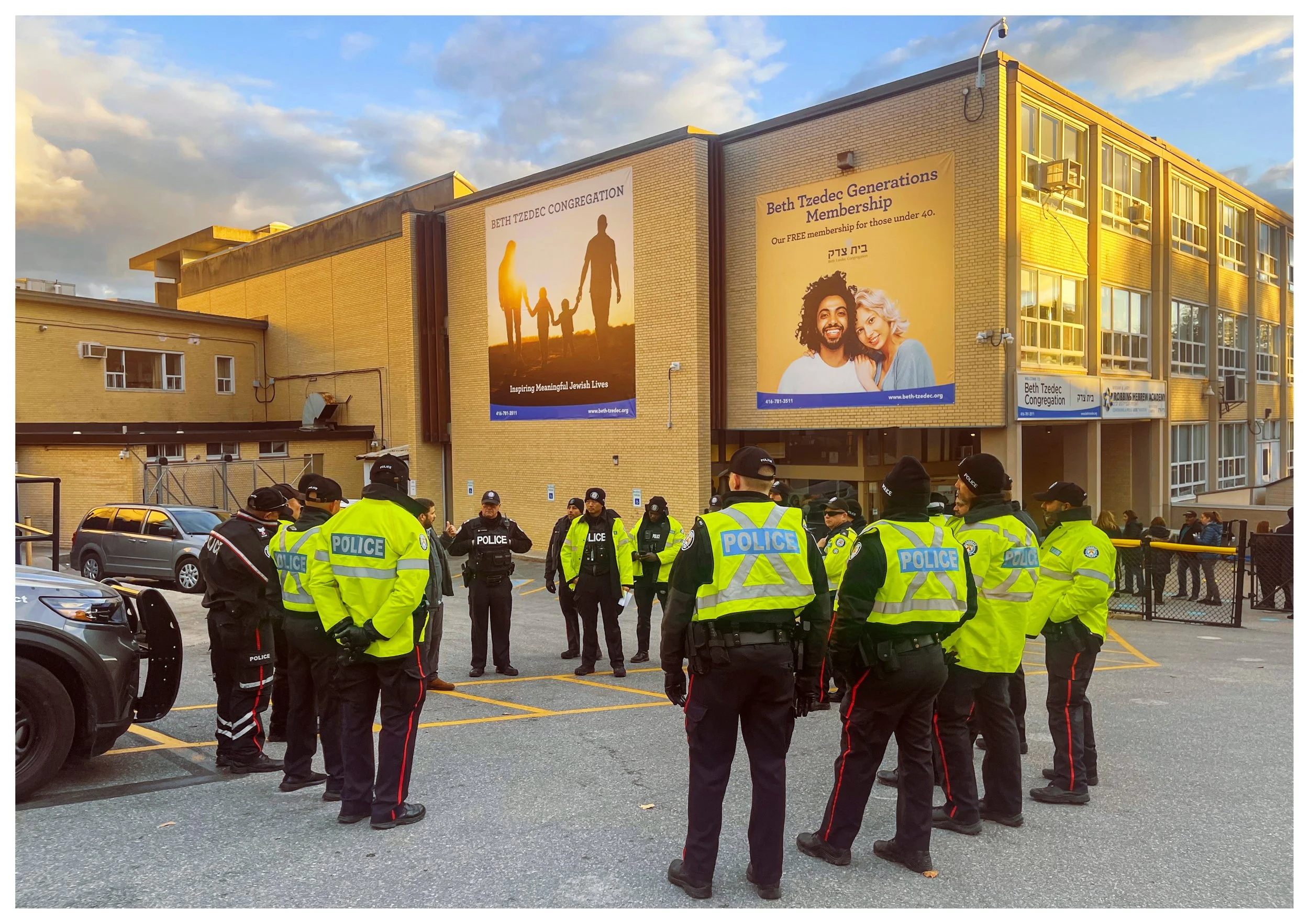
Throughout the project, I kept thinking about how to photograph something that does not have a single visual form. Sometimes it is overt, through acts of violence or the heightened security that has become part of everyday Jewish life. Other times it is experienced more subtly through atmosphere, absence, or the decisions people make about how they express and navigate their Jewish identity. Often I was not photographing the event itself, but the environment in which those experiences were lived. I wanted the work to acknowledge both the explicit and the implied because both are part of the lived experience of many Jews today. No single photograph could fully communicate that experience, which is why the project extends beyond photography alone.
Book as form: This project has existed as an exhibition, a film, and now a photobook. What can the book do for this work that the other formats could not?
Each form of the project allowed me to explore the work in a different way. The exhibition created a shared physical experience, and the film allowed for movement and atmospheric voice that immersed viewers. But the photobook became the most complete expression of the project. It is an experience readers have on their own, at their own pace, and it offers a kind of intimacy that was not possible in the other forms.
A photobook unfolds over both space and time. Readers decide how long to spend with an image, when to turn the page, when to go back to reread an interview excerpt, or revisit an earlier photograph. That felt particularly important because my work is not built around a linear narrative or a single conclusion. The photobook gave the different materials room to remain in conversation with one another in ways that were not possible in the exhibition or the film.
As well, people rarely experience a photobook in a single sitting. They come back to it, notice things they missed the first time, and make different connections each time they return. I think that suits this project. The book is intentionally intimate in scale. It is something readers can easily hold, and although it is physically compact it is materially dense. Its scale invites readers to spend time with the work. The book is not asking readers to arrive at a single conclusion. It is inviting them to continue discovering new relationships within it over time.
When I first began developing this project, I envisioned it as a book. The work evolved through different forms before returning to where it began, and in many ways that feels like it has come full circle.
To discover more about this intriguing body of work and how you can acquire your own copy, you can find and purchase the book here. (Daylight books, Amazon)
More photography books?
We'd love to read your comments below, sharing your thoughts and insights on the artist's work. Looking forward to welcoming you back for our next [book spotlight]. See you then!
Gosbert Gottmann wanted war photographs that resisted easy reading. In Freiheit Freedom Воля, he works with images connected to the war in Ukraine and changes them through abstraction, distortion and deformation. Photography Book Spotlight