Welcome to this edition of [book spotlight]. Today, we uncover the layers of 'Crowds,' by Wolfgang Zurborn (published by Kehrer Verlag). We'd love to read your comments below about these insights and ideas behind the artist's work.
During lockdown, Wolfgang Zurborn went back to his photographs of crowds.
He scanned hundreds of colour negatives from the 1980s and 1990s, made at political, sporting, religious, tourist and entertainment events. Thirty of these pictures were shown in museums at the time, and all of them showed large groups of people. Many others had never been marked on his contact sheets.
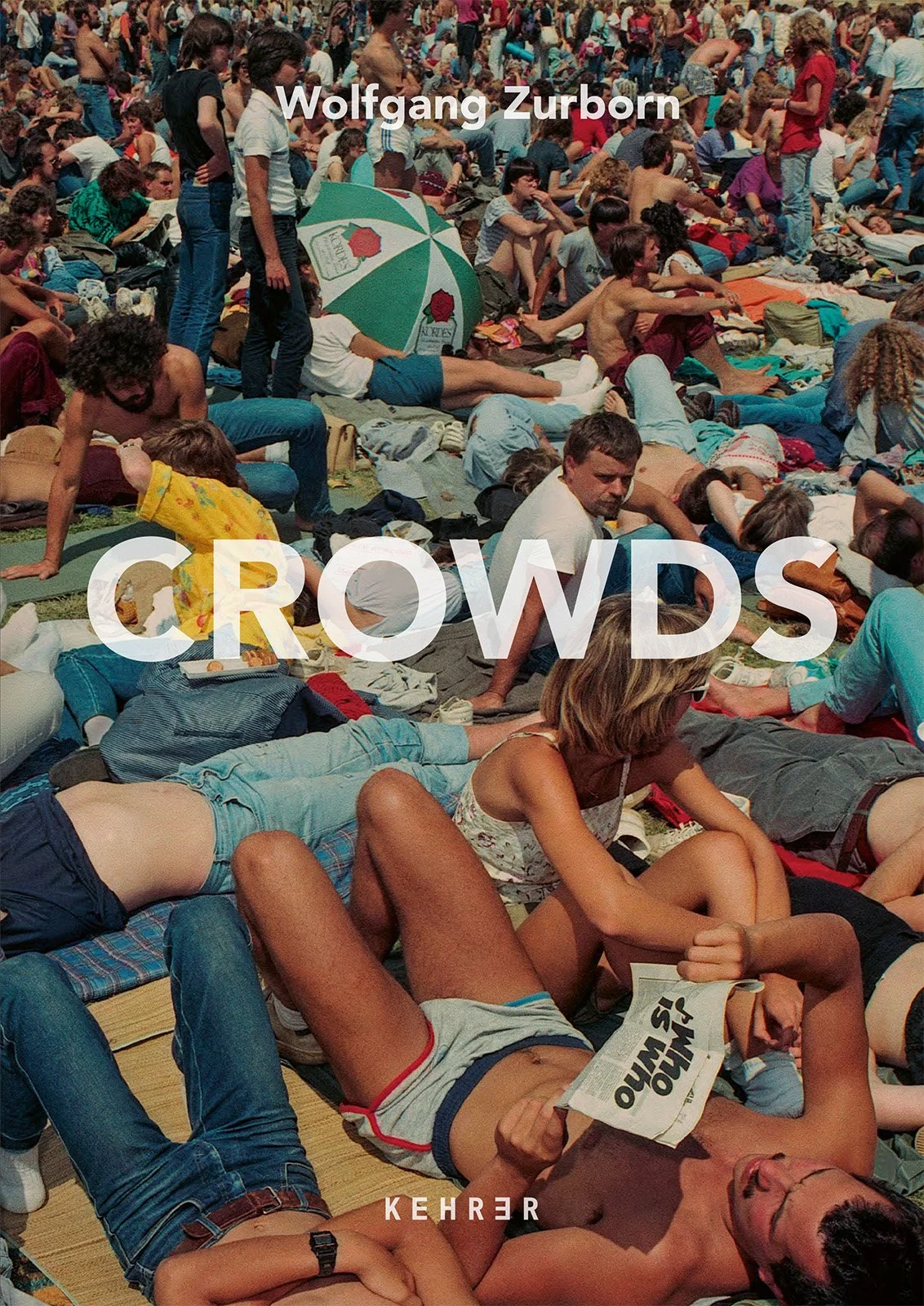
Together they became Crowds, a 272-page book published by Kehrer Verlag.
One of the book's central images almost stayed in the archive.
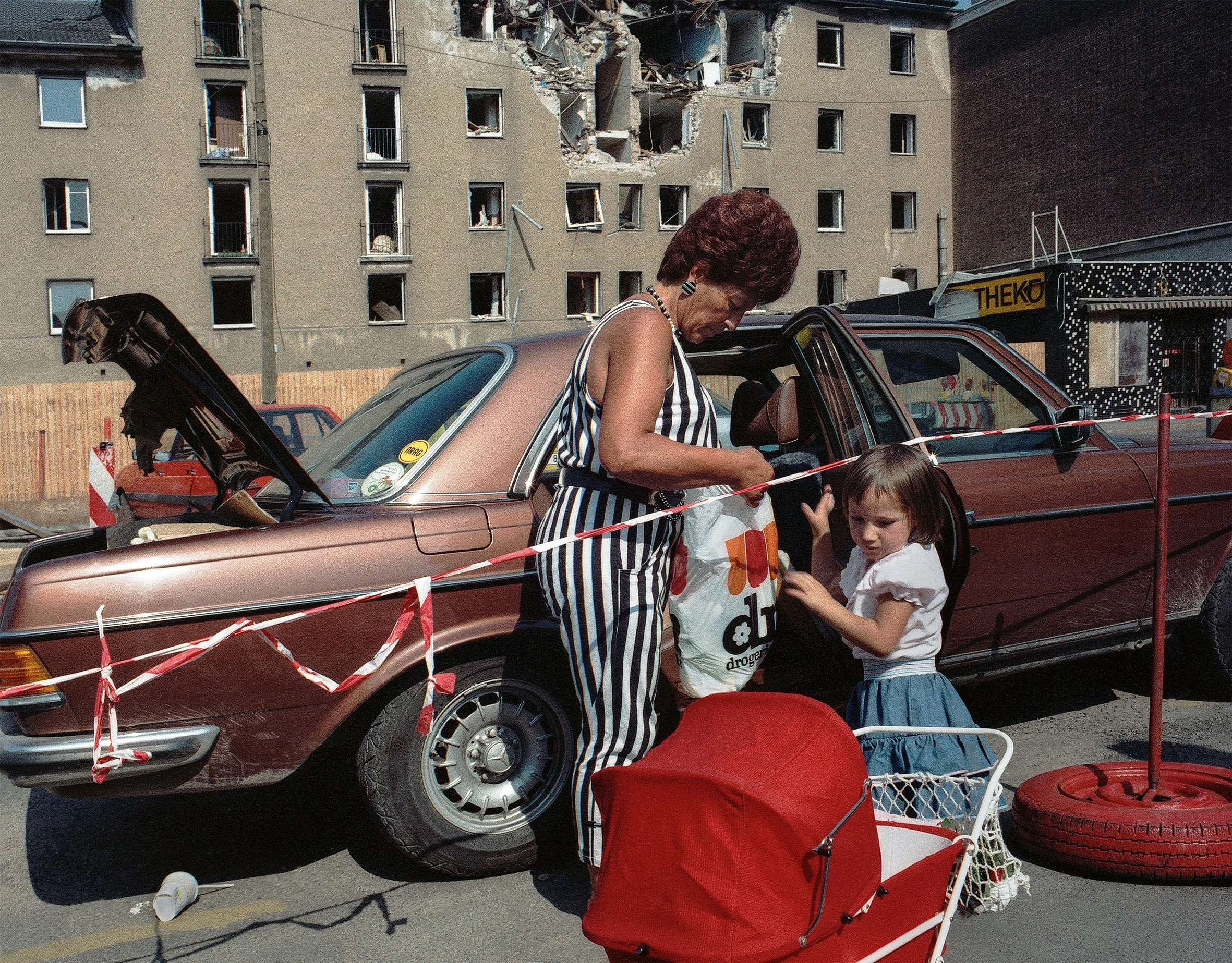
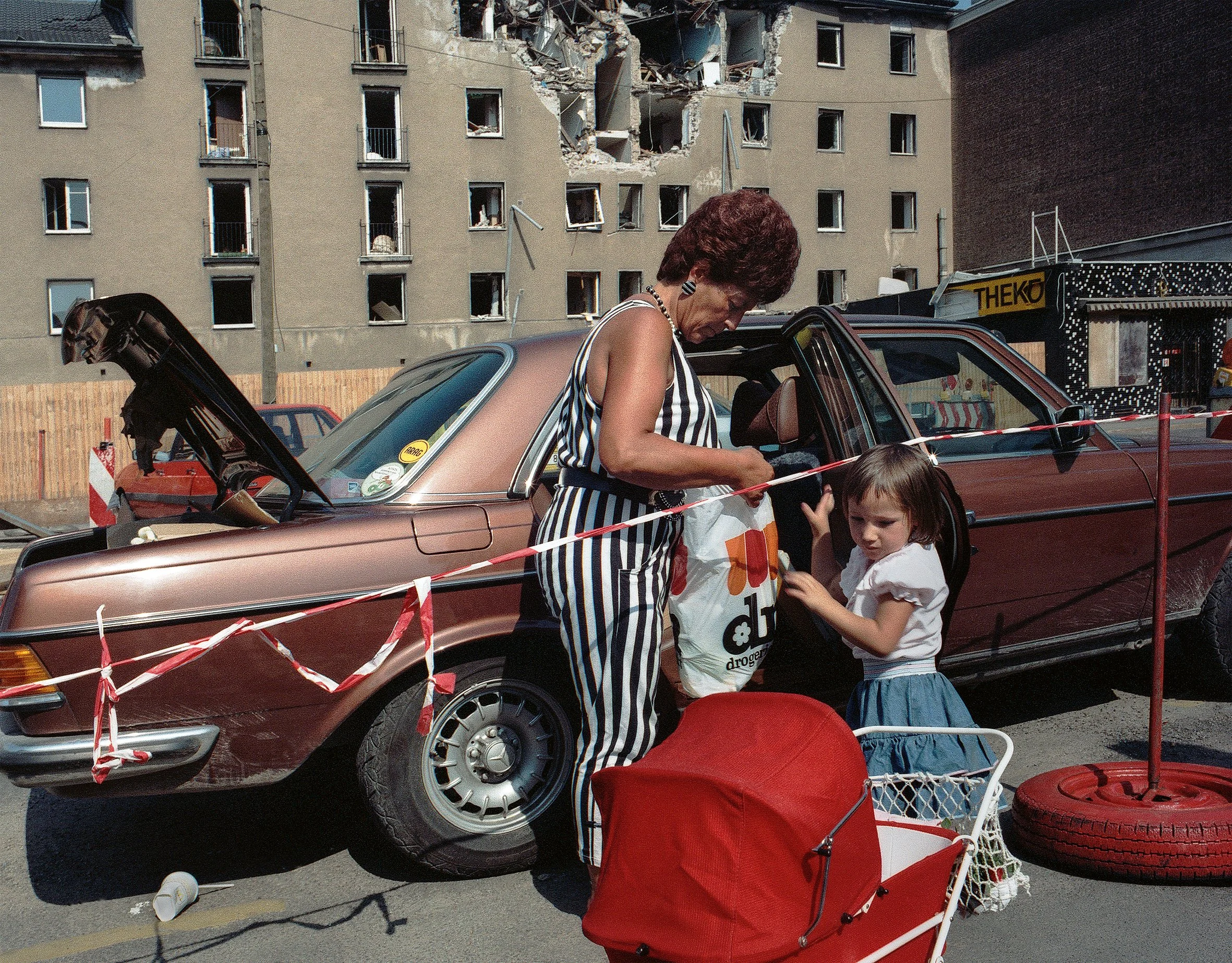
It shows a mother and child at the edge of a flea market in Cologne in 1988, with a ruined house behind them. Zurborn passed over it in the 1980s because it did not fit his plan to photograph crowds at mass events. Decades later, it became the most popular print in his crowdfunding campaign.
The book now mixes such quiet moments with large gatherings, so single people stay visible inside the crowd.
In the interview, Zurborn explains why he follows the photographs rather than the original concept, why political banners kept his demonstration pictures out of the book, and how cutting 50 images from the dummy made it easier to read. For photographers with a large archive, it is a practical way to look again at pictures they once rejected.
The Book
Crowds
Kehrer Verlag · 2026 · 272 pages · Interview by Alasdair Foster
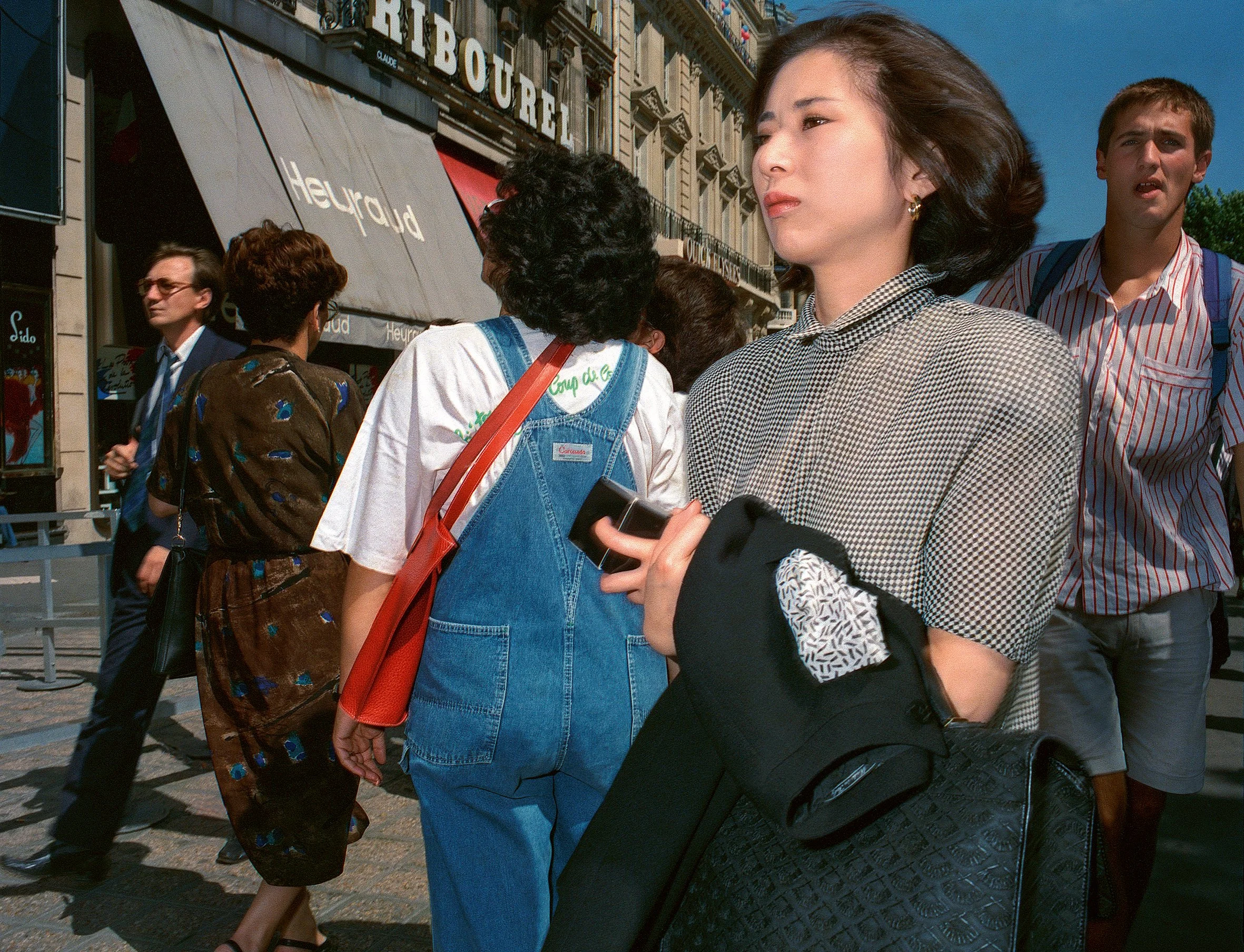
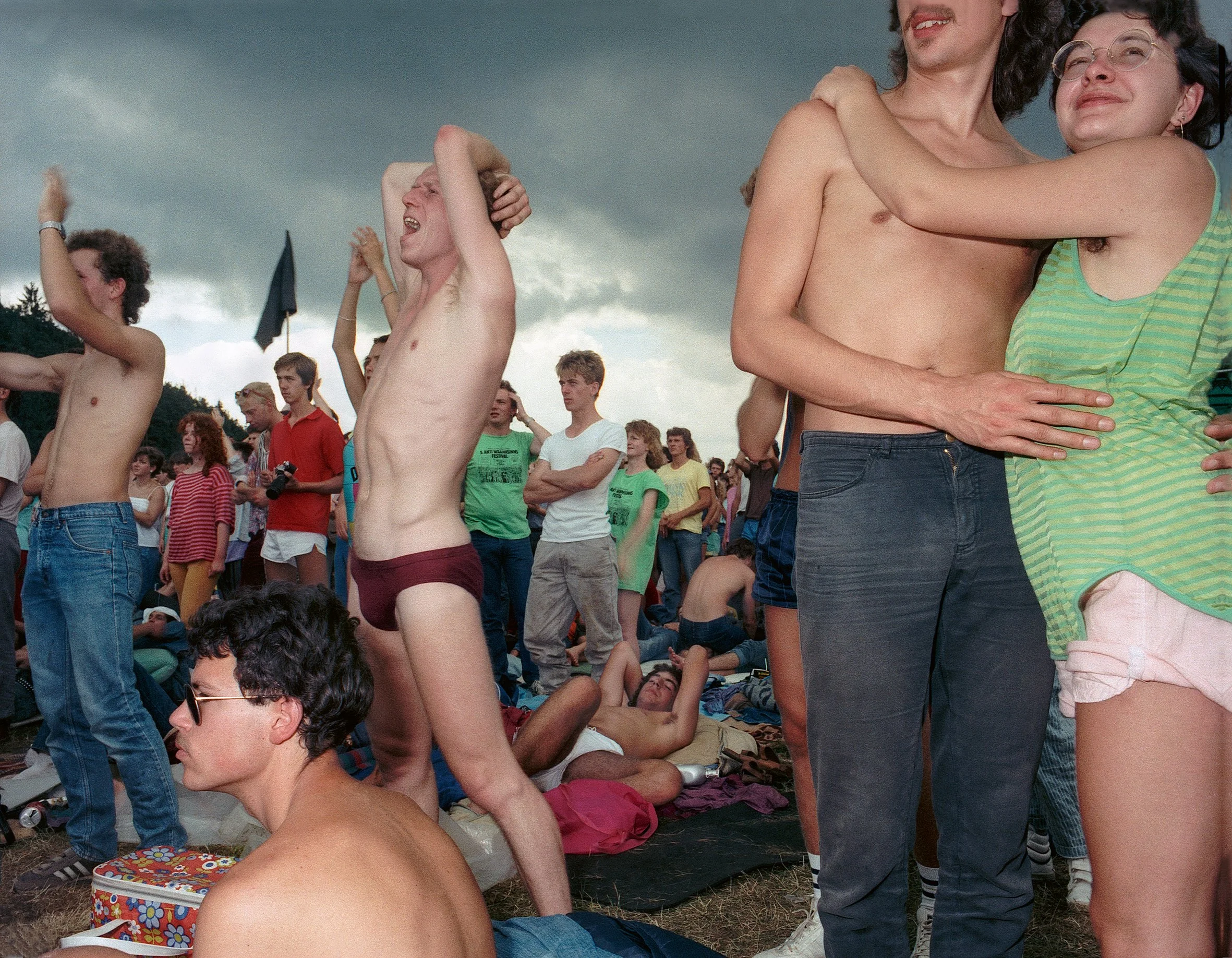
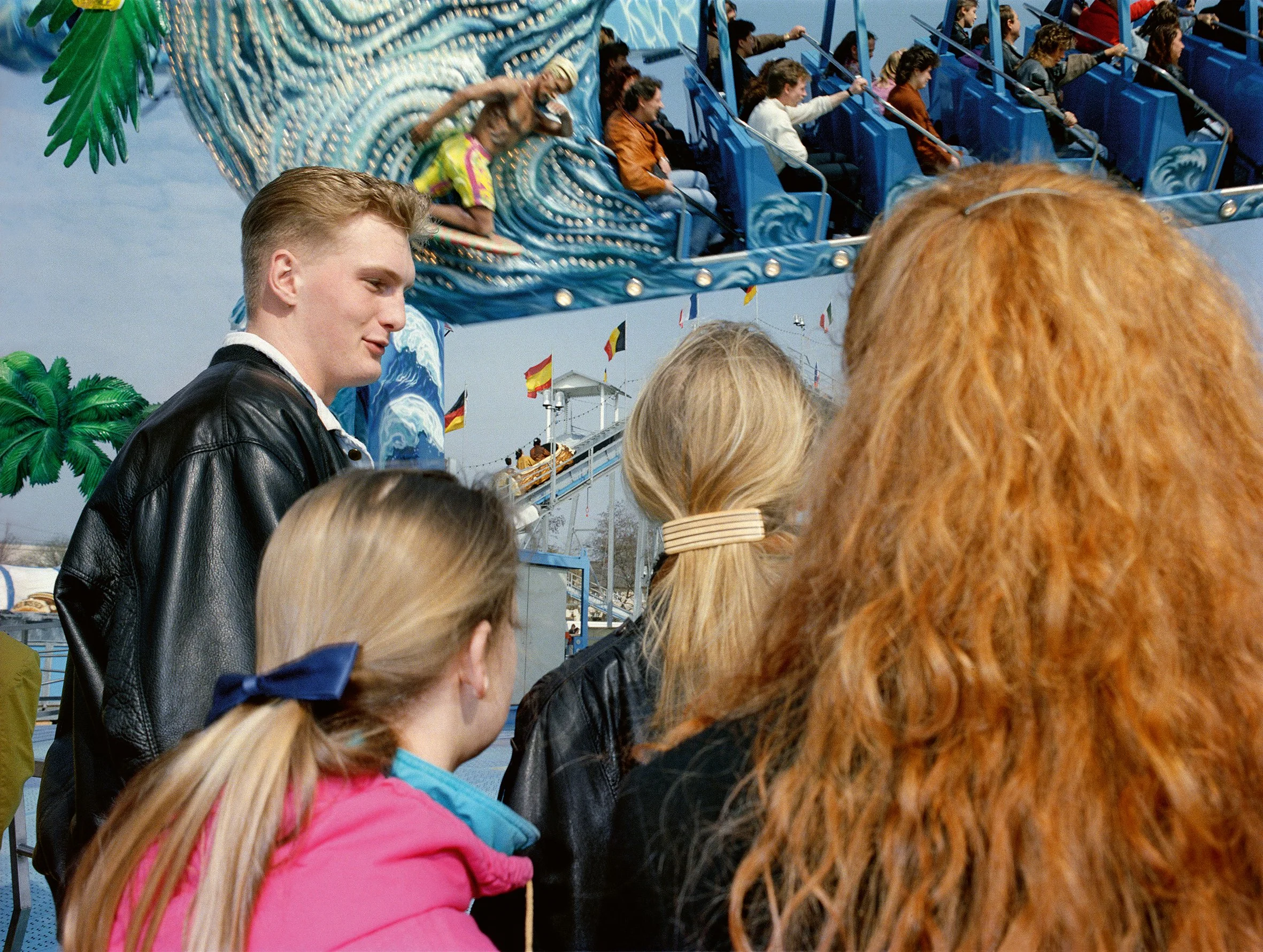
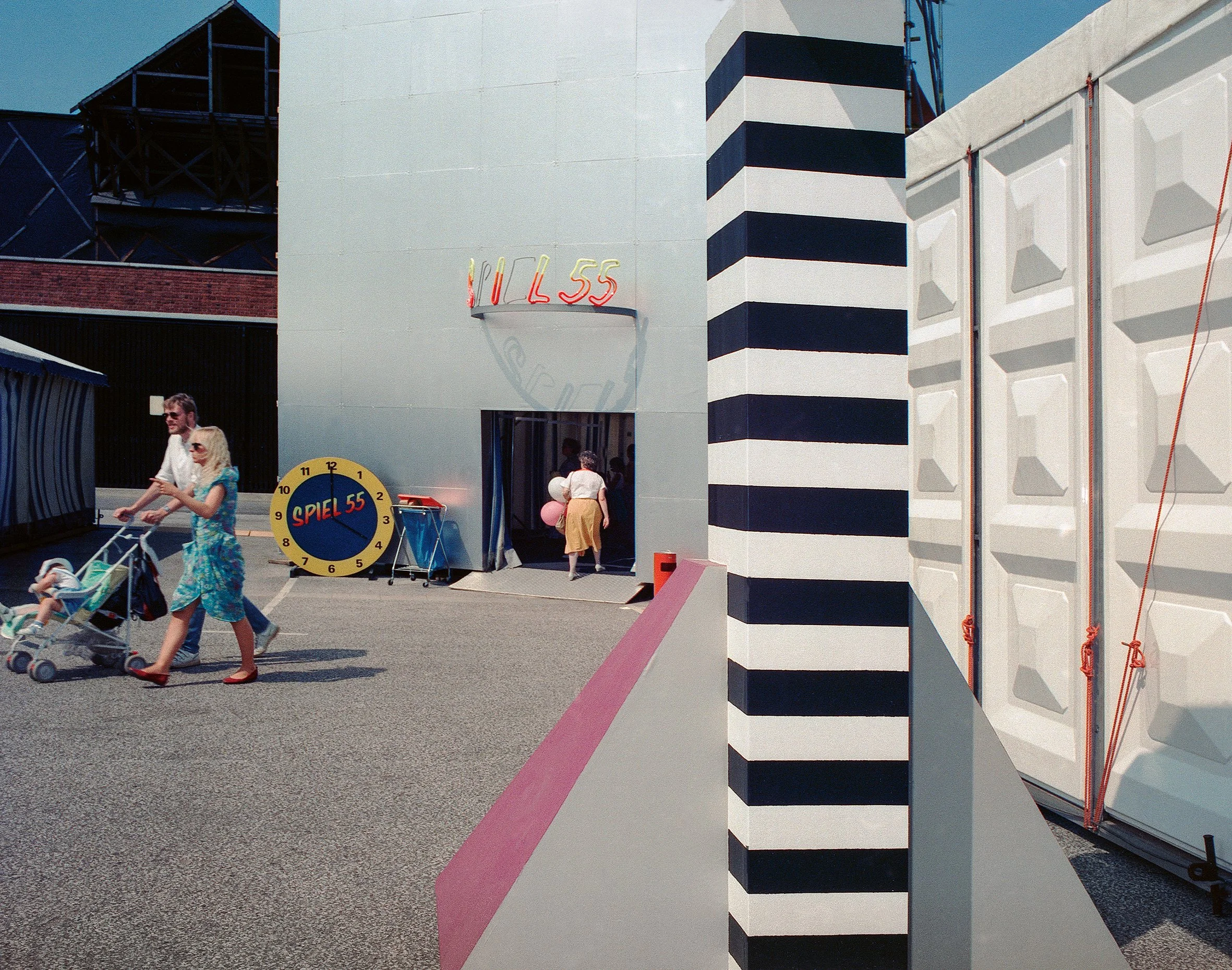
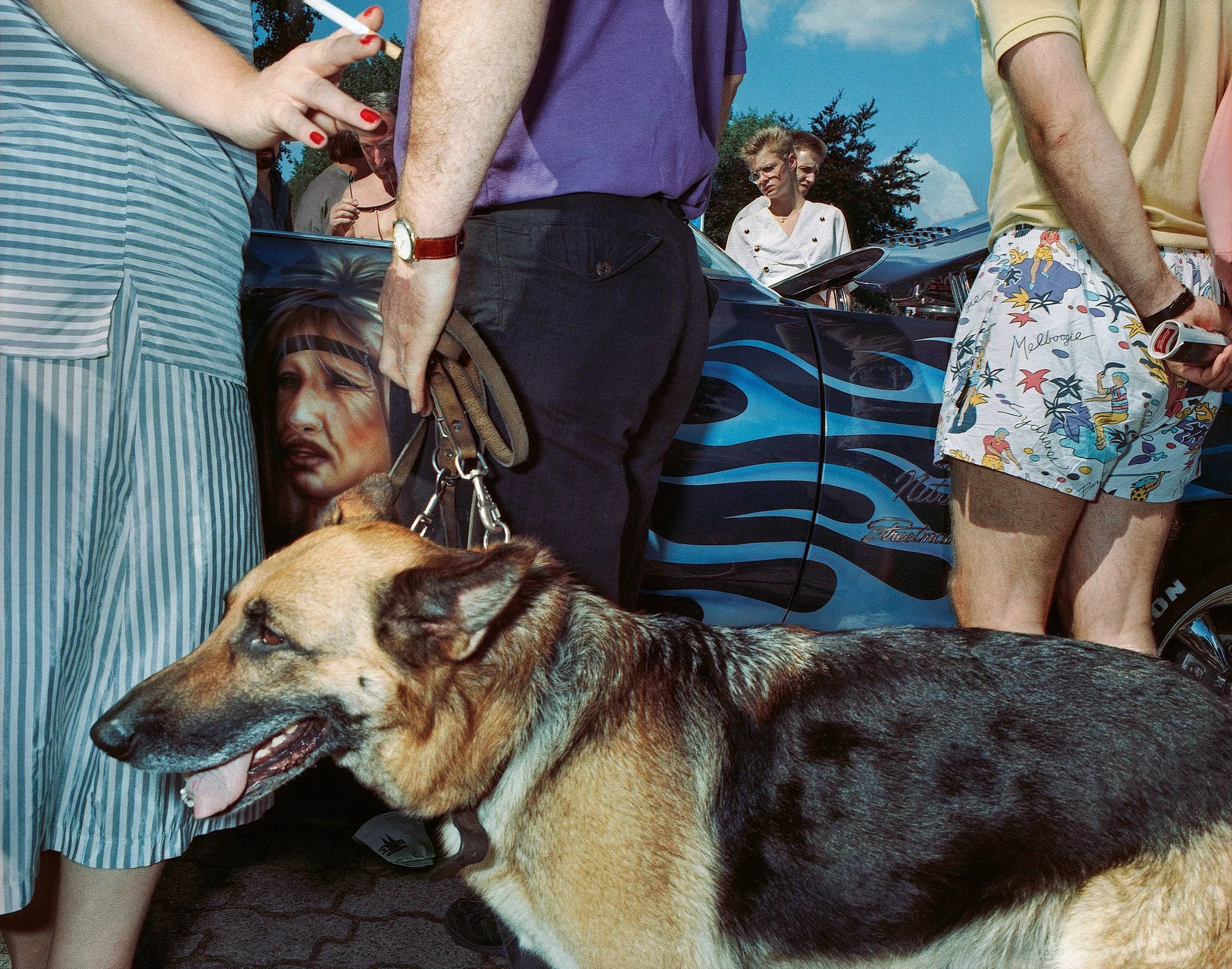
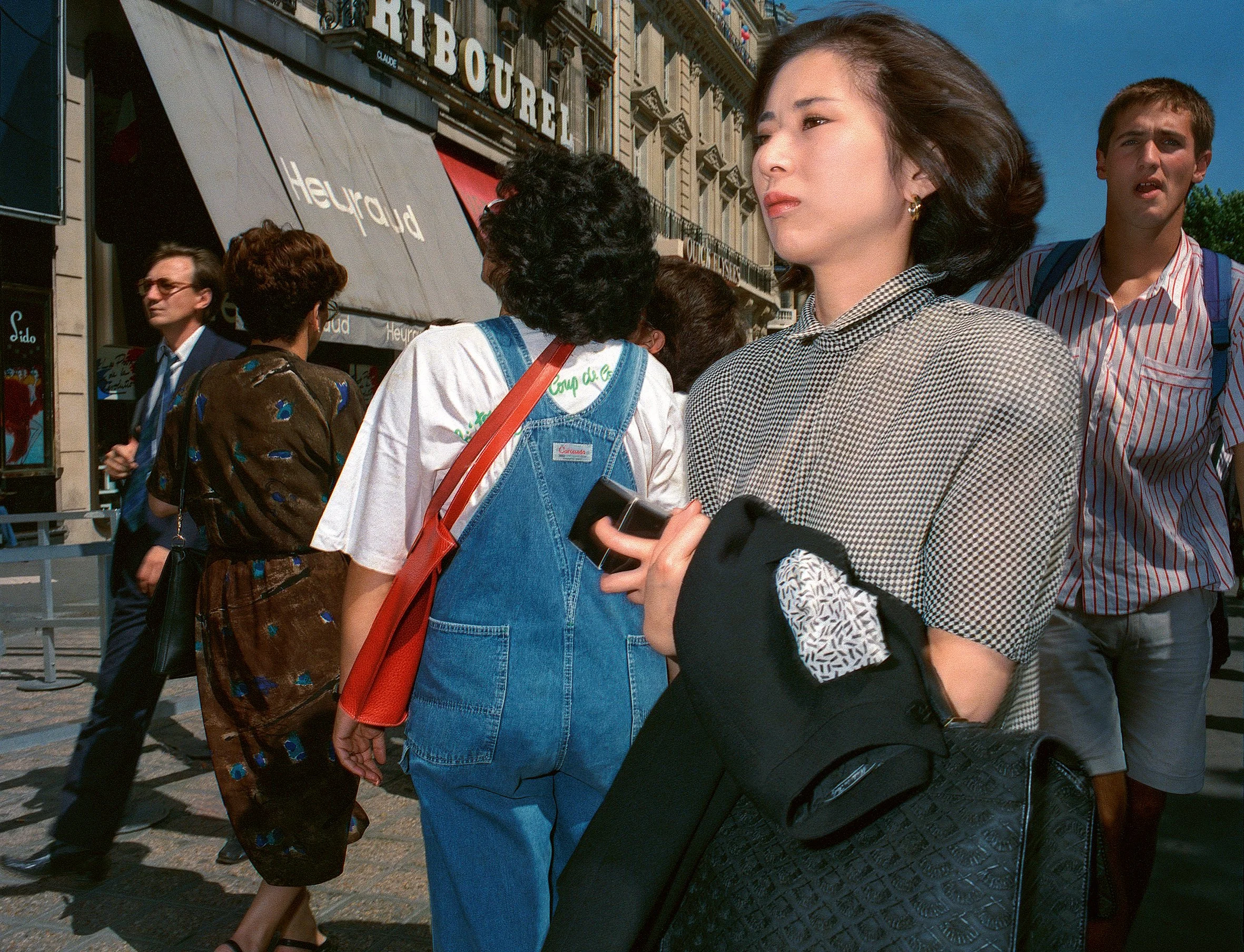
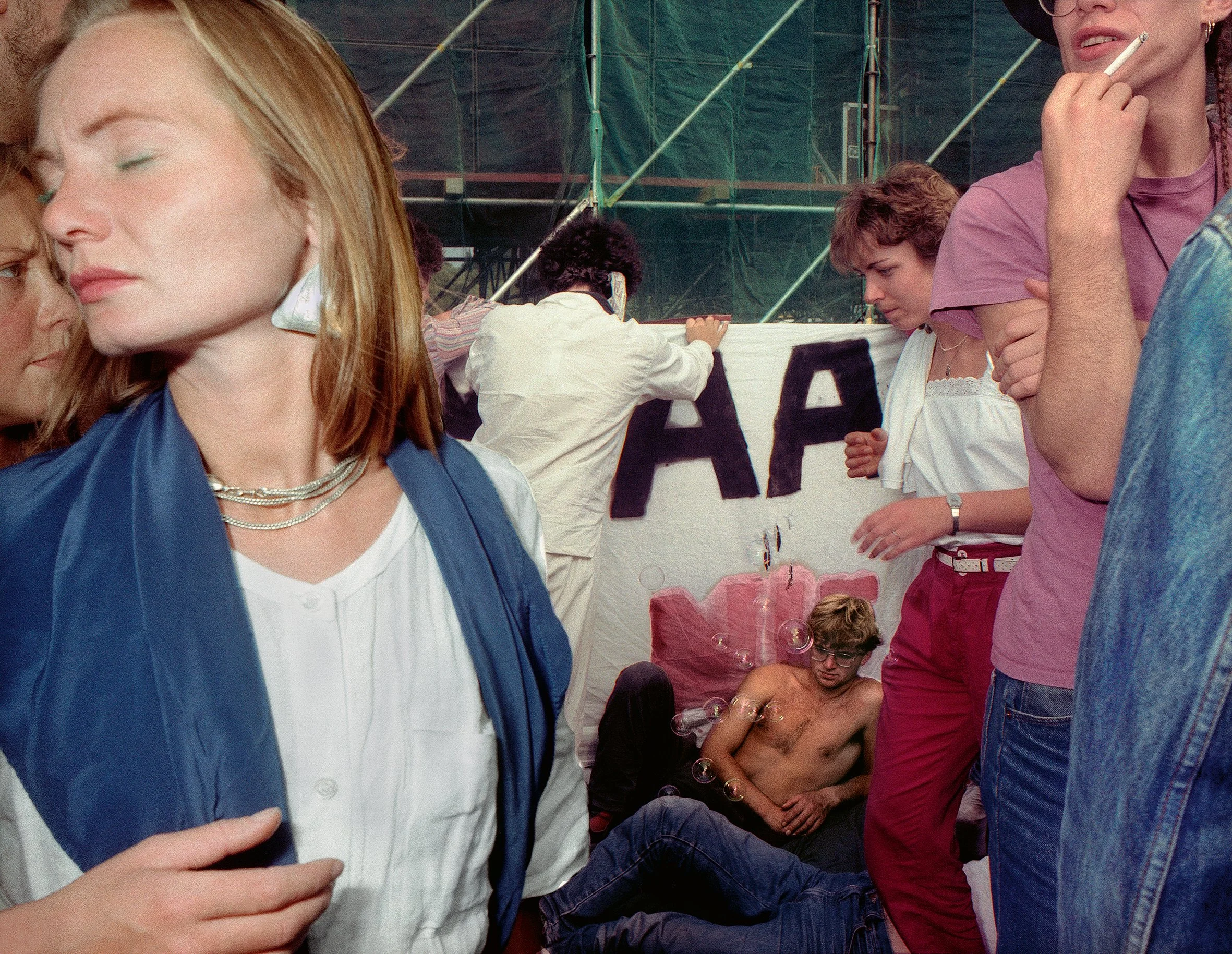
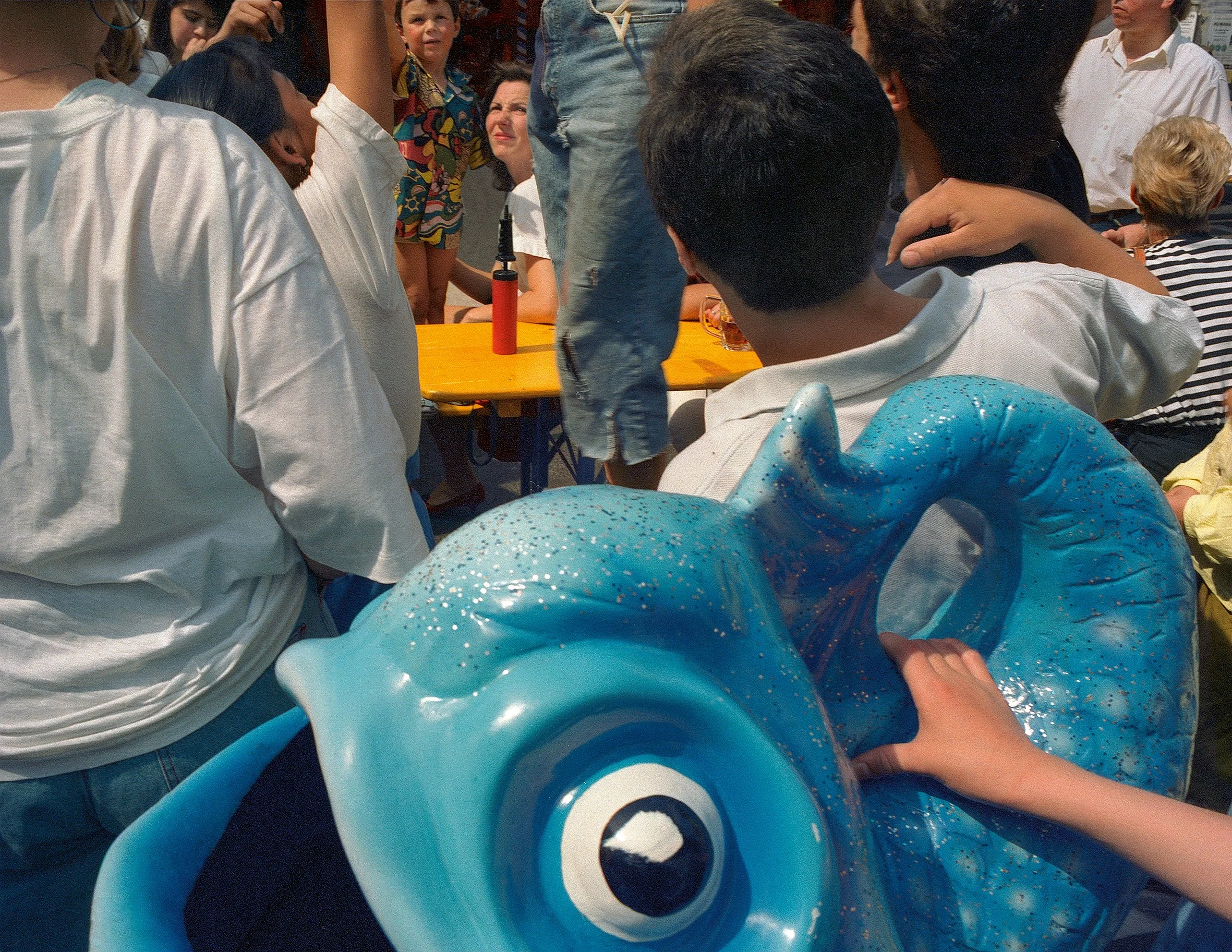
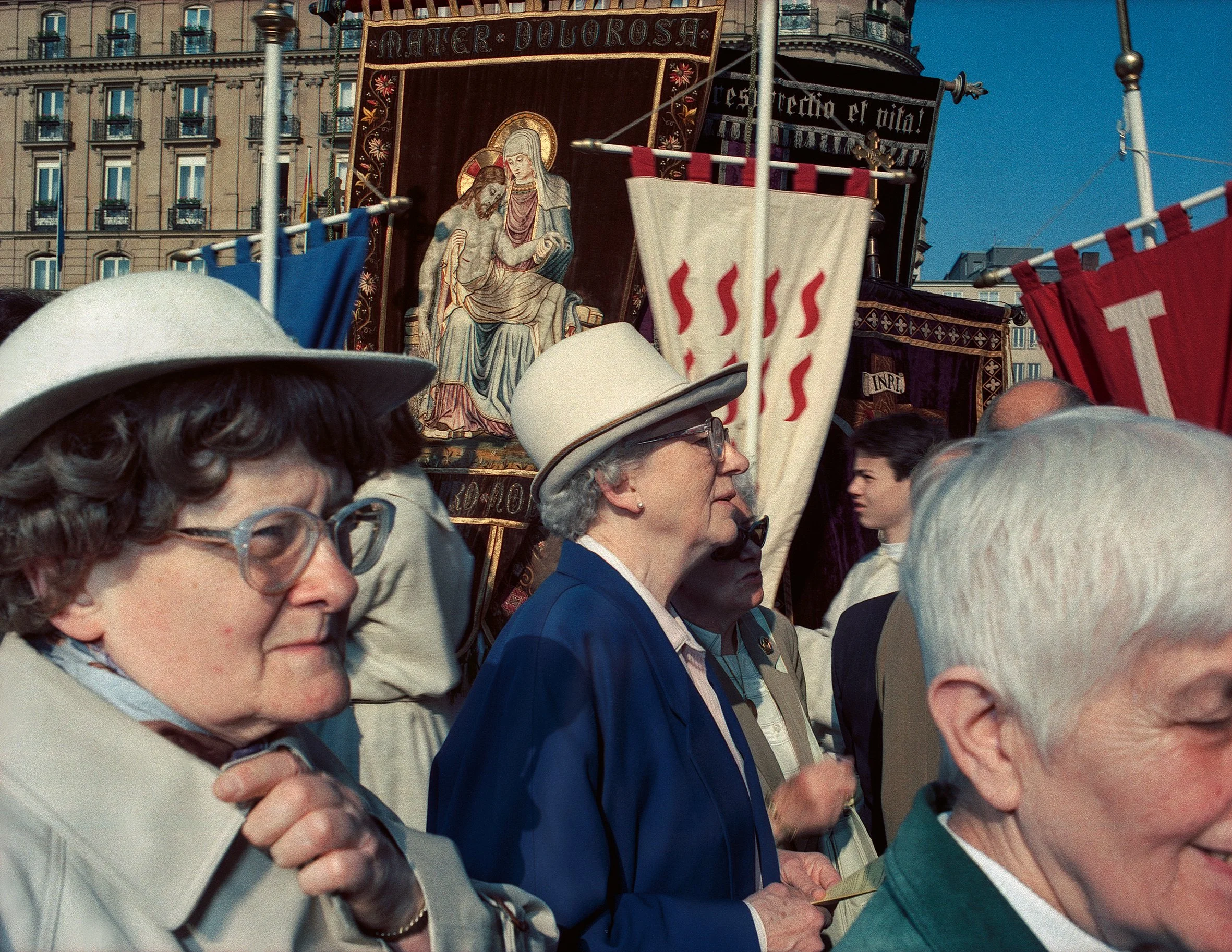
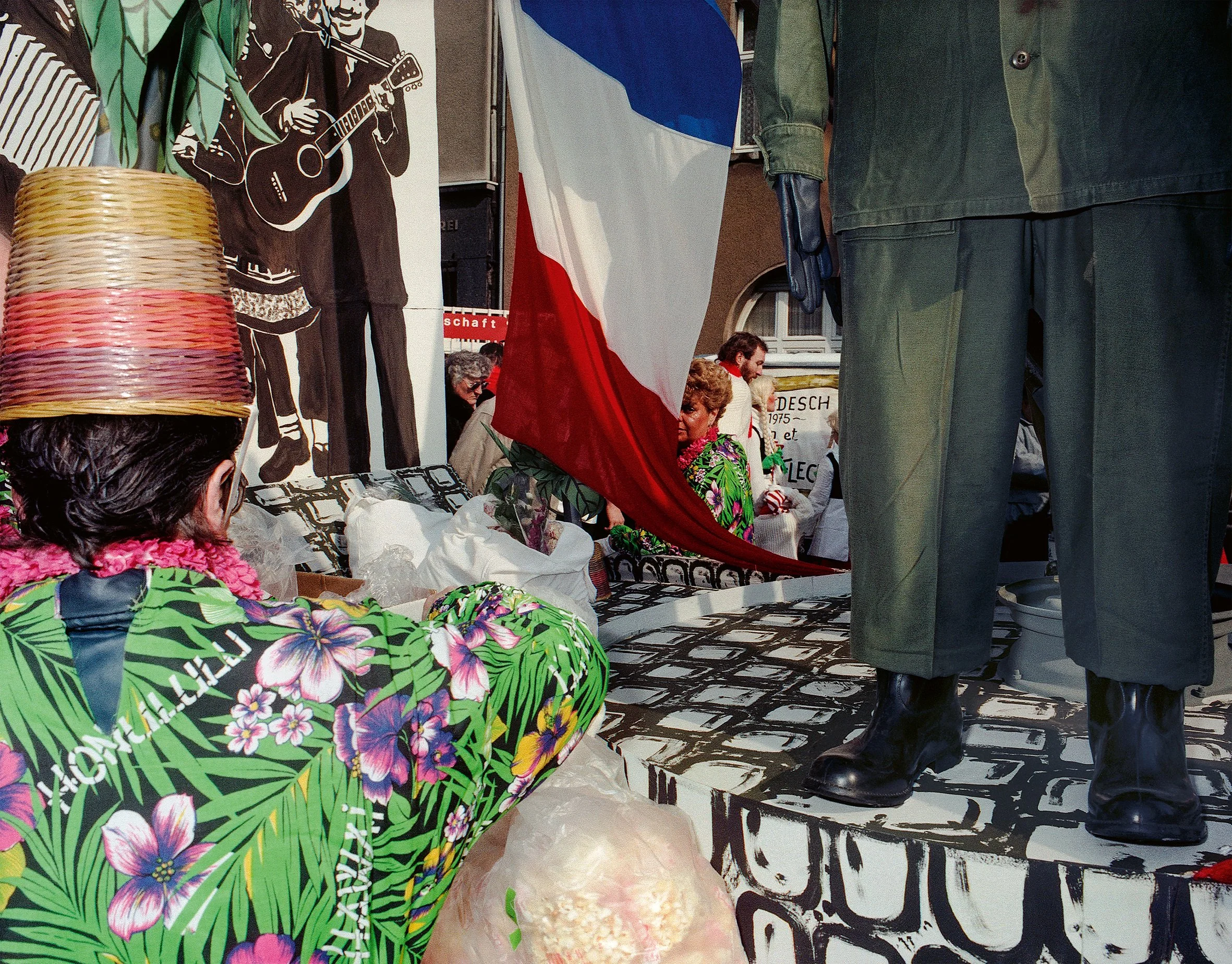
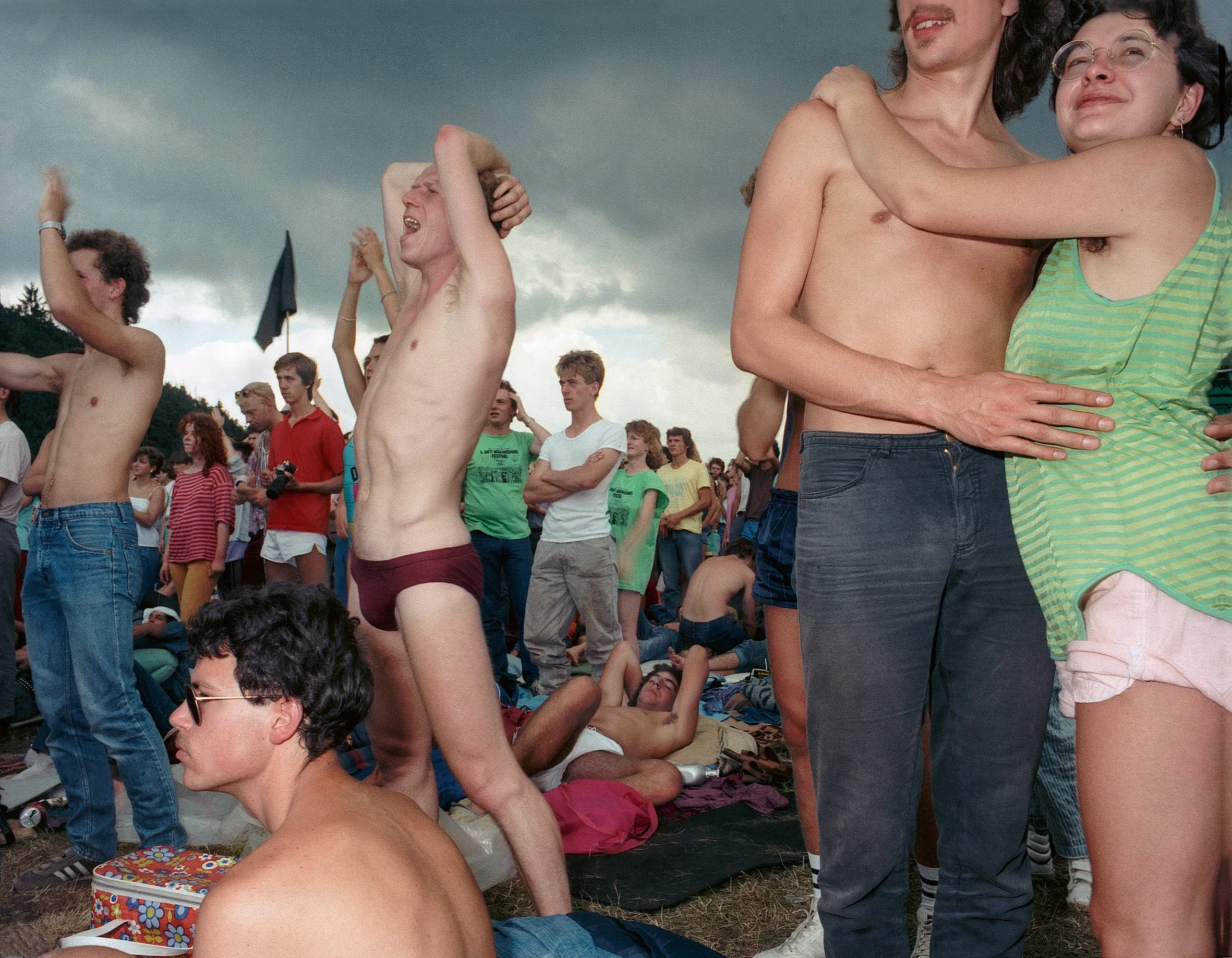
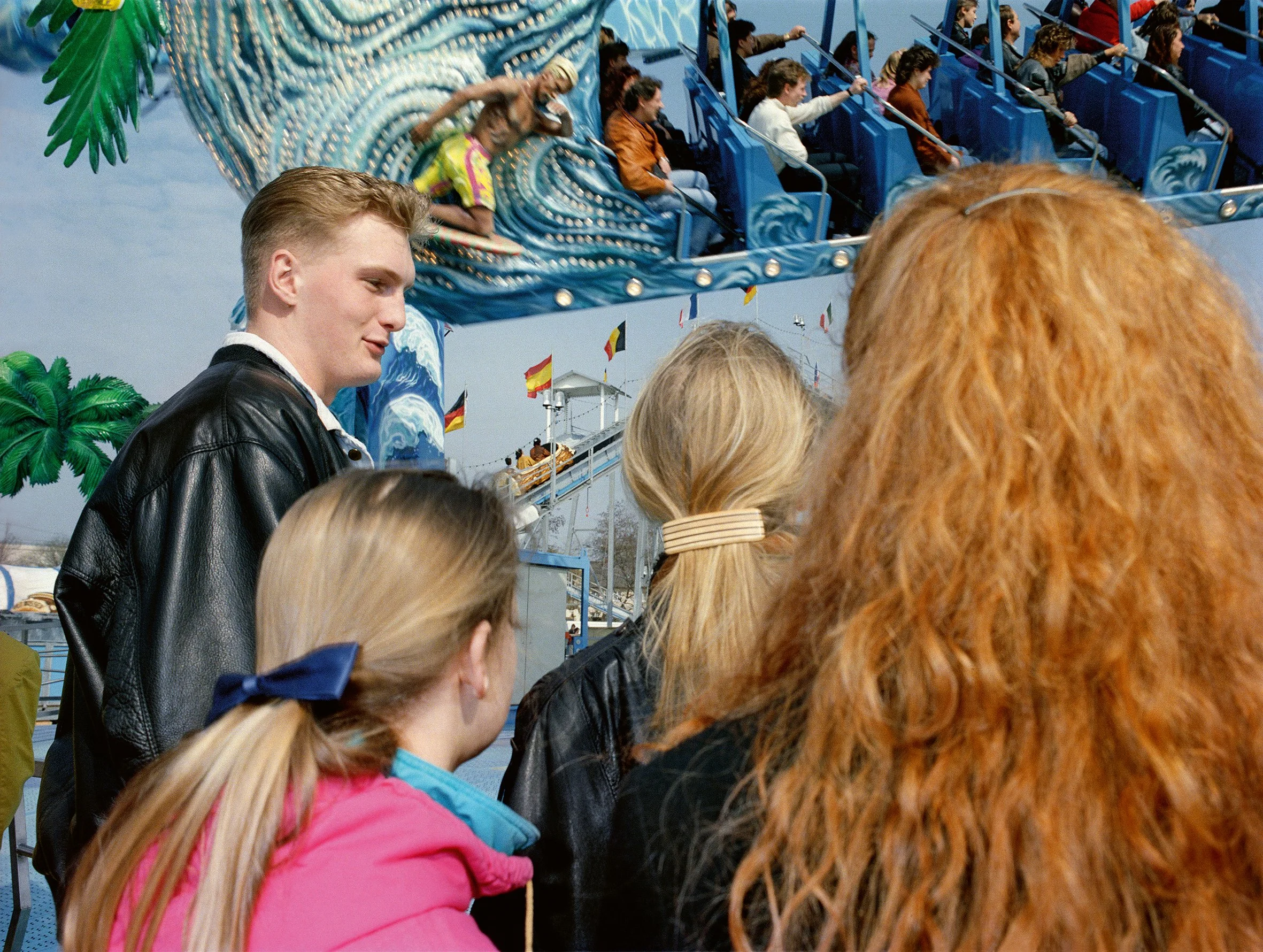
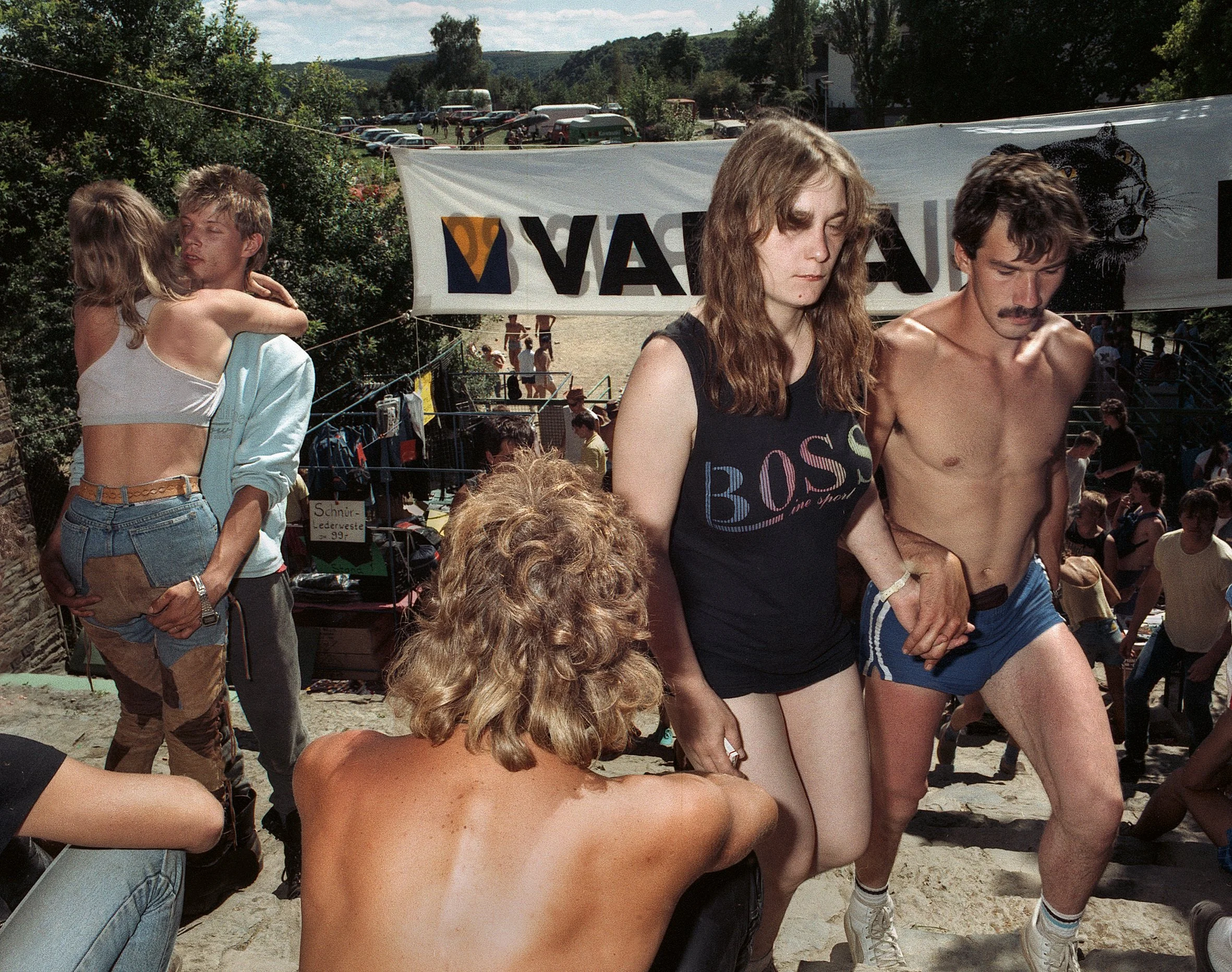
Crowds brings together colour photographs Wolfgang Zurborn made in public spaces from the 1980s onwards. Working in the tradition of colour street photography, he often photographed in bright sunlight with a flash lighting the foreground, so people close to the camera and details far behind them appear with similar clarity. The pictures are full of information, and the eye moves between faces, gestures, signs and advertising.
The softcover with an open spine contains 131 colour photographs. Zurborn designed it with Kehrer Design. The book includes an interview with the curator Alasdair Foster, in English and German.
Archive Discovery: You scanned hundreds of negatives from the 1980s and 90s during the pandemic lockdown. Was there one contact sheet, negative, or pairing of two images that first made you think this could be a book, rather than just old work?
The lockdown during the coronavirus pandemic allowed me to go deep into my archive of photographs from the 1980s and 1990s. In doing so, I became more and more aware of how massively this collective standstill had disrupted social life across the world. With every photograph I rediscovered in my folders of negatives, it became clear that I was not simply offering a nostalgic look back. I was creating a complex portrait of a society in transition, and it needed to be published as a comprehensive book. As a sign of life from an isolated world, I regularly posted images on Instagram at the time, and many friends and colleagues told me these pictures had to reach a wider audience through a publication.
Thirty works from the series had already been exhibited in museums back then, and without exception they showed large gatherings of people. The book now also includes many photographs in which individual people or couples can be seen within mass events. For me, this rhythmic combination of different perspectives creates a far more complex narrative than a series of identical perspectives, which was a dominant strategy in Germany in the 1980s and 1990s.
So Crowds is also a statement in favour of a view of the world that is not frozen in conceptual rigidity, but gives expression to the vitality of public life.
Before the Frame: Could you choose one photograph from Crowds and walk me through the moment before you took it. What did you notice first in the crowd, where did you stand, and what did you decide to leave out of the frame?
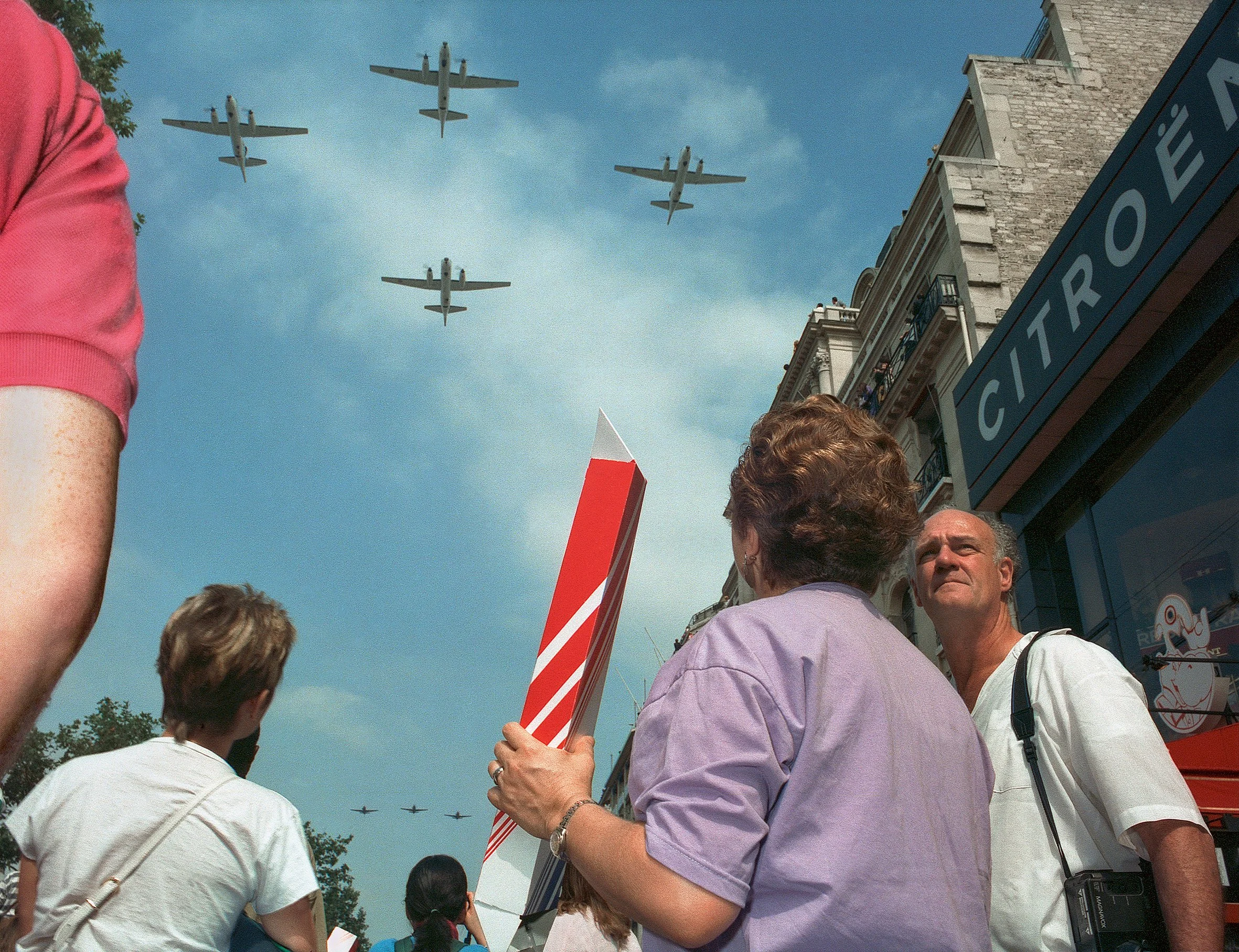
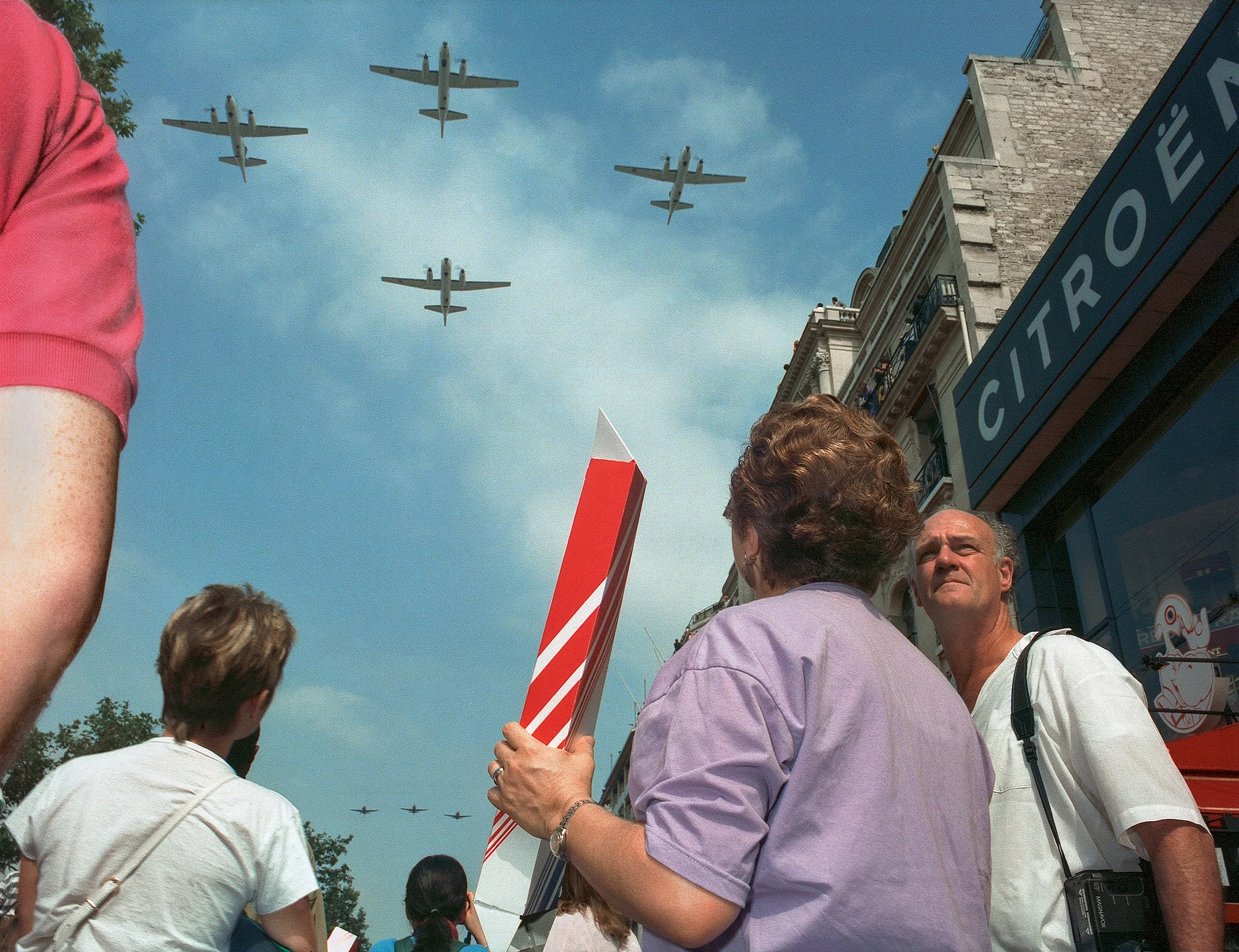
The photograph was taken on the Champs-Élysées in Paris during the celebrations of the 200th anniversary of the French Revolution in 1989. It was almost impossible to move through the huge crowd. What really stood out was a sea of periscopes, which visitors used to get a better view. Because of its symbolic meaning, this object was bound to play a central role in my photographs of the event. I wanted to show people’s reactions to an air show staged for the anniversary. To do this, I chose a low angle, so the scene could come alive in a dense composition. A key part of the image is the man on the right. He seems uninvolved and looks in the opposite direction to everyone else, which reveals his face.
None of the photographs in Crowds focus on individuals in isolation, nor on an anonymous crowd. They focus on individuals within a crowd. Here the crowd is reduced to the bare minimum. Rear views and details of bodies create visual energy, without a detailed description of the scene taking away from the tension between the individual, the crowd and the event.
The One That Got Away: Was there a crowd you found visually interesting that never became a photograph, no matter how you tried to frame it? What made it resist you?
I have often photographed political demonstrations as well, but none of those pictures made it into the book, even though I cared about the issues. A key problem for me is text within an image. As soon as a political message appears on placards or banners, it dominates so strongly that people’s gestures, facial expressions and body language fade into the background. The people became mere carriers of a message and could no longer be seen as individual personalities. The aim of all my photography is a multi-layered view of the contemporary world, seen from many perspectives, that resists any clear judgement. At ideologically charged events, whose very purpose is to promote pointed statements in public space, this is difficult to achieve.
Knowing When to Stop: With an archive this size, there is always one more roll of negatives to scan. How did you know you had enough for Crowds? Did a later batch of scans ever change the project, or did it only add more of the same?
Editing a book project like this is a fascinating process. The lockdown made it possible for me to go through my entire archive of mass events from the 1980s in one go and to scan selected negatives. Alongside the key images, which I made with an Otto Steinert scholarship from the DGPh (German Society of Photography) and showed in a solo exhibition at Museum Folkwang in 1987, I found many more photographs that I hadn’t even marked on the contact sheet at the time. In the end, I had several hundred images I considered suitable for publication.
It was important to me that the sequencing should not be dictated by a rigid concept. The images themselves should guide the editing. My motto is: ‘Listen to the photographs.’ I don’t follow a linear logic of place and time. Instead, I create a rhythmic flow of images in which scenes from very different social contexts interact, so that the complexity of the contemporary world becomes tangible. During a long selection process, I removed photographs that did not follow this flow, because they were either too easy to figure out or too complicated in their detail. When people leaf through the book, I want them to be surprised again and again, so I avoided images that were too similar. A balance of events, from religious, cultural and sporting to political and entertainment, also played a part. An earlier version of the dummy contained 50 more images. It was hard to let them go, but it certainly benefited the book.
Listening to the Photographs: When the photographs begin suggesting a direction that conflicts with the concept you started with, how do you decide whether the pictures are revealing a better project, or whether you are simply losing focus?
My photographs are a direct expression of my dialogue with the world around me. The concepts behind my projects define the playing field in which I work as an artist. ‘Listen to the photographs’ is my guiding principle when I put images together in a book or on a wall, so I follow the images even when they contradict the original concept. In the many photobook workshops I have led with Markus Schaden (The PhotoBookMuseum) at the Lichtblick School, we found that the concepts written for book proposals very rarely showed the specific quality of the images. Usually they were rather counterproductive. For me, the key is to understand your own visual language, which, beyond rational logic, can also give insight into the subconscious.
A Photograph That Changed: Can you name one photograph in Crowds that you overlooked or dismissed when you first developed it, but that became important decades later? What made you see it differently the second time?
This photograph, taken at the edge of a flea market in Cologne in 1988 with a ruined house in the background, is probably one of the central images in Crowds. It was also the most popular limited-edition print in my crowdfunding campaign. Surprisingly, it was not on my shortlist in the 1980s. There are probably two reasons for this.
The series was made with a grant from the DGPh, and in my concept I had set out to photograph crowds at mass events. Shortly after finishing my photography degree, I still felt the pressure to follow these themes closely, so the photograph of the mother and her child didn’t fit. Over the years, it has become clearer to me that my best work comes from a fruitful interplay of intuition and concept. While going through my archive, I found many photographs that did not literally illustrate my project text, but which, through immediate, instinctive perception, express the emotional states of the people in them.
The second reason is technical. All the photographs were taken in bright sunlight, with a flash lighting the foreground. Because of this, the images on the contact sheet often hid their true quality at first. Digital image editing helped a lot to bring that quality out, without changing the content of the images.
How Tightly to Define a Project: You said your original concept for the series nearly kept you from recognizing the mother and child photograph, because it did not literally fit the idea of crowds at mass events. Has that experience changed how tightly you define a project before you start photographing now?
Over the years, I have learnt more and more to work with open-ended concepts and to trust the intuitive act of photography in my practice. My best and most personal works come from the interplay between intuition and concept. It is more about being able to do without precise definitions. I know my basic approach very well, so I can stay open to the unpredictable and the unexpected. The Surrealist painter Max Ernst said that his only merit was that he always knew what he did not want, but never what he did want. Otherwise, he would simply repeat himself. I avoid the danger of copying myself in a formulaic way by constantly challenging myself with chance. My photographs are not there to illustrate concepts. Rather, concepts, especially when editing, help make the images readable in their complexity.
The Younger Eye: Is there something in these negatives you would walk past today, that you stopped to photograph in your twenties or thirties? Or the opposite, something you notice now that you would have missed then?
My approach to photography has changed a lot since the 1980s. You can clearly see the two opposite poles of my work when you compare the books Play Time and Crowds. In my early Crowds photographs, I tried to compress complex scenes of people in urban spaces full of media signs into a single moment. I could no longer make these multi-layered snapshots, taken close to people with a direct flash, in the same way today. My artistic approach has changed, and so has the mood in society. At least in Germany, people react very negatively to photographers who take pictures of them in public spaces without their consent. For me, it is becoming more important not to show clear-cut realities, but to create puzzles through unusual combinations of images. They let us see familiar spaces and everyday objects in a new light, with a curious and questioning gaze.
Necessary, Not Just Strong: The book holds more than 130 photographs. Was there an image you liked on its own that still did not survive the final sequence, because another photograph already carried its idea better?
There were many pictures I liked very much that still didn’t make it into the book. Some photographs I exhibited at Museum Folkwang in the 1980s were even left out. A book isn’t simply a collection of as many good pictures as possible. The sequence must create a narrative that captivates the viewer, even if they don’t know exactly why. If only rational analysis guided perception, the book would have been a failure for me. After looking again, I often removed exactly those photographs whose connection with their neighbours felt more forced than genuine. The greatest challenge for me is to see what I see, and not what I think. That is what allows me to reach viewers directly and touch a wide range of emotions.
What the Shorter Dummy Revealed: Was there one type of photograph that disappeared disproportionately when you cut those final 50 images from the dummy? What did seeing the shorter version reveal about what CROWDS did not need?
The 50 images I removed from the dummy were mainly photographs taken after 2000. I followed the advice of Frederic Lezmi (The PhotoBookMuseum), who felt these images were out of place because they reflect a different era. It is good sometimes to listen to someone who understands the work very precisely and, at the same time, has enough distance to see breaks in the narrative. There were also images from trips to China, Georgia and other places, which I liked as single images but which did not fit the sequence. They stood out as foreign elements. The main reason for cutting images, however, was that I felt I was overwhelming viewers with the sheer amount of information. It was a big challenge to sequence these complex visual worlds so that people would enjoy leafing through the book. With the shorter version, I think I have achieved that.
Page to Wall: For the Cologne exhibition (October 3 to November 22, 2026, at Galerie Lichtblick), Crowds appears as wall sized posters, 60 by 70 cm prints, and a set of smaller 21 by 29 cm limited editions, next to the book itself. Pick one photograph. How does a change in size change what a viewer sees first, the crowd or the one person in it?
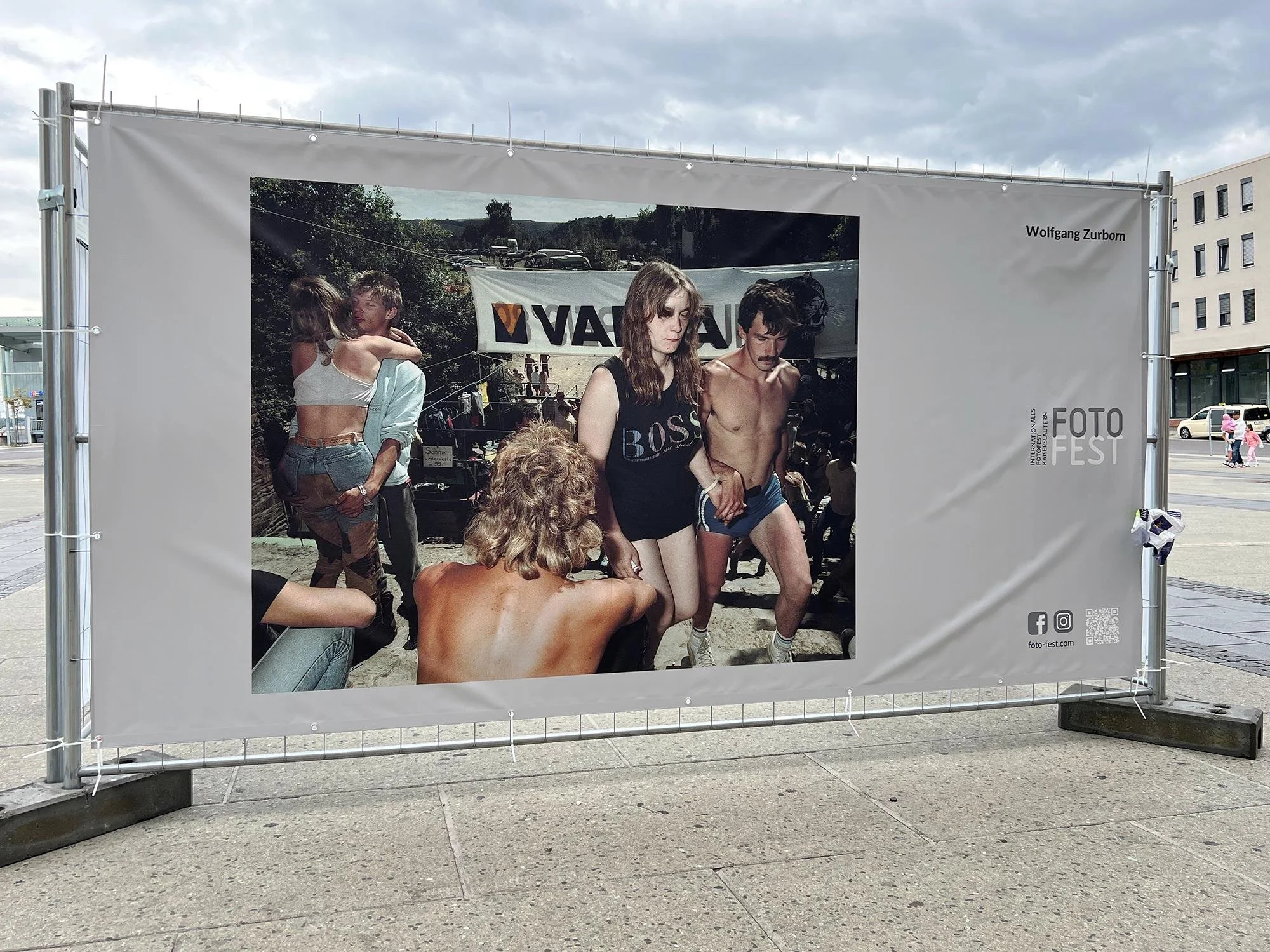
In my Crowds exhibitions, I usually combine different formats. The large poster prints let viewers immerse themselves in complex scenes and feel the physical presence of the people. In my experience, I learn far more about people from their body language in candid snapshots than in staged portrait sessions, and an almost life-size presentation gives this a strong expression. The space in the picture feels very different from small formats, and the tension between individuals and the crowd becomes much stronger. In a small print, I see everything at a glance. In front of a wall-filling installation, I can let my gaze wander into the spaces in between, where the complex web of relationships becomes tangible.
At the same time, it is important to show a wide range of events from very different contexts, including politics, culture, sport and entertainment, not just a few single images. Next to large posters, the smaller exhibition prints are read in a completely different way, because the two forms of presentation strengthen each other. This interplay is my vision of documentary photography: it does not hide behind a pretence of sober objectivity, but paints a vivid picture of the present, with all its paradoxes and contradictions.
What Survived: Across very different projects, from People Pictures in the 1980s to Play Time to Crowds, is there one working habit that has stayed exactly the same? Is there one you had to unlearn?
Although I have developed many different styles since the early 1980s, some basic artistic intentions apply to all my work. Curiosity about experience and a search for communication drive me to find images with surprising compositions and unusual perspectives, which pull us away from the routine consumption of tidy media worlds. The puzzling quality of the images is not meant to mystify. It is meant to challenge viewers to look with a questioning gaze, one that is not quickly satisfied and goes deeper into the layers of the visible. This applies to my situational portraits as much as to the collage-like montages in In the Labyrinth of Signs and the fragmentary glimpses of everyday life in the book Play Time.
I have always been very wary of strict conceptual rules, because they leave no openness in how I perceive the world I live in. My aim was rather to provoke chance and arrive at visual discoveries I could never have planned. In this spirit, I also experimented with many techniques, such as superimpositions, solarisations and photograms, but in the end I discarded the results and gave up this direction. I realised that, for me, the challenge lies in using precisely observed images of real places to build constructions of reality that resist a single interpretation and leave room for the viewer’s imagination.
The Abandoned Experiments: You experimented with superimpositions, solarisations, and photograms before abandoning that direction. How long did you keep trying to make those methods work, and what finally convinced you that the problem could not be solved by trying harder?
Since my first experiences with photography in the 1970s, I have been fascinated both by the realistic depiction of the world and by the free, artistic use of the medium. When I studied photography at the University of Applied Sciences in Dortmund in the early 1980s, the teaching put a strong emphasis on strictly documentary photography. But I was deeply sceptical of the claim that this could produce an objective image, so I was drawn again and again to experimental strategies.
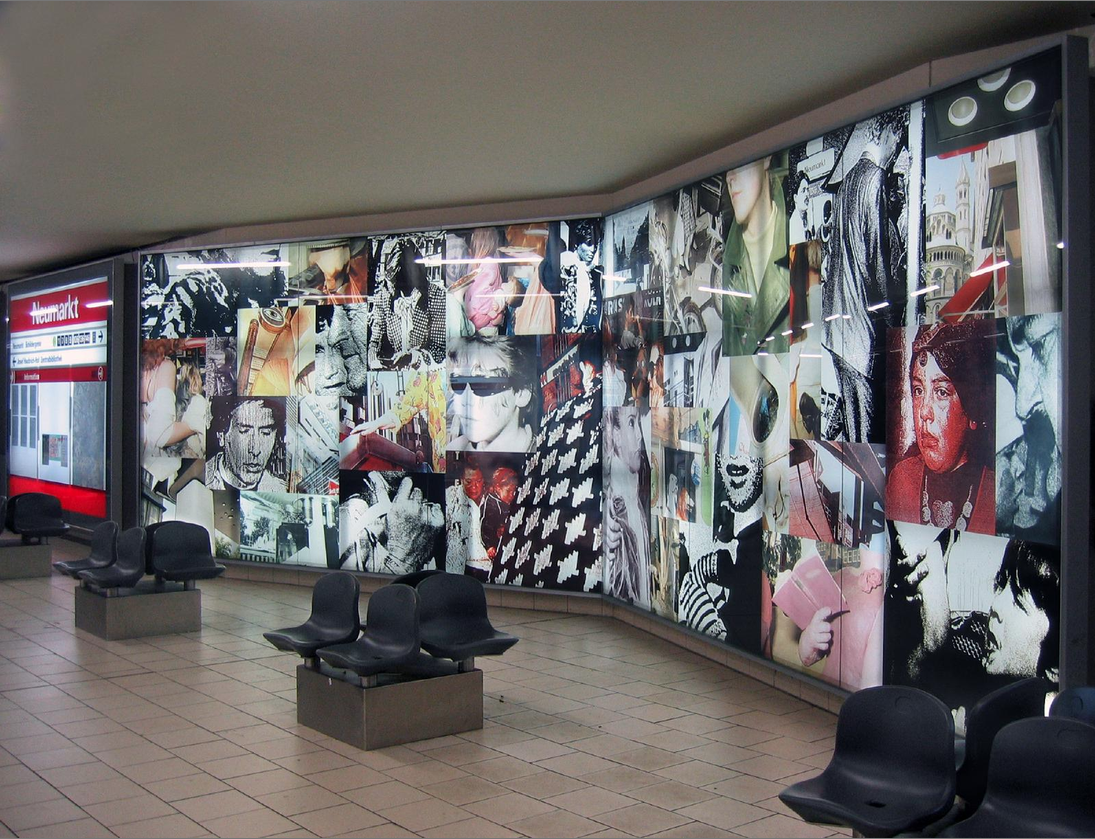
In 1987, together with Stefan Worring, I designed two large photographic murals for the Neumarkt underground station in Cologne, a collage of urban motifs made with a variety of techniques. This intense work with montage led me to my series In the Labyrinth of Signs and At the Centre of Speed. In the book dressur real, the principle of collage became sequences of images that do not follow a linear logic of place and time, but open up space for associations through their visual interplay. So I don’t feel that my experiments failed. They evolved into a visual language that links representation and imagination.
To discover more about this intriguing body of work and how you can acquire your own copy, you can find and purchase the book here. (Kehrer Verlag, Amazon)
We'd love to read your comments below, sharing your thoughts and insights on the artist's work. Looking forward to welcoming you back for our next [book spotlight]. See you then!
