Lewis Ableidinger Has Photographed the Midwest for 25 Years. Here’s Why He Keeps Returning to the Same Places
Welcome to this edition of [book spotlight]. Today, we uncover the layers of 'Driving Through Flyover Country,' by Lewis Ableidinger (published by Subjectively Objective). We'd love to read your comments below about these insights and ideas behind the artist's work.
The same place can become a different photograph.
Returning years later can change what you notice. The light may be different, the season may have changed, or something you overlooked before may suddenly become clear. Sometimes the biggest change is simply that you are looking at the place with more experience.
Lewis Ableidinger has been returning to the Midwest for more than 25 years.
He has photographed towns, roads, churches, and other places across the region, often coming back to the same locations again and again. Some places kept giving him new photographs. Others reached a point where he felt there was nothing more he wanted to make there.
The interview is about how revisiting a familiar place can reveal something you missed, why a photograph may only appear years later, and how a photographer can recognise the moment when returning no longer adds anything new.
The Book
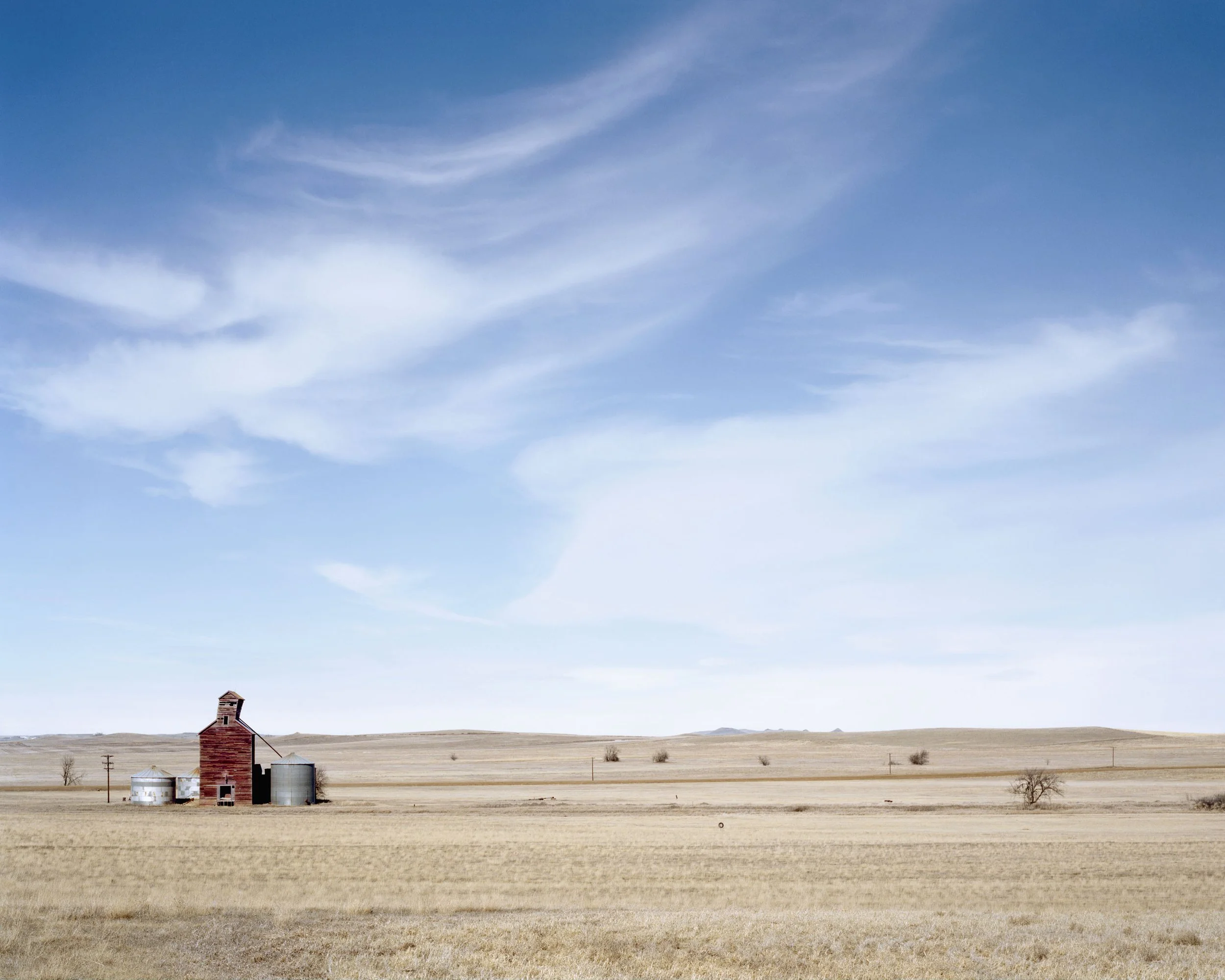
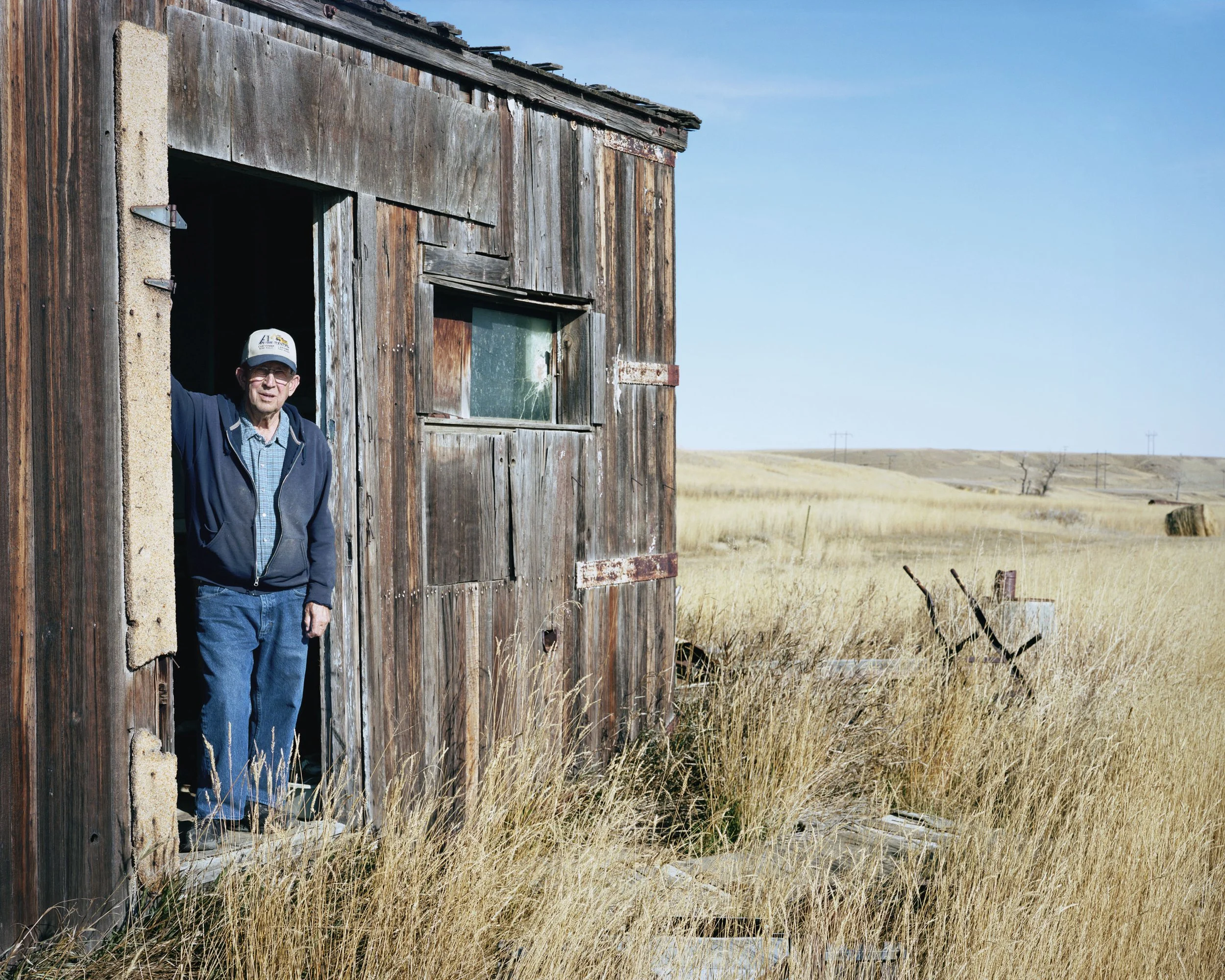
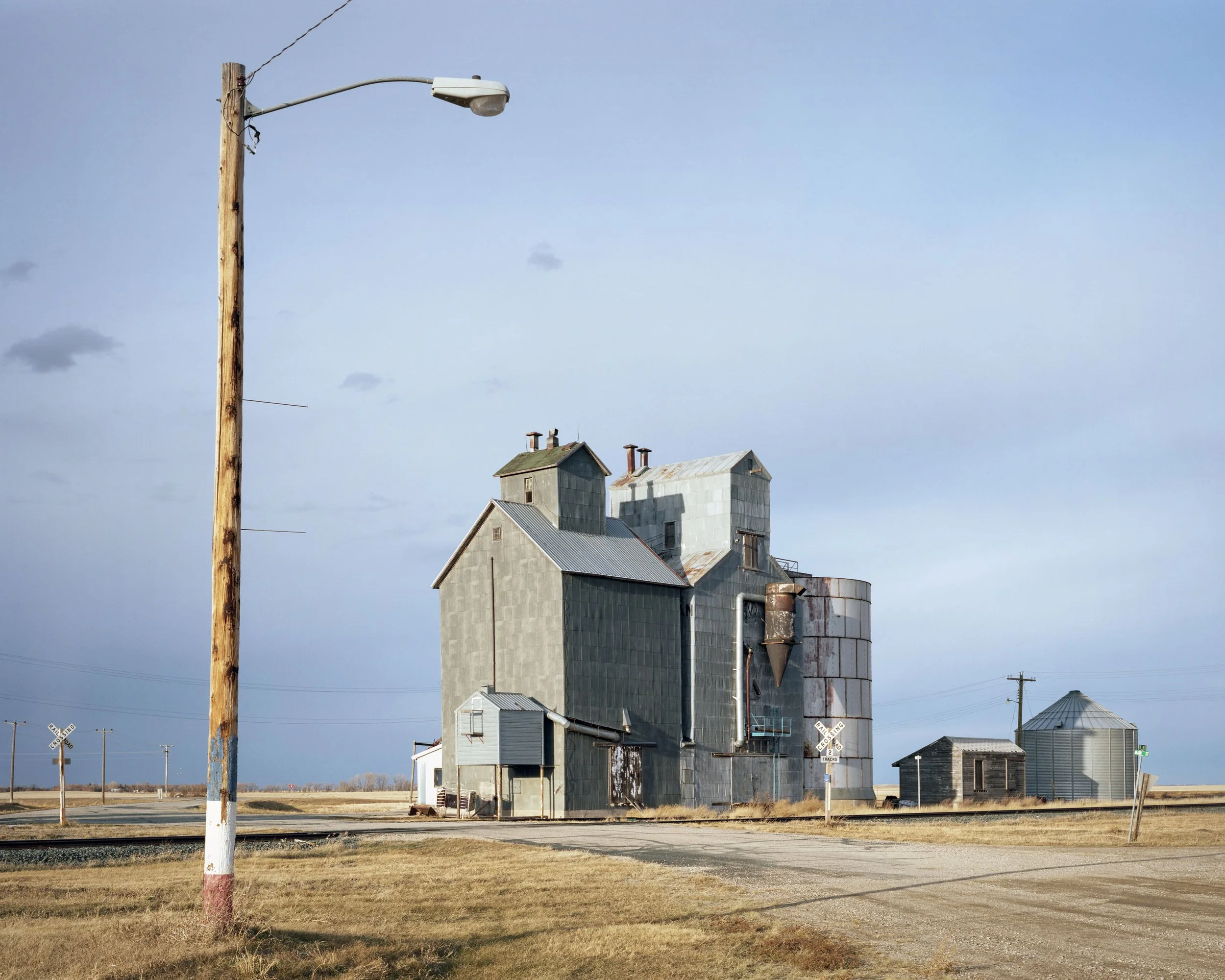
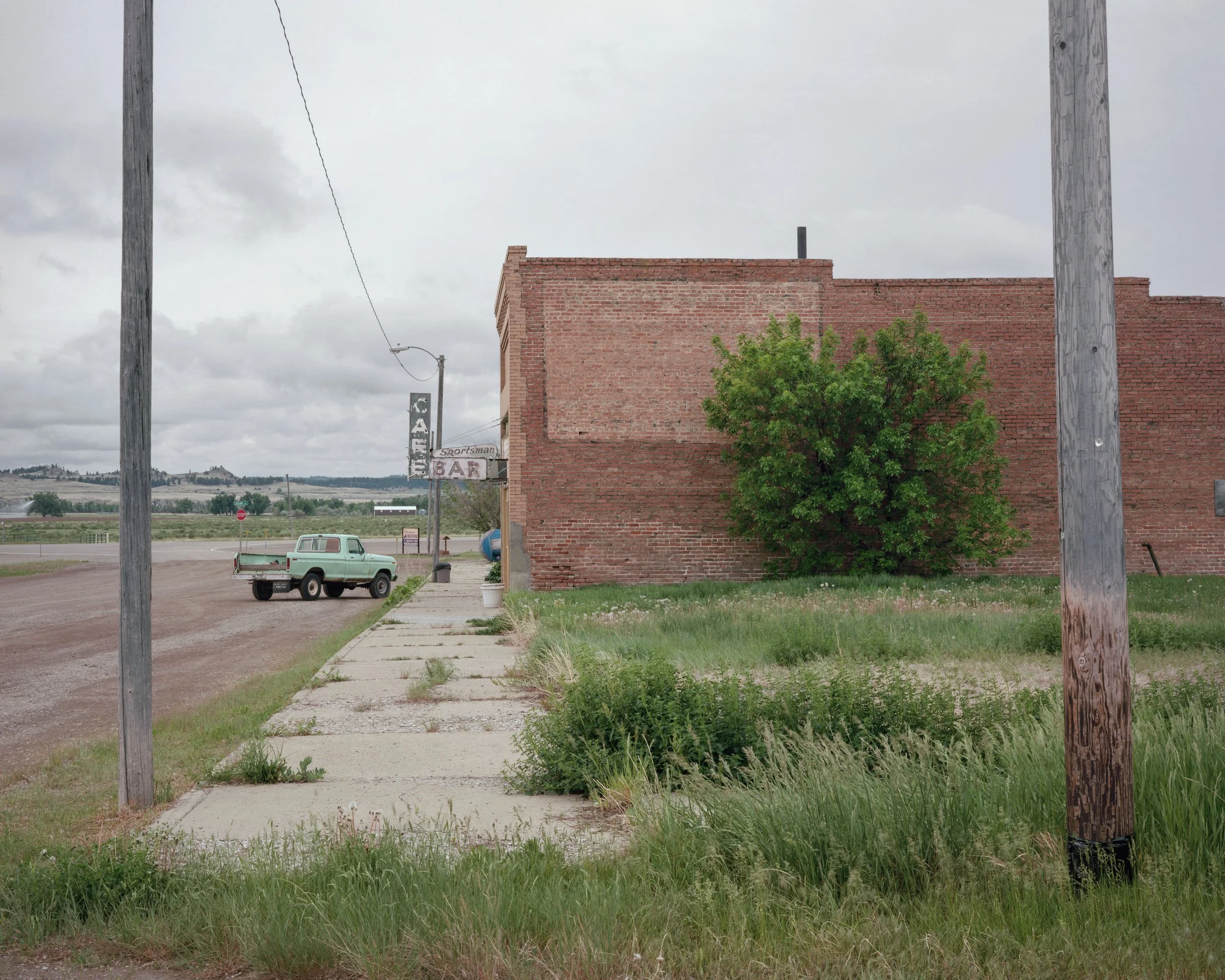
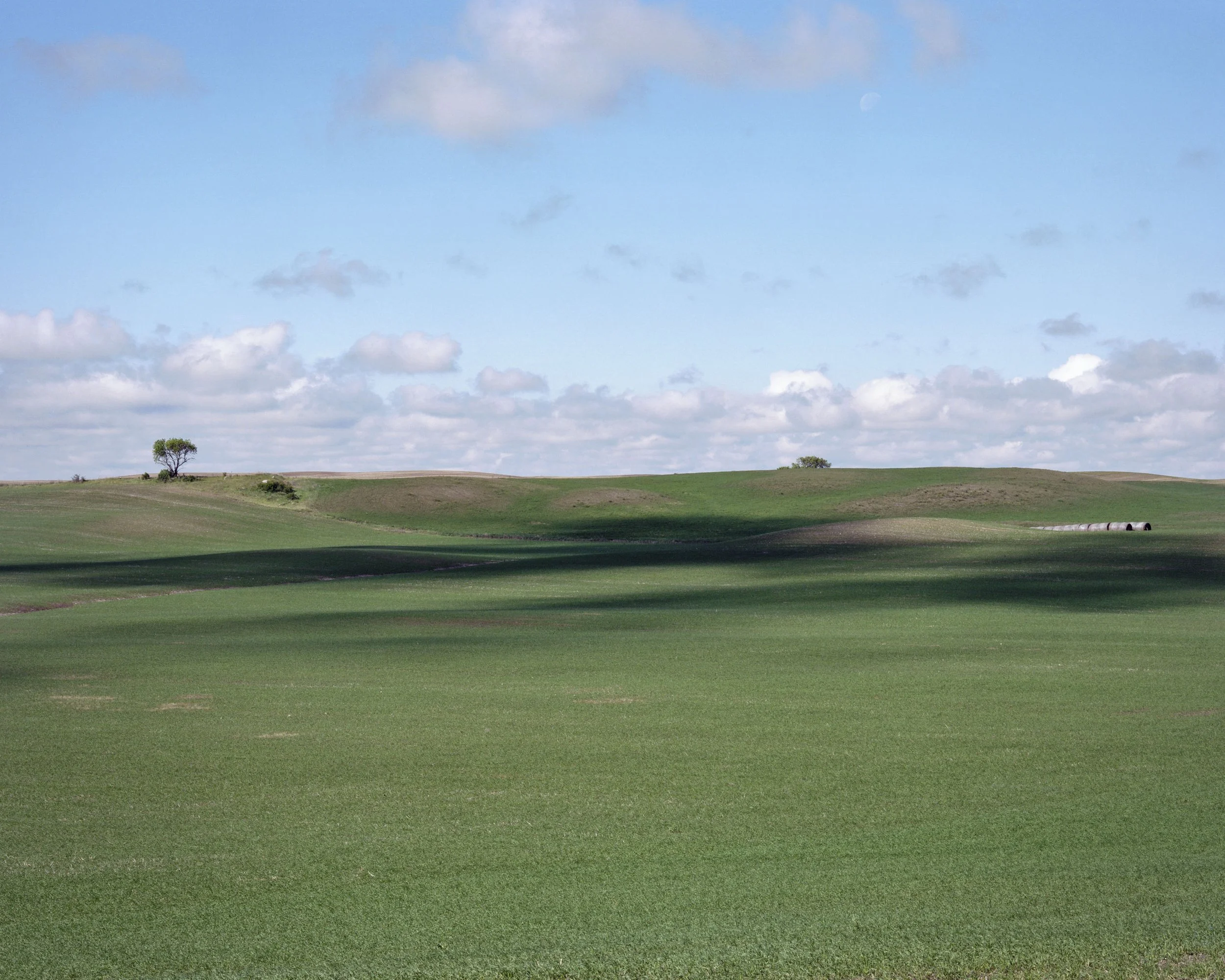
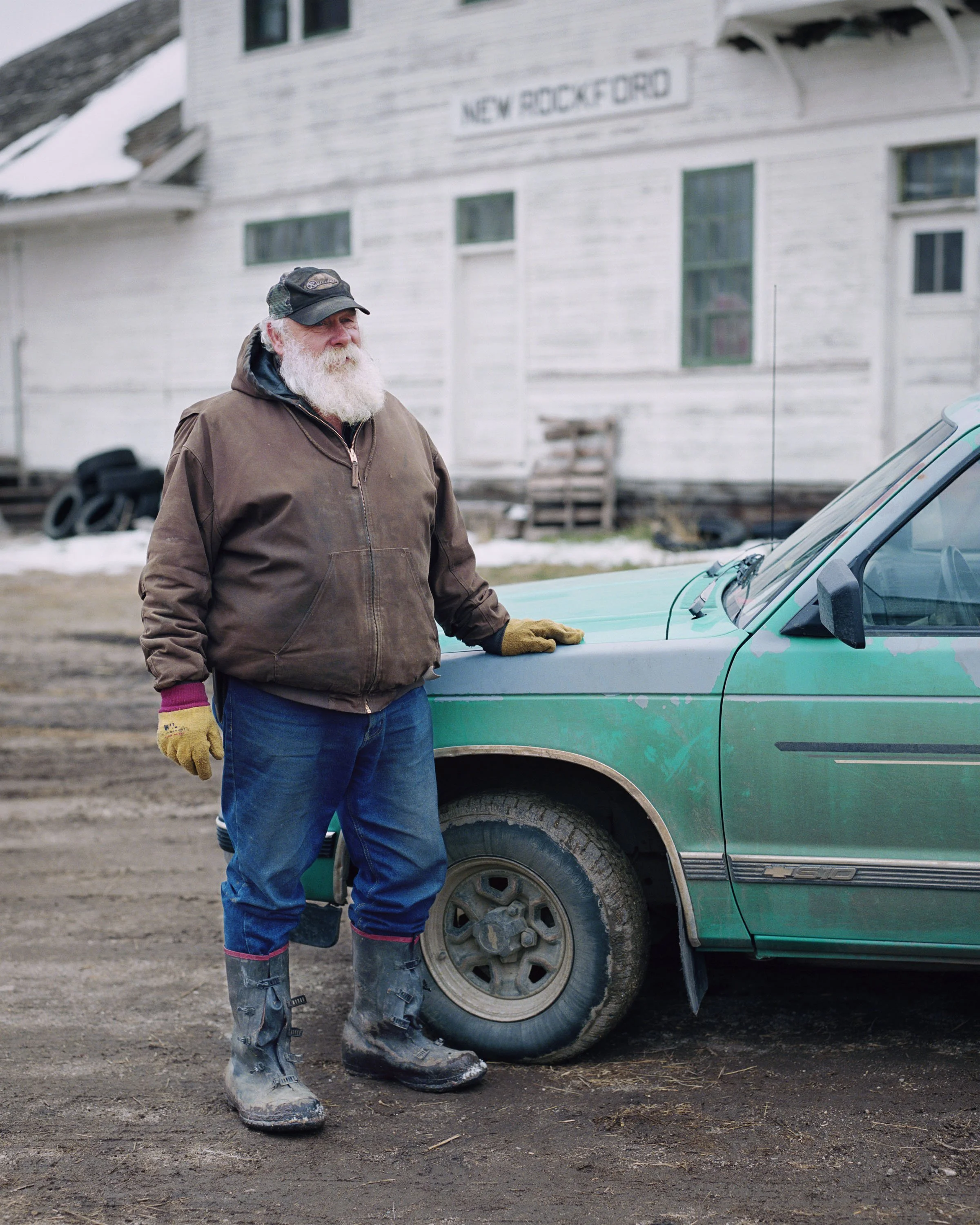
Driving Through Flyover Country by Lewis Ableidinger, published by Subjectively Objective, is a long-term documentary project about the American Midwest. Made over four years across 13 states, the photographs cover an area of around 650,000 square miles, from North Dakota to Oklahoma and from Illinois to Montana. Photographed with a 4×5 view camera, the book brings together 97 plates in a 116-page hardcover monograph, with an essay by Wayne Gudmundson. (Subjectively Objective, Amazon)
Learning to see slowly: Before you ever picked up a camera, you spent countless hours on a tractor looking across the North Dakota landscape. How did learning to observe the land at that slower pace shape the photographer you eventually became?
There isn't much to do on a tractor but listen to the radio and stare out the windows (and try to drive straight, since this was before GPS). Since it would typically take hours to cover a 160-acre quarter section, and it would be gone over several times a year, for many years, I got to become very familiar with that particular piece of land and its surroundings. As the day progressed, you'd notice how the light changed, how it affected shadows on a small hill, how features became more visible as the sun sank lower in the sky. And throughout the seasons you'd notice the small changes as vegetation grew, bloomed, and went dormant. Before photography, I hadn't really thought about any of this, but later I believe it affected the way I see. By slowing down to observe your surroundings, you can see a lot more, and being very familiar with the seasons and the way the light changes can help you know what to expect a scene to look like at a particular time. All of this, probably very subconsciously, affected the somewhat slow and typically long-term approach I have to landscape photography, especially in a place as subtle as the Midwest. The interesting aspects require a certain level of attention, and it seems quite likely that lots of hours paying attention on a tractor may have helped those skills.
Beyond documentation: At what point did you realise you were no longer simply documenting the Midwest, but trying to say something more personal about it?
That is probably a more recent occurrence. My goal as a photographer since I first got serious was always simply to document, document, document, because things are always changing. I was introduced to the work of Robert Adams and Frank Gohlke in the mid-2000s, but I don't think I could really appreciate exactly what they were doing until years later. Discovering the work of Alec Soth and Bryan Schutmaat over a decade ago is what probably altered my thinking a bit on what I wanted to do with my photography. This was work that looked like documentary work but went deeper. It made me think there was a more personal aspect to my photography that could be brought out, rather than simply saying, “this is what is here.” I question whether I've really achieved that goal myself, but it's something I'm thinking about more as I continue to make work.
Can you think of one photograph in the book where you can clearly see the moment your work stopped being purely documentary and became something more personal?
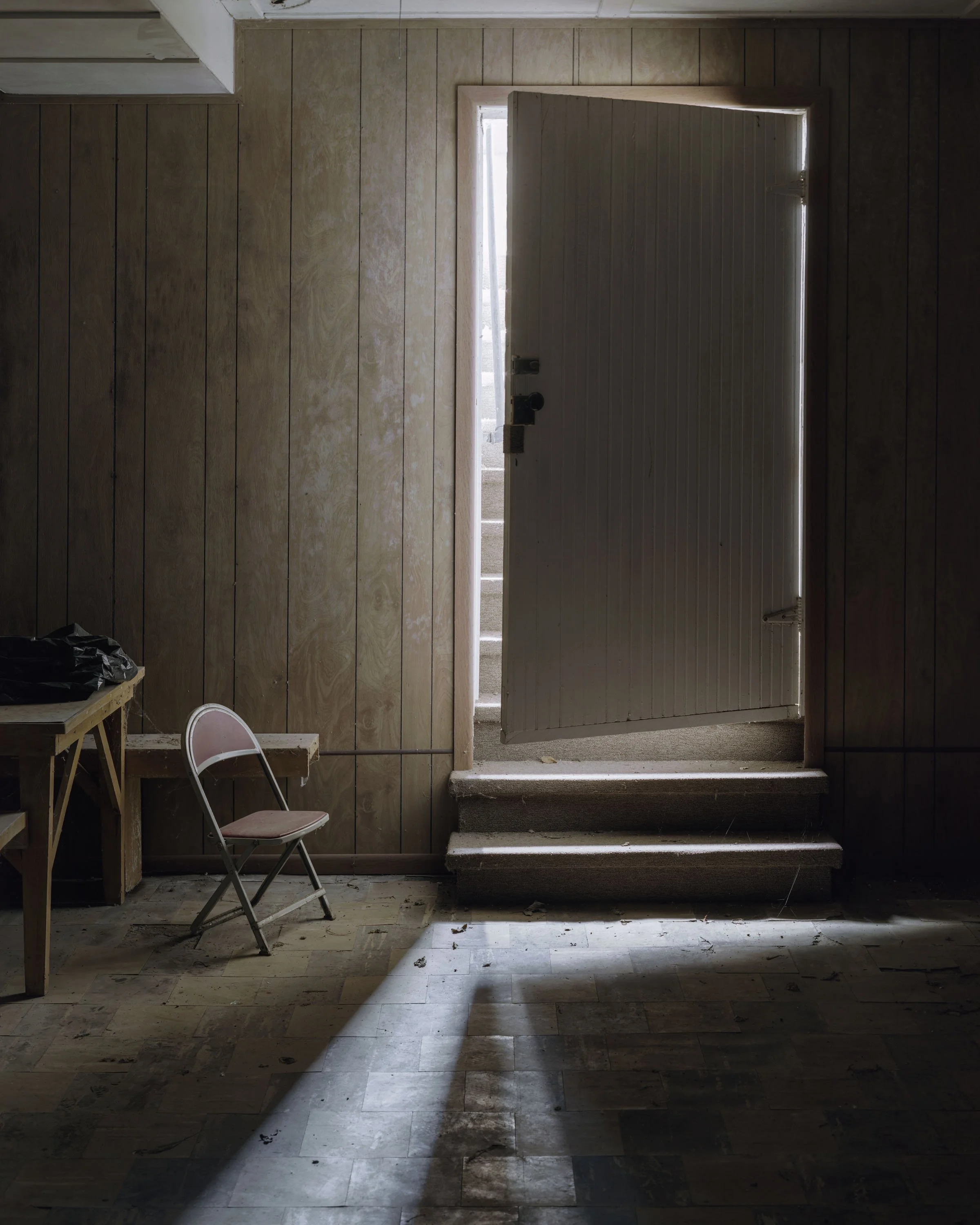
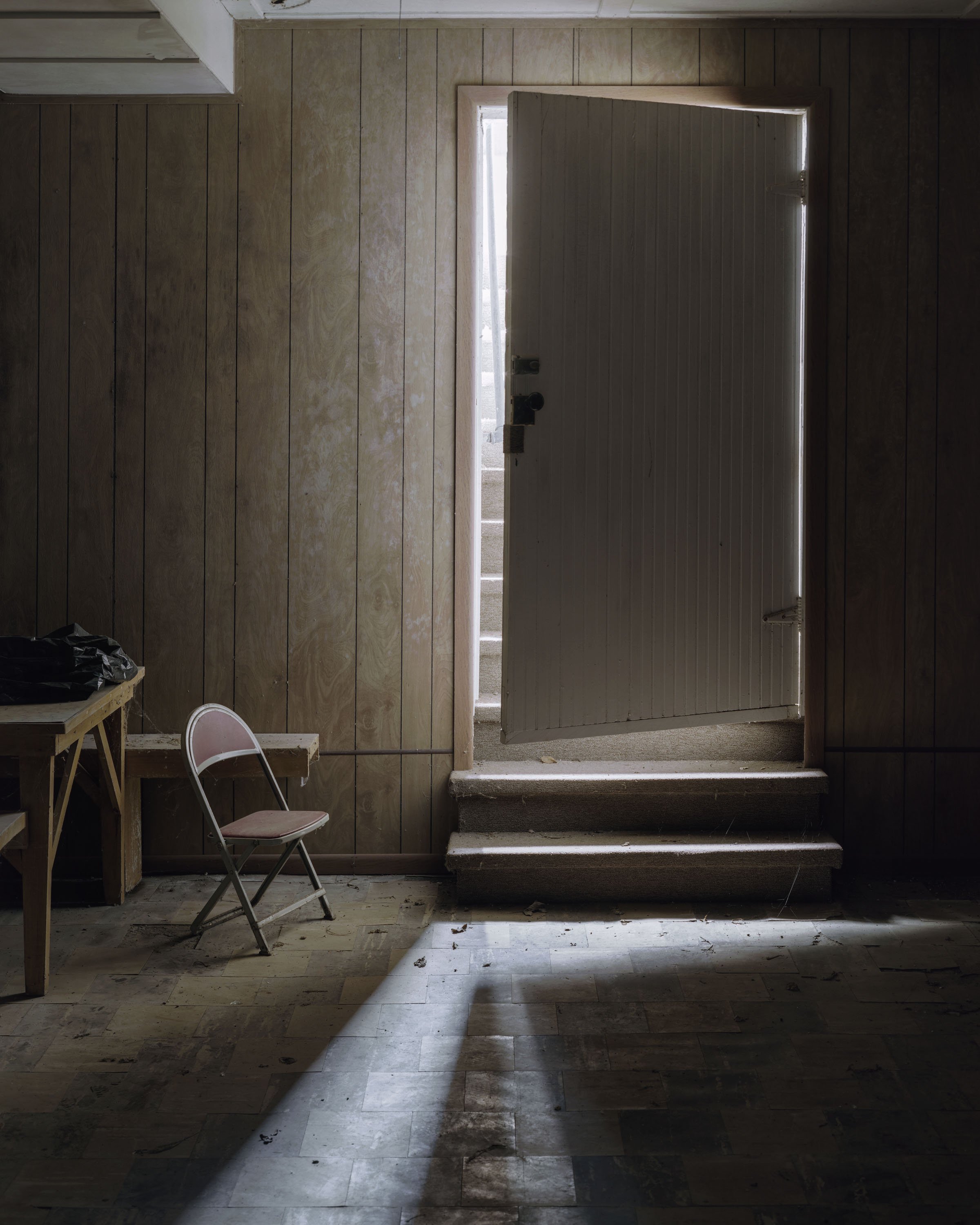
There's a photo taken in the basement of a closed church, with a folding chair and a door that is slightly open, with light pouring into the room. This image was taken towards the end of the project and is less about documenting a place and more of a poetic image; almost no one would know it's the basement of a church, and it could have been taken anywhere. But there's such a mysteriousness to the photo: what is going on here? Did someone just enter, or just leave? Were they waiting in that chair? Where did they go? For me personally, it's about looking at new opportunities and embracing different ideas. It's a bit fitting that it's also the second-to-last image in the book. This image is much more poetic and symbolic, which are things I'm trying to capture more in my photography now than when I started on Driving Through Flyover Country.
Returning to the same places:You photographed this landscape for more than twenty-five years. How did returning to places you already knew well change the way you photographed them?
Returning to places falls into that category of long-term observation, much like observing during the long hours on the tractor. I'm always amazed at things I had previously overlooked at a place, something I maybe didn't notice on previous visits. Returning to places just allows you to see more, as well as see it differently if it's a different season. There's also just the aspect of getting older and seeing the world in a different way. Returning to a location years later may help you see it in a way you hadn't seen it before, just because you see the world differently now.
Can you describe one place you photographed years apart where returning completely changed what you noticed?
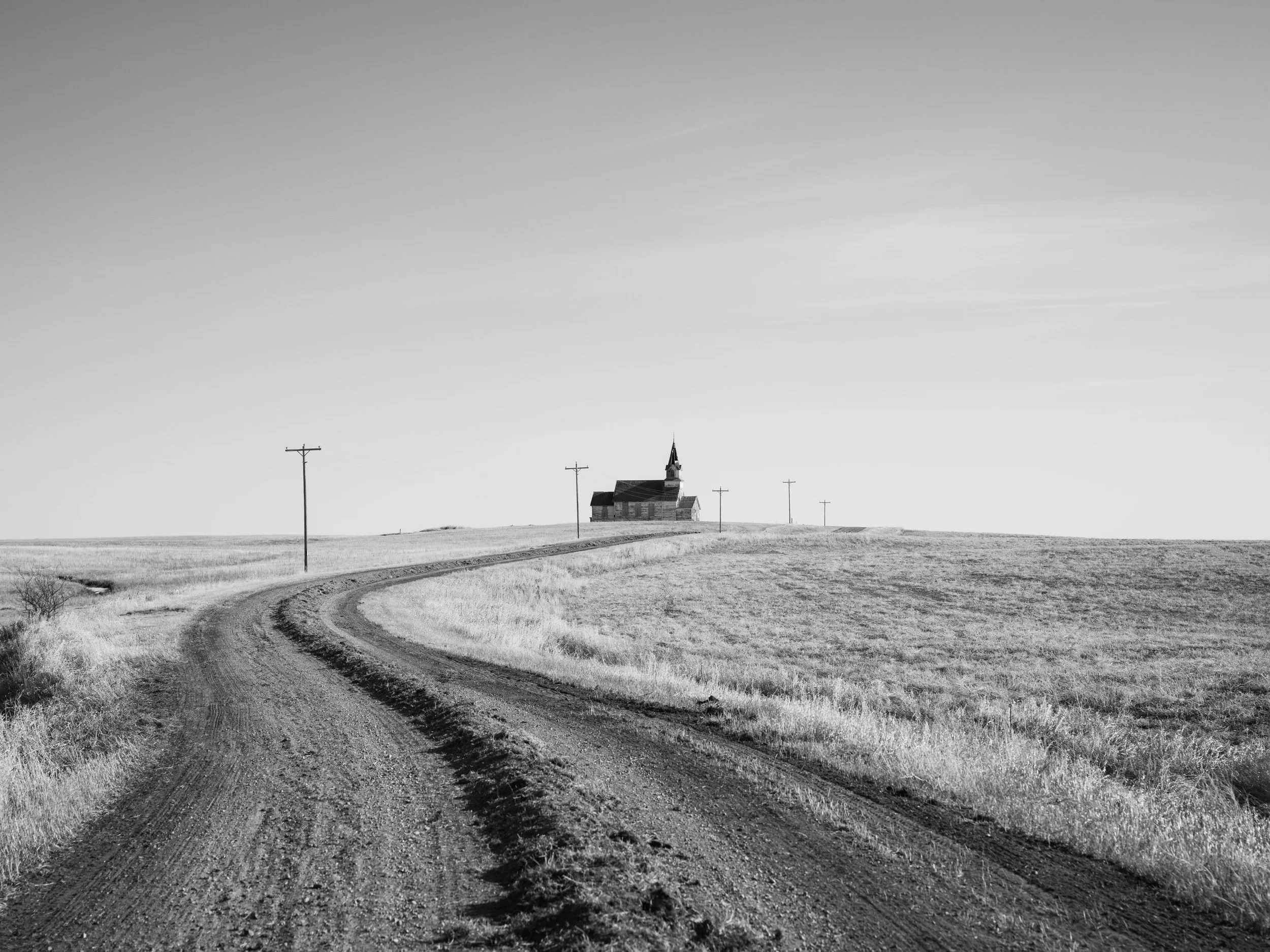
I can't think of a good example in this particular project, but I can think of one from a different project. There's a closed church in the far northwest corner of North Dakota that I've been visiting and photographing for years. I've taken numerous photographs of it inside and out, but was never quite satisfied with any of the images until I was driving up there last year. The church sitting on a hill, with a curving road leading to it and sitting perfectly between a line of power poles, seemed just perfect. All the times I had driven up that road, I can't figure out why I had never seen that composition previously, but it's become my favourite picture of the church. I had taken pictures of it in the distance before, but they were all missing something. With this one, everything came together. Maybe it had to do with the light, the time of year, or the time of day, but it may also be simply because my photographic eye has improved. Even though I had photographed that church so many times, I was glad I went back again. If I had given up, I wouldn't have ever taken this photo.
Knowing when to return: How do you recognise that a place you’ve already photographed still has something new to offer, instead of feeling you’ve already exhausted it?
Having watched places change for a quarter century, what usually stops me from returning to a place is that there's simply nothing left to photograph. The amount of demolition to buildings in the Midwest over these 25 years, as rural populations shrink and small towns die out, still sort of staggers me. There are several places where almost everything is gone from a town that may have had a lot of interesting things there 20 years ago. As long as something remains, it's usually worth revisiting a place, even if you don't make any pictures, but once it's gone, it feels like that's it. There's nothing left there.
Have you ever returned to a place expecting to make another photograph, only to realise you had already said everything you wanted there? How did you recognise that moment?
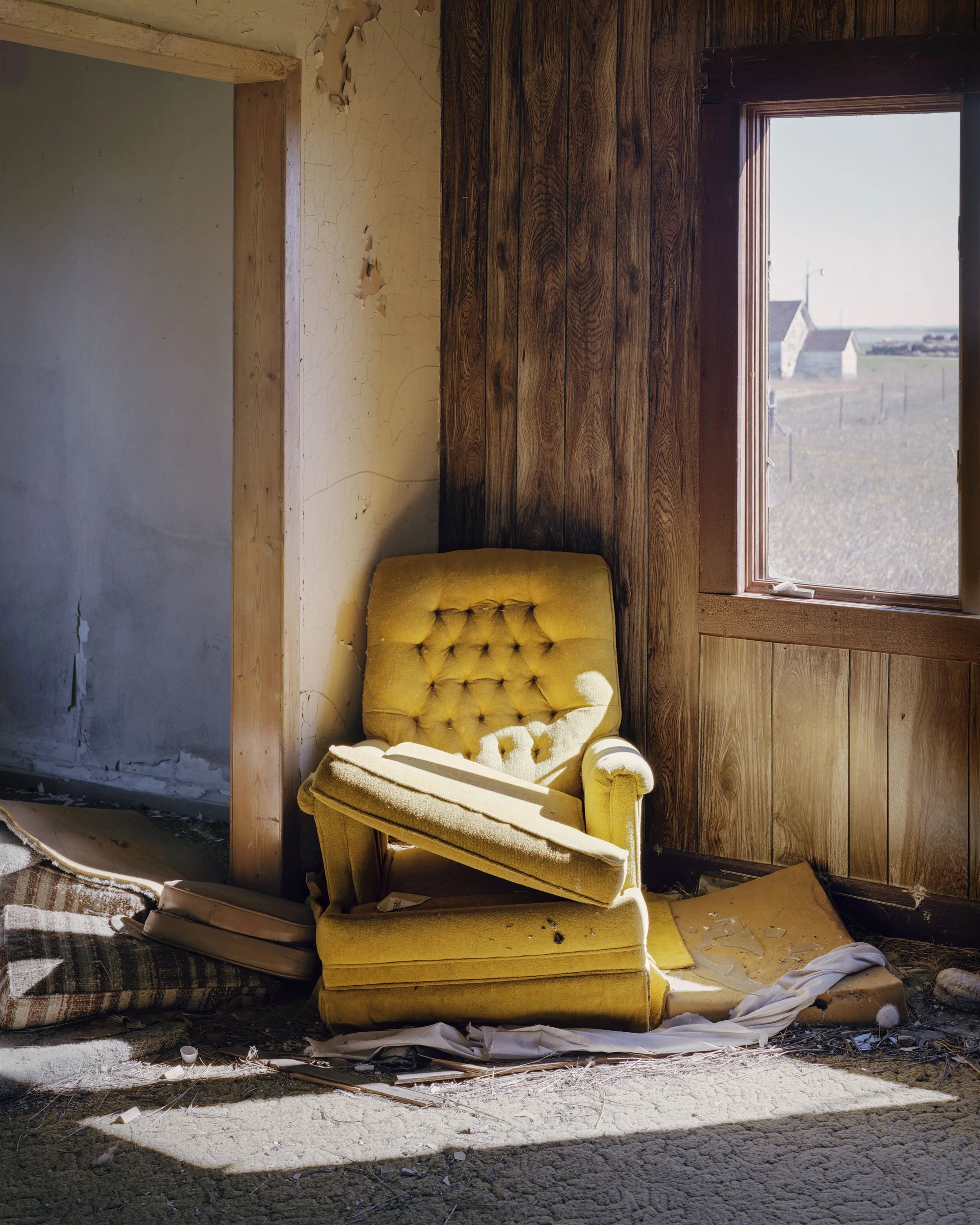
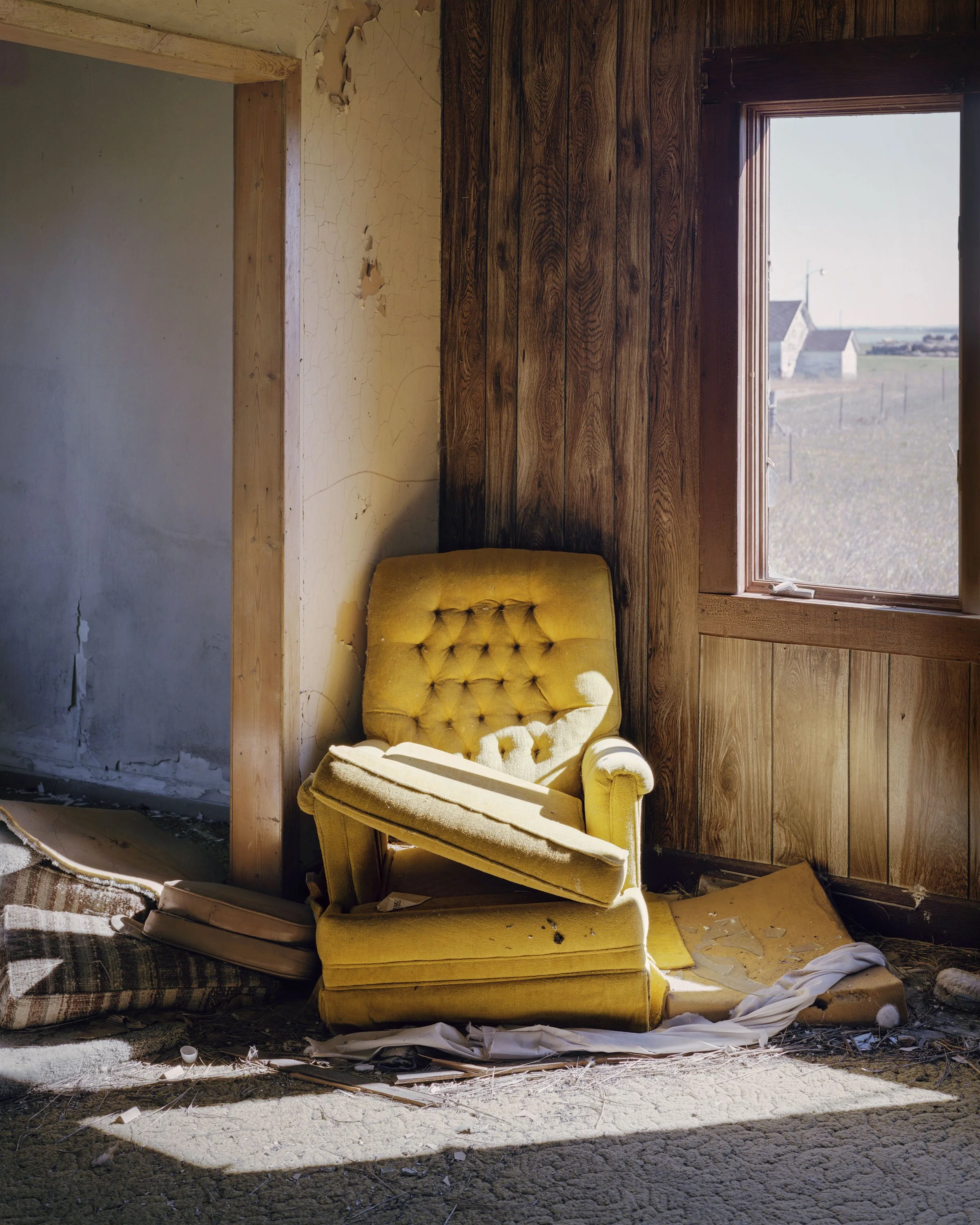
There's a ghost town in central North Dakota called Arena that had an abandoned house I'd been exploring even before I started taking photos of it. Every time I visited the house, it seemed that something had changed: a piece of furniture moved, an old TV disappeared, and the light was never the same. During this project, I took a picture of a yellow chair in a corner with light streaming in through a window. Of all the images I took here over the years, this seemed like the perfect one. Everything came together: the colours, the light, the askew cushion. I've returned since making this picture, but have never really found anything as good as this image. I eventually realised that this image was the best I was going to get at this location. I couldn't improve upon it, and I couldn't even think of a way to try. I don't know that I can give a technical reason why; it's just what I've felt. I haven't been back to photograph that place in many years, and I don't feel as though I'm missing anything by not photographing it. I already have the perfect photo of it.
Signs of change: Chain stores like Dollar General and Casey’s appear alongside abandoned grain elevators and empty storefronts. What made those juxtapositions important to the story you wanted the book to tell?
These chain stores are just as much a part of the story of the Midwest as the grain elevators and empty storefronts (and probably played a role in making those storefronts empty). They're usually not as visually interesting, but they are a part of the story, so I had to figure out a way to make them interesting. I wanted to show that while the Midwest has a lot of towns that are failing, there is still something going on, even if it's a Dollar General. These towns aren't completely empty, and it does bring up questions about what these chain places are not just doing for a small town, but what they're doing to a small town.
Photographing what’s there: You’ve said one lesson from this project was never to wait for better light or a better day. What changed in your photography once you stopped waiting for ideal conditions?
What I meant by that is I was going to photograph whatever seemed interesting while I was there, regardless of whether the light was quite right, because it could be gone by the time I came back in more ideal light. (Sometimes I did return to places in better light, and sometimes I did return in better light to find the subject gone.) It made me think about ways I could photograph a subject in less-than-ideal conditions and still keep it interesting. These places exist at all times of day, in all seasons, and usually not under ideal light. Photographing them as I found them was very true to this realisation as well. It made me work a bit harder in my photography, figuring out how to overcome this “bad light” to still get a photograph that worked. It definitely broadened my skills. Not every photograph was successful, but the ones that were, I may not have even tried had I not been determined to photograph regardless of conditions.
Can you remember a photograph in the book that only exists because you stopped waiting for better light or better conditions? Why does that photograph still work despite the circumstances?
There's one in particular that comes to mind: a picture of a Family Dollar store in David City, Nebraska. It was the middle of a hot June day, with the sun just beating down on the scene. Better light would have been either just after sunset or even into blue hour, when the sign may have been lit with the scene bathed in nice, soft, even light. But I was there in the middle of the day and decided to just photograph it anyway. Since the light was so harsh, I felt that it added a sense of a hot summer day. A majority of people are going to be out running errands at this time of day anyway; these are the exact conditions under which they'd normally make a trip to Family Dollar. Even though the light was less than ideal, it felt like these elements came together to truly capture a daily-life scene in this small Great Plains town. Photographing it in “better” light may actually have been a detachment from that. This photograph was taken pretty early on in the project and made me realise I should just try photographing at all times of the day, because it may just work for the project.
Editing the journey: Four years of travel across thirteen states became just ninety-seven plates. How did you decide which photographs carried the story forward, and which ones, even good photographs, had to be left behind?
These next two are a bit more difficult to answer because so much of the sequencing and selection was done by the editor and publisher, Noah Waldeck. I offered input and suggestions, but so much of the heavy lifting was done by Noah, and separating myself quite a bit from the edit gave it a sequence and edit I certainly wouldn't have developed on my own, but it ended up being for the better.
Looking back: Looking back at Driving Through Flyover Country, what part of making this project changed the way you now approach every new body of work?
Driving Through Flyover Country was still very much a documentary project with just a bit of my personal experience put into the images. As I've moved forward with work, it's become less straight documentary and more poetic, less structured, and taken on more of a story aspect rather than a “nothing but the facts” aspect. I think I've said what I want to say with this project about what the Midwest looks like. As I move forward, I'm becoming more interested in what the experience of living here is like, and what things may lie below the surface.
You say your newer work is becoming less documentary and more about the experience of living in the Midwest. What has actually changed in the way you photograph? If someone compared an older image with one you would make today, what differences would they notice?
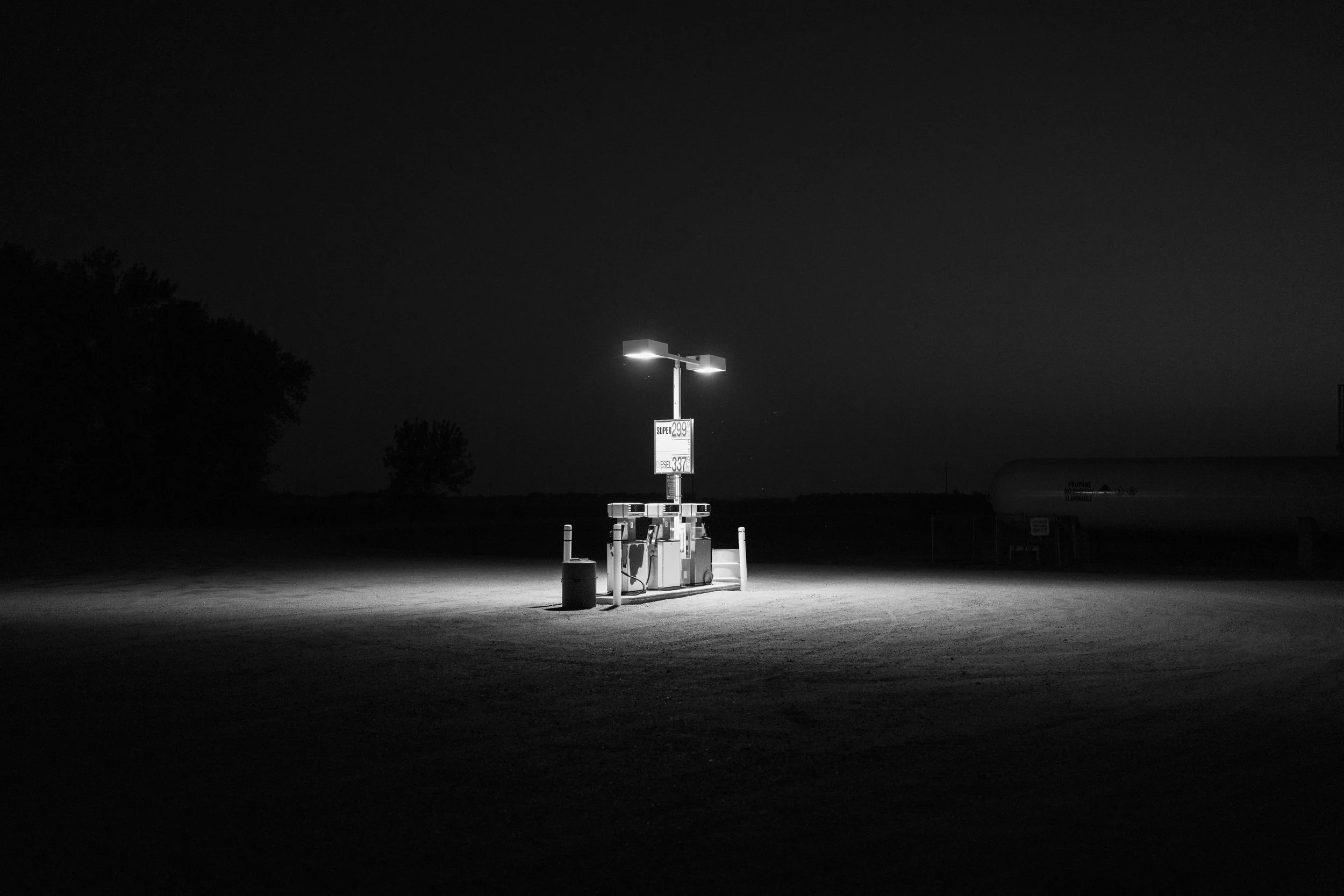
When I wrapped up Driving Through Flyover Country, I had been photographing in a pretty straight documentary style for about 20 years. It was time for a change. Being exposed to the work of Alec Soth, Bryan Schutmaat, Matthew Genitempo, and others certainly affected my approach to photography. Alec has referred to his work as “documentary style,” meaning it looks documentary but isn't a pure form of documentary work. He may alter a scene to make a better picture. And while it looks documentary, the pictures and projects often go much deeper, conveying an overall emotion while telling a story. I wanted to shift my photography more in this direction: more about crafting a story with my work, rather than just telling a story. Certainly some of the images I produce today are very similar to Flyover Country, but others are quite different: more symbolic, more emotional, more poetic. I can think of one image from Flyover that I rephotographed years later that has a completely different feel to it, a photo of some gas pumps in Kensal, ND. The image in Flyover is a pretty straightforward document of these gas pumps, taken on a spring afternoon. Last year, I photographed the same subject but at night, which gives a completely different mood and emotion to the scene, and it would have looked out of place in Flyover, but in my current work the photograph works quite well.
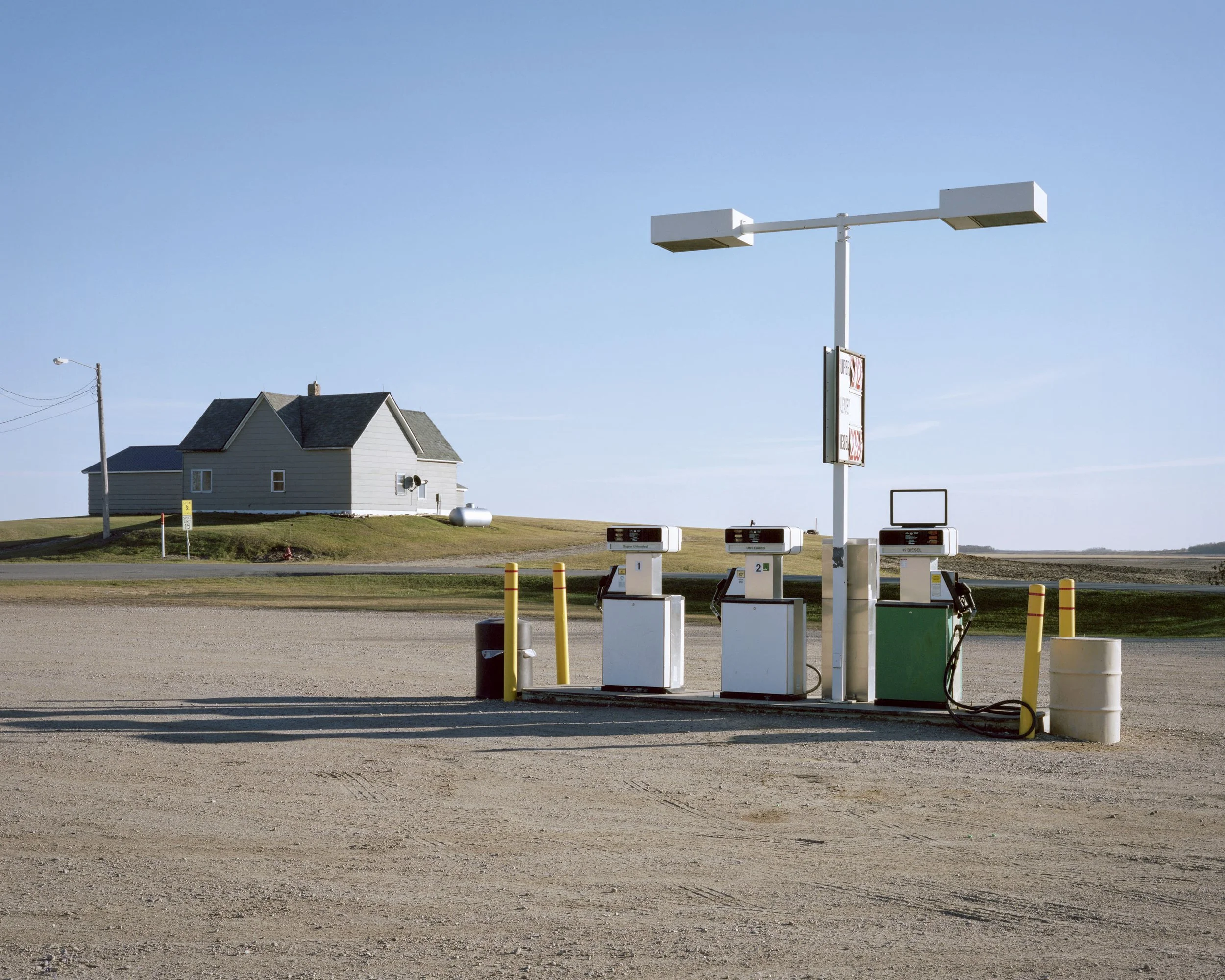
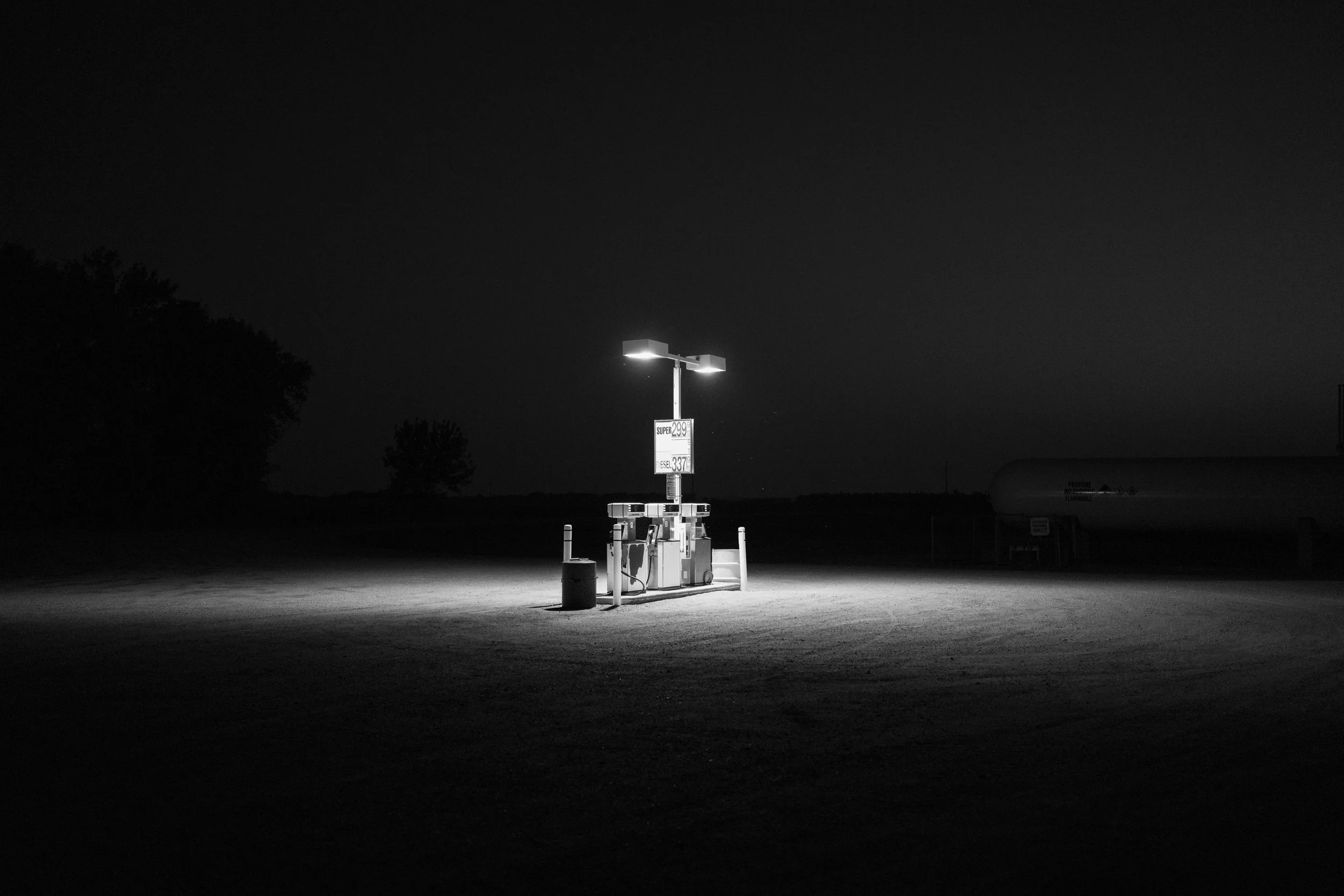
It's much like the church basement image mentioned above: there's a mysteriousness to it, even a foreboding nature. I like both images. The one in Flyover is a composition I really like, but it does demonstrate how my photographic style is moving forward (and it's also a good example of returning to locations).
To discover more about this intriguing body of work and how you can acquire your own copy, you can find and purchase the book here. (Subjectively Objective, Amazon)
More photography books?
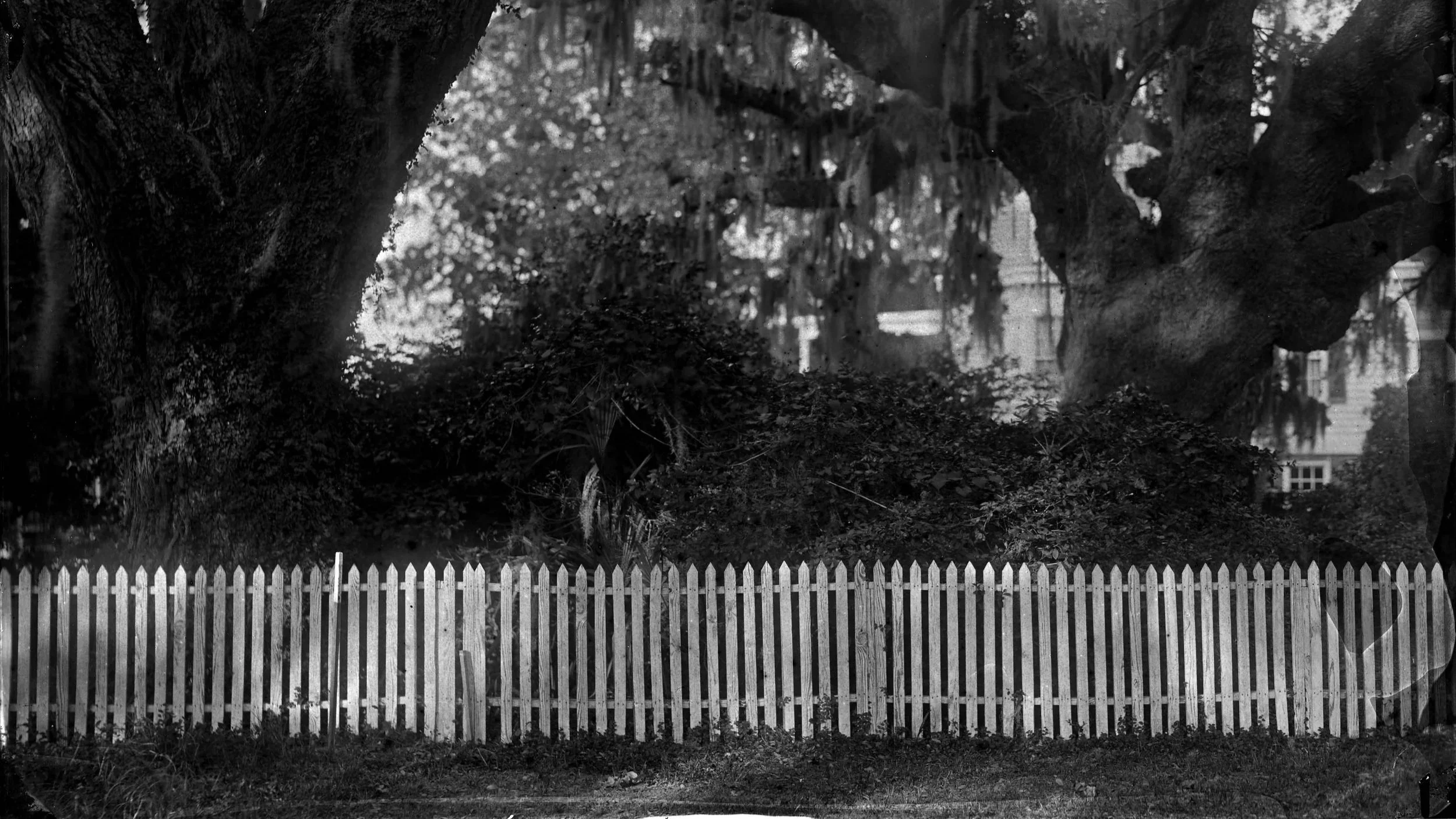
We'd love to read your comments below, sharing your thoughts and insights on the artist's work. Looking forward to welcoming you back for our next [book spotlight]. See you then!
Lee Espinoza reminded Darren Vargas of his late grandfather. The photographer met the boxing coach in 2025, five years after his grandfather Esmael died. Photography Book Spotlight