Welcome to this edition of Photography Stories. Today, we look at the story behind the photograph Yousuf Karsh made of Winston Churchill in 1941. We’d love to read your comments below about these insights and ideas behind the artist’s work.
“Why was I not told?” Winston Churchill asked.
He had just spoken to the Canadian Parliament in Ottawa. It was 30 December 1941, about three weeks after the attack on Pearl Harbor. In a room nearby, a portrait photographer named Yousuf Karsh was waiting with his lights and camera.
Churchill did not know he was going to be photographed.
This is the story of the few minutes that followed. You will see how Karsh got only one chance, and how he used it. You will also learn what Churchill said after the picture, and why one print of it later went missing from an Ottawa hotel.
It begins with a cigar.
One exposure
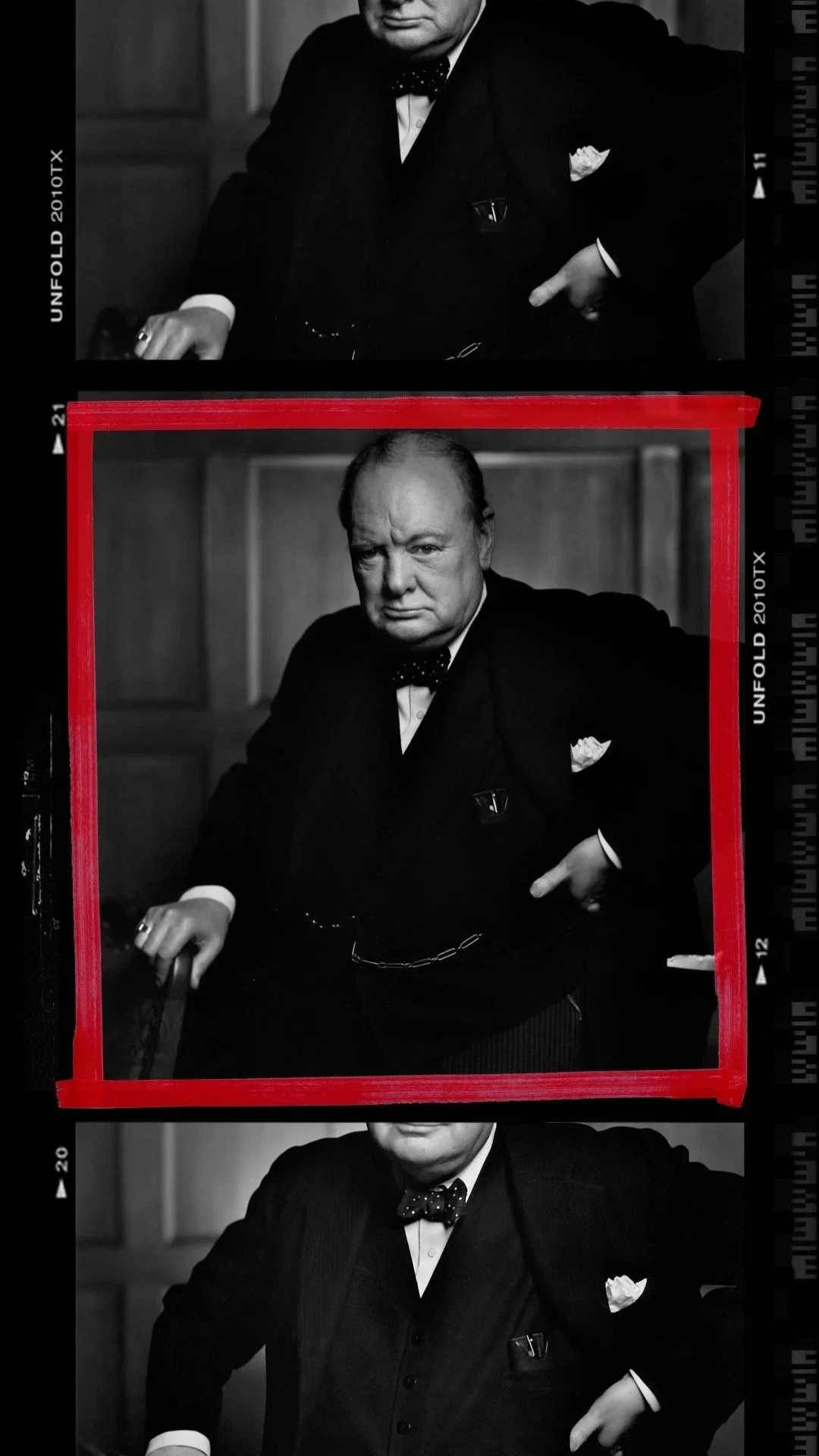
The sitting was not Churchill’s idea. Canadian Prime Minister William Lyon Mackenzie King had arranged it without telling his guest. Karsh had set up in the Speaker’s chamber the evening before. He used a large view camera made for 8 by 10 inch film, with floodlights and spotlights around it.
When Churchill walked in and the lights came on, he was not pleased. “What’s this, what’s this?” he asked, as Karsh tells it. Then came the question: “Why was I not told?”
Churchill lit a fresh cigar. Karsh later said that he “puffed at it with a mischievous air, and then magnanimously relented.” The answer was short. “You may take one.”
One exposure. With a camera like this, each picture needed a new sheet of film.
The cigar stayed in Churchill’s mouth. “I held out an ashtray, but he would not dispose of it,” Karsh recalled.
So Karsh made his move. “I stepped toward him and, without premeditation, but ever so respectfully, I said, ‘Forgive me, sir,’” he remembered. Then he took the cigar out of Churchill’s mouth.
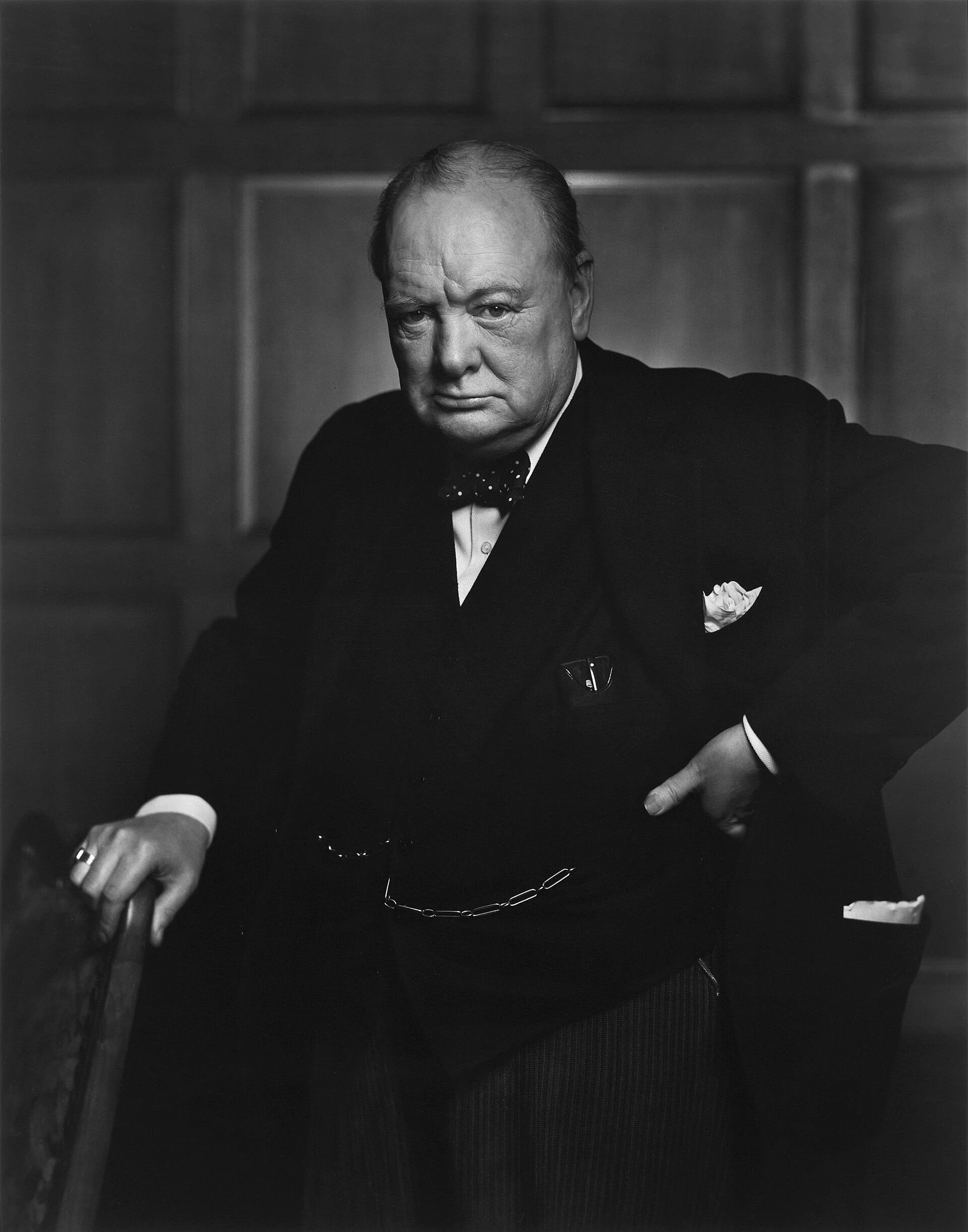
“By the time I got back to my camera, he looked so belligerent he could have devoured me,” Karsh said. “It was at that instant that I took the photograph.”
The roaring lion
That is the picture. Churchill stands with one hand on his hip and the other on the back of a chair. The House of Commons collection notes a paper copy of his speech in his pocket. He looks straight into the lens.
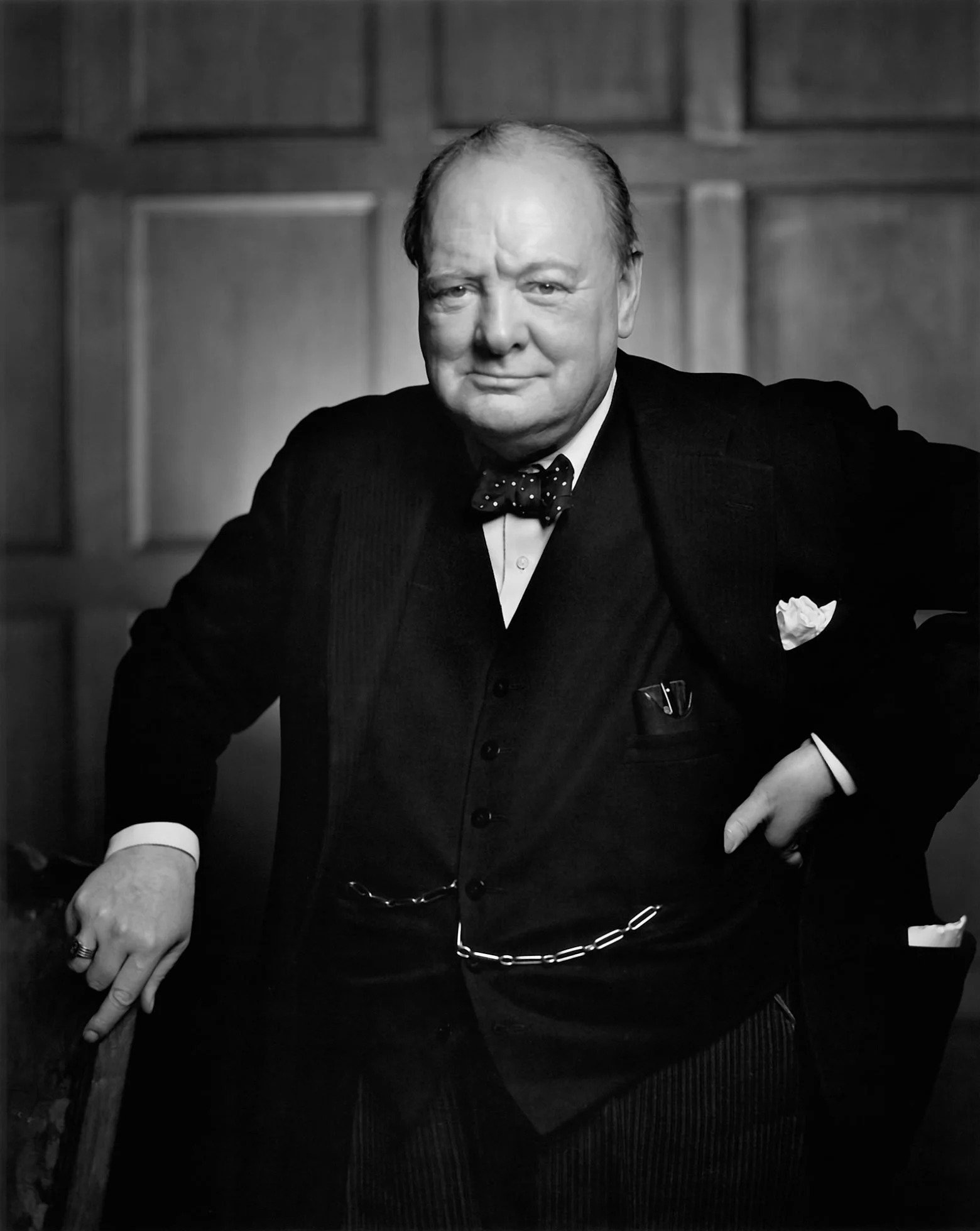
The mood did not last. Karsh took more pictures right after, and in them Churchill is smiling. His remark from that moment is usually given as: “You can even make a roaring lion stand still to be photographed.” The line later gave the portrait its name, The Roaring Lion.
Where the picture went
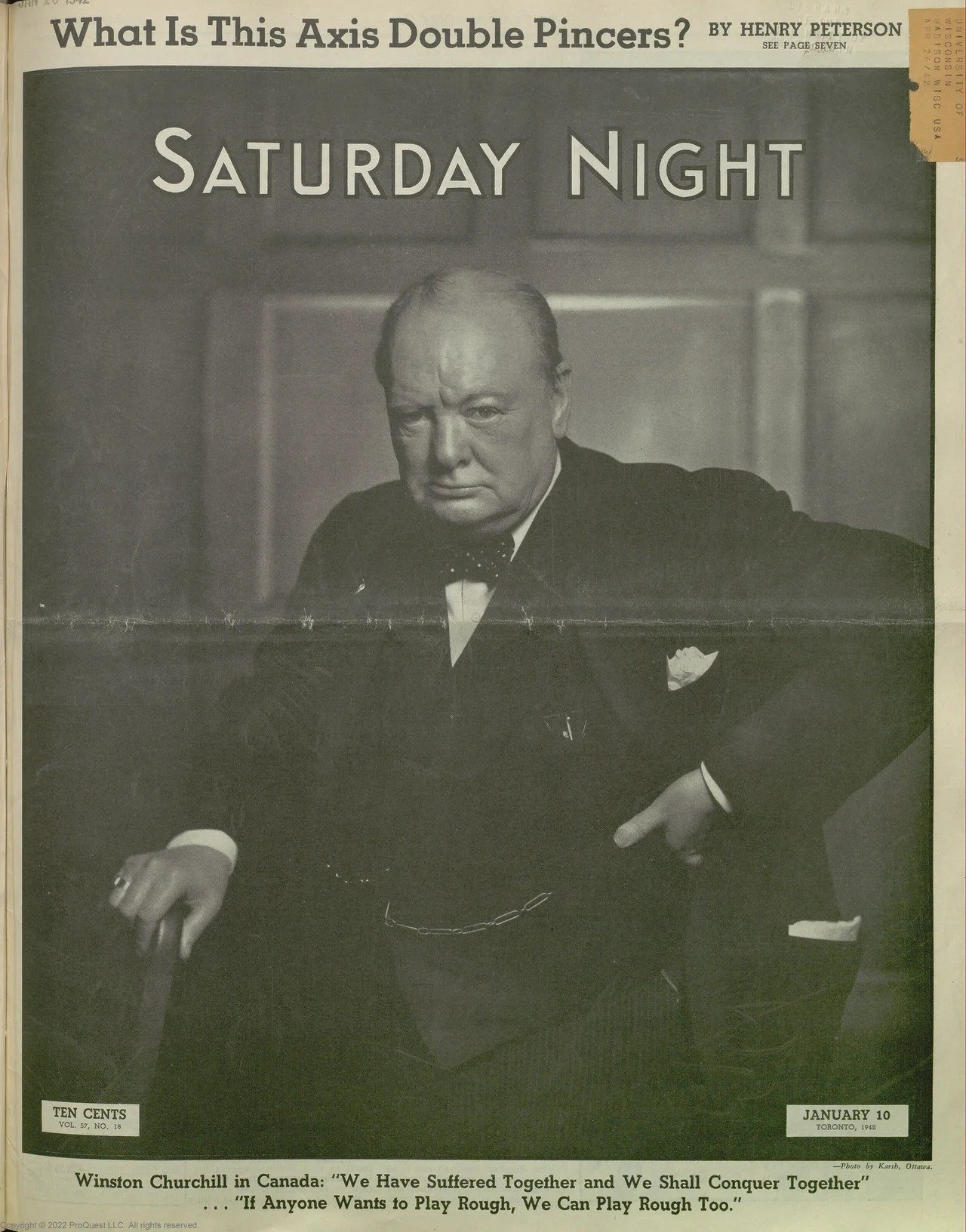
The picture travelled fast. On 10 January 1942, it was on the cover of the Canadian magazine Saturday Night. LIFE magazine also published it. Karsh later wrote that it “would become one of the most widely reproduced images in the history of photography.”
One print had its own adventure. In August 2022, staff at the Château Laurier hotel in Ottawa found that the portrait on their wall was a copy. Someone had taken the original and left a fake in its place. The original was found in Italy and came back to Ottawa in 2024.
Karsh summed up the sitting in three words. The portrait, he said, “changed my life.”
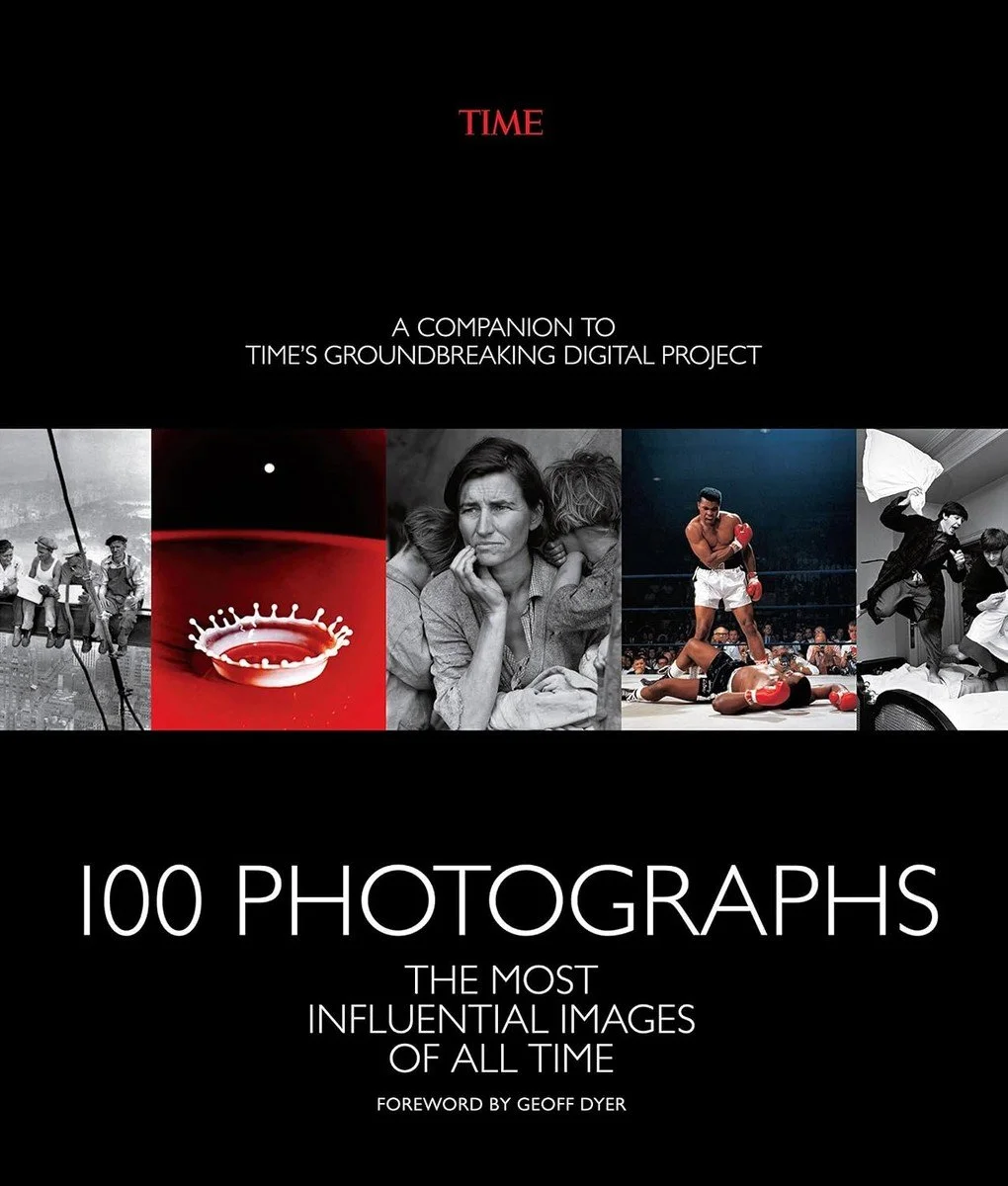
This story was partly inspired by 100 Photographs, by the editors of TIME.
The Book
100 Photographs
Time Inc. Books · 2016 · By the editors of TIME · Foreword by Geoff Dyer
The editors of TIME picked 100 photographs that changed the way people see the world. The book tells the story behind each one, from the earliest surviving photograph by Nicéphore Niépce to a selfie taken at the 2014 Oscars.
It is a companion to TIME’s digital project 100 Photos. The foreword is by the writer Geoff Dyer.
More stories:

This photograph matters because it shows the start of a new kind of photography. In 1931 Erich Salomon photographed a meeting in Berlin through the window.