Welcome to this edition of Photography Stories. Today, we look at the story behind the photograph Erich Salomon made in Berlin in 1931. We’d love to read your comments below about these insights and ideas behind the artist’s work.
(This is the story behind the photograph.)
This photograph matters because it shows the start of a new kind of photography.
Until the late 1920s, most pictures of leaders were formal portraits, made when they posed. Then small, fast cameras like the Ermanox made it possible to take pictures, without a flash and without being noticed. Erich Salomon was one of the first to use one to show politicians at work. This picture shows how far he would go: when he was kept out of a meeting in Berlin, he photographed it through the window.
It was taken on an evening when France and Germany were trying to start again.
On 27 September 1931, the French prime minister Pierre Laval came to Berlin with his foreign minister, Aristide Briand. Briand had won the Nobel Peace Prize for his work to bring France and Germany closer. Newspapers called it the first official French visit to Berlin since 1878. It came only thirteen years after the two countries had fought a war. Germany was deep in crisis, and both sides hoped that working together would help. It did not last. Within a year and a half, Briand had died and Hitler was in power. Thirteen years later, Salomon was murdered in Auschwitz.
John Szarkowski chose it for Looking at Photographs because, as he wrote, it lets us believe that if we were inside the room, we would understand everything.
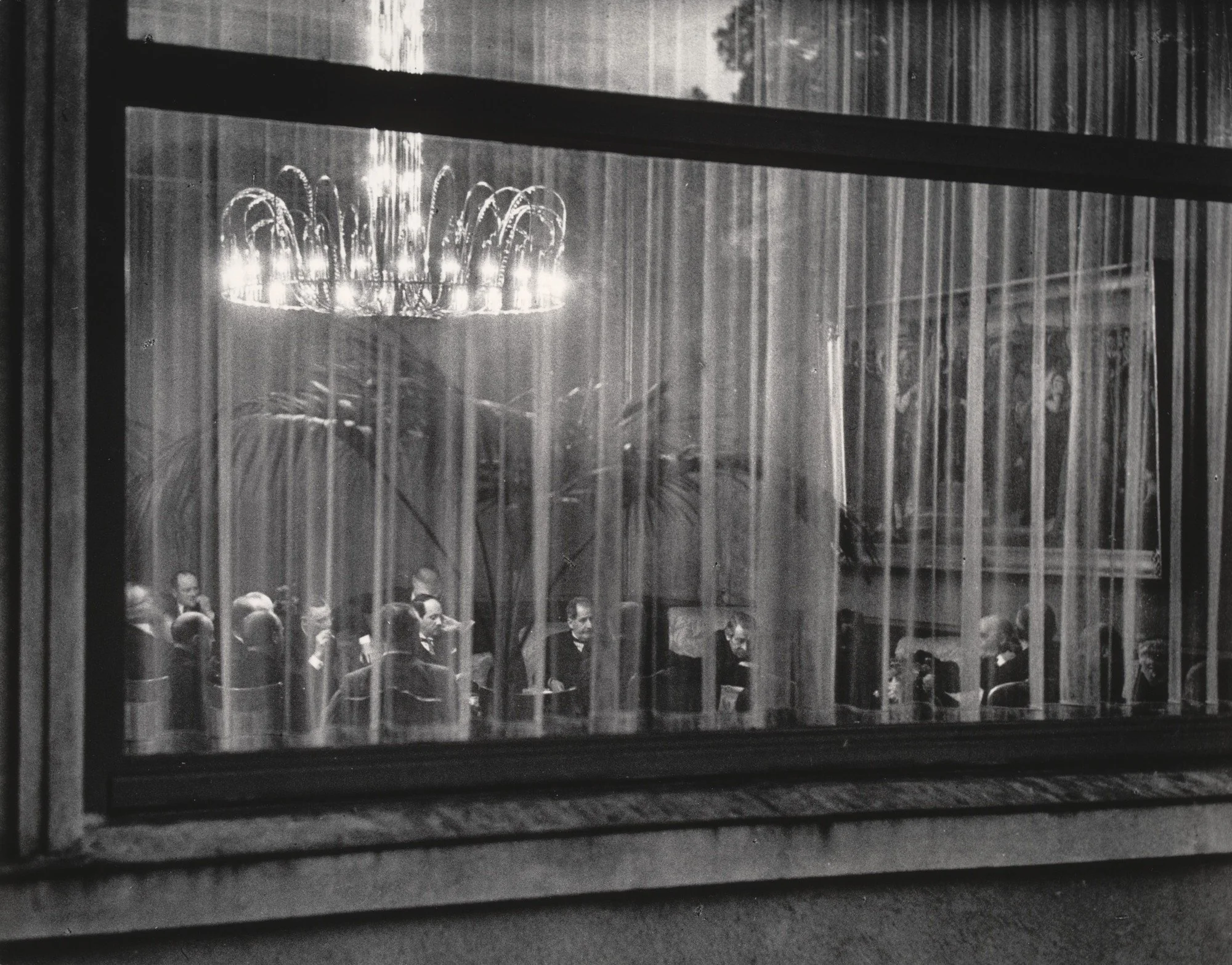
French Statesmen Visit Berlin for the First Time Since World War I, 1931. Photograph by Erich Salomon.
Chancellor Heinrich Brüning was the host, and that evening he gave a dinner for his guests at the Chancellery. Laval had come to talk about how the two countries could work together on the economy.
Salomon was not let in, so he photographed the room through a curtained window. Szarkowski writes that the man below the left edge of the painting on the wall is Briand.
The visit ended with an agreement to set up a joint economic commission. The British magazine The Spectator called it “an active advance towards better relations.” TIME was less kind and called the commission “a bit of window-dressing.”
The man outside the window
Salomon was not a typical press photographer. He was born in Berlin in 1886 and trained as a lawyer. He started to photograph at about forty. Because his Ermanox needed no flash, people in the room often did not notice him. He dressed like the diplomats he photographed and sometimes hid his camera in a hat or a briefcase. In 1929 the London magazine The Graphic used the words “candid camera” in a caption about his work. Briand once spotted him at a dinner in Paris where photographers were not allowed and called him “the king of the indiscreet.”
Salomon was Jewish. After the Nazis came to power, he moved to the Netherlands. During the war the family went into hiding, but they were found. Salomon, his wife and their younger son Dirk were murdered in Auschwitz in 1944. Their elder son survived. He served in the British Army under the name Peter Hunter, and later he gathered his father’s scattered pictures and saved them. The print of this photograph at the Museum of Modern Art is his gift.
Why did Szarkowski choose it?
John Szarkowski led the photography department of the Museum of Modern Art in New York. In 1973 he picked 100 pictures from its collection for Looking at Photographs. He wrote that once cameras became small and fast enough, even the “immemorially secret” parts of public life could be photographed. Salomon, he wrote, convinced people in power that “it would be a good thing if the people of the world could see the diplomats around the coffee table, working.”
He called this picture “one of the most persuasive of his high-diplomacy pictures, for it allows us to believe that if we were inside the room we would understand everything.” He was honest about the limits too. Inside, he wrote, Salomon mostly showed tired men in dinner jackets holding brandy and cigars. He found the pictures “endlessly fascinating,” but he doubted they changed what people understood about politics.
This story was partly inspired by Looking at Photographs, John Szarkowski, The Museum of Modern Art.
The Book
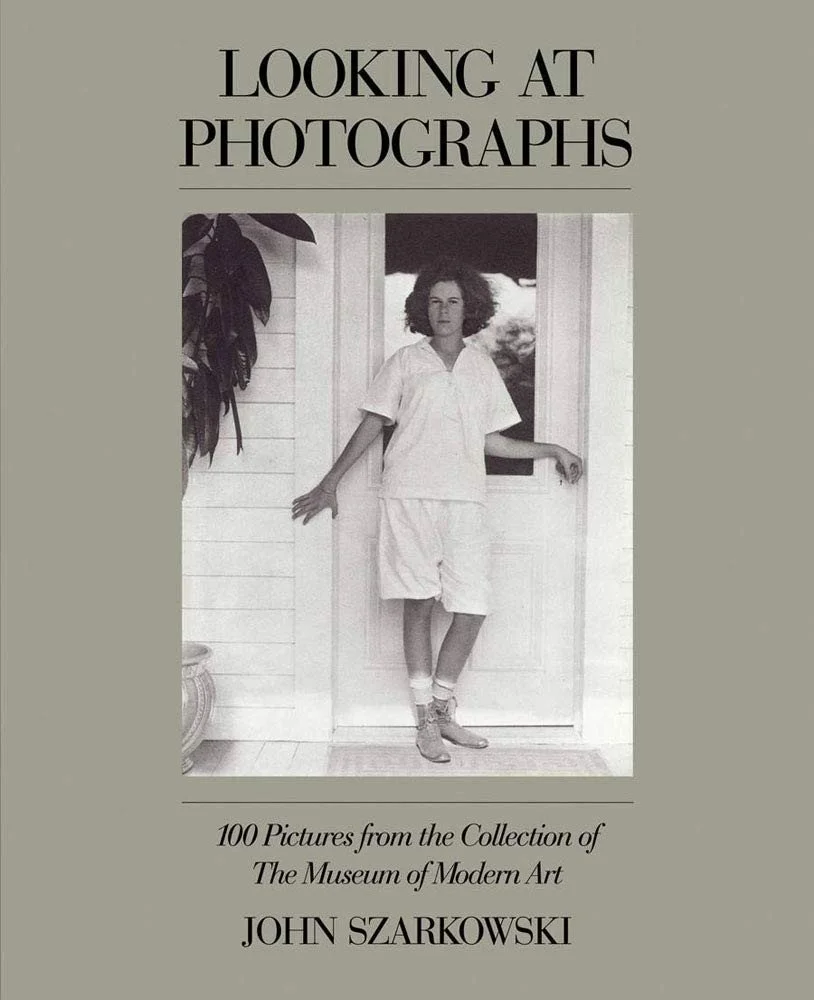
Looking at Photographs
The Museum of Modern Art · 1973 · 216 pages · By John Szarkowski
John Szarkowski chose 100 photographs from the collection of The Museum of Modern Art in New York. Each picture has its own page, with a short text by Szarkowski next to it.
Szarkowski led the museum's photography department from 1962 to 1991. The book first came out in 1973, and MoMA reissued it in 2009 with new duotone printing.
More stories: