Welcome to this edition of Photography Stories. Today, we look at the story behind the photograph Ragnar Axelsson made in Iceland in 1995. We’d love to read your comments below about these insights and ideas behind the artist’s work.
(This is the story behind the photograph.)
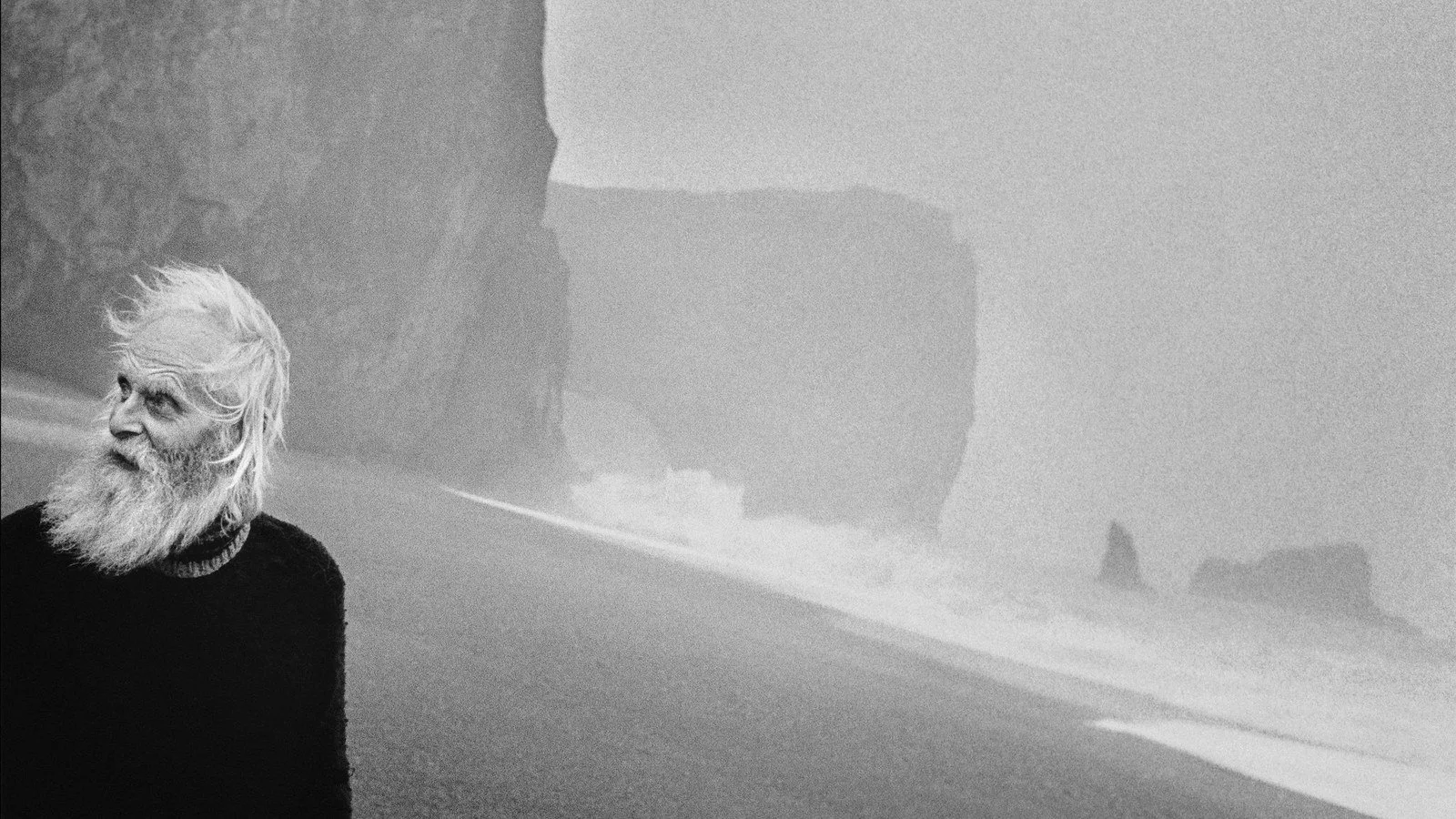
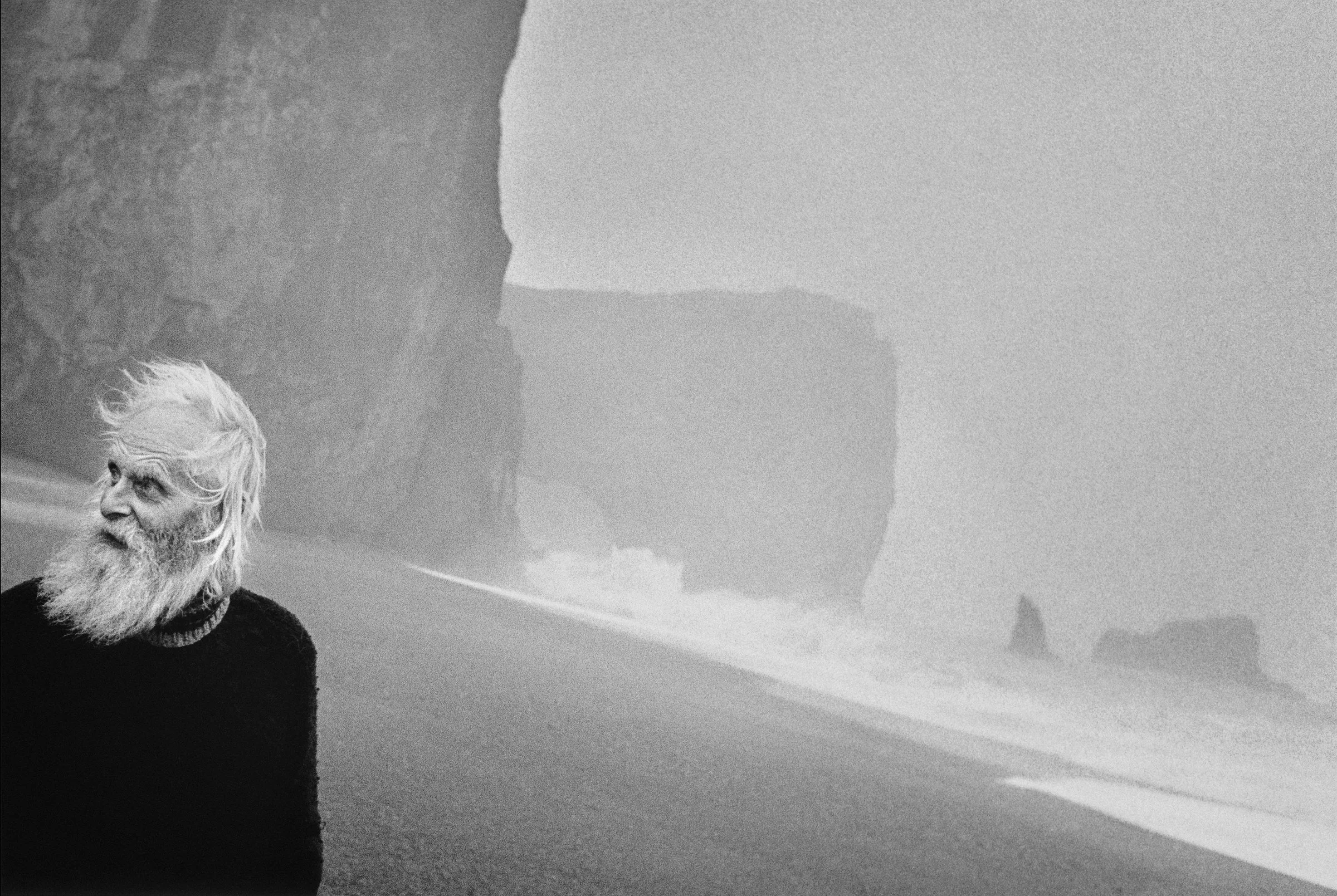
This is the photograph people ask Ragnar Axelsson about most.
If he were a musician, he says, it would be his ‘Yesterday’. It shows Guðjón Þorsteinsson, an old farmer from the south coast of Iceland, standing at the very edge of the frame. Behind him, waves hit the rocks of a black beach.
It started with a cup of coffee and a newspaper picture that went wrong.
Axelsson met the farmer after a storm, when the cows on his farm had to be milked by hand. A picture of the milking ran on the front page of the newspaper, and soon after, the cows were taken away. Axelsson went back to apologize, and the two men became friends.
In this story, Axelsson tells why his coffee came in a glass for false teeth, why the frame breaks the rules, and how the picture changed his work and the farmer’s life.
On the south coast of Iceland, near the cliffs of Dyrhólaey, lived an old farmer with white hair and a long white beard. His name was Guðjón Þorsteinsson. He kept cows with his brother.
Ragnar Axelsson first met him after a storm.
The storm had cut the electricity, and there was no power on the farm. The cows had to be milked by hand. Someone told Axelsson about two brothers who were doing exactly that, so he went to their farm and knocked on the door.
The old man who opened it had very blue eyes.
“I saw in his eyes that he was a kind man. So I said, I want to photograph you when you’re milking by hand.”
The farmer offered him coffee. Axelsson did not drink coffee at the time. Then the farmer took a glass that had his false teeth in it, emptied it, and poured the coffee into it.
“I thought, well, I’ll drink it. So I drank the coffee, and it broke the ice.”
Axelsson photographed him milking. The picture ran on the front page of the paper. In it, the cows looked a little dirty. Soon after, the cows were taken away from him.
When Axelsson heard about it, he was very sad. He went back to the farm.
“I said, I’m so sorry, I didn’t want that to happen. Can I buy you new cows? And he said, well, I didn’t want to milk them anyway. I want to quit. So I’m happy. No worries.”
That was the start of a friendship. Whenever Axelsson passed the farm, he stopped to see him.
On the fourth visit, the two men walked down to the black beach. The farmer was looking for a mink that was killing his eider ducks. He was angry.
There was steam in the air. The waves were hitting the rocks.
“I felt that there was a magic moment. I was waiting. I was just backing off while he was walking. He hardly noticed that I was taking pictures.”
Axelsson was trying to catch the waves hitting the rocks while the farmer looked angrily toward the mink. He did not take many pictures.
“I got about six or eight pictures of him. And this was the one.”
The old man stands at the very edge of the picture, with his white hair against the mist.
“He’s kind of breaking the rules of how to frame a picture. It just happened. I just had the feeling how to do it. It’s the same as having a feeling for writing a song or playing a guitar. I took more pictures of him and framed them differently, but this was the frame that really worked.”
Moments like this are what Axelsson tries to capture.
“I try to capture the expression on people’s faces. It’s a moment that never comes back, and it tells a story. It’s the face of a nation in one face. The Vikings and everything are in his face.”
The picture changed a lot for him. For years he had photographed in the Arctic, always in black and white. Magazines asked to see his work. When they saw it was black and white, many of them did not even answer.
“They were just gone, because it was in black and white. And I didn’t care. I just wanted to do it my way, and still in black and white. After that photograph, it went viral or something. I don’t know why. But suddenly people wanted to see more.”
Today it is the photograph most people ask about at his exhibitions.
“If I was a musician, this would be my ‘Yesterday’. And you want to continue and write ‘Let It Be’, ‘Here Comes the Sun’, ‘Hey Jude’. Sometimes I would like to skip it. But I should be glad about it, and I’m proud of it. You always want to look for the next one.”
The farmer liked the photograph very much. Because of it, he got roles in two films and appeared in four or five advertisements. When companies contacted him, he told them to call Axelsson.
“I told them, you pay him like the others, don’t cheat on him, because he’s an isolated farmer. When he got paid, he called me and said, you have money here. I said, what? He said, they paid me so much. Well, it’s your money, not my money.”
Before he died, the farmer wanted to give Axelsson part of his land. Axelsson refused. He felt it should go to the farmer’s relatives.
In the last years, when the old man was ill and did not eat much, Axelsson brought him food whenever he passed his home.
Guðjón Þorsteinsson, Iceland.
“I kept the friendship with him because he gave me so much by allowing me to take that photograph.”
More stories: