From Amsterdam Walks to Family Life in Ukraine: What Connects Wesley Verhoeve’s Notice Books
Welcome to this edition of [book spotlight]. Today, we uncover the layers of 'NOTICE Journal, Volume Two,' by Wesley Verhoeve (self-publishing). We'd love to read your comments below about these insights and ideas behind the artist's work.
*Notice Journal, Volume 2 comes out on October 20. Anyone who orders the book up to and including October 31 will also receive a second, smaller book. It is a travel diary with more photos and more stories, and it is not shot in half frame. Only these early buyers will get it, and it will never be reprinted.
Wesley Verhoeve photographs first and finds the story later.
His Notice books began with learning to slow down during lockdown in Vancouver. Notice Journal, Volume One followed his walks through Amsterdam across two springs, as he adjusted to life after twenty years in New York. Volume Two takes him to Ukraine with his partner and her family, where he photographs the ordinary moments of life during war.
In Ukraine, unfamiliar places reminded him of his own family.
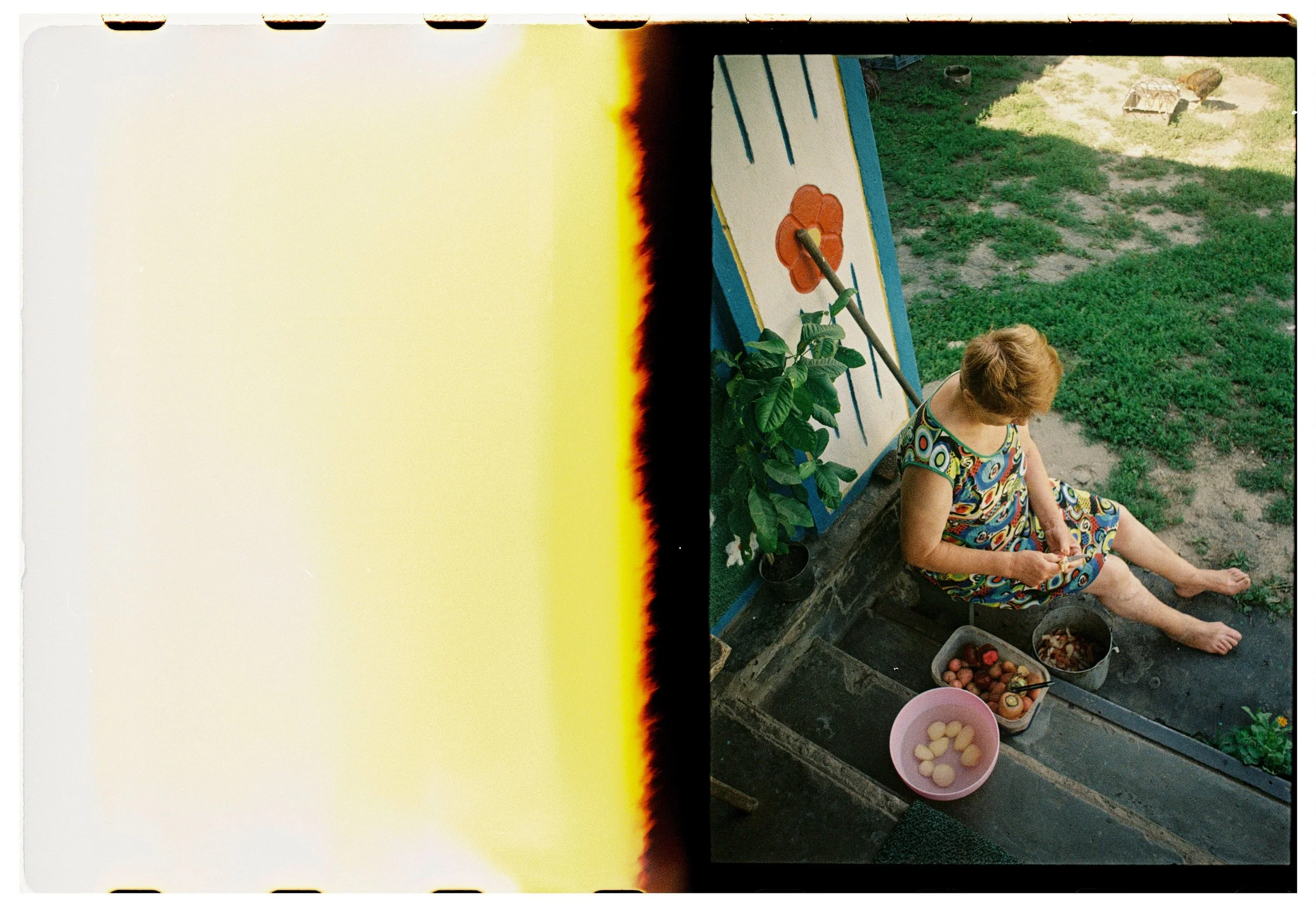
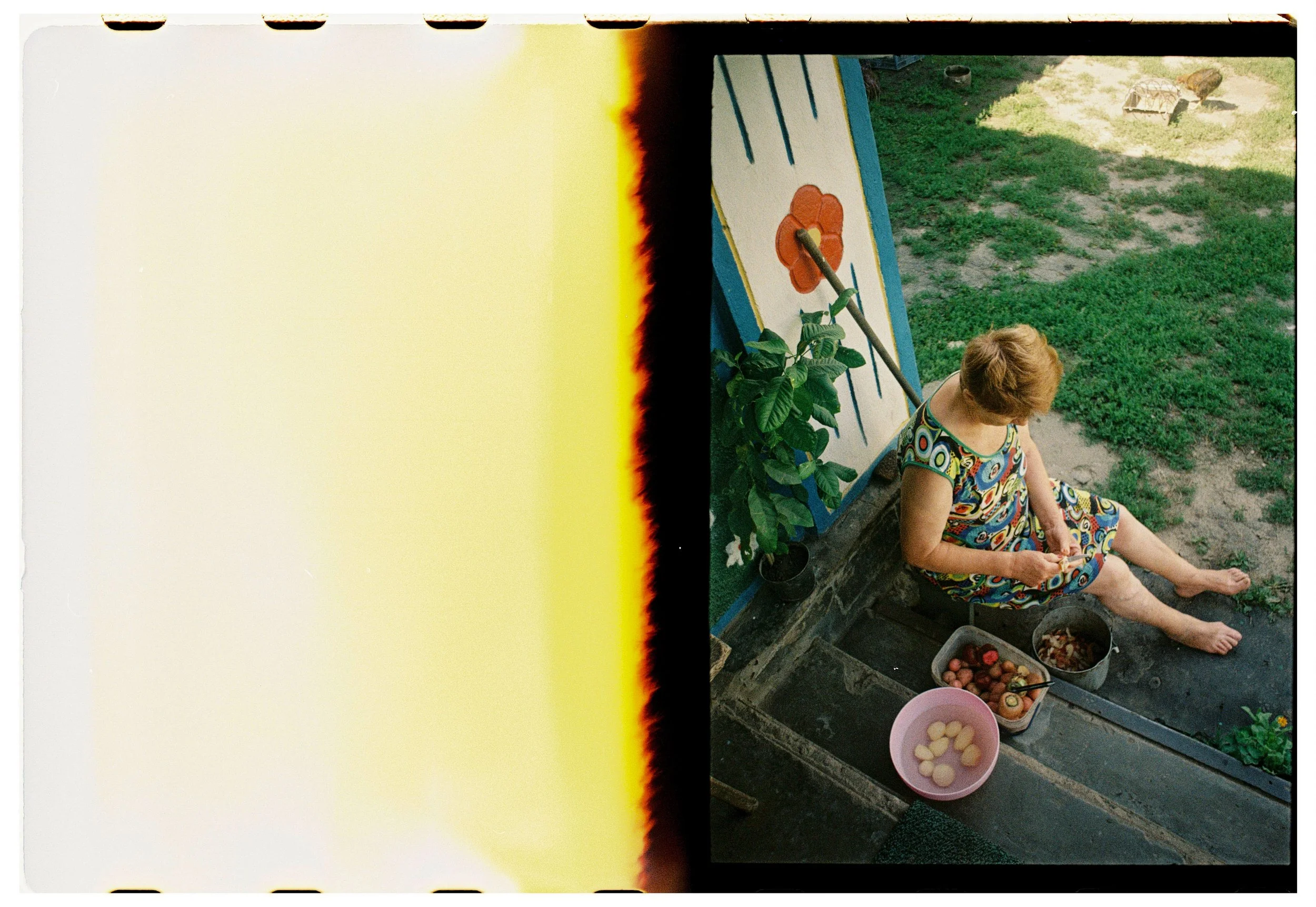
The food people grew, their rituals and their family relationships brought back memories of his grandmother. Being accepted as part of his partner’s family gave him room to photograph the small details that caught his attention. The book contains 71 photographic pairs, each showing two images taken one after another, with their connections discovered when he later looked at the negatives.
Verhoeve explains how describing a project in one sentence helps him choose what belongs, and why even a photograph he loves may need to come out. He also recalls an image he almost left behind, until a Ukrainian friend explained something in it he had not understood.
The Book
Notice Journal, Volume Two documents family life in Ukraine. Wesley Verhoeve made the photographs during two weeks with his partner’s extended family in the summer of 2025, moving between the countryside and the city. Cooking, gardens and gatherings around a table appear alongside moments of loss, including a visit to a son’s burial place on his birthday. Together, these scenes describe the routines and relationships people continue to care for during war.
The book brings together 71 photographic pairs made with a half-frame camera, alongside an essay by Ukrainian photographer and writer Julia Kochetova. Recipes by Alison Roman and Ukrainian chef Anastasiia Klymenko, Verhoeve’s partner, extend the place of food and shared meals beyond the photographs. An illustrated map by Jeffrey Phillips accompanies the work, which was designed in collaboration with Maxwell George. (Website)
*Notice Journal, Volume 2 comes out on October 20. Anyone who orders the book up to and including October 31 will also receive a second, smaller book. It is a travel diary with more photos and more stories, and it is not shot in half frame. Only these early buyers will get it, and it will never be reprinted.

How did you first come to photography, and when did it become something you wanted to pursue seriously?
My father is a photographer, so I grew up around it. Our house was full of art books, and my father was always taking photos, going to exhibitions and having his own exhibitions. It was not really something I thought about. It was just always there. I got my first little camera when I was about six. We had a darkroom at our house where my dad did his developing, and I would play under the table with my Legos in the red light. Photography was always part of my life.
I didn't really intend to pursue it beyond what one does as a child, just for fun and, of course, as a way to spend time with my father. Then I got bitten by the music bug in my teens. I pursued music for a long time and actually worked in music for a long time. After more than ten years of working professionally in music, I was getting a bit burnt out. So I took a step back and started traveling a bit within the United States, where I lived at the time. I brought my camera along, because that is what I always did, but I wasn't planning anything.
I had lived and worked in New York for more than ten years at that point. When I was burnt out, I also realized that this is a huge country and I had never really gone anywhere. I was always in New York or LA, because I was so focused on my music work. At the same time, a lot of my friends had started leaving New York, because it is quite expensive for a creative person. So I thought, let's just go and visit these friends. I can work on my laptop in a cafe in Detroit just as easily as I can at home in Brooklyn.
I started taking photos of creative people I met in these cities. Purely out of my own curiosity, I asked them what made them move there. Why not New York? At the time, around 2013, things were not as democratized by the internet as they are now. Of course we had the internet, but it was still quite important to be in certain places. So I asked them about that, and it got a little out of hand and became a project. It was called One of Many, and it was really my first photography project. Without much of a plan, I ended up photographing about 600 creative people across twelve cities. The project was then serendipitously sponsored by Squarespace, Mailchimp and some other companies.
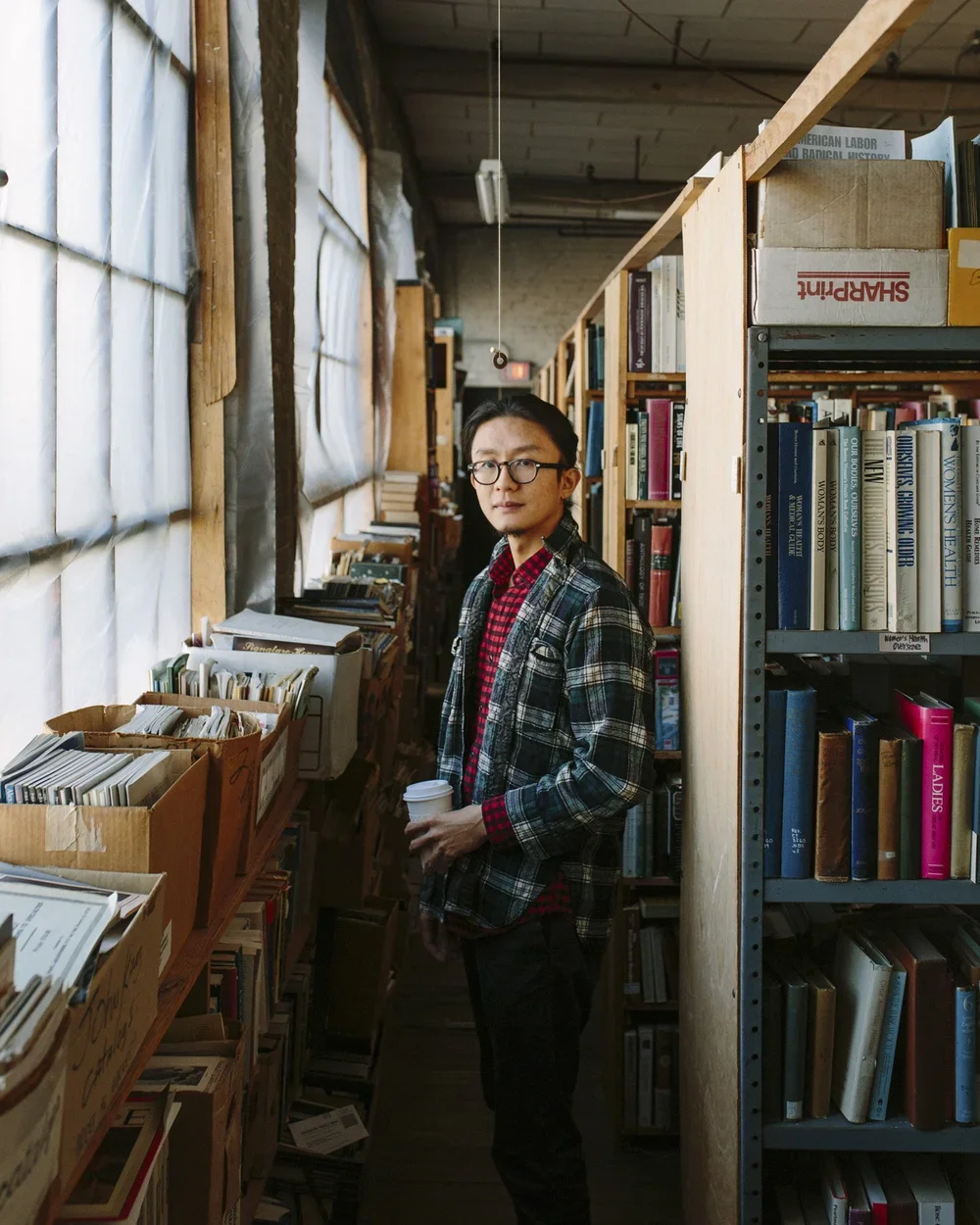
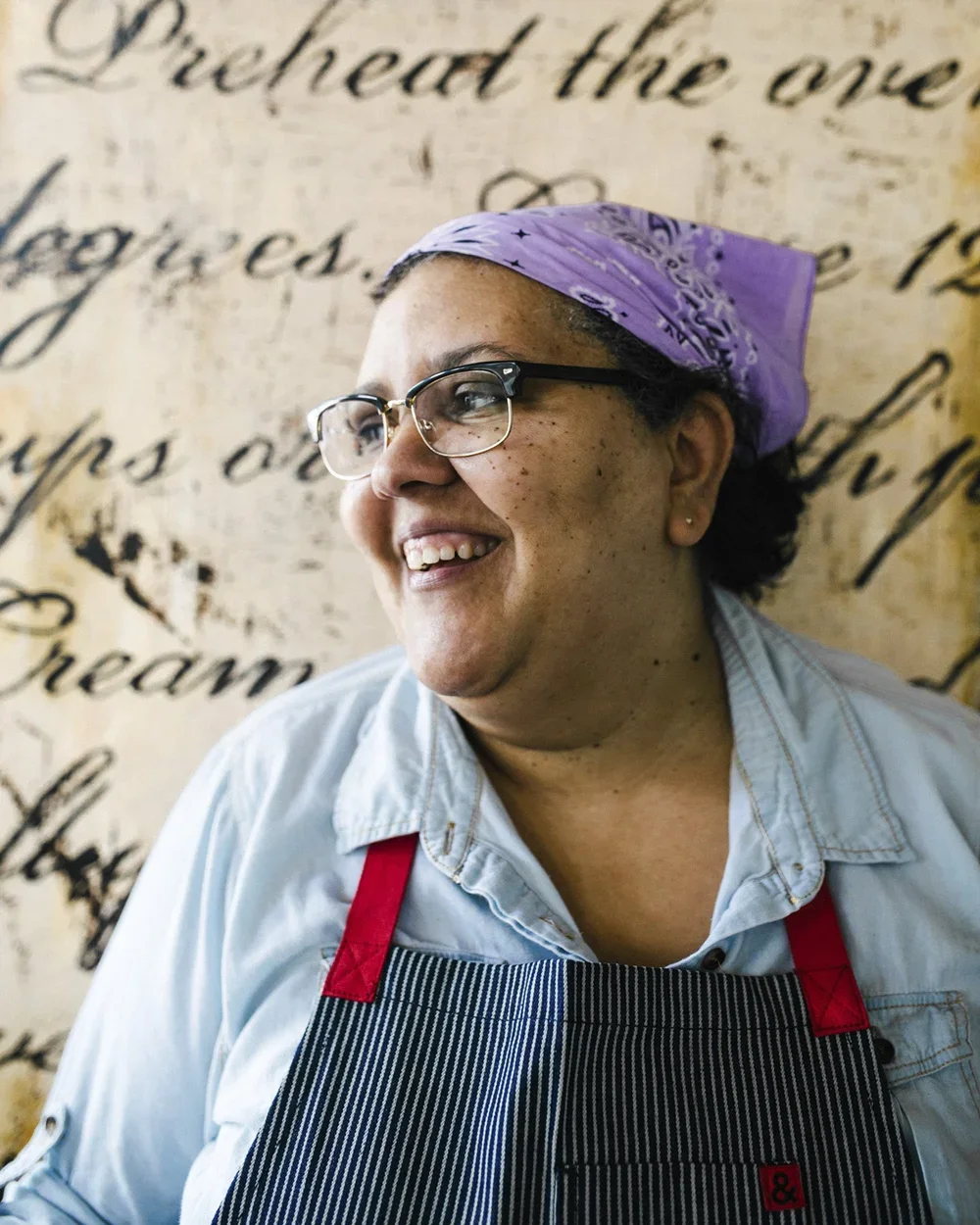
I remember that when I was taking these portraits, even before there was any sponsorship or money involved, I felt super alive. I was burnt out on working in music, but the feeling I got from taking photos was amazing. I knew this was what I wanted to do. Because I did so much of it in a short period of time, and because I was fortunate to have these sponsors, I was able to pursue it.
That project became the start of my photography career, because companies started hiring me to take portraits of creative people, similar to the ones I was making for my own project. The timing was particularly lucky. Advertising and marketing were moving away from using only models and towards featuring real, interesting people in their ads and marketing materials. When people in that business saw my work, they thought: this guy photographs real people, and he does it in a way we like, so let's hire him. Slowly, over the course of two or three years, I became a full-time photographer.
How many people did you end up photographing?
For One of Many, I photographed about 600 people.
Did the project shift from where you started, or do you see it as a completed project?
It is a completed project. It covers twelve cities, all of which I would call secondary cities. I don't mean that disrespectfully. Things were different at the time. New York was seen as a center of creativity, and so was LA. Of course, that view is unfair, because there was a lot of other stuff going on, but that was the perception in the media. So I picked twelve cities that were not New York or LA and tried to put them on the map and shine a light on their creative communities. With twelve cities and about fifty people per city, that comes to about 600 people in total. The project was published in 2013, 2014 and 2015.
That's awesome. Let's talk about Notice Journal. Volume One grew from your first springs in Amsterdam, and Volume Two comes from a trip through Ukraine with your partner and her family. When did you realize that these photographs belonged to the same Notice series?
The way I photograph naturally falls under the banner of noticing. These two books actually follow my first book, which was simply called Notice. Its cover has a clever little detail that you have to notice to see.
I made that book during the first six months of the pandemic, when I was stuck in Vancouver, and I had to teach myself to see differently. Before the pandemic, I was used to traveling around the world to busy cities, going to the busiest part, photographing people and having conversations with them. When I got stuck in a suburb of Vancouver during COVID, I couldn't do that. There was no busy place to go and no people to talk to. I really had to teach myself to see and photograph differently again. That falls under the banner of noticing, because I had to slow down and start noticing things I would usually rush right past on my way to the busy thing.
This book from Ukraine, which comes out this month, is a continuation of that process. It is about slowing down, looking at things I might usually rush past in the busyness of daily life, and trying to document them.
Did you know you were making Volume Two while you were in Ukraine, or did it become clear afterwards?
I didn't really know what to expect, because I had never been there, and I had never been to a country at war. It was all new, and I didn't know how it was going to be. So it wasn't a plan. But as I was there and photographing more, I became very excited about what I was seeing: the beauty, the strength and all the things I was noticing.
I was also intrigued by something else. Ukraine is so far from where I grew up, with a different language and a different culture, yet so much of it was recognizable to me from my grandmother and the way she lived her life. I saw it in the kind of food they grew, which she grew too, in their rituals and superstitions, and in the way they interact with family. So much of it felt familiar. That was a surprise, and it helped me document it in a sensitive way.
If the place and circumstances are so different, what has to remain the same for both bodies of work to still be Notice?
Volume One was about life changes. I had just moved to Amsterdam after twenty years in New York, and a lot of things in my life were changing, including where I lived and my long-term relationship at the time. That book documents me processing those changes by going on long walks through my neighborhoods in Amsterdam during springtime. I shot it across two different springs, so spring became a kind of metaphor for renewal and a new start. The things I photographed were very specific to that. They were spring moments and spring details that I noticed.
That is not the case for this book, which was shot in summer. My first book was about meditative moments, and the second was about therapeutic moments. Those two books were both about me and what is inside of me. This book is about what I got to witness in other people. That is the difference. What stays the same is that it is me noticing things.
You made a deliberate decision not to photograph the war itself, even though it is present in the background of the entire book. When did you make that decision, and what did it allow you to photograph instead?
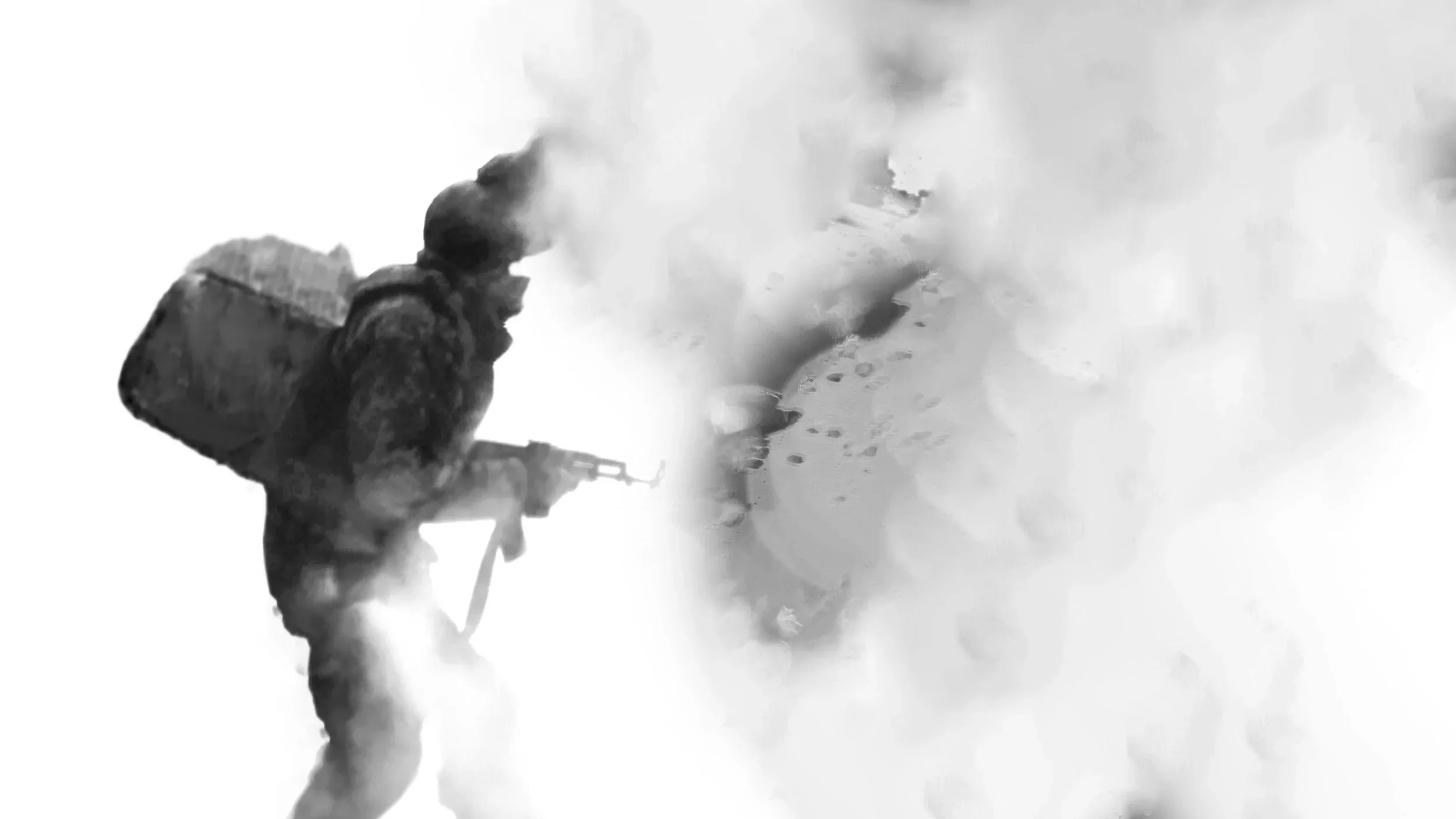
I have the utmost respect for conflict photographers, the people who really go out and document the violence, the destruction and the war. What they do is so important. The fact that we in the rest of the world get to bear witness to it can hopefully help it end sooner. I don't know exactly, but it is super important and very brave work. I am not that kind of photographer. I am not that brave, and that is not where my eye goes anyway.
Also, we didn't go to the front. The areas we visited are affected by the war, but real war photographers go to the front, where there is constant violence and things happen at great speed. I could have photographed some things, though not as much as conflict photographers do when they are there. But it is just not what I do, and I didn't want to pretend. I focus on small moments and human details, wherever my eye goes. I just don't think I would be very good at the other kind of work.
Was there ever a moment when you almost broke that rule because something directly connected to the war appeared in front of you?
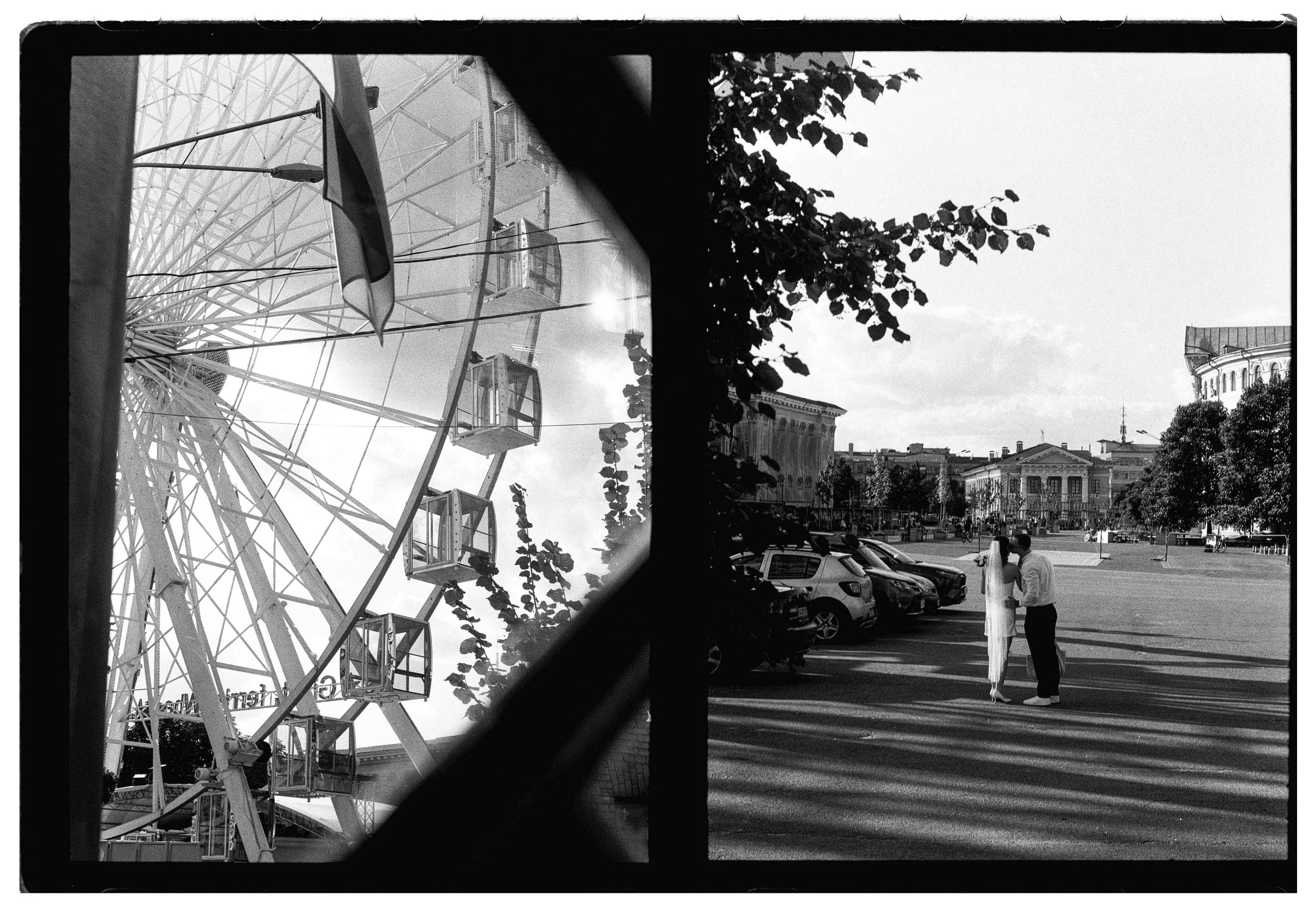
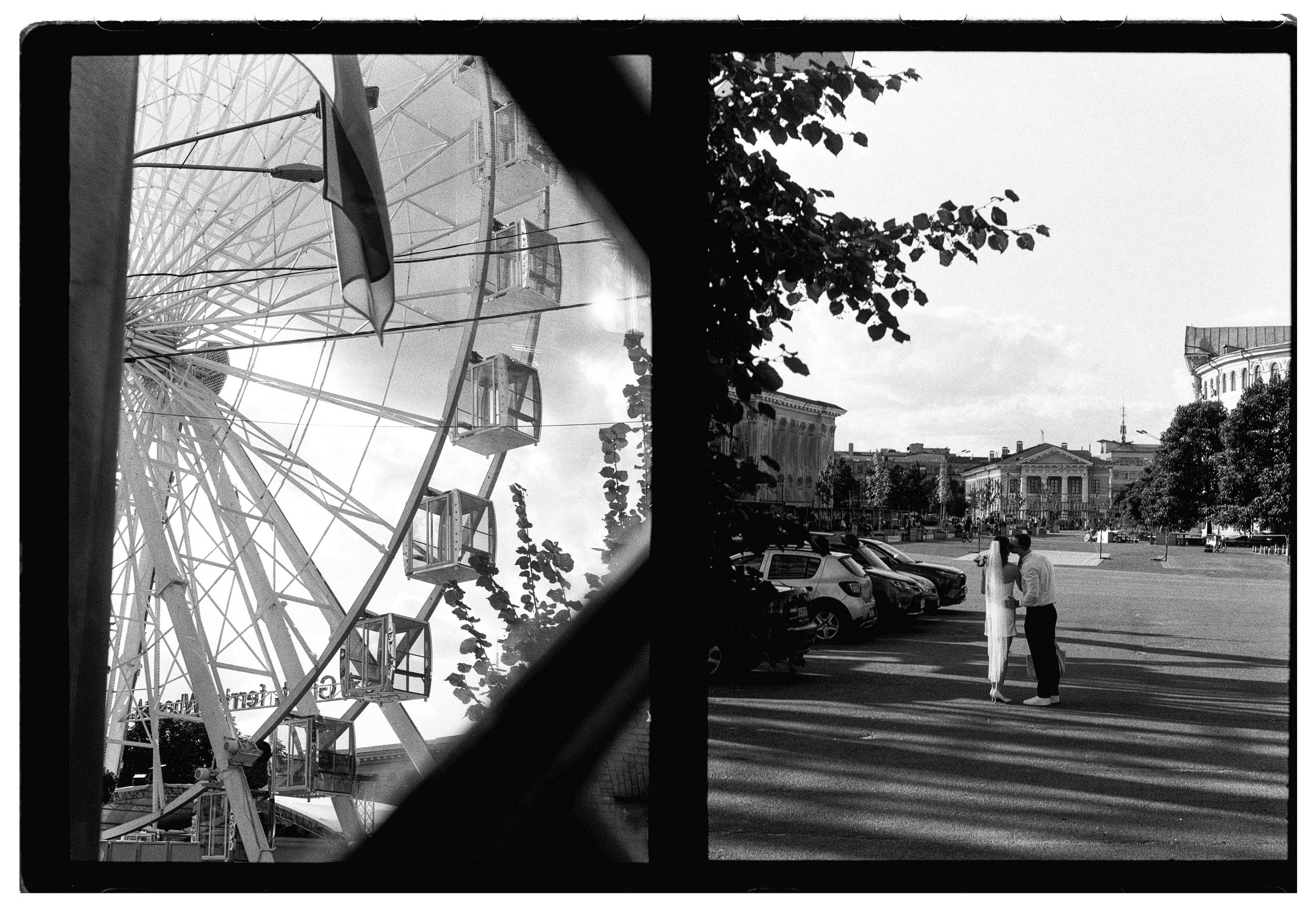
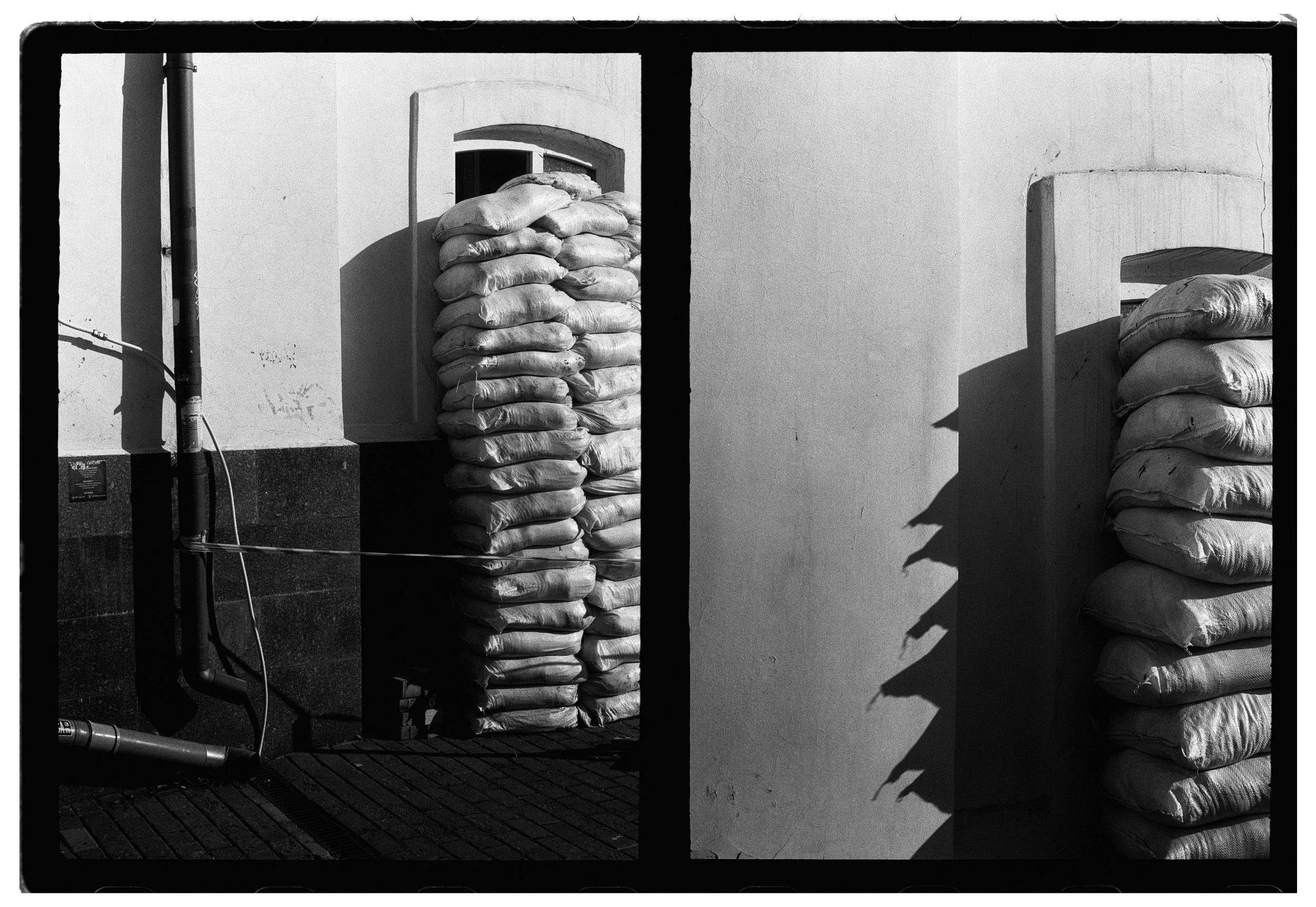
Yes. One of the last two photos in the book is the only one with something war-related in it. It is a diptych showing sandbags piled up in front of an important building and its windows, which you see a lot over there for protection. I took that diptych, then turned 180 degrees and took two more photos. One shows a newlywed couple taking a selfie in front of the courthouse. The other shows a Ferris wheel, which is, of course, an object of fun and entertainment.
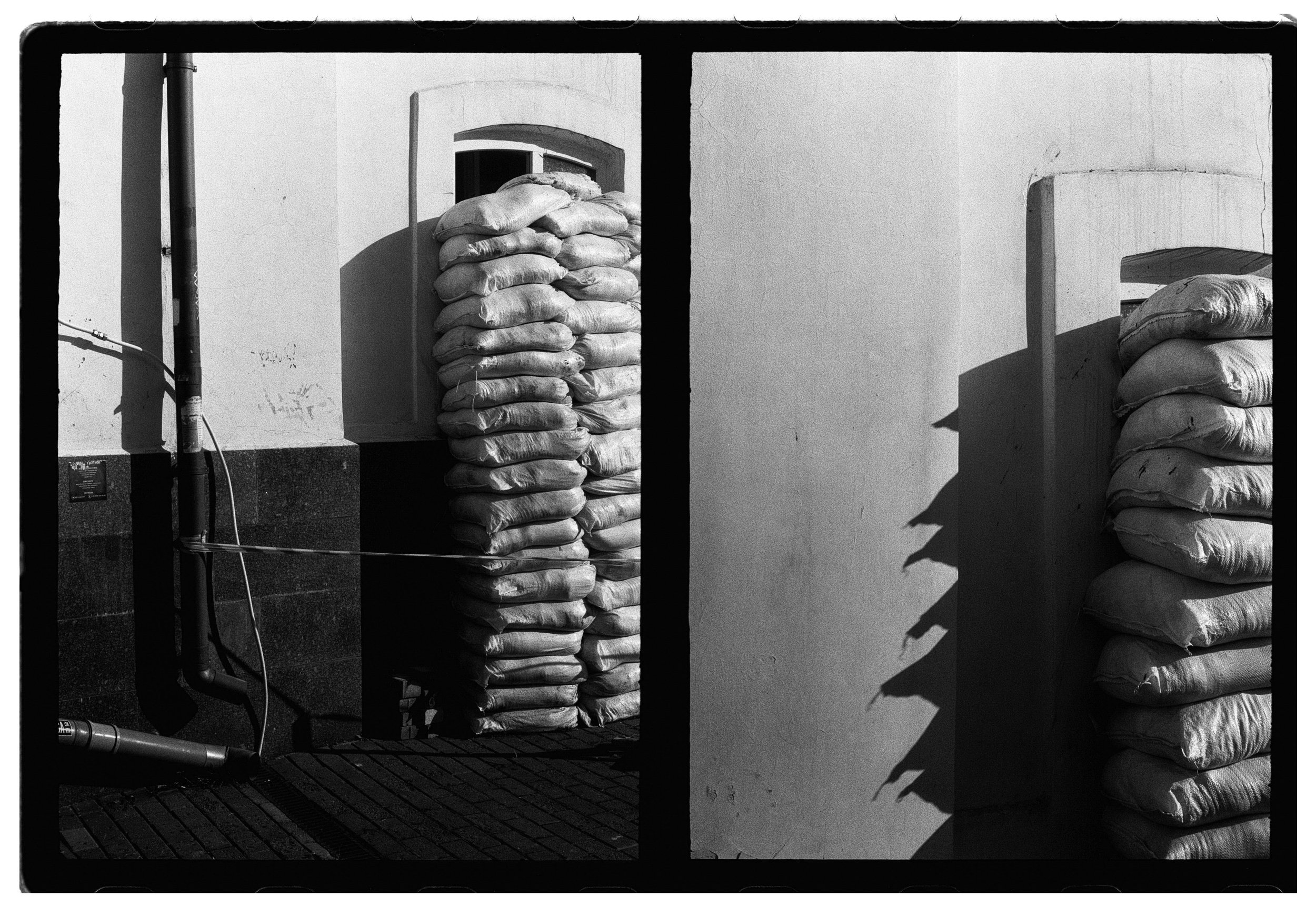
So the only time you see something of the war in the book is at the end. It is there to show the real story, the dichotomy that the war is going on and real life is going on too. This strength and this beauty exist at the same time. For me, as someone who has only ever lived in a country not at war, it was special to see that people keep going. Of course it is terrifying, there are all kinds of terrible things happening, and it needs to stop as soon as possible. But life is also happening. People are getting married, starting businesses, studying and loving. All of that is happening at the same time.
Speaking of leaving things out deliberately, how do you know when leaving something out makes a project more precise rather than less truthful?
The way I approach making books is that I build each book around a sentence. So, for the most part, it is quite easy for me to cut things. I love editing. By editing, I mean selecting and sequencing images, not Photoshopping. That part is really fun for me. I love cutting and cutting until we get to the purest version of the story.
I also do this for other people's books as a curator, and I always tell them the same thing. There will be photos that mean so much to you because of an emotion, because of what you felt when you took them, or for some other reason. But if a photo doesn't fit, it doesn't fit, and we can't force it in. That's okay. Just because a photo is not in this book doesn't mean it is lost. It can become something else later on.
So for me, it is quite easy to do, and I have done it a lot. I was a curator for ICP in New York City, where I did almost a hundred exhibitions. I have done this so many times that it has become second nature, and it is fun.
So when you see a photo, how do you recognize that it should come out of the sequence?
If it does something that another photo in the sequence does better, it has to go, because you don't want to do the same thing twice. And if it doesn't speak to the core sentence, the story you are telling, then it can't be there either. Sometimes you think you can try to fit it in a little bit, but you have to be ruthless. That is part of making a book, a zine or a series.
Was there an ordinary photo that became much more important to you once you saw it alongside the rest of the work?
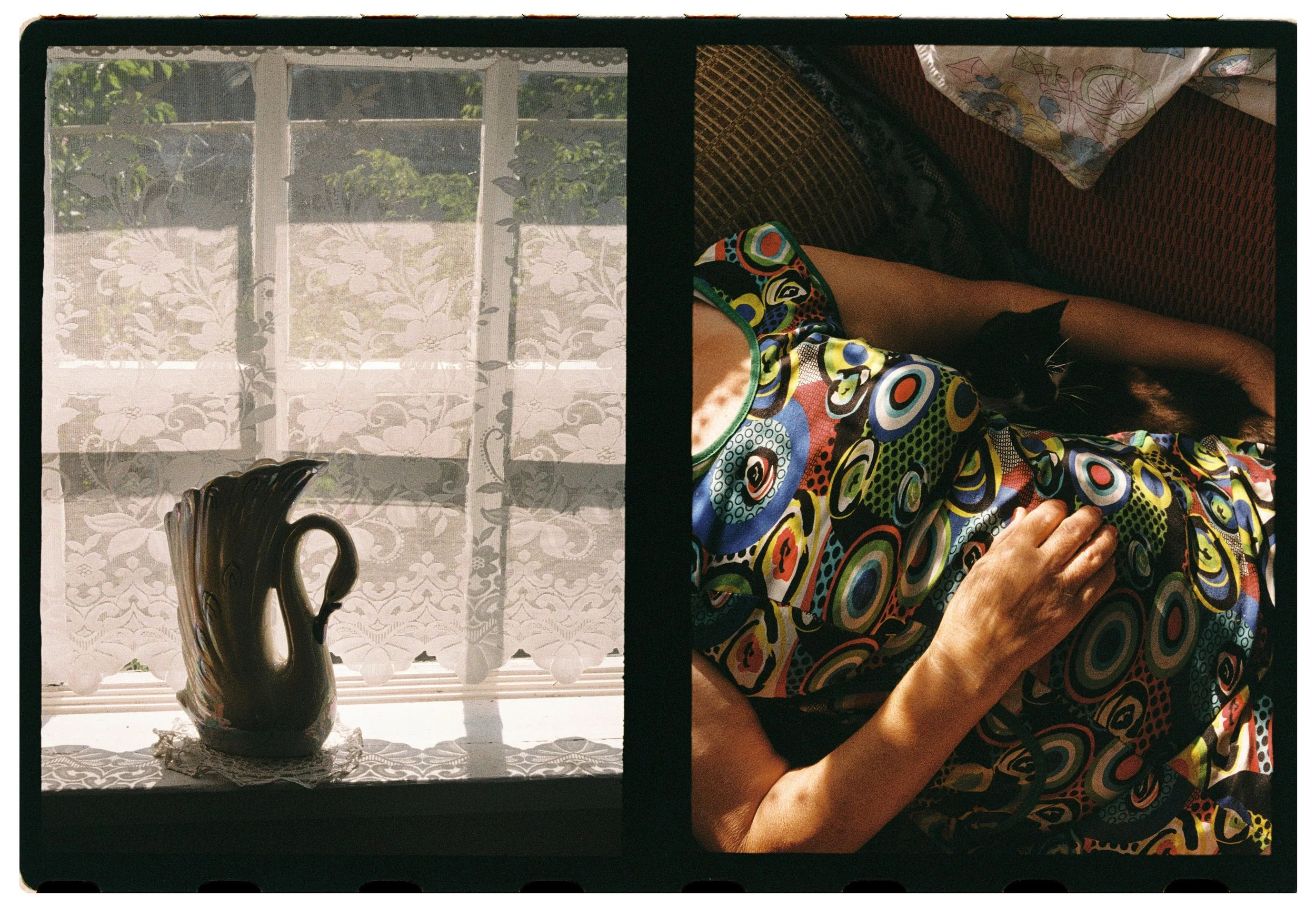
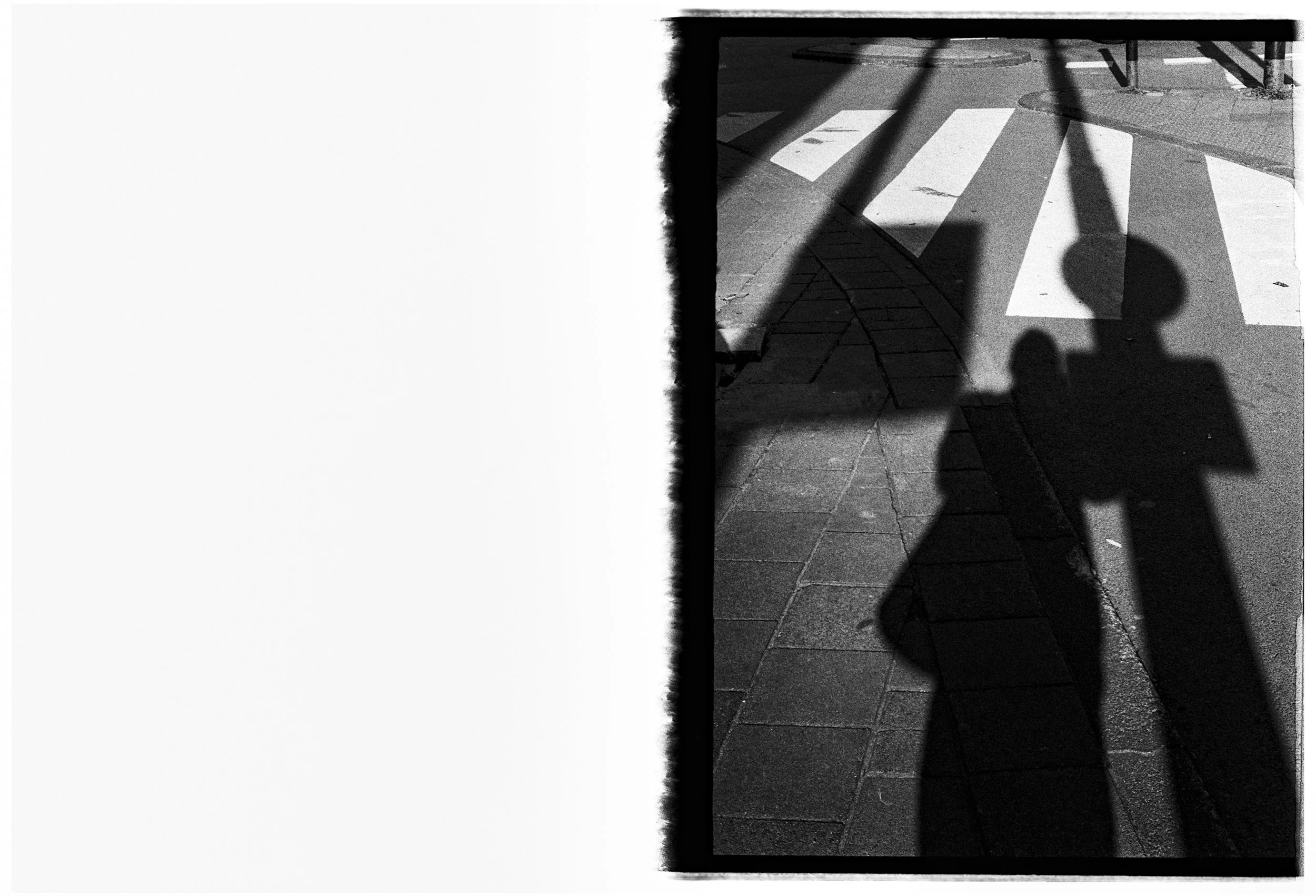
Yes, there was one. These are all diptychs made with half-frame photography, so it is never about a single photo. Each one is a single negative with two images on it that I took one after the other.
This diptych wasn't going to be in the book. It just wasn't that remarkable to me. Then I showed it to Julia Kochetova. She is a Ukrainian conflict photographer and writer, an incredible person and a friend, and she was one of the first people to see the work. She told me about a Ukrainian folk symbol. It is hard to see, but the photo shows a stork nest on a pole right in front of a house, and there are actually baby storks in it. She told me that in Ukrainian culture this is an incredibly important symbol. If there are birds in the stork nest in front of a house, it means that the house is going to be okay. Of course, I didn't know that. Suddenly the photo took on so much more meaning, and I was able to place it in the sequence where it really shines.
So the diptychs are shown exactly as they were shot? You don't pair them yourself?
That's correct. They are shown as they were shot. That is also one of the reasons to cut. I had to cut some images because they didn't work as diptychs. There may have been a really cool photo on one side, but if the pair didn't work as a diptych, it didn't work for this book.
When you took the first half of a frame, did you try to pair it in your mind with something else? Did you pre-visualize how the diptych might work?
No, I wouldn't. One of the things I love about photography is that it is one of the few times I can turn my brain off and feel very calm inside. I photograph very instinctively and from a place of emotion. The best moments are when I'm not thinking at all. I just shoot as I see and as I feel. I don't keep track of which frame I'm on. I could try, but then I'd have to ask myself whether this is the first half of one frame or the second half of another. It's too much work, and that's not how I work. I work on pure intuition.
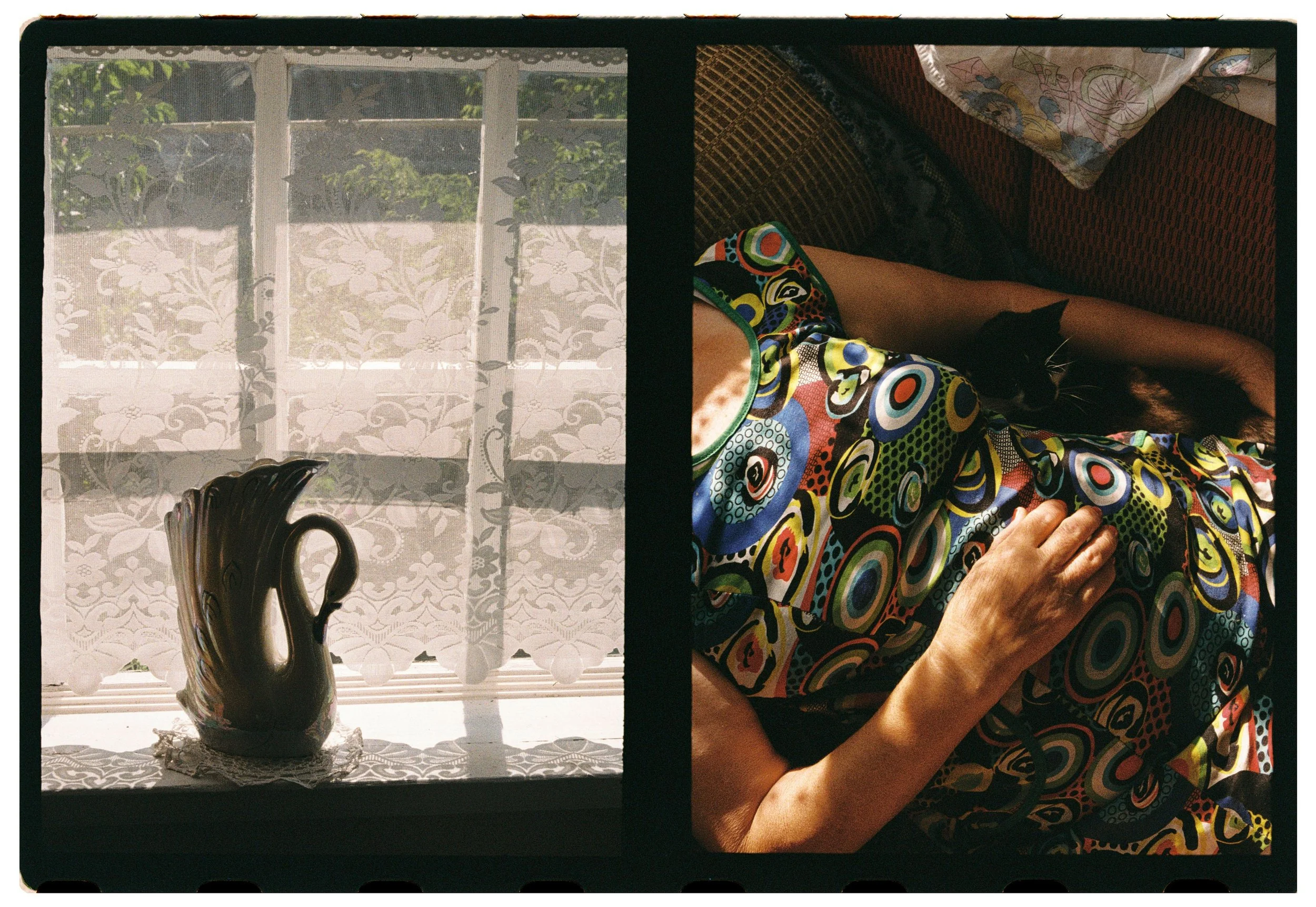
That gives me a really fun second phase. When I look at my negatives afterwards, I go on a whole new journey of discovery, noticing in which diptychs the two images actually strengthen each other, where there is a graphic or thematic echo between them. On top of that, I can play with placing diptychs next to each other, which creates other echoes. For example, here are two diptychs side by side. Both have windows with lace curtains and bright light shining through them, which gives them a kind of sculptural quality. This one shows a woman in a colorful patterned dress, and this one shows another window with a similar vibe. I could never have planned this in advance. But when I go through all the images, I see how great it is to put them next to each other. It strengthens both diptychs.
You were traveling with your Ukrainian partner and photographing her family. How did being personally connected to the people change what you noticed, compared to arriving as an outsider?
I don't think I would ever have been able to get this kind of access otherwise. The things I photograph probably look a bit strange to most people who aren't into art. Why is he taking a photo of this doorknob? I imagine most people who were not emotionally connected to me might have found it weird that I was taking photos of everything all the time. In this case, I was accepted because I was part of the family. That allowed me to shoot as I normally would, instinctively and from a place of emotion, and no one was bothered by it. It was just: that's Wesley, he's taking photos.
Was there anything your partner understood immediately that you initially failed to notice, perhaps something cultural, since you were the outsider?
Yes, of course. So many things. It makes for a lot of good laughs, because some parts of the culture are very similar and some are not. For example, my grandmother didn't take a celebratory shot of alcohol at breakfast because something specific had happened, but that is very common there. There are all these nuances. They aren't necessarily funny, but they can be when two different cultures gently rub up against each other. Something I might find funny and strange is the most normal thing in the world for the people there, and of course it works the other way around too.
It is also fun to relate to each other. I had a conversation with the husband of the grandmother's sister, an older man, and he asked what kind of food we ate in my family when I was younger. I was able to list a few dishes, and then you relate to each other: we do this too. It's a little bit different, but it's kind of the same thing. It's just human behavior.
We talked about it a little already, but the book contains 71 diptychs selected from more than 1,400 photographs. Since the pairings were already created in the camera, what became the hardest part of the edit?
The hardest part, I think, is deciding what story you are telling. Once you decide that, it informs everything else. Once you know the sentence for the book and the story you are trying to tell, it is actually not that hard. You just have to be honest with yourself.
Did you have options for different stories you could tell with these photographs? Were you thinking, "Maybe I could tell this, or maybe I could tell that," or was it set from the beginning?
It was set from the beginning. I didn't look at the photos, see several possible stories and pick one. I decided after I had taken all the photos, of course, based on my own feelings and on what I felt I had seen and wanted to share with the reader. That is how I decided on the core of the story. Then, with that in mind, I look at all the pictures: not this one, yes this one, not this one. For me, setting the framework that the work will exist within is the first thing I do, and it is the hardest. Once that is done, it is very easy to know whether a photo fits inside that framework or not. Then it is just about being honest.
I always recommend that my students come up with a one-sentence description of what their project is about. It can be as simple as "This project is about..." and then finishing that sentence. Once you have that, and if you are honest with yourself, you know which photos belong with it.
In this case, the sentence I focused on was: This is a book about one extended Ukrainian family holding on to whatever ordinary life means during a time of war, a time that is not ordinary. It is simple. One family, regular ordinary life, uncertain circumstances. What do you hold on to? What makes your life feel normal when everything around you is not normal?
Do you always work that way, or do you sometimes discover the project through the photographs?
It could happen that way too. It's just that by the time I write the sentence, I have usually already seen the photographs. Then I draw on my experience and think about the simplest way to describe what I was seeing, and that informs the sentence. You can go about it another way. There are lots of people who work in all kinds of different ways. This is just how I like to do it.
Do you think of it as a kind of limitation? Once you understand what a project is about, how do you stop that definition from deciding every photograph before you make it?
But I don't come up with the sentence beforehand. It comes afterwards. First, I take all the photos with no rules, apart from things like which camera and which single lens I'm using. I didn't have this sentence until I was back home, processing my experience, thinking about what I saw and looking at the photos. That is when the sentence and the core message appear, and then you start cutting. I know some people work the other way around. They come up with the topic first and then go out and shoot. That has never been how it works for me. For me, it is always the other way around.
So you stay open, and once you are back, you figure out what the project was about, which makes it easier to edit.
That is exactly how it is.
Every week, you put your creative experience into words. Does writing regularly help you understand what you are doing, or can it make the process sound clearer or more resolved than it really is?
Absolutely, it helps. Writing about my work and explaining what I'm doing and why helps me greatly to crystallize the concept in my head. If it stays only in my head, it can get quite foggy and muddy. In this case other people read what I write, but it could just as well be a diary. I think writing really helps, because it forces you to be specific rather than vague.
Have you ever written about a creative principle and later realized that your own work contradicted it?
That's a funny question. I can't think of an example. I'm not going to say it has never happened. But when I write about my work and my process, I do it in the hope that it helps other people. Part of it is educational, so people can see how I did something and do it themselves. So I try to be quite stringent and not write anything down that I don't truly feel, from experience, is true. Of course, as with everything in life, things can change. We grow, and our processes change. I don't think I've written anything that turned out to be false. I have probably written things that I later evolved on, but I can't think of a specific example.
After making work in Amsterdam, Ukraine and across the United States, through projects with very different starting points, what have you learned about which ordinary things are worth sustained photographic attention?
I guess that's one of those "it depends" questions. What I find interesting and worth staring at and documenting might be extremely uninteresting to other people, and vice versa. But I hope there are enough people who appreciate the things I highlight. For the most part, they are things those people might not have noticed either, and that's exactly why I do it. I document the things I notice so that other people might take a similar approach in their own daily lives and surroundings. You may be very familiar with your surroundings, but if you really stop, take your time, pause, go slowly and really look, you will find little bits of beauty and wonder all around you. You don't have to travel to Japan to make an amazing photo project. Whether you photograph these things or not doesn't even matter. You can notice special things all around you. There is so much.
When something catches your attention now, what makes you think there might be more than one photograph in it? Has there ever been something you thought could sustain a project, but eventually realized wasn't deep enough to keep returning to?
If we're talking about details, I usually take only one photograph of a thing. As for projects, not really, and that's because of the way I approach things. I don't come up with the concept beforehand, so there is no danger of committing to a concept and then realizing it isn't that interesting.
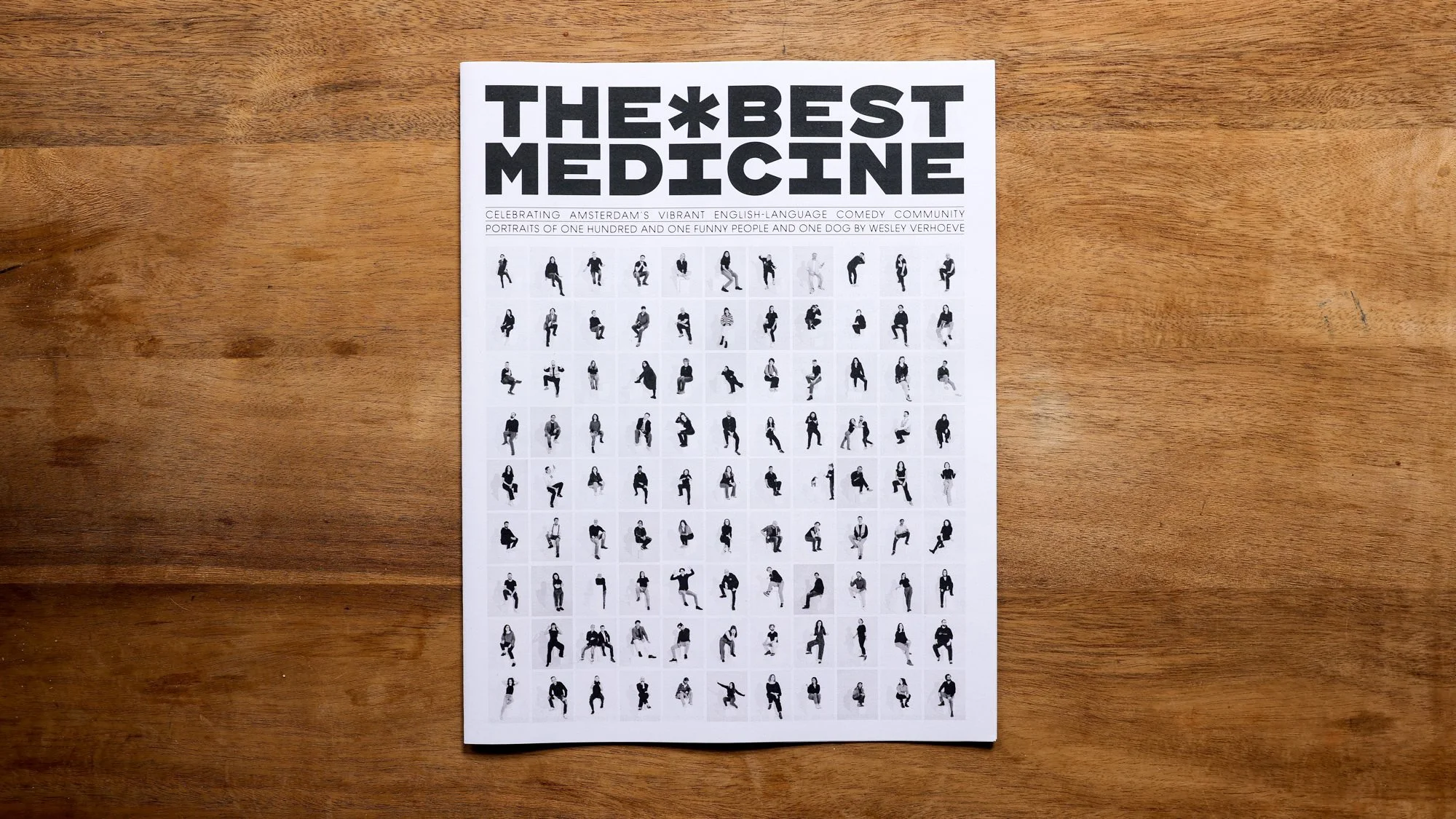
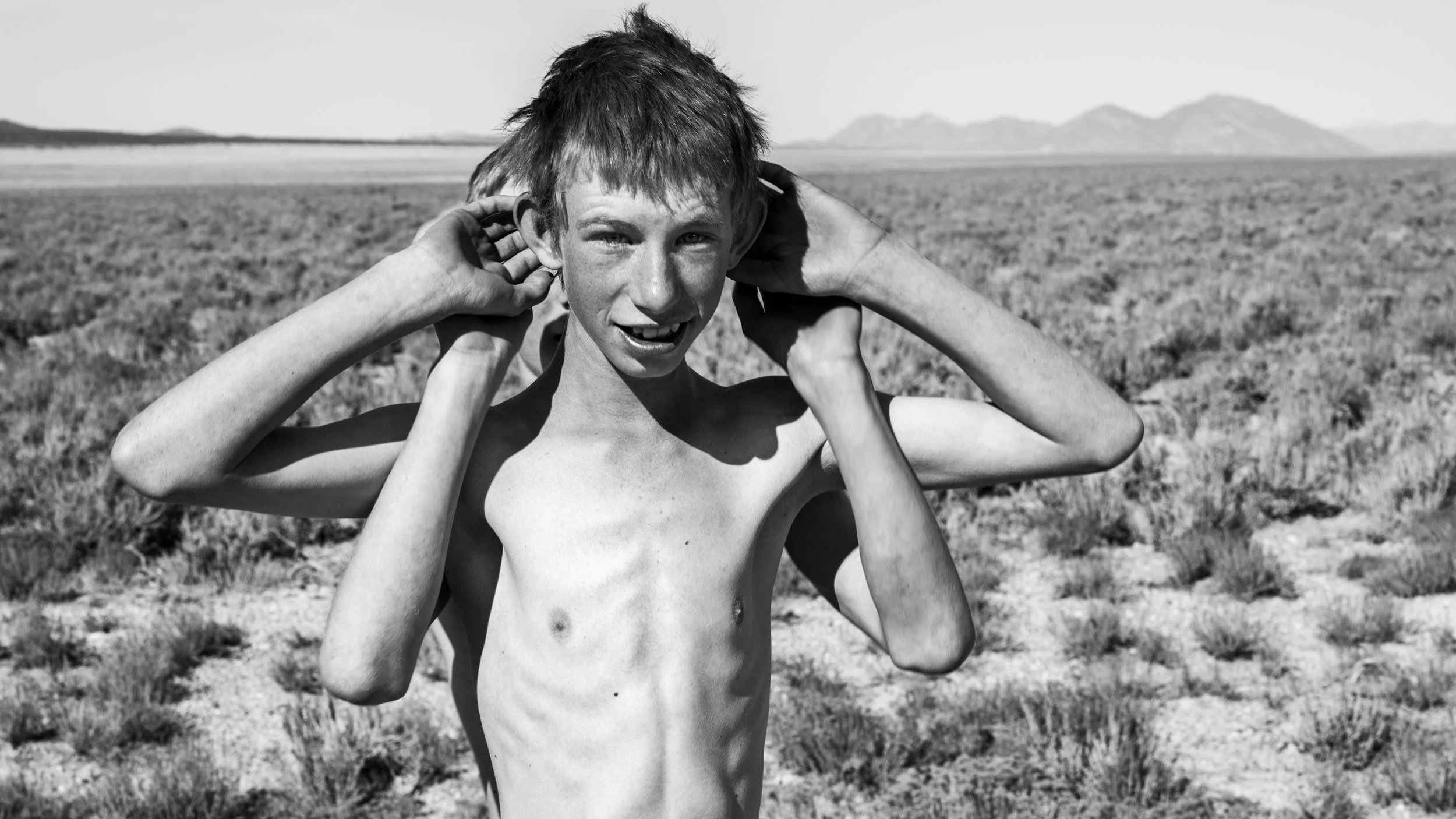
Actually, there is one way we can talk about it. In addition to my fine art books, I have a format of work that I call community documentary projects. They are different in nature and in aesthetic. They are about communities I come across that I think are very special, but that not enough people know about yet. I photograph portraits of an unreasonable number of people from that community, usually about a hundred, and I ask them a question I have about their community. That then becomes a zine, a theater event and a social media project.
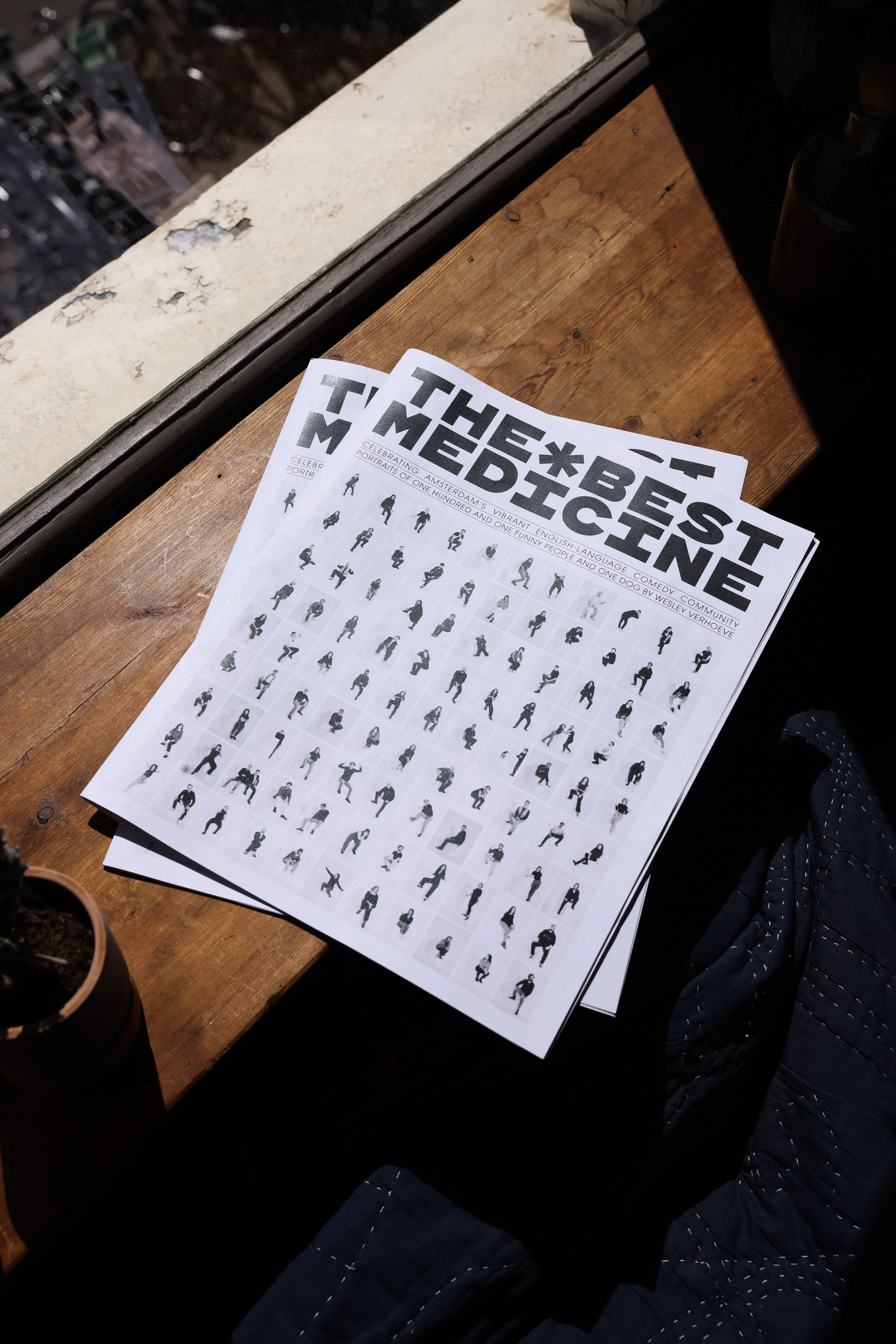
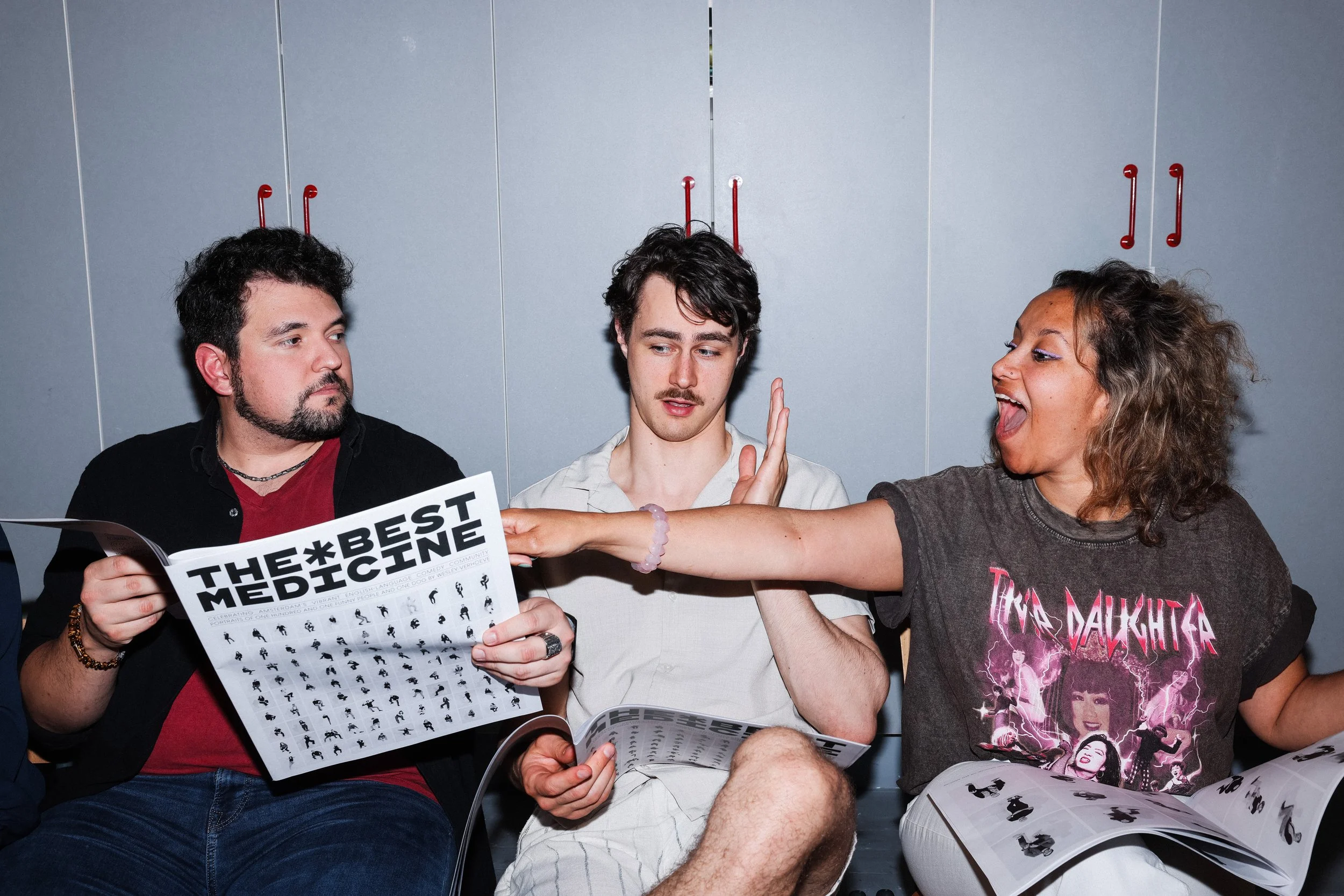
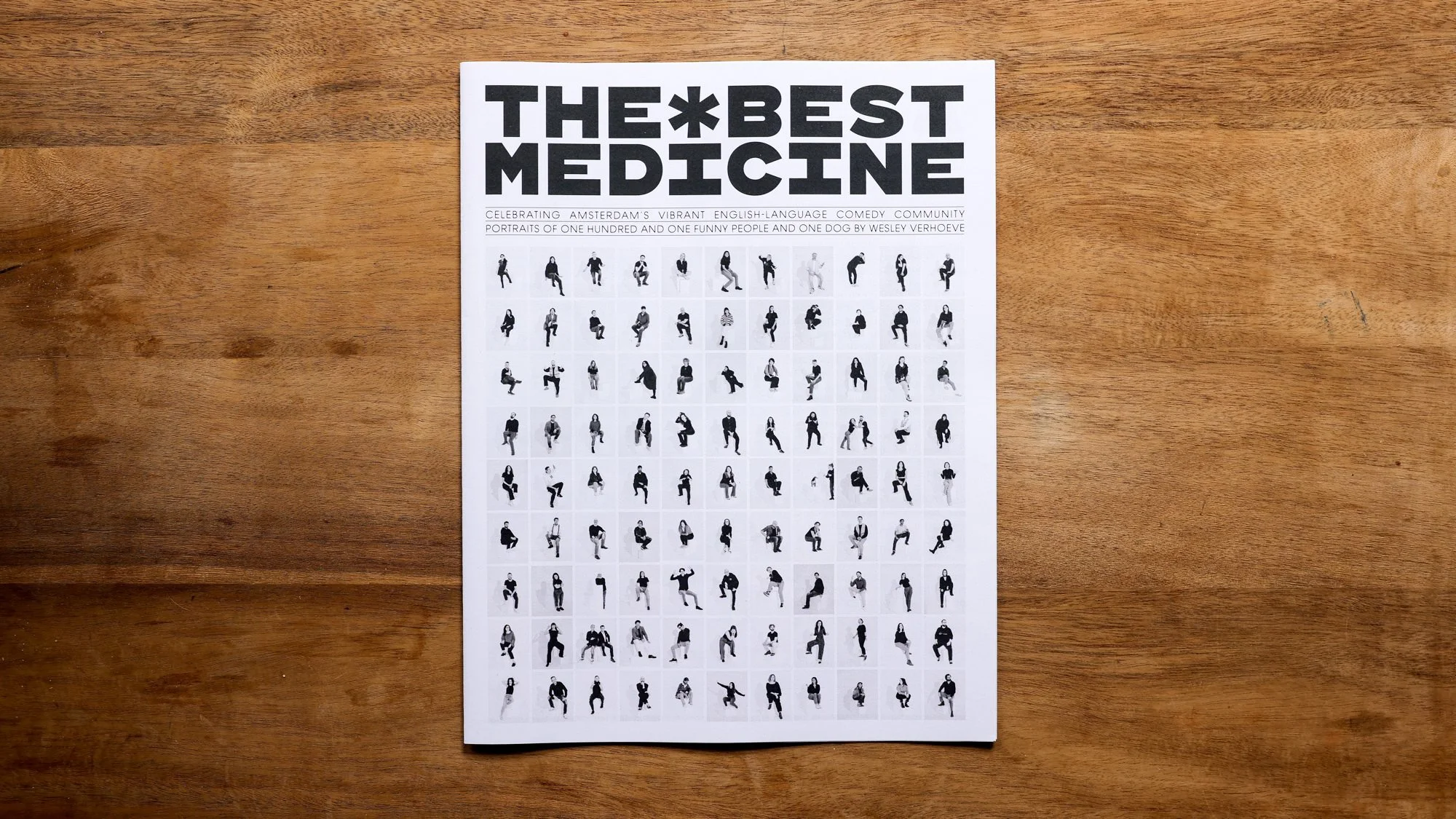
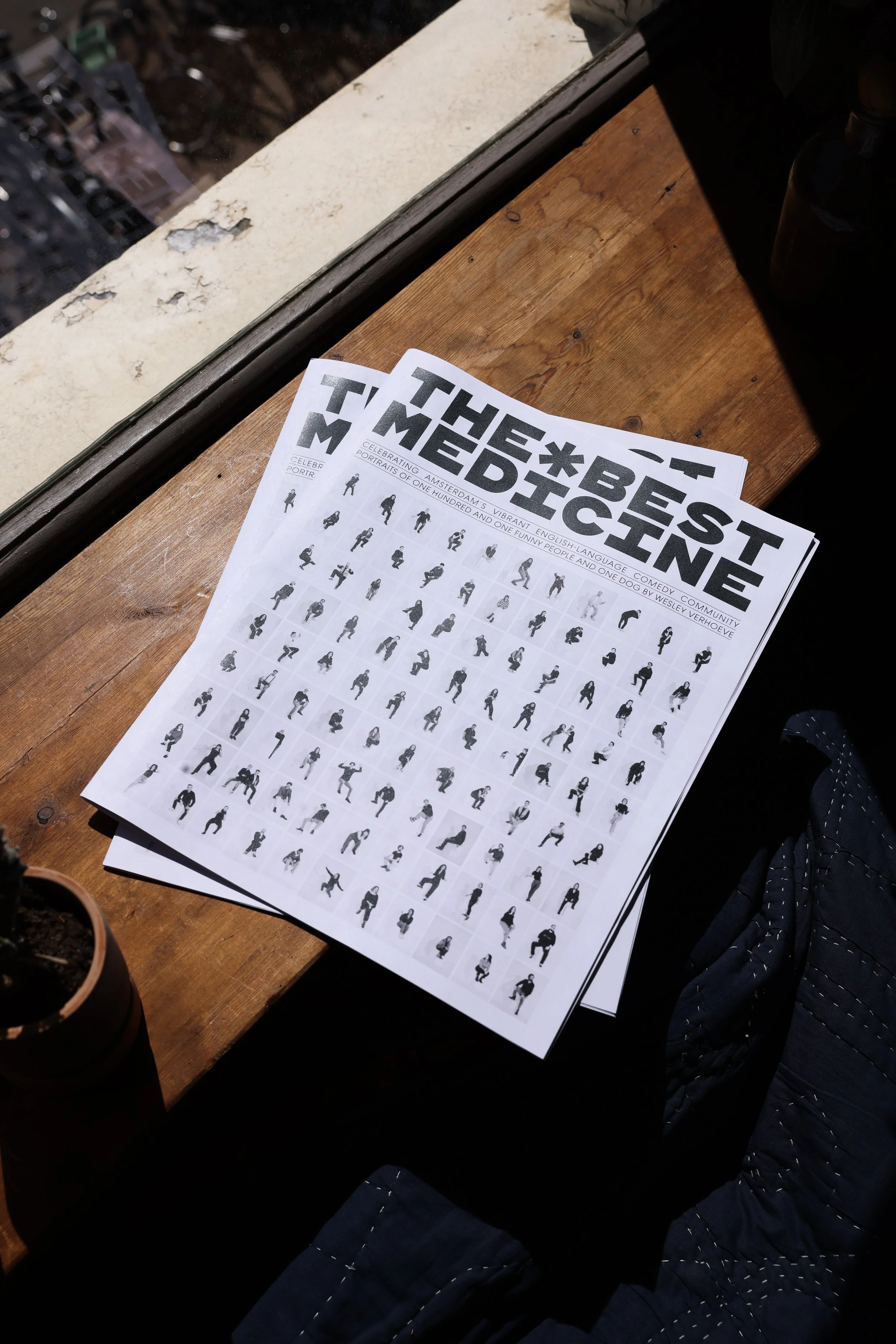
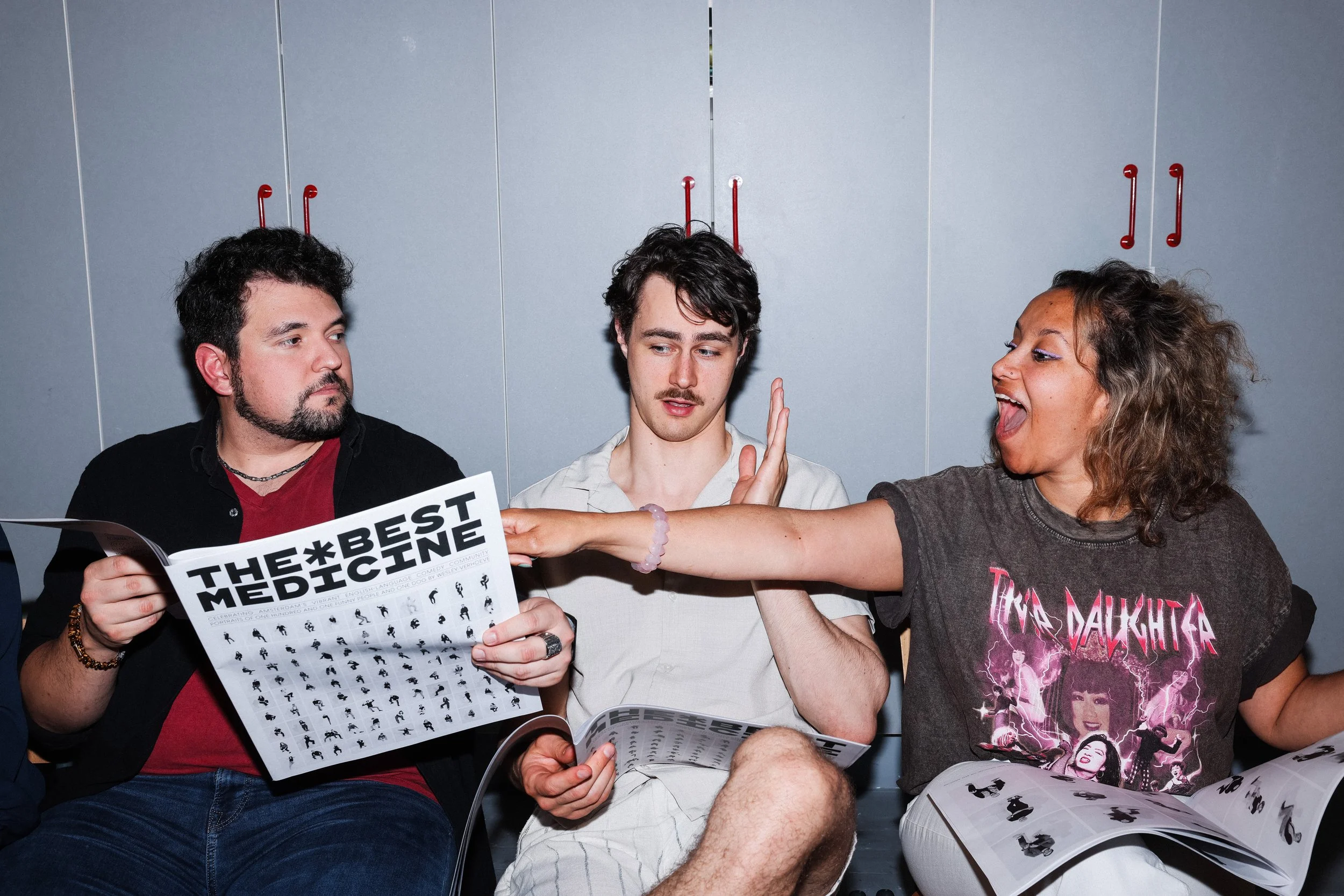
I actually have two of them lying here. This is an example of a community documentary project I did last year, called The Best Medicine. This is the zine. It features 101 people from Amsterdam's English-language comedy community. Many people don't even know that this community exists, or at least not that it is this big, and this isn't even everyone. Most of all, they don't know how important and impactful it is on a global level in comedy. People in Amsterdam don't even know that big international stars like Seth Meyers, Jordan Peele and Jason Sudeikis, and even the TV show Ted Lasso, all came out of this scene. I wanted to shine a light on it so that more people would know about it. So I made the zine with 101 portraits of all these interesting people from the community. I also wrote an essay based on conversations my friend Naharika had with all of them about what makes this community special. That is the project.
With this type of project, I do of course come up with the idea of a community first, and then I research whether there is enough there. For example, there is one I've wanted to do for a long time, but I wasn't sure there were enough people for it. It is about people in Amsterdam who tell stories using puppets. That could mean puppeteers, but there are actually many different kinds of people who use puppets for storytelling. I thought it would be so much fun to learn more about them. But I also thought there might only be seven of them, and that wouldn't be enough. Then I started researching, and now I have a list of about 120 people who want to be part of the project. If I had found out there weren't enough people, I couldn't have done it. But now I know there are, so we are going to do it next year.
Thank you very much for your thoughts and time
Great, thank you very much.
To discover more about this intriguing body of work and how you can acquire your own copy, you can find and purchase the book here. (Website)
More photography books?
We'd love to read your comments below, sharing your thoughts and insights on the artist's work. Looking forward to welcoming you back for our next [book spotlight]. See you then!

Wesley Verhoeve photographs first and finds the story later. His Notice books began with learning to slow down during lockdown in Vancouver. Photography Book Spotlight