Welcome to this edition of [book spotlight]. Today, we uncover the layers of 'The Enchanted Ones,' by Stephanie Pommez (published by Kehrer Verlag). We'd love to read your comments below about these insights and ideas behind the artist's work.
Photography keeps the Amazon’s fading myths from disappearing forever.
The stories of the river people are passed down by word of mouth. Stephanie Pommez spent years with the midwives who tell these stories. Her book The Enchanted Ones shares these myths in a new way. A camera captures what words might soon forget.
Stephanie Pommez shows how photography can hold more than what we see.
She mixes real life and myth to tell the full story of the Amazon. Her work is based on deep trust and long relationships in the region. The result is a photo book that feels both true and magical.
The Enchanted Ones photography bridges the gap between myth and reality.
The Book
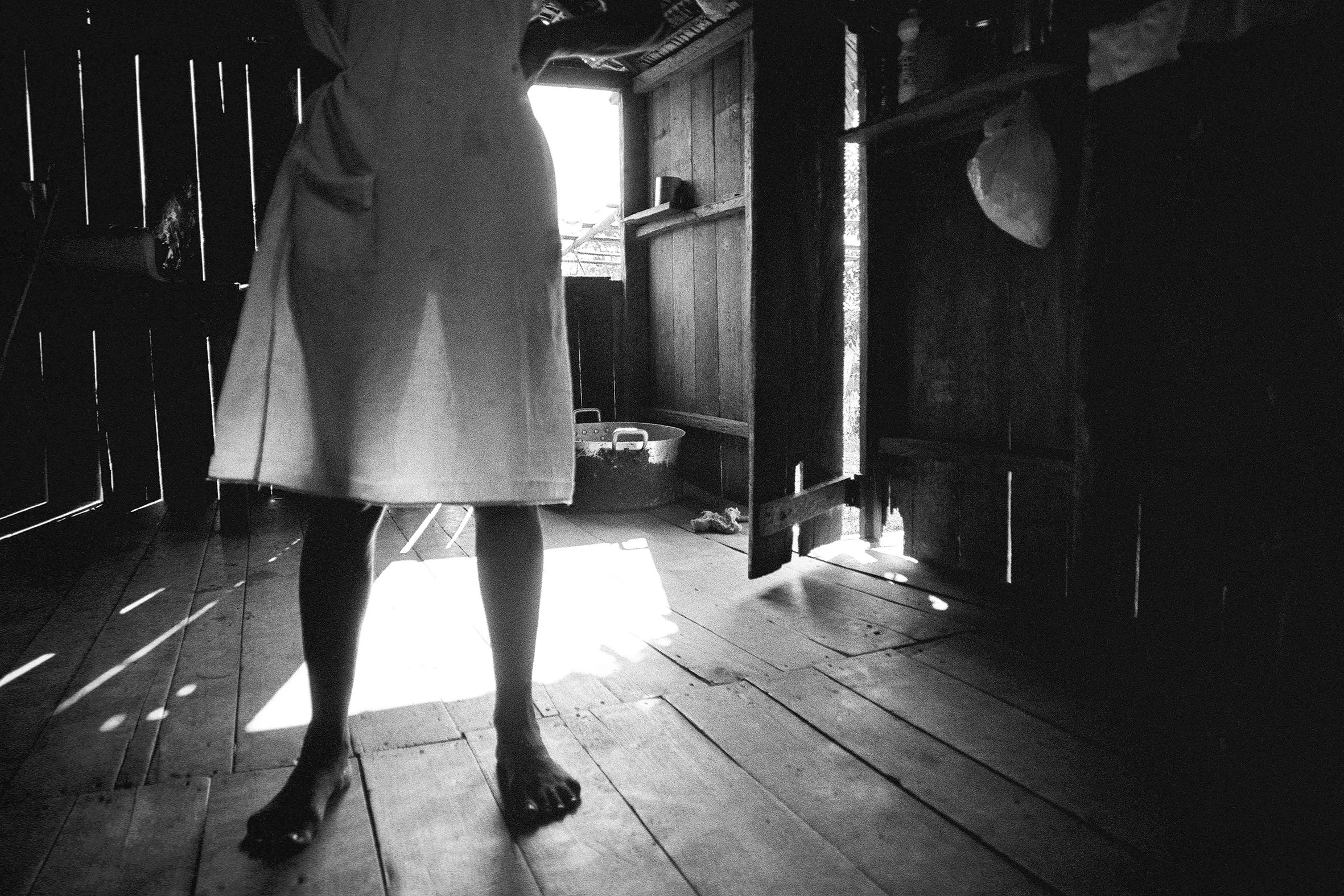
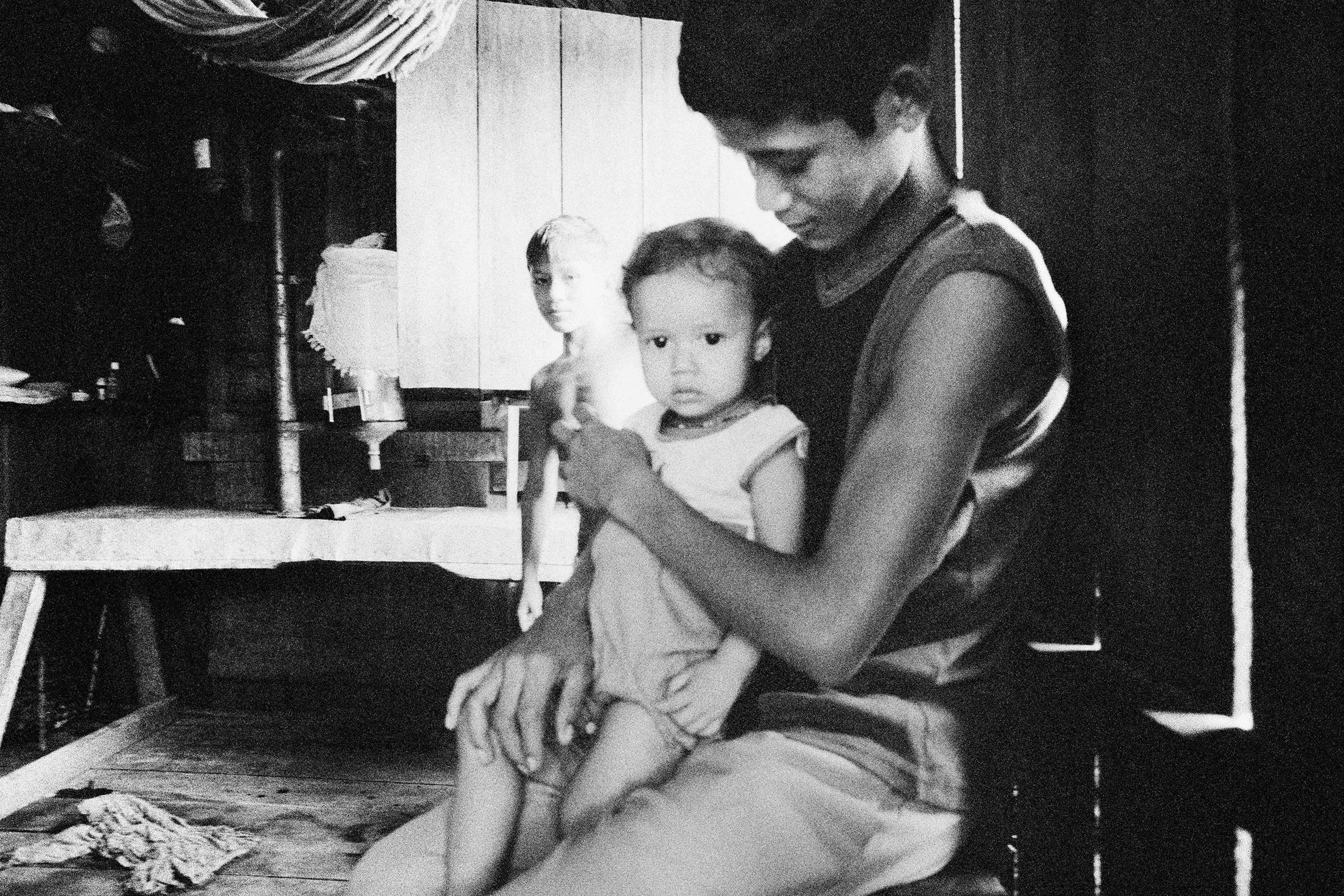
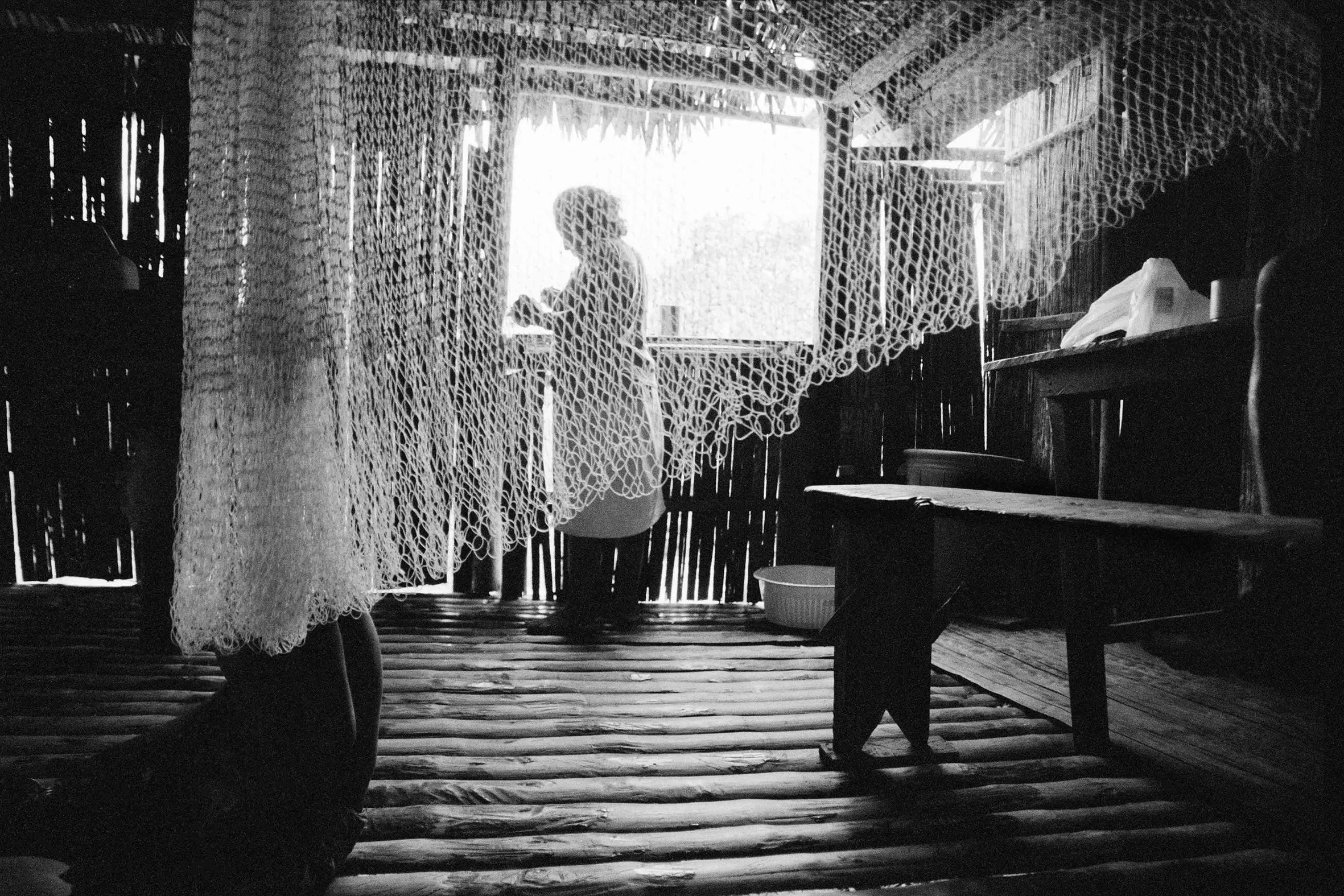
The Enchanted Ones by Stephanie Pommez is a photo book about the myths, stories, and daily lives of people living along the Amazon River. The book focuses on the midwives who help bring life into the world and also protect the oral traditions of their communities. These women shared with Pommez the old legends of shape-shifting beings and enchanted spirits that are part of Amazonian culture.
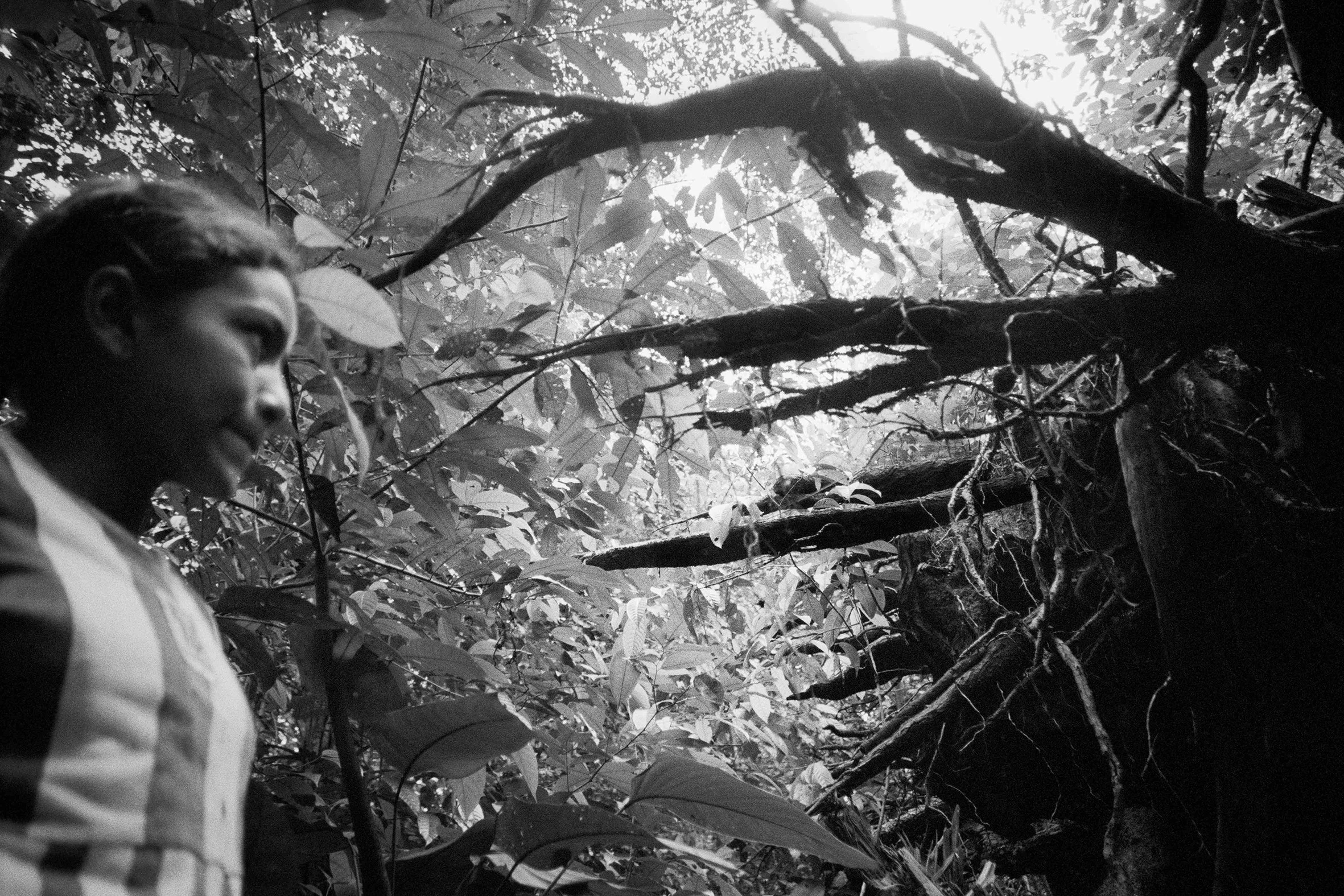
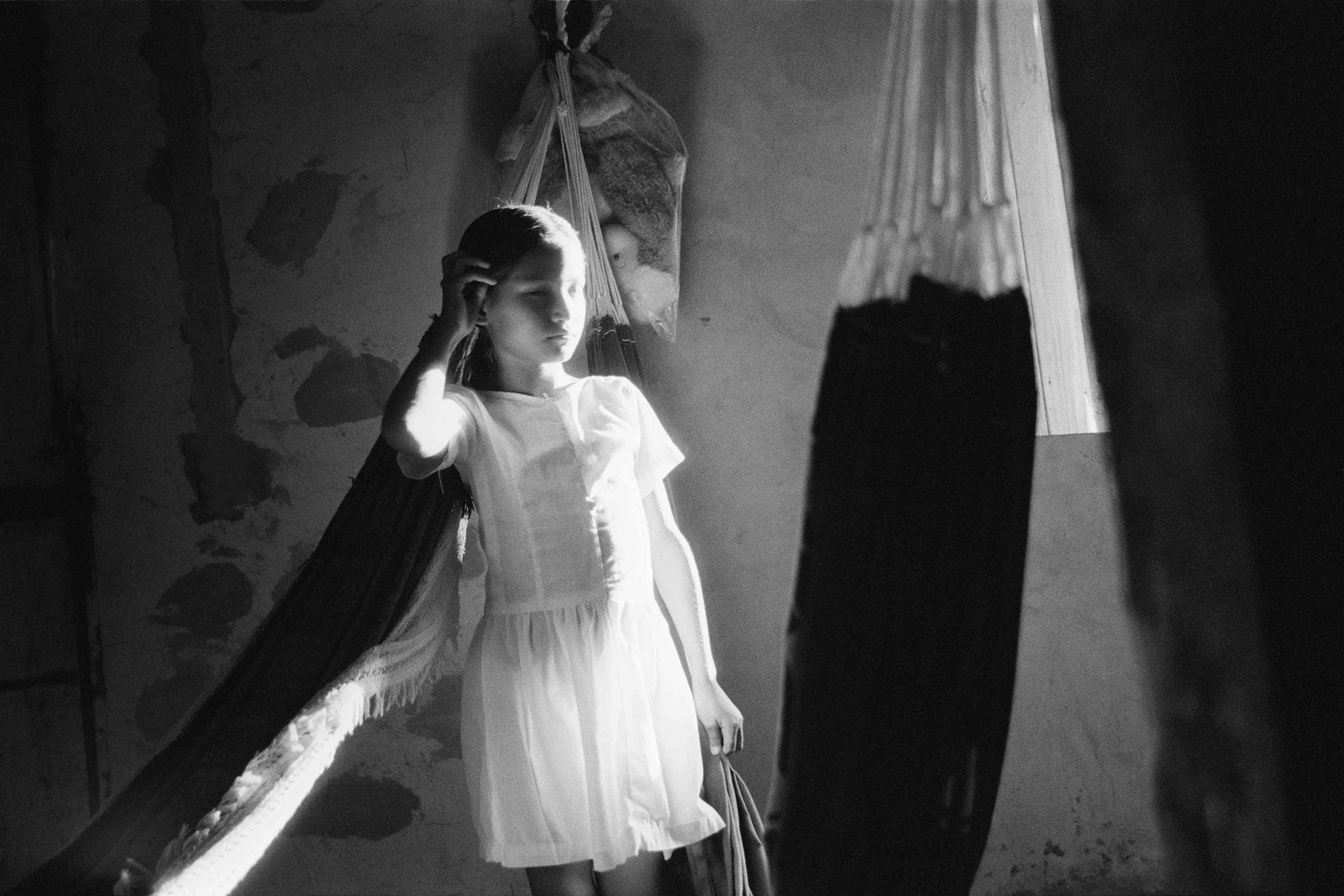
The book combines documentary and artistic photography to show both real life and the imaginary world of these myths. With black-and-white images, soft light, and thoughtful design, The Enchanted Ones creates a quiet and powerful tribute to a culture where the line between reality and legend is thin. It is both a record of a unique way of life and a way to keep these stories from being forgotten. (Kehrer Verlag, Amazon)
Overview of the project: What inspired you to begin The Enchanted Ones, and how did your time in the Amazon shape the visual and emotional core of the book?
I have long been drawn to the nuances of how people live, relate to one another, and give shape to their beliefs, both within communities and as individuals. This interest has shaped much of my work, leading me to spend time with Mariachi musicians in New York, Sifus (masters) in Hong Kong, and priests in Nagorno-Karabakh. The origin of The Enchanted Ones goes back many years, to when I spent several years documenting the daily lives and the work of traditional midwives across the Amazon. I travelled through multiple states, over extended periods, drawn by a curiosity and interest to tell the story of the ribeirinho (river dweller) communities, particularly that of the women. The project began with a broad scope, and I focused on the midwives as it evolved. They stood out as guardians of life and keepers of traditional medicine and local culture while connecting homes and communities through their travels, visiting pregnant women, and attending births. Much of my time was spent listening to stories while we canoed from one riverside home to another, during long hours attending births, or visiting women to check on their well-being.
In those quiet, in-between hours, I began to uncover another side of these women who ushered life in and out of the world: they were also incredible storytellers. Among their stories were the myths of the encantados (enchanted), beings that live in the rivers’ underwater enchanted world or the forests and can shapeshift into humans. Through their stories, they connected homes with an invisible thread.
While the project on traditional midwives centred on the real, the everyday lives of women and the ribeirinhos, the book The Enchanted Ones, which came years later, explores the imaginary: the intangible world shaped by the myths, oral stories passed down through generations. And yet both approaches, documentary and abstract, in their own ways, are about a people and place through completely different angles, completing each other and, I hope, ultimately rendering the project more holistic. Although it was through the midwives that I heard these stories, myths, and storytelling are a shared experience among the ribeirinhos and are part of the collective experience. They offer meaning, connect people, and help make sense of the world around them. The Enchanted Ones is a humble attempt to pay tribute to these stories.
How did you approach visualising stories that exist beyond the visible world? One of the book’s most striking qualities is its blurring of reality and the metaphysical. How do you navigate that boundary when creating images, and how do you invite the viewer into that in-between space?
The Enchanted Ones is an attempt to offer another way of seeing and understanding a place where the real and the imaginary are not separate but part of a single experience. In this world, time doesn’t move in a straight line. Instead, the myths propose a plurality of times, each coexisting in parallel, interconnected not despite one another, but because of one another. For me, these myths speak to the deep interconnection of all things within the web of life, here the Amazonian forest.
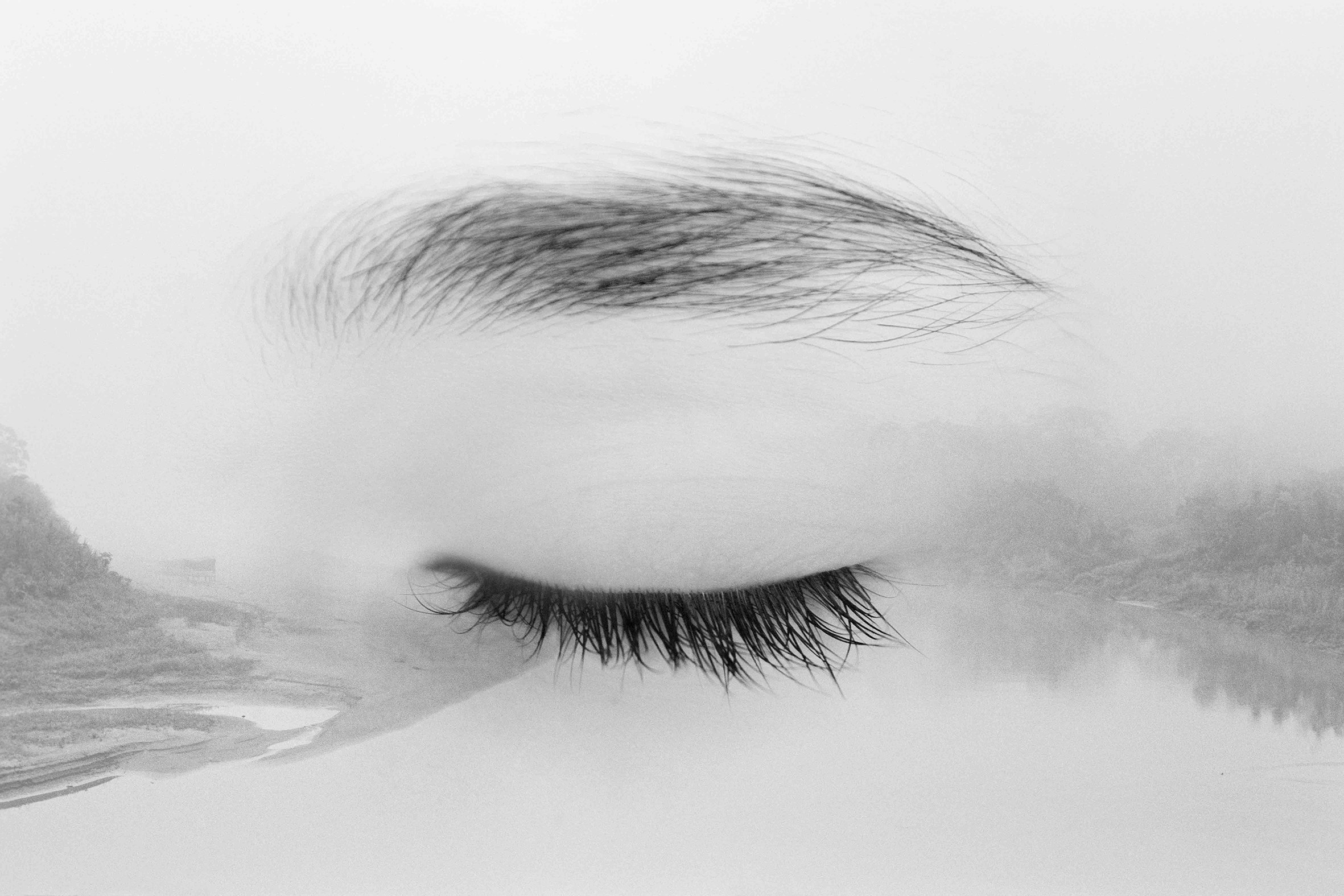
The approach to represent or evoke these stories shared orally was to create a photographic and sensorial experience that carries that feeling of drifting between states, of being suspended in something you cannot quite name. The book is rooted in documentary experience but drifts into the imaginary from beginning to end. The cover is a quiet scene inside a home, a girl with a little monkey sleeping on her lap, and the backlight filtering through the window. That light becomes a guide throughout the book, “they came to visit me”, an ephemeral presence that appears and disappears, like a ghost, a story, or a memory. The opening quote from Ovid’s Metamorphoses sets the tone: this is a story of shapeshifting, of crossing boundaries between forms and realities. That universal quality of myth, its ability to transcend time and place, is what the book attempts to evoke. The overlay of a closed eye over the river, the vine resembling an umbilical cord, all pull us into a different world where the journey begins.
The story progresses through whispers, not shouts. The font is soft and small, like something shared at night. There are transparent pages, overlays, and descriptions that feel half-remembered. Some of the images echo each other or bleed into one another. It is meant to reflect the way these stories were told in fragments and impressions, and it is also meant to create a sense of time folding in on itself and the interconnection of the personal, the collective, and the repetition of myths.
The powder pink endpapers evoke a fable-like tone, a softness that contrasts with the deeper undercurrents of the stories. Still, it also ties to the boto (probably the most known encantado), a river dolphin native to the Amazon, who transforms into a handsome man (sometimes a woman) emerging from the water to seduce humans; they are sometimes blamed for unexpected pregnancies and disappearances. The paper chosen, the analog graininess, and the contrasts between the rich blacks and the light create a sensorial experience of intimacy between the real and the unreal. The back cover returns to the interior: the texture of wooden planks inside a home. Finally, the almost square dimension distances the story from reality or documentary style, which is often presented in a rectangular shape.
Can you discuss the creative process behind the book and offer some advice for photographers exploring myth and culture?
I’m not sure this qualifies as advice, but I believe time and curiosity are among the most essential elements in exploring cultures, regardless of the medium. Take the time to be present. To listen. Let things unfold at their rhythm. Especially when working in a place that isn’t your own, or with people whose experiences differ from yours, there’s a deep responsibility to slow down and be present. People need time to share their stories and views. And equally, we need time to hear them, not through our expectations or preconceived ideas, but as they are. That takes patience and a kind of openness to being led by what you don’t yet understand. The strength of the work comes from the relationships you build and the time you invest, and it is also the most beautiful side of the process, getting to know others.
As for the creative journey behind the book, what stands out most to me is its collaboration at every stage. This project would not exist without the generosity of the midwives who invited me into their homes and shared their time and stories. The book also owes to Regina Monfort, who pored over boxes of contact sheets with a keen eye and an intuitive understanding of the visual language this story required. And Klaus Kehrer, who believed in the project and welcomed it into the Kehrer Verlag family, and Sylvia Ballhause and Nicole Gehlen, whose thoughtfulness in design elevated the book; every detail was intentional, shaping the book’s sensorial and visual experience. This experience has inspired me to keep searching to work in that way, collaboratively, across disciplines. I’d love to keep building projects alongside others, whether they’re artists, writers, scientists, etc. I hope to continue exploring that space, where image-making becomes part of a larger, layered conversation.

The role of midwives as storytellers: You’ve worked closely with traditional midwives in the Amazon. What have they taught you, not only about birth, but about culture, resilience, and the power of oral history?
One of the most profound things I learned from the midwives was their extraordinary sensitivity and knowledge of how they read the body and find solutions to the most challenging situations, when facing critical moments between life and death. One midwife told me she had “eyes on her fingertips”, a beautiful way to describe their skill. There’s incredible courage. These women leave at any hour, day, or night, under blazing sun or through rain curtains, to reach someone in need. And yet, what struck me again and again was their generosity and grace, not just toward me as a lonely traveller but toward each other, even in the face of enormous challenges. Life in the Amazon isn’t easy. People often rely on seasonal work, there's minimal social support from the government, and violence is not uncommon. And yet, there’s this quiet strength, this everyday dignity in how they move through it all.
Spending time with them also taught me how much communities like theirs contribute to the diversity of the region, not just ecologically, but culturally. They’re vital to its balance. But that balance is incredibly delicate. It can be tipped easily by external pressures, such as economic, political, and environmental ones.
Finally, storytelling reshaped how I saw the landscape and made me aware of how conditioned we are to see and interpret what we choose to look at and see through the lens of the culture we grew up in. Myths and storytelling can access different references, values, views, and clues dictated by a place and its people. They are capable of truly expanding and redrawing the map of a place. It’s a way to extend our sense of what’s real, what’s possible, and what holds meaning. In this case, it reflected how everything is interconnected and interdependent in the web of life and how it is far more fragile than it appears. At first, those hours on the boat felt monotonous: the engine's hum, the opaque water, the endless wall of trees. But slowly, the view transformed. The river, reflecting the sky, became a mirror that blurred the line between above and below. The slow movement of the boat felt like a snake sliding along the water’s surface. I began to notice how even the smallest moments, like an insect falling from a branch and disappearing into a sudden frenzy of fish, contained both life and death, simultaneous and interwoven. The pungent mix of ripeness and rot, life decomposing, new life emerging. But maybe the most important lesson was how interconnected everything is. The people, the animals, the rivers, the branches are all part of the same living body. A body where multiple times exist. We often rely on what we can see, on what’s measurable, and history, as we understand it, gives us one perspective. But storytelling allows something else: a way to interpret a place symbolically, which, to me, is a very different kind of truth.
To discover more about this intriguing body of work and how you can acquire your own copy, you can find and purchase the book here. (Kehrer Verlag, Amazon)
More photography books?
We'd love to read your comments below, sharing your thoughts and insights on the artist's work. Looking forward to welcoming you back for our next [book spotlight]. See you then!
Catherine DeLattre’s photographs begin with something worth stopping for. Driving through Wayne County, Pennsylvania, she notices isolated houses, trees, and open fields. Photography Book Spotlight