AT A GLANCE
- Known for
- Flash pictures of New York tenements and the book How the Other Half Lives (1890)
- Works in
- Black and white photographs, shown as lantern slides and printed as engravings
- Camera
- Not documented for most pictures. He used the new flash technique to work in dark rooms and alleys
- Credit
- His early pictures were made with the amateurs Richard Hoe Lawrence and Henry G. Piffard, so the maker of some pictures is uncertain
- Also
- Police reporter, writer and lecturer · friend of Theodore Roosevelt
- Start with
- How the Other Half Lives (Penguin Classics, 1997)
- Links
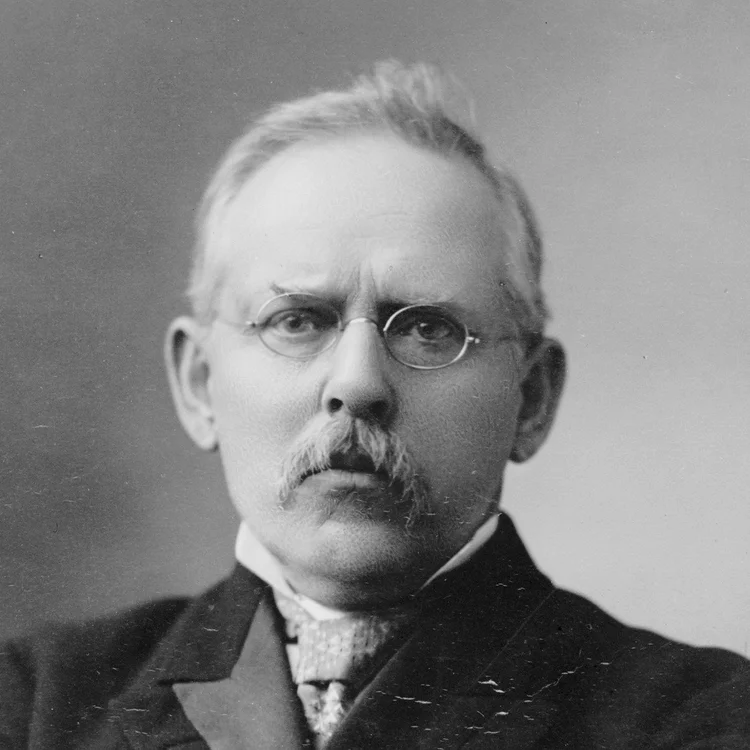
Jacob Riis (born 1849, died 1914) was a Danish-born reporter and reformer who worked in New York. He used flash pictures of the city's tenements, the crowded buildings where poor families lived, to show how people lived there. Some of the pictures credited to him were made with amateur photographers who helped him, and for some the maker is still uncertain. His book How the Other Half Lives (1890) made the pictures widely known.
The story
One morning, Jacob Riis sat at the breakfast table and read his newspaper. Then he put it down with a loud cry. His wife, sitting across from him, was startled. Riis later wrote: “There it was, the thing I had been looking for all those years.”
It was a short news item from Germany, only four lines long. Someone had found a way to take pictures by flashlight. In Riis's words, “The darkest corner might be photographed that way.”
Riis was a police reporter in New York. He worked for the New York Tribune and later the Evening Sun, from an office on Mulberry Street across from police headquarters. At night he walked through the poorest streets of the Lower East Side, including a crooked stretch of Mulberry Street called the Bend. He wrote about what he saw. Still, he said, “I wrote, but it seemed to make no impression.”
So the news from Germany mattered a great deal. Riis told Dr. John T. Nagle, an amateur photographer who worked at the Health Department. Within two weeks, Riis wrote, a small group went out at night: two amateurs, Henry G. Piffard and Richard Hoe Lawrence, Dr. Nagle and Riis himself. Sometimes a policeman came along. The flash of those days came from cartridges fired from a revolver. Riis wrote that tenants ran out through windows and down fire escapes when the group arrived.
But the amateurs soon grew tired of the slums and the night hours. Riis wrote, “I found myself alone just when I needed help most.” He hired a professional photographer, and that went badly. In the end, he said, “There was at last but one way out of it; namely, for me to get a camera myself.”
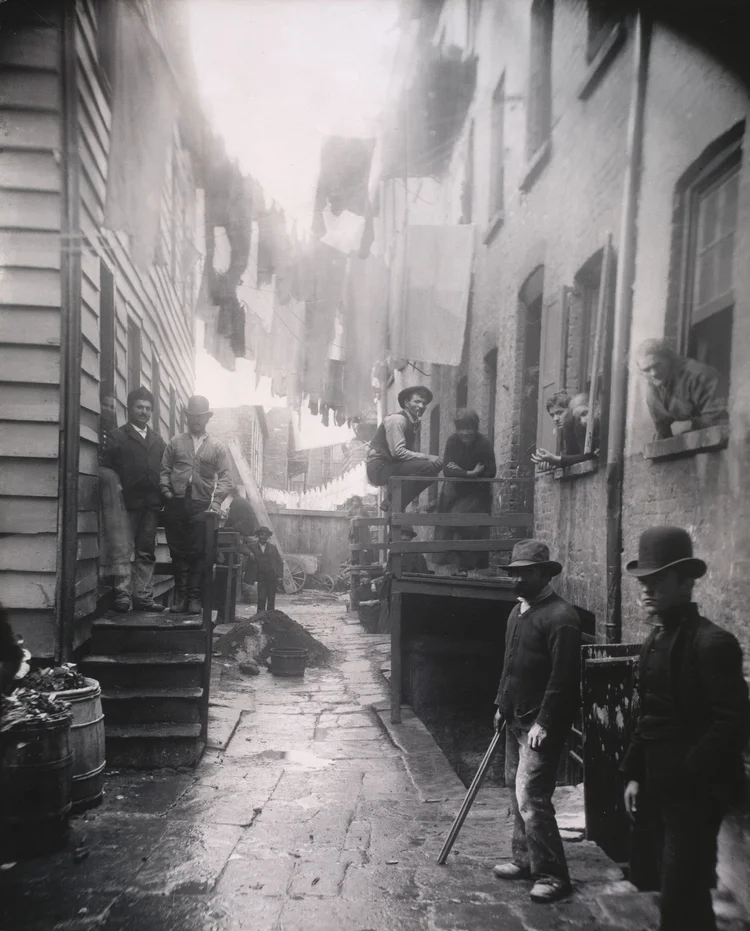
Who, then, made Bandits' Roost? The question is not easy to answer. The picture carries Riis's name. But the Library of Congress lists Riis, Lawrence and Piffard together as its photographers, says they used a stereoscopic camera, and dates the picture to 1887 and 1888. The Museum of the City of New York, which holds the Riis collection, also lists all three men as its creators. A finding aid of the New-York Historical Society adds that the scholar Maren Stange has shown that Lawrence took at least 31 of the photographs usually credited to Riis. None of these sources says which of the three men pressed the shutter for this picture.
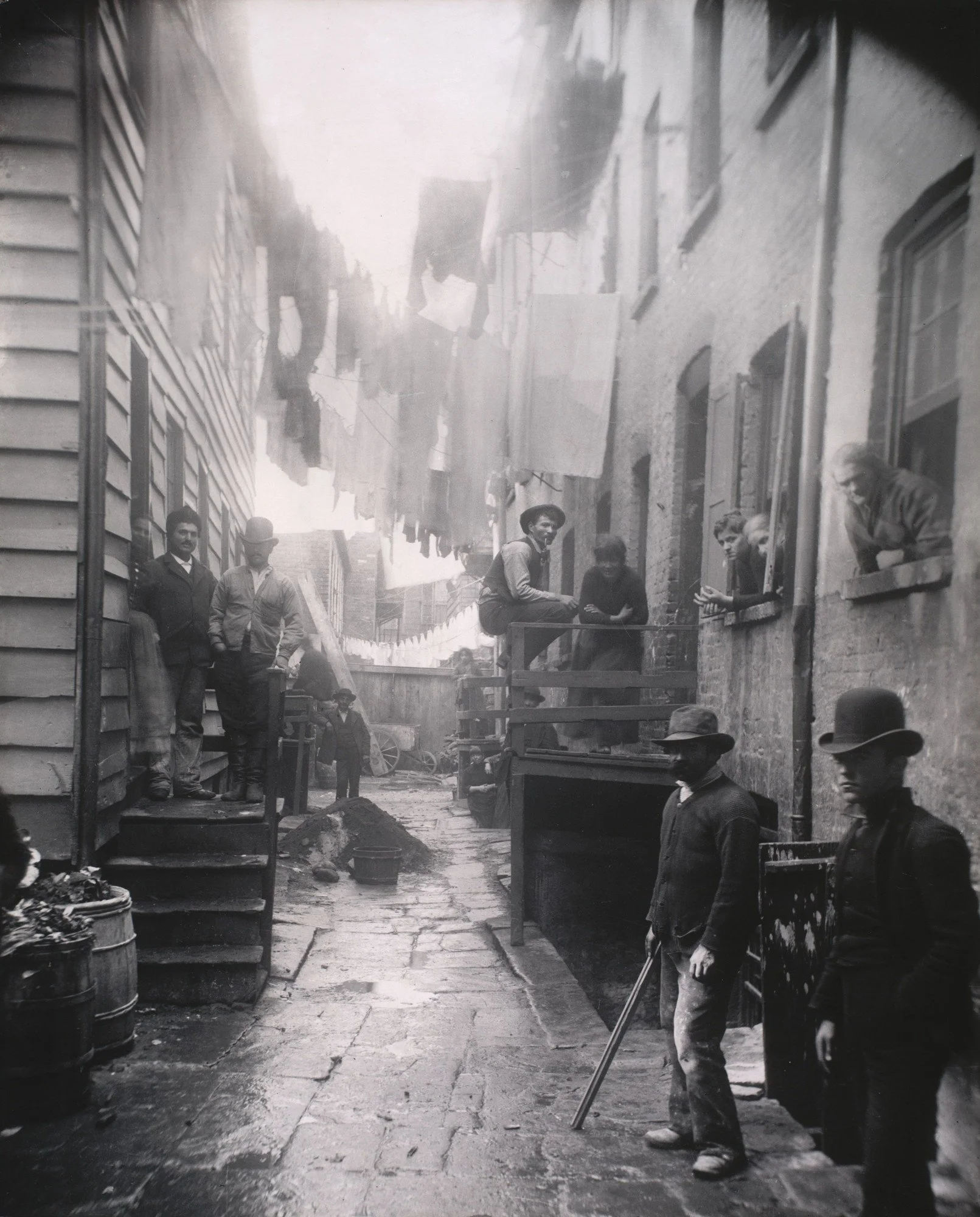
Look at the picture itself. A narrow alley runs between old buildings, with laundry hanging above it on lines. Men stand on steps and on a wooden platform. People lean out of the windows. In the front, two men look straight into the camera. Riis knew the place. In How the Other Half Lives he describes the entrance to the alley, with a small shop on each side. He also copied from the records that nine people were carried out of the alley in 1888, and five of them were babies.
In 1889 Scribner's Magazine printed his lecture "How the Other Half Lives" with twenty engravings made from his photographs. A year later Scribner's published it as a book, and it was a bestseller. Riis remembered that Theodore Roosevelt came to his office looking for him, found him out, and left a card. On the back, Roosevelt wrote that he had read the book and had “come to help.” The Library of Congress dates the start of their friendship to 1895, when Roosevelt was police commissioner.
The Bend was torn down. Riis wrote that for years he fought for this almost alone. The park that took its place, Mulberry Bend Park, opened in the summer of 1897. Since 1911 it has been called Columbus Park. Riis wrote that the newspapers wondered why he was not invited to the opening. Later he wrote: “So the Bend went, and mighty glad am I that I had a hand in making it go.”
The work
Riis was a reporter before he was a photographer, and he said so himself: “I am downright sorry to confess here that I am no good at all as a photographer, for I would like to be.” He used pictures as proof for his words. In his lectures he showed about 100 slides. In print the pictures lost strength, because printing in the 1890s turned photographs into rough engravings or flat halftones.
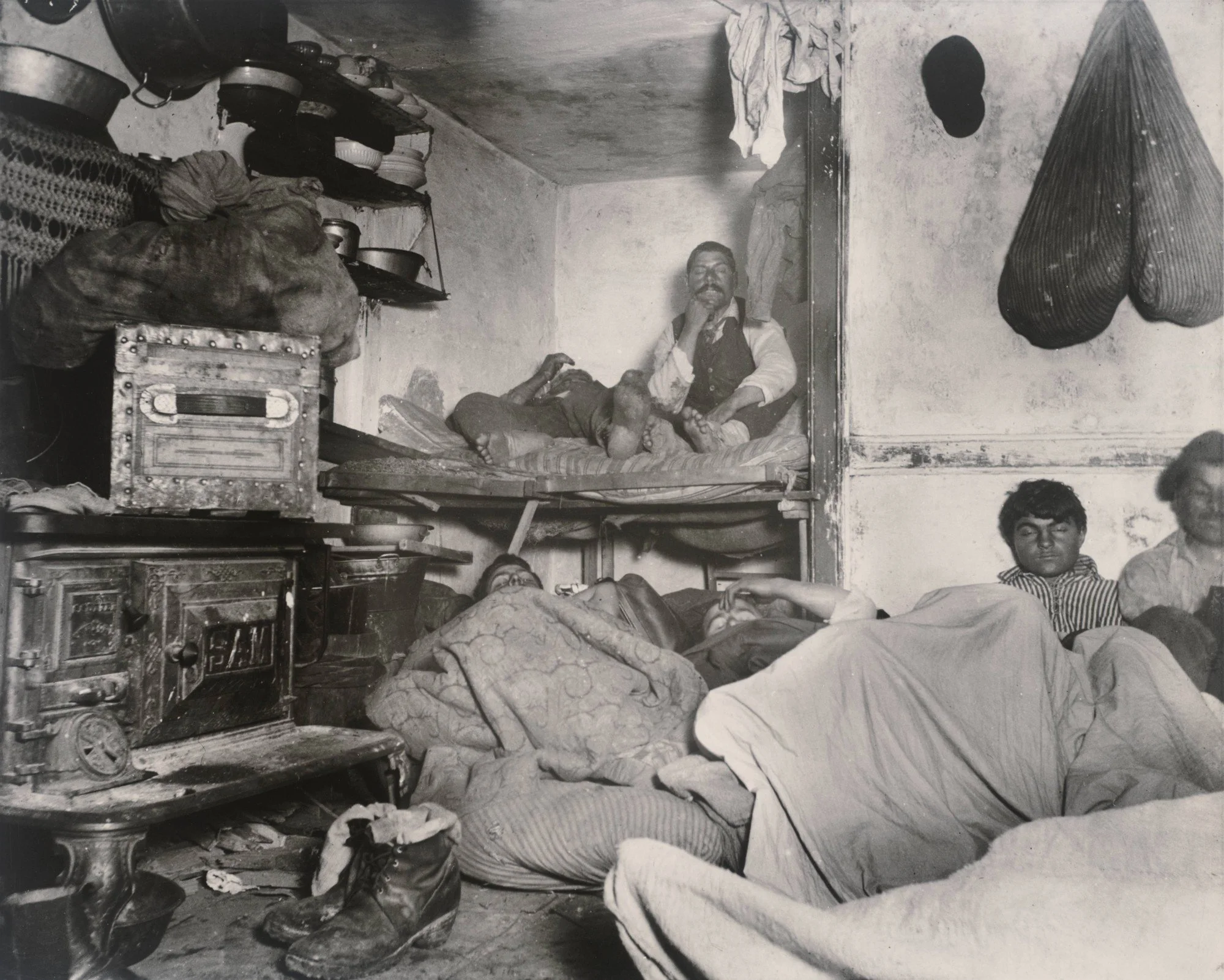
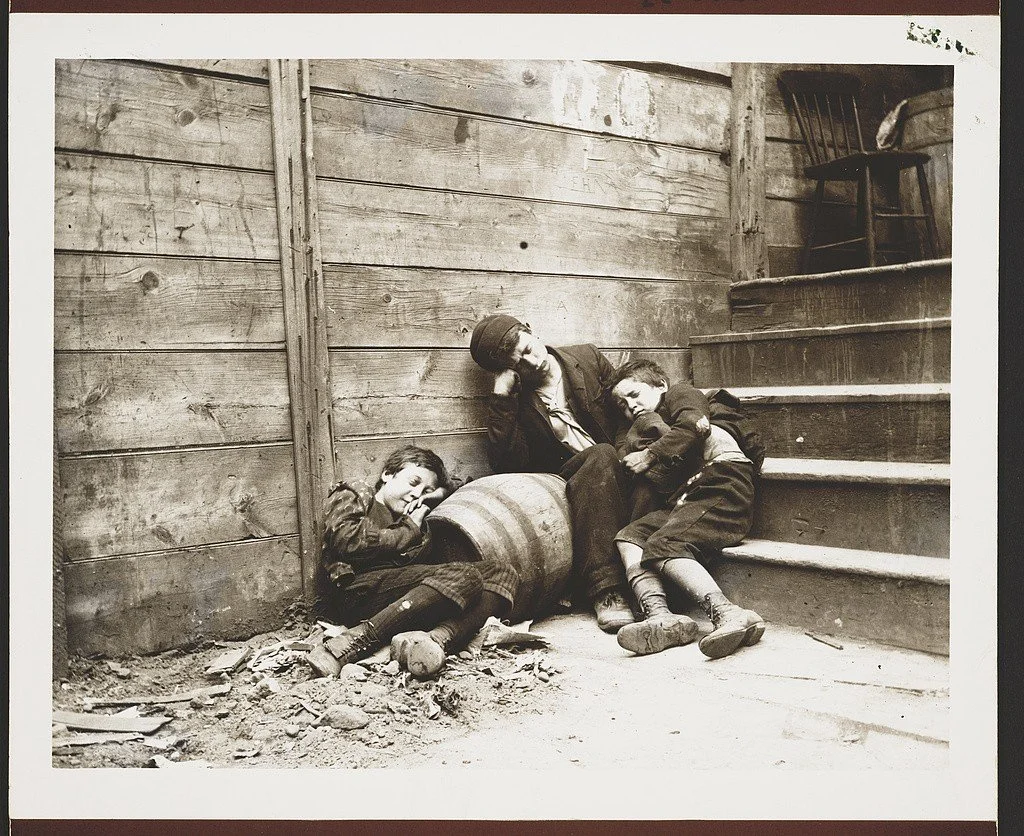
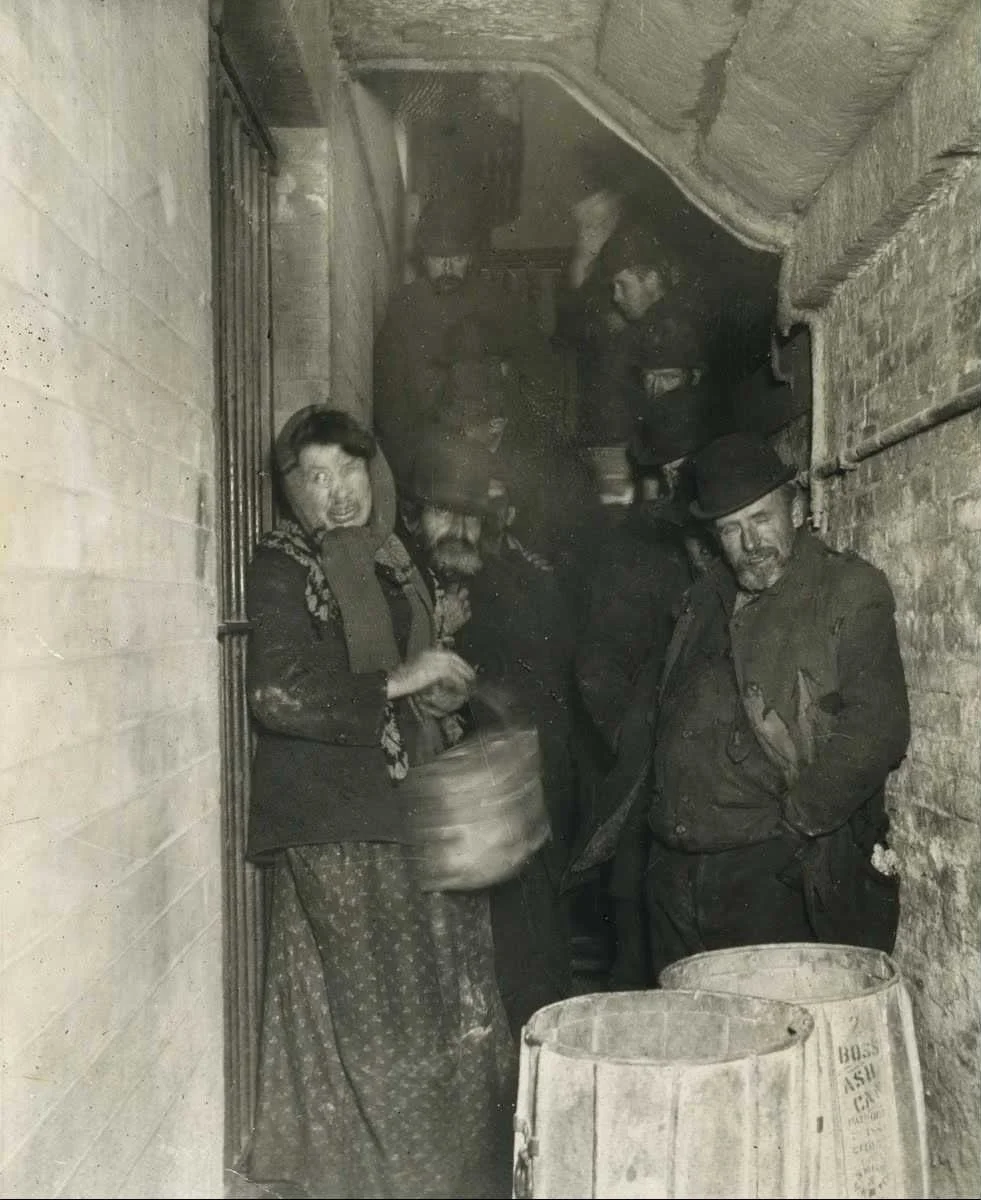
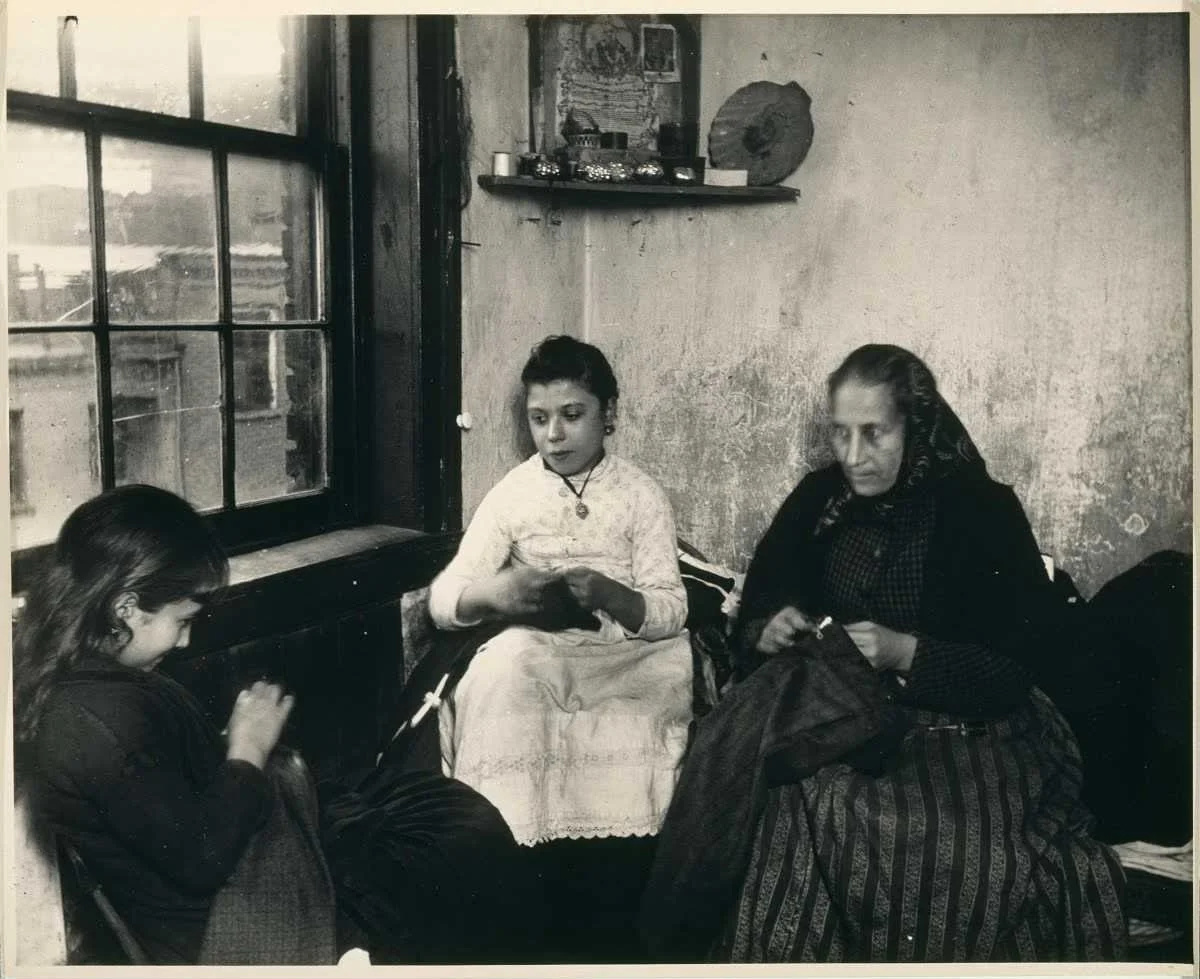
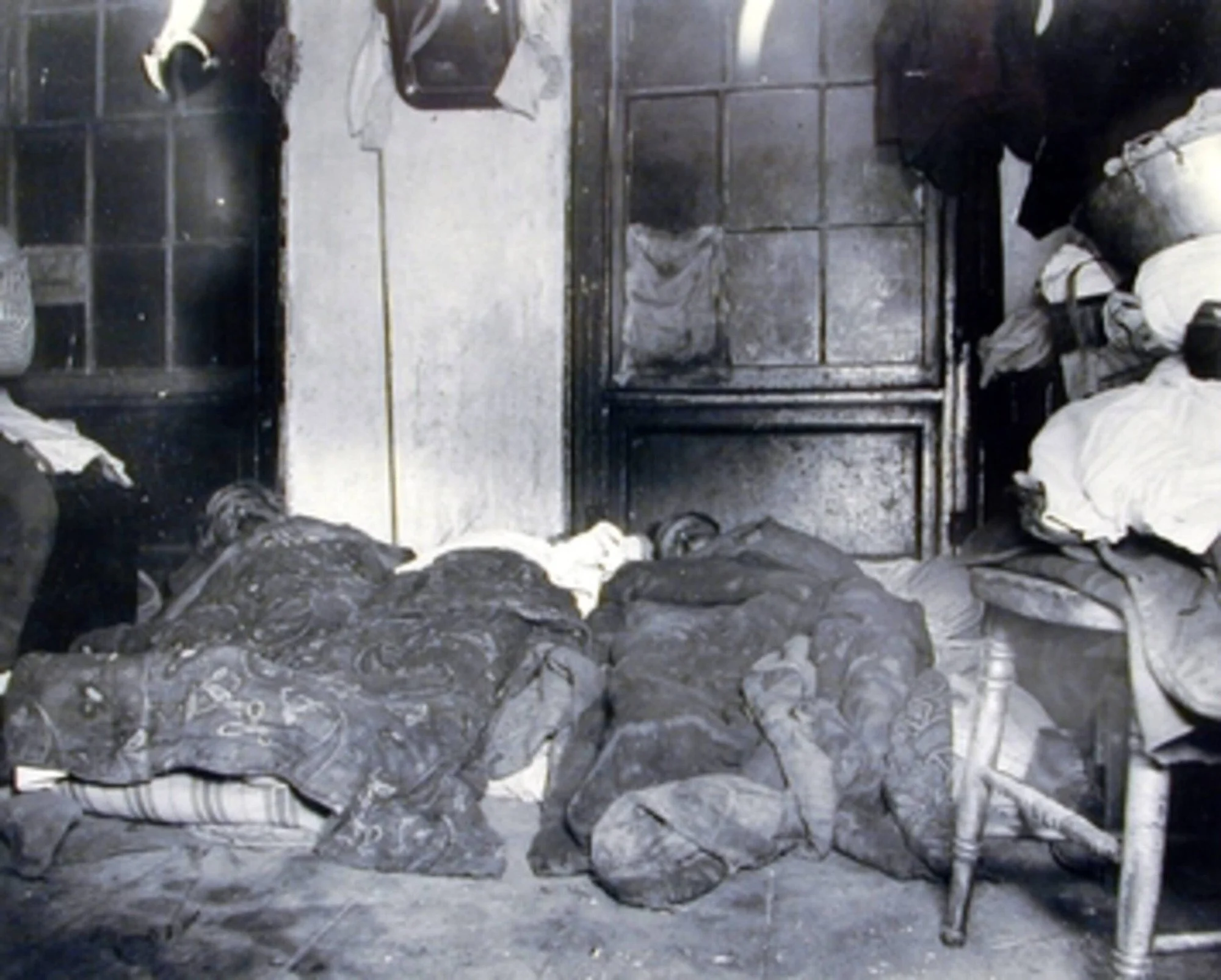
His subjects were the places he walked at night. Lodgers in a Crowded Bayard Street Tenement, "Five Cents a Spot" shows people packed into one small room. Street Arabs in "sleeping quarters" shows boys asleep on a stoop. Waiting to Be Let in the Mulberry Street Station shows people crowded in a narrow passage. Night in Gotham Court and Sewing pants for the Sweater's in Gotham Court show life inside a crowded tenement block. Many prints in museums today were made in the 1940s and 1950s from his old negatives.
Credit is a real question for his early work. Riis began with help from Lawrence and Piffard, and later took pictures himself. After about 1895 he took very few photographs, and for his later books he bought professional pictures. The curator Bonnie Yochelson writes that Riis was a revolutionary in the history of photography, but not a photographic artist. In her view he was a writer and lecturer who first used photography to bring about social change.
- 1849Born in Ribe, Denmark
- 1870Leaves Denmark for the United States
- 1873Finds newspaper work in New York City
- 1887Begins to take flash pictures of the slums with the amateurs Lawrence and Piffard
- 1889Scribner's Magazine prints his lecture How the Other Half Lives with twenty engravings
- 1890Scribner's publishes the book How the Other Half Lives
- 1895Begins his friendship with Theodore Roosevelt, then police commissioner
- 1897Mulberry Bend Park opens where the Bend stood
- 1914Dies in Barre, Massachusetts
Lessons
Know why you need the camera. Riis took up photography because words alone had not moved anyone. In his own words, he had use for it, and beyond that he never went.
Put facts next to your pictures. Riis worked with health officials and used statistics, so that his pictures could not be waved away. His book lists deaths by house and street.
Learn from people who know more. Riis was no trained photographer. He went out with amateurs who knew the new flash technique, learned from them and then took up the camera himself.
Try this: choose one place in your town that most people avoid. Take ten pictures of it. Then find one fact about it, such as how many people live there or how old it is. Write a short caption for each picture and add the fact. Show the set to one person who could change something.
Gear
Riis did not write much about equipment, and the sources say little. What they do say is about light.
Flash: Riis used the new flash technique to photograph dark rooms, alleys and night scenes, first with amateurs who knew it. Which camera, lens or plates he used is not documented in the sources I checked.
Books
How the Other Half Lives (Penguin Classics, 1997). This is Riis's 1890 book with an introduction and notes by Lucy Sante. It has 25 chapters, from "The Bend" and "Chinatown" to "Pauperism in the Tenements". It is the best start for readers who want to hear Riis in his own voice.
Jacob A. Riis: Revealing New York's Other Half (Yale University Press, 2015). Bonnie Yochelson wrote this 336-page catalogue with the Museum of the City of New York and the Library of Congress. It is the first complete study of his photographs and uses material from five collections. It is for readers who want the pictures and the question of who made them.
Rediscovering Jacob Riis (University of Chicago Press, 2014). Written by Bonnie Yochelson and Daniel Czitrom. Czitrom looks at Riis as a reporter and activist. Yochelson describes his photographic practice, including his first reliance on amateur photographers. It has nearly seventy photographs and suits readers who want history and context.
Jacob A. Riis: Photographer & Citizen (Aperture, 1974). Alexander Alland edited this 220-page book. It shows photographs from the Riis family collection, which later went to the Museum of the City of New York, with captions taken from Riis's own writings. It helped to bring back interest in Riis, and it is for readers who like older photobooks.
In his words
“I had use for it, and beyond that I never went.”
“So I became a photographer, after a fashion, and thereafter took the pictures myself.”
“Long ago it was said that 'one half of the world does not know how the other half lives.' That was true then. It did not know because it did not care.”
“So the Bend went, and mighty glad am I that I had a hand in making it go.”
“I looked behind the gore and the grime of it for the cause.”