AT A GLANCE
- Known for
- The first large photo series of a war, made in the Crimea in 1855, and fine pictures of abbeys, cathedrals, landscapes and still lifes
- Works in
- Wet collodion glass negatives, albumen prints
- Also
- Founding member of the Photographic Society of London (1853) · First official photographer of the British Museum (1854)
- Start with
- All the Mighty World: The Photographs of Roger Fenton, 1852-1860 (The Metropolitan Museum of Art, 2004)
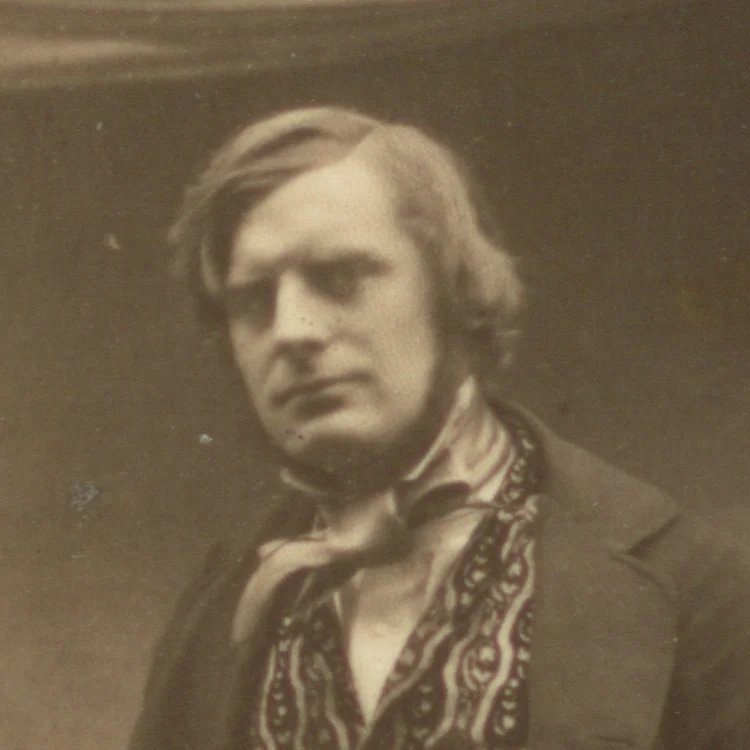
Roger Fenton (1819 to 1869) was an English photographer. He is best known for his 1855 pictures of the Crimean War, one of the first big photo series of a war. He also made quiet views of abbeys, cathedrals and landscapes, and still lifes. He left photography in 1862.
The story
The van door is shut. Inside, Roger Fenton is preparing a glass plate, and the heat is hard to bear. Later he described it in a letter: “As soon as the van door was closed to commence the preparation of the plate, perspiration started from every pore, and the sense of relief was great when it was possible to open the door to breathe even the hot air outside.”
Fenton had not planned his life this way. He was born into a rich family near Manchester. He studied law, but he wanted to paint, and he went to Paris to learn. Then he found photography. In 1852 he photographed Kiev, St Petersburg and Moscow. In 1853 he was one of the founding members of the Photographic Society in London, and he was its Honorary Secretary for three years.
In 1855 the Manchester print publisher Thomas Agnew and Sons sent him to the Crimea. Britain was fighting an unpopular war against Russia, and the press at home was critical of the government. The hope was that photographs would help. Fenton got letters of introduction from Prince Albert and arrived in March 1855. He travelled with a van that served as his darkroom.
But the wet plate process set hard limits. Each plate had to be coated just before the exposure and developed just after it. The exposures were long. Therefore Fenton could not photograph action. He photographed camps, harbours, landscapes and officers. In less than four months he made about 360 photographs, until illness with cholera sent him home.
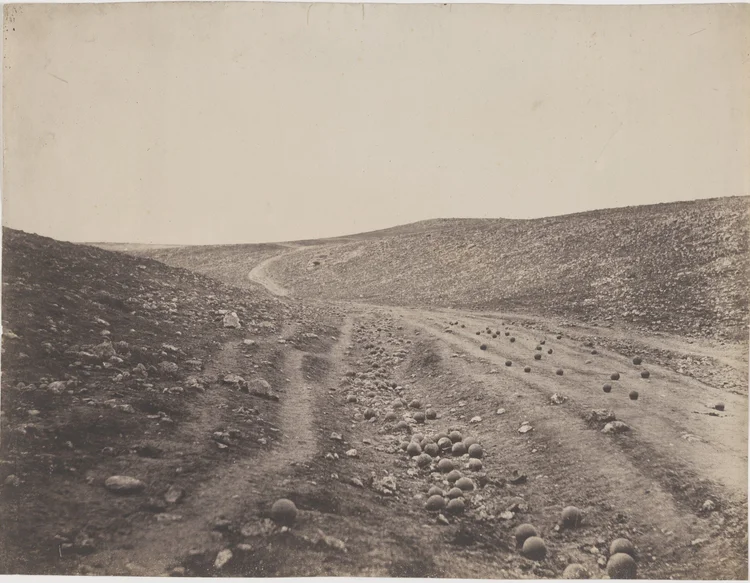
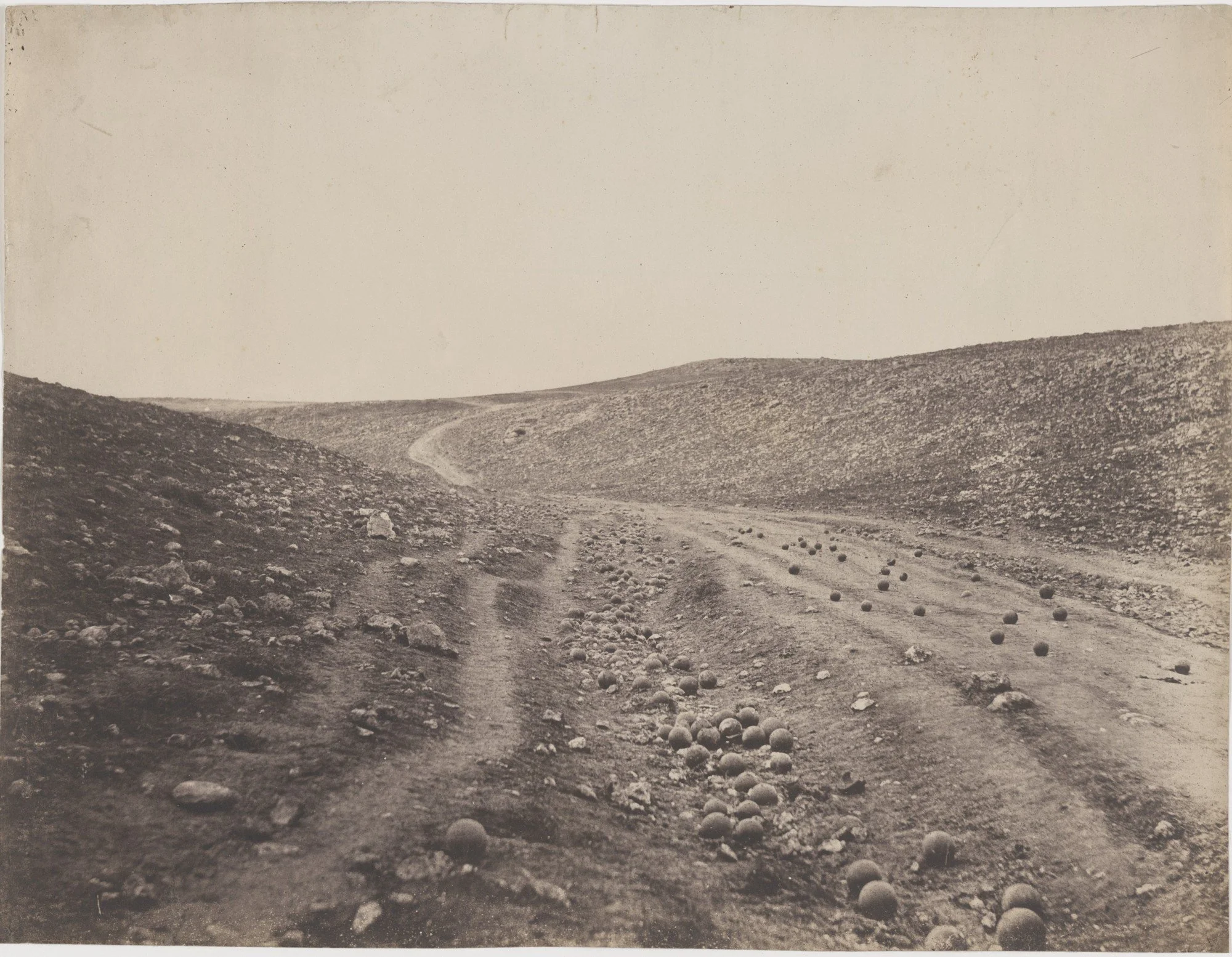
One of those pictures shows a bare road in a ravine near Sebastopol. Iron cannonballs lie on the road and beside it. There are no people in the frame. It is known as The Valley of the Shadow of Death.
A second version of the same view exists. In one, cannonballs lie on the road. In the other, they lie off the road. Both are held at the Harry Ransom Center in Texas, and the writer and filmmaker Errol Morris showed them side by side in the New York Times in 2007.
Morris started from a sentence by Susan Sontag. She wrote that Fenton oversaw the scattering of the cannonballs on the road before the second picture. Morris asked how she could know this. He noted that the idea is not in Fenton's letters. He travelled to the Crimea and found the place. Still, he wrote that his own ideas about which picture came first were “just theories, nothing more.”
So the question is open. Did Fenton move the balls, did soldiers move them, and which version came first? Curators and writers have argued about it, and no one has settled it. What is clear is what the picture leaves out. Fenton showed no battles and no dead. The Library of Congress notes that Victorian ideas of what was proper kept dead bodies out of such pictures.
Many of his Crimean pictures are portraits of officers, and he knew why. He explained it plainly: “If I refuse to take them, I get no facilities for conveying my van from one locality to another.”
The work
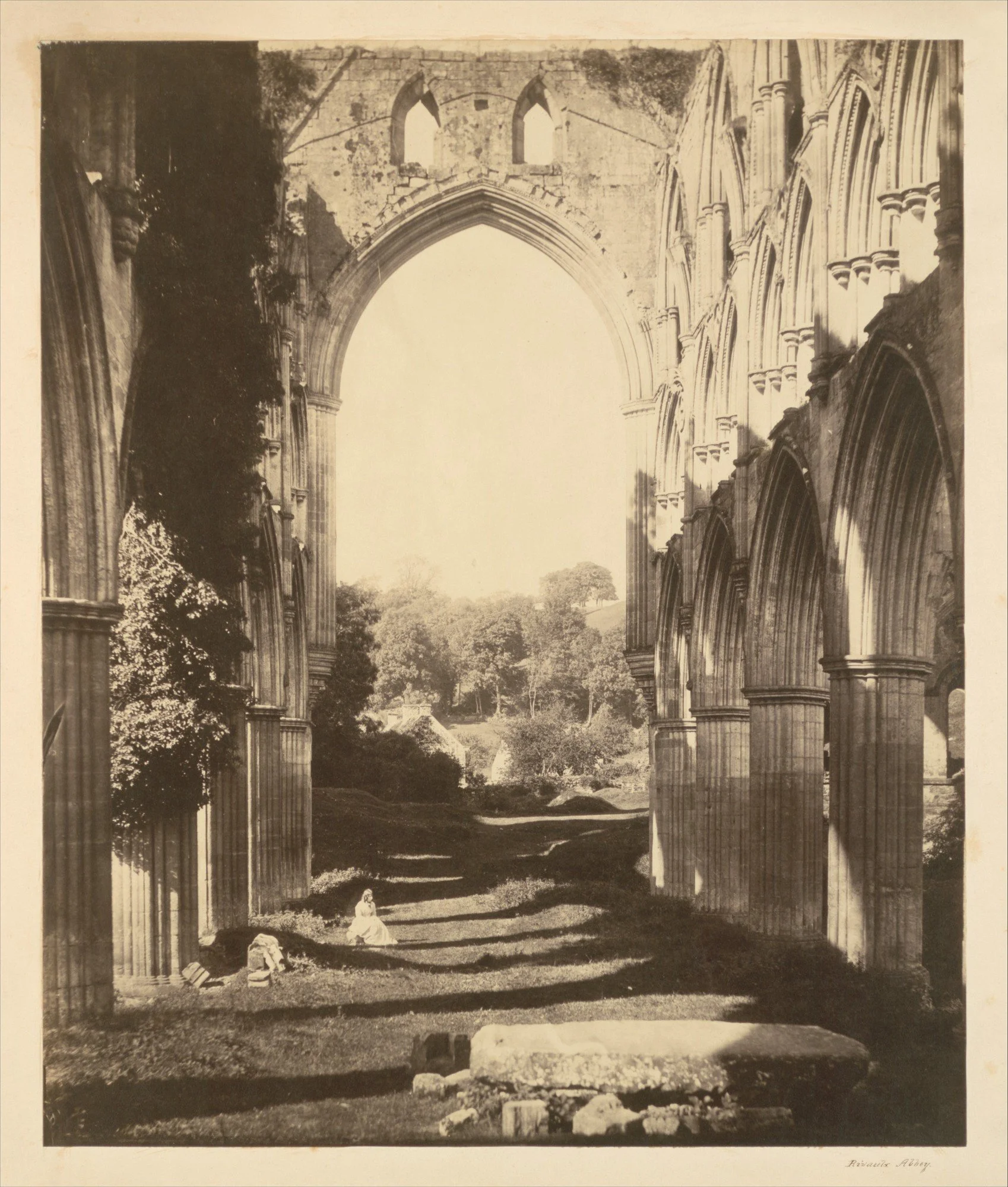
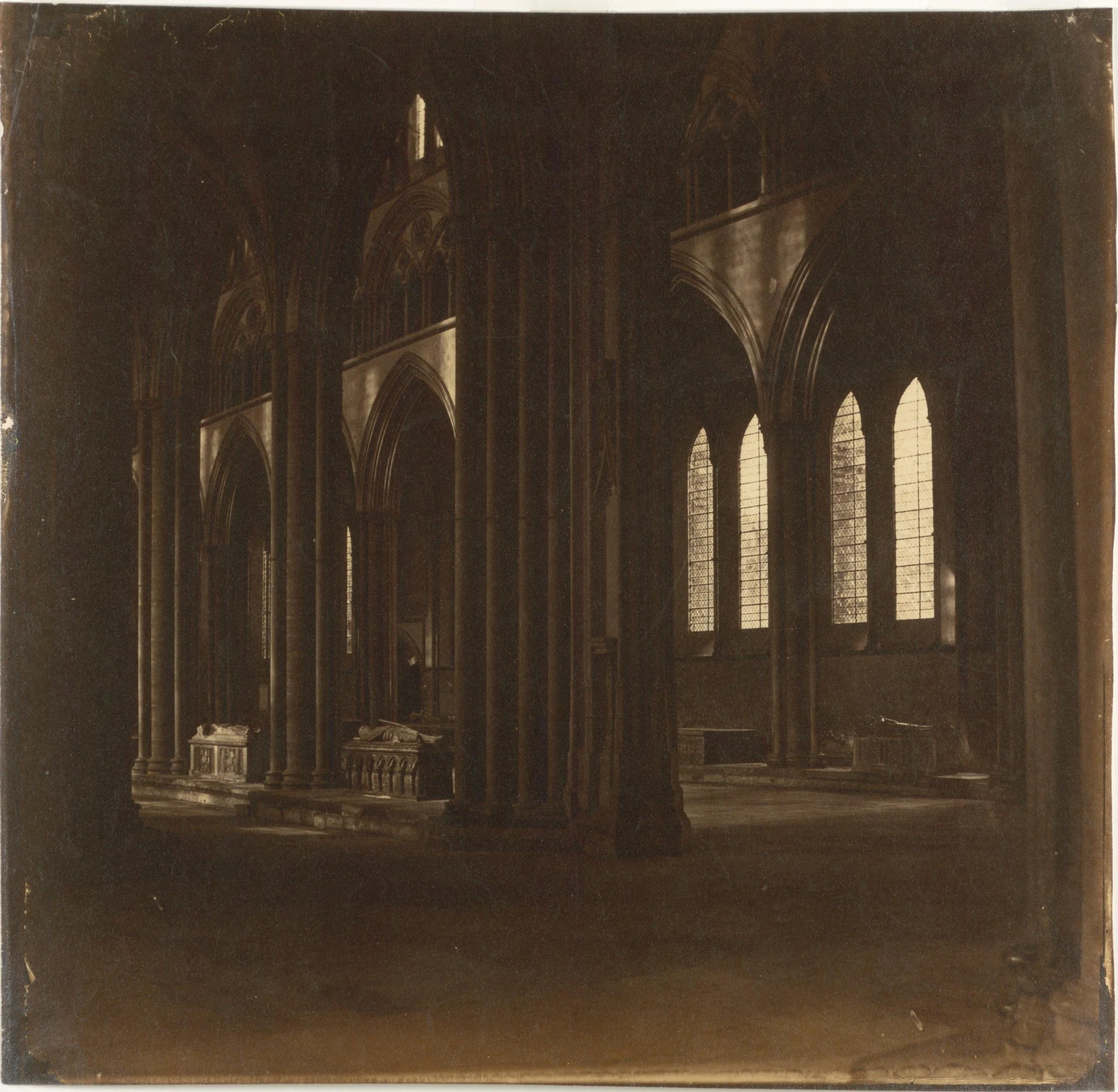
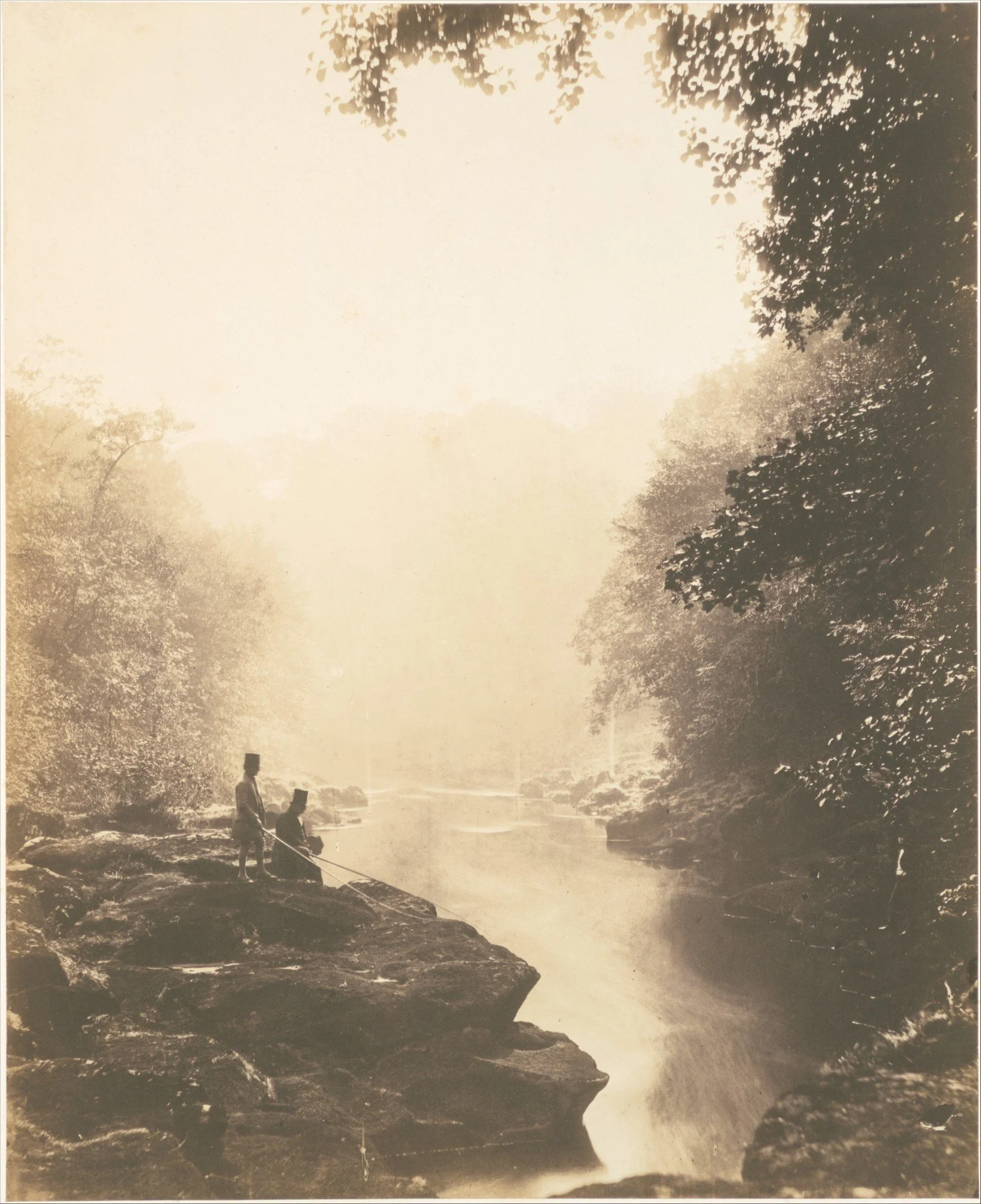
Fenton's work is wider than the Crimea. In 1854 he became the first official photographer of the British Museum, and he made portraits of the royal family. After the war he turned to architecture and landscape. Rievaulx Abbey (1854) and Salisbury Cathedral - The Nave, from the South Transept (1858) show his care for light and stone. Wharfe and Pool, Below the Strid (1854) is one of his landscapes.
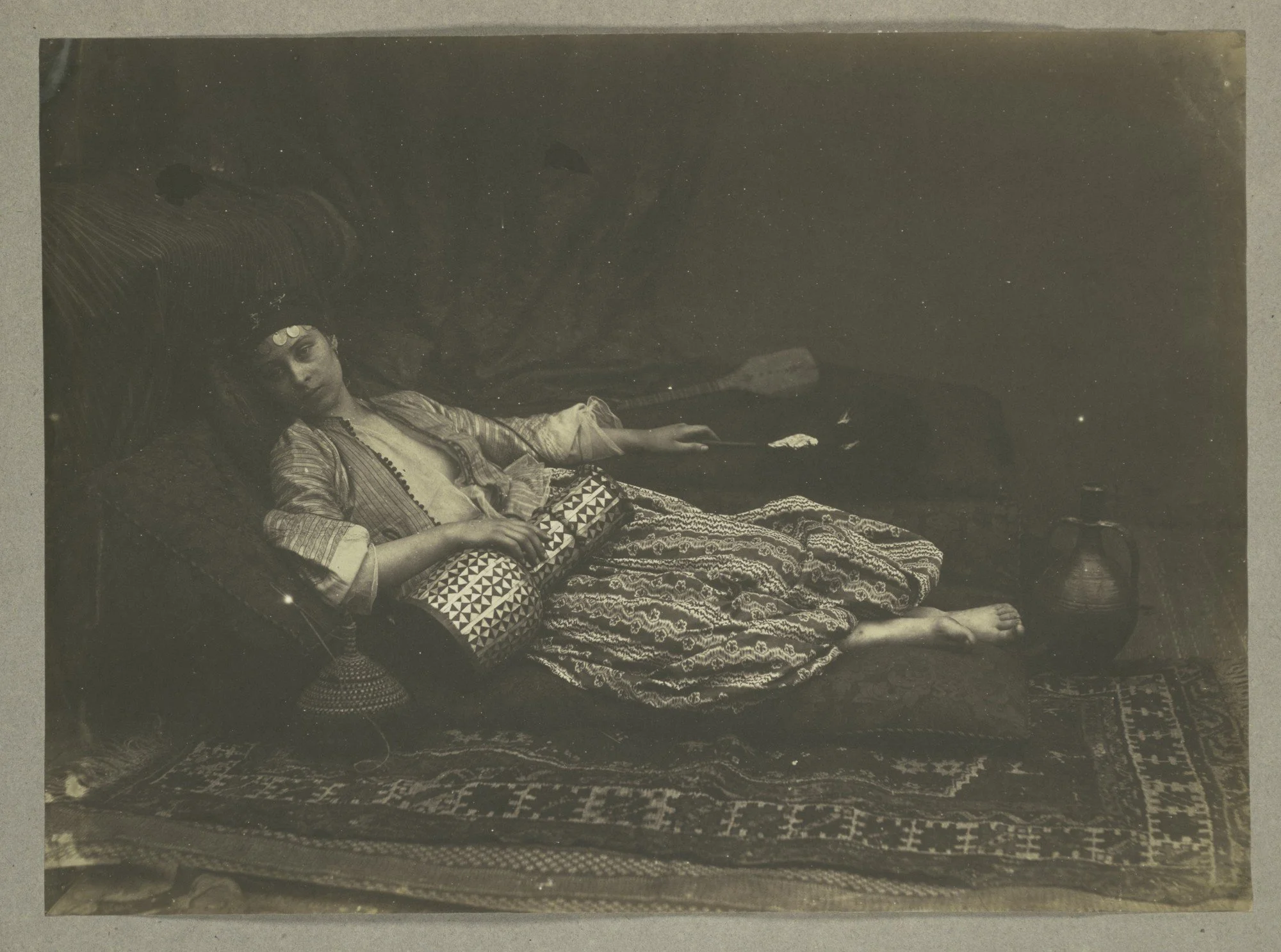
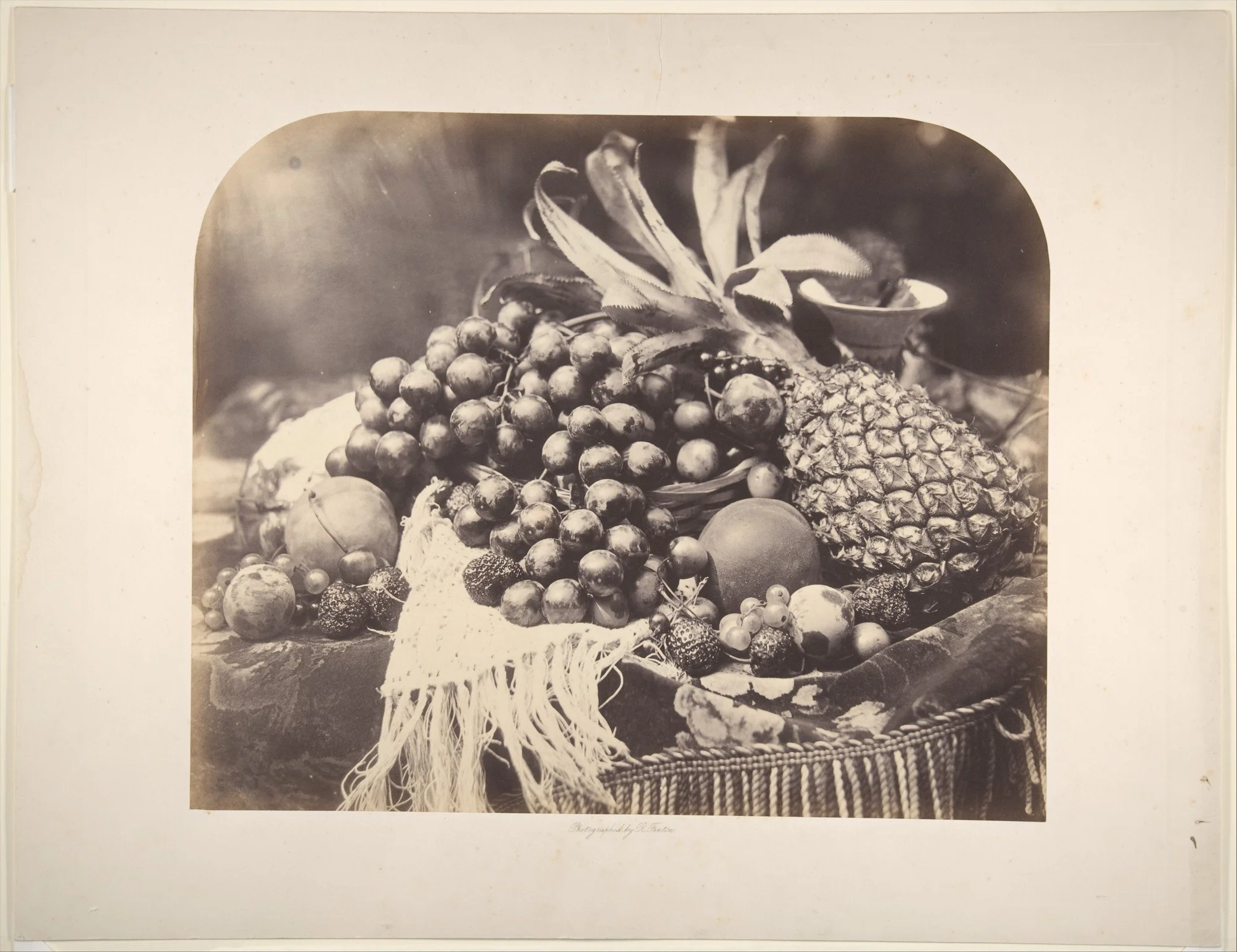
In 1858 he made a series of Near Eastern scenes in his London studio, with friends as models. They were inspired by Orientalist paintings of the time. [Reclining Odalisque] (1858) belongs to this period. His last known photographs, from 1860, are still lifes, such as [Still Life with Fruit]. In October 1862 he announced his retirement and put his equipment and about one thousand large glass negatives up for sale. He went back to the law.
- 1819Born in March at Crimble Hall, near Heywood, Lancashire
- 1843Marries Grace Maynard and moves to Paris to study painting
- 1851Learns new photographic methods from Gustave Le Gray in Paris
- 1852Photographs Kiev, St Petersburg and Moscow
- 1853Becomes a founding member of the Photographic Society in London
- 1854Named the first official photographer of the British Museum
- 1855Photographs the Crimean War from March to June, about 360 pictures
- 1862Retires from photography and sells his equipment and negatives
- 1869Dies on 8 August, aged 50
Lessons
Know the limits of your tools. The wet plate needed long exposures, so Fenton could not photograph fighting. He worked with what the process allowed: camps, harbours, landscapes and portraits.
Ask who your pictures are for. Fenton worked for a publisher and with the help of the army. This shaped what he could photograph and how. Knowing this helps you read his pictures today.
Go back and look again. The two versions of the road show Fenton making a second picture of the same view. A second look can change a picture, and it can start a long discussion.
Try this: Choose one place near you and photograph it twice. Change one thing between the two pictures, for example a person, an object or the light. Put the pictures side by side. Ask a friend which one is more true to the place, and listen to the answer.
Gear
Fenton's sources agree on a few things about how he worked. Camera and lens models are not clearly documented in the sources I could check.
Wet collodion glass plates: In the Crimea he used the wet collodion process on glass. The plate was coated just before the exposure and developed right after it. The prints were albumen prints.
A van as a darkroom: His van held his equipment and served as a darkroom. It was a converted wine merchant's van, and it was sometimes mistaken for a target.
Books
All the Mighty World: The Photographs of Roger Fenton, 1852-1860 (The Metropolitan Museum of Art, 2004). This is the catalogue of the big Fenton show of 2004 to 2006, seen in Washington, Los Angeles, New York and London. The authors are Gordon Baldwin, Malcolm Daniel and Sarah Greenough. It follows his work from Russia to the Crimea to his last still lifes. It is a good first book for anyone who wants the whole story.
Roger Fenton, Photographer of the Crimean War: His Photographs and his Letters from the Crimea (Secker & Warburg, 1954). Helmut and Alison Gernsheim wrote this book. It brings together Fenton's Crimean photographs with his letters from the war and an essay on his life and work. It is for readers who want to hear Fenton in his own words. It is old, so look for second hand copies.
Roger Fenton, Photographer of the 1850s (South Bank Board, 1988). This is the catalogue of an exhibition at the Hayward Gallery in London, from 4 February to 17 April 1988. It looks at his whole career, not only the war. It suits readers who want a wider view of his decade.
Roger Fenton, A Family Collection (Sun Pictures Catalogue Fourteen) (Hans P. Kraus Jr., 2005). Larry J. Schaaf wrote this catalogue, with an introduction by Roger Taylor. It describes prints from a collection kept in Fenton's family. It is for readers who like to study single prints and their history.
In his words
“If I refuse to take them, I get no facilities for conveying my van from one locality to another.”
“As soon as the van door was closed to commence the preparation of the plate, perspiration started from every pore, and the sense of relief was great when it was possible to open the door to breathe even the hot air outside.”
“intended to illustrate faithfully the scenery of the camps; to display prominent incidents of military life, as well as to perpetuate the portraits of those distinguished officers, English and French, who have taken part in the ever memorable Siege of Sebastopol.”