How Mark Maio Followed One Forgotten Labor Story From Kansas Wheat Fields to Buffalo Grain Elevators
Welcome to this edition of [book spotlight]. Today, we uncover the layers of 'AGAINST THE GRAIN,' by Mark Maio and written by Tony Bannon (published by Fall Line Press). We'd love to read your comments below about these insights and ideas behind the artist's work.
Grain once moved through America by human muscle.
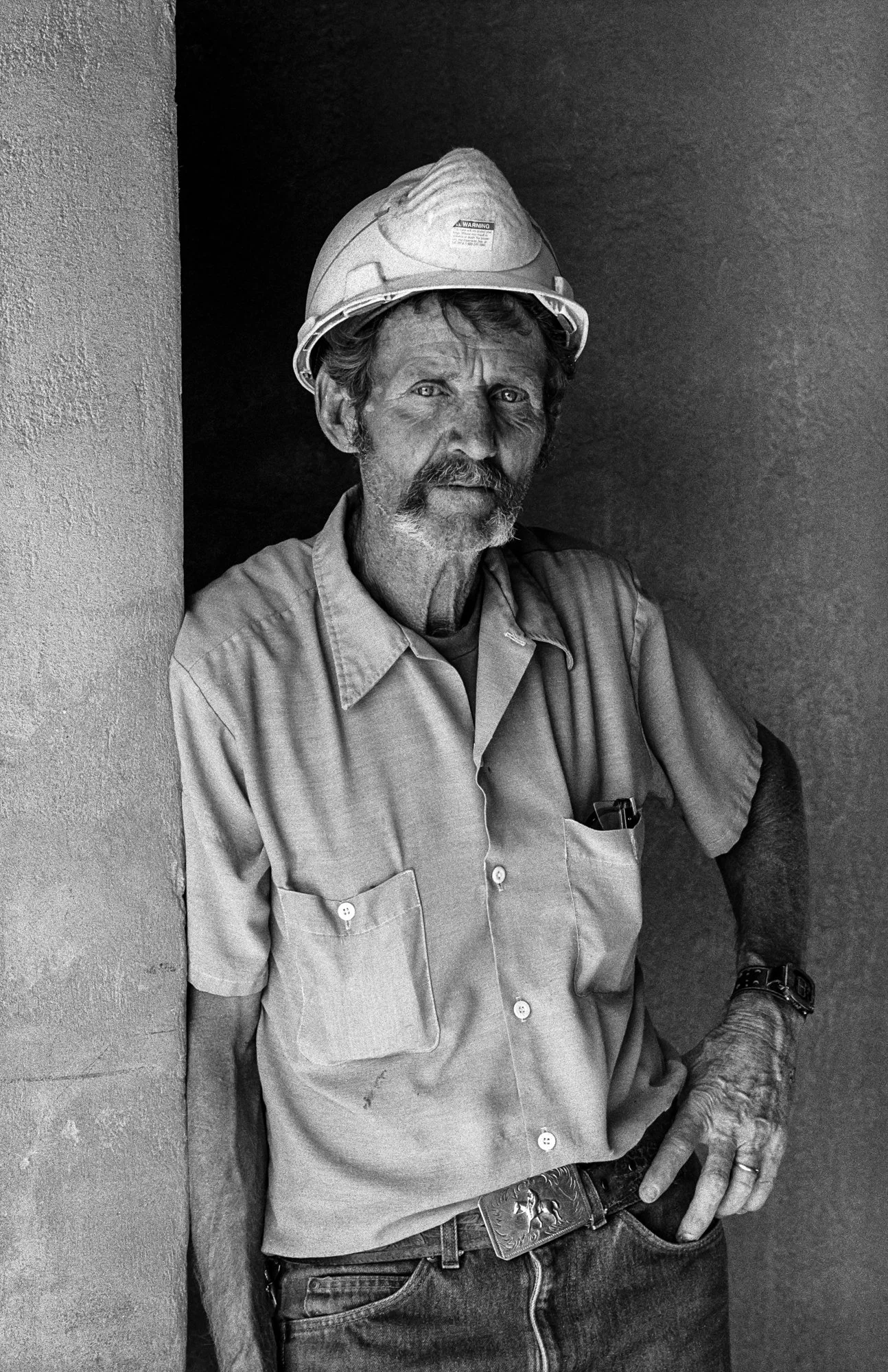
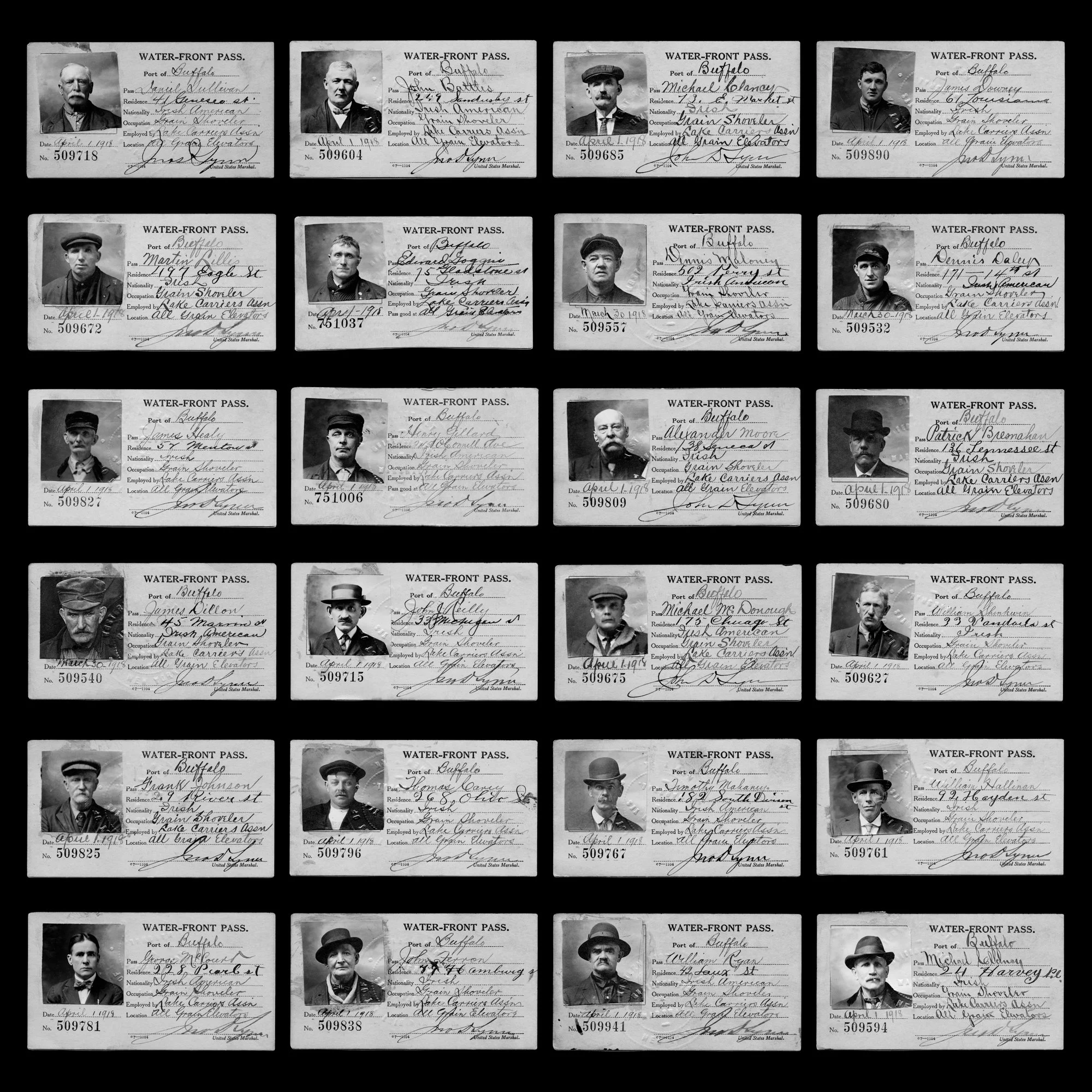
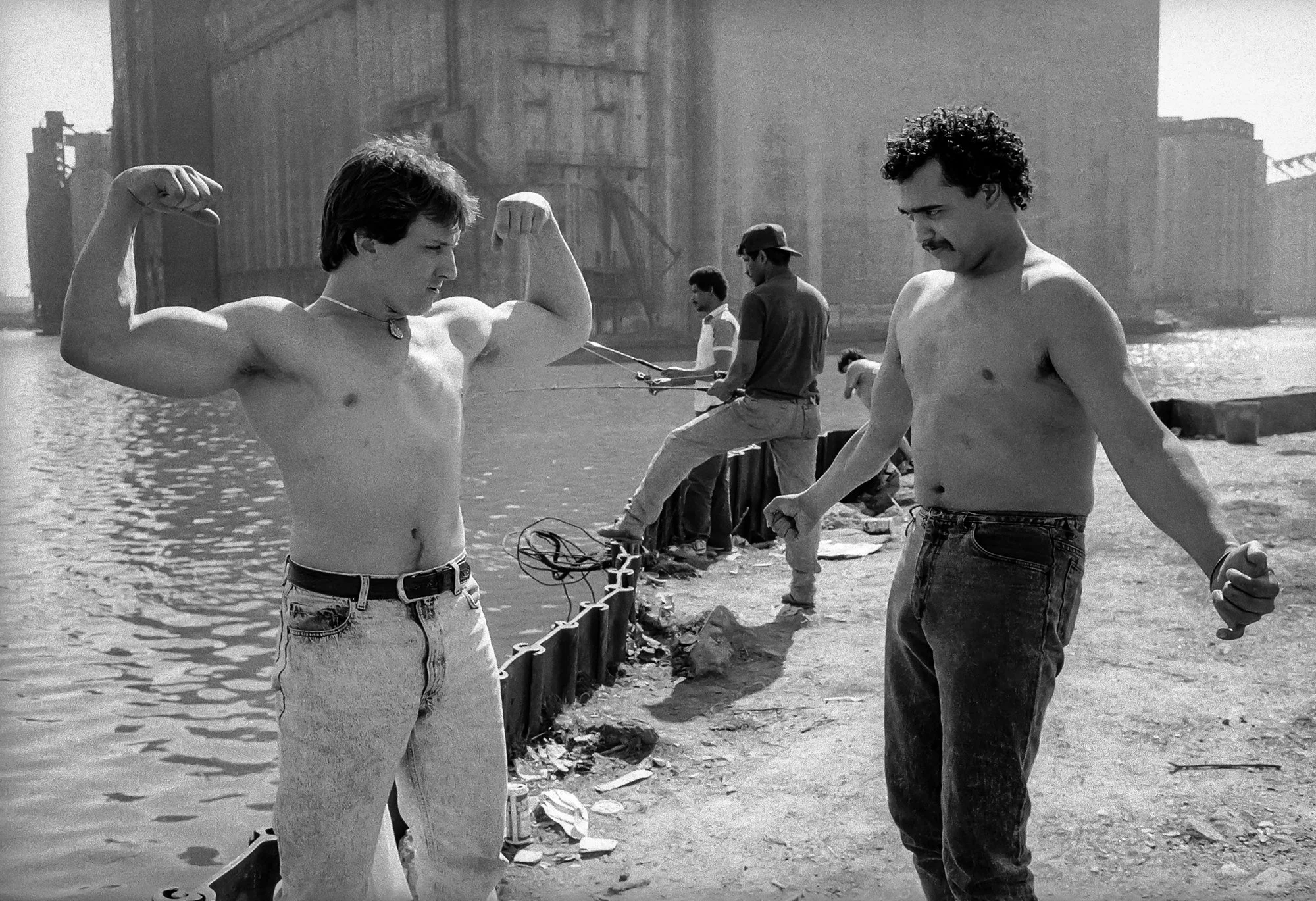
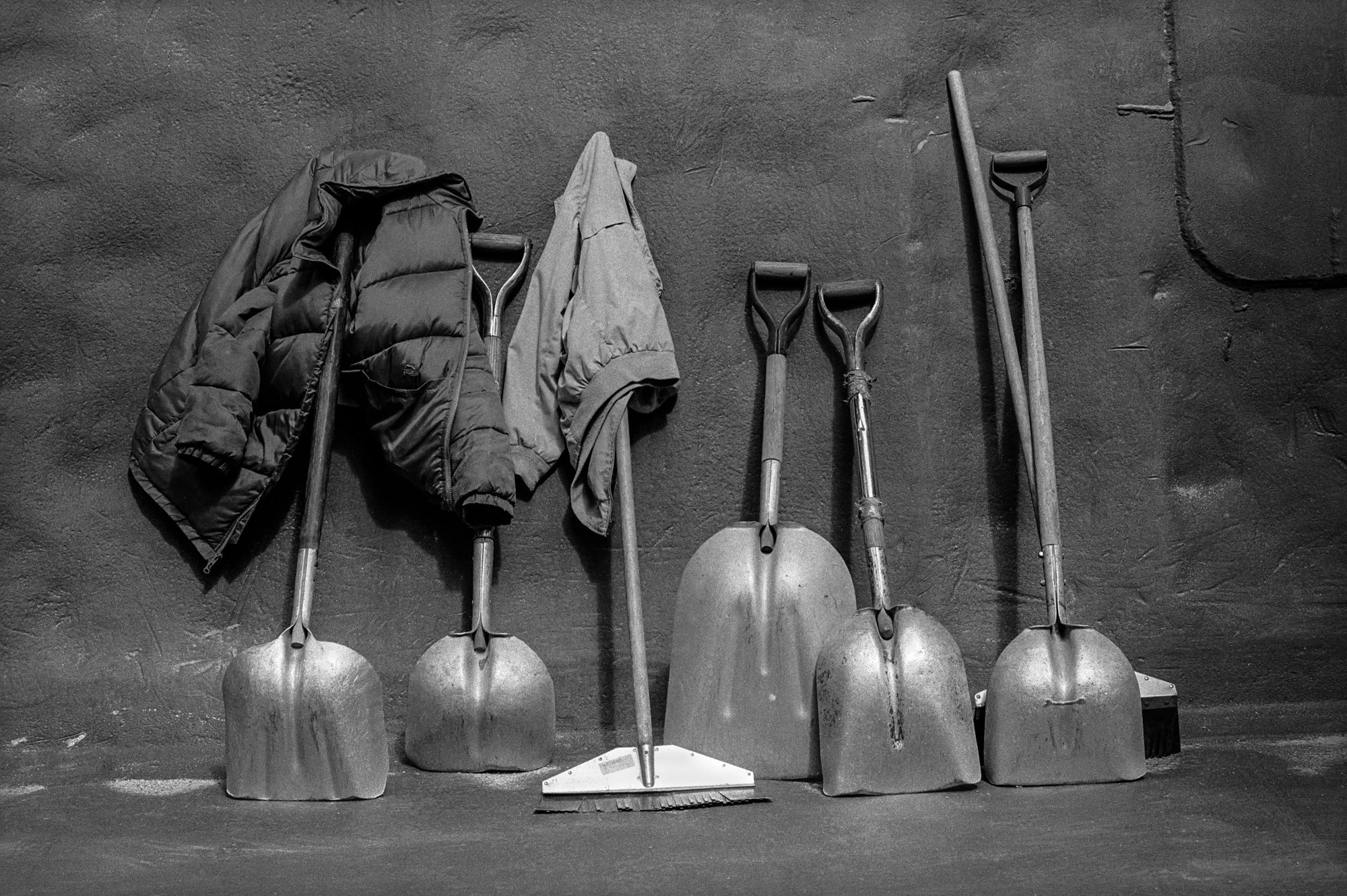
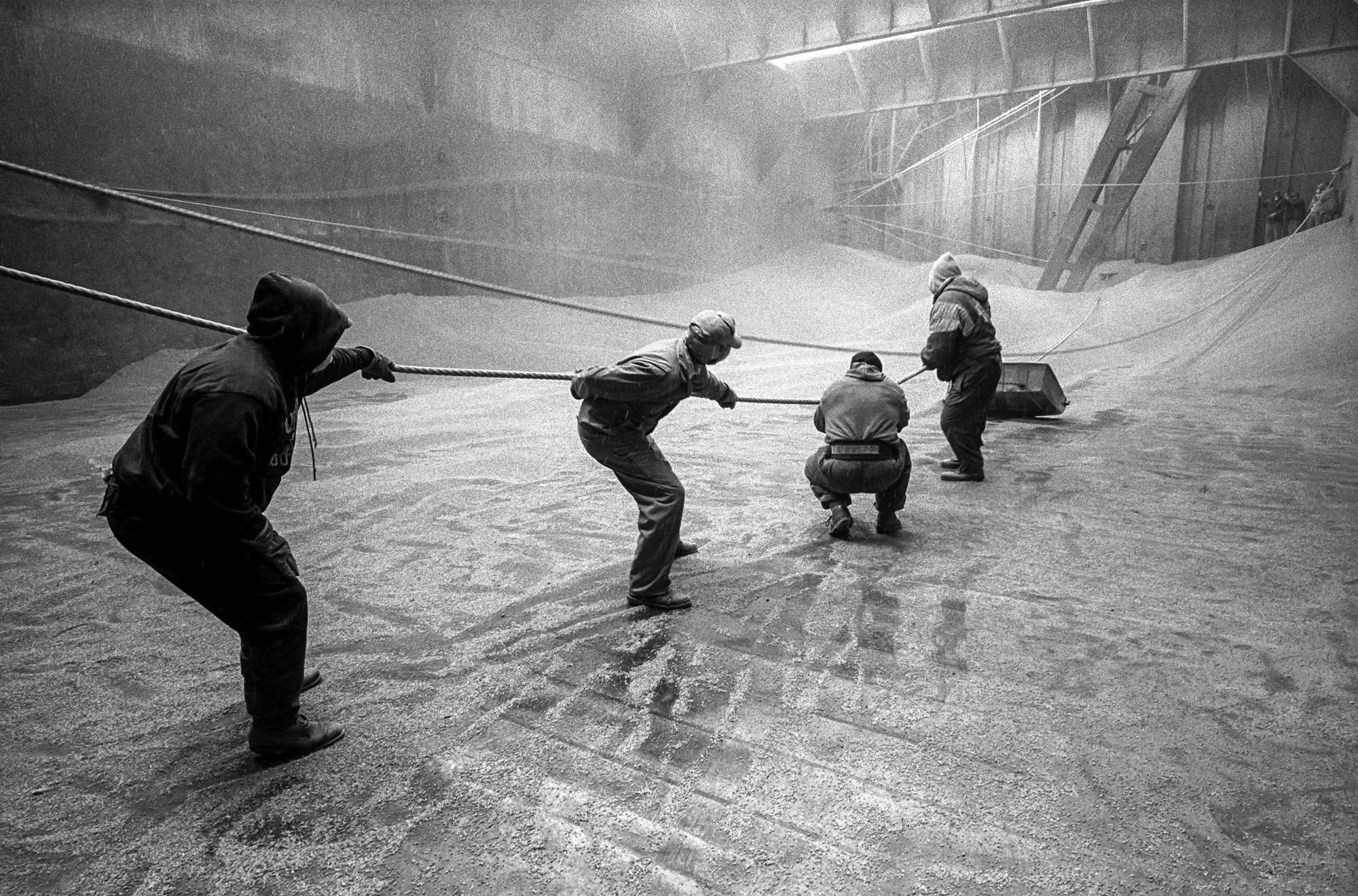
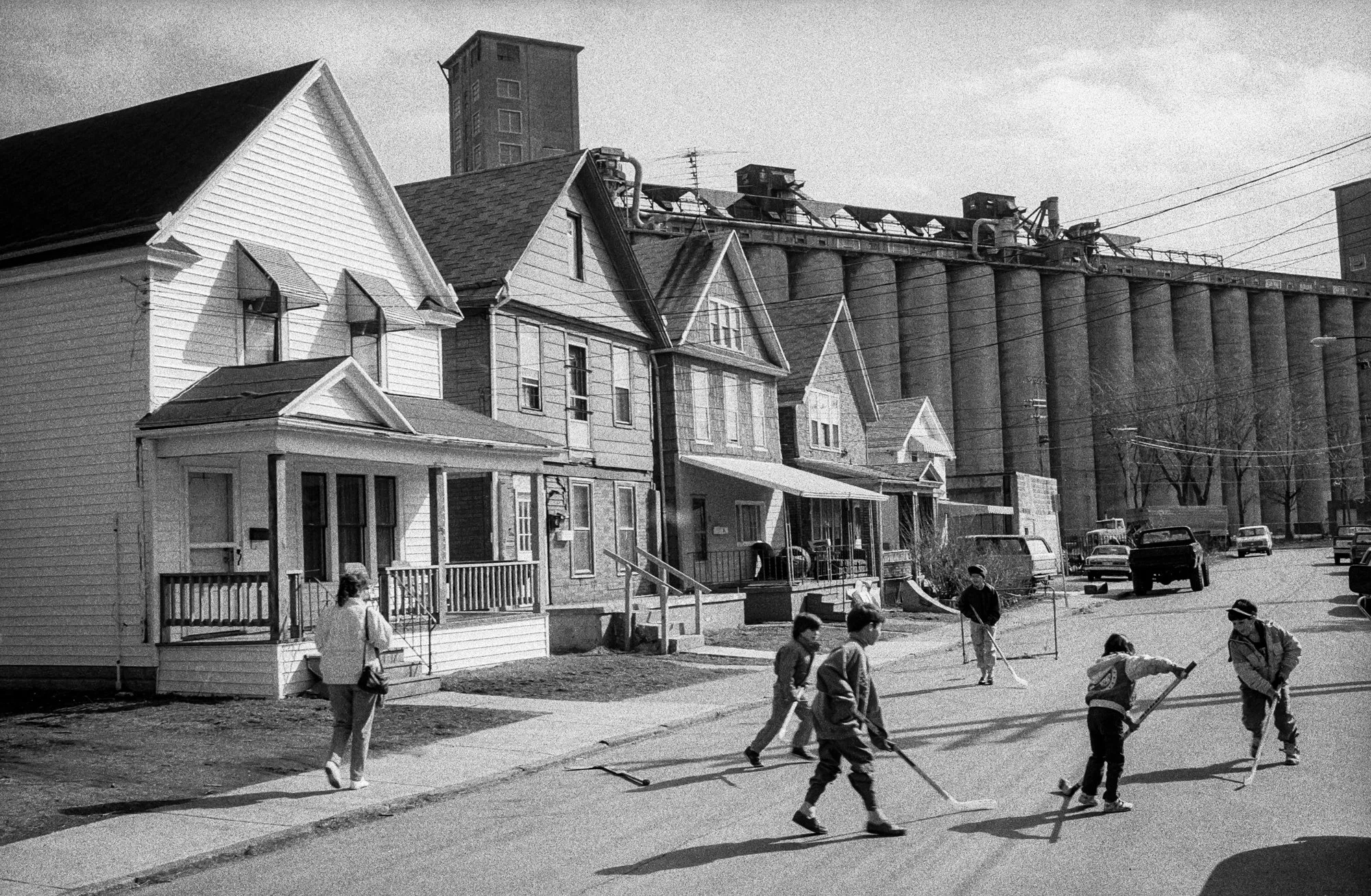
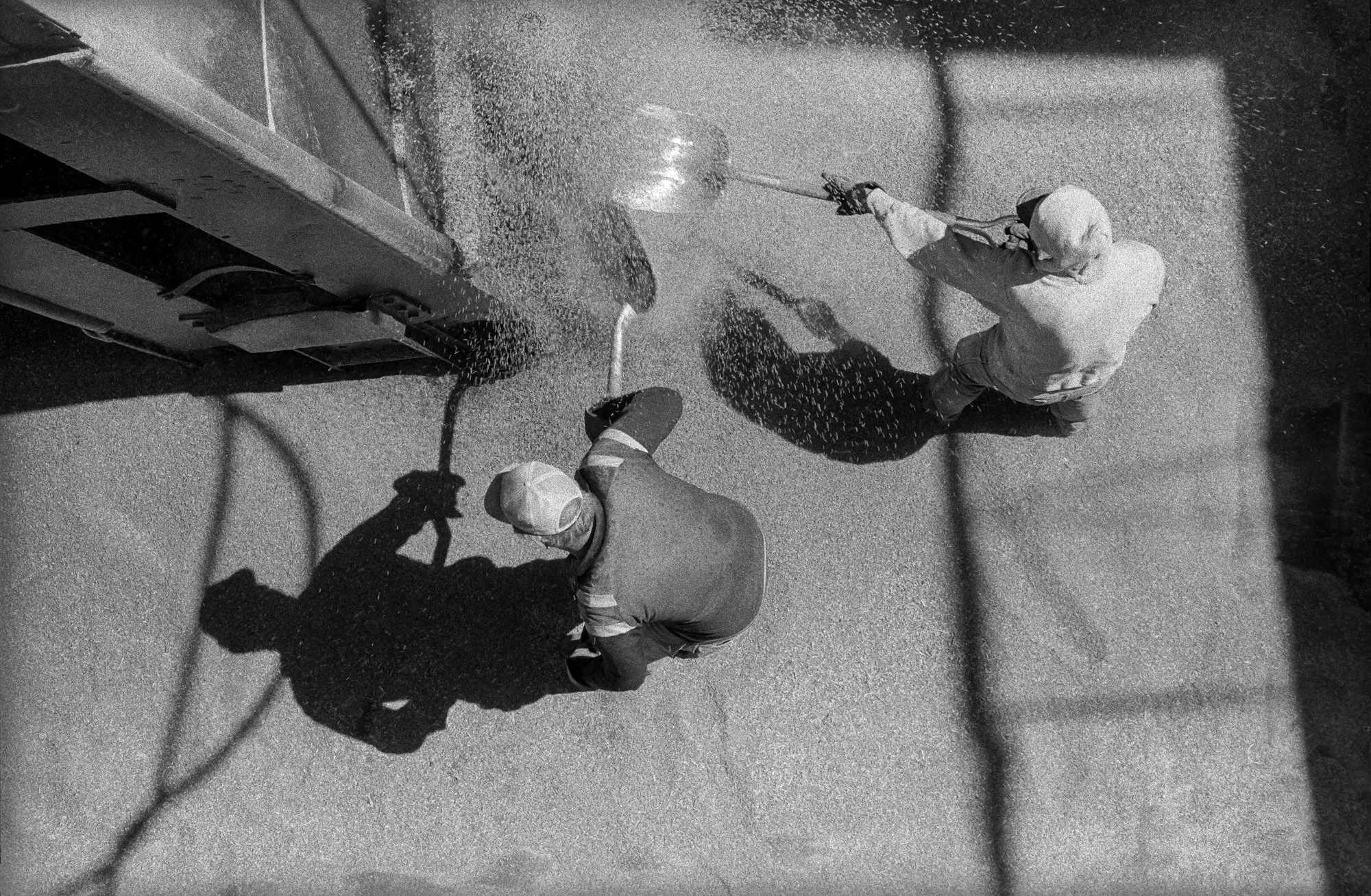
Before automation, men climbed inside the holds of huge ships and pushed grain with metal shovels, ropes, and their own bodies. In Buffalo, they were known as grain scoopers, and their work connected farms, lakes, elevators, unions, families, and the growth of American industry. Mark Maio spent decades photographing this world before it disappeared.
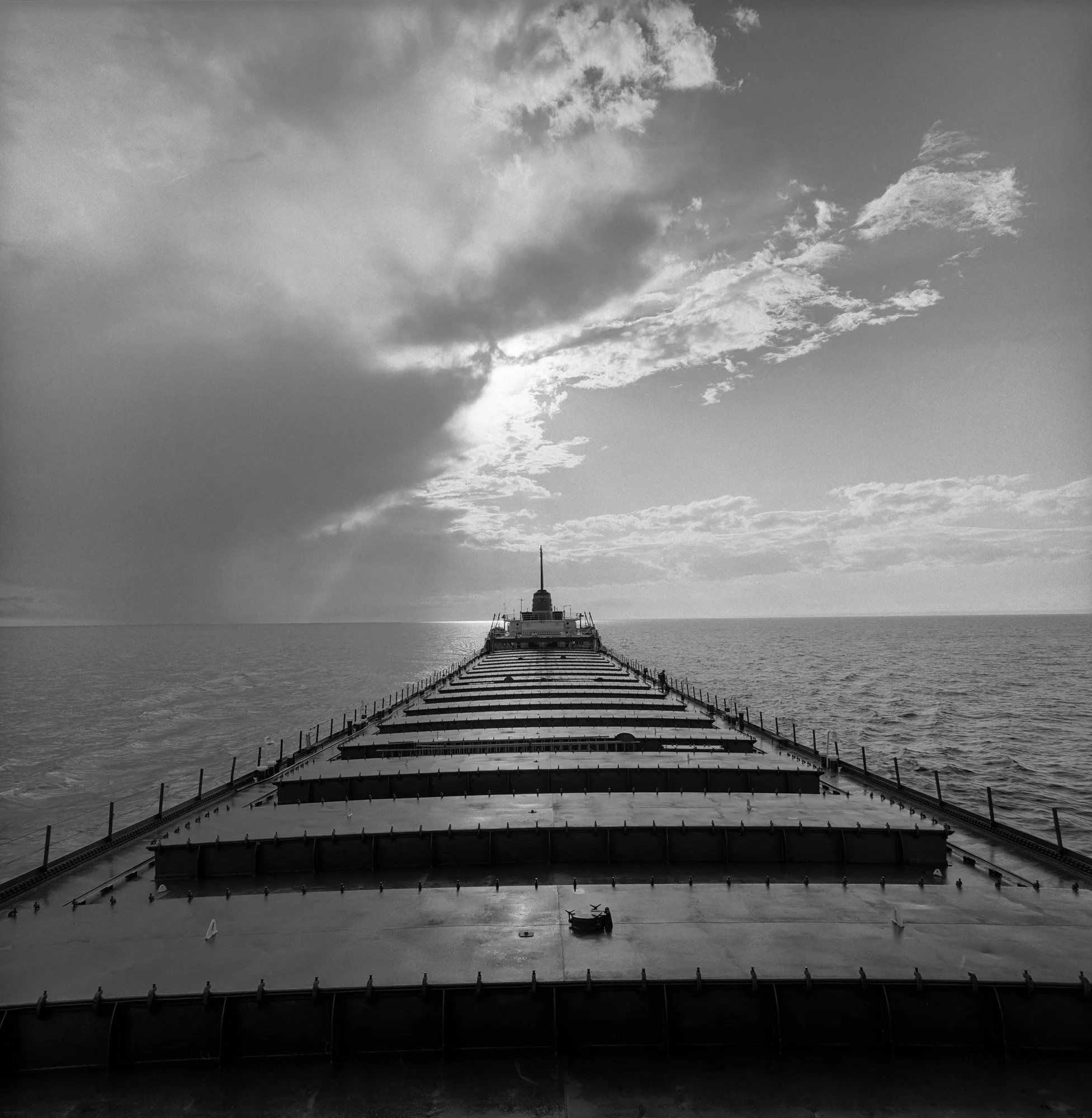
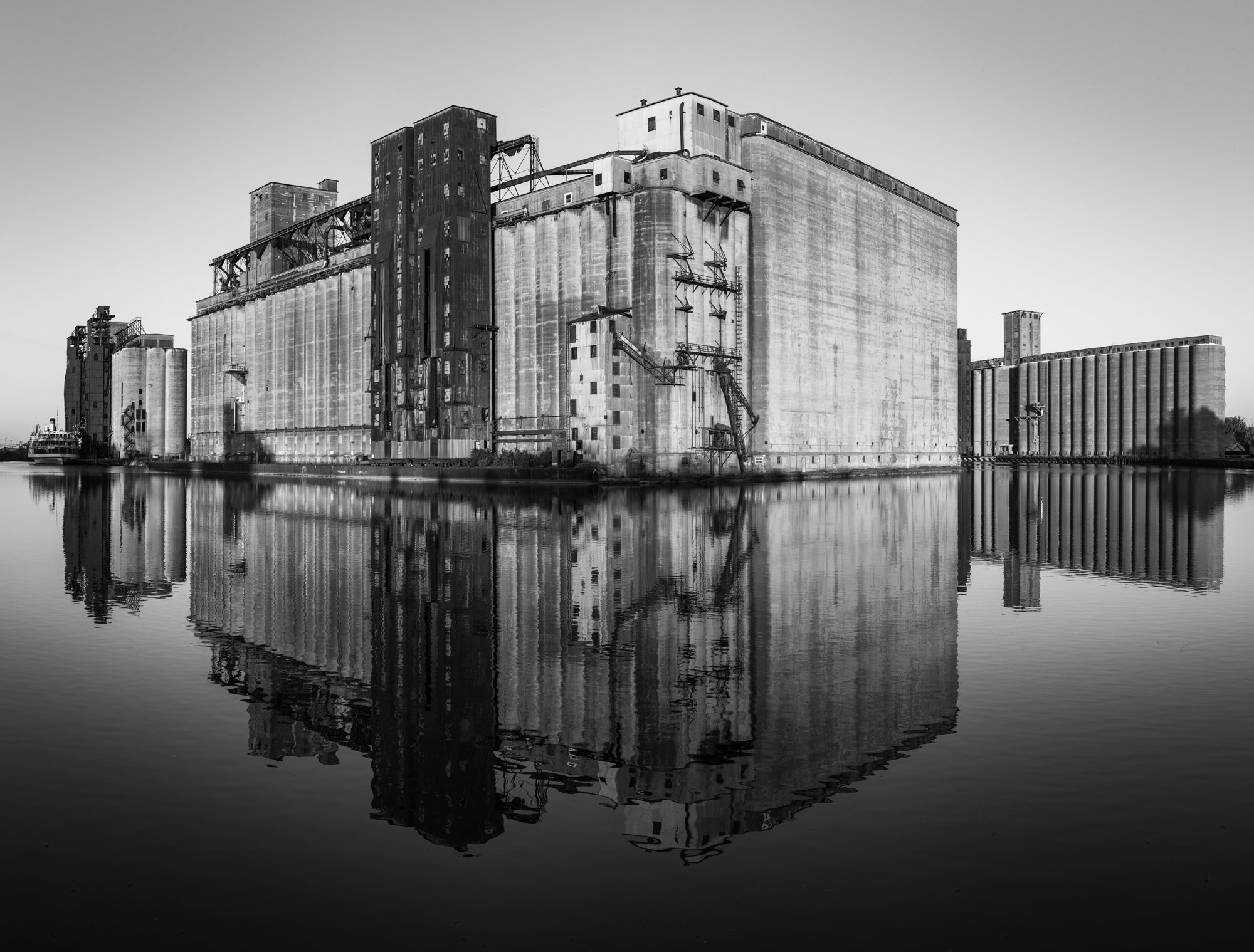
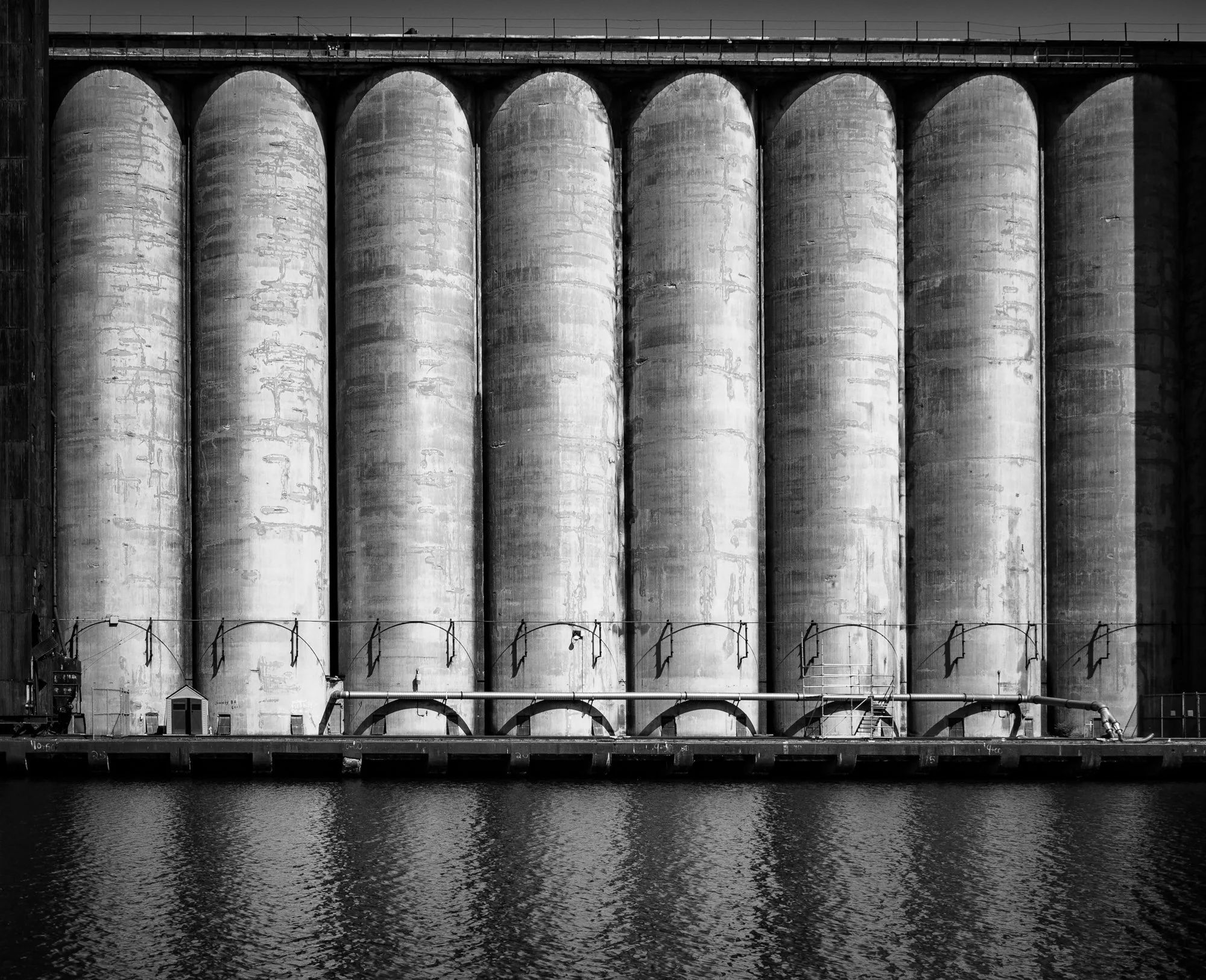
Against The Grain follows that story from the wheat fields of Kansas to Duluth and finally to the grain elevators of Buffalo.
What began as a local project in the Old First Ward became something much larger: a record of labor, migration, trust, and a profession reaching its final days. Maio was not only photographing workers, but also following the route that made their work necessary.
He talks about gaining trust, reading movement, editing thousands of photographs, and knowing when a project must grow beyond its original idea.
The Book
Against The Grain by Mark Maio, with story by Anthony Bannon, follows the hidden history of Buffalo’s grain scoopers and the wider route that carried grain from Kansas wheat fields through Duluth and across the Great Lakes to Buffalo. Built from decades of photographs, research, and oral histories, the book documents a dangerous form of manual labor that ended as automation changed the grain trade. More than a record of one profession, Against The Grain is a story about work, trust, migration, community, and the people who helped move American grain before their world disappeared. (Fall Line Press, Amazon)
Project genesis: You spent more than three decades photographing the Buffalo grain scoopers. What first drew you to these men and their work, and when did you know it was a book?
The scoopers were a world unto themselves, working right in the middle of Buffalo yet completely invisible to most people passing by. I was drawn in immediately by the physical intensity of what they did and by the realization that this community, with its deep roots in the Irish immigrants who built the Erie Canal, was one of the last of its kind. The project had its title from the very first year, and it never changed. Over the following three decades I also completed two master's degrees with research tied directly to this book, which gave me a deeper understanding of the history I was trying to record.
Access and trust: The scoopers worked in tight-knit union gangs of eighteen men. How did you earn enough trust to photograph them up close, and did that process change how you worked?
Access came slowly and was built entirely on trust. The holds of those grain ships were dangerous environments, and the scoopers needed to know that anyone working alongside them would be careful and respectful of the process. I spent hours, then days, then whole seasons being present without pushing too hard, learning how everything worked before I ever started thinking about where to place myself for a photograph.
Over time, they understood that I was there to honor what they did, not to get in the way of it, and that made everything possible.
Scope: The book starts with grain farmers in Kansas and follows the grain route all the way to Buffalo. How did you decide where the story had to begin, and how long did it take to build that wider picture?
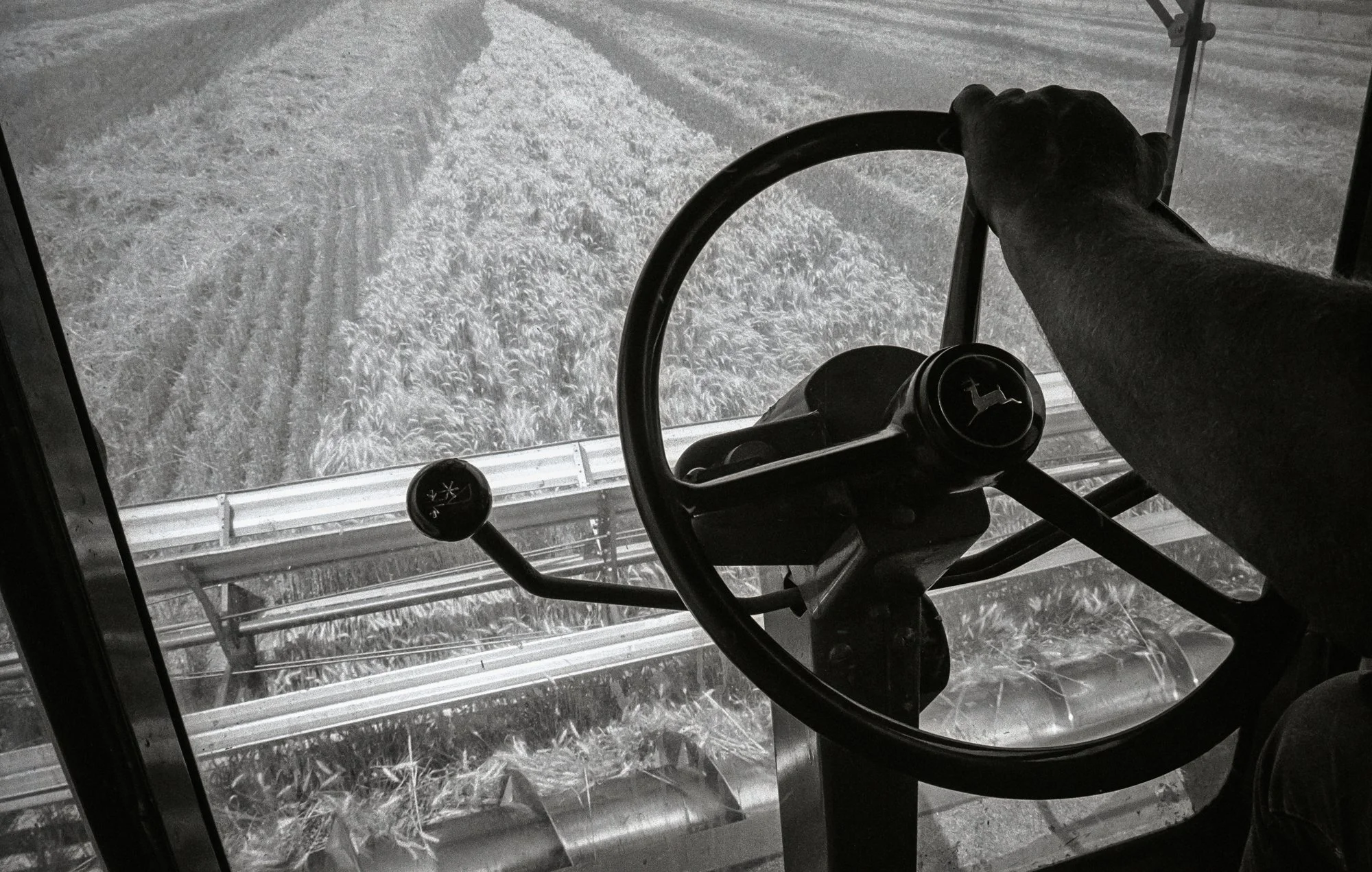
The scoopers were always the heart of the story, but I came to understand that their work could only be fully understood in context. The grain that arrived in Buffalo had come from somewhere, and that somewhere mattered. I traced the route back to the wheat fields of Kansas, specifically to farm families like the Nelsons in Marquette, whose Swedish immigrant ancestors had settled the land generations earlier. Beginning the book there and following the grain through Duluth and across the Great Lakes to Buffalo made it clear that this was not just a local story but a piece of the larger American story of labor, migration, and commerce.
Movement: Writers have described the scoopers' shoveling as a kind of choreography. How do you photograph repetitive physical labor in a way that keeps showing the viewer something new?
Actually I am the one who coined the phrase that watching the scoopers work was like viewing a ballet. While at first it was totally confusing to me or anyone else watching something they had never observed before, after hours/days of being down in the hold, their movements started making sense and as a photographer, it helped me plan/know in advance where I needed to be inside the hold. In many ways it was similar to following the action in a sporting event except this was an "event" neither I nor anyone else other than the scoopers knew about. As I gained more knowledge of the process, I could anticipate how the scoopers would be positioned and then watch and read the light to make photographs. A big part of this was them trusting me to not do anything stupid that would get me or them injured.
The cover photograph: Can you break down one specific photograph of the scoopers and explain exactly how your understanding of their choreography changed where you stood, when you shot, and why that frame worked better than the frames around it?
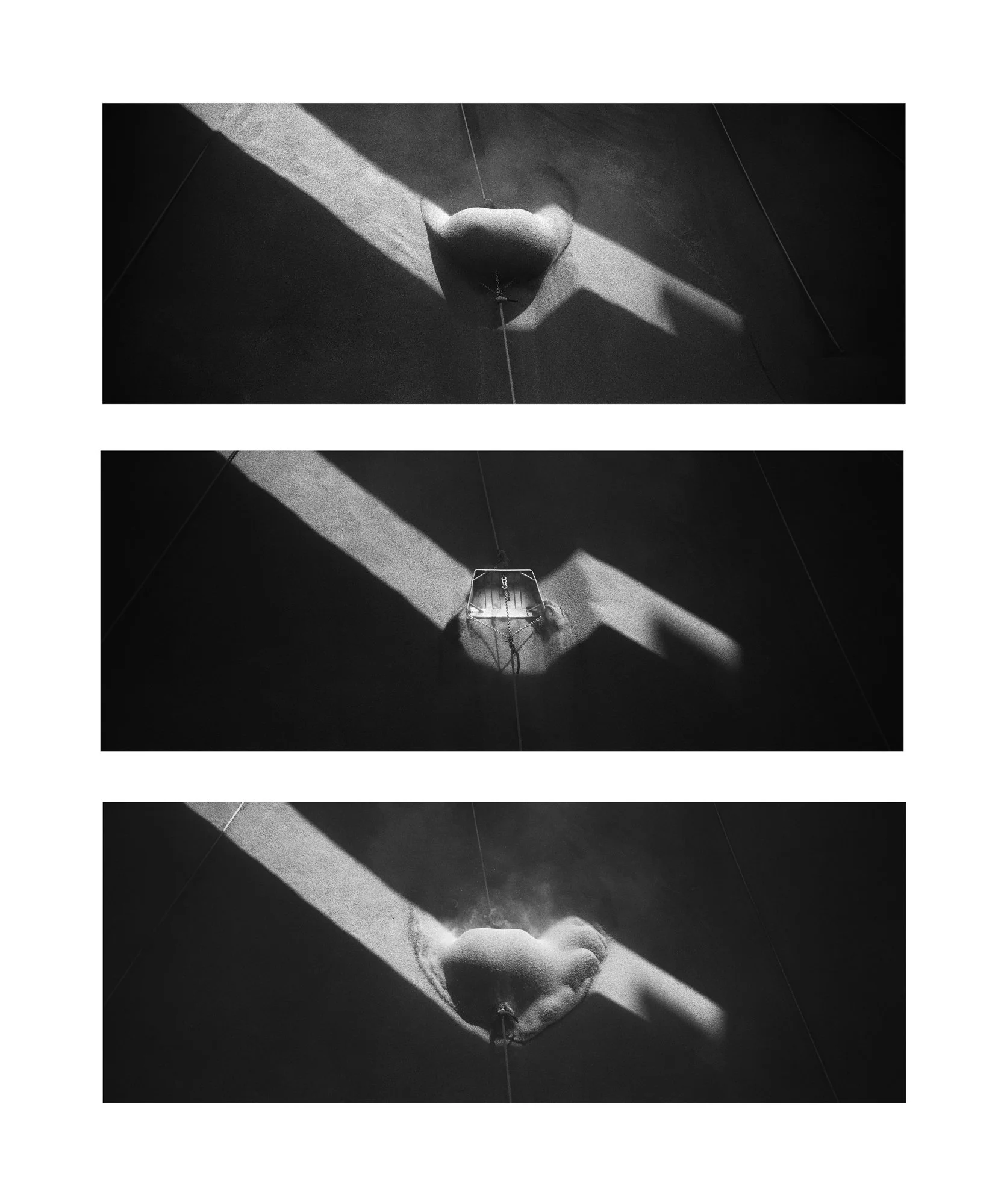
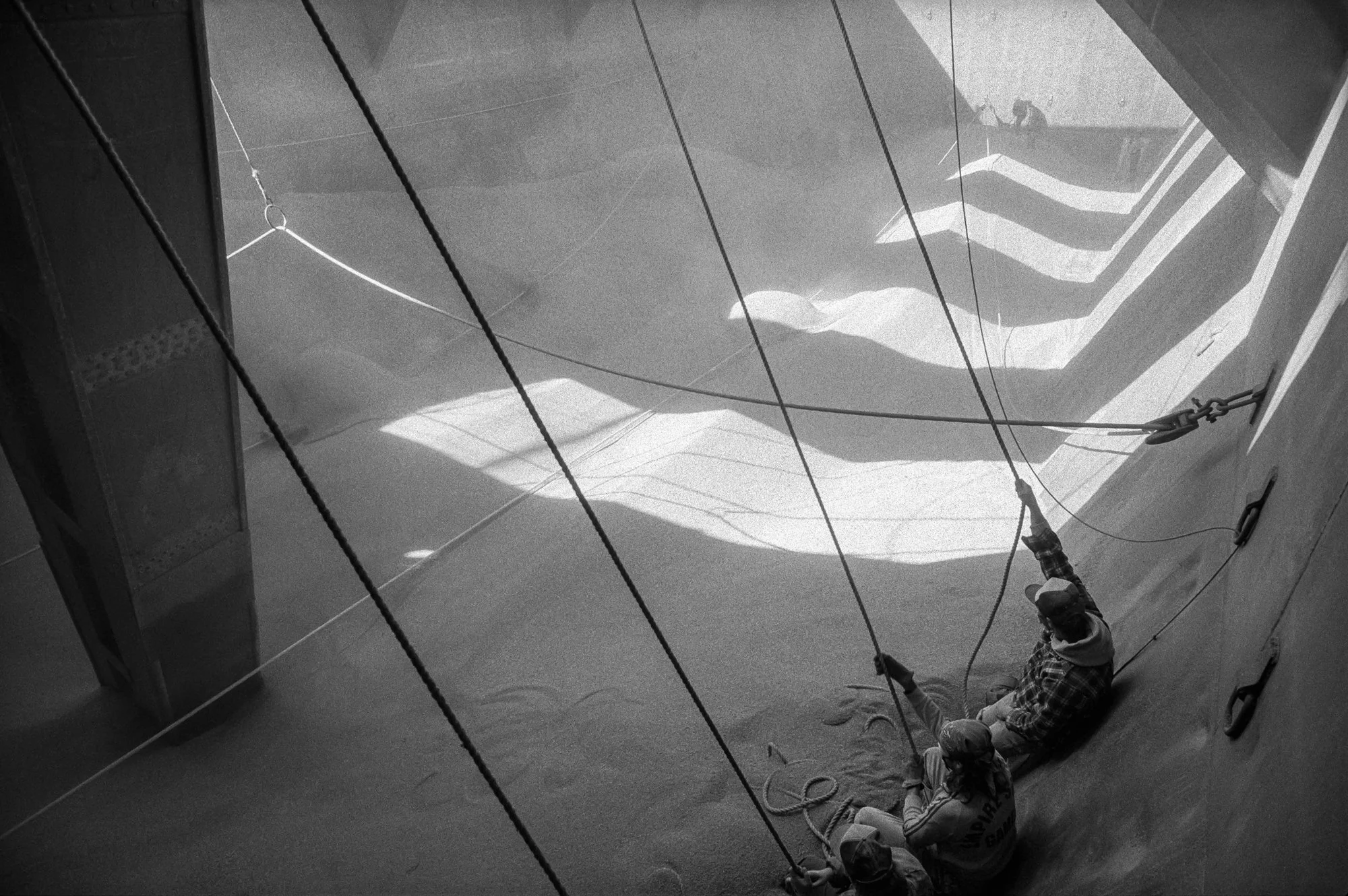
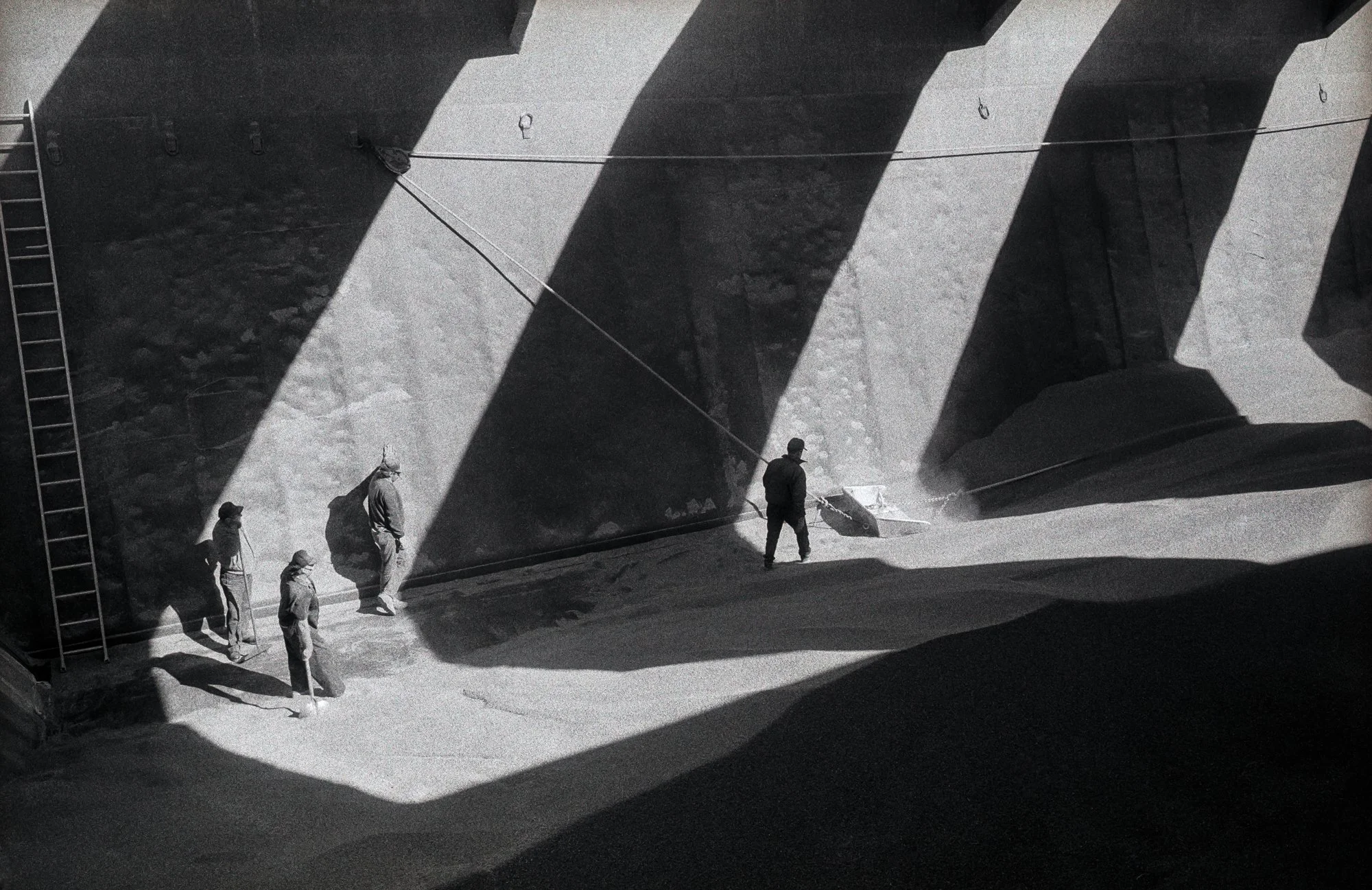
The image, which is on the cover of the book and has become the signature image of the project, exemplifies the point where I totally understood the process of "scooping" the grain. From this point forward, for lack of a better term, I started making photographs while being in what I now know as a state of "flow." Decades later, while being interviewed, I described my process of making photographs. I spoke of how while I was photographing, I would lose all track of time, becoming involved in seeing and making images until I, in essence, ran out of visual options and stopped, mentally and physically exhausted. The interviewer, who said he taught Zen, responded by saying "Oh, you're talking about being in flow". I had no idea what he was talking about. He explained that individuals, once putting in a minimum of their 10,000 hours of work trying to master a technique, reach a state where that task is done unconsciously, allowing them to see, respond and work at a different level.
I had reached that point in my project where I knew what was happening in the hold of the boat as well as the men doing it. Although each hold in the boat was huge, with twenty men inside working with two metal shovels attached by ropes to motors, my space to stand and make photographs both changed and was limited by what stage the unloading process was at. I was always looking for light and how I can use it to make photographs that express what something "feels" like.
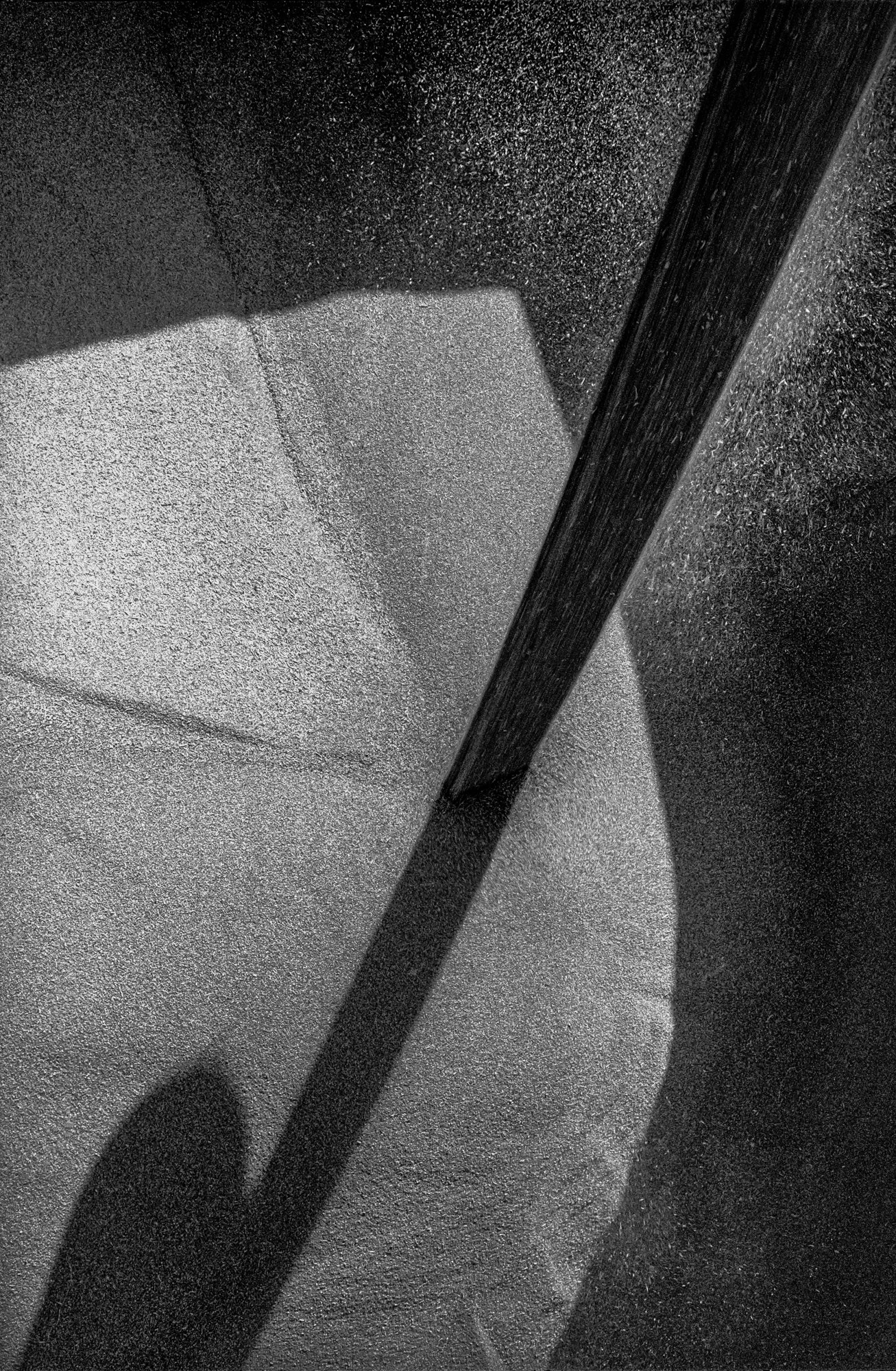
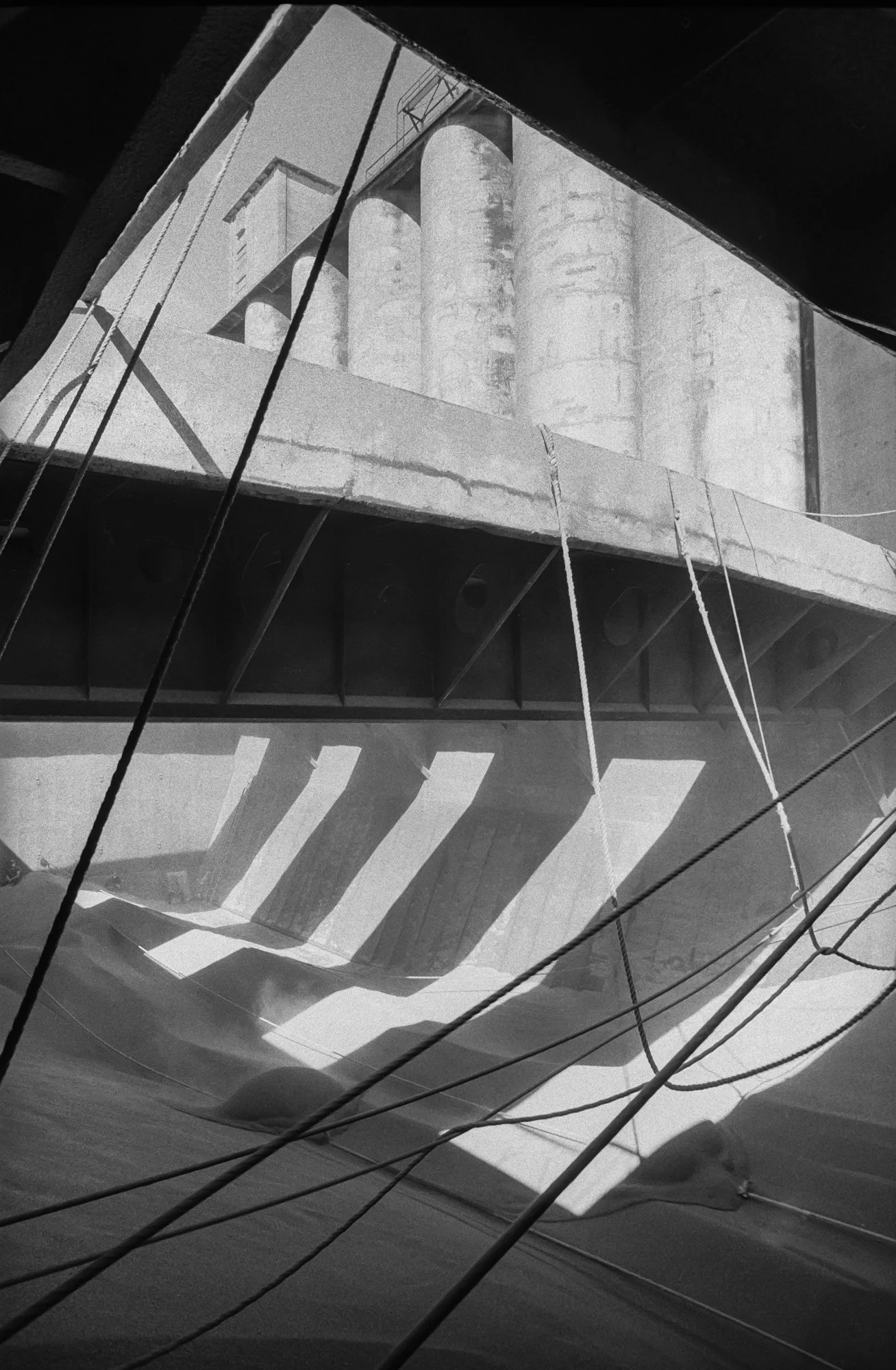
In "Wall Street" the hatch covers on the overhead deck of the boat had been removed for access to the grain. These openings allowed shafts of beautiful, direct light to fall in alternating patterns across the inside of the hold. I saw the angular "movement" of the light reflecting the physical movement of the men working with the shovel. I positioned myself on top of a pile of grain which was in shadow, giving the image a feeling of depth against the repetition of the light/dark across the walls of the hold. I then followed the movement of men and shovel, looking for the moment when it felt right.
This project was photographed on 36-exposure, 35mm film. When I reviewed the contact sheet of this roll, I made 16-18 exposures in this sequence. I can see myself responding to the movement of the men and shovel relative to the shafts of light, using each frame to make a visual note. I also remember that after making the last exposure in the sequence, I stopped, knowing that frame captured what I wanted to say.
Editing: You made thousands of exposures over three decades and selected 107 images for the book. What was your process for cutting that archive down, and what were you looking for when you made the final choices?
Yes, it was a tough, involved process. The first sixteen years of doing this project were done on film and I probably made 7,500 images. The time involved in processing the film and making contact sheets over the length of the project can't be described to anyone who has only used a digital camera. I then had to make 8X10 silver gelatin draft prints of hundreds of images I chose from the contact sheets and thought about how they might work in the final project. As the project changed in my mind, so did the images I included or removed.
Given I didn't have social media to share as I was doing this, I carried around contact sheets and draft prints to show both photographers and non photographers to gauge if what I felt coming through the images was being conveyed to viewers. From there I would show the work in gallery exhibitions and via in-person slide presentations of the work, constantly mentally recording which images I thought said something that also resonated with a wide range of audiences.
Once I had the contract for the book and exhibition, I had approximately 350 images I was happy with and felt could work in both the book and exhibition. I also knew I was too close to the work by then to be as objective as I should be. This began the process of "letting go" and working with the publisher, designer and Tony Bannon the writer and museum curator. Tony was executive director of the George Eastman House for seventeen years and was an expert on the history of photography around the world. He was also a friend so I knew any advice he gave was with the best interest of me and the book. This is not to say having three people with different opinions editing your work wasn't easy. In my book contract I had final say on anything related to the design/layout and images in the book and there were times when I felt so strongly about an image or design element that I would exercise that power because I felt the image needed to be included.
The designer, writer and publisher all had an opinion of what the book should be. They also wanted to showcase their unique perspective and skills. I needed to make sure that while I wanted their talents to add to the book because I didn't have their skills, the collaboration needed to produce a book true to what I wanted it to say. Since I had "lived" the project and done two masters degrees based on research for this book, I obviously not only knew the story but also knew who my audience was and how I wanted them to interact with it. That became my guide as decisions were made throughout the process.
The challenge was I didn't want this to be a typical photo book with a foreword, intro and 75 pages of images. This project was multi-layered and I was constantly reminding everyone that the main "actor" in the story was the scoopers and the other parts/chapters were supporting actors. I needed to remind everyone of this as we decided on chapters (and chapter length (the scooper chapter needed to be longer with more images than the others), the sequencing and titling of the chapters, physical size of the book, number of pages, paper to print on, inks to be used, etc...
I wanted the story and images to be the center of attention not design elements, writing or a book cover that took attention away from the story and was directed to the fine art "industry" rather than my audience. Examples included no one from the group liking the title of the book although the project had that title from the first year I began photographing and my audience knew it by that title. The initial cover designs were more traditional photography book layouts with a colored background even though the entire project was done in B&W. I didn't want a color cover or for that matter, any color elements added to the inside design. The designer came up with a series of covers, none of which I liked but the group did. Finally she did another group of cover variations and at the end of her presentation she threw in a design by saying she was just playing around with an idea. I thought it was perfect, the group didn't. The irony is that while the academic audience doesn't like the title or book cover, everyone else (my intended audience) loves it. It proved to me that since it was my book, I needed to continually fight for it to be done in a way I was happy with.
Background: Your career has been split between fine art photography and ophthalmic imaging. Did your scientific and medical training affect how you see and photograph physical human labor?
Excellent question. Most definitely and you are the only person to ever ask it although I have spoken about it on many occasions. On one level, the science of the photographic process played a role, with each half of my photographic life informing and advancing the other. Beyond that and more importantly, what I learned in ophthalmic imaging called "pattern recognition" played a major role in what I saw while doing my personal photography and how I composed images.
Ophthalmic photography was different on multiple levels. The initial obstacle learning it was the cameras used were completely different from general photography and that the patient's eye (cornea & lens) were actually a critical part of the optical system. In conjunction with that aspect, I didn't know anything about what I was photographing. I had to learn eye anatomy, physiology and the disease process. Short of going to medical school, I had to learn this on the job. The easiest way to begin is what was called "pattern recognition." In the case of photographing the retina, I was taught what a normal retina looked like and then looking for any subtle change that wasn't supposed to be there. There are a couple of hundred disease processes affecting the retina.
When I was photographing the inside of the eye I began by recording any area that wasn't normal. Over time I began to learn what these abnormal areas actually were and through that, began to understand the anatomy, physiology and disease process.
So how did this inform my fine art photography? As a child, my mother subscribed me to a magazine named Highlights For Children. One of the monthly features was two similar illustrations side-by-side and you were supposed to find the subtle difference between the two. I loved doing these and throughout my life I enjoyed doing the same challenge with photographs that had subtle parts removed. In effect, I was doing pattern recognition before I knew what it was called.
I also heard the story about Michelangelo who, when asked how he created the beautiful sculpture of "David" from a solid block of marble, responded by saying he just removed everything that wasn't supposed to be there. That resonated with me in how I needed to approach making photographs. When out making photographs I consciously began paying much more attention to everything in my frame and asking myself if it added to what I was trying to say or distracted. Recognizing these "patterns", over years, began to make the process of composition much easier and I felt my photographs improve.
Finally, working in ophthalmology, I learned much more about human vision. For a good part of my career I used 35mm film cameras. The cameras were typically sold with what was called a "normal" 50mm lens. This was supposed to approximate the normal human field of vision. I struggled with that lens because it always felt that it wasn't what I was seeing with my eyes but rather a slightly telephoto view.
There are two major factors affecting your field of view. One is the distance your eyes are located left to right on your face. Think about adjusting the oculars on a pair of binoculars after someone else has used them. The distance needs to be adjusted to the distance between your eyes. The second factor is where your eyes are situated within the socket of your skull. Deeply recessed eyes will narrow your peripheral vision while eyes located further forward will expand it.
Once I began to understand the factors affecting an individual's "visual field", I decided to conduct a test to find my normal. I set my camera on a tripod facing a wall and standing next to it found areas on the wall that matched my visual field, left to right. I marked those areas off with tape and started my test by making photographs with a 50mm, 40mm, 35mm, 28mm, 24mm and finally a 21mm lens. The 35mm lens matched my field of view perfectly.
From that point on, my method of making photographs changed. I started using a Leica rangefinder camera with a 35mm lens. Instead of walking around with my camera constantly up to my eye, I could compose the photograph by simply moving myself up, down, left, right, in or out until I found the photograph I wanted to make then, and only then did I bring the camera to my eye and make my exposures. Yes, there were minor adjustments once I was looking through the viewfinder but much less than previously. After using basically one camera and lens combination for a decade, I now do this unconsciously.
Collaboration: Anthony Bannon wrote the essay and Dolores Lusitana designed the book. How did working with two such strong creative voices change what the book became?
Each was different in their own way. Dolores always did her work quickly and pushed the rest of the group to make decisions and move the book forward. Since my exhibition opening was October 10th, 2025, she knew she/we had a strict timeline to meet to get the final book files over to the printer who was located in Spain. She had great ideas and suggestions and although there were times we disagreed, her work really made the book turn out exactly as I envisioned it.
Tony also was a pleasure working with although his style was much slower and more methodical. As I was writing this I can't help but realize how what I just explained above about my method of working and his were so similar. Tony spent time thinking about every word he wrote and was always asking himself whether the word adds or takes away from the point he is trying to convey. He wrote enough to fill at least four pages of books.
Our relationship went back 45 years. He is a close friend who also has a distinguished career in the photographic arts. I have tremendous respect for him and his place in photography and it was an honor having him write the book. Having this dual relationship with him at times made it easy and at other times hard for me when I had questions about what he was writing. Because of our close relationship we could discuss and work out any questions we had which ultimately made it a better book.
Light and environment: The scoopers worked deep inside the holds of grain ships, which must have made photographing the actual work very difficult. How did you handle the light in those spaces?
It was difficult photographing within the holds of the boat but not because of the light. Either the sun was high (and actually out) and would come through the openings on the deck where the covers were removed. That light was direct and beautiful, the kind of light I looked for in most of my photography. If the light wasn't there, because the sun wasn't high in the sky, overcast, raining or snowing, the light was open shade giving the entire hold even illumination.
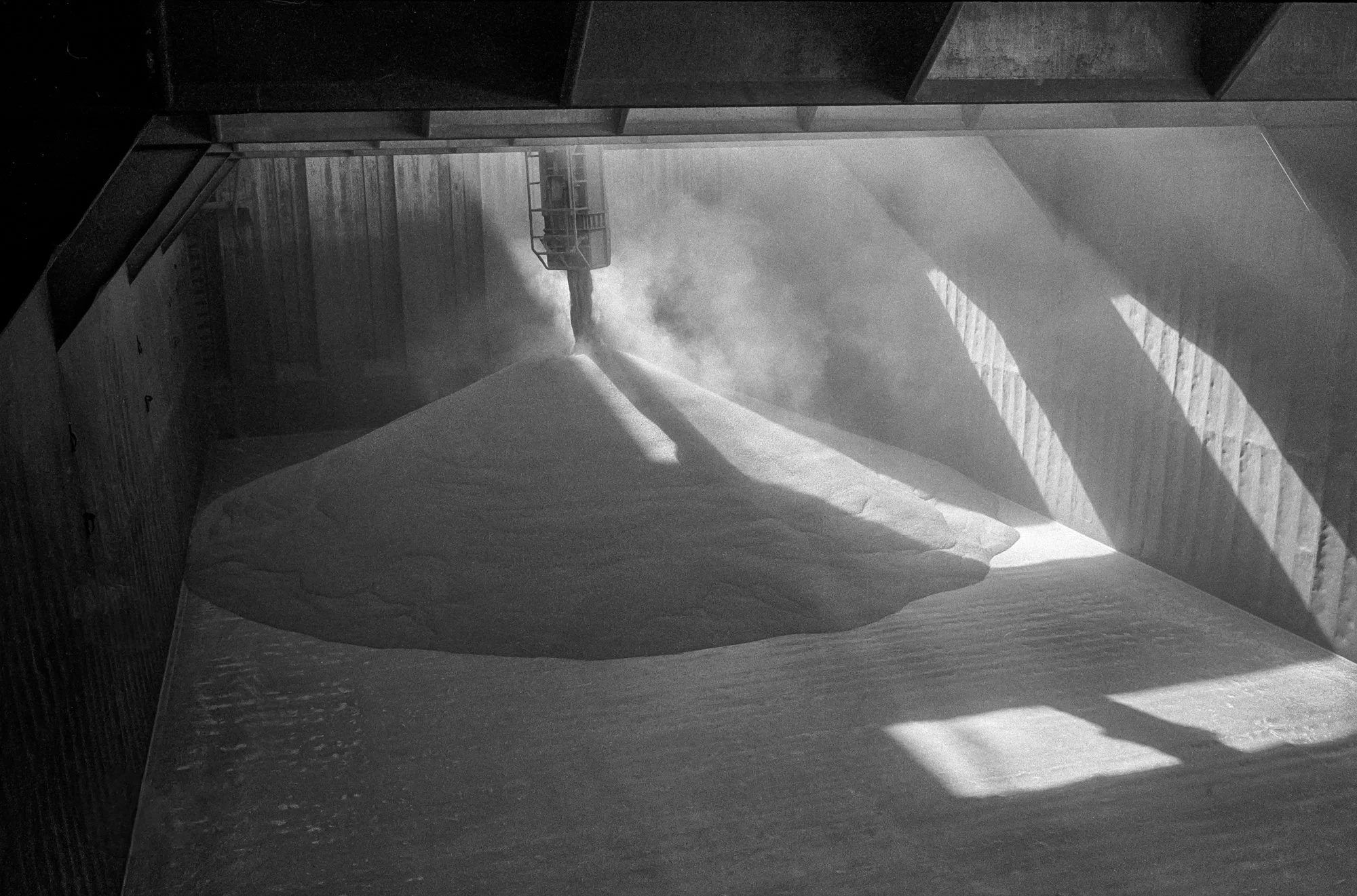
The main factor affecting me (and the scoopers) was the temperature. In the summer it was extremely hot and dusty with all that grain moving from one end of the hold to the other before being elevated. In the spring, fall and winter, besides the dust it was the cold, exaggerated by the fact we were standing in a huge metal enclosure under the waterline of an extremely cold Buffalo River. The scoopers, doing hard, physical labor, tended to stay warmer than me as I wasn't moving that much. At the end of being inside the hold for ten hours, I was chilled to the bone and it would take 2-3 days before I really felt warm again.
Completion: The book and exhibition opened in October 2025, timed to the 200th anniversary of the Erie Canal. After more than thirty years, what does it feel like to finally put this work in front of an audience?
It felt extremely satisfying given the time, effort, patience and perseverance (and help from many people) it took to get both the book and exhibition completed and published on the same day.
But the reality is that in essence, the same but different type and amount now needs to be done. I need to get word out about the book (and thank you again for doing this for me), but there is major work in getting the book reviewed, written about, finding additional venues to host the exhibition and to sell the book. In reality that is all left up to me and so the next part of the journey continues.


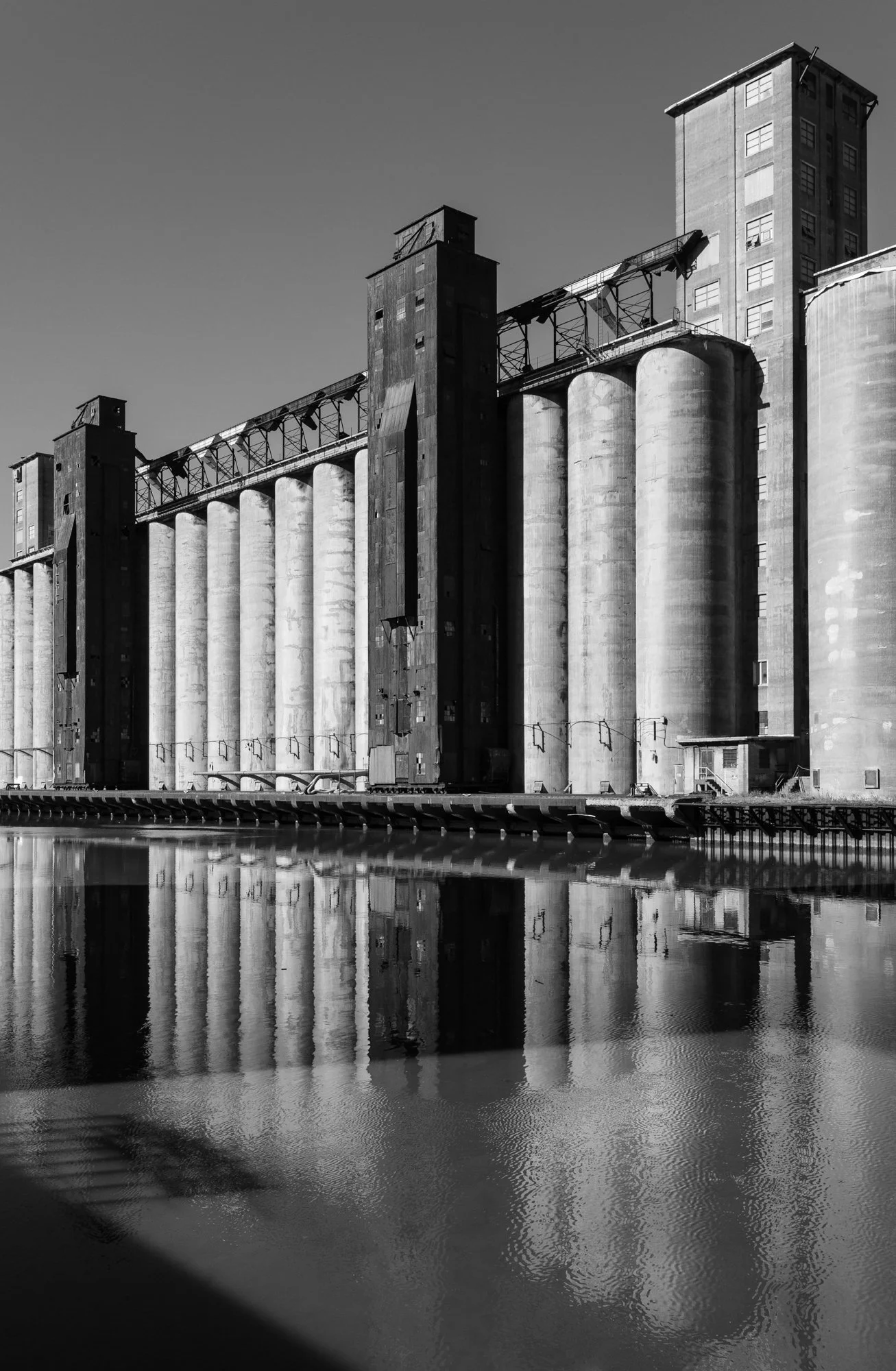
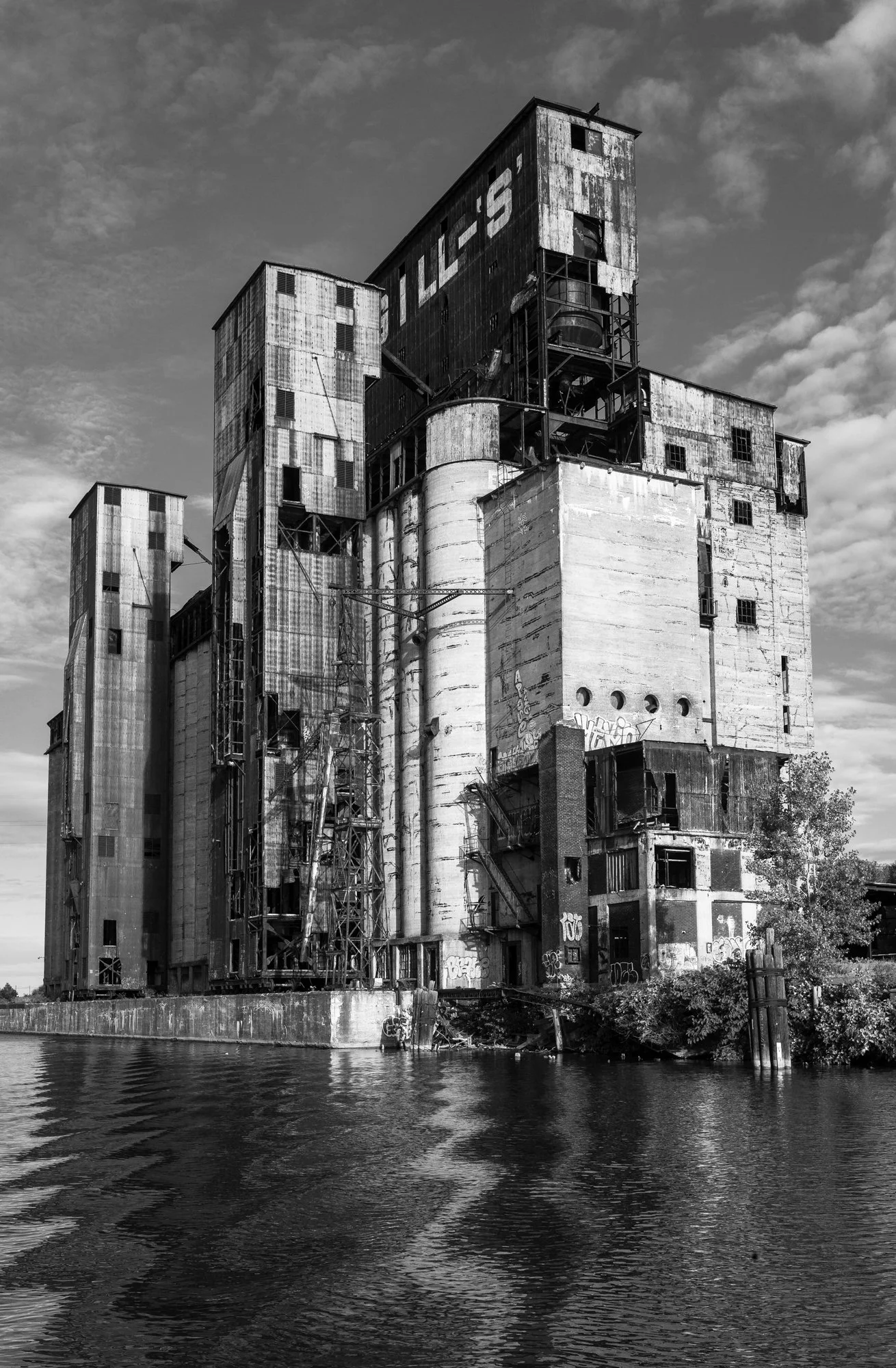
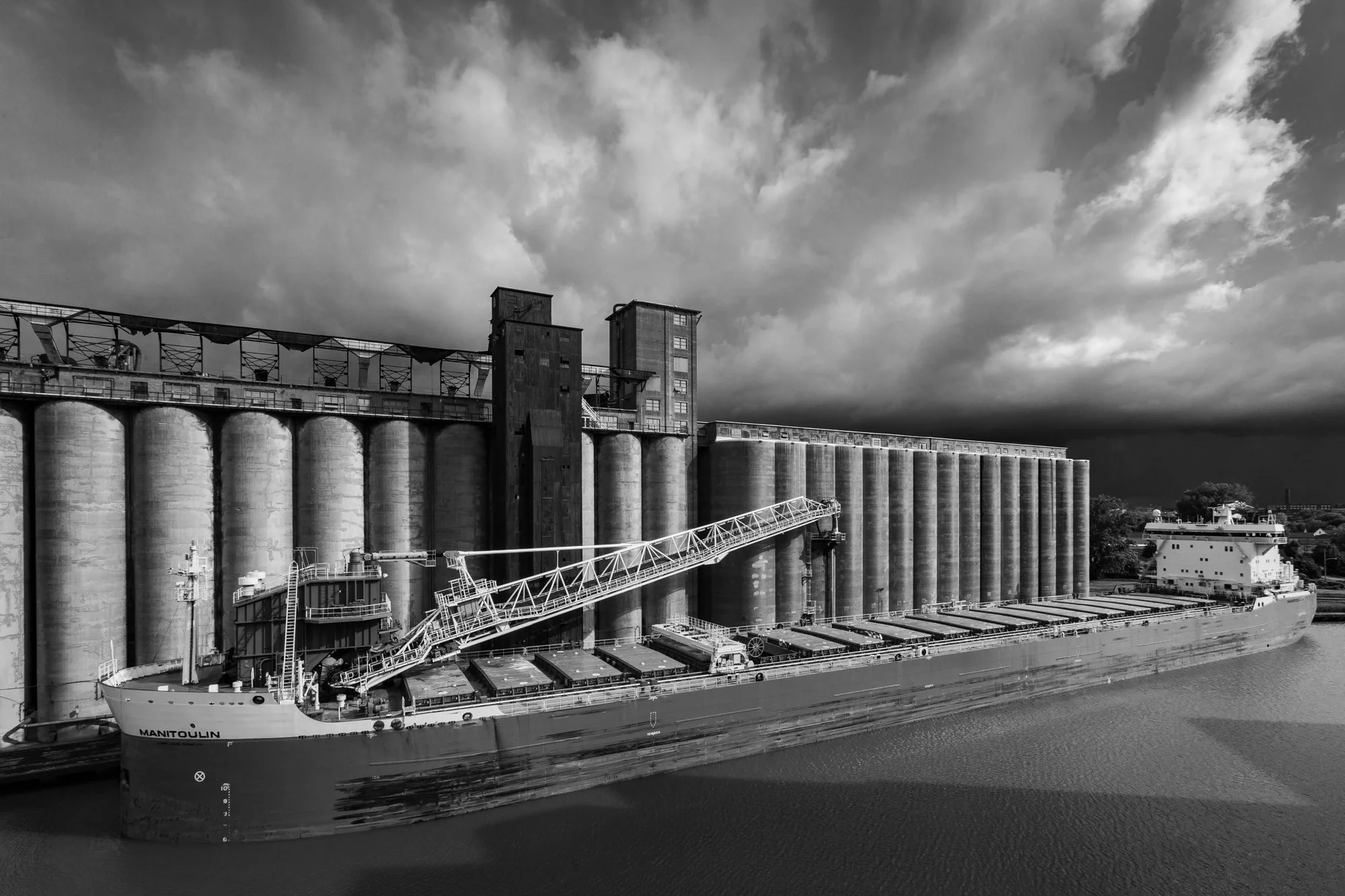

To discover more about this intriguing body of work and how you can acquire your own copy, you can find and purchase the book here. (Fall Line Press, Amazon)
More photography books?
We'd love to read your comments below, sharing your thoughts and insights on the artist's work. Looking forward to welcoming you back for our next [book spotlight]. See you then!
The past became visible once Richards learned where to look. For The Inner Passage, Virginia McGee Richards spent fifteen years photographing a waterway in the South Carolina Lowcountry. Photography Book Spotlight