Ethan Eisenberg Spent 14 Years Photographing Jerusalem. The Result Is Not the City You Expect
Welcome to this edition of [book spotlight]. Today, we uncover the layers of 'Jerusalem Delivered,' by Ethan Eisenberg (self-publishing). We'd love to read your comments below about these insights and ideas behind the artist's work.
Ethan Eisenberg photographed Jerusalem beyond its symbols.
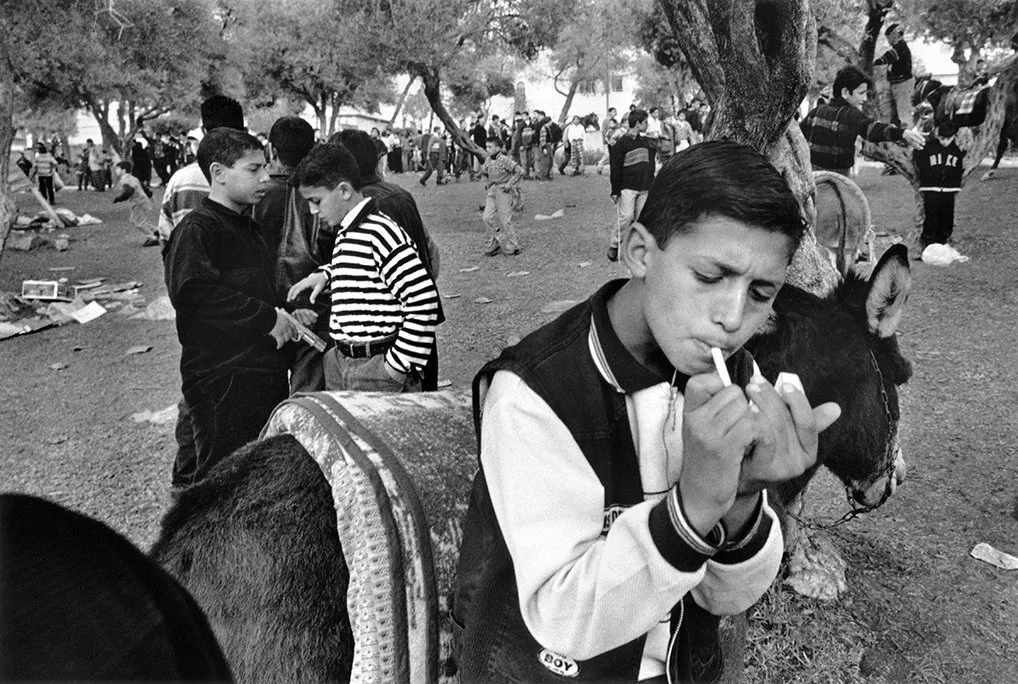
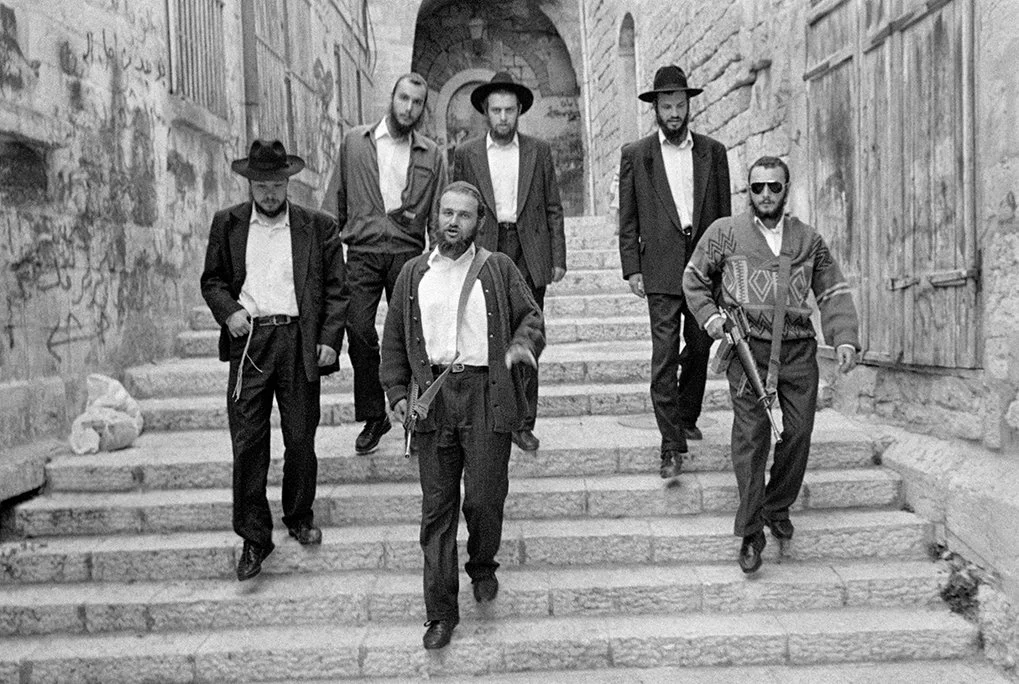
He did not want to make another book built around the Western Wall, the Dome of the Rock, or the images people already expect from the city. Instead, he looked at how daily life continues inside a place shaped by politics, religion, memory, and conflict. His photographs move between public tension and private gestures, between suspicion, faith, intimacy, and ordinary human presence.
The result is not the Jerusalem of postcards.
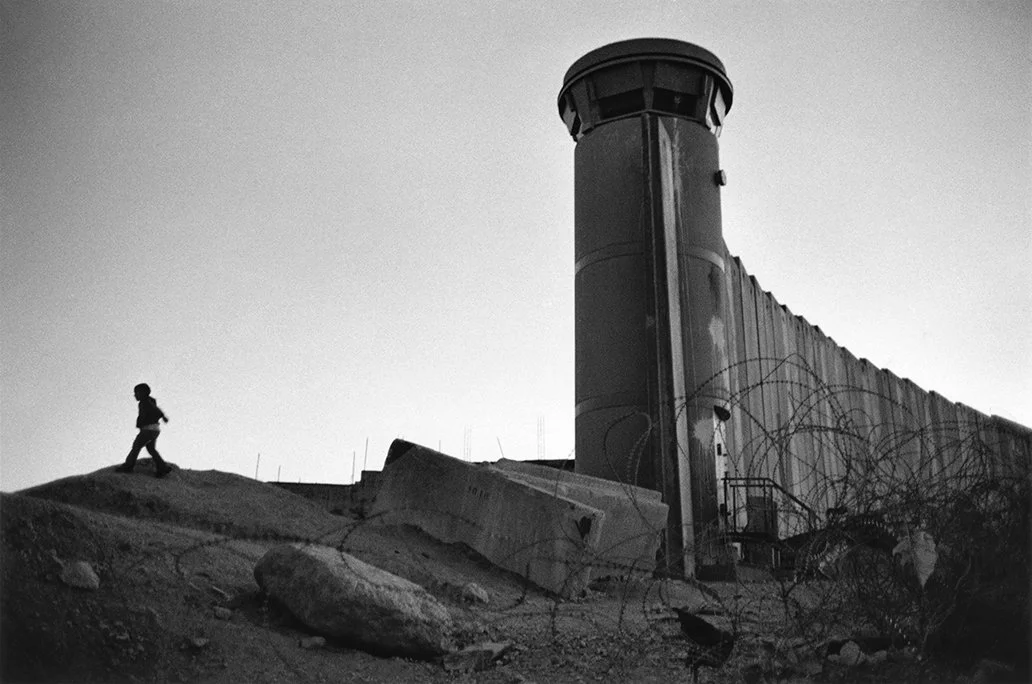
In Jerusalem Delivered, Eisenberg brings together photographs made between 1993 and 2007, a period that began with the hope of the Oslo Accords and moved toward disillusionment and violence. But this book is not only about history or conflict. It is about how people carry those forces in their faces, bodies, movements, and everyday routines.
Eisenberg speaks about cutting famous landmarks, avoiding images that felt too journalistic, and finding strength in quieter pictures that at first seemed too simple. His process shows how a long-term project can become stronger when the photographer stops chasing the obvious image and starts trusting the more complicated one.
The Book
Jerusalem Delivered is a self-published photobook by Ethan Eisenberg, bringing together photographs made in Jerusalem between 1993 and 2007. The work began shortly after the signing of the Oslo Accords, but instead of focusing only on news events or famous landmarks, Eisenberg turns toward the daily life of the city.
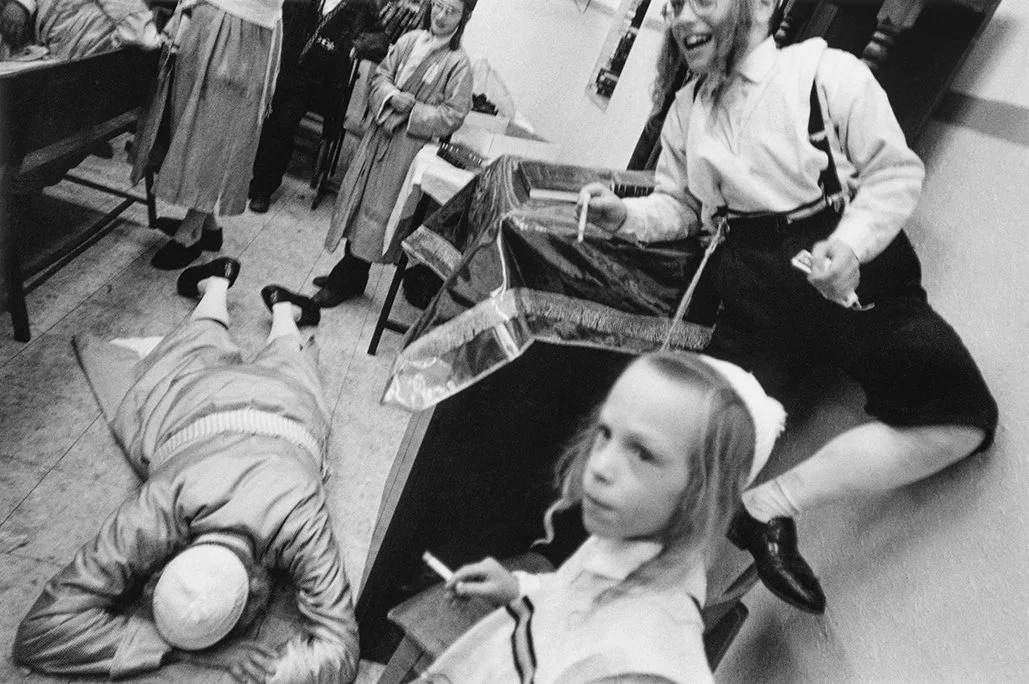
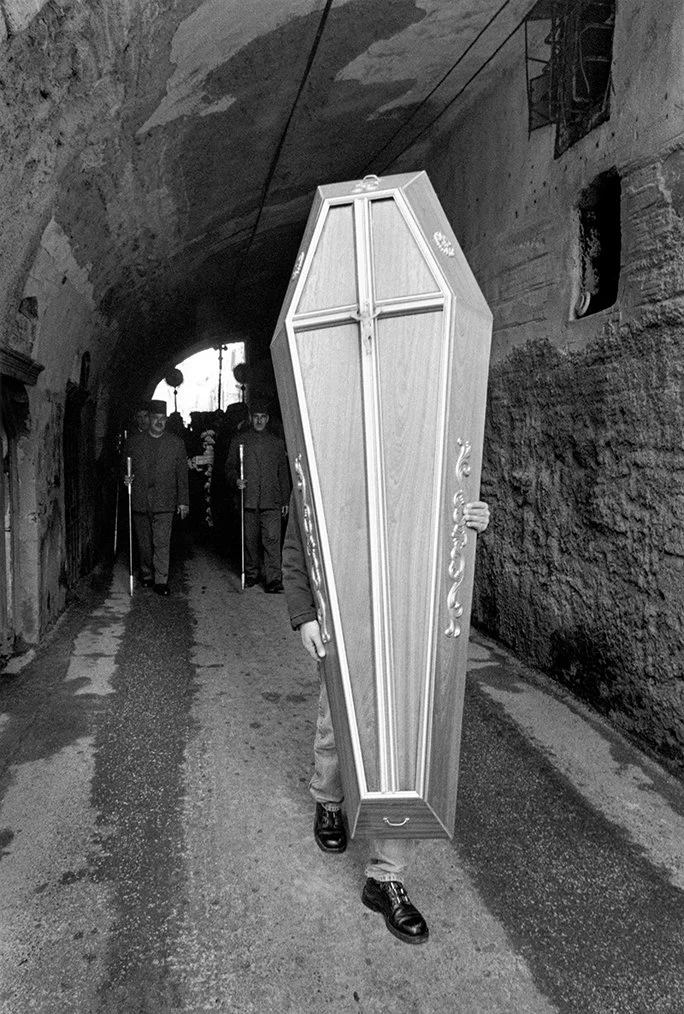
Across 54 duotone photographs, the book looks at Jerusalem as a place shaped by politics, religion, memory, and personal identity. Eisenberg avoids the familiar postcard views and instead builds a portrait of the city through public tension, quiet intimacy, suspicion, faith, and ordinary human gestures.
Designed by the Office of Gilbert Li and printed in Belgium in an edition of 250, Jerusalem Delivered is a modest, carefully made object that reflects Eisenberg’s long-term attention to a city that cannot be understood through one symbol, one event, or one point of view. (Website, Abebooks.com)
Project Genesis: You started photographing Jerusalem in 1993 and returned over many years. What drew you there in the first place, and when did you realise this was going to become a long-term project?
The photographs of Jerusalem are a part of a much larger project.
I first travelled to the region shortly after the 1993 signing of the Oslo Accords, which proposed a framework for a resolution to the ongoing Israeli/Palestinian conflict. Living for extended periods in Jerusalem, the West Bank, and Gaza, my plan was to photograph in communities on both sides of the divide and follow the changes occurring as the so-called “Peace Process” progressed. While the promise of that time never materialised, the arc from hope to disillusionment to violence comprises a distinct historical period that forms the background to this book.
It was after a year or two that I realised the situation was too complex, the conflict too embedded in the fabric of daily life to be easily resolved. The more time I spent, the more I learned about the place and the worlds it comprised. Each visit revealed new subjects, new visual possibilities, and produced new photographs.
The idea of a long-term project is that it is open-ended, without a scheduled start and finish. My interest continued unabated over all those years.
Staying Power: The work spans visits from 1993 to 2007. How did your approach to the city change over those years, and did your idea of what the project was about shift as well?
Over time, my attention shifted away from the news event to the more ordinary patterns of daily life. How individual identity was shaped by one’s position in a territorial conflict. How people structured their personal lives against the public realm of politics, religion, and history.
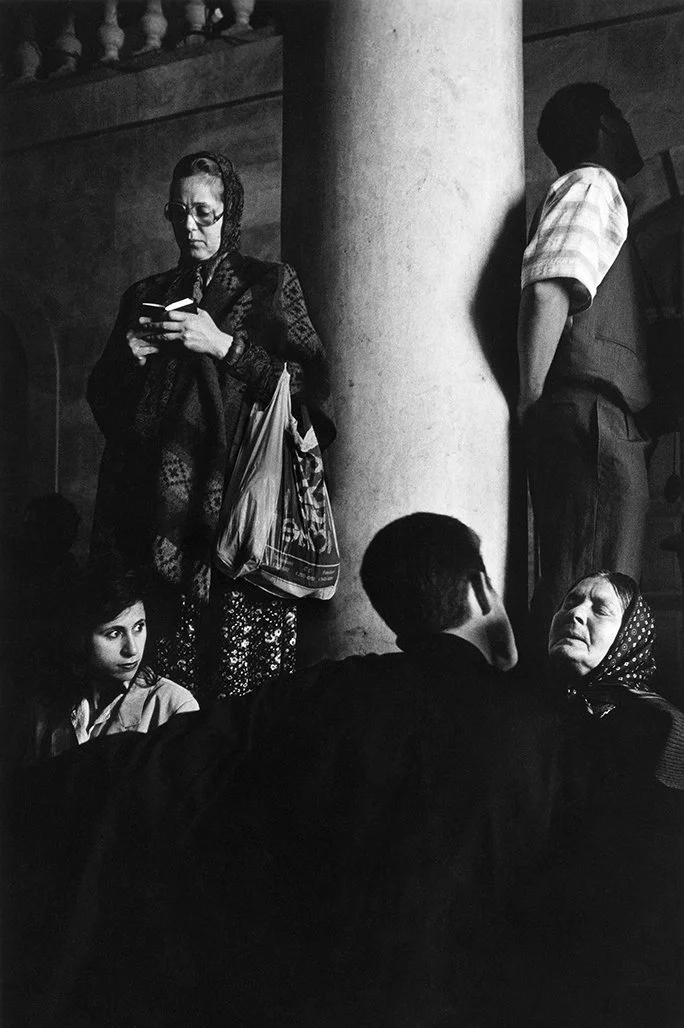
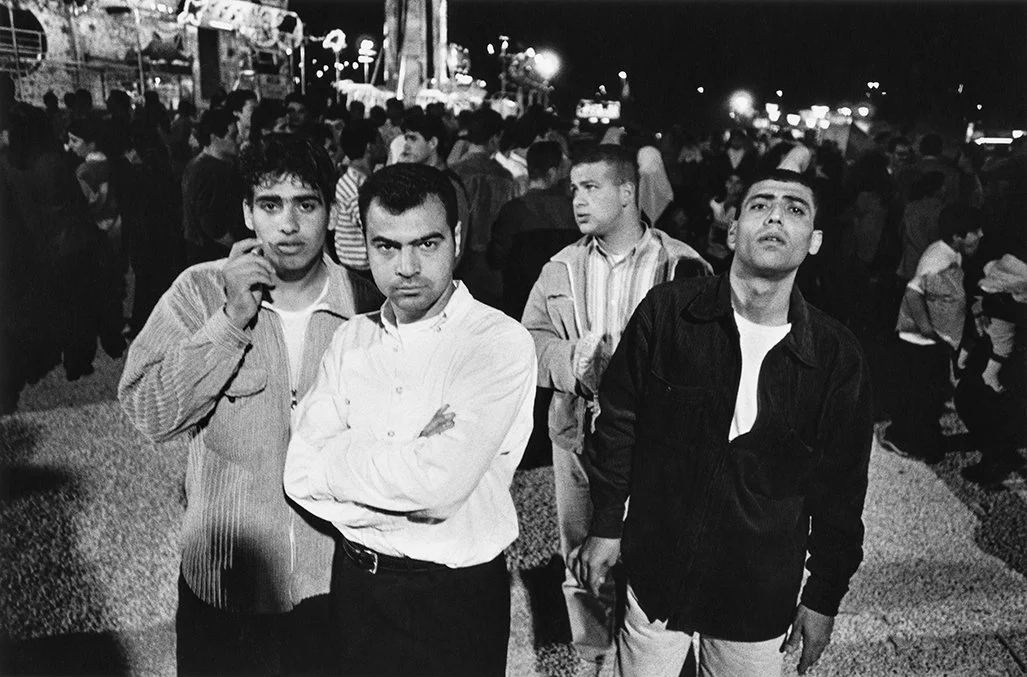
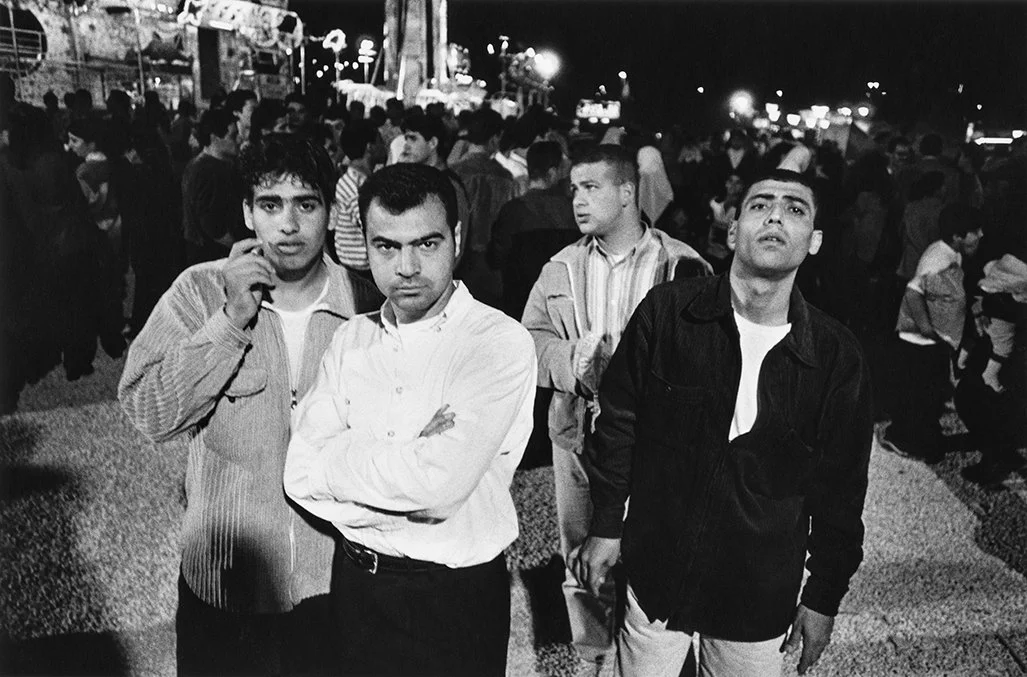
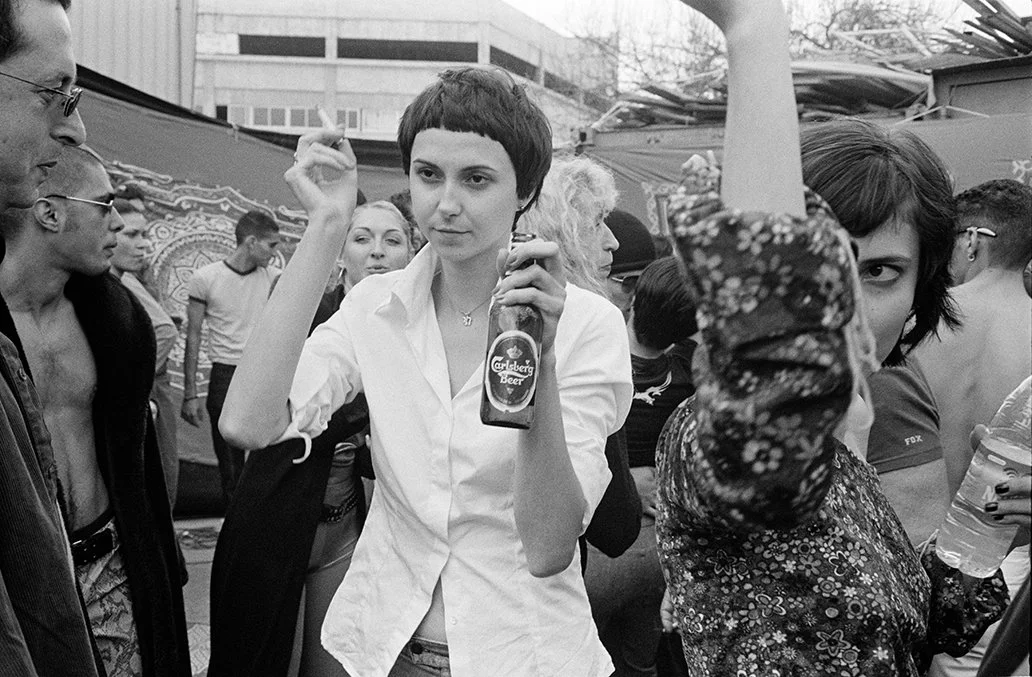
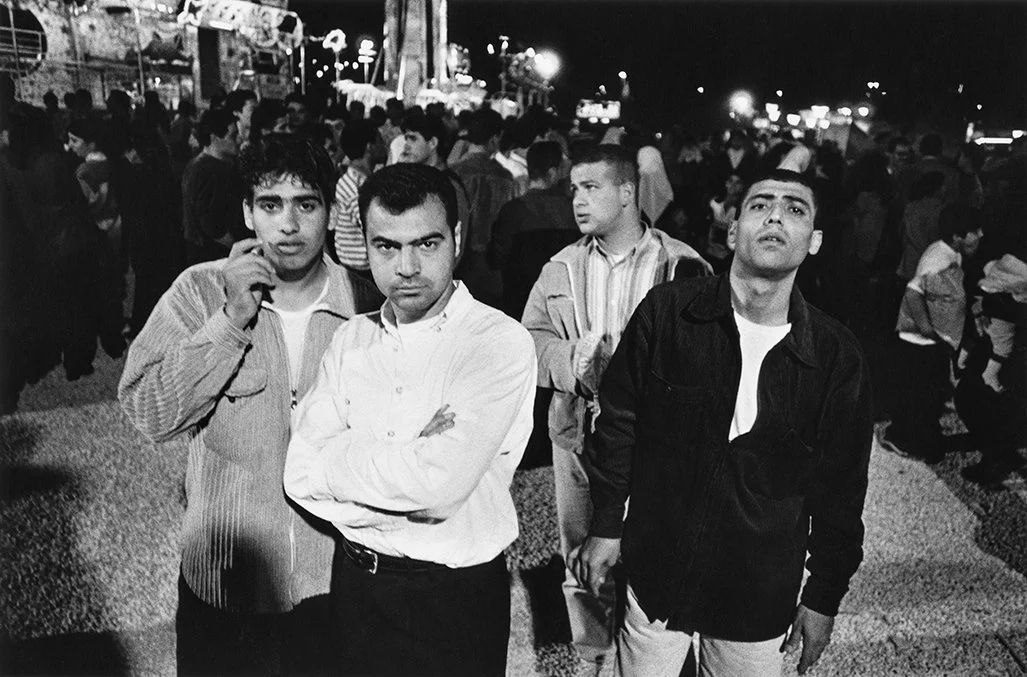
Beyond conscious strategy, it is often the successful photographs, the ones that work in original or unanticipated ways, that move the project in new directions. For example, the cover photograph of the people arranged around the column suggests an underlying emotional tension unrelated to the event taking place and whose source we cannot know. And the photograph of the men at the fairground regarding me with a mix of curiosity and suspicion alludes to my position as an outsider as well as the guarded relations between people of different backgrounds.
Direction: Can you name one photograph that changed the direction of the project and explain exactly what it opened up?
I would say most successful photographs made me aware of possible new directions.
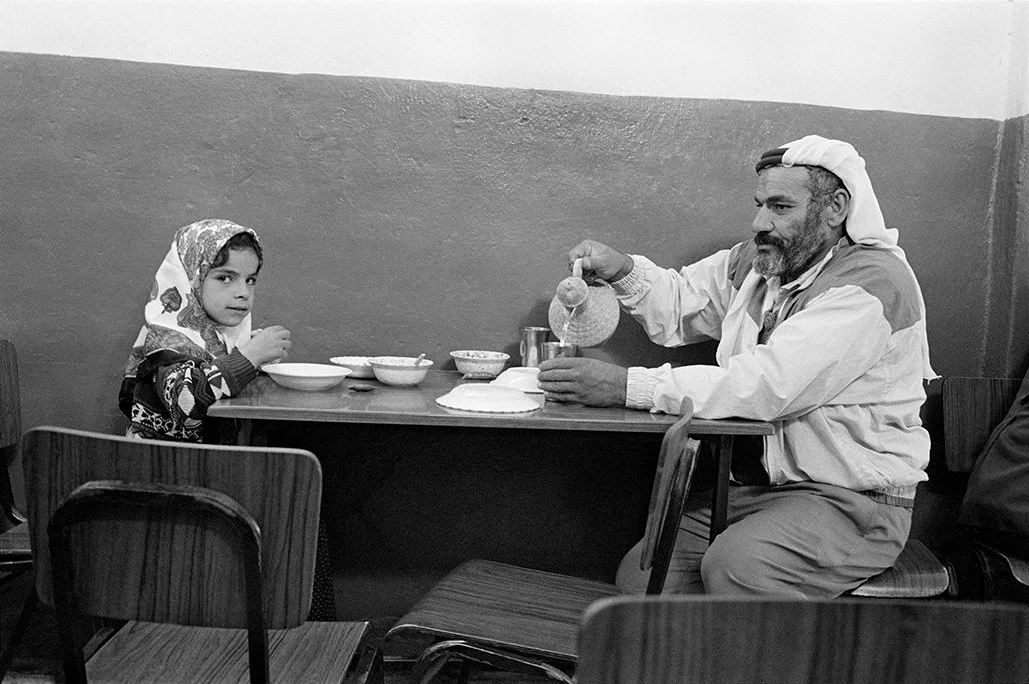
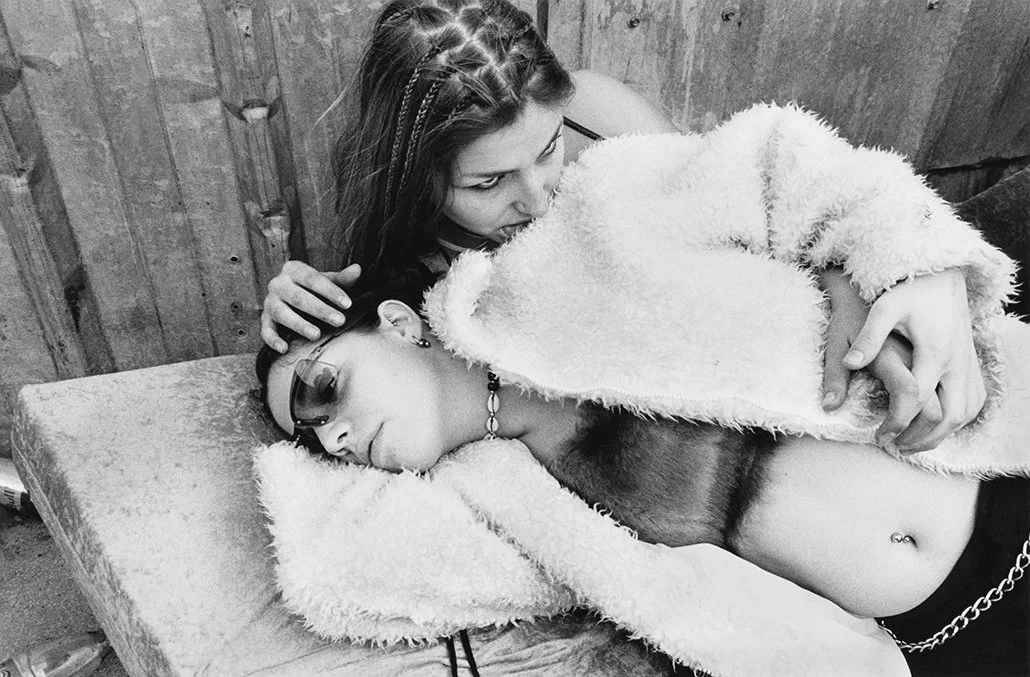
One example is the picture of the father and daughter in an Old City restaurant. They appear to be from outside the city, perhaps a West Bank village, perhaps having something to eat before returning home. There are no decorations on the wall. The father has bought a sandwich for his daughter, but nothing for himself. After seeing this picture, the quality of quiet intimacy in public spaces was one that I began to seek more consciously.
Deliberate Avoidance: You made a clear choice not to photograph the famous landmarks and news scenes that most people associate with Jerusalem. How did you decide what to photograph instead?
I did actually photograph all the famous landmarks repeatedly and included a few in early drafts. The decision not to use images of the Western Wall or Dome of the Rock in the final edit caused some sleepless nights. But those pictures were primarily about the sites themselves rather than the people moving through them. I had this conversation during several of the portfolio reviews: does every book on New York have to feature the Empire State Building or on Paris the Eiffel Tower?
In the end, despite their central symbolic importance, I wanted to avoid showing people what they already knew. By not providing the postcard views, the beautiful stage sets, or visual handlebars, I hoped to create a sense of initial unfamiliarity or even disorientation that would compel readers to consider the city from a different perspective.
I was also influenced by Pablo Ortiz Monasterio’s La Última Ciudad, which omits Mexico City’s best-known landmarks and instead shows a range of human activity on anonymous street corners, intersections, highway underpasses, and barren outskirts.
Journalistic Cuts: What kinds of Jerusalem pictures did you cut because they felt too journalistic, too symbolic, or too tied to one narrow reading of the city?
Journalistic is a good term to use. It defines the starting point of my project, the wish to be present at an important historic moment, but also the position I tried to move beyond.
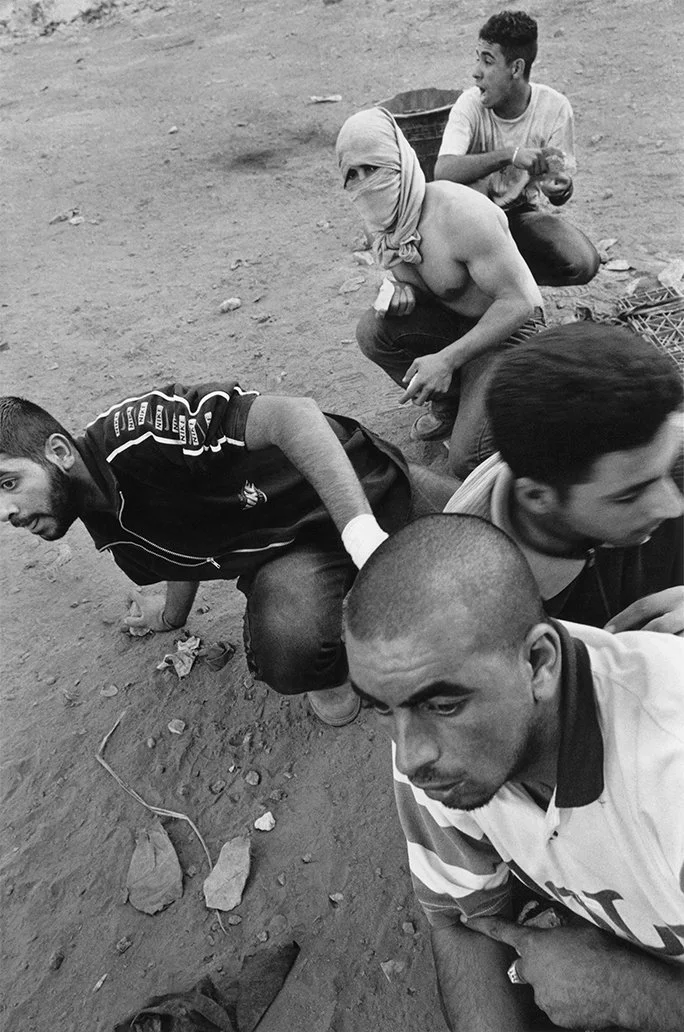
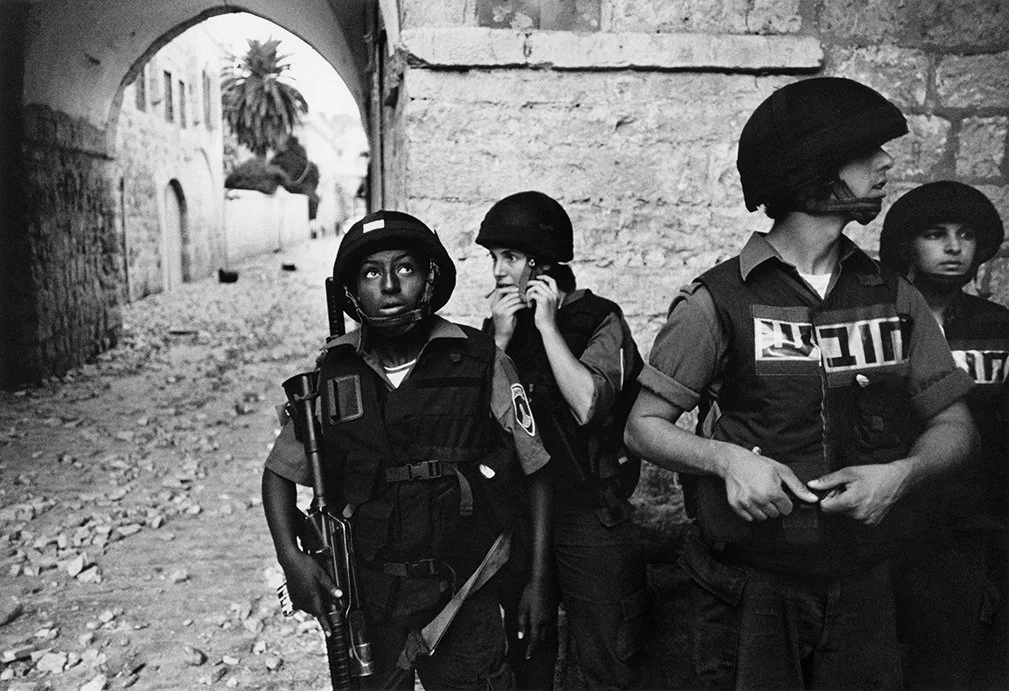
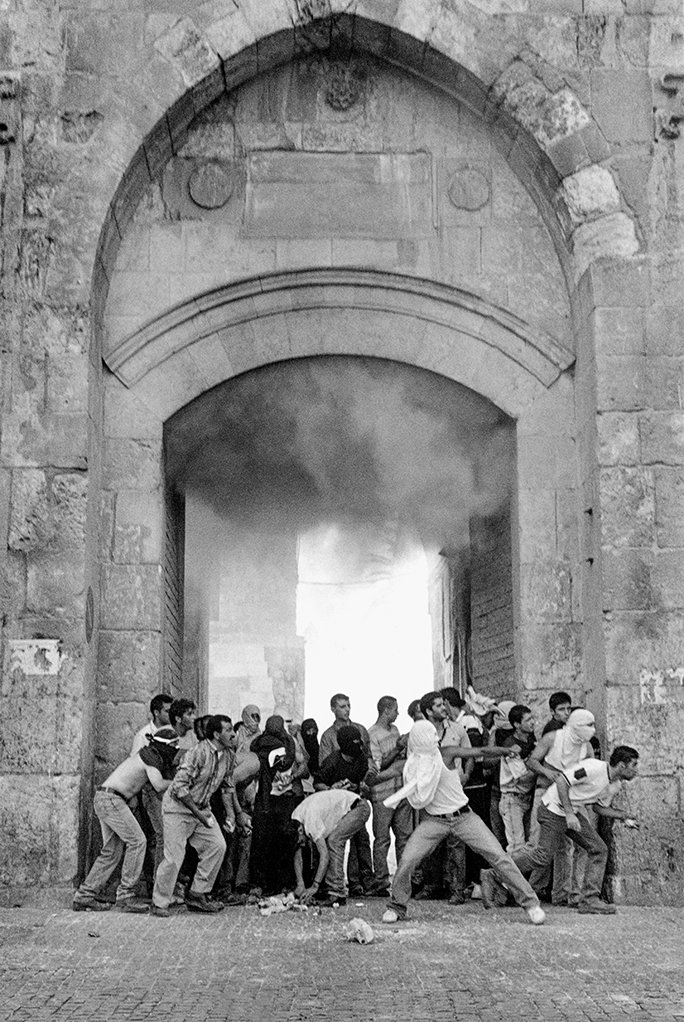
One picture that was cut at a late stage in the editing process shows five Palestinian men crouched close to the ground preparing to stone an Israeli army position. It was actually taken in a small West Bank town just outside the Jerusalem city line. I was able to get quite close and photograph them from the front. Their expressions and body language show a taut concentration. But in the book sequence, it was placed with several other photos showing riots and arrests and risked tipping the book too far in that direction. I was also concerned that too many clash photos would imply a negative characterisation of all Palestinians as inherently violent.
Access: The work moves between different religious and social groups. How did you gain the trust needed to photograph in those communities, and were there places or situations where access was simply not possible?
On the official level, I had press credentials from both the Israeli and Palestinian press offices. I didn’t wear them around my neck but could produce them when required. Everyone in Jerusalem has a known public identity, and mine was a foreign press photographer.
Between 1999 and 2000, I spent about 12 months in total living in a series of rented rooms in the Old City of Jerusalem. Although I was probably already a familiar character, over that time people saw me almost every day, and I became very close to many of the local residents. While a trace of suspicion always remained, I was nevertheless told about events and admitted into spaces not usually open to the general public. I was deeply grateful for their assistance.
Any long-term project is made up of countless individual encounters. Sometimes the door opens briefly and then slams shut again. It is often a bit of a mystery why some and not others respond sympathetically and are willing to share aspects of their lives.
Energy and Patterns: You describe wanting to capture the characteristic energy and patterns of public life. How do you actually photograph something as abstract as energy? What are you looking for in a moment?
Energy is a very abstract term and may only have meaning in relation to the particular details in a particular photograph. In large cities, visual energy is usually the product of the density of human activity. Jerusalem is not a large city in population but still occupies a central position in the world’s consciousness. I believe it is this idea of Jerusalem as a perpetually contested holy city that produces its characteristic energy and inspires such intense attachment, passion, and sometimes violence.
Tension: How did you decide when a photograph carried enough of Jerusalem’s tension without relying on a famous site or explicit political event?
I don’t think of tension in terms of quantity or degree, but rather something that forms the background to daily life and manifests itself in different ways, some dramatic, some subtle.
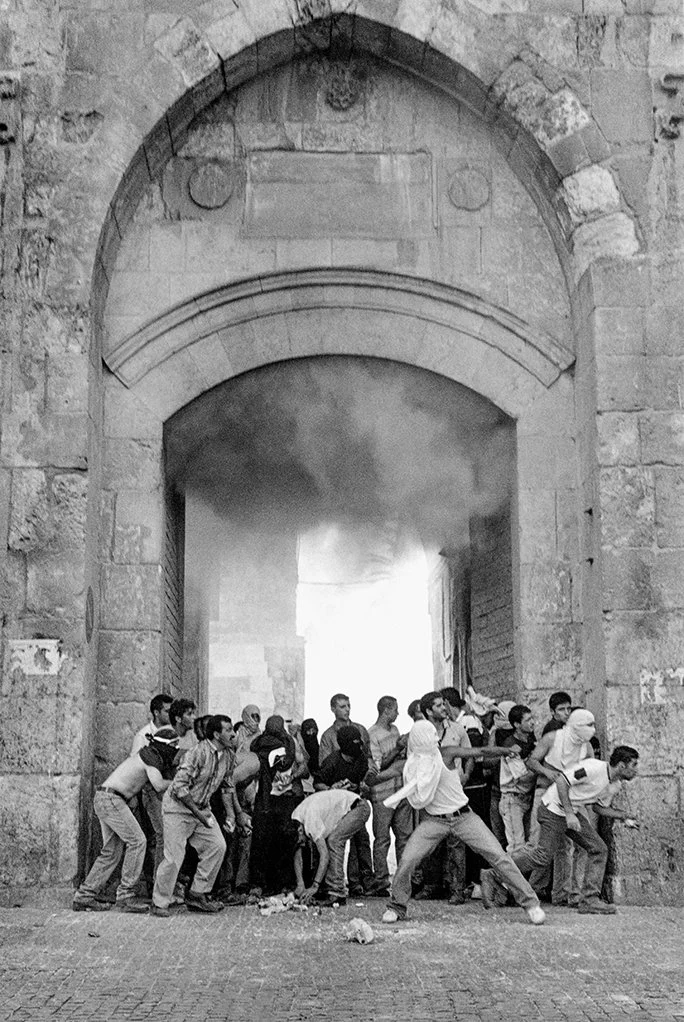
In a photograph of a clash, most viewers would recognise the context and in many ways it would confirm their expectations.
At the other end, I would again use the example of the men at the fairground. It is not at a famous site or newsworthy event. But the intensity of their regard at the moment of being photographed could be read as an expression of the tension between individuals, between different religious or political groups in Jerusalem.
In one sense, the book is about conveying that range of experience, about striking a balance between the extreme and the mundane.
Editing: After 14 years of visits, you ended up with 54 images in the book. How did you decide which photographs belonged and which did not, and what made an image strong enough to survive that process?
In putting together this volume, I was influenced more by the genre of the photographic city book than by other work from the Middle East. By Bill Brandt’s London, William Klein’s New York, Serge Clement’s Berlin, and Pablo Ortiz Monasterio’s Mexico City.
With editing, as with the actual photography, time is often the secret ingredient. What seemed like a curse of endless production delays, in retrospect, provided the opportunity to live with the photographs a bit longer and to experience the book as a whole rather than just a series of separate moments.
My original editing strategy was to attend a few photography workshops with students laying their prints on a table. In the aftermath of the pandemic, that option was no longer available. Instead, I arranged a series of online video reviews with four photographers whose work I admired. Each of them was helpful in different ways. However, the two sessions with Mark Steinmetz certainly stood out. In the first, we evaluated individual photographs. But the second, dedicated to sequencing, was probably one of the great photo-critical experiences of my life. He was a continuously rich source of original ideas, rejecting some images and elevating others, and over those 90 minutes we pretty much determined the final shape of the book.
Sequencing: During the sequencing session with Mark Steinmetz, what types of images did he elevate that you had underestimated?
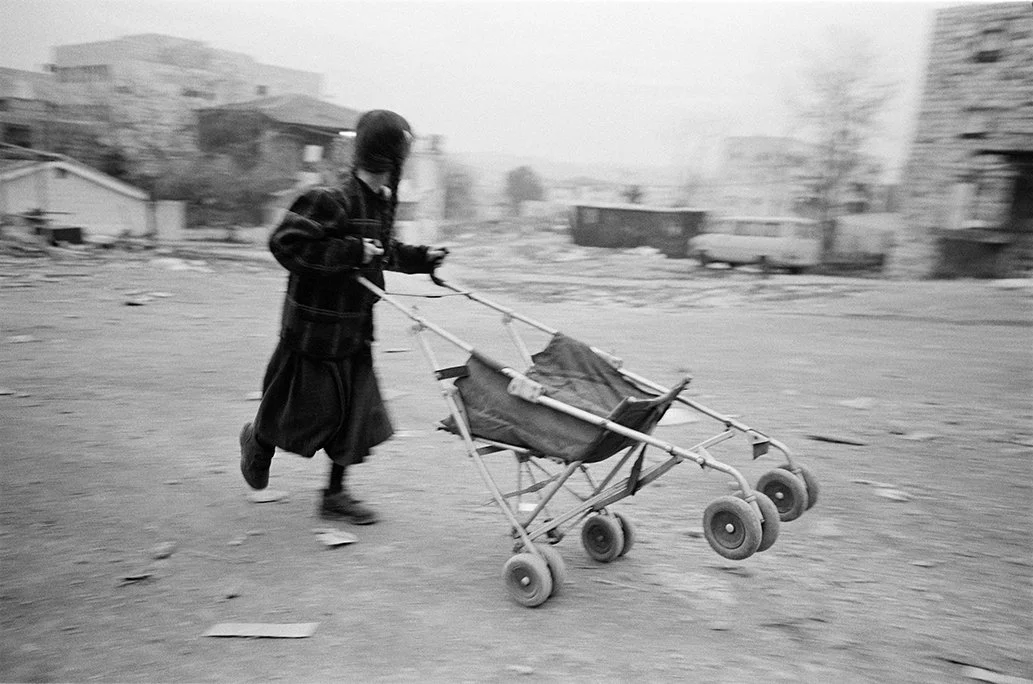
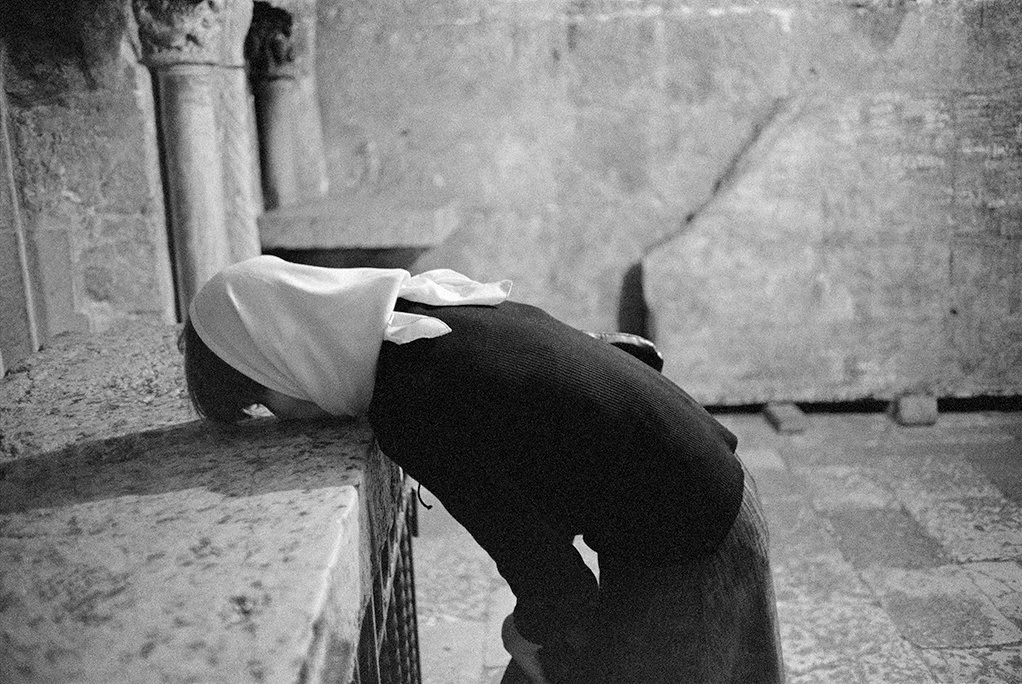
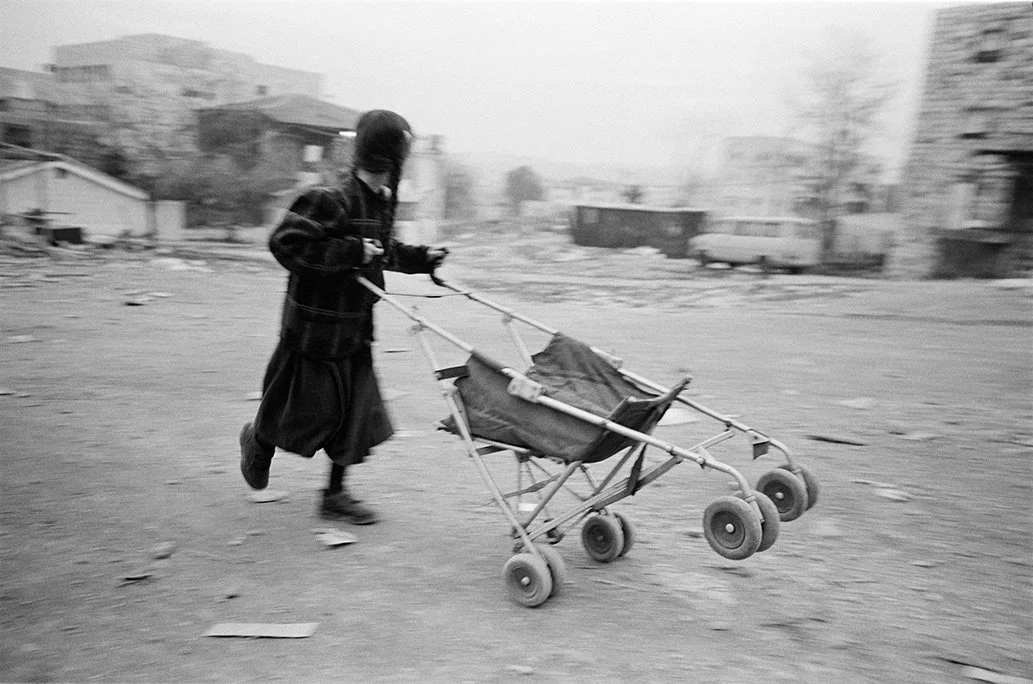
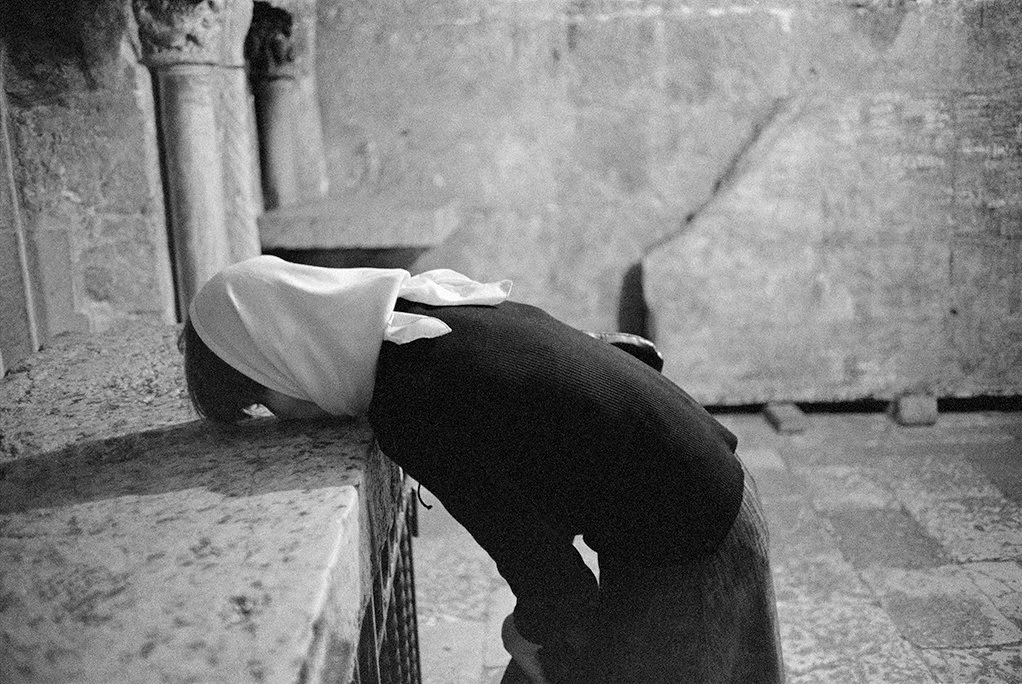
The second-last image of a Hasidic girl running across an empty lot pushing a baby carriage was one Mark Steinmetz promoted very strongly. He concentrated especially on the girl’s youth, the sense of motion, and the empty baby carriage. He also liked the picture of the Christian Orthodox woman kissing the Weeping Stone. Both were photographs I originally thought might be too simple. In retrospect, each displays a kind of gentle grace that balances some of the more aggressive content elsewhere. While most of the photographs are of groups, these two portray an individual from a specific religious community going about her daily activities.
Duotone: The book uses duotone printing rather than straight black and white. What was the reason for that choice, and how did it change the feeling of the photographs?
Before I began the project, I knew duotone as the printing method used in many of my favourite photo books and the one that could produce the range of dark tones closest to my original silver prints. As with all aspects of the bookmaking process, seeing how the image files translated into the final duotone image was a valuable learning experience that I hope to apply to future endeavours.
EDITOR: Duotone printing uses two inks (like black plus a gray or color) to create a black-and-white image, giving it richer shadows, smoother gradients, and a more expressive or premium look, while straight black and white uses just one black ink or tone, resulting in a simpler, cleaner, and more direct image that depends only on contrast. Because duotone adds a second ink, it can cost more and look more polished, but both can be used for black-and-white photos depending on whether you want a classic, stark feel (straight black and white) or a warmer, cooler, or more artistic mood (duotone).
Book Design: You worked with Gilbert Li on the design and had the book printed in Belgium in an edition of 250. How much did the physical form of the book shape how the photographs are read?
The book is relatively small at 21x15cm. From the start, I wanted it to present as an almost plain, well-made object rather than a luxury item. No cloth covers, tipped-in images, or open-spine bindings. I didn’t want it to suggest a comprehensive or definitive statement, but a modest expression of the lives of the people portrayed.
The Title: “Jerusalem Delivered” is also the name of a famous 16th-century epic poem about the Crusades. What connection were you making with that title, and what did you want it to tell a reader before they even opened the book?
Yes, the title is borrowed from the English translation of Tasso’s epic poem “Gerusalemme liberata,” which loosely narrates the first Crusade and capture of Jerusalem in 1099. I wanted a title that wasn’t biblical or contemporary but referred to Jerusalem as a continuously contested holy city. Beyond military conquest, the use of the title is meant to suggest the different meanings of the word liberation: social, religious, political, and personal.
The opening text of my book is a couplet from Tasso’s poem describing a brief flash of sympathy experienced by the Muslim king for a Christian woman facing execution. Moments like these, where Tasso presented the enemy as possessing recognizably human qualities, were deeply controversial in his time, and that criticism likely contributed to his eventual breakdown and institutionalisation. From my own experience, I can only say that any attempt to present a fully balanced portrayal of all sides in this conflict is likewise challenging.
To discover more about this intriguing body of work and how you can acquire your own copy, you can find and purchase the book here. (Website, Abebooks.com)
More photography books?
We'd love to read your comments below, sharing your thoughts and insights on the artist's work. Looking forward to welcoming you back for our next [book spotlight]. See you then!
Ian Bates found his wildfire story after the fire. In 2014, he saw his first wildfire while visiting a friend in Eastern Washington. Photography Book Spotlight