Welcome to this edition of Interviews. Today, we look at the project Camera Clara, by Raf Lopes. We'd love to read your comments below about these insights and ideas behind the artist's work.
For years, Raf Lopes photographed strangers mostly from behind.
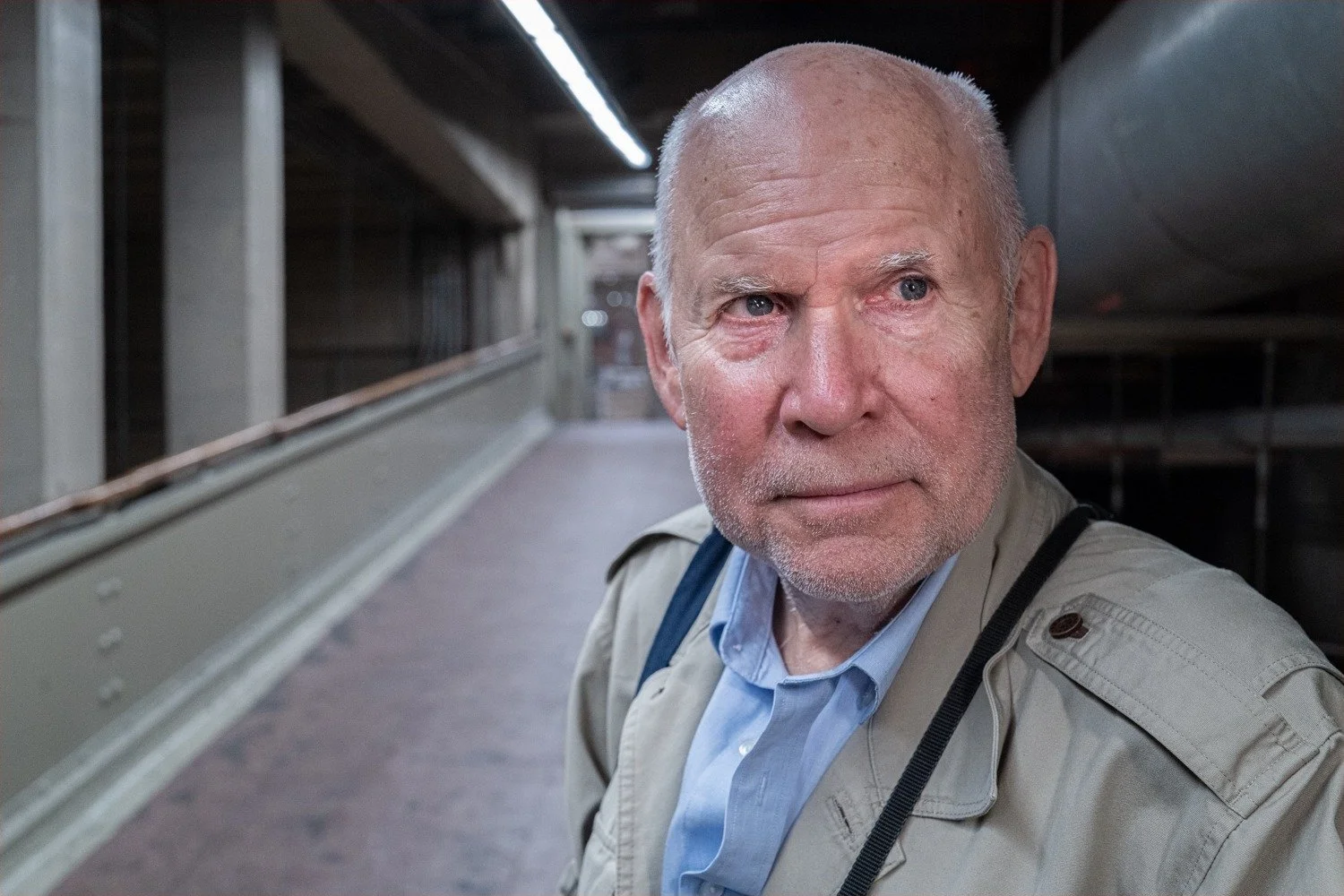
He is an introvert, and on the street he tried to stay invisible. Then, at a three-day workshop with Steve McCurry in New York, he watched a master talk to people before he lifted the camera. A few days later, Lopes helped an elderly woman at Grand Central call her nephew, and she let him take her portrait.
Lopes calls himself a professional photographer, but not a commercial one.
He works in IT, writes about photography and develops his own film. In 2025 alone, he developed, scanned and converted more than 150 rolls. In our live conversation, he talks about light, gear, film looks and how he decides which photographs are worth keeping.
If you feel shy on the street, his advice is simple: start a conversation first, and let the photograph celebrate the moment you shared.
The Project
Camera Clara
Camera Clara is Raf Lopes’s Substack publication about photography. He writes about street photography on film, about developing, scanning and converting negatives, about editing, and about how photographers find their own visual language. The publication was first called FotogRAFia. Its new name comes from the camera lucida, an optical drawing aid, and from Roland Barthes’ book of the same name. “Clara” means bright or clear in Portuguese, Spanish and Latin. Read it at cameraclara.com.
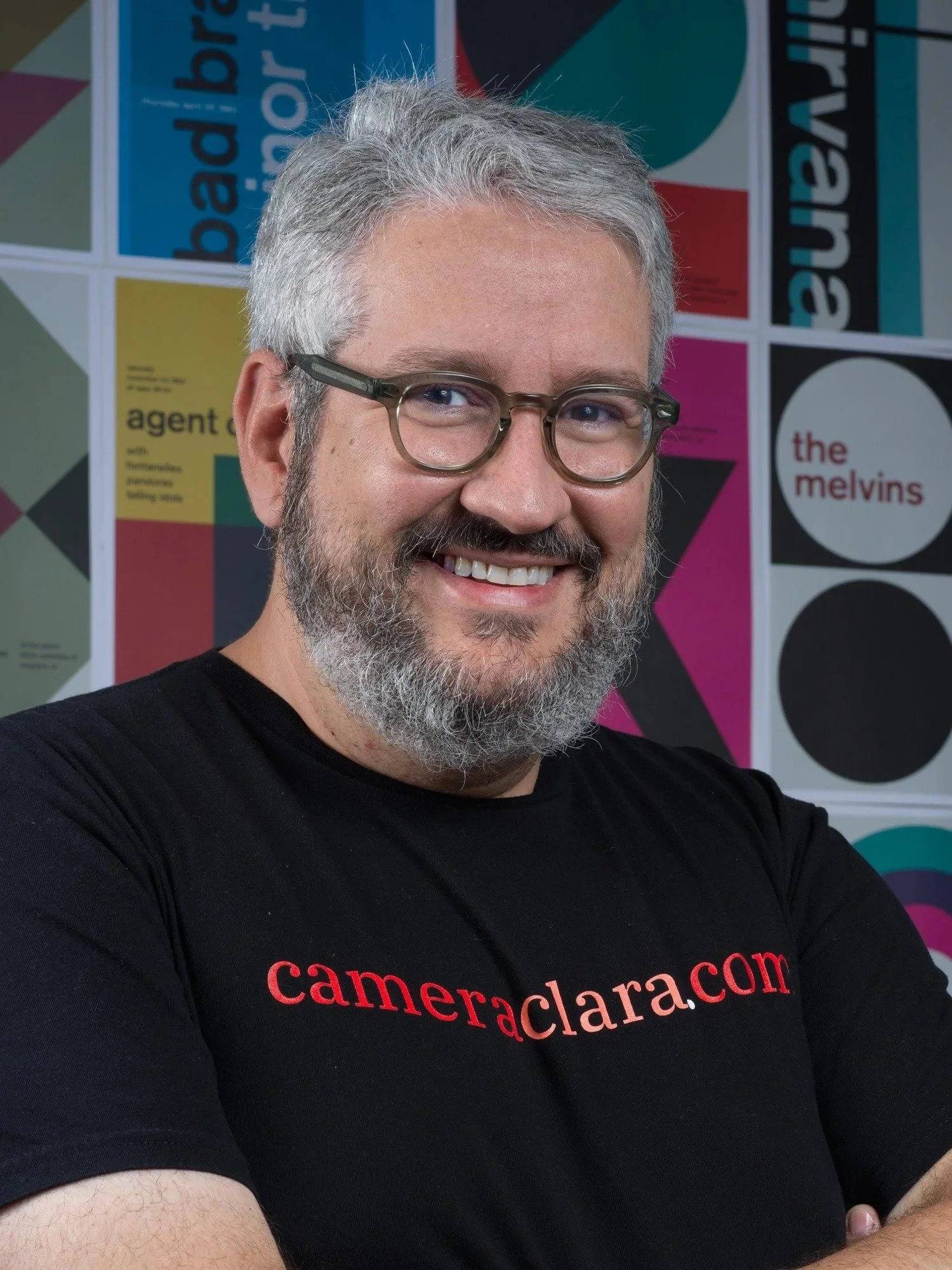
First steps in photography
Before we get into Camera Clara and your writing, can you tell me how you first became interested in photography and when it became something you wanted to pursue more seriously?
I started with photography twenty-five years ago. I was fifteen years old then, and I'm forty now. I bought my first digital camera, a Canon Rebel XTi, in Brazil, where I was still living at the time. The instruction manuals for electronics from twenty or more years ago were good, and I learned some of the basic techniques of photography just by reading the camera's instruction manual, which was very detailed.
I remember it was a holiday and I was idle, with nothing to do. My sister had brought me the new camera from a trip to the US. So I sat there learning: the aperture does this, the ISO does that, and with the shutter speed I can blur things. That's how I started developing my passion for recording in an image what I see with my own eyes. From there, I never stopped. I photographed local things in Rio de Janeiro, local events, and birthday parties for friends.
A long time ago, around 2002 or so, I did a flash photography workshop and discovered the world of flash. Since then, I have never stopped. I changed cameras many times. The XTi had a cropped sensor. Then I got a Canon 30D, then a Canon 40D. My first full frame camera was the Canon 5D Mark II, which is like a tank. That camera is indestructible.
With that SLR, I got my first lens with a bigger aperture, a 24-70mm f/2.8, and I started doing some professional photography here and there in Rio de Janeiro, mainly concerts, parties, weddings and things like that. I kept that 5D Mark II for a long time.
I don't work primarily in photography. I work in IT, and in parallel my life was changing a lot. I moved from Rio to São Paulo, then from São Paulo to New York. Then I discovered Fuji. I had always wanted a Leica camera, but Leicas are very expensive, especially for someone with less than a decade of photography in their life. Investing in a Leica is a big investment. Either you are super rich, or you are someone who has put years into photography. If you are only in your fifth or sixth year and you say, "I'm going to buy a Leica," there is something a bit off there, because it's expensive. Usually, the people who justify that investment are the ones who put a lot of their time, energy and effort into photography and have it at the center of their lives.
So I got the Fuji X-Pro3 as my first rangefinder-style camera, and I fell completely in love with it. That was in 2019, on a work trip to Chicago. Because of how light that camera is, I started photographing much more and always bringing the camera with me. That's when I discovered street photography, and when I started studying references: Alex Webb, Ansel Adams, Sebastião Salgado, Dorothea Lange, all the big names of photography.
From that moment on, I have mostly been photographing as what I like to call a professional hobbyist. Some people ask me if I am a professional photographer, and I say yes, I am a professional photographer, but I am not a commercial photographer. Many people confuse the two and think you have to be a commercial photographer to photograph professionally. That's not true. There are lots of people who don't make a living from photography but who photograph professionally and know lots of references.
They just don't work with it commercially. They don't photograph studio products or weddings anymore. They simply have a professional level of knowledge about photography. They have read many books, consumed many references, gone to many exhibitions, and some of them personally know big names in photography. They are not commercial photographers, but they are professionals. I think I fit into that category. I write about photography a lot. I live photography.
We all know it's very hard to make a living from photography. So if you have a job in another field that allows you to travel and photograph while traveling, it's perfect. That's why I say I am a professional photographer, but not a commercial one. Many people confuse the two and think they are the same. And it works the other way around too. You can be a commercial photographer with amateur photos and poor work.
So I say that I'm a professional photographer. I develop my own film. I developed, scanned and converted more than one hundred and fifty rolls of film in 2025 alone, and I am drying a roll right now as we speak. Those are all aspects of a professional photographer: many cameras and a lot of investment in knowledge. I'm not saying I know everything, because we are always learning. But that, in a nutshell, is my journey in photography so far, compressed into five minutes.
Learning from Steve McCurry
Was there a particular experience or photograph that changed how you thought about photography?
Yes, definitely. And it happened two weeks ago, which is interesting, because I assume most people would say two or three years ago. Mine happened two weeks ago, when I did a workshop with Steve McCurry in New York City as part of the Leica Academy. I pulled the trigger and said, "I'm going to do this."
It completely changed the way I see street photography, mostly in terms of portraits. I am an introvert. It may not look like it, but I am. When I see people on the street and want to photograph them, I usually try to be as stealthy as possible. With Steve, I realized that this happens because I was looking at the photograph only as the result.
I was ignoring everything in between, the whole process of getting the photo. That process often includes talking to the person, learning a little bit about them, taking out a small notebook, writing down their names, learning what they do and how their day is going. You interact with them.
After that little session, it becomes much easier to take the photograph, and the photograph comes to represent the social moment you shared. Once you see things that way, everything changes. I learned to see things that way from Steve McCurry, the man himself, because I watched him do it. I thought, "Wait, street portraits have just been unlocked for me." Before, I always tried to be stealthy, and all I had were photos of people's backs.
I was afraid to face them. Or I had people looking strangely at the camera, as if to say, "What is this guy doing taking a photo of me?" After that workshop with Steve, I can show you the portraits I took. They are people with their eyes wide open to my lens. And we know the eyes are the window to the soul. There is a saying like that, at least in Portuguese.
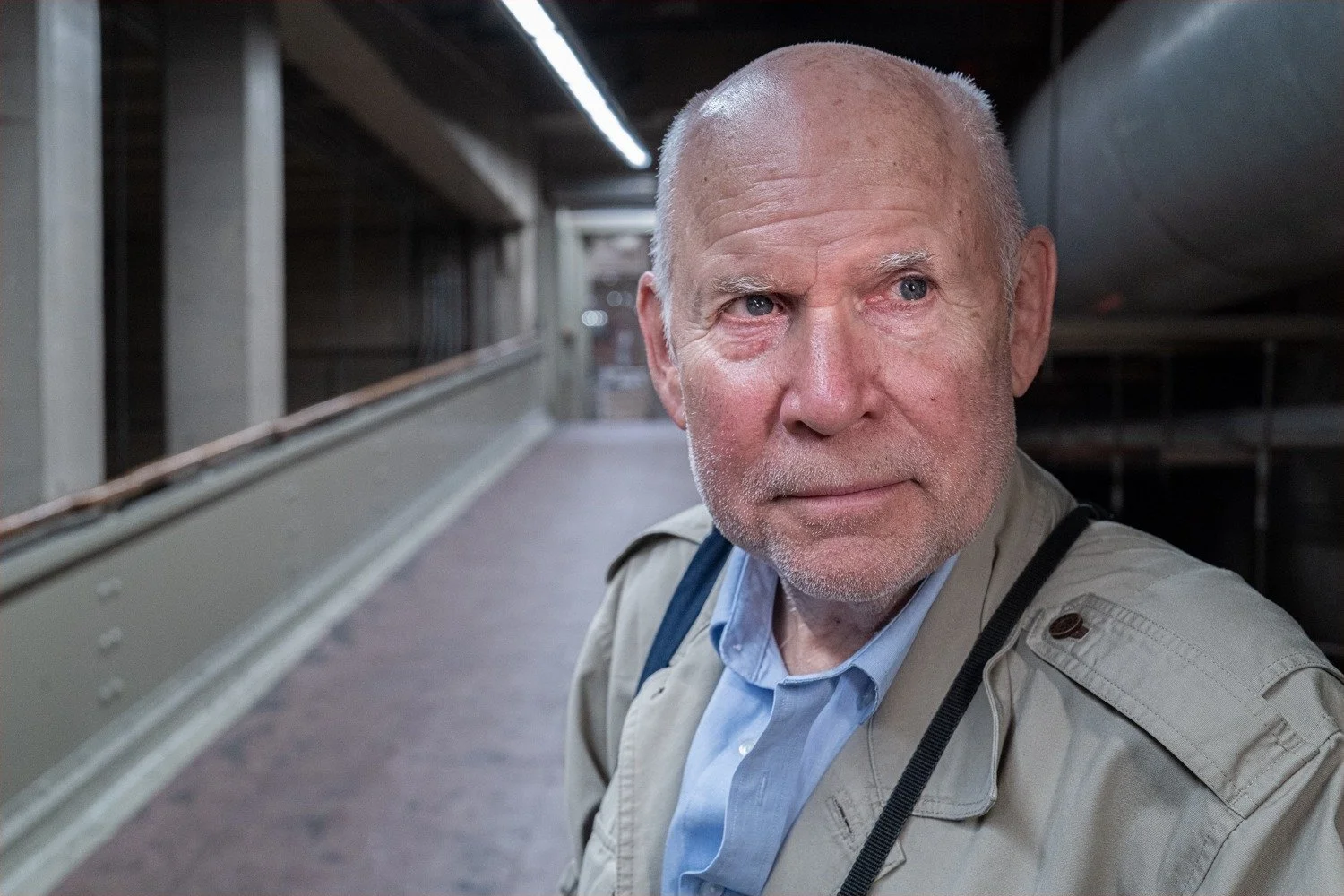
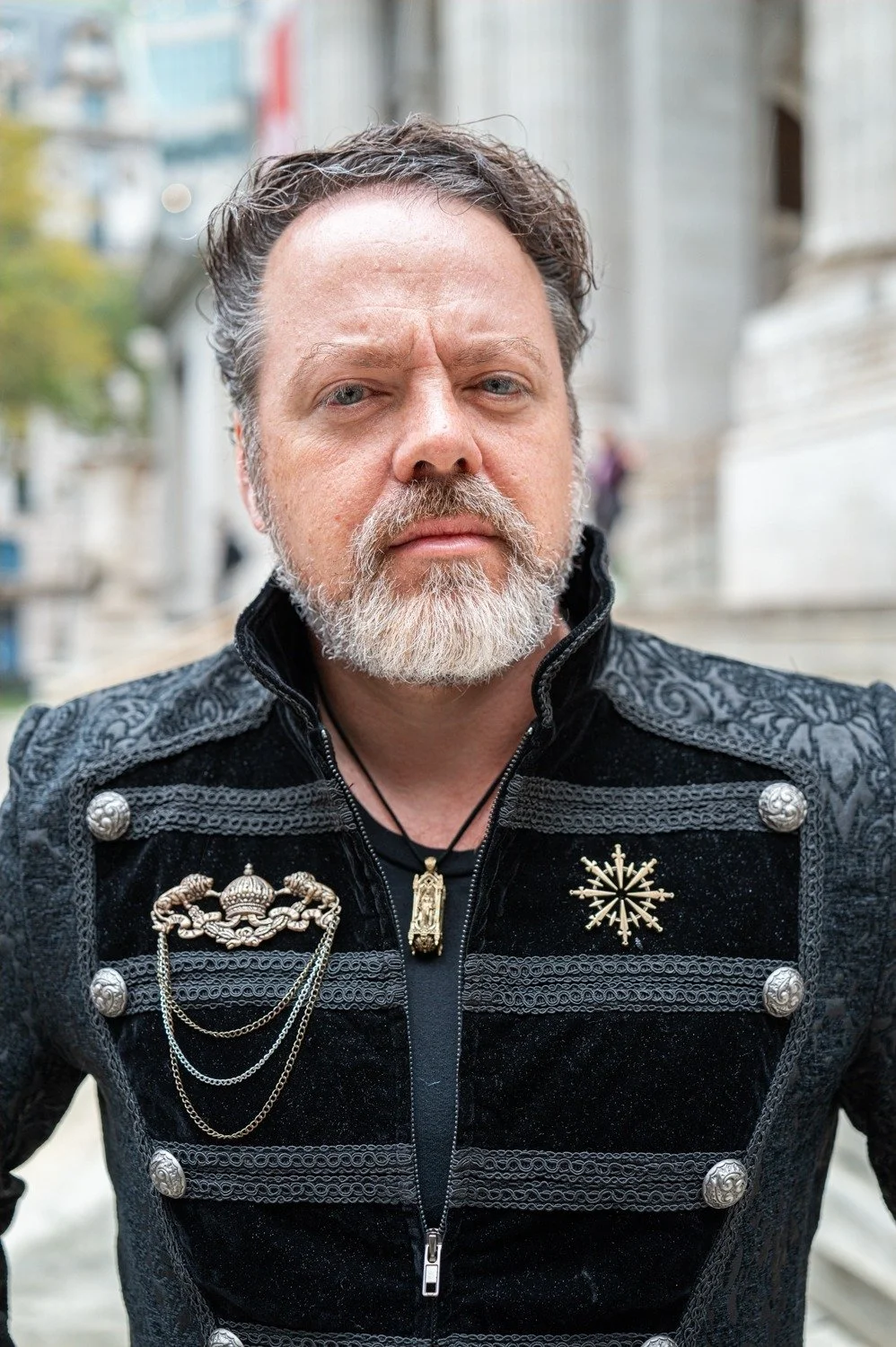
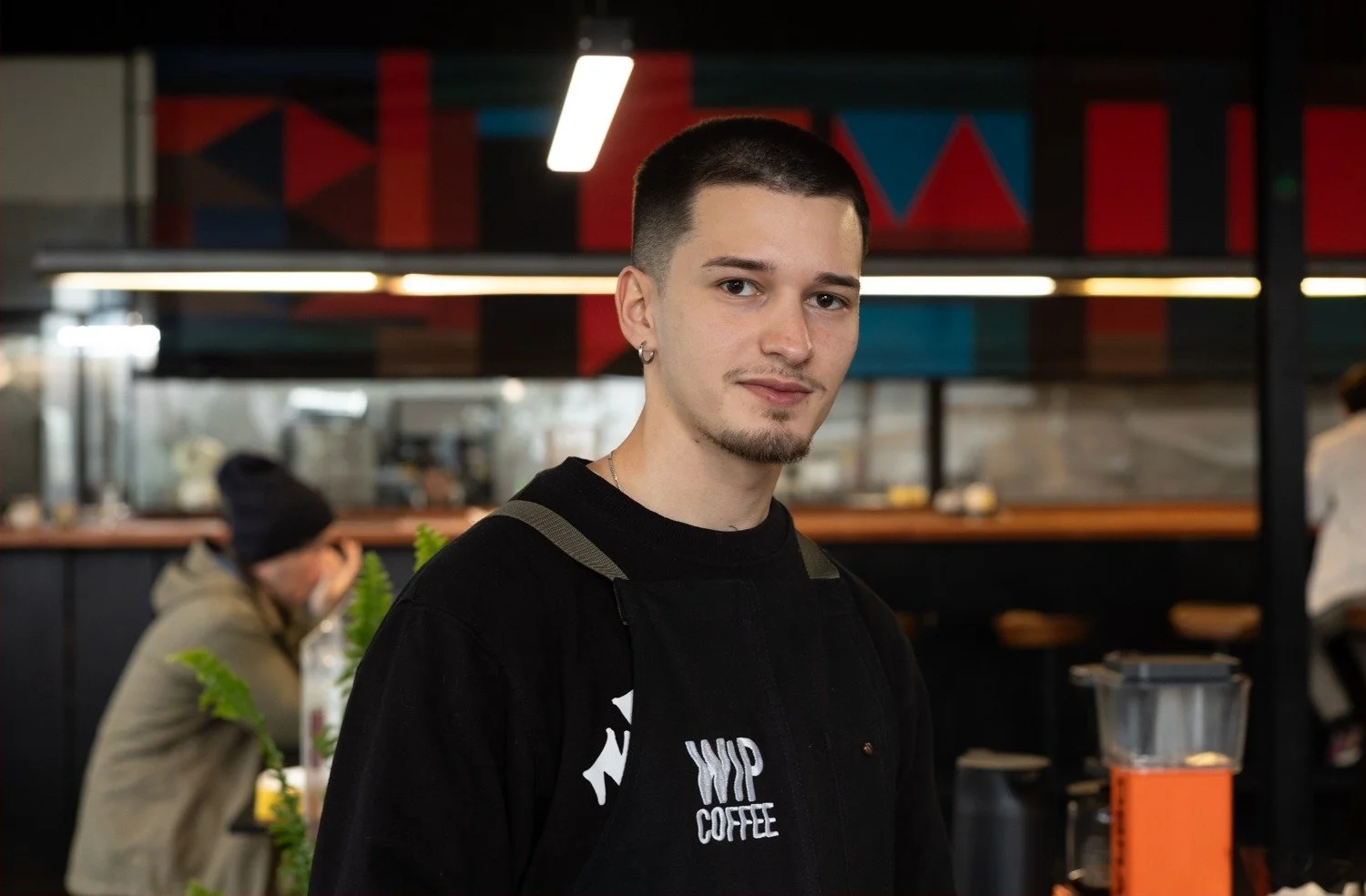
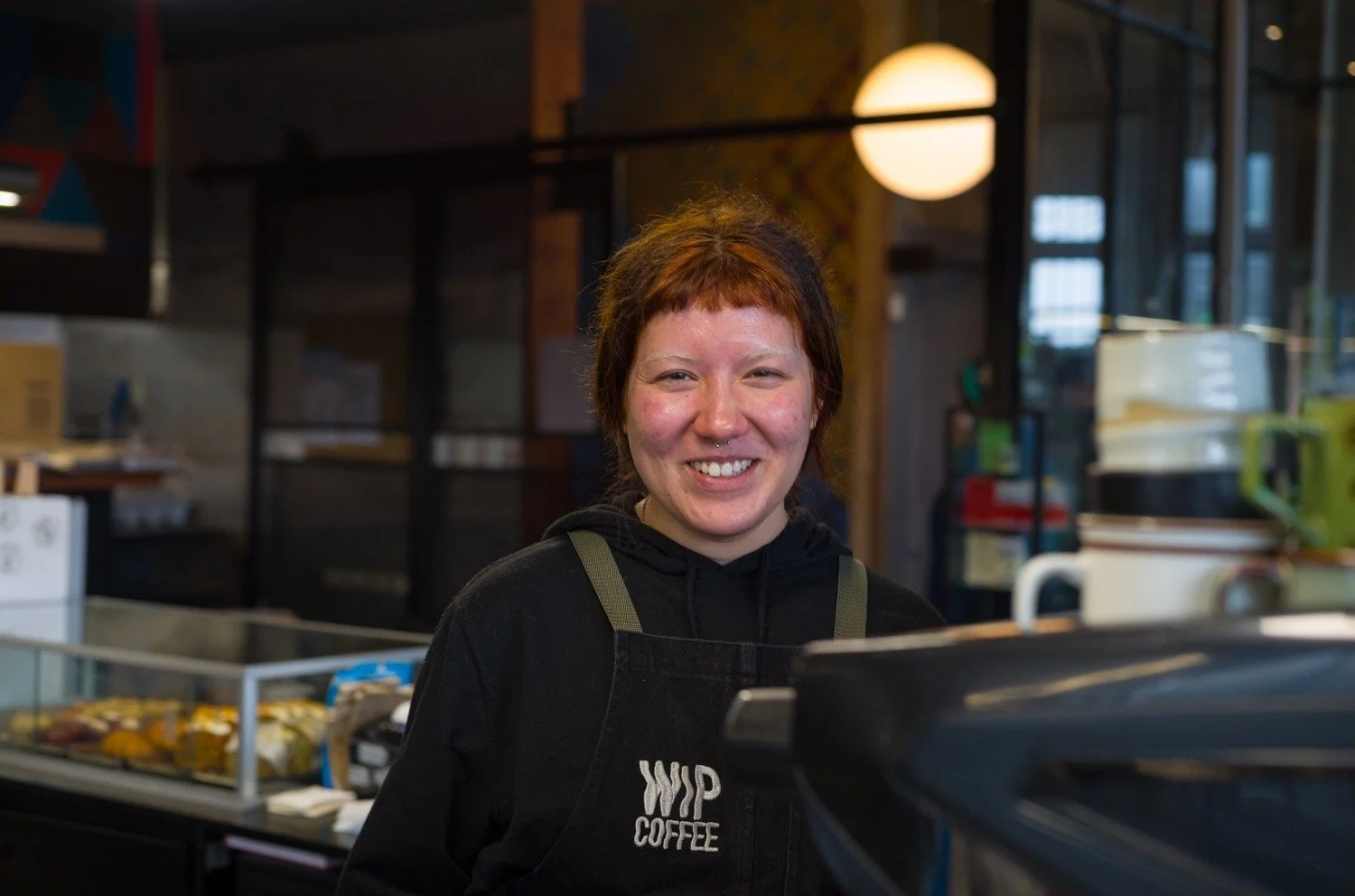
Now I have portraits of people, and I have already started developing many ideas. For example, I go to coffee shops a lot, and I assume every photographer likes coffee shops. Coffee shops are pleasant places for photographers. If you're not interested in coffee, you're probably interested in tea. I always see photographers in coffee shops, and I used to go to them a lot myself.
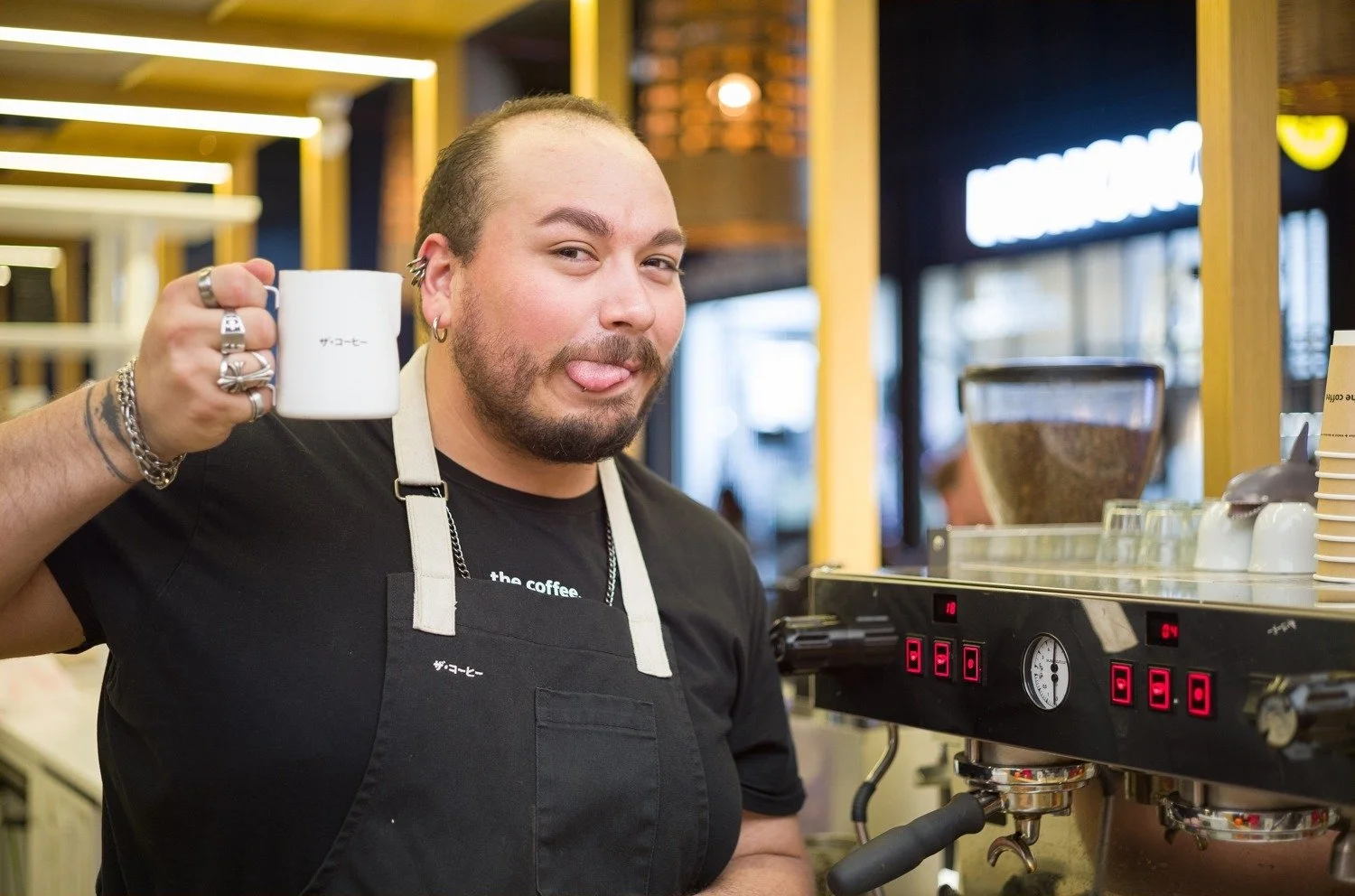
So I thought, what if I approach the people working in the coffee shop, the barista, the server, the cashier, and take portraits of them? I could build a series called something like Coffee Workers or Faces of the Workforce, with that specific theme. Once you unlock that kind of street photography, where you talk to people and they look at you, you unlock so many great things. You can start developing and thinking about projects like that.
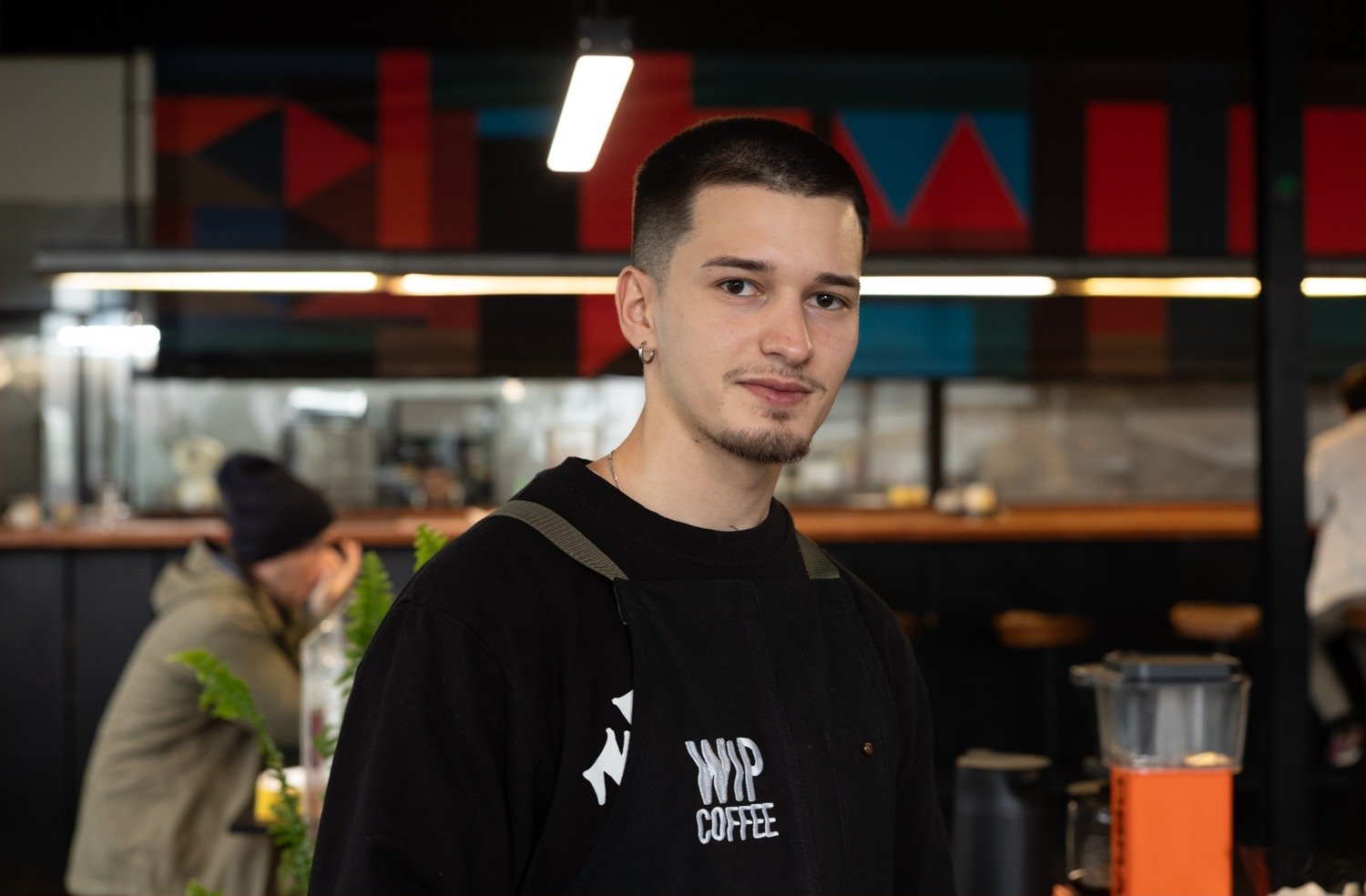
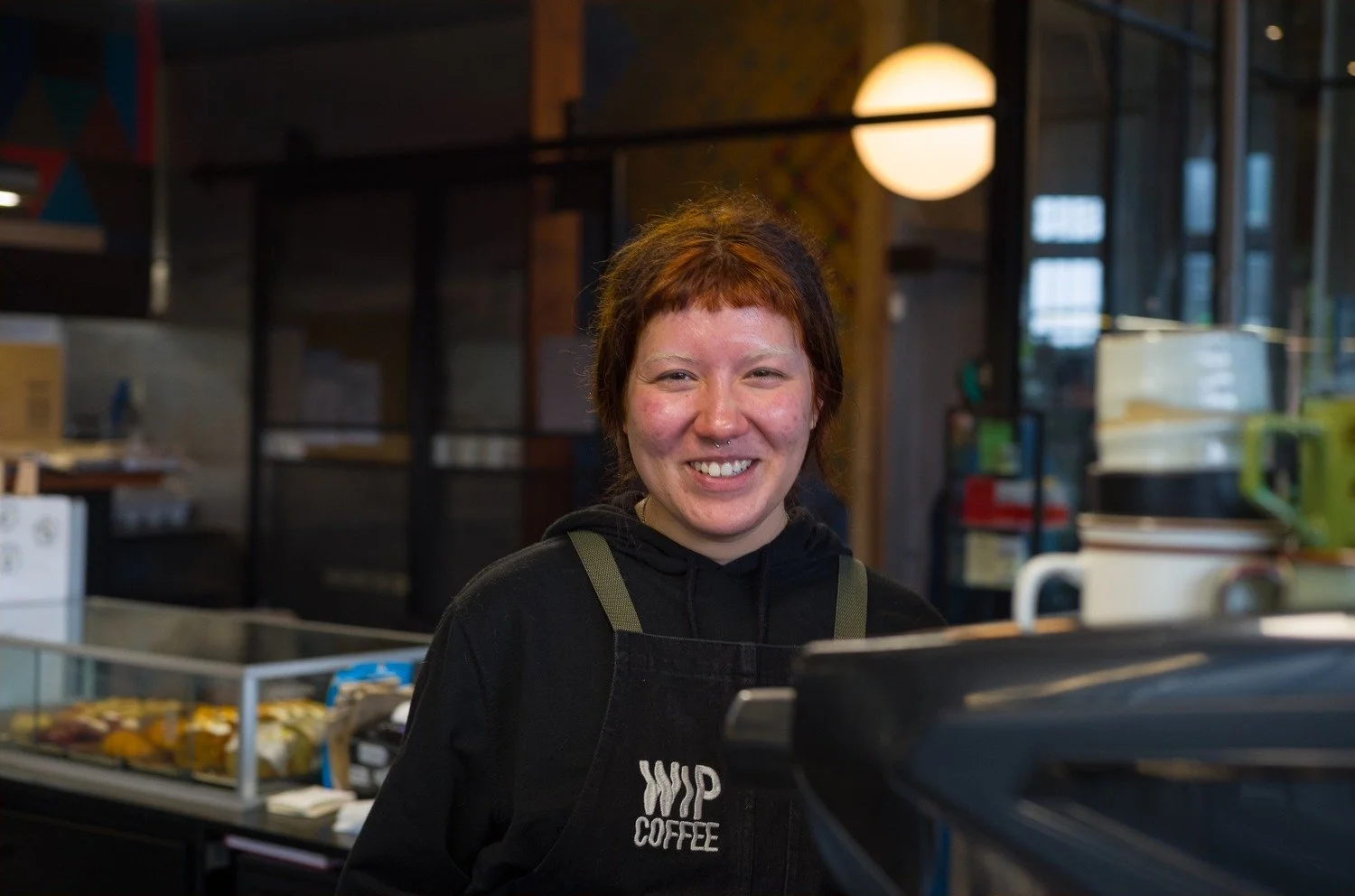
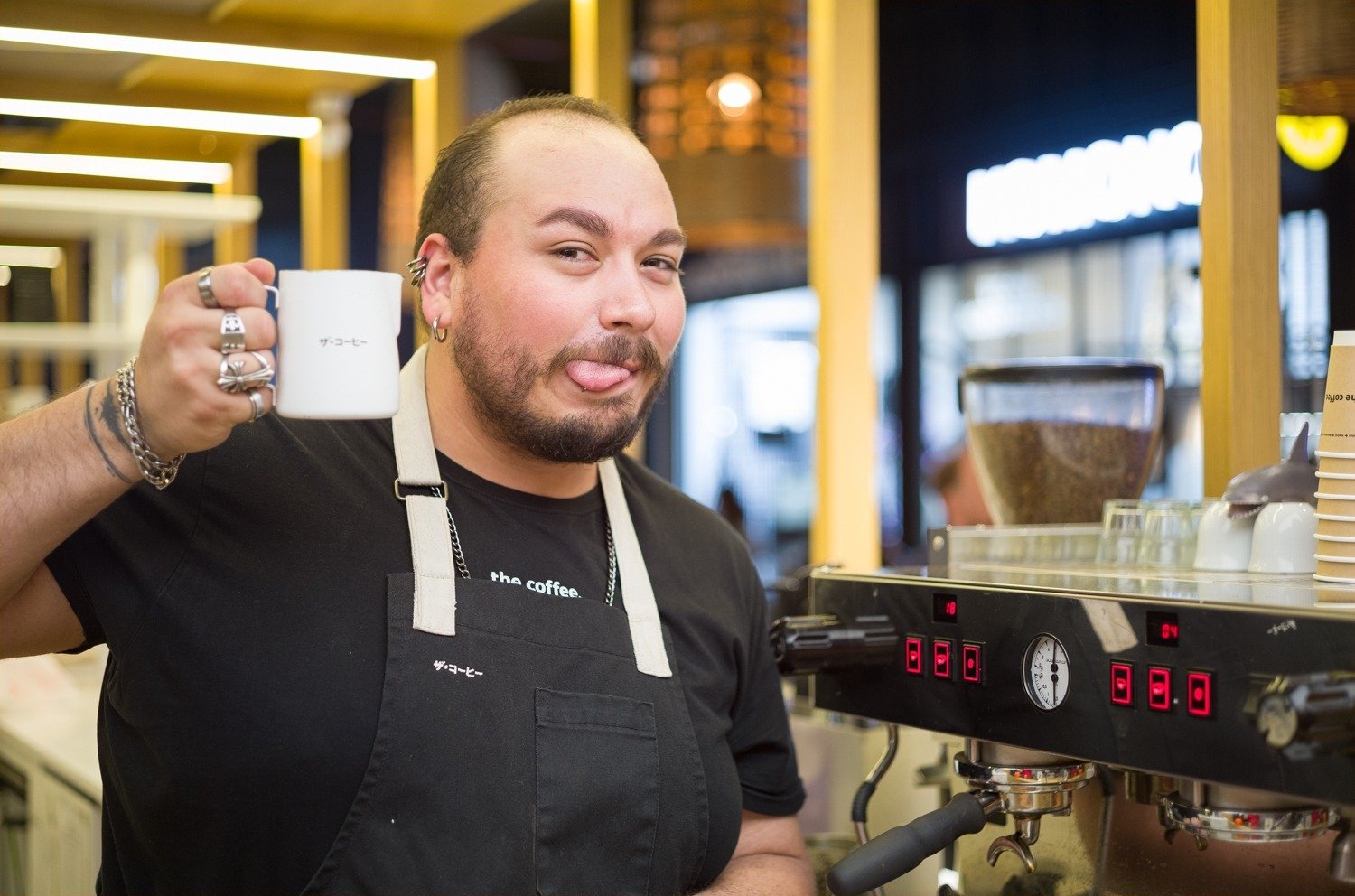
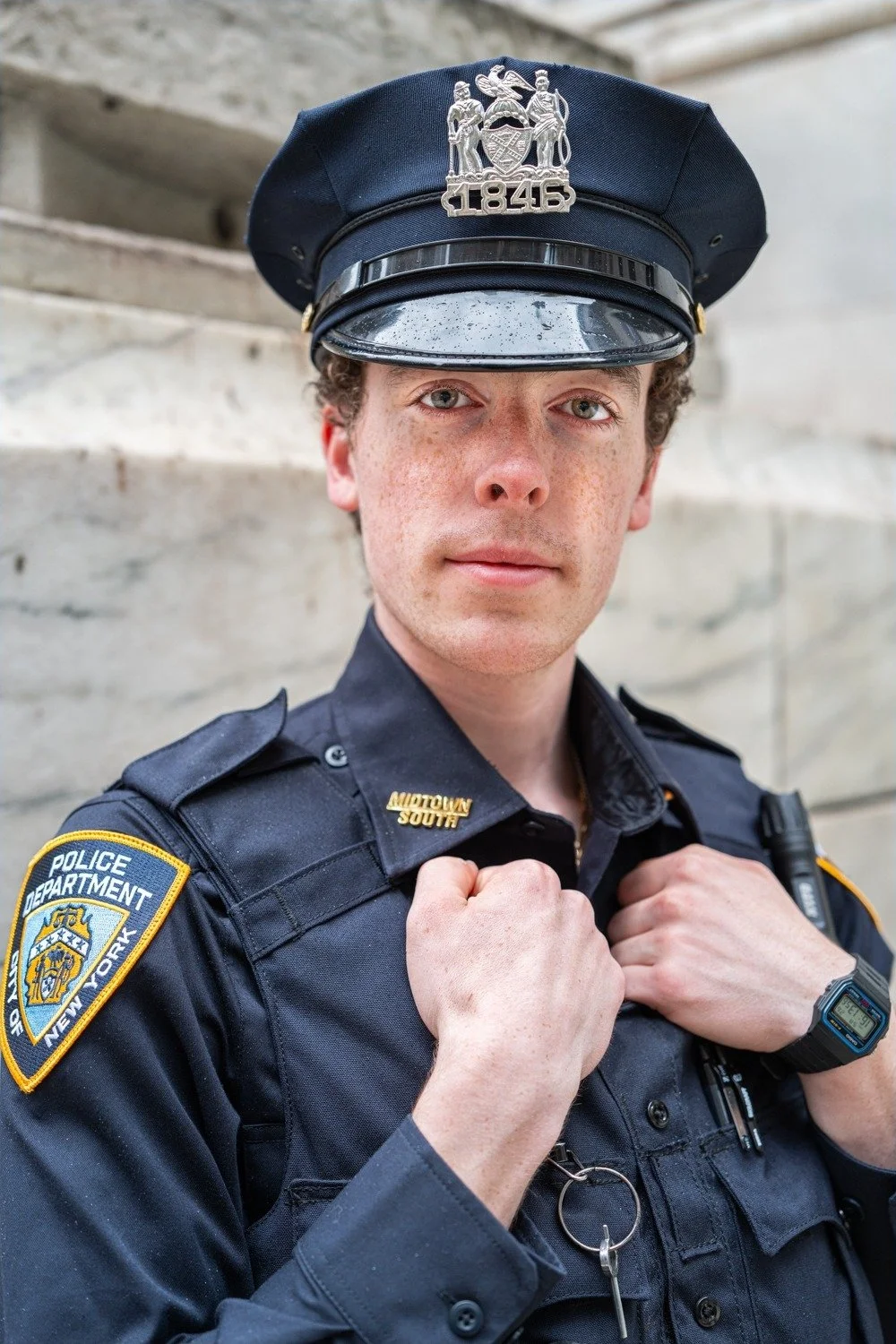
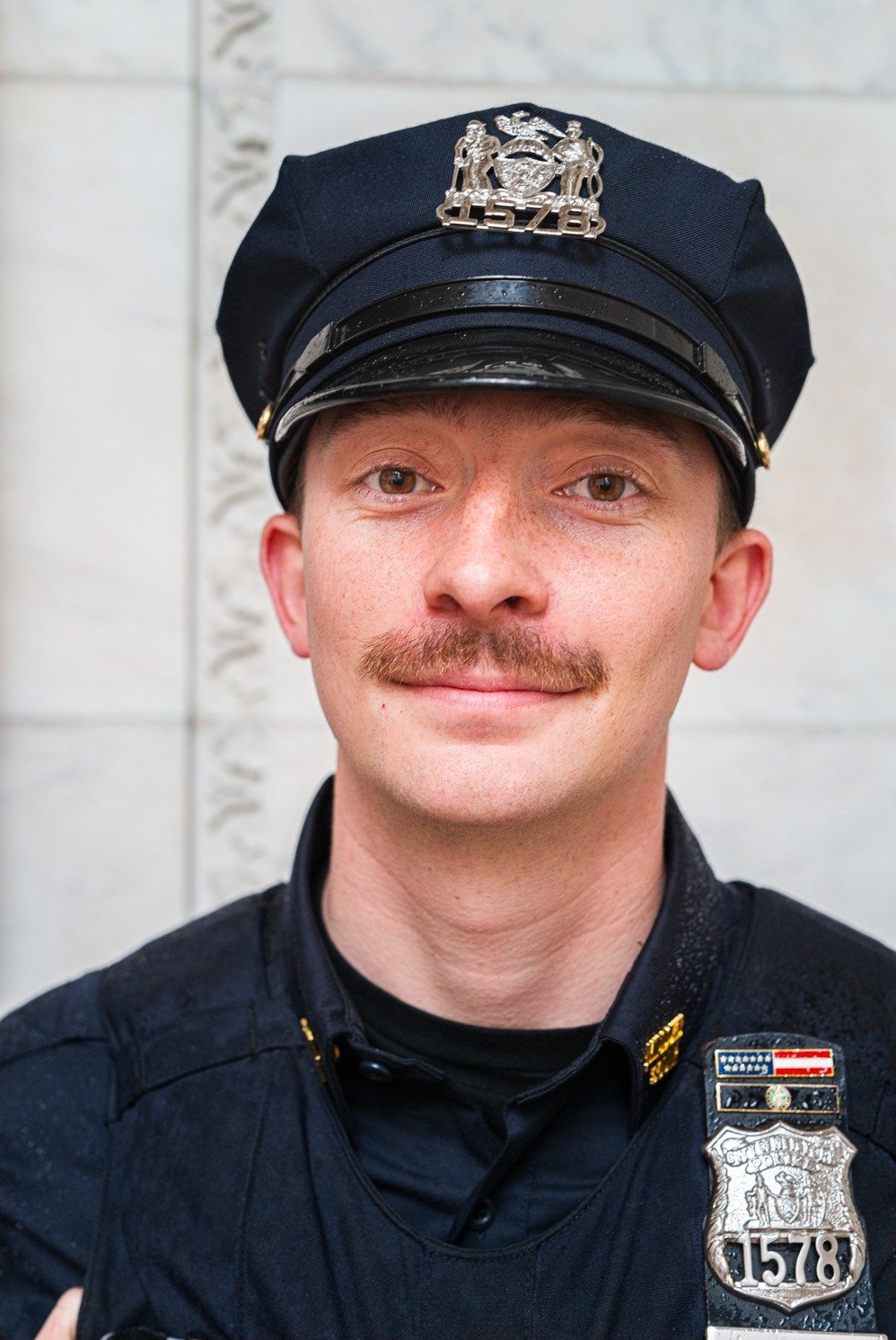
For me, that workshop with Steve McCurry two weeks ago changed my photography, and I think it changed it forever. I see it as a more mature way of dealing with photography and with talking to people on the street. As a bonus, it might also be the greatest antidepressant ever, because you talk to people. You use photography to bring you to the streets and talk to coffee shop workers, people walking their dogs, police officers, subway operators, any kind of people. You communicate with them, and then you celebrate that moment with a photograph. I think that's awesome, and I learned it from Steve.
Was there a particular exercise or something that enabled this in you?
Yes. In the workshop, Steve goes out on the street with about ten students and trains them. He says, "Approach that lady and try to take a photo of her. I want to see it." Some students would completely freeze, and I was one of them. Or they would take a photo of the person from behind, because they were scared of the encounter.
Then he would say, "No, you have to talk to them. Show some interest." So it was an explicit part of the workshop. He also said that while you talk with the person, you already figure out where the light is coming from and where you are going to position your subject. You also feel how much direction you can give that person. It was a clear instruction. And if you look at his work, at all those portraits of remarkable people in India, Nepal and Afghanistan, you can see it is the same formula.
It was also great because we had the chance to see him in action. We even saw some people say no to Steve McCurry after that interaction. He would say, "That was a great conversation. Can I take a photo of you?" And the person would answer, "No, not now." And that's fine. I heard this from Steve himself.
He said that if you believe those Instagram photographers always have the success they show, you are training yourself the wrong way. You know those videos where people go out on the street and say, "Hi, I'm a photographer, can I take a photo of you?" It doesn't really happen that way. The success rate of that approach is something like five percent. But you only see that five percent, so you tend to think that one hundred percent of their encounters result in a successful photograph.
Then you get frustrated, because when you go out and try it yourself, the reality is that only five or ten percent of encounters like that are successful. So he told us not to be fooled by those Instagram reels where people say they are photographers, ask strangers for portraits, and always succeed. But if you do the exercise of socializing before taking the photograph, and you use the photograph simply as the moment that crystallizes and materializes that specific social engagement, your chances go up to something like eighty percent.
He also said to pick the right person. You are not going to approach someone who is socially disadvantaged and say, "Your clothing is interesting," or something like that. I'm not saying that people in social disadvantage are less interesting, but they might not be very receptive to having their photograph taken. They are trying to survive on the street. So he said to pick people who dress in an extravagant way, because people who dress that way like images of themselves as they are. They like showing their character, so it will be easier to photograph them.
There were many, many lessons. Aside from meeting Steve, getting his contact, and being able to text him anytime and have him reply and give feedback on my photos, it was a three-day workshop, and it was life-changing for me.
I don't know if this question will come up, but it's a common one: what would I tell myself twenty years ago? I would say, save some money and do a workshop like this one. If I had done that twenty years ago, I would probably have dozens of published works of street portraits by now. I feel I lost all that time because I was in observational mode, trying to be a fly on the wall and photographing people in a hidden way, with the camera on my shoulder and the mobile app, completely stealthy. That can result in a great photo here and there, but it's much harder.
It's much easier to walk up to someone on the street and say, "Wow, you have an interesting scarf. Where did you buy it? Online? I'm looking to buy a scarf for my mom. Would you mind sharing where you got it?" That's a great conversation starter. You interact with the person, and at the end you say, "I'm a photographer and I like taking street portraits." When you start the conversation that way, you present yourself not as a detective or a weirdo who just tries to photograph people on the street. Your introduction is much friendlier, because you are simply living the moment on the street. So, to answer the question: the workshop with Steve McCurry was life-changing.
So what is your opening line right now? Let me try to imagine this. You see someone on the street you want to photograph. What do you do?
First, I observe the scene and check whether the light is good. If you convince the person that having their photograph taken is a good idea and the light is not good, it's a wasted chance and wasted time.
Light and composition
And what does good light mean?
Good light means diffused light. Not very hard, and not light that casts a shadow from the eyelashes and eyebrows onto the eyes, or from the nose onto the mustache area. The eyes must pop. If there is very hard light coming from above, like sunlight at one in the afternoon, it can be harder to make the eyes of the person you're photographing pop. If the light comes from the front, it's easier. And if it's diffused, it's even better, because you can color grade it in post. That's good light.
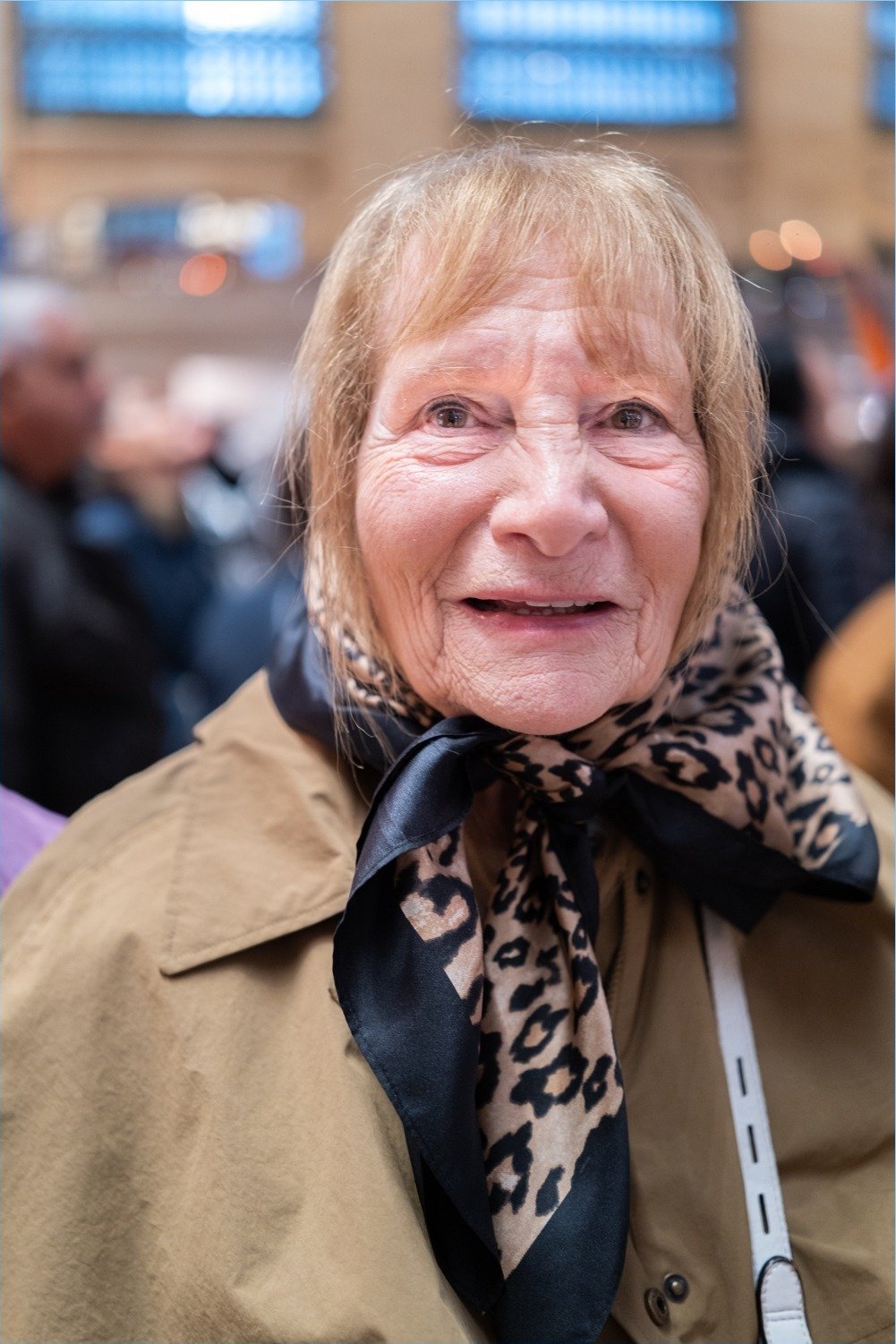
As for an encounter, here is an example. During the workshop, I was in Grand Central Station, and there was an elderly lady holding her phone in her trembling hands. She seemed to be struggling with something on it. Grand Central Terminal in New York City is a very touristy and very safe place.
I approached her. I didn't say "old lady." I said, "My lady, I see you're struggling with your phone. Are you looking for something specific? I'm good with these tech things. I can help you." She said, "I'm trying to call my nephew, but this phone is new." It was an iPhone. So I helped her. I said, "Touch here, on Contacts. What's your nephew's name?" She told me, and I helped her call her nephew.
She was also wearing a scarf. I felt I had been useful to her and helped her before asking for her photograph. When she finished the call, which lasted maybe fifteen seconds and everything was okay, I said, "Hi, nice to meet you." I introduced myself and asked her name. She said, "My name is Eleanor." I said, "Eleanor, I'm glad I could help you today. Your scarf looks very cool. Would you mind if I take a photo of you? I do photography as a hobby. It's not for professional use or anything." "Of course." Bam. She opened her soul to me. Wide open. The light was good. Steve also helped us use the ambient light, so you calculate all of these things.
Once you combine all these things, street photography becomes a very cool social exercise. The best antidepressant ever. I think that's why street photographers live to be a hundred years old. It's such a cool thing to do. It lifts you up. So I took a photograph of Eleanor, a beautiful one, with her scarf and everything.
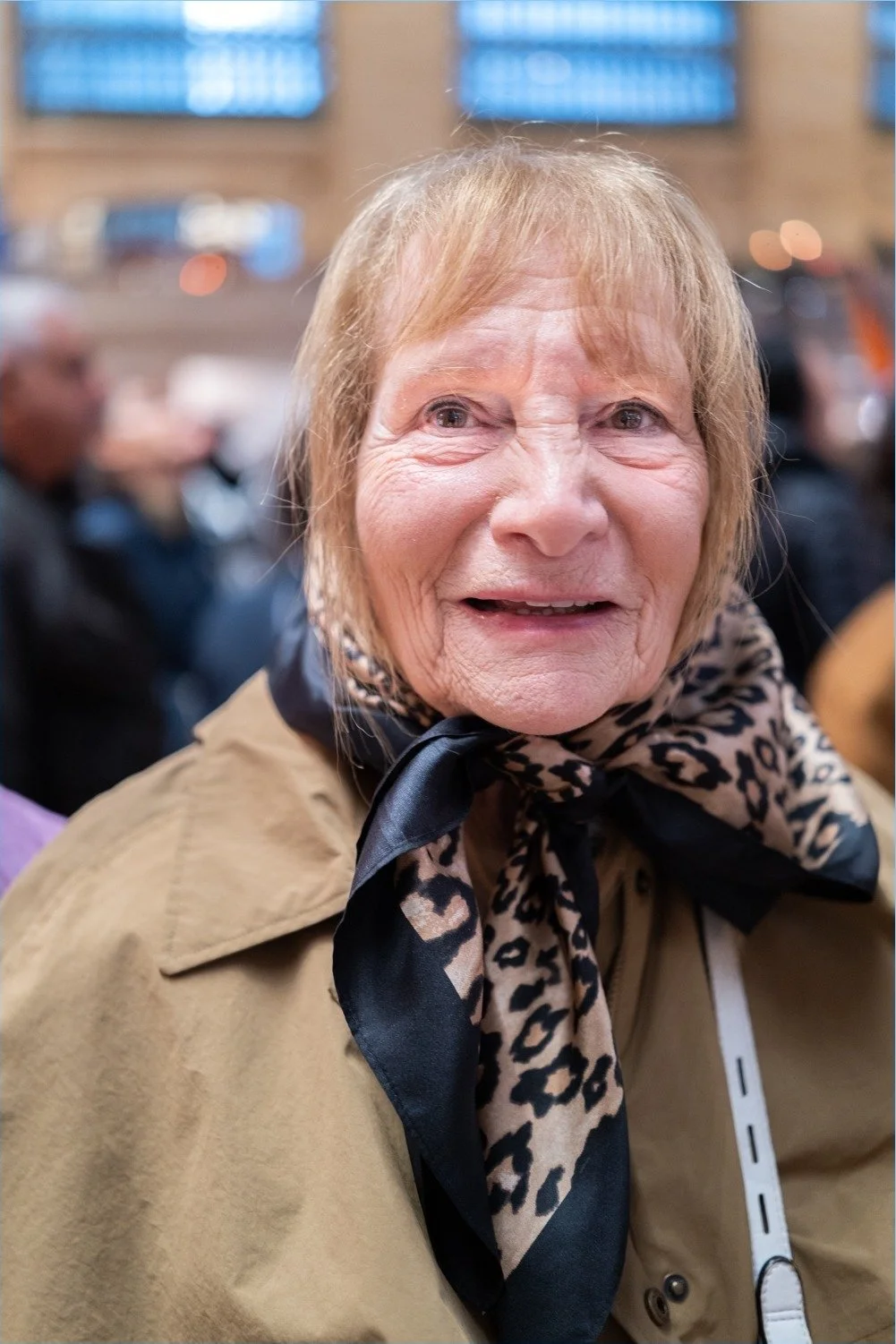
If you do this effectively, people sometimes even start posing and directing themselves. It's so effective and so powerful, this power of words, conversation and encounter. Here, the means justify the end. The end, which is the click, is just the finish line. If you understand that the click is just the materialization, the crystallization, the solidification, the celebration of the street encounter you had, then street photography and approaching people become easy.
That's one example of an encounter. Here's another. I know a lot about coffee, so when I go to a coffee shop, I order a macchiato or a latte or whatever, and then I start talking about the barista's skill with the microfoam. I use that as an icebreaker.
It also helps to bring Field Notes or any small notebook with you. Something you can take notes in is more helpful than taking notes on your phone. When you pull out your phone and turn the screen on, people have a social reflex. That gesture says, "I lost him. He's on his phone now." The person might not know that you're just taking notes. A dedicated physical notebook with a pen or pencil says a lot, because it clearly shows that you are making notes. You are not unlocking your phone, opening an app and tapping on the keyboard.
That's another interesting trick I learned. Bring a little notebook, and when you ask people their names, write them down. If they're young, they sometimes have Instagram, so it's also a good opportunity to get their handle so you remember to send them their pictures later.
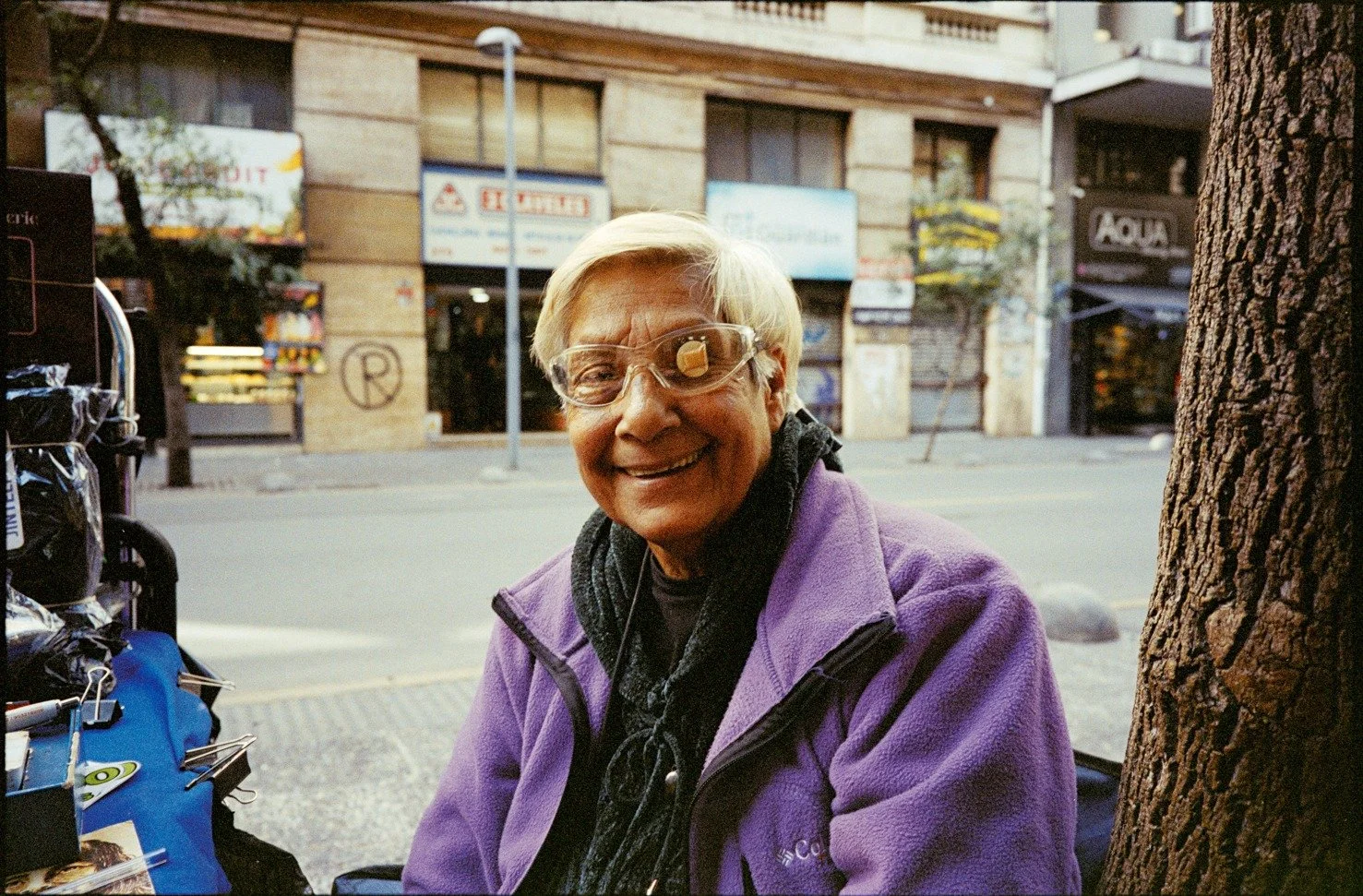
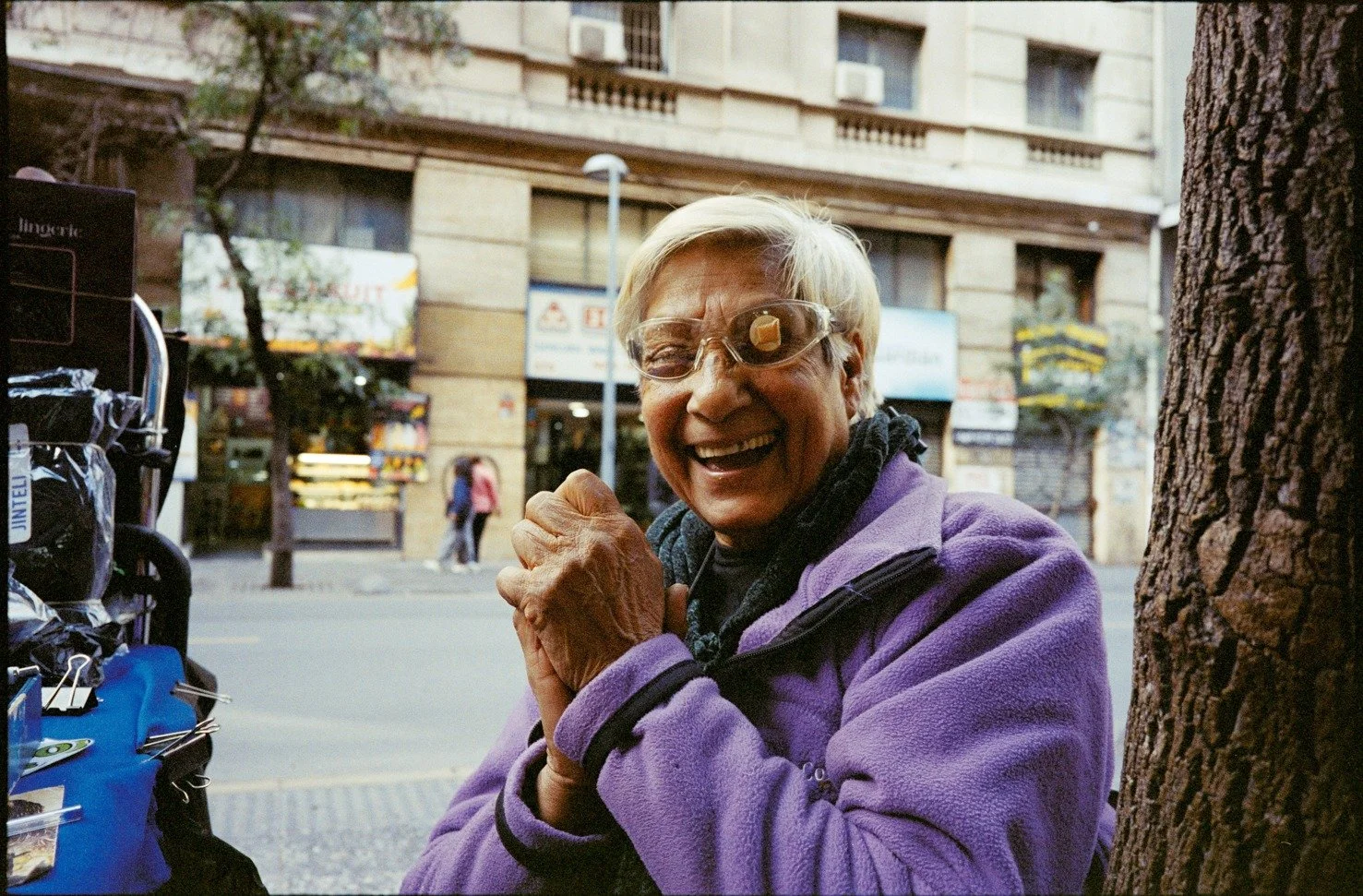
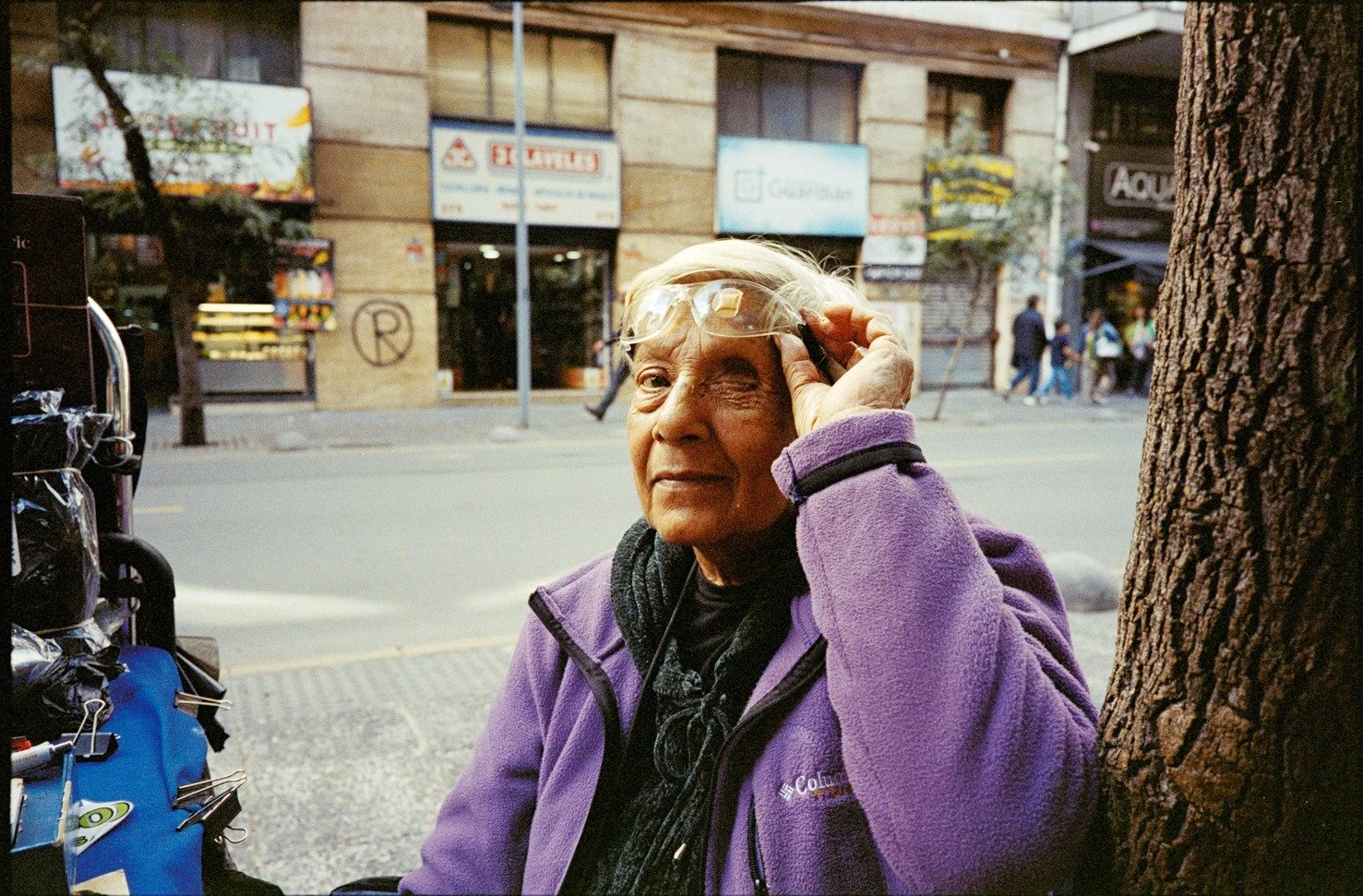
Those encounters happened two weeks ago. I can tell you about another one that happened in Chile last week. I was walking down the street, and there was an elderly lady selling things. She had a band-aid on her glasses. I thought, "Wait, why not use an eye patch?" The band-aid on her glasses was probably there to block the light from reaching her eye. So I asked, "Can I ask you a question? Why are you wearing a band-aid on your glasses and not a pirate patch, an eye patch?"
She told me she had had surgery for a detached retina. She said the word in Spanish. I told her that my mom had also had cataract surgery. I was sincerely concerned about her eye and everything. Then she took her glasses off, and I thought, "You are such an interesting person." I could have spent an hour talking to her. She was selling fruit on the street, mango, pineapple and things like that. Very simple.
So I introduced myself and said, "I take pictures of people on the street. You seem like a very interesting person. Can I take a photo of you with your glasses and the band-aid? I don't need to show your eye if you don't want me to." She agreed. I took the picture, then she took her glasses off and I took another portrait. In total, I made three portraits of her. That was on film, and I haven't developed it yet. I'll probably develop it tonight. But that's another example of an encounter.
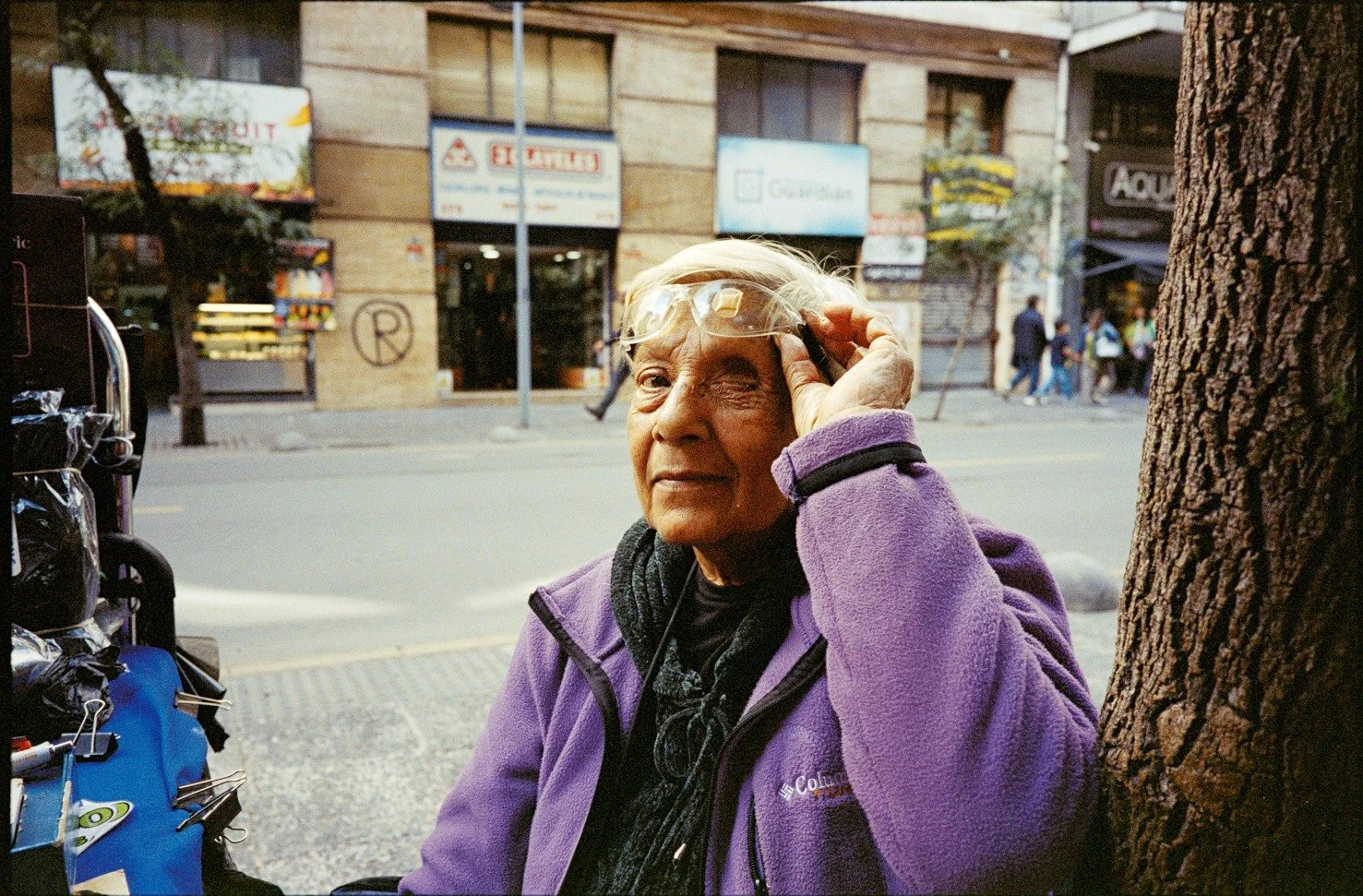
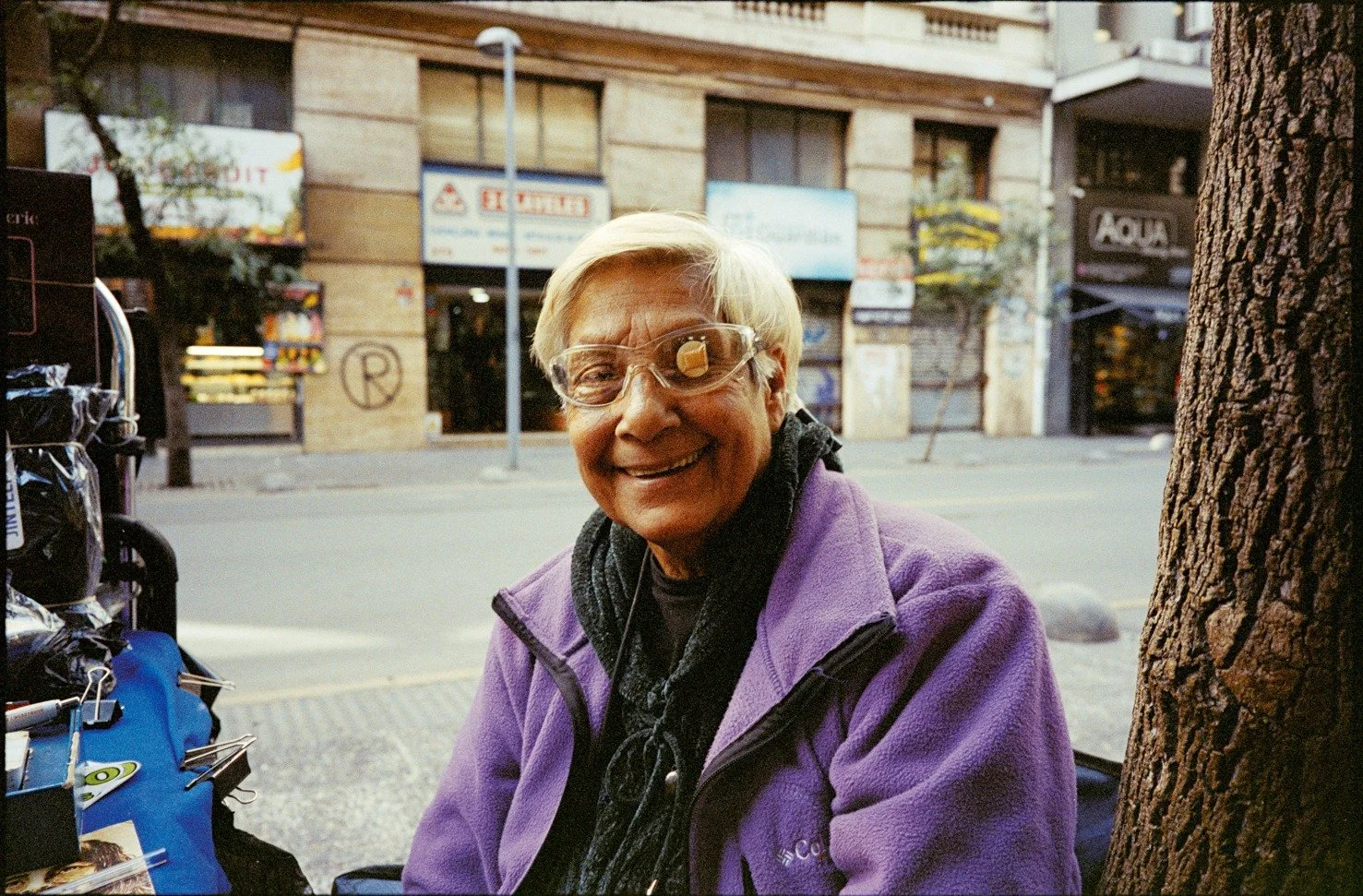
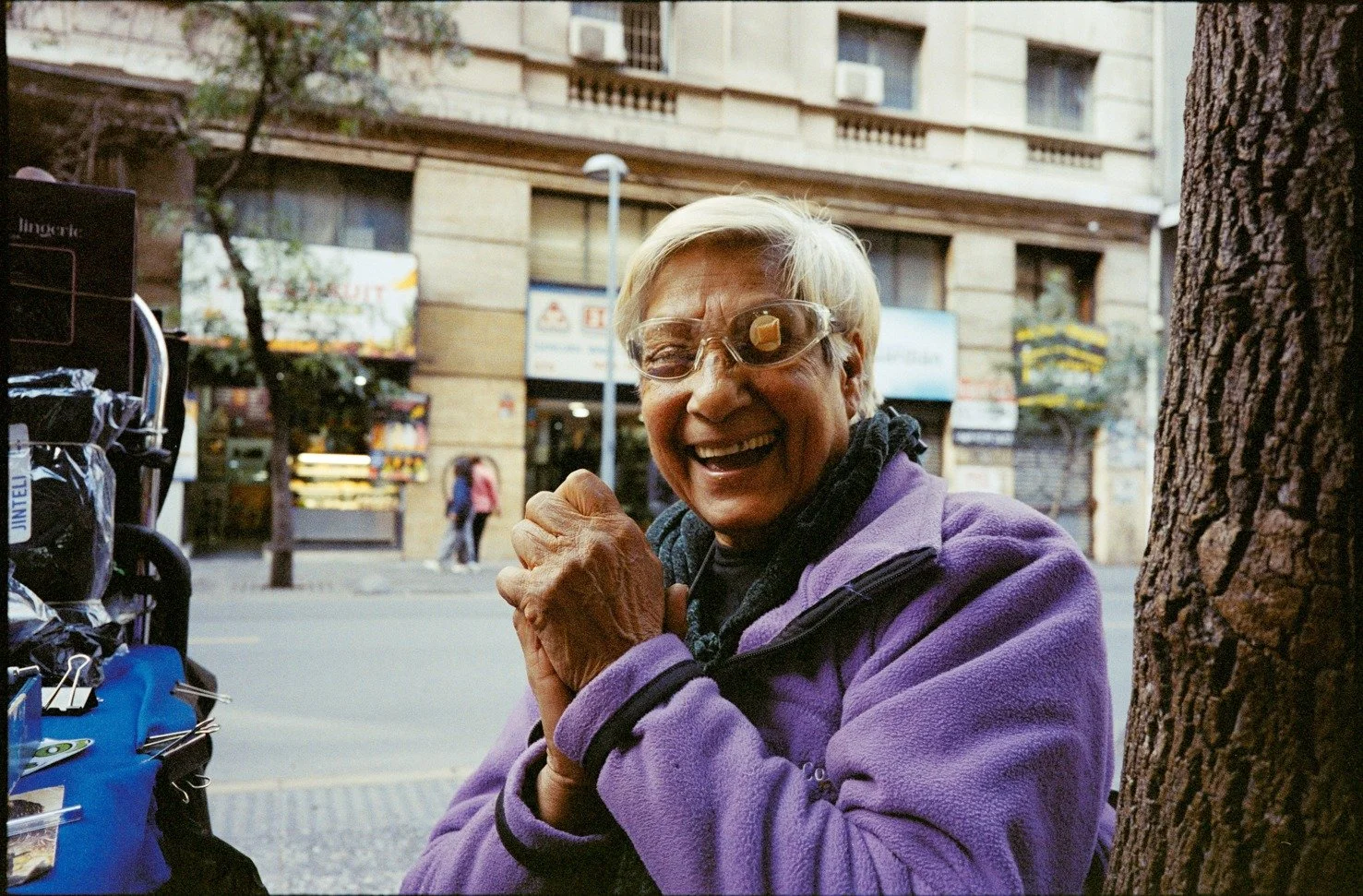
The photograph becomes much easier once you break the barrier of the social encounter, which for introverts is very hard. But in times of AI, that is definitely what will set you apart as a unique street photographer.
There are many different schools and many different ways of doing documentary work. This is one of them. Another is the observational mode, where you pretend to be a fly on the wall and try to be as unintrusive as possible, and then you photograph. That's also good. Every mode is valid. But I think it's much harder to achieve a successful street photograph that way, because we are not flies on the wall.
A different thing would be using footage from a security camera to make a photo. Then you would be closer to the fly-on-the-wall idea. But as a photographer with a camera, it's impossible. You are already not a fly on the wall. Don't fool yourself. Since the encounter may be inevitable, embrace it. Face people and talk to them. It's also a great social exercise, and I think it's much more fun that way.
Was there anything technical, maybe related to composition, that you learned and didn't know before, something that improved your photography or that you felt did?
Yes, totally. Around ten years ago, the brightest lens I had, in terms of letting in light, was an f/2.8 lens. Every single photograph of mine at the time was taken at f/2.8. It was a 24-70mm zoom. I loved the beautiful blurred backgrounds, shallow depth of field, bokeh balls and things like that. I think I spent too much of my photography journey chasing those things, and I forgot about, or put aside, things that are also important in a photograph beyond sharpness and focus.
This came to mind when I read two books. One was by Robert Capa, called Slightly Out of Focus. Robert Capa was a photographer who documented war on film with a manual focus camera, so he didn't have time to make pristinely sharp photographs. From that, I learned that a photograph is more than just perfect focus.
The second book was Camera Lucida by Roland Barthes. In it, he describes two elements, the studium and the punctum, which make a photograph impactful. By the way, Camera Lucida translates as Camera Clara. That's where the name Camera Clara comes from.
I became aware that these things existed and that it was totally okay to have photos that are slightly out of focus. I also started using manual focus lenses, which tend to be much better optically, because all of the lens's performance can be dedicated to the glass elements rather than to the autofocus motor or the electronics. That's why manual focus lenses tend to have more quality. Because I started using manual focus lenses, some of my photos actually are slightly out of focus. And I realized that sharpness, or shooting at f/1.2 or f/1, was not the most mature thing to chase in a photograph.
So technically, my photography changed in this way: I would rather have a grainy shot at ISO 1600 at f/5.6, with everything I want in focus, than shoot at f/1.2 or f/1.4 and risk having elements I want out of focus just to use a lower ISO.
I stopped being an ISO purist, because I started noticing that the photograph itself, the message you are conveying and the impact it has, is stronger than a perfect photo. But note that I'm talking about street photography, not studio and product photography. For those, you need ISO 64, flashes, a smaller aperture and things like that. I'm talking about the field of street photography, especially because things on the street happen fast, and with a very open aperture you might get things out of focus. So just set f/5.6 and ISO 800. You're not going to die. Even if you print at ISO 800, ISO 1000 or ISO 1600, that noise can even render as beautiful grain in your digital shots.
So technically, I stopped chasing perfection in terms of sharpness and low ISO, and I started focusing more on composition, on what the photo tells me, on the story behind it, and on whether it's a beautiful picture.
Was there anything you learned from Steve McCurry in terms of composition? Did he tell you to position your subject a certain way in the frame? He is known for his portraits, so what is his secret for composing his subjects?
Yes. There were three things I learned that surprised me. The first is that he uses a zoom lens, a 24-70mm, and composes his portraits with it. I thought he used a prime, because people say primes have better optics and so on. He uses a Leica L-mount 24-70mm, which I assume gives you sharpness at all focal lengths and all apertures. Pretty good equipment.
The second is that he always takes portraits in landscape orientation. He told me he avoids shooting vertically.
Really?
Yes. Sometimes on the street, there is something interesting in the background that you don't notice at the time. If you shoot a portrait of someone horizontally, you can always crop it vertically later.
But if you shoot it vertically in camera, you cannot crop it horizontally, because the frame is tighter and the person takes up more of it. So he mostly shoots horizontally and crops later. He uses a 60-megapixel Leica SL3. And because there is sometimes something interesting happening in the background that you only notice when you look at the photo later, a horizontal composition gives you a better chance of capturing it. There are more chances of having interesting things behind your subject in a horizontal frame than in a vertical one. So he usually shoots horizontally.
The third is a basic one about the juxtaposition of things. Avoid backgrounds that conflict with the outline of your subject, their shoulders, their head and their ears. If the background is so busy that it competes with the portrait, move your subject to an area with a cleaner background.
Also, keep the aperture between f/4 and f/5.6. Don't go wider than that, especially at sixty or seventy millimeters, because you risk nailing focus on the eyes while the ears and hair are already blurred out.
And you focus on the closer eye?
Yes, exactly. That's one of the advantages of manual focus lenses. You can focus on one eye, or on the other, or just in between. If the person is turned three quarters to the camera, with one eye further back and the other closer, you can choose. But don't keep the aperture too open, because you risk having one eye in focus and the other out of focus, especially at sixty, seventy, eighty or ninety millimeters.
So those are the top three: juxtaposition, so the background doesn't conflict with the portrait; shooting horizontally, because it's easier to crop a vertical image out of a horizontal frame than the other way around; and keeping the aperture moderate. You do use one hundred percent of your pixels if you shoot a portrait vertically. But with the forty, fifty or sixty megapixels that cameras have today, you can easily crop a vertical out of a horizontal.
Finding a visual identity
In your article "How I Stopped Taking Random Photos and Found My Visual Identity," you described moving away from relying on film recipes and familiar photographic approaches. What made you realize that the photographs you were making were not yet expressing your own way of seeing?
Right. Before 2025, I always photographed digitally. Film is a very new thing in my life. Because I always shot digital, and because I like playing with new things, when I got a Fujifilm camera I started playing with the film simulations.
Then I started playing with film recipes, which are like an evolution of the film simulations. First I shot everything in black and white. Then I had my Classic Chrome era, where all my shots had the Classic Chrome look. Then I had my Portra 400 recipe era, where all my photos looked like Portra 400.
I was always experimenting with new things, and that's partly because of the nature of digital files. Digital files are meant to be edited, or at least color graded. Even JPEGs straight out of camera are edited. They have a color boost and a contrast boost that the camera applies. I know only a few people who photograph and are happy with whatever the camera gives them, and coincidentally, they are the ones who I think don't care much about the aesthetics of a photograph. In other words, digital files are meant to be edited.
If you're good at photographing and good at editing, you spend a lot of time editing and a lot of time photographing. But if you haven't studied culture and consumed lots of photographs, you become a random roulette of good-looking things. You don't have one identity. Someone looking at your work would not be able to say, "This photo was taken by you," or "This is the kind of black and white I would make."
I was doing macro because I had bought a macro lens. Then I was doing fisheye, because I had bought an 8mm lens. Then I was doing telephoto landscapes, because I had bought a 70-200mm. There is a very bad temptation to adapt your photography to the gear you buy, and that makes it harder to develop your own language. It makes it harder for someone to look at a photo and say, "Wow, this is clearly his," to become a reference. You want someone to look at a photo and say, "This looks like something he would do."
If you look at the work of the biggest photographers in the world, you can tell. A well-taken portrait with saturated colors is something Steve McCurry would do, because he used Kodachrome for decades. He has 800,000 Kodachrome slides. When he moved to digital, he immediately recreated the Kodachrome look, and that became his digital style. Those photographers had the advantage of starting with film. They had photographed so much with, say, Portra, that when digital cameras arrived and they got their digital files back, they immediately started editing and creating presets to make the digital files look like their film work.
But if you started with digital, it's a mix of everything. If nobody tells you, "Hey, your photos look like a random roulette of interesting images, but there's no consistent personality here," if nobody makes that click for you, you become someone who produces random things. All good-looking photographs, but random.
Only a few people are interested in a book of random good images. People want to see a book about subway signs, or street photography, or portraits, or landscapes. Pick a theme. If one year you're doing macro, the next year landscapes, then studio, then flash, then film, then only black and white, after a decade you have a bunch of things that are pleasing to look at and interesting to you, but that are disconnected. They don't form a body of work that someone else would find interesting to consume.
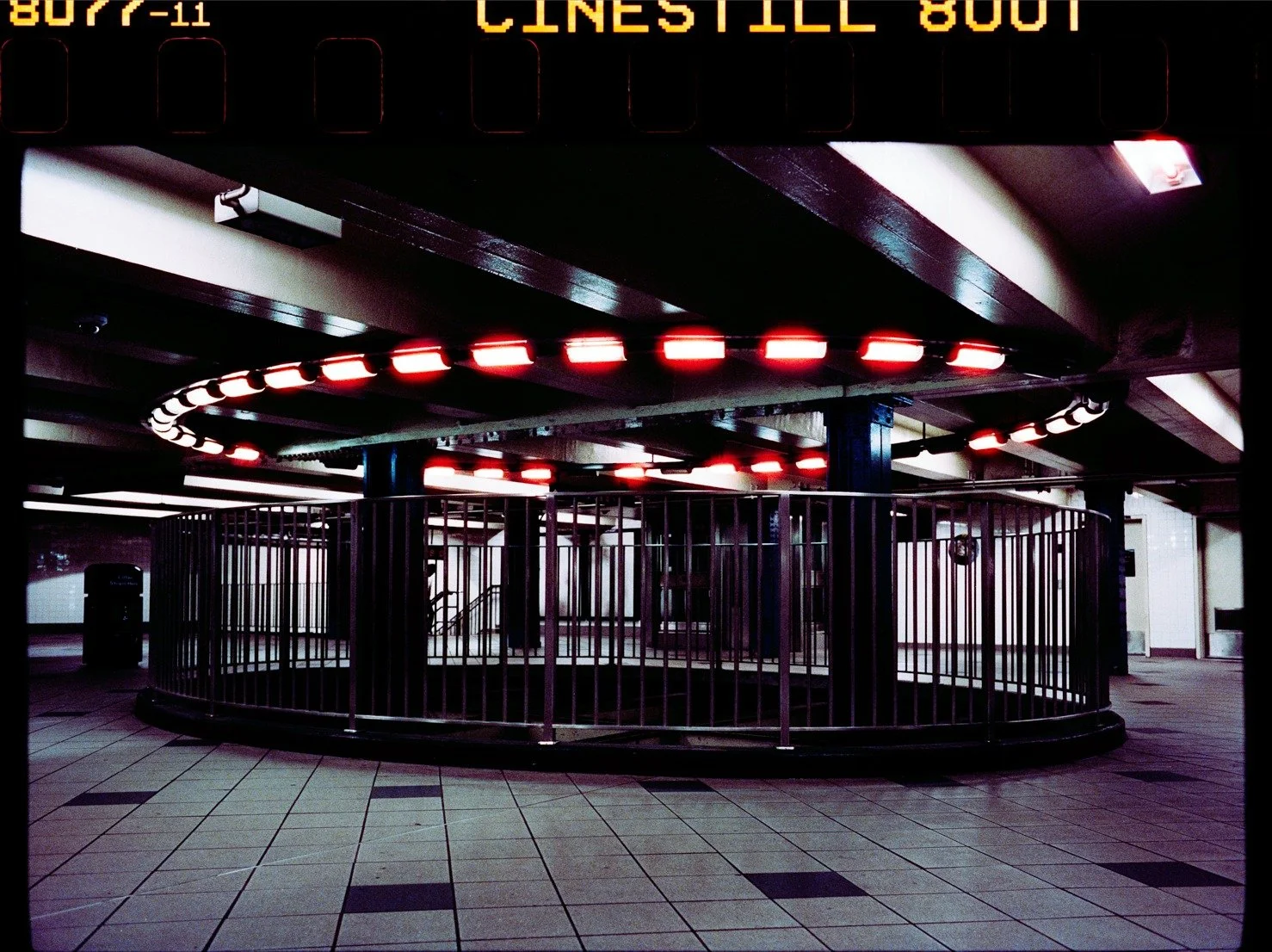
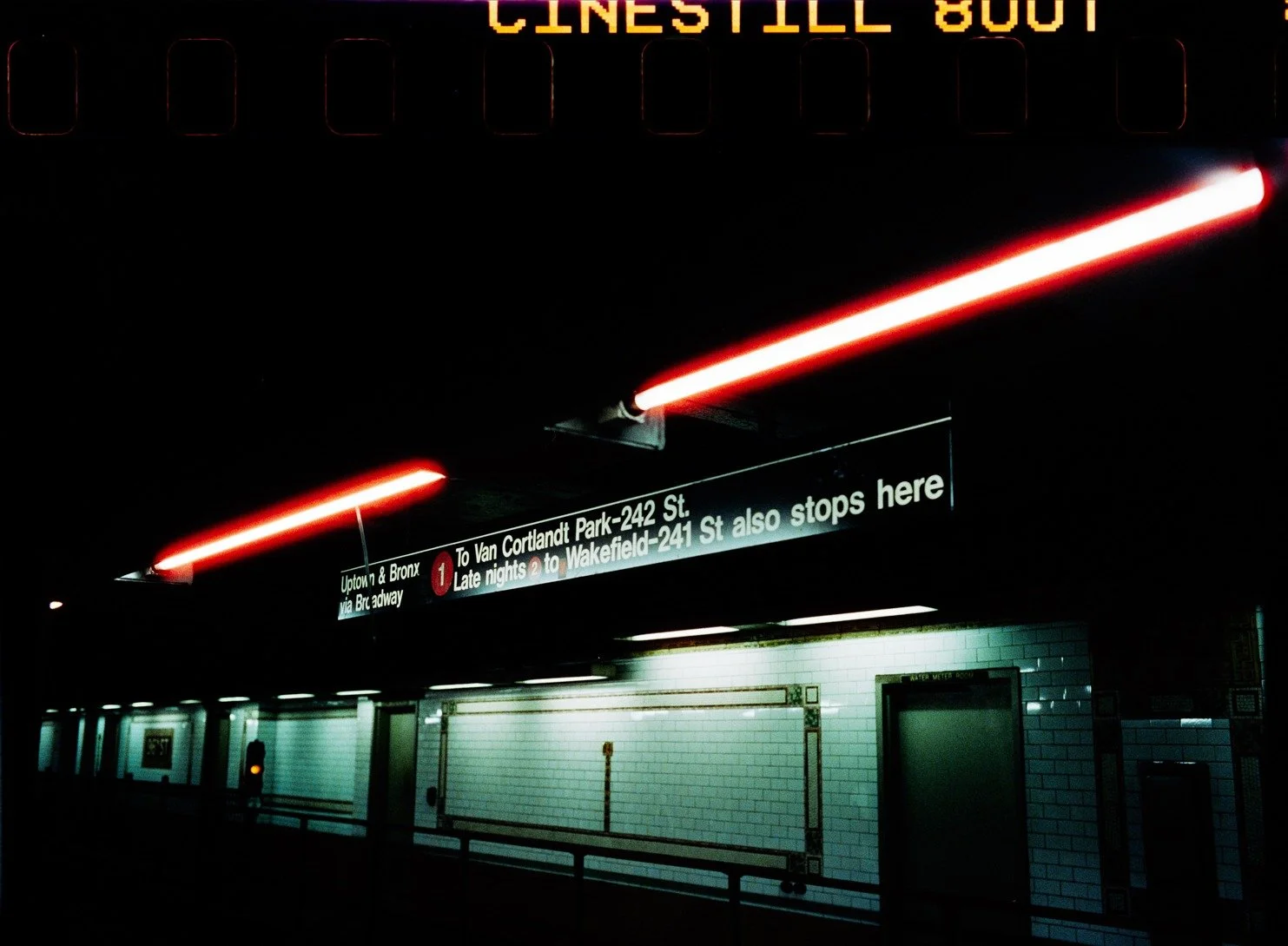
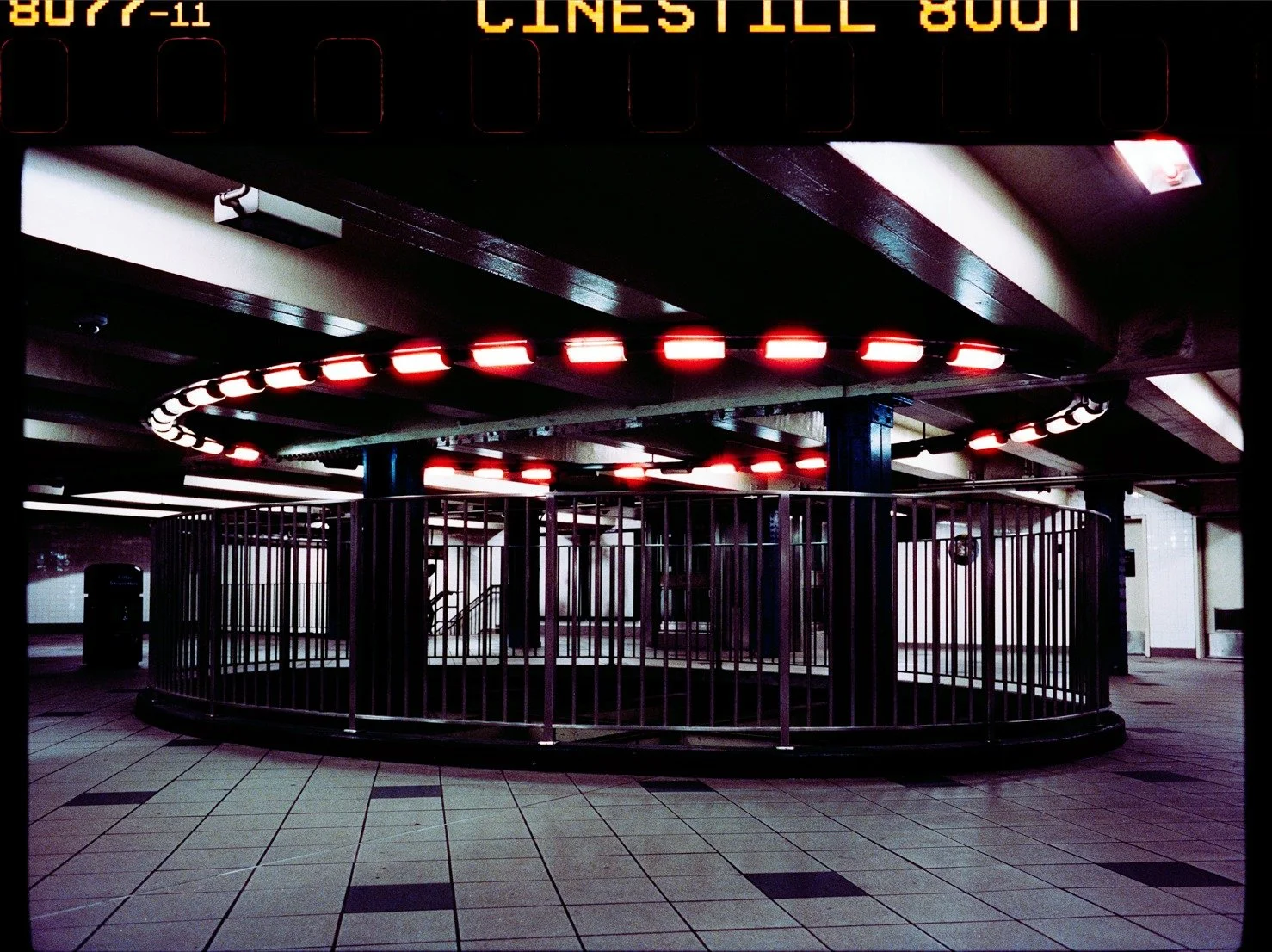
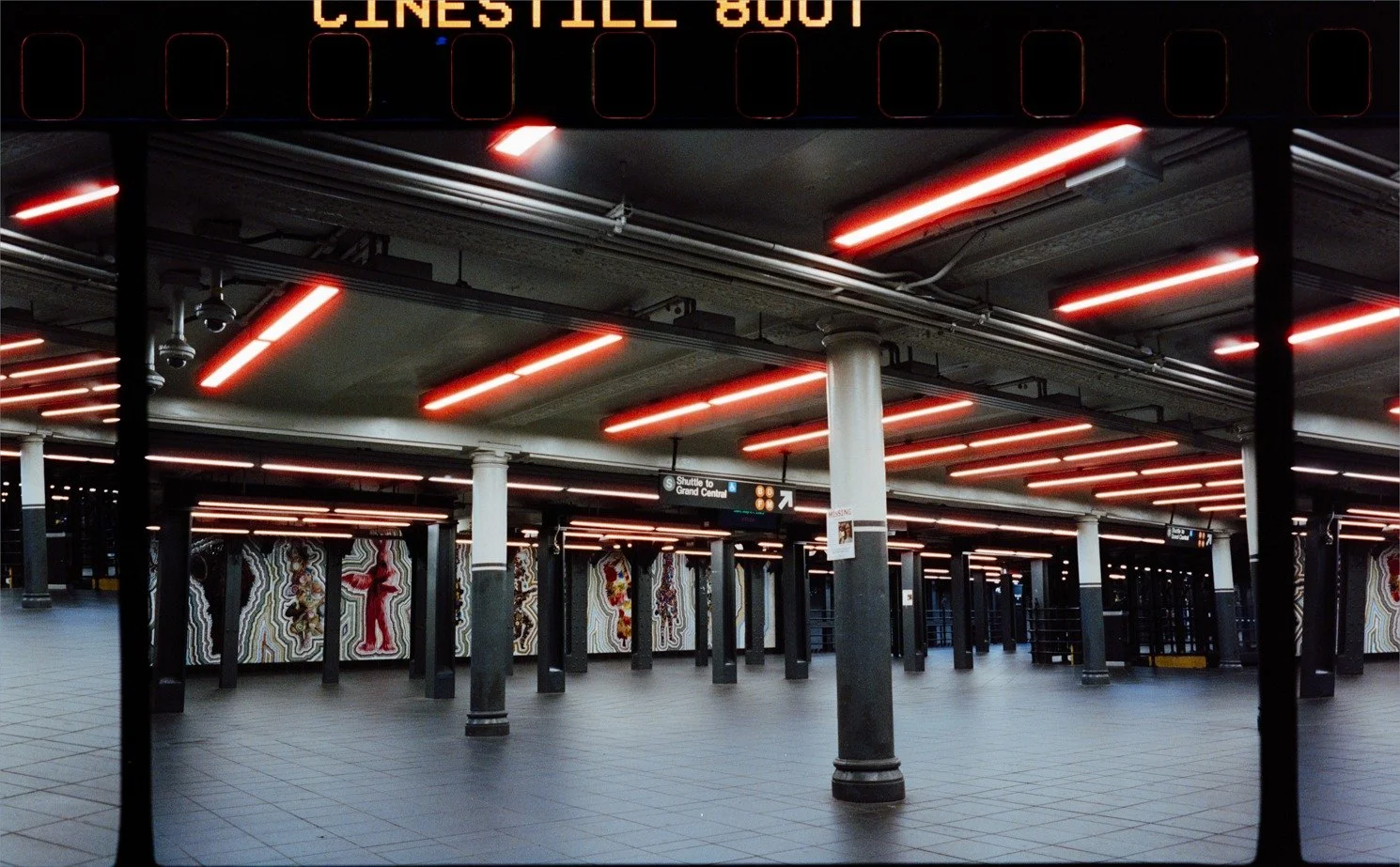
That's why, when I moved to film, film helped me find my visual identity. When you shoot film, the number of looks you have is limited to the film stocks you use. You have Portra, Fuji 400, Ektar, Kodak Gold and CineStill, and the ones you buy. So it's four or five looks. Then it's easier to see which of those four or five you like most. I like CineStill 400 because of the halation. I like Kodak Double-X because it's easier to develop. And then you go with it.
As a consequence, it's easier to develop a body of work, so that when someone sees a photo of yours, they remember you more than if you just showed random things. That's basically what the article says, and why film helped me choose my visual identity: because I started with digital.
If you come from film, that's the holy grail, because you edit your digital files with film looks and you have tons of references and libraries in your head. Take Steve McCurry: saturated, because of Kodachrome. Take Sebastião Salgado: black and white, high contrast, impactful shots. Andreas Gursky makes medium format images with a billion megapixels. Each photographer has their own style.
And again, we are not talking about commercial photography. We are talking about professional photography. When you do commercial work, you give in to whatever the client wants. If the client wants product photos with flash and you are a versatile photographer, you can handle it. If the client wants you to cover the New York City Marathon, you adapt to that. So it's not bad to lack a visual identity in general. It's just bad for authorial work, for having people look at an image and say, "That was taken by him." But all that experimentation gives you vocabulary.
If a client wants macro, guess what? You're very good at macro, because you played with it a lot. So there's no downside. It's always good to keep in mind that what works for street photography and authorial work, for book releases and galleries, might not work for a photographer who works commercially and does whatever clients ask: bar mitzvahs, weddings, marathons, products, macro. The best thing is to have both. That's why it's a journey we keep developing, and that's why most photographers reach authorial success in their fifties. It takes time to develop a portfolio like that, to do gallery shows, to talk to people, to release books, articles and things online.
Cameras and gear
You've argued that photographers should spend more time discussing photographs than cameras, but you also enjoy exploring different equipment. When does a new tool expand what you can photograph, and when does it simply make photographing feel exciting again?
That's a great question. We all like equipment. I'm like a pendulum. One moment I say, "No, now I'm the culture guy." Then: "But wait, Hasselblad just released a new 100-megapixel digital back." I'm always swinging between one and the other.
That question is very deep, because new equipment can indeed produce unique things. We cannot completely ignore equipment. If someone has a lot of culture, is very talented, and knows a lot about composition, lighting, how to read light and where to position things, they will do even more interesting things with new equipment.
One example is Hasselblad, with its giant files and the virtually unlimited cropping you can do with them. Take a photographer like Alex Webb, whose photographs have multiple layers. There are lots of things happening in an Alex Webb photograph. If one of those were taken with a Hasselblad, each of those things could become its own photo. You could crop, still get a decent size, and make four or five photographs out of one frame. Now imagine putting that in a physical object like a book. You show all the details separately, and on the next page you show the wide shot with all the sub-photos inside it.
That's only possible because you have a medium format digital camera with a 100-megapixel sensor, in the same way that, maybe eighty years ago, people had large format cameras and used them to do the same thing. So I think we are still in a time when equipment can make a difference for someone knowledgeable enough to apply it and create something uniquely and truly new.
I usually use a tennis racket comparison. A good tennis player with a bad racket plays better than a bad tennis player with a good racket. I actually need to do this test. I need to take my wife, who is not a photographer, and give her the Hasselblad X2D with the zoom lens, which is the crème de la crème, while I go out with a cheap point-and-shoot. We both spend the day taking pictures, print them, and bring them to someone experienced to critique them.
It's like a Formula One driver in a bad car versus a bad driver in a Formula One car. Of course, a Formula One driver in a Formula One car would be outstanding. So equipment is interesting and important, because a Formula One driver in a bad car would not set the fastest lap. But photography is an art, and it's subjective. There is no such thing as a fastest lap in photography, because of the artistic nature of the medium. So it's interesting. We all love equipment because we love the practice of photography, and when we see something high-performing, we get excited.
At the same time, I don't see equipment as a big differentiator. Otherwise, Sony photographers would be the best photographers in the world, because Sony cameras are the highest-performing ones, with the fastest autofocus and the best signal-to-noise ratio. So why do we have excellent photographs made with a manual focus Leica? I think it's because photography is art, and there is no "best" in it.
Whenever we compare better or worse photography, the gear conversation comes right in. But as soon as we start studying composition, culture, references, museums, photographs and history, we realize: "Wait, this guy made that photo with that point-and-shoot camera?" Saul Leiter, I think. He had a point-and-shoot. I think it was a Canon WP-1, which, by the way, I own. And here I am talking about equipment again. It's because it's fun, and we are all passionate about photography.
Is there a piece of equipment you stopped using because you realized it was influencing your photographs in a way you didn't want?
I don't think so. But there is equipment I bought because I thought my photographs would be better after buying it, which is the definition of GAS, gear acquisition syndrome. That happened with the Hasselblad CFV 100C, the 100-megapixel digital back, and a Hasselblad XCD lens. Ten grand. Ten thousand dollars.
When I got home and realized each file was two hundred megabytes, I thought, "Wait, this is more for the studio." Certainly, some cameras work better in their natural habitat. Say you're in a studio photographing products with lights and everything, for example a wedding ring. If you bring a 20-megapixel crop sensor camera with a lens that produces lots of chromatic aberration and compare it with a top-of-the-line Hasselblad, the Hasselblad will win, because you have locked all the variables and left only the camera to decide whether the final output is better or worse.
It's a controlled environment. You set the lights, the background, everything. The only moving part is the camera. Once everything is set up, you don't even need to compose. You put the camera on a tripod, shoot tethered, and take the photo by clicking a mouse button on the computer.
But as soon as you introduce chaotic elements, things change. By chaotic, I mean rain, for example. Then you need a weather-sealed camera, and a weather-sealed camera might perform better, because otherwise you may lose a shot by not taking the camera out in the rain. Or you want to photograph something very far away and you only have a 28mm. Or you introduce social elements.
A Leica might work better in New York than in Rio de Janeiro. In Rio, a Leica might work worse because it's dangerous. When people see the red dot, they may try to steal the camera, which makes you less likely to take it out and capture moments. You might lose more of the shots you see in front of you because you're scared of having your camera stolen.
A more low-profile camera, like a Canon EOS or a Fuji X100 series camera, might give you more confidence to photograph in a dangerous place like Rio. So there is no better or worse camera, not even the one with the best specs. Are you going to photograph in a Rio de Janeiro favela with a Hasselblad X2D? Good luck. If you're a trillionaire and can buy another one as a spare, fine.
And that's an interesting discussion, because it leads me to the phone. Sometimes the best camera is the phone, because it's the camera that is always with you. The most important thing is to never stop photographing. I asked Steve McCurry about this, and he said he takes lots of phone shots as well.
And he clicks a lot. If you think he's the kind of guy who takes just one shot, no. It's ta-ta-ta-ta-ta. It's digital, so you can. I didn't ask him whether he deletes photos in camera. But it's something I started doing. I was too much of a purist. On film, it makes sense, because each click costs money and time to develop. On digital, I am now a little less precious about what I do.
That doesn't mean I use burst mode at thirty frames per second. It's always single shots. But especially for portraits and things out of your control, like cars passing, or when you want juxtapositions to align in the frame, someone jumping, or birds flying, it doesn't hurt to take four, five or six shots, look at them on the computer, and delete the ones you don't like.
There is a balance between chasing the decisive moment and forcing the decisive moment to come to you. I think the healthiest thing is to strike a balance in the middle. If you get a Sony camera shooting 240 frames per second, film a video and extract a frame later, you are forcing the decisive moment to come to you. Will it give good results? Yes, it will. But it's also about the fun of operating that sniper rifle and saying, "I got the photograph."
Learning from photography history
Speaking of the decisive moment, you've written about the importance of studying photography history and developing visual references. How does looking at other photographers' work change what you're able to recognize when you are out photographing?
It changes a lot. I think one of the most important things for becoming a better photographer is to see lots of photographs and learn the history behind them. So I think it's very important to go to galleries and get books.
Books are interesting because everyone who publishes one thinks carefully about whether each photograph is good enough. "I'm putting this photo in this book. Is it good enough to justify printing it and taking up space in a book?" So books tend to contain the best shots. The best of the best. The curated shots.
I also think that going out to photograph with people you admire, people who you know do good work, is a very good way to learn. It doesn't need to be Steve McCurry. If there is a photo walk near where you live, and you enjoy the photos of a specific person on that photo walk, maybe don't even bring a camera.
Go to the photo walk and just watch how that person photographs. Then keep an eye on how they choose their photos afterward, and see which ones they publish on their Instagram, website or Substack. So not only look at the pictures of people you admire, but if you have the chance, watch them photograph. That's super helpful.
In the workshop, I had the chance to see Steve photographing on the street and to see people say no to him. I thought, "So it's not only me. Cool." It's very hard to see good photographers photographing in a group, because the most mature ones like to go alone. It's when you're alone that you can develop those social moments. Or maybe with one other person, an assistant or something like that. And I'm talking about artists here. With most artists I know, it's hard to go out and photograph with them. They are usually alone with their camera, with their headphones on, doing their thing.
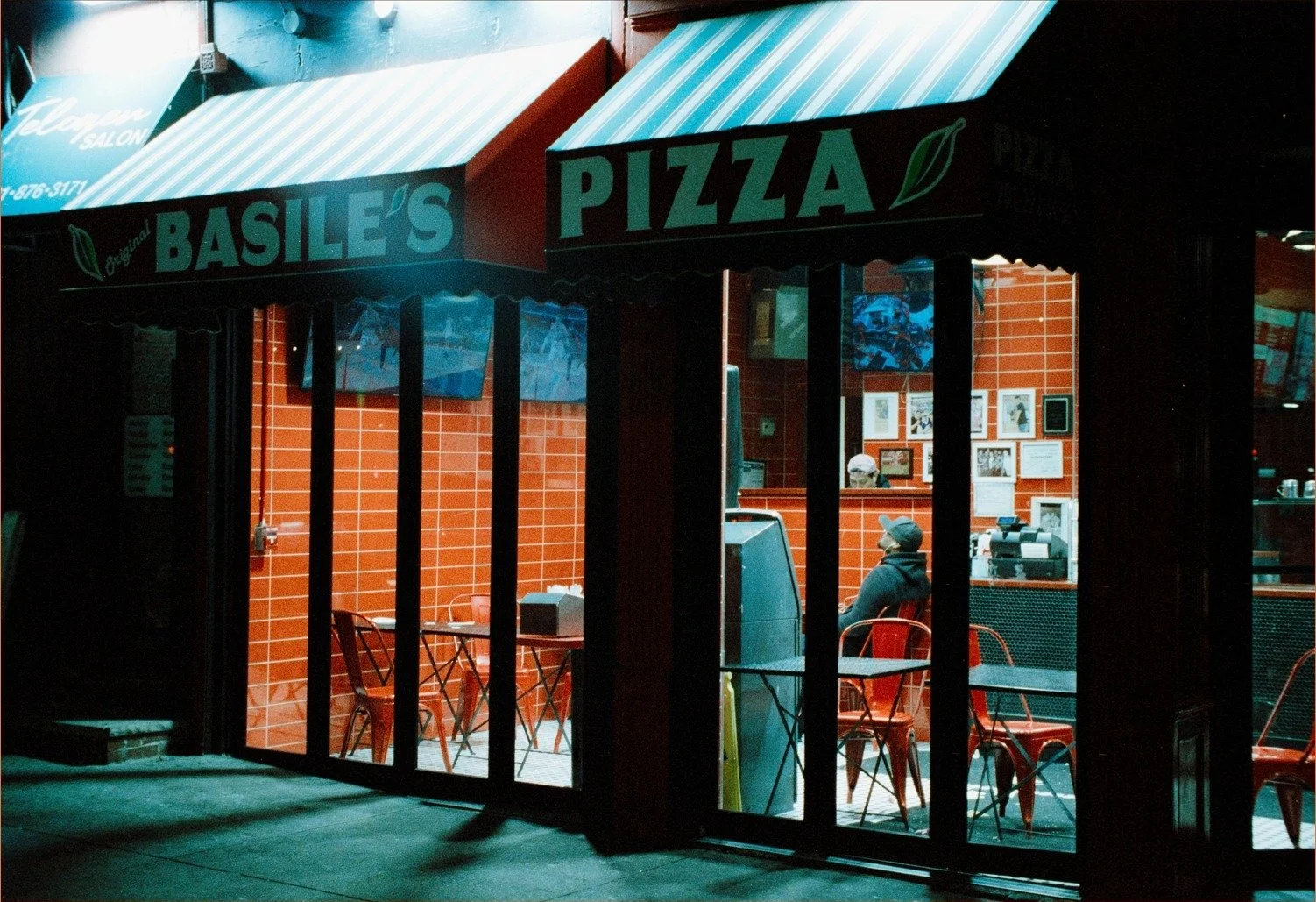
You photographed a pizzeria in Hoboken, only to learn afterward that the image reminded someone of Edward Hopper's Nighthawks. What was it like to discover a connection to an artwork you hadn't consciously referenced?
Yes, that was very interesting. I was coming back from a concert in New York with my camera. It was winter, and I took a photo of a guy in a pizzeria. I was using CineStill 800T, which is tungsten balanced. If you don't shoot it under warm, tungsten light, everything turns teal and green. Cold tones.
I came back home and developed the film. I thought it was an interesting shot, and I sent it to two friends. They instantly said, "Wow, that looks like Edward Hopper's Nighthawks." And I said, "Edward who?" I didn't know who Edward Hopper was or what Nighthawks was. It turned out I had made a picture that strongly resembles a very important painting in American culture and American history.
I thought, "Holy crap." I don't know whether I had seen it before and it was in my subconscious, or whether I had never seen it at all. But I officially met Edward Hopper's Nighthawks after I showed my photo to some friends and they told me it strongly resembled his painting.
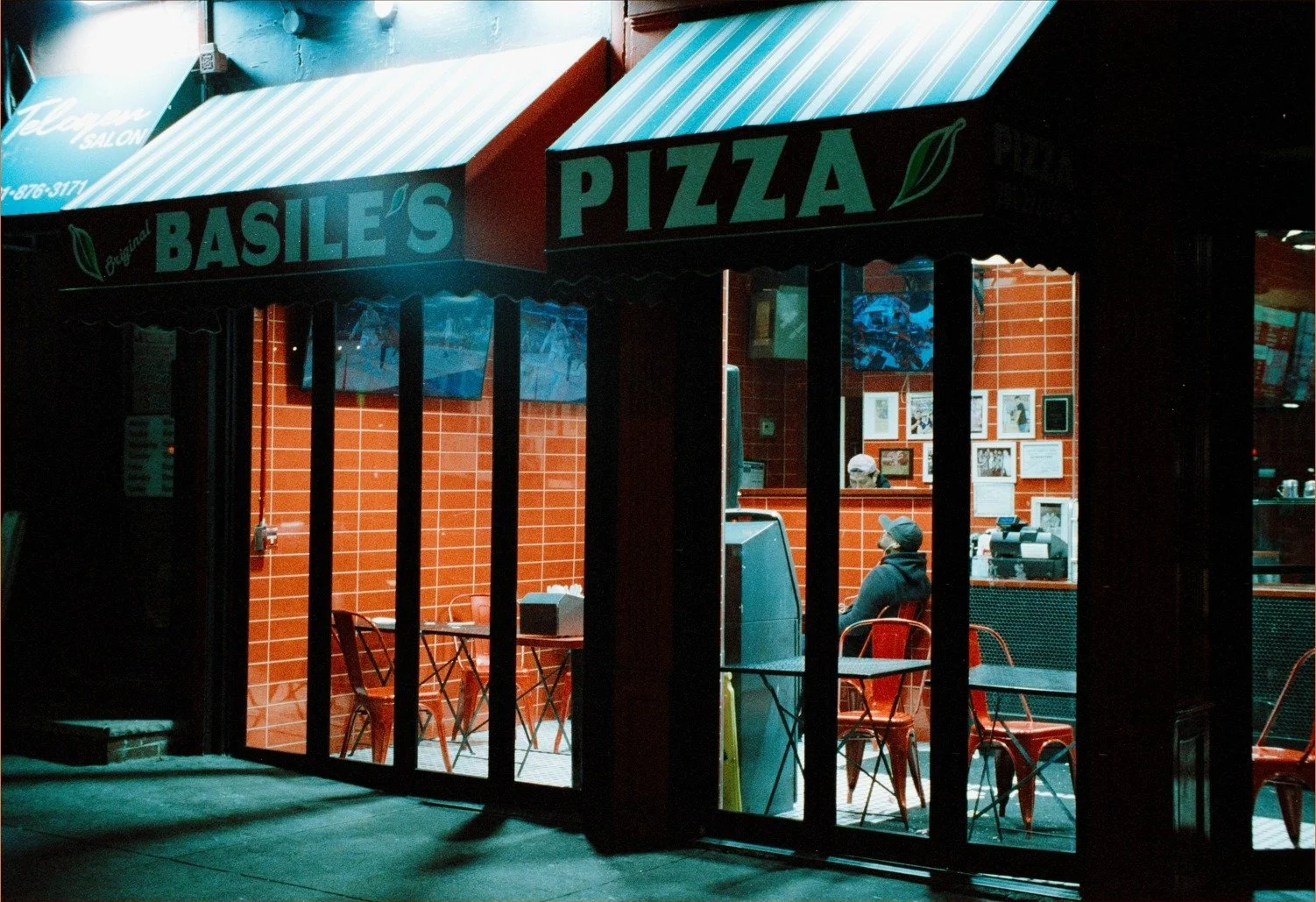
Then I wrote an article about it and explained the story. I called it "The Modern Nighthawks of 2025." It has the same elements as the painting: the solitude, the color. It was completely luck. I had CineStill 800T loaded because I was photographing a concert. It was a thirty-six-exposure roll, and I had shot about thirty. I had to finish the roll because I didn't want to develop it unfinished, so I shot those frames on my way back home. Total luck. I didn't chase that photo.
Family photographs and what is worth keeping
You have also written about scanning your family's old negatives and photographing your wife and son. How has working with photographs that carry personal memories changed the way you judge their value?
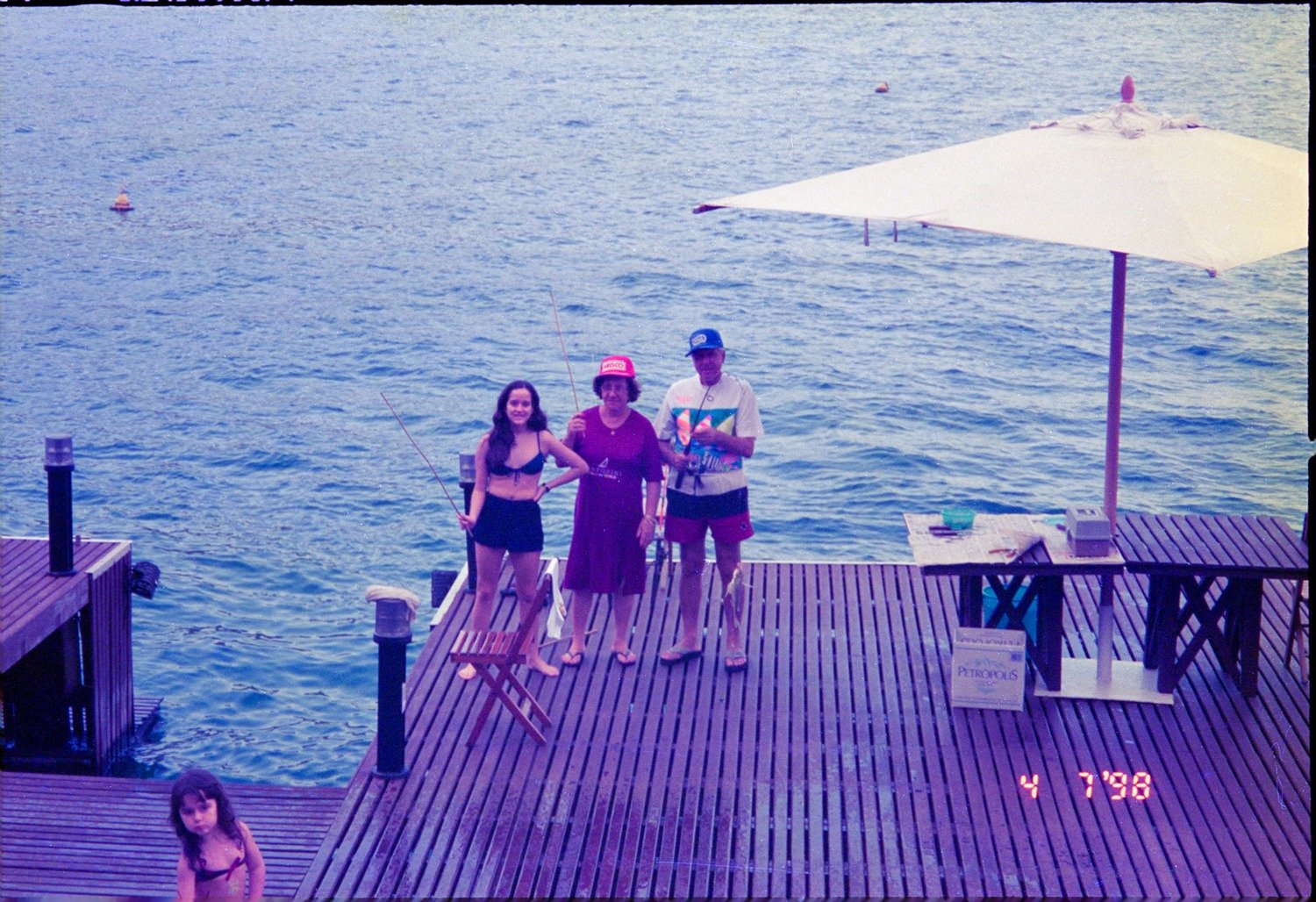
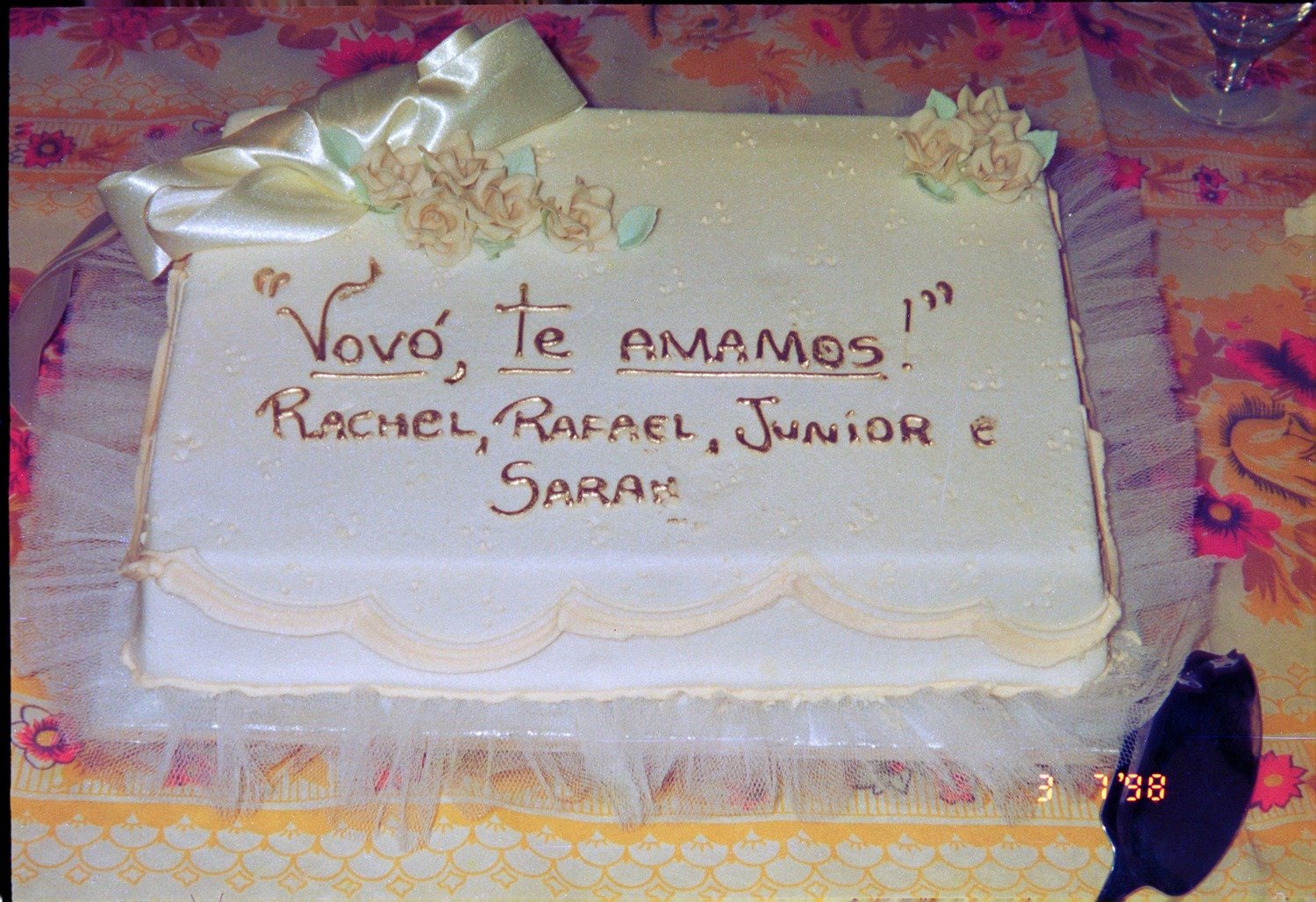
That's something cool I realized I could do once I started scanning film. I told my mom, who lives in Brazil, "Next time you visit me, bring all the negatives I know you have at home." She did, and it was great. I scanned them all.
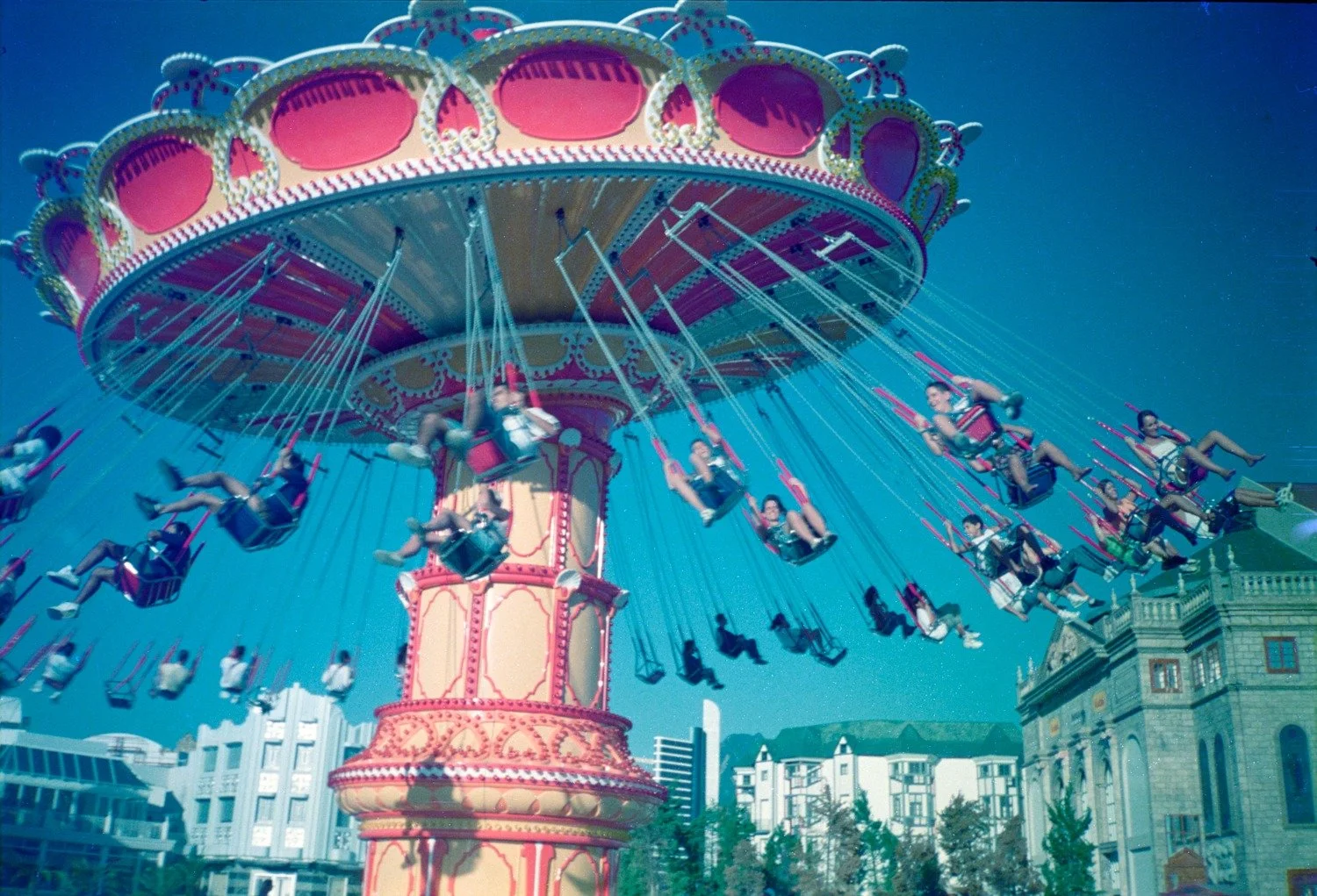
Film is a very good medium because it preserves every detail. If today, in 2026, you scan a film shot and convert it with Negative Lab Pro, you will get a photograph of the same quality as one taken thirty or forty years ago with a family point-and-shoot. So when I converted those negatives, I could see myself as a child in high definition.
For a forty-year-old, that's gold. Nowadays kids are practically born with an iPhone in their hands, with forty megapixels, and they will have high-definition memories of their childhood. But it touched me in a way that made me say, "Wow." I think I fell more and more in love with film partly because of that.
It was very cool to see my school bus and all those things, some of which I had even forgotten, because they happened when I was five or six years old. Family trips and things like that, I could now see in the same quality as a film photo taken, developed and scanned today.
After experimenting with different cameras, formats, processes and ways of seeing, what do you now look for when deciding whether a photograph is truly worth keeping?
I keep all the family photos. I can answer this with the way I rank photos in Lightroom, with one to five stars. Photos that are blurry, accidental clicks, or blurry in a way that makes you ask, "What is this?" I delete.
Family photos, I keep all of them. I give them three stars, and if they are great family photos, four stars. Photos that are artistic or great street photography go to four stars. And usually, when I see something I know will be a very good photo, I take two or three shots, choose the best ones, and give them five stars.
All that is to say that I always have my camera with me. I keep all the family shots, blurry or not, because those are core memories for me, and they will become more and more important as I age. So I keep all the family photos. Of the photos I make artistically, the three-star ones I just archive.
The four- and five-star ones are the ones I export and share. I also have lots of good photos that I keep but haven't published. I save those, especially if they follow a specific theme, for the day I have enough of a body of work for a publication.
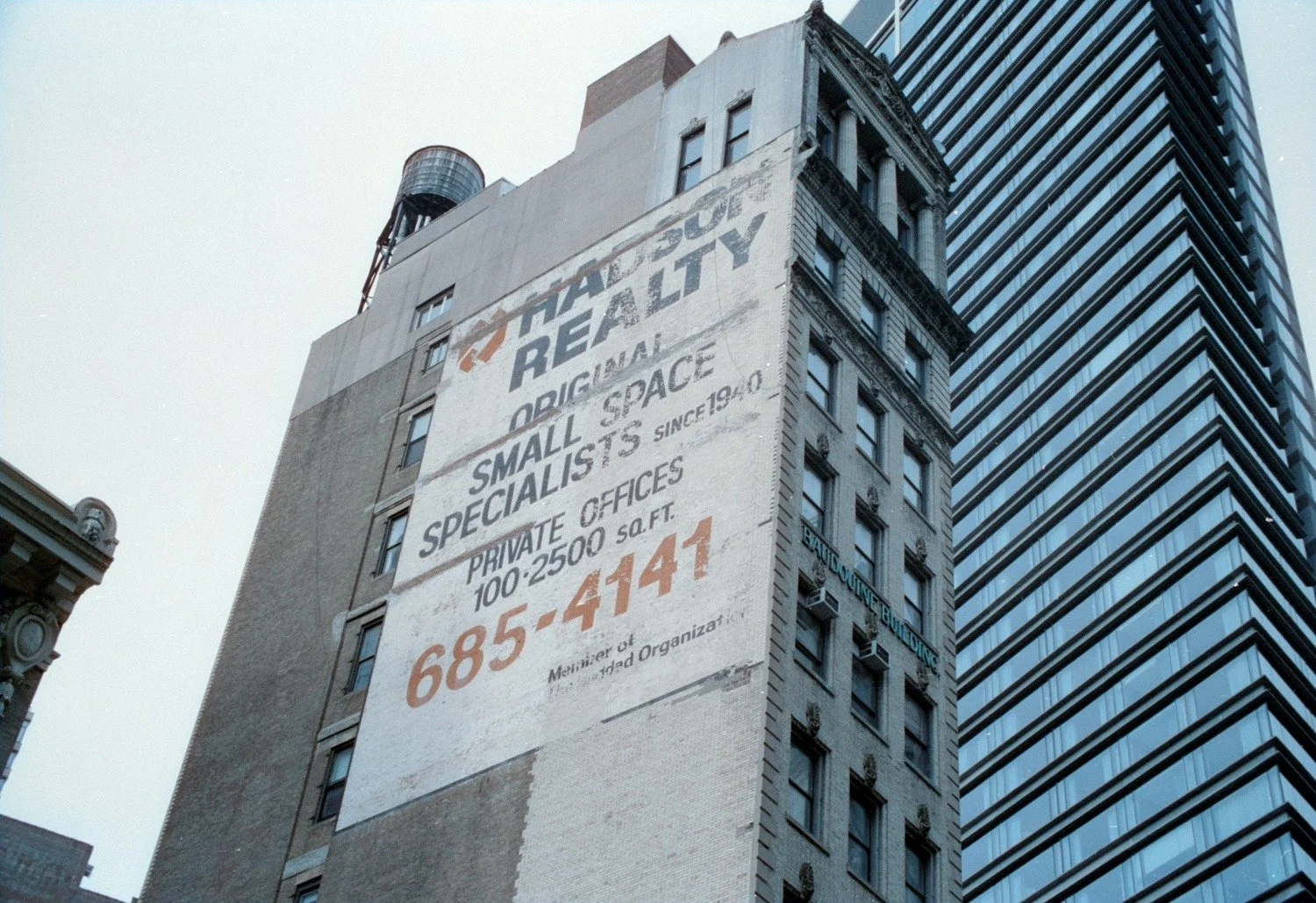
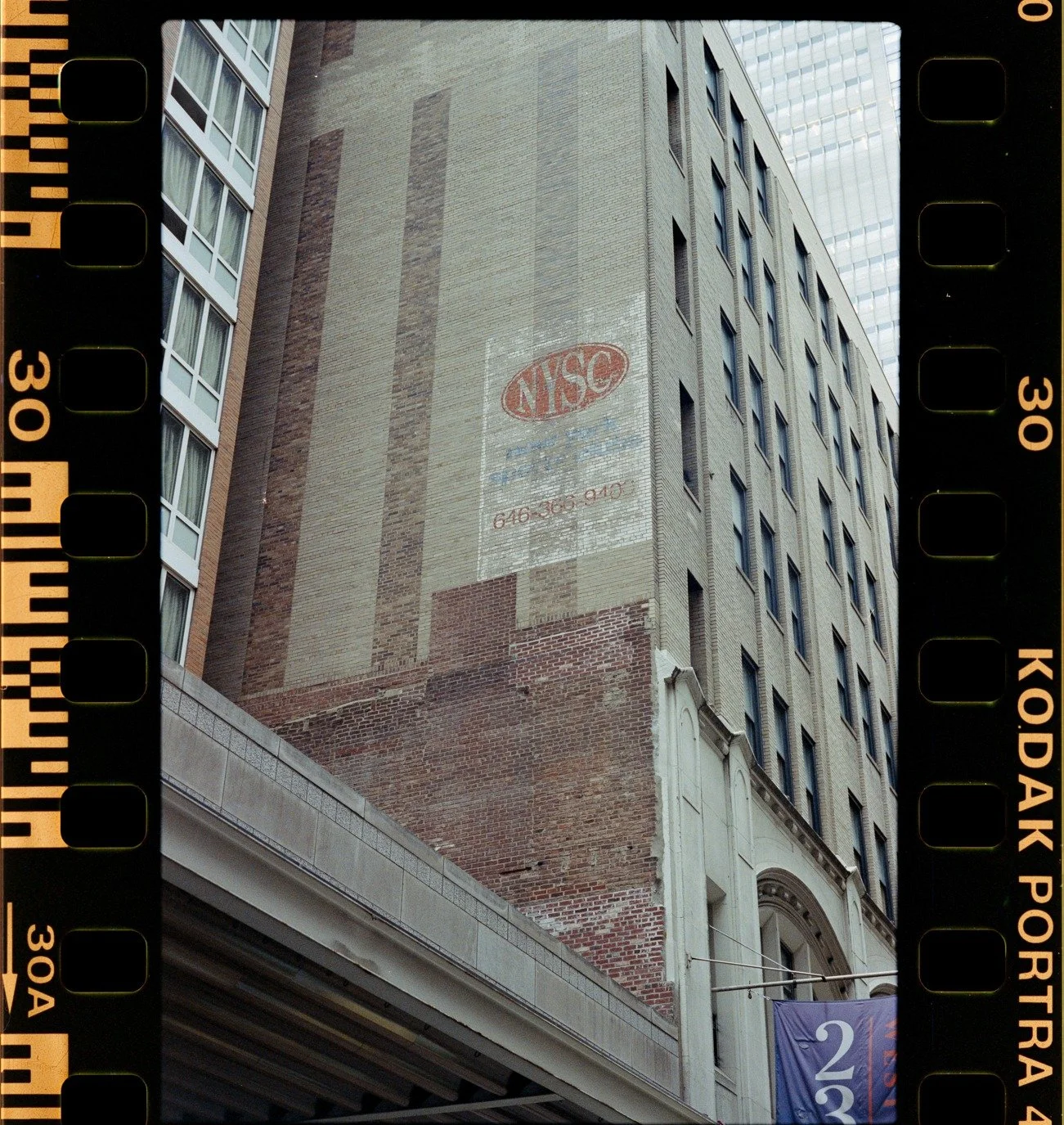
For example, in Manhattan there are lots of new signs: Times Square, LEDs, all those electronic billboards. But there are still some hand-painted signs. Every time I'm walking through the city and see one of those, bam, I take a photo. It's a documentary photo. It's not necessarily beautiful aesthetically. And I think that answers part of the question of what a good or bad photo is.
Sometimes a photo is good because it serves a specific purpose, like documenting hand-painted signs in a modern, very electronic city like Manhattan or Tokyo. Sometimes that photo is just a picture of a wall with hand-painted letters from probably fifty years ago.
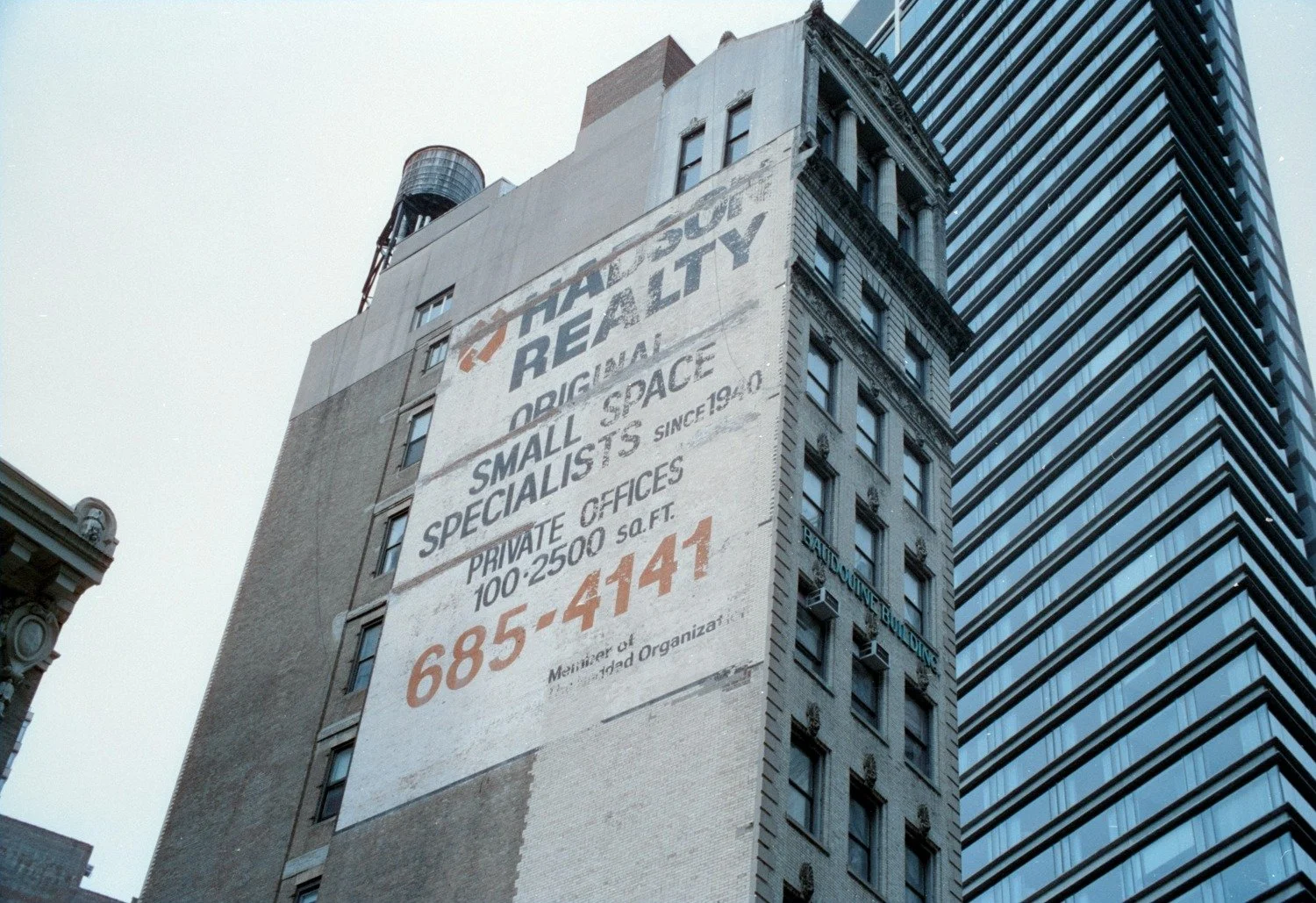
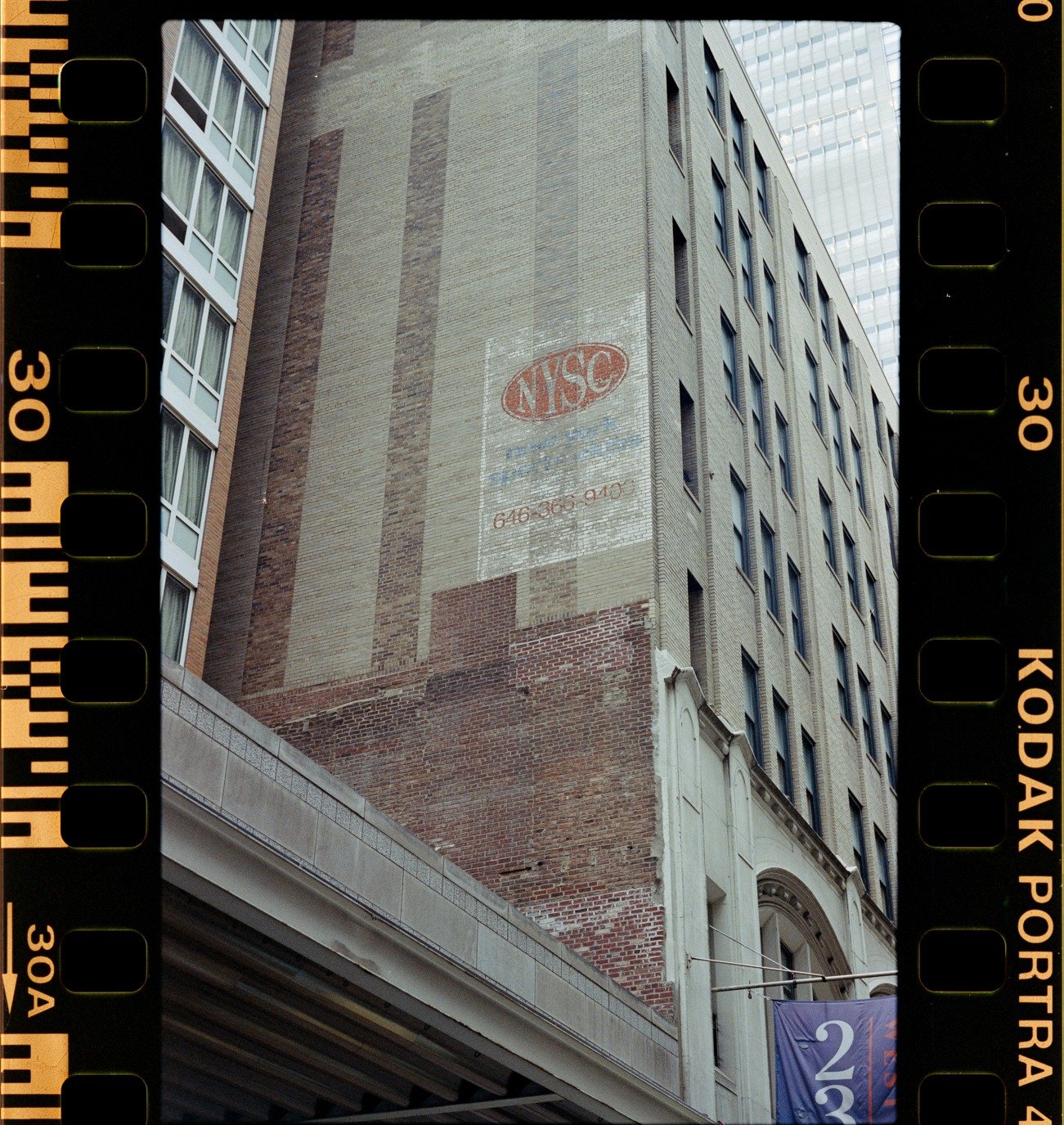
I have some themes in mind. Hand-painted walls are one of them. Another is people at a pedestrian crossing when the signal is one second from changing. Another is the subway and halation: the New York subway on CineStill 400 or 800, with the halation, which is the glowing effect around the lights. I have about one hundred and fifty of those shots. I keep saving photos into these slots, and from time to time I check whether there is enough material, enough of a body of work, to do something with it.
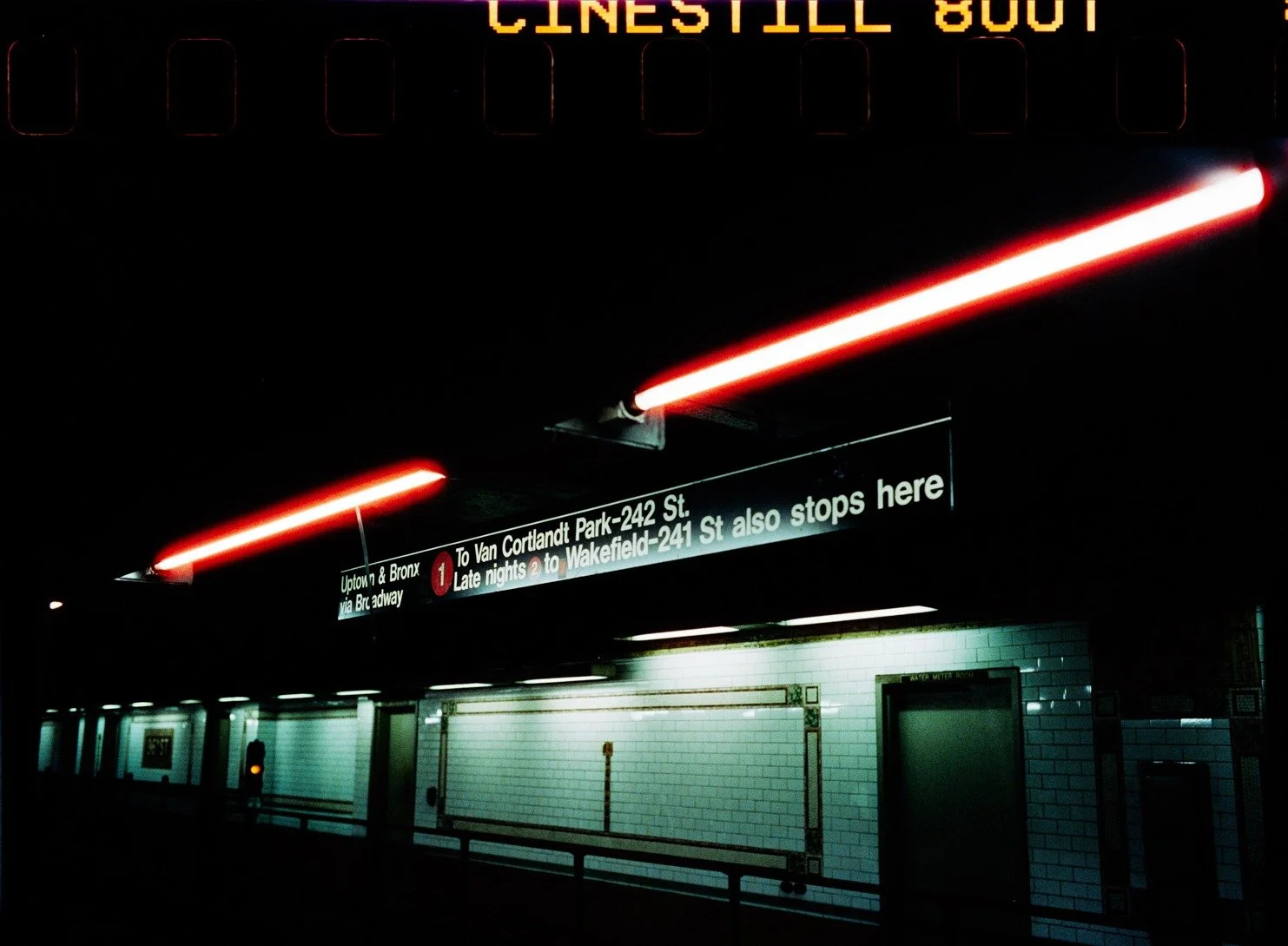
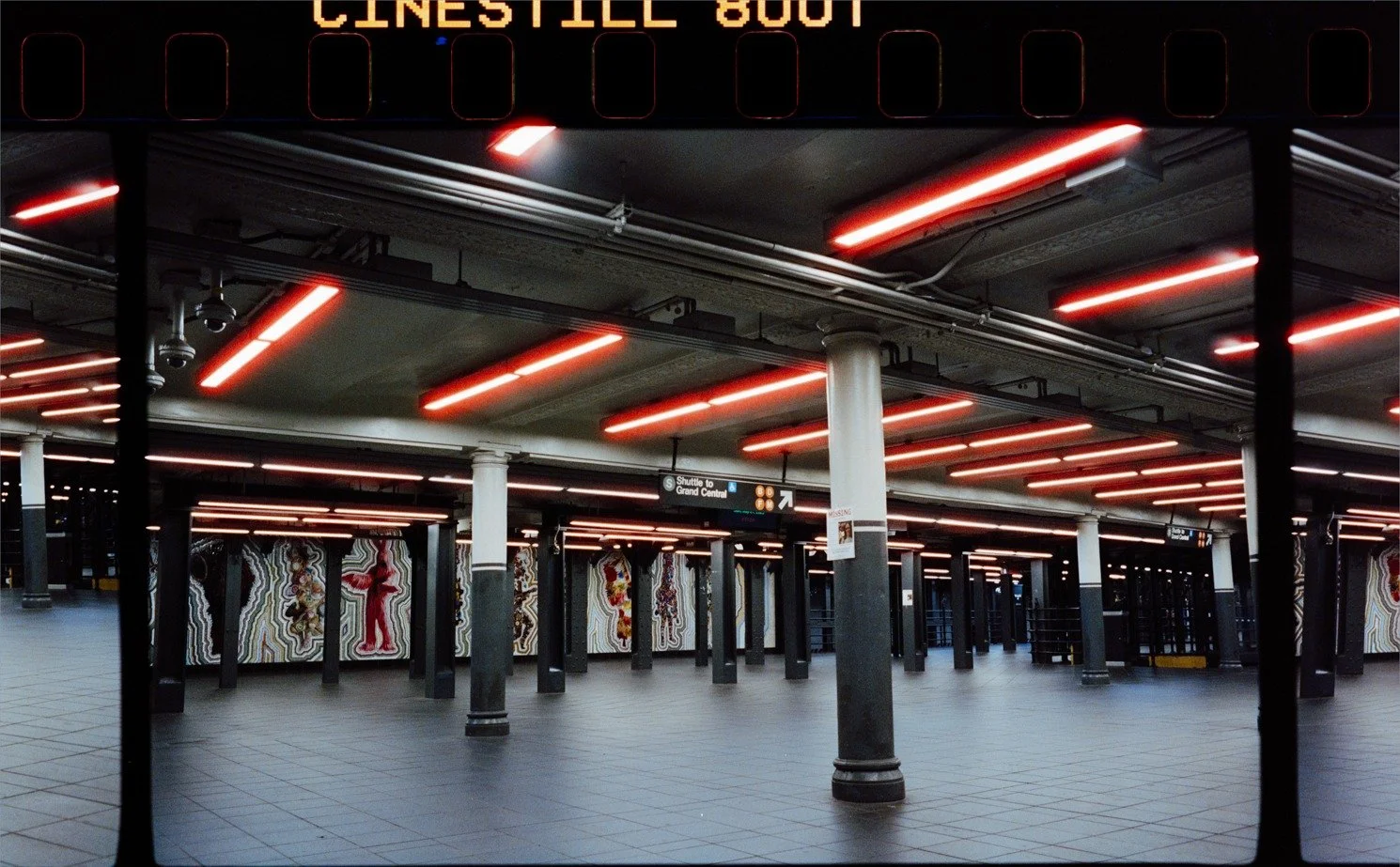
So sometimes a photo is not technically good, but it serves the purpose of documenting something peculiar that I have been chasing for a while. That's how I catalog and organize things.
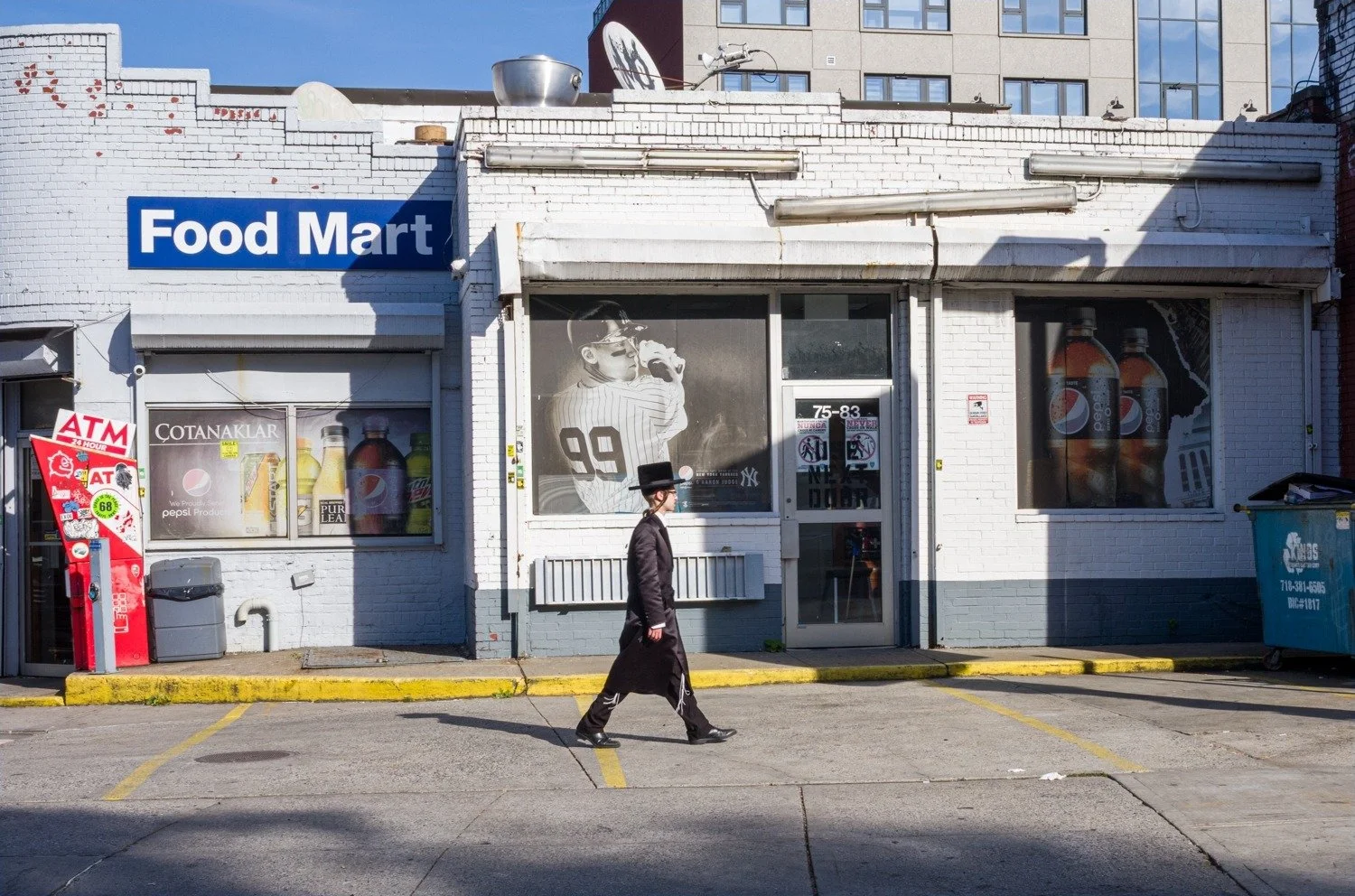
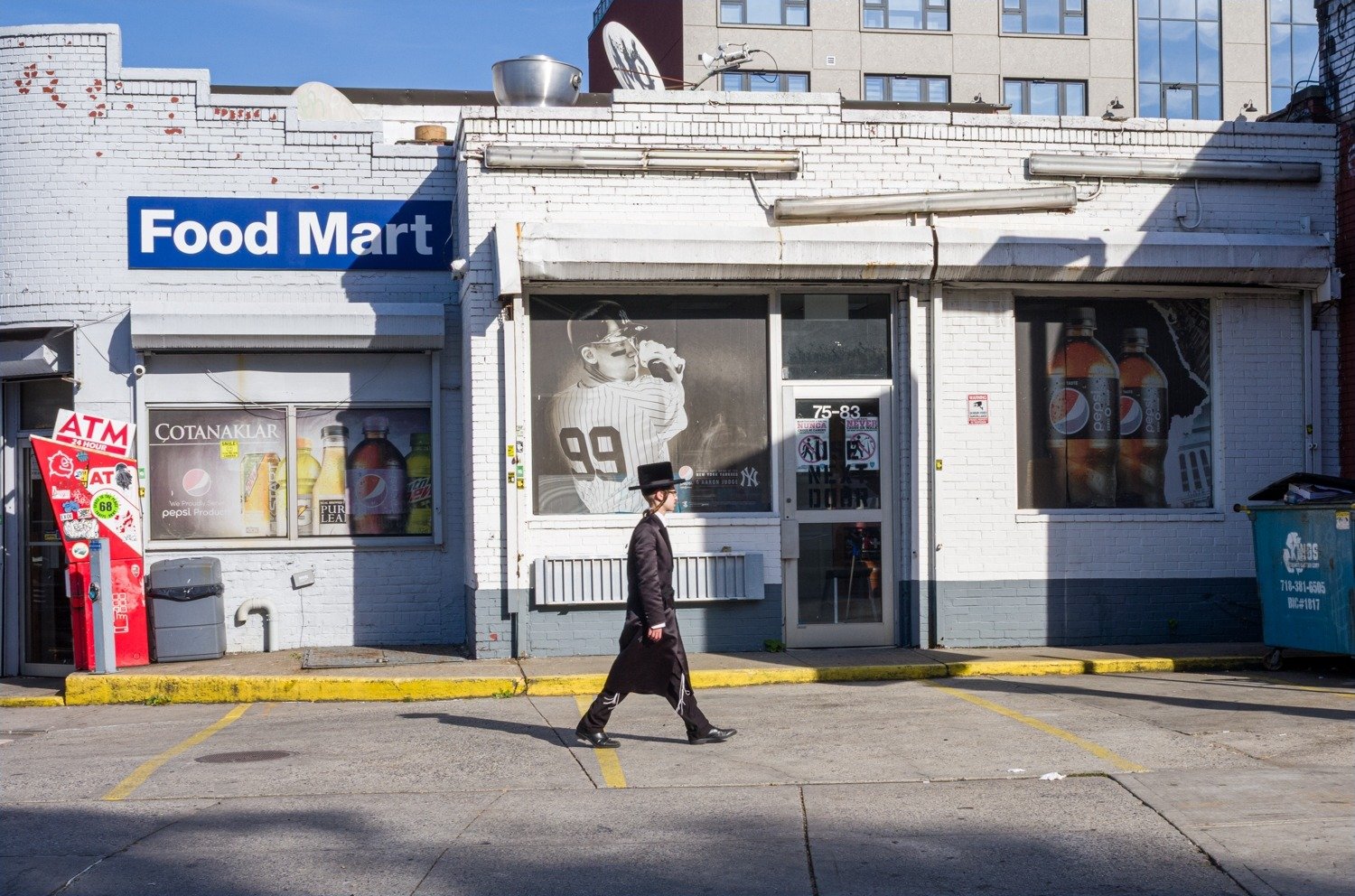
Then there are what I call the five stars, the truly unique ones. Those are the ones I have a lot of story to tell about. The modern Nighthawks is one. There's another of a Jewish man crossing the street in perfect juxtaposition, with his walking legs placed just right, the character right in the middle of the frame, well composed. Those are the ones I would put in a street photography portfolio, if I had such a thing.
And now there are the portraits of people working in coffee shops that I am collecting. I think a photographer is a big collector. It might sound like a cliché, but a photographer is a collector of moments. A good photographer with a lot to show is no different from someone with a vinyl collection. When you go to that person's house, you can see all their records, the rare ones, the cool ones, the ones they bought on a trip, and they have a story to tell about each one. I think photographers are collectors.
Some of them are hoarders. They collect too much and start collecting too many random things. I think there is a little bit of a hoarder in every photographer.
Thank you very much for your insight and for joining me for this part of the interview.
Cool. I'm very glad to participate.
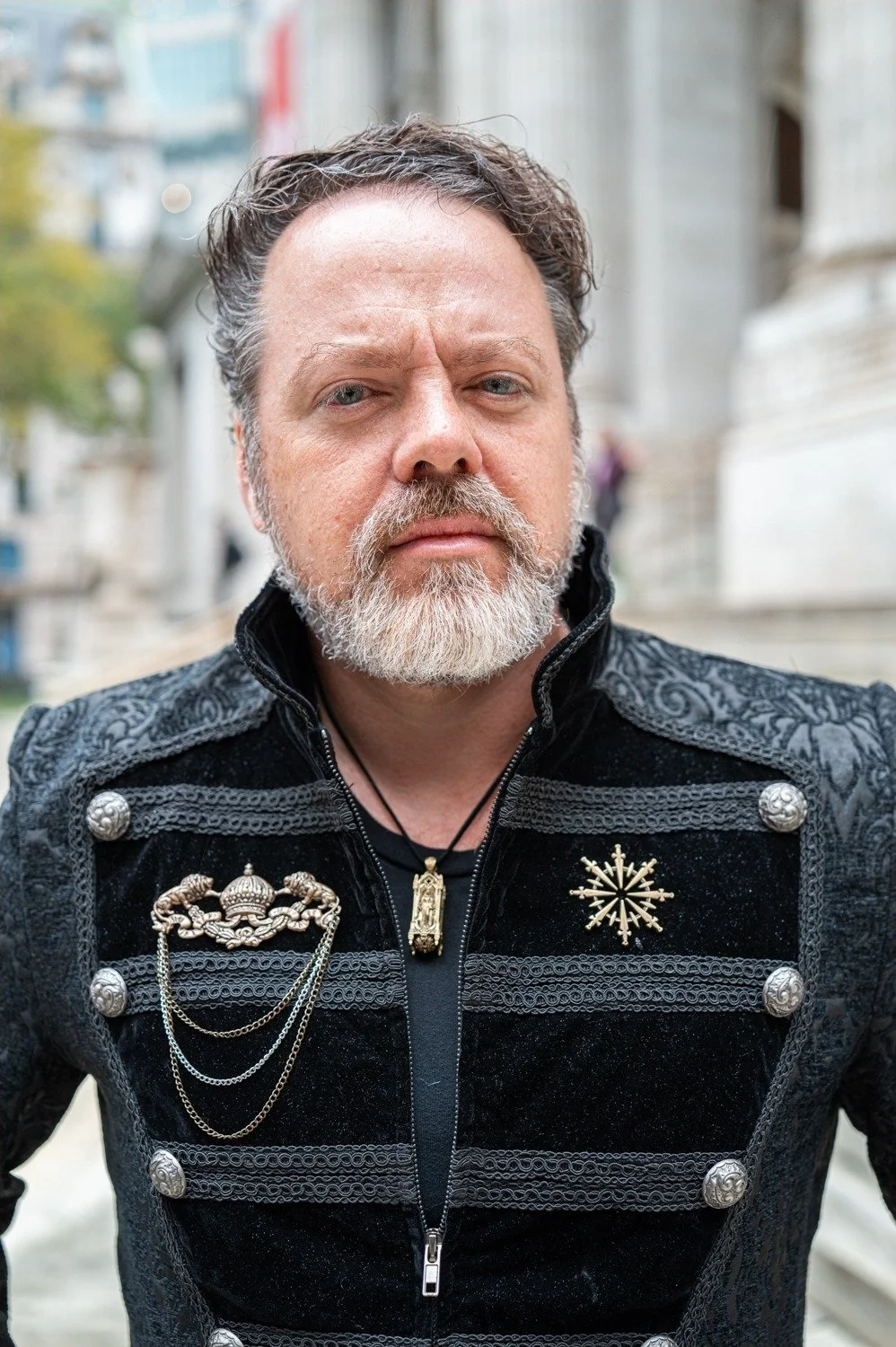
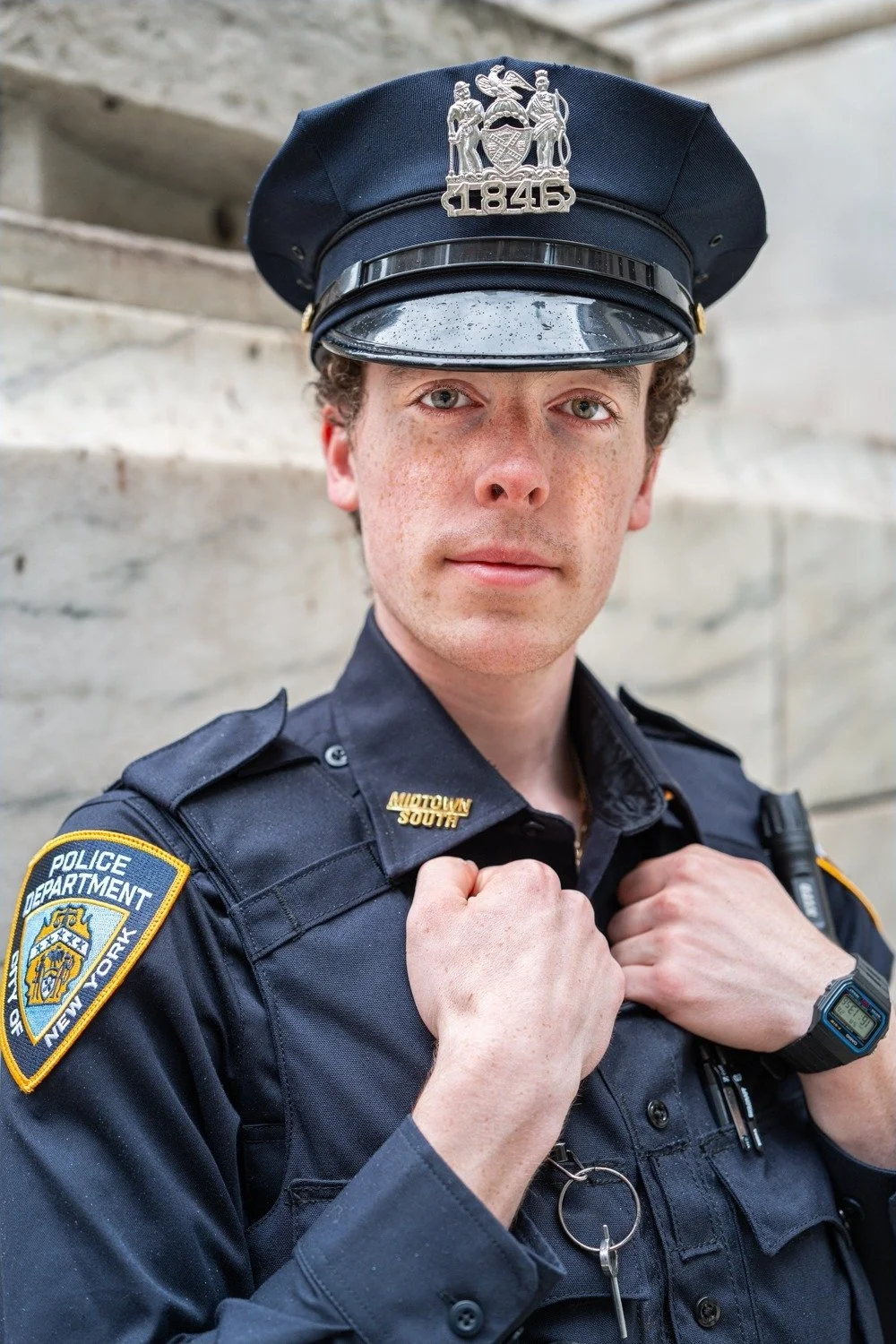
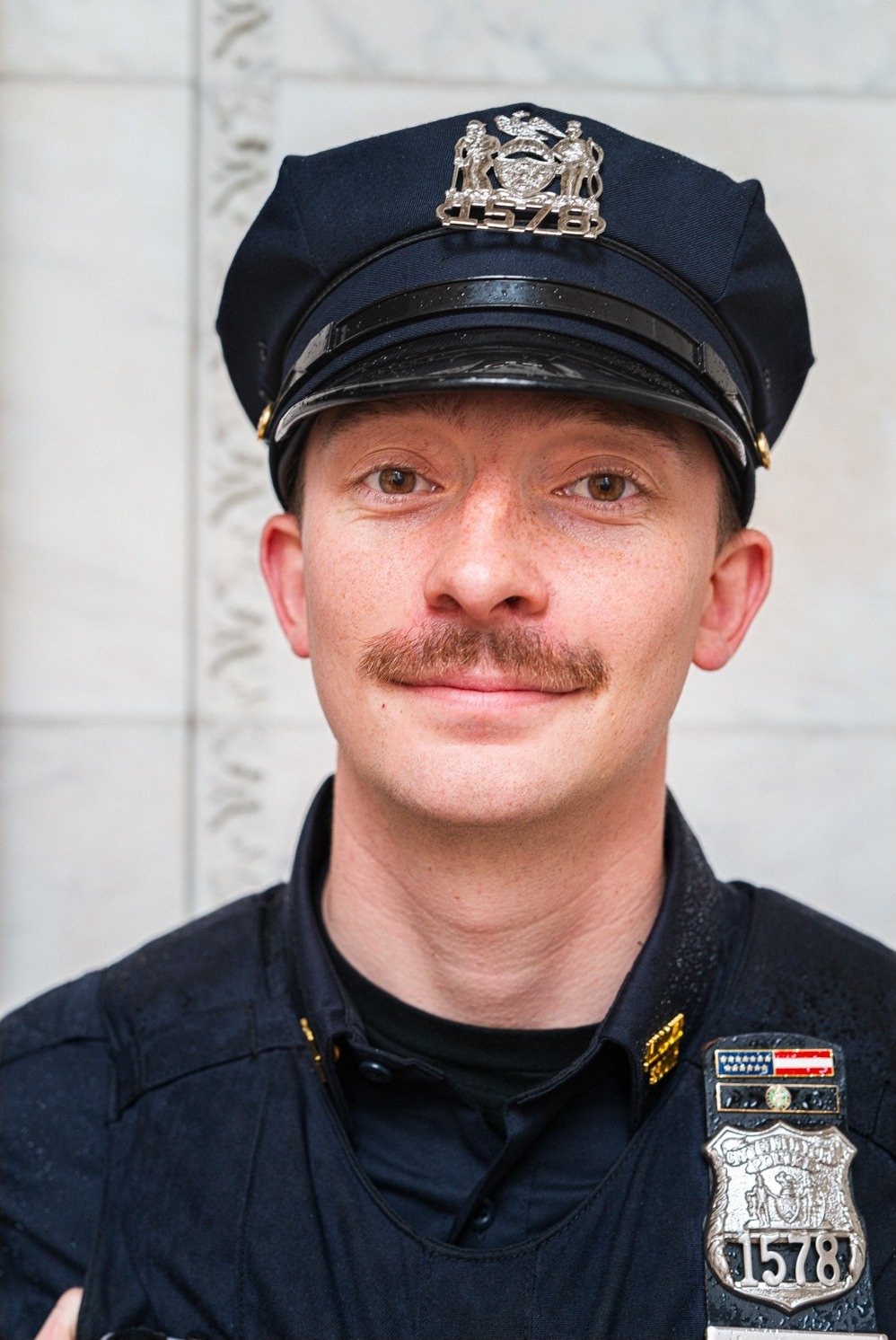
Raf Lopes adapted his photography to each new lens he bought.
Film did the opposite. It limited him to a few looks, and that helped him find his visual identity.
“When you shoot film, the number of looks you have is limited to the film stocks you use. You have Portra, Fuji 400, Ektar, Kodak Gold and CineStill, and the ones you buy. So it's four or five looks. Then it's easier to see which of those four or five you like most.”Raf Lopes
Fewer choices can show you your own style sooner. What could you limit in your own photography?
We'd love to read your comments below, sharing your thoughts and insights on the artist's work.
