‘Roadside Lights’ in the Blizzard: Eiji Ohashi’s Journey Through Japan’s Frozen Nights
Welcome to this edition of [book spotlight]. Today, we uncover the layers of 'Roadside Lights,' by Eiji Ohashi (published by Case Publishing, sold by shashasha). We'd love to read your comments below about these insights and ideas behind the artist's work.
One night in Hokkaido, a glowing vending machine saved him.
He was lost in a snowstorm and could not see where to go. Then he saw the soft light of a vending machine in the distance, and it helped him find his way back. That small moment stayed in his mind for years. It became the starting point of a project that turned cold nights and lonely roads into quiet scenes of beauty.
More than fifteen years later, Eiji Ohashi is still out there, waiting in the snow.
He photographs vending machines standing alone in the dark, each one shining against the white storm. What began as a simple document of everyday Japan has grown into a long study of light, solitude, and hope. His pictures are not about machines but about people who keep going even when the world feels frozen.
Sometimes the most human images are of machines, not people.
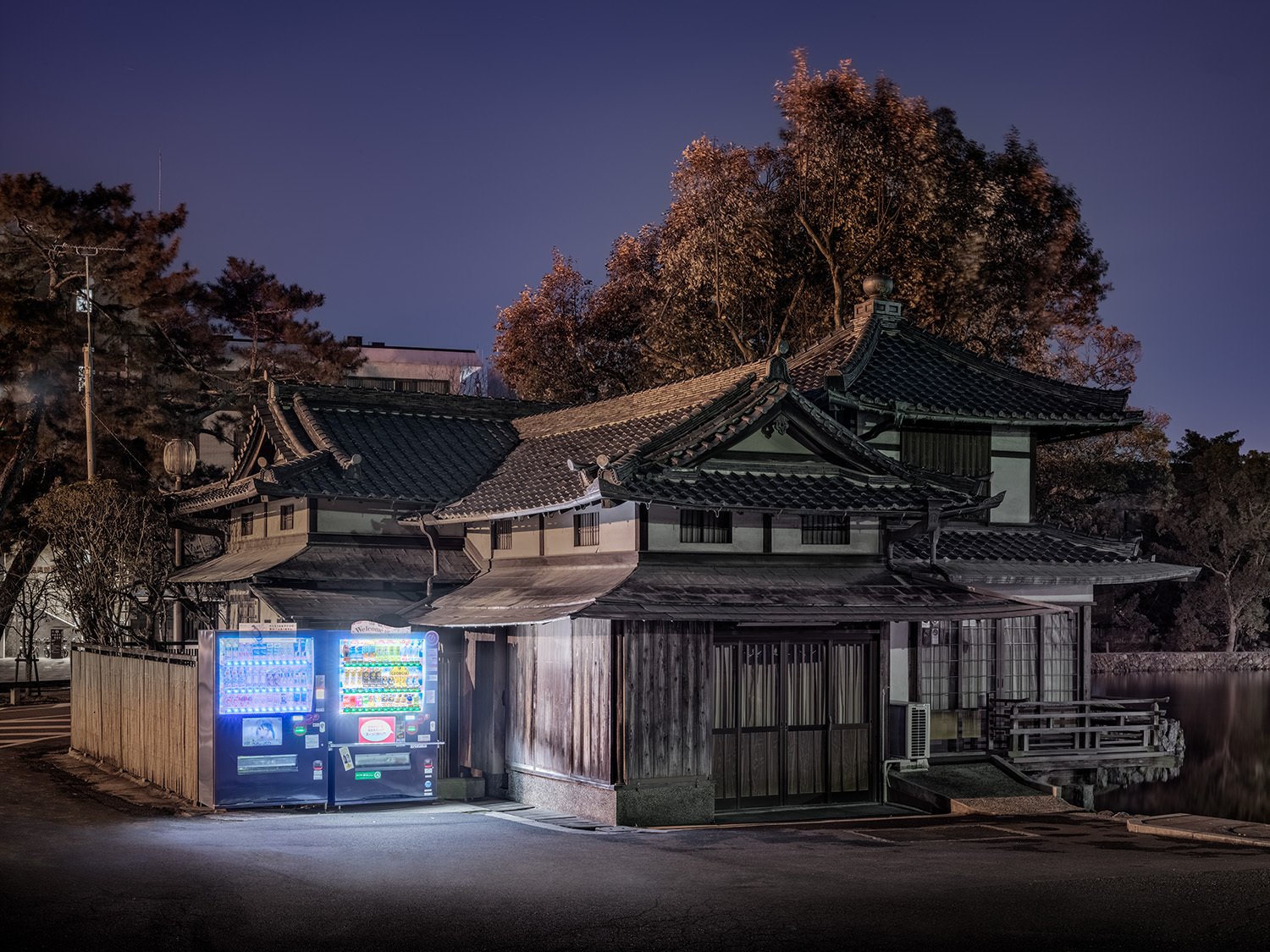
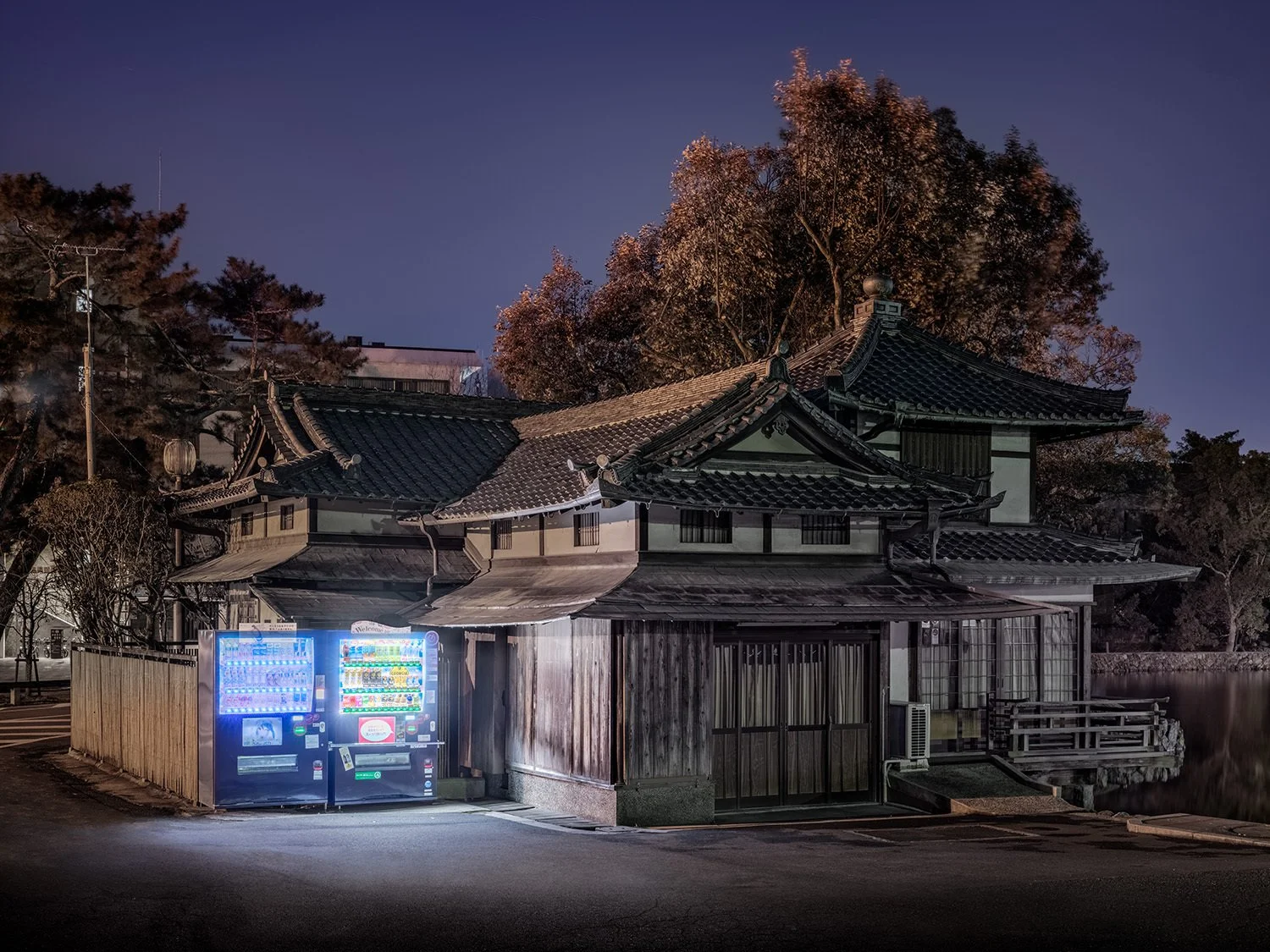
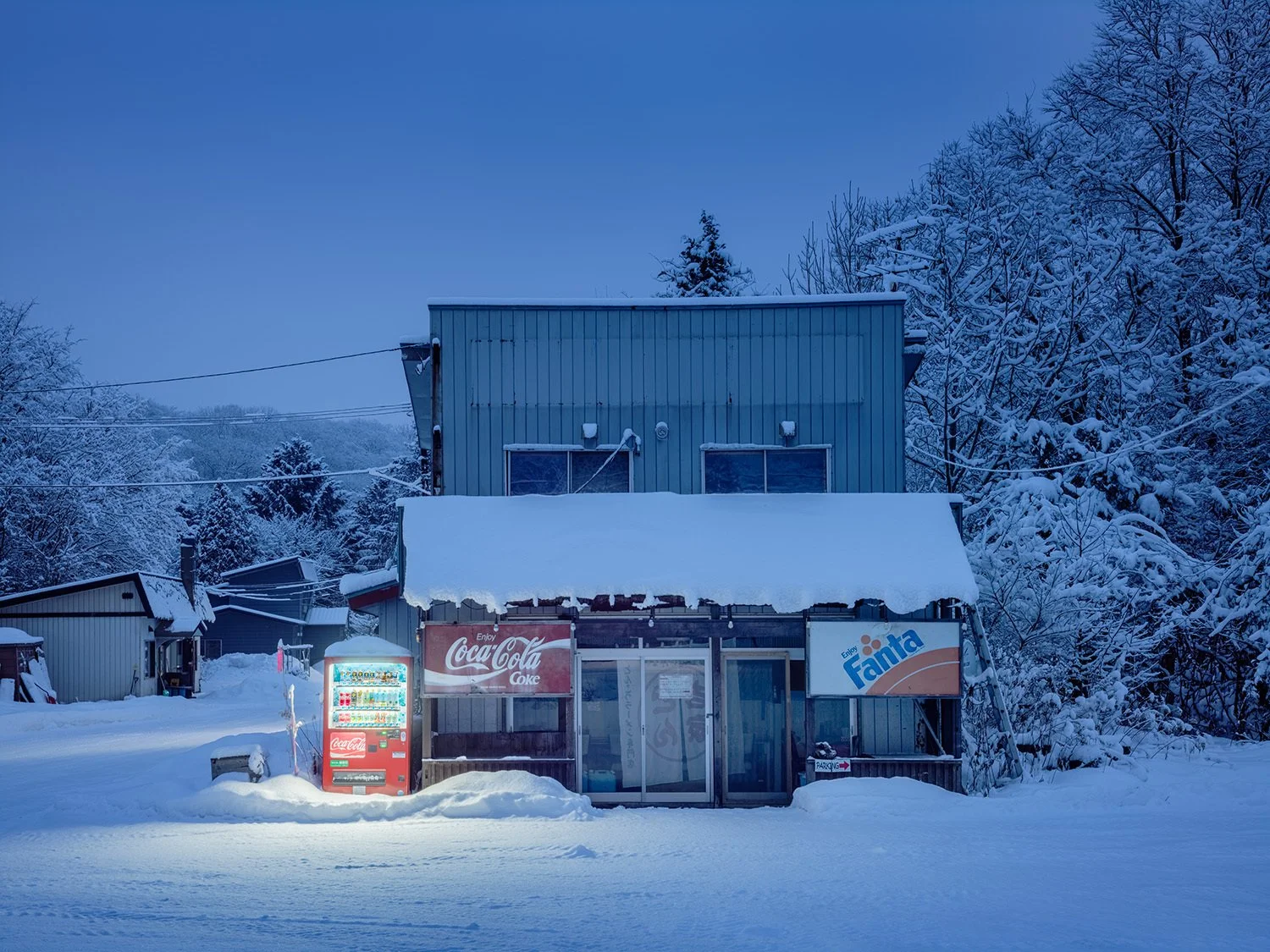
Glowing vending machine next to a classic Japanese house.
The Book
Roadside Lights 2020-2025 captures the latest evolution of Eiji Ohashi’s groundbreaking visual exploration of Japan’s everyday vending machines set against the stark winter nights of his native Hokkaido. Over a 112-page volume featuring 80 carefully composed images, Ohashi frames these machines, quiet sentinels of modern convenience, as unexpected icons of endurance, loneliness and hope in freezing isolation. Published in 2025 by Case Publishing, the book sharpens his long-running “landscapes with vending machines” series with renewed focus and refined composition. (shashasha, Amazon)
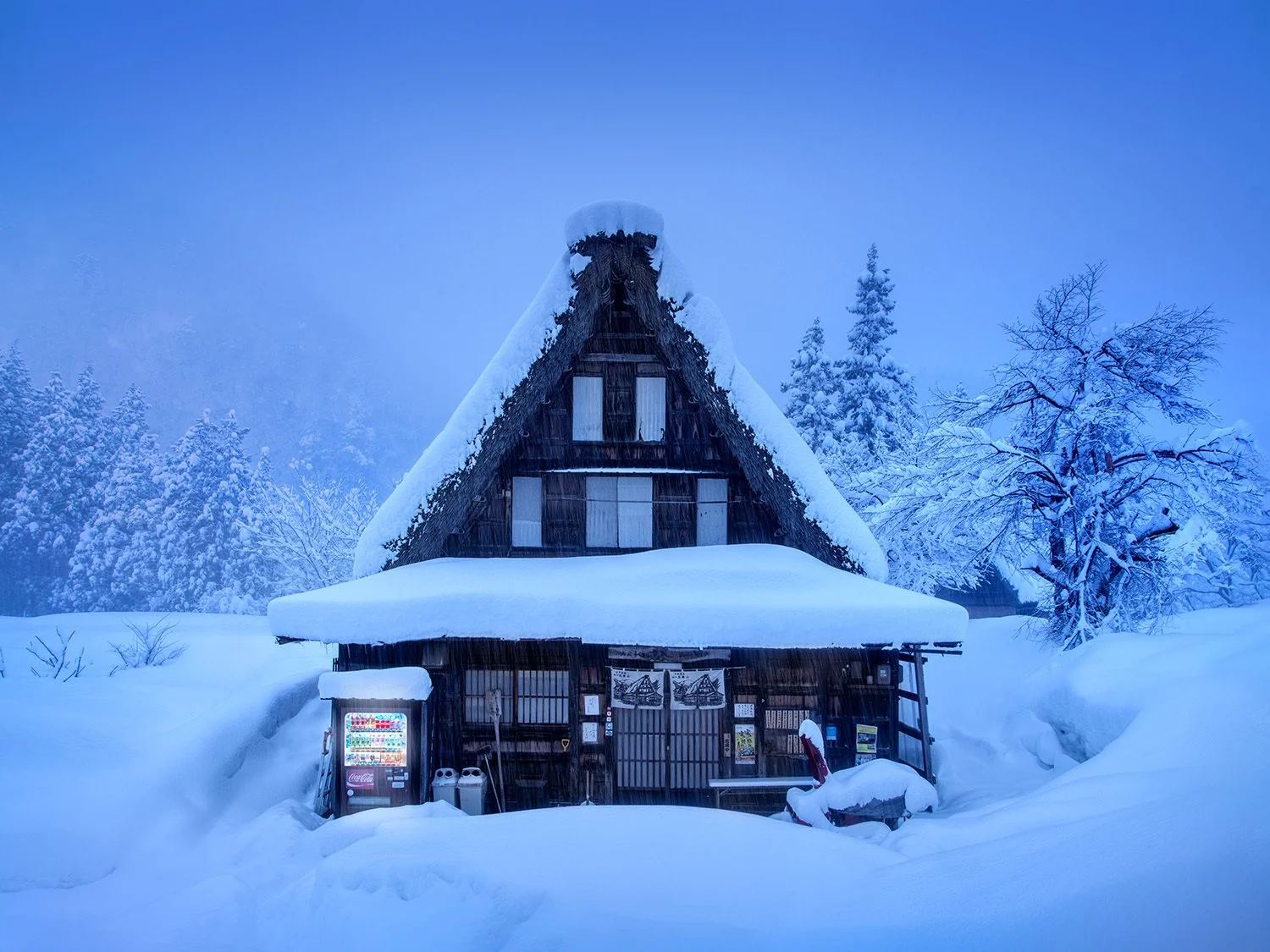
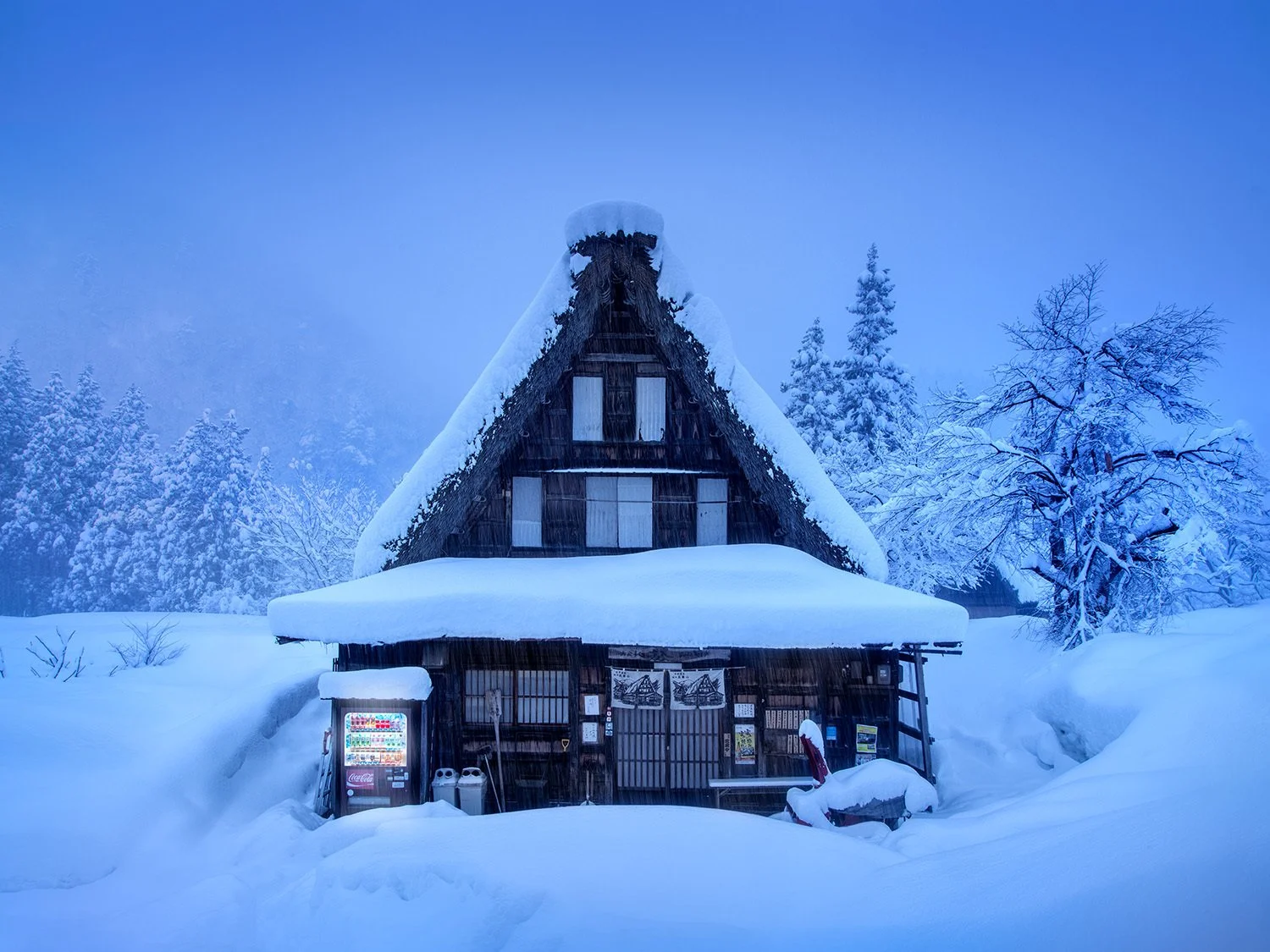
A cozy Japanese cottage surrounded by snow.
Project Start: What happened during that snowstorm in 2008 that made you want to photograph vending machines?
It was actually the experience of being caught in a blizzard that made me notice vending machines as an icon. Before that, landscapes with vending machines were just part of everyday life. I think everyone living in Japan shares this feeling. But when I got lost in that blizzard and couldn't figure out where I was, I saw the familiar glow of a vending machine and it helped me locate myself. From that moment, I developed a deep attachment to them.
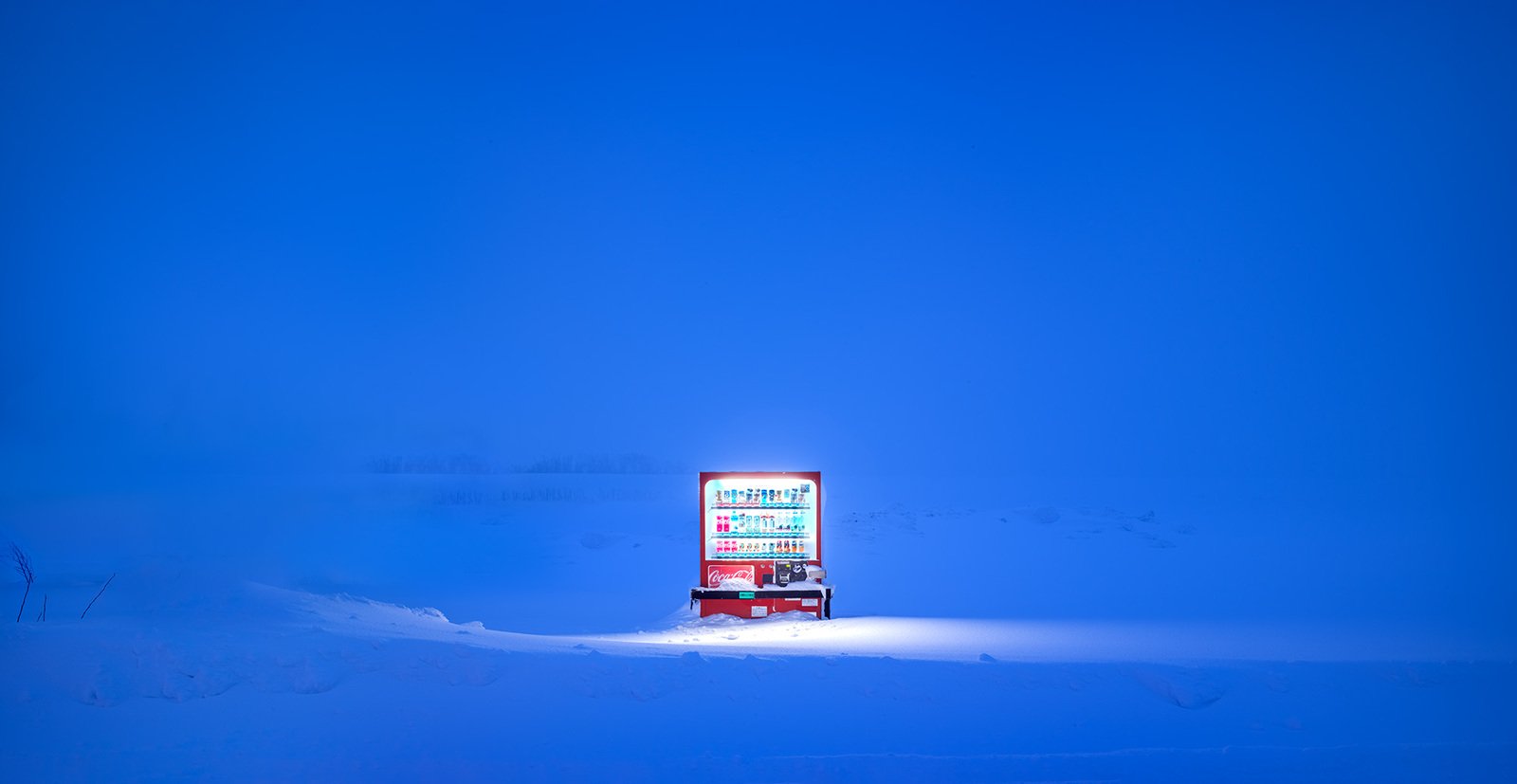
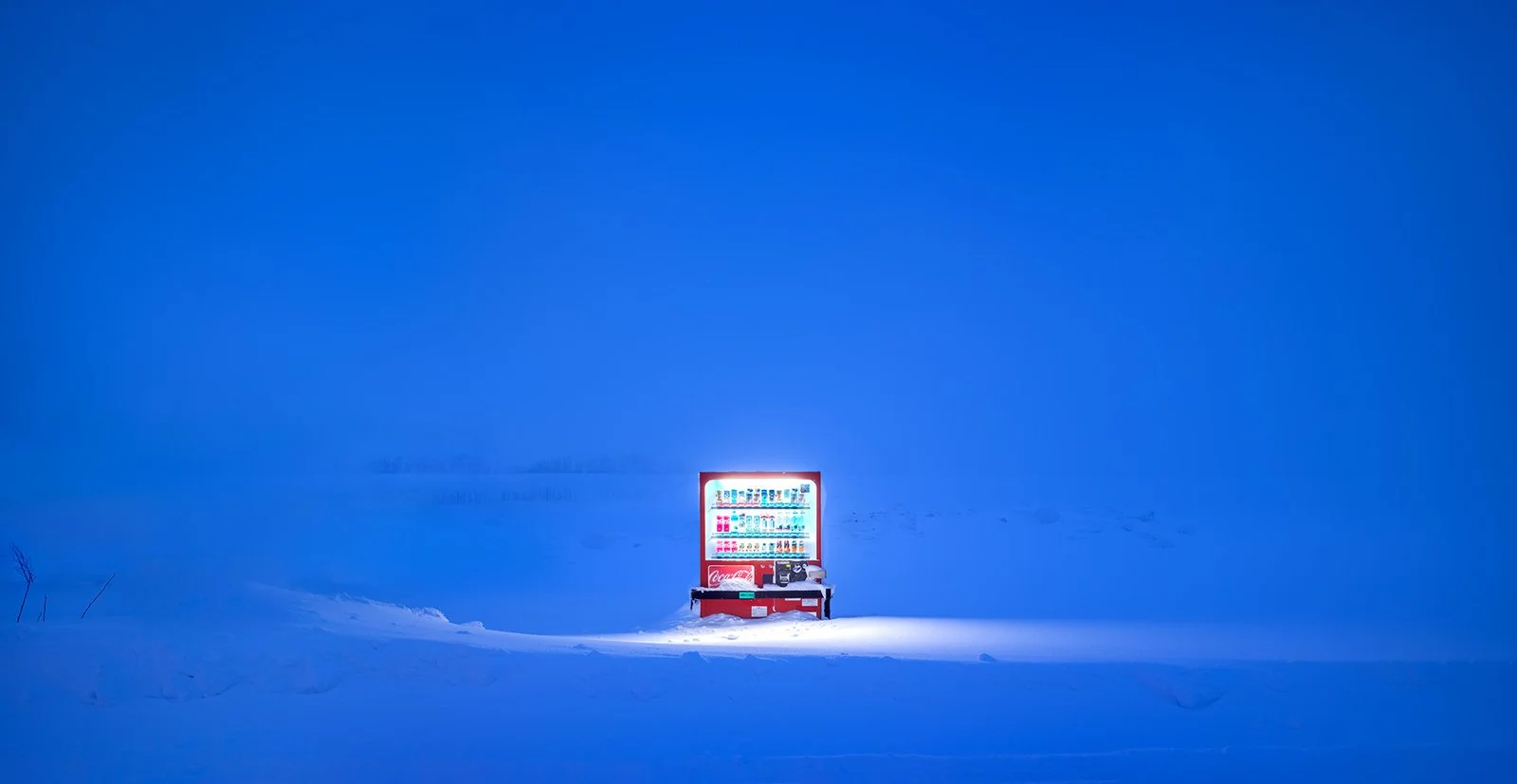
A lone vending machine in a storming blizzard.
Night Shooting: How do you take clear photos of vending machines in heavy snow and darkness?
I always shoot vending machines with long exposures of 5 to 10 minutes. This has been consistent since I started with black and white film. With digital cameras, I also set the ISO to the lowest possible setting to get the camera's best performance. The sufficient exposure time allows me to capture fine details.
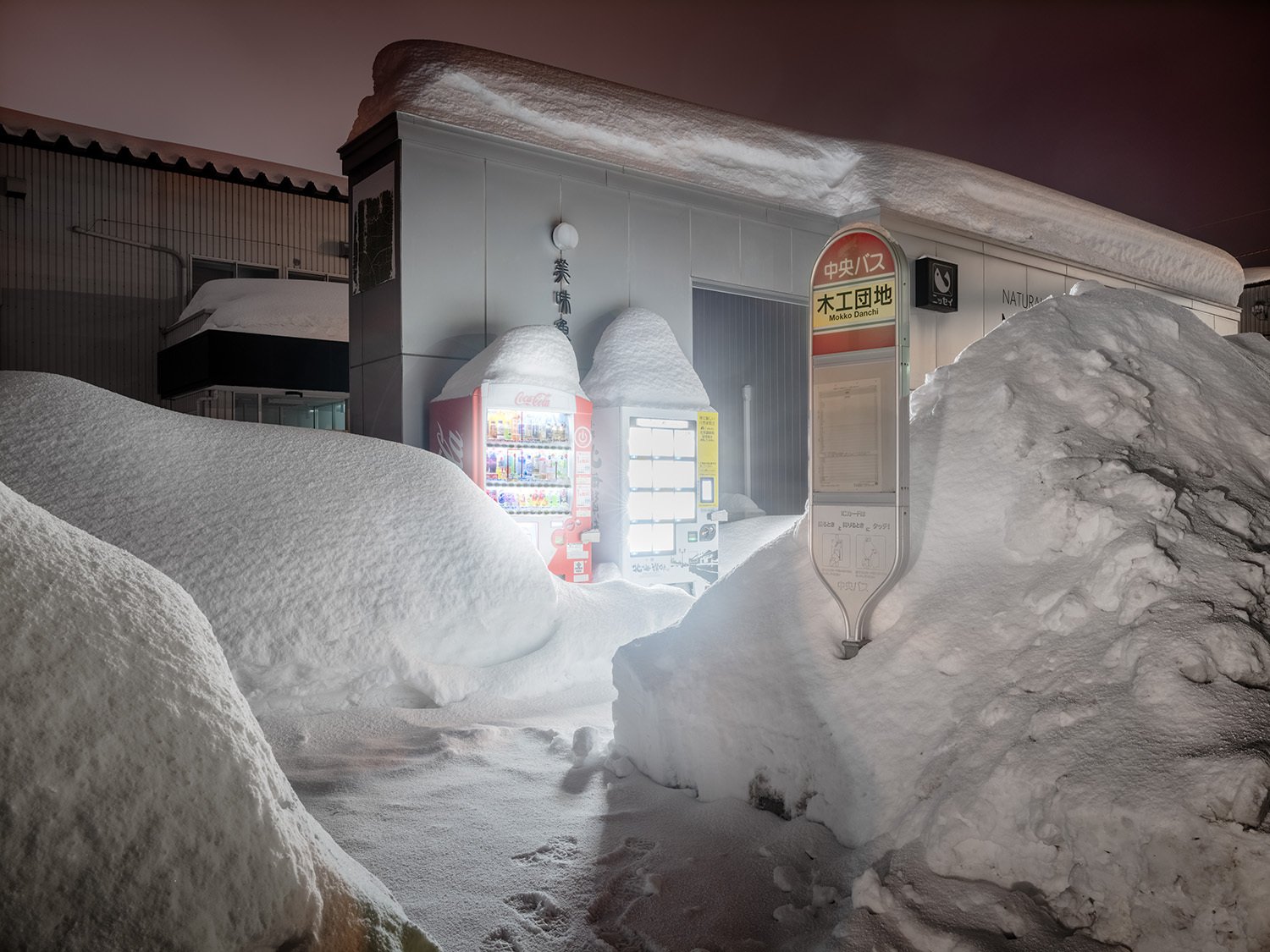
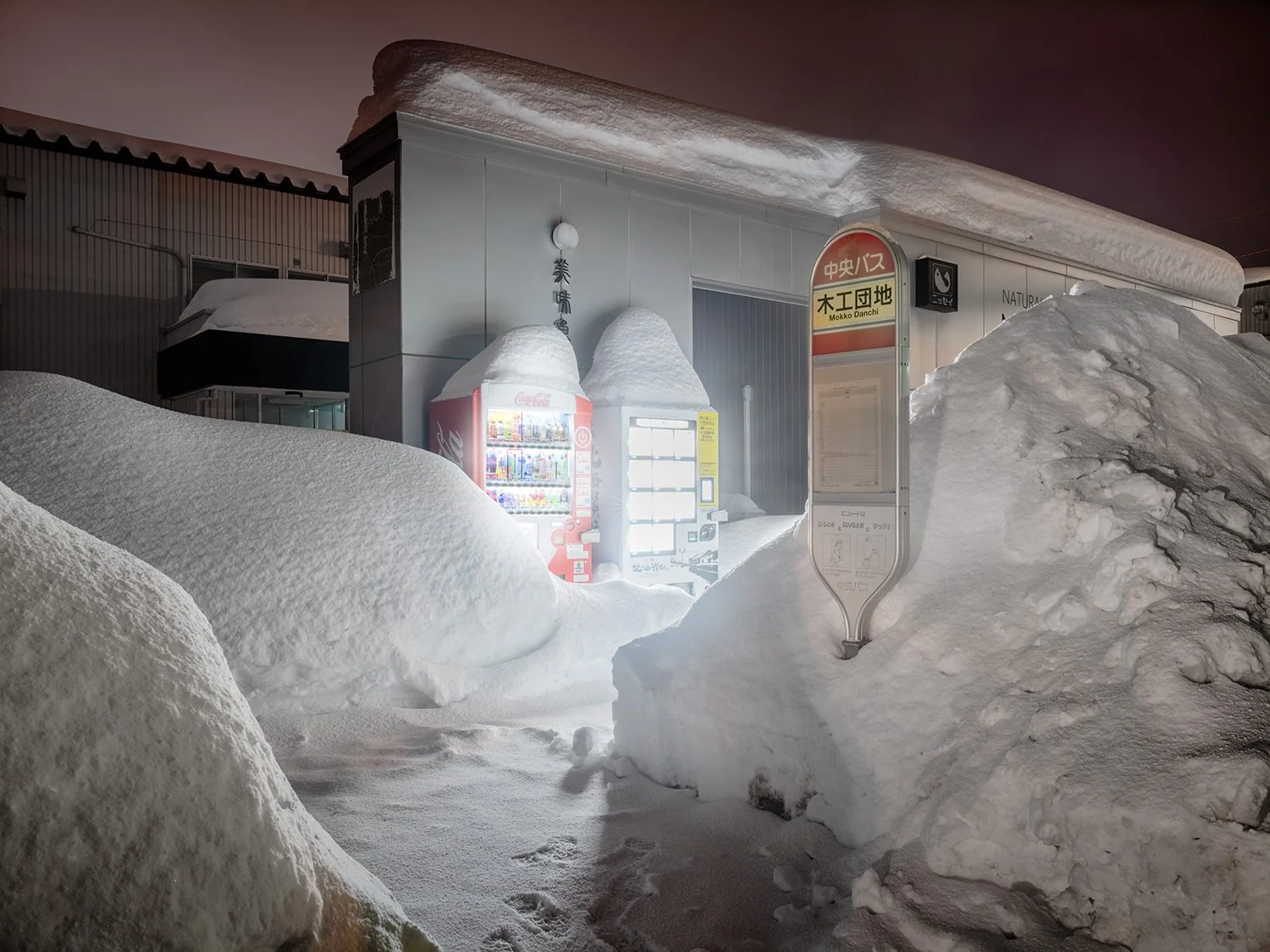
Japanese bus station covered by snow.
Finding Subjects: Do you plan which vending machines to photograph, or do you just drive around until you find interesting ones?
Yes, I scout everything in advance. I get a lot of information from friends, and I use Google Street View to confirm locations. I also check the sunrise time and direction. Most importantly, I check snow conditions online. That's crucial.
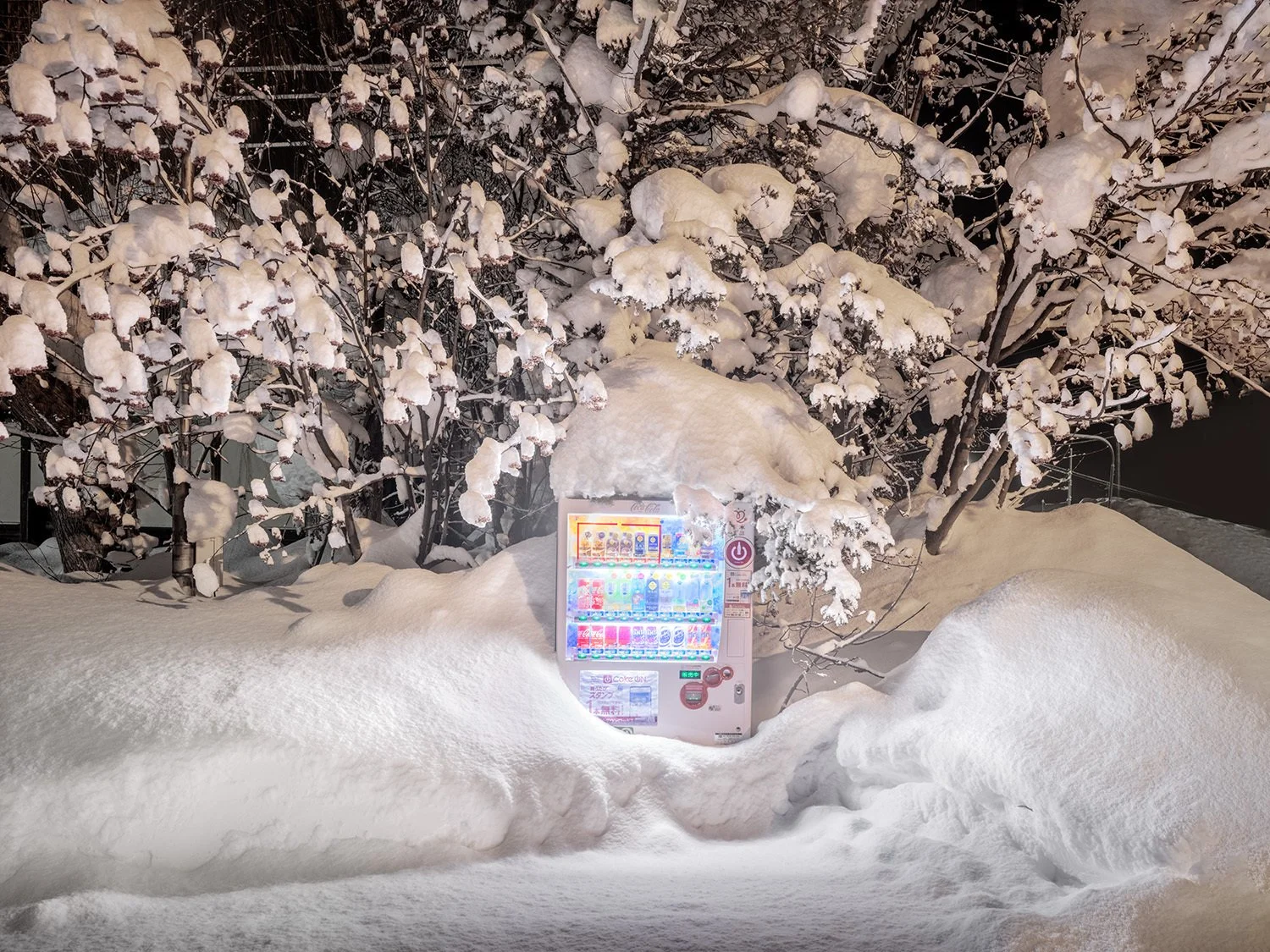
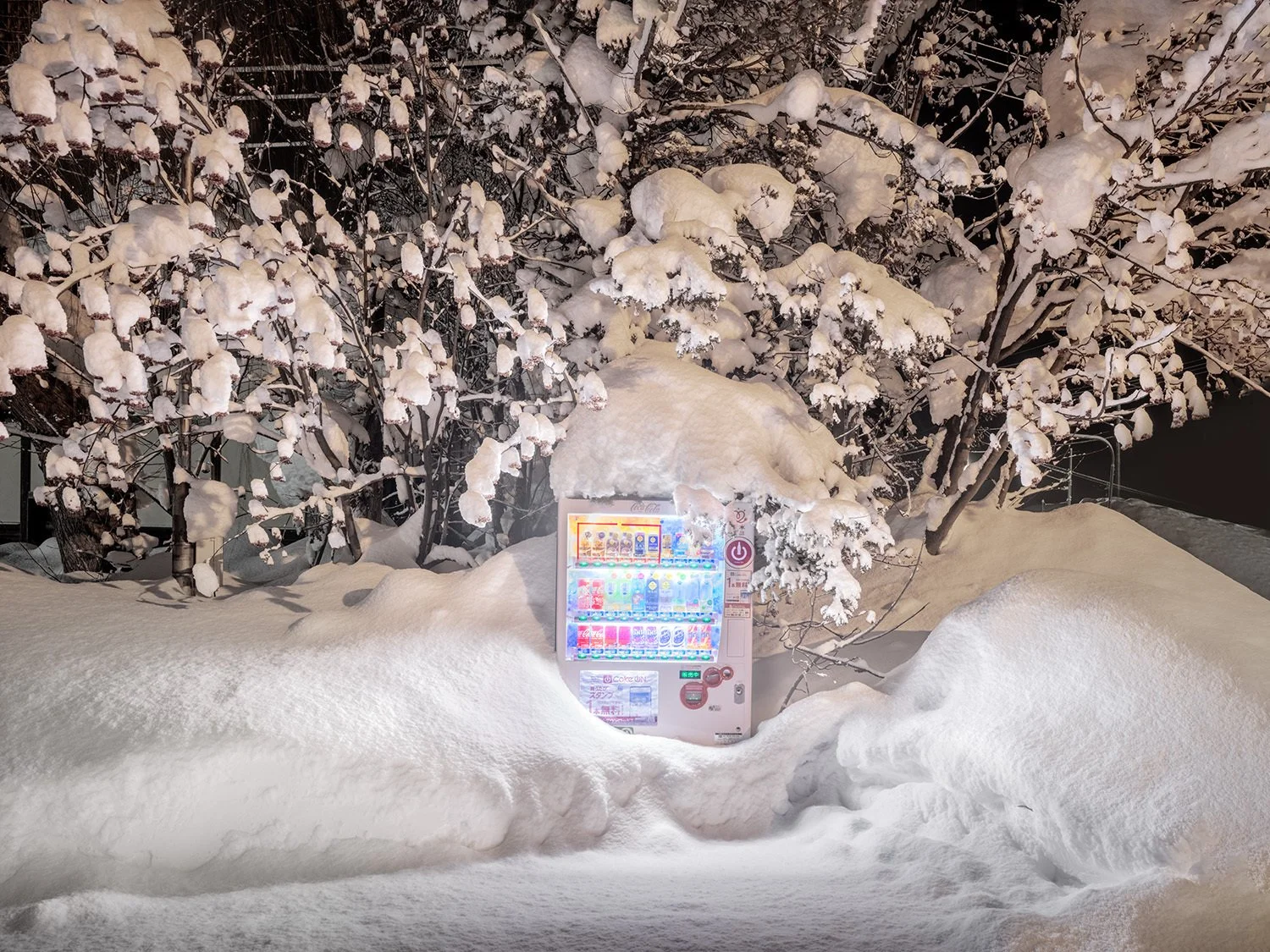
Tree and a vending machine covered by snow.
Camera Settings: What camera settings work best when shooting glowing machines at night in the snow?
First and foremost with digital cameras, I set the ISO to the lowest setting to get the camera's best performance. Also, the bright light source of a vending machine in darkness requires the highest dynamic range possible. That's why I use a Phase One XT, which can record in 16-bit.
So you're using a Phase One XT and shooting 5-10 minute exposures in a blizzard? How do you keep the camera stable and dry in those conditions?
The Phase One XT isn't designed for harsh outdoor environments like Nikon or Canon cameras are. So I cover the camera with a down jacket cover, leaving only the lens exposed. Inside the down cover, I place a mobile heating device to keep it warm. This setup works even at -20°C.
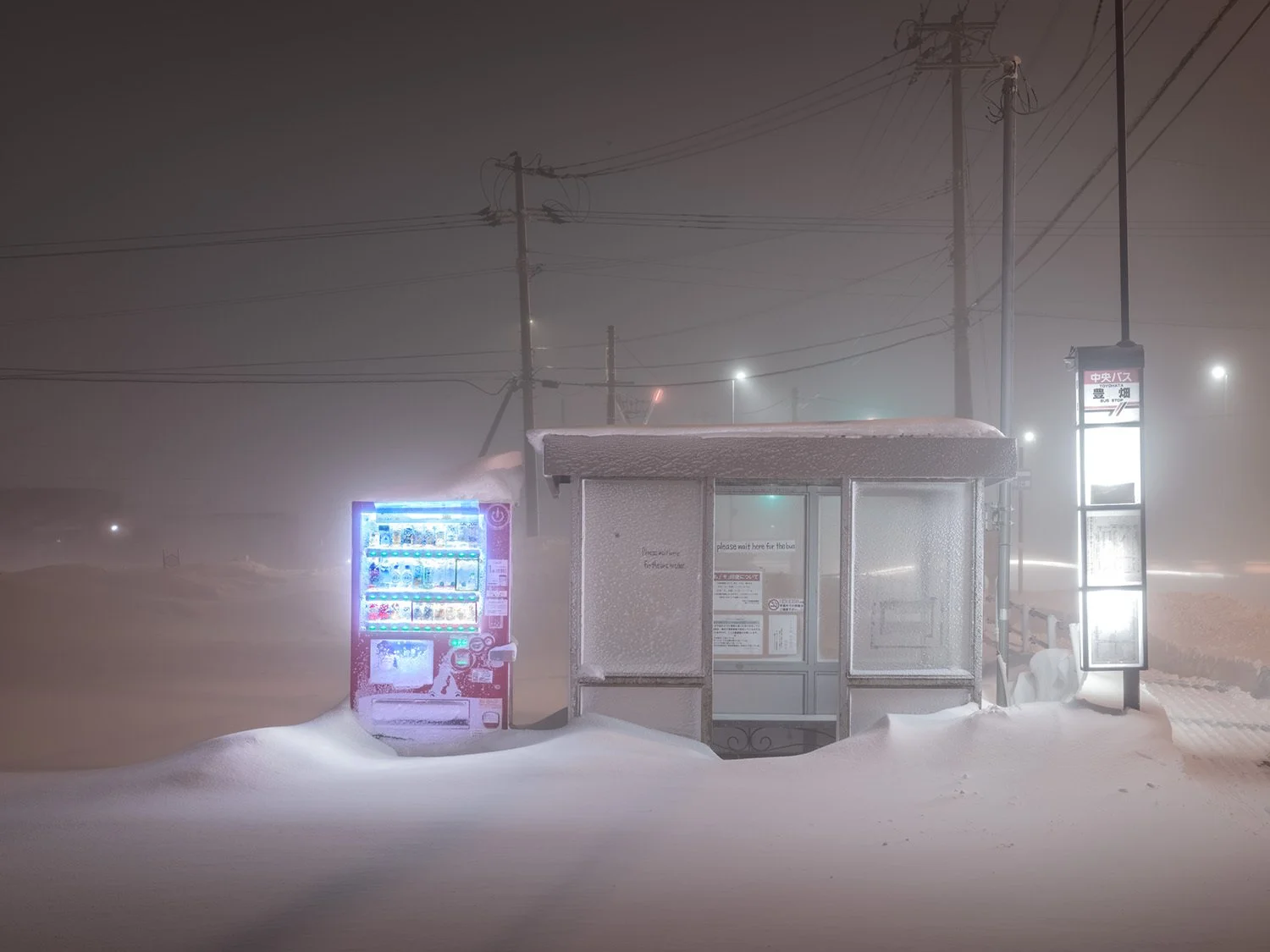
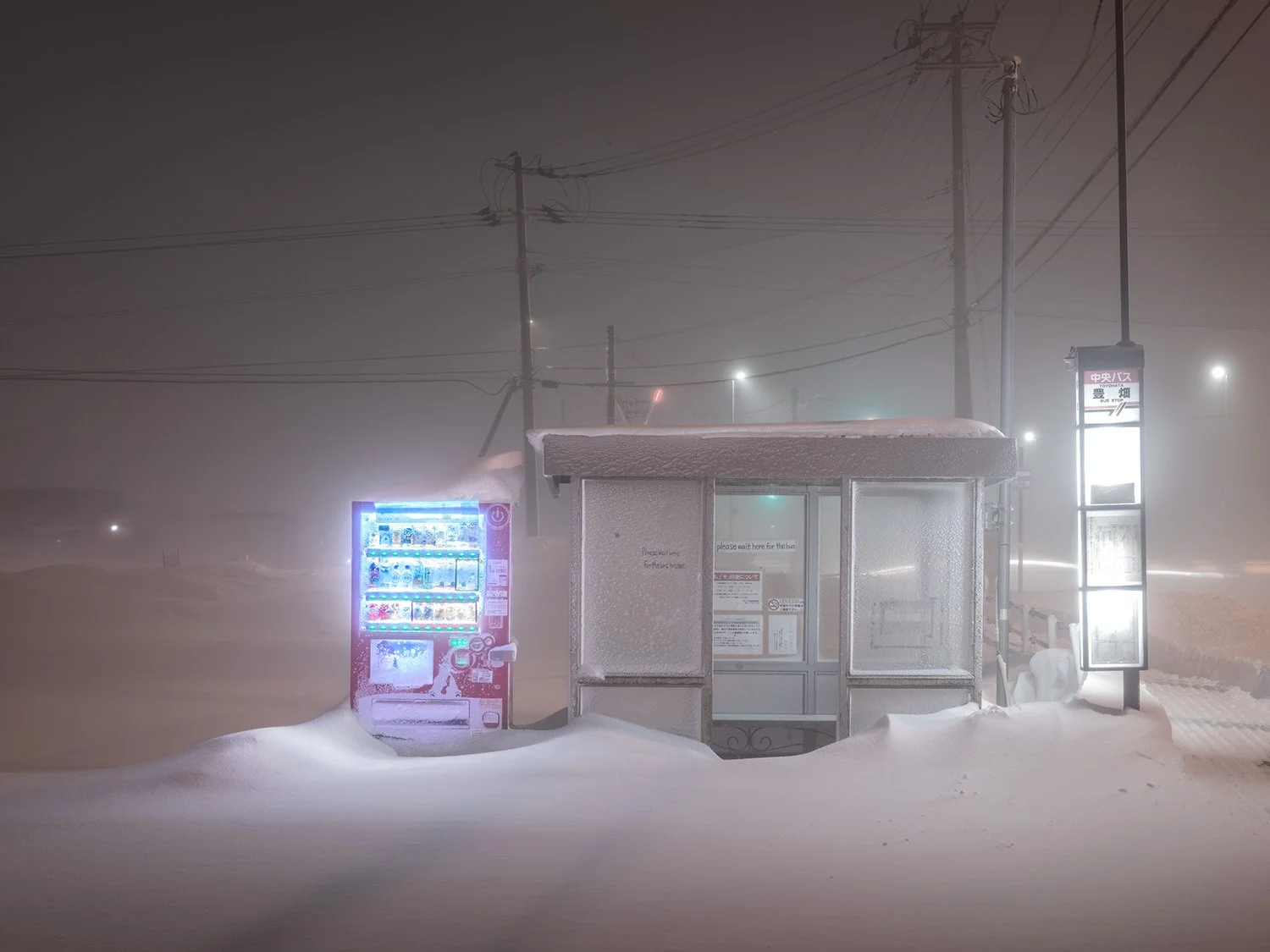
A bus stop and a vending machine in a foggy and snowy night.
Loneliness Theme: You say vending machines remind you of lonely people - can you explain this idea more?
When I started, I was shooting "landscapes with vending machines" in black and white film. I wanted to document how these uniquely Japanese landscapes change with the times. About 10 years ago, when I added color work, I began seeing the glowing vending machines at night as representations of "lonely modern people." I saw in them the reflection of contemporary people who work tirelessly day and night yet rarely feel rewarded. However, the glowing machines also started to appear as lights of "hope" alongside the "loneliness," allowing viewers to interpret them in various ways. I believe this is what gives the work its value: viewers can connect their own experiences to my work and create their own interpretations.
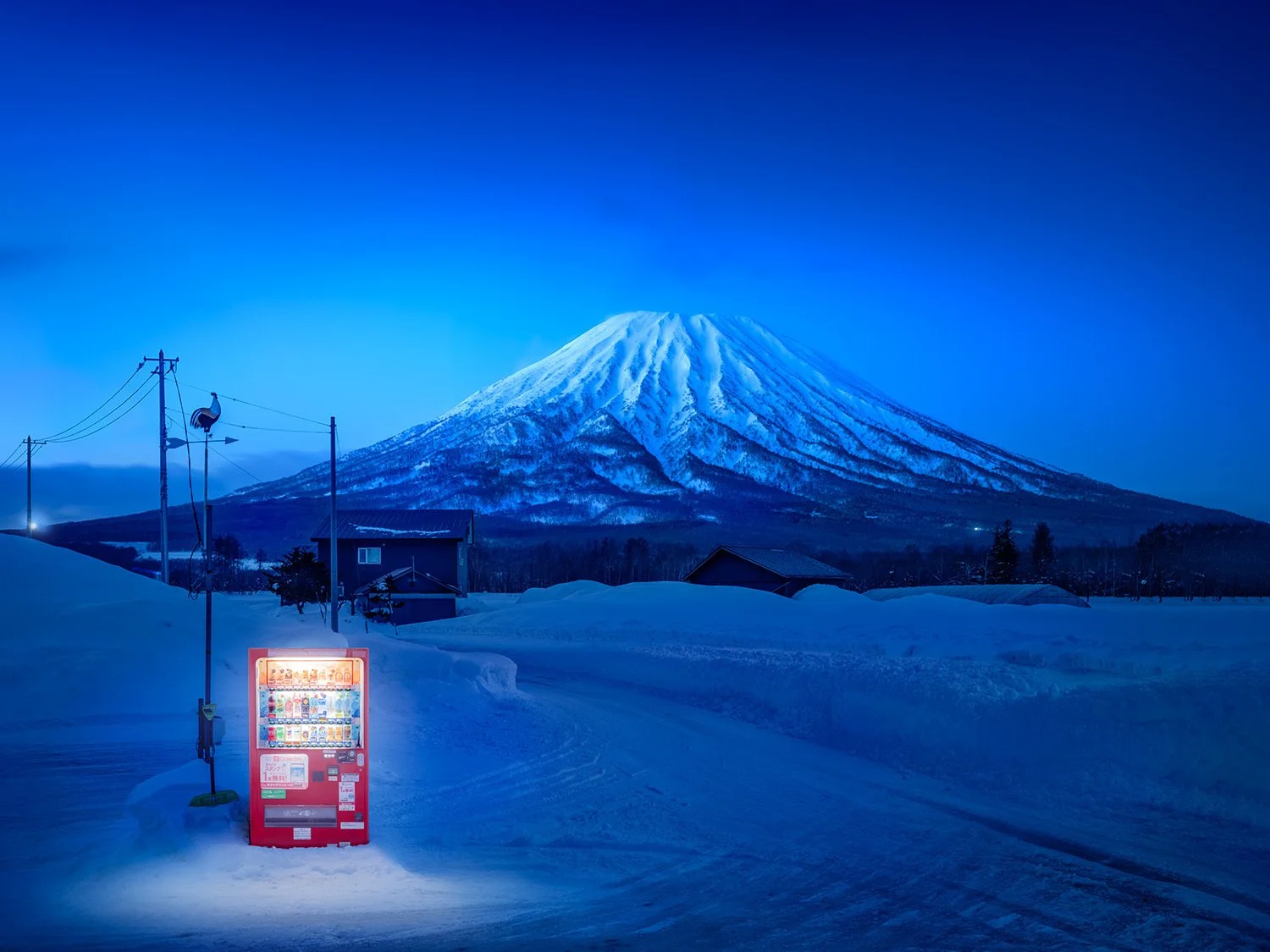
A vending machine contrasting with the imposing might of a snowy mountain.
You mentioned switching from black and white film to color changed how you see the machines - from documenting landscapes to seeing "lonely modern people." What exactly happened in that moment when you first shot them in color?
Monochrome photographs let you see the entire frame flatly, which was perfect for showing "landscapes with vending machines" as typical Japanese scenery. But when I switched to color, especially with something like Coca-Cola machines being so red, they suddenly stood out dramatically in the frame. Rather than being part of the landscape, the vending machines became the main subject. To me, it seemed like they began asserting themselves.
You said viewers can interpret the work differently - some see loneliness, others see hope. What's the most surprising interpretation someone has shared with you?
I can't possibly hear every viewer's impression, but what I'm attempting is for viewers to connect my work with their own experiences and memories to create new meaning. The response I initially didn't expect was "I see hope." Most people feel "loneliness" when they see a vending machine standing alone in a wasteland. But hearing that some see "hope" in the glowing machines gave me an opportunity to discover new value in my own work.
More photography books?
We'd love to read your comments below, sharing your thoughts and insights on the artist's work. Looking forward to welcoming you back for our next [book spotlight]. See you then!
The past became visible once Richards learned where to look. For The Inner Passage, Virginia McGee Richards spent fifteen years photographing a waterway in the South Carolina Lowcountry. Photography Book Spotlight