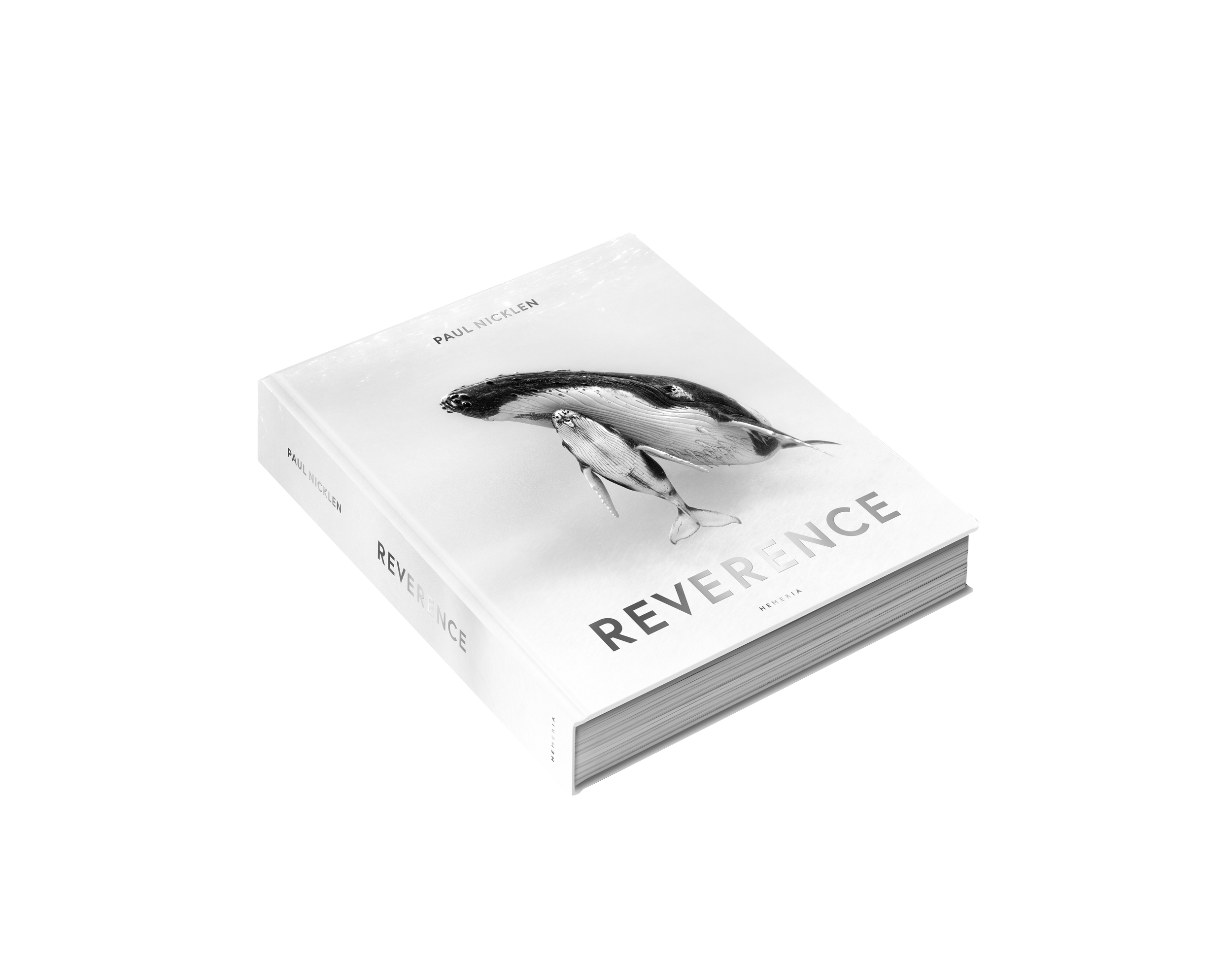
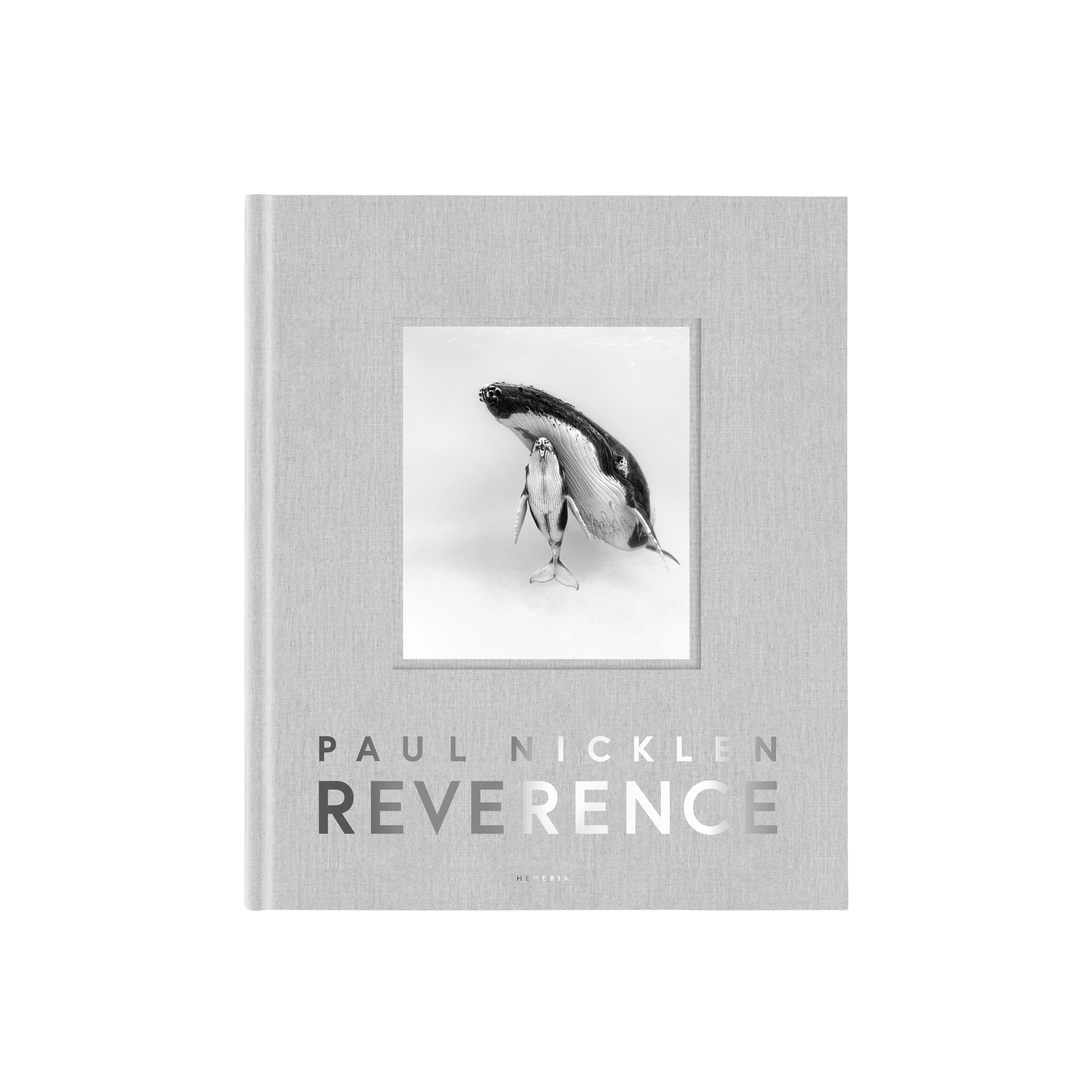
Welcome to this edition of [book spotlight]. Today, we uncover the layers of 'Reverence,' by Paul Nicklen (published by Hemeria). We'd love to read your comments below about these insights and ideas behind the artist's work.
Every image in Reverence is a love letter to what remains.
Paul Nicklen spent three decades photographing polar bears, whales, and fragile ecosystems now disappearing faster than ever. His new book collects the most emotional and powerful moments from that journey, showing the side of wildlife photography that is not about equipment or fame but about care and connection. Nicklen says he wanted to remind people that beauty still exists and that it is worth protecting.
After twenty years at National Geographic, Nicklen turned his camera toward something more personal.
He calls this stage of his work a return to purpose, a fine-art project that combines science, storytelling, and emotion. Behind every photograph is patience: weeks spent waiting in ice-cold water until an animal decides to trust him. That patience, he believes, is the real difference between taking a picture and making a connection.
In Reverence, he brings that connection back to life.
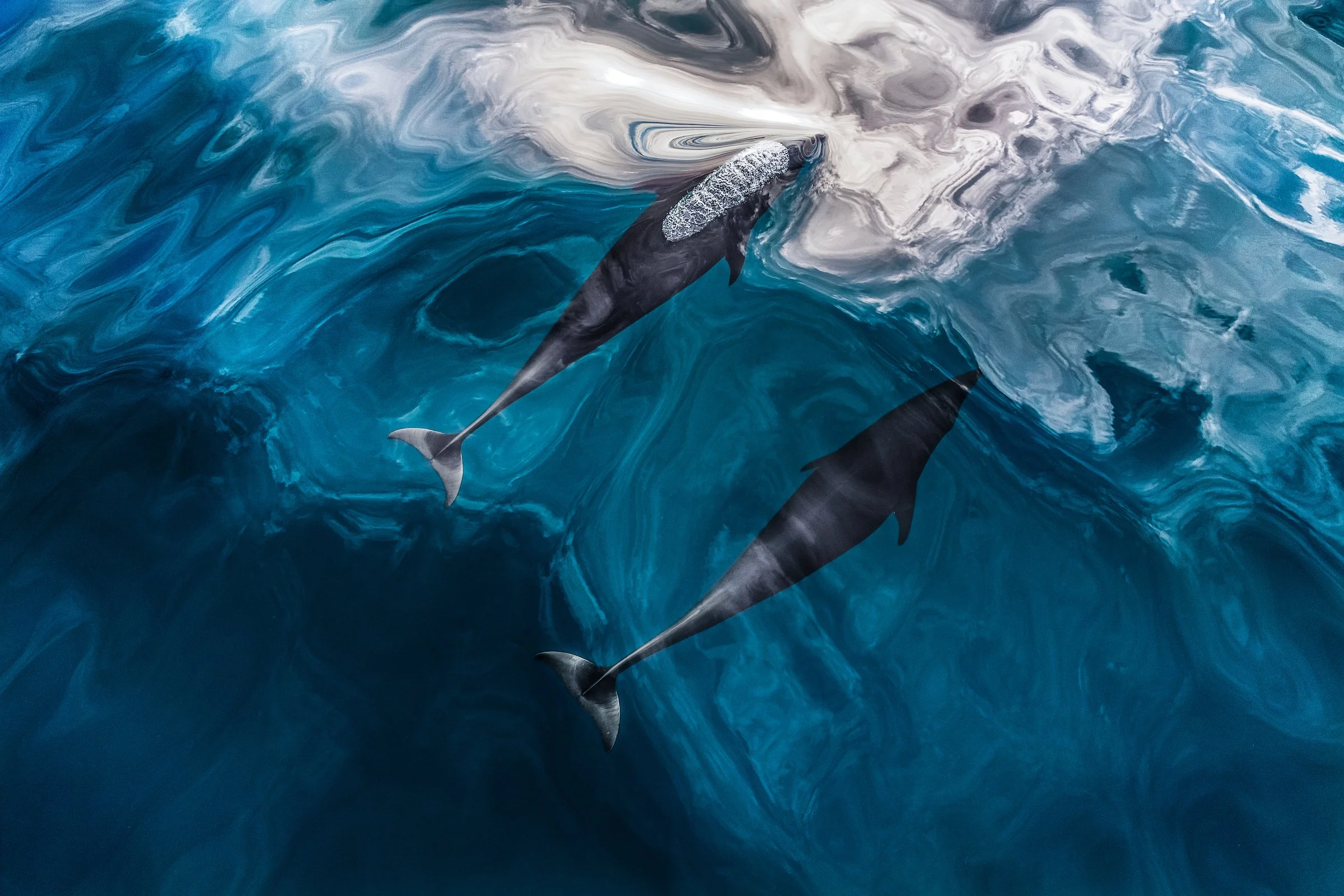
Pacific Dance, British Columbia, Canada, 2014
The slim black figures of the northern right whale dolphins break the metallic surface of the ocean as they travel. Unlike most dolphins, this species lacks a dorsal fin and has a well-defined but short beak. This unique body shape allows them to cut through the water at incredible speeds, slicing beneath the surface like torpedos.
The Book
Reverence is Paul Nicklen’s most personal and powerful body of work to date. Drawing from over thirty years of photographing the polar regions and the world’s oceans, the book brings together the images that have defined his career, moments of trust, patience, and fragile beauty shared between humans and the natural world.
Spanning more than two million photographs, Nicklen’s careful selection reveals his evolution from biologist and journalist to fine-art photographer. Each image reflects a deep emotional connection to the animals and ecosystems he has devoted his life to protecting. Rather than focusing on environmental destruction, Reverence celebrates what still survives, reminding us that the planet’s remaining wild places are both sacred and worth fighting for. The book can be preordered here. (Hemeria)
Martin: You were a marine biologist first. When did you decide to become a photographer instead, and what made you pick up the camera?
Paul: I started out as a biologist studying polar bears, caribou, and other Arctic species. I've always done the work I do because I want to have purpose and make a difference. But as a biologist, I became frustrated. Much of our work revolved around managing hunting quotas, calculating how many animals could be killed before a population declined. Too often, we got it wrong.
That frustration pushed me to look for another way to make an impact. I thought maybe I could reach more people by telling visual stories, doing journalistic work for magazines like National Geographic. I ended up spending twenty years there, photographing stories about climate change and the environment. It was deeply rewarding.
Now, though, I'm pursuing a more personal path, what I think of as my fine art journey. It's like a swan song, my retirement project, a way to fall back in love with the storytelling side of nature photography. I still have a strong sense of purpose, but it's no longer framed by the heavy journalistic approach of National Geographic.
How hard was it to leave the science behind? Or do you feel like you're still doing science, just with the camera?
I say everything we do exists at the intersection of art, science, and conservation. The imagery has to be beautiful and powerful. It has to be grounded in scientific fact. And it has to drive the bigger conversation about conservation.
Having a science background is crucial for me. It's essential to base all our storytelling on fact and science because credibility matters. Otherwise, you end up with the chaos we see in the world right now, where people can make up anything they want. We have to anchor everything in fact and science, not fiction or entertaining narratives for their own sake.
Your new book is called Reverence, and you've described it as your most important project yet. You looked through millions of photos to select the images. How did you choose what makes a photo special enough for this book?
In journalism, you often look at images through the lens of the story they tell. An image teaches you something about a scientific process or an issue. We see that all the time, but that's not what drives real change. What creates change in the world is emotional connection.
When I worked with National Geographic, the most important photographs to me were always the first two or three double-page spreads in an article. That was your chance to grab the reader by the heart and pull them into your story. Those spreads were the most artistic, the most creative, the most powerful and beautiful.
For me, this book is essentially a collection of all those most powerful moments I've ever captured. I went through two and a half million pictures, from the very beginning of my career up to recent work I'm still shooting for this project. The book contains all the images that reach in and grab you by the heart, that make you care about this planet.
This planet is ailing. We've lost 70% of biodiversity on Earth. More recent estimates say 74%, and it's disappearing quickly. We're running out of time. We’re facing the sixth mass extinction, and photography gives me a microphone to speak about it. Over the years, I’ve used science, journalism, and now photography as tools to create awareness. Today, I focus on making images that are beautiful, emotional, and powerful, images that help people reconnect with the ecosystems and wild cultures we’ve grown so distant from. It’s my way of trying to bring that connection back..
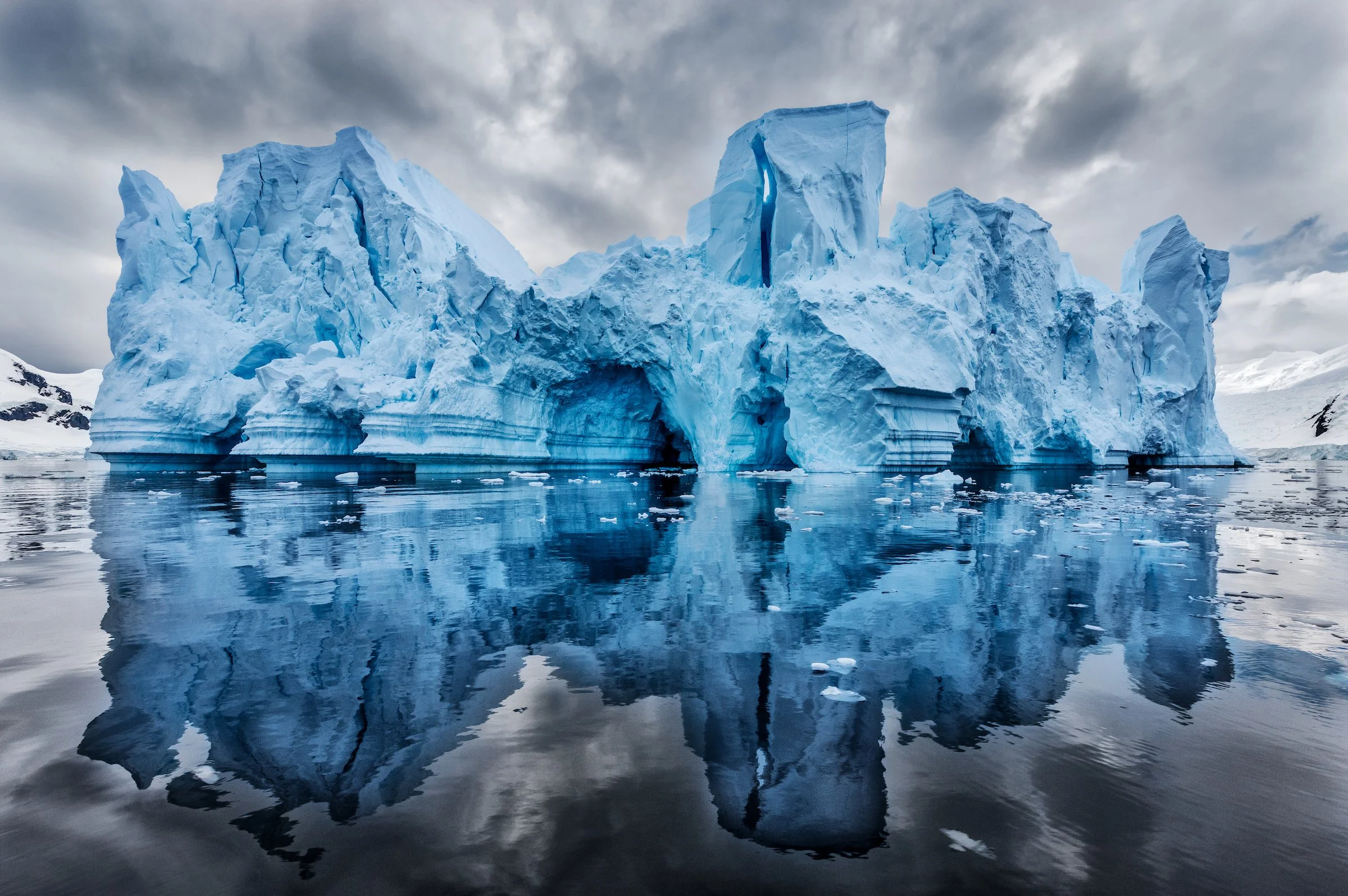
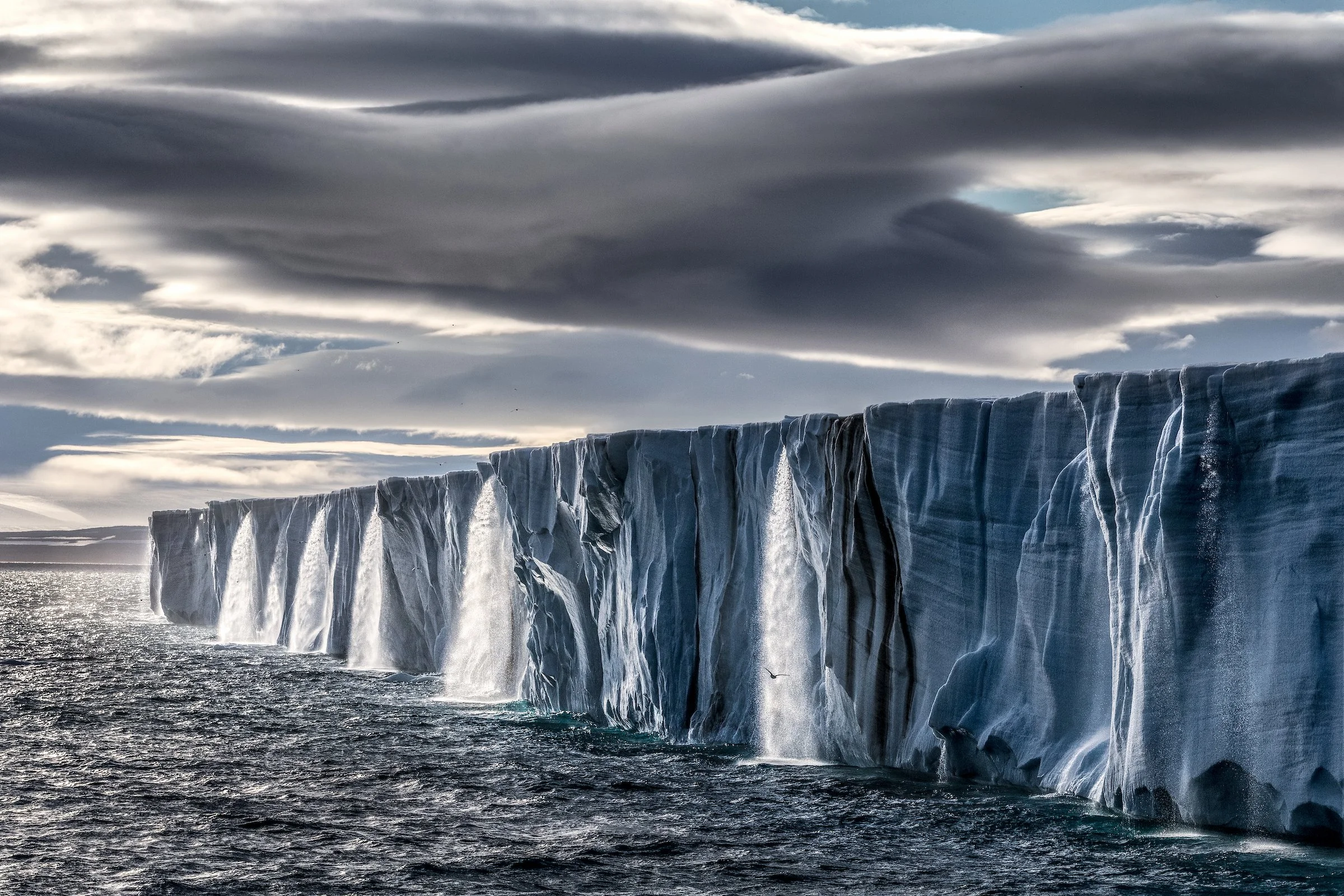
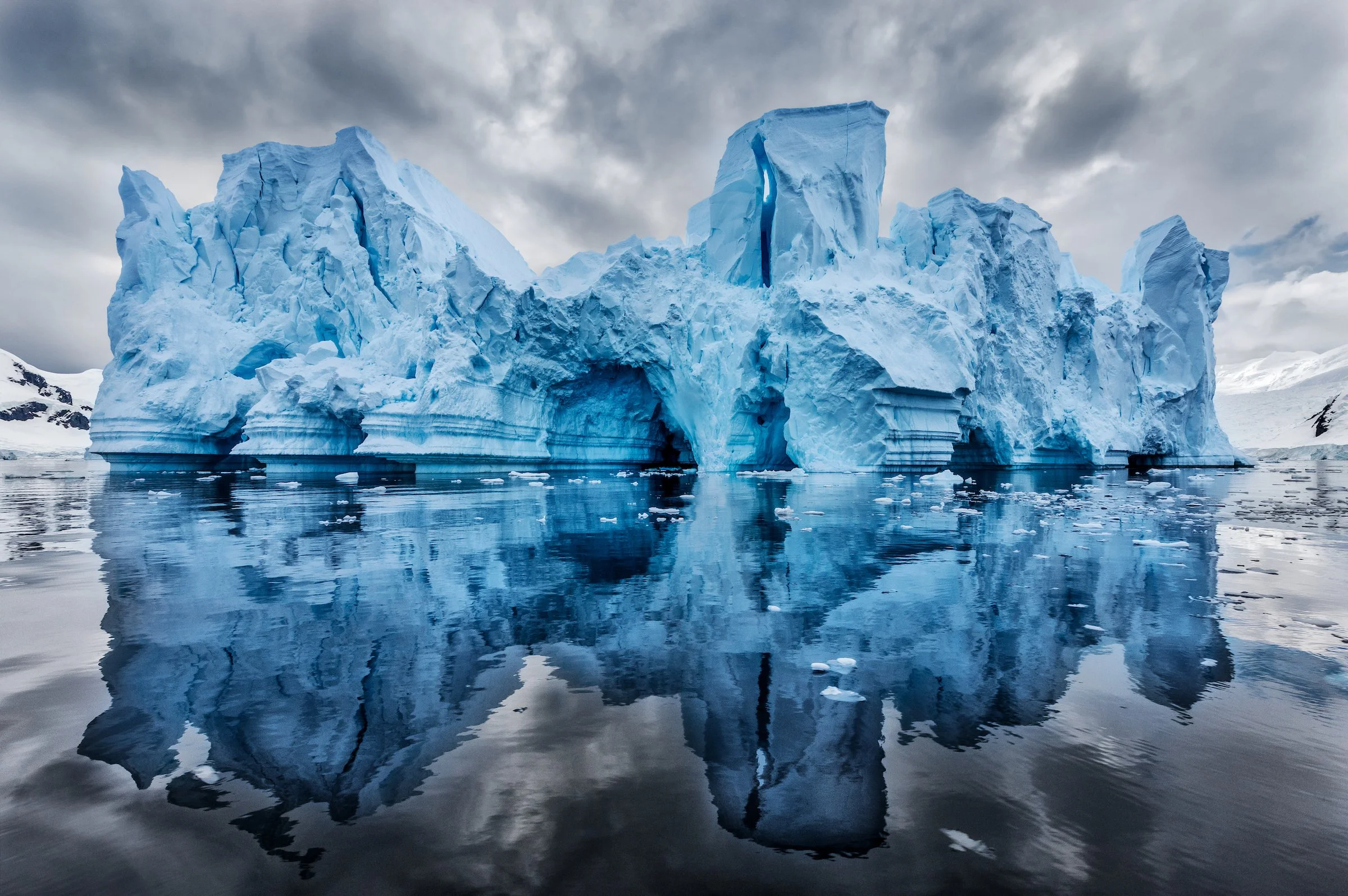
Ephemeral Palace, Antarctic Peninsula, 2012
This colossal structure, spectacularly sculpted from million-year-old ice, was destined to disappear forever as it slowly drifted out along the Antarctic Peninsula. Our southernmost continent contains 90 percent of the world's ice and 70 percent of its freshwater – if even a fraction of its ice sheet were to melt, the resulting sea-level rise would completely remap the Earth as we know it.
Is that why you called the book Reverence? What does the word mean to you?
Reverence reflects the deep respect and awe I have for nature. Some people live their lives believing they’re only here for a short time before moving on to another world, and that’s fine if that’s what they believe. But when you spend as much time in nature as I do, you begin to see how incredibly beautiful, rare, complex, and fragile these ecosystems are, systems that have taken millions of years to evolve to this point, and yet we’re destroying them so carelessly.
For me, it’s about the reverence I feel for those ecosystems and the creatures that inhabit them. When I look into the eyes of a mother puma, a grizzly bear, or when I free dive and find myself face to face with a sperm whale, a humpback, or even a blue whale, the largest animal to ever live, I’m filled with awe. I have to pinch myself, realizing how extraordinary it is to share this planet with them. And I also recognize that we, as humans, are the only ones standing between their survival and their extinction.
That sense of responsibility is what Reverence is about. I hope the book serves as both a challenge and a call for others to reflect on their own relationship with nature. Most people do love the natural world, but we’ve become so disconnected from it, glued to our phones, iPads, and computers, focused almost entirely on ourselves. I want people to step back, reconnect, and truly revere the beauty that surrounds us.
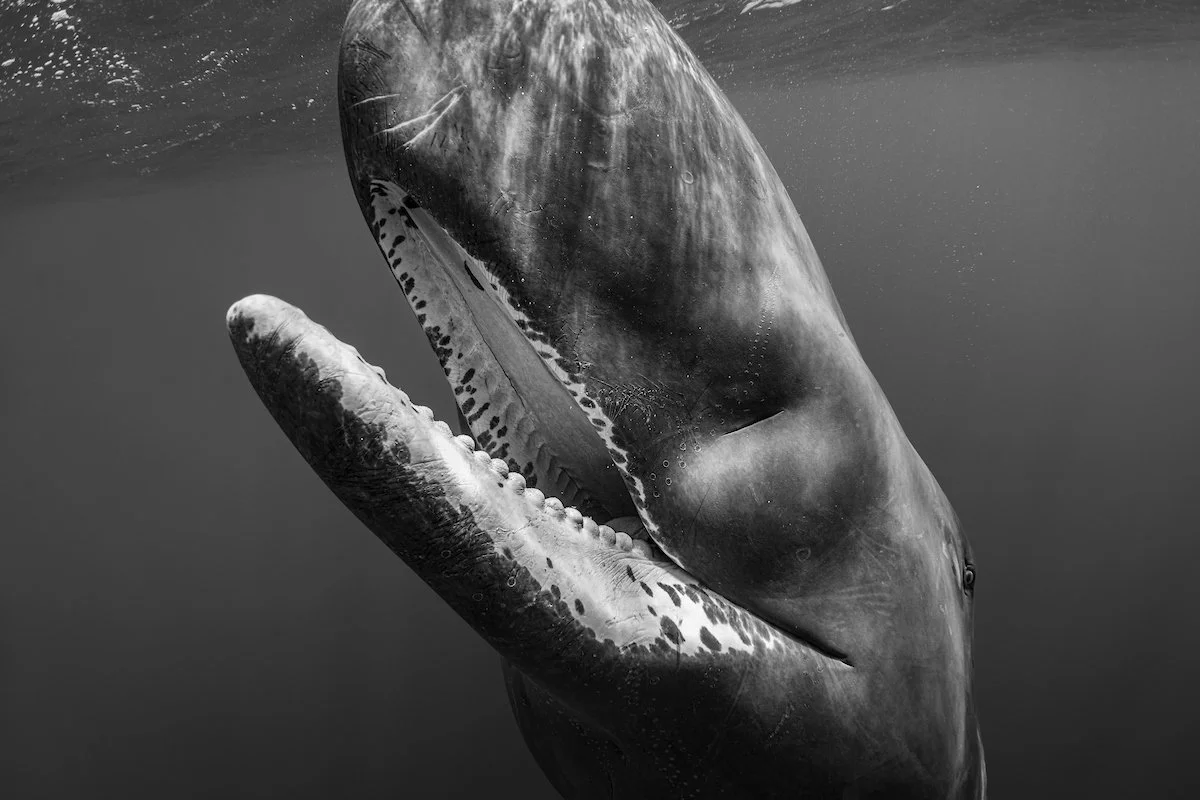
Dominica, 2019
As humans, we tend to create clear boundaries between ourselves and wildlife, viewing them as separate and distant from our lives. However, on the day I met Ariel the sperm whale, the young calf seemed happy to barrel straight through every one of those lines, revealing just how much we share with our wild kin. Her sense of humor, gentle nature, and eagerness to play forever captured my heart. We are, at the end of the day, fellow animals on this vast and strange planet. The sooner we recognize our place within a living, ever-changing network, the sooner we can begin healing the damage we have done to our world.
You mentioned that you included never-before-seen images in the book. Did you keep some of those photos private for a reason, or what made you ready to share them now?
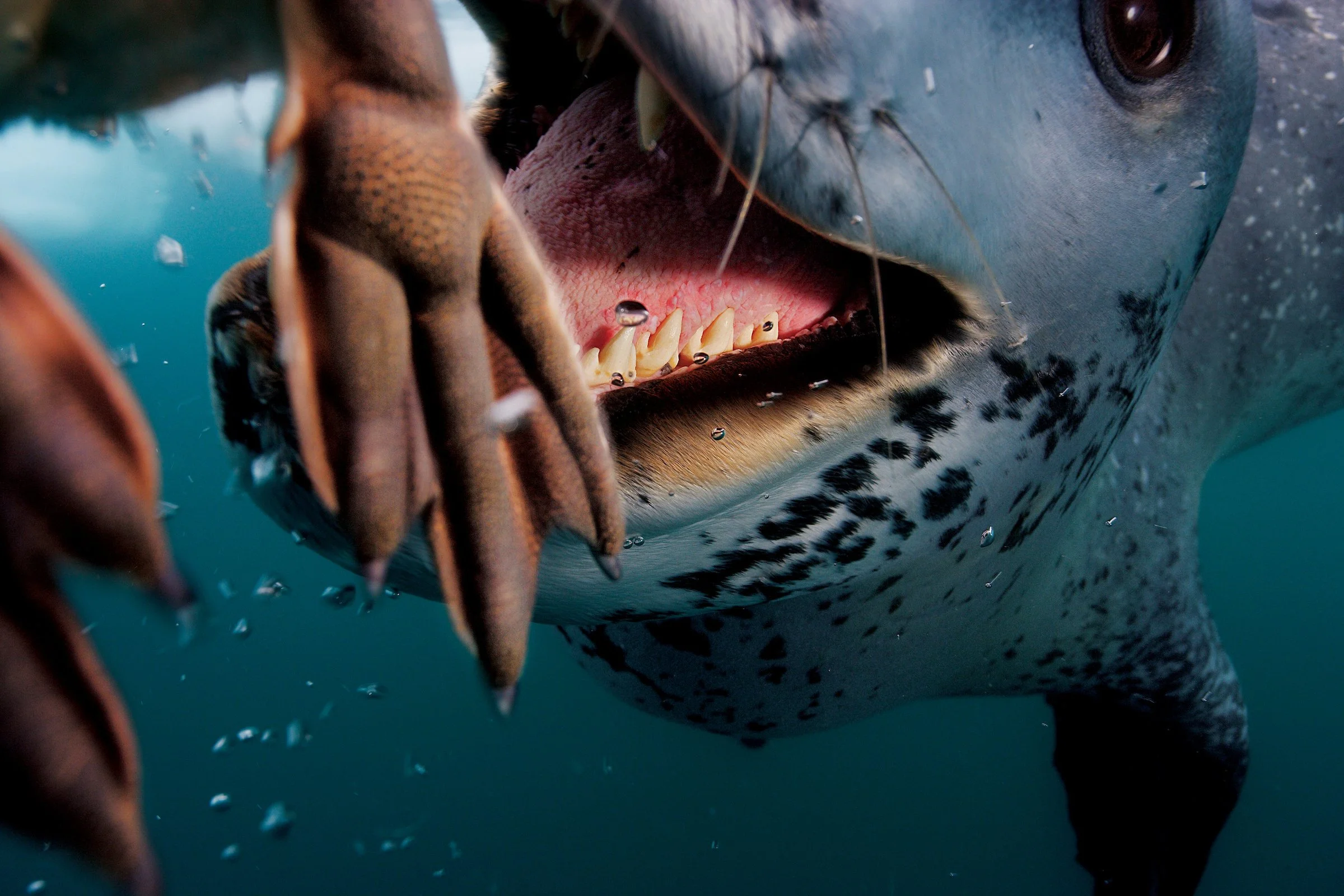
Not really. It’s more that I never had time to go through them. I hadn’t edited many of these images or shared them on social media, simply because I was always moving from one assignment to the next. National Geographic would often select and edit images specifically for storytelling purposes, but my personal style, very artistic, creative, and intimate, sometimes didn’t fit their format beyond a few standout shots, like those of leopard seals, wolves, or bears.
This book gave me the chance to revisit everything with fresh eyes. I could finally look back through decades of work and choose the images that felt the most emotional and personal to me.
This book covers around 30 years of your photography. When you look back at all those years, what has changed? Are you photographing differently now than when you started?
In the beginning, I focused on capturing the scientific process behind the work we were doing. Later, during my twenty years with National Geographic, my approach became more journalistic, centered on storytelling. Now, I aim to capture the most powerful, intimate, and evocative moments I can find. I never try to influence an animal’s behavior, but I’ll often sit in one place long enough for the animal to approach me. When that happens, and I look into its eyes, there’s a deep emotional connection, that’s what I’m trying to capture and share with a wider audience.
You sometimes wait in freezing water for hours or even days until animals begin to trust you. Most photographers try to get the shot quickly. Why do you do it differently? Is all that waiting really worth it?
If an animal is stressed, it shows in the photograph. You can see it immediately, and for me, there’s no point in taking a picture that comes from a place of fear or tension. I started doing this because I love animals. I want to enjoy my time with them and have calm, genuine encounters.
For example, when I was photographing sea wolves, we spent ninety days trying to see them and only succeeded five times. That means eighty-five days of waiting with nothing. At one point, Christina and I sat in a photo blind for three weeks straight. Then, finally, on the third week, the wolves appeared. They brought their entire pack, including all their newborn pups, and left the puppies with us as if asking us to babysit while they went down to the shore to hunt.
Moments like that happen only when you spend enough time for animals to let you into their world. You have to let them dictate the encounter. That’s how you get those wide-angle, close, and truly special images. If you rush in with a camera, trying to force a moment with a bear, shark, or wolf, you’ll just stress the animal, risk harm, and maybe even put yourself in danger. But when you move slowly, gently, and respectfully, that’s when the real magic happens.
Coastal Guardian, British Columbia, Canada, 2018
My work is intended to be a celebration of the creatures with which we share this planet, yet I fear there are cases where it may one day serve as a historical record for that which is lost forever. The future of BC's coastal wolves, an evolutionarily distinct community that feeds almost exclusively from the ocean, is yet to be written, but I am optimistic we can still inspire action to save them.
Was that the longest you’ve ever waited for a single photo?
No, not at all. I spent five seasons on the sea ice trying to photograph narwhals, about fifteen months in total. Out of all that time, I had only two really good days of shooting. But that’s what it takes sometimes.
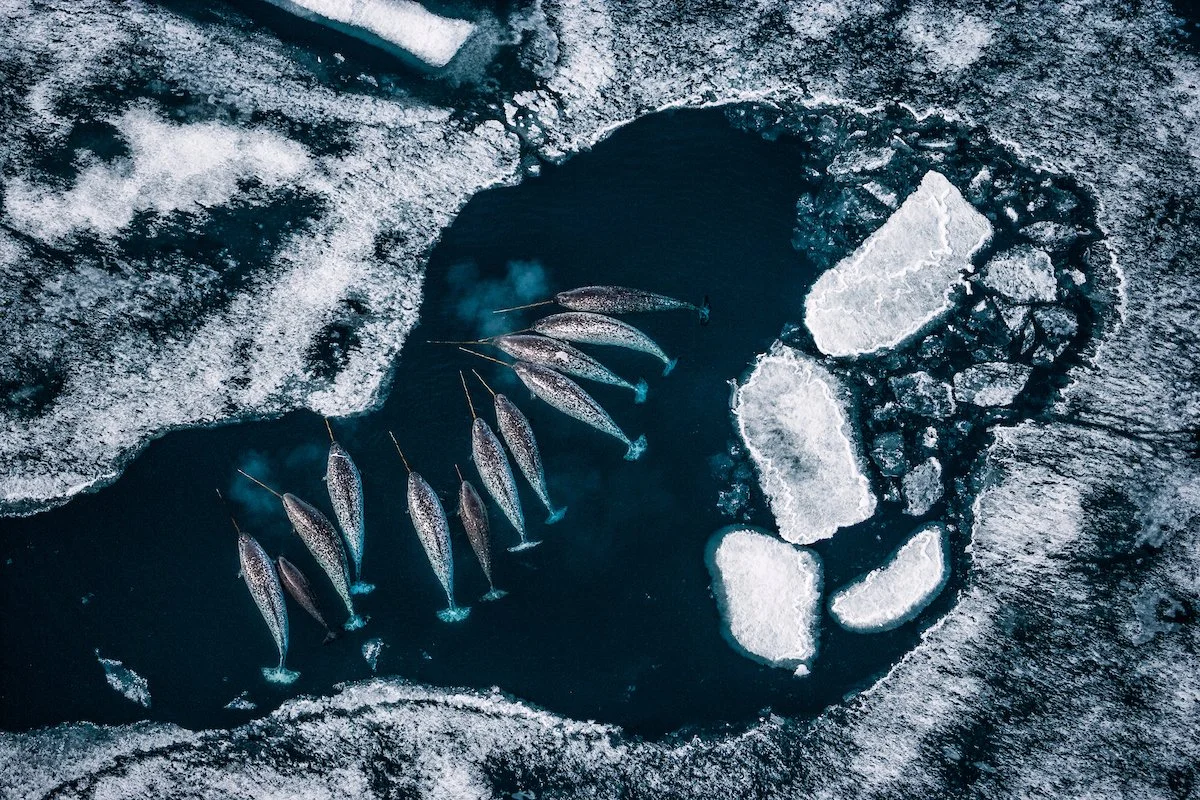
Gathering of Unicorns Nunavut, Canada, 2006
Known to some as "unicorns of the sea," this pod of male narwhals lift their nearly eight-foot-long ivory tusks out of the water and take a deep breath before disappearing back under the ice to gorge on polar cod. Plankton grows on the underside of the sea ice, amphipods feed on the plankton, cod feed on the amphipods, and narwhals feed on the cod – so goes the circle of life in the Arctic.
Do you ever feel it’s dangerous getting that close, especially with certain animals? Penguins are one thing, but polar bears or wolves seem like a different story.
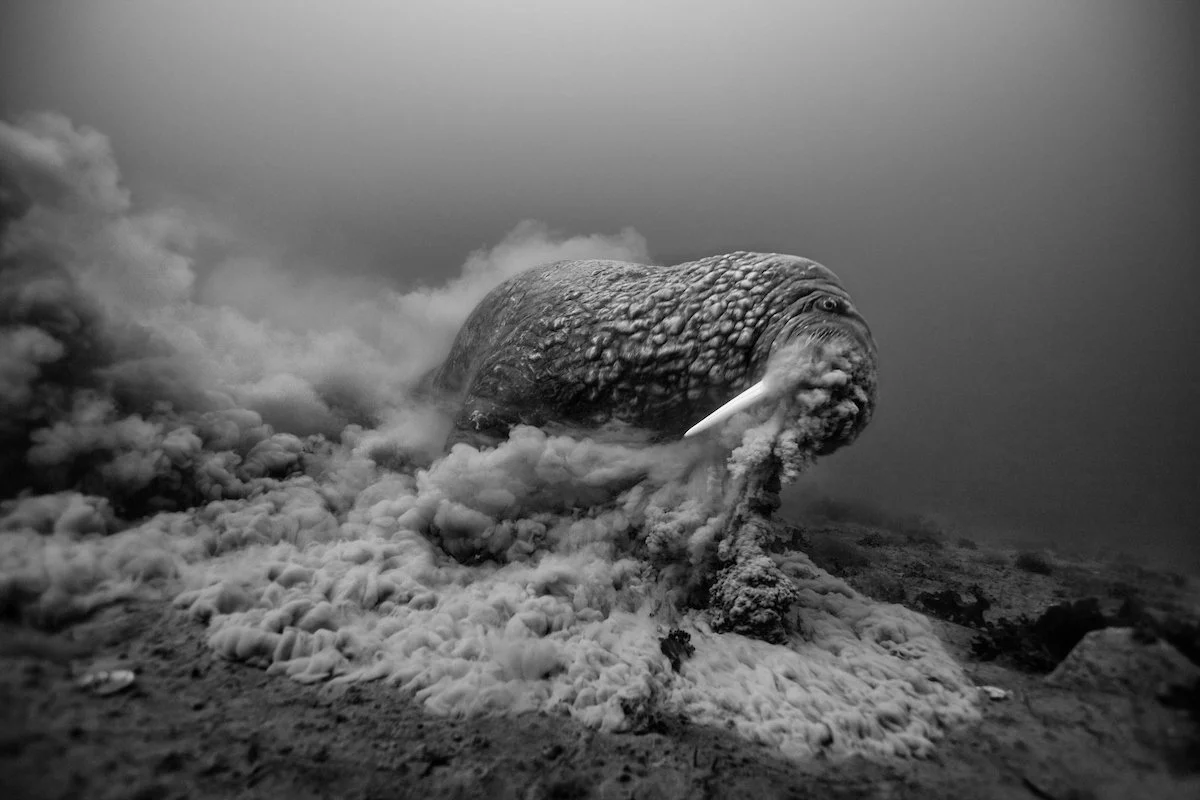
It really depends on the animal. For example, photographing walruses underwater is something no one will ever do again, it’s simply too dangerous. It’s like swimming with hippos; you just don’t do it. My friend Göran from Sweden figured out a way to make it possible, and we tried it together. It was extremely risky, but we never had any problems.
The only time I’ve truly been attacked and afraid wasn’t in the wild at all, it was in a subway station in New York when a man came after me. I’ve seen around three thousand polar bears and two thousand grizzlies, and I’ve never had a serious issue. There have been exciting moments, like when a bear came into my tent or snuck up behind me, but I’ve never had to harm one.
I’ve spent my life walking in the footsteps of bears. They’re peaceful, patient, and surprisingly gentle creatures. Of course, every animal is different, but if you treat them with kindness and respect, they often respond in the same way.
Feeding Walrus, East Greenland, Young Sound out of Daneborg research station.
So would you say it’s the polar bear that gets an unfair reputation, or is there another animal you think is misunderstood?
We humans love to be scared. We’re terrified of our own shadow and of almost everything around us. There can be thousands of peaceful, beautiful encounters with polar bears, yet we fixate on the one tragic story about a bear attacking a hiker years ago. Who knows what really happened, maybe the bear was starving. But that single event becomes the headline, while the millions of times humans harm or kill animals go unnoticed.
We’re drawn to fear and drama. It’s unbelievable how much we focus on danger, even though we live in an age filled with tools and technology that keep us safe. Fear makes for good stories. That’s why movies like Jaws became such hits, even though they gave people the wrong idea about sharks. A film about how gentle and misunderstood sharks really are would never be a blockbuster, but it would probably be a lot closer to the truth.
You once said that understanding the animal is more important than camera settings or technique. Can you give an example from this book? Is there a photo that only happened because the animal trusted you?
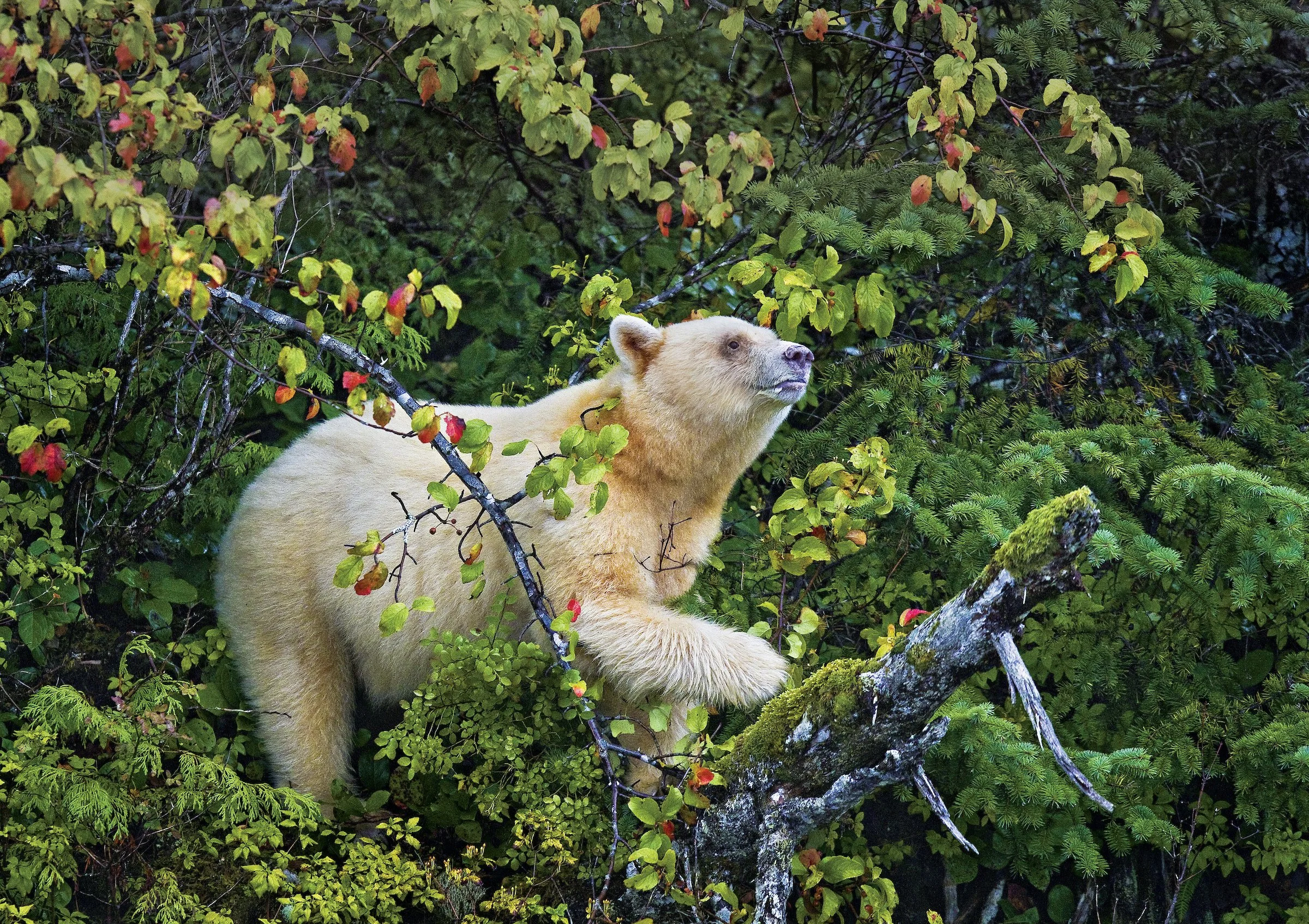
Absolutely. There’s a story behind one of my favorite photographs of a large male spirit bear, also known as the white Kermode bear. I was sitting quietly by a river, down to my last two days of shooting. If this bear didn’t accept me, the whole assignment would have failed. But if he did, we would have enough images to help protect the entire British Columbia coast from a major oil pipeline that threatened the area.
The moment was incredible. The bear came out of the forest, and I stayed completely still. He walked right up to me and started fishing in the river, just a few feet away. That’s when I knew this was the moment I’d been waiting for. I skipped the telephoto lens and switched to a 16–35mm wide-angle to capture the intimacy of the scene. The bear ignored me completely, focused only on his hunt.
All my best images came from that final day. One of those photographs became the cover of National Geographic and played a part in protecting that coastline. It was the result of patience, sixty-five days of waiting for trust to build. You can’t rush moments like that; they only happen when the animal decides it’s time.
How do you learn to read an animal? Is it from your science background, or simply from spending so much time with them?
It really comes from spending time with them. I’m actually quite nervous around large groups of people. Crowds, subways, concerts, I don’t feel comfortable there. People can be unpredictable, especially when emotions, alcohol, or stress come into play. Animals, on the other hand, tend to behave in more consistent ways. Polar bears act a certain way, grizzlies act a certain way, and by spending years observing them, I’ve learned to relax around them.
If an animal doesn’t want me nearby, I leave. I never force an encounter. But if it seems calm and allows me into its space, I let it set the pace and decide how close I can be.
I don’t think I have a special gift with animals. I just genuinely love them and love being in their presence. I feel a responsibility to represent them in a world where they have no voice of their own. Through photography, I can help speak on their behalf.
This book is about nature, but also about your own memories and life. How much of you is in this book?
It’s interesting you ask that. I’m actually planning a follow-up book that will be mostly text, sharing the stories and experiences behind these images. Reverence itself is focused on honoring nature, bringing together my most powerful photographs alongside short poetic reflections about the species and ecosystems I’ve encountered. It’s about their beauty, fragility, and the need to protect them. The next book will explore the adventures behind those moments, including near-death experiences, plane crashes, and falling through sea ice.
The book description also mentions memory loss and belonging, which sound very personal. What kind of loss are you referring to?
It is very personal. This project began after I lost my mother. I spent a lot of time hiking with her, and while she prayed to God, I would pray to my ancestors and to the animals and people who came before us. I would feel gratitude for the places I had been and ask for strength and courage to continue fighting for these ecosystems.
When my mother passed away, I wrote her eulogy and realized how deeply my work was connected to her and to the idea of motherhood in nature. The book became a tribute not only to her but to all matriarchs in the natural world. Whether it’s a humpback whale, a polar bear, or a grizzly, mothers are the ones working tirelessly to raise and protect their young in the most difficult conditions. That’s what makes this book so personal to me.
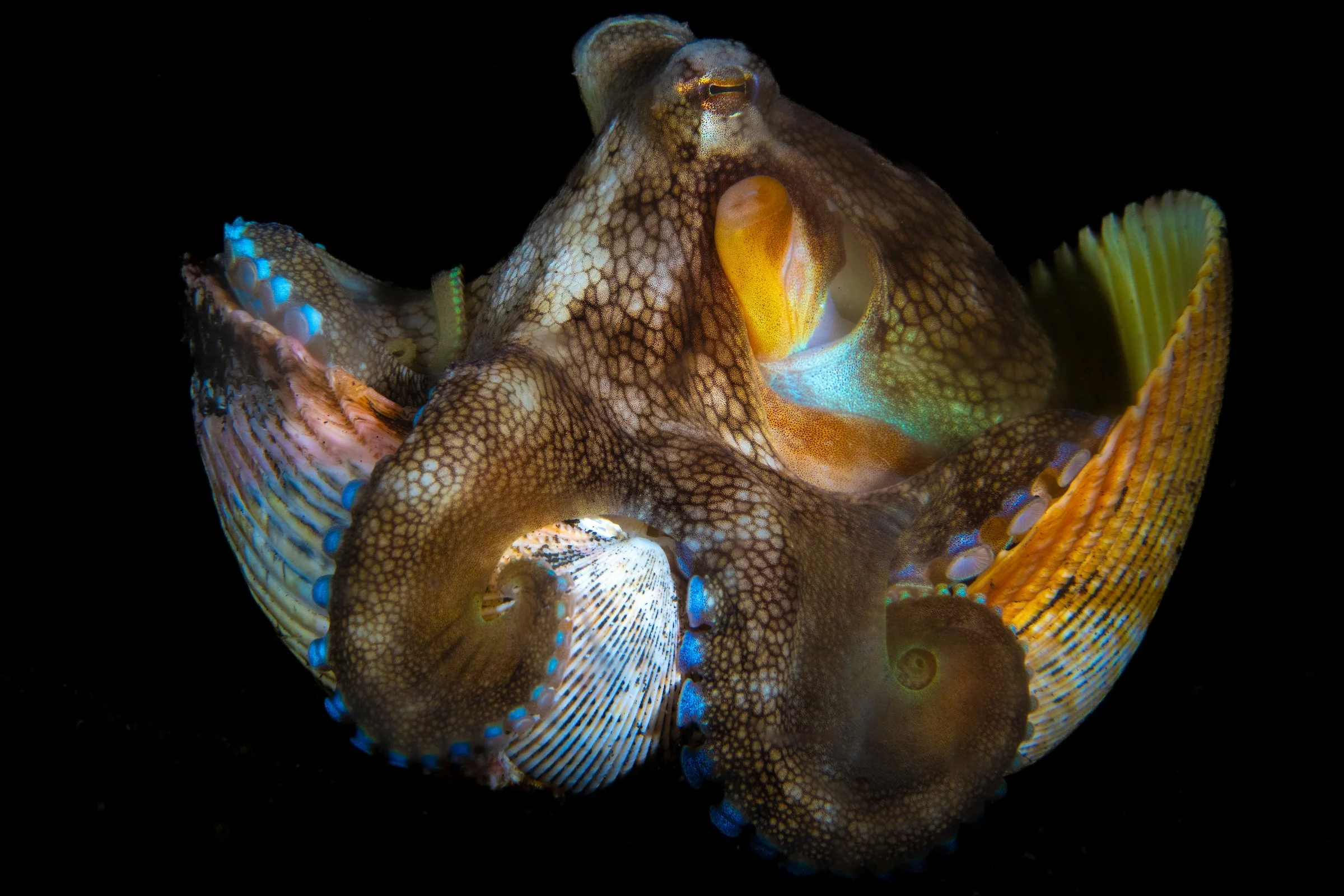
Octopus in a Shell
Tucked inside a borrowed shell, a brightly colored coconut octopus assesses my presence deep beneath the surface of Indonesia. This little mastermind not only uses tools like coconuts and shells, but also plans ahead by carrying them around to form makeshift shelters when needed. The more we study species often overlooked in favor of their larger, better-known relatives, the more we realize how little we know about our planet. We don’t need to venture to distant galaxies in search of intelligent life. A universe of unimaginable biodiversity exists right here on Earth, and we are only just beginning to understand it.
The world is losing many wild places. Your photos are beautiful, but they also show what we might lose. How do you capture both hope and danger at the same time?
You have to find a balance. I often compare it to boxing: it’s jab, jab, punch. The jabs are the beautiful, engaging, emotional images that draw people in. Once in a while, you deliver the punch, the hard-hitting or heartbreaking image that confronts them with reality. On social media, this approach works well because if you constantly hit people with difficult, painful content, they turn away. But when you’ve already earned their trust and taken them on a journey, they’re willing to face the harder truths with you.
This rhythm keeps people connected and emotionally open. Reverence, however, isn’t about the punches. It’s all about the jabs, the beauty, and the power of nature. The book is meant to uplift and remind us what we’re fighting to protect.
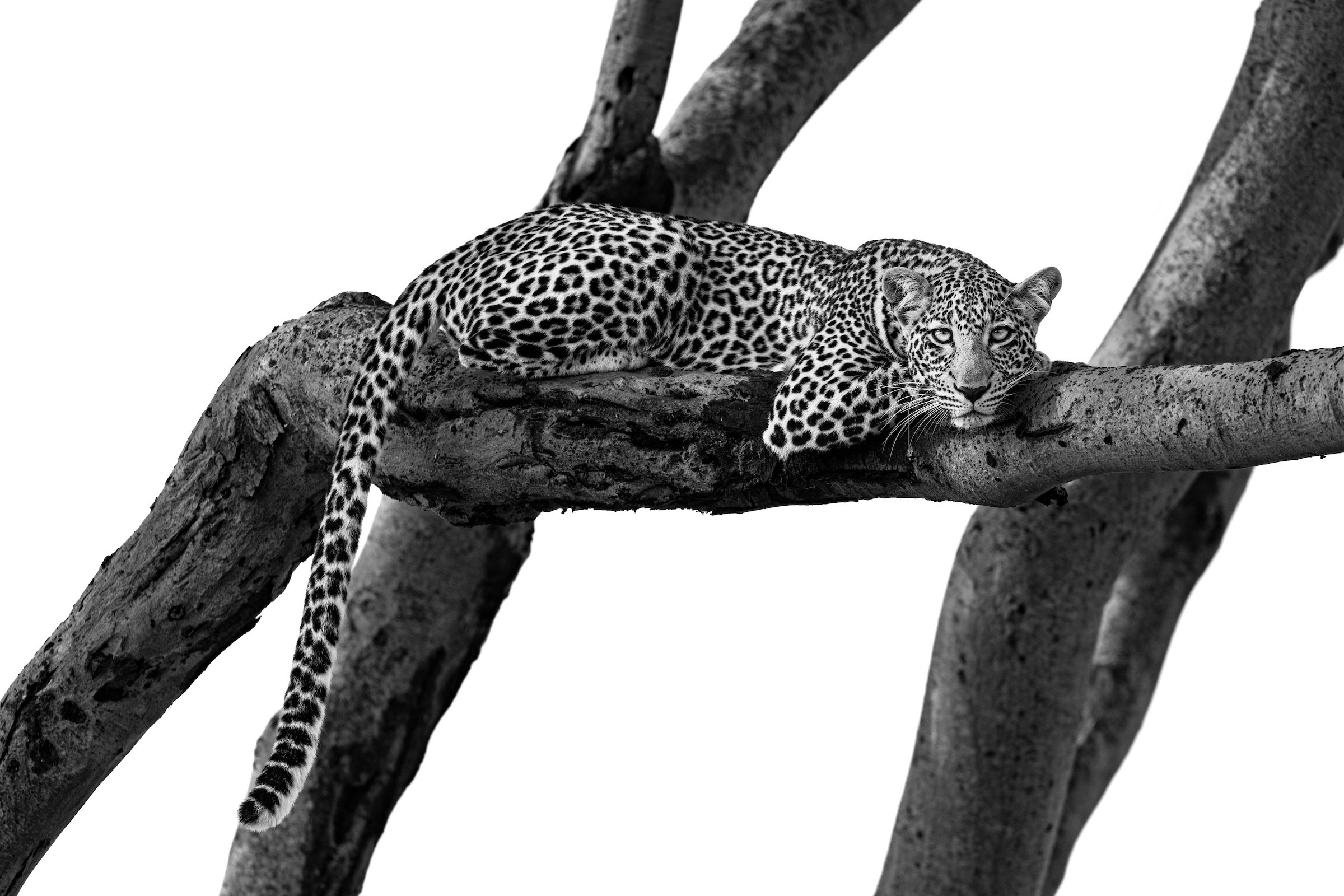
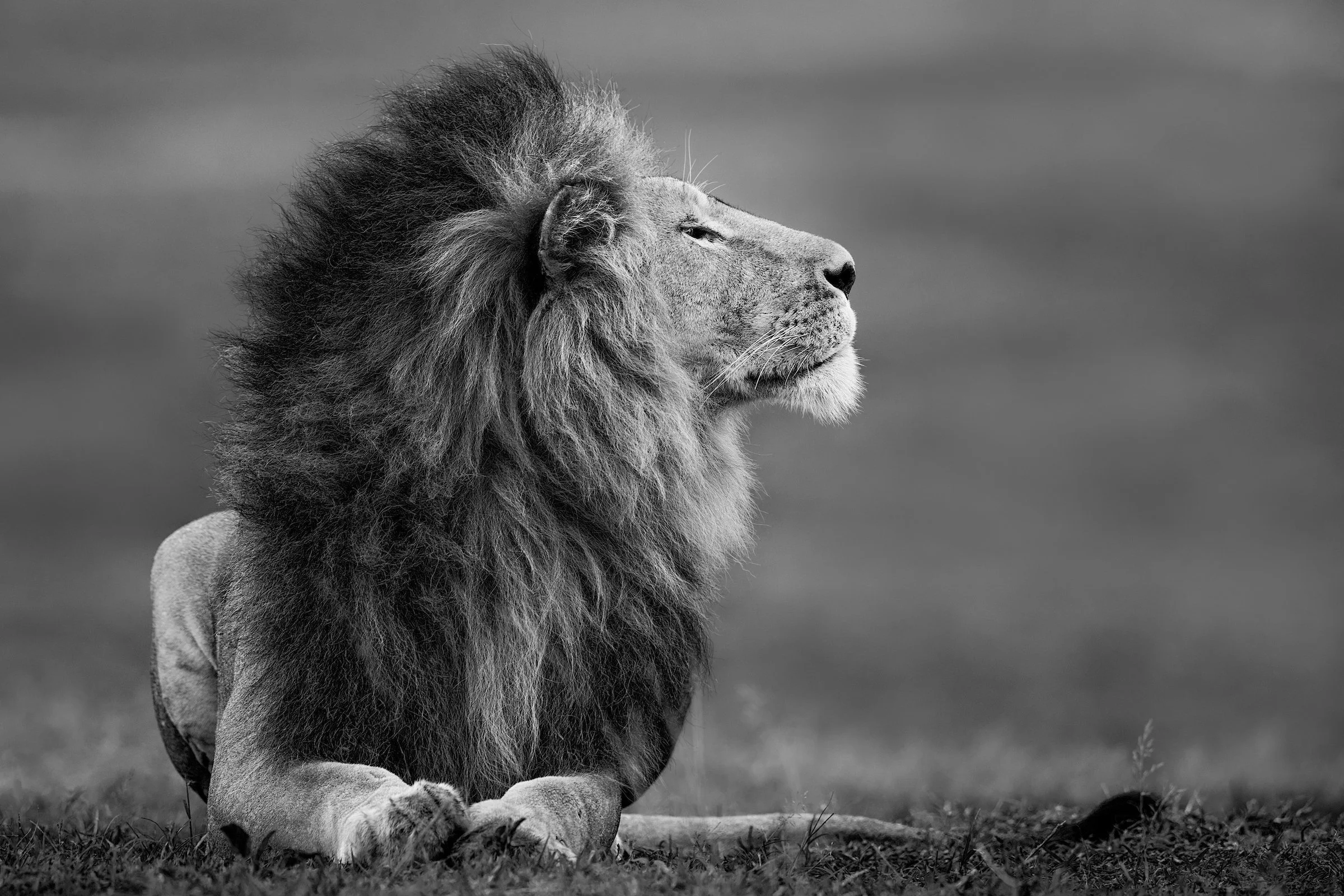
Spot On (black & white), Segera Conservancy, Kenya 2025
The leopard’s agility and stealth are no accident. Over millennia, this species has adapted to survive in a landscape shaped by drought, seasonal abundance, and intense competition. Segera sits where dry savannas meet fertile highlands, a crossroads of climate, species, and survival strategies. High in the branches, leopards stash their kills out of reach, rest beyond the notice of prowling lions, and watch the world from above. These adaptations reflect a deep evolutionary intelligence: a predator perfectly in tune with the challenges of its environment.
And when someone finishes looking at Reverence, what do you want them to feel or remember?
I want them to feel that all is not lost. Yes, we’ve lost about seventy percent of wildlife on this planet, but we still have thirty percent left. I try to focus on that. Sometimes I get sad thinking about the species that are gone, like mammoths or saber-toothed cats. But then I find myself standing beside a fifty-two-year-old elephant in Africa, and I realize it’s not about what we’ve lost. It’s about what we still have and what’s still worth fighting for.
It feels like you often emphasize that the technical side of photography is secondary to the subject itself. Do you feel that way? Does gear matter in what you do?
Gear is definitely important, and I often wish I’d had the cameras I use now twenty years ago, when I was photographing narwhals and spirit bears. Back then, we were limited by technology. We couldn’t shoot above 200 ISO, lenses weren’t very sharp, and that old Canon 100–400 vacuum pump lens we used was far from ideal. But it was what we had, and I still managed to create some of my most meaningful work with it.
That said, when I look back at my camera settings from those moments, many of them were wrong. Technically, they were terrible. But it doesn’t matter. What matters is the emotion and connection in the image. When you’re face to face with a sperm whale or standing in a moment of pure awe, no one cares whether your shutter speed was perfect.
You should learn your gear and understand it completely, but once you do, it should disappear from your mind. If you’re standing in front of something extraordinary and all you can think about is your camera, you’re missing the point. You need to be so comfortable with your equipment that you can lose yourself in the moment. That’s when creativity and true emotional connection show up in your photography.
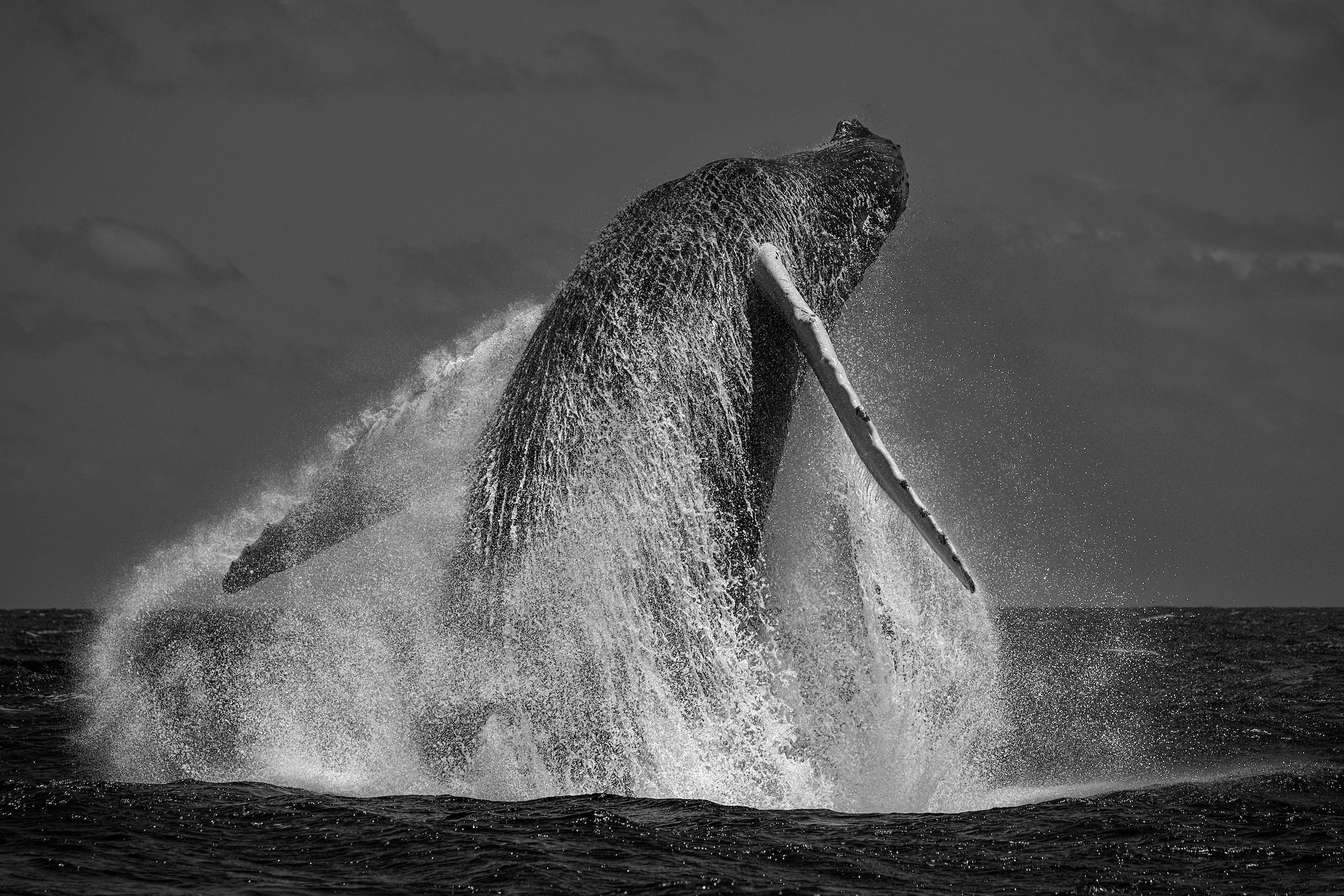
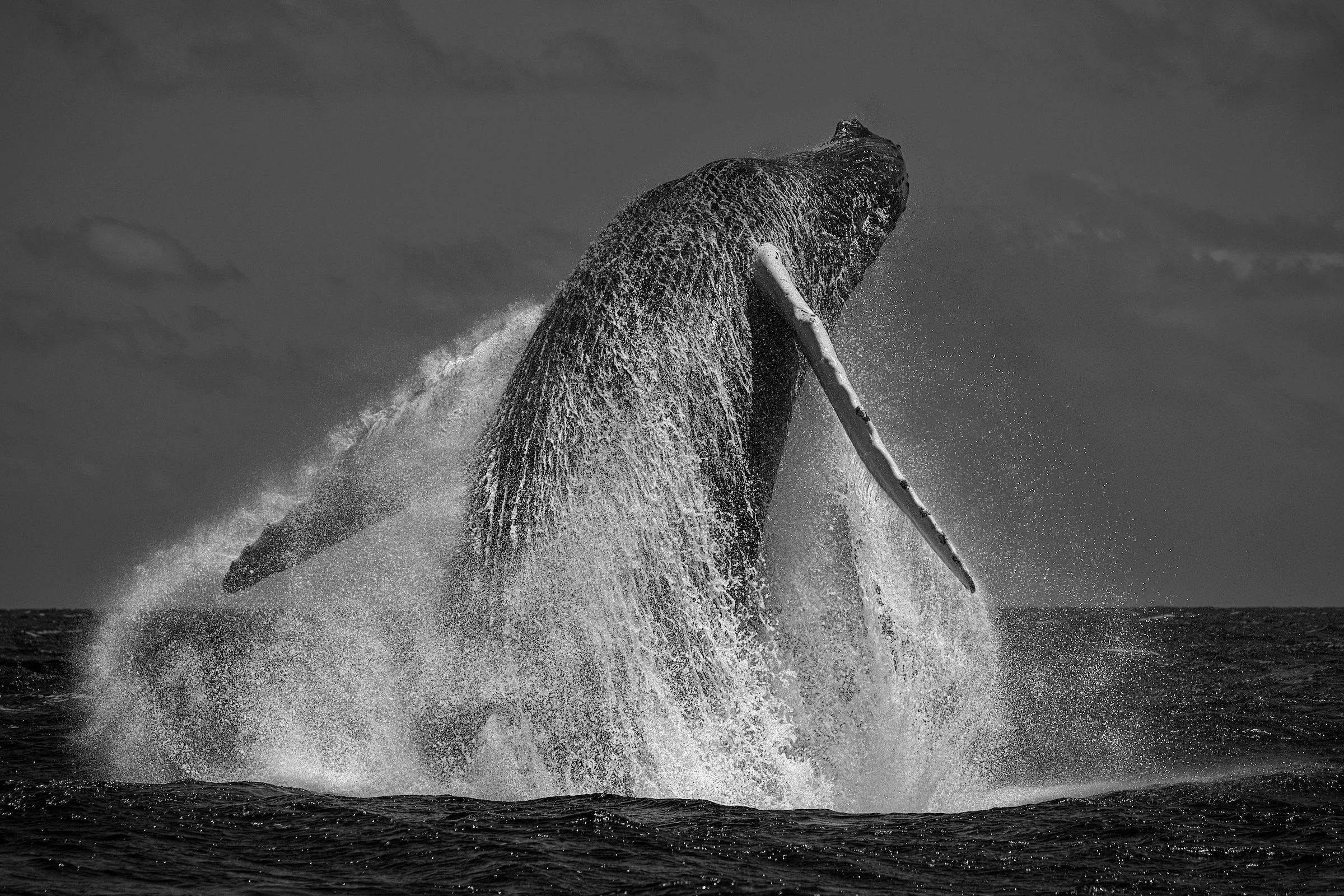
Revolution, Silver Bank, Dominican Republic, 2017
There are many different terms used to describe a whale's breach – tail breaches, chin breaches, back flop breaches, and side breaches, to name a few. Then there is my favorite of all: the spinning breach. An 80,000 pound, 45-foot long body erupts from the sea, twisting like a corkscrew while the wind peels hundreds of gallons of water down its leviathan form. It is an impressive sight to behold.
Is there one image in Reverence that means the most to you? Can you tell me about it?
There isn’t just one image. Every photograph in the book holds its own meaning, especially those that have made an impact by representing their habitats. One example is Ice Waterfall, which has become my best-selling fine art print. It provided me with the means to create this book, and it also served as a gatefold spread in National Geographic for a climate change feature. Later, it appeared on the cover of a Pearl Jam album with Eddie Vedder, which helped the image reach far beyond the traditional photography audience.
For me, that’s what makes an image powerful. Many photographers think their job is done once a picture is sharp and properly exposed. But a truly great photograph continues to live and work long after it’s taken. It becomes part of something larger, serving the causes and ideas you care about. Reverence is a collection of those images, ones that have endured and carried meaning over time.

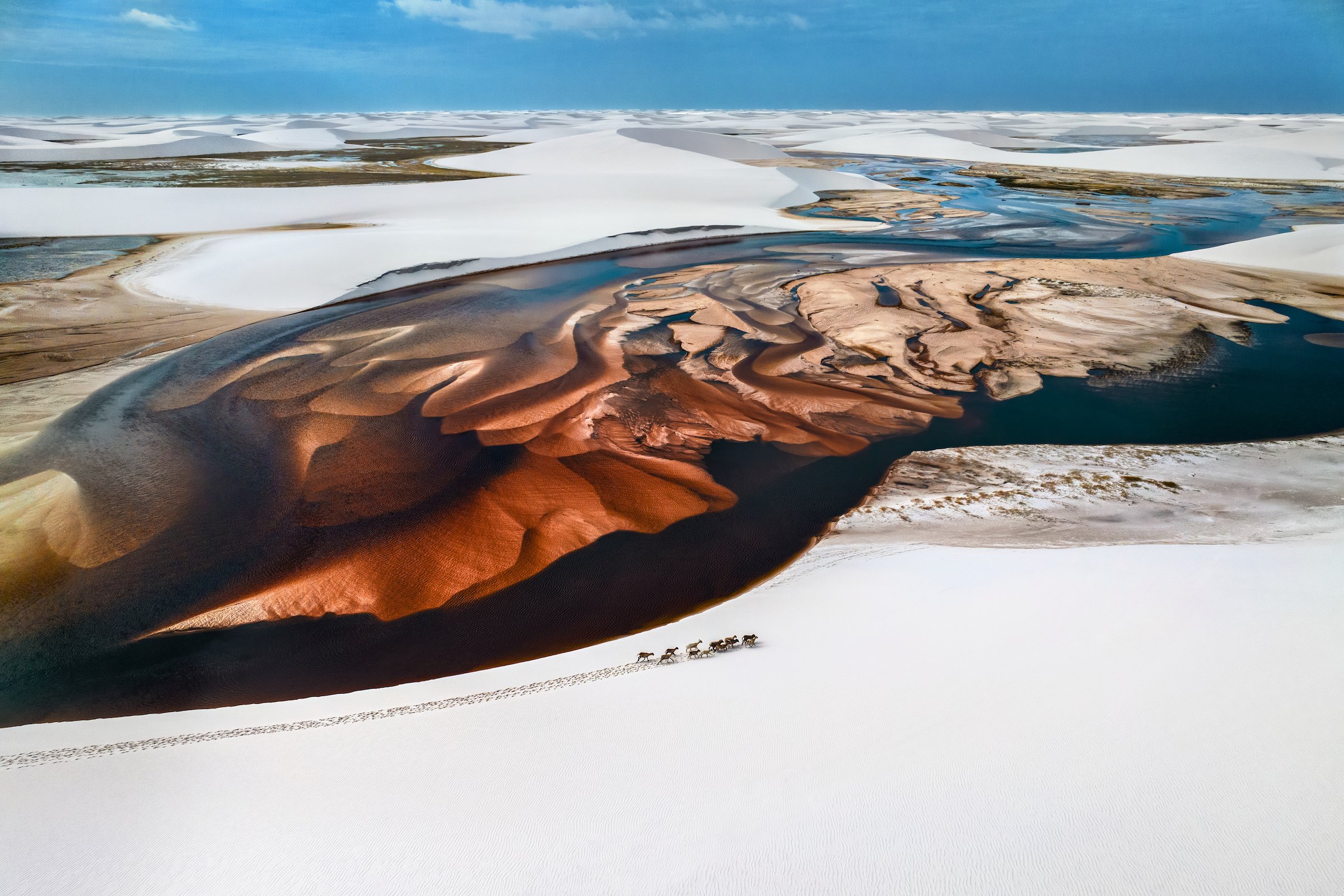
The Herd, Lençóis Maranthenses, 2024
A rogue herd of goats from a village on the outskirts of Lençóis Maranhenses crosses the dunes near a tannin-dyed river. Home to otters, countless birds, and maned wolves, the national park's coastal ecosystem spans over 600 square miles of white crescent dunes, seasonally interlaced with rain-filled pools.
Has this slow, patient approach of waiting hours, days, or even years for a shot always been your style, or did it develop over time?
No, not at all. When I was in my early twenties, I was impatient and hungry for results. I wanted the shot so badly that I sometimes took shortcuts. I would move too quickly toward an animal, and it would run off, stressed. Eventually, I realized that this approach made me sad. I got into photography because I love animals, yet I was upsetting them, and that tension showed in my images. That’s when I decided to slow down. The one thing I always had was time.
I also developed strong survival skills, which allow me to be dropped off in the middle of nowhere, in the high Arctic, for months at a time. I can live alone in a small tent, wake up in the morning, and find a grizzly bear sleeping outside. Those are the moments I can experience because I’m patient and prepared. People who rush into situations with expensive gear and long lenses often think that’s enough, but it isn’t. You can’t buy those connections. When you rush, it shows in your photography.
Taking time, showing respect for the animals and the ecosystems you care about, that’s when nature begins to trust you. When that happens, magic unfolds. But I also fail 98 percent of the time, and I’ve learned to accept that. Failure is part of the process, and it’s completely fine.
What’s next for you after finishing what you called your most important project? What comes after this?
We have a lot going on. Right now, we’re working with SeaLegacy on a major plastic pollution project in Indonesia. I’m proud that the proceeds from Reverence are helping fund organizations like Sungai Watch, which employs hundreds of Indonesians to collect millions of pounds of plastic. The book also supports tree planting in Africa, helping protect rhinos, elephants, birds, and many other species, as well as coral restoration efforts in Indonesia.
We plan to continue working underwater in Indonesia and on conservation projects in Africa. When the chaos of the world feels overwhelming, I find peace by spending time with animals. When I need a break from photographing wildlife, I go back into nature and spend even more time with them. That’s what brings me happiness. For Christina and me, those moments make us feel connected, alive, and part of something much bigger than ourselves.
Thank you so much for sharing all this with me. It’s been inspiring to hear how your work blends science, storytelling, and such deep respect for the natural world.
Thank you. I really appreciate the thoughtful questions and the chance to reflect on what Reverence means to me. I hope the book helps people reconnect with nature and realize that every one of us has a role in protecting it.
It definitely will. Thank you again for your time, and for everything you do to remind us what’s still worth fighting for.
Thank you. It’s been a pleasure talking with you.
To discover more about this intriguing body of work and how you can acquire your own copy, you can find and purchase the book here. (Hemeria)
More photography books and interviews?
We'd love to read your comments below, sharing your thoughts and insights on the artist's work. Looking forward to welcoming you back for our next [book spotlight]. See you then!
Catherine DeLattre’s photographs begin with something worth stopping for. Driving through Wayne County, Pennsylvania, she notices isolated houses, trees, and open fields. Photography Book Spotlight