How Ghana Turns Funerals Into Art: Regula Tschumi’s 20-Year Journey
Welcome to this edition of [book spotlight]. Today, we uncover the layers of 'Buried in Style. Artistic Coffins and Funerary Culture in Ghana,' by Regula Tschumi (published by Kehrer Verlag). We'd love to read your comments below about these insights and ideas behind the artist's work.
For over two decades, Regula Tschumi has photographed funerals that look like festivals.
In Ghana, saying goodbye to the dead can mean dancing, music, and coffins shaped like cars, fish, or teapots. What might seem strange at first is a deep expression of love and pride, where every detail honors the person who has passed away. Tschumi’s photographs capture this energy and respect, showing how art and ritual become one. Her long journey is not only about death, but about how people celebrate life until the very end.
She first saw the design coffins more than twenty years ago and was fascinated by their creativity and meaning.
Since then, she has returned to Ghana again and again, studying how these coffins are made and how funerals are prepared. As an ethnologist and photographer, she has documented hundreds of ceremonies, meeting the artists, families, and dancers who make them possible. Her new book Buried in Style brings this world together in color, movement, and emotion. It is a rare look at a culture where saying farewell is the most beautiful form of art.
In Ghana, death is not an end but a performance of life.
The Book
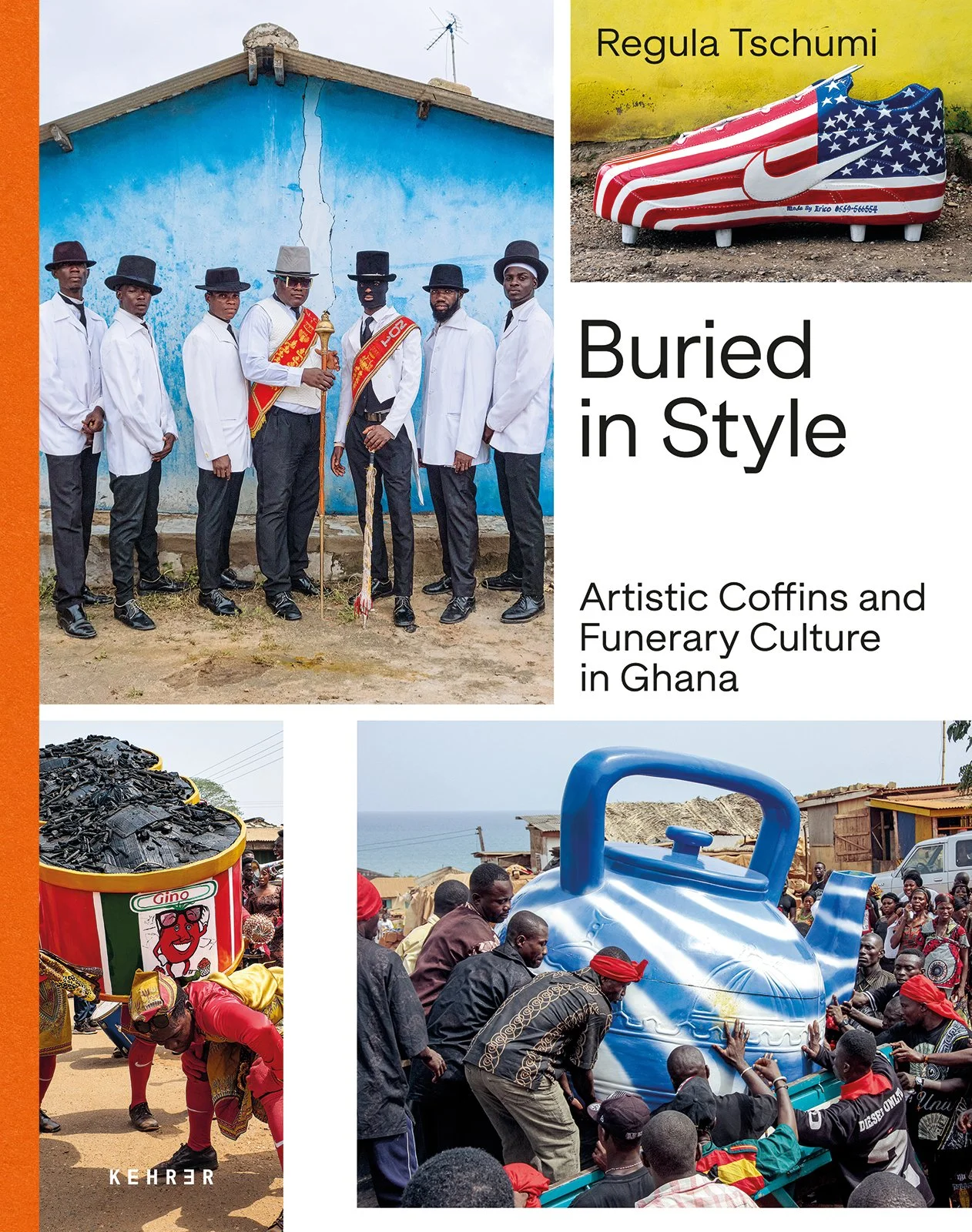
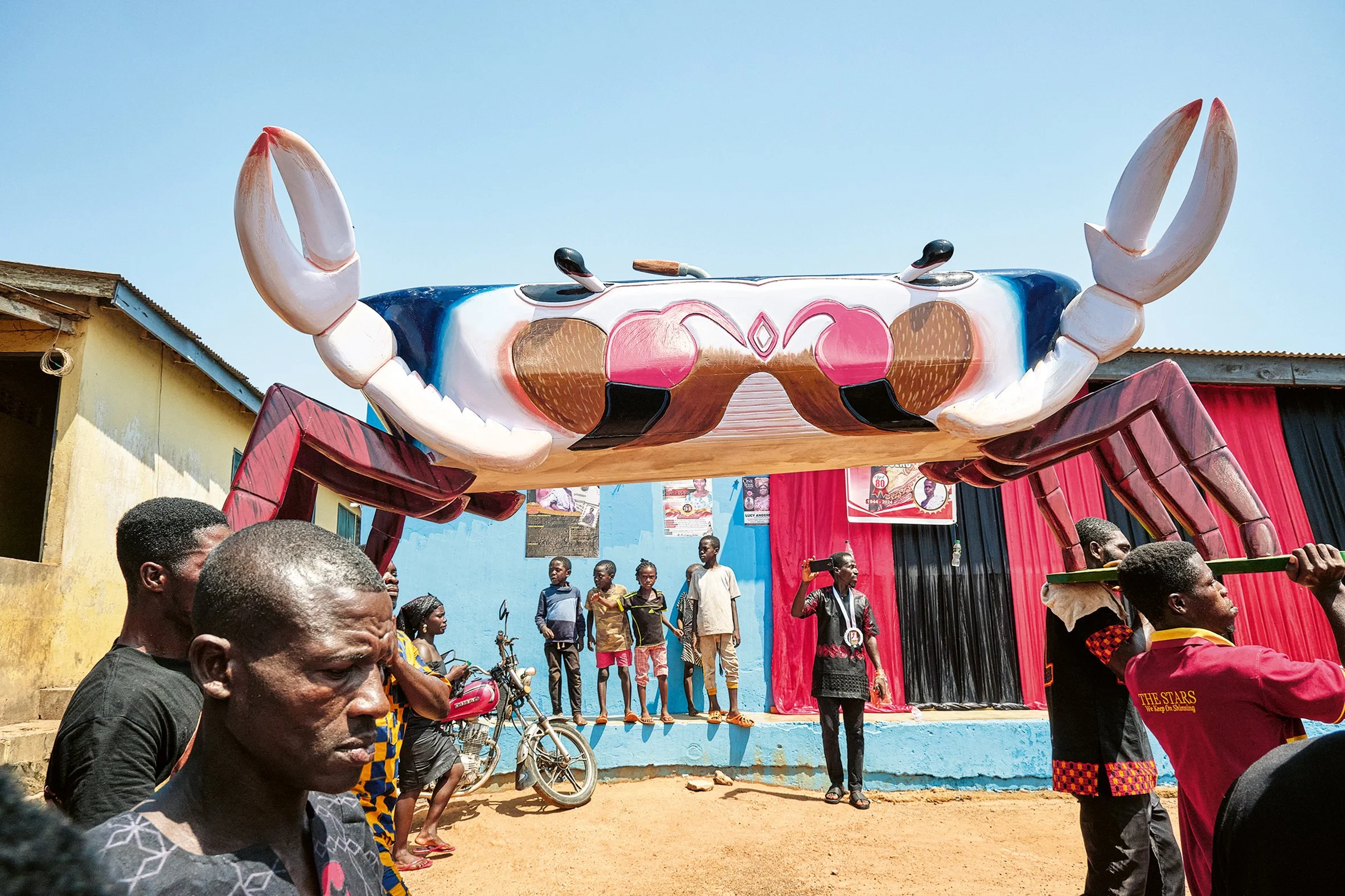
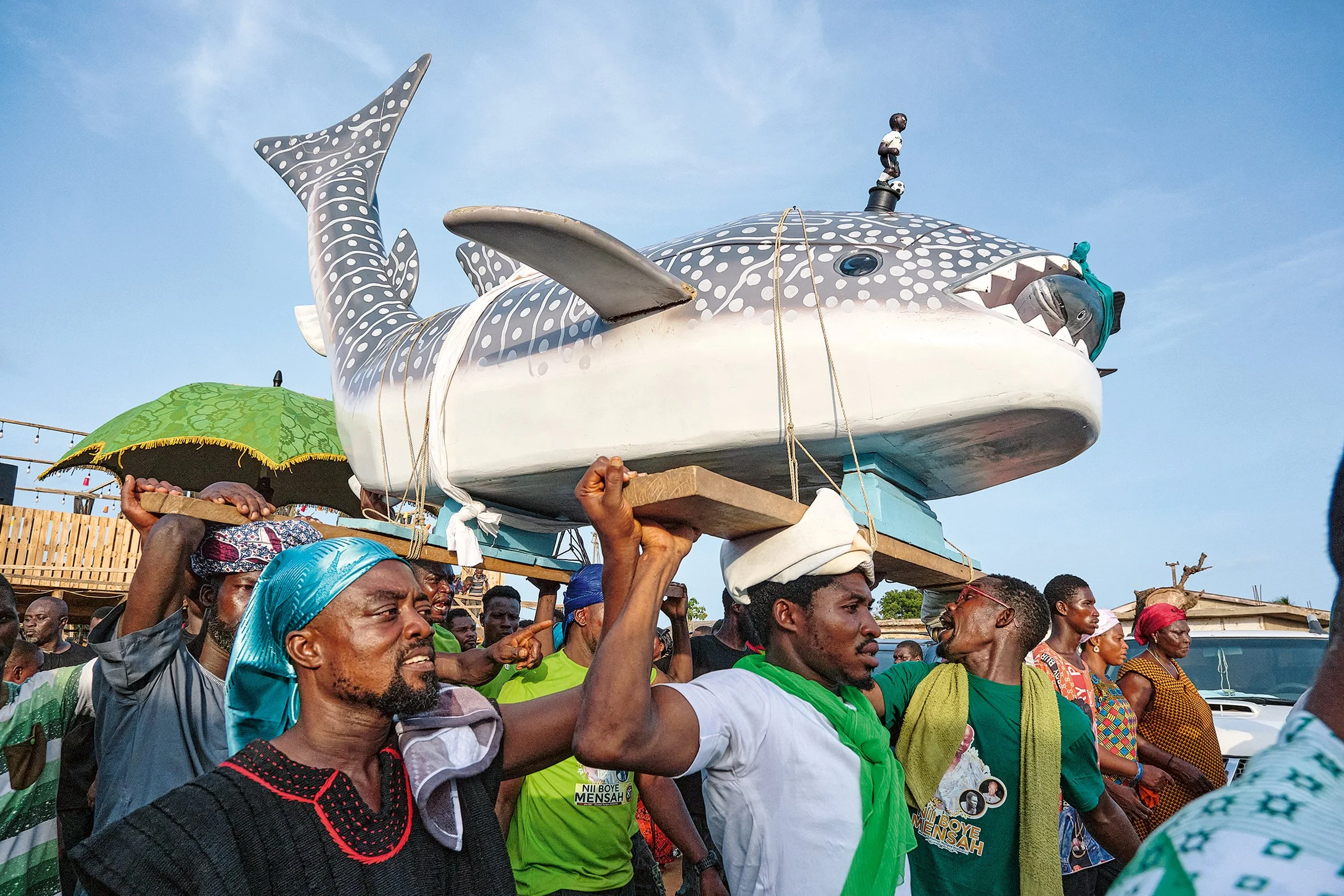
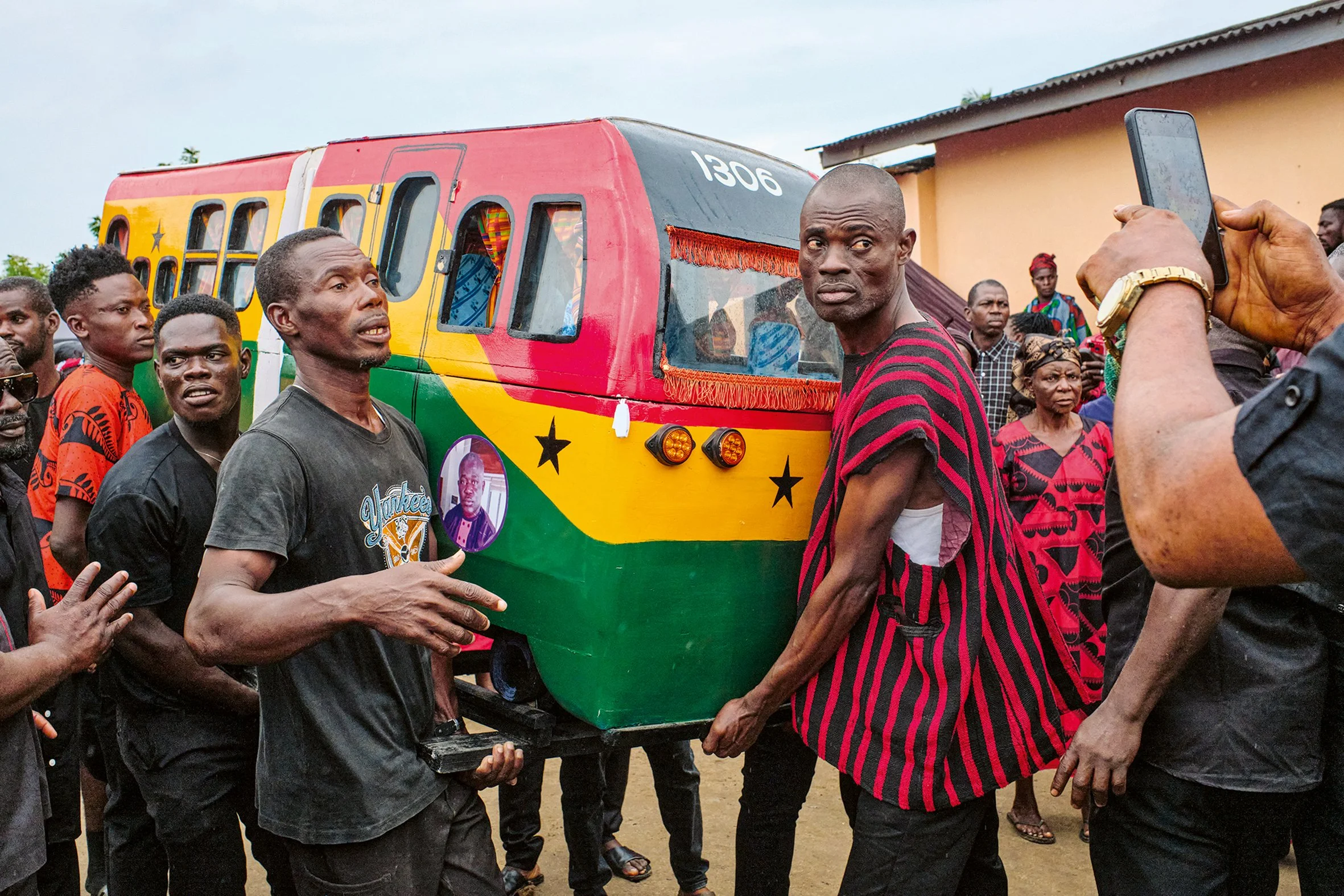
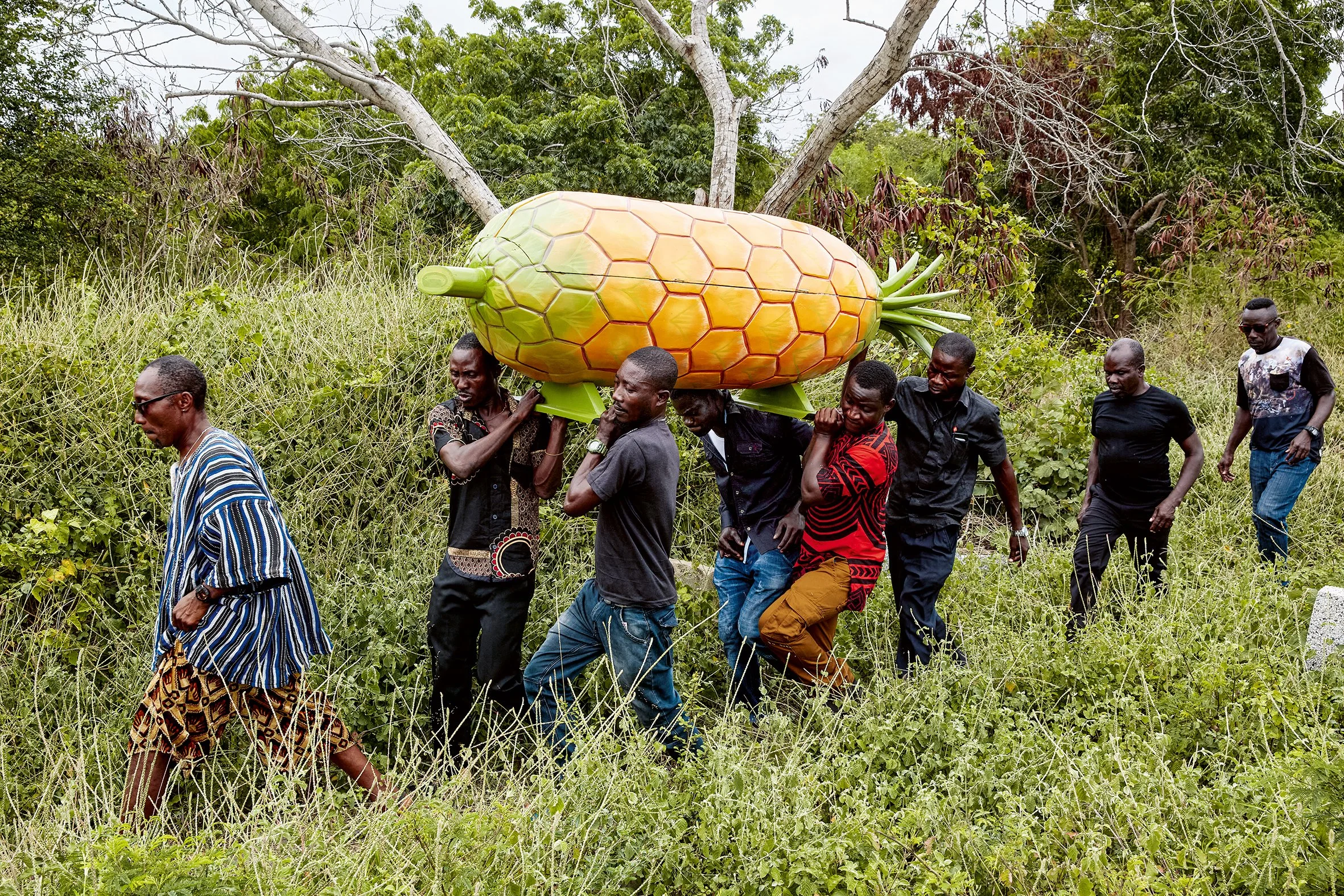
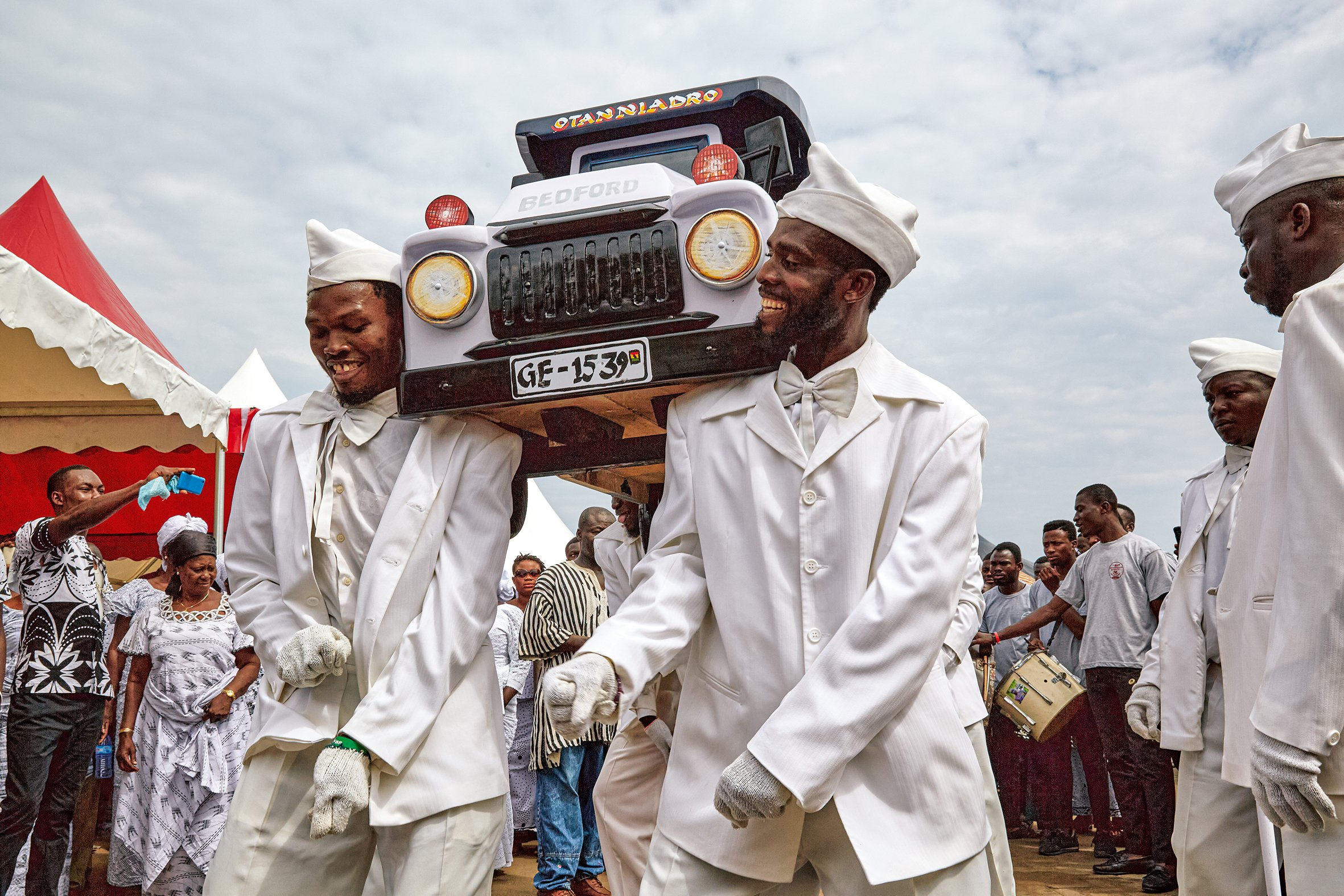
Buried in Style explores one of the most extraordinary funeral traditions in the world, the vibrant and artistic burial culture of Ghana’s Ga-Adangme people. In this community, death is not only mourned but celebrated through creativity, color, and craftsmanship. Families commission coffins in the shapes of animals, vehicles, or everyday objects that reflect the life, dreams, and profession of the deceased. Each ceremony becomes a public event filled with dance, music, and theatrical performance, turning loss into a powerful act of remembrance.
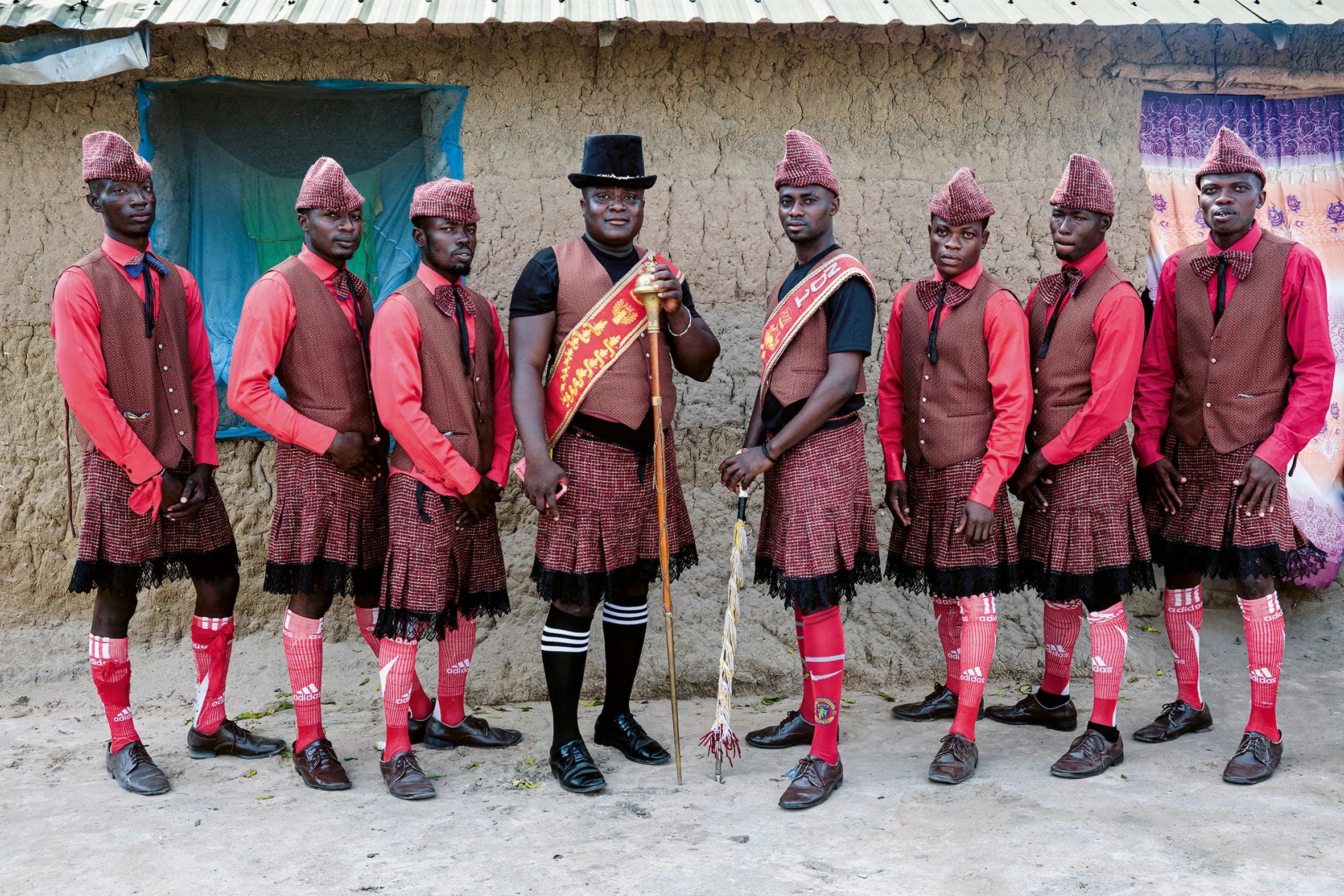
For over twenty years, ethnologist and photographer Regula Tschumi has documented these ceremonies and the people behind them, from master coffin makers like Paa Joe and Kudjoe Affutu to undertakers and dancers who choreograph every farewell. Her photographs capture both the intimacy and spectacle of Ghanaian funerals, tracing how this tradition has evolved from local custom to globally admired art form. (Kehrer Verlag, Amazon)
Starting Your Project: You used to work as a flight attendant, then you spent 20 years taking photos of funerals in Ghana. What made you want to start this photography project?
My first encounter with the figurative coffins took place in 1999. At the time, I was still working as a flight attendant and took part in the opening of the “South Meets West” art exhibition in Accra for a week. There I met numerous artists from West and South Africa and important curators from all over Europe. During that week, we went on excursions, including a visit to the studio of Paa Joe, who was already well known at the time. When I began studying ethnology a few years later and had to write a thesis, I remembered the figurative coffins in Ghana. I started looking for publications but found very little on the subject. So, in 2002, I decided to travel to Ghana to find out how these coffins are made and used in Ghana. I hadn't planned to continue working with these coffins later in connection with a dissertation from 2007 until 2012. But during my research, I kept coming across new, unexpected material, so I ended up spending many years studying this art form. Initially, photography was also just a means of recording my observations during my fieldwork. I didn't start out with the idea of publishing a photo book.
And of course, I haven't just been photographing funerals and studying coffins for the last 20 years!
Getting Permission: Benjamin Aidoo, a famous funeral dancer, helped you get access to take photos. How do you ask families if you can photograph their private funeral ceremonies?
No, I have been in contact with Benjamin Aidoo only since 2016, and he did not assist me in photographing funerals with figurative coffins, on the contrary. Through me, he met coffin artists with whom he now sometimes works. However, Benjamin is not accustomed to dancing with figurative coffins, as they are usually too heavy. I usually must seek out contact with the families myself, and the coffin artists help me with that. However, Benjamin made it possible for me to photograph him several times as an interior decorator and undertaker. And I also met his group at funerals a few times.
If I want to attend a funeral, I meet with the family beforehand or at least contact the relatives by phone. I must ask the family for permission to take photos in advance; I can't just go there and take photos. I also want to know in advance what kind of funeral it is and what clothes and colours I should wear. I inquire about how the ritual will proceed, who has died, whether there will be a service, etc. There are always a lot of questions to clarify. If I am interested in the funeral and I get permission, then I go. I also pay the family an appropriate donation, which is customary when attending a funeral.
To attend a traditional funeral, I need permission from the family, and I must know the elders, especially the priests and priestesses. They are very important at these events, and I am only allowed to take photographs if they know me and agree.
Working in Difficult Places: You live in Ghana without air conditioning, and the electricity often stops working. How do you keep your camera equipment safe and working in these conditions?
Yes, the conditions are not ideal, both for my cameras and for me. Depending on the season, it can be extremely hot and humid, which is just as uncomfortable for me as it is for my cameras. But air conditioning isn't good for the cameras either. In my house, the temperature is at least reasonably constant, warm and humid. I always pack my equipment in sealed plastic boxes after use, and so far the cameras have never let me down. But I always have three bodies with me so that I have a spare in case of an emergency.
And yes, power outages are annoying, but fortunately they are not so frequent at the moment. But I try to recharge all my devices as soon as possible when there is power. I also carry enough batteries with me so that I always have a few days' reserve.
Taking Action Photos: You like photographing people who are moving and dancing. What camera settings do you use to get clear photos of people dancing with coffins?
I can't say for sure, because I adapt to both the lighting conditions and the lens I'm using. But I often use a 16-80 Fuji zoom lens at funerals. Even when there is enough light, I set the ISO to 400, usually use an aperture of 5.6 or larger with aperture priority mode, and single photo, sometimes also CL. When I'm shooting up close with a fixed focal length, I usually use ISO 200 during the day and also aperture 5.6 or larger, depending on the lighting conditions. In addition, I use zone focus for fast-moving subjects and S mode, which I adjust and set to the subject. I almost never use face detection to set the focus. My pictures are usually a little too dark as I often underexpose a bit, but I prefer that to having overexposed photos.
Being Respectful: In Ghana, it's normal to photograph dead people, but this might feel strange to people from other countries. How do you decide what is okay to photograph?
I hadn't taken photos like this for a long time because I had my reservations. But then cell phones came along, and now Ghanaians photograph everything with them. In Ghana, too, it was considered inappropriate to photograph the dead, but if you photograph them during the wake, it's different. The dead are then specially prepared, even purposely because of photography: they are made up, beautifully dressed, and laid out in a bed in a solemn setting, or they are even laid out spectacularly and look as if they were still alive. Such layouts are intended to help relatives say goodbye to their loved ones. It also allows mourners to take one last souvenir photo, as they may never have had a photo of the deceased. Today, almost everyone has a smartphone, and these are used extensively at wakes. So now, at funerals, I only do what the relatives do, but unlike Ghanaians, I don't publish these pictures online. And I try to photograph the deceased respectfully and with sensitivity.
Camera Equipment: You started with an old film camera and now use digital cameras. How did you choose different cameras over the years for this project?
When I came to Ghana in 2002, I used my first digital camera, a small Canon pocket camera. Before that, I had only ever taken analogue photos. On my next stay, however, I already had a slightly better Canon, and again a bit later I used until 2018 the Canon EOS 5D. But then I switched to Fuji because the Canon became too heavy for me. I started to get pain in my arm, but otherwise I loved my camera, especially my Canon and the Sigma art lenses, and I still haven't given them away... It took a while before I gave them up completely and got used to the Fuji system. First I had the XT2, then the XT3, and now the XT5. I also like to use the Fuji XPro3 with a 27 mm lens in everyday life.
Unexpected Things: Sometimes coffins catch fire or are too big for graves. How do you stay ready to photograph when surprising things happen?
Of course, coffins don't just catch fire; I've only seen that happen once at a very special funeral. But unexpected things always happen, and not just at funerals. That's why I always must improvise a lot, be flexible, react quickly, and change my plans when necessary. As I often know the rituals and funeral procedures, I can get into position in time and be in the right place. I also set up my camera so that I can react to unforeseen events as quickly as possible.
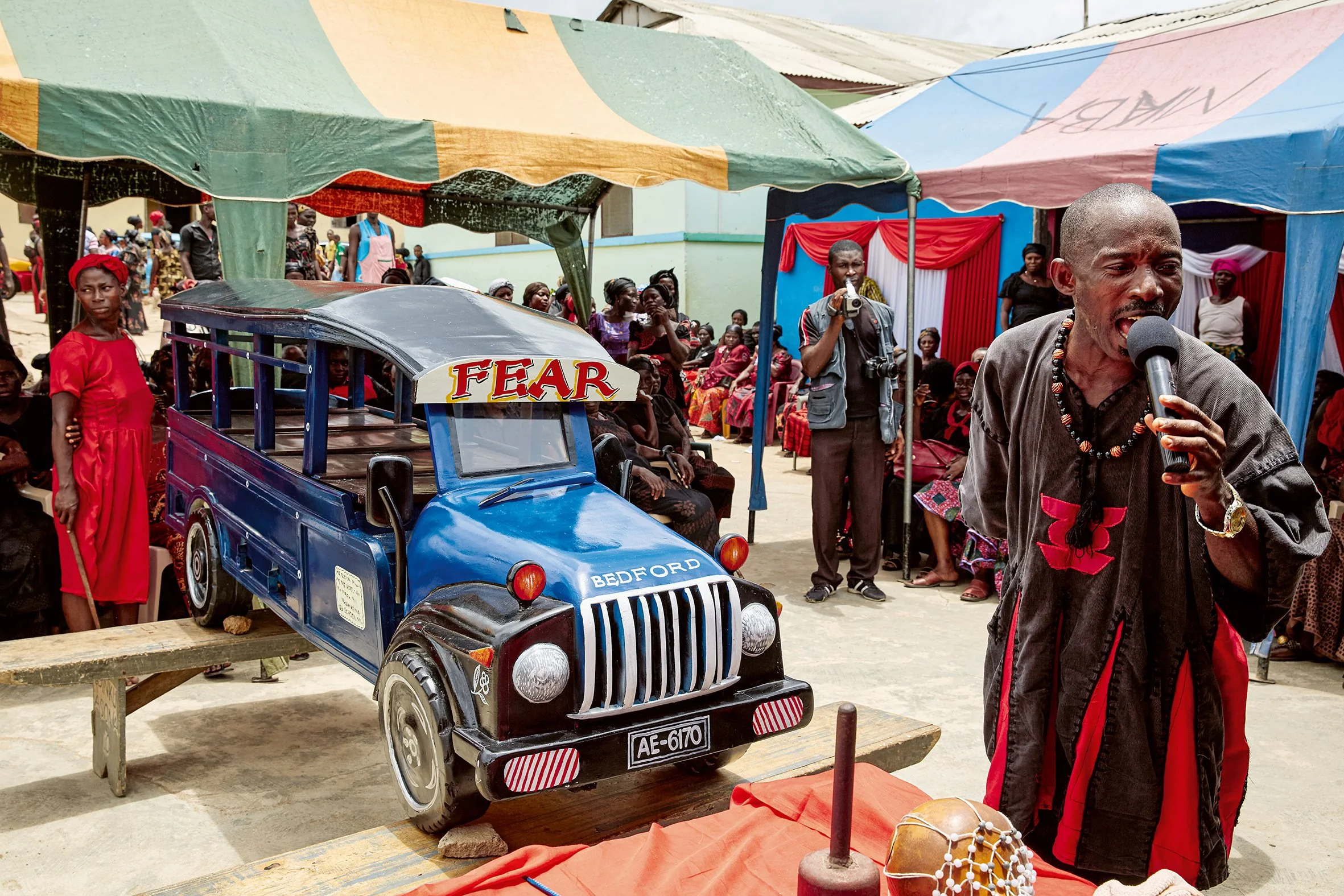
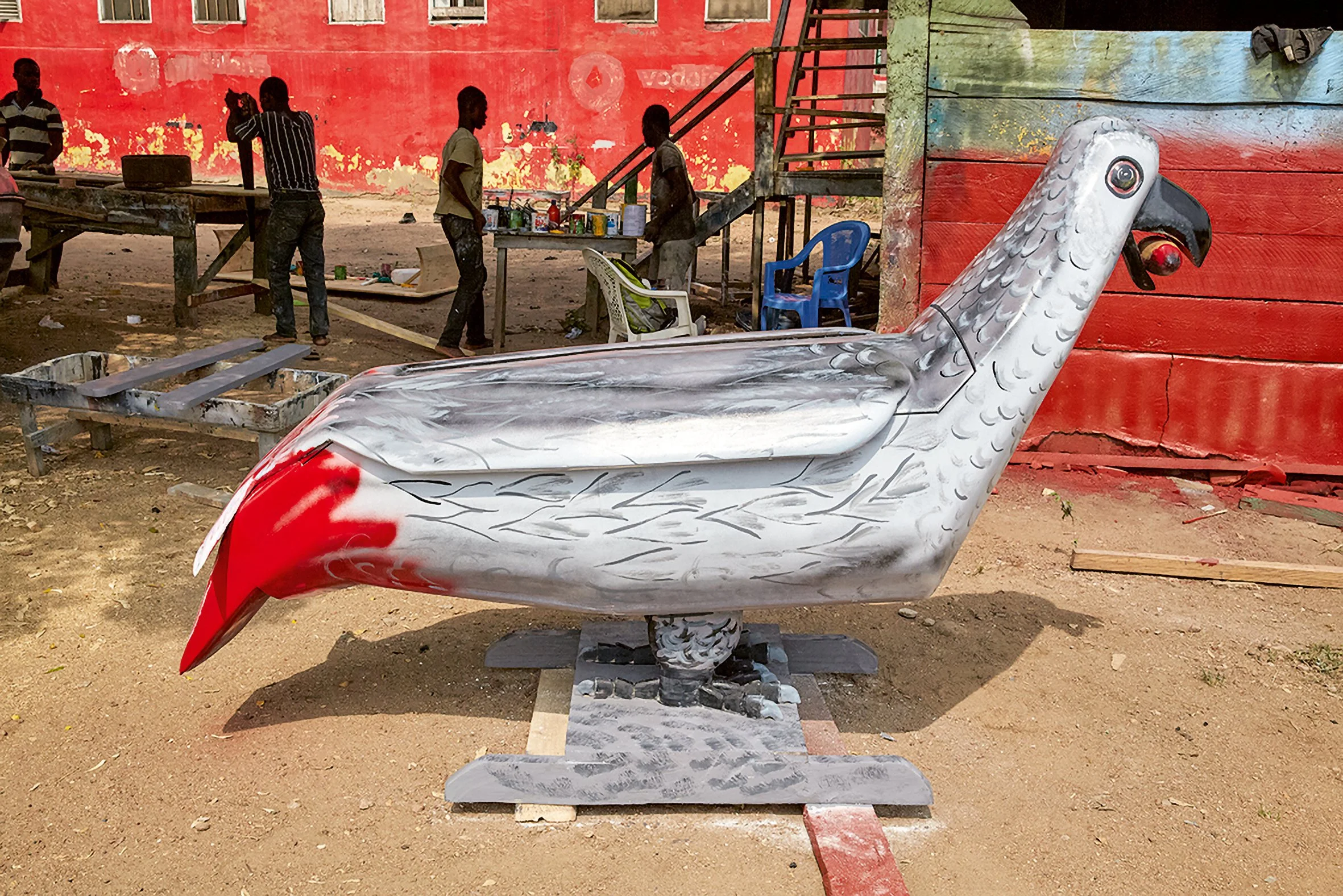
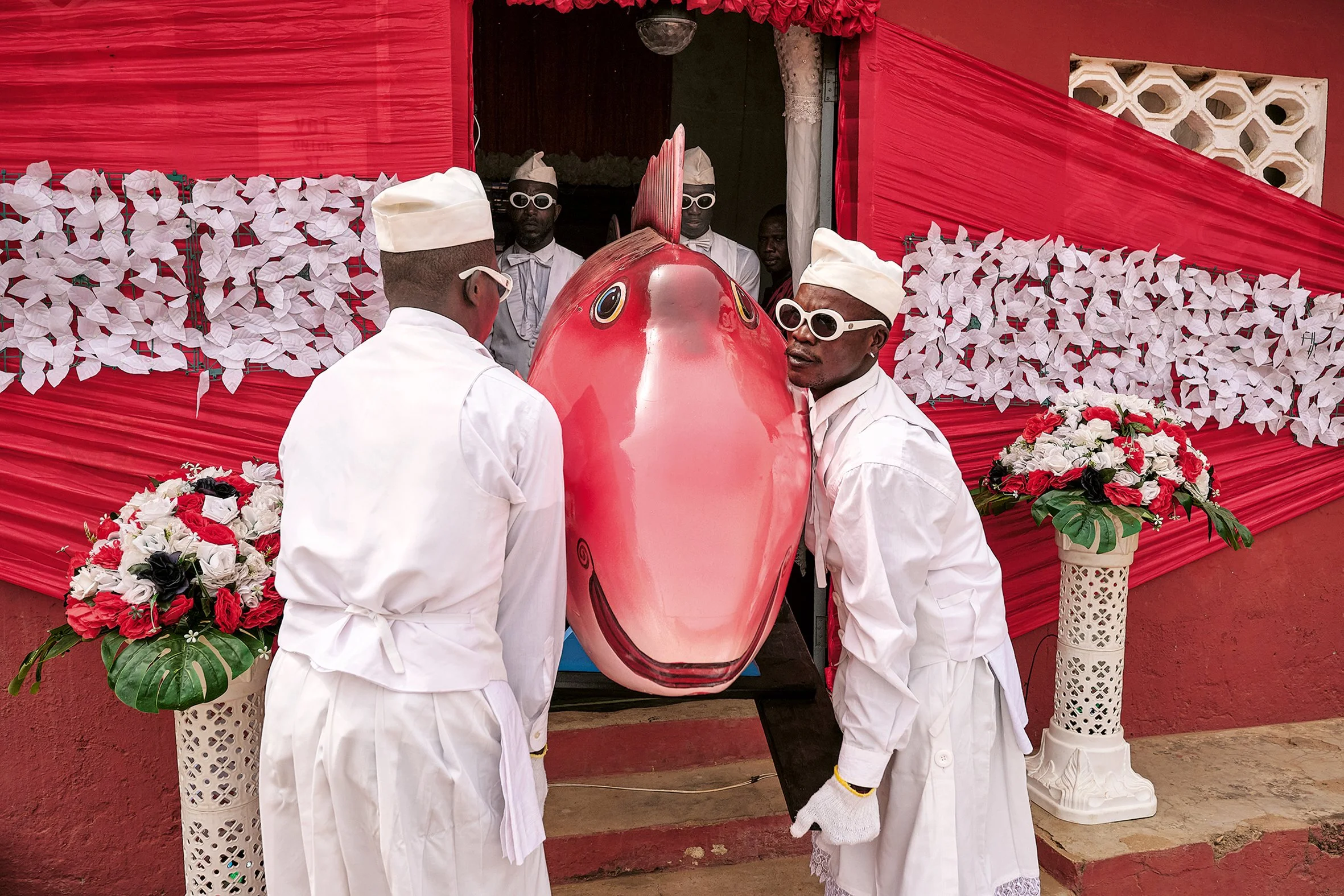
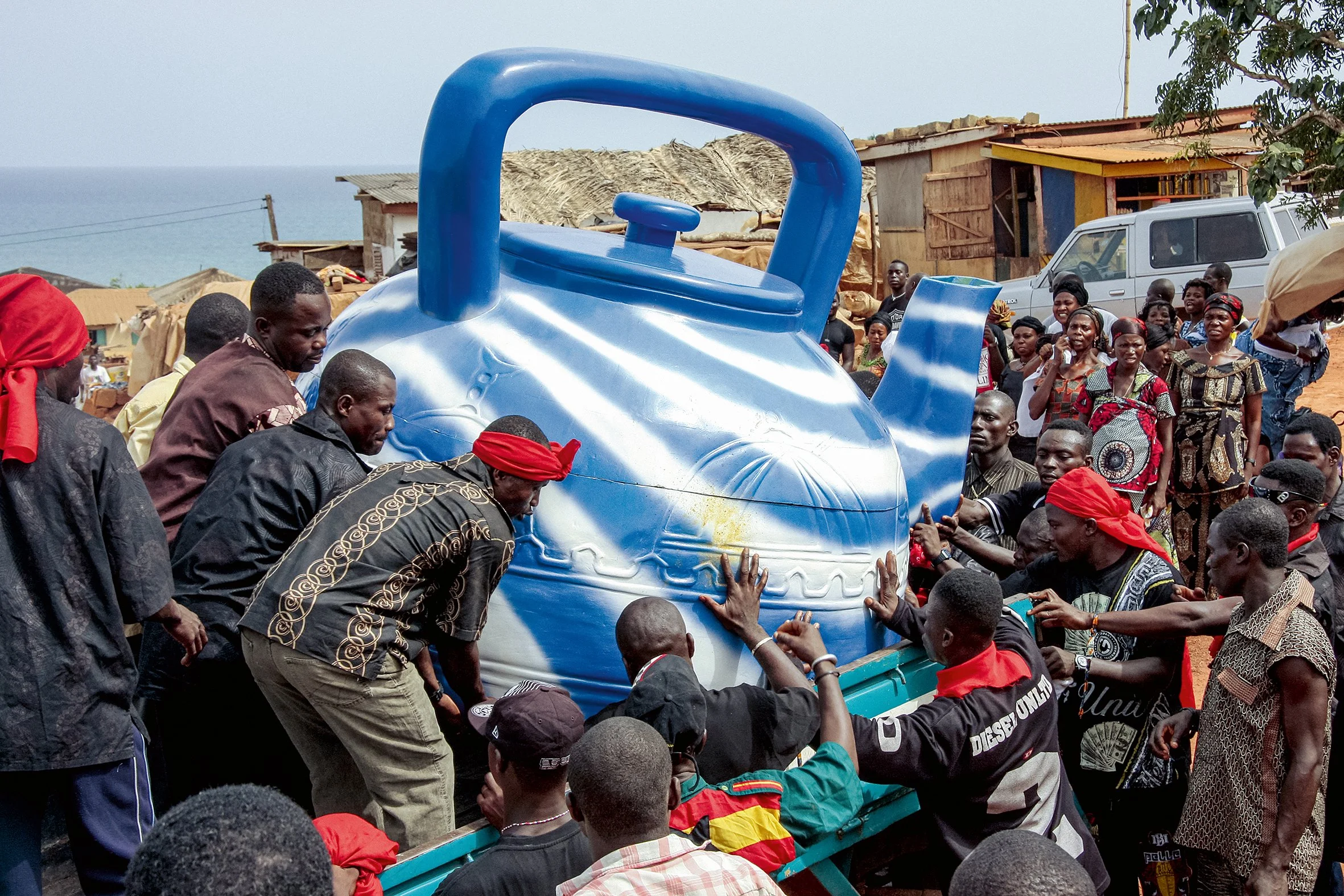
Art vs. Documentary: People in Ghana see these coffins differently than people in museums do. How do you take photos that both show the truth and look interesting to viewers?
I consider all of the figurative coffins I have photographed, and I show in my book to be works of art. I make no distinction between coffins created for funerals and those created for exhibitions. I do not photograph coffins that I do not find beautiful. There are indeed big differences in the quality of work among the numerous coffin studios today, but I don’t look at those coffins. The coffins I show all come from well-known studios and, to me, they are works of art.
Managing a Long Project: You have been taking photos for 20 years, from 2004 to 2024. How do you organise thousands of photos and keep your style consistent over so many years?
I have a lot of photos, not just from funerals. I have a very large Lightroom library just for pictures from Ghana. I keep them all together in one place so that I can also access early pictures. All files are stored on a large NAS. To help me find the photos, I always save them in folders by date and with the name of an event. This allows me to search for my pictures by file name, date, name of the event, or by keywords. This method is generally effective, and I seldom fail to locate older photos. I also have a good visual memory, which helps me when I need to search for a specific photo.
To discover more about this intriguing body of work and how you can acquire your own copy, you can find and purchase the book here. (Kehrer Verlag, Amazon)
More photography books?
We'd love to read your comments below, sharing your thoughts and insights on the artist's work. Looking forward to welcoming you back for our next [book spotlight]. See you then!
Color entered Janelle Lynch’s photographs through painting. In Another Way of Looking at Love, she photographed plants and trees on her property in the Catskills. Photography Book Spotlight