Welcome to this edition of [book spotlight]. Today, we uncover the layers of 'Recover & Release,' by Donna Wesley Spencer (published by Daylight Books). We'd love to read your comments below about these insights and ideas behind the artist's work.
Wildlife rescue centers reveal our quiet damage to nature.
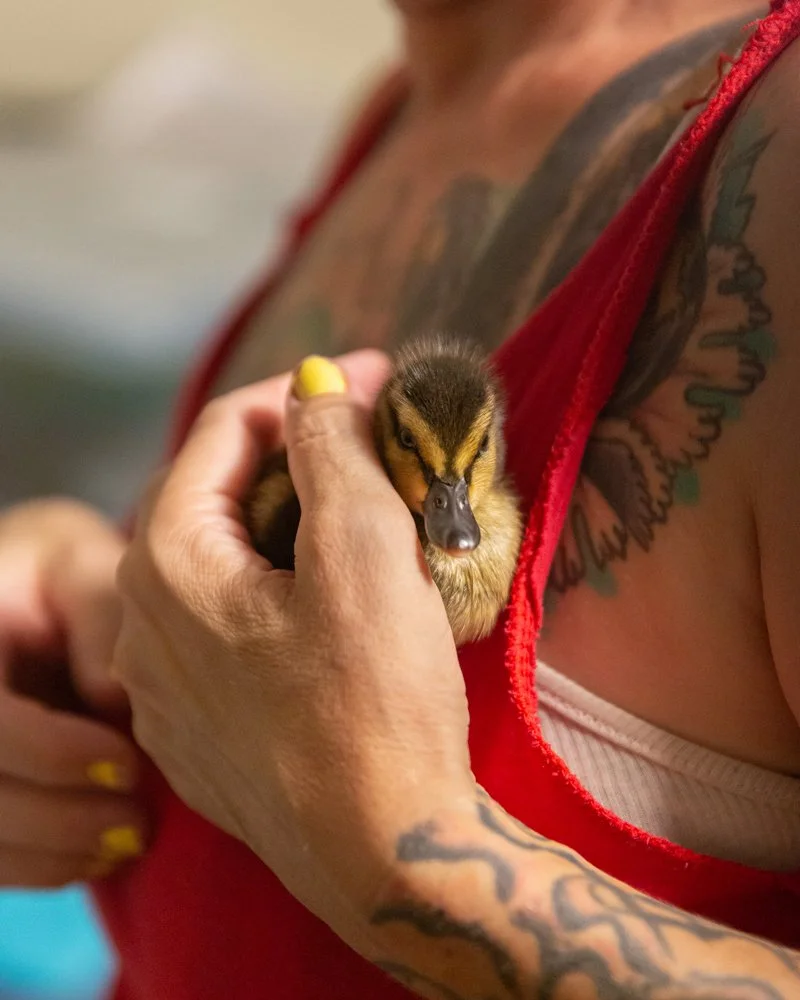
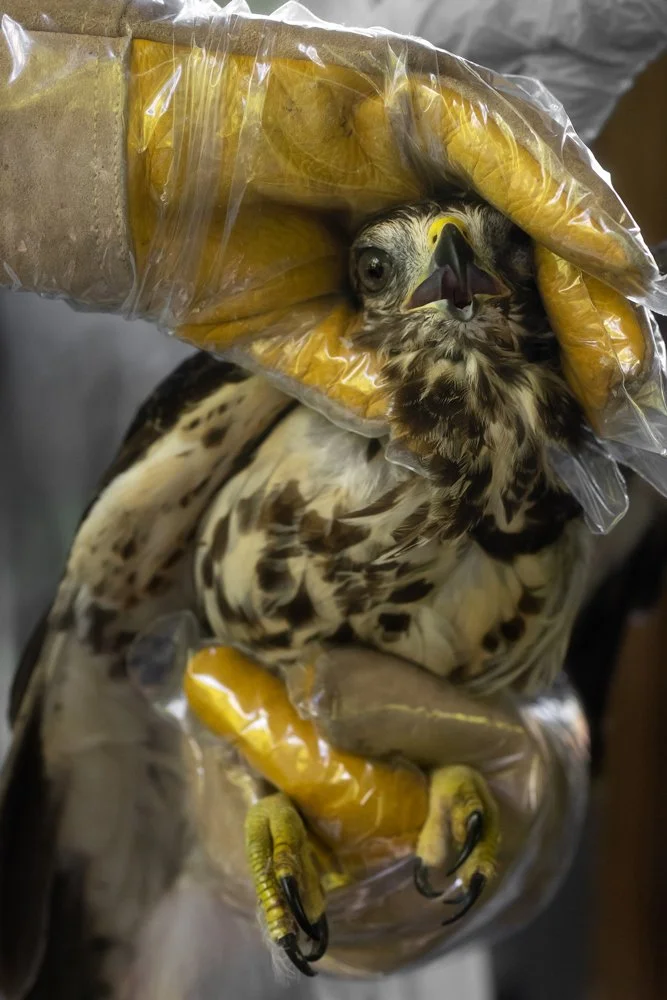
Inside these spaces, animals arrive after being hit by cars, poisoned, displaced, or orphaned. Their injuries are not accidents but results of ordinary human life repeated every day. These centers exist because the wild is shrinking and becoming unsafe. What happens there shows the real cost of how we live.
Recover & Release was made over two years inside wildlife rehabilitation centers.
In this interview, Donna Wesley Spencer speaks about access, trust, and working in places closed to the public. She explains how ethical limits shaped the photographs more than technique. The conversation also links individual animals to larger patterns like development and climate change. Together, the images and the discussion show how care can be documented without interference.
The Book
Recover & Release: Rescuing Native Wildlife is a photography book by Donna Wesley Spencer based on two years of visits to wildlife rescue and rehabilitation centers across the U.S. The book brings together 50 photographs and stories of injured animals and the people who care for them, showing how everyday human actions like habitat loss, collisions with cars, and climate change are diminishing wildlife numbers. The project includes an essay by Dr. Gregory A. Lewbart, a veterinarian and wildlife medicine expert, and a foreword by Nancy McCrary, co-director of a photography festival and founder of a regional photomagazine. With images grounded in real rescue work, Recover & Release offers an unvarnished look at the fragile line between injury and survival in the natural world. (Daylight books, Amazon)
Project Beginning: How did your background as a birder lead you to start visiting wildlife rescue centers with your camera?
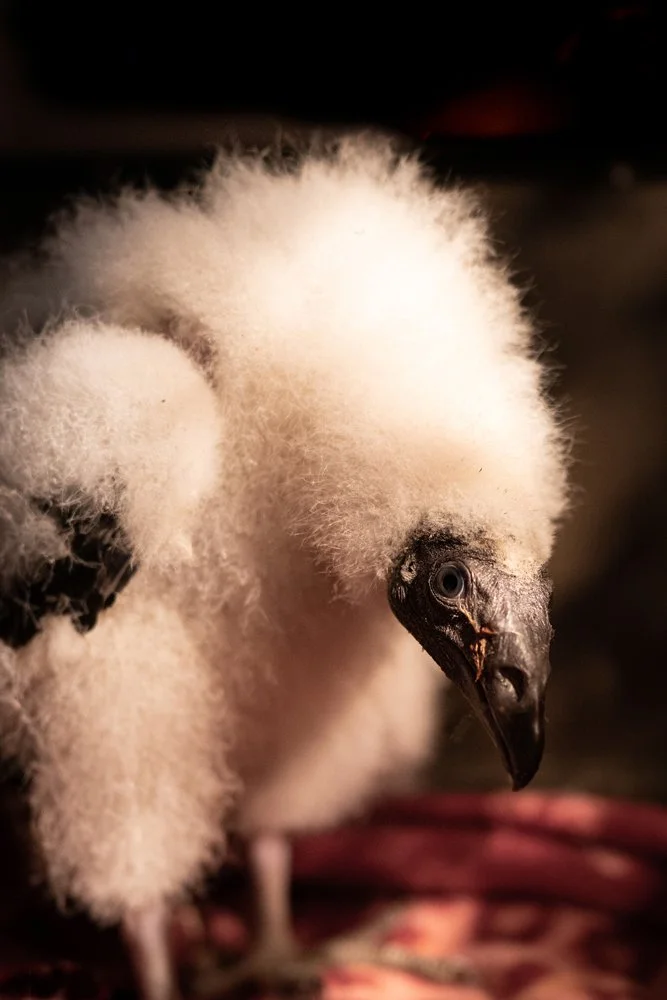
I have always been interested in birds, but have never considered myself a bird photographer. However, when the pandemic hit and I could not venture far, I decided to keep a bit of sanity by photographing my neighborhood birds. Vultures are native to this area and a large number of them liked to roost in trees behind a house near mine. I asked the owners for permission to come on their property to photograph the birds and it so happened that they ran a wildlife rescue facility just outside of our town. Because of my interest in birds, they invited me to visit the rescue facility. I was immediately fascinated on so many levels – the number and beauty of the animals, the chaos around us of people caring for the animals, the visual possibilities presented, the stories behind all of the needs for a wildlife rescue facility. I offered to make some photographs for the center’s website and a relationship began.
Access and Trust: What steps did you take to gain permission to photograph in rehabilitation centers and build trust with the animal caregivers?
The wildlife center above inspired this project and led me to visit a total of 10 facilities in our region. Wildlife Rescue centers vary in size and facilities and some specialize in a particular animal. None of these facilities are open to the public. The owner of my local facility made some initial calls to introduce me. Once I had visited the first few, I had some references that led to facilities a bit farther afield. I always wrote an introductory email with links to my website. I let them know that, if allowed to visit, I would make a donation and share photos that they could use as they wished.
During the visit, I followed the lead of the host and made photographs under existing conditions, within the time period that each seemed willing to give.
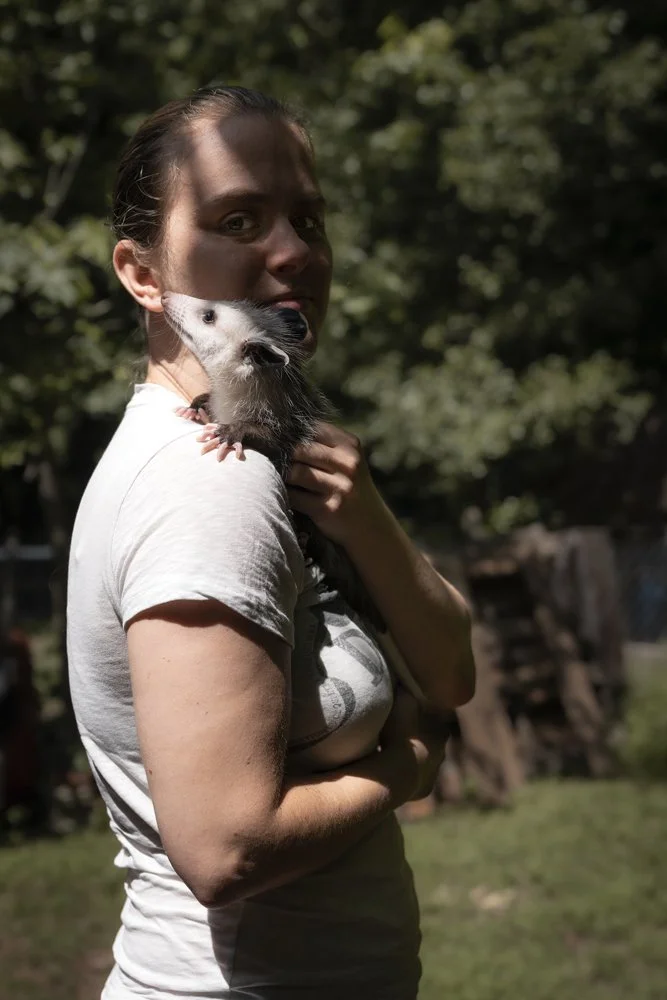
Photographing Injured Animals: How do you approach photographing hurt or stressed wild animals without adding to their difficulties?
I learned quite a lot while initially working at my local facility before I visited all of the others. I simply did not photograph either people or animals under stressful conditions, and I certainly did witness a few. I always tried to be as unobtrusive as possible. Of course, all the animals in these facilities are away from their habitats, but caregivers have placed them in enclosures appropriate to the animal and work to diminish stress. I often made photographs when animals were about to be fed, or after they had adapted to their environment.
You said you never photographed during stressful situations. Were there moments where you really wanted to capture something powerful but had to hold back?
There were certainly times when I wanted to photograph a situation, but did not. I was present a few times when a seriously injured animal was brought in and I watched as the veterinary staff assessed the injury. I learned early on that this was too stressful a time for the staff as they were trying to work quickly to see if the animal could be saved. Both the animal and the people were at the most extreme moment and they did not need me to be close and moving around for the best angle.
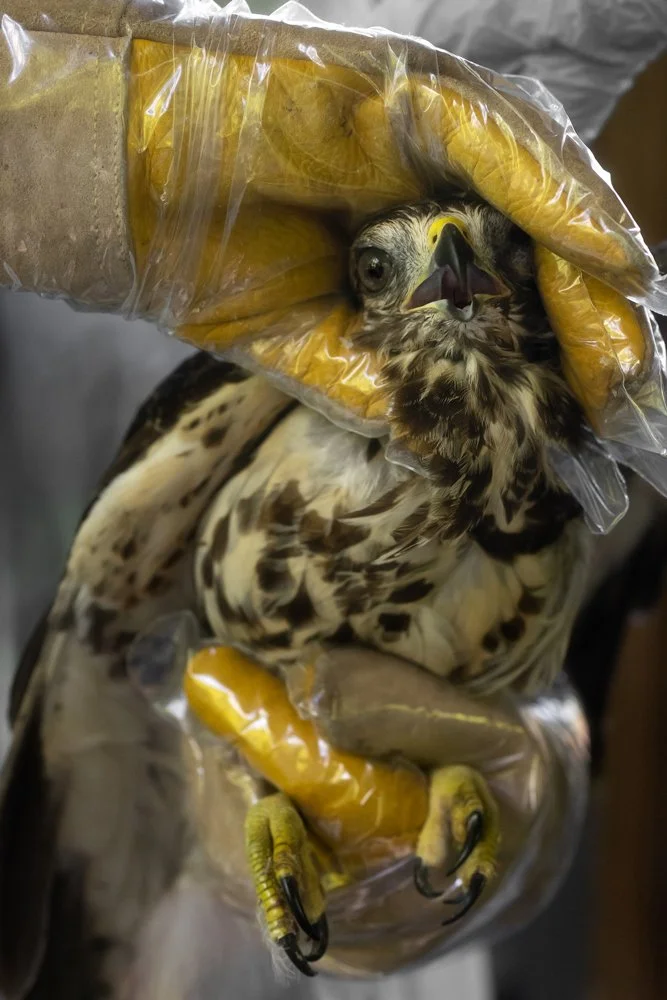
Technical Challenges: What specific camera settings or techniques work best when shooting in indoor rehabilitation spaces with limited natural light?
As I visited most places only once, and for the first time, I never knew what the lighting situation would be. I like to take 2 cameras and a few lenses to adapt to the situation. I do keep a flash unit on a stand in my bag in case I can place it unobtrusively for some bounce light, as well as a small lume cube LED on a flexible tri-pod, but generally, situations called for me to move around quickly, making extra lighting impossible. Fortunately, a number of places had good window light and/or outdoor enclosures.
Ethical Boundaries: When did you decide not to take a photo because it might harm the animal or disturb the recovery process?
I always took the cues of the staff people regarding what would be permissible to photograph. If an animal seemed agitated, I did not approach the enclosure. I never used a flash near an animal, nor did I ever move or touch anything even if I knew I could get a better shot! Treatment of a seriously injured animal was certainly interesting, but my presence would be too stressful both to the animal and the staff.
Documenting Caregivers: How do you capture the relationship between the rescue workers and the animals they care for?
Permission to photograph from each person comes first. There are staff members, veterinarians, and volunteers, so the roles are different and it is important to establish an understanding in each situation. As my presence had generally been announced, most people were happy to share information about the animal and about what they were doing to help the animal recover. I never ask people to pose at all as I think the best photos come during a conversation when the caregiver becomes engaged in working with the animal.
Two-Year Process: What did you learn in your second year of visiting these centers that you didn't understand in your first year?
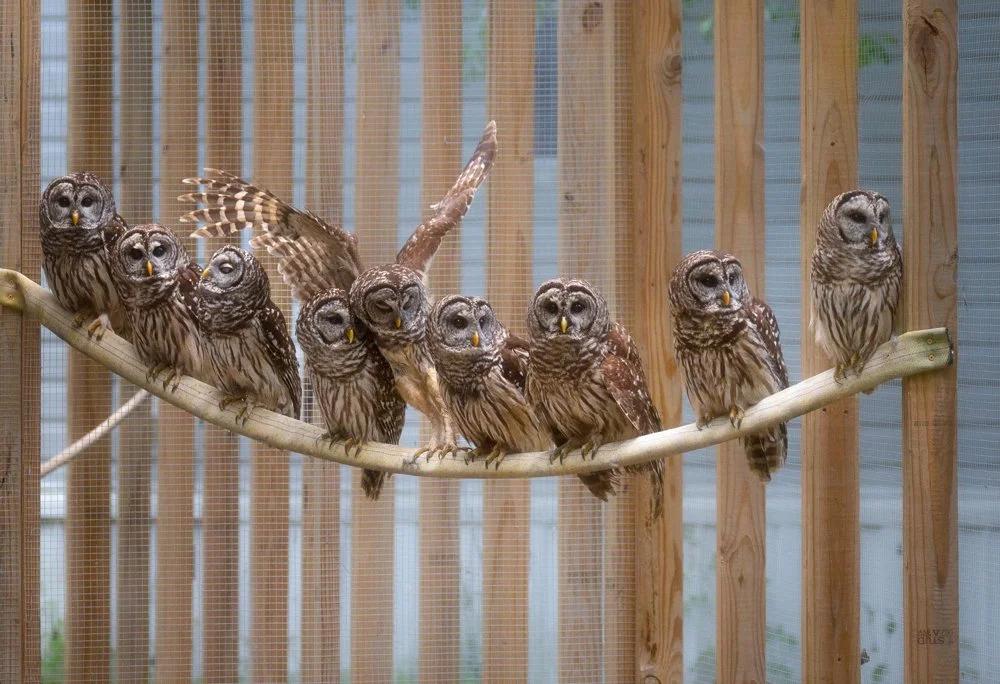
This project was such an education in the complex issues faced by our native wildlife. With each visit, I learned more about the underlying causes that brought each animal through the door. Animals are hit by cars, attacked by dogs or cats, trees are cut down for a new development, and they are too often affected by poisons. More and more, climate change is causing an imbalance between food sources and migration patterns. I began to learn the specific issues faced by particular species. For example, one of my favorite photographs is in the center of Recover & Release. Nine Barred owls are line up – so beautiful – each one at a separate time had been hit by a car because those owls hunt at dawn just by the roadside as people are going to work. Because people throw food out of car windows, the owls have learn to seek that available source, which makes them especially vulnerable to car strikes.
Can you walk me through how you composed that shot with those nine Barred owls?
This photograph was made in a large shed where about 20 or so recovering barred owls were flying about to regain strength before being released. Birds are rarely still and the composition that you see existed for a fraction of a second. For photographing large groups of constantly moving birds, I look for interesting configurations or patterns, watching particularly where they might land in a spot with good lighting and a good background.
Conservation Message: How do your photographs show the bigger problems affecting wildlife like habitat loss and climate change?
I hope that the collection of photographs in Recover & Release remind us of the variety and numbers of animals in our own back yards, and that there would not be such a great need for rescue organizations if animals could live safely in the wild – that is, if we can leave a “wild” for them to inhabit. The text in this book is written by the rescuers as they live each day with the problems that humans have caused that injure or orphan the animals that arrive each day.
Alternative Processes: You are known for platinum palladium prints and printing on vellum over gold leaf, but how did you decide what printing method to use for this wildlife project?
I hope that the photographs for Recover & Release show the real story of the people and animals in rescue facilities. None of the photographs were staged and all were made during the course of care for the animals. So color was the best choice to show the immediacy of the subject. For me, the alternative processes are another language to use for interpretation – for removing the subject from the immediate.
During this same period, I did use a few of the photographs from this project and other photographs made in wildlife refuges for some alternative process work, both in platinum-palladium and vellum over gold leaf that will be shown at Craven Allen Gallery in Durham, North Carolina, January 24, 2026 through March 7.
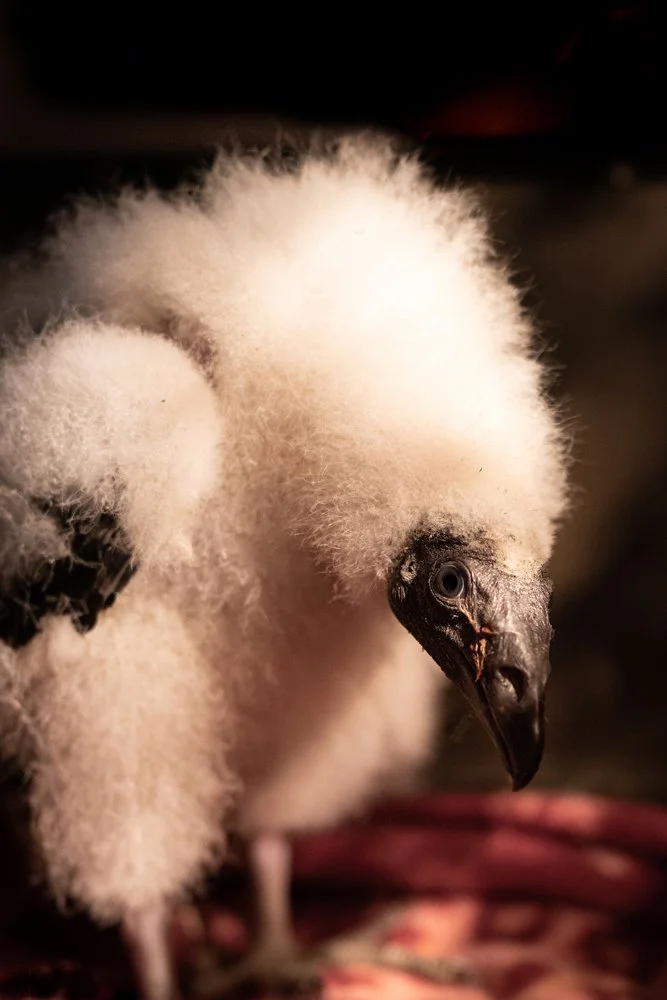
It's interesting that you chose color over alternative processes for this project because of the immediacy. How does that change the way viewers connect with these animals compared to your other work?
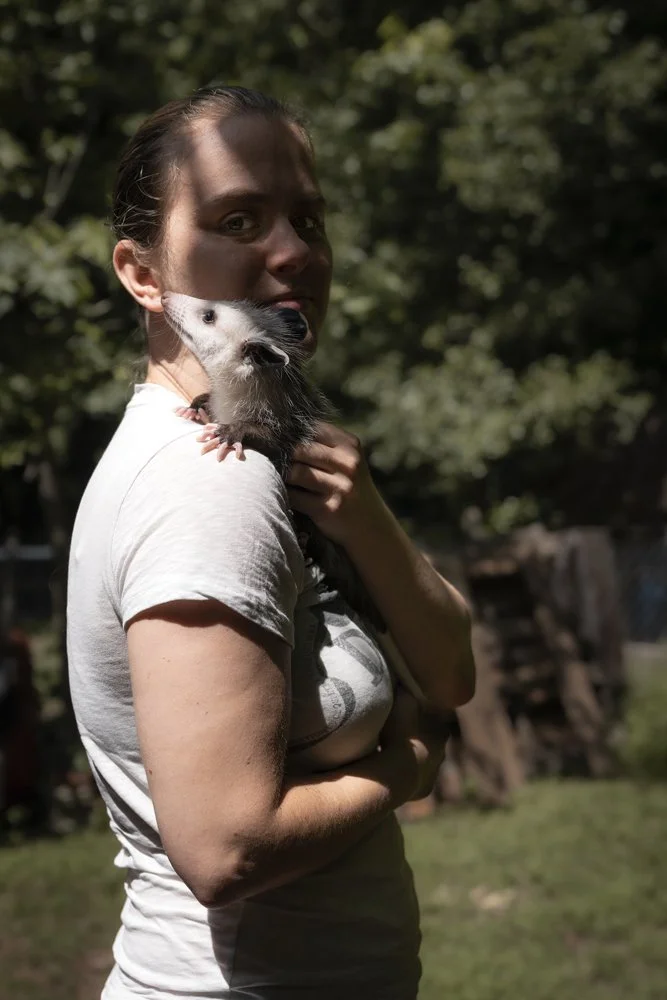
Color allows the viewer to see the animal as it is. I showed these photographs to a number of people as I worked on this project and found that many had never seen some of these animals and didn’t recognize what they were. This was their first time seeing a hairless chick or an opossum just out of the pouch. I had never seen a vulture chick and was amazed by this little creature with the white downy feathers and the fearsome face. I wanted to show exactly what I was seeing as the reality of these animals is wonder enough.
I like to use alternative processes to remove the subject from time. To me, platinum-palladium or vellum over gold leaf shows the essence of the subject rather than the reality, and sometimes that is what I want for an image.
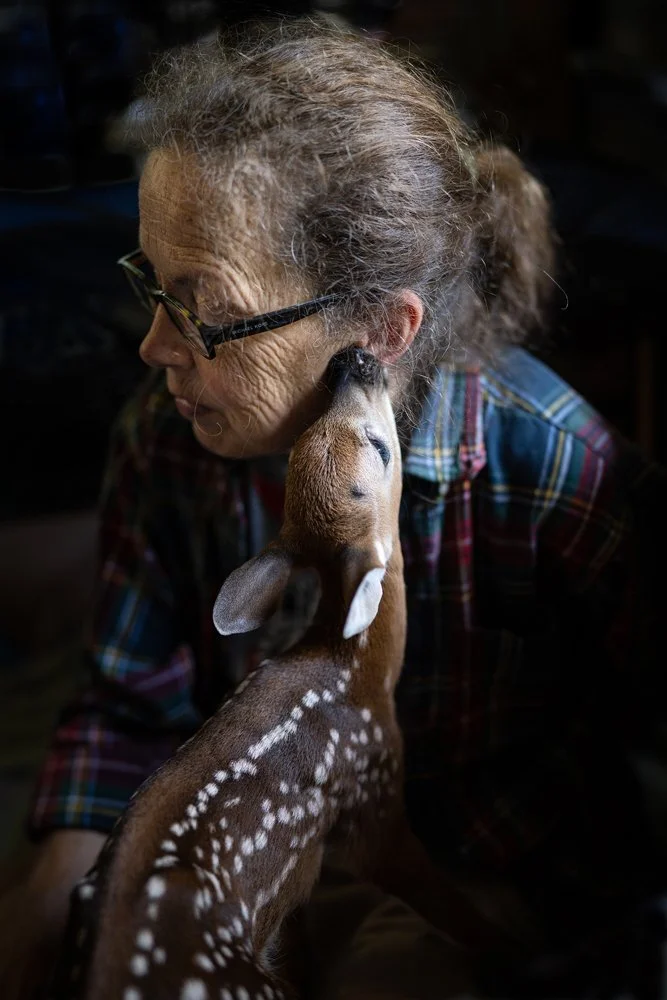
To discover more about this intriguing body of work and how you can acquire your own copy, you can find and purchase the book here. (Daylight books, Amazon)
More photography books?
We'd love to read your comments below, sharing your thoughts and insights on the artist's work. Looking forward to welcoming you back for our next [book spotlight]. See you then!
Catherine DeLattre’s photographs begin with something worth stopping for. Driving through Wayne County, Pennsylvania, she notices isolated houses, trees, and open fields. Photography Book Spotlight