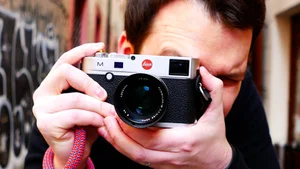
Robin Schimko: Don't panic, if you have good intentions (in street photography) people can feel that
Hello fellow photographers. In this episode I am talking with Robin Schimko (aka @the_real_sir_robin ) about street photography, film photography, books, zines and much more.
Thank you so much for joing us on this episode.
Follow Robin:
Youtube: https://www.youtube.com/channel/UCc-9JMcDZSh6R4OXuWX6Gag/
Instagram: https://www.instagram.com/the_real_sir_robin/
Website: https://www.fotodesign-rs.de
Listen on Apple Podcasts: https://apple.co/36TS6kC
Listen on Google Podcasts: https://bit.ly/2UHwbun
Listen on Spotify: https://spoti.fi/3rrYMA0
Listen on SoundCloud: https://soundcloud.com/user-228441570
You can also subscribe to Best of About Photography podcast for shorter episodes more often.
Listen on Apple Podcasts: https://bit.ly/BestOfAboutPhotography
Listen on Spotify: https://spoti.fi/3fcf9M7
Listen on SoundCloud: https://soundcloud.com/user-499230514
In case YOUR Podcast Directory is missing, please let me know in the comments bellow and I will add that. Thank you!
If you want to follow me on social media
SoundCould: https://soundcloud.com/user-228441570
Instagram: https://www.instagram.com/aboutphotographyblog/
Facebook: https://www.facebook.com/aboutphotographyblog
Twitter: https://twitter.com/aboutphoto_blog
Pinterest: https://pinterest.com/aboutphotographyblog/
You can find this content and more on https://aboutphotography.blog
Get the Artlist Music: http://bit.ly/ArtlistAboutPhotography (get 2 extra months)
Get the Artgrid Videos: http://bit.ly/ArtgridAboutPhotography (get 2 extra months)
Why to use Artlist & Artgrid: https://aboutphotography.blog/blog/artlist-and-artgrid
Index:
0:00:00 - Hello there!
0:01:21 - Introduction
0:01:40 - The reason behind the_real_sir_robin nickname
0:02:36 - Robin’s POV videos
0:04:40 - Best country for street photography?
0:08:28 - What is the most hostile country for street photography
0:12:22 - How difficult is training your eye for different formats?
0:20:18 - Best ration for different subjects?
0:24:52 - X-Pan is expensive - is it worth it?
0:28:15 - Why are prices of film cameras going up?
0:31:31 - Is film having comeback?
0:35:52 - Is shooting wedding with film a good idea?
0:37:55 - Red Filter
0:43:42 - Is wedding easier for street photographers?
0:48:45 - Wedding photography process
0:52:43 - Favourite type of film
0:58:48 - Film photography process
1:01:38 - What about double exposure
1:05:27 - Should you develop the film at home or send it to the lab
1:09:56 - What is the reason to push film?
1:13:07 - When do you finish the project?
1:15:38 - Books zines and projects
1:19:26 - What are you going to do with your project?
1:23:27 - Digital or offset printing for your zine
1:24:32 - Publishing a photo-book
1:29:27 - Robin’s most favourite camera?
1:36:55 - Monochrom Leica
1:38:36 - The end - Thank you for watching!
#streetphotography #photographypodcast #aboutphography
The nickname
Let me start by asking about your YouTube nickname. How did you come up with it?
It comes from Monty Python and the Holy Grail. There's a character called Robin, like my name, and he's not exactly the bravest knight in that film, to say the least. I thought that was funny for some reason, so I came up with the name The Real Sir Robin. I'd had it before I started my YouTube channel, so I didn't have to come up with a name specifically for that. The idea was already there before I got into YouTube at all.
Point-of-view videos
Your YouTube channel is actually where I found you, and I believe it was one of your POV, "how I shoot," videos. How did that series come about? I know you're a wedding photographer, but you've also done a lot of street photography, so I imagine the idea was to show your audience how you work.
Yes, the idea came up because a lot of people were asking me how I do this, what exactly I'm doing, so I thought maybe I should just make a video. I had no intention of really starting a YouTube channel, I just wanted to make one video. Back then I was in Korea for a couple of months, so I filmed that first one in Seoul, and it was good fun. Then it developed from there, I shot another one, and another one, and it just kept happening. Now I don't even know how many there are, I think I'm approaching a hundred or something like that. It's pretty crazy to think about. If somebody had told me after I shot the first one that I'd end up with hundreds of them, I probably wouldn't have believed it, because the thing is, you want to keep coming up with new ideas so it doesn't get repetitive after dozens of episodes. It's really hard to imagine how you keep coming up with something new.
The first one I shot with the Monochrom, but then, because I also started shooting film around that time, that's probably one reason I made more of them. I had new film cameras, everything was very exciting, and the first film camera to appear on my channel was the X-Pan. So I think that's probably why the series grew the way it did. Whether it would have evolved the same way with just the Monochrom alone, I'm not so sure.
The best place for street photography
You'd been traveling a lot before the pandemic, and you've visited a lot of cities and countries, Korea, Thailand, Mexico, as you mentioned. What place did you like most for shooting street photography?
Ah, that's a tough one. Usually you like the place you're in most at that moment, because if you come to somewhere new, it's usually your favourite place right then, since everything is new and exciting. If you go somewhere you've been too many times, it gets very familiar, and it can get boring, not really boring, but the excitement just isn't there in the same way anymore.
If there's one place I had to pick, it's really tough. I just recently came back from Russia, and that was pretty cool, I have to say. I can highly recommend it if you've never done street photography there, people are so relaxed, nobody cares at all. I went to Moscow and St Petersburg. I only had two weeks, so I thought it was better to stay in one place for a week rather than split my time, that way you have more time to explore. It's absolutely great. I might go back in winter, I think that could be interesting because it's so different, even if I freeze my butt off.
It's really hard to pick just one place, there are so many great ones. In Europe, Istanbul is pretty interesting. Bangkok is cool too, probably not my favourite, but I like the vibe, people are really nice, and there's always something new to explore, new areas of the city you can just go and discover, and sometimes in those places there are no foreigners at all. Other than that, I think Iran was pretty cool, though I didn't film any videos there, that was before YouTube. I'd like to go back, because people were really nice and it felt genuinely exotic, very exciting to shoot.
Then there are places like New York. New York is amazing, I only spent five days there and the weather wasn't great, but I understand why so many people love shooting street there. It's the whole vibe, all these massive buildings, and even if you've never been there before, everything looks familiar the first time, because you've seen it in films. So it feels like a city you've already been to in some sense. That was great to shoot in too.
Sometimes small cities can be great as well, you just need good lighting, maybe some event going on, and if everything lines up it can be amazing. But you can also go to a major city and have it fall flat. When I was in Mexico City at the beginning, it wasn't so great, because there weren't many people around, it felt pretty empty and deserted at times. So it also depends a lot on timing, not just the place itself.
The most hostile place for street photography
In your opinion, or from your experience, what's the most hostile city or country for shooting street photography?
The most hostile place would have to be somewhere I've never been to, so honestly, I can't say. People react in different ways. If I compare Mexico and Russia, my two most recent experiences, there's a big difference, and not what you'd expect. In Russia, it felt like people didn't react at all, they noticed you but just kept doing whatever they were doing, no visible reaction. Sometimes if it was a girl, she'd just smile, I think people feel flattered by it. I took photos really close up there, and it was interesting, you'll see it in videos at some point.
In Mexico, it was almost the opposite. People reacted, but not negatively, they smiled, which is actually what you don't really want, because then it starts to feel staged. So you had to be quick, because people would smile, most of them, and nobody really complained at all.
I think that's a big misconception. It depends on your energy, the way you interact, and if you come with good intentions, people can feel that. I've talked about this in my videos before, if you're sneaky and try to hide what you're doing, you're more likely to get a bad reaction, because people think if you have to hide something, maybe it's not a good thing, maybe you're up to something. If you're open about it, it's less likely that something bad will happen. It's the opposite of what people assume, that hiding it means you'll get away with it, when actually it's more likely to get you into trouble.
Of course it can happen, there are crazy people out there, you can run into someone who's just had a bad day. But what you have to keep in mind is that for most people, and we understand the concept of street photography because we're into it, ninety nine point nine percent of people have no idea what it is. They've seen some images in a gallery or online, but they don't know the concept. For them, taking pictures of strangers is a strange thing to do, because they only photograph people they know, friends, family, landscapes. It takes them a moment to process what's going on, and if you explain it and show them the photos, they often really like it. I'm pretty sure a lot of people would love to have a cool photo like that, one that isn't staged, one that's different from anything else they have.
I think people worry about this far too much, thinking about what could happen, when most likely nothing will. And sometimes, if you really convince yourself something bad will happen, it happens simply because you're thinking about it. You never really know, but for me, I've been doing this for ten years, and so far it's been fine. Somebody might yell at you, but it's very rare. There's no such thing as a bad place, it's like there's no bad weather, only bad clothing. It's the same idea.
Getting used to different aspect ratios
You've also shot in many different formats. When you shoot vertically, there's this idea that you're directing the viewer's eye from left to right, the way we read, and with a vertical image you direct it from the bottom to the top instead. What's the advantage of medium format, and what would you use it for?
That's hard. It depends what you're doing. If you're going for something artsy that you want printed, especially if you shoot vertically, it's better, because the aspect ratio is more suited to printing. But in terms of shooting portraits, it's much better than 35 millimetre too, because it's a little wider, so if you shoot vertical you have more room on the sides. For me it's similar to shooting 4x3 on micro four thirds, for portraits I think vertical makes more sense than the regular three by two ratio. If you shoot a lot and want to print something in a book that isn't in horizontal orientation, it makes a lot more sense.
Personally, I'd probably not do that much, because ninety nine percent of my images are horizontal, so I think I'd need some time to get used to it. There's definitely a way to fill the frame nicely with it, but it's a different direction. If three by two is the middle ground, X-Pan is one extreme, and this is the other side, though not quite as extreme, so it's much easier to get used to and come up with something that fills the frame well.
For street photography, I don't think there's any advantage to shooting medium format over 35 millimetre. Thirty five is better, because you get more images out of a roll, that's a clear advantage, and if I have a project where I want to go out and shoot a lot, I'd probably not use medium format. The reason I bought a medium format camera was mainly to produce different content, to have something different, and yes, you do get a distinct look, especially shot wide open. You can get something similar with 35 millimetre and a fast lens, but the bigger negative still makes a difference, the quality is generally better.
That's pretty much the reason I use something like this for street photography, but if you want to do a project that involves more documentary style photography, medium format makes more sense. On this camera I only get ten shots a roll, or twelve if I switch to 6x6, so it's not a lot. For street photography it would be hard to get one good image out of ten, but for documentary work you have more time, you can frame everything nicely and you're not wasting a lot of film. For that kind of application it's really good. For street photography specifically, I wouldn't recommend medium format at all, even though there are big names who used it in the past, Vivian Maier for instance, or Robert Capa. I think Cartier-Bresson also used medium format early on, as far as I know, before he settled on the format he became known for.
I wouldn't recommend it for street work, because image quality isn't the major factor there. If the quality isn't perfect, nobody really cares as long as the image itself is good, so that's not really a reason to switch. But if you want to do a publication, something more documentary, then the quality, especially for printing, can make a real difference, and medium format is far superior there, no question. Even with something like the X-Pan, which is essentially half a medium format frame, you can see the difference once you print it, it's not huge, but it's there.
Some people say you can emulate the X-Pan look on medium format. You can, but why would you, it's such a waste of film, because you're throwing away the top and bottom of the frame. There are some cameras, I think the Mamiya 7, where you can load 35 millimetre film and use a mask to get an X-Pan style photo. Actually, that might be the best option if you want to shoot both, because you get a medium format camera and an X-Pan style camera in one, though from what I've heard the mask is pretty rare to find.
Is it difficult to switch your mind between formats, since you shoot both medium format and 35 millimetre?
Yes, absolutely. Thirty five millimetre, the 3x2 aspect ratio, is so common that I'm totally used to it, since that's what I shoot most. But switching from that to the X-Pan is pretty rough, especially if I haven't shot it in a while, then suddenly I realise I need time to get used to it again. Shooting square format isn't such a big difference, because the format is still fairly compact, but the X-Pan is very different and needs real adjustment, especially with the 45 millimetre lens I use. With the 30 millimetre lens on the X-Pan it's less of an issue, because for me that's roughly equivalent to a 28 in terms of vertical field of view, it's just wider to the sides, which is easier to adapt to than a lens that's narrow in height but wide to the sides. It can be a bit confusing at first, but after a couple of shots I get used to it. It always takes time.
Best ratio for different subjects
Are there subjects that suit certain formats better than others? I can't really imagine shooting portraits with a wide aspect ratio like the X-Pan.
Portraits can work, I've done it with the X-Pan, but it's not ideal. I only have the 45 millimetre and the 90 millimetre for it, and with those you get more background separation, you can do some cool things with it, I've seen some good videos on YouTube showing that clearly. But that's not the main reason I use the X-Pan, I've only shot maybe two or three occasions where I used it specifically for portraits.
Other than that, for street photography and layering, it's pretty good, because you can not just layer things in the background but also layer elements to the side of the frame, since it's so wide. But it's pretty hard, because everything needs to line up, it's not easy to fill the frame with a lot of interesting things, so it's very challenging. When it works, it's pretty cool, because it looks very different, I have a few images where it totally worked, but that only happens occasionally.
The X-Pan itself is very hyped as a camera. I saw a video recently by Marques Brownlee, one of the biggest tech YouTubers, doing a studio tour, and on his desk there were film cameras, a Hasselblad, I think a Mamiya 7, and a Fuji TX-1, which is the X-Pan. I was genuinely surprised to see that there. I'm not sure if he actually shoots it or if it's just part of his collection, it looked more like the latter, but it was interesting to see all the same. It's a very hyped camera, but if somebody asked me to pick just one camera, I wouldn't pick the X-Pan, because sometimes it just doesn't work. You only get twenty shots a roll, and you often waste one because the regular aspect ratio would have worked better. You can switch mid roll, but the whole point of the X-Pan isn't to shoot 3x2, you can, but it's a bit against the spirit of it.
I also saw that you shot some vertical images with the X-Pan, which must be really challenging.
Yes, it can work. People ask me about trying that, but it's really rough. Sometimes it comes off well, and in some cases the regular 3x2 wouldn't have worked at all, so there's a real difference there. Another reason I don't do it too much is that if I upload a video, the image ends up so small you can barely see it, and it's not ideal for Instagram either. So the question becomes what you'd actually do with those images, print them, maybe make a zine or a book of only vertical shots. That would actually be pretty interesting, though hard, coming up with enough good content for it. It's especially challenging with the 45 millimetre lens I use, with the 30 it might be a little easier, since you can get closer and still fit a lot into the frame.
Is the X-Pan worth the money?
I checked the prices before this conversation, and it's crazy, absolutely insane.
If you didn't already have one, would you still buy it at today's prices?
No, not at these prices. And honestly, I'd love to get the 30 millimetre lens too, I've shot it and it's great, it felt so familiar because the focal length is similar to a 28. But the problem is, if the camera ever breaks, the lens becomes useless, you can adapt it to a digital camera, but you won't get the same field of view. That's what keeps me from buying it, because you can easily spend two and a half to three thousand euros on the lens alone, and right now, for me, it's just not worth it.
I'd much rather pick up something like this medium format camera here, it's more fun, something new and interesting. I've only shot one roll with it so far, some portraits of friends, and it already looks pretty cool. People ask me if I've sold the X-Pan, because I hadn't been using it for a while, but there are reasons for that, and if mine ever breaks, I probably wouldn't replace it. I mean, maybe, sometimes you get lucky, like with this medium format camera, I picked it up for a price that felt unbelievable, there's no way I could get that deal again, since it usually costs a lot more. Occasionally you get lucky and find a good price even for the X-Pan, but right now you're probably paying north of three thousand euros for the camera alone. When I bought mine, it was maybe half that, and even then it felt like a good price.
Why film camera prices keep rising
Back then, prices in general weren't nearly as outrageous as they are now. People have to realise these prices are often more than the camera cost brand new. It's also an electronic camera, so it will fail at some point, the question isn't if, it's when. I have friends who also own X-Pans, and so far they're fine, though one friend has had some issues, and mine is starting to act up a little too, nothing major, but it will break eventually. I know that, and if it happens, it happens. I wouldn't buy another one, though I'd love to see a new model released, I think it would sell well if the price was right, but that will probably never happen.
Why is the X-Pan so expensive?
It's the demand, it's pretty hyped, people want something different, and some people don't care about the price, which drives it up further. Film cameras in general are going crazy right now. Take the Leica M6, for instance, it's two thousand euros or more now. A friend of mine bought an M2 and told me he saw one going for one thousand five hundred euros, which is crazy, I can remember when you could pick one up for five or six hundred just a couple of years ago.
But the good thing, and a lot of people forget this when they complain that everything's expensive and blame Leica for these prices, is that it's a used market, it's not manufacturers setting these prices, it's simply supply and demand. The upside is that you can probably resell it for more later if you want, you won't lose money, especially if it's a fully mechanical camera that's less likely to break. If you sell it a few years later, you'll probably get more than you paid. All my film cameras, I could sell them and make a good profit, though I have no intention of doing that, I like using them, I'm not buying them to make money, but that's the nice part of it, compared to a digital camera, where you buy the newest Fuji or Sony and a year later it's worth half what you paid.
It's getting rougher for people starting out with film photography, because the really desirable cameras, like Hasselblads, have gotten really expensive too. When I was looking at medium format cameras like the Mamiya 7, I hadn't checked prices in a while and was shocked, three or four thousand now, no problem. I remember when you could pick one up for less than two thousand just a year or two ago. That ruled out the Mamiya 7 for me, I'm not paying that kind of money for that camera, it's not worth it to me.
I don't know, something will have to give eventually, because if film keeps rising in popularity, where will prices be in a few years. It's already absolutely nuts. At some point prices probably won't climb much further, but people will still want cameras, so they'll end up buying beaten up, unreliable ones instead. I like to use cameras that actually work, quirky cameras with a lot of issues can be fun once in a while, but if you're working on a project, you want a camera you can rely on, not one you have to worry about breaking the whole time. We'll see how it goes.
Is film having a comeback?
Why do you think film is having a comeback? Is it that more people are genuinely interested in shooting it, or is it more of a hipster thing, using old gear for the look of it?
I think there's more than one reason, and that's probably one of them. I can still remember in Korea seeing people who looked like hipsters walking around with film cameras, and from time to time I'd go up and ask what film they were shooting. They had no idea, because there was no film in the camera at all, it was just a fashion item. That was pretty funny, asking someone what they were shooting and getting "I don't know, no film" as the answer.
I think another reason is that people are fed up with how short lived and fast paced everything has become. If you have a digital camera like this Monochrom, you can connect it to your phone and upload instantly, and I think people realise there's a lot of pressure that comes with that. A friend told me about a twenty four hour project where you upload one photo an hour, and I told him, for me, that's not something I'd do, what's the point of shooting and uploading straight from the camera to my phone to Instagram. Maybe it's interesting for people who only shoot occasionally and want one crazy intense day like that, but it's not for me.
I think one real reason is that people don't want to deal with editing, though that's probably only a small part of it. I think what people really want is imperfection, not perfection. Even shooting the Monochrom, which is the craziest camera I've ever used in low light, absolutely insane, I shot it in Russia and St Petersburg at night and could shoot at 1/250 with no issues, completely unheard of, I still think people are tired of the constant push for perfection, because manufacturers will tell you every year that there's a new model, even better than the last, and a lot of people are fed up with that. If you shoot something like the M6, you can shoot it for many years and never feel the urge to buy something new, whereas with a digital camera you always feel pressure to upgrade to the newest model. Sony was pretty bad about this for a while, releasing new cameras every year.
When I started shooting film, my habit of buying new cameras constantly basically died. Before that I sometimes bought two or three cameras a year, especially digital ones, but since then it hasn't happened anymore, because I don't see the point. I'd much rather pick up a film camera, go out and shoot, try different film stocks, push film for a different look if I want one, and the photos don't have to be perfect. I think a lot of people would agree that's probably the main reason, it slows things down, and people find that more enjoyable than shooting digital and scrolling through hundreds and hundreds of images.
There's a place for both, honestly. For an assignment or a paid job, I'd rather shoot digital, because with film, things can go wrong, and with something like a wedding, you can't repeat it. Once it's done, it's done, you can't tell a couple "sorry, I messed up the film." I had a shoot once with a couple where I brought a film camera alongside my digital setup, I'd just bought it, an M6, and loaded it with Adox Silvermax, a really nice black and white film with a green tinted base if you know it. I shot the whole roll alongside digital, which was really just an addition. When I got home and developed the film, I pulled it out of the tank and it was completely blank. I thought, what on earth happened, the film base was completely clear, nothing on it at all. Even underexposed film usually shows something, but there was absolutely nothing.
I later realised the developer had gone bad, it was a special developer for that film that only has a shelf life of a couple of weeks once opened, and I had no idea, because the developer I normally use, Kodak HC-110, is fine to use over months, no problem. That kind of thing can happen, and it wasn't a big deal in that case because I was also shooting digital, it was just an addition. But if you're shooting a wedding, or anything that actually matters to you, that's not a nice experience to have. For that reason, digital is perfect for that kind of work, but film is different, and I love it all the same.
The red filter
You also use filters on your lenses sometimes. Is there a specific look you're going for, or are you experimenting with different filters for different film stocks or cameras?
The only camera I really use filters on much is the Monochrom. I like the look of a red filter, for anyone who doesn't know, it lightens anything red or with red in it, so skin tones get lighter and smoother, and anything blue gets darker, so you get this dramatic look where the sky goes really dark and skin gets brighter. You can also underexpose a little more because of that brightening effect. If you have people in the frame, you're already getting a more dramatic look. But you have to be careful, because if somebody has blue eyes, they'll turn almost black, they end up looking like zombies. If it's a random stranger, nobody would notice, but if you're shooting portraits, you have to be aware of it, because people will ask what's happening with their eyes.
In Mexico, I started a project and used the red filter the whole time, because I wanted a consistent look throughout. It was sunny pretty much every day I was shooting, so it made sense, on an overcast day I wouldn't use it as much, because it only really shines when the sun is out. The look is really nice on film too, though it also adds a lot more contrast on the Monochrom. The raw files actually come out quite flat in Lightroom, even shot through a red filter, so it's easy to add contrast digitally however you want. On film, though, the negative itself comes out noticeably more contrasty. If you shoot a rangefinder, there's also a focus shift issue when you're wide open or close to it, something to do with how different wavelengths of light focus differently, I can't give you the technical explanation, but I noticed it firsthand. When I shot the Monochrom with the red filter, a lot of photos came out of focus, so I did a test, used live view to focus precisely on a point with the filter on, then looked through the viewfinder and the rangefinder was clearly off. Take the filter off, and everything lined up again. I looked into it and found other people had documented the same thing. On the medium format camera it isn't a rangefinder, so there's no effect, focus stays spot on.
That's pretty much the only reason I use a filter, on the Monochrom. I probably would on the M6 too, but I don't shoot that much black and white on it. For colour work, I can often pick a film that already gives me a similar look, the Rollei Retro films, the 80 and the 400, already have that dramatic quality built in, so I can use those instead of a filter, especially since a filter also cuts a couple of stops of light, which you have to factor in.
What's the advantage of a physical filter over the black and white emulation some cameras let you preset digitally?
The thing is, on the Monochrom, using filters is the only way you have control over how the black and white looks, there's no other way around it. If you have a colour sensor, you can play with the colour channels while converting to black and white to get a similar effect, but on the Monochrom there's no colour information to work with, filters are the only way to alter the tonal rendering. It makes a big difference. I'll probably do a review of the Monochrom at some point where I show some portraits I shot in Mexico using different filters, and you can really see how different the results are.
Street photography and wedding photography
You also shoot weddings. Is that something that comes a little easier for someone with a street photography background, since it feels like a fairly documentary, candid genre?
I think it goes both ways. If you shoot a lot of candid wedding work and then discover street photography, you'll find it comes easily, because it's essentially the same thing. The only real difference is that people are paying you to be there, and most of the guests know you're there to take photos. But the approach, how you shoot, how you move, staying quick enough to catch a good moment, is exactly the same. I'm pretty sure a lot of people who shoot weddings also shoot street, because the approach carries over. The only real difference is that with a wedding you're shooting for a client, and with street you're shooting for yourself, looking for what you personally respond to.
In a perfect world, if someone books you for a wedding, they're booking you because they want your style, they want the kind of photos you like to take, because that's also what they want for themselves. When that's the case, there's barely any difference between shooting street and shooting a wedding, it's essentially the same thing. Maybe the one real difference is that if a street session isn't going well, you can just stop, but at a wedding you have a contract, and you have to see it through.
Where do you find inspiration for wedding shots? Do you work from a shot list, look online for what's popular, or does the client tell you exactly what they want?
No. I've had clients ask me to do specific things, and I've told them I don't do that, because I'm not trying to repeat images I've made in the past, I'm always trying to do something new, otherwise it gets boring and repetitive. It would be easy to settle into one certain look and just apply it every time, but I'm always trying to come up with something new, something I haven't done before, even though it gets harder to keep finding new ideas.
Often the location itself changes things, a new place is exciting, the same way a new city is exciting for street photography, you notice more, you see new things. It's the same with a wedding, a new location, new light, maybe it's raining, which isn't necessarily a disadvantage, sometimes it's an advantage, because you can do things other photographers wouldn't. If I did the same thing over and over, I'd probably stop enjoying it, because it would get boring. So I don't work from a shot list, and clients rarely ask me to follow one, it's pretty rare, but when they do, I usually tell them that's just not how I work. They booked me because they saw my images and liked them, and they want something similar in spirit, and they can see that my shots are different from wedding to wedding, they're not repeated. The candid moments are always different, it's the same as shooting street, that exact moment will never happen again, once in a lifetime, essentially.
I shot street before I shot weddings, so I don't know how much shooting street influenced my approach to weddings. It would be interesting to find out whether people who started with weddings and then discovered street noticed the same kind of influence going the other way, somebody could actually study that, it would be an interesting topic. The last two years I haven't shot many weddings, maybe one last year, but I still enjoy it, because it gives me the same freedom I have shooting street, for me it's maybe ninety percent the same thing.
Approaching a first wedding
What would your process be for someone who isn't trying to get into the wedding business professionally, but might be about to shoot a friend's wedding? I shot one myself and looked up a lot of information beforehand, because it felt like such a unique, unrepeatable moment that I didn't want to mess up. I ended up taking so many pictures out of fear of missing something, but looking back at my own wedding, I only really look at one photo. Meanwhile grandparents often want a printed photograph, but a lot of couples want four hundred images because they feel like that's what they're paying for. What should someone focus on, or avoid, shooting a wedding for the first time?
When you shoot a wedding for the first time, maybe because a friend asked you to, it really depends on your experience level. An experienced street photographer, or especially an experienced photojournalist, would have a very different experience from someone who only shoots occasionally, maybe some landscapes or the odd portrait. For someone already experienced, it might be a piece of cake, so it's hard to give one piece of advice that applies to everyone, it really depends on your skill level.
But in general, just go and have fun, that's honestly the most important thing. Don't be scared of messing up, because you will, there's no way to avoid that entirely, it will happen, Murphy's Law. Things that can go wrong will go wrong. And if you miss a moment, it's not the end of the world, I still miss moments myself sometimes, because you can't always be there, or something happens too far away to catch. Don't worry about it, just go in, have fun, do the best you can, and learn from the experience, if you make mistakes, try not to repeat them next time, because you will make some, that's guaranteed.
And please, don't shoot film on your first wedding.
So that's rule number one, don't shoot film on your first wedding.
Yes. If you're already a very experienced film shooter, maybe it's fine, but in general, if you're still learning, it's a bit like people who want to start diving. I'm not a diver myself, but I always thought it would be so cool to take underwater photos, and somebody told me, don't think about taking photos, learn to dive first, because it's already so overwhelming, there's so much to manage, and you won't get good results trying to do both at once anyway. It's the same with shooting a wedding when you're just starting out, it's already going to be overwhelming, you'll make a lot of mistakes, and your photos probably won't be great. As long as your clients are happy, that's fine, but if they have high expectations, the feedback you get might not be so great.
Favourite film stocks
Let's talk about film for a bit. Do you have a favourite film stock?
I could give you one now, and then next week I might give you a different answer, it changes. But for instance, I really like the Kodak Vision3 stocks, the 200T especially is pretty cool, I just got some scans back from Silversalt in Moscow and I love the look, it's really nice. I also like some older stocks, Fujifilm Pro 400H is a very popular one, especially in medium format, I prefer it over Portra. Unfortunately it's been discontinued, I still have a stash of it, so I'm fine for now, but it'll be gone eventually, which is sad. For medium format that's probably one of my favourites in colour.
Black and white, though, there are just so many, and so many different looks, far more variety than in colour, where the options left are fairly limited and mostly similar to each other. In black and white it's a completely different story, so many possible looks, it's hard to choose. I'd say Fuji Acros is high on my list, and also HP5 and Tri-X, the classics. If someone forced me to pick just one for 35 millimetre, I'd probably go with HP5, because it's so versatile, you can shoot it day or night and it always works.
There was also one colour stock in 35 millimetre I wish still existed, Fuji Natura 1600. It seems crazy to shoot a 1600 speed film, but I shot it in daylight, overexposed like crazy, and it still looked great, and you could shoot the same roll again at night. That was a really nice quality to have in one stock, and I think that would be a great one to have back, though it's not going to happen, Fuji isn't bringing it back. It's really sad, I still have a few rolls in the fridge, and a single roll goes for around fifty dollars on eBay now.
I remember being in Taiwan a few years ago, right around when Fuji announced they were discontinuing it. I went into a camera shop and their whole fridge was full of Natura, at half the price it was going for here in Europe. I thought that was a great deal, so I bought ten rolls, though in hindsight I should have bought all of it, they had at least a hundred rolls. Now you could sell those for four or five hundred dollars each, which is pretty insane, though I'd probably shoot them rather than sell. That's usually how it goes when a film gets discontinued, it stays around for a year or two afterward, but that one disappeared almost instantly. I was pretty sad about it, it's probably one of my favourite stocks I've ever shot, so versatile, similar to how HP5 is in black and white.
And honestly, Kodak, please bring back Ektachrome properly, and Kodachrome too, while we're at it. I don't know if you've seen original prints made from Kodachrome, but they're something else. There's a Steve McCurry exhibition running right now at Leica's headquarters, which isn't too far from me, so I'll definitely go check it out, and I've already seen some large prints, side by side with a digital print, and the difference was huge. The digital print looked good on its own, but next to the Kodachrome it looked really flat by comparison. You can tell the dynamic range isn't as wide, but the colours are so vibrant without being oversaturated, it just looks great.
A friend of mine found a box of Kodachrome slides at a flea market, dirt cheap, and when I visited him he showed them to me, just holding them up against a light source. They were shot in Japan, probably in the eighties or nineties judging by the cars in the images, and just from looking at them, the colours were amazing. That's a stock I'd love to shoot myself, even if it might be a pain to work with, but it's probably never going to happen. The chemicals are the real problem, they can't be replaced the way things stand, partly because they're not great for the environment, and it's a completely different process from C-41, so the whole supporting infrastructure is gone. I don't think it's coming back, but if Kodak ever did bring it back, I'd shoot it in a heartbeat.
Metering and using flash on film
When you go out to shoot film, what's your process? Do you carry a light meter, do you ever use flash, how do you set everything up?
I only bring a light meter when I'm shooting slide film, because you have to be spot on with your exposure there. On my M6, for instance, there's no battery in it at all, because I'm not using the built in meter, and also because that camera drains batteries quickly if you're not in bulb mode, it'll be dead by the next day otherwise.
If you've shot enough film, you get a rough sense of your exposure without needing to meter constantly, and I like to keep things simple. Walking around metering every scene means the moment is gone by the time you're ready, you have to be quick, so there's not much point metering every shot. As you probably know, you can overexpose film quite a lot and still get good results, so I lean toward overexposing rather than metering precisely. Honestly, I rarely meter my film at all, especially at night, because you need as much light as you can get anyway, so what's the point of metering, you just pick the slowest shutter speed you can get away with, open the aperture fully, and go shoot. You can't really have too much light at night when you're shooting film, the more you can get, the better the result.
As for flash, even with a camera that has a built in meter, using flash is a different story, because you don't really know what your exposure will be. I have used flash, but the thing is, exposure with flash depends on your distance to the subject, so technically you'd need to meter every time the distance changes, and for street photography that's just not practical. I think a lot of it comes down to experience too. On a digital camera, overexposing with flash can be a real problem because you lose detail in the highlights, but on film it's much more forgiving, if your flash is a bit too strong, it's not a big deal, you can pull it back easily in post. That's why I don't think it's necessary for street work. For portraits, where you've set up lights properly and have the time, of course, use a flash and a light meter, but for street photography, no.
Double exposure
In one of your videos you ended up with an accidental double exposure. Is that something you'd want to try again, maybe intentionally this time?
Yes, I've thought about it. What I'd actually like to do is line the frames up properly, in that Mexico video the images were just overlapping randomly, almost like one big blended frame across the whole roll. Getting them to line up perfectly on a Leica is really hard, I think it's almost impossible. On my Nikon FM2 you can do proper double exposures, but you have to shoot the first image, then deliberately shoot the second on top of it. What I'd really like to do is expose an entire roll twice, which isn't easy on the Leica, but on the medium format camera I showed you, it's much easier, because you can line up the frame markers precisely when you load the film, so you can shoot a whole roll, then rewind it in a changing bag and shoot it again in exactly the same spots. It's a hassle, but maybe I'll give it a try at some point just to see what comes out of it.
It's always pretty random, hard to plan through properly. In that Mexico video, I think I mentioned I was really disappointed at first when I realised I'd accidentally shot on a roll that had already been exposed, but in the end some of the images turned out really nice, funny even. I think if you set out to do it deliberately, the results might actually be worse, because in the accidental case I wasn't thinking about it at all when I shot either roll, there was no plan behind it. If you go in trying to make something good happen, the outcome might not be as great. I haven't tried it deliberately yet, but I might, just to see. It could also be interesting on the X-Pan, though you'd need the X-Pan II for that, because on the original the film leader doesn't stay out at the end the same way, or you have to pull it back out manually, which doesn't always work.
I'd definitely like to try it again at some point, but I wouldn't recommend it for anything you actually need to come out well, or you'd have to shoot a huge volume of it. There's a video on YouTube where Bruce Gilden critiques people's submitted work, he's harsh, but he's right on point. There was one guy who sent in some out of focus shots, and Gilden said something like, this is bad, but if you had a couple hundred of these, maybe then you'd have something. It's the same idea here, if you only shoot one roll of double exposures, the results probably won't be great, but if you shoot hundreds of rolls, hundreds of images, maybe you end up with something real. You could build a project out of it that way, but it would stay very random, that's for sure.
Developing at home or sending it to a lab
Would you recommend other photographers develop film at home, or send it to a lab?
I'd recommend starting at home, just to get the full experience. I'm not doing it much myself right now, mostly because of time, when I come back from a trip I might have dozens of rolls, and developing and scanning all of them would take forever. So I only do it occasionally these days, mostly black and white, because with colour the chemicals go bad quickly once mixed, so there's not much point developing it myself right now, I just send it out. But I'd definitely recommend developing at home, that's how I started, I developed the very first roll I ever shot myself, because I wanted the full experience, and yes, you will mess it up sometimes.
I had a roll once where, using Kodak HC-110, you're supposed to dilute it to sixteen millilitres of developer, but the first time I used the wrong dilution chart, so I put in something like sixty or seventy millilitres instead, way more concentrated than it should have been, and the film came out badly over developed, it looked awful. I couldn't figure out what had happened at first, then I realised I'd used the wrong chart and ruined the whole roll. I think I actually made a video about that, you can see it, the photos are still usable, but they look much worse than they should. Even so, I'd definitely encourage people to try developing at home, especially black and white, and colour too, it's really not rocket science, it's actually pretty easy. I used to think it would be really hard, especially colour, people always say that, but I think it's actually easier than black and white in some ways, because colour, the C41 process, is one standard process. There are different manufacturers of chemicals, but the process itself is basically the same, the only real variable is push or pull processing, otherwise it's very consistent.
Black and white is different, you can develop the exact same film, shot under the exact same conditions, and get a different looking result depending on how you approach the developing, different developers, different times, stand developing where you barely agitate it at all, there's a lot more variation. So it can take a while to figure out what works for you and the look you're after, whereas with colour, there's really only one way to do it.
Have you ever tried cross processing? That's one thing you can do with colour.
I used a plugin years ago, I think it was made by Nik, for Photoshop, that had filters to simulate the cross processed look, I used it occasionally but I wasn't really a fan. I know the Ricoh GR has a built in cross process JPEG mode too, sometimes it looks interesting, but honestly, most of the time I think it looks a bit out of place.
Why push film
When you decide to push film, what are you looking for artistically? Is it driven by the subject you're shooting?
I don't think it's determined so much by the subject, it's more about the lighting conditions, or wanting a certain look. If you push HP5 or Tri-X to 1600, and you're shooting in daylight, there's technically no need to, since there's already enough light, but you do it because you want more grain, more contrast, sometimes a lot more contrast. That's pretty much the reason people push film in daylight.
At night it's a bit different, you pretty much have to, otherwise the highlights end up looking dull. Pushing doesn't really make the overall image brighter, what actually happens is the highlights gain contrast, so they look brighter even though technically they're not, and of course you introduce more grain along the way. I like the look, it's really interesting, Tri-X in particular gets noticeably more contrasty than HP5 when you push it. I wasn't a fan of that look when I first started shooting film, but it grew on me after trying it a bit. I shot a project in Bangkok where I pushed HP5 to 1600 for the whole thing, I already knew going in that I wanted that contrasty look throughout, even in daylight, and I'm happy with how it turned out, it looks really cool.
I'm currently figuring out what to do with that project, because when you're working on something like this, it's genuinely hard to know when to stop, you keep second guessing yourself, thinking maybe you need more images. In this case I know it's essentially over, because I won't be able to go back and continue it, so I know it's finished and I already have enough material. I worked on it over two or three years, across different visits. It was great shooting it, and I developed everything myself at home, which was rough, coming back with something like thirty rolls to develop and scan, forcing myself to do six or seven a day, which takes a long time, but it was absolutely worth it.
When do you know a project is finished?
When you're working on a project, and deciding you have enough for a publication like a zine or a book, is that sometimes limited by time? Like the Egypt project, which I believe was around a week of travel. Do you ever have ongoing projects where you're unsure whether to keep shooting or call it finished?
With the Bangkok project, I was there again last year in March hoping to continue it, but I couldn't really, because of the lockdowns, there were far fewer people around and everyone was masked up, it just didn't fit what I'd shot before. And the location itself is going to disappear at some point in the future, so I know for certain that one is over.
The Mexico project is also finished, and that one's different, because even though it's street photography, it's also a personal project shaped by how I was feeling during that period of my life. That's over too, because things are different now, I'm somewhere else mentally, everything's changed, it's hard to explain without having lived it, but going back and continuing it wouldn't feel the same. Technically I could, but I know it wouldn't be genuine, it would feel like cheating in a way. Nobody else would know, of course, but I would, and that's enough for me. I already have plenty of images anyway, there's no real need to shoot more, if anything it would just make editing harder, because out of everything I've shot I'd probably only need fifty or sixty final images, and narrowing it down to that will already be difficult enough.
What happens to a finished project
You mentioned the Mexico project is essentially finished shooting. Are you planning a zine or a book from it?
The shooting part is finished, yes, but what comes next is still an open question. It's not a secret project, while I was there I was filming videos regularly, but those images aren't really tied to the videos themselves, I was shooting video maybe once or twice a week, but shooting stills basically every day, so there's a lot more material than what ever made it into a video.
It's worth explaining, because shooting for a video has become a different process for me than it used to be. When I started out, it didn't matter how long a video took to make. Now it's more like a business approach, if I go somewhere, I know I need to come away with a certain number of videos, so I can't spend two or three days on location just to make one video, that would be far too much time. I have real constraints, maybe three hours in the best light on a given day to get a video done, and it has to happen in that window.
Shooting for a personal project is a completely different story, there's no pressure to finish something on a given day, I only shoot when I actually find something interesting. But with a limited window for a video, I sometimes end up shooting things I otherwise wouldn't, because I need to come away with something. It's great when everything lines up naturally, but often it doesn't, so you end up needing filler shots just to have a finished product, and I think a lot of people don't realise that. Early on I used to shoot a lot of B-roll too, but I cut that out eventually, because it was taking as long as filming the actual video itself. A friend of mine, a very successful YouTuber himself, though not on camera, once asked me whether people really watch videos for the B-roll, or whether it just looks nice without people actually remembering it. He was right, so I stopped doing it, it was holding me back from making more content, and it's better to have more content than slightly nicer production.
So, coming back to it, whenever you finish shooting a project, the question is always what to do with it. When I shot the Egypt zine, I already knew going in that I wanted to make a zine out of it. That put a lot of pressure on myself, going somewhere I'd never been before for just over a week and needing it to work. I'm glad it did. My M6 actually broke almost as soon as I arrived, there's a spring underneath the shutter speed dial that holds it in place, and it snapped on one particular speed. It still worked, technically, but I didn't know at first whether it would keep working, so I taped the dial to 1/250 and shot the whole trip at that one speed, controlling exposure with the aperture instead, which is actually a solid shutter speed for street photography anyway. It could have failed completely from the start, but everything worked out fine in the end.
In that case, I knew from the outset I wanted a zine, even though some people told me a zine might be a waste for that project. I don't think so, it's totally fine. With the other zines I've made, the X-Pan ones, I had no intention of making them at all, they happened because people asked, magazine or zine requests came after the fact, I wasn't shooting with any publication in mind. Egypt was different, I went there specifically to shoot for something I intended to print.
With the Mexico project, I had no real intention of it becoming anything before I went, I didn't know what to expect. But after a week or two there, I could tell something was coming together. Once you know that, you start looking for things that reinforce a consistent body of work, that's why I used the red filter throughout, for a consistent look, and stuck to just one camera the whole time, because I knew I'd eventually have enough for something. That's also part of why what was meant to be a one month trip turned into four months, because the idea of making it a real project took hold.
Zine or proper book?
The question now is what to actually do with it. I don't think a zine makes sense for this one, that would be a waste. A zine is meant to be low budget, not something with high end printing on the best possible paper, that doesn't really suit the format. I think this project deserves a proper book instead. When I've made zines in the past, I always wanted good offset printing rather than digital, for the best possible quality, and it's also cheaper per copy the more you print.
A friend of mine was thinking about making a zine too, planning around a hundred digital copies, and I told him, look into offset printing instead, for maybe a little more money you could get three or four hundred copies, and that could easily be worth it. Even if you can't sell all of them right away, you never know, and if you print a hundred now and later need another hundred, it'll cost you about the same as just printing more the first time. So why not print more from the start, even if you can't sell them all, you can always give the extra copies away for free, you're not really losing anything.
But for the Mexico project specifically, I think doing that now would be a waste. This one calls for a proper book.
Are you thinking of self-publishing it, or looking for a publisher?
That's actually the next question I was about to bring up myself. Self-publishing makes more business sense in one way, because you have it printed and sell it yourself, so all the profit goes to you. But there's a lot of work involved too, the marketing, the shipping, and everything that goes into preparing the book itself, the sequencing, the design. For a zine, doing all of that myself is fine, but for a proper book I'm not sure I want to take that on. Looking through all these images myself, it would be really hard to make the final selection, having someone else look at them with fresh eyes would probably help, a different perspective. I think it's better to work with someone else on the sequencing for something like this, if you're doing a proper book, you might as well do it right. And then there's the whole design question too, do you do it yourself or hire someone, which isn't cheap, a good designer will probably cost about as much as the printing itself.
Going with an established publisher, on the other hand, means they'll likely handle a lot of that in house, which means less profit for me, but they might sell far more copies than I ever could on my own, and it saves an enormous amount of time. I also think a book that comes from a respected publisher just looks better, if you can say it was published by a well regarded name, it carries more weight than something self-published.
So I'm leaning more toward finding a publisher, though I've never actually done this before, so I don't really know the process. One thing I heard from someone I spoke to a couple of years ago is that publishers often ask for payment upfront, or for you to commit to buying a certain number of copies yourself and selling them on, because they don't want to take on the financial risk. Unless you're already a very well known photographer, in which case they know the book will sell itself. I understand why they'd want that guarantee otherwise.
I'm leaning toward trying to find a publisher for now, and I'll definitely look into it properly. If I can't find the right one, or the deal on offer isn't good, I might end up self-publishing after all. There's a well known publisher based in my hometown, and I already know someone who works there, so that's a natural place to start, though it also depends on how busy they are and whether they're even taking on new projects at the moment. You never know, they might say they only work with photographers they've published before. I don't know yet, but I'll definitely try and see what they say, and there are other publishers too. Since this one is local, it's much easier, I can go there in person, talk everything through, and show them the work directly, which I think matters a lot more than doing it remotely.
That's actually why, when I printed my zines, I chose a local printing company where I could go and watch the printing happen myself, even though it might be more expensive than sending it somewhere cheaper, like Poland for instance. If I did that, I wouldn't see the process at all, I'd just get the result, and if it wasn't great, there'd be nothing I could do about it. I'd rather be there in person and make sure the quality is right. It's just an idea at this stage, I have no idea yet whether it'll actually work out, but it would be great if it did.
The favourite camera
You've shot a lot of different cameras. Which one do you like most?
That's a similar question to the favourite film one, it depends. I'd split it into two categories, film and digital, since they're not really comparable. For digital, the answer is easy, the original Leica Q. I've had this camera since mid 2015, I got it the day after it launched, and I don't think I own any other digital camera that old, six years now, which is ancient for a digital camera. It still works perfectly, even though I don't use it much for YouTube anymore, I use it a lot for weddings. This camera has been everywhere, in the roughest conditions, out at sea on a sailing boat, in the desert, everywhere, and it's survived all of it. It also happens to be my favourite focal length, so it makes sense that it's my favourite camera overall.
For film, it's the M6, for sure, because it's the most versatile film camera I own. It's fully mechanical, so it's less likely to break, aside from that one spring, and you never have to worry about running out of batteries. When I was in Russia filming an episode, right on the very first frame with the X-Pan, the battery died. I thought, oh no, really, the first shot, and I had no spares with me, I had to run to a camera shop and buy new batteries. The battery indicator on the X-Pan showed full the whole time and then just died, it's really not reliable at all, more of a placeholder than an actual indicator. Usually you can shoot around thirty rolls on two batteries, but since I hadn't used it in a while, I had no idea how much life was left in them. It happens, and if it happens, it happens, maybe that video just wasn't meant to happen that day.
If somebody handed me the 30 millimetre lens for the X-Pan, that might change things, because that combination is just insane, you can get so close to people and still fit so much into the frame that they have no idea they're even in it. If I could design my dream camera, it would be a fully mechanical X-Pan with that 30 millimetre lens, that would be the absolute dream, but since that doesn't exist, the M6 is my favourite film camera.
It could also be an MP, or an M-A, right, functionally it's the same thing in the end. You could even use an M3 if you're not relying on the meter.
Yes, though the difference there is the frame lines, the M3 only has 50 millimetre frame lines. For me it would need to be the M4-P, or the M6 or M7, which have 28 millimetre lines too, I'm not actually sure if the M5 does or not, it doesn't matter too much though, you could still make it work with an external viewfinder. One advantage of that is the Summicron lens partially blocks the built in viewfinder, so an external one gives you the full frame. But those cost a couple hundred euros themselves, so unless you can find a good deal on one, it's not necessarily worth it. I've never shot an M7, but it also needs a battery, so you could get stuck with only a couple of backup mechanical shutter speeds if the battery dies.
Right now I've actually been thinking about picking up a new analog M. My dream camera has always been the black paint MP, because the brassing that comes through over time looks really cool. But I have two M6 cameras already, a black one and a silver one, and I much prefer shooting the silver one for some reason, so I'm leaning toward another silver body. No brassing to worry about there, and I'd probably go with the M-A, since it has no light meter, no electronics at all, fully mechanical, and no battery compartment on the front either, which makes it look even cleaner. That would be the ideal camera to pick up right now. But then again, why replace the M6 with something that's functionally identical in the end, there's no real point spending the money, I could sell both M6 bodies and easily cover an M-A, but I think I'd rather keep one as a backup.
What about something like the M-D, given you already shoot film, is that something you'd consider?
Not really. If I bought a digital M and didn't want to look at the images right away, I could just turn off the screen anyway. It looks cool, but it's also more expensive, which makes sense given the lower production numbers, but for me, it's still not film. You do have auto exposure available on a digital M, but if you shoot it fully manual, you have to be more careful, because getting exposure right on film is easier, you can just lean toward overexposing and you'll generally be fine. On digital you can underexpose safely, but you have to be careful not to overexpose, because it gets messy quickly. It's just easier, at least for me, to guess toward the safe side with film than to nail exposure exactly or risk blowing out highlights on digital.
The Monochrom
I've met people who shoot the Q but say the Monochrom isn't for them. I really like the concept, even though a lot of people don't get it and say it's not worth the money for what it is. But Leica keeps producing new versions of it, there's a Monochrom Q now too, they wouldn't keep doing that if the concept didn't work. A lot of people genuinely appreciate not having to convert their images to black and white afterward. You can switch a colour digital camera to black and white too, but you're really working from something closer to a JPEG at that point, not true raw tonal information, and the image quality you get out of a true monochrome sensor is far better, there's no way around it. I mentioned this already, but you can shoot it at 1/250 at night with barely any noise, which is pretty crazy, and at low ISO the dynamic range is absolutely insane too, so you already have an advantage there.
I also think it keeps you in a certain mindset, shooting purely in black and white. If you're using a camera that can shoot colour, there's always that moment of second guessing yourself, wondering whether a scene would work better in colour. With the Monochrom, you don't have that choice to make, which is freeing in its own way. There have absolutely been moments where I thought a shot would have worked much better in colour, and it happens, but that's fine, it's part of the deal. Sometimes you win, sometimes you lose.