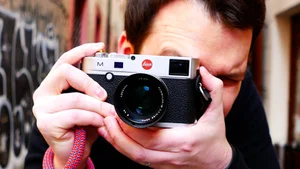
Tatiana Hopper: Your art ought to be seen by others
Hello fellow photographers. In this episode I am talking with Tatiana Hopper about film school, film photography, process of taking photos and much more. Thank you so much for joing us on this episode.Make sure you are subscribed if you want to be notified when I post a new episode. There is one thing I would love you to do. I would be very thankful if you could go and give this podcast five star rating and the review. If you like this content and you think other people might enjoy it as well feel free to take a screenshot and through it out on your instagram story or share it with your friends. In case you would like to listen to shorter episodes more frequently there is a new podcast called Best of About Photography and it is updated daily with highlights from the interviews.
Follow Tatiana:
Website: https://www.thopper.uk
YouTube: https://www.youtube.com/c/THopper/
Instagram: https://www.instagram.com/tffhopper/
Listen on Apple Podcasts: apple.co/36TS6kC
Listen on Google Podcasts: bit.ly/2UHwbun
Listen on Spotify: spoti.fi/3rrYMA0
Listen on SoundCloud: https://soundcloud.com/user-228441570
You can also subscribe to Best of About Photography podcast for shorter episodes more often.
Listen on Apple Podcasts: bit.ly/BestOfAboutPhotography
Listen on Spotify: spoti.fi/3fcf9M7
Listen on SoundCloud: @user-499230514
In case YOUR Podcast Directory is missing, please let me know in the comments bellow and I will add that. Thank you!
If you want to follow me on social media
YouTube Index:
0:00:00 - Hello there!
0:01:13 - Introduction
0:01:47 - When did you start with photography?
0:03:15 - Film school
0:05:14 - Why film and not photography school?
0:07:01 - Photography job?
0:08:02 - What about photography career?
0:10:01 - Master degree script
0:16:25 - Influence on YouTube
0:18:43 - What part of the project is the best?
0:21:32 - When is art born? When you are creating it or in the edit?
0:25:05 - How does film school work?
0:29:21 - Self education VS film school
0:35:53 - imprinting personal style in your work
0:40:14 - Artistic approach VS connecting with your audience (being original)
0:46:32 - Tatiana’s photography style
0:48:48 - Do you limit your subjects for the sake of your style?
0:50:42 - What do you like to photograph in black and white
0:54:27 - Is there an adventage when using medium format?
0:59:55 - Favourite film stock?
1:03:12 - Do you develop your own film?
1:04:26 - Do film photographs look better?
1:09:05 - Prices of film cameras
1:12:39 - Photography projects
1:15:00 - Publishing a photography book?
1:16:04 - Selling prints
1:18:13 - Photography books
1:24:14 - Should you always wear a camera?
1:29:08 - Bonus question you should only listen to if you have already listened to the whole interview, and also liked and subscribed :)
LEAVE YOUR COMMENT
One of the first videos I saw on your channel was a film photography video, I believe shot in Egypt, but I imagine you didn't start out with film photography. When did you start with photography?
It's funny, when people ask me that I can never pinpoint an exact moment. It wasn't a case of picking up a camera one day at fifteen and deciding that was it. I think photography has always been part of my life, the way art in general has. It was always there, here and there. I remember being really young and going to the beach with my family, and my family had this little Yashica, I remember it vividly, and I remember playing around with it. I've always been interested in photography, so it's something I picked up and put down again many times. Then, when I was fifteen or sixteen, I started taking more of an interest in it, and of course, around that time, digital was becoming a big thing, so that's where I started. But I was always drawn to vintage things too, because I collect things generally, and I remember picking up all sorts of cameras without even knowing what they were, shooting expired film that came out blurry and not very good, but I had fun with it. So I'd say photography has always been in my life in a way. It isn't something I picked up all at once like that.
And from there you went on to study at film school, you have a bachelor's degree, and you're currently working on your master's, is that right?
I think it's all connected in a way. I remember being really young and always watching films, I remember being about six or seven and watching Charlie Chaplin with my granddad, and having those memories, always being interested in filmmaking. I never thought of it as a career until I was about eighteen, when I was finishing high school and had to decide what to do. I obviously didn't want a normal life, because I'm not very normal, I usually say, so I wanted to do something different. I'd always photographed in a way, and I think photography really helped me with filmmaking, even when I had to make my own films for school. It helped me understand composition, and to prepare. On my final project for film school, for instance, I used photography extensively to prepare for shots I wanted to make, to explore composition, to work out why I wanted this angle and not that one. Photography was more than a tool, it was practically my best friend at that time, helping me understand things I needed to understand about how to film a certain scene. I think that was really important, and because I was already around cameras, filmmaking and photography just came together for me, and I decided to do it.
Why film, though? Didn't you want to try studying photography itself?
I thought about it, but film has always been number one for me, in the sense that it combines everything I want to do. I love to write, and I think writing is a great way of expressing yourself, of embodying your relationship with the world in a story, and of saying the things you really want to say. That's something I love to do, combined with image, which is obviously really important too. Filmmaking embodies everything I want to do, and everything I already do, so I think it's always been something I'm very passionate about, and something I definitely want to do more of in the future. Right now I'm very busy, and there are days I wish I could drop everything and go make a movie somewhere else, but sometimes you have to be responsible. It's definitely something I'm preparing for, over the next year or two, because it takes a lot of preparation, a lot of figuring out how to juggle work, real life, and creating. I think that's really important too.
What do you do for work? Is it something creative, or completely different?
Something different, though it's not that it couldn't be creative, it was creative once. Recently it's been restructured because of the pandemic, so hopefully it'll be more creative again soon. It is a creative field, I'm not hiding that, I just don't think it's very important to talk about. For me it's more a way of paying the bills and doing the things I actually want to do. Like I said, I can't just drop everything and make my films right now, so until then I think we all need a daily job, and then we get to be superheroes the rest of the time.
Have you ever thought about doing photography as a job, the way a lot of photographers do, weddings, portraits, and so on?
My family has asked me that too, whether I'd like to do it professionally. I actually took photos at my own wedding, and I hated it. For me, doing YouTube, doing photography, writing, it doesn't feel like a job because I really love it, whereas working weddings for other people, for clients, I don't think I could handle that, it would really frustrate me. I tried it years ago, did a couple of shoots with people, and it just wasn't for me. It's not that I don't like people, it's just a different method, a different style. I like to pick up my camera and go off by myself to explore. Even when I'm shooting with someone, having someone pose for me, I'm really relaxed about it, mostly winging it. There's also a lot more pressure when you're not working for yourself. If something goes wrong with your camera while you're shooting a wedding, and suddenly there are no pictures, that's an extreme example, but I wouldn't want that pressure, I wouldn't want to deal with people in that way, because if something goes wrong, it's someone else's important moment.
You also mentioned that for your master's degree you're working on a script. Would you like to share what it's about?
I can share a little. The script is about someone who's unable to see people's faces, and I think it's a good example of what I mentioned before, combining a story, or a tale, with something visually interesting and something you want to say, not just about yourself but about the world. With this project I want to talk about how we're becoming less like individuals and more like numbers, more faceless in a way. I touched on this in a video I made about Barbara Kruger, whose artwork actually hangs behind me, I got it recently and I'm very proud of it. I talked in that video about how we're fed dreams that aren't really ours, things we don't actually need to pursue. With this film I want to talk about identity, about why this character can't see people's faces, because at the end of the day we're becoming more and more of one thing, even though some of us do try to be individuals, and that's a whole other discussion. The character can't see people's faces, so there's a kind of travelling through time, past, present, and future, because I believe time is fluid anyway, and he's trying to find the answer to why he can't see, whether it's a problem with him or a problem with everyone else. I think it's a very interesting premise.
It does sound interesting. Is this something that personally bothers you, like a critique of society, or is it an idea you came up with yourself, or more something you picked up from other topics?
I think it's an idea that's been with me for a really long time, probably the last five years. I tried to make this film before and it didn't go very well, but it's been brewing ever since, it's a very complex idea, so I've been working on it for a long time. Originally, the premise came from observing life when I was living in a really busy city. I looked around and saw how equal everyone's behaviour was, everyone doing the same thing, following the same trend, whether it's a phone, a book, whatever it is, and everyone buying into it. I've always been very influenced by Barbara Kruger's art, the way she talks about us being controlled by the media, and that really moves me, because I think it's so important that people start thinking more for themselves and doing more for themselves. I actually read a comment on YouTube recently, on that same video about Barbara Kruger, someone quoting somebody else, saying they'd never heard of two painters comparing brushes. That's exactly why I don't make videos comparing gear, because to me it's all just a tool for something else. Two painters wouldn't compare brushes, and when I talk to another photographer, I'm not comparing his camera to mine, we're talking about so much more, usually face to face. So I felt the need to make videos that bring that to the table directly, questions like why are you buying this camera, because you saw someone on YouTube get eighty thousand views saying it's so good. But is it really good for you, is it really good for what you want from your work? I'm not criticising people who make those videos, I watch them myself, friends of mine make videos like that, and I think it's pretty cool. But at the end of the day I think as a creative person you should keep something inside yourself that can't be touched, your core, and try to keep it safe, so that what you create actually comes from you. That's what I believe, at least.
Is that how you'd like to use your influence, to show people there's something more than just gear videos on YouTube?
I think so, yes. If you go back in time, when people were developing photography and developing cameras, they were doing it for the purpose of capturing something, with real intention, whether that was to document, or to create something for an artistic purpose. Photography has so many uses, forms, and shapes, and I want to bring that back to the table. It's really important to me that people can, of course, choose whatever gear they want. If you want an M6, buy an M6, I have cameras like that myself, and I've had many cameras before, so I've always gone through my own trial and error, working out what works for me and what doesn't. But it's also important to think about what really matters at the core of photography. Photography didn't start because somebody wanted to build an M6, it started because somebody was looking for something much more than that. I'm always understanding and respectful of that, and I've made videos about cameras myself, but I think it's more interesting to make a video about how a camera influences you, the role it plays in your work, how you use it as a tool, because that's what it really is. We shouldn't pick something up just because it's cool, or expensive, we should pick it up because it works for what we want to do.
Speaking of the script, are you looking forward to the filming, the editing, or the writing most?
Based on my experience with the two films I've made before, filming is probably the part I have the most mixed feelings about. It's very complex, and I love it, because it's this thing you write on paper and then it comes alive in front of you, there's a feeling I can't fully put into words, larger than life. I really love it, but then there's all the hassle of dealing with so many people, which can be horrible. So I like it and I don't, I've always said that. I think my favourite part is probably the writing, because that's where you come into conflict with yourself, pushing ideas back and forth. I've always loved writing, and I actually have a personal writing project I've been delaying for a while, not because I don't feel comfortable with it, but because it feels like a huge step, especially since English isn't my first language, even though I speak it reasonably well. It requires a lot, not just money or organisation, but also, personally, putting it out there and saying, this is my style, this is what I do. I've been polishing it and polishing it, but I think I need to actually do something about it soon. Going back to the original question though, I'd say writing, the project itself, is my favourite part, because after that comes the shooting, and then the editing, which is putting everything together, and by the time you get to the editing room your brain is half dead. You need a break, at least a few days, and then you come back with fresh eyes and try to do your best. It's definitely something that can leave you completely drained, creatively and otherwise.
What's your take on the idea that some artists have, not only in filmmaking but in music and other arts, that the artwork is something you visualise and shoot, and once you've shot it, all that's left is to edit it, versus the idea that the artwork is actually born in the edit, that editing is the majority of the work?
For me, and I'll explain my thinking based on my own experience, I can write a scene and try to get it as close as humanly possible to what I envisioned. But I'm also a big believer in method acting, which requires a lot of improvisation. So I can write the scene, but I'll ultimately work with the actor on what they're feeling in the moment, which is why being present in the moment is so important in photography, music, and creating in general, that's what the moment is, creating something important. In my past experience, I try to get as close as I can to what I want, but I'll always leave a door or a window open for others to bring in their own ideas and collaborate. There are filmmakers and photographers who go on set wanting everything exactly their way, almost like a dictatorship, and I don't want to work like that, especially when you're working with a group of people, as you do in filmmaking. You need to leave the door open for people to feel appreciated, to feel it's a genuine collaboration. Yes, ultimately your name is on it, it's your idea, you're the one directing, but directing also means leading a team, and that doesn't mean other people don't have voices. So for me, I don't think the film comes together only in the edit, though it does come together there in a sense. There's a whole process behind it that started when I first wrote it, combined with the energy of everyone on set and what we were creating together. I think editing puts it all together, but it's part of an ongoing process that started the moment I first put my pencil down and wrote whatever started it all. It's not really one side or the other, it's a progression of work.
Is all of that, the writing, directing, and filming, what they actually teach you at school, whether at university for your bachelor's or now for your master's?
My master's is quite different from my bachelor's. There aren't really any practical requirements on the master's, technically I'd just have to write a script and that would be enough for them. But it's not enough for me, because if I write something, I want to actually make it, and I feel like I'm at an age where I want to pursue that. Since my master's is specifically about writing, that made sense to me, a script would be enough for them.
So is it writing for film specifically, or writing in general?
Writing for film, yes. My bachelor's was more generally fulfilling in that sense. We had classes in sound, image, cinematography, editing, all the practical things, which I enjoyed, but ultimately it's film school, and sometimes I'm such a lone wolf that I'd rather do it alone than with fifty other people. Though obviously, if you want to direct films and work in filmmaking, you'll always have a team around you, whether big or small. I had all sorts of practical classes during my bachelor's, including writing in groups, which I hated, but that's how it worked. On the master's, it's much more of a one-person thing, I have to write the script myself and present it as a kind of thesis for what I want to say. I'm actually planning to put the master's on hold for a while, to dedicate myself to other creative things, which I think is a big step, but ultimately one that will benefit me. I've been considering it for a while, and I think there's a time in life when you have so much on your plate that you need to pick one battle and see it through before moving to the next, rather than trying to do everything at once and ending up struggling with all of it, including my videos on YouTube. Anything I do has been a real blessing, I really enjoy it, which is basically the bio of my channel, I'm Tatiana and I do what I want, which hopefully doesn't make me sound like an arrogant person, just maybe a little bit unconventional. I'm going to put the master's on hold soon and pick it back up once I've dedicated myself to some more creative projects.
Do you feel there's an advantage that comes from studying at film school for your YouTube videos and your photography? There's a lot of talk online from photographers who say they're self-taught, that not being part of any formal structure is actually an advantage. Did you feel that film school helped you, or do you think you could have learned it all yourself?
For me, it's a mixed feeling. It was definitely a guide, teaching me about the history of certain aspects of film, and introducing me to filmmakers who've influenced my work. On a practical level, I'm not a very practical person, that's the first thing, but it really depends on who you are and what you actually want. Filmmaking is a complex world, and it depends on whether you want to be a producer, an actor, a director, or focus on writing, directing, or editing. If you're going into something very technical, like sound or cinematography, I think having someone experienced to guide you as an introduction, before you carry on by yourself, is valuable. But being part of an institution as a whole, I don't particularly like that, I don't think it necessarily benefits you, though it did teach me things to do and not to do. If there was a biggest benefit from film school, especially my master's, it would be that the school, while a bit pretentious, taught me to think like an artist and to seek what I want for myself as an artist, which is the most fundamental thing it gave me. These days, especially with the technology available, you can easily go and make your own films, but you'll probably lack some of what film school gives you, not formulas, because I don't believe in formulas, but a kind of grounding, in things like writing a three act structure, understanding rhythm, storyline, character arc. You can learn all of that yourself, but I know that for some people I met during my time in the US, film school was genuinely helpful, because they were there, they gave me advice, and told me to never stop seeking what I honestly wanted, to have an identity as an artist. I think that's really important. But generally, I'm not happy being part of an institution, which is why, when we talked about classes before, I was always unhappy whenever there were lots of people and everyone had to fill in and do the same thing. I always ended up on my own. When I signed up for the master's, it was partly because it seemed like a good opportunity to meet people and build connections, network a little, but because it's more of an individual programme, it worked better for me than having to film with a large group of people.
It really depends on what you want to do. But if somebody watching this wants to be a filmmaker or a photographer and is thinking about going to film school, my advice is start now, don't wait for it. Sign up if you want, but do it now too. A lot of the time, with many things in life, I just do it myself. I picked up a Canon A-1 once, it came with a box and a manual, there are tonnes of videos online, but I just went for it, and sometimes it didn't work. It's kind of pure though, trying things yourself first, going for it, struggling, not knowing what's happening, getting frustrated, and then getting happy when you get a good result. If somebody watching this is wondering whether to go to film school or photography school, just try it yourself first. Go ahead and sign up too if you want, but do it right now as well, pick up a camera, whatever you can get your hands on, you don't need expensive things, you just need to do it, and you'll benefit immensely from that.
We talked earlier about the idea that the artwork or the movie is born while you're writing, filming, or acting. But are you also the kind of person who tries to imprint themselves into the final product? For example, there are movies you watch with no idea who made them, and then there are movies where, when Wes Anderson makes one, you immediately know it's his.
I think if I have characteristics of my own style, they'll make my film, or whatever I do, feel like it's mine, unique to me, not anybody else's. So yes, I do, especially when it comes to filmmaking. I like to think there are things that are characteristic of how I see a project, and of my own way of expressing things. I mentioned method acting, which not everyone is into, and it's obviously very hard, very intense, and very draining to work that way. But I also have this idea that, like I said, time is fluid, so for me there's never a fixed sense of where or when something happens. I think it's more important sometimes to grasp the meaning of what we're seeing than to focus on those details, because when you remember something, a memory, there's an image, but there's no timestamp on it, you might remember the location, but not the exact date, you have the idea of the moment. That's why I concentrate so much on that, the idea of time being fluid, the idea of identity, and a group of themes I've explored through both my photography and my filmmaking, existentialism, and surrealism, in the sense of what's real and what isn't. If I ever get to make movies, they definitely won't be typical stories. I'm not being pretentious about it, but films made by directors whose work really touches me go beyond simple story or entertainment, bringing forward thoughts and feelings you wouldn't expect from just watching a movie. It's still just a movie, but it's so much more too, and that's the kind of style I want to work toward. I'd like to have a couple of really strong ideas and themes that, in the long run, if I get to make more than one or two films, people could watch and say, I can identify this as being by this person, there's a connection between them. I think that would be really cool, and I'd love for that to happen someday.
Do you think there's a compromise between wanting deeper thoughts integrated into your art, whether photography or film, and making it easy for the audience to actually understand what you want to say? Sometimes it feels like certain films are so obscure that you just can't get them, maybe that's my own ignorance, but I look at them and think, maybe there's something deeper here, but maybe it's just miscommunicated.
I think you're asking a really good question there. There was a time when we used to build stories, whether in filmmaking or photography, in a much simpler way, and still convey real meaning. I think because we struggle so much in today's world with being original and unique, people go to extreme lengths to build these really strange, overly complex stories that could be told in a much simpler way, which makes them unique, sure, but it also means the audience ends up not getting it, because it's too complex. I can think of films I've watched myself and thought, I don't understand what's going on. I think there's been a current in art generally where people aren't paying enough attention to the viewer, to someone coming to watch a movie without being able to get inside the filmmaker's head, and if they're not in your head, how can they understand? I think that's been motivated by the idea of being original, in a world where everything's already been done, how do we do it differently, how do we become the next big thing? This is just my opinion, and if I'm wrong, I'm wrong, but I think that's what motivates people to make films that are so difficult, when really, we should remember that you can be an artist, but your art only really exists to be seen and appreciated by other people. You can isolate yourself in the middle of a mountain in France or Switzerland and do your own work, and that's fine, but at the end of the day, what's the point if it's only for yourself, or for a couple of people? You can do that, but wouldn't it be better to build stories that everyone can access, even if there are different levels of understanding, so that everyone still gets some sense of the story?
I agree with you, it's a really good question, a very relevant one. I'd hope that, in my own projects, I have the clarity to recognise if I'm going too far. Usually what happens is I make something, then show it to a few people to see if they see what I see. With photography, for instance, my last video featured photos from a road trip with my cousin, and I found that most people read the photos the way I intended, saying things like, this reminds me of this, this was exactly what I was going for. I wasn't really surprised, because I think it was fairly accessible, it's not like I was showing a picture that was meant to suggest something extreme and expecting people to just get it out of nowhere. The point was that what I composed, despite having no preparation at all, still carried meaning, and people saw surrealism, existentialism, dreaming, the things I wanted them to see. I think it's important to keep in your head that yes, you're creating something that's yours, but you also have to establish a connection with whoever's watching. It's about who sees and who's being seen, the photographer and the subject, but also whoever's watching both of them, the viewer, the audience. I like to think I always keep that switch on in my head, asking myself, if I had to watch this without knowing anything about it, would I still understand it? Hopefully, yes.
You mentioned this already, but you wrote in your bio that your work reflects on existential nihilism, identity loss, and loneliness. Is that how you'd characterise your photography style?
Yes, I think so. I'd probably add surrealism, or something about dreams, to that bio too, I might update it after this. I do like to think of my photography that way. There are people who've been with me on this journey on YouTube for a really long time, and they've seen how I've gone from just taking photos here and there to actually developing a style, bringing it forward. In the future, I'd hope to build more work around those same things, existentialism, surrealism, being lost, because being lost doesn't necessarily have to mean something negative. I definitely see my photography this way, though I haven't released a lot of my work. I don't necessarily go out and photograph specifically for YouTube, I always carry a camera with me, but sometimes I won't photograph for a month or two, and that's fine. I'm always aware, if there's an opportunity, I notice it, but I don't feel I have to shoot three or four rolls and immediately put them on YouTube or find an excuse to share them. There are things I keep to myself too, and I think that's important, in order to grow.
So are you at a stage where you're developing your style and strictly focusing on what you want to achieve with it, meaning you avoid photographing subjects that don't fit within it, things that don't sit within existentialism, identity loss, or loneliness?
I see what you mean, but I don't think so. I take loads of photos, sometimes of my friends or other things entirely, because even if something doesn't fit within how I see my own work or style, that doesn't mean it has no value. I think taking a photo is also a way of validating something, or someone, or a moment that's happening, an object, a person, whatever it might be. It's a way of keeping yourself awake to life, because life is happening constantly around you, and while I'm not saying you should photograph all the time, it's good to stay aware of what's going on around you. So even if something doesn't necessarily fit my style, if I want to go out and do some street photography, I'll do it, if I feel like it, I'll do it. I don't think there should be any constraints on what your style is, because my style is very fluid, it's not something fixed, it might change in the future, and it will change. It's a constant journey.
You also mentioned a quote from Peter Lindbergh, that black and white is an interpretation and reality is in colour. What subjects do you like to use black and white for, and which for colour?
I absolutely adore black and white, I've always loved it, and I shoot both, but I'll always have a bit of a fondness for black and white, because I grew up with it. My grandparents and my mother loved black and white photos, and they instigated that love in me. Even as a teenager, shooting digital, I used to shoot everything in black and white, or convert it afterwards. I'd agree a lot with that quote, especially when I'm trying to convey a meaning, or something a bit more, I'll reach for black and white. I think it gives a photo this dimension of almost timelessness, it's like the image is left in a kind of limbo of time and space, and not having colour takes something away from the reality of the moment. That's how I feel right now, it might change in the future, but I'd say I'm progressively using more and more black and white. It's not that I don't like colour, I do, and I'll use it for specific things when a project feels more suited to it. Right now, I'm more drawn to black and white, though the last set of photos I posted online was actually a mix of both.
It's more philosophical, black and white, as you've said.
Yes, I agree. Again, there's no right or wrong at the end of the day, only your own opinion about what feels valid to you. But at the moment, I feel like black and white transports you to another dimension, almost a third dimension beyond space and time, where the image is left in limbo between those things. That's really how I feel right now, though it might change in the future, but there's definitely a philosophical quality to black and white for me.
Talking about that artistic approach, whether black and white or colour, there are also different formats, different aspect ratios. Do you feel that has a different effect on the photograph, or on the subject you're trying to present? You shoot medium format, is there an advantage to that over something like three by two, in your opinion?
I'd say, from a printing perspective, I've always been interested in shooting with different cameras and different formats. But I think there's a time for everything in life, and if you're a good photographer, you can shoot with anything, you won't say you'll only shoot with one format because it's supposedly better. If it's better for your particular work, that's fine, but I don't think it's necessarily true that a larger format automatically makes the work better. For printing purposes, I chose to introduce medium format into my work, even though I shoot a lot of thirty five millimetre too, and there are plenty of photographers who've built proper careers shooting with anything at all. I think it's more about your role as a photographer to do the best you can, because it's in your hands, in your heart, in your soul, it's not about the camera or the lens. Based on my own experience, at least for now, and it might change, I'd say the advantage is mainly for printing purposes, because you have a bigger negative and more detail, which matters if you're making larger prints, I always get much more detailed results from the larger format. But I don't think I'd necessarily reach for a larger format just because, it depends on the project. With the cameras I currently have, I feel comfortable shooting with any of them, and if a project needs something bigger, more detail, or a slower pace, like large format, I'll probably use it. But generally, it doesn't really affect me in terms of aspect ratio, it's mostly about printing for me.
About your process, how you actually take photographs, I believe you said you use medium format with more of a plan in mind, compared with your regular approach.
On a more physical, practical level, I can't carry a medium format camera with me everywhere, and it's expensive too. I can't just carry a Mamiya 7 around all the time the way I can easily carry my Yashica, my Canon, or my Leica. It's the versatility of thirty five millimetre that makes it so easy to use, it doesn't mean I shoot it without intention, but it means I shoot it more often, simply because it's easy to carry and have with me. When I go out with the Mamiya, I need to have proper time set aside, I need to plan a road trip or something similar, and that camera will come with me. But it doesn't mean I take it every time, sometimes I'll take a photo with something smaller and think, this is a really nice landscape, I'd like to compare it, actually a good idea for a video would be comparing scans of the same shot in thirty five and in medium format, just to draw some conclusions. But generally I do tend to plan more around it, because, as you said, it's expensive, and there's the hassle of carrying a camera around with all that extra equipment. For me, it has to be more of a plan, knowing I'm going to be out, on a road trip, or doing something specific.
I was watching your channel, and it really makes me want to try film photography. I loved your video with the Kodak Pro Image 100, which is actually a pretty cheap film stock. Do you have a favourite film stock?
I try different ones, I've got a lot in my fridge, and I'm preparing for a project soon, early next year, so I've been picking up a lot of black and white. I've always loved Fomapan, it's so cheap and so good, I always tell people to buy it, I think Foma should start sponsoring me for how many people I've converted to it. It's honestly one of my favourite films. I wouldn't say I have one single favourite, but Fomapan is definitely up there for black and white. I also really like another low contrast black and white stock I featured in one of my earliest videos, and I always use Ilford HP5 too, which is a real go to for me. When it comes to colour, I'm quite particular, there are so many films I've tried, but I've been diving deep into expired colour film rather than shooting a lot of fresh stock, I haven't bought much fresh colour recently, mainly because I already have a good stock of expired film, and I go for expired stock a lot, it's a bit of a shot in the dark, but I still go for it. If we're talking about fresh colour films, I'd say I like Portra, and I also really like Lomography 800, I think it's a great stock, I've had great results with it, and I shot it quite unconventionally once, during really heavy fog, and I shared those photos too. As for Cinestill, I honestly don't know how I feel about it yet, I need to try it more, from my experience it hasn't felt very reliable, though that might change. I'm just being honest.
Part of shooting film is also developing and scanning it. Do you do that yourself, or send it to a lab?
I do it myself, except when it's heavily expired film, I'm always a little cautious about dabbling with that, not because I don't trust myself, but because I'd rather have someone more capable on the technical side handle it. So I'll send that to a lab, though it's very rare. Generally I develop and scan all my own film, which gives me control over things like colour, and whether I want to push or pull it, which you can do during development. I think that's cool, and I like being part of the process, it's a bit like setting up your own lab, a kind of Breaking Bad scenario with chemicals laid out everywhere, doing your own thing. I really enjoy developing, I like it a lot.
To me it seems like such a hassle compared to digital, but I have this feeling, especially seeing the photographs you and other film photographers post on YouTube, that photos taken on film just look so much better.
I think it's a bit like comparing artisan work to industrial production. When people talk about the cost of film photography, it's a bit like buying a T shirt, you can go to a shop where they're made industrially, cheaply, and it'll cost you almost nothing, but it'll wear out in a week. Or you can go to someone who actually knows what they're doing, a tailor, and it'll cost you a lot more, but the quality will be there. It's a bit of a tacky comparison, not a perfect one, but it speaks to what's manmade and durable versus what's industrialised. For me, the issue with digital, and I'd never tell anyone not to shoot digital, that would be ridiculous, you should shoot whatever you want, especially given how expensive film can be, if you can't afford it, that's completely fine. My channel is about film photography, but it's really about photography as a whole, and I don't rule out one day going around with someone and trying a digital camera. I actually have a digital camera myself, which is what I use to film my videos, I don't use it for much else, I'd probably barely know how to handle it otherwise, if I'm being honest. But for me, the sense of really producing a photograph comes from everything involved in it. Yes, you're using a camera, which is technically a machine, but for me it's a manual process, you load your film, you set everything manually, you take the film out, you develop it yourself, it's a labour of feeling. Where I think digital lacks something is that, yes, you can put feeling into it, but there's a certain flatness to the image, whereas with film there are always these different colours and nuances, a very unique quality that I think comes from all the effort, the sweat, and the feeling that goes into it. With digital, you can apply a filter in a couple of seconds, but with film, you build that look from scratch, through the stock you choose, whether you push or pull it, how you correct it afterwards when you're scanning. I don't think that makes digital any less photography, it's all photography, it just means some of us have chosen to stay a bit stuck in time, and to keep appreciating the people who worked so hard, for so long, to give us what we have today. These cameras are magnificent, I really love them, and I think it's a shame to leave them sitting in a box after everything they've taught us. If you don't shoot film yourself, I think the best thing to do, after this interview, is promise yourself you'll pick something up. Go to your local market or a vintage shop, pick up whatever camera feels right to you, and just try it yourself, see where it leads.
I checked the prices of a few film cameras online recently, and they're going up quite a lot. It used to be that you'd pick up a cheap camera because there wasn't really another option, but now it feels almost the opposite, cameras like the Mamiya 7, these high end cameras, have basically doubled in price compared to a couple of years ago.
I agree the prices are going up, and I think it's because film photography has become a real trend in recent years. This camera here cost me about five pounds, and I still love using it. It looks quirky, and yes, the camera and the lens are plastic, but the satisfaction comes from just trying something like this, it doesn't have to be expensive. That's the point I was trying to make earlier too, you don't need a Mamiya 7. People often ask me, because there are cameras visible on my shelf in my videos, whether that's a Mamiya 7 sitting there, and whether I'll make a video about it. But if I did make a video about it, it would be about the role it actually plays in my work, how I use it, not about specs, because I don't want to give people the wrong idea, that in order to be a great or successful photographer you need that kind of gear, because you don't. I think that's very important, and needs to be said more often. If you pick up something like this instead, you're just as happy, you have just as much fun, and you don't necessarily need a Mamiya 7. I think, with the rise of the YouTube film photography scene, and influencers generally, that's probably played a role in driving up the price of film cameras. People are paying two or three thousand for a Leica M6 now, when you could probably get one for far less depending on condition, but once a camera gets popularised, everybody wants it, and it goes over the top. It's the same mentality we talked about earlier, about becoming faceless, following the same things without realising they might not actually be what we need. Unfortunately.
You mentioned a project by the seaside. Is that something you're working on, or is there a different project you'd like to pursue?
I initially thought I'd do a project by the seaside because I was born in a seaside town and grew up near it. But the project actually became something else, it started with the idea of maybe going back and shooting seaside towns, or perhaps going back to my own childhood and asking why I never felt at home while being at home, or why I struggle so much with the idea of identity. People ask me all the time where I'm from, and I just say, this is me. I think you do belong, in a way, to where you come from, but what happens when you don't feel like that? That was my original idea, and since I was born in a seaside town, I thought it would be interesting to go around and explore that. But it didn't quite work for me, because I felt I needed something more, given how my life has progressed since moving to the UK. So I've been thinking about doing the inverse route instead, and seeing where that leads, maybe going on a road trip and following it wherever it goes, which is the idea for now. It has definitely grown from this small idea of seaside towns into something that might be bigger, though I'm still working on it. I have no rush with it, because I think putting pressure on yourself while creating can mess with your head and your creative flow. So the project has grown a bit and is in a different stage now, but I'm still working on it.
Is this a project for a book? You mentioned wanting to publish a book in the future.
Somebody asked me that once, in a Q&A video, what my goals were for the next five years, and publishing a book was one of them. I think, in order to do that, it's not just about preparation, I need to be sure about what I'm doing. I don't want to just take this year's photos, or the last few, and put them together quickly, I could do a small journal, that's fine, but it wouldn't be the same as a proper, concrete book. So I do hope this project, eventually, can be that book.
You were also selling prints on your website at one point, but you're not doing that anymore, is that right?
I'm going to be doing it again soon, I've got a couple of things in the works. I ran it for about a month before, and I was donating a percentage of what I made to local charities, and to mental health related charities and groups too. That wasn't the sole reason I did it, but it was a great motivation, because I wanted to use photography to show that it could help too, that it could have many roles, as I said before, and that it could matter on that level as well. I did a couple of print runs, and I'd love to keep something like a shop going, rotating a small number of prints, or doing prints to order. I'm also getting some equipment together for a darkroom, which is something I really want to learn more about, and I think it would be nice to offer exclusive things like darkroom prints. So yes, it's definitely something I'll be doing very soon.
In your videos you also talk about photography books, and there was a quote I particularly liked, about silent learning that comes from observation. Is that how you learn from photography books?
Yes. You can learn in many different ways, but that's exactly why I created that series, because there's no better way to learn than going through a photo book, or watching a film, by yourself, and really paying attention. You can learn so much just by asking yourself, why did this person compose it this way, why does this photo come after that one, what's the connection between them. You learn about how photos align with each other, about the flow and rhythm of a project, and I think that's one of the best ways to learn, silent learning, because yes, you do have questions, why did they choose to frame it this way, why does this photo follow that one, but it's something you work through with yourself. I think observing, taking time away from everything else, is really important, because we all live very busy lives, and we rarely take a step back. One of the most fulfilling things for me is literally taking a step back and going through a book. I did that quite recently, in fact, while preparing a new video, I was going through a book of Nan Goldin's work. She's a really good photographer, and the book, called The Other Side, compiles photographs of friends she became close with, touching on themes like being a drag queen, being transgender, and so on. The photos are really amazing, and I learned a lot from it. What I usually do is go through the book once, take my time, sometimes quickly, sometimes slowly, and try to absorb what it's telling me, what these pictures are about. Then I'll write down my first impressions, whether a specific photo caught my eye and why. After that I do some research, and go through the book a second time, looking more closely at composition, and then I combine the notes from my first, unprepared impression with what I learn from the research. With this particular book, there were also bits of writing included, letters, so I went through the photos and the letters first, which gave me the idea for the video, and then I read the introduction, did the research, and combined everything together.
Do you try to get inspired by a style, not to imitate it exactly, but for example thinking, I'll try shooting this angle because I'd never considered it before and it seems interesting to me?
That's actually never happened to me, it might at some point, but I don't think it will. With the books I've covered so far, I've only done three episodes, the lessons were more foundational, less about composition and more about being present in the moment, about the public image versus the private image, about identity, things that are discussed within the books themselves. I think of those as lessons I carry into my own work, or my own ethics as an artist, but I wouldn't say that because I saw a particular photo, I'd go and photograph the same way. Most of the time, if not every time, the books are very different from what I want to do, but that's the beauty of it, having an open mind, seeing value in everything, and learning a little bit from everything you come across.
We touched on this a little earlier, about always carrying your camera around, and there's this idea, which a lot of photographers hold, that you should always carry a camera so you're always practising. When we talked about watching films and analysing what a director did, is there ever time for you to relax, to say, I'm not thinking about photography today? At least for me, sometimes I feel a bit overwhelmed if I haven't brought my camera, wondering if I'm really a photographer if I'm not doing it. There's a quote by Mitch Stewart that I really like, saying there's a difference, if you're a photographer you carry a camera, and if you're not carrying one, you're just someone who saw something and told someone about it, which sounds fun in a way, but also sometimes feels like pressure, thinking you should be doing photography because you're in this to learn and improve.
It's funny, actually, because I was writing a video yesterday, and I made a note about the presence of a camera, in a segment I called to photograph or not to photograph, and why. I do say in it that I carry a camera with me pretty much all the time, I put my Yashica in my bag and it just comes with me, though that doesn't necessarily mean I'm photographing all the time. As I said, I don't think you always need to, and I agree there are times it can become overwhelming. In those moments I just try to take my mind off it, either by concentrating on something else, or by literally taking time off. But even though I carry a camera with me, that doesn't mean I'm always photographing. For me, it's more a way of showing myself that I'm aware of what's happening around me, and if I want to photograph, I will, but there's no pressure attached to it. I have a camera with me, it doesn't have to be the best camera, the best lens, I don't really care about that. I think there shouldn't be a rule about it, you should do what you want. Nobody should ever feel guilty because of this circle of influences we live in, feeling a certain way just because you saw someone else say or do something. Ultimately, what we're all trying to do is figure it out, that's what I'm doing with my YouTube channel, with everything I do, figuring life out, and I shouldn't have to feel a certain way just because someone else is doing better, or saying something different, because they're figuring it out for themselves too, in their own way, and that's why it's so important to stay aware of the world we live in. If you feel overwhelmed, if you don't want to carry a camera, put it in a drawer, and come back to it when you feel like it. Sometimes we need those breaks, because life is intense, life isn't easy. I've felt overwhelmed myself, and there have been stretches where I haven't been photographing, but I wouldn't blame myself, or feel bad about it, just because I see other people online posting this or doing that. They're doing their own thing, and I'm doing mine. So never feel guilty about something, if you feel pressure to do something you actually love, then something's wrong there. I believe in letting it flow, and just doing your own thing.
Thank you for that. And now I have one last question for you, I kept the best one for the end. Are you getting more into skateboarding?
No, I'm nowhere near ready for that. The truth is I'm a very clumsy person, people who actually know me can confirm just how clumsy I am, I'd probably break an arm or a leg if I tried it properly, it's that bad. I did try it once, last summer I think, it wasn't even my own skateboard, I just tried a little bit and realised I'm not going to be the next Tony Hawk, it's too late for me, unfortunately I have to admit I'm not getting any better at my skateboarding abilities.
Would you ever photograph a skateboarding scene, or a competition, something like that?
I'd definitely be up for it. Where I live right now there isn't much skateboarding around, but that doesn't mean I wouldn't travel for it. If I were somewhere and saw some really cool kids skating, I'd probably, even though I'm a bit too awkward to just walk straight up and ask to take their picture, still try. I'd take a picture first, and then probably approach them afterwards and say, I do this, but I really like what I'm seeing, would you mind if I took a couple more? It would take me a while to work up to it though, because I'm not a big extrovert.
Thank you for coming.
You're welcome, it was a real pleasure. I really enjoyed it, I think we touched on so many different things, some of them on quite a deep level, talking about colour, about identity, about film and style. Thank you for having me.