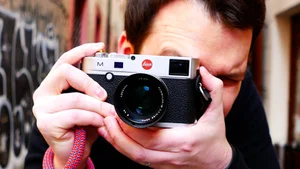
Sean Tucker: The better your photography gets the less popular it might be.
Hello fellow photographers. In this episode I am talking with Sean Tucker about street photography, portrait photography, social media and much more.
Thank you so much for joing me/us on this episode. Make sure you are subscribed if you want to be notified when I post a new episode. If you like this content and you think other people might enjoy it as well feel free to take a screenshot and through it out on your instagram story or share it with your friends.
Follow Sean:
YouTube: https://www.youtube.com/c/SeanTuckerphoto
Instagram: https://www.instagram.com/seantuck/
Website: https://www.seantucker.photography
Listen on Apple Podcasts: apple.co/36TS6kC
Listen on Google Podcasts: bit.ly/2UHwbun
Listen on Spotify: spoti.fi/3rrYMA0
Listen on SoundCloud: https://soundcloud.com/user-228441570
In case YOUR Podcast Directory is missing, please let me know in the comments bellow and I will add that. Thank you!
Index:
0:00:00 - Start
0:01:06 - Introduction
0:01:23 - How did the change of the environment impact your street photography
0:04:38 - What is your process when you cannot find an inspiration?
0:07:39 - Are social networks still good for sharing your art?
0:11:51 - is there a dakr side of social media?
0:16:43 - You should not try to please everyone
0:21:29 - What is your approach to black and white photography?
0:25:43 - Why does image work in black and white?
0:26:59 - What about color images?
0:28:42 - Finding a style
0:33:06 - Does every image have to have a story?
0:35:23 - What about photography projects?
0:36:47 - Would you like to change your portrait photography?
0:39:07 - What are you looking for when you pick a portrait picture
0:40:51 - What was the idea behind it
0:43:21 - Should you always wear a camera?
0:52:23 - How do you learn from photography books?
0:56:02 - Getting inspired by movies? Talking about movies in general
1:04:32 - Sean’s projects
1:06:42 - Photography goals?
1:07:40 - Self publishing or publishing via publisher?
1:08:32 - What is the hardest part of self publishing
1:10:05 - Q&As
1:10:20 - Videogames
1:12:54 - What difference do you want your photos to make?
1:13:58 - What is the purpose of taking photos?
1:17:02 - The end - Thank you for watching!
LEAVE YOUR COMMENT
on Youtube
You recently moved to Yorkshire from London, which you knew very well, and most of your photography until then took place in the streets of London. How does this change of environment affect your street photography?
It obviously changes things. In London I mostly took photographs around the South Bank, Soho, the city centre, and especially during lockdown, around Wimbledon, which is the area where I lived. There's something about walking the same streets over and over again: you get to know how things change and what the light does. So moving means I have to start all that again. I have to learn a new place.
London is also an amazing city to take photographs in. There's always something going on, lots of visual interest, so in some ways it's a lot easier to take photographs in a city like London. But I knew all that before I moved. I'm actually in a village just north of the city of York. London is something like eight million people, York is around two hundred thousand, so we're going from massive to much smaller. I was looking forward to that challenge, though, because you go to a smaller place and it's got a lot more character. There's loads of history in York. It's still got all the ancient walls running around the city, a big Viking heritage as well as British and Saxon heritage, so there are a lot of cultural mixes and influences. The streets have a very particular look. This is the part of the country where a lot of the old supernatural myths came from, the kind of thing that inspired Frankenstein, and then you've also got the Harry Potter influence: there's a whole street called the Shambles, these old buildings that look like they're falling in on each other, which some say inspired Diagon Alley, so you've got these Harry Potter shops, and then you go round the corner and there are shops selling armour and swords and battle axes. It's a really interesting place, and I like the challenge of taking photographs somewhere new, because I think the problem with a city like London is that it has thousands of street photographers in it, and in some ways it just looks like any other big city in the world. When you're in the middle of the business district, it just looks like glass and steel, it could be a lot of different cities, and it doesn't necessarily have that character, you have to go looking for it.
So coming here, I knew I was going to have to start again. It's smaller, but it's a chance to look for more character and change things up. I like the idea that my photography will now shift into something new, because if all I can do is take photographs in London, then I'm not a very good photographer. I have to be able to take photographs anywhere I go and make them interesting. So yeah, I just take it as a challenge.
During your photography process, when you come to a new place like this one, do you have some kind of method for when you're struggling to find inspiration? Do you have days when nothing seems photographable?
Yeah, there are lots of days where I come back with nothing, and I don't think there's anything you can do about that. I think the only thing you can do is play the long game, but you'll always get days where you don't get anything. I often come home with no photos. Like yesterday, I was out in York meeting a few people for coffee, and I was going to do some photography in between. I walked around, the light was flat, it was quite busy, so I couldn't get any clean frames, and I got nothing. But that's okay, because I still went out with a camera and the intention to take photographs, and that's all I can really ask of myself. So now it's just a case of thinking about when I can get back out next, and what I can maybe learn from that situation. There's no substitute for just going out again and again. Some days you'll get a ton, some days you'll get zero, but over time, hopefully, you build a body of work and grow.
I imagine that in London you had places you knew you could fall back on, and you knew how the light worked there. Is it now more a case of learning to observe for the future, learning when and where the light will be right?
Yeah, it's learning. You're learning your areas, learning your style of photography, learning how people interact in a space if you're photographing people on the street, learning how light changes if you're a street photographer or a landscape photographer, what light does in different places. Every time you go out, coming back with photographs is almost a bonus, because the thing that will happen every single time is that you'll learn something, even if you don't come back with photos. I think we're in this Instagram age where the only reason we think we should go out is to get photos we can post for instant attention, but that's not really the reason to go out. It's to play the longer game, to build a body of images over twenty or thirty years, over a career, and that doesn't happen every single day. How could it? What you can do is learn something every time you go out, and you will, if you're aware and awake while you're out there shooting. You're going to learn things that will help you take better photos next week or next month, even if you can't work it out on the day. Maybe you just come home and think, I got zero today, and you sit with it, and two days later you think, hang on, maybe I should have tried that, and you go back and try it and something happens. So it's just repeating it over and over again.
I like how you've talked about old art only completing its cycle once it's appreciated by someone else. Are social networks still a good platform for that, or do you think they've shifted more towards marketing?
Of course they're amazing for that. I think a lot of people like to hate on social media because everyone's angry with it for different reasons, and most people are just angry because it isn't giving them what they want. They want fame or money, they've posted a hundred images and they're not famous yet, and they're angry about it, or so and so is getting thousands of likes and why does he get that when I'm better than him, and it becomes this weird, competitive, angry space. But at the end of the day, we live in a world now where, if you go back two or three hundred years to artists who wanted to make work and show it to the world, how on earth did a painter show his paintings to the world back then? The chances of some guy who was really good at something, isolated in a village somewhere, getting a lot of eyeballs on his work were basically nil. He'd have to get some rich lord, or the church, to commission him so that he didn't have to work in the fields and could just concentrate on painting, and that happened to a tiny fraction of people. We live in a world now where we have all these online platforms where we can create something, share it, and potentially have the whole world see it in a second. That's an incredible gift. Yes, it's messy, and the chances that the whole world actually sees it are still very small, but the potential is there like never before.
For me it's all about how you use social media. If you understand that we have this opportunity to share our work in this way, but you keep your expectations low, I think that's good. If I go out and take photographs, some people say it's easy for me to say that because I've got a big following now, but I didn't always have one. Go back five years and I had maybe five hundred or a thousand people following me on Instagram, which is pretty normal for a lot of photographers. I'd share images and I would still go, wow, this is amazing, that I get to share this, and then someone new sees something I did, we get a comment, we have a conversation about it. It was still a gift back then, even with a smaller following. If you take it like that, you don't end up thinking the whole point is to get hundreds of thousands of followers, and getting angry that you don't. If that's your mindset, it's probably not a good thing for you, because it sounds like the kind of expectation that's just going to make you miserable. In that case, stay away from it if you can. But if you can see the good in it and use it for that, without getting sucked into the bad because your expectations are too high, or you're angry that it's not giving you the world, then go for it.
You used the word marketing. Yes, there's a lot of marketing, and yes, a lot of people are only there to try to market themselves, but that's down to your own personal integrity, that's not anyone else's fault, how you use your channel. This is the thing, everyone blames Instagram, like Instagram doesn't show my images to the world, or YouTube doesn't show my videos to the world. Well, we know that's because we know what business they're in, they don't care about your work. Instagram doesn't care about my photography, they don't even know who I am. YouTube doesn't care about my videos, it just wants to sell adverts to people it can put on videos. We know that's the case, but how I use my channel is up to me. I'm going to make videos that might not get seen by as many people as some other channels, but I'm going to make videos I care about and share them, hoping people come to watch them, and whether YouTube promotes them or not kind of doesn't matter, because I made the thing I'm proud of. I can't expect YouTube to work for me, because they're working for themselves, they don't care about me. So as long as you have a sober view of all that, make work you're proud of, and keep your expectations in check, then yeah, absolutely, use it.
And is there a dark side to that? You describe your Instagram as your scrapbook, somewhere you try to post daily, so you probably post whatever you like, but it's still a medium for online presentation. Has it ever influenced you in the sense that some pictures simply work better than others, in terms of the response they get, and did that feel different earlier in your career, before you had the following you have now?
It's actually kind of the opposite of what you're suggesting. It's harder now, not easier, because when nobody was following me, I could post whatever I wanted and nobody came around to troll me and tell me they didn't like an image. Now, when I post something, I've got a lot of people who will jump on it and say they don't get it, or that it's rubbish, so there's actually more of that kind of attention now, not less. If I wanted to, I mean, I'm the opposite of someone who tries to play the algorithm, or thinks an image works or doesn't work because it gets a certain number of likes. In fact, the truth is that the images of mine I really like always get less likes and less attention, and more trolls. But I'm not letting the internet in general direct my work, because that would be a massive mistake. I'm directing my work.
Let's be honest about it. Most of the people who follow me are beginner photographers, and what a mistake it would be, since I'm not a beginner myself, I've been doing this a while, if I let beginner photographers direct my work by telling me what I should or shouldn't do, or by me caring whether they like something or not. That would mean progressing in my photography while looking back at people who are just beginning, making noise, and changing my work to try to please beginners. What a mistake that would be. Instead, it doesn't matter what they think about it, because I know what I'm trying to do, I know where I'm going. I don't have all the answers, but I can see a direction, and I also think this is true for everyone: the better your photography gets, the less popular it might be, because good is not popular. Popular isn't a sign of good. The biggest Instagram accounts out there are of cats, or people taking their clothes off, that's just the fact of it, that's the stuff people want to see. So should I start taking thousands of photographs of cats and naked women? Yes, that would get more popularity, but it wouldn't mean my photography got better. If I strip my photography down to what I think is good and keep moving forward with it, it's going to be less accessible to beginners, but people who really know what they're looking at, more professional photographers, people who understand how to look at photography, they'll get it. That's a smaller group, though, so to think the social media score is a sign that your photography is getting better is a big mistake to make.
I've never deleted a photograph from Instagram. I've got over two and a half thousand photographs on there, because from when I started, ten years ago, I decided I was going to post everything, so you can scroll right back to when I was rubbish and just starting out, and I leave it all up because I think it's an interesting teaching tool for people to see how a photographer can develop. If I wanted to impress people, or play the social media game, I'd go back, strip it down to my favourite two hundred photographs, and just repost them, the way a lot of photographers do, posting the same handful of hero images over and over. That's what I'd do if I was playing the social media game, but I don't care, because I want to keep moving, and even if people don't get it, I'm going to let my photography keep developing. So that's the dark side, I think you're right about that. You have to be careful of thinking that feeding the social media machine, getting more likes, better comments from people who don't know you, who don't know what you're trying to do, who you don't even know are good photographers, is the game you should be playing. If it is, you're hijacking your own work and pleasing a crowd you're never going to meet and who you don't know understand what they're talking about.
I'm not talking about pleasing the crowd, but should you keep some kind of connection with your audience? For example, when I go to a film festival and watch an art film, I sometimes think I don't really get it, maybe because of my own lack of understanding, but sometimes it feels like the artist has gone too far away from their audience. Is that just a normal part of the process, or should artists care about connecting with their audience, at least on some level?
Yeah, I think so, but I think it's a case of defining who you want your audience to be. If you mean audience as in everybody, I think that's the mistake. For me, I'll give you an example. When it comes to my YouTube channel, I've got close to half a million subscribers, but if you look at my videos, they only get forty or fifty thousand views, which means only around ten percent of those subscribers even watch the videos anymore. Most of them watched a tutorial one day because they wanted information about photography, how to shoot headshots or whatever, clicked subscribe, and then the next few videos I posted were more philosophical, me talking about stuff, and they forgot about me and moved on. If I try to think about that audience who've already moved on, who just wanted a quick technical tip, that would be a mistake. But I know that at the core of that subscriber group is a smaller group who keep following me, who are more interested in those philosophical videos, who care about the other things I care about. So if you're asking whether an artist should care about their audience, I don't think I should care about the big subscriber number, but I should care about that core, the people who are connected, regular, and interested in the thing I'm most interested in. That's my touchstone with that audience.
You should care about that core, because the problem is that people who just come and check in on your work every now and again try to direct you, but they don't really care about what you're doing. I think that's the mistake, when you start directing your work based on people who are only around very rarely and don't really care, dropping in little bits of direction, almost like a power trip for them, just to see if they can affect and direct things. There's a great article I've talked about in a video, by a guy named Kevin Kelly, called "1,000 True Fans." He basically argues that any artist can make a living if they can build a thousand true fans, people who will come out to a talk you give, or buy your book, or support you in some real way. I think every artist should care about their quote unquote thousand true fans, it's not meant to be taken as a literal number, but every artist should care deeply about that group. Beyond that, when it gets to people who don't really care but check in and out, I think you can safely ignore most of that, because it's full of varied opinions and trolls and people who just want to try to direct things, and it gets confusing if you try to please them or communicate too much with them.
So you define your audience as a smaller group, unlike, say, those photography channels that cover all kinds of gear reviews and everything in between. That's not really your approach, is it?
No, I don't care about gear. I talk about it a fair amount on the channel, I don't mind talking about it, but I don't think cameras take good photographs, I think photographers do. Get the right tool in your hand and get on with the job, and the right tool could have any brand label on it, it doesn't matter. What I said about subscriber numbers versus viewer numbers is true for every bigger channel, by the way. Go and check any big photography channel you follow, look at their subscriber number, then go check their videos and see what kind of average views they're getting. That's just how it works. A lot of people hit subscribe and move on and forget about you, that's just the nature of YouTube, they're not engaged followers. So I think everyone needs to strip everything down and focus on the people who are still with them. Those are the people you're actually talking to, regularly.
One thing I noticed on your Instagram is that you post almost regularly, one black and white photo and one colour one. What is your approach to black and white photography? I'm wondering whether that's a choice you make when you're taking the photo, or after you've imported it.
I shoot raw, so everything is shot in colour, and the choice to turn something black and white happens in post. I think it's as simple as this: if there's something interesting in the image that's colourful, it stays in colour. If there's no real colour interest in the shot, but the shapes and the shadows are more interesting, it'll probably go black and white. That's how I decide.
I was asking because there's sometimes a notion that if you want to be a good black and white photographer, you have to think in black and white while you're shooting, shoot black and white film, or set your camera to monochrome, and stay focused on that. So it's more that you decide at the end, once you can see how the image looks, whether it's worth leaving the colour in or taking it out?
Personally, I don't subscribe to that philosophy, because in our digital era we're shooting raw files anyway, so all the information is there, and you can choose to go colour or black and white later, that's just how a digital file works. I want to stay as loose and available as possible when I'm shooting. If I'm locked into only shooting black and white, and there's something interesting in colour, I'm not available to it, my head's in a different space. I want to be able to walk around and take a photograph of anything that catches my attention, colour or black and white, capture it all, and choose later how I want to process it.
I also want to stay, well, what you're seeing me do on something like Instagram is play and experiment, it's not my portfolio at all. I throw up a lot of images there that I don't think are very good, but there's something interesting in them, that's why I call it a scrapbook, it's me playing with ideas, and as I'm playing with ideas, I want to play with them in both colour and black and white, so I can stay good at both, so I can keep working on both. I never lock myself in, telling myself I'm only shooting colour today, or only shooting black and white today, because then I'll miss the other half. What if I decide I'm only shooting colour, and I see a load of photographs that day that would have been brilliant in black and white, but I didn't take them because I was too locked into "I'm only doing this today"? What a shame. I want to be able to respond to anything that happens.
Can that be useful for projects, though? I imagine if you're putting together a book on a specific project, maybe some documentary photography, and you're posting one black and white image, one colour one, should it sustain some kind of consistent format?
Yeah, if you're doing a project, for sure, I think you have to choose what that project is going to look like, though you might not decide that at the very start. Personally I do. If I begin a project, I know up front. I'm starting one now, and I already know that it will all be in colour, no black and white images, and I already know the sort of colour grade I want on these images. I know that up front, but that's for a project. I'm never going to take the same approach on a project, a bit of colour, a bit of black and white, and see what happens. In an actual project, I'm going to mood board it, plan it out better, because it's not just me experimenting daily, that's why there's a big difference between my Instagram, which isn't a project and isn't a portfolio, it's just experimentation, and an actual project. Hopefully those black and white skills and colour skills will serve me well when I do a project like this. I already know exactly what colour I want in this whole project. Maybe the next one is black and white, I've done all that practice shooting black and white on the street too, and I know what kind of toning I want to put on those images for that project. So yes, having visual consistency in a project is really important, unless you don't care, but I think it helps you communicate a stronger message if you work on giving the work a consistent look.
And why does an image work in black and white for you? Is it about the shapes, or the information in it?
I think black and white is definitely good for accentuating shape, especially if you work hard on the toning and contrast, I think that can really accentuate it. I also think it's about the way people take in a black and white image, because we don't see in black and white, we see in colour, so seeing something in black and white is almost giving people a different way to view it. I think that's why a lot of people, and this is the cliché, turn bad photography into black and white hoping it'll make it better, because they think, let me show people a way to see this photograph that they wouldn't have seen if they just saw it on the street normally. They think it's going to give people a different view, or elevate it slightly, and it does, for some people, they do look at black and white images with more interest. But you have to be really careful about doing that, because it has to be a genuinely great photograph that you choose to put into black and white for a purpose. I think it's that combination, we don't see in black and white, so it's an extra layer of interest, and it definitely forces you to look at the shape in an image, because you're pulling the colour out.
And are colours more about emotion for you, or is it more like colour theory, where if it works, it works?
It's just colours that grab attention, it's basic visual theory for me. I'm not someone who attaches emotions to colours, really, because I think everybody can do that and everyone comes up with a different answer, so I don't think it's helpful for communicating something specific. You show one person red and they think it's angry, you show another person and they think it's love, so it doesn't really matter, everyone's going to make up their own meaning. What matters more to me is how colour leads a viewer through the image. Our human eye is drawn to the brightest thing in the image, the area of highest contrast, higher saturated colours, or human faces, so when I'm using colour in an image, it's to walk you through it in the way I want you to view it. That's how I use it, more to tell the story a little better and help you take in the image the way I intended, on top of the composition I'm using.
I'm not always in control of the colour on the street, though, so I'm not necessarily adding emotion because of that, and everyone will have a different take on it anyway. It might be different with portraits, because then I'm controlling the situation, so I might ask somebody to wear a particular colour top or clothing, because I want that to convey either a softness to the image, or a harshness, or a vibrancy, whatever it is. That might be a choice that conveys a feeling for sure. But when I'm out and about, it's more about whatever draws my eye, because I know that will draw other people's eye too.
I like how you talked in one of your videos about finding a style, and how it's a slow process of trying a lot of different things before you eventually find what works for you. We've also already talked about how you're not limited in what you post online. So how do you become consistent without feeling limited by your own style?
It's always a funny question, this one, I don't completely understand why people ask it. I did a video a while ago about consistency, about why, if you want to build a following around your work, or make money with your photography and get clients, consistency is very important, having a style that's recognisable is very important. When I posted that video, so many people said, but I want freedom, I don't want to be locked into a style, I want to shoot whatever I want. I don't know why people hear it that way, as if building consistency in your work suddenly makes you your own dictatorial boss who won't let you play. That's not what it is. Choosing a style, or developing a style for your work, is a choice, and you're the one making the choice, so you're in charge. You don't have to do it if you don't want to.
But you can't get away from the fact that if you want people to hire you, they have to see what kind of photography you do, and then work out whether they like that style and want to hire you for it. If your photography is a mess, a mix of all different things, they don't know which version of you is going to turn up on the day, so they don't know what kind of photography they're going to get, and that makes it very hard for them to hire you. Developing a style should be an exciting thing, not an oppressive one. If you're oppressing yourself with your style, you're making a big mistake, that's not what it's for. People will tell me on Instagram every now and again that they could tell immediately it was my photograph, and that's them recognising a visual style in my work, but I don't feel oppressed, or like I can't experiment, because I'm doing that to myself, and actually I like it. The more I shoot, the more I develop little habits, good habits, in my work, that I do more often. I shoot a particular kind of light, I like hard light, I feature particular colours because those are colours I like, I tone black and white images in a particular way, I work on similar contrast ratios, I use particular aspect ratios to frame my images, all of those are personal choices because I like those things. Does that mean I have to shoot like that forever? No, of course not, why would I stop changing? I still need to keep experimenting, growing, and changing all the time. I'm not locking myself in and saying I can never do anything different, I have to keep growing and progressing and evolving, but style is a choice, and it should be a choice you're excited to make and to play with.
I think that question often comes from people who are insecure about the fact that their work doesn't really have a style yet, that it's all a mess of everything, but that's good, you have to start there, you have to give yourself permission to shoot everything first. If you go back to the beginning of my Instagram, you'll see that for the first few years it's a hot mess, there's everything in there, you can see me experimenting with loads of different things, and that's how everyone has to start, so enjoy that stage. Over time you'll start making choices, because you like some things and not others, and your style emerges organically, and that's a good thing, because every great photographer you know has a style you can recognise, and they got there through that experimentation, but they don't feel oppressed by their own style, they like it, it's a choice. So I don't think people need to be afraid of that, or think that if you don't feel like you want a style yet and you want to experiment, you're almost certainly a beginner photographer, and that's exactly what you should be doing. Enjoy it, and maybe your style will come later. You don't have to bully yourself about it.
What's your take on telling a story versus good aesthetics? Does every photo have to have a story?
No, I don't think so. I did a video last year with a guy named Martin Roth from the Netherlands, who uses a long focal length lens and just takes photographs of things like the corner of walls where the light is falling at interesting angles. It's all abstract, just shape and colour in every photograph, there's no story in it, it's just beautiful to look at. He's a designer, that's where he comes from, so he's almost using his camera like a design tool, which I think is beautiful, and his work is amazing, I sing his praises all the time, he's so creative. But does that photograph tell a story? No, I don't think so, you could make something up if you wanted to, but there's no obvious story in his photographs. It doesn't have to have one, though, because I don't think every photograph has to tell a story.
If you're a street photographer, maybe you want your photograph to tell a story, maybe you don't. I don't think my photographs tell a story particularly, I think my work sits somewhere between street photography and what Martin Roth does, it's more about light and shape and space than about telling a story about people interacting with each other. But I know street photographers, I've just done a video with a guy named Josh Edgoose, who's Spicy Meatball on Instagram, and all his photographs tell stories, there's a lot going on in the frame, people interacting with each other. It really comes down to what you're trying to do, what you care about, it's a choice, and that's the beauty of photography, you can use it for any of those things, pure aesthetics, pure storytelling, or you can try to combine the two. The more you shoot, the more you work out what you care about, what you want to say, what's important to you, and that's where your style will emerge, not just aesthetically, but also in terms of how people appear in your images, what you want them to be doing or saying, whether you only want to make images that tell stories, or only images that draw people's eye because there's something visually interesting about them, or whether you want to mix the two. It's a choice.
Is that something you'd like to develop, maybe in a project? I imagine that in a project, telling a story might become more important than having single strong images that work well on their own, on Instagram, for instance.
Martin Roth does photography projects that are pure aesthetics, gallery exhibitions where the whole thing is only aesthetic, so it doesn't have to be that way. But personally, yes, I do want to get more into documentary photography, which is all storytelling, that's a direction I want to go in, because it's a challenge I want to give myself, an area of photography I've always been fascinated by but never really dived into. This next photography project I'm trying to get going at the moment, it's still early days, is going to be more storytelling, more documentary, more people focused. There are lots of different kinds of photography projects you could do, though. You can't tell a landscape photographer that their next project or their next book needs to be storytelling, because it's very hard to tell a story with landscapes, the project itself is going to dictate how much story there is in it. But for documentary work, for sure, for some street work, for sure.
We've talked about how the change in environment has affected your street photography. Are you looking for change in your portrait photography too? I imagine a studio usually looks pretty much the same every time. Would you like to move your portrait photography forward, try new things?
Always, yes. My portrait photography has changed a lot over the years, but it changes in increments. I went through a stage, like everybody does, where you start shooting portraits with natural light, then maybe you learn how to use a speed light, and you get quite excited, realising all the things you can do with it, and then you start adding more speed lights, and before you know it you've got studio strobes, six of them, coloured gels, all sorts of modifiers, and it gets quite visually complicated. Then I realised I didn't like the complication, so I started stripping it back, and worked it back mostly to one light, so most of the portraits I shoot these days use just one light, and it's become much simpler. But now I'm starting to feel that if you stick with one light, you need to work quite hard to make your images visually different from each other, to give them their own character, so now I'm trying to work out new things to try, to create more visual interest in other ways, different backdrops, different subjects, different ways of drawing people out in front of the camera. That's always evolving, I don't want it to get too samey.
It's a hard thing, portraits, because with street photography you can just go to a different place and see different things and take photographs, there's new stuff in the context. With portraits, you have to create that new stuff from your own head, because it all comes out of you. Every time you start a portrait session, it's a blank canvas, I have to pull out a backdrop colour to use, a light, a modifier, it all has to come out of my brain, and I think for that reason it's harder, because all the variation has to come from your own ideas. That comes down to looking at a lot of other people, what other people do, trying to generate ideas from the great portrait photographers who came before, Avedon, Irving Penn, Peter Lindbergh, people whose work I really admire.
When you photographed the Himba tribe in Namibia, I believe you took just one picture of each person. But when you photographed your mentors, I imagine you had a lot more images to work with, and then selected one image of each of them for your wall and for your videos. What were you looking for when you made that selection, why did you pick those particular images?
It's the same reason as always, really. Those particular shoots were actually pretty quick, I maybe only took thirty to fifty images of each of them, whereas if I do a headshot session with somebody, I can take three hundred to four hundred and fifty images in an hour. But I'm always looking for an honest moment with somebody, you're always trying to catch them at a point where you feel like their guard is down a little and you're getting who they really are. That's difficult, because there isn't a very specific thing that's easy to identify, it's more of a feeling you get looking at the image, remembering that moment, that they were more open, less guarded, not posing as hard, that the psychological armour came down for a minute. I'm always looking for things like eye connection to the camera, and obviously the light needs to be good, the position of the head needs to be good, the expression needs to be good, but eye connection and some kind of openness matter most.
I was mostly asking about the expression, because you also included behind-the-scenes footage, and I remember watching the first part, I believe it was with a man named Sergio, and you included how you photographed him. There were a lot of moments where he was smiling, and I thought that must be a good shot, I would definitely have picked something like that. But then I saw the final photograph, and I was thinking maybe you were looking for something different there. So was there a specific emotion you wanted to have on your wall every day?
In that case, I knew that one of the other mentors I photographed wouldn't laugh or smile, because he's a more serious guy, lovely, but more serious. He did actually end up laughing a bit during the session, but I thought I wanted these images to match each other, because it was kind of a project, so from a practical standpoint, I was thinking about what expression I could get from each of them that would be a straight, serious expression. I also wanted them to feel quieter from a feeling point of view, not loud, because my memory of each of those people is always the two of us sitting alone somewhere in a room, and I was going through something difficult, painful, usually, that these people were helping me through at the time, and I remember their faces looking at me with concern, trying to help, absorbing, listening, taking things in. I almost wanted to conjure up that feeling I'd had in those rooms at those difficult times, so that was in the back of my head too, alongside the practical side of trying to make the images match.
In terms of inspiration, I show in that video the kind of mood board I was using, and I was using photographs, but also a lot of classical portrait paintings, because I wanted a very classical feel to them, and you never see someone laughing in a classical painting, so as an aesthetic choice, I also wanted that very classical, timeless feel. That's also why I chose the more straight-faced images, because it matched the mood board I was creating for those images. So there were three things, really, that's why I chose the more serious expressions.
Talking about that mood board, there's a notion that a lot of photographers have been pushing recently, that a photographer should always carry a camera and surround themselves with photography, and you've also said, when talking about creativity, that if you still don't feel like creating, you should get up and do it anyway. Where's the boundary of pushing too far, to the point where you stop loving what you do? Are you trying to work on your photography all the time, or do you have days where you just watch a movie and don't think about anything, or is it more that you're subconsciously working on it all the time?
I don't think about it that much. It sounds like you're being quite hard on yourself, like you're trying to work out when it's right or wrong, and honestly, there is no right or wrong. I'd say this to anybody: if photography is important to you, then yes, it's a good idea to always have your camera in your pocket. You don't have to take it out if you don't want to. There are often days where I have my camera with me but don't feel like taking it out of the bag, so I don't. But if there's a day where I go out and I've deliberately left it at home, and then I see a photograph and can't take it because I left my camera at home, then I kick myself. So just for practical reasons, I've always said I'll have my camera with me, but I don't bully myself into taking it out if I don't feel like taking photographs. If I don't feel like it, I don't feel like it, that's fine.
But there's also a discipline side to it. I'm also aware that if I never go out and take photographs when I don't feel like it, I probably won't make many photographs. Sometimes I have to push myself, because if I'm always waiting to feel like it, sitting on the couch watching Netflix until I feel like it, am I going to take many photographs? No. But we understand this with other things we care about too. What if we have a partner, a girlfriend or a boyfriend, and we say, I don't feel like spending time with them today, I don't feel like working on my relationship today, and then the next day, and the next, we're going to lose that relationship, and we'd deserve to lose it, because we're only doing things when we feel like it, without making an effort, without any discipline. If you sit at home and say you're only going to do things when you feel like it, you're not going to get anywhere. You have to push yourself on the days you don't feel like it too, telling yourself, I don't feel like it today, but I'm going to make the effort, I'm going to get up and go, and maybe I won't get anything, but at least I tried, and that's enough, just getting out the door with a camera and saying you tried.
I think there's a problem with our modern age, we're so centred around our own emotions, and we let them dictate when we do things and when we don't, and the idea that we'd ever do something when we don't feel like doing it is terrible to us. I think that's kind of selfish, almost a little narcissistic, to say you only do things when you feel like doing them. But how would you ever get anything done that way? What happened to sacrifice, to personal responsibility? Why would we ever think we deserve anything in life unless we're willing to sacrifice for it? Saying you only do things when you feel like it means you're not willing to sacrifice, in which case you're not going to get anywhere. There are days when I don't go out and take photographs, of course, because I decide to be a bit kinder to myself, I can feel I'm not in a good headspace, so I do something else. But if I did that every day, and only did things when I felt like it, I'd miss all the in-between days where I don't really feel like it but go anyway, because I know that making anything worthwhile takes sacrifice and doing things when you don't feel like doing them. So you have to work out where that balance is for yourself.
If you find you're often saying, if you're sitting on the couch for a year watching Netflix, and you say, I didn't take any photographs this year because I just didn't feel like it, and you're really struggling with that, then you've got a mental health issue, and you need to go and talk to somebody about that and take it seriously, because your mental health is getting in the way of something you say you love. But if you don't have mental health issues, and it's just a feeling thing, a mood thing, then yeah, you need to push yourself sometimes to do things you don't feel like doing, just like everything else in life, if you really care about it, it's going to take sacrifice.
From the perspective of professional photographers who do photography for a living, a nine to five job, and also have photography as a hobby, do you separate those two? Or do you find yourself thinking, I've already taken so many photos today, I'm just going to leave the house without a camera?
When I used to work full time for companies as a photographer, say when I was shooting product photography, sofas, for example, it almost stops being photography, because it's not creative. I'd have a big studio space, six or seven lights set up, and they wouldn't move, the power would stay the same, because the lighting, the position of the sofa, and the angles of the photograph were the same for every single one. They'd be building sofas next door, bringing them into my studio, laying them on marks on the floor so the angle was exactly the same, and I'd take the same six angles for every photograph, next one, next one, fifty of them in a day. There's no creativity to that kind of photography. So if I told myself I'd already taken a thousand photographs that day and didn't need to take any more, I hadn't actually learned anything by taking those thousand photographs, and I knew I'd end up hating photography if that was the only kind I took. That's why I started street photography, because I realised I needed to get back to creative photography, or I was going to hate this thing. I started using my half hour walk home from the train station every day after work to take photographs, just with my phone, leaving the big camera at work, just to get back to creating again.
So I think if you're lucky enough that your daily photography work is really creative, and you feel fulfilled by it and keep growing, that's really fortunate. But maybe your daily photography is very boring, very technical, the way mine was, and it doesn't really feel creative, in which case you know you have to do more if you want to keep your photography developing. You have to ask yourself those questions, are you actually growing as a photographer?
When your job is taking the same type of photographs, and then you do photography as a hobby too, do you look at it more as always working, or always doing your hobby?
I do what I like all the time, really, it's both. I'm really lucky, I know how lucky I am that I get to take photographs of whatever I want, and then sell them in a book of photography every year that people kindly buy, that's a very privileged position to be in, and I know that. It helps, on the days I don't feel like doing it, that it's also my job, if I had a nine to five job, I couldn't phone in and say I felt like watching Netflix instead, I've got to get up and go do my job, and that helps with motivation. But I enjoy it too, and I grow from it, and it's exciting, because I get to photograph whatever I feel like. I think every photographer wants that. At the same time, the motivation has to come entirely from me, so there's more personal responsibility with it, there's no boss checking up on me, and if I want to put out a strong book of photography every year, I need to be disciplined, and that discipline has to come from me. I can't just sit and do feeling based photography all the time, I have to work at it if I want the book to be solid every year. Last year, for instance, most of it was in lockdown, and I could have used that as an excuse and said the book wasn't very good this year because of lockdown, but I didn't do that. I just told myself this is also my job, and a lot of people are working from home at the moment, so I needed to find ways to walk around my neighbourhood and keep this going, keep developing, and put out a strong book, so I had a lot of photographs to choose the best from. It's all personal responsibility and self-discipline.
Talking about photography books, you also cover them on your channel. When it comes to self-education, how do you actually learn from a photography book once you have one in front of you?
Just by looking, by observing how other people did things, how they lit something, what they saw. What makes something the best, the best photography books, or the best photographers I discover, are the ones I don't understand straight away, the ones where I think, I'm not really sure why this is good, I don't quite get it yet. Those are the ones I know I've got the most to learn from, because I can see it's good photography, but I don't get it straight away. The more time I spend with those, looking at the compositional tricks they're using, how they use colour, how they draw subjects out in portraits, the ones I sit with longest, there's always more to learn from them. It's different for every photographer, though.
Do you also try to find interviews with the artist, to understand what they did and why they did it, to help you understand someone else's art?
Yeah, that's always helpful. When I discovered Don McCullin's work, for example, I found his photographs, then went and watched the documentary about him, then looked up interviews with him, then read his biography, "Unreasonable Behaviour," and the more information I could get about someone, their life, how they see the world, the richer their photography becomes. If you just saw a black and white Don McCullin landscape photograph on its own, you might think, this is really grainy and moody, I'm not sure I like this, it's very dark. But when you understand his upbringing in a poor family, the struggles he's had through marriages, the war photography, the things he's actually seen over his career, and his relationship with all of that, and the fact that he calls his darkroom a haunted place because he's still struggling to get over the dark things he's witnessed, then you come back to his landscape photographs and you think, ah, now I get it. There's a whole life that's been lived behind this photograph, that's what makes him see the world this way, and now it's beautiful, now it's interesting, now it's compelling.
Do you take inspiration from that? Can you see it in your own photographs?
Not as much, no. I know that my own story influences the way I see the world, and that comes out in the films I make, the things I write, or the photographs I take, I know it's in there. But I want to get better at putting that into my own work more purposefully over time, because I think I've still got a kind of messy mix, the social media stuff and the game that gets played there, and also my fascination with light and shadow and shape, but that doesn't really say anything yet on its own. There's a long journey ahead of me, I'm still, in a lot of ways, just moving out of being a baby photographer into hopefully something more. There's a lot for me still to work out, to put my worldview into my images, to say what I'm saying more deliberately.
Other inspirations you've talked about are movies. You've mentioned "The Revenant" when talking about why you chose a slower pace for your YouTube videos, and "Road to Perdition" when talking about composition and lighting. Are there any films you've seen recently that inspired you?
Recently, gosh, I feel like I haven't been watching much recently, not really. One thing I have been noticing, this is more of a general thing, is that I found a podcast recently called "The Rewatchables," which is really good. It's a group of people who go back and watch old movies, and for each episode they unpack one and talk about whether it's worth going back and rewatching, the actors, where the script came from, who the cinematographer was, the look of it, and they analyse different scenes. It's really interesting, so what I've been doing is, when they do an episode on an old movie, watching it too, things like "Fight Club" recently, they went back to "The Talented Mr. Ripley," "The Last of the Mohicans," I've been going back and watching those and listening to the episodes alongside them, it's a fun thing to do.
What I'm noticing is that the style of cinematography from the late nineties, or the nineties and early two thousands, to now has changed quite a lot, it's become more naturalistic. My favourite cinematographers are people like Roger Deakins, Emmanuel Lubezki, Conrad Hall to a point, though he doesn't quite make this point as well, Wally Pfister, Hoyte van Hoytema, and the style of at least four of those five is much more naturalistic in the way they light and put things together. Whereas people like Jim Jarmusch, and Conrad Hall to some extent, let things look beautiful, but the lighting didn't have to make sense as much, back in those nineties images. You'll have these crazy bright hair lights on the back of a subject, but they're in a room with no window behind them, so where is that light actually coming from? It doesn't make visual sense, but they didn't care back then, they just wanted the light to look beautiful. Whereas now, with more modern movies, unless it's some kind of blockbuster, they're trying harder to motivate the light sources, make sense of where the light is coming from, while still making it look beautiful, so it feels a lot more naturalistic and believable, which I kind of like. It's definitely something I've been learning by watching films in general over the last year or so.
Do you think there's a trend with modern blockbusters to try to please as many people as possible, or has that always been the case, with some movies being made for what you might call art enthusiasts? A film like Avengers is clearly directed more towards the masses.
I would say so, but that's always been true, I think there have always been films made to be more art house, quiet films, and there have always been blockbusters. You go back to something like "Spartacus," years ago, with claymation skeletons running around fighting each other, whatever that was, forty or fifty years ago, that's a blockbuster. You go back to the seventies, "Star Wars," that's a blockbuster. They've always been around, the blockbuster and the other thing, and that's good, because there should be variety in cinema. There should be something you can take your kids to that's just flashy, colourful, fun, with a lot of action, something for teenagers who want sex and violence, because that's what they're interested in at that age, and something for older people like me, who want a quieter movie that makes you think, with a better story. There's got to be everything, and it's good that there is. The Marvel movies aren't really a new phenomenon, some version of that has always been around.
Is that a reason for the art to suffer, though? I'm not saying I'm in a position to criticise, but Martin Scorsese has said that Marvel isn't cinema, and if you look at something like "Joker" alongside those movies, and compare the budgets, it seems like everything is driven towards getting the biggest effect, the biggest earnings, even though we can see that different approaches can also produce brilliant films.
It's the same reason you can't get angry at social media, films are businesses, they don't care about art, quite frankly, they care about making money. So to get angry at them for not supporting artists, when their business is what it is, is a bit silly, that's not their purpose, that's not why they're there, they're not even pretending that's what they care about, they care about making money. Marvel movies will always make much more money, so they get much bigger budgets, and it's not really the studio's fault, if you want to blame anyone, it's human beings, because we're more interested in that kind of thing in general, going by the numbers. In which case, do you want to get angry at all of humanity for liking flashy blockbusters? You can, but it's not going to go anywhere, it doesn't help. Instead, I don't think art suffers, because I think those more artistic movies will always be made, they'll always have smaller budgets, because most people don't want to give them the patience they require, and they're more risky to make, because studios aren't sure how many people they'll get as an audience, but they'll get made.
More people are more interested in robots hitting each other in Transformers movies, I'm sad about that, but that's not something I can change, that's just what most people like. It might just mean I'm slightly different from the average person, I don't want to go watch a Transformers movie, it doesn't interest me, but lots of people do, and I can't look down on them for that, good for them if that's what they enjoy, that's the world we live in. Let the studios make the movies that make them money, and as long as those other films, the ones trying to tell a story in a more quiet, deliberate way, keep getting made, I don't care who makes them, I'll always support those.
Maybe not angry, but is it really the top of the game you can reach with that much money? You throw that much money at a movie, and is that really the best they could have made, if what they wanted was the biggest earnings?
Well, put yourself in their shoes, pretend you're the studio. Would you do it differently? If I were in that position, no, because my studio would go bankrupt. That's the thing, they're business people, they know they have to make a certain amount of money every year to keep the studio going. If you told yourself, I'm going to be a studio executive and just a beautiful artist, I'm going to throw millions of dollars at all these little art house films I hope people go and watch, and I'm not making any Avengers movies this year because I'm such a beautiful artist, your studio would go bankrupt, you wouldn't have a studio anymore, because no one's going to go watch those smaller movies you've spent stupid amounts of money on. So I understand why they do it, they need to keep the studio going, they need to make money. You could argue they make too much money, I don't know the numbers, I don't fully understand it, but I know the reason they do it, and I can't hate them when I don't have all the information, or be upset that that's just how the world is. I just have to make sure that, with my own money, I go and support and pay for tickets on films I believe in, the ones I think are more masterfully made. That's where I can make a difference.
Talking about your projects, you publish a collection of ninety images every year. Are those mainly connected just by being street photographs, or the images you happened to take that year, more like a journal? Would you like to do something more like reportage? I know you've mentioned trying documentary photography, and that your dream job used to be photojournalist.
Yeah, I've never put out a book or a project into the world that's on one topic that I've worked on for a long period of time, so that's what I'm looking at now, how I can go about doing that, focusing on one thing and trying to tell that story well. I'll keep doing the other stuff around it, I'll keep putting out the collection books, which are just whatever I saw that year, a collection of the better images from that year, but that's not a monograph, it's not saying, this is my work, this is what I'm trying to say. So yeah, the next step is definitely figuring out what story I can tell that I'm going to spend a year, two years, or three years just plugging away at, and trying to say something as best I can. That's definitely the next part of my journey.
Would you like to share a sneak peek, or describe your dream project? If you had the money, or the possibility to travel anywhere, what would that be?
What I'm looking at, where I am now, and this is partly why I had to move out of London, is looking around Yorkshire. It's a more rural part of the UK, and there are people here who do things the old way. So that's why I'm trying to find those people, and I'm looking at a project that's kind of a portrait project, but an environmental one, where I photograph people working in their spaces, doing particular things the old way. That's what I'm starting to look at as something going forward.
Aside from that, do you have other photography goals, more exhibitions maybe? What can a photography goal even be for you, where do you want to move your photography in a couple of years?
I'd love to have a photography book out, a proper book, not the collections I put out now, I don't even call those books, I call them fancy zines. A proper hardcover book, one topic. I'd also like to do an exhibition around that kind of work, but that's still a pretty loose goal, because I haven't really started yet, all I'm doing at the moment is the research, starting to reach out to people and talk to them about how I could go about this. I'm a long way off it, but that's definitely the next goal for me, to do something where I can have a book with my name on it, that says, this is my photography. I've never done that, it's always been looser collections.
And would you self-publish it, or since you already self-publish your zines, would you go with a publisher this time?
I'm not sure at the moment, it's an interesting one, because I have self-published before, and I'm currently in the middle of going through a publisher for the book I'm working on now, and honestly, it's been a pretty rocky experience. So I might decide to self-publish it after all. It really depends on whether the right publisher comes along who could help me get my work to more people, that's a good reason to go with a publisher. But I think everyone knows that if you go through a publisher, you make a lot less money, you have to give up the idea that you're going to make any real money that way. If you want to make money for yourself, support yourself as an artist, and you've already got an audience, it's always a better idea to self-publish, if you can do it.
What was the biggest struggle when self-publishing, the hardest part, design, distribution, printing?
All of those are tricky. I'm lucky that I've got a friend of mine who's a talented designer, so he helped me with the design. Organising a printer is hard, getting samples, working out what the printing process is actually going to do to your images, making sure the company can produce consistent quality across the board. Then there's working out the costing, how much it's going to cost you to print the book, and how much you can charge for it. The distribution side I've handed over to a company in the last few years, because I was trying to do it all myself, sitting at home packaging books, writing out addresses, taking suitcases full of books down to the post office, it was an absolute nightmare. So I've now given that to a fulfilment centre, who I pay to do all the packaging and sending, which makes it much easier, it gives me a lot more time back every year. You obviously lose some money doing it that way, but you've got to balance these things and decide whether it's worth paying someone else if it means saving that much of your time. Customer service is also hard, if you self-publish, you have to handle it yourself, dealing with things when books don't arrive, refunding people, sending out replacements, dealing with people who aren't happy because a postman has destroyed their book pushing it through the letterbox, that kind of thing. You've got to take care of all of that yourself if you're going to self-publish.
We've had a few questions from viewers. Sticking with games, since one of them was a bit of a tease about your gear, you mentioned in your recent book that you take inspiration from video games, particularly "The Last of Us Part II." Can you tell me about that?
Yeah, that's more to do with art in general. "The Last of Us Part II" I just thought was a masterclass in storytelling, amazingly done. I don't play a lot of video games, but the ones I really like playing are the story based ones, where you feel like you're inside a movie. That game did something I haven't seen done in films. Without giving anything away for anyone who hasn't played it, they plunge you into darkness pretty much immediately, and then they make you genuinely conflicted about a terrible thing that's happened, they make you see both sides of a conflict equally throughout the game, so that by the end you don't really know what you want to happen, or who you're rooting for. It's brilliantly done, absolutely brilliantly done, and I was so impressed with that game. It caused a lot of issues online, apparently, because a lot of people were very angry about what they did, they expected things to go a different way, everyone had an opinion. What people thought should happen in the story, the game makers just completely subverted everyone's expectations. I love things like that, I like watching films where you're not really sure how you feel about it by the end, because I think it challenges you, and this game challenged me in a way no film ever has, which really impressed me, it was very clever.
Is that the best game you've ever played, in terms of storytelling?
Absolutely, narratively, definitely, it made a real impact.
Are you more of a single player than a multiplayer gamer, then?
Through lockdown, multiplayer was really the way I hung out with people, you get on Warzone and talk to each other while you're shooting each other, which is fun, so that's the multiplayer side of it. But when I'm sitting at home on my own and want to play a game, it's the story driven stuff I really like. I've got a PlayStation 4.
There's a question here: what difference do you want your photos to make, if any?
I'd like the documentary stuff I want to do going forward to tell good stories, and some of what I want to talk about in that photography will be about what we're losing and leaving behind, because the world is changing so fast. I'd like to draw people's attention back to those things we're losing, get them asking themselves whether we should be losing that, whether we should be making more of an effort to save it. That's something I want to explore, but again, it's very early days in this project. In all honesty, I don't think my photography up until now has said very much, if I died today, I don't think I'd be leaving behind photography that says very much yet. It's all still going forward, wanting to make more of an effort in that direction, to be more deliberate about it, so it's definitely still evolving.
What is the purpose of making photographs, of creating art? What is it for, for you?
I talk about this in the book I've just written. I think art is our attempt to make order out of chaos, because so much of lived reality is stuff we don't have any control over, and when we feel out of control, when we don't understand something, we make things and share them with each other, saying, maybe this, maybe that. When we see something someone else has made, it connects with us in a way that makes us feel something, or think something, or challenges our thinking, and it makes us think about reality and how things are. Any time we make something that creates more order in the world, or even just describes the chaos in the way we make it, it's us ordering the chaos a bit more, and sharing that with each other for comfort, almost saying, we're in this together, this is all our shared human experience. The things we make are us describing life to each other in different ways, and I think it's the same reason we tell stories, or share conversations with each other, art is just a creative conversation, in different mediums.
My last question: when you look back on your photography journey, maybe to the time you took your seagull photograph, did you ever imagine how this would play out, where you'd end up now?
No, I don't think so. I mean, you might know that I was a priest for ten years, that was a whole part of my journey too, and I didn't see that coming at that age either. I've kind of learned now to stop trying to predict it, and just react to what actually happens, and try to keep moving forward one step at a time. I don't know where I'll be in ten years from now, it won't be what I'm doing now, I'm sure it'll change again. So I've learned to hold things a lot more loosely, and not try to predict. It's all right to have goals, I think it's good to have goals, but it's also a good idea to hold those goals loosely, because when they don't work out, and most of the goals I've had for my life haven't worked out, and I've had to adjust, it's a good idea to be adaptable, to be able to change direction and move towards something new. So no, I didn't predict any of this, and I can't predict what comes next.